Arashiyama
Arashiyama, Japan
Arashiyama offers bamboo, temple gardens and a river backed by a wooded hill, all within an easy day trip of Kyoto.
The place
Arashiyama (嵐山) is both a neighbourhood on Kyoto's western fringe and the wooded hill that rises across the Ōi River from it; the facts put that hill at 382 m. The name is usually translated as Storm Mountain, though the slopes look calm, a mix of evergreens and maples that turn red in November. The river is the centre of the area, with a long bridge across it, and most visitors orient themselves by that crossing. Behind the riverbank lie temple gardens, a bamboo grove, small shrines and quiet lanes that climb towards villas and retreat houses. The area carries national protection for both its history and its scenery. Japanese visitors have long treated it as a day out from the city, while Western guidebooks often give it only a few lines. That gap shows in the crowds: the grove and the bridge fill quickly, but a short walk north or uphill the numbers thin out. Most people stay in central Kyoto and come out for the day, which suits the place, since bars are few and evenings are slow. Trains, a tram and buses all reach it, and the centre is easy to cover on foot. A realistic visit pairs a morning among the main sights with an afternoon in the northern temples, where the paths are quieter, the stone is mossy and the main sound is leaves.
Its story
Arashiyama's history is told mostly through its temples and the people who retreated here from the capital. Emperor Saga kept a villa on the northern edge, and that residence became Daikakuji, a temple still known among ikebana practitioners as the birthplace of the Saga Goryu school of flower arranging. Nearby, a small shrine among the bamboo served as a place where women were prepared before serving at Ise Shrine. The priest Kūkai is credited with founding Adashino Nenbutsu-ji to pray for the area's dead, and its grounds are crowded with stone figures standing for people who are unknown or forgotten. Giōji appears in the Tales of Heike as the place where two sisters, Gio and Ginyo, gave up worldly life for Buddhism. Tenryū-ji became the main temple of the Rinzai sect in Kyoto and is counted among the city's Five Great Zen Temples. In the age of silent cinema, the screen star Ōkōchi Denjirō occupied a mountain retreat above the bamboo, and its gardens can now be visited. The pattern across these stories is retreat: nobles, nuns, priests and actors all came west of the city looking for quiet. The same reputation now draws day-trippers in large numbers, which is the modern chapter of the story, and the reason early starts matter.
What to see
- Bamboo grove — Sagano, north-west of the river
The bamboo grove is what draws most visitors to Arashiyama, and the path through it is narrow, with tall stalks leaning in overhead. Little light reaches the ground, so it is dim even at midday, and photographs rarely match the postcards. Arrive early, before the tour groups, and walk slowly; the sound of wind in the canes is half the point.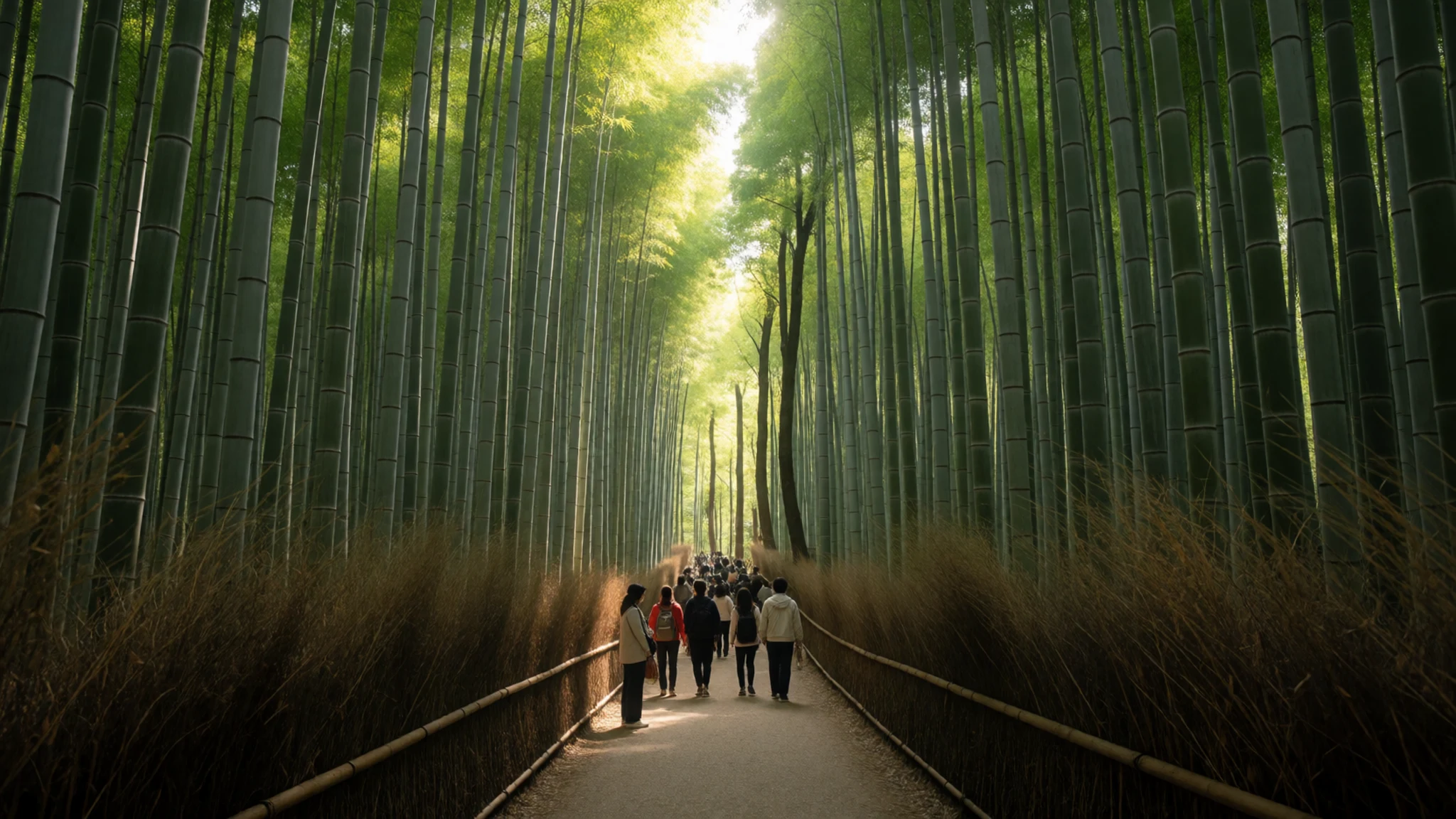
- Togetsukyō Bridge — Riverfront, central Arashiyama
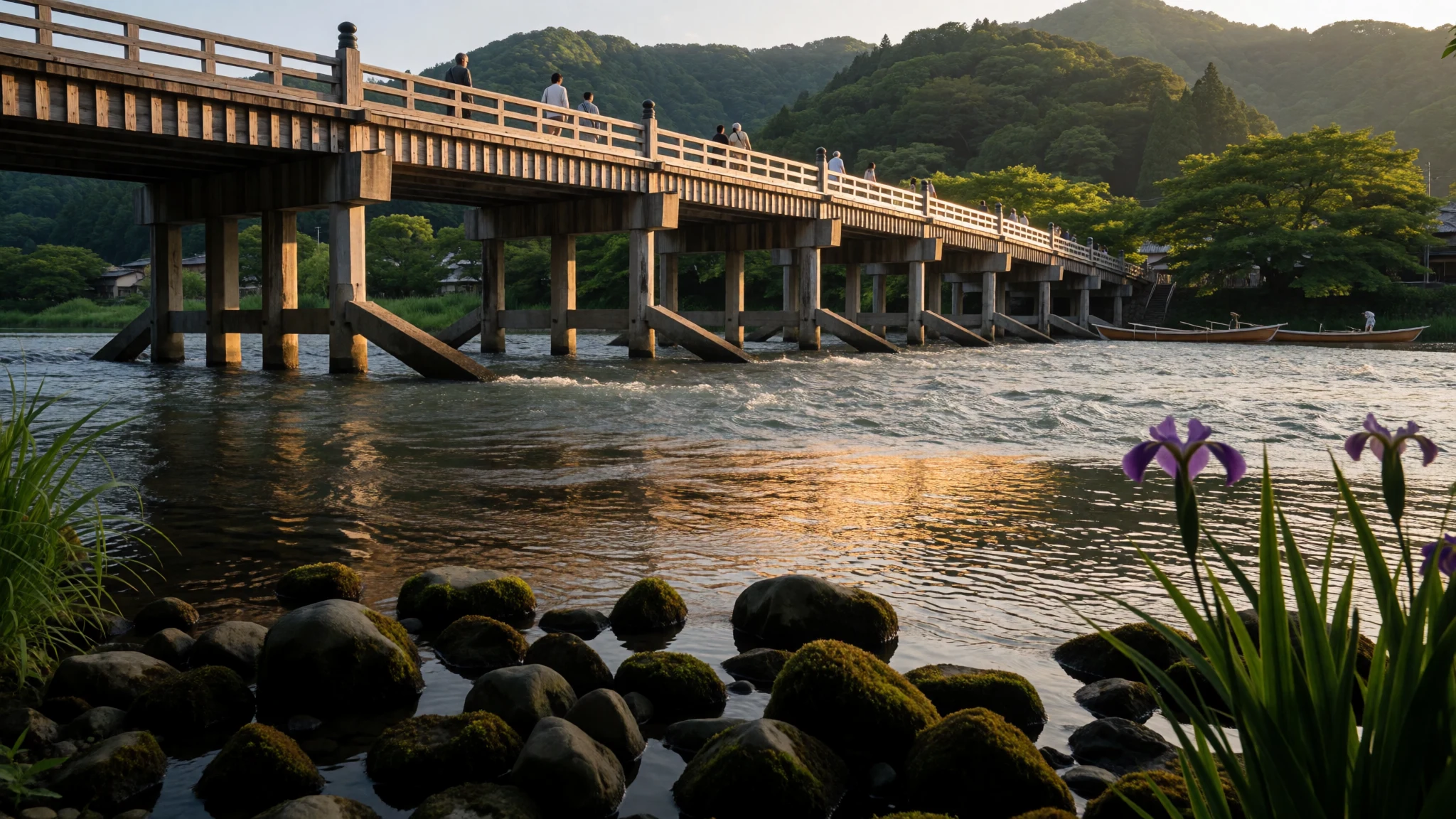
Togetsukyō is the long bridge over the river, with forested hills behind that turn rust and gold in autumn. The current below can run fast. The pavements on the bridge are one-way, so the crowd moves in a loop and stopping for photographs is awkward; the riverbanks on either side are easier for lingering.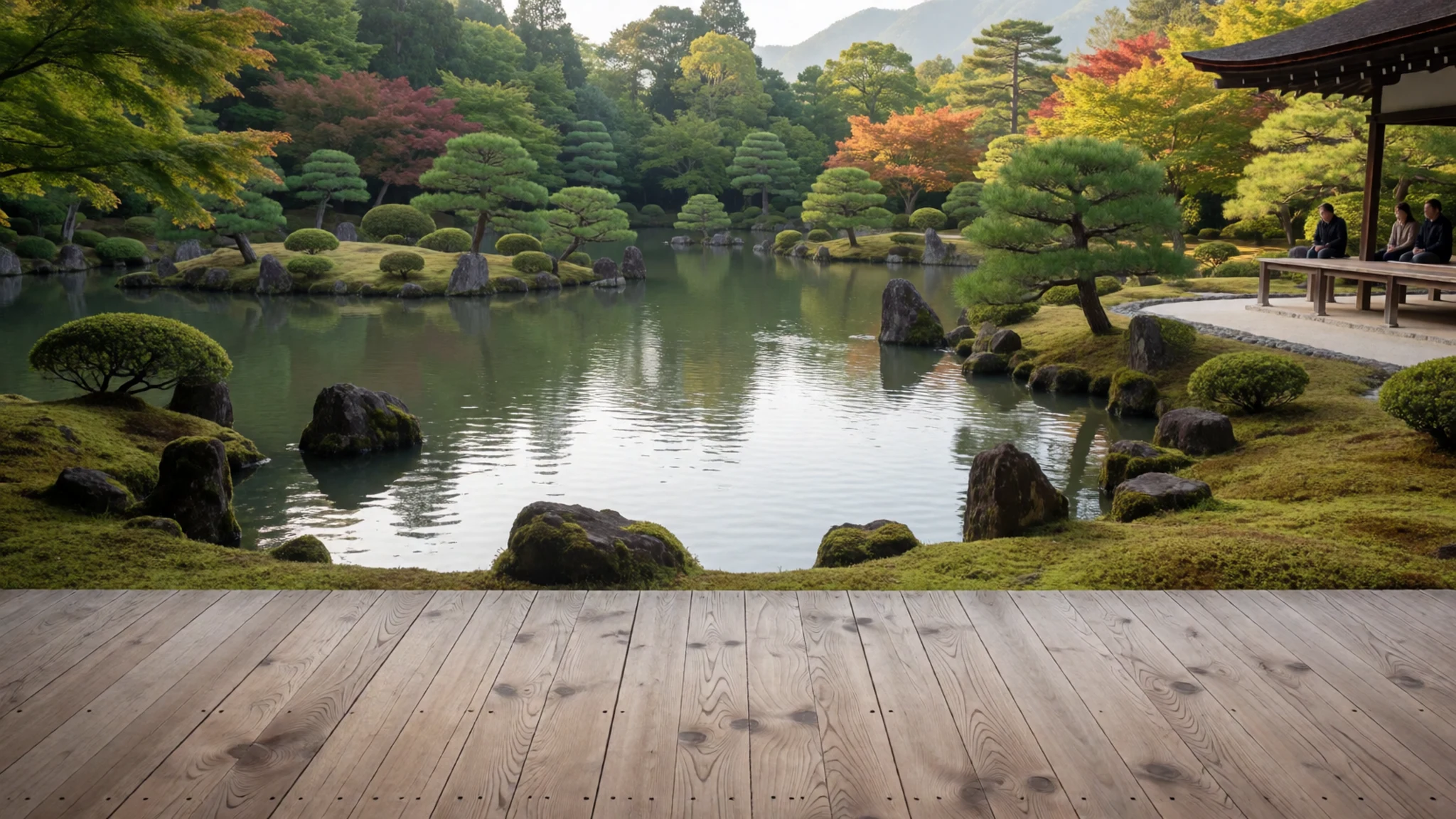
- Tenryū-ji — Near the bamboo grove
Tenryū-ji is the main Rinzai Zen temple in Kyoto and ranks among the city's Five Great Zen Temples. Its pond garden, with mossy rocks and Japanese maples, is the main draw and looks best in autumn. The temple sits close to the bamboo grove, so the two combine well. Check the official site for opening times and fees.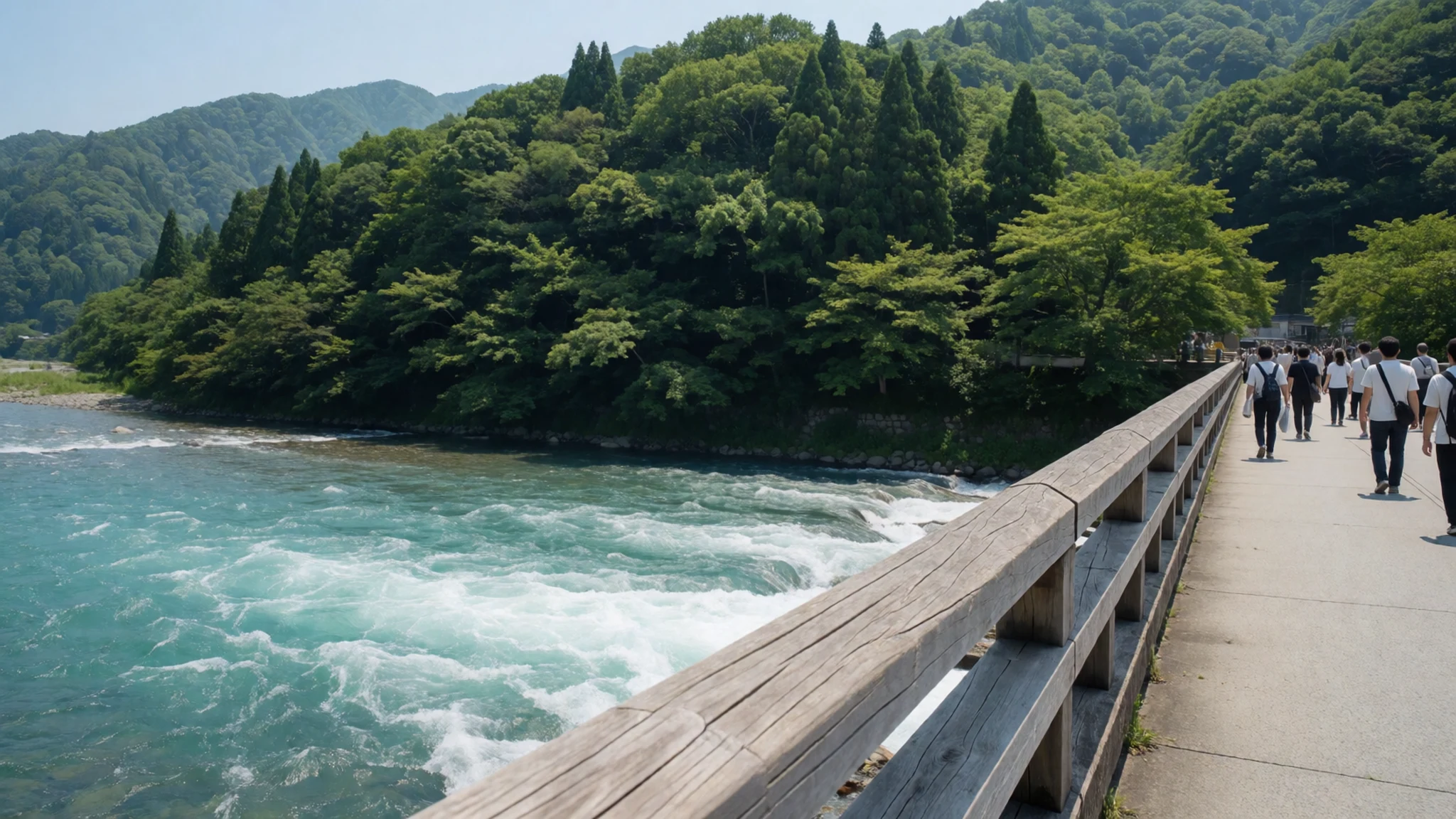
- Nonomiya Shrine — Inside the bamboo grove
Nonomiya Shrine is a small Shinto shrine tucked among the bamboo. Women once prepared here before serving at Ise Shrine, so its role was ceremonial and quiet. A visit is brief, and the setting is calmer than the grove outside, which makes it a good place to pause when the path gets busy. Keep voices low.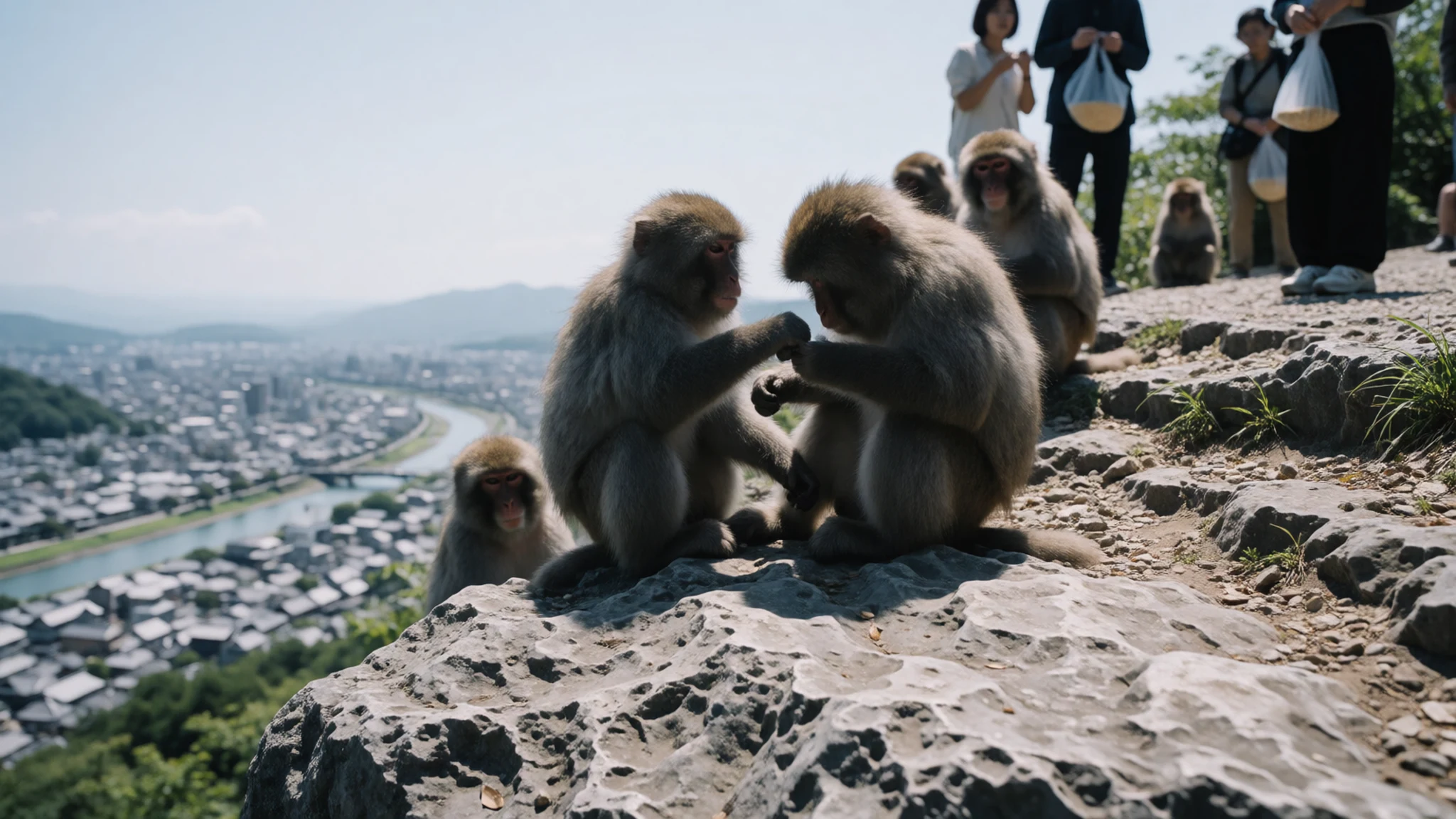
- Iwatayama Monkey Park — Hillside by the river
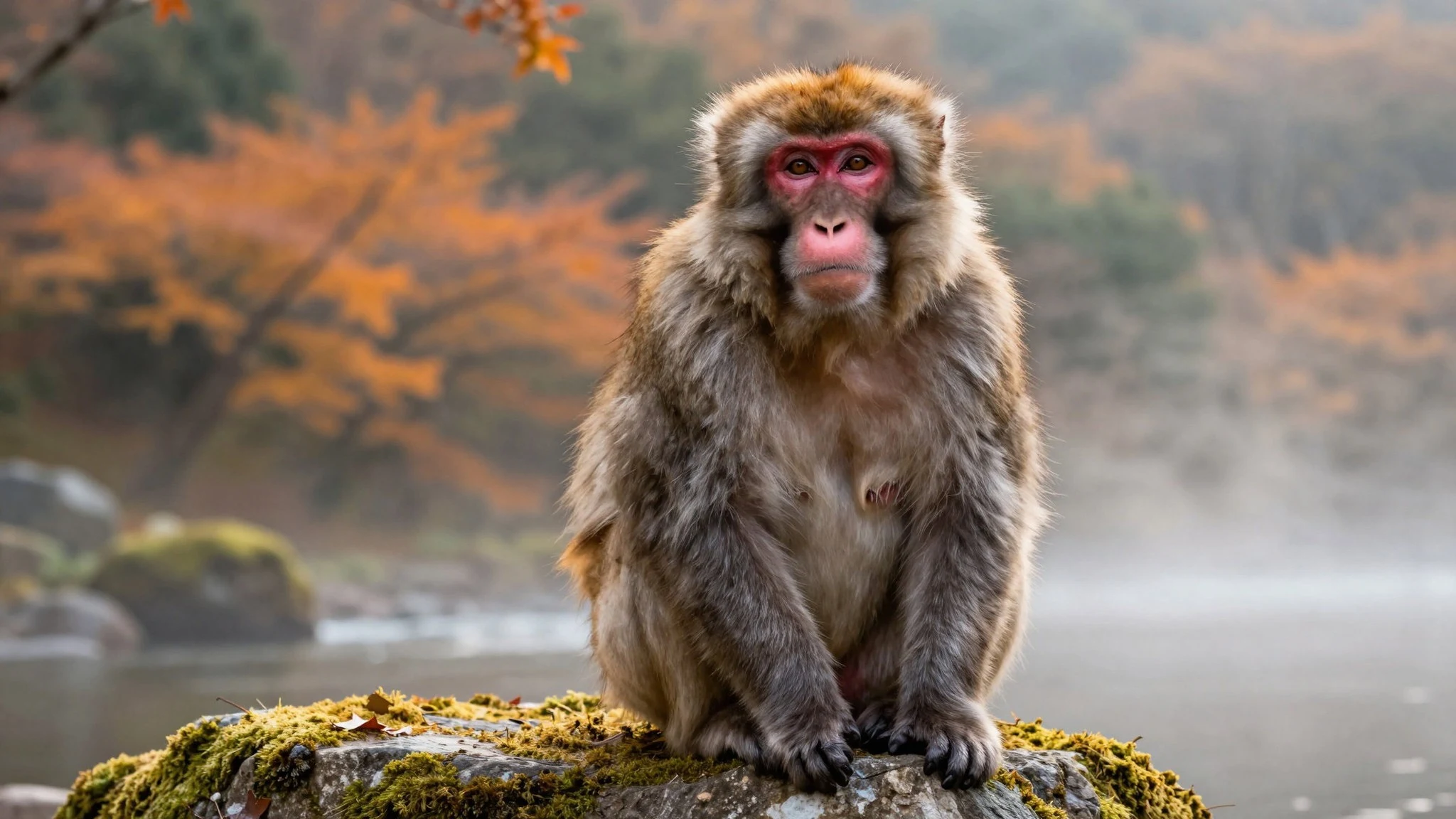
Iwatayama Monkey Park sits on the hill beside the river, reached by a demanding climb on foot. Macaques live at the top, and feeding them is part of the visit. It makes a change from temples and shrines, though the climb is hard work in summer heat; carry water and check the official site for fees.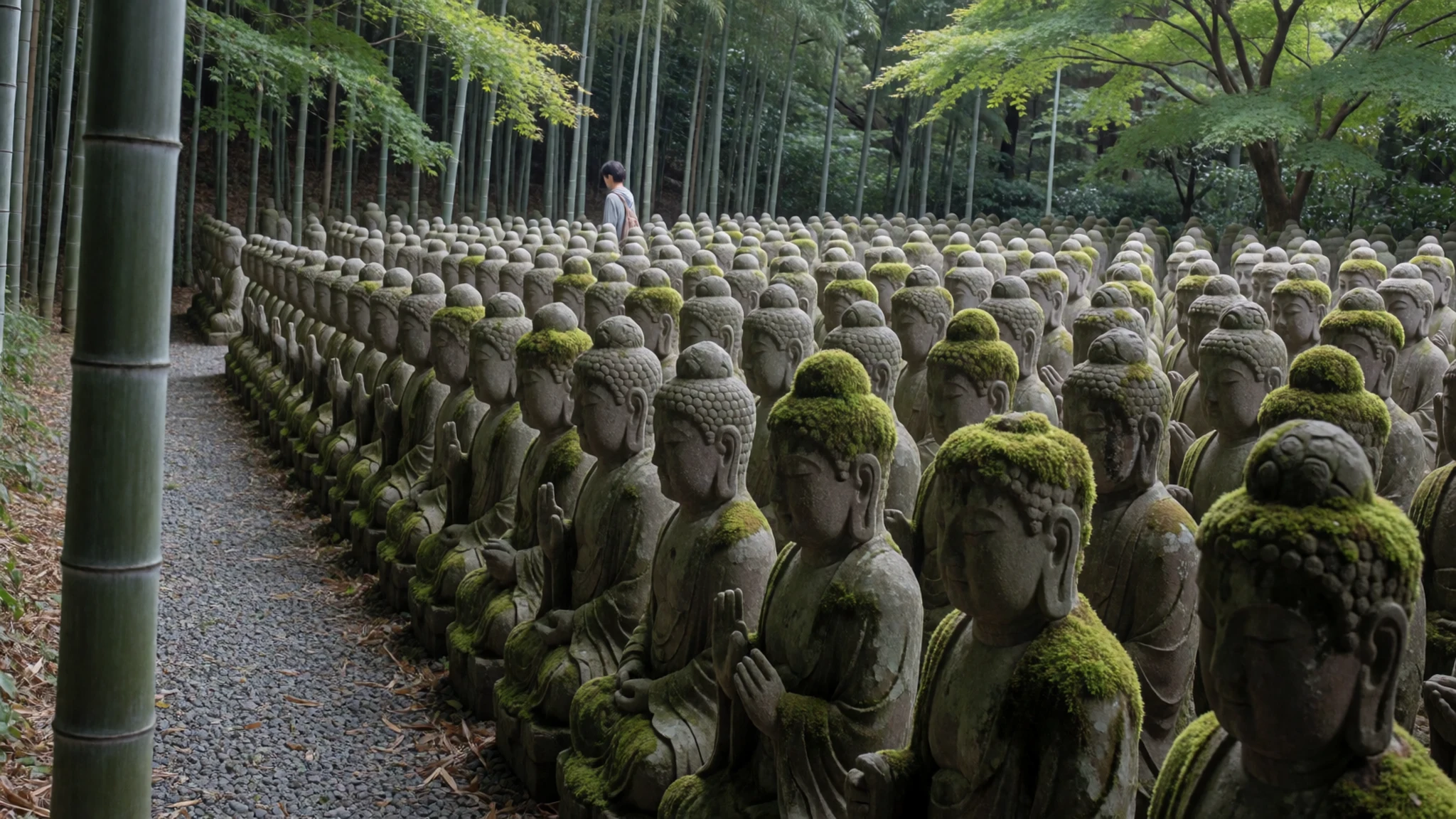
- Adashino Nenbutsu-ji — North-west Arashiyama
Adashino Nenbutsu-ji is a memorial temple, founded by the priest Kūkai to pray for the area's dead. Its grounds are filled with stone Buddhist figures, each standing for someone unknown or forgotten. It lies north-west of the main sights, so the walk is quieter, and the mood is more sombre than elsewhere in Arashiyama.
Culture
Arashiyama's culture grows out of a long mix of Buddhist practice, Shinto ritual and courtly taste. Zen temples such as Tenryū-ji present gardens designed for slow, quiet looking, where rocks, moss and borrowed views of the hill do the work that ornament does elsewhere. Daikakuji keeps the link to ikebana, the art of flower arranging, through the Saga Goryu school that began there. At Adashino Nenbutsu-ji, memorial customs are on view: rows of stone figures stand for the forgotten dead, and prayers are still said for them. The district is also a seasonal destination. Japanese visitors come for blossom in spring and maple colour in autumn, treating the changing leaves as an event worth planning a day around. A typical outing here is a long walk, a meal of tofu or soba, tea or ice cream by the river, and then one or two temples. Many of the lanes are residential, and the area feels more like a village on the edge of a city than a sightseeing complex. Visitors who go early or head north tend to find the older, quieter side of that character. In the bamboo grove and at Adashino Nenbutsu-ji, keep your voice low, do not touch the stone figures, and ask before photographing anyone in robes.
What to wear
Arashiyama's traditional dress is the kimono, a wrapped robe usually made of silk, tied with an obi sash and worn with zōri or geta sandals and split-toed tabi socks. Cotton yukata replace it in hot weather and at summer festivals. Kimono now appear mainly at weddings, tea ceremonies and festivals, and many visitors to Kyoto hire one for the day, so a few are usually seen around the bridge and temple lanes. Everyday dress among locals is plain and practical: smart-casual layers, comfortable shoes and, in wet or sunny weather, an umbrella. Walkers heading for the hills add light hiking gear. For a visit, comfortable shoes with decent grip matter most, because the paths are gravel and stone, and the climb to the monkey park is steep and can be slippery after rain. Choose shoes that slip on and off easily, since temple halls often ask for them to be removed; socks without holes are sensible. Summers are hot and humid, so light cotton that covers the shoulders and knees works well and suits temples and shrines. Spring and autumn mornings can be cool, so carry a thin layer. In the rainy season, bring a light waterproof, and in winter wear warm layers for the open garden walks.
What to eat
- Yudōfu — Restaurants in the streets between the station and the bridge
Yudōfu is tofu simmered gently in a pot and dipped in light sauces, a Kyoto speciality that Arashiyama's restaurants serve as a set meal. The taste is delicate and the texture soft. It suits cool days and is a good choice for vegetarians, though always ask about the broth.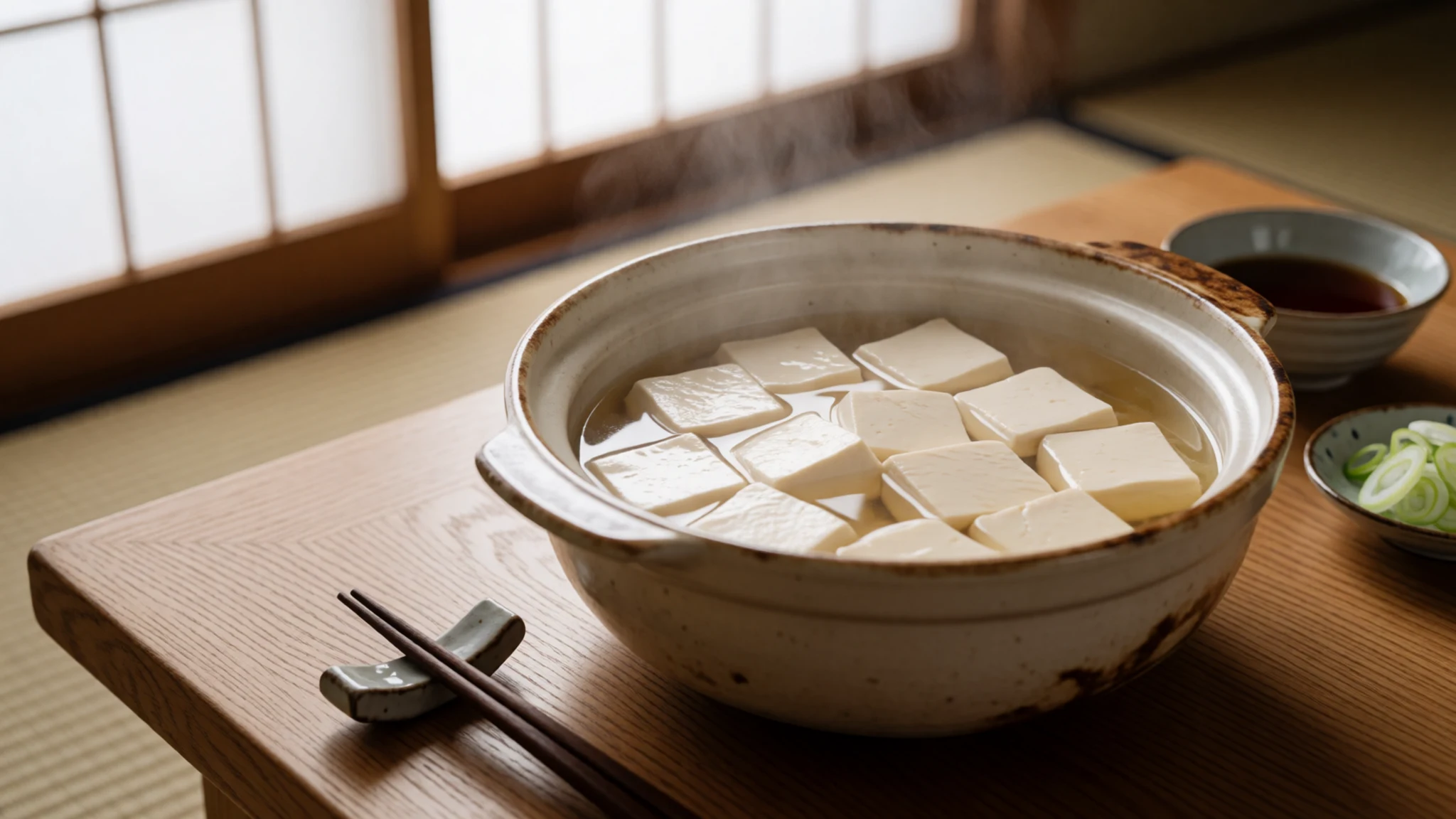
- Soba — Noodle restaurants near the river and the main lanes
Soba are buckwheat noodles, served cold with a dipping sauce or hot in broth. In Arashiyama they often come in a set meal alongside tofu dishes. The cold version suits warm days after a walk, and the hot bowl is better in winter.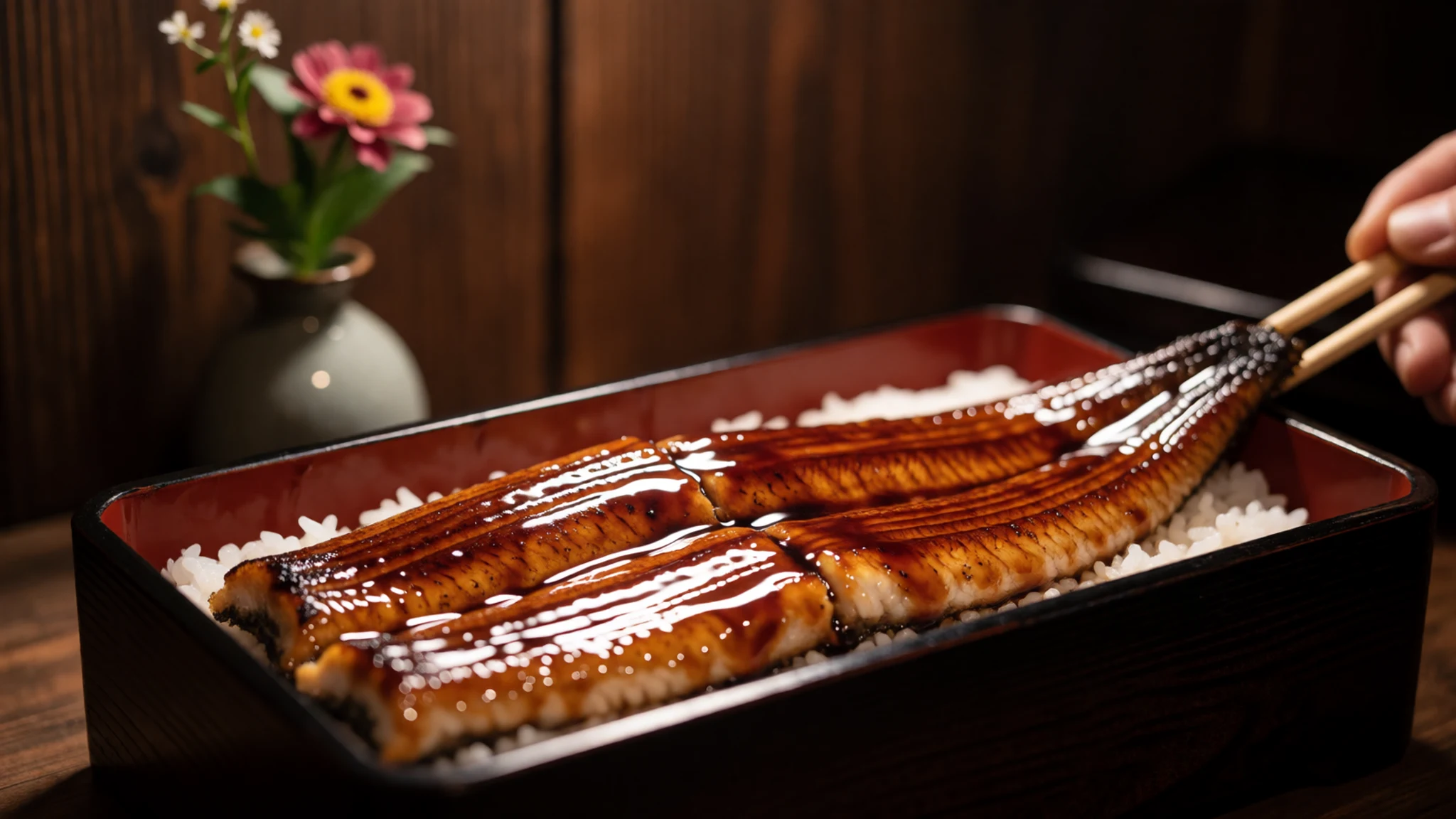
- Unagi — Eel restaurants in the central streets, booked in advance
Unagi is grilled eel brushed with a sweet-savoury sauce and served over rice. Arashiyama has restaurants known for it, and the better ones can book up well ahead, so reserve when you can. It is rich, so a small portion goes a long way. - Ice cream and parfaits — Tea houses and small cafés along the main lanes
Ice cream, cones and fruit parfaits are a popular treat in Arashiyama, often served at tea houses that sell more sweets than tea. Matcha flavours are common. Eating while walking is frowned on in many places, so sit or stand beside the shop. - Matcha and wagashi — Tea rooms and temple gardens
Matcha is powdered green tea whisked to a froth, usually served with a wagashi, a small sweet made from rice or bean paste. The bitterness of the tea balances the sweet. Some temple gardens and tea rooms serve it with a view over the grounds.
Plan it
Best time. Late March to April for blossom and late October to November for maple colour; both are the busiest weeks. June is the rainy season and August is hot and humid, so go early in the day if travelling then.
How long. 1
Getting there. Fly to Kansai International Airport, then take rail to Kyoto Station. From there the JR Sagano Line runs to Saga-Arashiyama station, and local and rapid trains stop there but limited expresses do not. The Hankyū line from Katsura and the Randen tram from central Kyoto also reach the area, and several city buses go there too.
Budget. mid
Tips
- Reach the bamboo grove and Tenryū-ji early in the morning, before the tour groups
- Carry some cash for small temples, tea rooms and snack stalls, and check official sites for opening times and fees
- Reserve eel and other popular restaurants well ahead, or eat early
- Bring water for the climb to the monkey park, especially in summer
- Head north to Giōji, Takiguchi-dera and Adashino Nenbutsu-ji for quieter paths
Etiquette
- Remove shoes where there is a step up and slippers or a shelf waiting
- Keep to the one-way pavements on the bridge and do not block the grove path for photographs
- Ask before photographing monks, shrine staff or people in kimono
Nearby
Sources
- Wikidata Q2859566 (CC0)
- Wikipedia: Arashiyama (rev 1365489729) (CC BY-SA 4.0)
- Wikivoyage: Kyoto/Arashiyama (rev 5430592) (CC BY-SA 4.0)
- Photo: Arashiyama, Kyoto, Japan (Takeshi Kuboki) (CC BY 2.5)
- Photo: The Togetsukyo Bridge at Arashiyama (lumoplank) (CC0 1.0)
- Photo: Aerial perspective of Arashiyama Park Nakanoshima Area (Bob Tan) (CC BY 4.0)
- Photo: Aerial panorama of Arashiyama (Bob Tan) (CC BY 4.0)
- Photo: Mount Arashiyama across the Ōi River (Chris Spackman / TakuyaMurata) (CC BY 3.0)
- Photo: Bamboo forest in Sagano (Dariusz Jemielniak) (CC BY 3.0)
- Photo: Bamboo forest in Arashiyama, Sagano (Naokijp) (CC BY-SA 4.0)
- Photo: Sōgenchi Garden pond at Tenryū-ji (lumoplank) (CC0 1.0)


Wildlife
- Japanese macaque (animal)
The Japanese macaque is the snow monkey: a brownish-grey monkey with a pinkish-red face and a stubby tail, living farther north than any other monkey in the world. In Arashiyama you can meet wild ones at a park on top of a hill, where they live in their natural surroundings. Watch them kindly: keep a respectful distance, stay quiet and calm, and never feed them, so they remain truly wild and at ease.