Dazaifu Tenmangu
Dazaifu Tenmangu, Japan
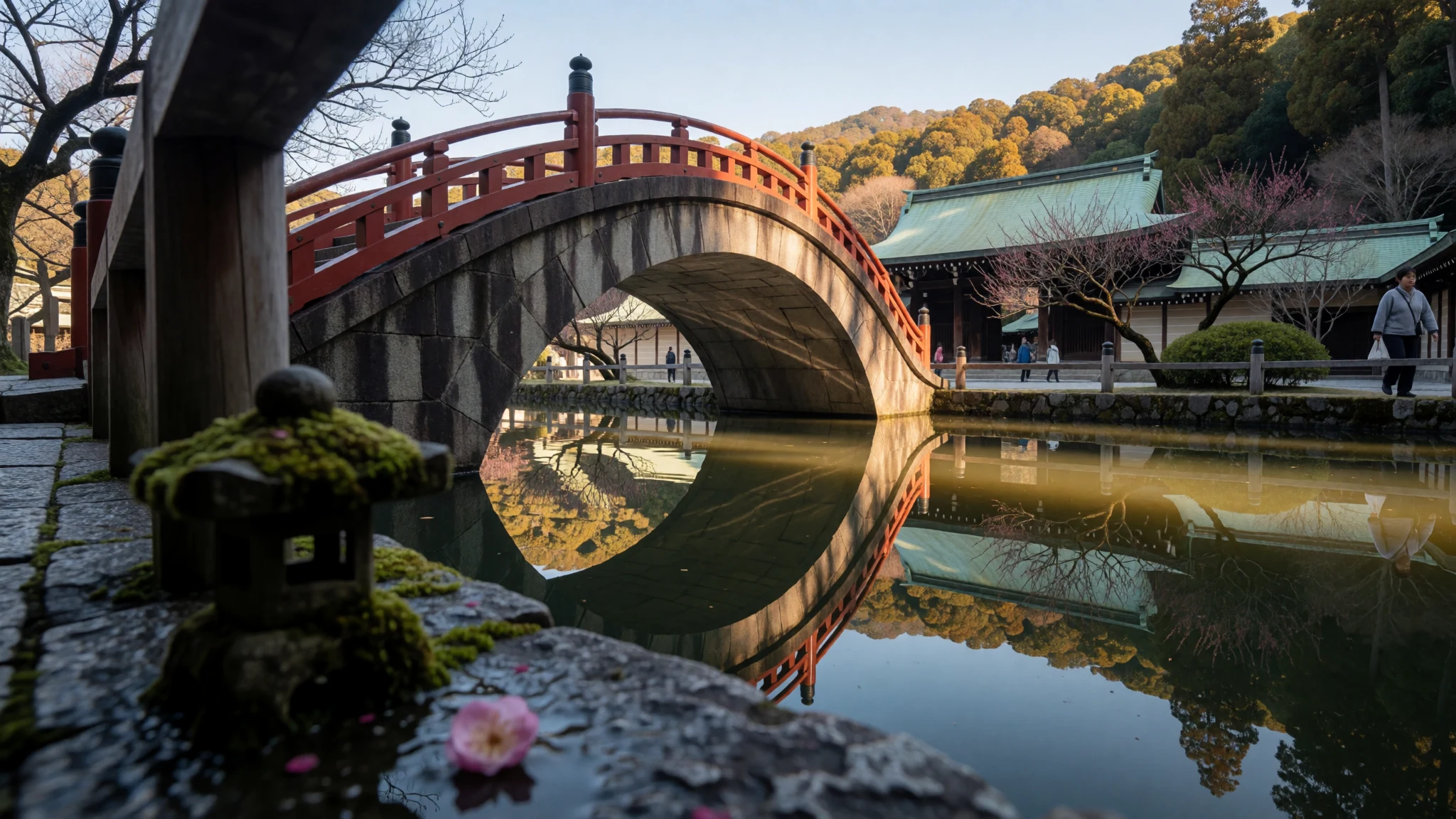
Dazaifu Tenmangu is a calm shrine to the god of learning, reached by a snack-lined avenue and best in plum season.
The place
Dazaifu Tenmangu is a Shinto shrine in the small city of Dazaifu, in Fukuoka Prefecture on the island of Kyushu, a short train ride inland from Fukuoka itself. It marks the burial site of Sugawara no Michizane, a court scholar and official who is worshipped as Tenjin, the deity of learning. The shrine is counted among the Three Great Tenjin Shrines of Japan, and it dates from 919, so pilgrims have been arriving for more than a thousand years. The approach is a tree-shaded avenue of snack shops and souvenir stalls, followed by arched bridges over a pond laid out in the shape of the character for heart. Beyond them come the gates, the worship hall and the main building, with plum trees scattered through the grounds. Since 2023 the main hall has been under restoration, and a temporary hall by an architect has stood in its place; the official site (https://www.dazaifutenmangu.or.jp/) gives the current state of the work. Students arrive in large numbers before exams to buy charms and hang wooden wish plaques, so the busiest days follow the school calendar as much as the seasons. The town around the shrine is easy to explore on foot. A Zen temple with a moss garden sits a few minutes away, and a national museum stands on the hillside nearby. Most visitors treat it as a half-day trip from Fukuoka, though a quiet weekday morning or the plum season rewards a longer stay.
Its story
The story of Dazaifu Tenmangu starts with Sugawara no Michizane, a gifted scholar and poet who rose high at the imperial court in Kyoto. Rivals at court turned the emperor against him, and he was sent away to Dazaifu, then the administrative centre of Kyushu. He lived there in poor conditions, wrote sorrowful verse, and died in exile. Legend says the ox drawing his coffin refused to go any further, and the mourners took that as a sign and buried him where it stopped. The shrine was founded in 919 over that spot. Misfortunes at the capital after his death, including storms and illness among his enemies, were widely blamed on his angry spirit. To calm it, the court restored his rank and honoured him as a deity, Tenjin. Over the centuries his image softened from a vengeful ghost to a patron of scholars, calligraphers and exam candidates, and Tenjin shrines spread across Japan. Plum blossom is tied to his memory. A famous poem of his addresses a plum tree in his Kyoto garden, and a tale says that the tree flew south to join him in exile. Visitors still look for the old plum said to be that tree. The sweet cakes sold along the approach come from another tale, of an elderly woman who fed him in his last days. Dazaifu's history is therefore a story of injustice, grief and eventual reverence.
What to see
- Main shrine complex — Dazaifu, central shrine grounds
Dazaifu Tenmangu's main grounds hold the gates, the worship hall and the sacred burial area of Michizane. During the restoration a temporary hall serves for prayers, so the familiar roofline may be hidden. Arrive early, walk slowly, and check the official site before travelling for the latest layout.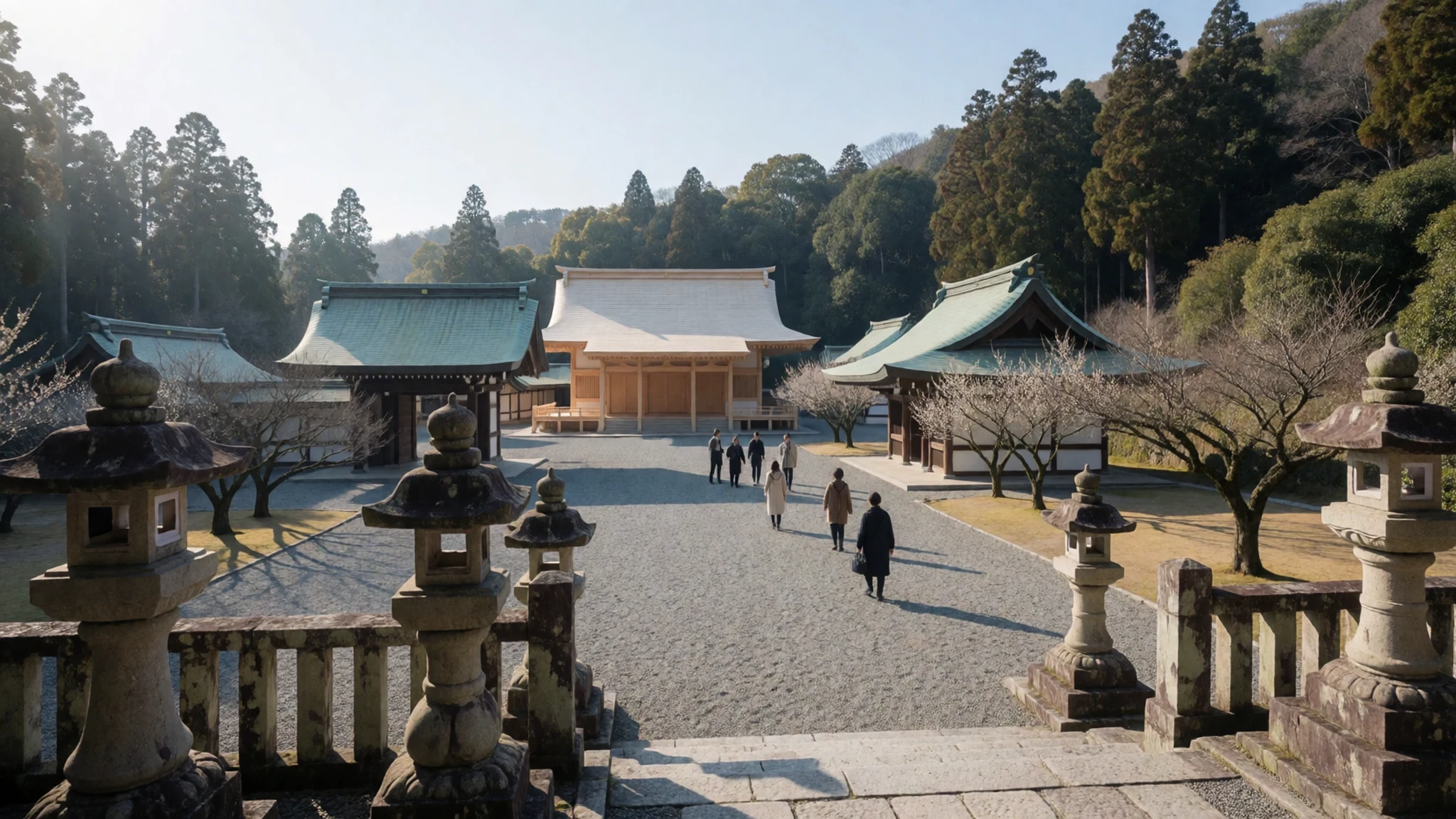
- The arched bridges and heart-shaped pond — Entrance to the shrine grounds
At Dazaifu Tenmangu three bridges cross a pond shaped like the character for heart, one of them steeply curved. They are said to mark past, present and future, and crossing them is a small ritual before reaching the shrine. The bridges photograph well in early light, before tour groups arrive.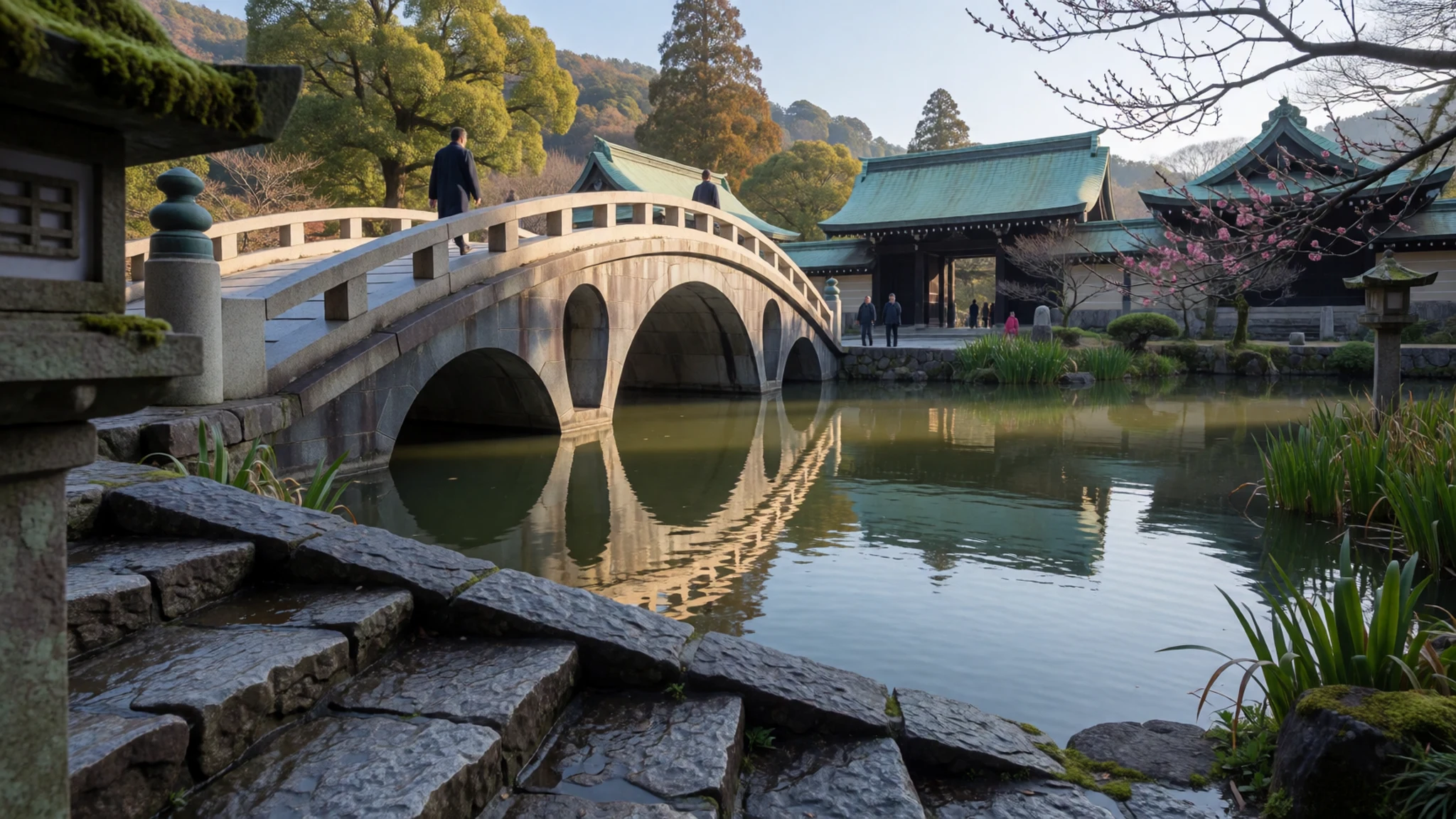
- Plum trees of the shrine — Throughout the shrine grounds
Plum trees fill the grounds of Dazaifu Tenmangu, and blossom season, usually late winter into early spring, is when the place is at its best and its most crowded. Early varieties open first, so a single visit can catch only part of the display. Weekday mornings are calmer.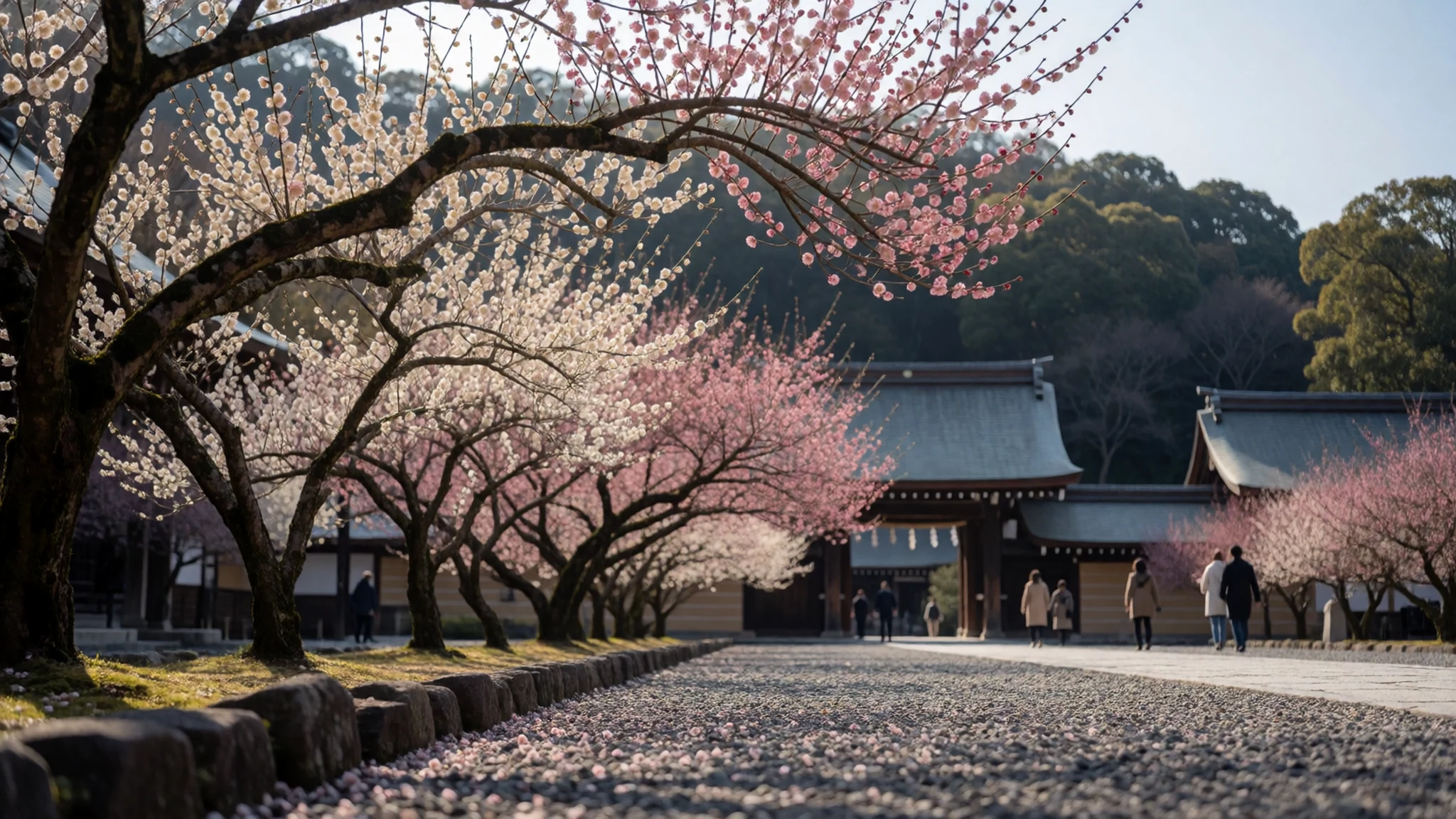
- Komyozenji Temple — Residential lane beside the shrine
Komyozenji is a quiet Zen temple from the Kamakura period, tucked into a residential lane close to Dazaifu Tenmangu. A small rock garden with one maple marks the entrance, and a raised wooden walkway at the back overlooks a moss garden laid out like a sea. It is a good place to slow down after the shrine crowds.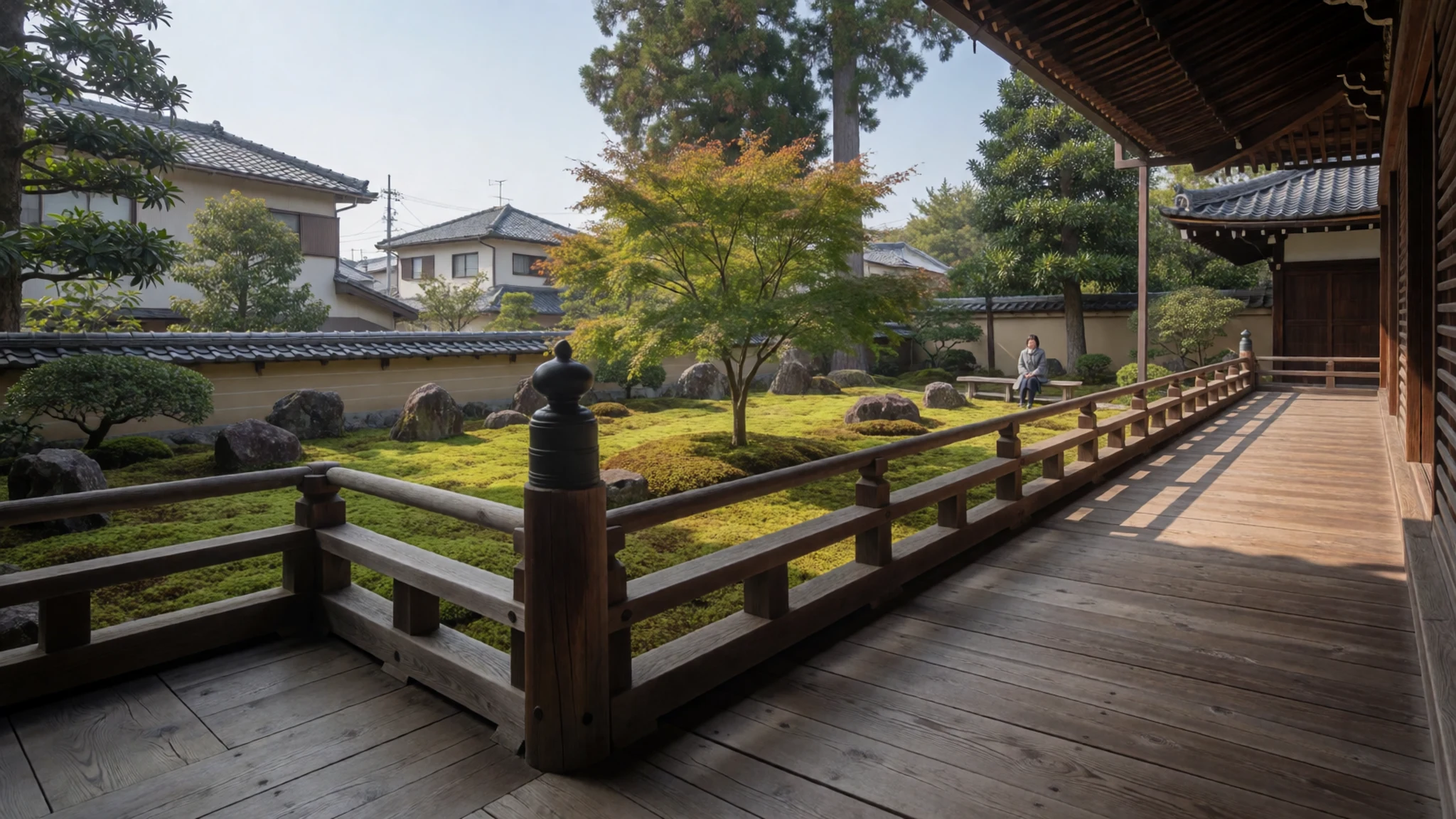
- Kyushu National Museum — Hillside beside Dazaifu
Near Dazaifu Tenmangu, the Kyushu National Museum presents Japanese culture through its links with the rest of Asia, rather than as an island story alone. It works well on a wet day or in summer heat, and the setting beside the hillside makes the walk from the shrine pleasant. Check the official site for exhibitions.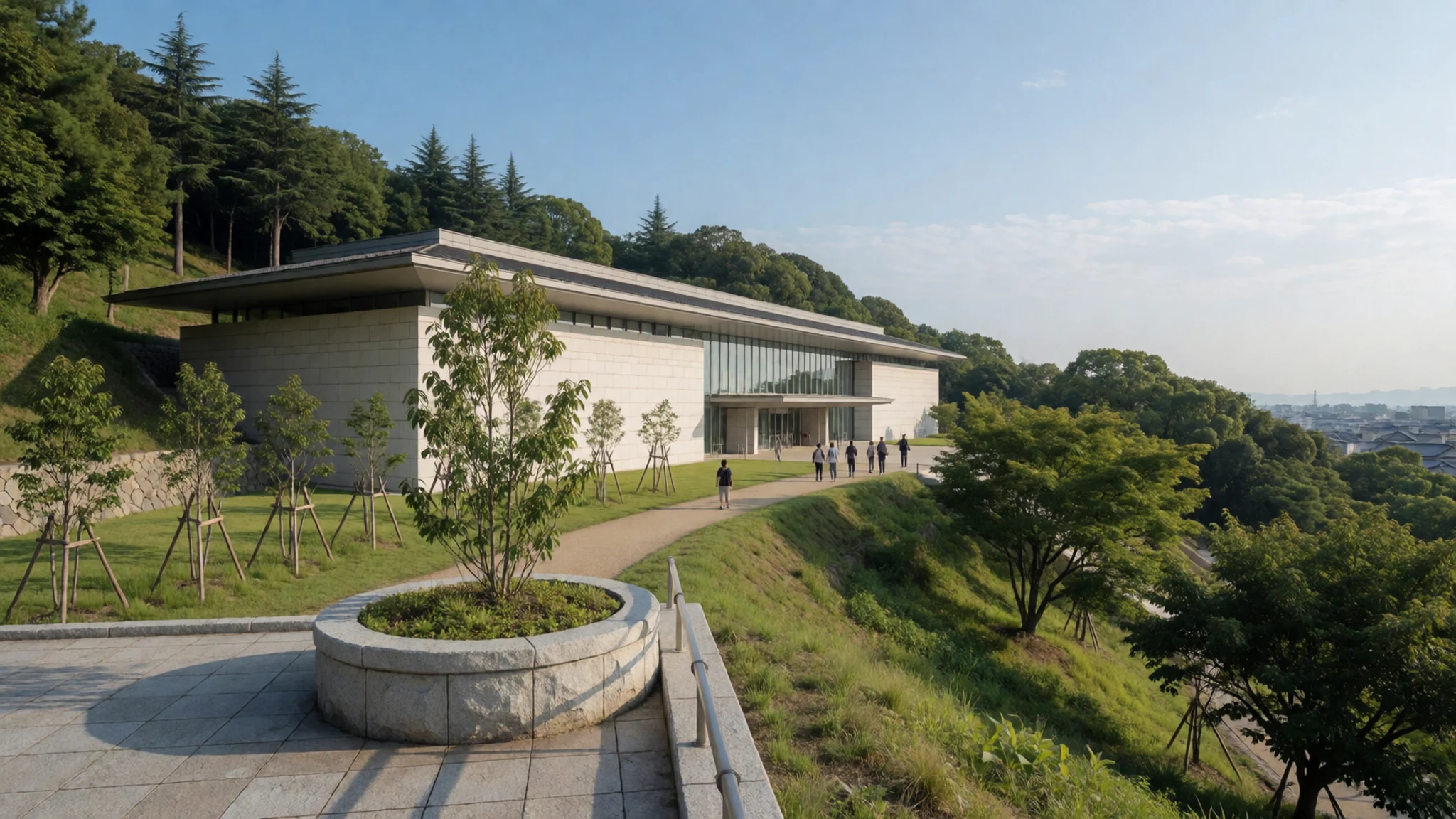
Culture
Dazaifu Tenmangu is a place where Shinto practice and everyday hopes meet. Tenjin is the deity of learning, so much of the activity here belongs to students and parents: buying a charm for exams, writing a wish on a wooden plaque, or offering a short prayer for a child's school year. Families visit in the early weeks of the year for the first shrine visit, and in November parents bring young children in formal dress to mark growing up. Plum blossom is the shrine's emblem, and the flower appears on lanterns, charms and cakes. The sweet that carries the pattern of a plum flower, umegae mochi, is tied to the legend of Michizane's last days and is sold all along the approach. Shinto customs are simple to follow even for those who do not practise. Visitors pause at the gate, rinse their hands and mouth at the water basin, then bow, make an offering and pray at the hall. Sacred spaces here are meant to be calm, and the town's other attractions, such as the Zen temple nearby, have a more meditative mood than the busy avenue. Seasonal festivals take place at several shrines across the town through the year, so the rhythm of local life is worth noticing. At the worship hall, bow quietly, keep your voice low, and do not photograph people while they pray.
What to wear
Dazaifu Tenmangu sits in a part of Japan where traditional dress still appears on special days. The kimono, a wrapped robe in silk for formal occasions or cotton for summer and casual wear, is worn at New Year, at coming-of-age and graduation ceremonies, and for children's blessings in November. The lighter cotton yukata is common at summer festivals. Shrine priests wear white or pale robes with wide trousers called hakama, often in muted colours, and they are easy to spot among the visitors. Second-hand kimono turn up at the shrine's monthly flea market, which makes it a good place to see textiles up close. Day to day, most people in Dazaifu dress simply: school uniforms in term time, jeans or light trousers, and layered clothes that can handle shifting weather. Some visitors rent a kimono for photographs, and the sight is common around the avenue. A visitor should wear comfortable, modest clothes, with shoulders and knees covered out of respect at a shrine. Summers here are hot and humid, so light breathable fabrics, a hat and a small towel help. Winter and the plum season can be chilly, so bring a jacket. Wear shoes that handle gravel paths and steps, and carry a compact umbrella for the rainy season.
What to eat
- Umegae mochi — Shops along the approach avenue to the shrine
Umegae mochi is a grilled rice cake filled with sweet azuki bean paste and stamped with a plum flower. It is best eaten warm and fresh. Shops line the approach to Dazaifu Tenmangu, and the toasted outside is the part regulars prefer.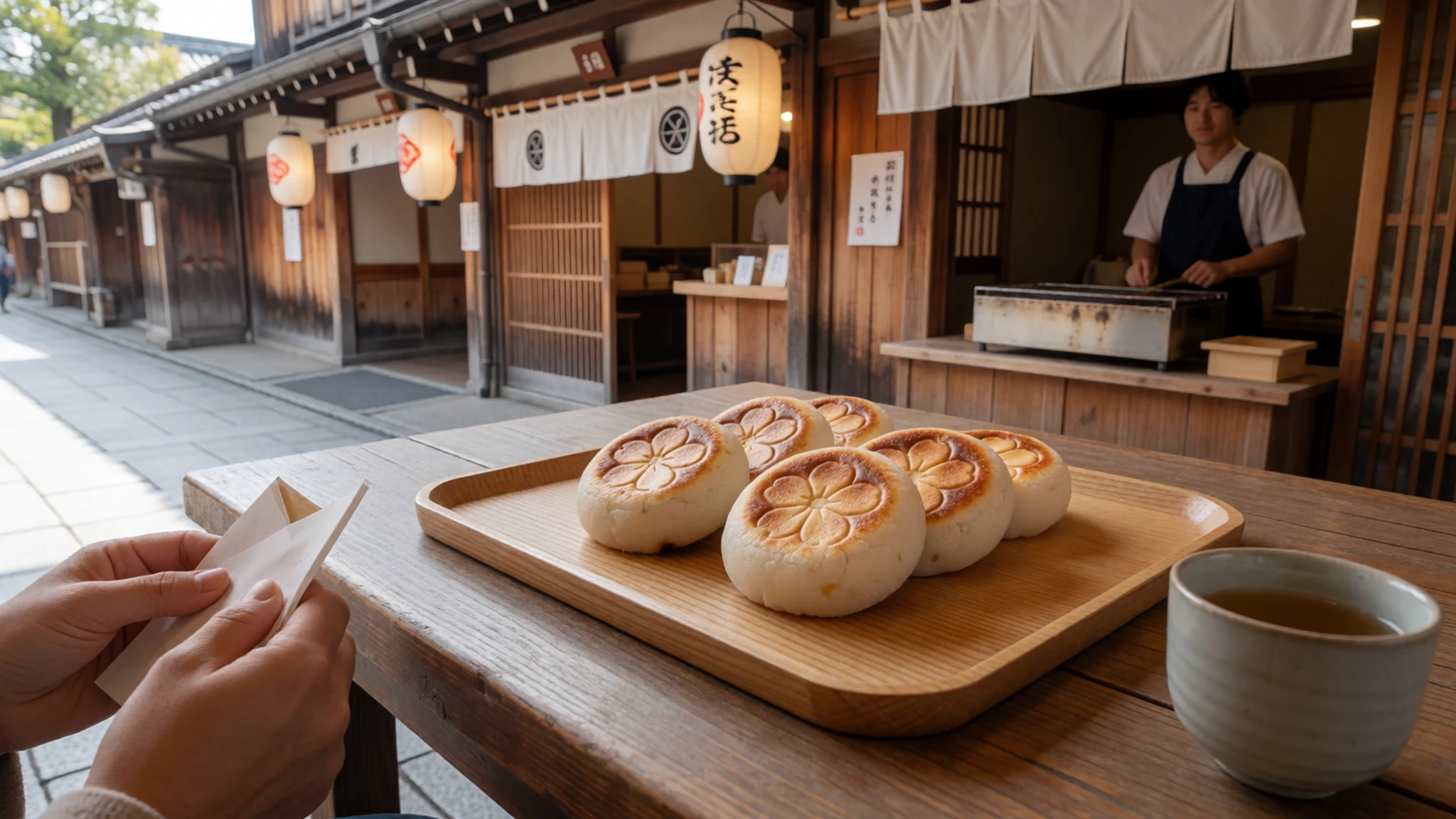
- Set meals (teishoku) — Eateries near the shrine entrance
A teishoku is a tray with rice, miso soup, pickles and a main dish such as grilled fish or tempura. Plenty of eateries around Dazaifu Tenmangu serve ordinary Japanese food of this kind, and it makes a filling lunch after the walk.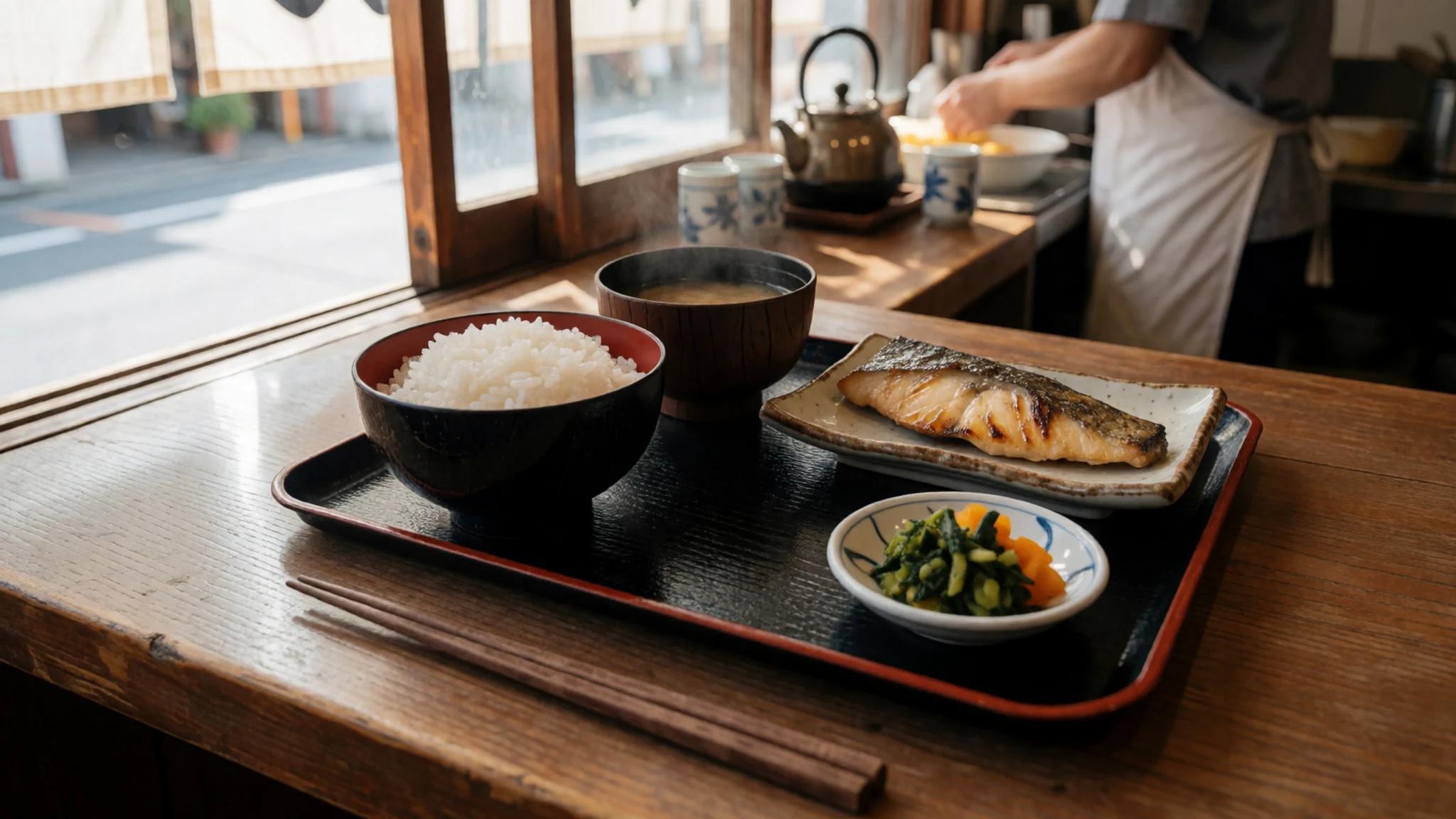
- Soba and udon — Noodle shops on and around the approach
Noodles in hot broth are a dependable lunch near Dazaifu Tenmangu. Soba is made with buckwheat and udon with wheat, and both come in cold or hot versions. A bowl suits a chilly plum-season day and is usually quick to order. - Matcha and tea sweets — Cafes and tea rooms by the avenue
After the shrine, many visitors stop for powdered green tea with a small sweet in the cafes on the shopping street. The bitterness of the tea balances the sugar of the bean paste, and a quiet seat is a welcome rest. - Fukuoka evening food — Central Fukuoka, a short train ride away
Dazaifu is quiet after dark, so most visitors go back to Fukuoka city for dinner. Ramen, grilled skewers and small drinking counters are the usual choices there, and the transport links make it an easy evening.
Plan it
Best time. Late February to March for plum blossom, and November for autumn colour; June is the rainy season and July–August is hot and humid.
How long. 1
Getting there. Fly into Fukuoka International Airport, where the Tabito liner bus runs direct to Dazaifu in about 25 minutes. By rail, take the Nishitetsu Tenjin-Omuta Line from Tenjin station to Futsukaichi (about 12 minutes by Limited Express), then change for the short branch line to Dazaifu, with the shrine a walk from the station.
Budget. low
Tips
- Go on a weekday morning to avoid the crowds, especially in plum season and before exam periods
- Check the official site for the temporary hall and any restoration notices before you travel
- Carry some cash for small shops and stalls, though the Tabito bus accepts cards and IC cards
- Bring water and a hat in summer, as the shaded avenue only helps part of the way
- Combine the shrine with the Zen temple and museum for a relaxed half-day
Etiquette
- Bow at the gate, rinse your hands at the basin, and keep voices low near the worship hall
- Ask before photographing people, especially those praying
- Do not eat while walking inside the inner shrine grounds
Nearby
Sources
- Wikidata Q710786 (CC0)
- Wikipedia: Dazaifu Tenmangū (rev 1366832514) (CC BY-SA 4.0)
- Wikivoyage: Dazaifu (rev 5138760) (CC BY-SA 4.0)
- Photo: Dazaifu Tenmangu Shrine — Jakub Hałun (CC BY-SA 2.0)
- Photo: Dazaifu Tenmangu Shrine Honden (Main Prayer Hall) — ScribblingGeek (CC BY-SA 4.0)
- Photo: Dazaifu Tenmangu Plum Tree 2004-03-07 — unknown author (CC BY 3.0)
- Photo: Dazaifu Tenmangu temporary main hall — 水だらけのプール (CC0 1.0)
- Photo: Umegaemochi sold in Dazaifu — Kyoww (Public domain)
- Photo: Dazaifu Tenman-gū — Nesnad (CC BY 4.0)
- Photo: Dazaifu Tenman-gū drum bridge (09) — 先従隗始 (CC0 1.0)
- Photo: Dazaifu Tenman-gū drum bridge (10) — 先従隗始 (CC0 1.0)


