Amami Ōshima
Amami Ōshima, Japan
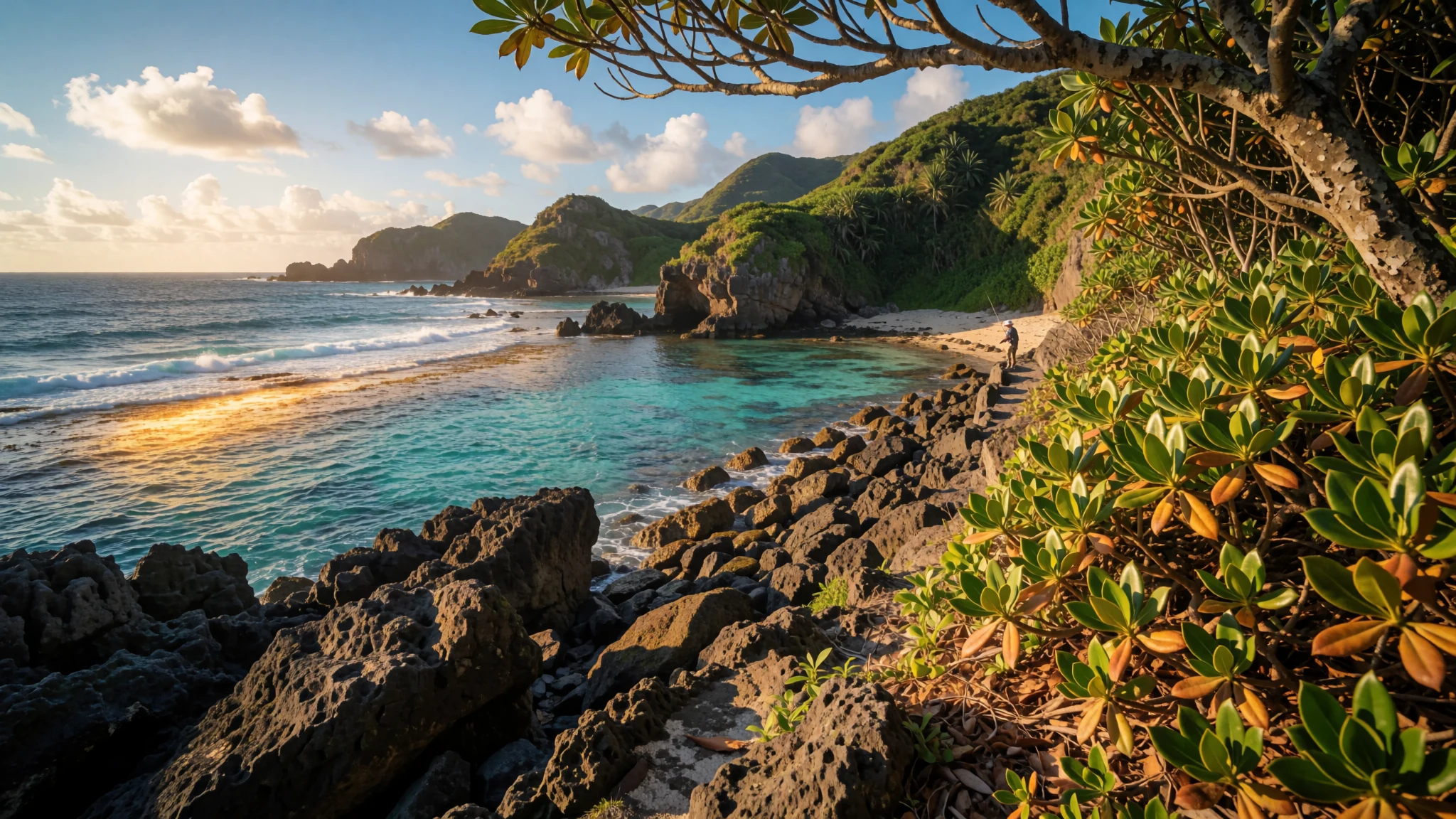
Amami Ōshima offers warm subtropical beaches, coral reefs and forest walks, and is best enjoyed in spring or late autumn.
The place
Amami Ōshima is the largest island in the Amami archipelago, a chain of subtropical islands lying between Kyushu and Okinawa and governed as part of Kagoshima Prefecture. At about 712 square kilometres it is large enough to hold five municipalities, from the port town of Naze, the island's main settlement, to small villages along the quieter western and southern coasts. It sits roughly 380 kilometres south of the tip of Kyushu and about 250 kilometres north of Okinawa, so its climate and character feel different from mainland Japan.
The island is volcanic in origin. Its highest point, Mount Yuwanda, rises to 605 metres, and forested hills fall steeply toward coves and beaches. A coral reef follows much of the coast, with the East China Sea on the west and the Pacific on the east. Much of the interior lies within Amami Guntō National Park, which protects subtropical forest, mangroves and the surrounding sea.
Daily life runs on agriculture as well as tourism. Sugar cane, rice and sweet potatoes are grown, fishing continues, and shōchū distilling is a major industry. The warm climate allows a second rice crop in a year. Visitor numbers rise in summer and fall away in winter, when the sea can look grey and the wind is strong.
The island's name is pronounced differently in Okinawan, Uushima, which hints at its closer ties to the south. Naze has the feel of a working port, with ferries, shops and evenings in the bars off Yanigawa street. The pace is slow, and the island's appeal lies in its details as much as in any single sight.
Its story
Amami Ōshima's human history begins well before written records. Stone tools show people living here in the Japanese Paleolithic period, and later pottery and other objects point to steady contact with the Jōmon, Yayoi and Kofun cultures of Japan. The island appears in the ancient chronicle Nihon Shoki in an entry for 657. During the Nara and early Heian periods it served as a waypoint for envoys travelling between Japan and the Tang court in China, and mother-of-pearl gathered from the surrounding seas was a valuable export to Japan.
For a time the island was drawn into the Ryukyu Kingdom as that realm pushed northwards along the archipelago. Ryukyu was a tributary of Ming China, so the island's position became tangled up with that relationship. In 1609 samurai from the Shimazu clan invaded, and their domain's claim to the island was later confirmed by the Tokugawa shogunate. Under Shimazu rule, islanders were pressed into a harsh system of labour and forced to grow sugar cane to meet heavy taxes. Failed harvests brought famine, and that period still shapes how the island remembers its past.
In 1859 the political exile Saigō Takamori spent two years on the island. His house survives as a memorial museum, a reminder of a turbulent stretch of Japanese history. After the Meiji Restoration Amami Ōshima became part of Kagoshima Prefecture. Following the Second World War it was under United States control until 1953, when it returned to Japanese administration. Since 1974 a protected area covering parts of the land and sea has safeguarded its natural heritage, and in 2021 the island was listed as part of a serial UNESCO World Heritage Site with other islands in the region.
What to see
- Kinsakubaru wildwood — Amami, central island
The Kinsakubaru wildwood is a stretch of dense subtropical forest where tall trees and tangled undergrowth close in overhead. The canopy keeps the light low and the air humid, even on cool days. Walk the marked paths slowly, carry water and wear shoes with good grip, because the ground can be slippery after rain.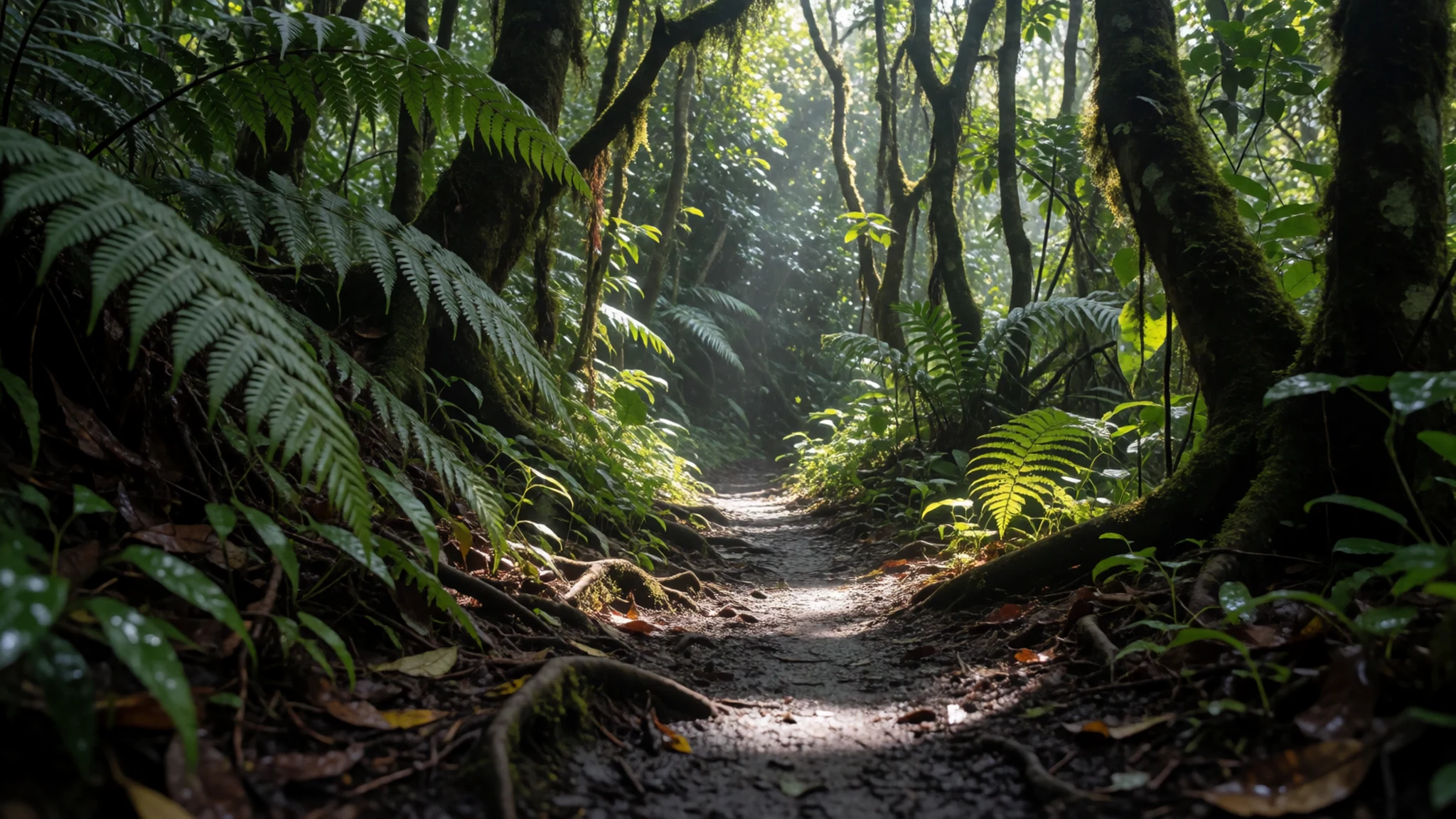
- Katetsu Cove from Manen-zaki — Setouchi, south-west coast
From the headland of Manen-zaki in Setouchi, the view looks down on Katetsu Cove, where the water shifts from pale turquoise over the reef to deep blue beyond. The cape is a practical stop on a scooter or car tour of the southern coast. There is little shade on the headland, so bring water and sun protection.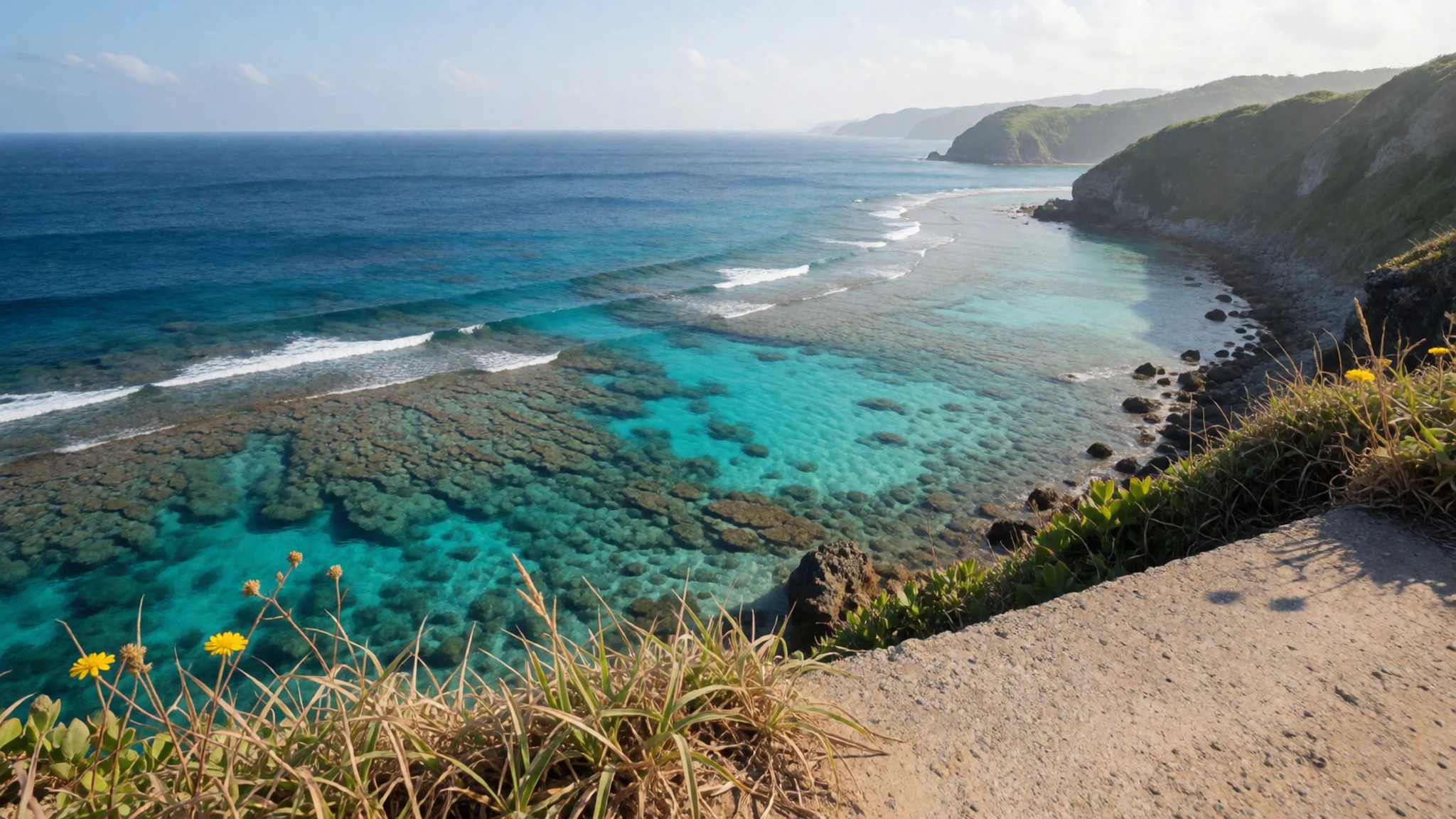
- Mangrove woodland — Coastal areas of the island
Mangrove woodland lines parts of the shoreline, where salt-tolerant trees grow with their roots standing in brackish water. The area falls within the protected zone of the national park, so stay on the paths and leave the roots and plants undisturbed. Low tide gives the clearest view of the root systems.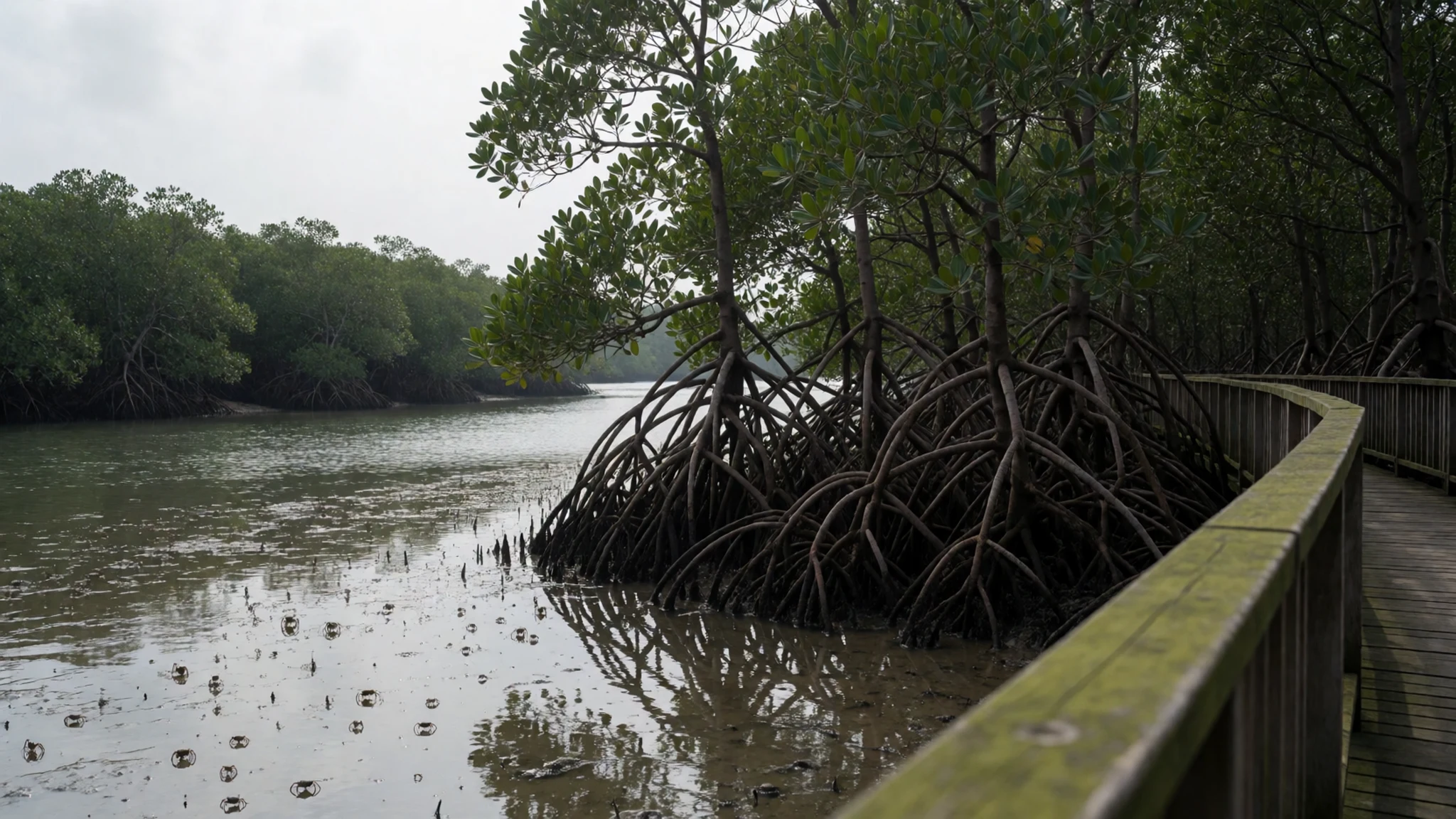
- Tanaka Isson Memorial Art Museum — Amami city area
The Tanaka Isson Memorial Art Museum is dedicated to the work of the artist Tanaka Isson. It offers a quiet indoor break when the midday heat builds. Opening days can be irregular for small museums, so check the official site before you plan a visit around it.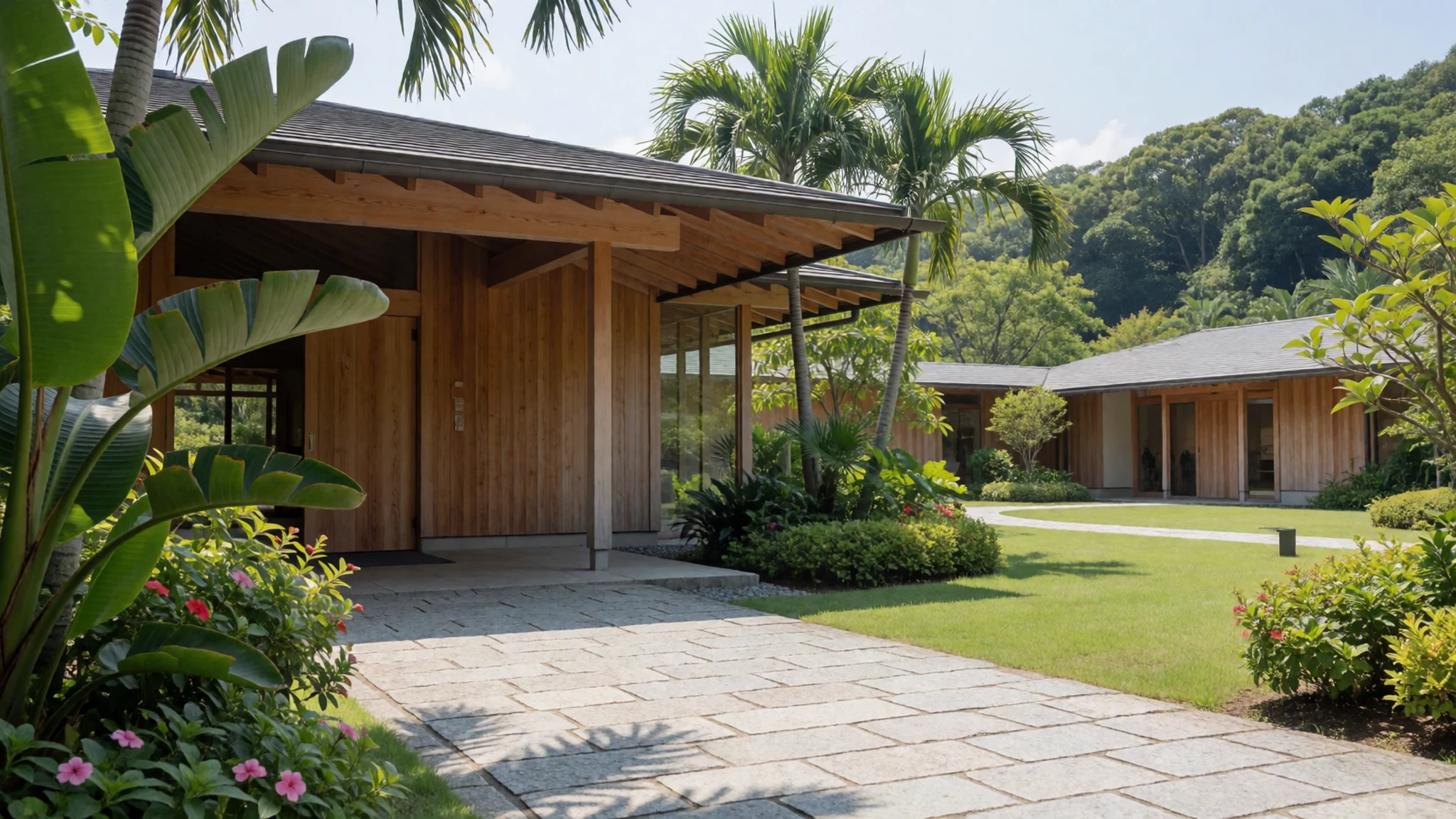
- The island's beaches — Amami City and the coasts
Amami's beaches are its main draw. Many sit in small coves between headlands, with coral reef just offshore, and the quieter ones are easiest to reach by scooter or car rather than by bus. When swimming or snorkelling, watch for sea urchins lying on the sea floor and wear reef shoes on rocky entries.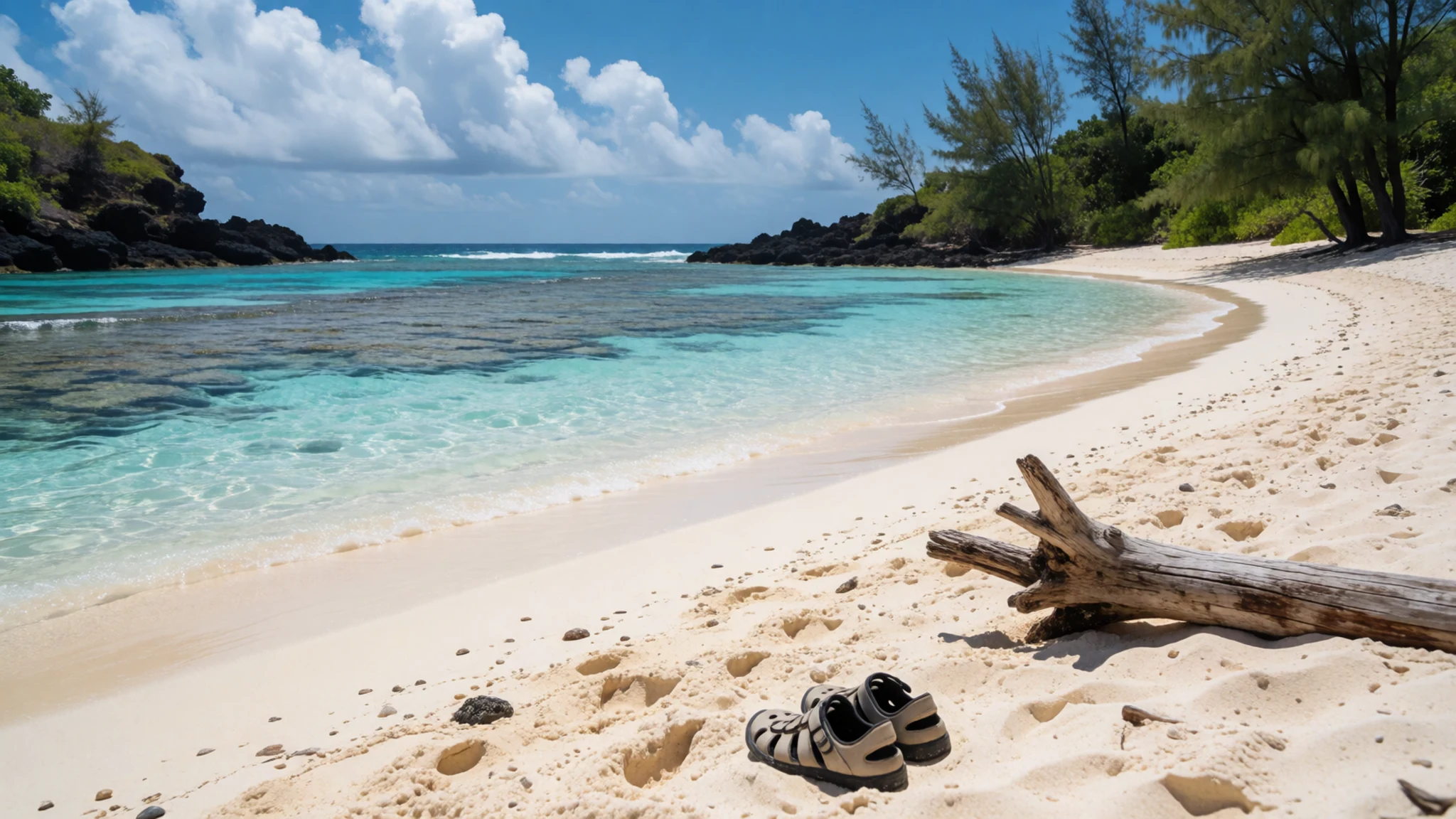
Culture
Amami Ōshima has its own character within Japan. Its language, food and crafts carry traces of the centuries it spent under the Ryukyu Kingdom and the Shimazu domain. Community life is shaped by farming and fishing, and people in the villages tend to be friendly but not effusive with strangers. Local festivals and rites are part of everyday life, so follow the lead of those around you.
Drinking is central to social life, especially in Naze. The bars along Yanigawa serve kokutō shōchū, a spirit made from sugar cane, and nights out tend to be relaxed and conversational. When drinking with a group, let others pour for you and top up their glasses before your own. Keep voices low in residential streets after dark, as sound carries easily in the still evening air.
History is also part of the island's present. The house of Saigō Takamori is kept as a memorial, and visitors are expected to treat it as a serious site. Ask before photographing people at local events or in villages, and avoid taking pictures inside private homes or religious sites without permission.
What to wear
Ōshima-tsumugi is the island's best-known textile: a hand-crafted silk that is dyed with mud to give the cloth its characteristic black. It is mainly woven into kimono, and the process is slow because the dyeing and weaving are done by hand over many stages. Its reputation has led people to compare it with fine carpets and tapestries from other parts of the world, though it remains a regional craft rather than a mass-market cloth.
Day to day, people on Amami dress much as they do across Japan in warm weather. Short sleeves, light trousers or skirts, and sandals or sneakers are common. Office workers and older residents may dress more formally in town, but the humid climate sets the tone. Hand-woven tsumugi kimono are a special-occasion garment rather than everyday wear.
For a visit, pack light, breathable clothes that dry quickly, since the island is humid for much of the year and the rainy season brings heavy showers. A light waterproof layer helps during typhoon season. Wear sturdy closed shoes for forest and mangrove paths, and bring a hat and sun protection for the beaches. At temples or shrines, cover shoulders and knees, and keep swimwear for the sea.
What to eat
- Kokutō shōchū — Yanigawa street and izakaya in Naze
Kokutō shōchū is a distilled spirit made from sugar cane, and it is the island's signature drink. Look for it in the izakaya and small bars along Yanigawa, the lane running away from Naze's port, where drinkers order it on the rocks or with water.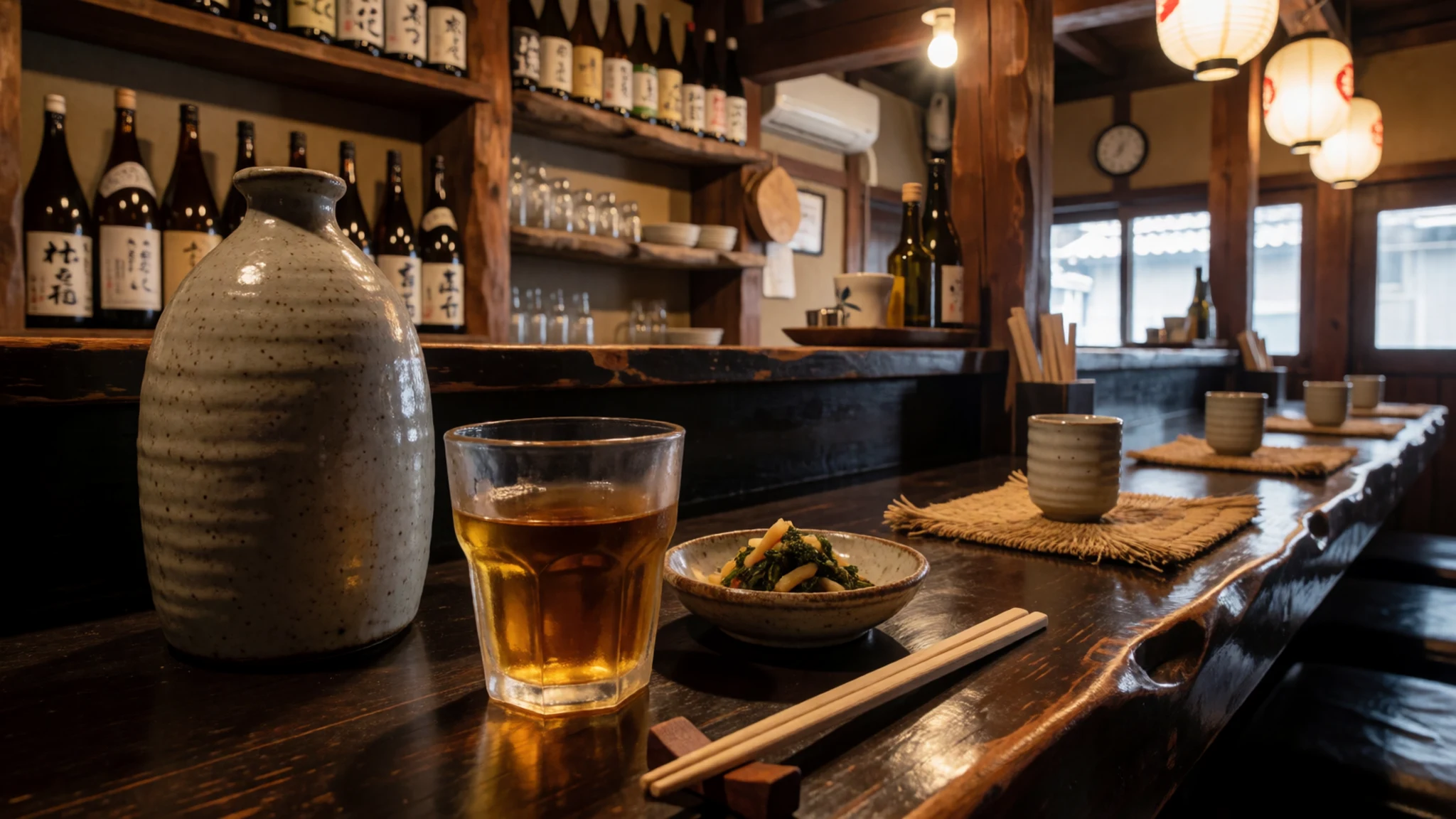
- Jidori chicken — Casual eateries in Naze near the ferry terminal
Jidori is a local free-range chicken, served in simple grilled and stewed dishes that suit a long day on the island. Look for it at casual eateries in Naze, especially near the ferry terminal, where people often wait for a boat with time to eat.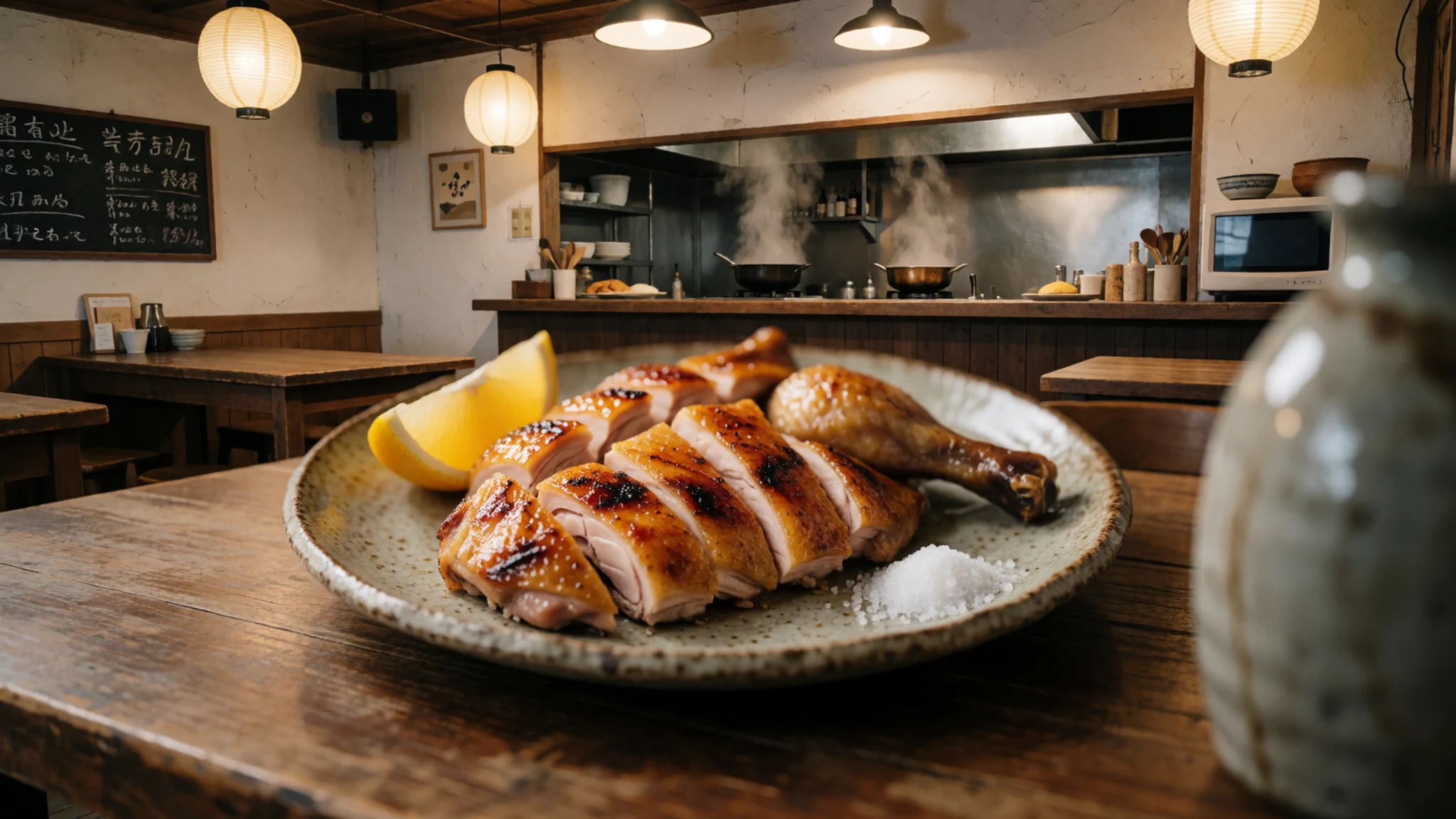
- Sweet potatoes — Morning produce stalls and markets in Naze
Sweet potatoes are one of the island's staple crops, grown alongside sugar cane and rice. Look for them fresh at morning produce stalls and local markets, and in homemade snacks sold at small shops near the port. Buy what is in season and ask the stallholder how they like it cooked. - Sugar cane sweets and brown sugar — Grocery shops and markets in Naze and the villages
Sugar cane shapes the island's food as well as its drink. Brown sugar and syrups from the island's fields are sold in markets and grocery shops, and they feature in sweets and home cooking. A small bag makes a practical gift to take home.
Plan it
Best time. March to April for mild weather and fresh green, or November to December once the heat has eased. The rainy season runs from May through September, and the island is prone to typhoons, so keep plans flexible through late summer.
How long. 3–4
Getting there. Amami Airport (ASJ) has direct flights to Tokyo, Osaka, Fukuoka, Kagoshima, Naha and other islands. From the airport, a local bus runs into Naze in almost an hour, and taxis and hire cars are also available. Ferries from Naze port connect to Kagoshima and Naha.
Budget. mid
Tips
- Book an advance fare early, as the cheapest flights sell out ahead of summer.
- Hire a scooter or car to reach the quieter beaches, since buses do not serve every cove.
- Carry cash for the airport bus and small eateries, as some accept only cash.
- Start beach visits early, before the midday heat peaks, and carry plenty of water.
- Check flight and ferry status close to your travel dates, because typhoons can cancel services.
Etiquette
- Stay on marked paths in the protected forest and mangrove areas.
- Wear reef shoes and watch for sea urchins, especially on rocky entries.
- Give habu snakes plenty of room in the hills and do not try to handle wildlife.
Nearby
Sources
- Wikidata Q697278 (CC0)
- Wikipedia: Amami Ōshima (rev 1381517108) (CC BY-SA 4.0)
- Wikivoyage: Amami Oshima (rev 5311200) (CC BY-SA 4.0)
- Amami Oshima Island, ISS019 (photo 01) (Public domain)
- A beach in Amami City (photo 02) (CC BY 2.5)
- View of Katetsu cove from Manen-zaki (photo 03) (CC BY 3.0)
- Mangrove in Amami (photo 04) (CC BY 3.0)
- Kinsakubaru wildwood (photo 05) (Public domain)
- Amami city centre (photo 06) (CC BY 3.0)
- Naze port (photo 07) (CC BY 3.0)
- Amami Airport (photo 08) (Public domain)


