Beppu
Beppu, Japan
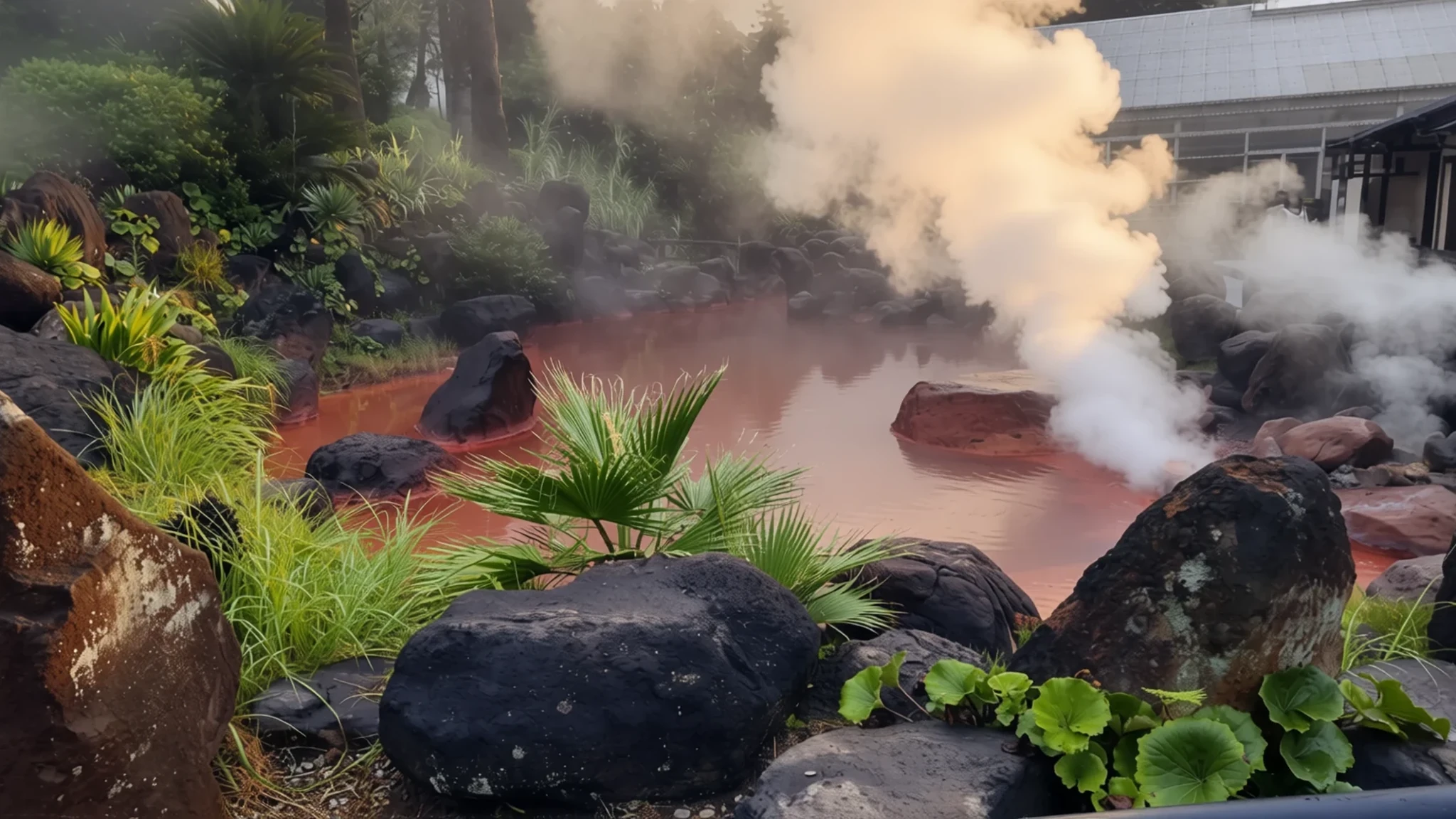
Beppu is a Kyushu port city where steam, public baths and boiling pools sit in ordinary streets.
The place
Beppu occupies a narrow strip of Ōita Prefecture on the east coast of Kyushu, with hills at its back and Beppu Bay in front. It is a port, a shopping town and a university city that happens to stand on a field of hot water, so steam is ordinary civic scenery rather than a fenced resort. Pipes run along lanes, vents open beside houses, and the mineral smell is part of the street. Inland the ground climbs into Kannawa, Myoban and the other districts of the Hatto, the set of onsen neighbourhoods that give Beppu its shape. Each has a different water and a different rhythm: some are clusters of small public baths, some are steam huts on a slope, some are viewing pools too hot for bathing. Down by the station the city looks like many other provincial centres in Kyushu, with covered shopping streets and buses, until a white plume crosses the road. The bay gives the lower town its light and its weather. Summers are humid, the early summer brings a long rainy spell, and typhoons can cross the coast later in the year. Winters stay comparatively mild, which suits a place organised around outdoor soaking. People who live here treat the baths as daily infrastructure. A soak can be a morning habit, the same steam that heats a bath can cook a meal, and the pale crust on the pipes at Myoban is mineral left behind by that water. Visitors who only chase the coloured pools miss the point of Beppu. The spectacle and the ordinary bathhouse belong to one city, and the station that serves both is the same.
Its story
Beppu grew up as a bathing town rather than a castle town. People along this bay used the hot water long before anyone sold a tour of it, and the districts of the Hatto still read as villages that acquired inns. The railway age changed the scale. Once trains reached this shore of Ōita, travellers seeking a cure or a soak could arrive without a long overland trek, and inns, bathhouses and shops gathered around the station and the older springs. Takegawara, the wooden public bath in the lower town, is older than that turn: a civic bathhouse with a sand bath beside the ordinary tubs, already open long before the trains. Pools that boil and stain too fiercely for the body were awkward to sell as medicine, so they were shown instead. The hells, the jigoku, became a circuit of coloured water, mud and steam that a visitor walks and leaves. One pool keeps crocodiles in the heat, which makes plain that the circuit is a show as well as a landscape. At Myoban an older habit survived. Small huts sit on the vents and yunohana, a mineral gathered from the steam, is still collected on the slope, a cottage industry older than the souvenir shops. After the war, family trips and company outings filled the same baths. Later Ritsumeikan Asia Pacific University opened on the edge of the city, and students from many countries joined a town built for Japanese bathers. The water has been in local use for a very long time, the tourism is modern, and between them Beppu remains a provincial city that never stopped living on its steam.
What to see
- Kannawa Onsen — Kannawa
Kannawa is the hillside onsen district in Beppu where steam lies over roofs, pipes and lanes of baths. Many of the viewing hells sit in this neighbourhood, so residents soaking and tour groups share the same lanes. The air smells of sulphur and the stone is wet. Public baths here are neighbourhood facilities set among an unusual density of steam, and the lanes are calmer before the coach parties arrive.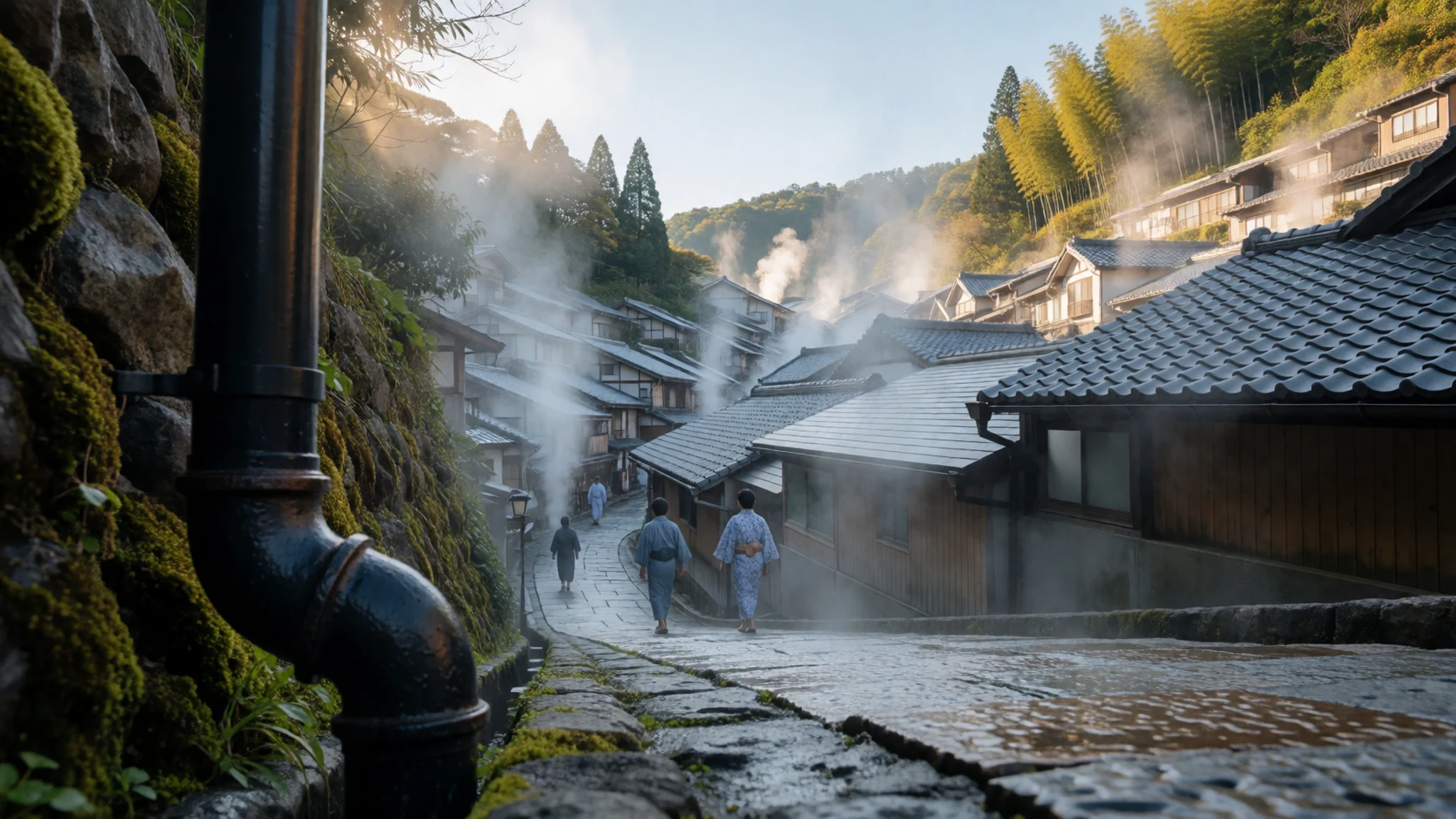
- The jigoku — Kannawa
The jigoku of Beppu are boiling pools shown as sights, not baths, gathered around Kannawa. Umi Jigoku is a blue pool; Chinoike Jigoku is a red pond; other hells bubble mud, jet steam or blow a geyser. Paths, fences and ticket windows mark a managed walk. The water is for looking, and the colour comes from minerals and heat rather than dye.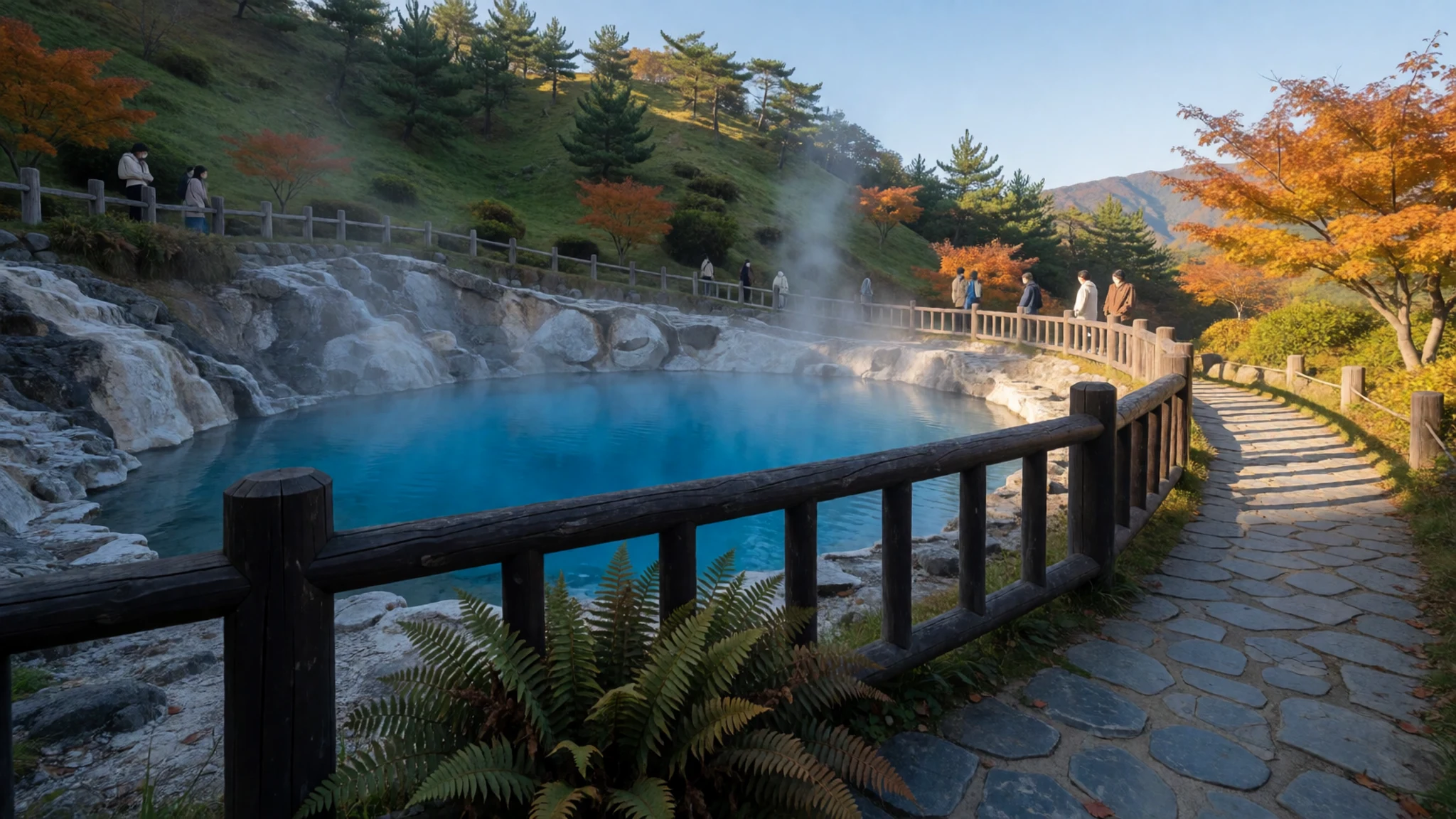
- Takegawara Onsen — central Beppu, near the station
Takegawara Onsen is the old wooden public bath in central Beppu, known for a sand bath as much as for its tubs. Bathers lie buried in hot sand, then rinse and soak inside. The building, decades older than the railway, is still a neighbourhood bathhouse, used by residents as well as visitors, and it shows how Beppu bathes when the point is the water rather than a viewing pool.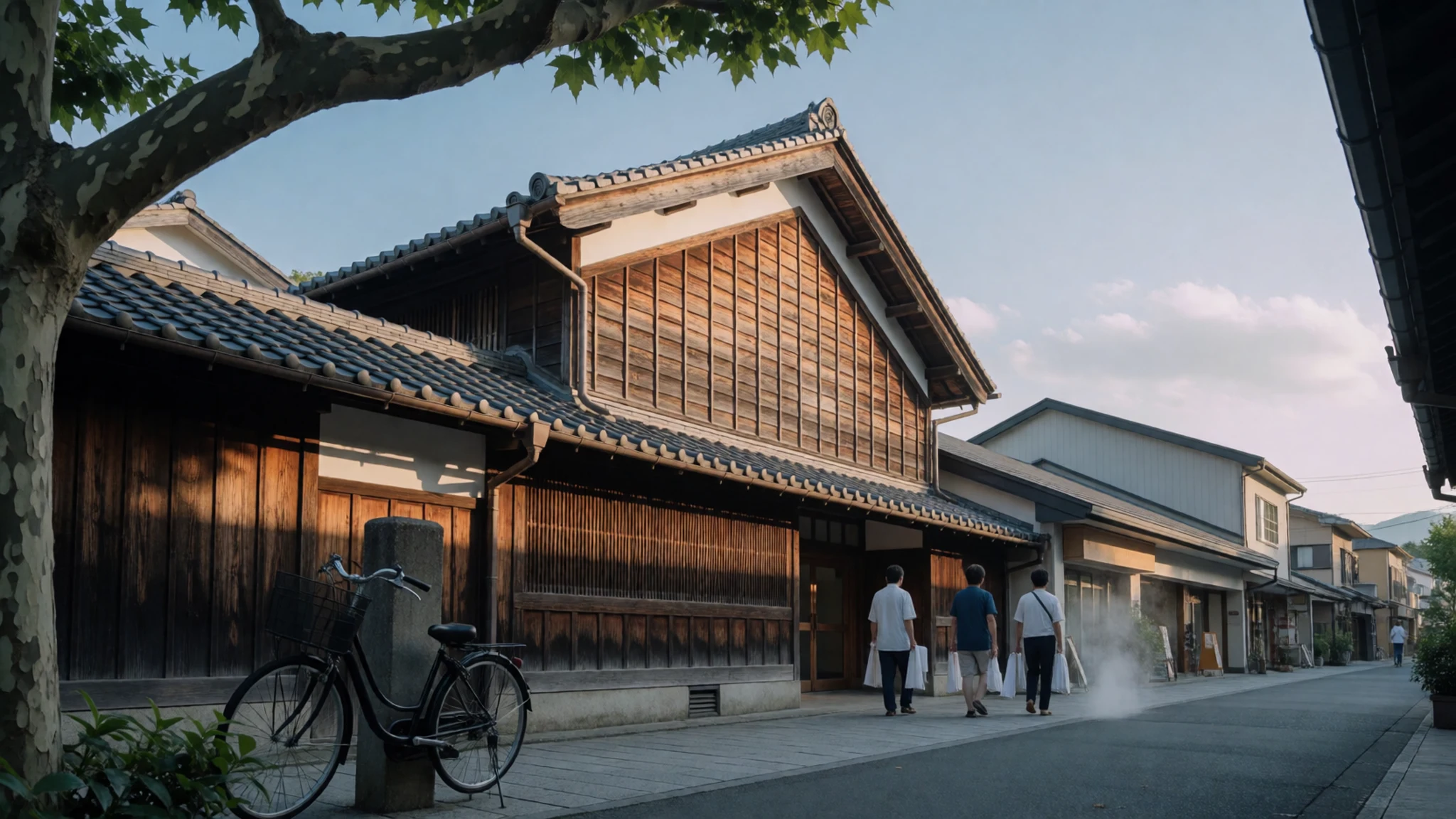
- Myoban — Myoban
Myoban, in the hills above Beppu, is an alum spring district of steam huts rather than large bathhouses. Thatched shelters sit on the vents, and yunohana, a pale mineral, is gathered from the steam on the slope. Walking between the huts is the visit as much as soaking is. Small baths lower down use the same hillside water.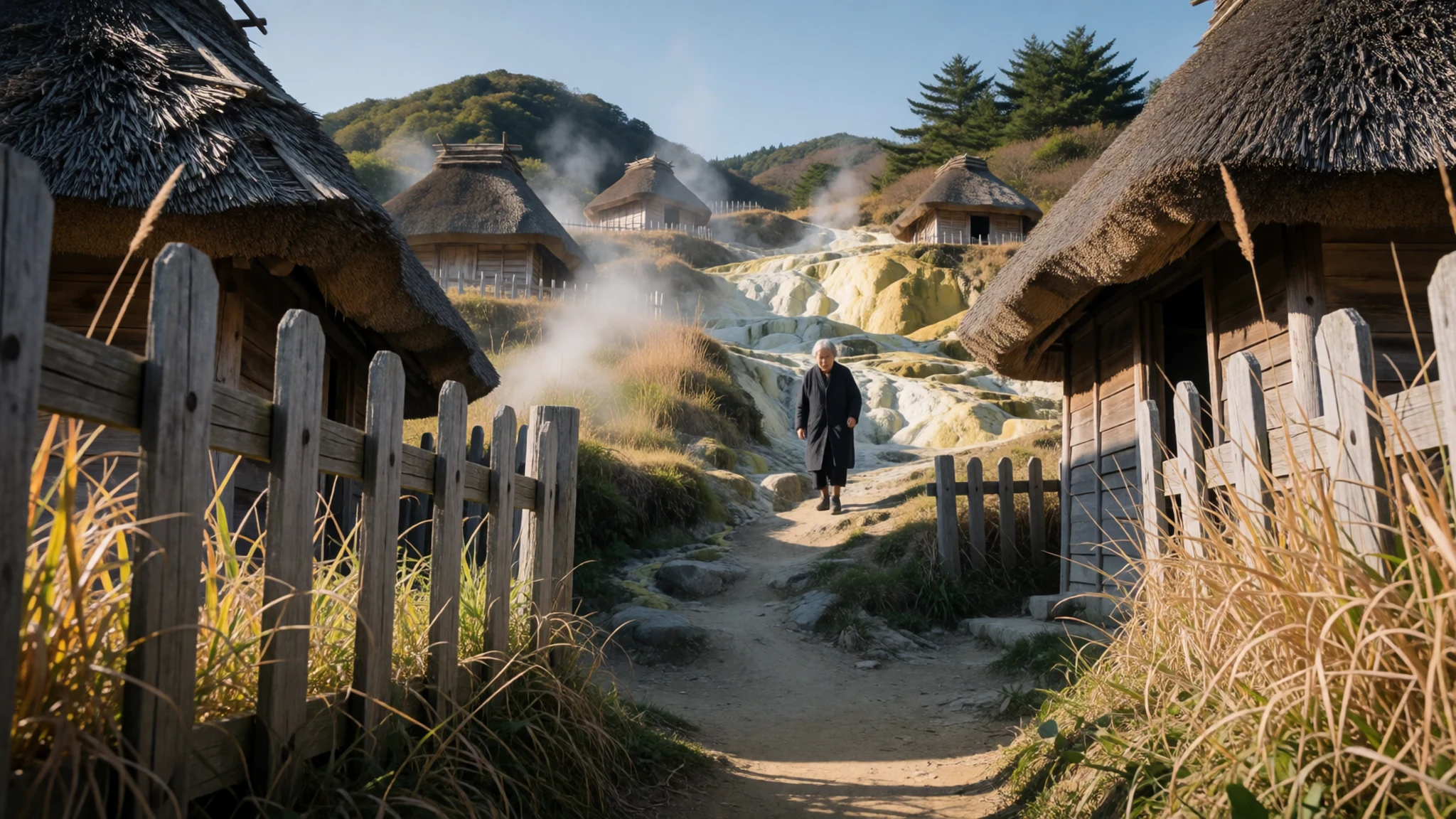
- Kankaiji — Kankaiji
Kankaiji is a hillside onsen district on the western edge of Beppu, with baths set above the bay. The point here is the long view as much as the water: outdoor tubs look over roofs towards Beppu Bay, and the walk up from the lower town is steep. It is less caught up in the hell circuit than Kannawa, so the mood is closer to a residential slope of baths.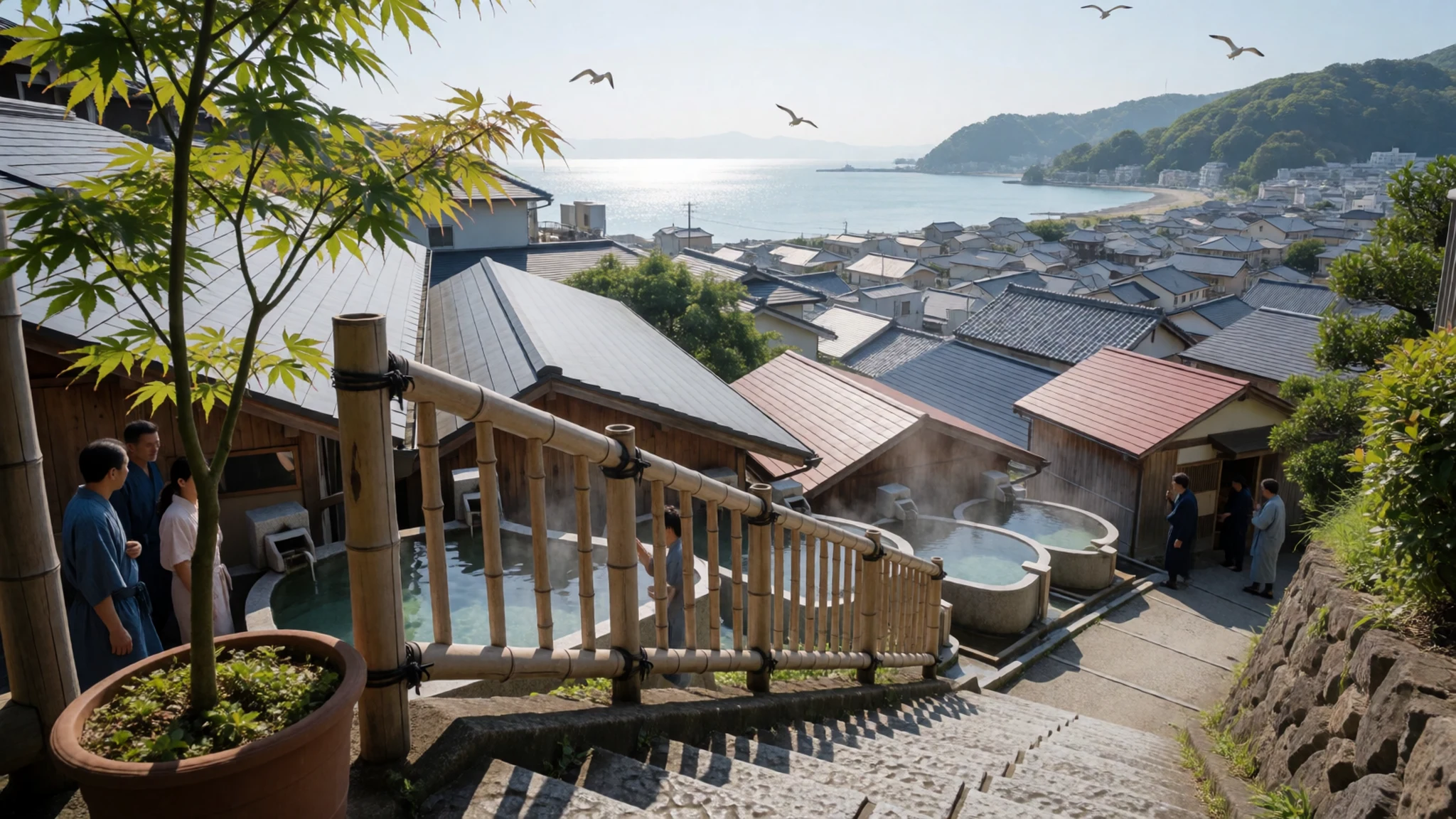
Culture
Beppu's culture is bath culture first. A public onsen is a civic room: residents stop in on the way home, and the rules used across Japan apply here every day because the baths are everywhere. Washing with soap happens on a stool before anyone enters the shared tub. The small towel stays out of the water, and is used to cover the body between changing room and bath. Swimming, splashing and loud talk are out of place. Many baths in Beppu still refuse visible tattoos or ask that they be covered, a policy that varies from house to house. Ryokan life adds the yukata, worn from room to bath to dinner inside the inn. The hells are a different social space, a paid outdoor walk where people photograph pools rather than other people. At Myoban, gathering yunohana remains a local craft, and steam cooking in Kannawa turns the geothermal water into a shared meal. Festivals through the year treat the springs as the city's identity. Ritsumeikan Asia Pacific University has added many languages to the station area, but the bathhouse still runs on quiet and a stack of plastic baskets. In a Beppu bath, wash completely on the stool before the tub, keep the small towel out of the water, and leave the camera in the changing room.
What to wear
Dress in Beppu follows the bath as much as the season. The garment tied to a stay in a Beppu ryokan is the yukata, a cotton robe with a tied belt, worn between room, bath and evening meal. Cotton is the practical choice: light, washable and decent for corridors where people move between dressed and bathing. Patterns run to indigo, printed florals or plain stripes, with wooden geta or plastic sandals that slip off at a threshold. Office workers wear suits near the station, students wear trainers and light layers, and summer brings loose shirts and sun umbrellas. Winter days are mild and the season is the driest, so coats are lighter than in northern Japan, with a scarf for the wind off the bay. Visitors need a kit that serves walking and bathing. The hells and Myoban mean slopes, steam and rain, so shoes with grip matter, yet those shoes have to come off easily at a bathhouse door. A robe, or a modest change of clothes, covers the walk from changing room to tub when the inn does not lend a yukata, and the inn's own cotton robe is normal dress at dinner. Swimwear belongs in a swimming pool if the lodging has one, not in a public onsen and not on the street. The small towel is a bath tool; a larger towel is for afterwards. In the rainy months a light waterproof layer is worth packing, because the sights are outdoors and heavy cloth copes badly with steam.
What to eat
- Toriten — eateries around Beppu Station
Toriten is Ōita's chicken tempura, and in Beppu it turns up in ordinary eateries around the station. Strips of chicken wear a light batter and come with a citrus-soy dip or salt. It is an everyday prefectural dish, the sort of set meal residents order without ceremony.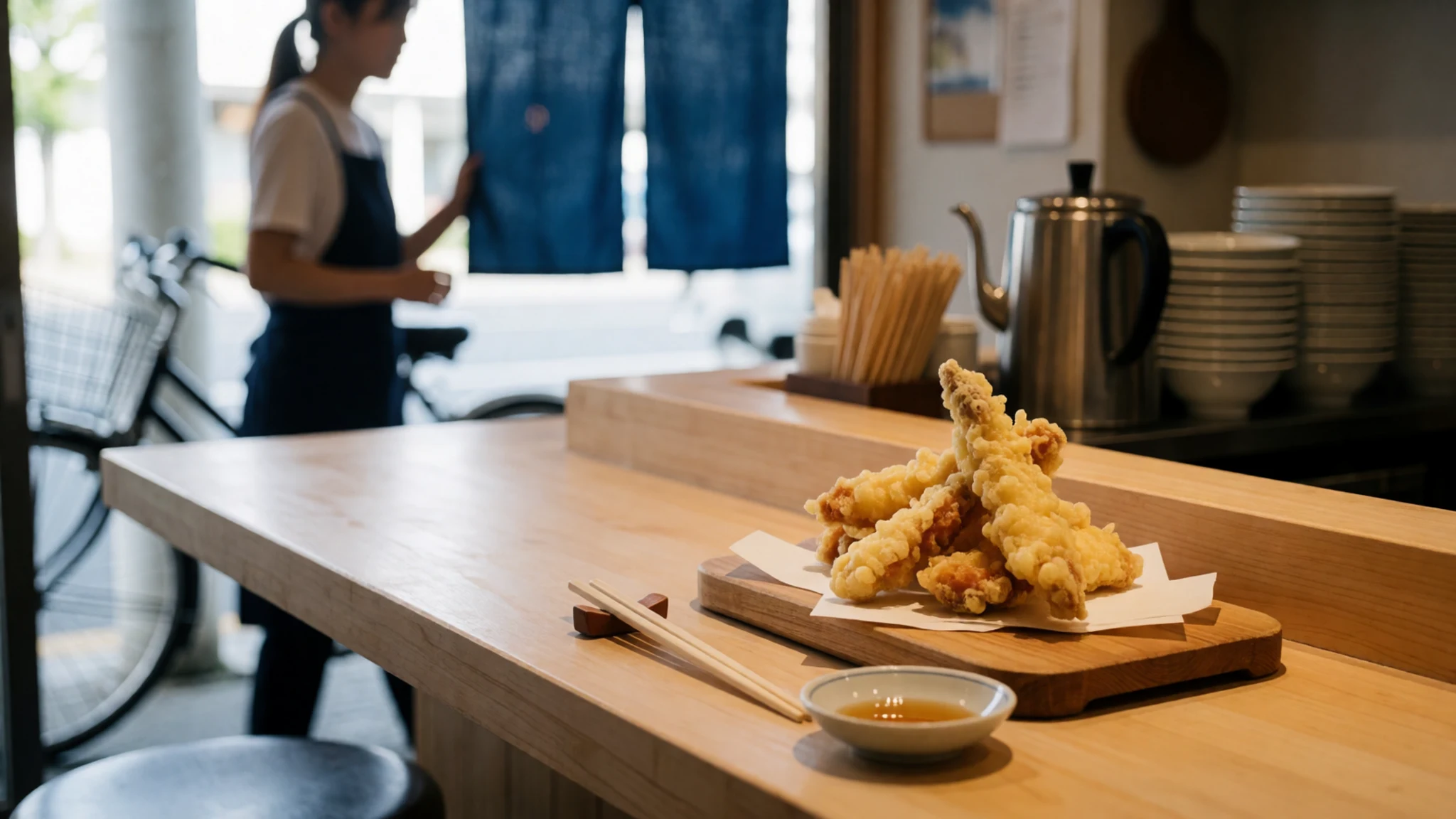
- Jigoku-mushi — steam kitchens in Kannawa
Jigoku-mushi is food cooked in the steam of Beppu's springs, most easily found in Kannawa. Eggs, vegetables, seafood and sometimes puddings go into a steam box fed by the vents, and come out hot and plain, without a fryer or a flame.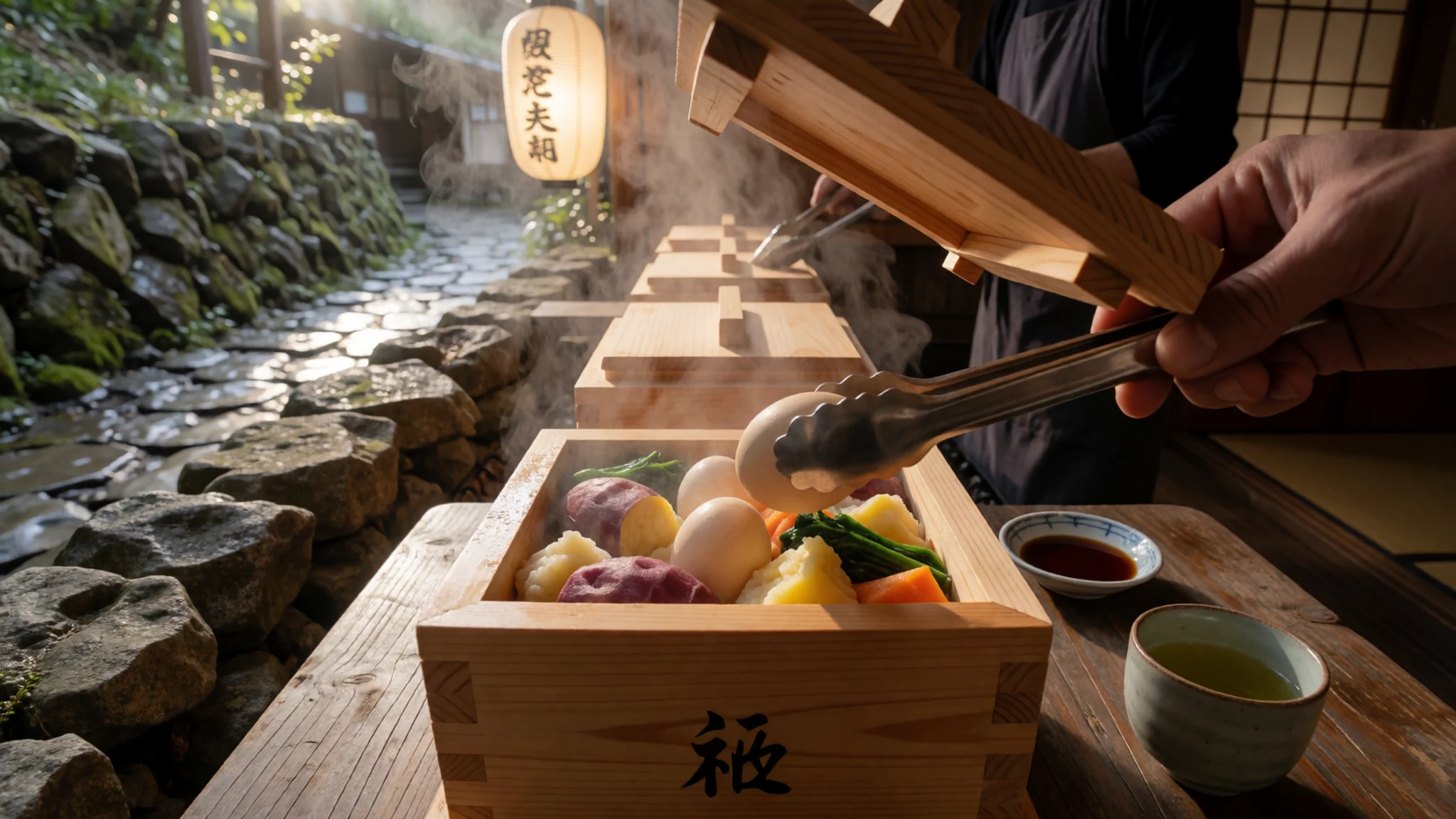
- Dango-jiru — home-style eateries in Beppu
Dango-jiru is an Ōita soup found in Beppu home-style eateries: wheat dumplings in a miso broth with vegetables, root crops or mushrooms. It eats like a farmhouse dish, filling and plain, and it belongs to the prefecture's colder-weather cooking more than to the souvenir street. - Bungo beef — grill houses and ryokan dinners
Bungo beef is Ōita wagyu under the old provincial name, and in Beppu it appears in grill houses and in ryokan dinners. The meat is grilled or set into small courses. It is the celebratory side of local cooking, beside the chicken and soup of ordinary days. - Seki aji and seki saba — sushi counters and fish shops
Seki aji and seki saba are horse mackerel and mackerel from the Ōita coast, served in Beppu as sashimi or cured fish at sushi counters and fish shops. Menus name both species because the catch is local and eaten very fresh.
Plan it
Best time. April and November are the most comfortable months for walking the hills, April with blossom, and October is warmer though clearer than summer. July is the wettest month and August the hottest, and both are humid. Winter days stay mild enough for outdoor bathing, though nights fall below freezing.
How long. 2–3
Getting there. Oita Airport, then a bus or a taxi into Beppu. By rail, the JR Nippo Main Line reaches Beppu Station, with limited express links from Hakata. Check current timetables with the railway or the airport bus operator.
Budget. mid
Tips
- Start the hell circuit early, before coach parties fill the lanes in Kannawa.
- Ask each public bath about tattoos before the trip, because house rules differ.
- Carry cash for small neighbourhood baths that do not take cards.
- Choose shoes with grip for wet slopes that also slip off at a bathhouse door.
- Leave the outdoor hells for a clear day; rain and summer humidity make the walk heavy.
Etiquette
- Wash on the stool before stepping into a shared tub.
- Keep towels and phones out of the water, and do not photograph bathers.
- Keep voices low in a public bath; residents are using it too.
Nearby
Sources
- Wikidata Q329681 (CC0)
- Wikipedia: Beppu (CC BY-SA 4.0)
- Wikivoyage: Beppu (CC BY-SA 4.0)