Aogashima
Aogashima, Japan
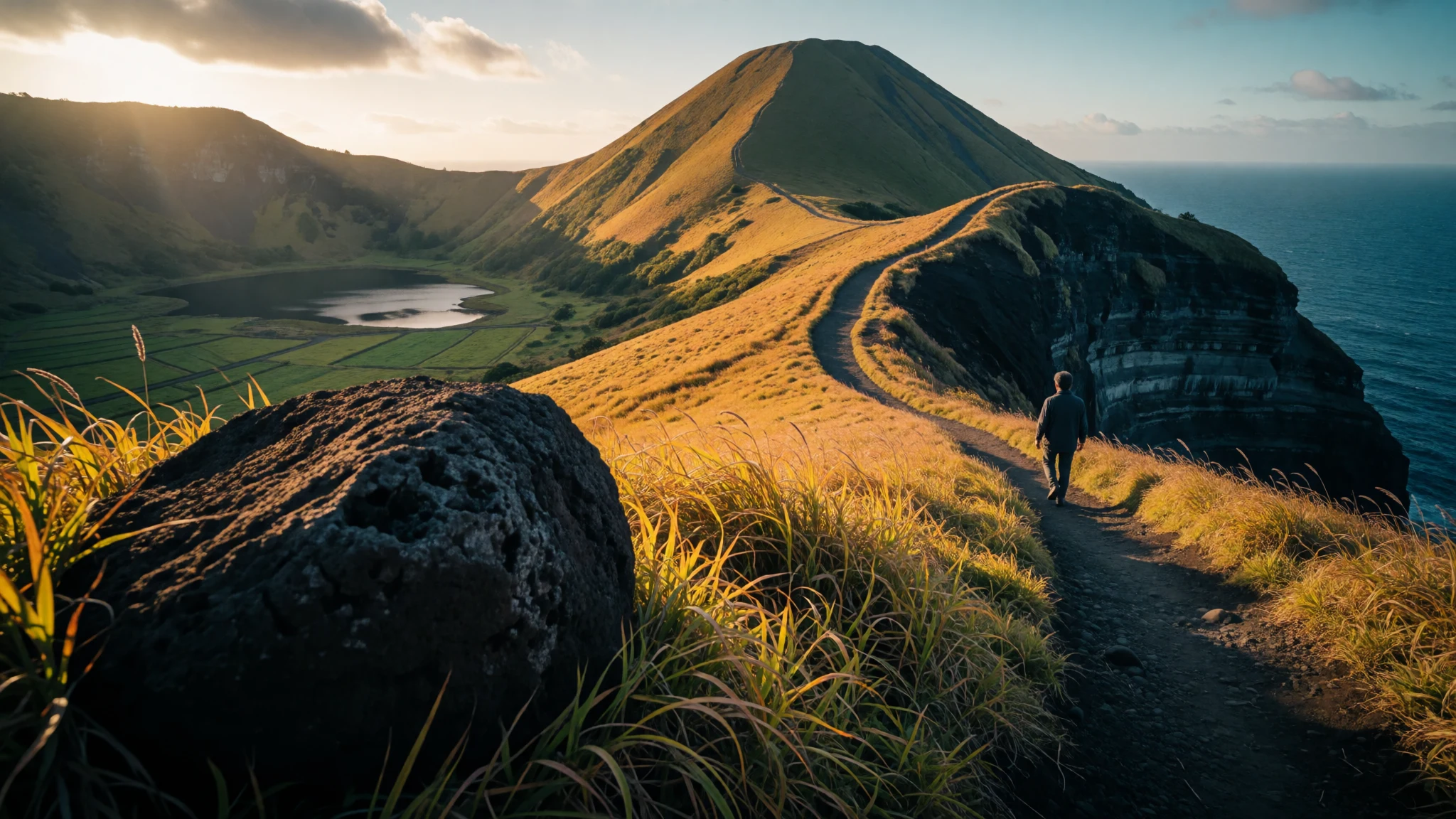
Aogashima is a village-sized island with a volcano inside a volcano, reached by weather-dependent boat and offering quiet, dark skies and ridge walks.
The place
Aogashima is a volcanic island that belongs to Tokyo, yet it sits far out in the Philippine Sea, about 358 km south of the mainland capital. It is the southernmost inhabited island of the Izu chain, and its nearest sizeable neighbour is Hachijō-jima, to the north. Only about 170 people live here. They form their own village, administered through the Hachijō Subprefecture, and the whole island falls inside Fuji-Hakone-Izu National Park, a name most people link with the mainland rather than a rock in the open ocean.
The shape is what sets Aogashima apart. Sheer cliffs of layered volcanic rock wall in almost the entire coastline, so there are very few places where a boat can come in. Inside, the southern ridge curves around a wide caldera called Ikenosawa, and its high point, Otonbu, reaches 423 m. In the middle of that bowl stands a smaller cone, Maruyama, which is why the island is often described as a double volcano. The houses and fields sit within the bowl, sheltered from the sea wind.
The Japan Meteorological Agency still classes the volcano as active, although it has been quiet for a long time. Practically, this is not an island for a quick stop. Ferries and helicopters depend on the weather, accommodation is small-scale, and the village's own tourism pages are in Japanese only. People come for the landscape, the silence and the dark night sky, and the ones who enjoy it most are those willing to let the weather set the schedule.
Its story
Aogashima's human history is patchy. Nobody can say with confidence when people first settled the island, and the clearest written records come from the Edo period, kept on Hachijō-jima, the larger island to the north. Those papers note volcanic unrest on Aogashima more than once during the seventeenth century.
The great crisis came in the late eighteenth century. An earthquake swarm shook the island, steam began rising from the lakes inside the Ikenosawa caldera, and further tremors led to an eruption. Lava flowed from the Maruyama cone, and every household on the island was evacuated. A far larger eruption followed, and well over a third of the islanders died in it. The community was scattered, and the island stood largely empty before people eventually made their way back and rebuilt.
That past explains a good deal about the present. The village is small partly because of geography and partly because of inheritance: it was re-established by people who knew exactly what the mountain could do. There has been no significant volcanic activity since that period, but the island is still watched as an active volcano, and the caldera remains the centre of daily life. A visitor standing on the rim is looking at both the cause of the old disaster and the shelter the islanders chose to return to. It is a quietly sobering view, and most of the island's older stories lead back to it.
What to see
- Maruyama cone — Centre of the Ikenosawa caldera
Maruyama is the small cone rising from the floor of the Ikenosawa caldera, and it is the image most people associate with Aogashima. It sits green and calm inside the bowl. Seen from the rim, the double-volcano shape finally makes sense, and the light is best early or late in the day.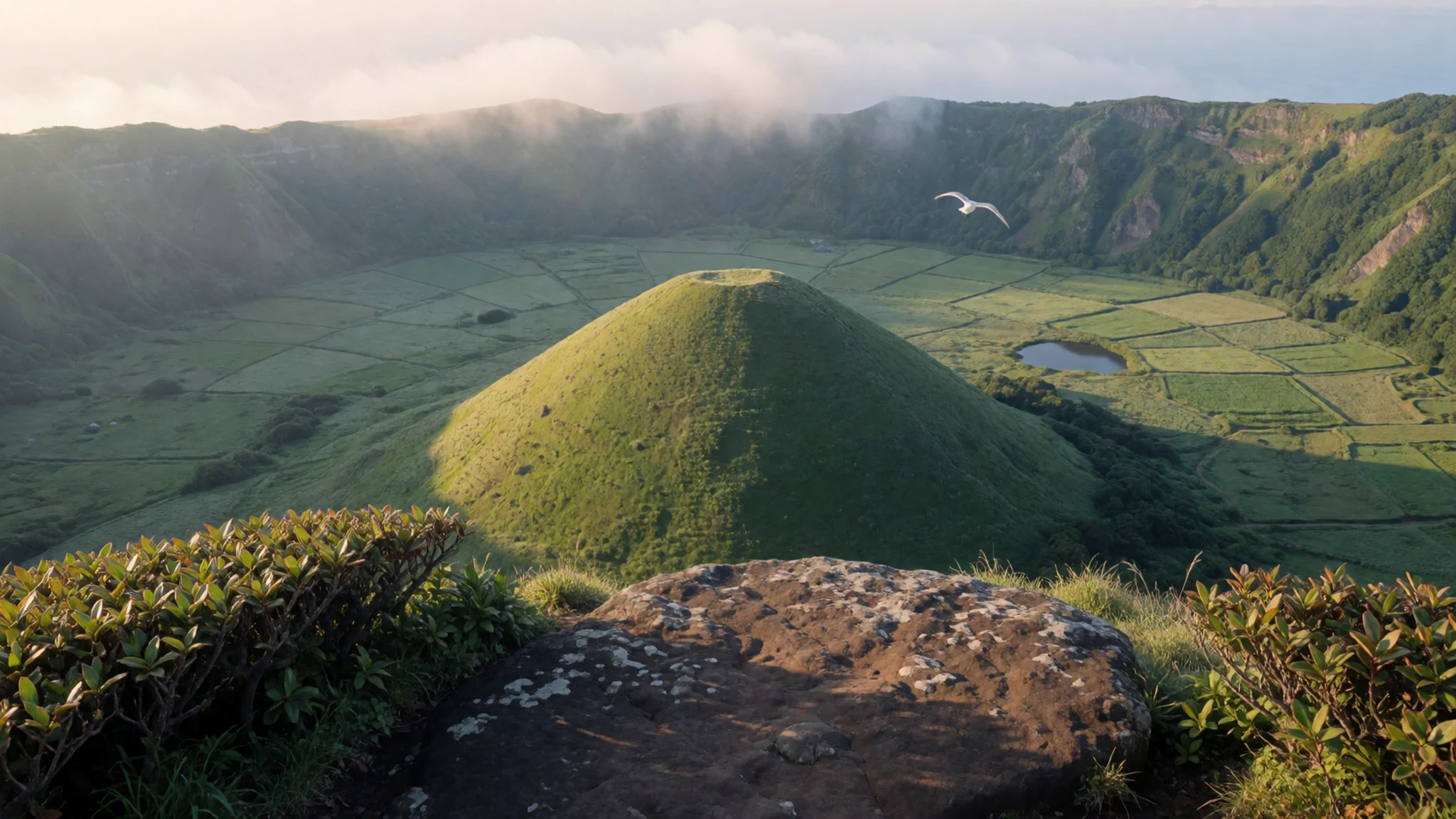
- Caldera rim and Otonbu — Southern ridge above the caldera
A walk along the southern ridge gives the widest view of the island, with the caldera on one side and open ocean on the other. Otonbu, the high point, stands on this ridge. Wind can be strong and cloud can drop in quickly, so choose a clear morning and go slowly.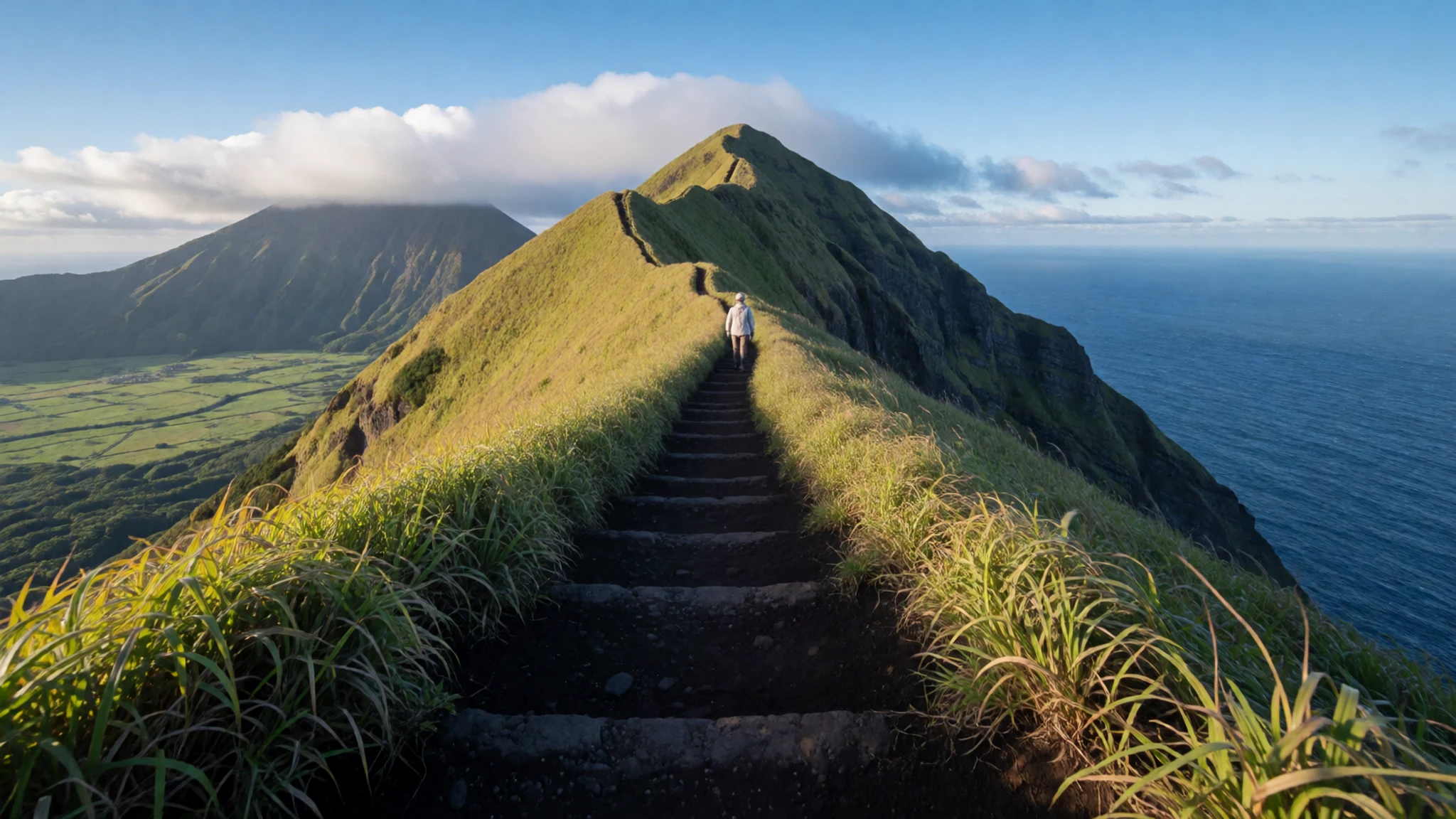
- Island shrines — Village area inside the caldera
Small shrines stand among the houses and fields of the village. They are modest places, not grand buildings, but they show how closely daily life here is tied to the mountain and the sea. Visit quietly, keep to the paths and treat them as places still in active use.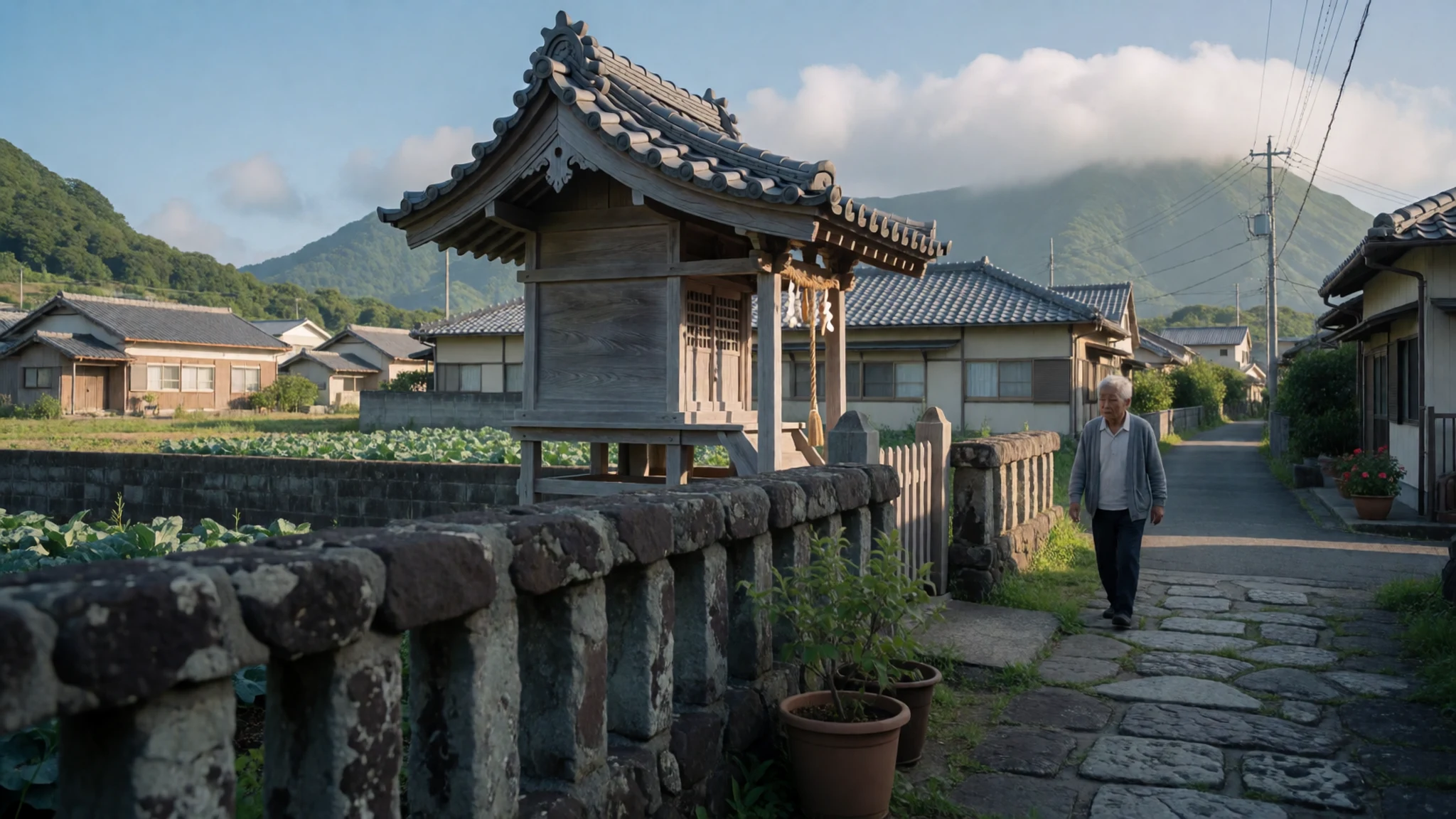
- Hot spring — Near the village
A hot spring is one of the things visitors can do on Aogashima, and it is a welcome reward after a day on windy ridges. Opening arrangements and entry rules can change, so ask at your accommodation or the village office before planning a day around it.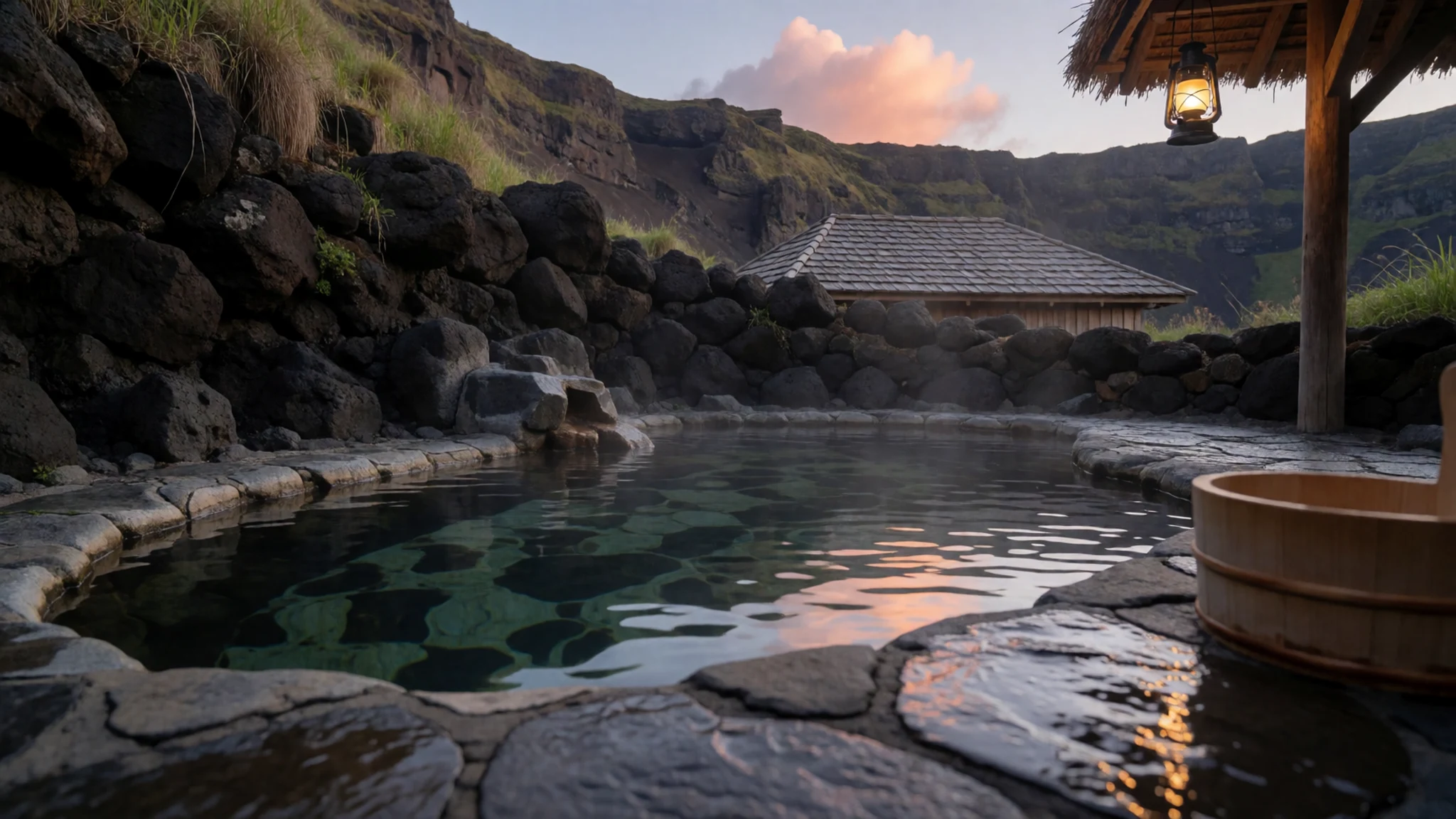
- Night sky — Anywhere away from the village lights
With so few residents and no big town for hundreds of kilometres, the island has very little light pollution. On a clear night the stars are dense and the Milky Way is easy to see. Bring a torch with a red setting, warm layers and patience, since cloud is common.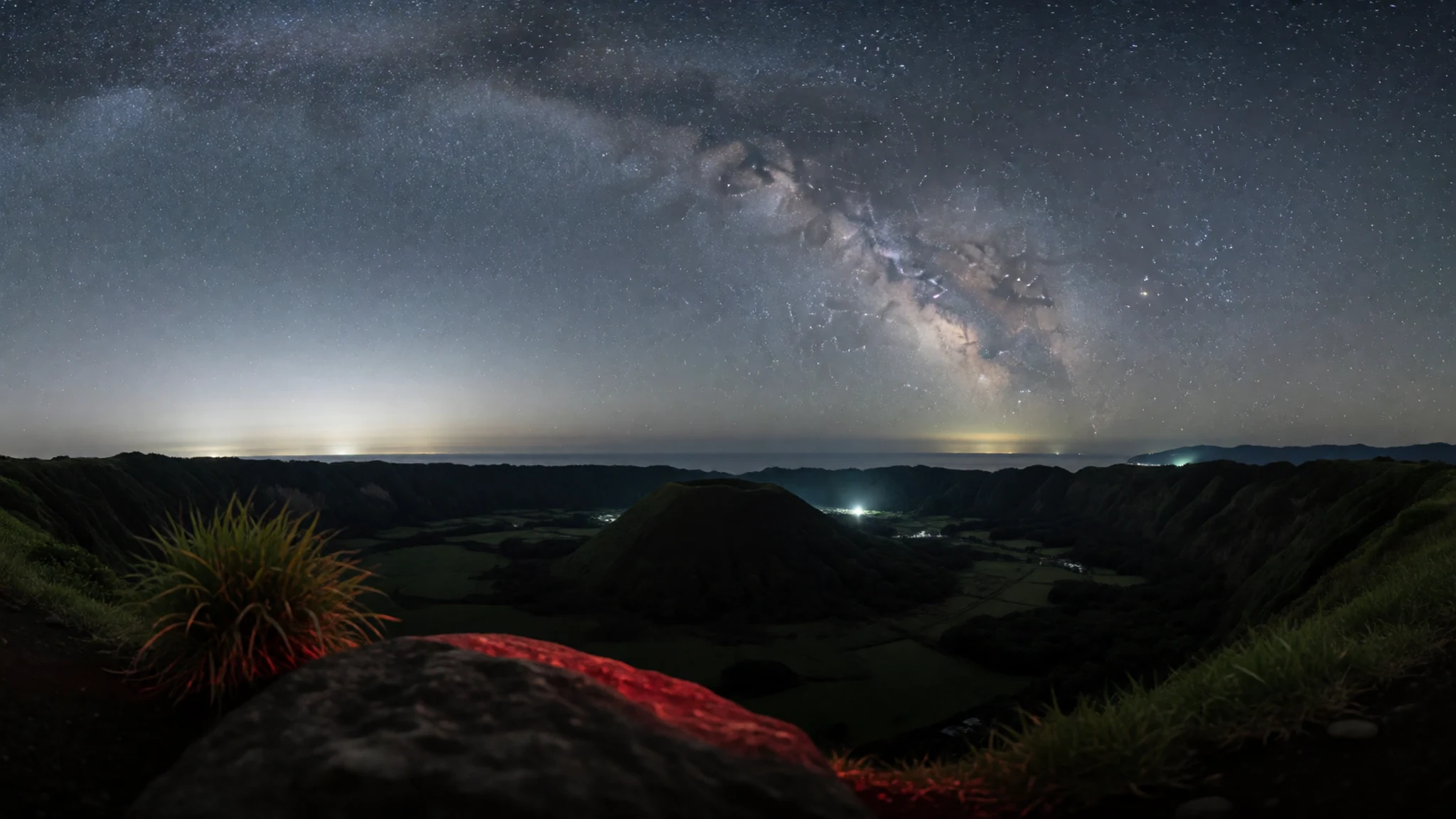
Culture
Aogashima's culture is shaped by isolation. A community of about 170 people, living inside a volcanic bowl far out at sea, depends on neighbours, on the weather and on the boat or helicopter that links it to Hachijō-jima. Visitors quickly notice how much of life is shared: supplies arrive when the sea allows, and plans change without much fuss when it does not.
The volcano sits at the centre of local memory. The eruptions of the late eighteenth century forced the whole population off the island and cost many lives, and the village that exists today was rebuilt on that experience. The small shrines among the houses belong to this world. They are part of how people mark the seasons, give thanks and acknowledge a landscape that has both fed and endangered them.
Ordinary hospitality is warm but unshowy. Most visitors stay in small family-run guesthouses called minshuku, where meals are served at set times and conversation over dinner is part of the stay. Shochu, the distilled spirit, is the drink most associated with the island. Because Japanese is the working language and the village's own tourism pages are Japanese only, a few polite phrases, a translation app and a patient attitude go a long way.
One rule matters above the rest: this is a living village, not a park. Keep your voice low near homes and shrines, ask before photographing residents or their fields, and take all your rubbish back off the island with you.
What to wear
Traditional Japanese dress is the starting point for any discussion of clothing on Aogashima, though the brief for this reading does not record a distinct island costume, so it is best not to claim one. The kimono, a wrapped robe of silk or cotton, and its lighter summer cousin the yukata, made of unlined cotton, are worn across Japan for festivals, ceremonies and shrine occasions. On a small island they would appear mainly at village events rather than in daily life.
What people wear day to day is practical. Residents live by farming, fishing and the weather, so expect work trousers, rubber boots, windproof jackets, caps and layers that can be added or removed quickly. Smart clothes are kept for gatherings and visits to the shrines. Nobody dresses for show, and a mud-spattered jacket reads as sensible rather than scruffy.
For visitors, comfort and footing matter most. Wear sturdy shoes with good grip, since the ridge paths and cliff-top tracks can be steep, wet or loose. Bring a windproof and waterproof shell even in warmer months, because sea wind and sudden cloud are normal, plus a warm layer for the evenings and the night sky. A hat and sun protection help on exposed ridges. Modesty rules are relaxed, but covered shoulders and knees show respect at shrines and in the village. Pack light, since luggage must be carried on small boats or a helicopter, and weight limits may apply.
What to eat
- Shochu — Evening meals at a minshuku, or the island's small shops
A distilled spirit made from ingredients such as sweet potato, barley or rice, and the one drink the island's travel notes single out. Take it neat, with water or over ice, and sip slowly. It is strong, so pace yourself.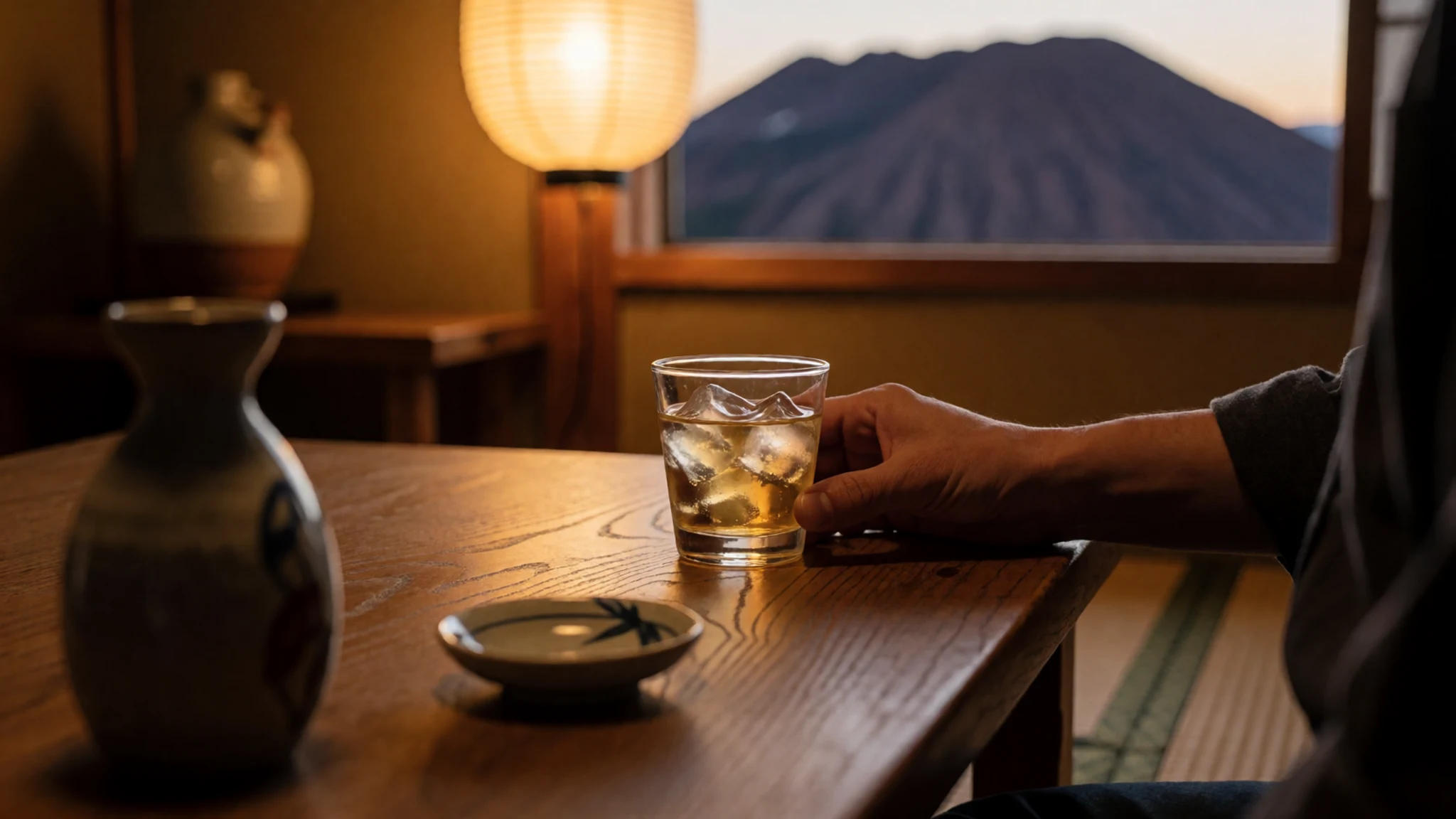
- Fresh local fish — Dinner at a guesthouse (minshuku)
On a remote island ringed by deep water, fish is the obvious centrepiece of dinner. It is usually served as sashimi or grilled simply with salt. What appears depends on the day's catch and the sea, so ask what is available rather than expecting a fixed menu.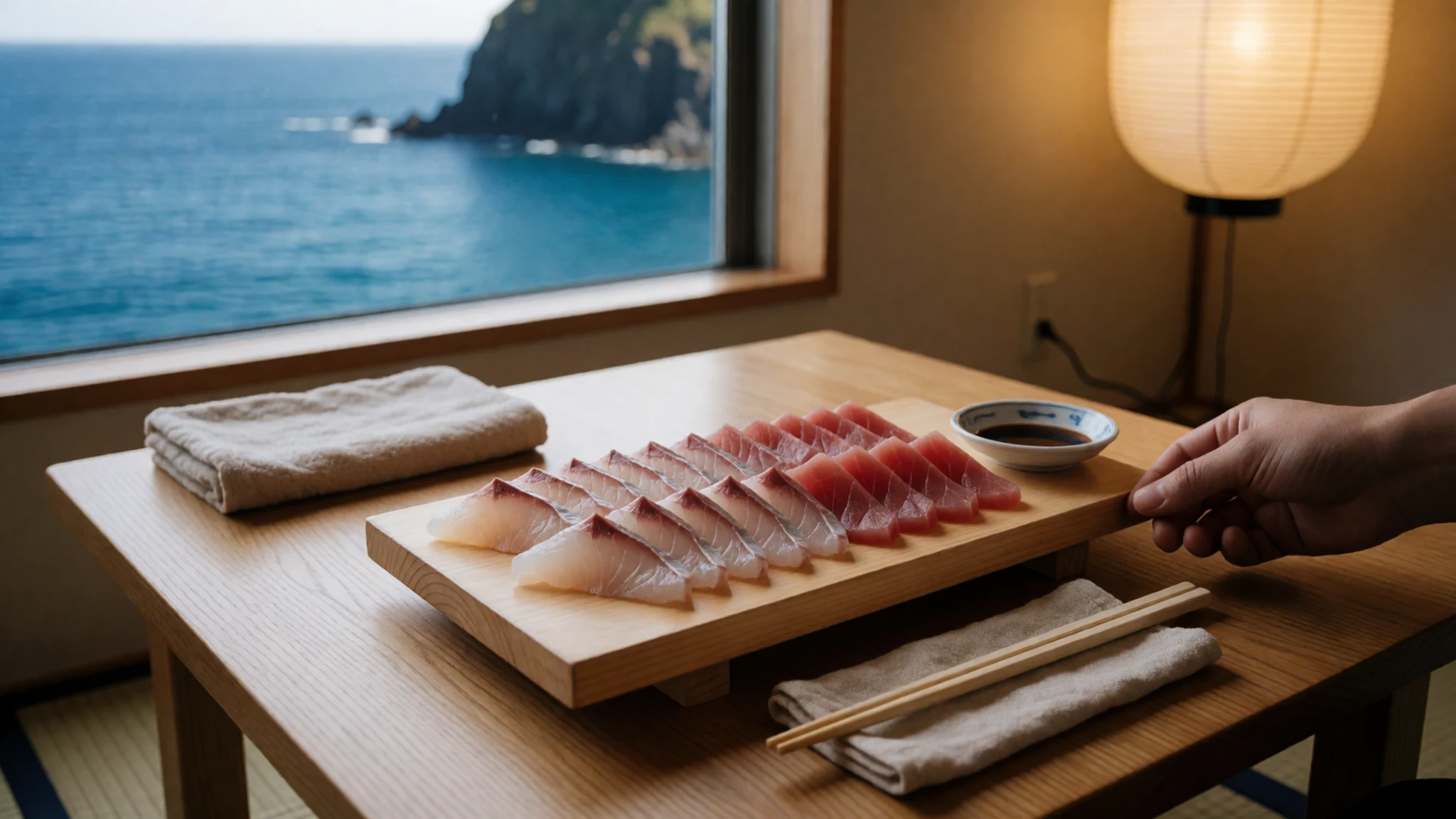
- Rice, miso soup and pickles — Breakfast at your accommodation
A plain Japanese breakfast of steamed rice, miso soup, pickled vegetables and perhaps grilled fish is a comfortable start before a ridge walk. It is filling, easy on the stomach and typical of what guesthouses serve everywhere in Japan. - Simmered island vegetables — Home-style meals at a minshuku
Vegetables grown on the island are often cooked slowly in a light soy-and-dashi broth and served as a side dish. Availability changes with the season, but this kind of home cooking is the most likely way to taste what the village itself produces. - Onigiri and packed lunch — Arranged through your accommodation, or the island's small shops
Rice balls with a filling such as pickled plum or salted fish are the easy choice for a day on the ridge. Shops on the island are few and small, so ask your host the evening before whether a packed lunch can be prepared.
Plan it
Best time. April–May and October–November tend to be the most comfortable for walking, with milder temperatures. Late summer and early autumn bring typhoon risk and rough seas that can cancel boats and flights. Winter wind can also disrupt crossings, so build in spare days whatever the month.
How long. 2–3
Getting there. First reach Hachijō-jima from Tokyo, checking current flight and ferry options. From Hachijō-jima, a daily ferry takes about 2.5 hours but is weather dependent, and a faster, pricier helicopter also runs. Check the village's official site and the operators for current schedules and fares.
Budget. mid
Tips
- Build at least one spare day into your trip, since ferries and helicopters are cancelled when the weather turns
- Book accommodation and transport well ahead, because beds and helicopter seats are very limited
- Bring cash and any supplies you need, as shops are few and small
- Carry a windproof layer and water on ridge walks, since cloud and wind arrive quickly
- Go out on a clear night for the stars, with a torch and warm clothing
Etiquette
- Greet people you meet, and keep your voice low near homes and shrines
- Ask before photographing residents, and stay on paths away from fields
- Take all your rubbish with you when you leave
Nearby
Sources
- Wikidata Q615578 (CC0)
- Wikipedia: Aogashima (rev 1363881359) (CC BY-SA 4.0)
- Wikivoyage: Aogashima (rev 5424220) (CC BY-SA 4.0)
- Photo: Maruyama in Aogashima (Soica2001) (Public domain)
- Map of the Izu Islands (Artanisen) (Public domain)

