Aizu-Wakamatsu
Aizu-Wakamatsu, Japan
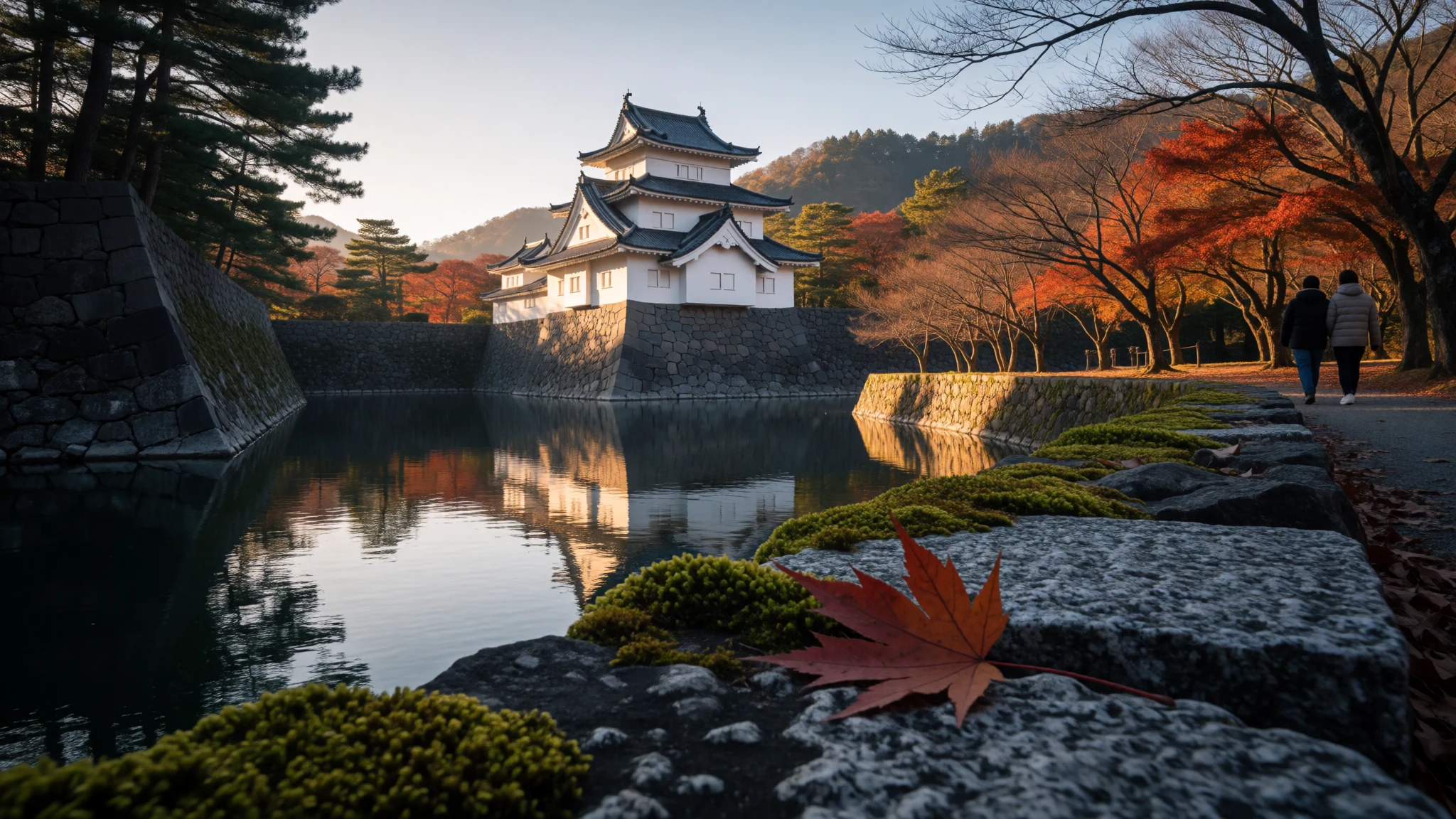
Aizu-Wakamatsu is a quiet snow-country castle town where the last stand of a samurai domain still shapes the streets, food and crafts.
The place
Aizu-Wakamatsu is a city in the west of Fukushima Prefecture, Japan, set in the south-eastern corner of the Aizu basin, a bowl of rice land ringed by mountains. It has a population of 117,924 and was constituted as a city in 1955. The shape is that of a regional town: a compact centre near the railway station, the castle on its mound just south of the middle, and farming districts that stretch out to lakes and hot-spring valleys. Lake Inawashiro lies to the east, and the spa villages of Higashiyama Onsen and Ashinomaki Onsen sit in the hills nearby. Rivers including the Aga and the Yugawa cross the basin, and Mount Ōtodake forms the high skyline. Winters bring very heavy snow, more like the Sea of Japan coast than the drier Pacific side of the country, and that climate shapes what is eaten and how houses are built. Summers are warm and humid, and September is the wettest month. The city calls itself a samurai town, and the label is earned: the old Aizu domain's loyalty to the shogunate, and its defeat, is the thread most visitors follow. Away from the sights it is an ordinary working place of rice farming, sake brewing and lacquerware, with quiet streets and a pace far slower than Tokyo's. Crowds are modest outside the autumn-colour weeks and public holidays, which makes it an easy place to linger.
Its story
Aizu-Wakamatsu sits in a basin that people have farmed since prehistoric times, and a burial mound from the 4th century still stands inside the city limits. For a long stretch the settlement was a trading point where merchants met and local strongmen held sway, until the Kamakura shogunate absorbed the region in the late twelfth century. A samurai of the Miura clan received Aizu as a reward, and one of his descendants began the first castle in 1384. After the Ashina family lost its grip during the Sengoku wars, the domain passed quickly between rival lords, among them Date Masamune, who yielded it to Toyotomi Hideyoshi in 1590. Hideyoshi's ally Gamo Ujisato then took charge, laid out a fresh castle from 1592, and gave the town the name Wakamatsu, meaning young pine. Under the Edo-period shogunate the domain changed hands again, with Uesugi Kagekatsu holding it briefly around 1600, and later became a stronghold of the shogun's loyal supporters. That loyalty brought the hardest chapter. In 1868 Aizu forces were besieged in the castle and, after about a month, were beaten; a photograph of the damaged keep survives from the aftermath. The castle on the hill today is a later reconstruction, but the memory of the siege remains the city's best-known story. The modern municipality dates from 1955.
What to see
- Aizu Wakamatsu Castle (Tsuruga-jō, 鶴ヶ城) — South of the town centre
Aizu Wakamatsu Castle is the centrepiece of the town. The white keep is a concrete reconstruction, so the interest lies less in original timber than in the siege at the end of the Edo period, when the garrison held out for about a month. The top floor gives a wide view over the rooftops and the basin.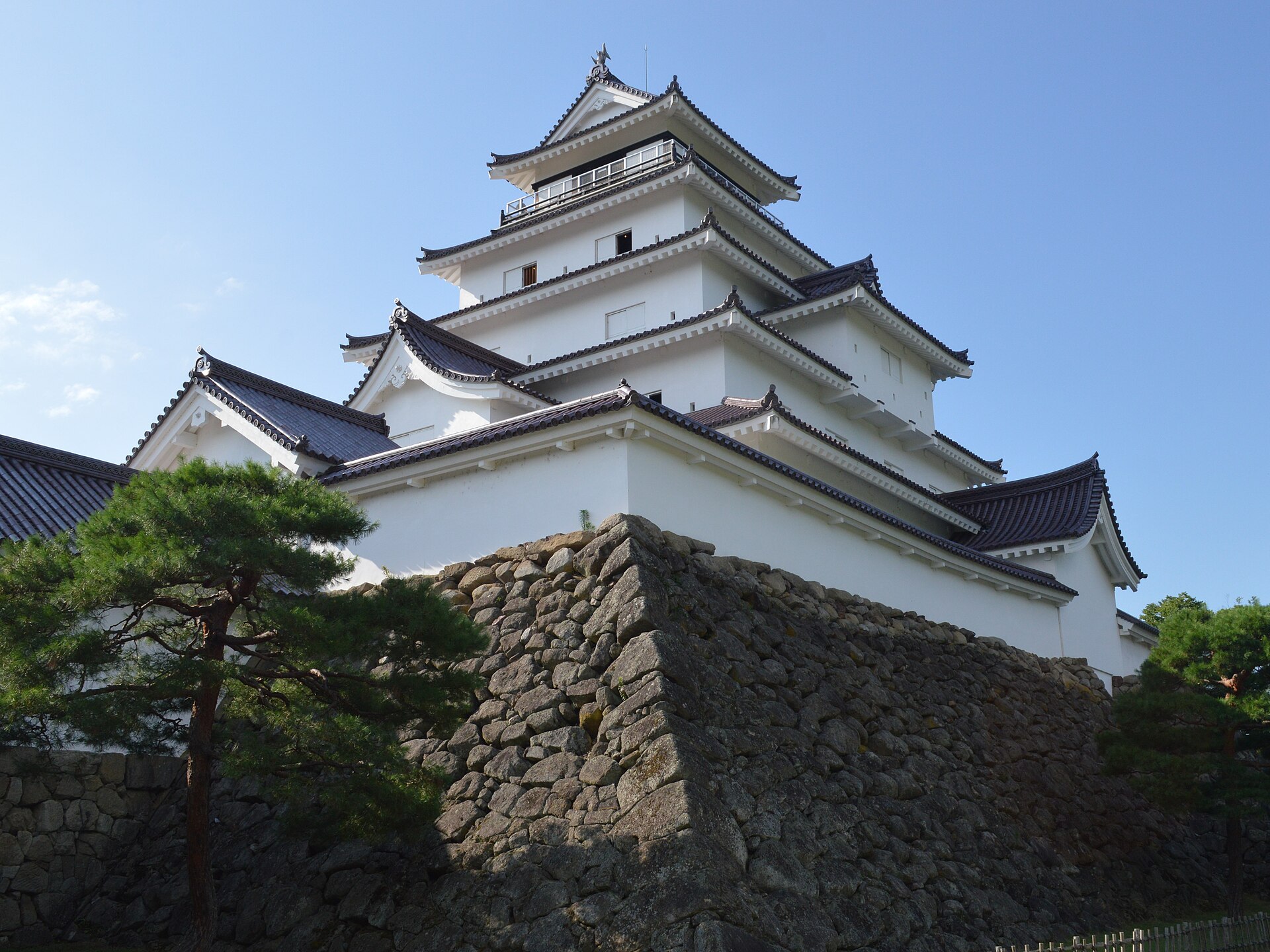
- Oyakuen Garden — East of the centre
Oyakuen began as a garden for a teahouse used by the lords of Aizu, and it is still known for medicinal plants, with hundreds of kinds grown in its beds. It is a calmer hour than the castle: paths and plantings around a pond, best in autumn colour or early summer green.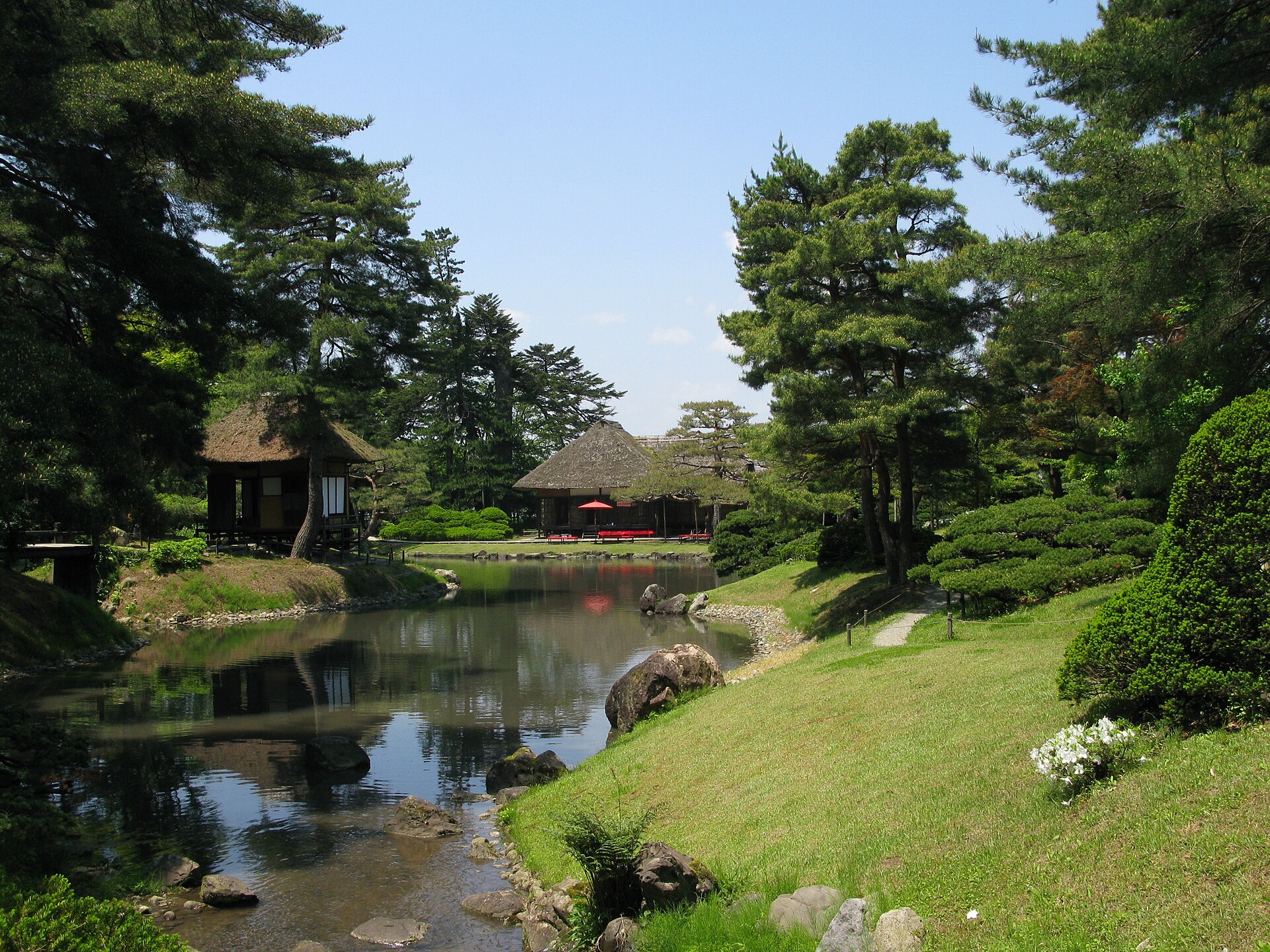
- Nisshinkan — Aizu-Wakamatsu
Nisshinkan was the Aizu domain's school for samurai sons, opened in the early nineteenth century. Boys studied academic subjects, martial arts and manners side by side, the aim being principled, loyal retainers. It is a useful stop for understanding the values behind the domain's last stand. Check the official city site for opening arrangements. - Samurai Residence — East of the centre
The Samurai Residence is a preserved estate built around the house of a chief retainer of Aizu. The compound also includes a teahouse, a magistrate's office, a warehouse and a rice mill, so it shows how a senior household ran day to day. A weekday morning is the quietest time to walk the rooms. - Sazae-do (会津さざえ堂) — Mount Iimori, east of the centre
Sazae-do is a wooden Buddhist hall on the slope of Mount Iimori, built so that a spiral ramp carries worshippers up and a separate one brings them down without retracing steps. It is an odd, memorable piece of carpentry and a short climb from the town.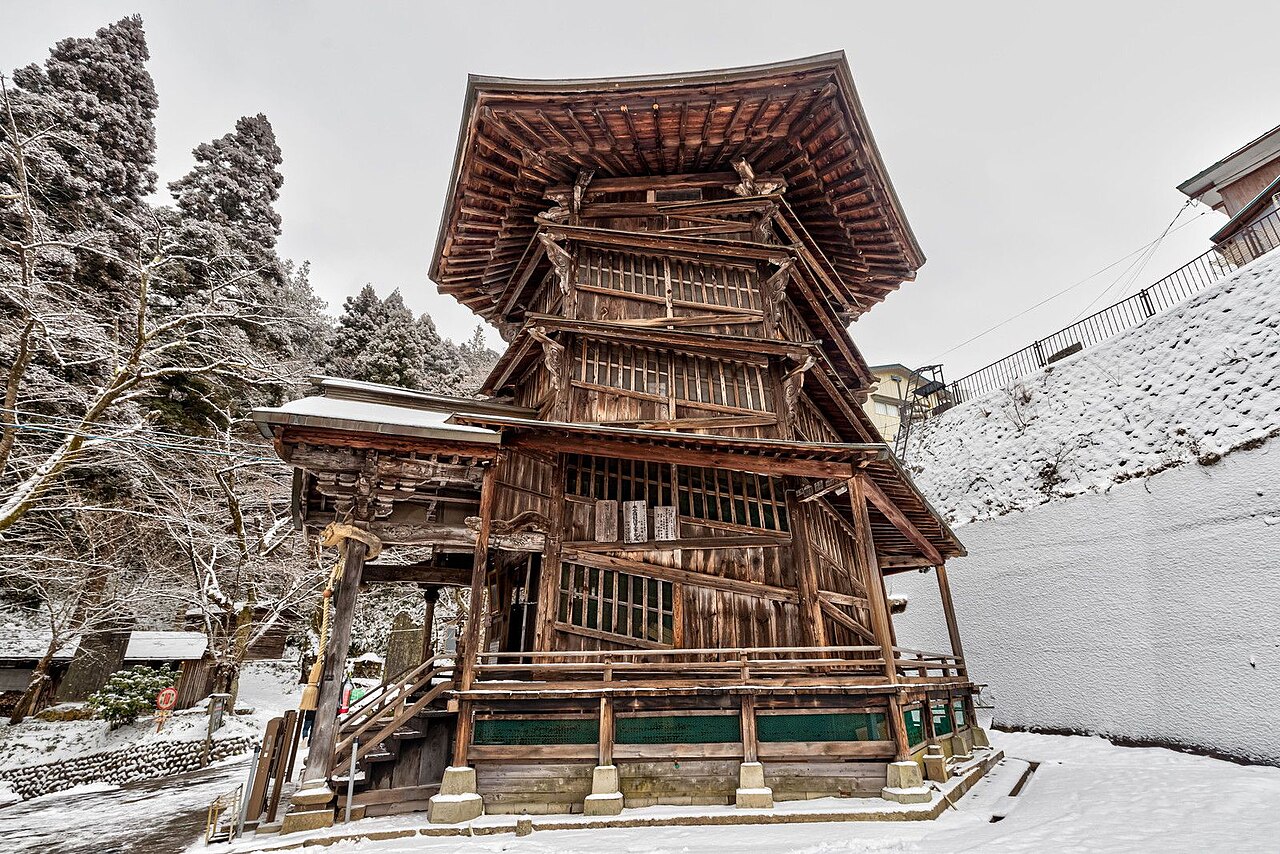
Culture
Aizu-Wakamatsu carries the culture of a samurai domain that lost its war and kept its pride. The old code of duty, taught at the domain school and retold in local stories, still colours how the city presents itself, and the 1868 siege is remembered with seriousness rather than spectacle. The Aizu Festival is the main civic celebration, with a procession in period costume that puts the samurai past back on the streets. Craft traditions run alongside it: lacquerware, local sake and two folk toys found in nearly every souvenir shop. The akabeko is a red papier-mâché cow with a nodding head, kept as a charm against illness, and the okiagari-koboshi is a tumbler doll that rights itself when knocked over, a symbol of bouncing back. Religion is the usual Japanese mix of Buddhist temples and Shinto shrines, several with graves or memorial halls linked to the domain's dead. Snow-country habits show in daily life: neighbours clear paths together, and winter is a season for staying warm indoors over hot food and sake. Residents are reserved but helpful, and a few words of Japanese, offered with a smile, go a long way. At temple halls, samurai houses and memorial sites, take off your shoes where there is a step up or slippers laid out, and keep your voice low.
What to wear
Aizu-Wakamatsu's traditional dress is the kimono and, for men, the hakama, the pleated divided skirt worn by the samurai class. Formal pieces are silk, while everyday and summer garments were made of cotton and hemp, and Aizu has its own cotton weaving tradition. Kimono are now worn mainly for weddings, coming-of-age ceremonies, tea gatherings and festival days, including the Aizu Festival procession, where costume is part of the point. Day to day, people dress as they do across northern Japan: jeans, knitwear and practical padded coats in the cold months, with boots and hats once the snow settles in, and light, breathable clothes in summer. Dress is neat but not formal, and nobody expects visitors to dress up. For travellers, the climate matters most. In winter, bring thermal layers, a waterproof coat and boots with real grip, since pavements and castle paths can be icy. In summer, choose light cotton, a hat and sun protection, with a thin rain jacket for showers. Footwear should slip on and off easily, because temple halls, samurai houses and some restaurants ask for shoes to be removed, and clean socks without holes are a courtesy. Shoulders and knees do not need covering, but tidy, modest clothing suits shrines and memorial sites.
What to eat
- Sauce katsudon — Family-run diners near the station and centre
Sauce katsudon is Aizu-Wakamatsu's signature bowl: pork cutlets dipped in a sweet-savoury sauce and laid over rice with shredded cabbage, sometimes with egg added. Look for it at the plain family-run diners (shokudo) around the station and the town centre, usually served as a set. - Basashi — Izakaya in the town centre
Basashi is thinly sliced raw horse meat, served like sashimi with ginger, garlic or soy and a little sweet miso. It is a regional speciality in Aizu and best tried in an evening izakaya, the casual pub-style eateries where small plates arrive alongside sake or beer. - Kozuyu — Traditional Aizu-style restaurants
Kozuyu is a clear, gently flavoured soup traditionally served at celebrations and formal meals. Expect a warming bowl with vegetables and other ingredients in a savoury stock, and ask at a traditional Aizu restaurant whether it is on the set menu, since it is not always listed. - Soba — Noodle shops in the old town
Soba, buckwheat noodles, is a staple across the cool Aizu basin. They are served cold with dipping sauce in summer and in hot broth when the snow is down. Small noodle shops around the old town and along the main roads usually offer both. - Agemanju — Confectioners and snack shops near the sights
Agemanju is a bun stuffed with sweet adzuki bean paste and then deep-fried, giving a crisp shell and a soft, sugary centre. It is a snack to eat while walking, found at local confectioners and shops near the main sights.
Plan it
Best time. April–May for spring greenery and cherry blossom, and October–November for autumn colour when days are cool and clear. Winters are cold with very heavy snow, which suits snow-scene photography but needs proper boots and slower travel. August is the hottest and most humid month, and September is the wettest.
How long. 2–3
Getting there. Nearest large airports are Sendai and Tokyo's airports; Sendai Airport has buses that run straight to Aizu-Wakamatsu Station. From Tokyo, the quickest rail route is the Shinkansen to Koriyama, then the Ban-etsu Saisen Line to Aizu-Wakamatsu Station, about 3 hours in all. A direct highway bus also runs from Shinjuku to the terminal opposite the station in about 4 hours.
Budget. mid
Tips
- Check the official city site (https://www.city.aizuwakamatsu.fukushima.jp/) for sight opening times and any seasonal closures before you go
- Visit the castle and Samurai Residence early on weekdays to avoid the school-group and holiday crowds
- In winter, allow extra time for trains and buses, and wear boots with good grip
- Carry some cash for small shops, noodle stalls and local diners, as not all take cards
Etiquette
- Remove shoes where there is a step up or slippers laid out
- Keep voices low at temples, shrines and memorial sites
- Ask before photographing people, and follow signs in museums and historic houses
Nearby
Sources
- Wikidata Q237699 (CC0)
- Wikipedia: Aizuwakamatsu (rev 1381507817) (CC BY-SA 4.0)
- Wikivoyage: Aizuwakamatsu (rev 5433382) (CC BY-SA 4.0)
- Photo: 鶴ヶ城天守より若松市街を望む (皓月旗) (CC BY-SA 4.0)
- Photo: 会津さざえ堂 (円通三匝堂) (くろふね) (CC BY 4.0)
- Photo: 福島県会津若松市にある会津若松城。 (Asturio Cantabrio) (CC BY-SA 4.0)
- Photo: Aizu Matsudaira's Royal Garden (Qwert1234) (Public domain)
- Photo: Mukaitaki, Higashiyama Onsen (M Murakami) (CC BY-SA 2.0)
- Photo: Temple Enmeiji, Jizodo (Qwert1234) (Public domain)
- Photo: Aizuwakamatsu Castle after the Battle of Aizu, 1868 (Public domain)
- Photo: Aizuwakamatsu city map, 1930 (Kochizufan) (Public domain)


