Amanohashidate
Amanohashidate, Japan
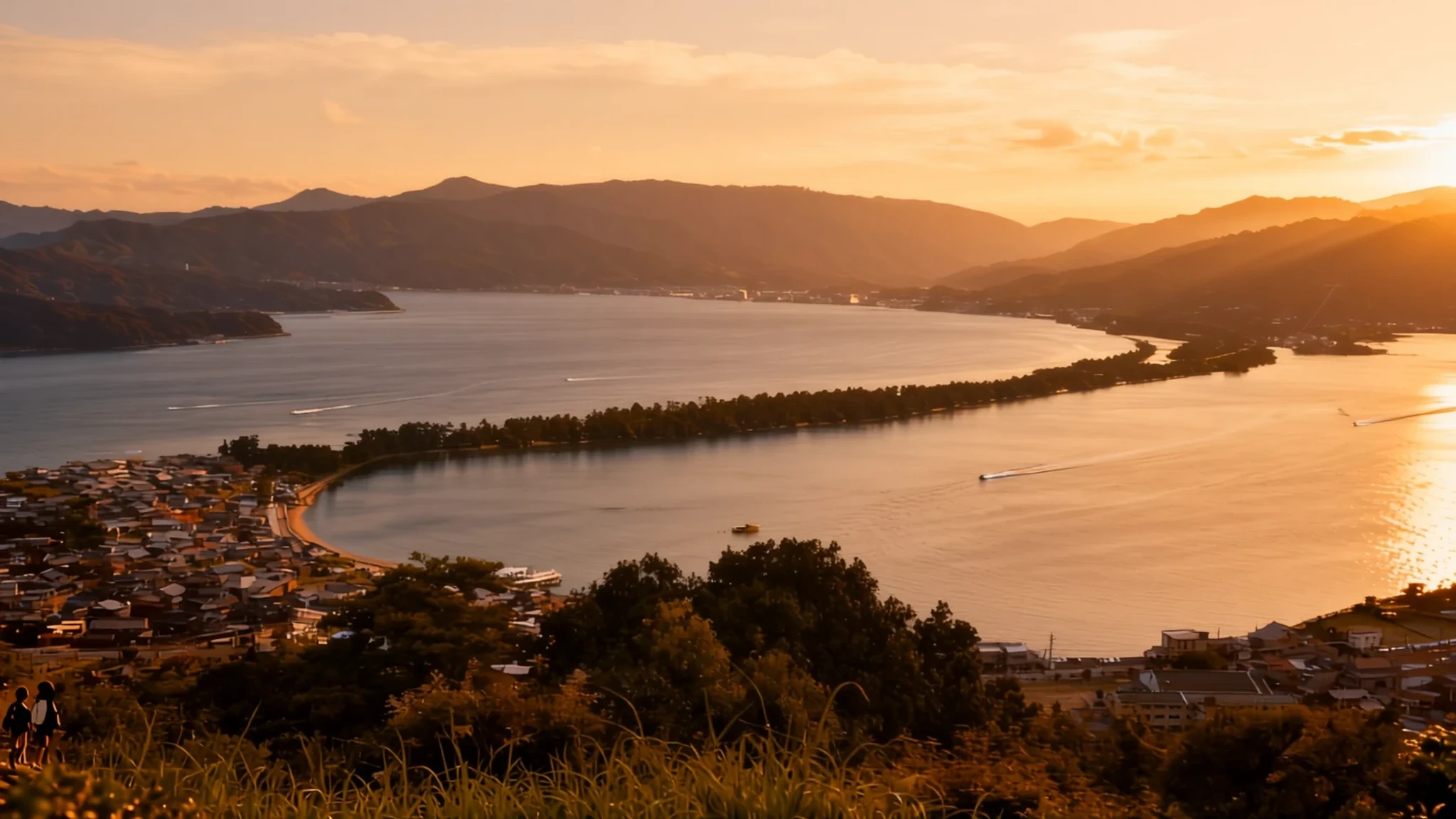
Amanohashidate is a pine-covered sandbar in northern Kyoto, best seen from the hills upside down, so it seems to rise into the sky.
The place
Amanohashidate is a narrow sandbar stitched with pines, running across Miyazu Bay on the Sea of Japan side of Kyoto Prefecture. The name (天橋立) means a bridge set up in heaven. At water level the bar is a green path: a dense line of pines, sand along both edges, and open water to either side, so the far shore and the boats stay in view the whole way along. From the hills it becomes something else. The long-practised way of looking is to bend and sight the bar back through one's own legs, which turns the tree line into a bridge rising from the bay towards the clouds. That is why the view sits among Japan's Three Scenic Views.
The path under the pines is level enough to walk or cycle, with swimming beaches on the outer bay and a calmer shore on the inlet. Temple grounds close the southern end and a shrine stands near the other, and footpaths climb both wooded headlands. Miyazu around the bar is a port town that fishes and receives visitors, not a strip of resorts: a station, harbour lanes, and the sandbar as the reason the coaches come.
This coast does not share the milder temper of the Kyoto basin. Winter drops snow on the pines and pushes a hard wind off the sea. May and October are the comfortable months for the full length of the walk. September and July bring the heaviest rain, and high summer is hot, humid and crowded with swimmers. Weekends and national holidays pack the viewing decks and the cycleway; a weekday morning leaves the bar quieter and the sightlines clearer.
Its story
Amanohashidate is explained, in the local telling, as a bridge that did not stay in the sky. A deity moved between heaven and this coast on a ladder of cloud; when the ladder fell, or was simply left, it lay down across Miyazu Bay and took root as sand and pine. The written name still says that outright: a standing bridge of heaven. As myth or as a tale pinned to a strange landform, it cast the bar as a link between shores.
Painters turned that idea into a set piece. Sesshū's view of Ama-no-Hashidate spreads the bay in a wide, almost map-like sweep, the pines reduced to a dark stitch on the water. Hiroshige's print of a stretch of land overgrown with pines comes in closer: travellers small under the trees, the spit used as a road. The hillside habit of bending to sight the bar between one's legs — so that it seems to float upward — grew out of that pictorial idea. The pose is awkward on purpose. The landscape becomes the heavenly bridge only when the body agrees to look at it the wrong way up.
The other half of the story is upkeep. A sandbar wants to shift, and the pines need protection from feet that would strip the roots. Paths, a cycleway and the hill parks let Miyazu show the bar to many people without walking the dunes apart. The result is a natural spit and a kept picture, still close to the old prints, and quick to fill with coaches in clear weather.
What to see
- The pine sandbar — Across Miyazu Bay
The sandbar at Amanohashidate is the walk, or the bicycle ride: a level path under a continuous rank of pines, with sand and water on both sides. The outer beach suits a swim in settled summer weather; the inlet side is quieter. Keeping to the made path protects roots and dune grass. Coaches reach both ends late in the morning, and the early hours leave the pines nearly empty.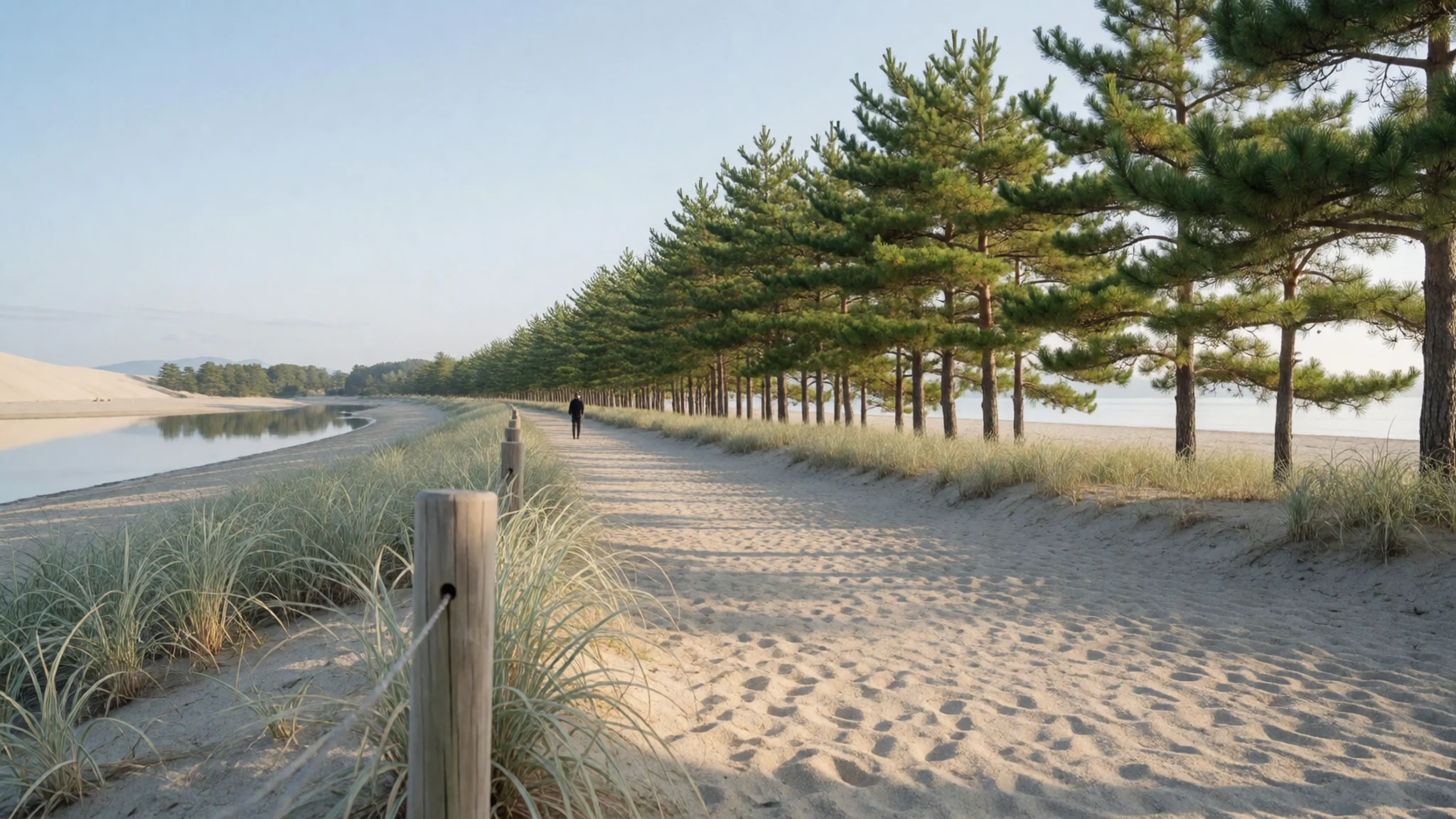
- Kasamatsu Park — Northern headland
Kasamatsu Park, on the northern hill above Amanohashidate, is the usual place for the upside-down view. A lift climbs from the shore to a deck among the trees, and from there the sandbar reads as a thin green stroke across Miyazu Bay. Bending to look back through the legs — the local mata-nozoki — flips that stroke so it seems to stand up into the sky.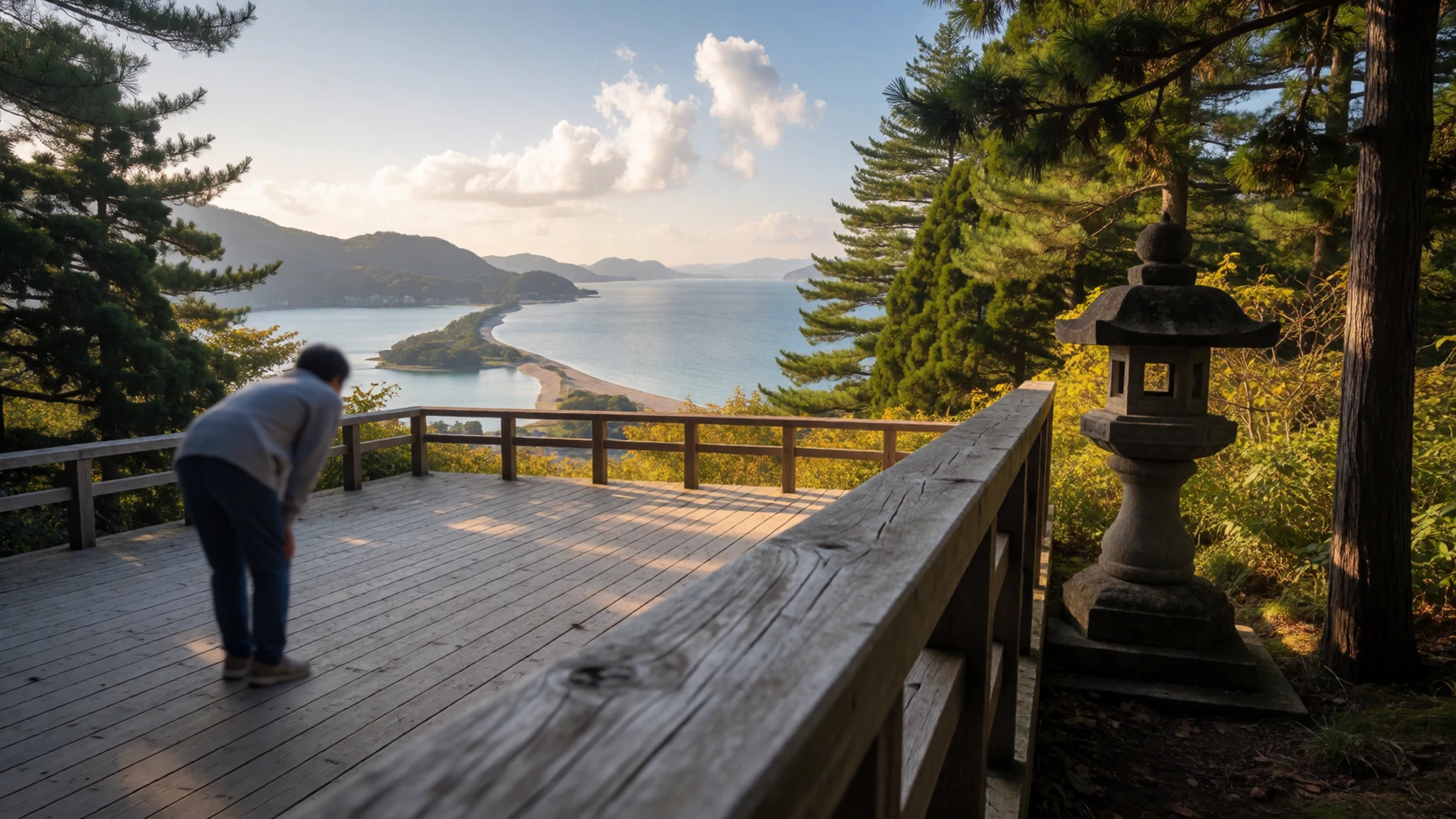
- Monju — Southern headland, Monju
Monju, the southern height above Amanohashidate, gives the other elevated reading of the bar, looking north along the pines. The slope sits over the temple quarter, and from higher up the curve of the sand and the pinch of Miyazu Bay are both clear. Sunbeams through broken cloud, common on this sea-facing coast, pick out the tree line and leave the water dark. The path is steep in places.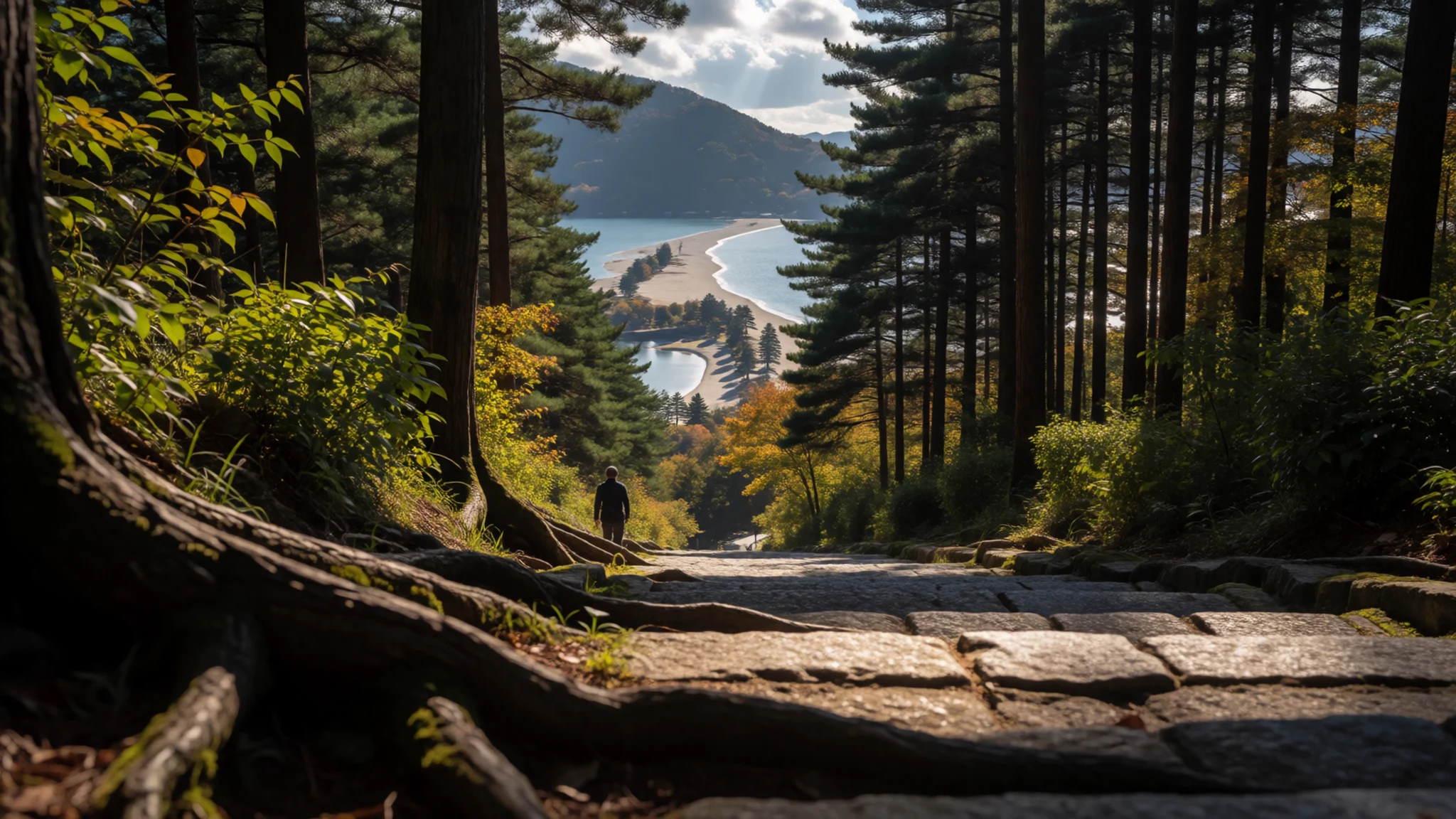
- Nariai-ji observatory — Hills above Miyazu
Nariai-ji stands in the hills above Miyazu, and its panorama terrace looks out over Amanohashidate and the whole of Miyazu Bay together. The sandbar from here is a small green arc in a wide bowl of water and ridge, which is a useful correction to the close-up from the pines: the bar is thin, and the bay is the larger fact.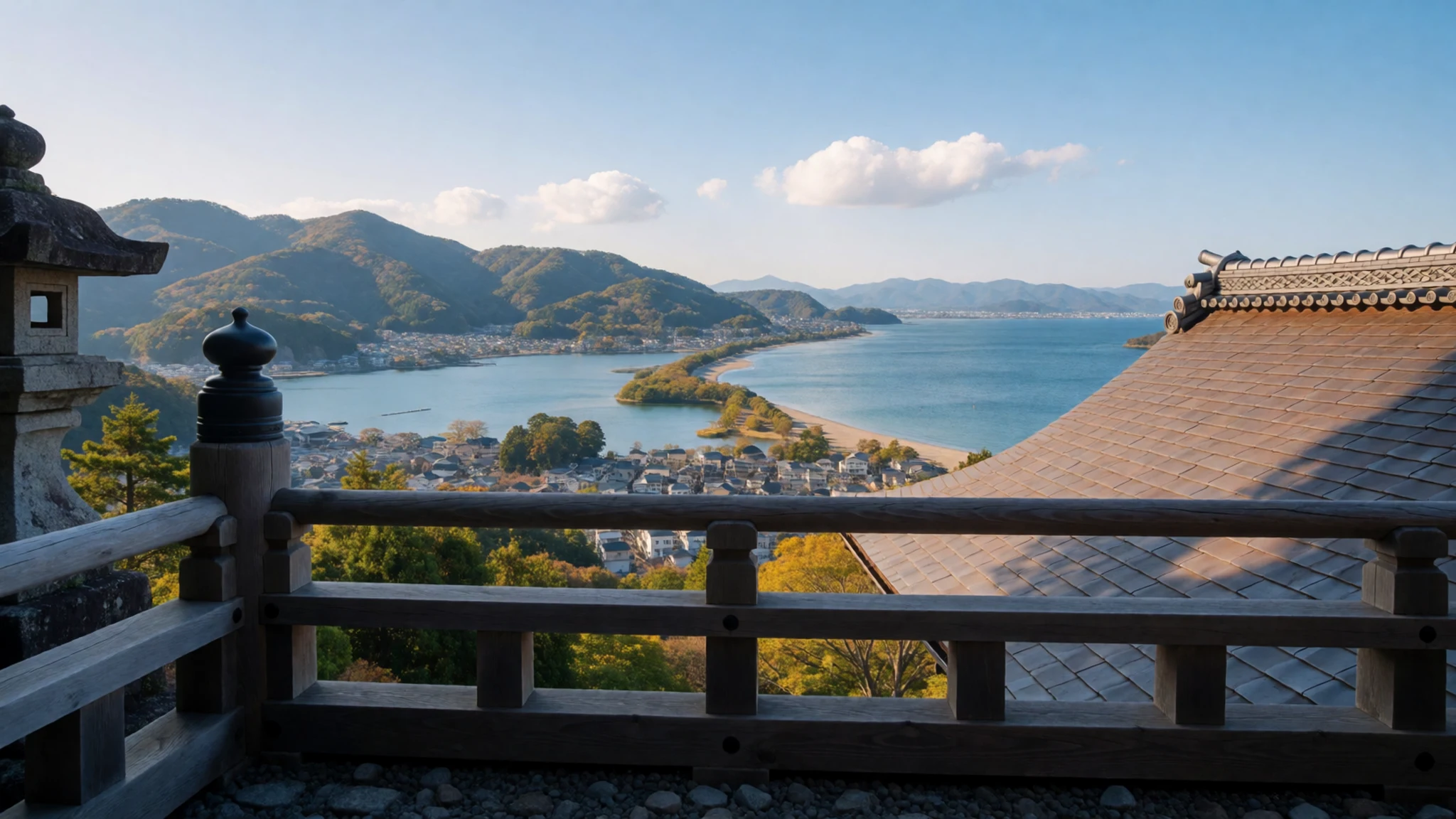
- Chion-ji — Southern landfall of the sandbar
Chion-ji, at the southern landfall of Amanohashidate, marks the end of the sandbar with a Buddhist temple dedicated to Monju. The precinct is the natural pause after the pine walk: roofs, a gate, and the town lanes starting just beyond. The grounds are a place of worship before they are a viewpoint, and the southern hill rises directly behind them.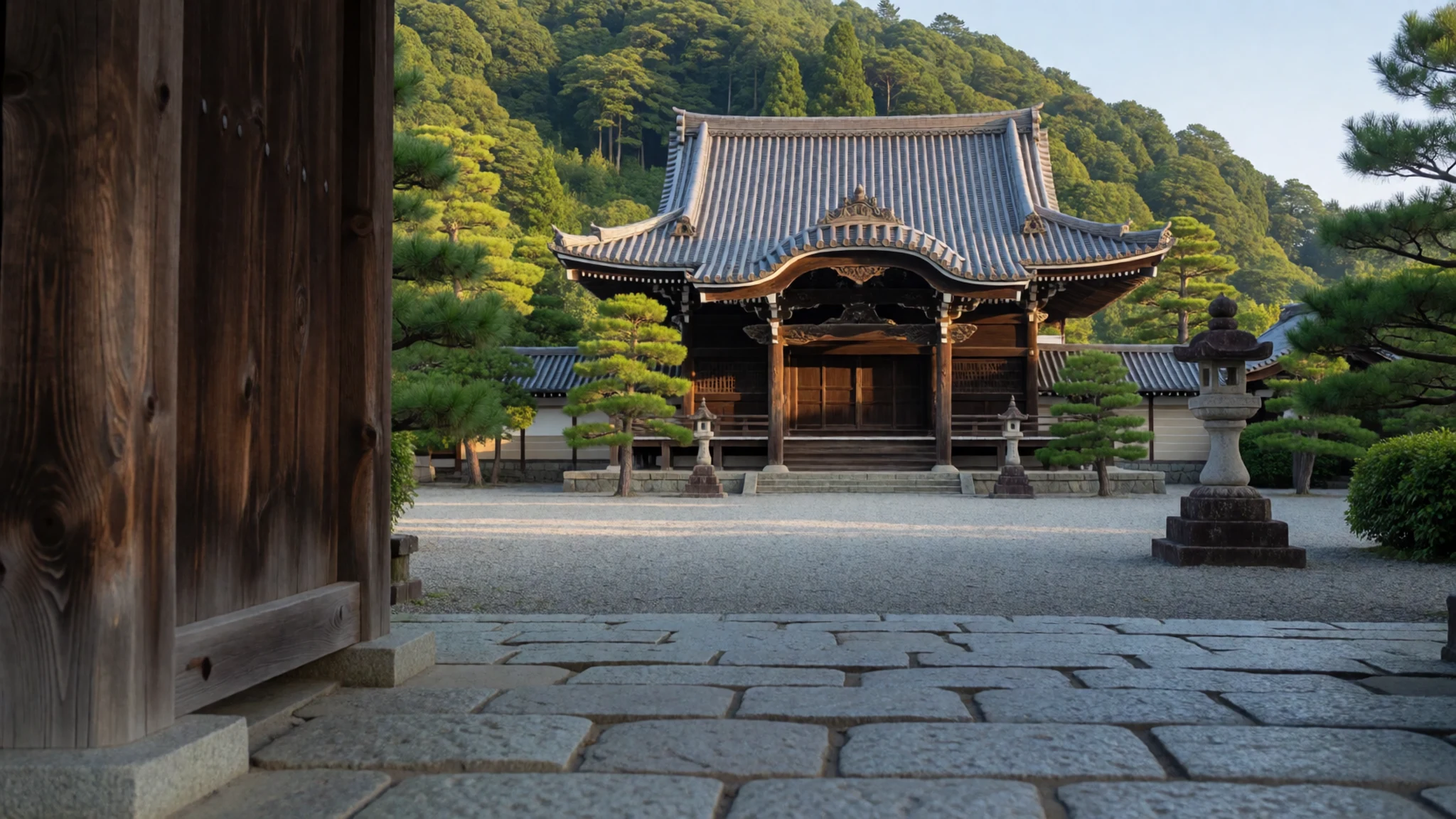
Culture
Amanohashidate is looked at as much as it is walked. The upside-down view, mata-nozoki, is the local custom that turns a sandbar into the heavenly bridge of the name: people bend at the rail in Kasamatsu Park and on the Monju side and sight the pines between their legs. Quieter traditions sit beside that habit. Chion-ji, at the southern end, honours Monju, and the visit is framed as a request for wisdom as much as a look at architecture. Nariai-ji, higher in the hills, keeps a working temple precinct whose terrace takes in the whole bay. Both expect the manners of a Japanese Buddhist site: shoes off at the wooden step, a small bow, and no picnic on the hall veranda.
The pines themselves are treated as the substance of the view, not as scenery that can spare a branch. The old pictures by Sesshū and Hiroshige show the same avenue, which helps explain why the town guards the line of trees so carefully. Winter, when snow sits on the pines and the wind comes off the Sea of Japan, is part of the cultural image of the coast, even if fewer people stay out to look.
At the temples, take your shoes off where the step and the slippers show, and at the viewing rails leave room for the next person to make the upside-down look.
What to wear
Amanohashidate sits in the Tango district, and the cloth that belongs to this coast is Tango chirimen, a silk crepe woven for kimono. The surface is a fine pebble-like crinkle, the result of a hard twist in the weft, and the fabric has dressed formal kimono for generations of this region. Full kimono is not everyday wear on the sandbar. It appears at shrine festivals, at weddings, and in studio portraits; in high summer a yukata comes out for evening stalls and fireworks, cotton rather than the heavy silk. What people wear on an ordinary day is contemporary Japanese dress: neat casual layers, trainers or sandals, a light jacket against the sea wind.
A visitor does well to copy the practical half of that. The sandbar is flat but long, the pine path is uneven underfoot, and the hill paths to Kasamatsu, Monju and Nariai-ji are steep, so shoes with a grip beat new sandals. Shoulders and knees covered read as respectful at Chion-ji and Nariai-ji; a scarf or light overshirt is enough, and it can come off again on the beach. Swimwear belongs on the sand, not on the temple walk or the viewing deck. This coast is colder and windier than inland Kyoto: a warm coat in winter, a rain layer in early summer, and sun cover on the open bar.
What to eat
- Heshiko — Shops and eateries at both ends of the sandbar
Heshiko is mackerel salted then fermented in rice bran, a preserving habit of the coast around Amanohashidate. The taste is strong, salty and savoury, and it comes in small slices with rice. Shops and eateries at both ends of the sandbar sell it to eat there or take away.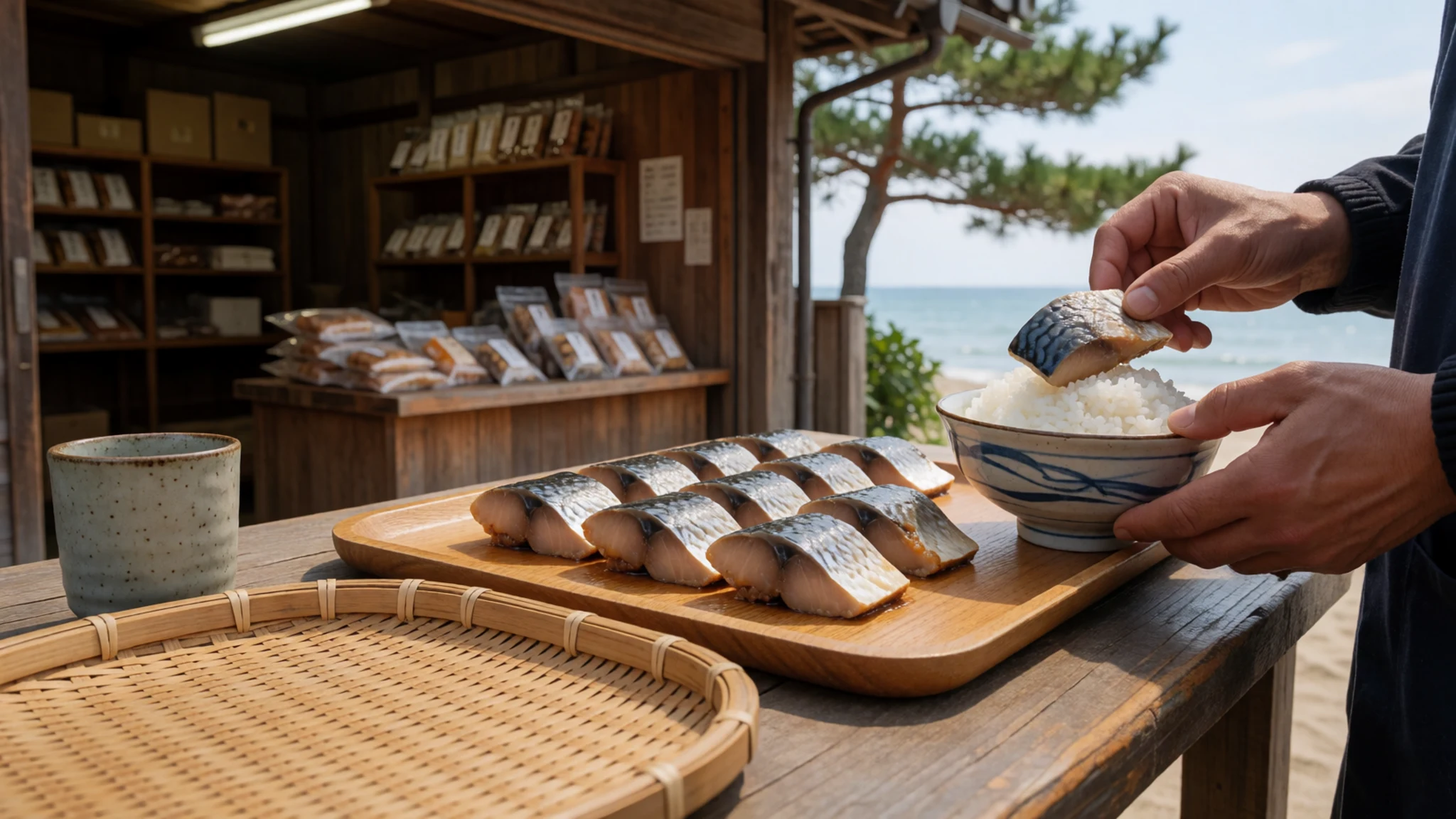
- Matsuba crab — Eateries around Miyazu
Matsuba crab is the winter dish of the Amanohashidate coast, a snow crab from this Sea of Japan shore, served boiled, grilled or in a hot pot. Eateries around Miyazu feature it in the cold months, then turn to other fish.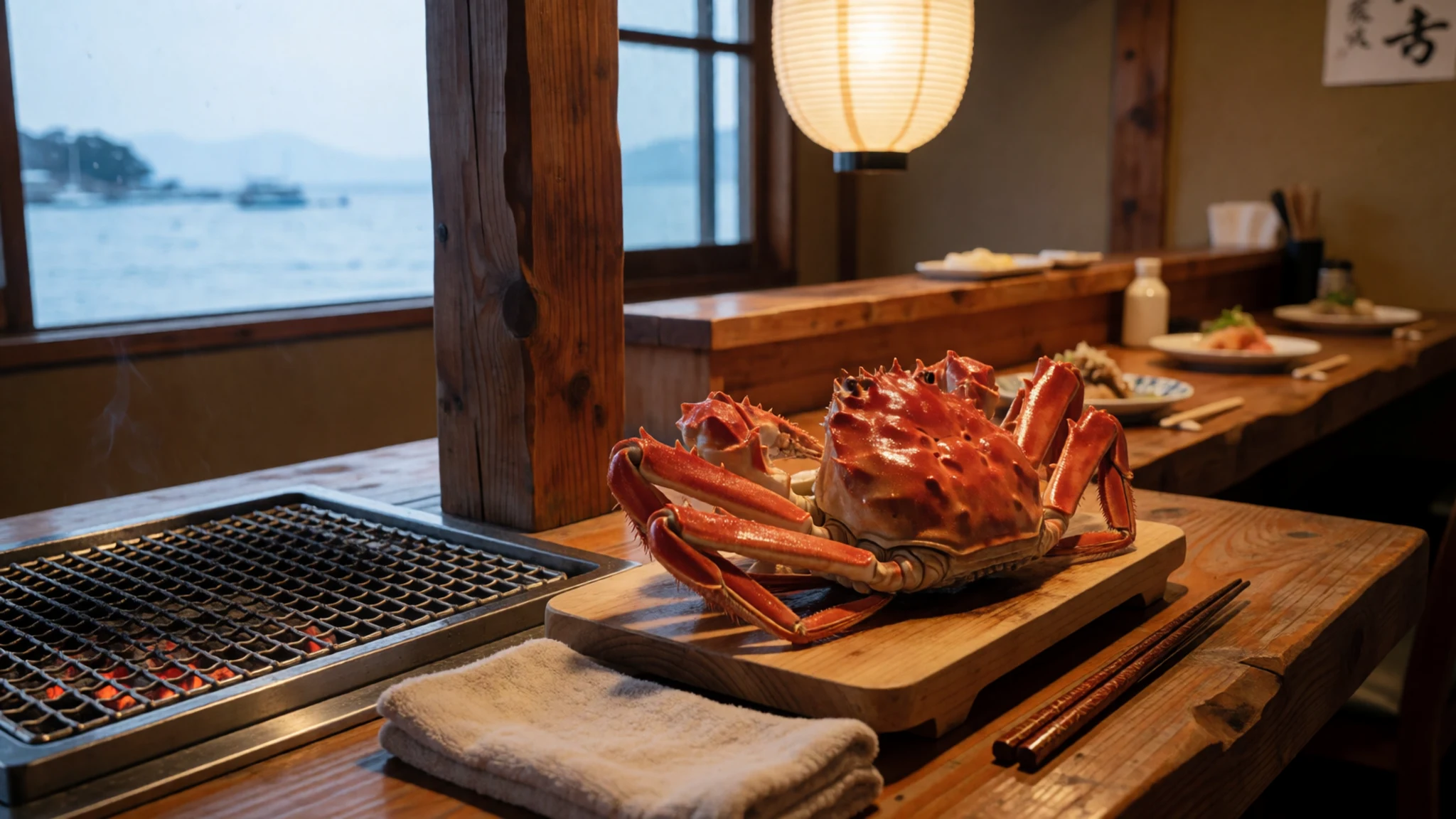
- Salt-grilled sea bream — Harbour-side eateries and the lanes by Chion-ji
Sea bream, tai, is the celebratory fish at Amanohashidate, often salt-grilled whole. The flesh is lean and clean, and a whole fish suits a shared table after the pine walk. Harbour-side eateries and the lanes by Chion-ji are the places to look, especially where charcoal is already going. - Pressed mackerel sushi — Station kiosks and small shops at either landing
Pressed mackerel sushi is the everyday counterpart to heshiko around Amanohashidate: vinegared rice with cured saba. It travels well, which suits a walk on the bar or the train towards Kyoto. Station kiosks and small shops at either landing stock it through the day. - Seafood rice bowl — Eateries near Miyazu station and the short streets at each end of the sandbar
A seafood rice bowl at Amanohashidate is the plain way to eat the bay: raw local fish over warm rice, with crab or bream added only in season. Eateries near Amanohashidate Station and on the short streets at each end of the sandbar serve it at lunch.
Plan it
Best time. Amanohashidate is at its easiest in May and October, for the most comfortable walking weather, with blossom on the hills in spring. Winter snow on the pines suits a short look, though the wind off the sea is hard. July and August are the hottest, and September and July the wettest.
How long. 2–3
Getting there. Fly into Kansai International Airport or Osaka International Airport, then continue by rail through Kyoto or Fukuchiyama to Amanohashidate Station on the Kyoto Tango Railway. The sandbar is a short walk or local bus ride from the station. Check the railway for current trains before setting out; no single timetable should be assumed.
Budget. mid
Tips
- Start for Kasamatsu Park and the sandbar early; coach parties fill the viewing rails from late morning.
- Carry cash for smaller temples, shrines and food stalls; cards are uneven outside the station area.
- Wear shoes that can handle pine roots, sand and steep hill paths in the same day.
- Check the official temple and railway sites for closures before a holiday weekend.
Etiquette
- Remove shoes where a step up and indoor slippers are waiting.
- Do not break or collect pine branches; the trees are the view.
- Keep the upside-down viewing spots clear, and ask before photographing a stranger at the rail.
Nearby
Sources
- Wikidata (CC0)
- Wikipedia: Amanohashidate (CC BY-SA 4.0)
- Wikivoyage: Amanohashidate (CC BY-SA 4.0)