Yanar Dag
Yanar Dag, Azerbaijan
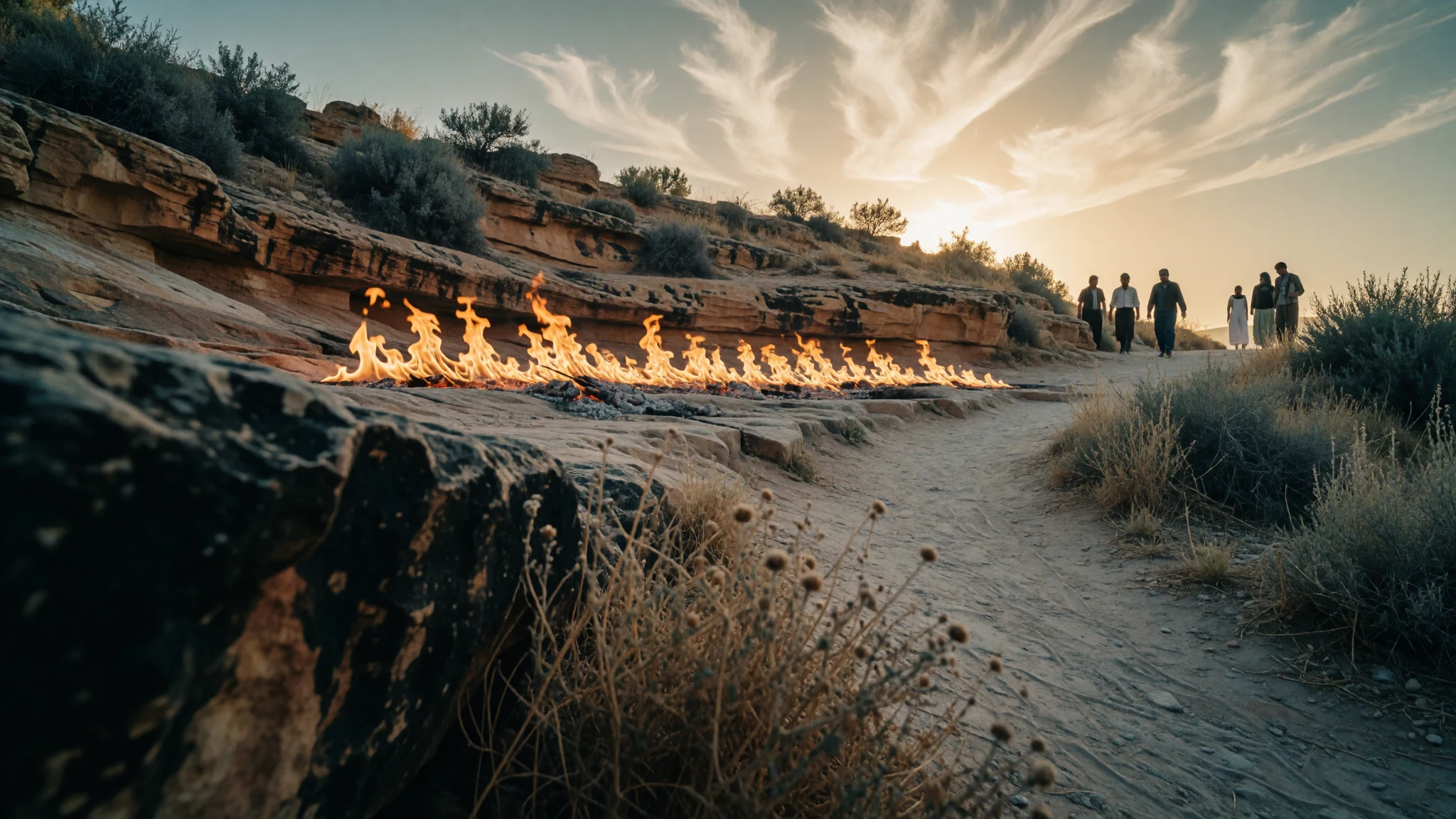
Yanar Dag is a hillside near Baku where natural gas burns without pause, showing why Azerbaijan is called the Land of Fire.
The place
Yanar Dag sits on the Absheron Peninsula, the dry, wind-scoured finger of land that carries Baku into the Caspian Sea. The name is Azerbaijani (Yanar Dağ) and means 'burning mountain', which is a generous description: what burns is a low hillside, and the fuel is natural gas leaking up through a thin, porous layer of sandstone. Flames reach about 3 m at their tallest, but most of the show is a ragged line of fire running along the base of a rocky bank, shifting with every gust.
The fire is steady because the gas supply is steady. It seeps from underground without interruption, so nobody feeds it and nothing switches it off. That separates it from the mud volcanoes at Lokbatan and Gobustan, which belong to the same regional geology but push out wet mud. Here there is only gas and flame, and the ground around it is dry and scrubby.
Administratively the hill belongs to Absheron District. Since 2007 it has had formal protection as a reserve, set up by presidential decree and looked after by the State Tourism Agency. A rebuild from 2017 to 2019 added a museum and a Cromlech Stone Exhibition, so the site is tidier and better organised than older photographs suggest.
Honest expectations help. Yanar Dag is small, a visit takes an hour or so, and the flames look best once the light has gone. It works as a companion to other sights around Baku rather than as a full day on its own.
Its story
Yanar Dag belongs to a landscape where fire came out of the ground long before anyone drilled for anything. Gas collects in large quantities beneath the Absheron Peninsula, and over the centuries it has produced flames at the surface that travellers noted in their writings; Marco Polo is among the figures credited with recording them. This is part of why Azerbaijan is called the Land of Fire.
Fire carried religious weight here. Since the first millennium BCE it has been treated in Zoroastrian belief as a link between people and the divine, and natural flames were an obvious place for that belief to settle. Few of those fires survive. Many that once burned across Azerbaijan have gone out, and Yanar Dag is one of the handful still alight.
A useful comparison is the Ateshgah near Baku, a fire temple whose name means 'temple of fire'. Its flames also began as natural gas seepage, but that flow stopped some time ago, and the fire there is now kept going by a pipeline. Yanar Dag has no such help, which is why it is valued as a flame that still burns on its own.
Its own past is hazier. One local account says a shepherd lit the gas by accident in the 1950s, and the fire has burned since. Others insist it has been burning for 4,000 years. Neither version can be checked from the hillside; the fair conclusion is that the flame is old in local memory and its exact age is uncertain.
What to see
- The burning slope — Absheron District, north of Baku
The fire itself is a band of flame along a sandstone bank at the foot of the hill. Go towards dusk, when the orange stands out against the darkening ground, and walk the length of the viewing path rather than stopping at the first spot. Different angles give quite different shapes.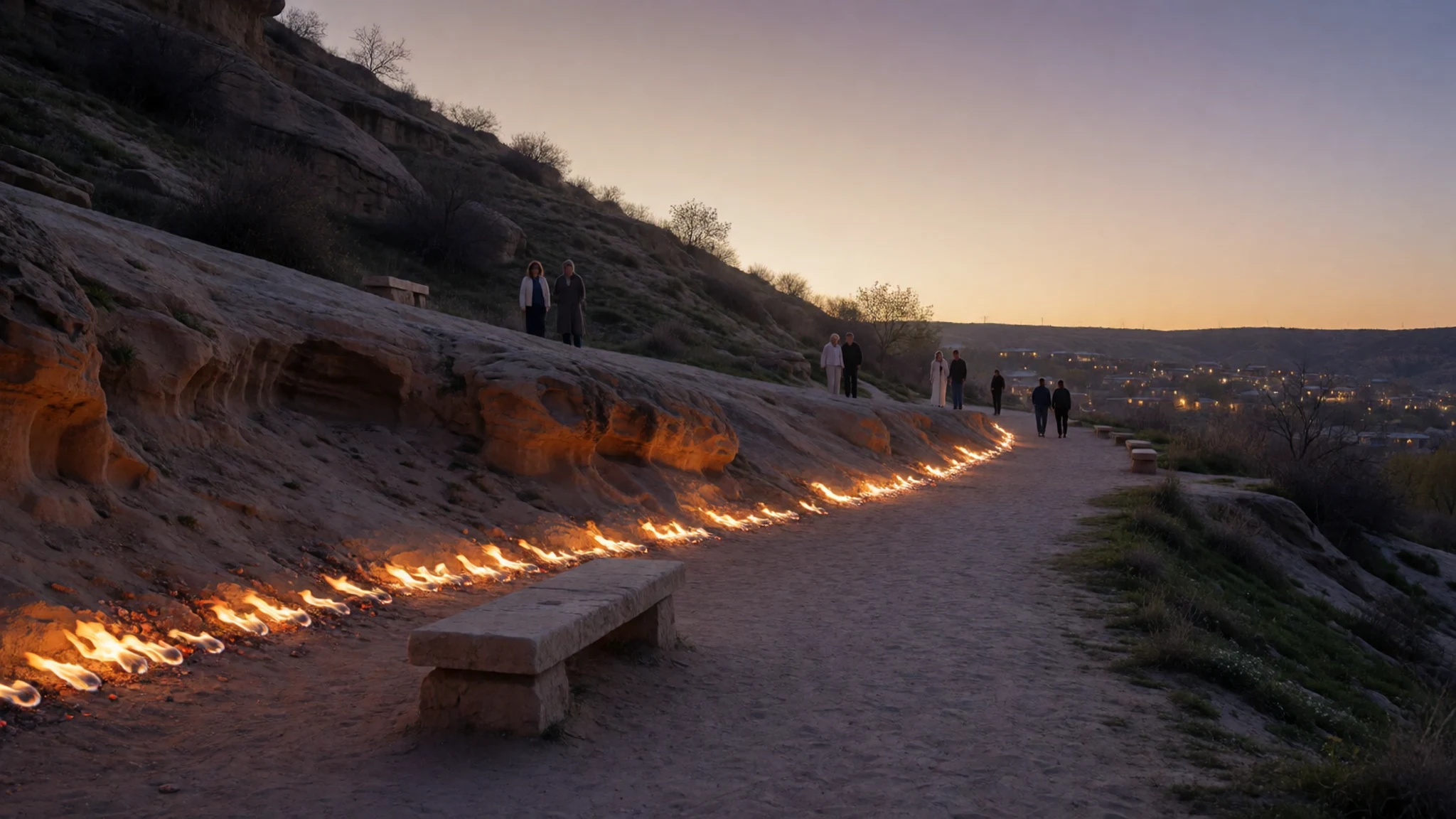
- Yanar Dag Museum — Yanardag Reserve, Absheron District
Opened after the renovation, the museum is the place to look for background on gas seepage and the long history of fire in the region. Displays change, so check the State Tourism Agency's official channels for current opening arrangements before planning a visit around it.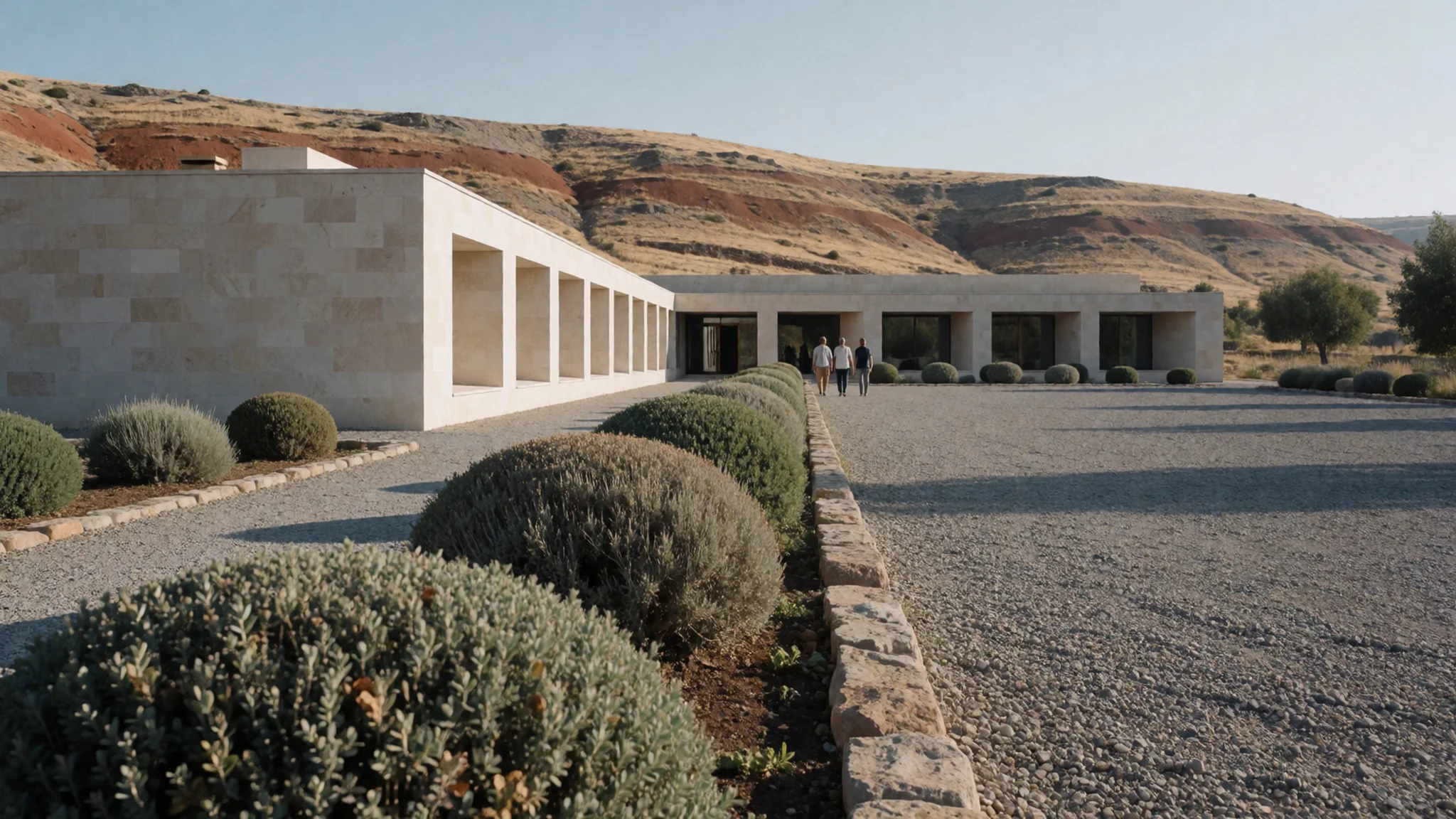
- Cromlech Stone Exhibition — Yanardag Reserve, Absheron District
This display sits inside the reserve and opened after the renovation. A cromlech is a ring of standing stones, and the exhibition adds an older, ritual note to a hill otherwise known for gas. It is worth a look in daylight, before the flames draw all the attention.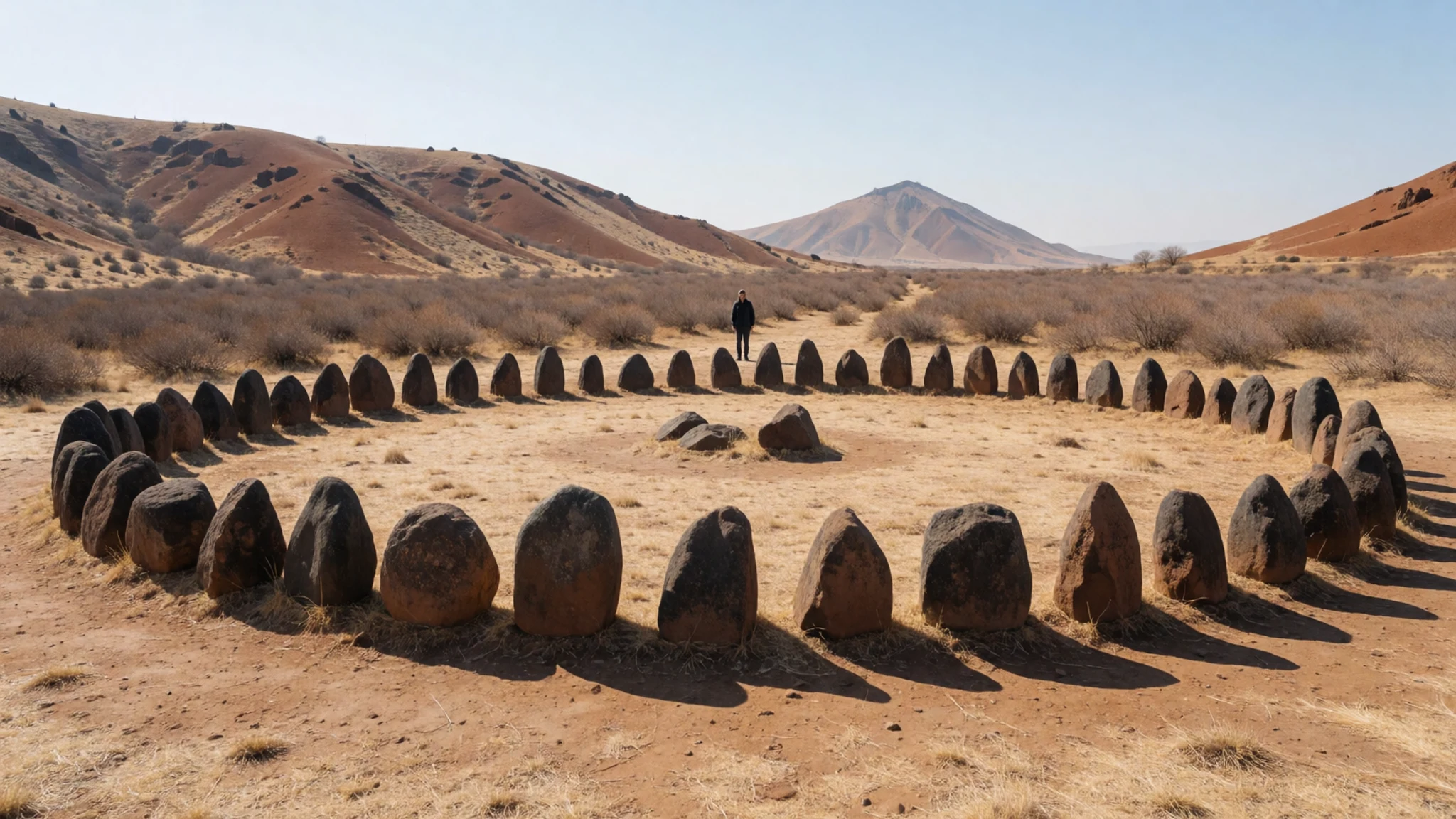
- Ateshgah of Baku — Surakhani, east of central Baku
The fire temple at Surakhani is the natural companion to Yanar Dag. Its flame is now fed by a gas main rather than by seepage, but the site holds the history of fire-worship in the region, and seeing it beside Yanar Dag makes the difference between a natural fire and a managed one clear.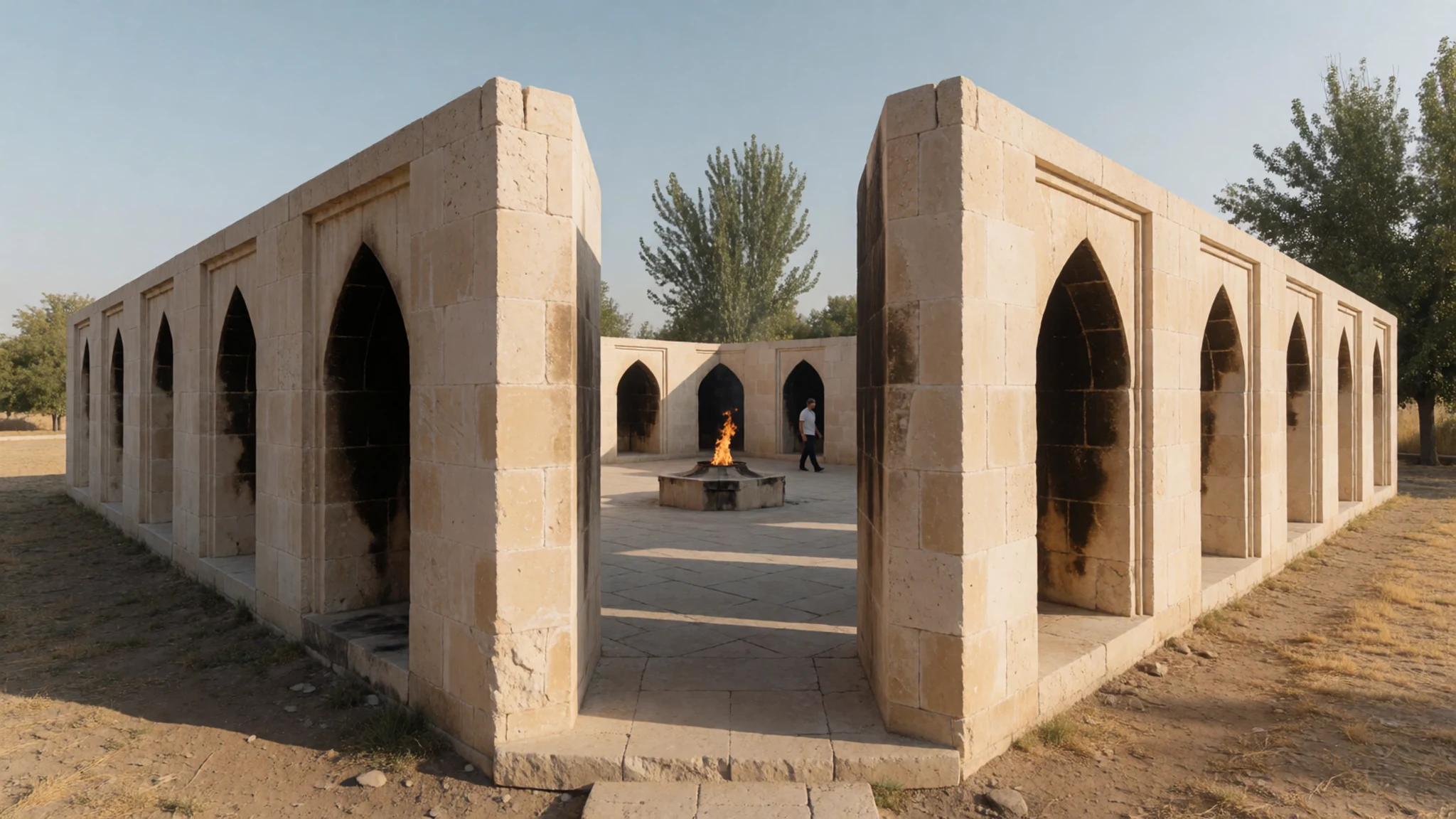
- Gobustan mud volcanoes — Gobustan, south-west of Baku
Gobustan, south-west of Baku, is where the region's mud volcanoes can be seen, and the contrast is instructive: there, gas pushes up wet mud; at Yanar Dag, dry gas burns. Allow a separate half-day, and ask a local driver about ground and road conditions, since the terrain is rough.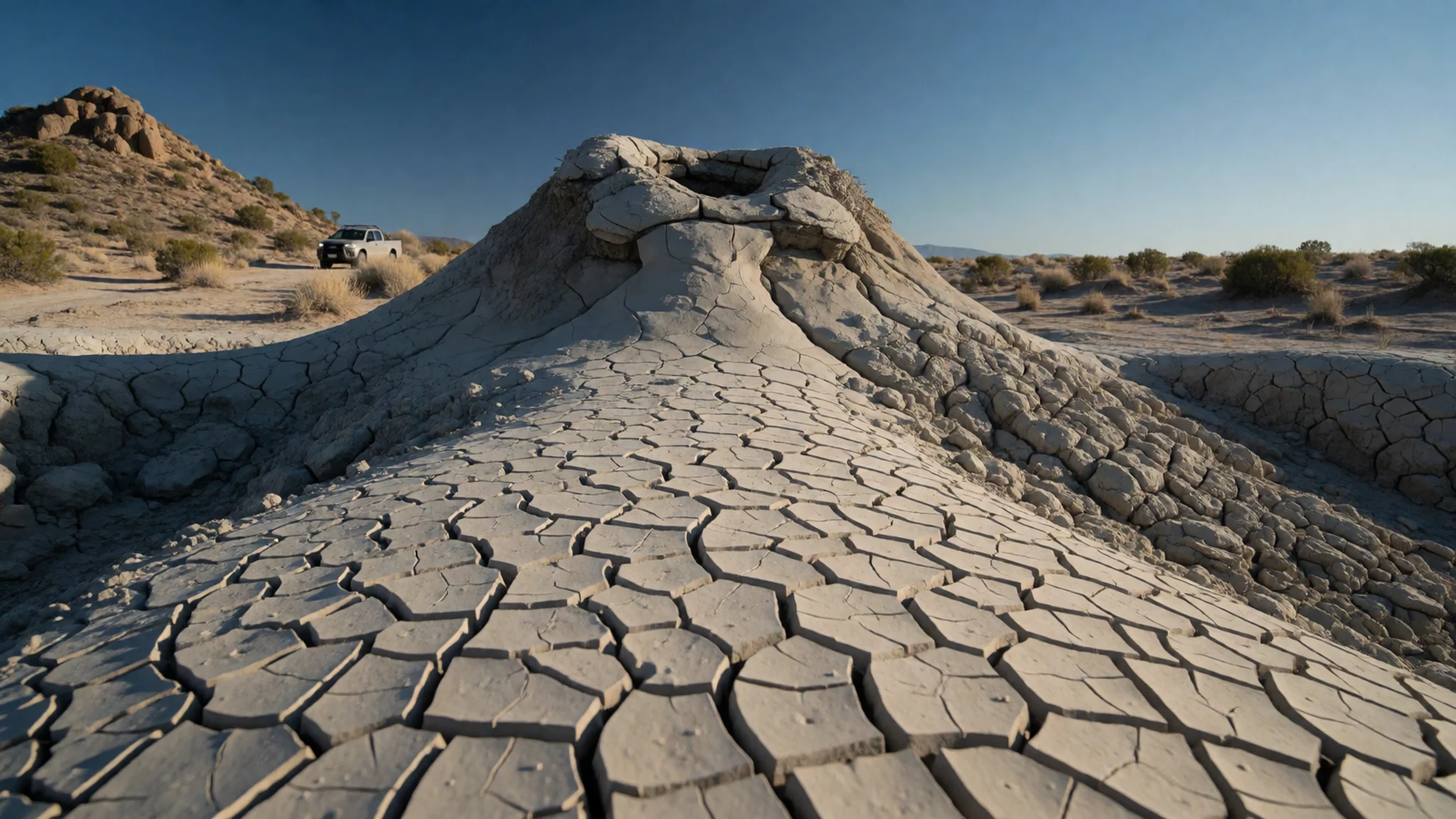
Culture
Yanar Dag stands in a country that presents itself as the Land of Fire, and the phrase is more than a slogan. Fire has been part of the region's religious memory since the Zoroastrian era, when flame was treated as a bridge between people and the divine. The natural fires of the Absheron Peninsula gave that idea a physical home, and the temple complex of the Ateshgah near Baku grew out of the same tradition.
Today the hillside is a managed reserve rather than a shrine. Nobody gathers here for organised worship; visitors come to look, photograph and stand in the warmth. Azerbaijani families, school groups and tour parties share the path, and the mood is relaxed and curious rather than devout. For many Azerbaijanis the flame is a point of national pride, and local people are generally happy to explain what it means to them.
Respect for fire shows up elsewhere in Azerbaijani life too. Novruz, the spring new-year festival, involves lighting bonfires and stepping over them, a custom that echoes older beliefs about flame as a force of cleansing and renewal. Visiting Yanar Dag with that background in mind turns a short photo stop into something with more depth, and the small museum on site helps fill in the gaps.
Stay behind the barriers and marked paths, never reach towards the flames or throw anything into them, and ask before photographing other visitors, especially families and children.
What to wear
Dress at Yanar Dag is ordinary and practical, but Azerbaijan has a distinctive costume tradition worth knowing before the trip. Traditional men's dress centred on the chokha (çuxa), a long wool coat with chest pockets, worn with a tall sheepskin or wool hat called the papakha. Women's traditional outfits combined long dresses, often in velvet or silk with embroidery, with the kelaghayi, a lightweight printed silk headscarf. These garments now appear mostly at weddings, Novruz celebrations, folk concerts and in museums.
Day to day, people in Baku and the Absheron towns wear modern, largely European-style clothing: jeans, shirts, jackets and smart casual in the city. Headscarves are more common among older women and in more conservative areas.
For a visit, treat the hill as an exposed, windy spot. Absheron evenings can feel cool even after a warm day, so a windproof layer is sensible. Closed shoes with grip suit the uneven, dusty ground, and trailing scarves or loose synthetic fabrics are best kept away from the fire. No special dress is required at the site itself, but covering shoulders and knees, and carrying a scarf for women, makes any mosque visit in Baku easier.
What to eat
- Plov — family-run restaurants and rice specialists in Baku
Azerbaijan's celebratory rice dish, cooked so each grain stays separate and often topped with lamb, dried fruit or chestnuts beneath a golden crust. Order it at family-run restaurants and rice specialists in Baku, usually as a shared main.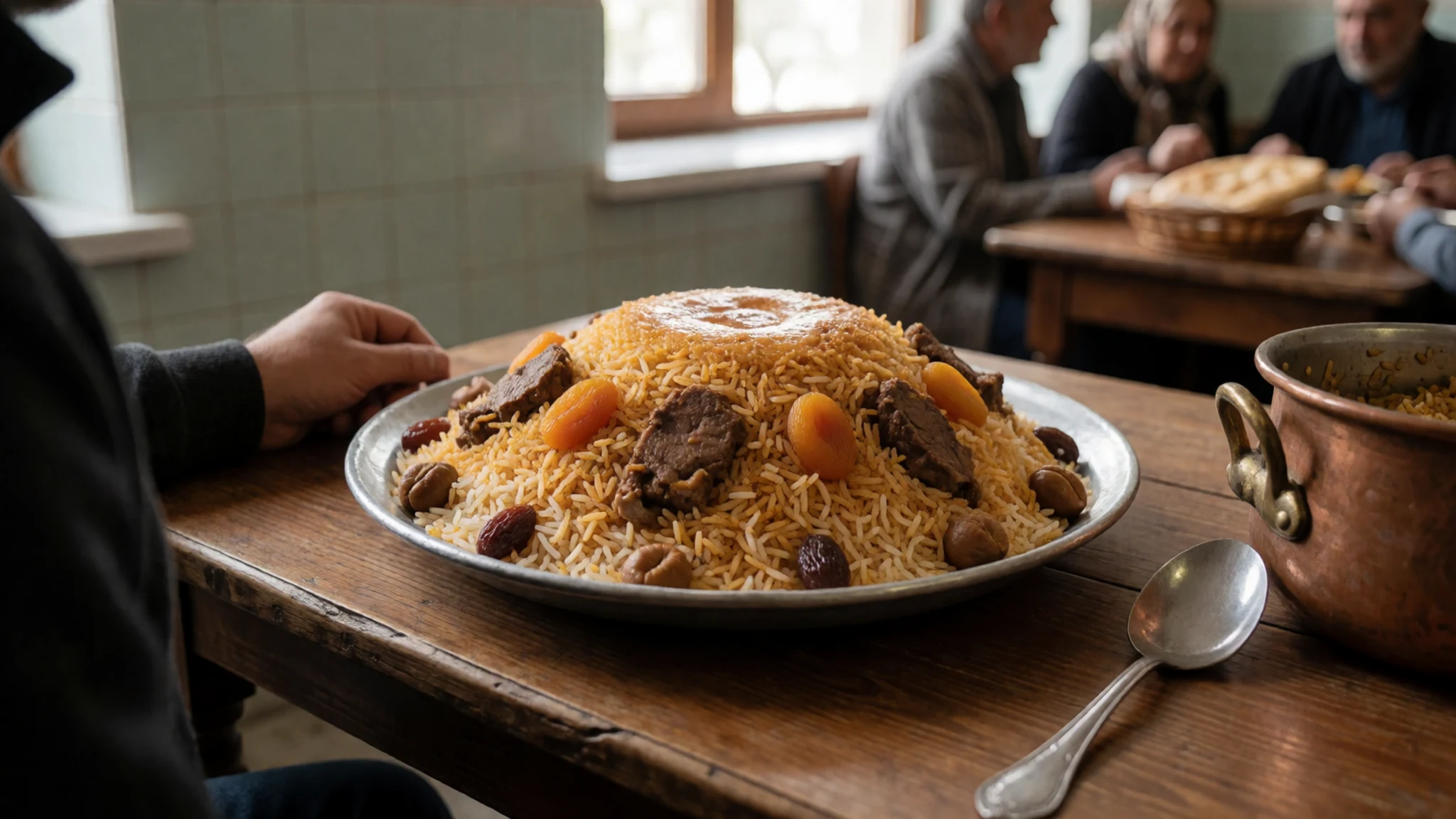
- Qutab — small bakeries and casual eateries around Baku
A thin flatbread folded around greens, minced meat or pumpkin and toasted on a griddle, then eaten hot with yoghurt or a squeeze of sumac. It is quick and filling, and sold at small bakeries and casual eateries around Baku.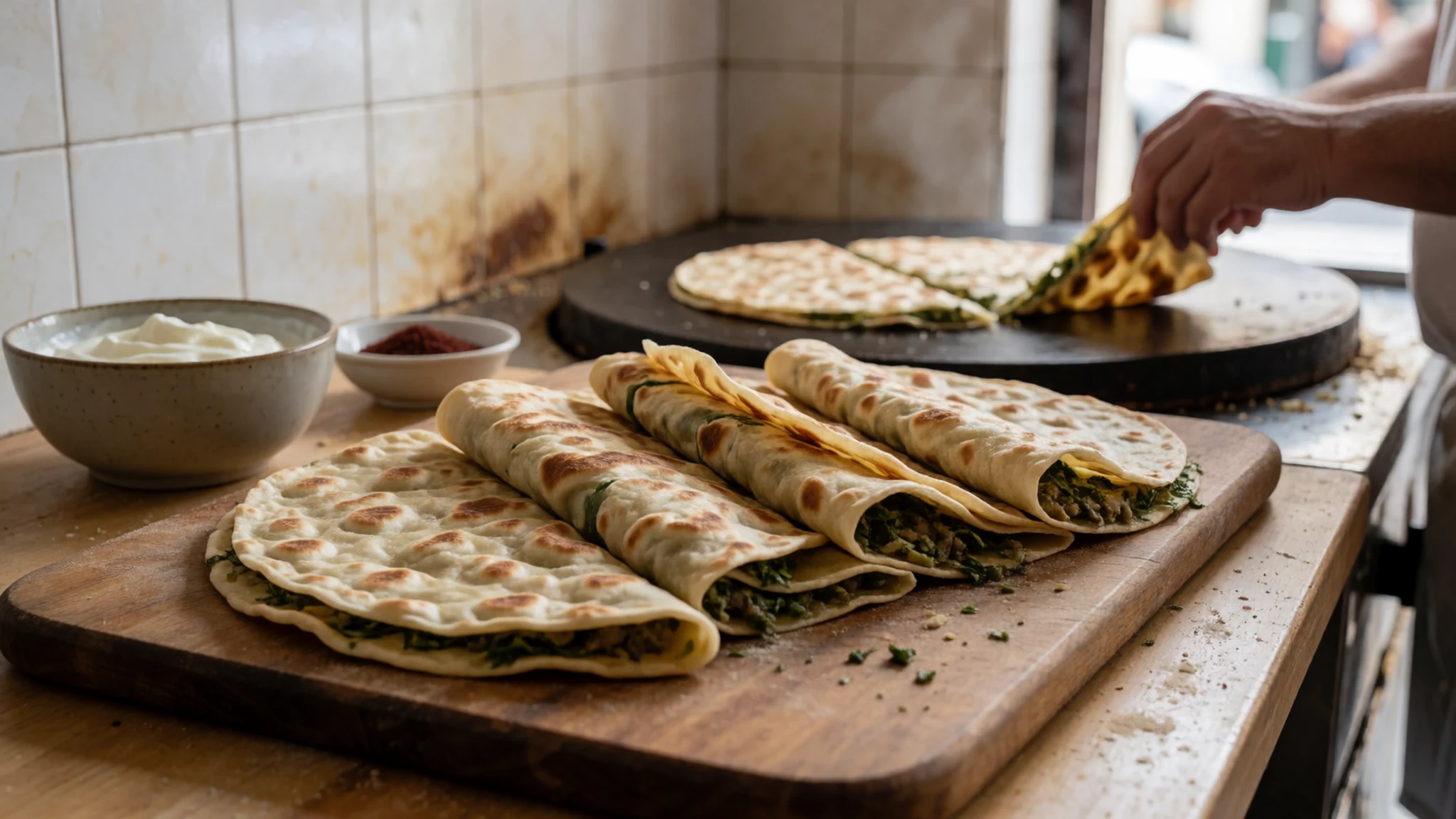
- Dolma — home-style restaurants in and around Baku's Old City
Minced lamb, rice and herbs wrapped in vine leaves, or packed into peppers and aubergines, then simmered gently. Home-style restaurants in and around Baku's walled Old City serve it, and the vine-leaf kind often comes with garlic yoghurt. - Lule kebab — grill houses and kebab eateries around Baku
Minced lamb pressed onto a skewer and grilled over charcoal, served with flatbread, sumac-dusted onions and grilled tomatoes. Any grill house or kebab eatery around Baku will have it; ask for it fresh off the fire rather than sitting on the plate. - Pakhlava — sweet shops, bakeries and tea houses in Baku
A diamond-cut pastry of thin layers and ground nuts, soaked in a light syrup and flavoured with cardamom or saffron. Buy it from sweet shops and bakeries in Baku, and eat it with strong black tea.
Plan it
Best time. April–May and September–October, when the Absheron Peninsula is mild; summers are hot and dry, winters cold and windy. The flames read best in the evening whatever the season.
How long. 1
Getting there. Fly into Heydar Aliyev International Airport in Baku. From the city, Yanar Dag is a short taxi or ride-hailing trip north across the Absheron Peninsula; local buses plus a walk are possible, so confirm the route with your accommodation.
Budget. mid
Tips
- Go in the evening, when the flames show best, and check the State Tourism Agency's official channels for current opening arrangements
- Bring a windproof layer; the hill is exposed and cools quickly after sunset
- Carry some cash and a card, as payment options at small sites and cafés vary
- Combine Yanar Dag with the Ateshgah and Gobustan in one trip with a driver
- Carry water in the warm months, as there is little shade
Etiquette
- Stay behind barriers and marked paths and keep clear of the flames
- Take your litter away with you
- Ask before photographing other visitors, especially families
Nearby
Sources
- Wikidata Q917489 (CC0)
- Wikipedia: Yanar Dagh (rev 1375493309) (CC BY-SA 4.0)
- Wikivoyage: Soviet Union (rev 5418977) (CC BY-SA 4.0)
- Frokor, Yanar Dagh in the evening (CC BY 3.0)
- Diego Delso, Yanar Dag, Baku, Azerbaijan (04) (CC BY-SA 4.0)
- Diego Delso, Yanar Dag, Baku, Azerbaijan (02) (CC BY-SA 4.0)
- Official website of President of Azerbaijan, Yanardag Reserve (1) (CC BY 4.0)
- Official website of President of Azerbaijan, Yanardag Reserve (2) (CC BY 4.0)
- Official website of President of Azerbaijan, Yanardag Cromlech Stone Exhibition (CC BY 4.0)
- Study In Eastern Europe, Fire Mountains (CC BY-SA 4.0)
- lumoplank, Gobustan and Absheron (CC0 1.0)


