Sheki
Sheki, Azerbaijan
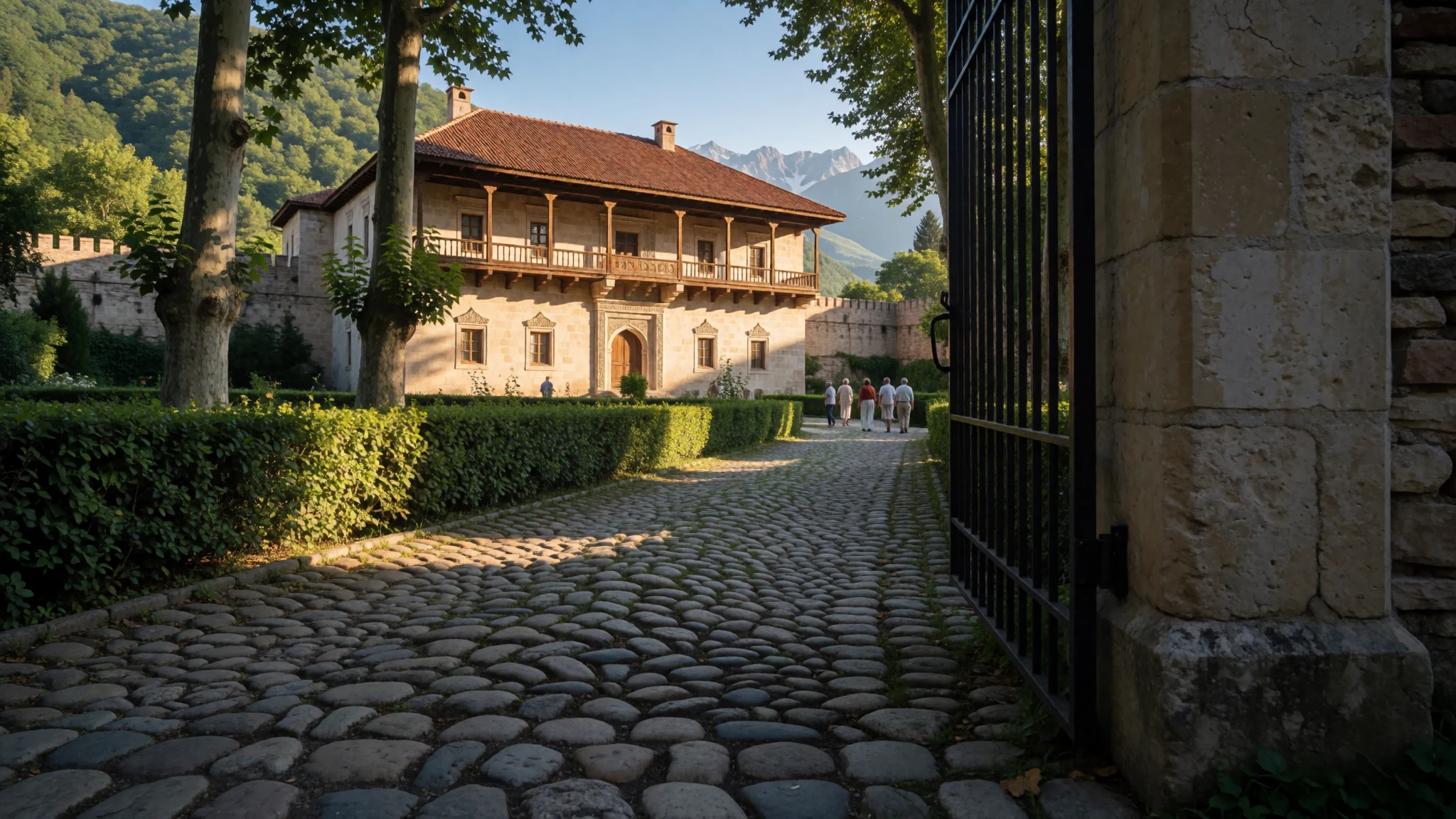
Sheki is a red-roofed Silk Road town in the Caucasus foothills, with a painted khans' palace, a working caravanserai and rich local sweets.
The place
Sheki (Şəki, spelt Shaki in some sources) is a small city in north-western Azerbaijan, set at 545 m on the southern flank of the Greater Caucasus. About 68,360 people live here, and it feels more like an old mountain market town than a suburb of the capital. Snowy ridges close the view to the north, forest climbs the slopes behind the old quarter, and streams run through the district. The trees soften the summer heat and help hold back floods, which is part of why the climate is humid and temperate rather than dry. Rain is a regular visitor, so the hills stay green and the air is cooler than on the plains below.
The look of the place comes from its red-tiled roofs, steep cobbled lanes and stone-and-timber houses stepping up the hillside. The old centre and the Khans' palace were inscribed as a UNESCO World Heritage Site in 2019, recognised for their architecture and for the town's role as a trading stop on the Silk Road. Sheki sees far fewer foreign visitors than Baku, though tour groups tend to gather around the palace in the middle of the day. The main sights sit close together and can be covered on foot, with a taxi useful for the silk workshop and the villages in the hills. Soviet-era holidaymakers once came for the mineral springs, and local pride in food, humour and craft is still strong.
Its story
Sheki has been settled for a very long time. Traces of habitation go back more than 2,700 years, to the late Bronze Age, and later accounts connect the area with the Sakas, an Iranian people who moved south across the Caucasus in the seventh century BC. In the early centuries AD the town belonged to the Caucasian Albanian world, where it was a significant centre with an important temple, and Christianity arrived early through Armenian influence. Excavations in a nearby village in 1902 turned up pottery and a tombstone with Greek lettering from the second century AD, a sign of how far these valleys were connected to wider trade. By the time of the Arab conquests, Sheki was already a political and economic town of some weight.
Its later fortune rested on the Silk Road. Caravans crossed the mountains and stopped here, and silk production grew into the local speciality that continues today. In the eighteenth century the independent Shaki Khanate made the city its capital, and the khans built the palace, gardens and fortifications that anchor the old town. Under Russian rule the city, then called Nukha, was a busy commercial centre with new schools, and Bertolt Brecht later set The Caucasian Chalk Circle there. The Soviet years brought spa visitors to its mineral springs, and the 2019 World Heritage listing marked a new chapter.
What to see
- Palace of the Shaki Khans — Old fortress quarter, upper town
The khans' summer palace stands inside the old fortress walls, with gardens around it. Its pride is the interior: walls and ceilings covered in painted floral and geometric patterns, and windows of coloured glass pieces fitted without glue. Arrive early, as rooms fill quickly once the tour groups come.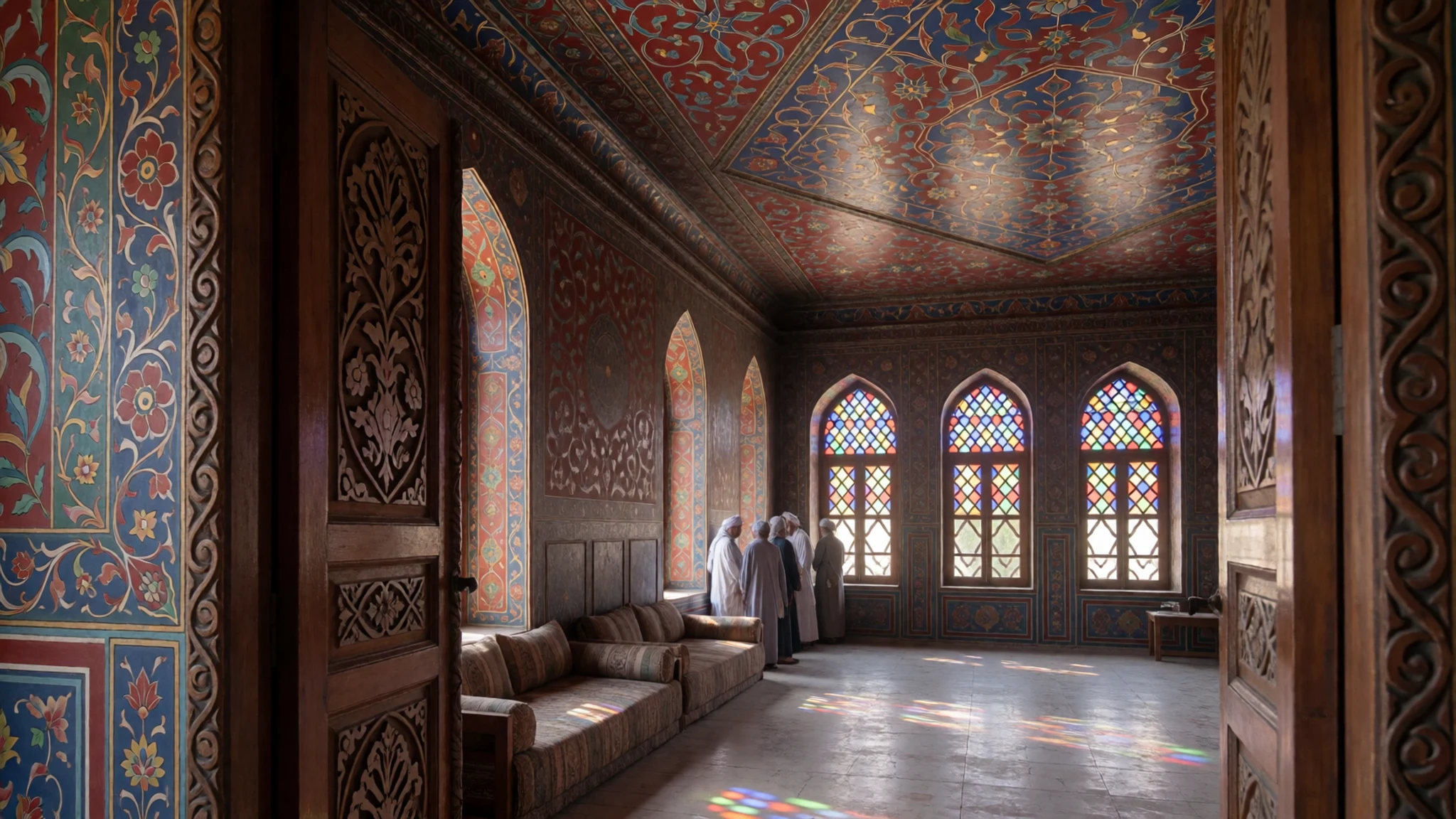
- Palace wall paintings — Inside the Khans' palace
Even a short visit to the palace rewards a slow look at its murals. Painted in the eighteenth century, they mix flowers, trees and hunting scenes in deep reds and blues. The detail is easiest to appreciate in soft daylight from the windows, so linger rather than rushing through the rooms.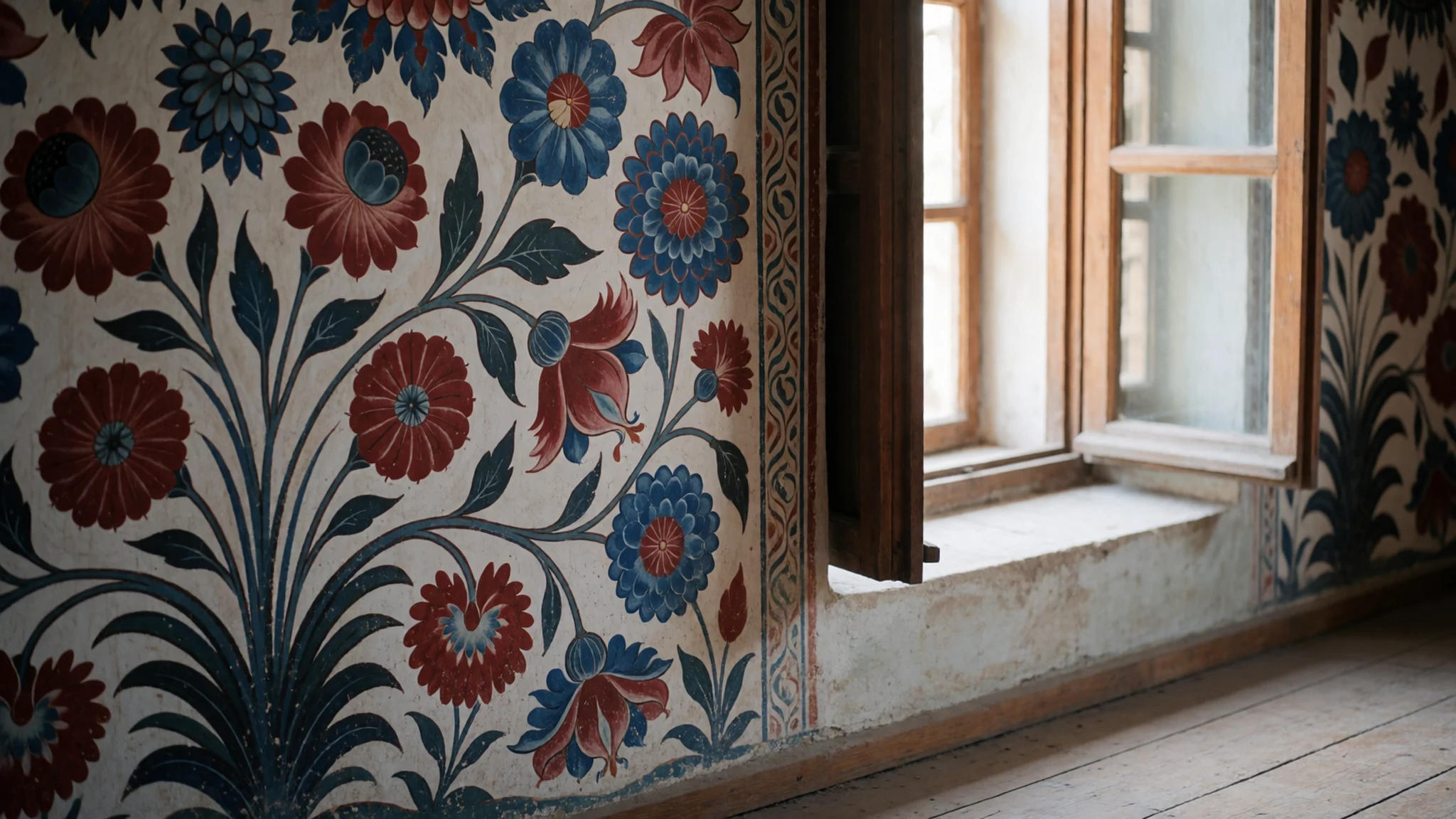
- Karvansaray — Lower old town
The khans had this courtyard inn built for merchants and their animals on the Silk Road. Two storeys of arched rooms surround a quiet yard with a tree in the middle. Part of it still works as a place to eat and stay, so it is easy to picture the old trade.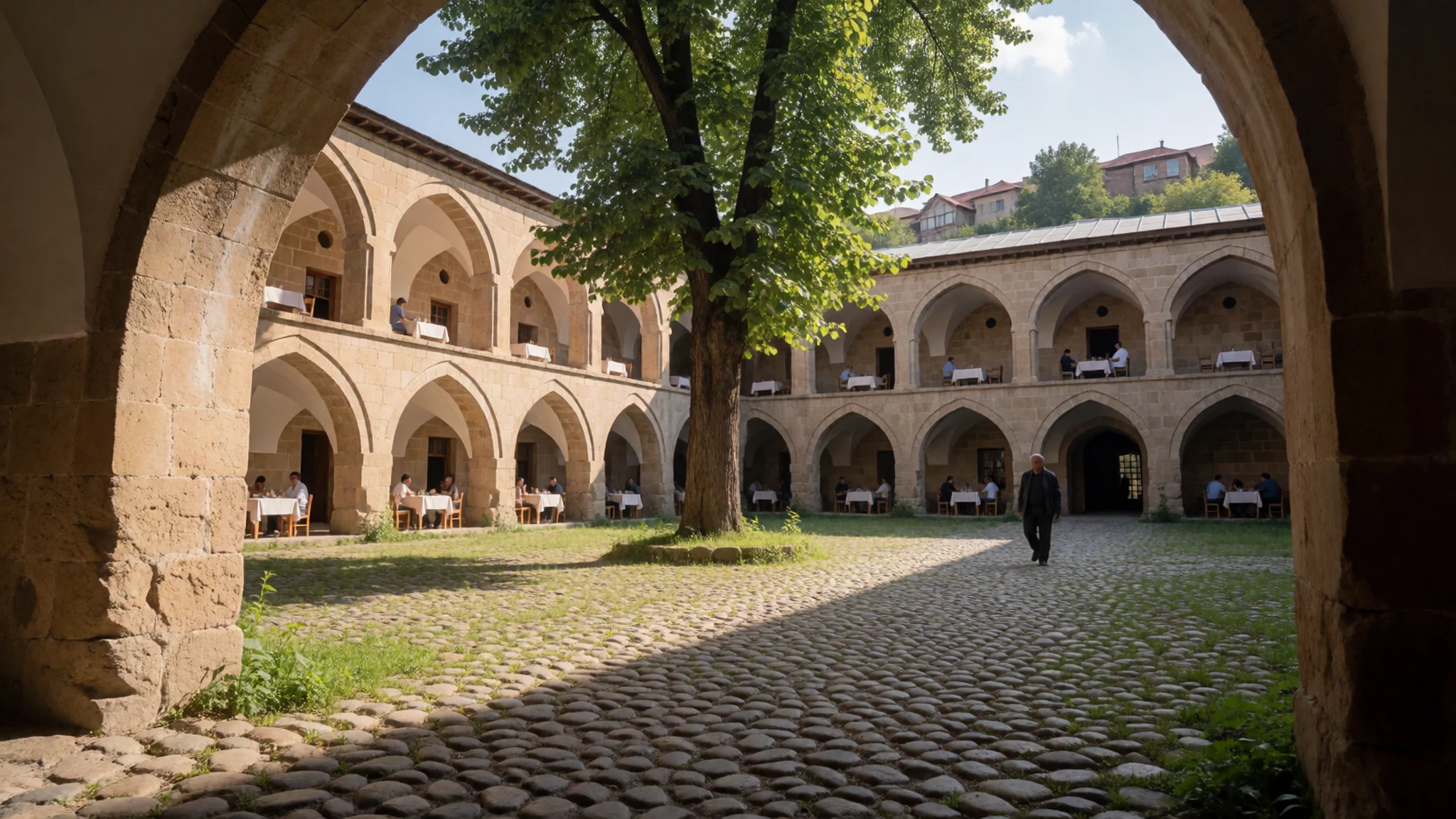
- Juma Mosque — Old town centre
This mosque was built in the mid-eighteenth century and is known for its slender minaret and the geometric decoration on its walls. It is a working place of worship, so the call to prayer carries across the old town. Visit outside prayer times and ask before going inside.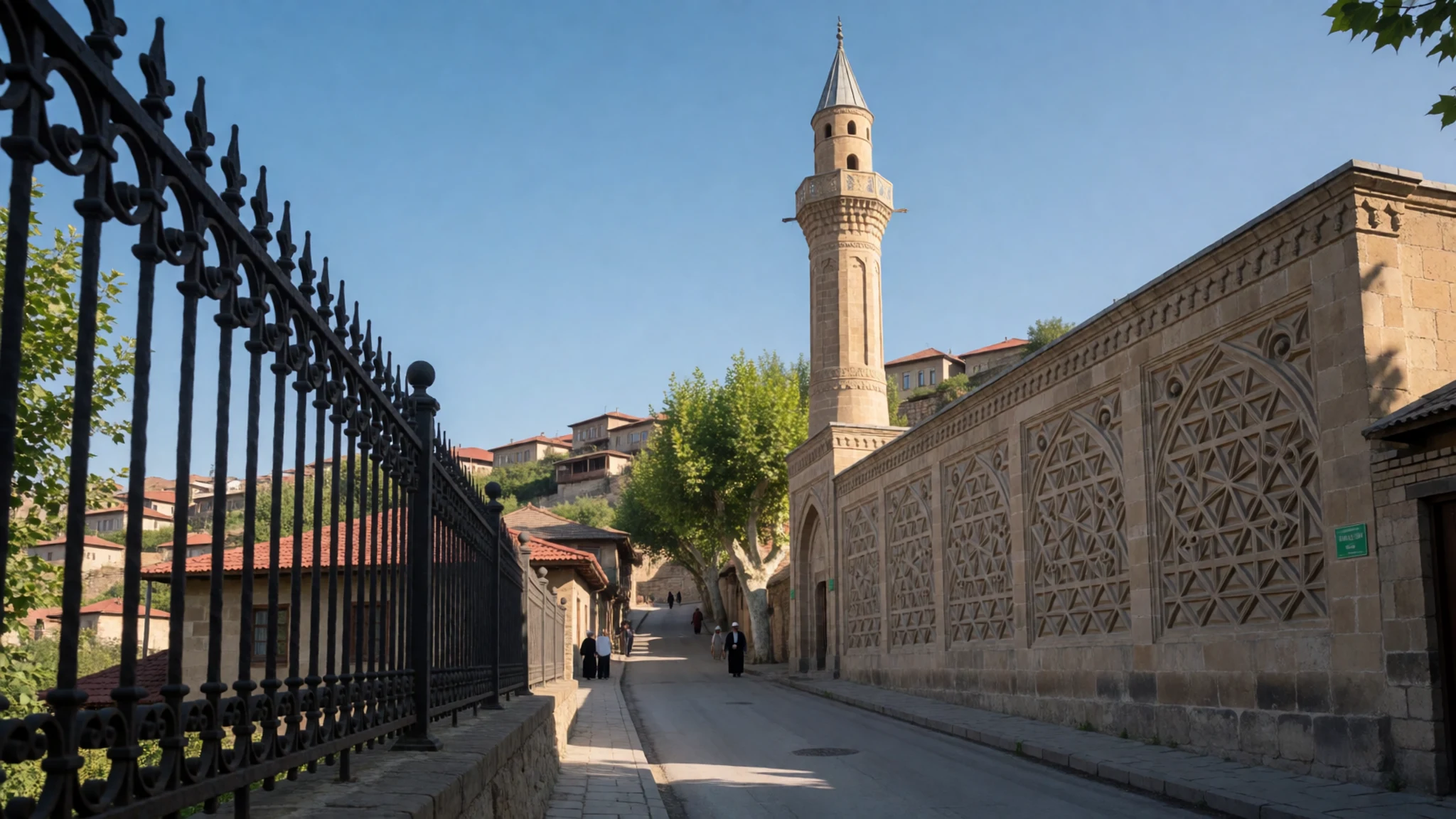
- Silk workshop — North side of the town
Sheki has made silk for centuries, and a workshop on the edge of town shows how it is done, from cocoons to woven cloth. Scarves and fabrics are sold on site. It is a practical stop if you want a souvenir with a real local story behind it.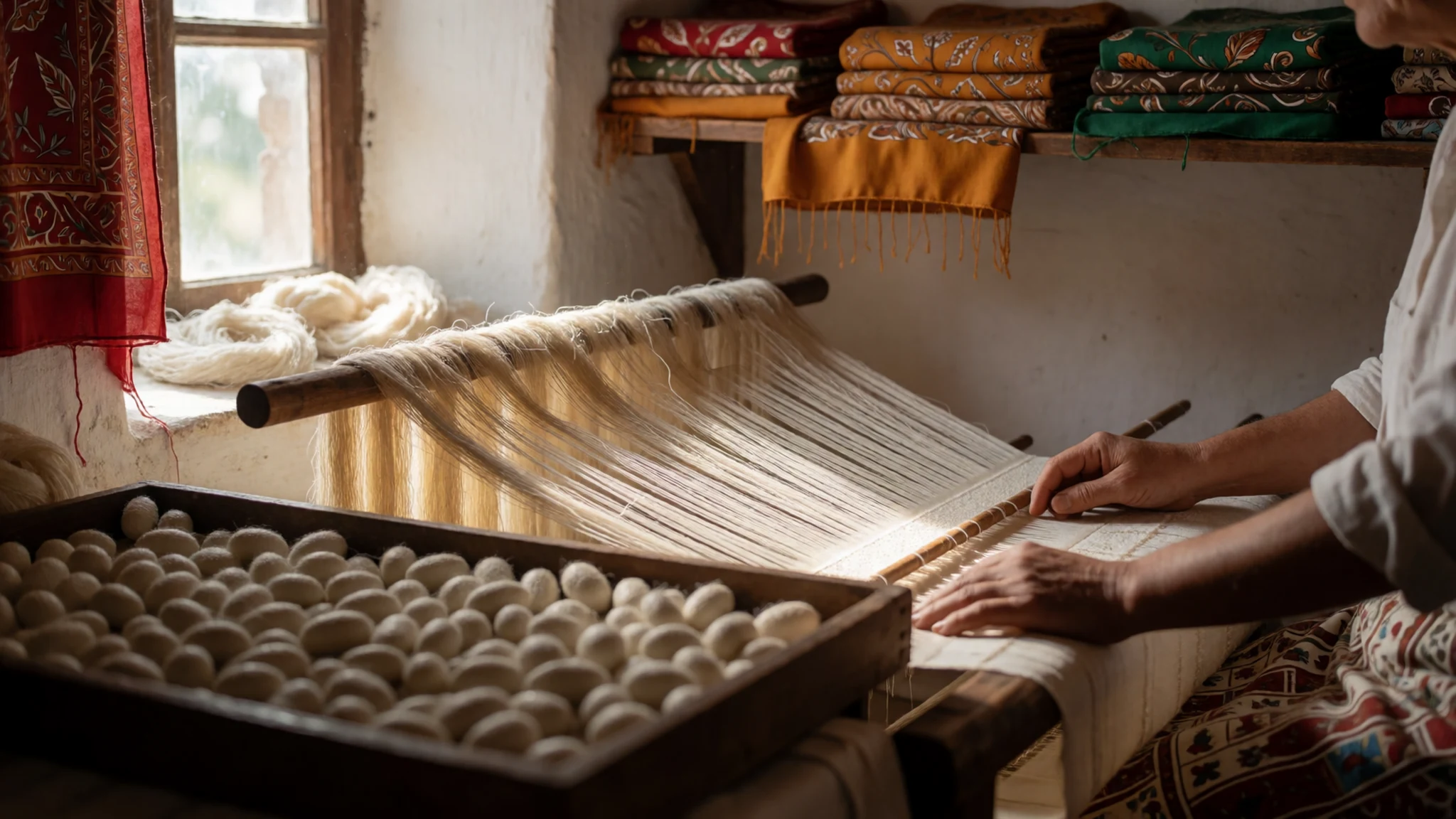
- Church of Kish — Kish village, just outside Sheki
In the village of Kish, a short drive from the centre, a small stone church recalls the Christian history of the Caucasian Albanian period. The setting among village lanes and orchards is as appealing as the building itself. Combine it with a slow afternoon in the hills.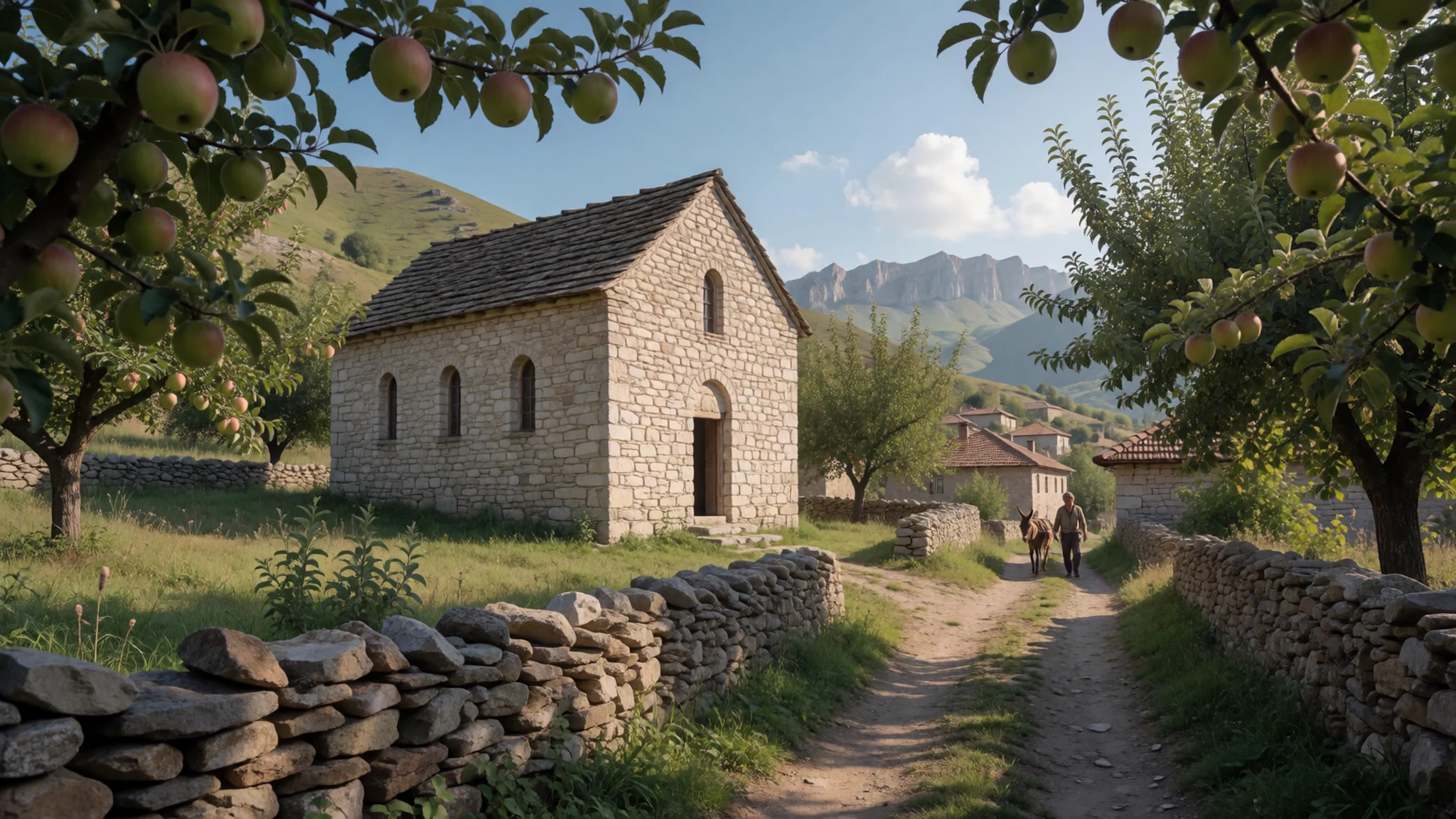
Culture
Sheki is a town that is proud of its own character. Its people are known across Azerbaijan for a dry sense of humour, and the comic hero Hacı dayı (Uncle Haji) features in many local jokes. Visitors who chat with shopkeepers or tea-house regulars soon pick up the habit of teasing and storytelling. The city has long been a centre of Azerbaijani art and architecture, and the old town is full of red roofs, carved wooden balconies and workshops where craft is still part of daily life.
Silk is the thread that runs through local identity, and so is the memory of the khans, whose names appear on streets, gardens and tales. Hospitality matters here: a guest is typically offered tea, often with sweets or preserves, and refusing outright can seem abrupt. Most people are Muslim, but religious practice is relaxed, and the Juma Mosque is a living place of worship rather than a museum. Evenings are social, with families strolling in the parks and gathering at long tables. Regional pride shows in the food, in the dialect and in the local view that Sheki does things properly and without hurry.
When entering the Juma Mosque or any other place of worship, dress modestly, remove your shoes at the door, and ask before photographing anyone at prayer.
What to wear
Traditional Azerbaijani dress still shapes how Sheki thinks about clothing, and silk is central to it. The regional speciality is the kelaghayi, a light silk headscarf worn by women and printed with patterns by hand. Men's traditional clothing includes the chokha, a long wool coat with chest cartridge pockets, and the papakh, a sheepskin hat, though these now appear mostly at weddings, dance performances and festivals.
Day to day, people in Sheki dress much as in the rest of urban Azerbaijan: jeans, shirts, jackets and simple dresses, with older women often in headscarves and darker colours. The weather is mild and humid, so layers and a light rain jacket are normal. Smart clothes are common for evenings out and family occasions.
Visitors should pack for changeable mountain weather: breathable layers, a waterproof, and a warm jumper for cooler evenings and for spring and autumn. Shoes matter more than anything else, since the old town is cobbled and steep, so comfortable footwear with grip is best. Shoulders and knees should be covered at mosques and churches, and women may want a scarf to hand for mosque visits. Shoes come off at mosque doors, so slip-ons are practical.
What to eat
- Sheki piti — Traditional Azerbaijani eateries in the old town
The town's signature dish is a mutton stew with chickpeas and chestnuts, slow-cooked in a small lidded clay pot. Broth is drunk first, then the solids are mashed with bread. Traditionally a lunch dish, it is best at long-established eateries serving regional food.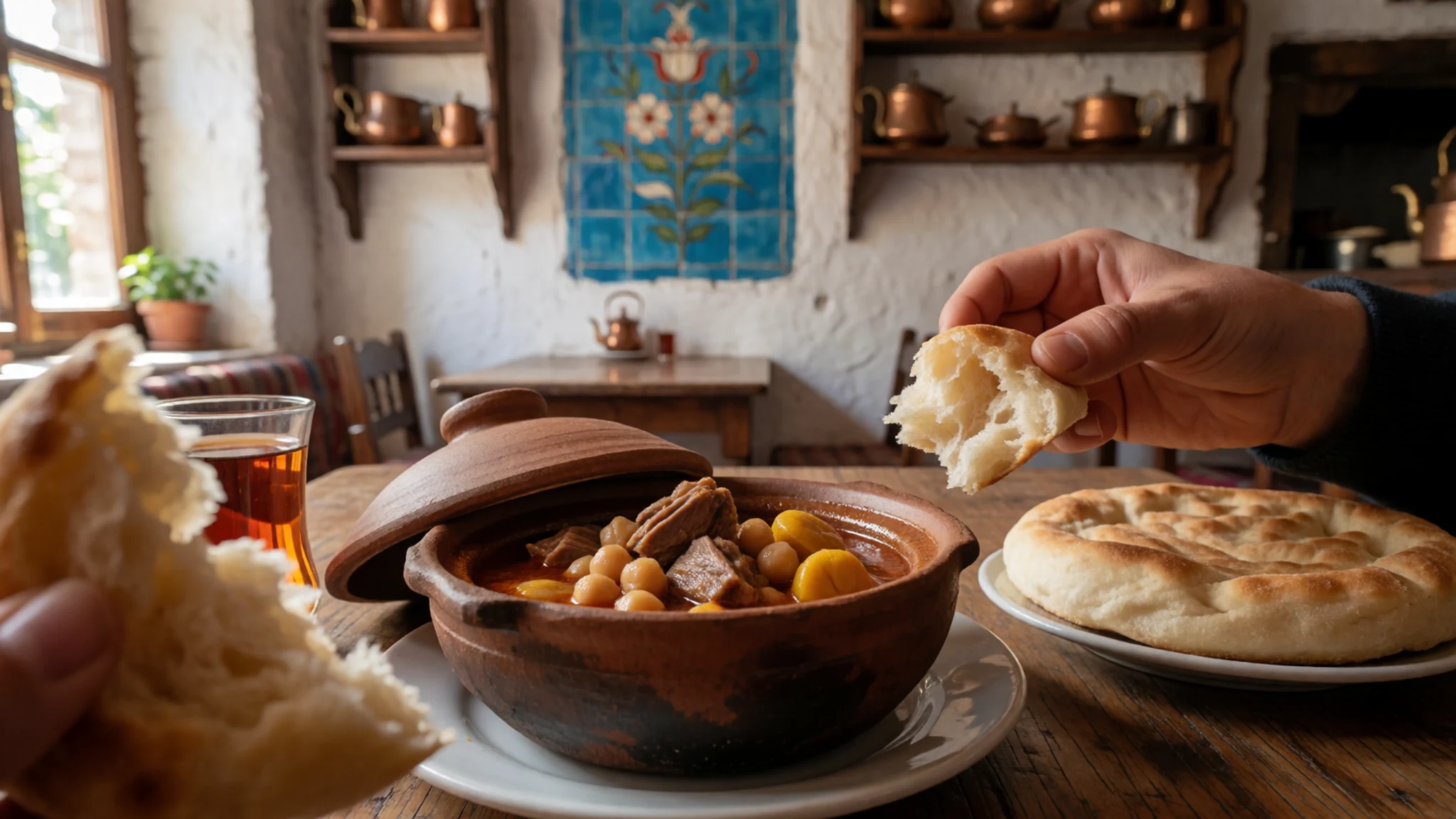
- Sheki halva — Sweet shops and bakeries around the old town
Despite the name, this is a layered pastry of rice-flour sheets with a nut and spiced sugar filling, finished with saffron and syrup. It is sweet, dense and made for sharing. Slices are cut to order, then eaten with tea.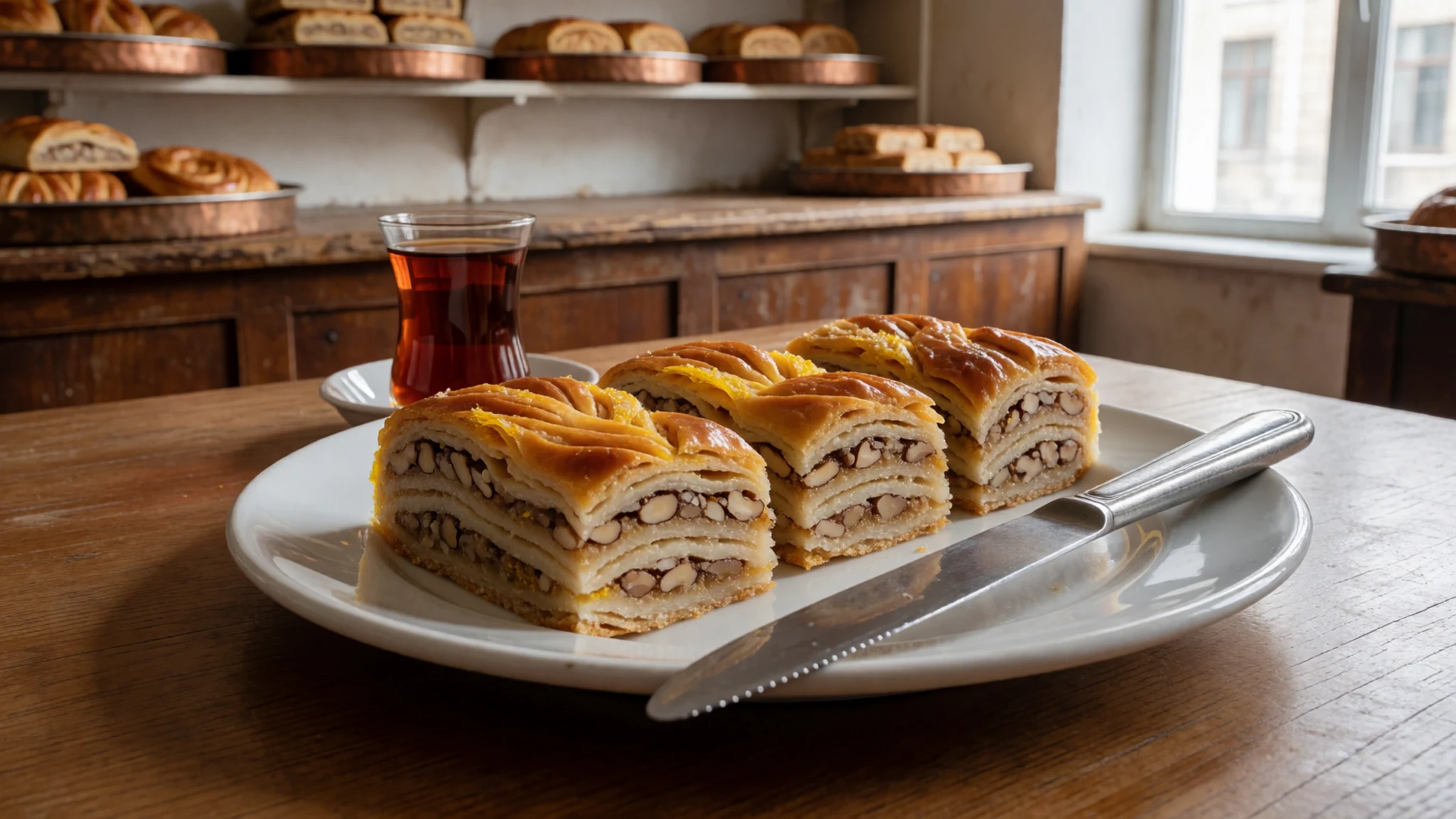
- Gutab — Small cafés and stalls in the town centre
Thin dough folded around fillings such as herbs, meat or pumpkin and cooked on a griddle, then brushed with butter. They are quick, filling and easy to eat on the move, and are best eaten fresh and warm. - Walnut preserves with tea — Tea houses and caravanserai courtyards
Whole green walnuts are cooked in syrup until soft and served in small spoonfuls beside black tea from a samovar. The flavour is sweet and slightly bitter. This is a typical way to end a meal or fill an afternoon. - Kebab and fresh salad — Family-run restaurants, often with stream-side or garden seating
Grilled lamb or chicken kebabs arrive with flatbread, herbs, tomatoes and cucumber, an uncomplicated meal that suits a hot day. Quality varies, so choose places busy with local families rather than ones aimed at tour buses.
Plan it
Best time. May, June, September and October, when the hills are green or turning gold and the air is most comfortable. Summers stay moderate compared with the plains but can be humid, and rain is possible in any season, so carry a light waterproof.
How long. 2
Getting there. Fly into Baku and continue west by long-distance bus or marshrutka (shared minibus), or take an overnight train that stops at Sheki. The railway station is well outside the centre, so plan on a taxi for the last leg. Passports are needed to buy rail tickets; check the official site (http://sheki-ih.gov.az/az) for local information.
Budget. low
Tips
- Visit the palace early in the day, before tour groups arrive
- Carry some cash for small shops, tea houses and taxis
- Wear shoes with grip for the cobbled, sloping lanes
- Allow a half day for villages such as Kish by taxi
- Book rail tickets in advance, and check current times locally
Etiquette
- Dress modestly and remove shoes at mosque doors
- Ask before photographing people, especially women and worshippers
- Accept tea when offered; it is part of local hospitality
Nearby
Sources
- Wikidata Q234783 (CC0)
- Wikipedia: Shaki, Azerbaijan (rev 1386278467) (CC BY-SA 4.0)
- Wikivoyage: Sheki (rev 5387000) (CC BY-SA 4.0)
- Photo: Şəki şəhəri ümumi görünüş (Sefer azeri) (CC0 1.0)
- Photo: Palace of Shaki Khans (Petar Milošević) (CC BY-SA 4.0)
- Photo: Palace wall paintings (Abu Zarr) (CC BY 3.0)
- Photo: Ottoman troops and Alexander II of Kakheti (16th century) (Public domain)
- Photo: Church of Kish (Petar Milošević) (CC BY-SA 4.0)
- Photo: Shaki khan palace (Gulustan) (CC BY 3.0)
- Photo: Shaki piti (Самый древний) (Public domain)
- Photo: Karavansaray in Shaki (Gulustan) (CC BY 3.0)


