Nakhchivan
Nakhchivan, Azerbaijan
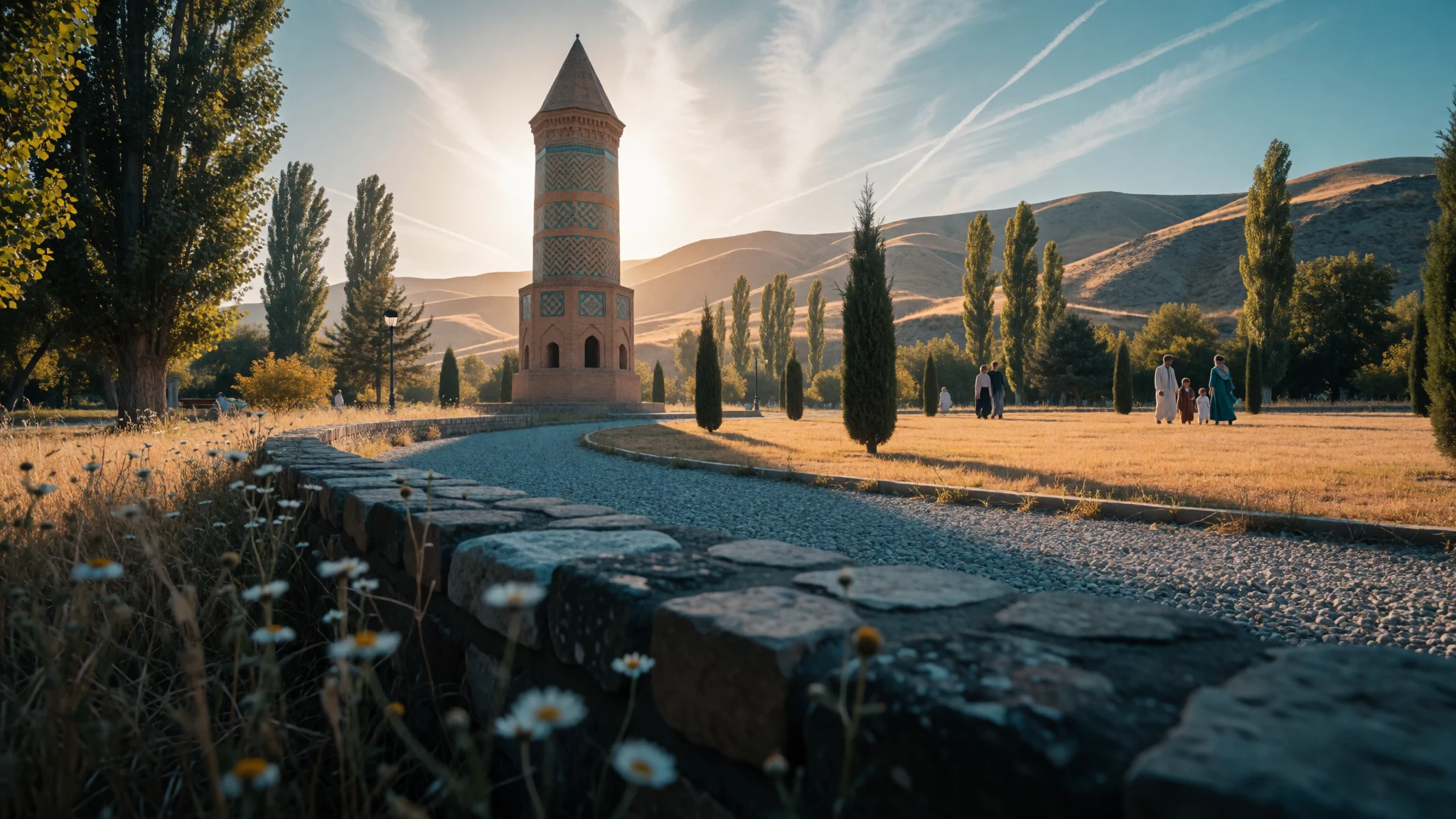
Nakhchivan is a quiet exclave capital where a restored twelfth-century tomb tower, a hilltop flagpole and distant Mount Ararat share one compact city.
The place
Nakhchivan is the capital of the Nakhchivan Autonomous Republic, a true exclave of Azerbaijan. That means the territory is cut off from the rest of the country, and the city lies about 450 km west of Baku. It sits at 873 m on the right bank of the Nakhchivan River, spread across the foothills of the Zangezur range, with a population of about 94,000. The municipality also takes in the settlement of Əliabad and a ring of villages. The setting is dry country. The climate is continental and semi-arid, with short, cold, snowy winters and long, parched, very hot summers. Loss of trees along the riverbanks once made floods and soil erosion worse, so the city has run replanting projects to bring cover back. Wikidata dates its founding to around 1500 BCE, but what a visitor walks through today is largely a modern, planned and heavily restored town, with wide streets and parks laid out around the older monuments. The traditional trades were handicraft, shoemaking and hatmaking. Most have faded, and restoration work, construction and cross-border trade now carry much of the local economy. From the hill on the northern edge, the skyline, the Aras River and Mount Ararat can all be seen on a clear evening. This is a small, calm capital, suited to two or three unhurried days among tombs, museums and parks rather than a checklist of crowded sights.
Its story
Nakhchivan enters written history early. Ptolemy's Geographia lists it as Naxuana, and the Armenian historian Movses Khorenatsi says King Tigranes I settled Median prisoners of war here in the second century BC. Wikidata places the city's founding far earlier, at about 1500 BCE. The record after that is largely one of conquest and shifting overlords. In 363 the Sasanian king Shapur II destroyed the city and deported its Armenian and Jewish population to Iran. The Byzantine emperor Heraclius passed through in 623 during his war with Persia, and Arab forces besieged the city in 650. After a rebellion in the early eighth century, rebel nobles were burned alive in local churches, a grim episode in the chronicles. Control then passed between Armenian Bagratid rulers, regional emirs and the Eldegizid atabegs. One of them, Nusrat al-Din Abu Bakr, took refuge here after a defeat in 1195, and the Kingdom of Georgia seized the city in 1197. Zakarid Armenia held it through much of the thirteenth and fourteenth centuries, though usually with only partial independence and often as a vassal. The Mongols occupied it in 1236, and the Ilkhanate that followed demanded taxes, loyalty and troops. The Eldegizid age left its best-known monument in stone: the tomb tower built for Momine Khatun, wife of the ruler Jahan Pahlavan. In the twentieth century the city became capital of a Soviet autonomous republic, and it holds that role within Azerbaijan today.
What to see
- Momine Khatun Mausoleum — Central Nakhchivan, in the park by the Palace of the Khans
A tall octagonal tomb tower from the twelfth century, built for the wife of the ruler Jahan Pahlavan and also called Atabek Gumbezi. Kufic calligraphy and ceramic patterning cover the brick. It has been heavily restored, so it reads as renewed rather than ancient, but the proportions and lettering still reward a slow walk around it.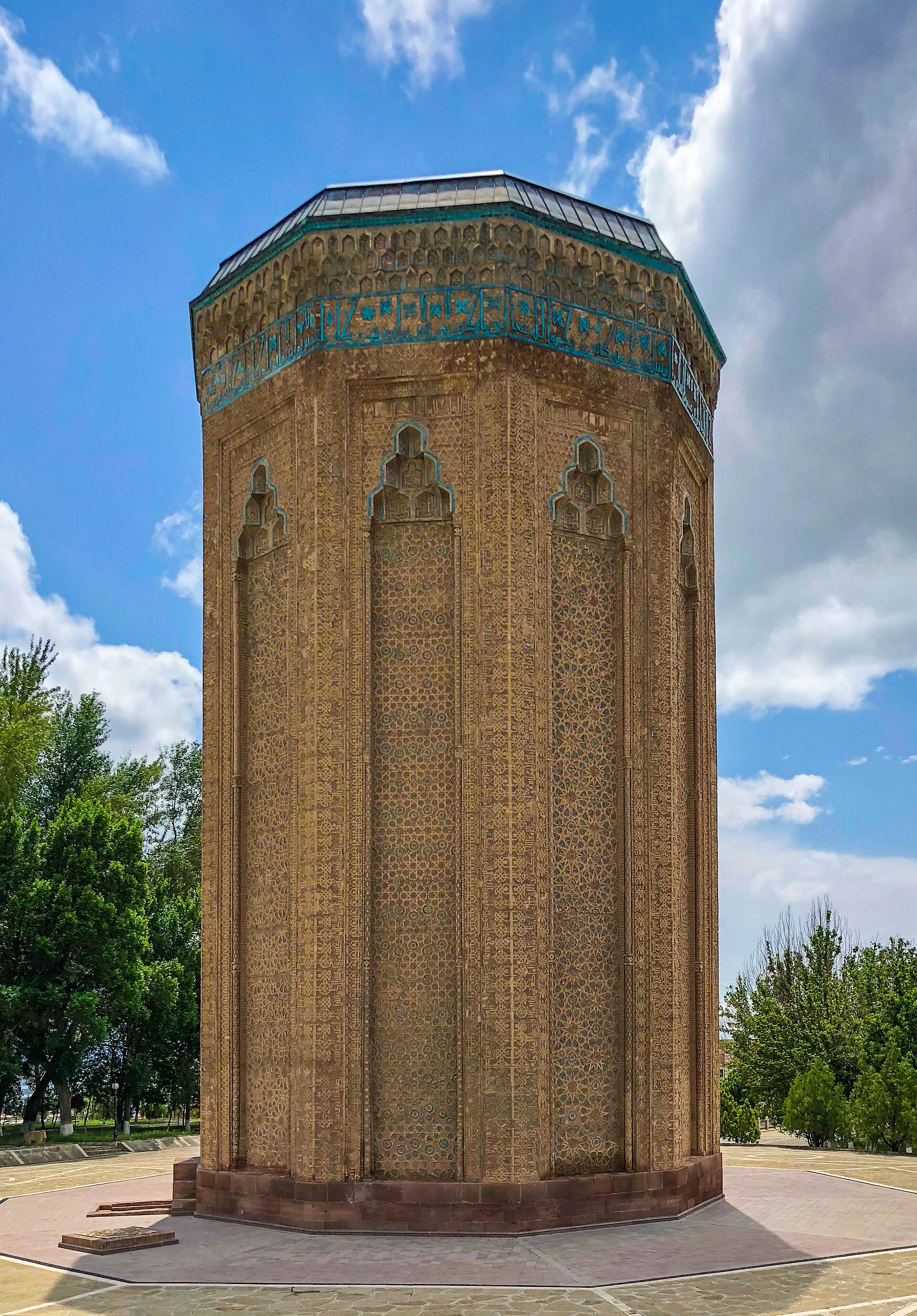
- Palace of the Khans and Open Air Museum — Central Nakhchivan, beside the Momine Khatun Mausoleum
Next to the mausoleum, in the same park, stand a small khans' palace with a museum inside and an open-air collection of old carved stones and statues. The building and gardens are pleasant in themselves, though many palace labels are in Azeri only. Allow about an hour, and pair it with the tomb tower beside it.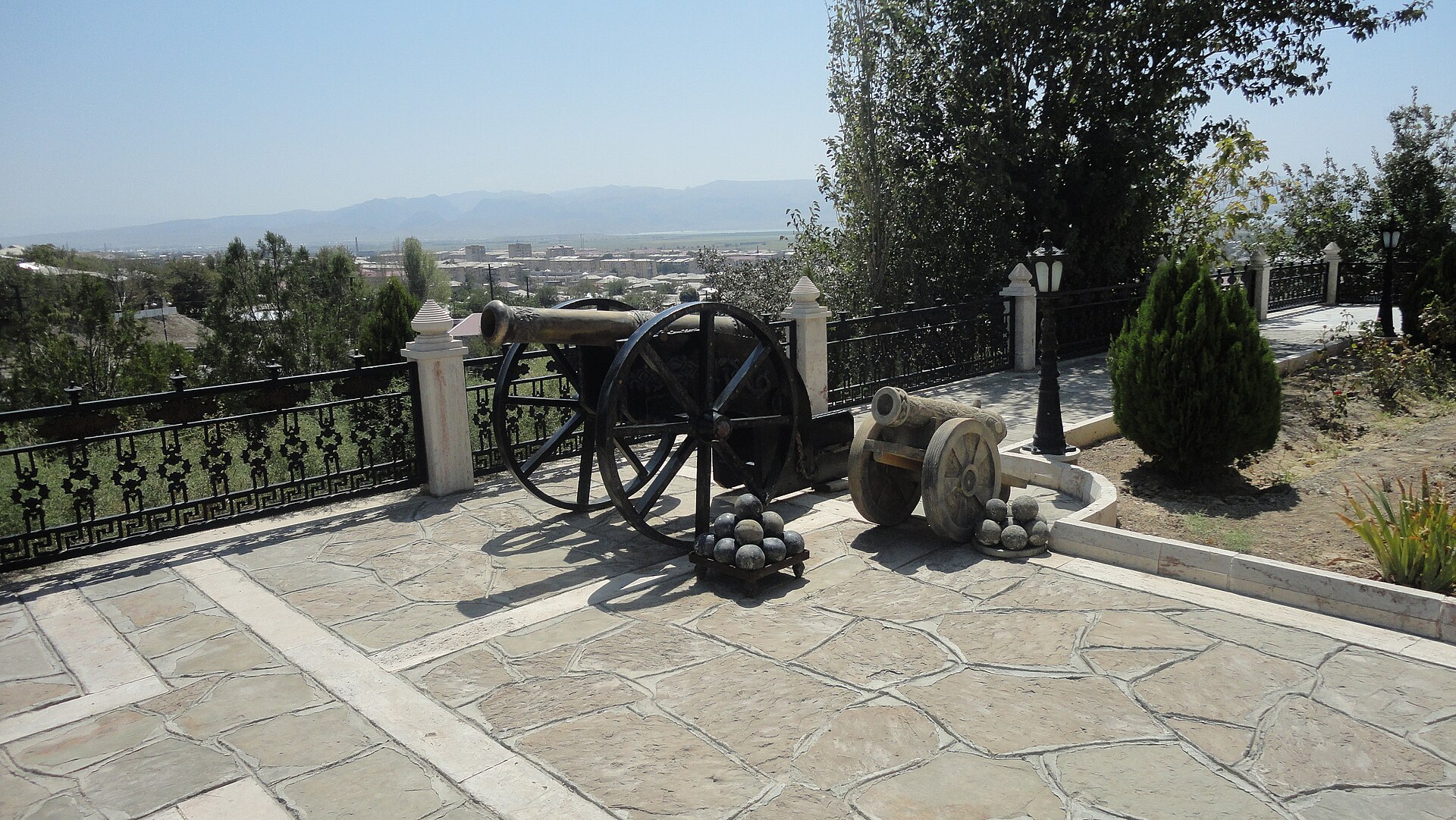
- Heydar Aliyev Museum — Central Nakhchivan
A museum devoted to Heydar Aliyev, the first president of Azerbaijan, who was born in Nakhchivan. It explains why his name appears on so many streets and buildings here. Expect an official, commemorative account rather than a critical one; it is still useful for understanding how the region presents itself today.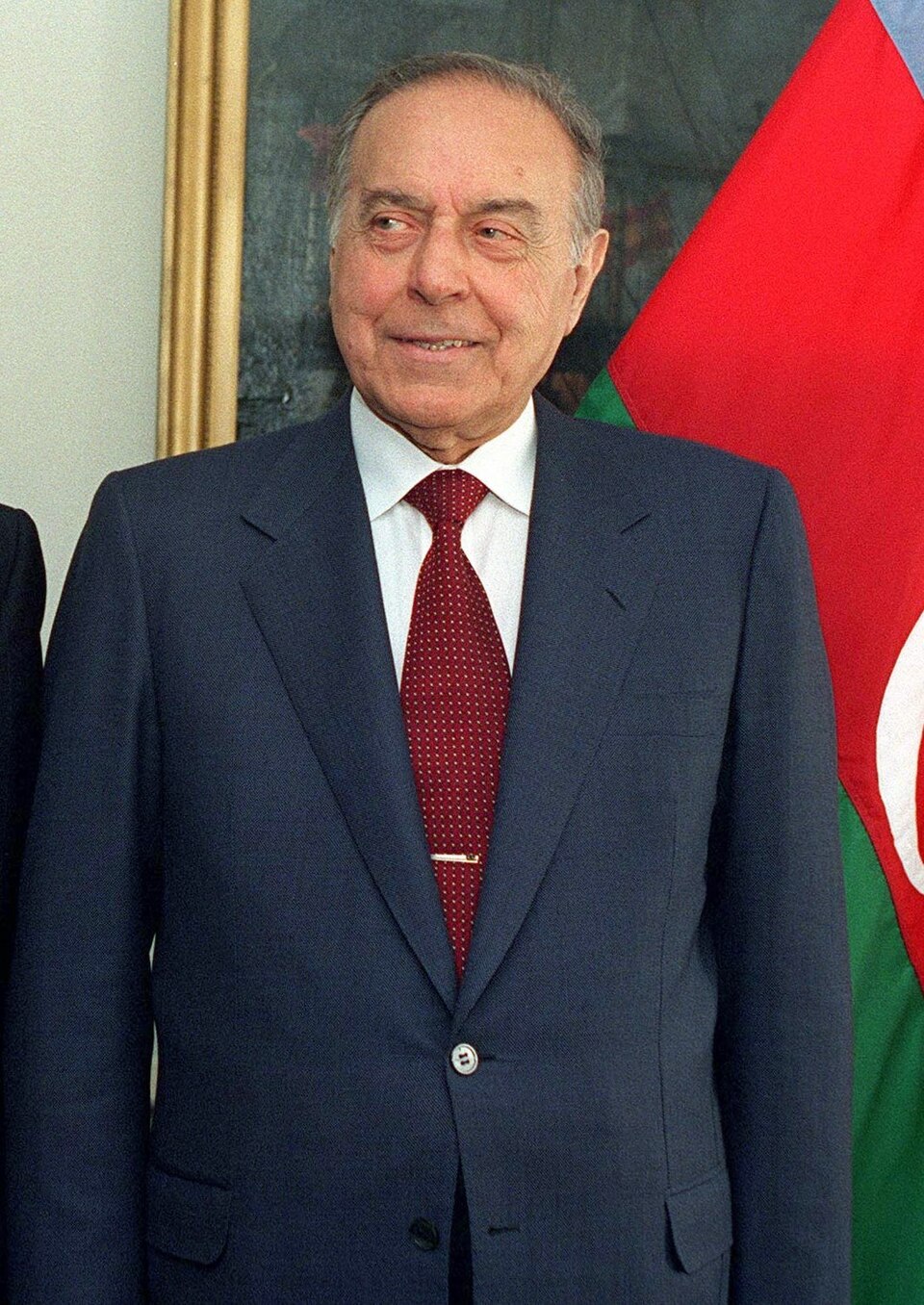
- Flag Pole Park — Northern edge of the city, on a hill
A tall flagpole stands on a hill at the city's northern edge, with a small museum inside and a park around it. The views take in the skyline, the Aras River and, in clear weather, Mount Ararat. Evenings are best, when the park lights come on and the day's heat has eased. - Nakhchivan Castle and Noah's Tomb — Southern Nakhchivan
In the south of the city, a heavily rebuilt castle houses a history museum. Some find it a little theme-park in style, but its walls give good views over the city and surrounding country. Beside it stands a shrine said to be the tomb of Noah, a claim other countries dispute. Visit both together. - Carpet Museum — Nakhchivan city
Nakhchivan has a museum devoted to carpets, a craft tied to the wider Azerbaijani weaving tradition. Opening times and entry rules are not given here, so ask locally or check the regional website, http://nakhchivan-ih.gov.az/. A sensible addition for textile lovers, and a good stop for a very hot or snowy afternoon.
Culture
Nakhchivan's cultural life is organised around its mausoleums and a handful of large civic buildings. The tombs include Momine Khatun, Gulustan, Garabaghlar, Yusif ibn Kuseyir, the Imamzadeh and that of the writer Huseyn Javid, alongside the shrine attributed to Noah. The Heydar Aliyev Palace features a permanent display of regional artwork alongside a performance space that can accommodate 1000 spectators. A restored Soviet-era opera theatre is home to the Nakhchivan State Musical Drama Theatre, which stages plays, concerts, musicals and opera. In 2018 the city was named an Islamic Culture Capital, and much of the restoration visible today was celebrated under that banner. Heydar Aliyev, born in the region, features on museums, streets and monuments, and the city's public identity leans heavily on him. Daily life is Azerbaijani-speaking and largely Muslim, and hospitality matters: tea tends to appear quickly, and refusing it outright can seem curt. Many monuments are restored rather than original, and some museum labels are in Azeri only, so a translation app is handy. At tomb shrines and mosques, cover your shoulders and knees and take your shoes off before stepping onto carpeted floors.
What to wear
Nakhchivan's traditional dress belongs to the wider Azerbaijani wardrobe. Men's formal wear included the woollen coat and the tall sheepskin hat, and hatmaking was once a local trade here. Women wore long, fitted dresses with silk headscarves, and wool and silk remain the textiles associated with the region's weaving. Such clothing now appears mainly at weddings, folk concerts, school performances and spring festivals, or on stage at the theatres. Everyday dress in the city is plain and modern: jeans, shirts, jackets and smart trousers for men, and dresses, skirts or trousers for women, with headscarves more common among older women. Young people follow familiar international styles. Visitors should dress for the climate first. Summers are long and very hot, so light cotton, a sun hat and sunglasses suit, while winters are short, cold and snowy and call for a proper coat, hat and gloves. Comfortable closed shoes with grip help on castle walls, stone steps and park paths. For tombs, shrines and mosques, bring a light scarf or shawl and wear sleeves and trousers or skirts that cover shoulders and knees. Beachwear belongs elsewhere, and smart casual clothes fit well in the city's museums and theatres.
What to eat
- Plov — Family restaurants and eateries around the city centre
Rice cooked until fluffy and served with lamb, dried fruit or chestnuts, often under a golden crust. It is the dish of celebrations across Azerbaijan. Order it at a family-run eatery at midday, when portions are largest and the rice is freshest. - Dolma — Local restaurants and home-style canteens
Minced meat and herbs wrapped in vine leaves or stuffed into vegetables such as aubergine and peppers, then simmered gently. Summer and early autumn versions are the best, when the vegetables are fresh. Often served with a spoonful of yoghurt on the side. - Qutab — Small bakeries and street-side griddle stalls
Thin flatbread folded over greens, minced meat or pumpkin and cooked on a hot griddle. It is a quick, cheap snack, ideal before climbing to the flag pole or visiting the castle. Eat it hot, with yoghurt or a squeeze of sumac. - Kebab — Grill houses and kebab restaurants in the city
Skewered lamb or minced meat grilled over charcoal and served with flatbread, onions, sumac and grilled tomatoes. Evenings bring the best smoke and the busiest tables. Ask for it with fresh herbs and a plate of salad. - Tea and sweets — Tea houses, café gardens and park kiosks
Black tea in small, waisted glasses, served with jam, sugar cubes, dried fruit and sweet pastries such as baklava. It is the normal way to end a meal or pause between sights, and hosts take offence if the glass is left empty too soon.
Plan it
Best time. May–June and September–October. The city has long, dry, very hot summers and short, cold, snowy winters, so spring and early autumn give the most comfortable days for walking between sights.
How long. 2–3
Getting there. Nakhchivan has its own airport with domestic flights, most commonly from Baku, which is about 450 km to the east. Overland routes depend on borders and entry rules, so check the current situation before planning. From the airport, taxis reach the centre; local buses and taxis cover the rest.
Budget. low
Tips
- Visit the flag pole park in the evening, when the heat eases and the lights come on
- Carry cash for small shops, tea houses and taxis, and check whether cards are accepted
- Bring a refillable water bottle and sun protection from late spring to early autumn
- Allow for Azeri-only labels in some museums; a translation app helps
- Check opening times locally or on the official site, http://nakhchivan-ih.gov.az/
Etiquette
- Remove shoes before stepping onto carpeted areas in shrines and mosques
- Cover shoulders and knees at religious sites
- Ask before photographing people, and do not photograph military or official buildings
Nearby
Sources
- Wikidata Q230104 (CC0)
- Wikipedia, Nakhchivan (city), rev 1380660512 (CC BY-SA 4.0)
- Wikivoyage, Nakhchivan (city), rev 5242446 (CC BY-SA 4.0)
- Photo: Nakhchivan montage (TagaworShah and individual authors) (CC BY-SA 4.0)
- Photo: Bahruz Kangarli, Пейзаж с домом (CC BY 3.0)
- Photo: The Armenian district and church of Nakhijevan city (1910s) (Public domain)
- Photo: Nakhchivan khan's palace, ancient weapons (Araz Yaquboglu) (CC BY-SA 4.0)
- Photo: Capitals of Autonomous Soviet Socialist Republics, Lenin Street, Nakhichevan (1961 stamp) (Public domain)
- Photo: Möminə Xatun türbəsi (Sefer azeri) (CC BY-SA 4.0)
- Photo: Heydar Aliyev, 1997 (Public domain)
- Photo: Hüseyn Cavid (Public domain)


