Gobustan State Historical and Cultural Reserve
Gobustan State Historical and Cultural Reserve, Azerbaijan
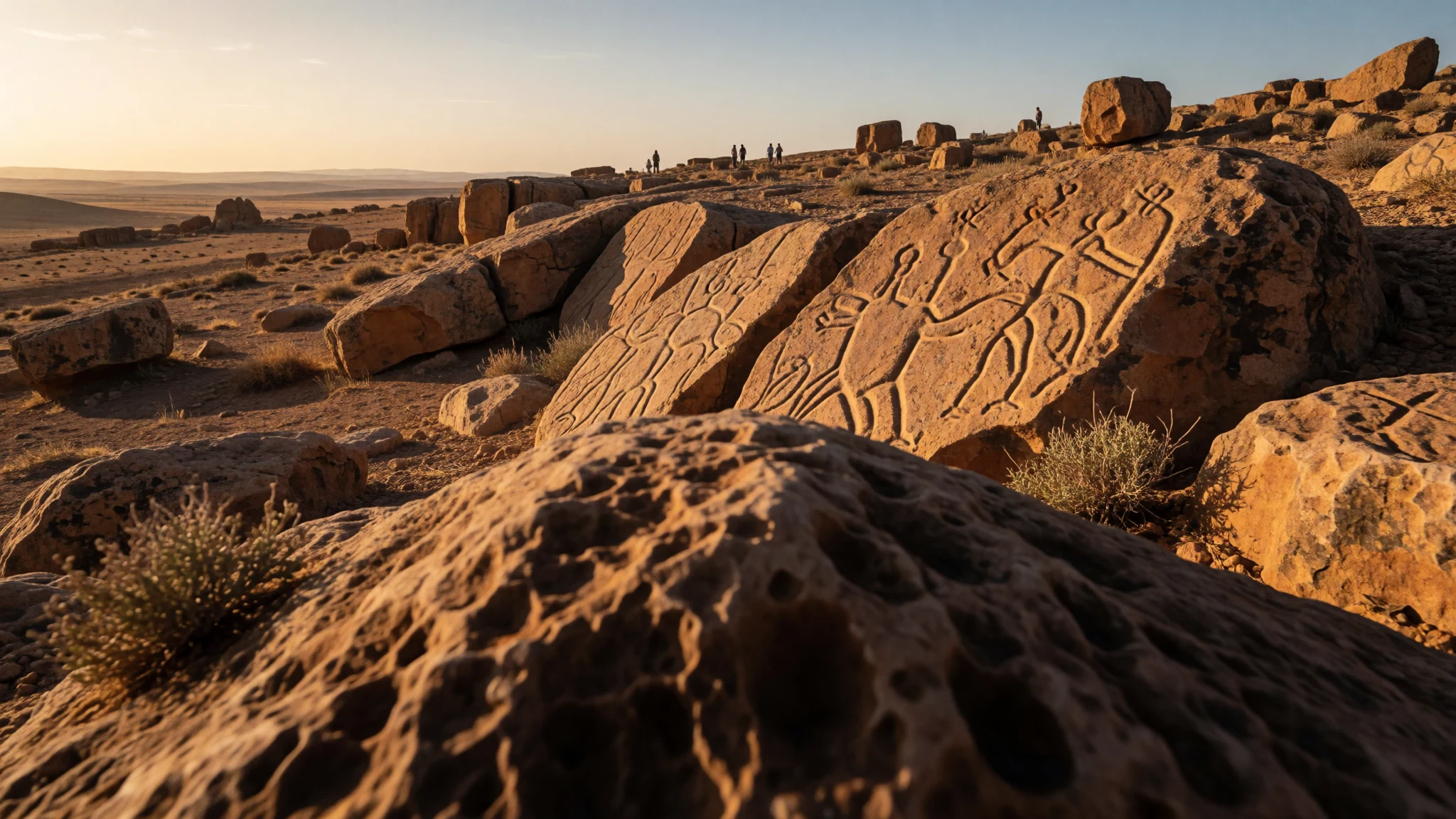
Gobustan pairs prehistoric rock art with mud volcanoes—an unusual mix that stays fascinating even when you’re hot and dusty.
The place
Gobustan State Historical and Cultural Reserve sits in Azerbaijan’s rugged “mountains and parks” belt, about 70 kilometres southwest of Baku near the settlement of Gobustan. It’s a protected historic and natural landscape designed to preserve prehistoric rock carvings, mud volcanoes, and distinctive natural features—plus the visitor facilities that help you make sense of it all.
The centrepiece is the Gobustan Rock Art Cultural Landscape. Over a large reserve area, thousands of carvings are cut into stone panels and boulders, showing everyday life and dramatic moments: people, animals, hunting and battles, ritual dance scenes, boat depictions, and camel caravans, with celestial symbols like the sun and stars. The art is old enough to feel like archaeology straight out of a time capsule—carved by communities living in a very different landscape.
What makes Gobustan feel different from a typical “go look at carvings” stop is how close nature is to history. Mud volcanoes dot the surroundings, and the terrain can look harsh, open and dry, with long sightlines over rocky ground. That means the reserve works best as a day trip that leans into outdoorsy pacing: walk, look, pause in the shade where you can, and then walk again.
If Baku is the city break, Gobustan is the contrast—less about polished interiors, more about reading stone and earth in the light, and learning the stories the carvings were meant to leave behind.
Its story
Gobustan’s story starts with preservation, not tourism. The reserve was established in 1966 to protect the prehistoric carvings and the natural features around them. Over time, Gobustan became more than a protected zone: it was promoted as a cultural landscape with both archaeological and natural character.
In 2007, the Gobustan Rock Art Cultural Landscape was recognised at UNESCO World Heritage level. That same year, the site received a formal national-reserve designation by presidential decree, under the name Gobustan State Historical and Cultural Reserve. In practice, these steps matter for visitors because they help explain why there’s a structured way to experience the place rather than a free-for-all: the carvings are curated, and the reserve’s museums and facilities have continued to develop.
One of the most practical developments is the Petroglyph Museum, which has been operating inside the reserve since 2011. Instead of just arriving at open rock panels, visitors can start by getting context for what they’re about to see.
Then there’s the mud-volcano side of Gobustan. The Mud Volcanoes Tourism Complex opened in 2024, reflecting how the reserve has been expanding what visitors can do on site—especially for people who want the “how does this work?” story behind the landscape.
Overall, Gobustan feels like a place where geology and human creativity keep colliding: carvings record activity, and mud volcanoes remind visitors that the ground itself has been restless for ages.
What to see
- Gobustan Rock Art Cultural Landscape — Gobustan reserve area
Gobustan’s rock-carving landscape is spread across boulders and stone panels, with scenes ranging from people and animals to battles, ritual dance imagery, and boats. Look for recurring themes—alongside celestial symbols such as the sun and stars—then keep an eye on how panels cluster. - Petroglyph Museum (within the reserve) — Inside the reserve
Gobustan’s Petroglyph Museum helps turn the carvings you see outdoors into something easier to interpret. It’s a good stop when the light is strong and you want a quieter, more guided-feeling start before heading back outside to the stone panels. - Mud volcano landscape — Mud-volcano zone
Gobustan’s mud volcanoes are the natural counterpoint to the rock art. Expect a landscape shaped by earth and gas activity, with terrain that can look otherworldly. It’s the kind of place where photos make sense only after you’ve walked close enough to feel the scale. - Mud Volcanoes Tourism Complex — Tourism complex area
The Mud Volcanoes Tourism Complex is the modern visitor-facing side of the mud-volcano area. It’s where the reserve’s natural story is presented more deliberately, so the walk feels less random. It also supports day-trippers who want a smoother route for seeing the key points. - Qobustan entrance carving area — Entrance area
Near the entrance area, carved stones give a fast “you’re in the right place” moment. It’s a practical first look: you can compare how carvings appear in close-up versus across the wider reserve, then decide the pace for the rest of the visit.
Culture
Gobustan State Historical and Cultural Reserve is about rock art and natural geology, so visitor behaviour is mostly about care and quiet attention. People tend to concentrate on photos, but the real value comes from slowing down to read the carvings—where lines overlap, where scenes repeat, and how animals or human figures are arranged. Since the reserve is outdoors, also expect dust and sun; long walks mean you’ll want to move at a comfortable pace and avoid rushing between panels. The museum inside the reserve is typically a calmer stop, useful for resetting your eyes before heading back outside.
Because the carvings are part of a protected heritage landscape, avoid touching stones or stepping where it isn’t allowed—oil from hands and accidental scuffs can do real damage. If there are signs for viewing points, stick to them, and give space to other visitors so everyone can see without crowding.
A respectful reserve visit also means keeping noise down, particularly around the museum and quieter viewing areas—this isn’t a place for big speaker soundtracks.
Visitor etiquette: stay on marked paths, don’t touch the carvings, and keep voices low while other people are reading the stone.
What to wear
Gobustan’s dress code is basically “outdoors, but with respect for heritage.” The landscape is rocky and exposed, so sturdy footwear matters more than style. In warmer months, lightweight breathable clothes work best, but the sun can still feel relentless—bringing a hat and sunglasses makes a noticeable difference.
Traditional Azerbaijan styles aren’t required for visiting Gobustan, but it’s worth understanding what people wear locally: for everyday life, many people wear modern, practical outfits; in more cultural contexts, Azerbaijani traditional dress often features long garments and decorative details, including elements like embroidery and patterned textiles. On the reserve, you’ll mostly see contemporary clothing, with modesty staying common in public spaces.
What a visitor should wear here: comfortable long trousers or long skirts if preferred (dust and sun protection), a breathable top, and closed-toe shoes with grip for uneven ground. Bring a light layer for windier moments, plus water—outdoor sites can drain energy faster than expected. If visiting the museum, keeping shoulders covered isn’t necessary in the way it is at some religious sites, but neat and comfortable clothing helps it feel more like a cultural stop than an impromptu picnic.
Also plan for photos: clothing that won’t constantly snag on vegetation or straps that can get dusty makes the walk easier.
What to eat
- Azerbaijani plov (rice pilaf) — Baku restaurants in and around the historic city centre
Plov is a comforting rice dish often served warm with meat and vegetables. For Gobustan visitors, it’s easiest to eat in Baku around the historic centre or in neighbourhood restaurants where Azerbaijani/Turkish food is common. - Kebab — Baku kebab shops
Kebab usually means grilled meat served with bread and simple sides. In Baku, kebab shops and casual eateries are easy to find, making it a straightforward option after a day trip when everyone’s hungry. - Piti — Azerbaijani-focused restaurants in Baku
Piti is a hearty, filling stew that’s commonly associated with Azerbaijani cooking. It’s a good choice in Baku restaurants that focus on Azerbaijani dishes, especially when the weather is cooler in the shoulder months. - Lavas-style takeaway plates — Casual takeaway areas and nearby takeaway counters in Baku
Takeaway lavas-style food is a practical way to eat quickly without sitting down for long. In Baku, the same cooking tradition shows up at casual takeaway spots where you can grab familiar Azeri/Turkish flavours and keep moving. - Tea and sweets (çayxanalar) — Outdoor tea houses across Baku
Çayxanalar—tea houses—are where many people slow down for a break. Ordering tea with local sweets is a low-effort way to recharge after walking, and it’s especially pleasant in the evenings once the sun eases.
Plan it
Best time. March–May and September–November for milder conditions; summer can be hot (July–August are the hottest), and the reserve is outdoors, with the wettest months falling in October and November.
How long. 2–3
Getting there. Fly into Baku by international airport, then use local transfer options to reach Gobustan (commonly via a short road journey from Baku). The last leg is by car/taxi or a pre-arranged tour from the city.
Budget. mid
Tips
- Start with the museum first if the morning light is harsh, so the carvings feel easier to read outdoors.
- Go early on outdoor days to avoid the strongest heat and reduce crowding at key viewing points.
- Carry water and plan breaks—Gobustan’s terrain can be tiring when the sun is up.
- Expect dust: sunglasses and a hat help more than expected.
- Have some cash as well as cards for small purchases or tea-house snacks.
Etiquette
- Stay on marked paths and don’t touch the carvings or stone surfaces.
- Keep noise down and let people read the panels without crowding them.
Nearby
Sources
- Wikidata Q318181 (CC0)
- Wikipedia (rev 1366153873) (CC BY-SA 4.0)
- Wikivoyage (rev 5398517) (CC BY-SA 4.0)
- Photo photos/01-qobustan-giri-qayas-2026-1.jpg (CC BY-SA 4.0)
- Photo photos/02-gobustan-azerbaijan-01.jpg (CC BY 3.0)
- Photo photos/04-qobustan-inscription.jpg (CC BY 3.0)
- Photo photos/05-sea-water-and-subterranean-gas-is-what-makes-these-mud-volca.jpg (CC BY 2.5)
- Photo photos/08-gobustan-mud-volcano.jpg (CC BY-SA 4.0)


