Gandzasar Monastery
Gandzasar Monastery, Azerbaijan
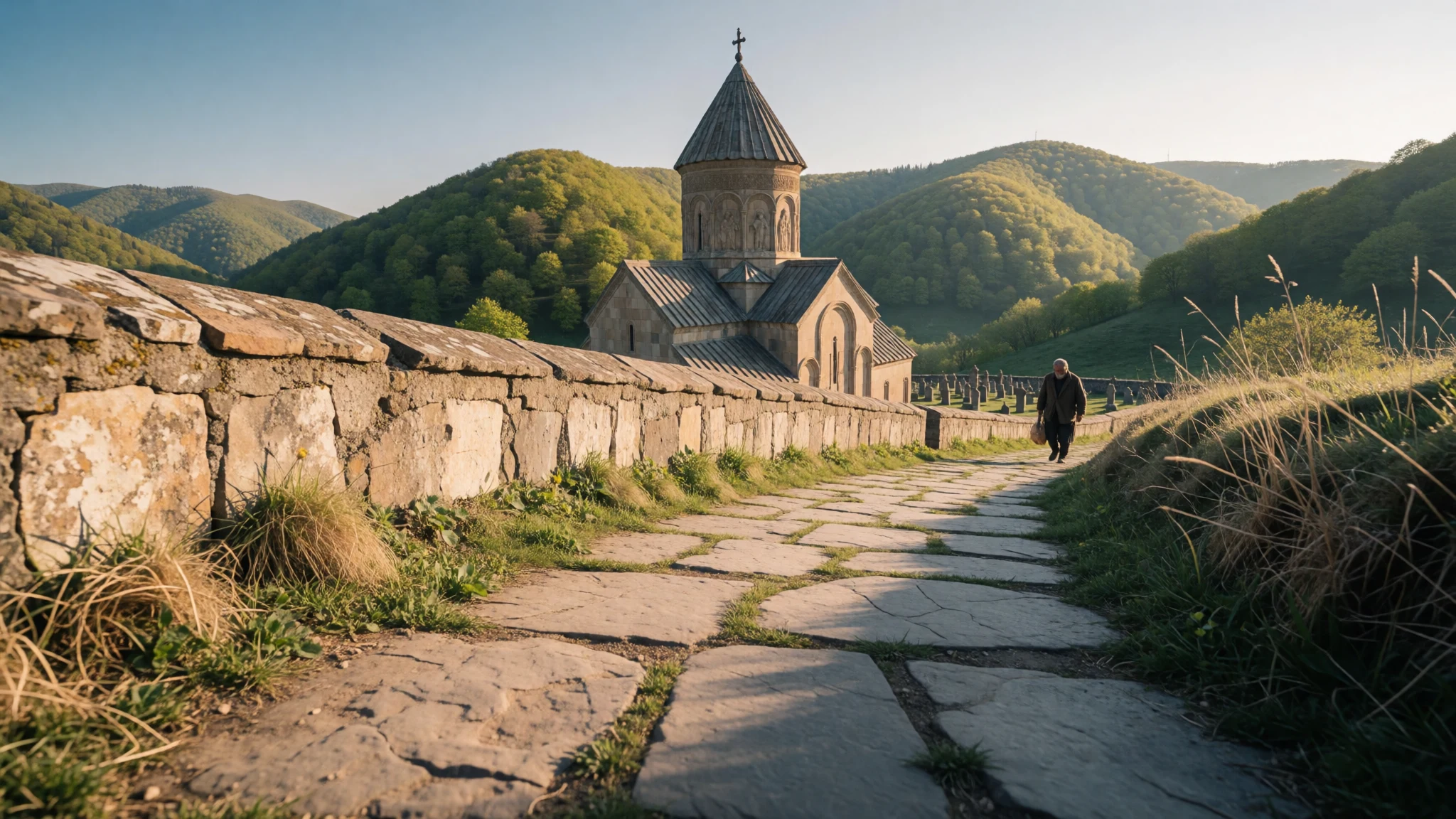
Gandzasar Monastery is a thirteenth-century hilltop cathedral whose carved sixteen-sided dome rewards slow looking, though its politics and access need careful reading first.
The place
Gandzasar Monastery stands on a hilltop at about 1,270 metres, south-west of the village of Vank in the uplands of Nagorno-Karabakh, within Azerbaijan's internationally recognised borders. The name is usually read as "treasure mountain", a nod to the old belief that the hill held silver and other ores. Inside a walled enclosure are the church of St John the Baptist, a square gathering hall (the gavit, or narthex) against its western end, a row of monks' cells on the north side, a refectory to the east, a bishop's residence and a school building. An old cemetery lies outside the south wall, where priests, bishops and local lords called meliks were buried. The church is cruciform, with two-storey side chambers at its four corners, a layout shared with other thirteenth-century Armenian churches such as Geghard and Hovhannavank. Architectural writers single out the dome: a drum with sixteen faces carved in relief, set above plain, tightly fitted masonry. The gavit has two columns carrying its roof and a heavily decorated west doorway. The setting is quiet, cool and green, with forest on the slopes around. Who this heritage belongs to is contested. Armenian sources call the building an Armenian Apostolic cathedral, while Azerbaijan's authorities call it a Caucasian Albanian temple and use the name Ganjasar. Control of the region has changed in recent years, so access and upkeep need checking before any trip.
Its story
Gandzasar Monastery enters the written record in the tenth century, when a monk from the site is listed among those at a church council in Khachen, called to reconcile two rival Armenian Christian camps. Carved cross-stones from the late twelfth and early thirteenth centuries around the hill suggest a church or monastery stood here before the present building. The cathedral was raised over roughly two decades in the early thirteenth century by Hasan-Jalal Dawla, prince of Inner Khachen and head of the Hasan-Jalalyan house. It was consecrated in July 1240 on the feast of the Transfiguration, with several hundred priests present. The gavit was begun straight afterwards and finished in 1266 by his son Atabek, together with Atabek's mother Mamkan. A contemporary historian, Kirakos Gandzaketsi, wrote about the building work. In the late fourteenth century Gandzasar became the seat of the Catholicosate of Caucasian Albania, a see within the Armenian Apostolic Church, and in the sixteenth century it came under the authority of Etchmiadzin. By the early eighteenth century its patriarch was said to oversee hundreds of villages of Armenian peasants and merchants. Around then, Karabakh's Armenian meliks gathered behind Catholicos Yesayi Hasan-Jalalyan and wrote to Peter the Great asking for protection. Russian rule arrived only in the early nineteenth century. The story is told differently in Azerbaijan, which presents the site as part of Caucasian Albanian history.
What to see
- Cathedral of St John the Baptist — Monastery courtyard, near Vank
Gandzasar Monastery's main church is a compact cross-plan building in pale local stone, with small chambers at each corner. It is worth circling slowly before going in. The proportions read best from a few steps back, and the relief carving shows up far better in low morning or late-afternoon light.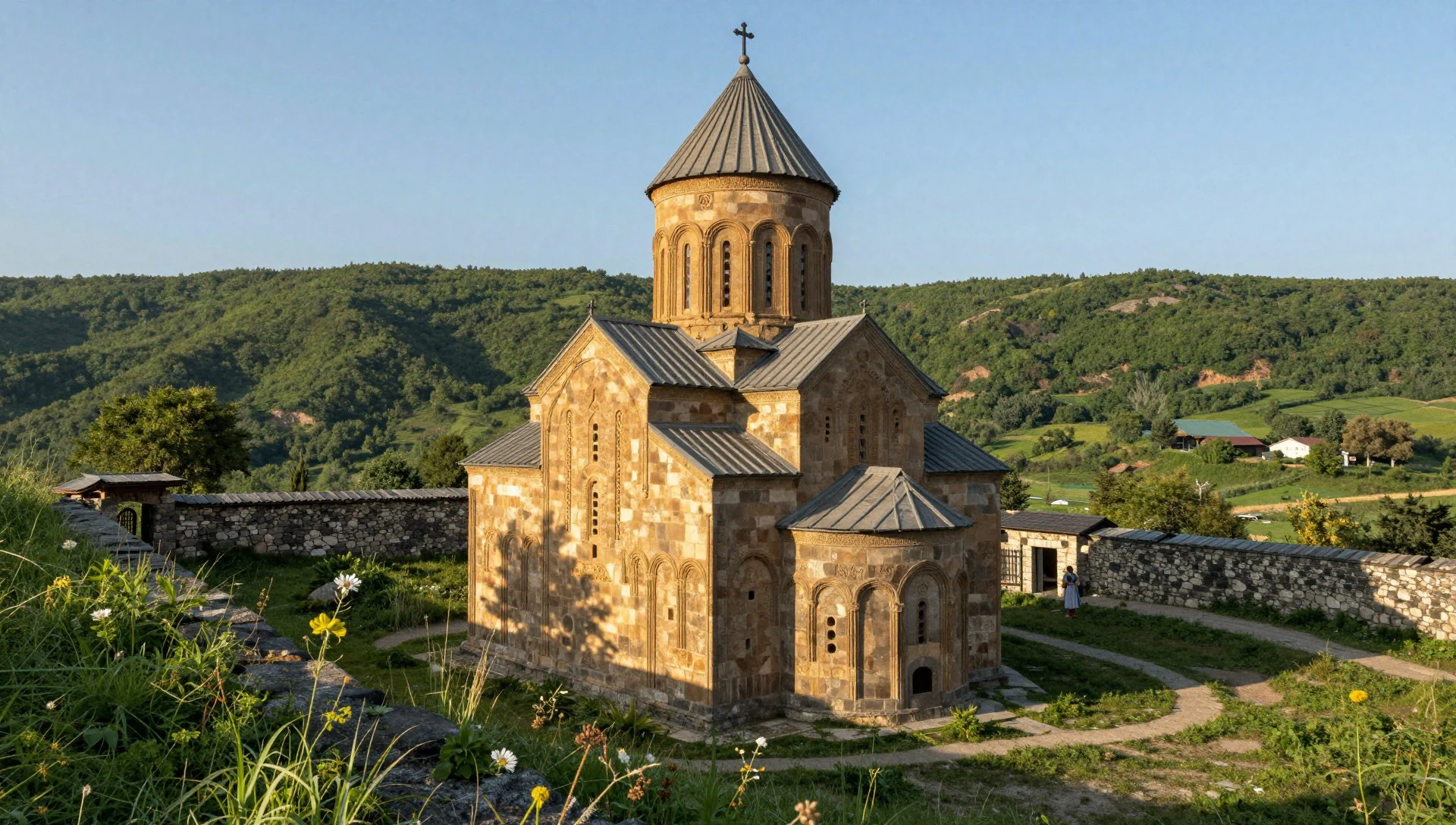
- The sixteen-sided dome — Roof of the main church
The drum beneath the roof at Gandzasar Monastery has sixteen faces decorated with arcading and figures in relief, and it is what scholars write about most. From ground level the detail is small, so bring binoculars or a camera with a decent zoom and look from the courtyard edges.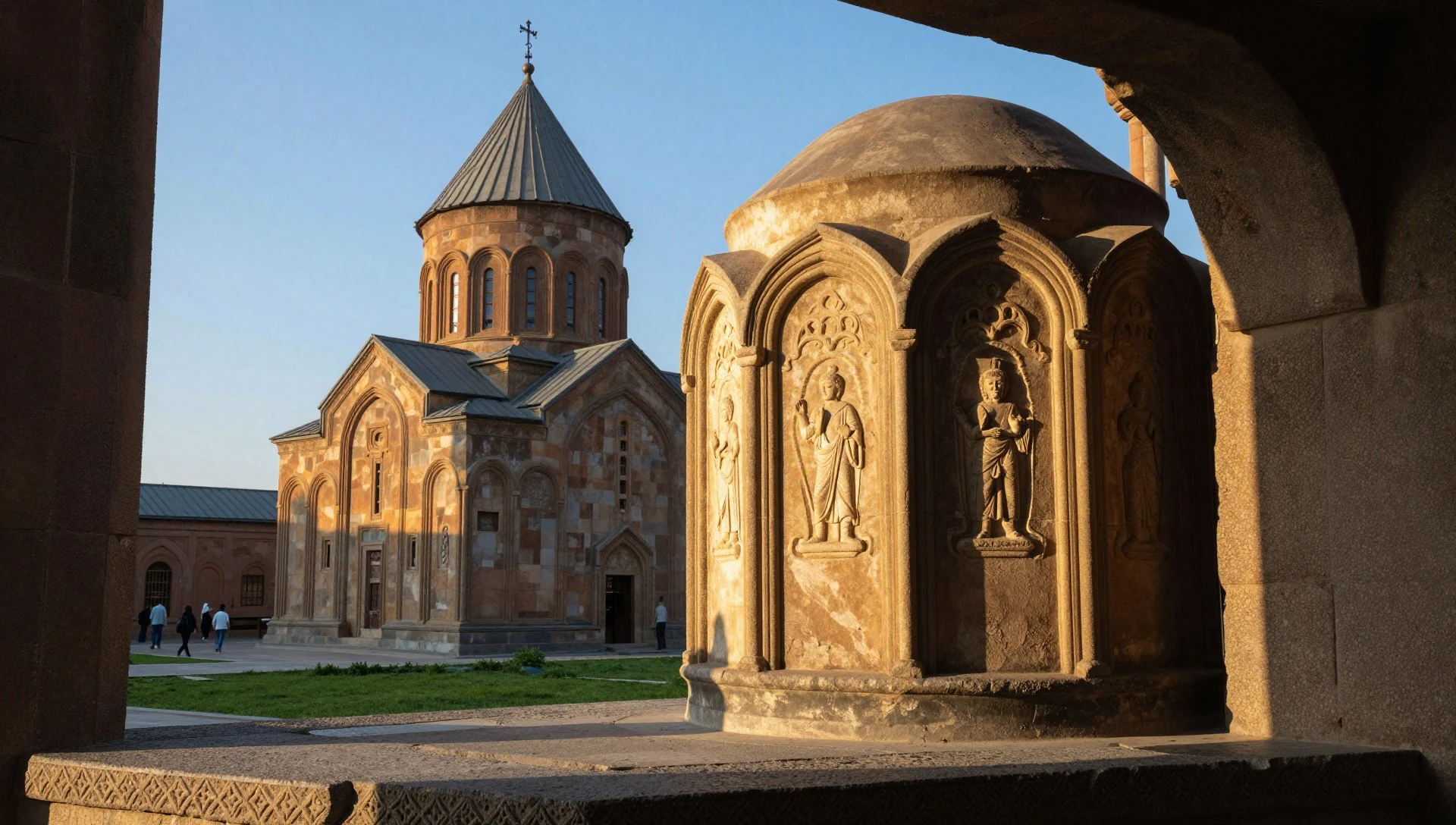
- The gavit and its west doorway — West side of the church
The gavit at Gandzasar Monastery is a square hall whose roof rests on two columns, and it echoes the hall at Haghpat. Its west doorway is densely carved, so pause outside before entering. Inside it is dim and cool, a sensible place to sit out midday heat or a passing shower.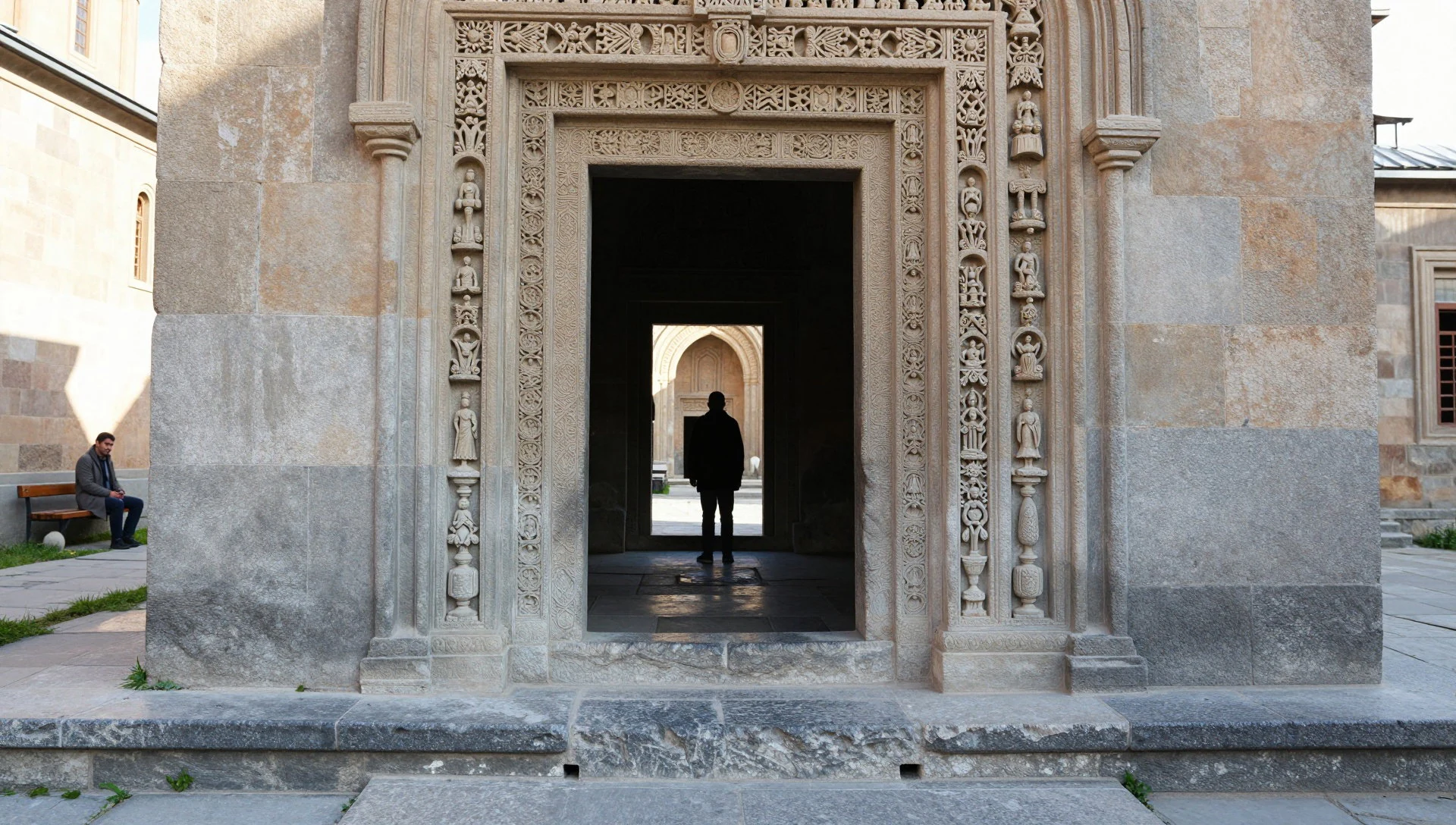
- Founder's inscriptions — Western facade of the church
Armenian inscriptions on the walls of Gandzasar Monastery name Hasan-Jalal Dawla as the builder and record his role in his own words. Even without reading the script, the lettering and the niches on the western front show how a ruler wanted to be remembered. The photographs make a useful guide to what to look for.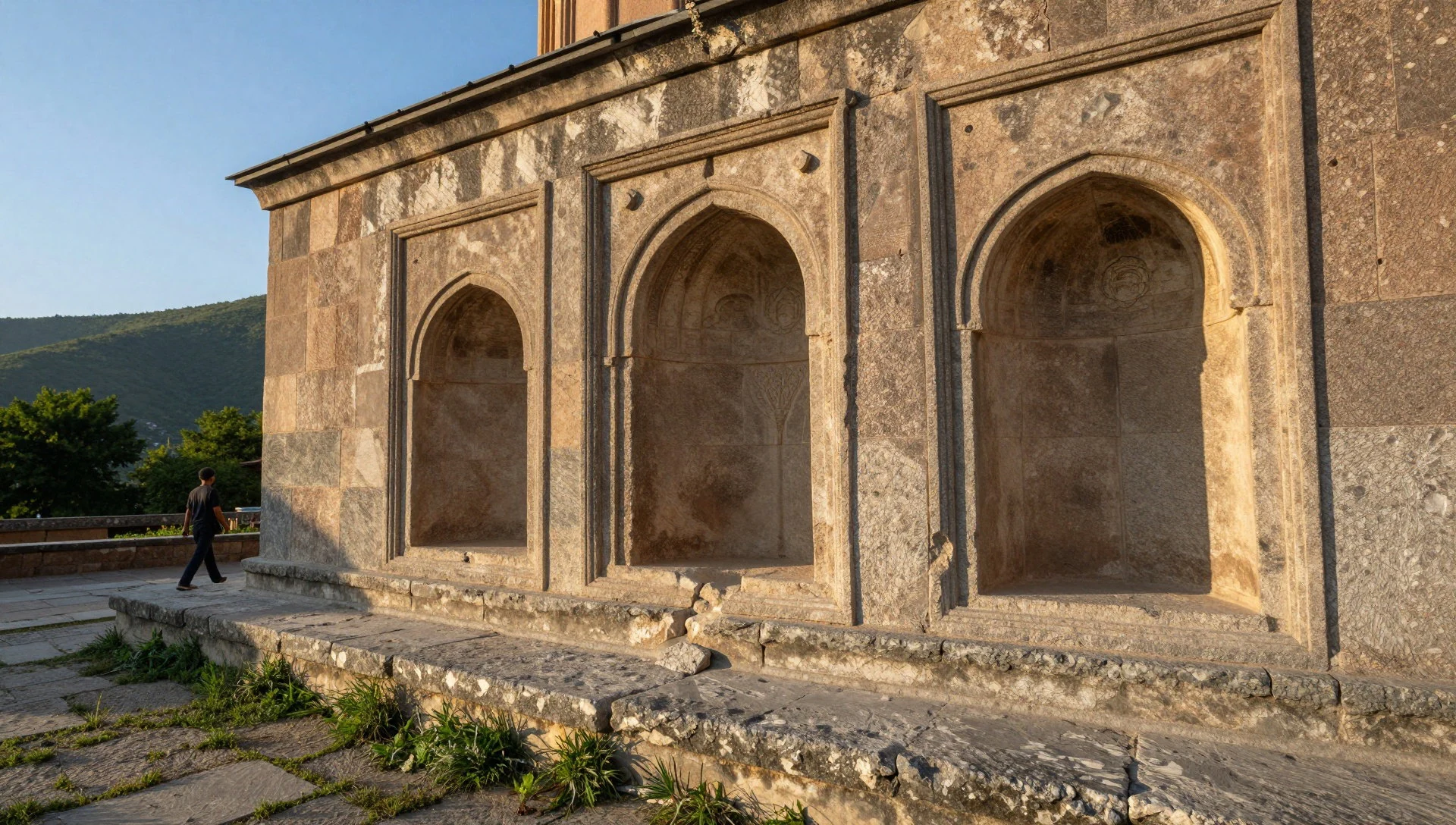
- Cells, refectory and old cemetery — Walls and south side of the enclosure
Around the church, Gandzasar Monastery keeps its working buildings: a row of small seventeenth-century cells on the north side, a refectory to the east and a school from the late nineteenth century. Outside the south wall, the old cemetery holds weathered gravestones and cross-stones for clergy and local lords.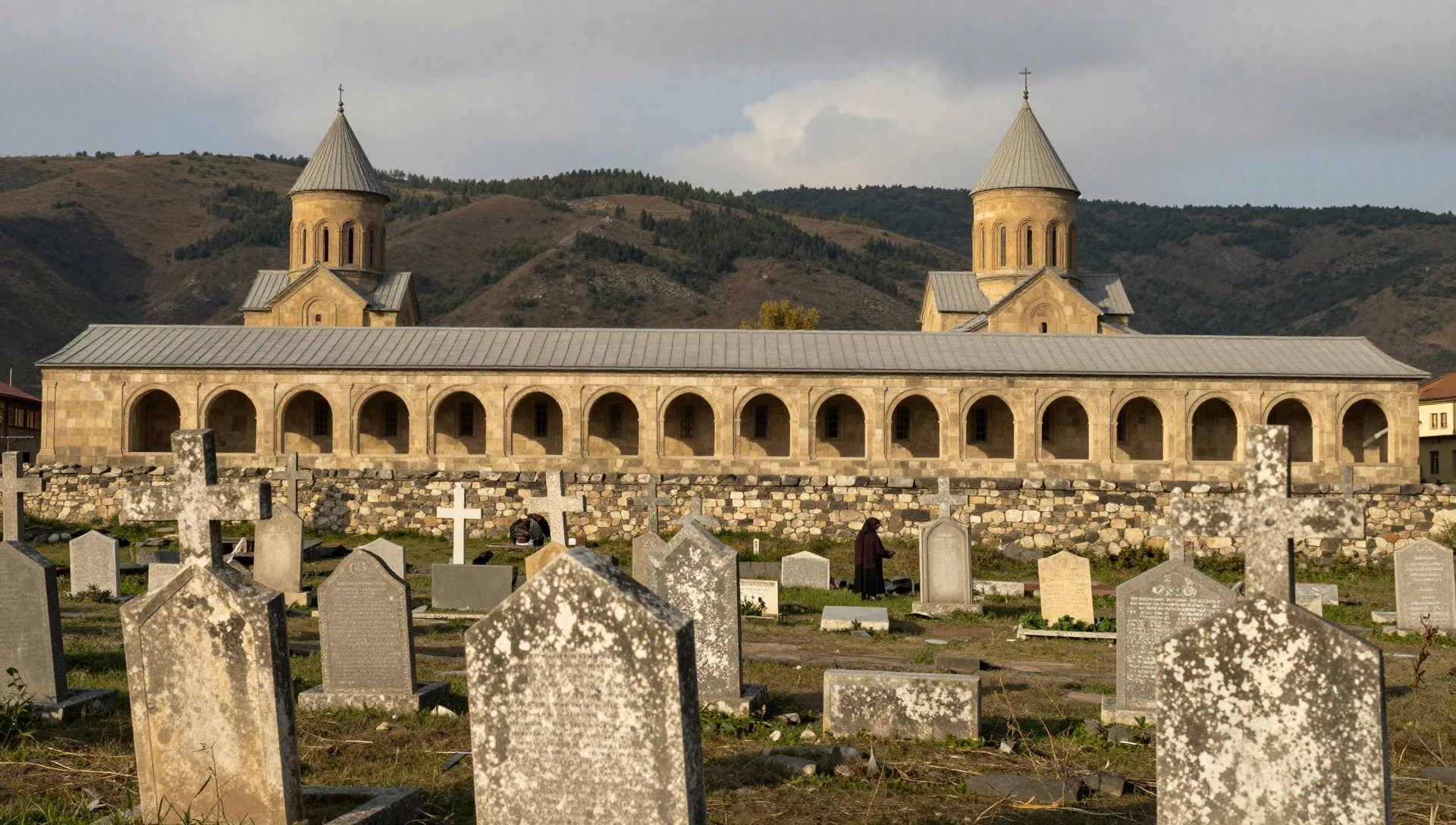
Culture
Gandzasar Monastery belongs to the Armenian Apostolic tradition, and its church is dedicated to John the Baptist. Its consecration fell on the feast of the Transfiguration, known in Armenian as Vardavar, a day still associated in Armenia with splashing water over one another. Cross-stones, or khachkars, are central to that tradition: upright slabs carved with a cross and lace-like ornament, used as memorials, markers and offerings, and found around the monastery and in its cemetery. For centuries the site worked as a seat of church authority, with bishops, a school and a refectory, not only as a place of prayer. Today its meaning is shaped by dispute. Armenian historians and the Armenian church treat it as an Armenian cathedral, while Azerbaijani authorities present it as Caucasian Albanian heritage, and the two names, Gandzasar and Ganjasar, carry that disagreement. Visitors do well to listen more than argue and to use whichever name the people they meet use. Candles and quiet prayer are normal in Armenian churches, and the building is understood as sacred whether or not a service is being held. Dress modestly with shoulders and knees covered, keep your voice low inside the church and gavit, and ask before photographing any priest or worshipper.
What to wear
Gandzasar Monastery sits in a Caucasus upland where traditional clothing was made from wool, cotton and silk. Armenian women's festive dress was a long, fitted robe worn over a chemise, with embroidered bands, a decorated apron and a small cap or veil. Men wore the chokha, a long woollen coat with rows of cartridge pockets across the chest, and the papakh, a tall sheepskin hat shared across the Caucasus. These garments now appear mostly at weddings, festivals, folk-dance performances and church feast days. Everyday wear in the uplands is plain: jeans, shirts, fleeces and padded jackets, with darker colours favoured around churches and black robes for clergy. For a visit, think in layers. Mornings on the hilltop are cool even in summer, and rain can arrive quickly, so a light waterproof is worth packing, with a warm jacket in spring and autumn. Shoes need good grip for worn stone steps and muddy paths, and they stay on inside the church. Cover shoulders and knees, women may want a light scarf to hand for the church, and men should take hats off indoors.
What to eat
- Zhingyalov hats — Home-style kitchens and small bakeries in upland towns
A thin flatbread stuffed with a dense mix of chopped greens and herbs, cooked on a dry griddle and linked closely with Karabakh kitchens. It is eaten hot, often with a squeeze of lemon or a spoon of yoghurt.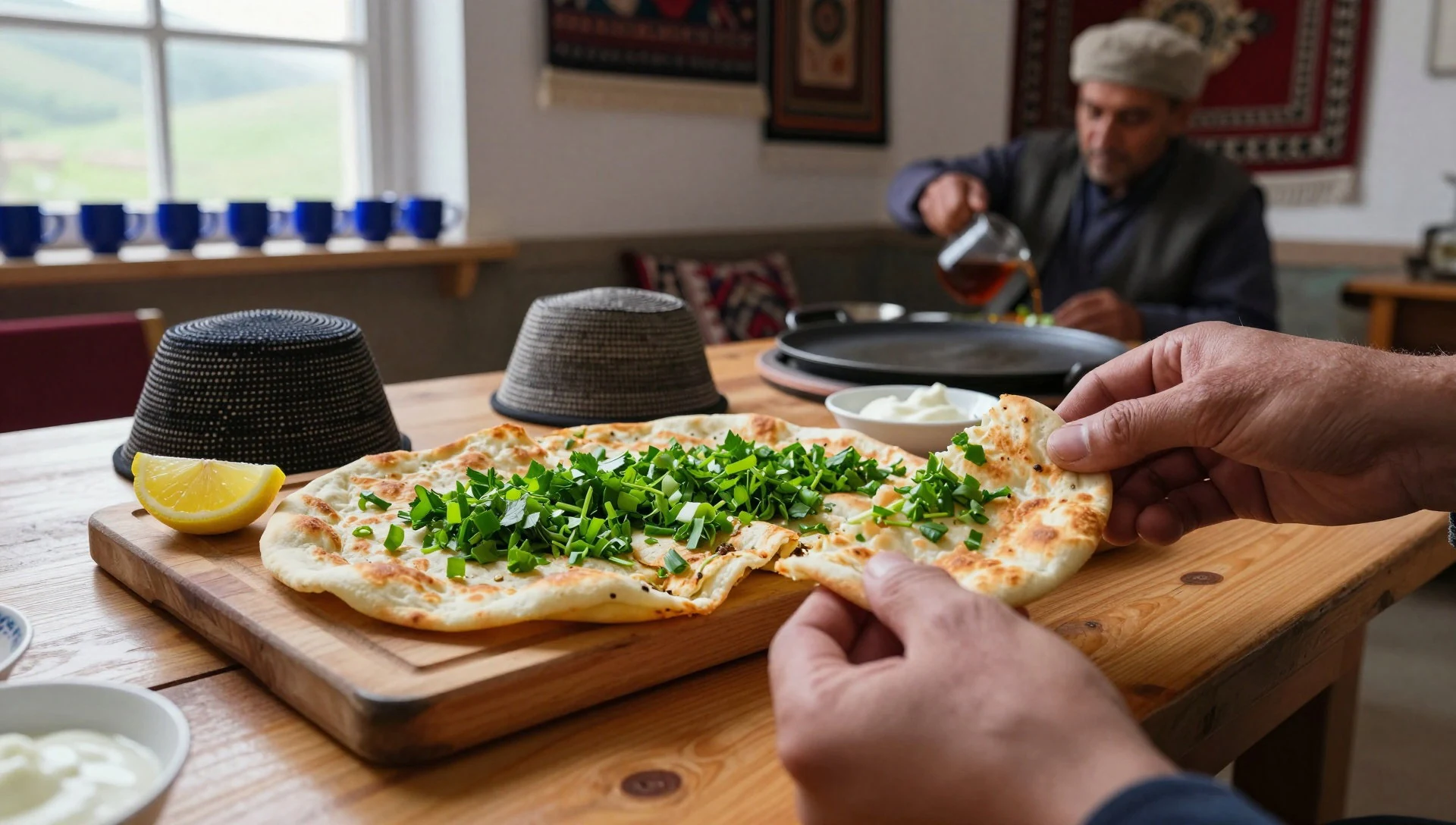
- Lavash — Neighbourhood bakeries and morning markets
Paper-thin flatbread baked against the wall of a clay oven. It is served with cheese and herbs, used to wrap grilled meat, and torn at the table in place of cutlery. It is best eaten the same hour it is baked.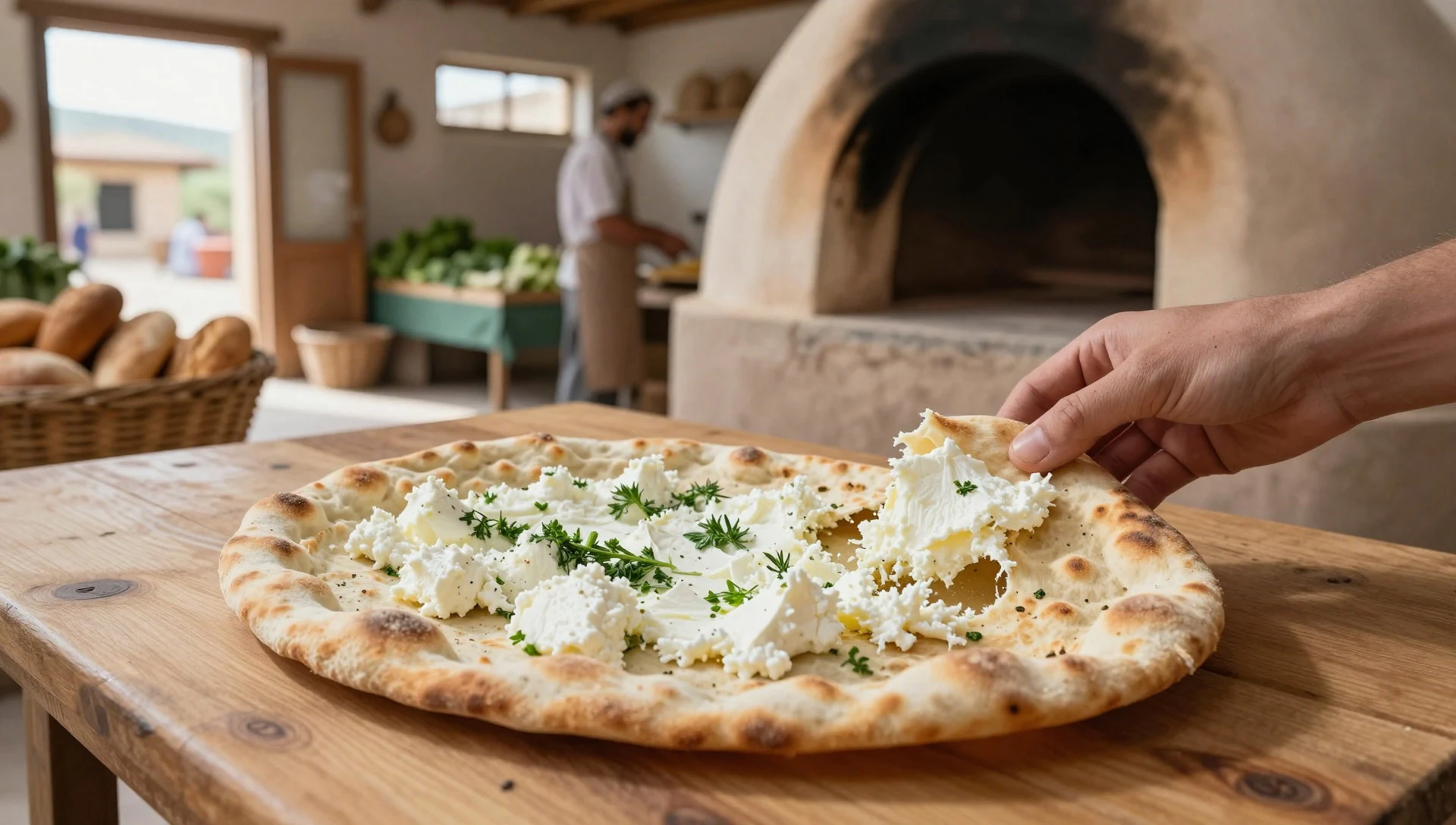
- Khorovats — Roadside grill eateries on the main road
Meat grilled over open coals, usually pork, lamb or chicken, served with flatbread, grilled tomatoes, onions and herbs. It is simple, smoky food that suits a day of walking, and portions are usually generous. - Dolma — Family-run eateries and home cooking in towns
Vine leaves or cabbage leaves wrapped around rice, minced meat and herbs, simmered gently and often served with a yoghurt and garlic sauce. Versions without meat appear in fasting periods in the church calendar. - Dovga — Local eateries in towns along the approach road
A yoghurt soup thickened with rice and flavoured with finely chopped herbs, served warm in cooler months or cold in summer. It tastes sharp and fresh, and is a common first course in Azerbaijani kitchens.
Plan it
Best time. April, May and October, when daytime highs are around 25 °C and the forest around the hill is green or turning, though nights can fall below freezing. Winters are cold and can bring snow and slippery roads, and midsummer is warm, so mornings are the better time to visit.
How long. 1
Getting there. Fly to Baku or Ganja, then continue by road towards Vank; the last leg is on upland roads, and a hired car with a driver is the practical option. Access to the region has changed, so check current rules before booking anything.
Budget. mid
Tips
- Check your government's travel advice and any entry or permit requirements before planning, as access to the area has changed
- Check the official site, http://www.gandzasar.com/, for any visiting information before setting out
- Go early in the day for quiet courtyards and softer light for photographs
- Carry water, snacks and cash, as shops and eateries near the monastery may be few
- Mobile signal can be patchy, so download maps and tell someone your route
Etiquette
- Cover shoulders and knees and keep voices low inside the church
- Ask before photographing clergy or worshippers
- Avoid taking sides in conversations about whose heritage the site is
Nearby
Sources
- Wikidata Q947593 (CC0)
- Wikipedia: Gandzasar monastery (rev 1381469202) (CC BY-SA 4.0)
- Wikivoyage: Nagorno-Karabakh (Understand) (CC BY-SA 4.0)
- Photo 01-dji-gandzasar.jpg, Vahagn Grigoryan (CC BY-SA 4.0)
- Photo 02-g-nc-s-r.jpg, Urek Meniashvili (CC BY 3.0)
- Photo 03-gandzasar-church-inscription.jpg, Yerevantsi (CC BY-SA 4.0)
- Photo 04-hasan-jalal-dawla-gandzasar-monastery-1238.jpg, Yerevantsi (CC BY-SA 4.0)
- Photo 05-gandzasar-zhamatun-1261.jpg, Mushegh Ghulyan (CC BY 3.0)
- Photo 06-026.jpg, Emma YSU (CC BY-SA 4.0)
- Photo 07-gandzasar-20182.jpg, Yerevantsi (CC BY-SA 4.0)
- Photo 08-2014-g-rski-karabach-klasztor-gandzasar-47.jpg, Marcin Konsek (CC BY-SA 4.0)


