Ganja
Ganja, Azerbaijan
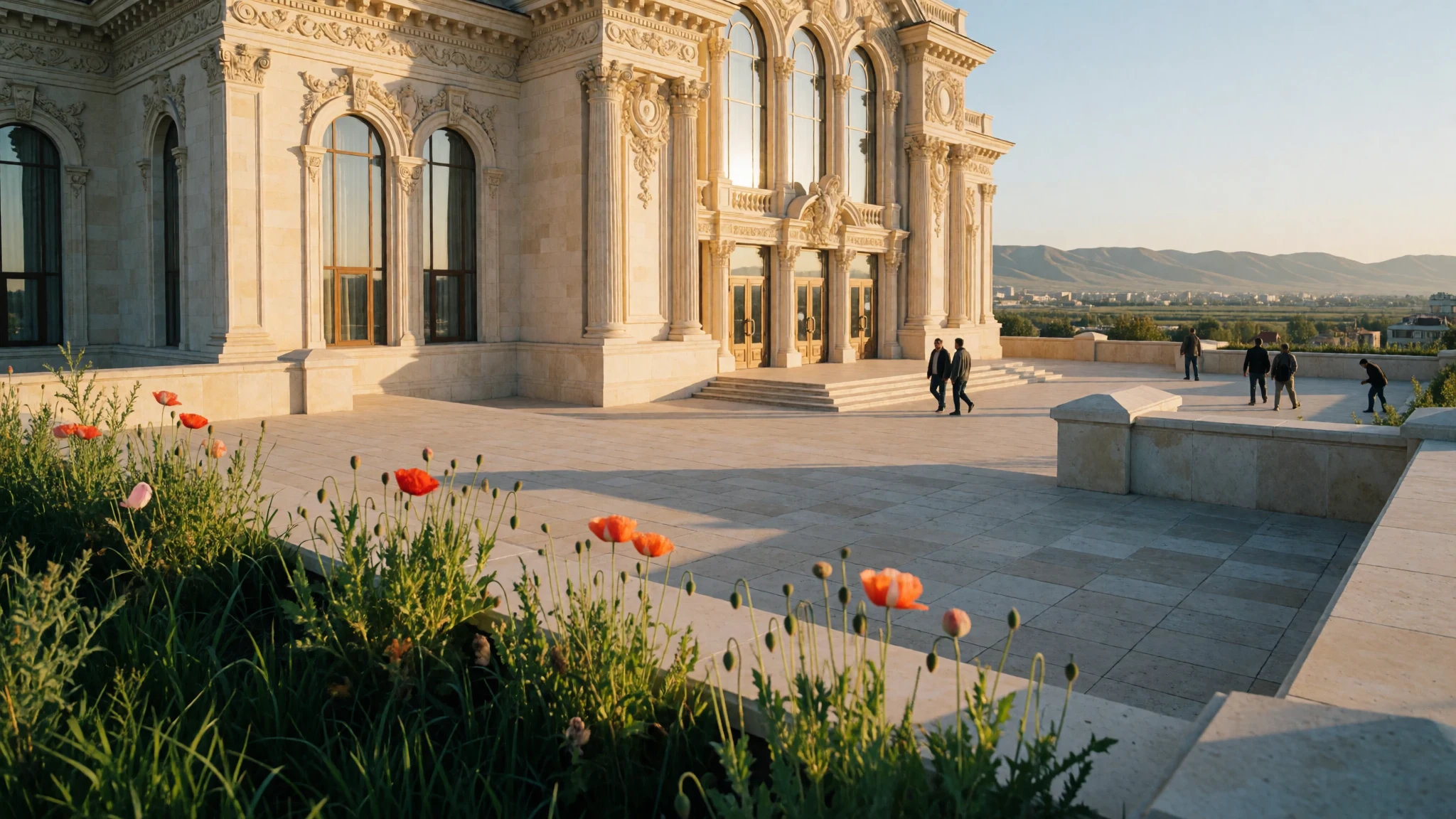
Discover Ganja for its deep medieval roots, sprawling green parks, and lively tea house culture in western Azerbaijan.
The place
Ganja is the third largest city in Azerbaijan, home to an estimated population of around 328,800 residents. Situated in the west of the country on the Ganja-Dashkasan plain within the Kur-Araz lowland, the urban area sits at an elevation of 408 metres above sea level. For centuries, the settlement has functioned as a vital regional crossroads, blending ancient architecture with Soviet-era urban planning and modern developments.
The city's layout reflects its layered past, moving from narrow historical quarters to broad squares flanked by imposing public buildings. Surrounding the urban core, the plains stretch out toward distant mountain foothills, creating a continental climate that brings warm summers and crisp winters. Visitors wandering through the central districts will notice a distinct rhythm of daily life centred around shaded parks, bustling neighbourhood bakeries, and traditional tea houses where locals gather from morning until late evening.
While industrial growth has shaped parts of the outer districts, the heart of Ganja retains a pedestrian-friendly scale. Tree-lined avenues connect civic monuments, museums, and historic religious sites, making it an engaging stop for travellers exploring the overland routes connecting the Caspian basin to the Caucasus highlands.
Its story
The origins of Ganja are bound up in medieval chronicles and foundation legends recorded by early historians. According to the anonymous Arabic historical text Tarikh Bab al-abwab, the settlement was established in the ninth century by Muhammad ibn Khalid ibn Yazid ibn Mazyad, who served as the Arab governor of the region under the caliph Al-Mutawakkil.
Local tradition holds that the governor was guided to the site by a dream in which a mysterious voice revealed a hidden treasure buried beneath one of three local hills. Instructed to unearth the wealth and use the funds to establish a new city, the governor followed the vision and subsequently reported his findings to the caliph. In return, he was appointed hereditary ruler of the new foundation on the condition that the discovered riches were remitted to the imperial treasury. This ninth-century origin narrative is corroborated by medieval Armenian chroniclers, who documented the emergence of the town in the surrounding canton.
Over the succeeding centuries, Ganja evolved into a major political and economic hub in the Caucasus. It served as the capital of the autonomous Ganja Khanate until the early nineteenth century. Following shifting imperial powers, including Persian dynasties, Russian annexation after the Treaty of Gulistan, and twentieth-century Soviet administration, the city ultimately became a cornerstone of modern independent Azerbaijan.
What to see
- Xatirə Parkı — Western outskirts
Spanning an enormous expanse of green space, this vast park complex provides walking trails and shaded groves across the flat plains. It functions as a popular weekend gathering spot for local families looking to escape the busier city streets. - City Hall Square — City centre
The central square pairs historic urban planning that has endured since the sixteenth century with monumental architecture from the Soviet era, including the striking municipal building that mirrors legislative halls in neighbouring regional capitals. - Gəncə Filarmoniyası — Central district
Opened as a cultural hub in recent years, this striking concert hall stands near the historic site of the old medieval fortress, ancient city walls, and the former khan palace that was largely dismantled during nineteenth-century sieges. - Aleksandr Nevski Church — Near the central avenues
Constructed in the late nineteenth century on the grounds of an older burial ground, this distinctive Russian Orthodox church features classic red-brick architecture and has long served both Christian and Muslim residents as a shared architectural landmark. - Bottle House — Residential quarter
A quirky residential curiosity constructed by a local family using thousands of glass bottles embedded into the exterior walls and courtyard mosaics, showcasing mid-century folk artistry and individualistic local craftsmanship.
Culture
Ganja has long fostered a vibrant community life rooted in shared regional customs, poetry, and civic participation. As a historic intellectual crossroads, the city takes immense pride in its literary heritage, maintaining major cultural institutions such as the Ganja State History-Ethnography Museum—which houses tens of thousands of historical artifacts—and dedicated research spaces honouring classical poets. Residents place a high value on hospitality, often welcoming visitors into neighbourhood tea houses for conversation over small pear-shaped glasses of steaming black tea.
The urban population actively engages in civic and environmental initiatives, regularly participating in global events like Earth Hour alongside other major Azerbaijani cities. Traditional music and craftsmanship remain visible in daily routines, from master artisans working in small workshops to community gatherings during seasonal celebrations. When visiting local mosques, active churches, or traditional homes, dress modestly with shoulders and knees covered, and always remove your shoes when stepping onto indoor carpets.
What to wear
Traditional attire in Ganja reflects the broader textile heritage of the southern Caucasus, historically featuring layered woollen garments, embroidered vests, and flowing headscarves crafted from locally woven silks and heavy cottons. While these elaborate traditional costumes are now primarily preserved for national holidays, folkloric performances, and museum displays, their legacy lives on in the intricate geometric embroidery patterns seen in regional handicrafts.
Today, residents in Ganja dress in contemporary urban styles that balance modern European trends with local standards of modesty. Younger generations favour casual denim, jackets, and comfortable footwear for navigating the city's parks and pavement networks, while older generations often prefer more conservative trousers, dark coats, and traditional head coverings for women.
For visitors, practical attire is best. Pack lightweight, breathable fabrics for the warm summer months and a sturdy windproof jacket if travelling during the cooler shoulder seasons. Modest clothing is recommended when visiting religious buildings or conservative neighbourhoods—ensure that both men and women wear trousers or skirts that cover the knees, and carry a scarf for women to cover their heads when entering active places of worship.
What to eat
- Dovğа — Traditional eateries throughout the city centre
A traditional, cooling yoghurt soup simmered with fresh mountain herbs, chickpeas, and rice, often served either warm or chilled depending on the season. - Xan aşı — Local restaurants and festive banquet venues
A rich, celebratory rice dish prepared with aromatic spices, dried fruits, and meats, traditionally baked inside a flaky pastry crust. - Yarpaq dolması — Family-run neighbourhood kitchens and cafes
Tender young grape leaves tightly wrapped around a savoury filling of minced lamb or beef, rice, and fresh garden herbs, served with garlic yoghurt. - Göy kətəsi — Morning bakeries and street-side food stalls
A flaky, golden flatbread stuffed with a generous harvest of wild greens, spring onions, and herbs, baked fresh in traditional ovens. - Gəncə paxlavası — Central confectioneries and sweet shops
A distinctive local variation of layered pastry filled with spiced walnut mixtures and drenched in fragrant honey syrup.
Plan it
Best time. May to June and September to October offer the most comfortable weather for walking, avoiding the intense summer heat.
How long. 2–3
Getting there. Fly into Ganja International Airport or take the direct rail line connecting Baku and Tbilisi through the local railway station.
Budget. mid
Tips
- Drink bottled water rather than tap water across the city
- Carry local cash manat for small shops, taxis, and entry tickets
- Book overnight sleeper trains in advance if travelling between Baku and Tbilisi
- Visit major parks and monuments in the cooler morning hours
Etiquette
- Always remove your shoes when entering homes or carpeted religious spaces
- Dress modestly with covered shoulders and knees when visiting cultural sites
- Ask permission before photographing local residents in traditional dress
Nearby
Sources
- Wikidata Q131290 (CC0)
- Wikipedia (rev 1383900855) (CC BY-SA 4.0)
- Wikivoyage (rev 5402595) (CC BY-SA 4.0)