Khinalug
Khinalug, Azerbaijan
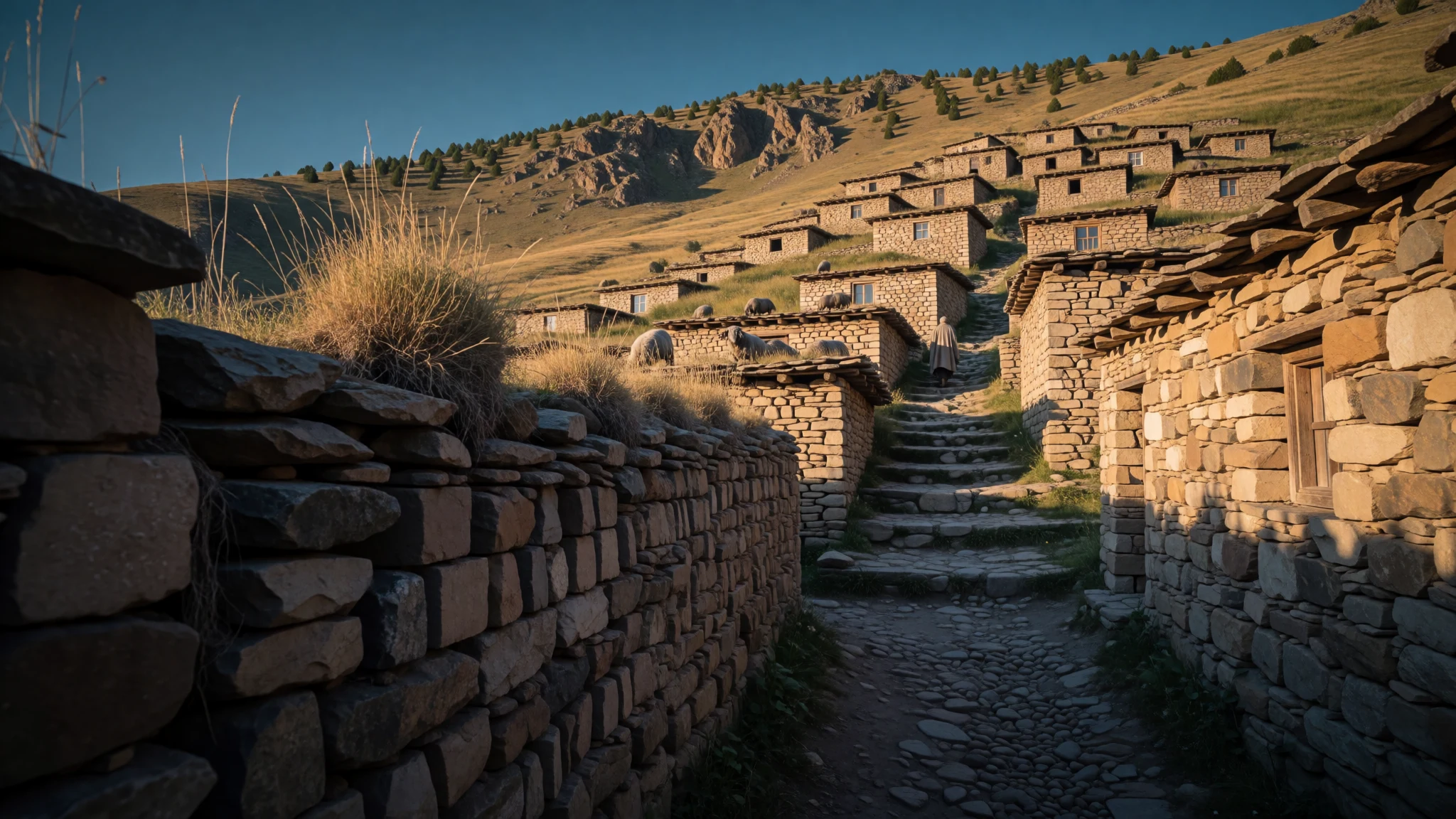
Khinalug is a stone village high in the Greater Caucasus where people still speak a language found nowhere else and the lanes feel unhurried.
The place
Khinalug is a village of stone houses stacked up a steep slope in Quba District, in the north of Azerbaijan, at 2350 m above sea level. About 2,000 people live here, so it is a working community first and a destination second. It sits on the crest of the Greater Caucasus, the range that divides Russia's North Caucasus from the South Caucasus, and it is the highest and most cut-off settlement in Azerbaijan. Locals call it Kətş in their own language, which is spoken nowhere else and belongs to no wider language group. Most villagers also speak Azerbaijani, so a few words of that go a long way. The village shares a municipality with the neighbouring settlement of Galaykhudat. Houses are packed close together, and flat roofs often double as a neighbour's courtyard, so a walk through the lanes can feel like crossing private space. Beyond the last houses the land opens into bare summer pastures, steep valleys and scree, with higher peaks behind. The weather swings hard: winters are long, cold and often snowbound, summers are short and cool, and the light at this altitude is thin and bright. Outside attention grew largely after a guidebook began recommending the village, and visitors now come mainly on day trips from Quba or on an overnight from Baku. Even so, daily life still revolves around sheep, wool and herbs, and the quiet is what most travellers remember. The road was paved only in recent years; before that, reaching the village was a proper expedition. Altitude alone makes a slow first evening sensible.
Its story
Khinalug's history is older than most written records of it. The village traces its roots to the Caucasian Albanian period, and its isolation preserved a language and customs that lowland neighbours lost. Modern attention arrived in a rush. In 2006 the road was paved after a presidential visit, ending the long era when only a tough vehicle or a long walk would do. Twelve months later, the government designated the area a protected historical, architectural, and ethnographic reserve to safeguard the village's unique building style, language, and traditions. In 2008 the World Monuments Fund placed Khinalug on its Watch List of endangered sites, worried that the new road could bring changes that wear away the village's character. The listing was meant as a prompt for care, not a discouragement to visit. Repairs followed: in 2011 the roofs of nearly one hundred houses were restored, and the village mosque, dated to the 9th century, was restored in the years after. In 2023 the village and the surrounding Köç Yolu transhumance route were inscribed as a UNESCO World Heritage Site, recognising the seasonal movement of flocks between summer and winter pastures that shaped life here. The historian Bettany Hughes has drawn a parallel between Khinalug's women and the Amazons of ancient writers, an evocative comparison rather than settled history. The tension running through the story is familiar from other remote places: roads and visitors bring income and repairs, and also pressure on the very things that made the journey worthwhile.
What to see
- The village lanes and rooftops — Khinalug village centre
The best sight in Khinalug is the village itself. Wander the narrow lanes between close-set stone houses, climb to the upper edge for a view over the flat roofs, and watch flocks and children move through. Go slowly, because the altitude and the steep paths make it tiring.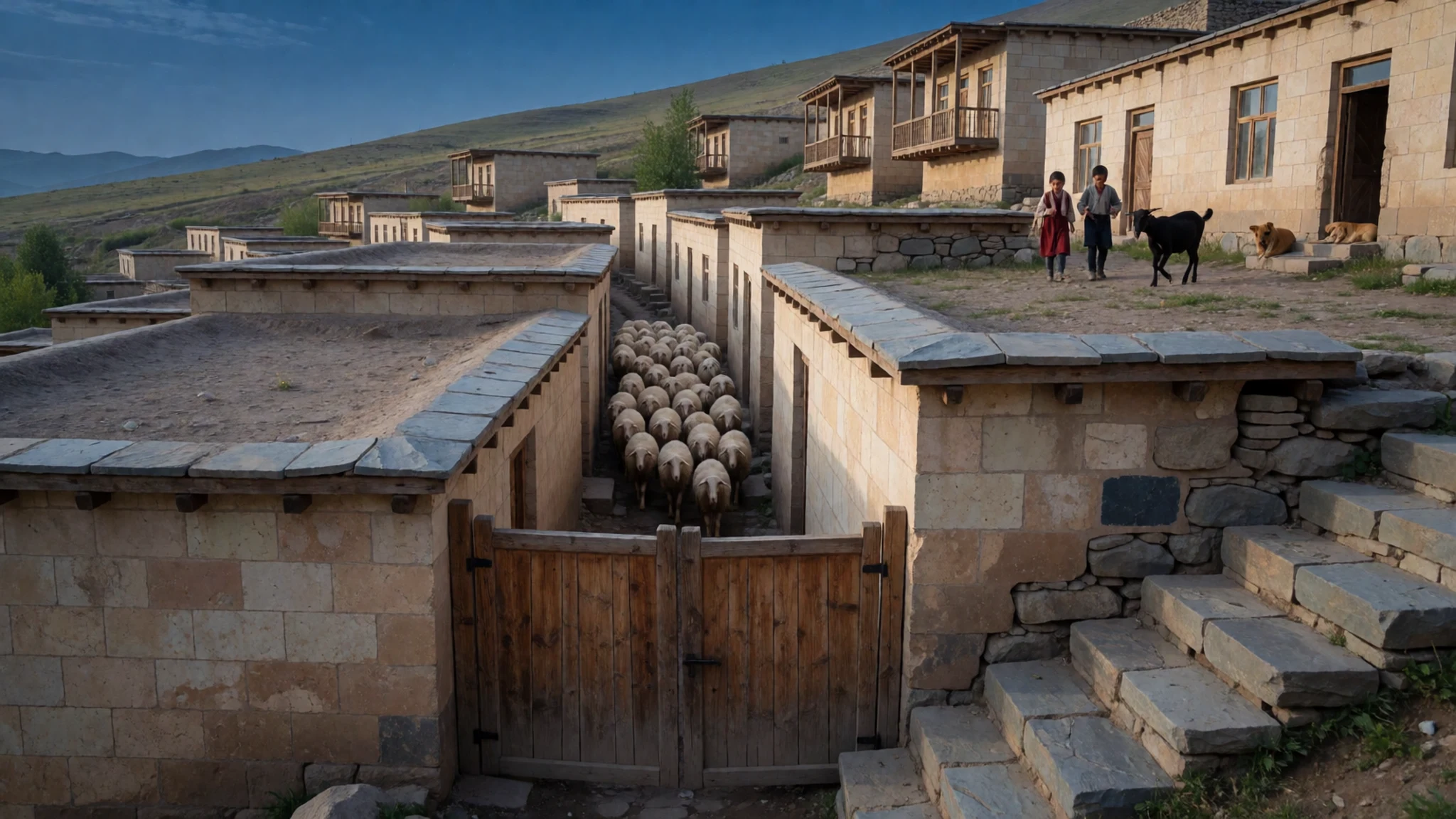
- Historical-Ethnographic Museum — Khinalug village
A small museum holding household vessels, weapons, medals and a modest library. It is not always open, and visitors are usually told to ask locals for the key-keeper, a polite 'Açar var?' being the phrase. Treat it as a short, friendly stop that adds context to the village.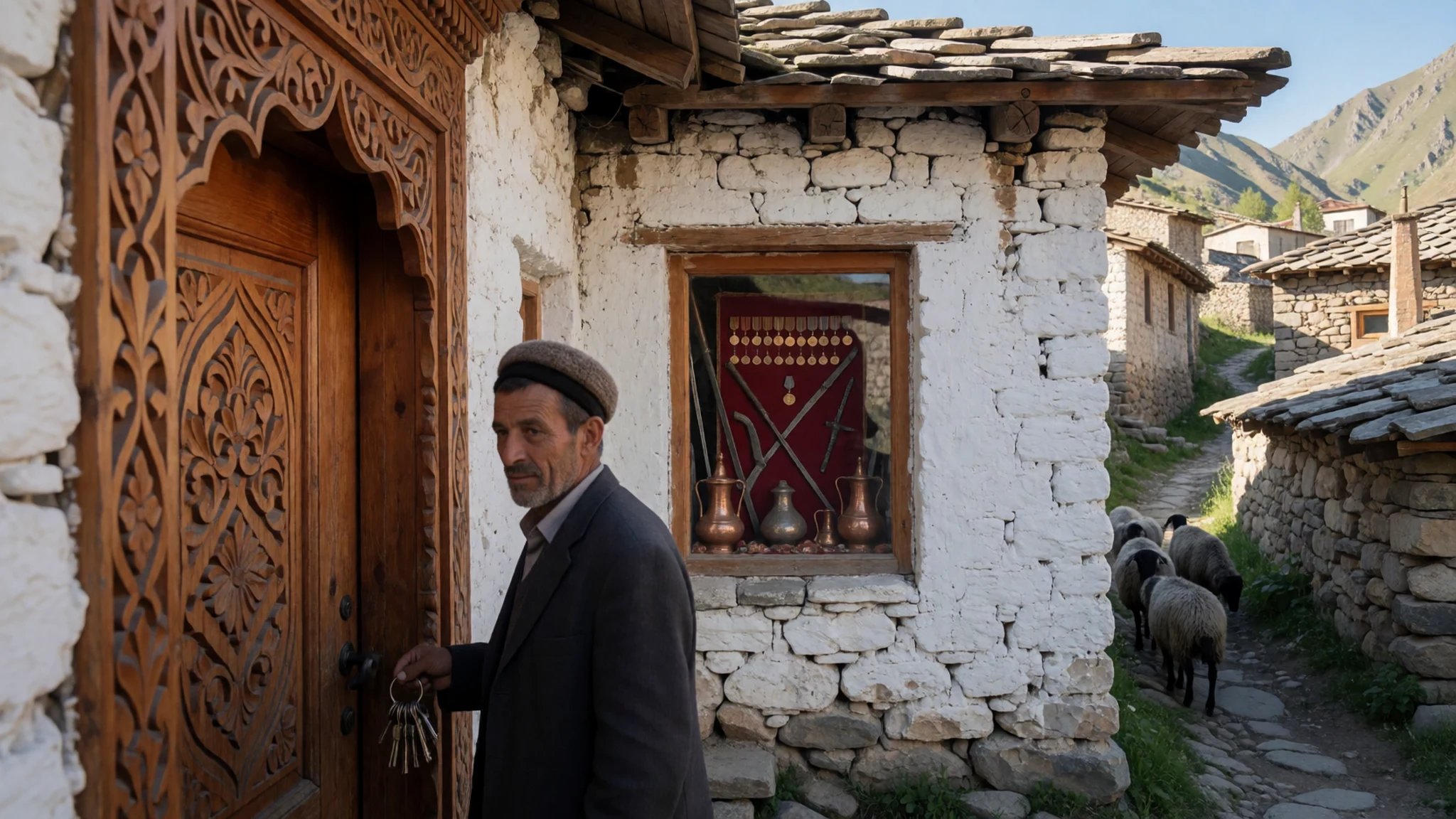
- Baltagaya pass — Mountains above Khinalug
A cliff-edged mountain pass at about 3,200 m, with views down into the valleys on both the Khinalug and Laza sides. It is also a vantage point towards Şahdağ. This is a serious high-altitude outing, so go with a local guide or driver and check the weather first.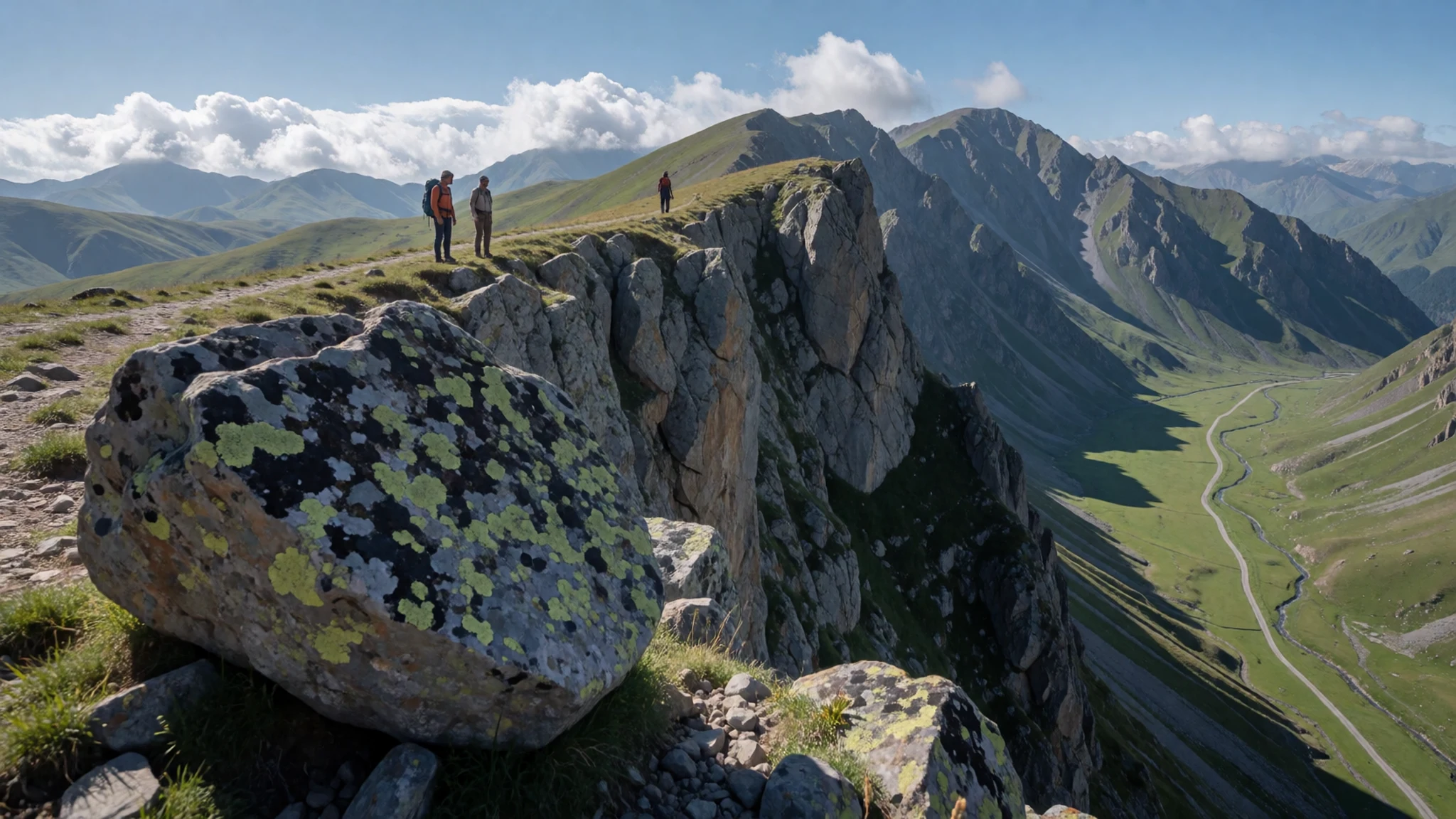
- Şahdağ viewpoint — Greater Caucasus above Khinalug
Şahdağ is named in the guidebook listings as the highest mountain in Azerbaijan, and Khinalug is one of the bases for exploring the range. Most visitors come for the views and walking rather than a summit attempt. Conditions change quickly, so arrange routes locally.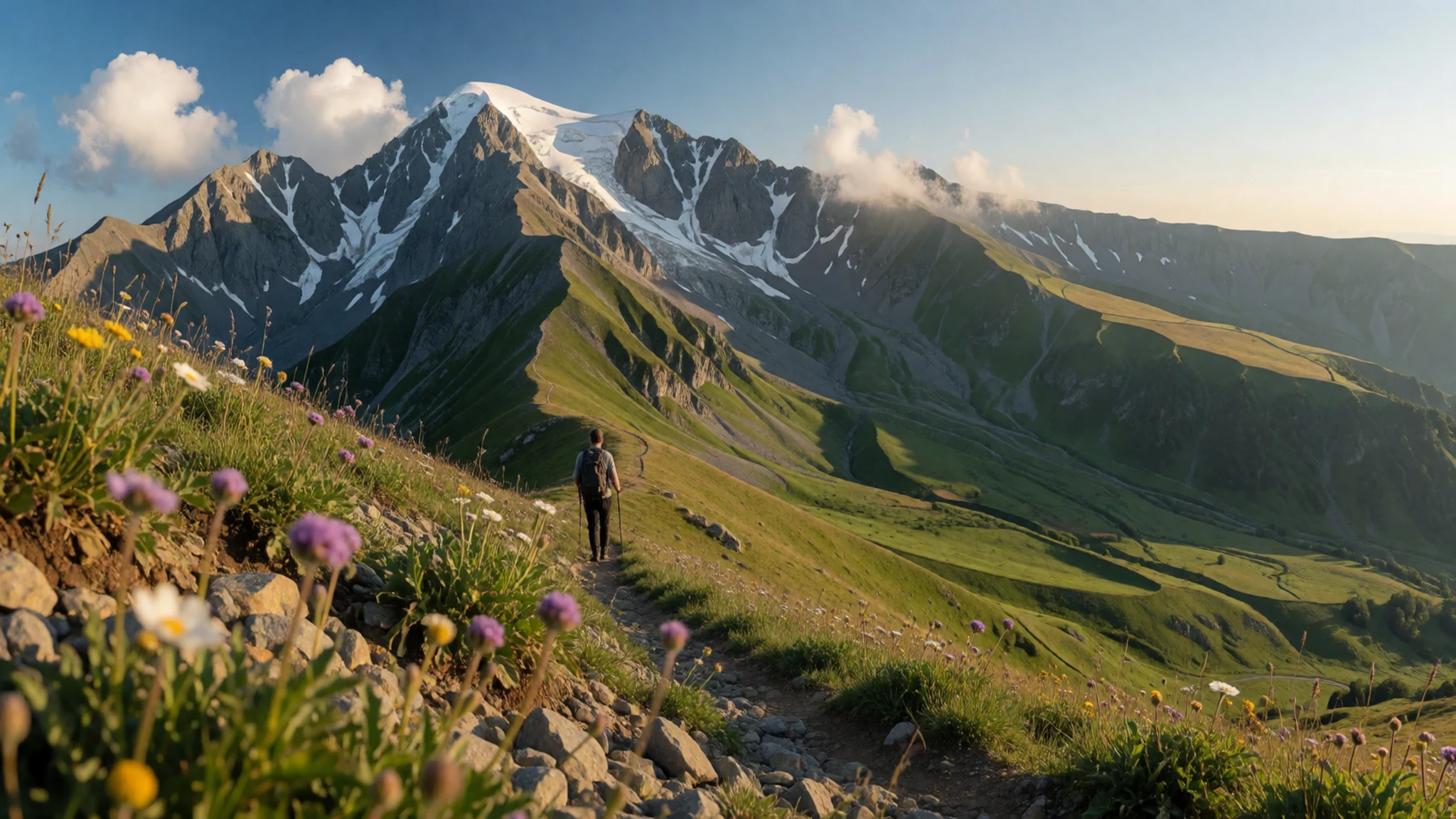
- Cloudcatcher Canyon — Between Quba and Khinalug
A scenic stretch of canyon landscape on the approach between Quba and the village. Drivers can stop for photographs along the way, and the road changes character as it climbs into the ravine. Many visitors treat it as part of the journey rather than a separate trip.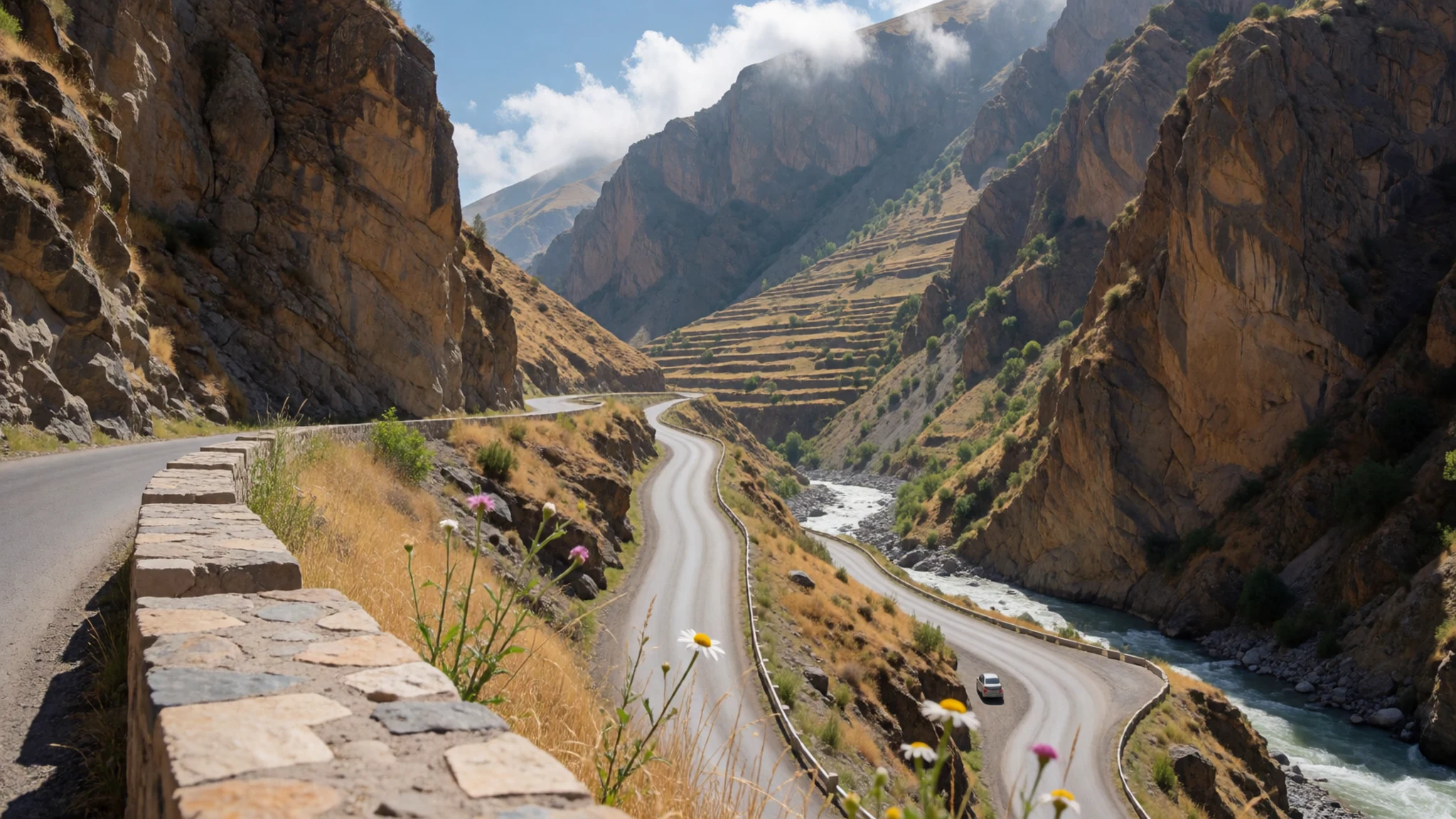
Culture
Khinalug keeps a way of life that has changed slowly. Villagers have long held rites linked to rain and farming, and show a particular respect for domestic animals and for the sun, moon and stars. Weddings and other ceremonies follow customs handed down through generations, and the village language, Kətş, carries much of that memory. Work is mostly sheep breeding and weaving, with many households also gathering medicinal herbs on the slopes. August marks the start of the honey season, and the local honey is prized for its flavour. In winter, fuel is made from dried animal manure, shaped into blocks called tezek in Azerbaijani and stacked against walls to dry; it is a practical sight rather than something to remark on. Hospitality is central: families host visitors in home-stays, and there is also an official guest house, so a bed is rarely a problem. Visitors are welcomed, but the village is a living community with limited space and a small population, and it copes best with respectful guests who go slowly, buy local wool and honey, and avoid treating the lanes as a film set. Mornings are quiet, animals share the lanes, and evenings are cold. Ask before photographing people or stepping into a home, and take off your shoes at any doorway where others have left theirs.
What to wear
Khinalug's traditional dress grew out of wool, the village's main material. The best-known garment is the chukha, a woollen shawl that was once worn as a national costume, mainly by wealthier villagers. Women's weaving also produces thick wool socks in bright patterns that look like small carpets, and these are still worn through the long winters, as much for warmth as for tradition. Such pieces now appear mostly at celebrations, in the museum and in homes, rather than in daily use. Day to day, people wear practical modern clothing built for cold and rough ground: sweaters, padded jackets, trousers, sturdy shoes or boots, and headscarves for many women. Visitors should dress for the altitude first. Layers matter, because mornings and evenings are cold even in summer, and wind and strong sun are both common. Pack a warm hat, windproof jacket, gloves for shoulder seasons, and sun cream and sunglasses. Boots with good grip suit the steep, uneven lanes and the walking routes, and slip-on shoes or warm socks are handy for entering homes. The village is conservative, so covered shoulders and knees are the polite choice for everyone, particularly when visiting families. Bring a proper waterproof layer too, since mountain weather can turn quickly, and winter visitors will want serious cold-weather gear.
What to eat
- Mutton dishes — Home-stays and village family kitchens
Khinalug is sheep country, and mutton is the centre of the table, usually boiled or stewed and served with bread. Vegetables are scarce at this altitude, so meals are hearty and meat-led. Vegetarians should say so early and expect simple dishes.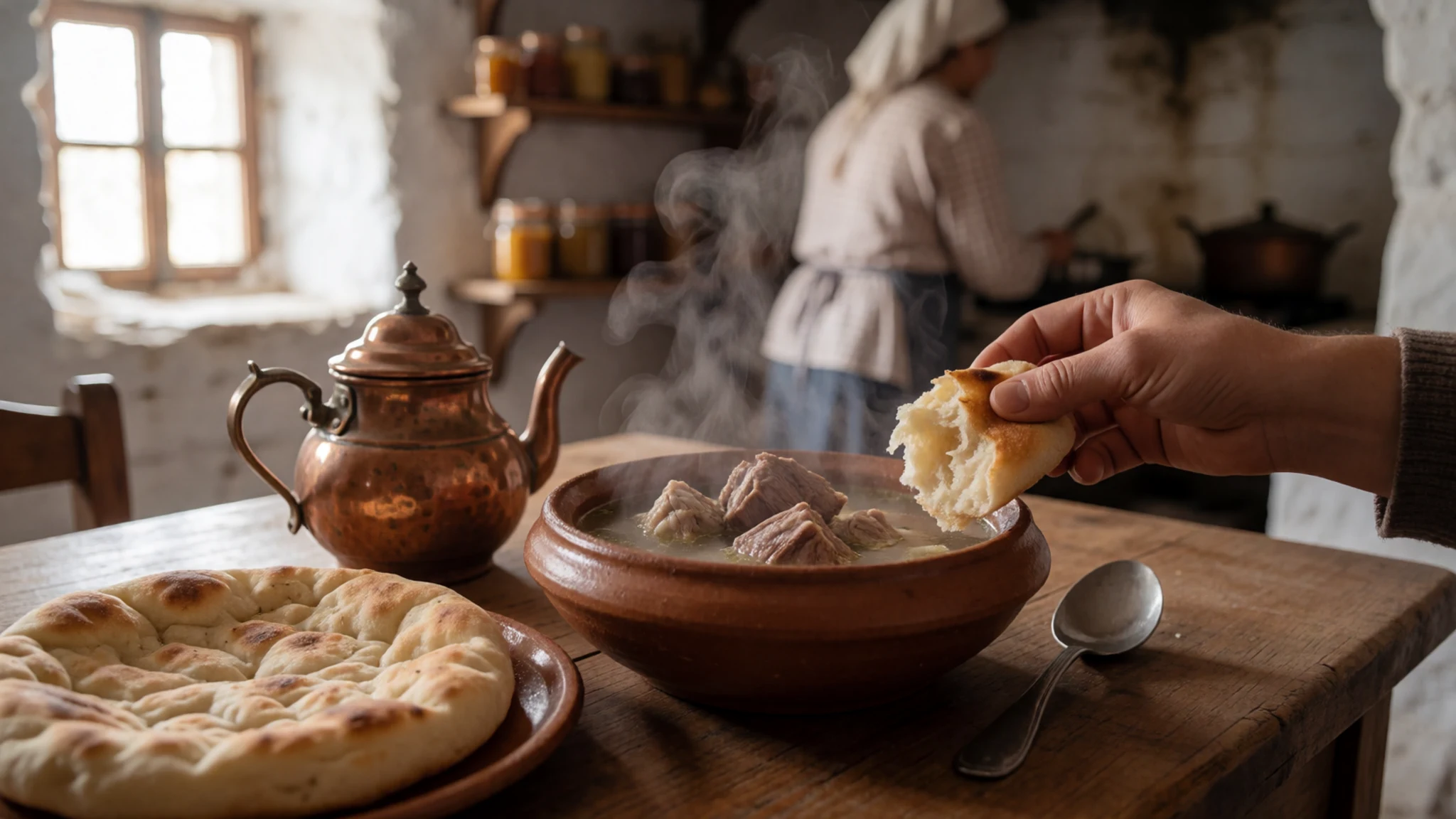
- Tandoor bread — Family kitchens and village ovens
Flatbread baked against the walls of a clay oven is the staple that comes with almost every meal. Eaten warm, it is the thing to ask for with tea, honey or a bowl of stew after a cold walk.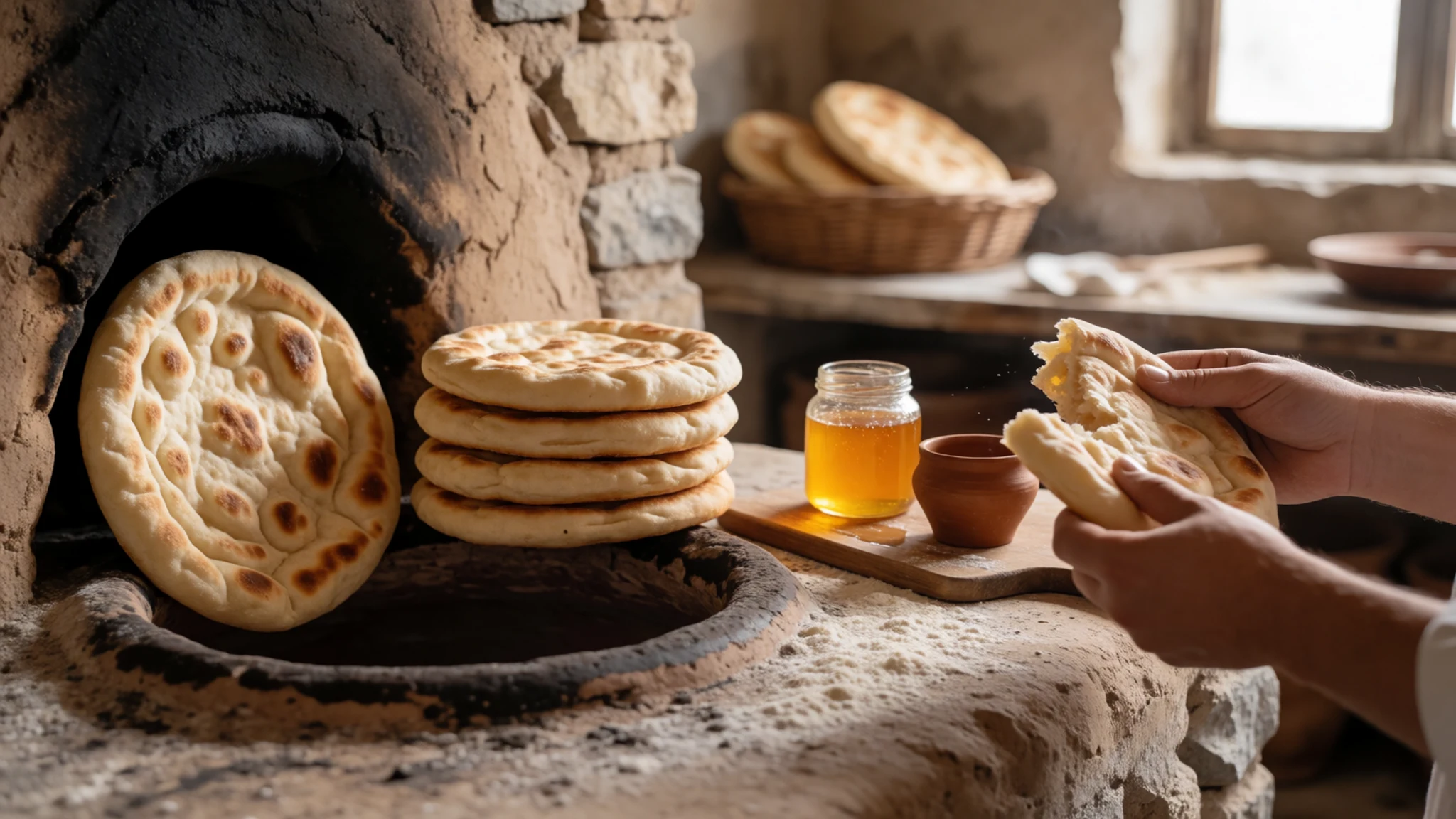
- Mountain honey — Village households during the summer season
Honey season begins in August, and families sell or offer jars with a distinctive flavour shaped by mountain flowers. Ask a host where it comes from, and buy directly rather than from a shop in Quba. - Herbal tea — Home-stays and village tea tables
Villagers gather medicinal herbs on the slopes, and herbal infusions are a natural way to warm up. Tea is offered as a courtesy, often with sweets or honey, and accepting a glass is part of being a guest. - Qutab — Home-stays that cook for guests, or eateries in Quba
A thin folded flatbread with a filling, cooked on a hot griddle, is a common Azerbaijani village dish. It is not unique to Khinalug, but it suits the cold. Ask your host what fillings are available that day.
Plan it
Best time. June to September, when the pastures are green, the road is generally clear and days are cool rather than freezing; August is also the start of honey season. Winters are long and severe, and snow can close the road, so go then only with local advice.
How long. 2
Getting there. Fly to Baku, then take a bus to Quba (about 4 hours). From Quba, Khinalug is about 50 km further by hired car or taxi; there is no bus to the village. Taxis usually wait near the bazaar, and shared cars are hard to find, so expect to pay for a whole car.
Budget. low
Tips
- Stay a night in a home-stay or the guest house to see the village after day visitors leave
- Carry cash, because card payments are unreliable in the village
- Bring layers and a waterproof jacket, since mornings and evenings are cold even in summer
- Allow a slow first evening to adjust to the altitude, and drink plenty of water
- Agree the taxi fare and waiting time with the driver before setting off
Etiquette
- Ask before photographing people, animals or the inside of a house
- Remove shoes at doorways where others have left theirs
- Dress modestly, with shoulders and knees covered
Nearby
Sources
- Wikidata Q2395313 (CC0)
- Wikipedia: Khinalug (rev 1376411757) (CC BY-SA 4.0)
- Wikivoyage: Khinalug (rev 5300835) (CC BY-SA 4.0)
- Photo: Xınalıq kəndinin ümumi görünüşü (Sefer azeri) (CC0 1.0)
- Photo: Azərbaycan, Xınalıq (Musa Abdulragimli) (CC BY-SA 4.0)
- Photo: Xınalıq (9) (Rəcəb Həsənbəyov) (CC BY-SA 4.0)
- Photo: Xınalıq 521 (Gulustan) (CC BY 3.0)
- Photo: Xınalıq 511 (Gulustan) (CC BY 3.0)
- Photo: Xinaliq 468 (Gulustan) (CC BY 3.0)
- Photo: Village of Xinaliq 06 (Adam Jones) (CC BY-SA 2.0)
- Photo: Village of Xinaliq 01 (Adam Jones) (CC BY-SA 2.0)


