Shahdag National Park
Shahdag National Park, Azerbaijan
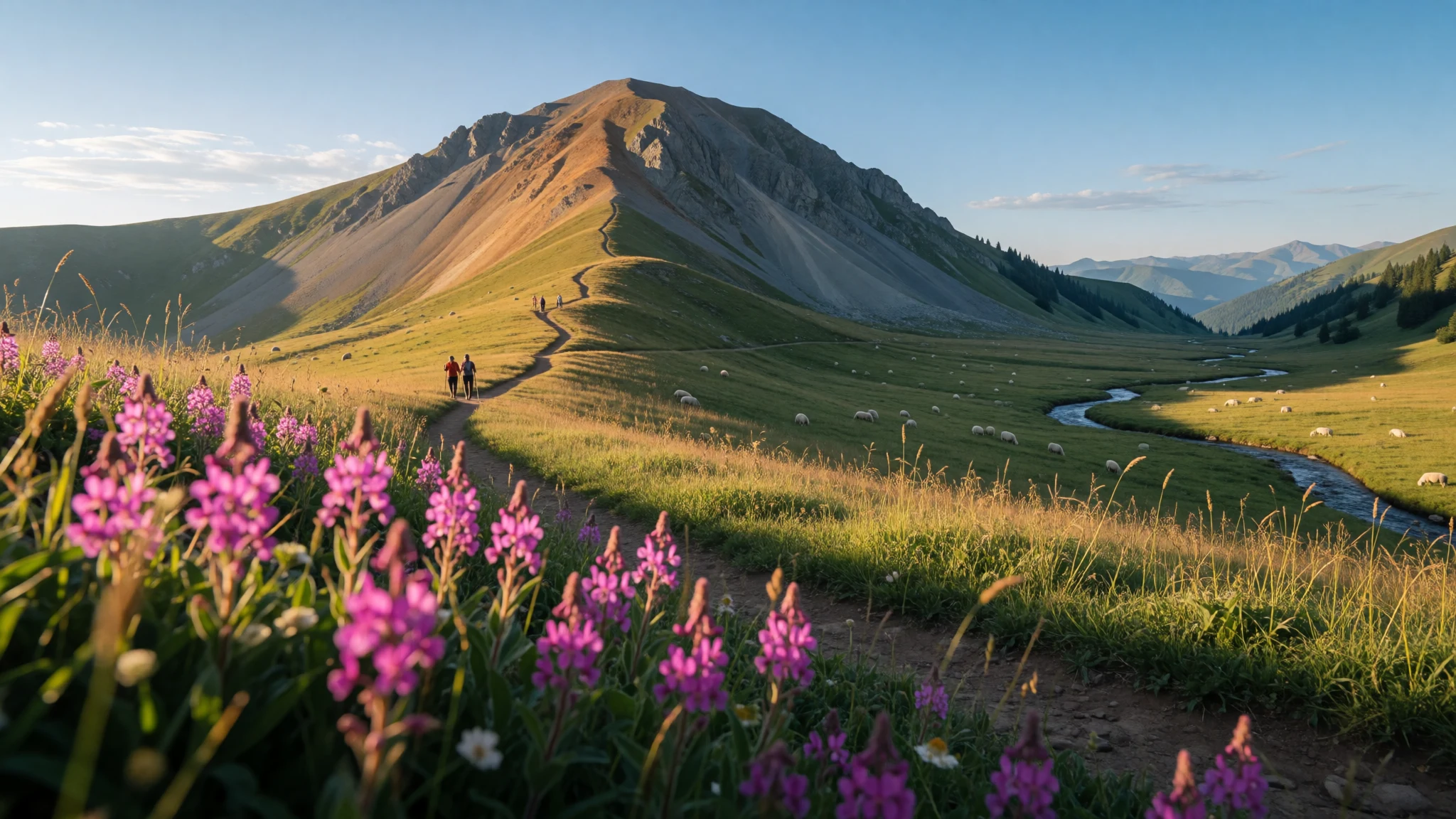
Shahdag National Park gives northern Azerbaijan's Greater Caucasus its wildest face: high peaks, flower meadows and quiet villages, with the country's highest mountain nearby.
The place
Shahdag National Park sits in northern Azerbaijan, in the Greater Caucasus close to the Russian border. It spreads across several districts on the southern side of the range, including Qusar, Quba, Qəbələ, Oğuz, İsmayıllı and Şamaxı, so there is no single gate. People arrive from different valleys and see different faces of the same mountains. The park's best-known landmark is Bazardüzü, which the sources name as the highest mountain in Azerbaijan, rising above bare rock, scree and summer pasture. Lower down the character changes: forest, ferns clinging to boulders, meadows full of wild flowers, wild rose bushes beside the tracks. Sources also describe Shahdag as the largest national park in the whole Caucasus, and the sense of scale is real even when only a small corner is visited. The park was created in 2006 to protect the mountain environment and to build proper tourist infrastructure, with money from international lenders. That mix of conservation and development shows on the ground. Some areas have lifts, roads and places to stay, while others can be walked for hours without passing a building. Weather changes quickly, the air thins higher up, and the villages below keep a quiet, unhurried rhythm. Summer brings walkers and families escaping the lowland heat; winter belongs to snow. It rewards choosing one valley and staying with it rather than trying to cover everything.
Its story
Shahdag National Park is young as a protected area but old as a landscape that people have crossed for millennia. Azerbaijan has always sat between east and west, and the Greater Caucasus has watched a long line of powers come and go. Rock engravings at Gobustan, far to the south-east, show that people lived and hunted in this part of the world many thousands of years ago. Later came Scythians and Medes, then the Achaemenid Persians, who introduced Zoroastrianism. The region lay on the fringes of Alexander the Great's empire and of the Roman one. Christianity arrived in late antiquity but faded once the area came under the Umayyad Caliphate, and Islam has shaped village life ever since. The park itself dates from 2006, when the government set aside a large block of mountain across several districts. A few years afterwards a presidential decree enlarged it. The project was financed by the World Bank, through a loan and a grant, and by a separate grant from the government of Japan, with the stated aims of tackling ecological problems and building tourism facilities in the Caucasus. Whether those aims are being met is something visitors can judge on the spot. The infrastructure is real, the crowds are modest outside peak weeks, and the older mountain life of herding and orchard-keeping carries on in the valleys beneath.
What to see
- Bazardüzü — Greater Caucasus, northern Azerbaijan
Bazardüzü is the highest mountain in Azerbaijan and rises inside Shahdag National Park near the Russian frontier. Most visitors admire it from valleys and viewpoints rather than climb it, since the summit is a serious objective needing experience, equipment and settled weather. Even from far below, the bare rock and scree make a stark skyline.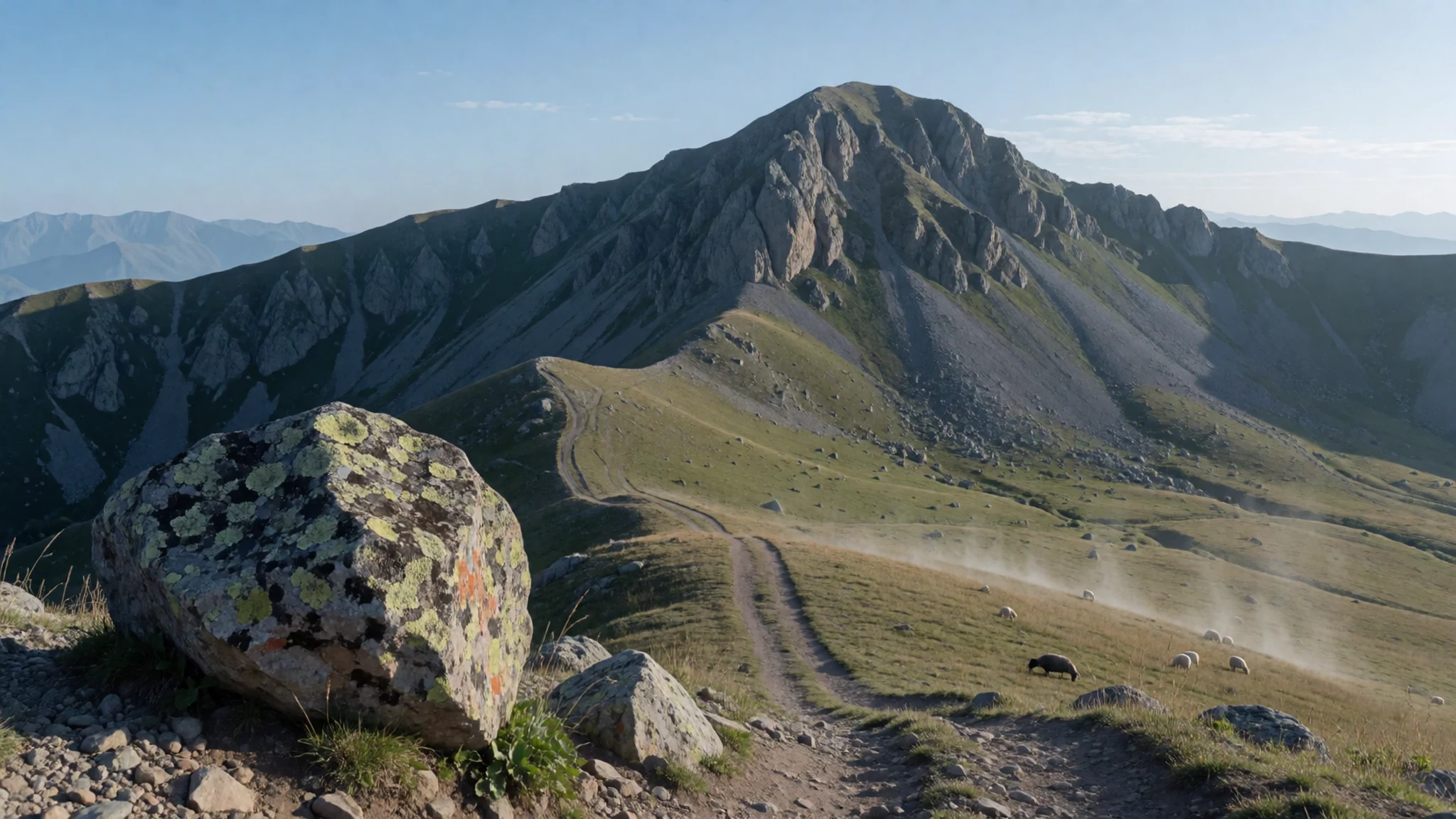
- Shahyaylag valley — High valley within the park
Shahyaylag is a broad high valley where several big peaks line up in a single view: Tfan, Bazaryurt, Bazardüzü and Shahdag itself. It is summer pasture, so expect grass, grazing animals and a real sense of space. Pick a clear morning, because cloud can settle over the summits later in the day.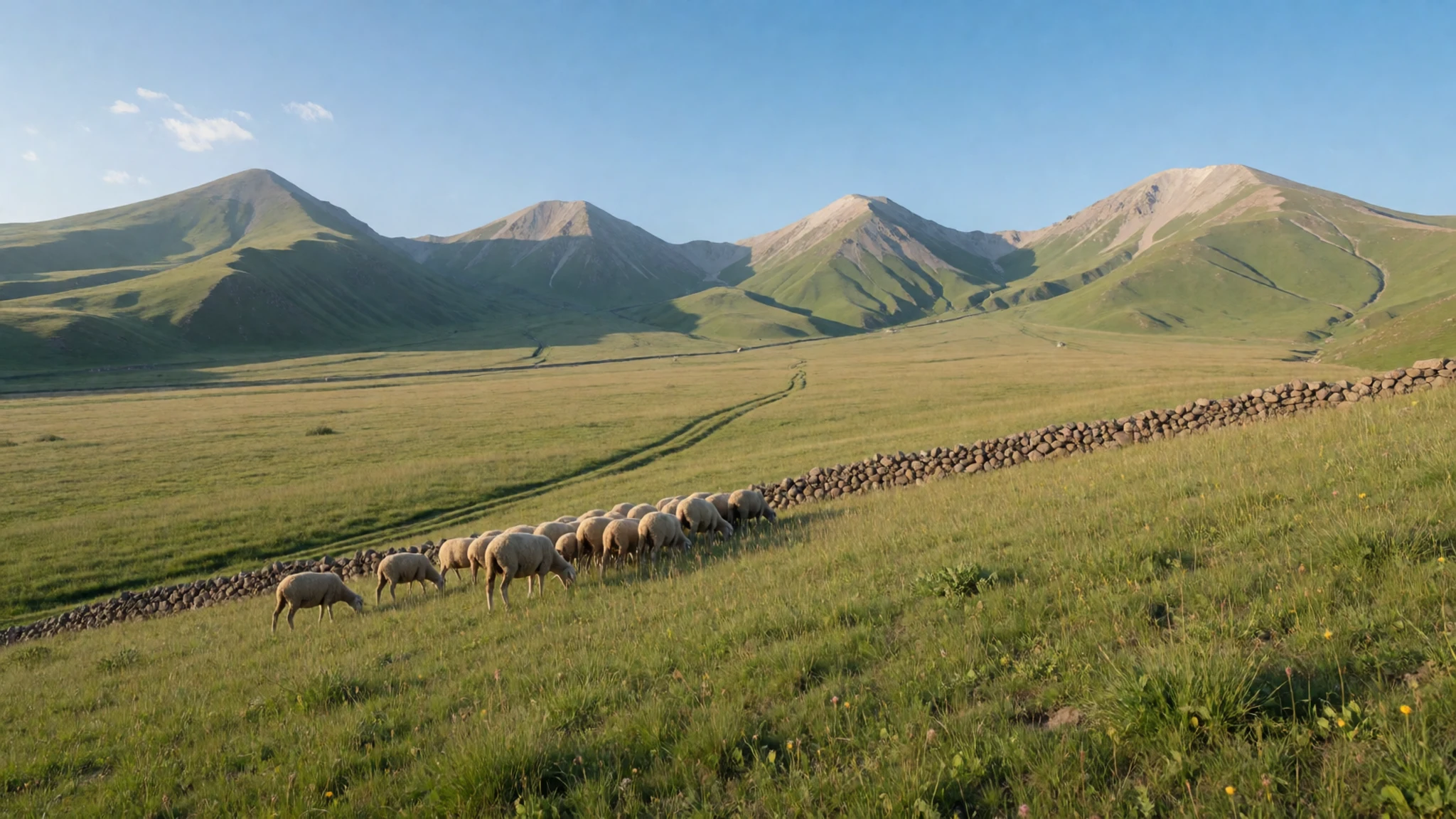
- Alpine meadows and wild flowers — Meadows above the forest, Qusar side
Mid-slope meadows in Shahdag National Park fill with wild flowers in the warmer months, and photographers favour them for close-ups against the rock. Walking slowly pays off: small blooms hide among the grass, and the light is best early and late. Stay on paths so the turf can recover.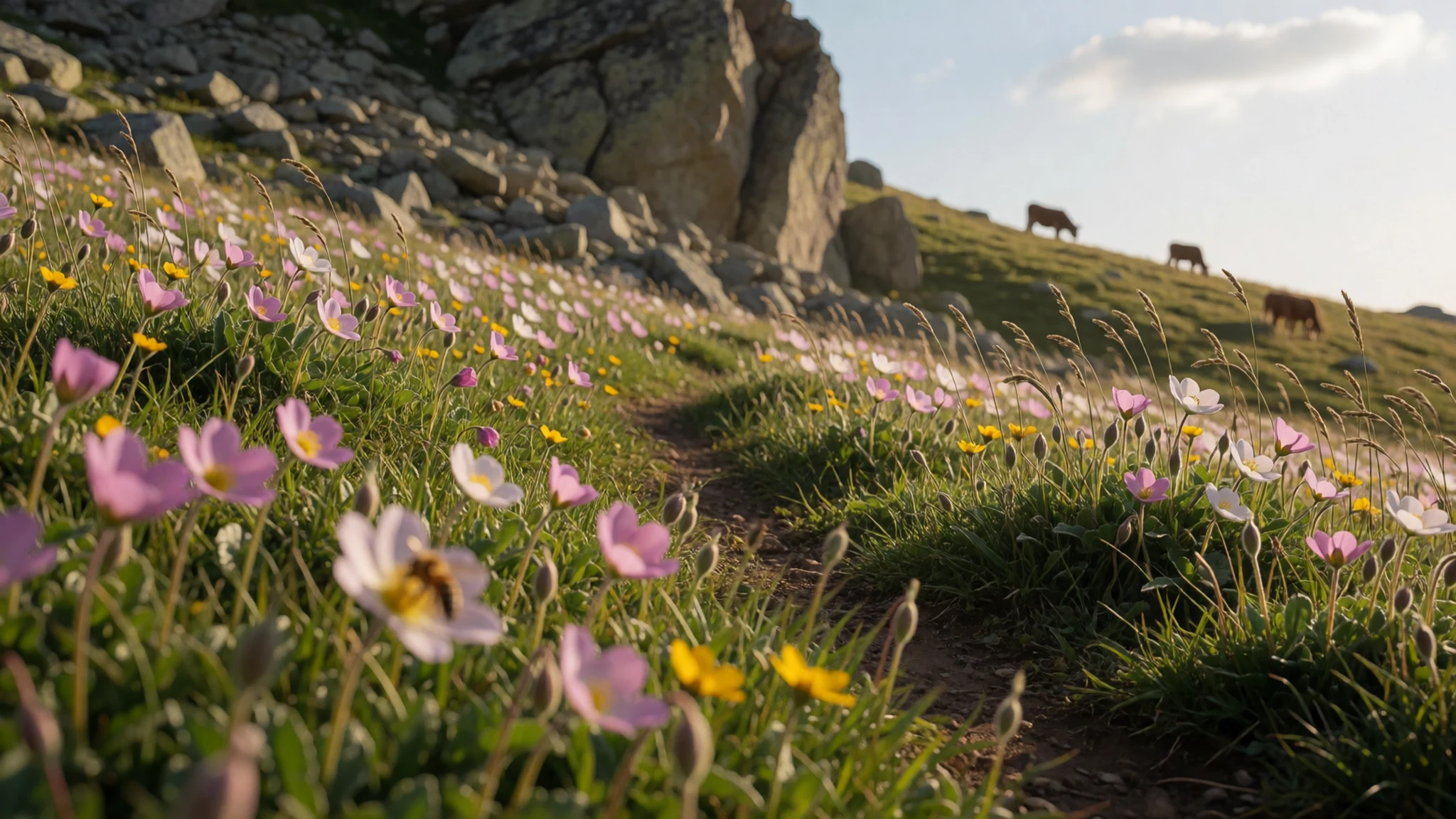
- Wild rose and shrub slopes — Lower slopes, Qusar district
Along lower tracks, wild rose and other shrubs grow in thickets that flower in season and fruit later. This is gentle walking country, good for a first day when the body is adjusting to altitude. Birds and insects are easier to notice here than on the open scree above.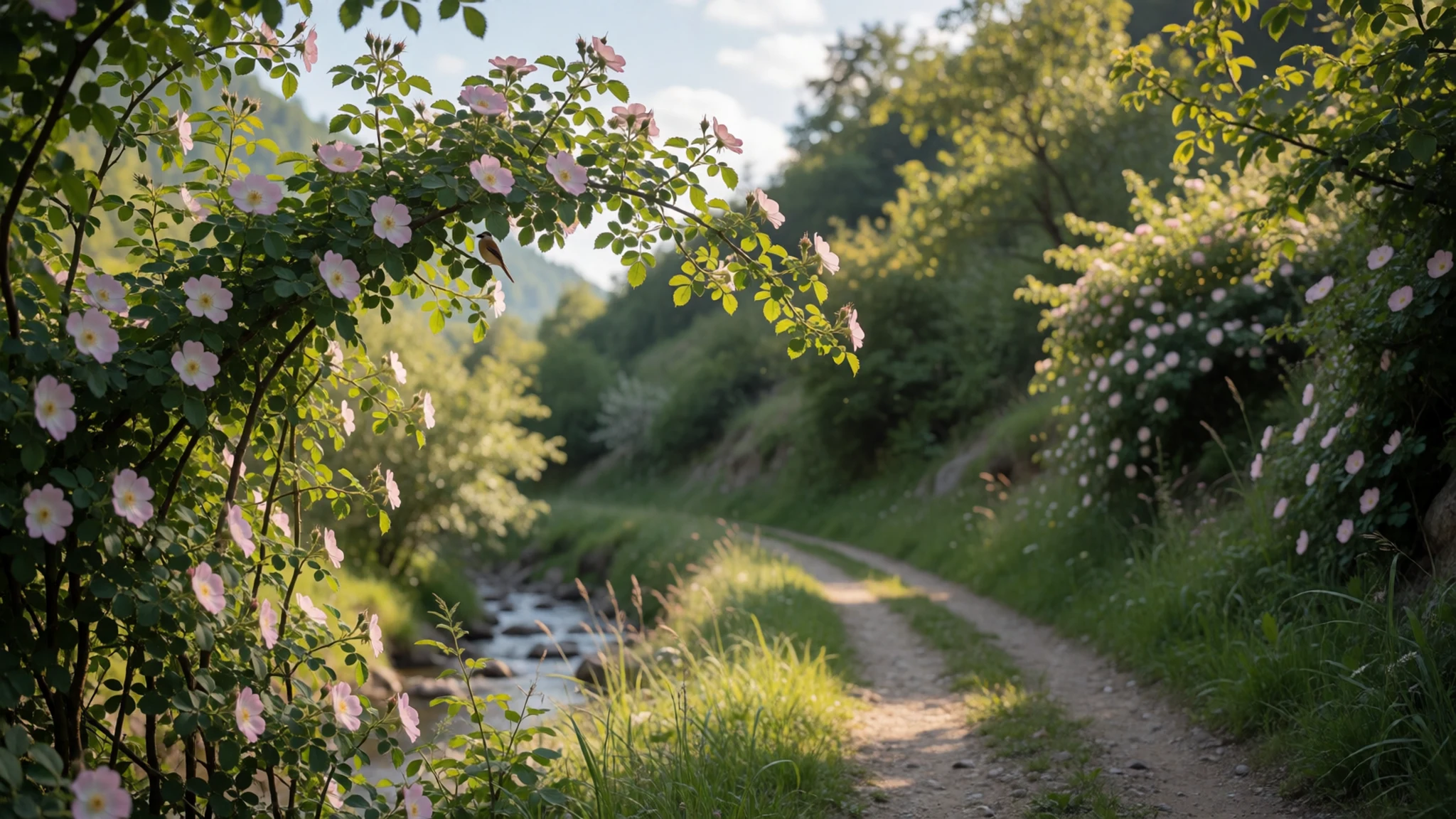
- Ferns and rock gardens — Forest edge and gullies
In shadier, damper pockets of the park, ferns grow straight out of boulders and rock faces, softening the stone. These cooler corners are pleasant in midsummer when open slopes turn hot. Footing can be slippery after rain, so boots with a proper tread are worth the weight.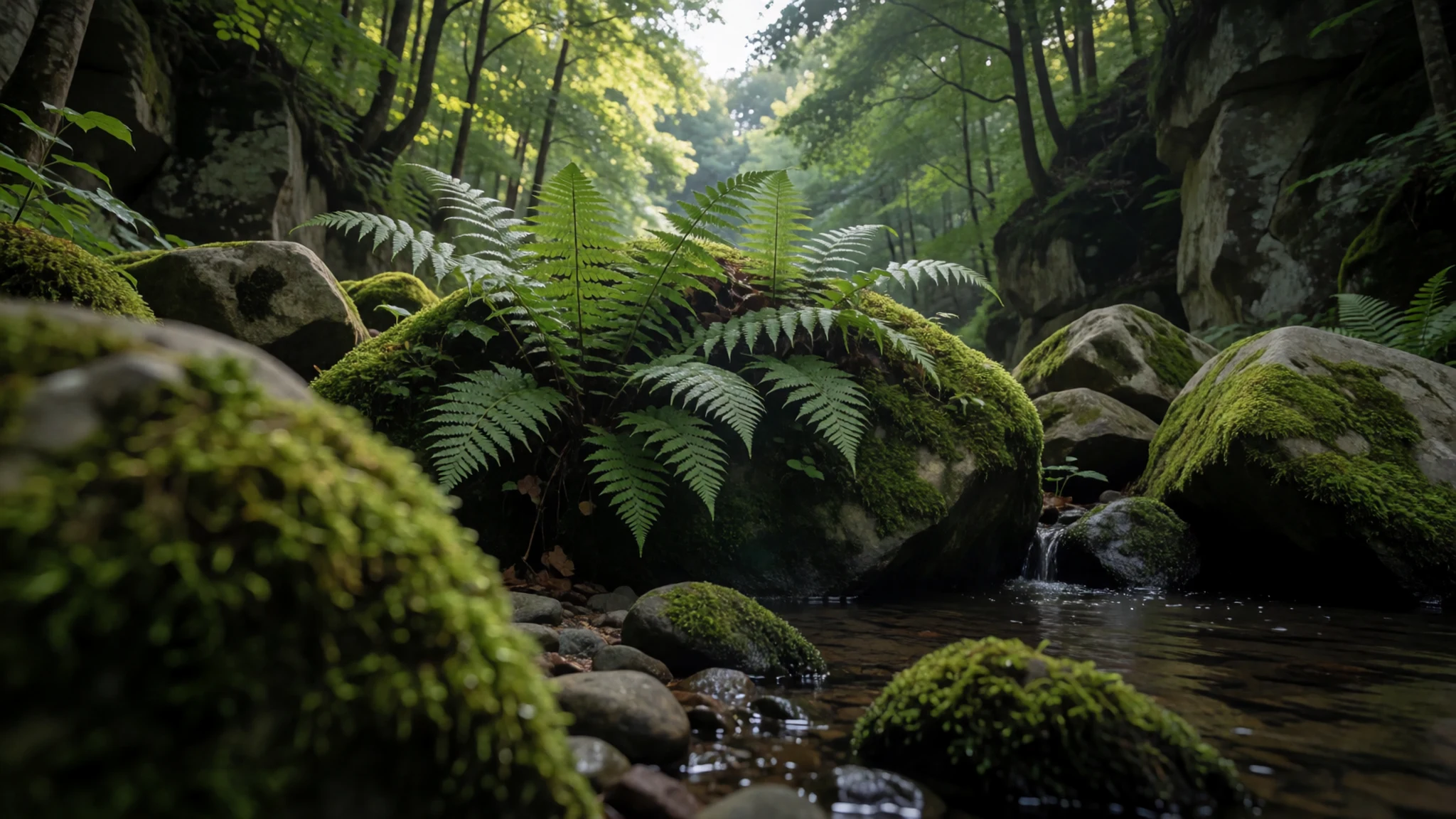
- Slopes near Babadağ — Near Babadağ, Qusar district
The landscape near Babadağ shows the park's wider character: rolling green ridges, exposed rock and long views across to higher ground. It suits walkers who want scenery without technical climbing. Take water and a windproof layer, as there is little shelter once the trail leaves the trees.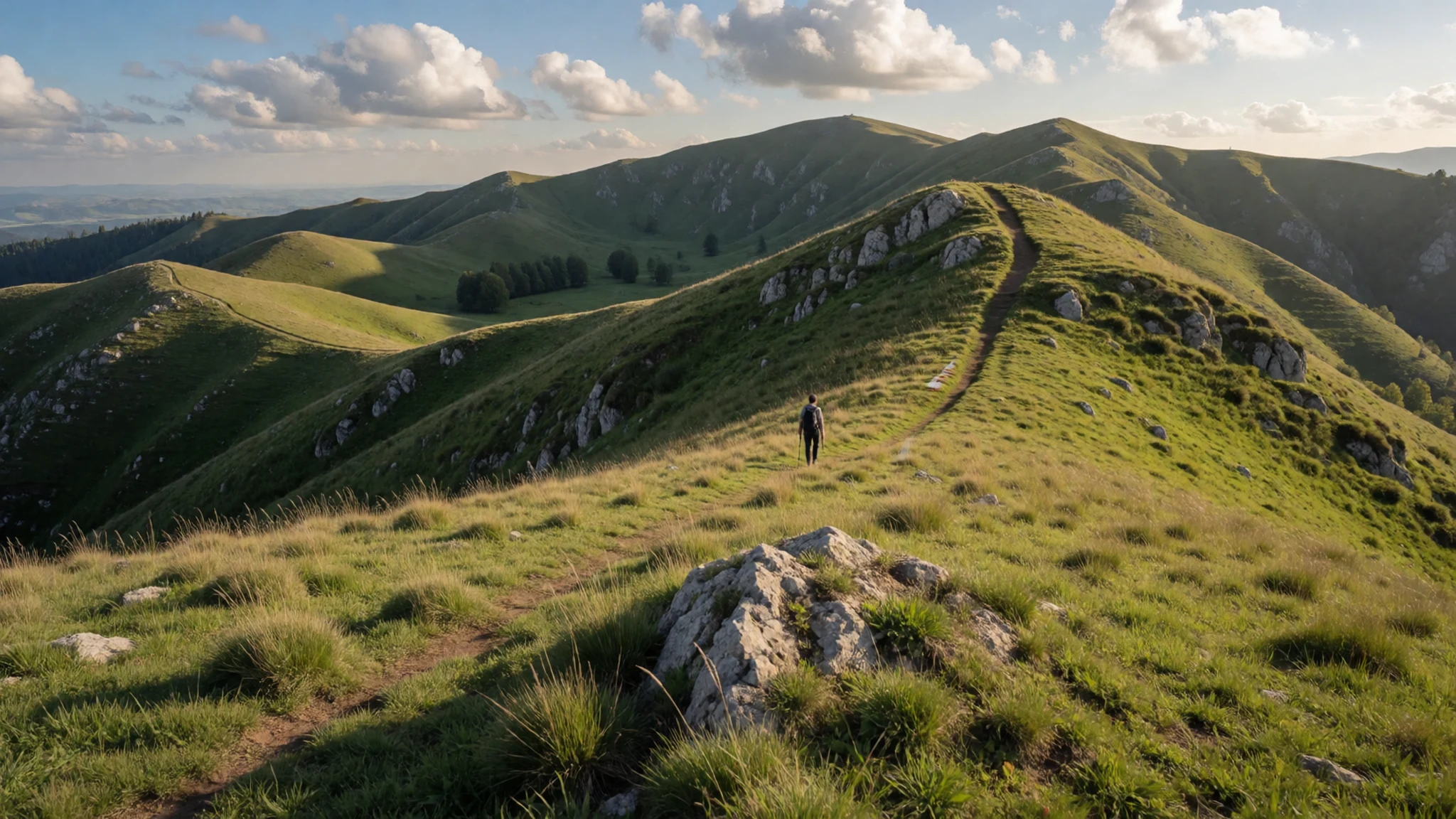
Culture
Shahdag National Park lies in a country where hospitality is a point of pride and manners matter. Azerbaijanis tend to be reserved when they first meet someone, but they are very polite, and warmth grows quickly once a conversation gets going. The villages around the park are traditional places, and a walker who stops to ask directions may well end up invited in for tea. Arriving with a small gift is expected: flowers, chocolate, or something typical of your own country. The thought counts for more than the price. If you bring flowers, choose an odd number, because even numbers are linked with funerals, and leave out wine or other alcohol. Inside the house, shoes come off just outside or immediately inside the door, and slippers may be offered; even if the host says shoes can stay on, taking them off is usually the more polite choice. Older people are treated with real respect, and younger passengers routinely give up their seats on public transport to elders, pregnant women, disabled people and anyone with small children. Visitors who do the same win goodwill quickly. Mountain life follows livestock and seasons, so farmers and shepherds start early and may have little time for long chats at harvest or lambing. If you are invited into a home near Shahdag, bring flowers in an odd number, take off your shoes at the door, and leave the alcohol out of the gift.
What to wear
Shahdag National Park is ringed by villages whose traditional clothing grew out of mountain weather and Azerbaijani craft. Men historically wore the chokha, a long wool coat with chest pockets, over a fitted under-coat, topped with a tall sheepskin hat called a papakha. Women wore long, often embroidered dresses with a headscarf such as the kelagayi, a printed silk square made in Azerbaijan. Wool socks and felt were practical against the cold. Today these garments appear mostly at weddings, festivals, folk performances and in museums. Everyday dress in the towns near the park is modern and fairly modest: jeans, shirts, jackets, with many women in long sleeves and longer hems, and older villagers often in cardigans and caps. Hikers and holidaymakers in outdoor kit draw no comment at all. Visitors should dress for the mountains first. Wear layers, because mornings are cold and afternoons warm. Carry a waterproof shell and a warm fleece even in summer, as weather can turn fast. Use a sun hat and sunscreen at height, and wear broken-in boots with good grip for scree and wet grass. In villages and when visiting a home, cover shoulders and knees as locals do, and choose shoes that slip off easily at the door.
What to eat
- Piti — Traditional eateries in the towns on the road to the park, such as Quba and Qusar
A mutton stew with chickpeas and vegetables, flavoured with saffron water and cooked in a sealed individual crock under a cap of fat. The Şəki version swaps potato for boiled chestnuts. It is slow, filling food after a day on the trail.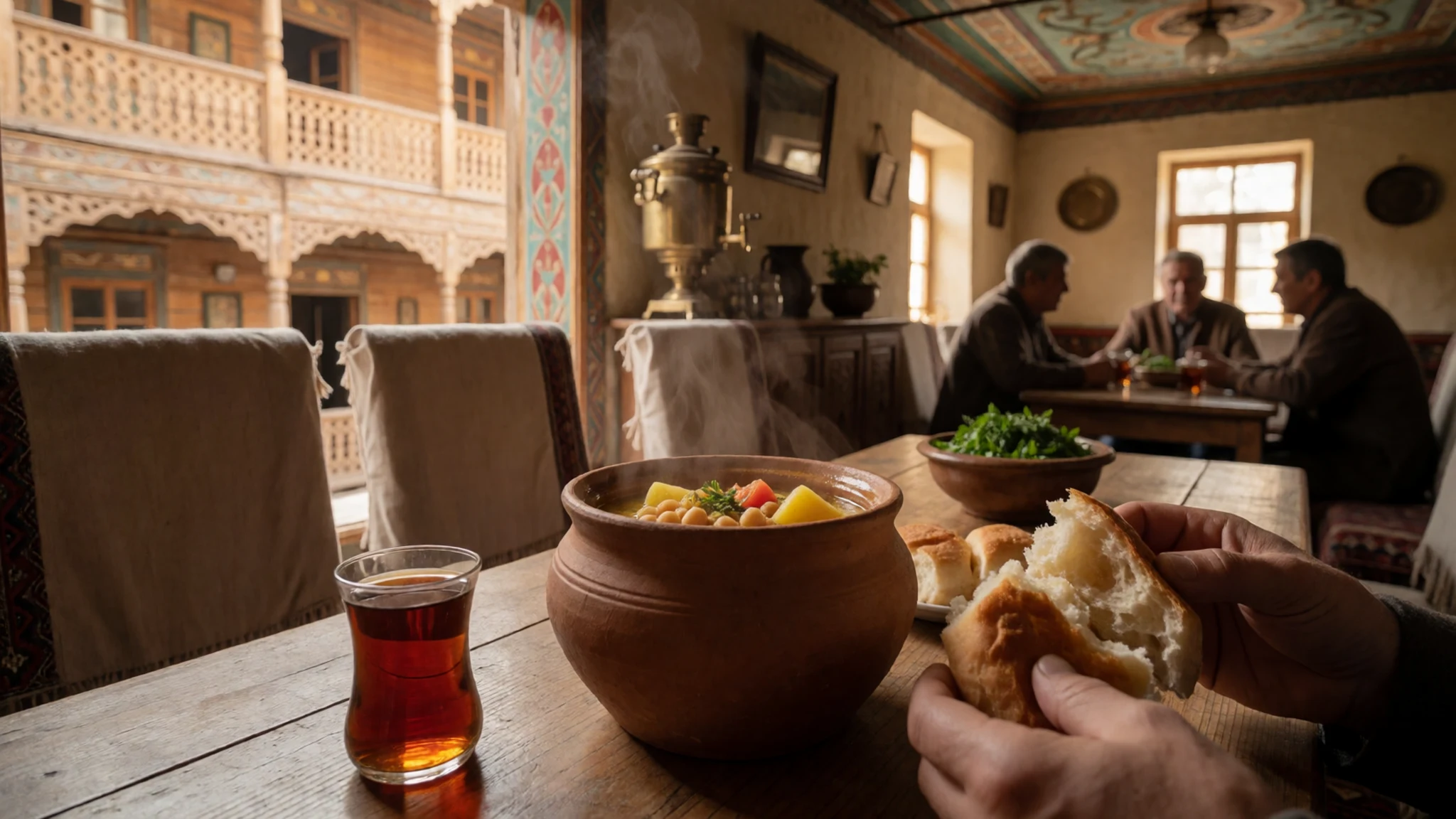
- Yarpaq dolması — Family-run eateries and home tables in the villages
Grape leaves wrapped around spiced minced meat and rice, simmered until soft. It is often called the national dish, and cabbage and aubergine versions exist too. Usually served with a spoonful of yoghurt on the side.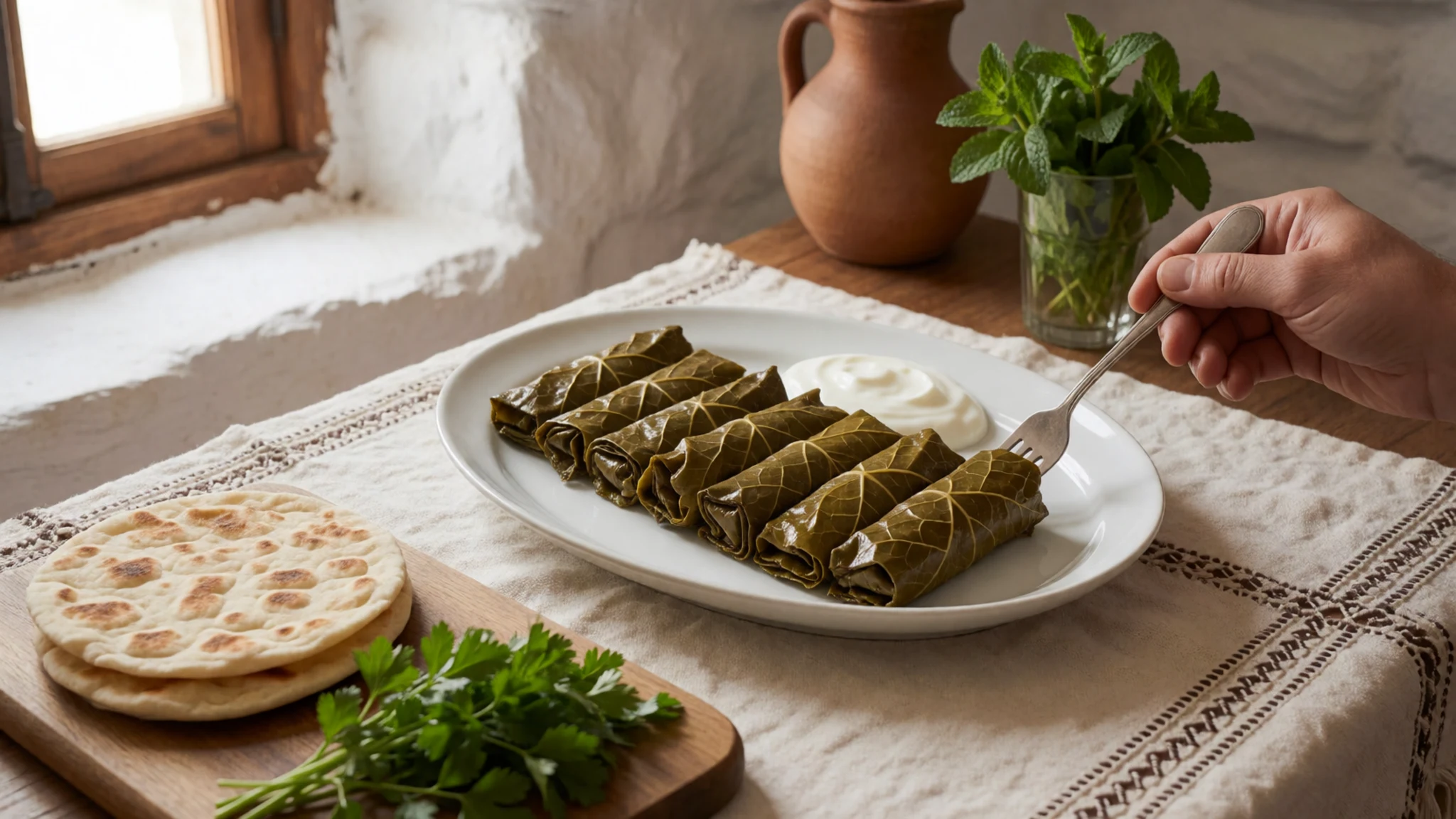
- Plov — Restaurants and eateries in district towns; also at weddings and gatherings
Rice cooked with a range of toppings, from lamb to dried fruit and chestnuts. People often call it the king of Azerbaijani cooking. It turns up at celebrations, and a plate of it is a reliable lunch after a long walk. - Qutab — Street stalls and small cafés in Qusar, Quba and other towns
Thin flatbreads folded around herbs, greens, pumpkin or minced meat and browned on a griddle. They are light, cheap and easy to carry, which makes them a sensible trail snack, best eaten hot with a little butter. - Bozbash — Village eateries and tea houses near the park
A warming lamb soup, one of several hearty bowls in Azerbaijani cooking, made with chickpeas and vegetables. In the cooler mountain evenings it is the dish most likely to restore tired walkers. Bread is a staple and arrives with almost every meal.
Plan it
Best time. June to September for walking, when the high ground is most open and the meadows are in flower; late autumn onwards brings snow at height, which suits winter sports but shuts off many hiking routes.
How long. 2–3
Getting there. Fly into Baku's international airport, then continue north by road towards Quba and Qusar, the usual gateways to the park; arrange the last leg with a local driver or tour operator. Azerbaijan's land borders were closed to civilian entry when this brief was compiled, so the only legal way in is through an international airport. Visitors from the UK and India are on the eVisa list, applied for at evisa.gov.az; check current rules before booking.
Budget. mid
Tips
- Start walks early; mountain weather can change by afternoon
- Carry cash for villages, small eateries and roadside stalls
- Bring water and a warm layer, and allow a day to adjust before heading higher
- Check the park's official channels for open routes and facilities before you set out
- Book transport and any overnight stay ahead in peak summer and winter weeks
Etiquette
- Take your shoes off at the door when invited into a home
- Bring flowers in an odd number if visiting a family
- Stay on paths and take all rubbish back out
Nearby
Sources
- Wikidata Q2468697 (CC0)
- Wikipedia: Shahdag National Park (CC BY-SA 4.0)
- Wikivoyage: Azerbaijan (CC BY-SA 4.0)
- Photo: Bazardüzü as seen from Shahdag (Freieck) (CC BY 3.0)
- Photo: Shahyaylag valley (Kupr31) (CC BY-SA 4.0)
- Photo: Flowers in Azerbaijan (Khagani Hasanov1988) (CC BY 3.0)
- Photo: Flora of Shahdag National Park (Khagani Hasanov1988) (CC BY 3.0)
- Photo: Shahdag National Park (Khagani Hasanov1988) (CC BY 3.0)
- Photo: Fern on rock in Shahdag National Park (Khagani Hasanov1988) (CC BY 3.0)
- Photo: Wild rose in Azerbaijan (Khagani Hasanov1988) (CC BY 3.0)
- Photo: Landscape at Shahdag National Park near Babadağ (Toni Wöhrl) (CC BY-SA 4.0)


