Khankendi
Khankendi, Azerbaijan
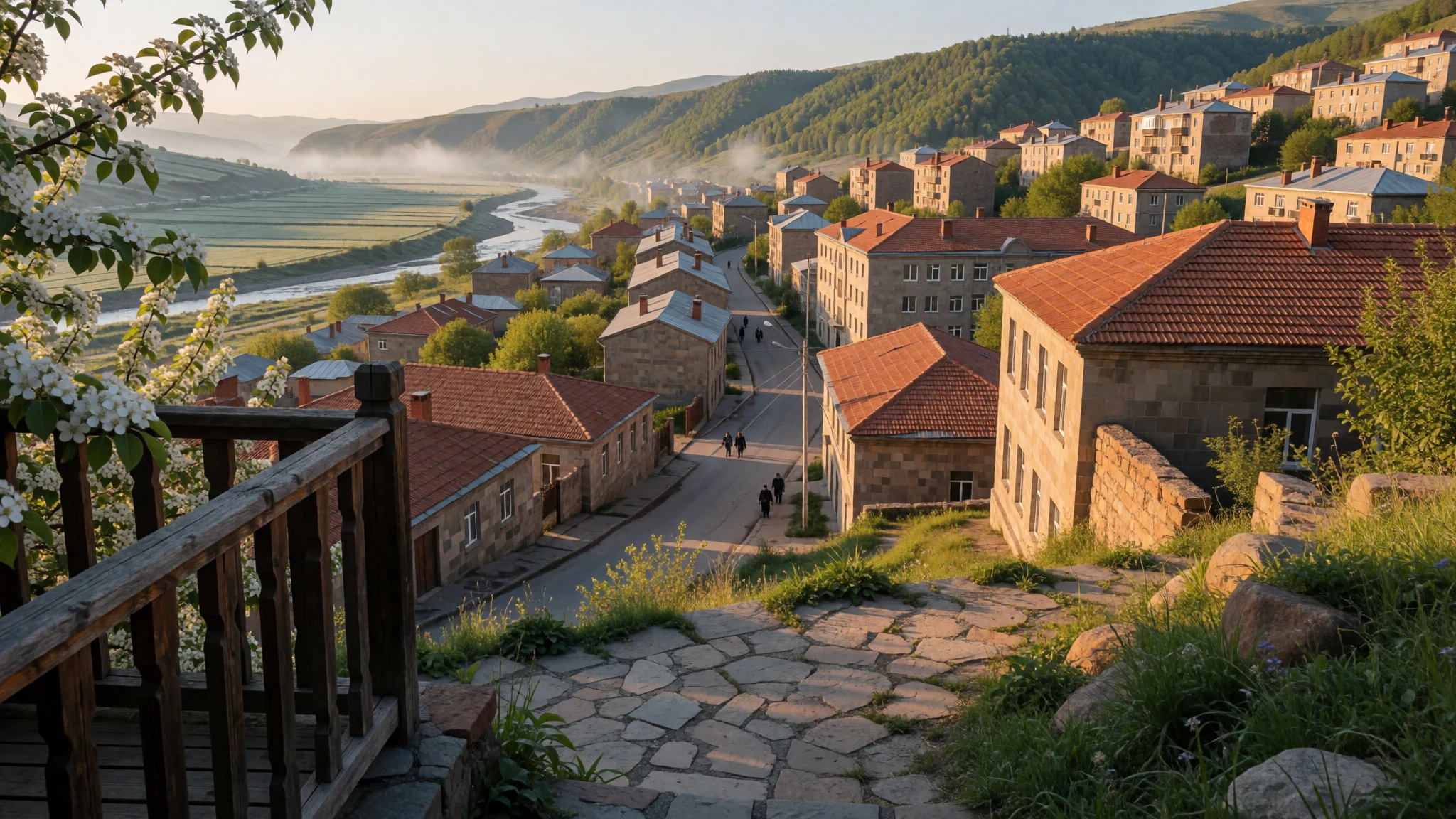
Khankendi offers a fascinating window into the mountainous landscapes and complex history of the Karabakh region.
The place
Khankendi sits within a valley across the slopes of the Karabakh mountain range, positioned near the Karkar River. As an urban settlement, it has evolved through various eras from an early agrarian community into a regional administrative and cultural hub. The surrounding geography shapes a distinct highland environment, where valley breezes meet crisp mountain air coming down from the heights. Visitors walking through the central districts will notice a grid of civic buildings, open public squares, and residential blocks that reflect decades of Soviet-era planning alongside newer construction projects. The local economy has historically depended on light industry, agricultural processing, wine production, and crafts, giving the town a working character distinct from coastal capitals. Daily life revolves around neighbourhood markets, small cafes, and shaded promenades where residents gather during the warmer months. While the region carries a complex political legacy, the physical layout of the town provides a clear vantage point for understanding how communities have adapted to this isolated interior valley over generations. Travellers arriving here find a quiet urban environment defined by its mountainous surroundings, local traditions, and historical layers that stretch from medieval principalities to modern municipal administration.
Its story
Khankendi began its recorded existence as an Armenian village named Vararakn, situated within the historical territory of the Armenian Principality of Khachen from the medieval period. Over subsequent centuries, the locality passed through the control of regional meliks and Karabakh khans before the Russian Empire assumed authority in the early nineteenth century. During the imperial era, the settlement transformed into a garrison town populated largely by retired soldiers and their families, who engaged in small-scale farming, crafts, and providing lodgings for military personnel. In the middle of the nineteenth century, the name of the settlement officially changed to reflect its imperial association. Following the establishment of Soviet rule, the town experienced significant industrial and architectural expansion, eventually serving as the administrative center for the surrounding autonomous region. This period brought new schools, cultural palaces, and multi-storey housing blocks that reshaped the urban fabric. Later decades saw the town become a central focal point for political demonstrations and territorial disputes that accompanied the dissolution of the Soviet Union. The subsequent conflicts brought severe physical damage and demographic shifts, altering the governance and cultural makeup of the settlement. Today, Khankendi stands as a place where the layered architectural styles and historical memories of multiple communities remain visible in every street and monument.
What to see
- Stepanakert Shuka — Central market district
This lively farmers market serves as the primary gathering point for local food trade, offering seasonal fruits, vegetables, and regional preserves. Visitors can observe daily commerce and sample traditional regional delicacies prepared right on the spot by local vendors.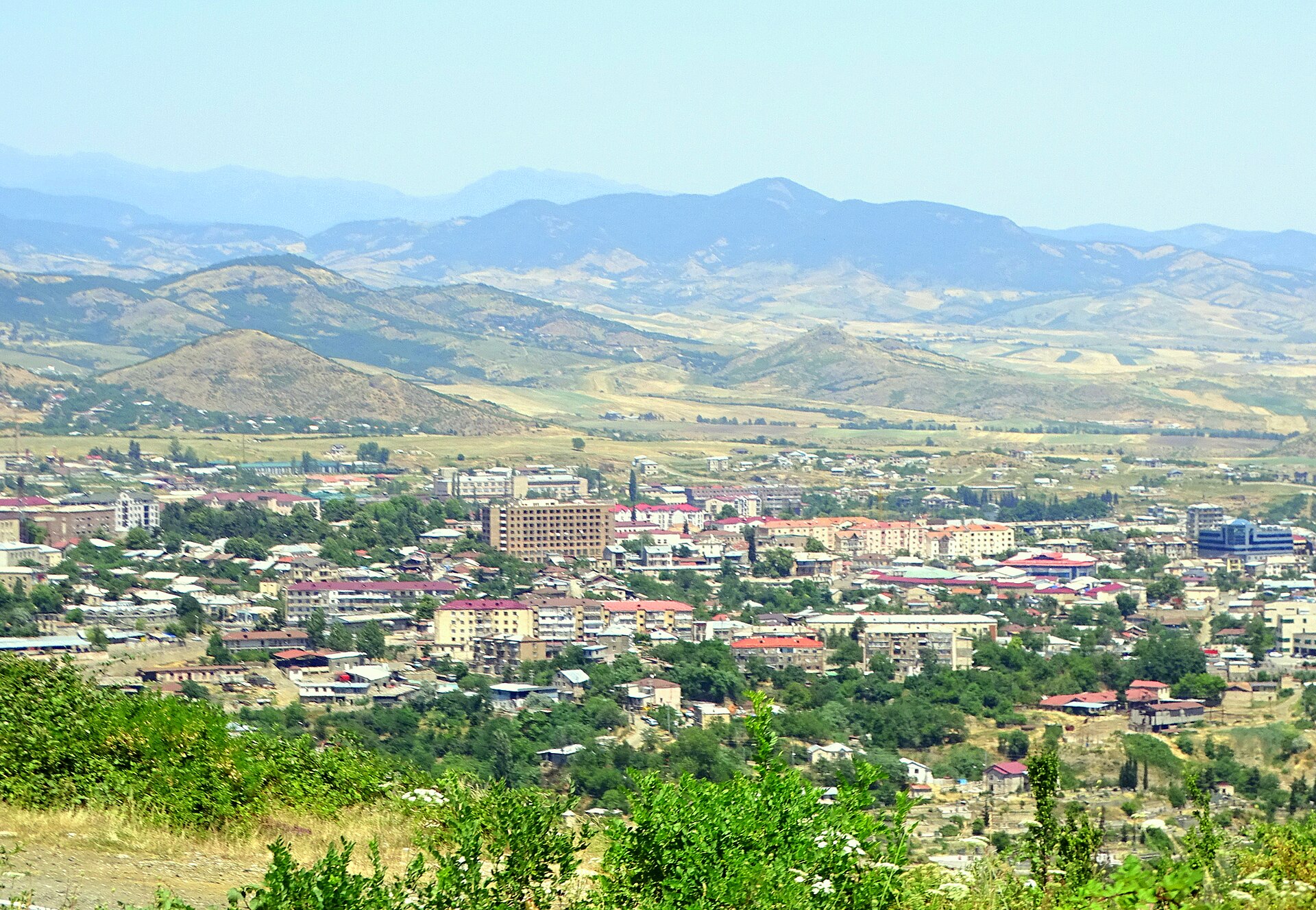
- We Are Our Mountains Monument — Northern approach road
Carved from volcanic tufa, this iconic monument depicts an elderly peasant man and woman symbolising the enduring spirit of the local highland population. It stands on a grassy rise just outside the main urban core, offering sweeping views across the surrounding valley. - St. Astvatsatsin Church — Central urban district
Constructed in the 2000s, this active religious building features traditional cross-domed stone architecture and serves as a quiet sanctuary for reflection. The interior displays religious icons and woodwork crafted by regional artisans, providing insight into contemporary spiritual life.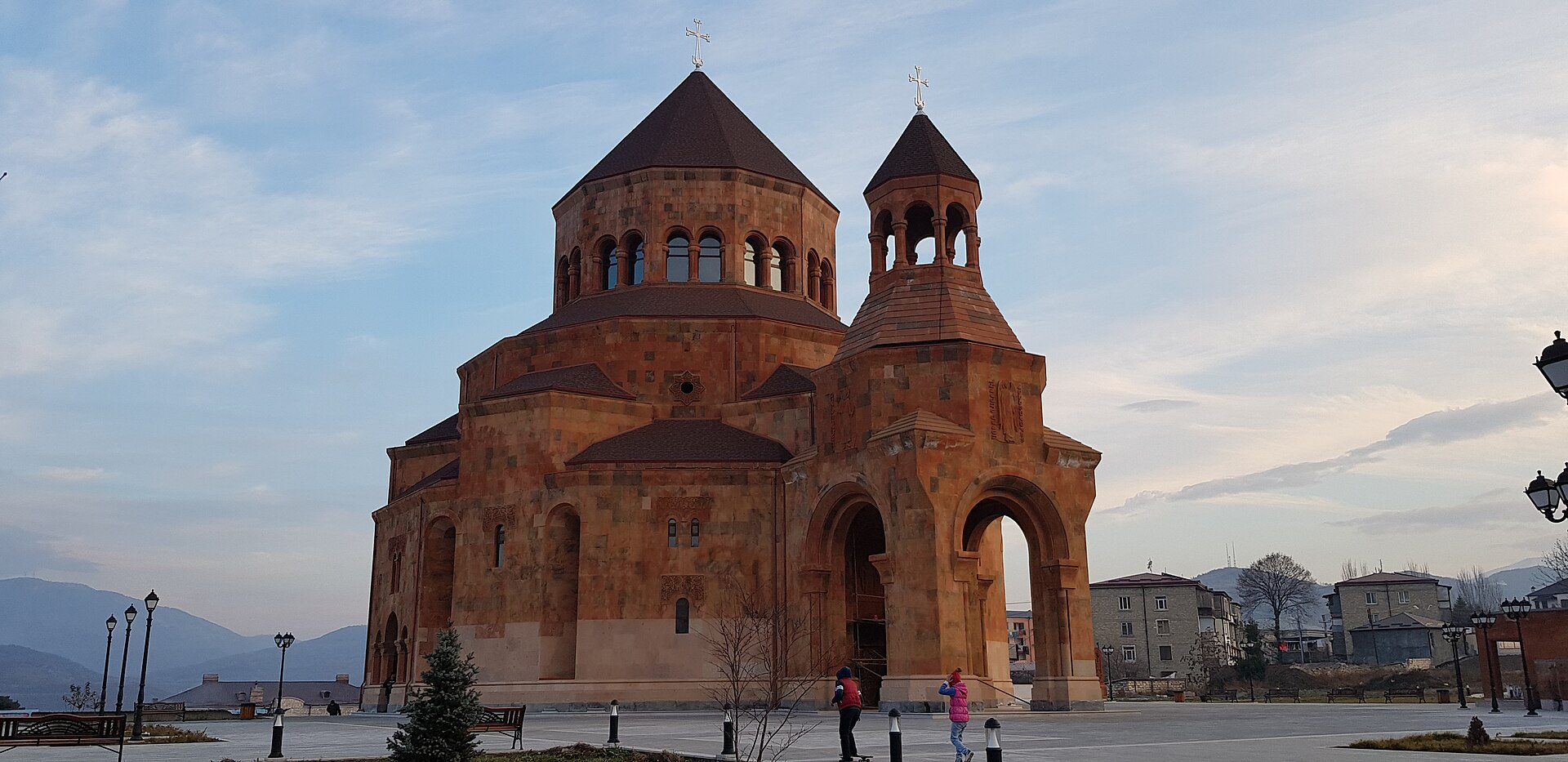
- Artsakh State Museum of Local History — Downtown avenue
Housed in a modest municipal building, this cultural institution curates archaeological artifacts, medieval manuscripts, and historical exhibits documenting centuries of regional heritage from antiquity through the twentieth century. - Askeran Fortress — Askeran district
Located a short distance outside Khankendi, this historic defensive structure features massive double stone walls built during the eighteenth century to guard the river approaches toward the mountain passes.
Culture
Khankendi reflects a blend of Caucasian traditions shaped by centuries of highland agriculture, trade, and shifting administrative ties. Hospitality is deeply embedded in daily life, and guests are frequently welcomed with locally produced fruit spirits or tea in neighbourhood cafes. Traditional arts, carpet weaving, and musical performances remain valued parts of community heritage, passed down through local schools and cultural houses. Social interactions tend to be direct, and residents maintain a strong sense of pride in their resilient mountain identity, local cuisine, and historical heritage. Public spaces are generally calm, with families and neighbours gathering in the evenings along shaded boulevards and park benches. Visitors should dress modestly when entering religious sites and always ask for permission before photographing local residents or market vendors.
What to wear
In Khankendi, traditional dress is preserved largely for folkloric performances, cultural festivals, and historical exhibitions rather than daily wear. Historically, traditional attire for men featured belted wool tunics, tall astrakhan hats, and heavy boots suited for mountain terrain, while women wore embroidered velvet dresses, layered headscarves, and woven aprons created from locally produced silk and wool textiles. Today, people in Khankendi dress in standard contemporary European styles, with jeans, jackets, and practical footwear being standard for everyday urban life. Visitors exploring Khankendi should pack sturdy walking shoes or boots capable of handling uneven pavements and hillside terrain, along with layered clothing to accommodate shifting mountain temperatures. Modest attire that covers shoulders and knees is recommended when visiting churches or traditional community spaces throughout the city.
What to eat
- Jingalov Hats — Stepanakert Shuka and local bakeries
A famous regional flatbread stuffed with a finely chopped mixture of dozens of wild mountain herbs and greens, baked on a hot convex griddle without oil. - Mulberry Oghi — Stepanakert Shuka and local markets
A potent traditional fruit spirit distilled from fermented mulberries, deeply rooted in local hospitality and homemade brewing traditions across the Karabakh highlands. - Fruit Vodkas — Artsakh Alco and specialist drinks shops
Strong regional spirits produced from local orchard fruits including apricot, pear, and cornelian cherry, prized for their intense aromas and warming properties. - Regional Wine — Roots wine bar and local eateries
Local wines crafted from indigenous grape varieties cultivated in the sunny mountain valleys and traditional agricultural terraces of the surrounding district. - Hearty Soups and Stews — Local cafes and restaurants throughout the centre
Nourishing comfort foods prepared with mountain lamb, root vegetables, legumes, and wild herbs, served hot in family-run restaurants and neighbourhood cafes.
Plan it
Best time. May to June and September to October offer the most pleasant weather for exploring the mountain valleys, avoiding the intense summer heat and cold winter conditions.
How long. 2–3
Getting there. Access requires travelling by road from major regional transport hubs such as Yerevan via long-distance bus services or shared marshrutkas, crossing through designated checkpoints.
Budget. mid
Tips
- Carry sufficient physical cash, as card payment acceptance is limited outside major establishments
- Arrive at bus stations well ahead of departure times to secure seating
- Wear sturdy footwear suitable for hilly streets and uneven rural terrain
- Keep travel documentation and visas readily accessible for security checkpoints
Etiquette
- Ask permission before photographing local residents or market traders
- Dress modestly with covered shoulders and knees when visiting churches
- Remove footwear if required when entering traditional homes or sacred spaces
Nearby
Sources
- Wikidata Q129352 (CC0)
- Wikipedia Stepanakert (CC BY-SA 4.0)
- Wikivoyage Khankendi (CC BY-SA 4.0)
- Photo 01 (CC BY-SA 2.0)
- Photo 02 (CC BY-SA 4.0)
- Photo 04 (CC BY-SA 4.0)
- Photo 06 (CC BY-SA 4.0)


