Woraksan National Park
Woraksan National Park, South Korea
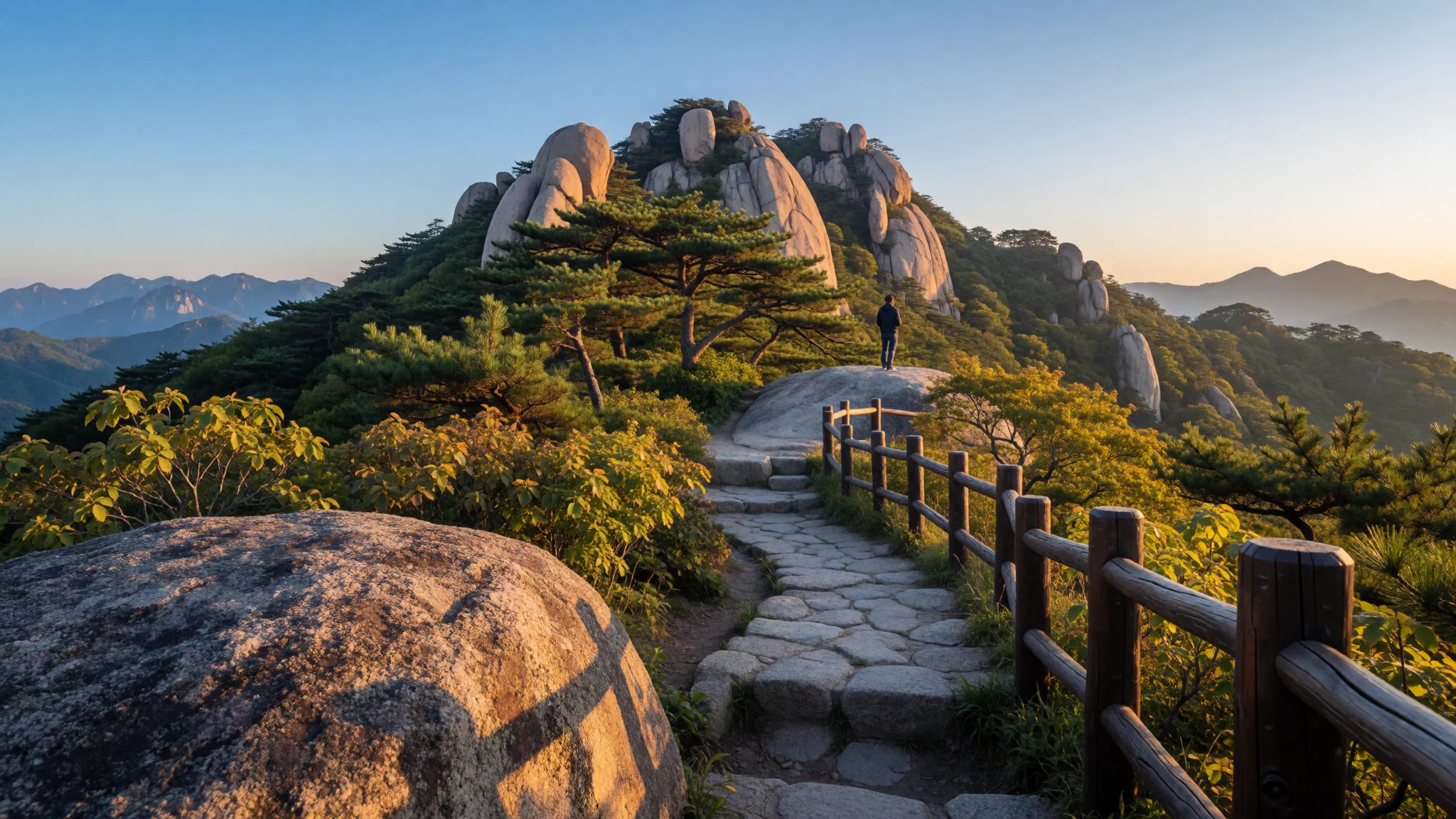
Woraksan National Park offers steep granite hiking above a long lake, with hot springs, a cave and small riverside towns close by.
The place
Woraksan National Park sits in the mountainous east of South Korea's North Chungcheong Province, with its edges spilling into neighbouring North Gyeongsang. It was designated in 1984 and takes its name from the mountain Woraksan, whose granite crags rise above forested valleys and a long reservoir lake. The park is a mix of rock, water and woodland rather than a single sight. Ridges are steep and bare in places, and cloud often pools in the valleys, so photographs from the high points tend to show wave after wave of ridgeline fading into haze. Below the peaks, the man-made Chungju Lake threads between the hills and carries tour boats from one lakeside town to the next. The park shelters a wide range of wildlife, from plants and insects to fish, amphibians, reptiles, birds and mammals, and a number of the animal species are listed as endangered. Woraksan is mostly a walkers' destination. Trails climb from valley trailheads to rocky viewpoints, and the effort is real. Being inland, the area has sharply seasonal weather, with hot, damp summers and cold, dry winters. Towns such as Danyang and the hot-spring village of Suanbo make easy bases. Crowds build on autumn weekends, when Korean hikers arrive in large numbers for the leaf colour, so weekdays are noticeably calmer. Woraksan National Park suits a day or two of hiking, linked to lakes, caves and springs.
Its story
Woraksan National Park belongs to a province with a long habit of being passed through and settled. North Chungcheong has no coastline, but it sits where major roads and rail lines meet, and for centuries it sat between the capital and the south. Its upland towns were home to a yangban tradition, the scholar-official class that produced many of the region's statesmen and teachers. That reputation for learning shows in a famous local claim to fame: a Buddhist text printed with movable metal type at Heungdeoksa temple in Cheongju, now remembered in the city's Early Printing Museum. The mountains themselves were long treated as a boundary and a refuge. Steep country like this was hard to farm and easy to defend, which is why Korean mountains so often hold temple sites and old fortress walls. The modern story begins in 1984, when the area around Woraksan was set aside as a national park, giving legal protection to the peaks, forests and the wildlife they hold. Later, the damming of the river created Chungju Lake, which reshaped the valley floors and gave the park its lakeside edge. The lake flooded old farmland and villages, and today it works as both a reservoir and a tourist route. Woraksan, then, is a landscape shaped twice, once by the long human use of the uplands and again by modern engineering and conservation.
What to see
- Woraksan summit trails — Central park, North Chungcheong
The main draw of Woraksan National Park is the climb to the granite ridges above the valleys. Trails are steep and rocky, with stone steps and some exposed sections, and the reward is a view of layered ridgelines with cloud drifting between them. Start early, carry plenty of water and expect to take it slowly.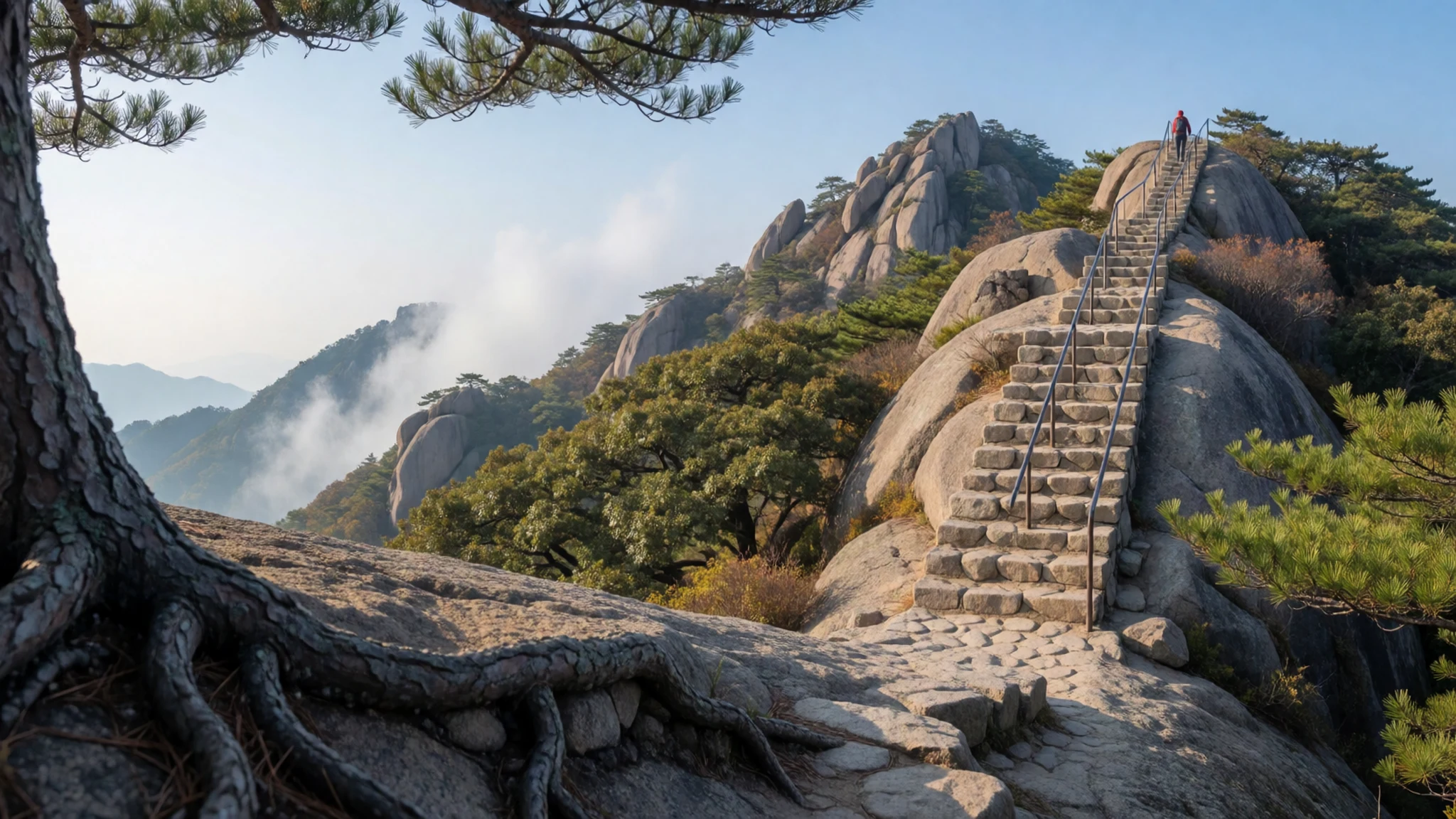
- Chungju Lake boat trip — Chungju and Danyang shoreline
A boat ride on Chungju Lake is the easy way to see the park's watery side. Vessels stop at several lakeside attractions, which makes the trip a flexible half-day that links Chungju and Danyang. The lake is man-made, but its steep wooded shores look natural, and the cool air on deck is welcome in summer.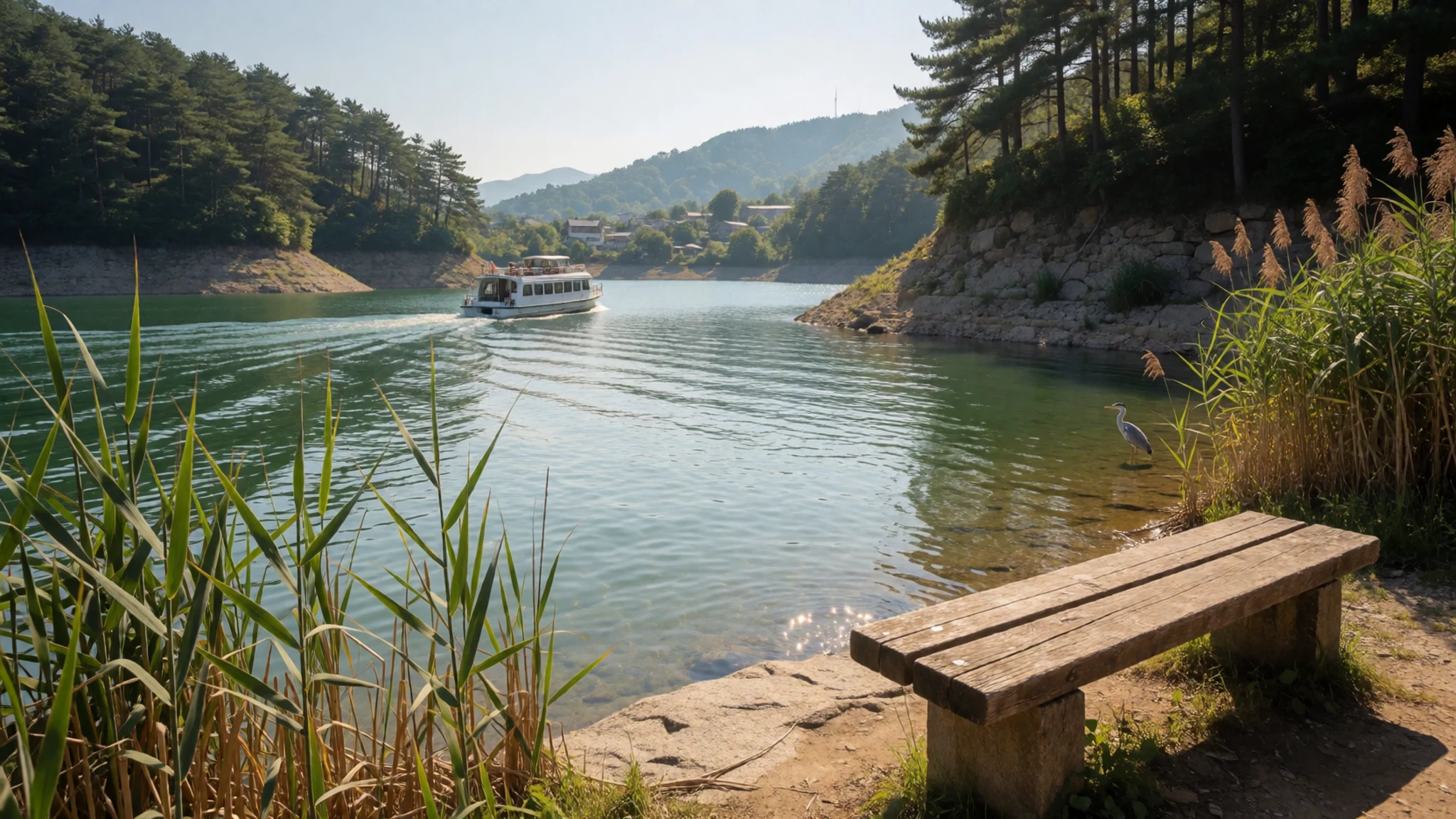
- Danyang town — Danyang, North Chungcheong
Danyang is a small town enclosed by the lake and the Namhang River, and it works as the most convenient base for the park's northern side. Its riverside paths and market streets are good for an evening walk after hiking. Rooms and eateries here suit most budgets, and the Jungang rail line stops nearby.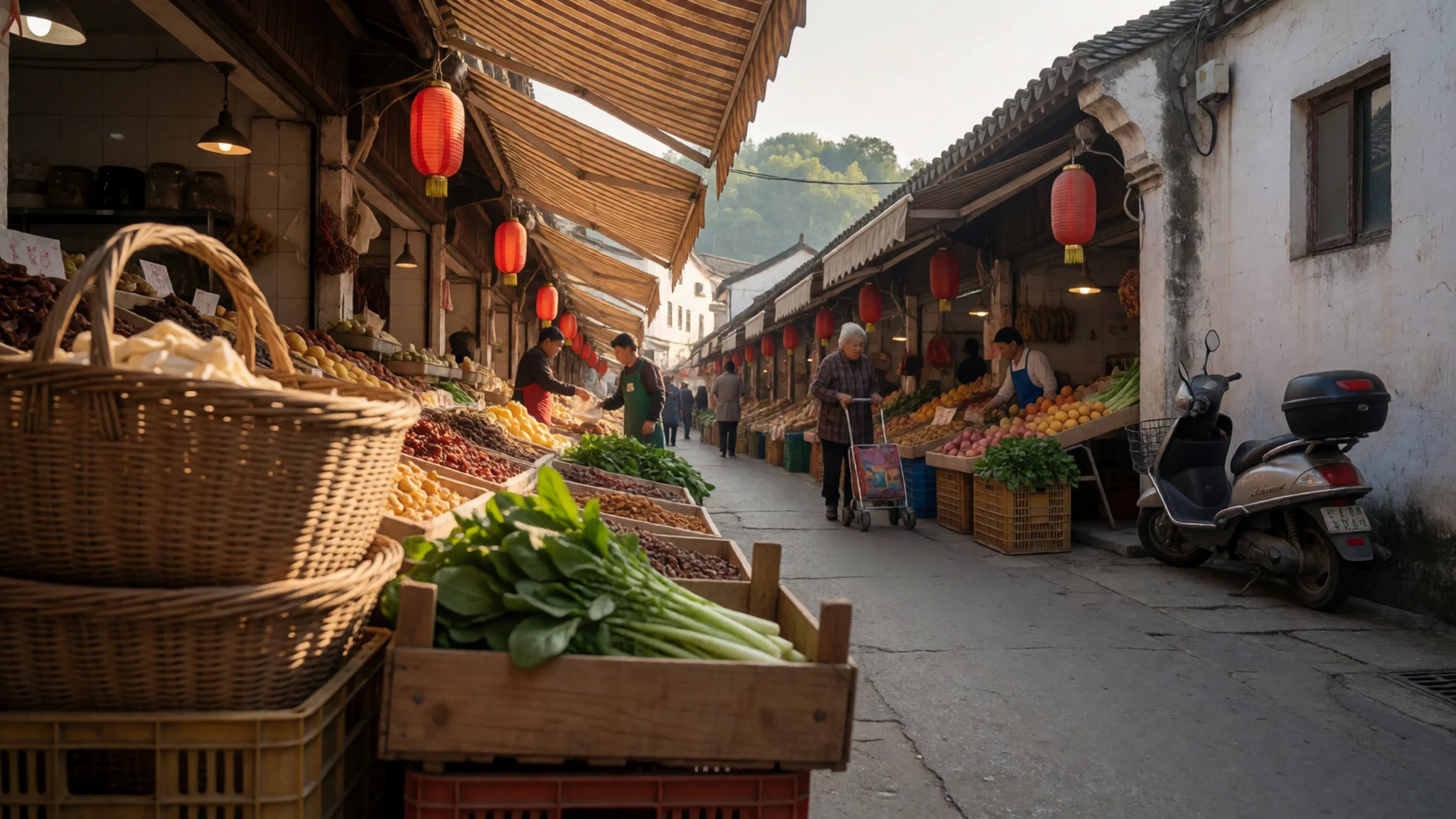
- Gosu Cave — Near Danyang
Gosu Cave lies close to Danyang and was inhabited in prehistoric times. Inside, a lit walkway winds through limestone chambers hung with formations. It is cool and damp all year, so a light jacket helps in summer, and the floor can be slippery. It makes a good wet-weather alternative to the mountain trails.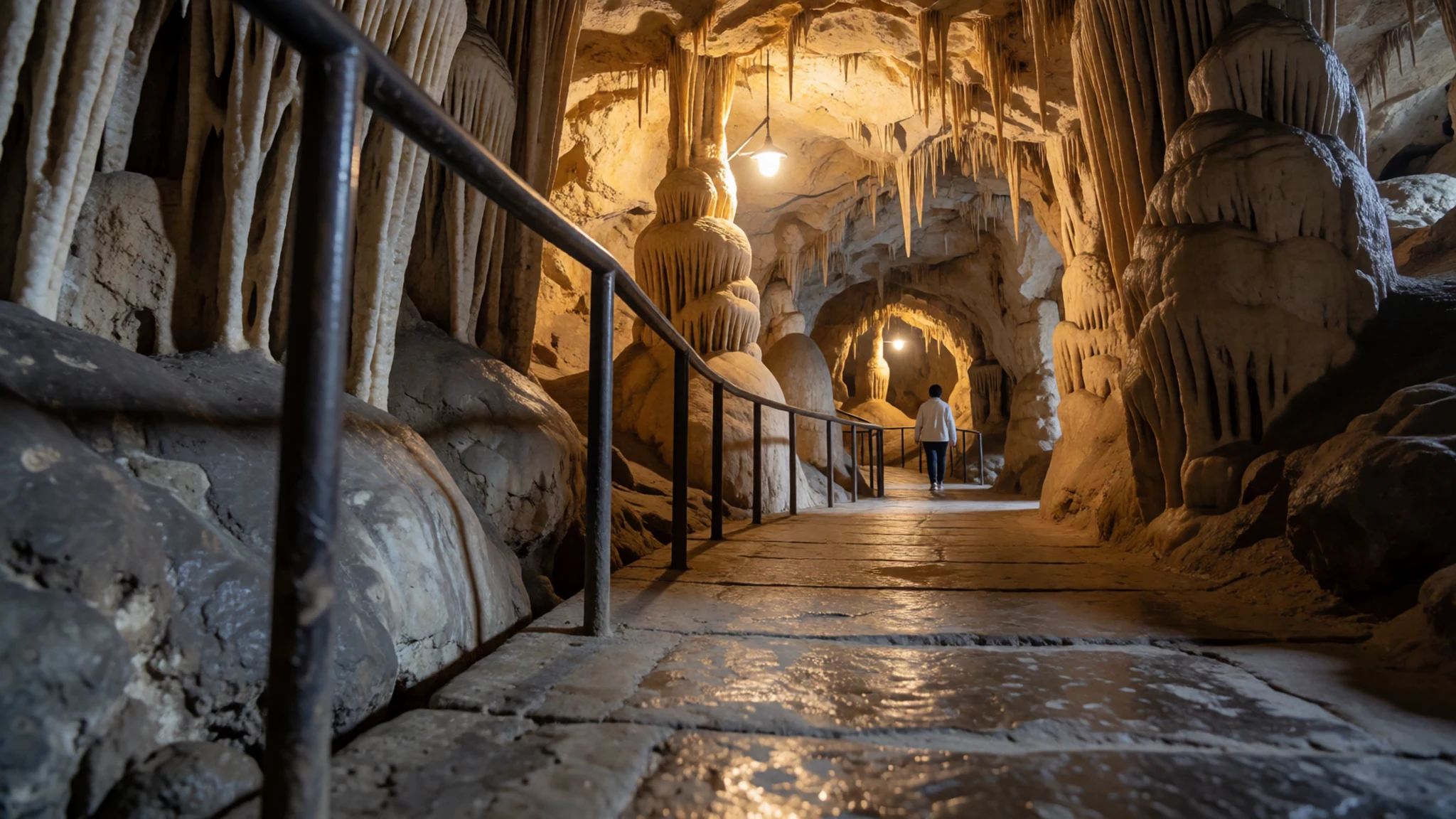
- Suanbo hot springs — Suanbo, Chungju
Suanbo is a spa village known for its hot springs, which many Koreans consider restorative. After a day on the trails, a soak is the traditional reward. Bathhouses range from large public baths to small guesthouse tubs. Check the official local tourism site for current opening arrangements before planning around a specific bath.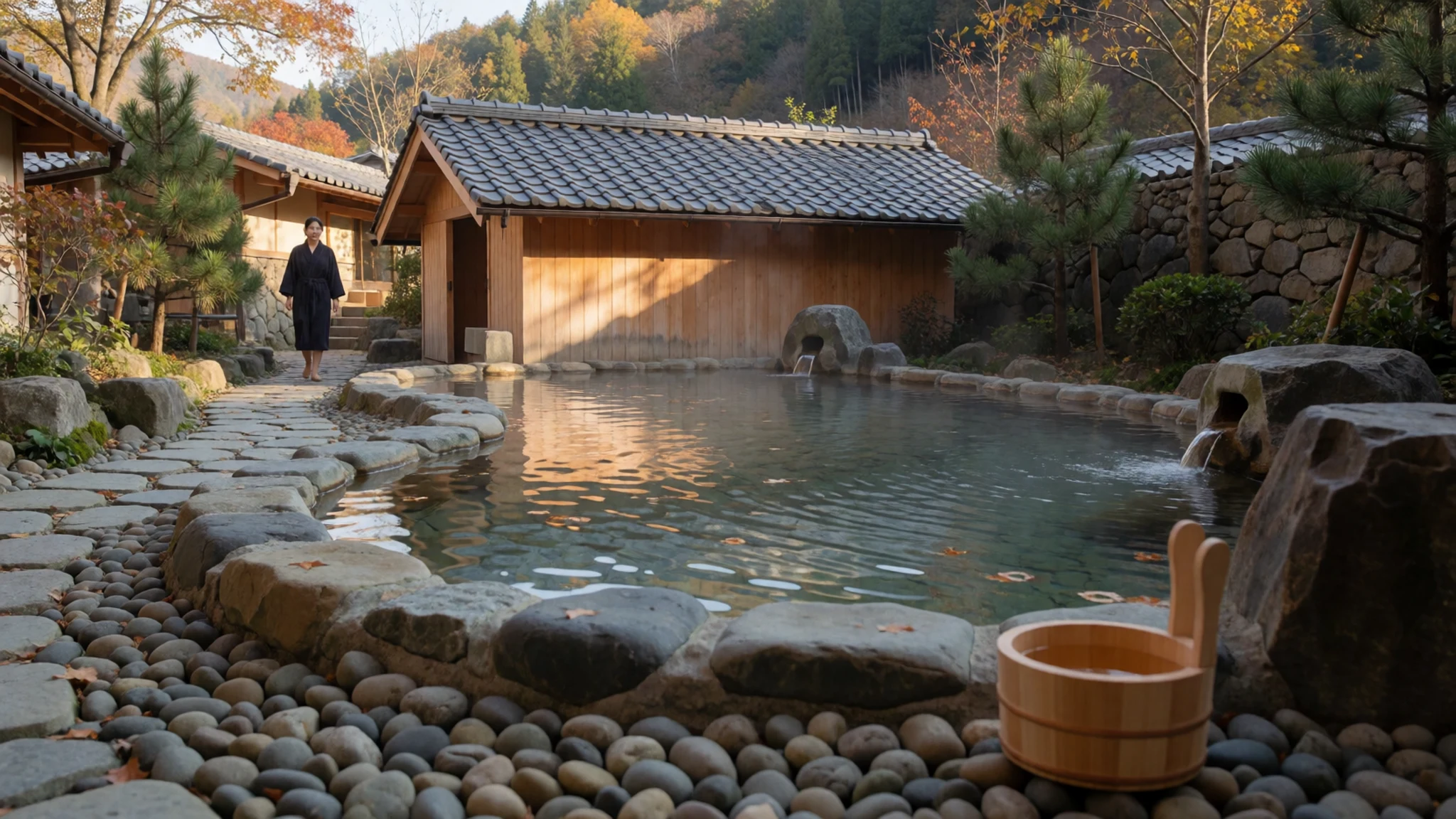
Culture
Woraksan National Park sits in a region that Koreans associate with scholars, gentility and a slower pace. The Chungcheong provinces were home to a yangban tradition, and locals still carry a reputation for politeness and understatement. Hiking is a national pastime in South Korea, and Woraksan draws groups of friends, families and colleagues in matching jackets, who greet strangers on the trail with a quick nod or a cheerful hello. Trailside rest areas and small eateries serve simple meals, and sharing food with people nearby is common. The mountain is also tied to Buddhism, as so many Korean peaks are, and temple sites and carved stone figures can be found in the wider area. Mountains here are treated with a mix of respect and recreation: people climb to see the view, but also to feel renewed. Autumn is the busiest social season, when the slopes fill with visitors admiring the leaves, and the town restaurants fill with hikers eating after a day on the ridges. In winter the park goes quiet, and local life turns toward hot springs and warm stews. Spring brings wild flowers and thinner crowds, and many walkers say the air is fresher then. Take your litter back down with you and keep your voice low at any temple or shrine, as quiet is the rule on Korean mountain paths.
What to wear
At Woraksan National Park, traditional dress is the hanbok, a two-part garment with a short jacket and a full skirt for women, and a jacket with loose trousers for men. Summer versions use light ramie or hemp, while silk is kept for weddings and formal occasions and padded cotton for winter. Today hanbok is worn mainly at festivals, family ceremonies and national holidays, and rarely on the trail. Everyday clothing in the park is outdoor gear: brightly coloured technical jackets, quick-dry trousers, sun visors, gloves, and trekking poles, since Korean hikers dress seriously for the mountains even on short walks. Town clothing in Danyang or Suanbo is casual, with plain, tidy layers and little display. Visitors should dress for variable weather. Wear sturdy shoes with good grip, because the granite can be slippery and the steps uneven. Pack a rain shell for summer storms and warm layers for autumn mornings and winter, when temperatures drop sharply. A hat and sunscreen help on the exposed ridges. For temples or sacred sites near the park, cover the shoulders and knees, and wear shoes that slip off easily, since footwear is removed before entering halls. Swimwear is only for the public pools and spa baths, where local rules about showering first apply.
What to eat
- Sanchae bibimbap — Restaurants near trailheads, Danyang and Suanbo
Sanchae bibimbap is rice topped with mountain greens, roots, sprouts, mushrooms and spinach, mixed with chilli paste at the table. It suits hikers well, light but filling. Look for it at restaurants near trailheads and in the small towns around the park.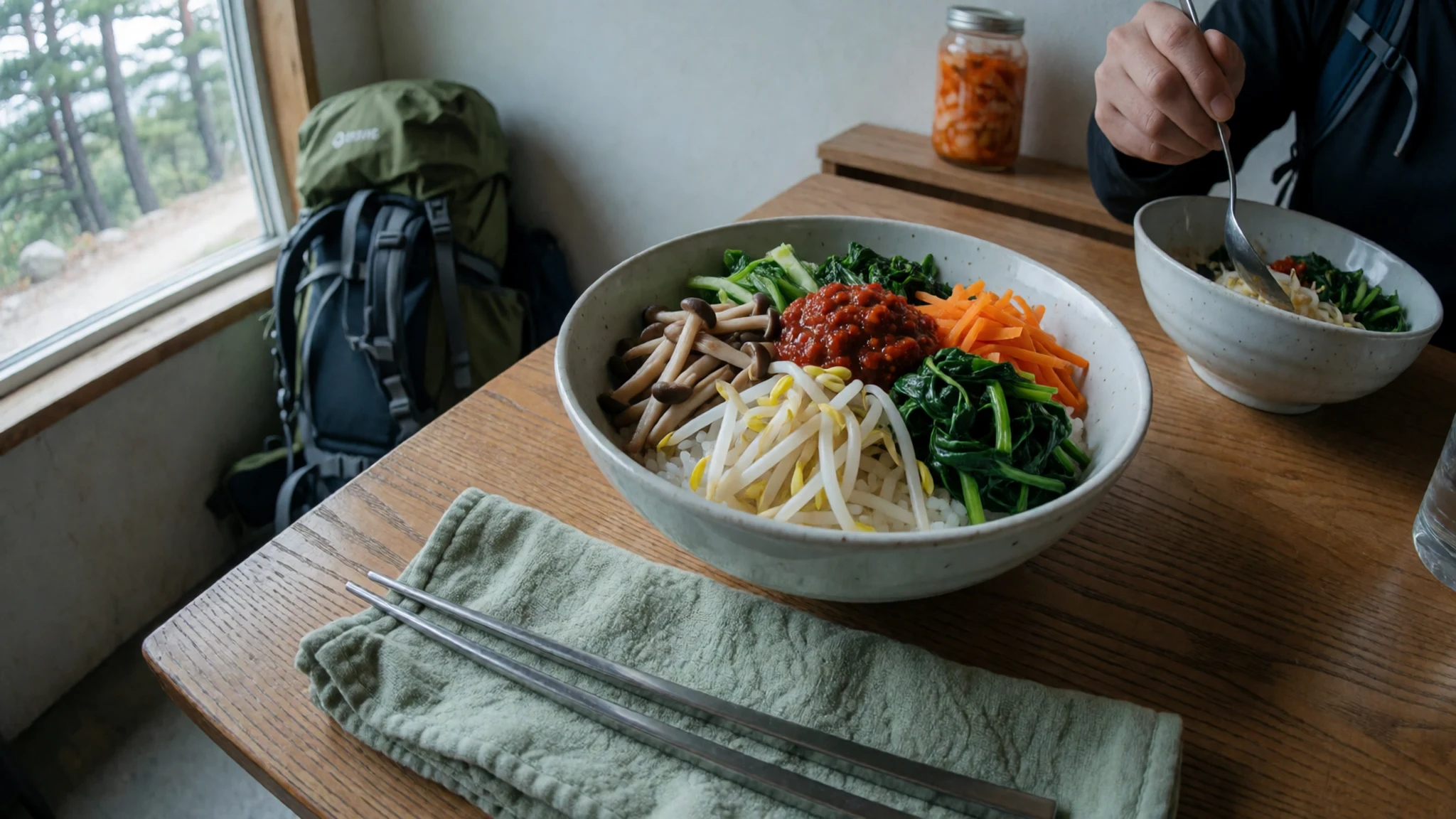
- Hobak beombeok — Home-style eateries in market towns
Hobak beombeok is a thick winter squash porridge, sweet, soft and warming. It is a traditional regional comfort dish rather than a showpiece, and it appears most often in cold months. Ask for it at home-style eateries in the inland towns.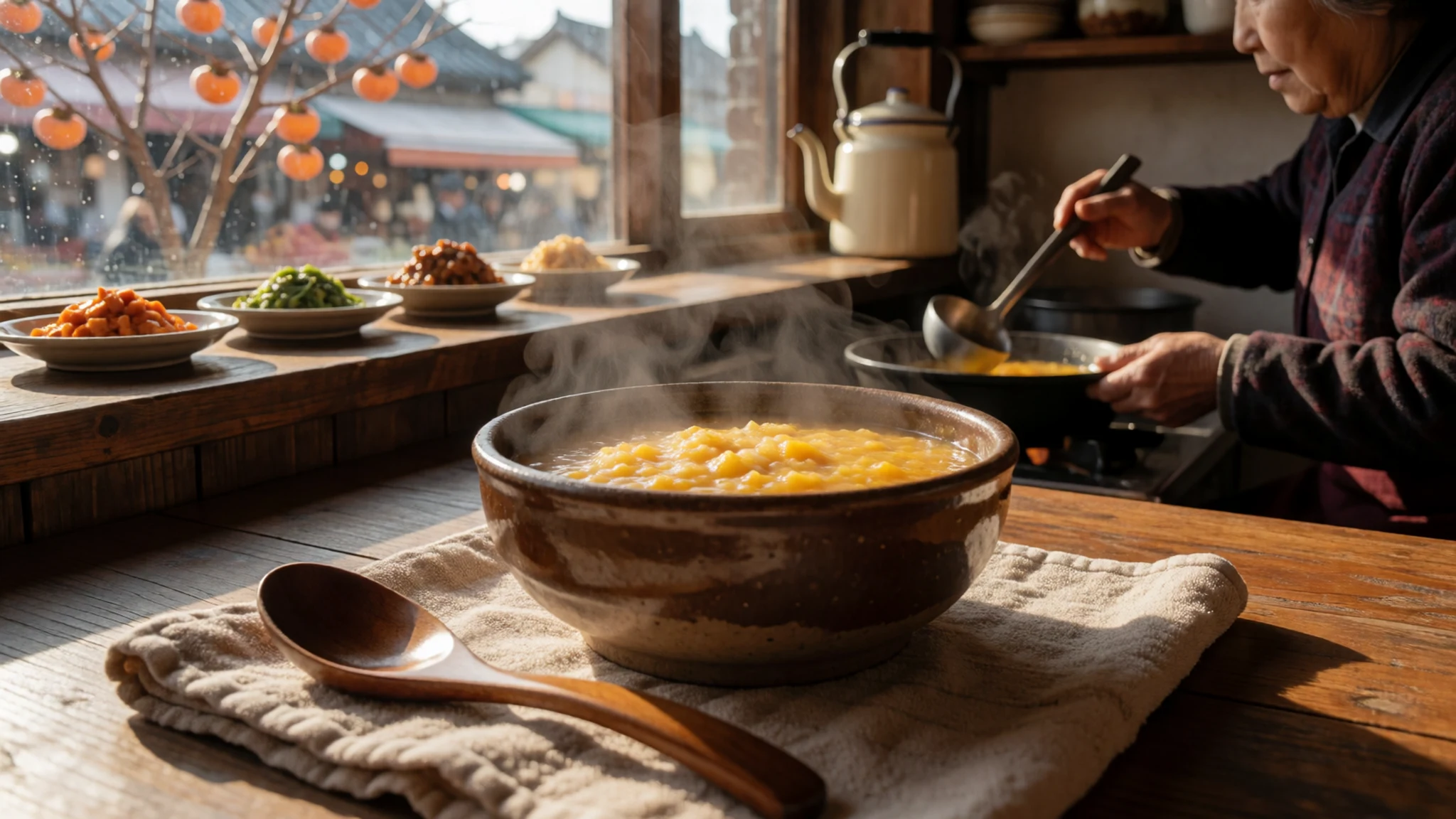
- Cheonggukjjang jjigae — Village restaurants and set-meal eateries
Cheonggukjjang jjigae is a strong, earthy stew made with fermented soybeans, usually served bubbling with tofu and vegetables. The smell is pungent, and the taste is deeper than it first suggests. Try it at a village restaurant with a rice and side-dish set. - Cheongju daechusul — Bars and restaurants in Cheongju
Cheongju daechusul is a cloudy rice-based drink brewed with jujubes, glutinous rice, malt and pine needles, then finished with spring water. It tastes sweet with a bitter edge and is stronger than most makgeolli. It is a regional speciality to taste, not rush. - Okcheon turmeric makgeolli — Eateries in Okcheon and nearby towns
Okcheon makgeolli is a yellow-bottled variety made with turmeric, which gives the drink its colour. Makgeolli is a milky rice drink, usually served chilled in bowls with pancakes or stews. It makes a friendly end to a hiking day in the region.
Plan it
Best time. April–May for fresh greens and mild days, and October for leaf colour and clear air. Summer is hot, humid and wet, while winters are cold, with icy trails.
How long. 2–3
Getting there. Fly to Seoul or Cheongju International Airport. From Seoul, the Jungang rail line from Cheongnyangni station serves Jecheon and Danyang, and express buses reach most towns in the province. The last leg to the trailheads is usually a local bus or taxi from Danyang, Jecheon or Suanbo.
Budget. mid
Tips
- Go on weekdays in October, as autumn weekends fill the trails
- Start walking early, because the climbs are steep and daylight shortens in autumn
- Carry water and snacks, since there is little on the upper trails
- Check the official park site for trail closures before setting out
- Keep some cash for small village eateries and buses
Etiquette
- Take all litter back down the mountain
- Greet other walkers with a nod or a quiet hello
- Remove shoes before entering temple halls or guesthouse rooms
Nearby
Sources
- Wikidata Q8034123 (CC0)
- Wikipedia: Woraksan National Park (rev 1362949417) (CC BY-SA 4.0)
- Wikivoyage: North Chungcheong (rev 5128216) (CC BY-SA 4.0)
- Photo: Mt. Worak, Rhythm (CC BY 3.0)
- Photo: panoramio gary4now (6) (CC BY 3.0)
- Photo: Clouds and mountains as seen from Woraksan (10), Ashy Minivet (CC0 1.0)
- Photo: Clouds and mountains as seen from Woraksan (2), Ashy Minivet (CC0 1.0)
- Photo: Clouds and mountains as seen from Woraksan (3), Ashy Minivet (CC0 1.0)
- Photo: Clouds and mountains as seen from Woraksan (4), Ashy Minivet (CC0 1.0)
- Photo: Clouds and mountains as seen from Woraksan (5), Ashy Minivet (CC0 1.0)
- Photo: Clouds and mountains as seen from Woraksan (6), Ashy Minivet (CC0 1.0)


