Virgin Gorda
Virgin Gorda, United Kingdom
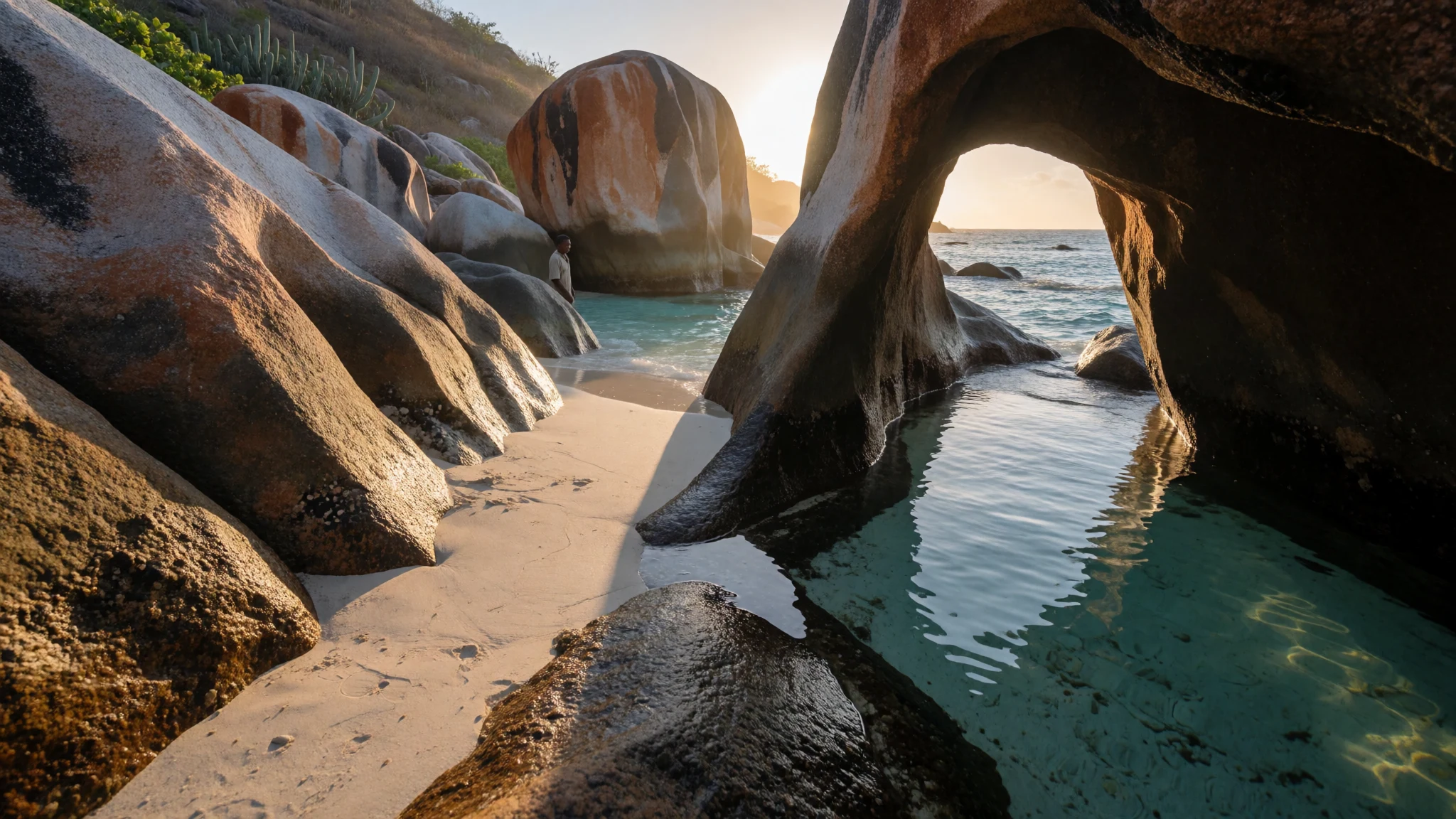
Virgin Gorda is a British Virgin Island of granite coves, yacht harbours and the boulder shore known as The Baths.
The place
Virgin Gorda sits among the British Virgin Islands, a small green ridge in the Caribbean Sea east of Tortola and within sight of the open Atlantic on one flank and quieter sounds on the other. The island's spine rises toward the middle and falls away into coves: a dry, scrubby hillside of cactus and sea grape above water that shifts from pale turquoise over sand to deep blue once the reef drops off. Spanish Town, also called the Valley, is the main settlement, a low cluster of houses, a harbour, shops and the ferry dock rather than a large town. North of it the coast breaks into bays; at the far northern end, North Sound is a broad sheltered water almost enclosed by islands and reefs, busy with yachts and a handful of waterside settlements reached as easily by boat as by road. Southward the coast turns to granite. Enormous boulders, weathered smooth and piled into caves, channels and overhangs, meet a short beach at The Baths and continue toward Devil's Bay and Spring Bay. Inland, a national-park trail climbs Gorda Peak, where the vegetation is thicker and the view takes in neighbouring islands when the haze lifts. Roads are narrow, winding and often steep, and goats wander the verges. The light is hard by late morning, the trade wind is the island's air-conditioning, and shade is a resource people plan around. Virgin Gorda is not a city-island of nightlife strips; its life gathers at harbours, beaches and a few crossroads, and much of the shoreline is park, private resort or empty rock.
Its story
Sailors under a Spanish flag named Virgin Gorda by comparing its long, uneven outline to a woman of generous figure, and the island still carries that name. Long before that naming, Indigenous people of the eastern Caribbean used these coves for fishing and passage; a visitor sees almost no monument to them, only the same granite, reef and seasonal water they knew. European rivalry eventually left the island inside the British Virgin Islands, and Virgin Gorda remains part of that British overseas territory. Plantation agriculture — cotton, sugar cane and provision grounds — occupied the valleys and rested on the labour of enslaved Africans, whose descendants form the core of island families today. After emancipation the economy shrank to smallholdings, fishing and work in boats. The landscape kept only scattered traces: dry-stone remnants, a handful of older houses in the Valley, and the copper-mine ruins on a southeastern headland, where chimneys and cisterns stand in the wind above the spray. Those workings were opened, exhausted and left; they are now a park rather than an industry. Within living memory, sailing changed the island again. Bareboat charters and a small number of resorts turned harbours into the main source of outside money. North Sound became a yacht basin almost enclosed by cays. The Baths, a local shore of piled granite, became the place day-boats aimed for. Virgin Gorda thus keeps a double calendar: school, church and festival for people who stay, and a daily tide of ferry passengers, cruise tenders and crews who come for the water and are gone by evening.
What to see
- The Baths — southwest coast
The Baths is Virgin Gorda's southwest granite shore, where huge boulders form tunnels, pools and a short beach. Visitors wade and squeeze between the rocks as the tide allows, using ladders in the tighter gaps. Midday brings day-boats; the stone holds heat and shade is scarce. Wet-grip shoes matter on the slick rock. The visit is about the maze, not a long open strand.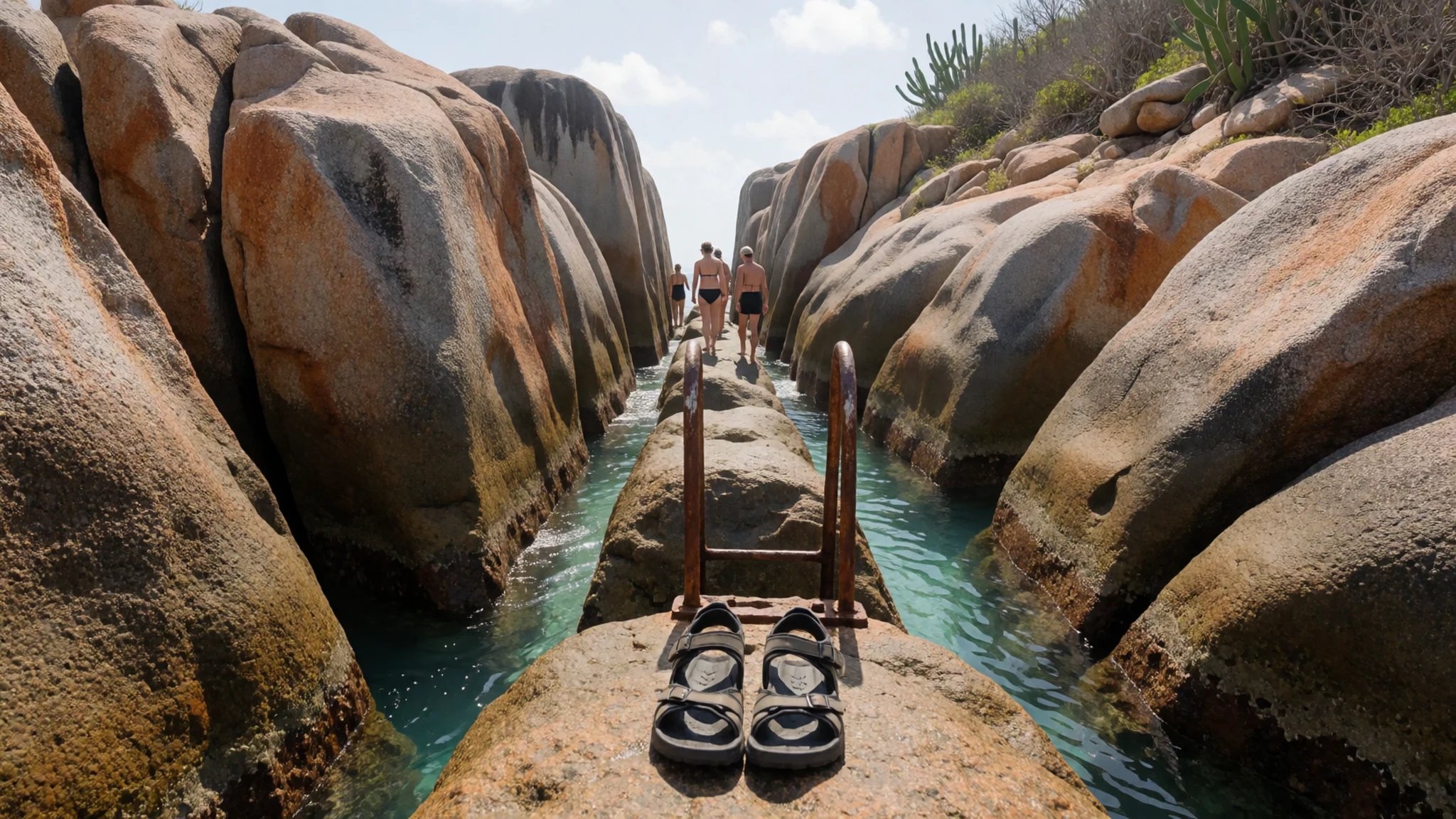
- Devil's Bay — southwest coast, beyond The Baths
Devil's Bay sits just beyond The Baths on Virgin Gorda, linked by a path that continues through the boulders. The beach is a small sand pocket on open water, quieter after the scramble. The walk uses hands as well as feet, with a few fixed aids and pools that change with the tide. The trail's far end is the reward, and the return is the same path.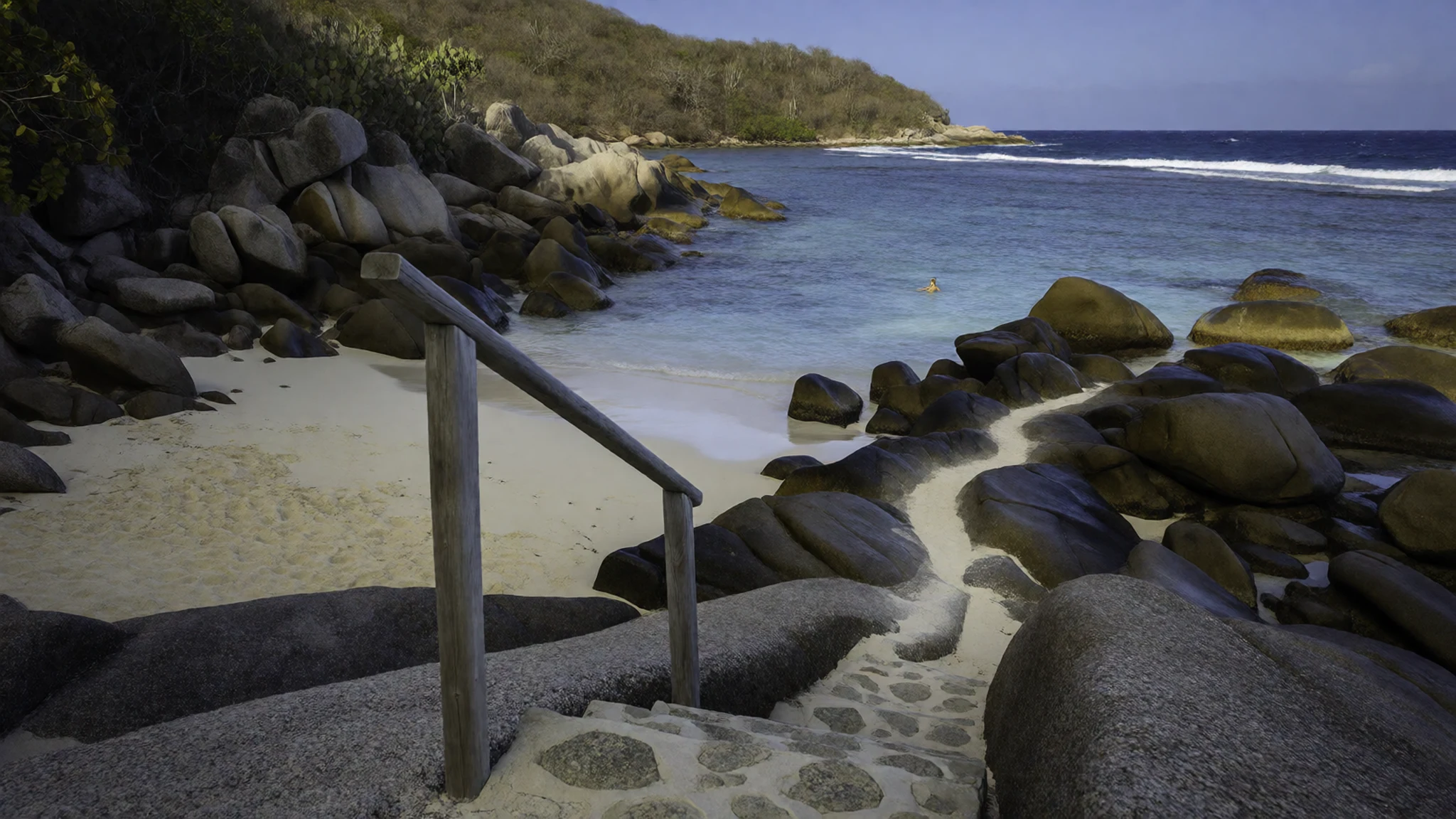
- North Sound — north end
North Sound is Virgin Gorda's broad northern bay, nearly cupped by small cays and private-island resorts. It works as a yacht harbour: moorings, launches and waterside bars, with the public road stopping at the edge of the sound. Boats take the place of streets from there. Swimming is from beaches and jetties, and the water stays sheltered when the ocean side is rough.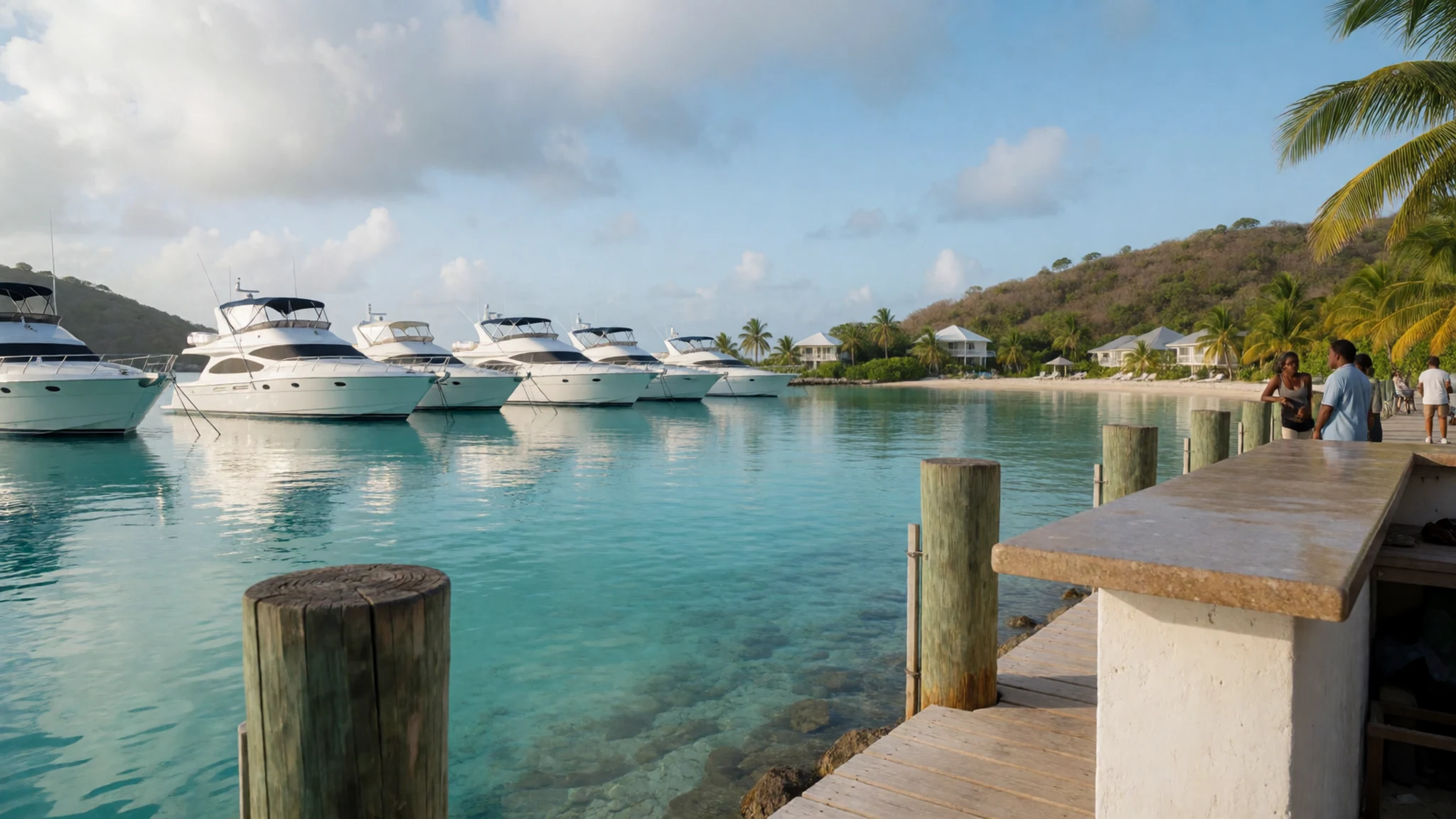
- Copper Mine Point — southeastern headland
Copper Mine Point is Virgin Gorda's southeastern headland, a windy slope above the cliffs with the remains of an old copper works. Chimneys, a cistern and stone foundations stand in the open, with little shade and no settlement around them. The ruins mark a place where ore was worked and then abandoned to the salt wind. A short walk gives a long view along the Atlantic coast.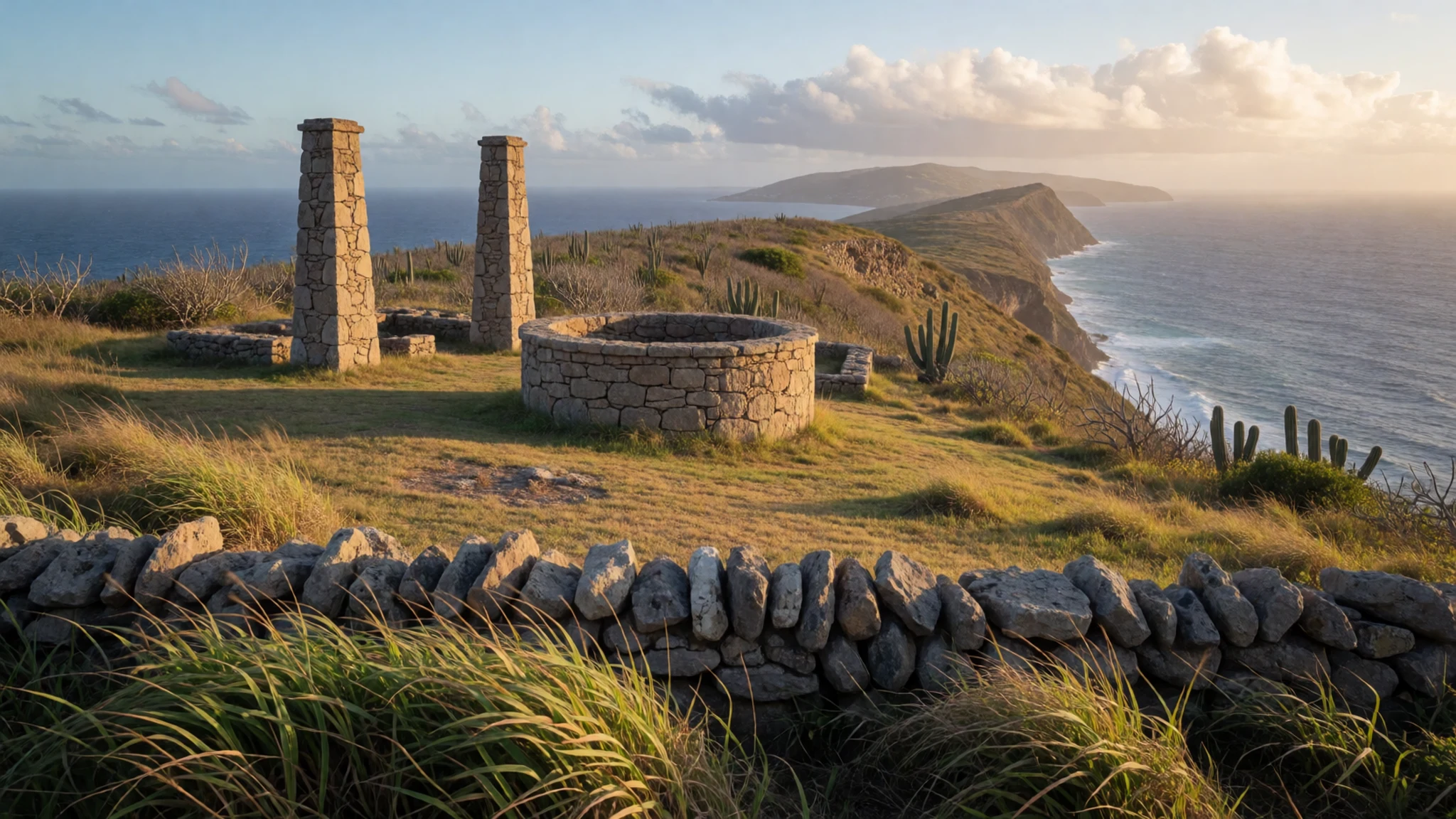
- Gorda Peak — island centre
Gorda Peak National Park holds the high ground near the middle of Virgin Gorda. A trail climbs through dry scrub to a lookout over the ridge, both sounds and, on a clear day, neighbouring islands. The path is short but steep and rooty, and the sun is fierce wherever the canopy breaks. Birds and cactus replace granite and surf, and any water has to come up in a bag.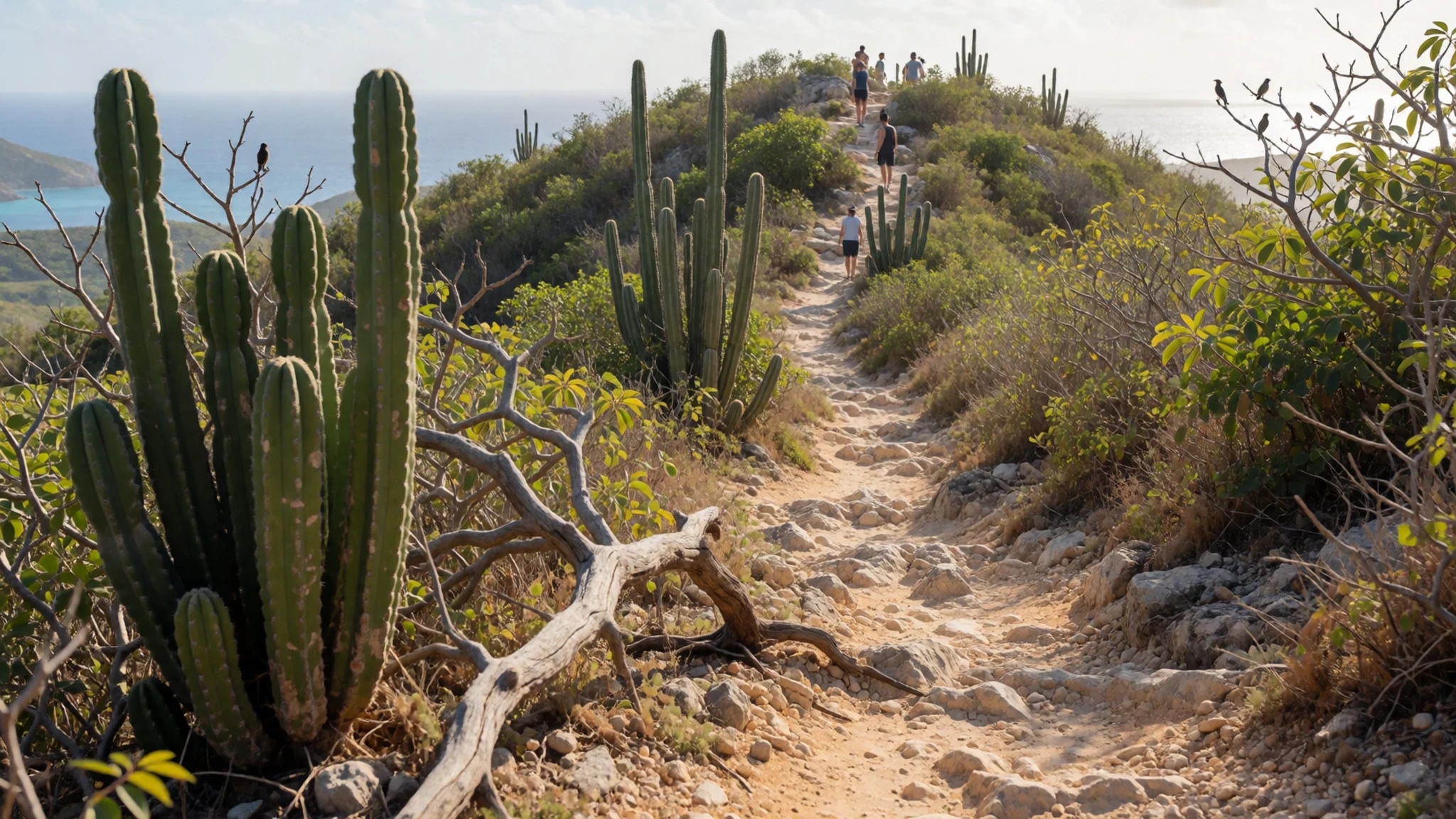
Culture
Virgin Gorda's culture is British Virgin Islands culture at a village scale: English in the school and the courthouse sense, and a West Indian English in the street, the churchyard and the ferry queue. Most families trace their history through emancipation, smallholdings and the sea, and Sundays still organise the week for many people, with church clothes and a quieter morning before the beach traffic builds. Music at festivals leans on fungi, the territory's scratch-band tradition of flute, ukulele and washboard, alongside reggae, calypso and the gospel that belongs to church rather than to the stage. The emancipation holidays pull the island's own calendar in front of the charter calendar: parades, food and homecomings. Sailing is not only a visitor trade; local boats, fishing and knowing the cuts between reefs are part of ordinary competence. Rum is social rather than a mere souvenir, and a beach bar can be both a workplace and the evening's meeting place. Visitors who treat the island as scenery miss how Spanish Town carries on after the last ferry. Ask before photographing people at church, at a festival or in a family gathering, and keep to the marked routes through The Baths so the boulders are not trampled into unofficial paths.
What to wear
Virgin Gorda dresses for heat, church and the boat, not for a city season. Festival and emancipation days bring costumes in the wider Caribbean carnival manner — bright cotton, sequins, feathers and matching family outfits — while Sunday church still calls for smarter clothes: dresses, pressed shirts, hats, shoes rather than beach sandals. Bright printed cottons show up for those occasions, though there is no single folk costume unique to the island. Ordinary days look different. People wear T-shirts, shorts, linen and cotton dresses, swimwear under a cover-up, and sandals or boat shoes; rash guards and hats are as common as anything tailored, because the sun decides the outfit. Resort staff may wear a crisp collared shirt; fishers and crew wear what survives salt. A visitor should copy the practical clothes, not the festival costume, unless invited to a fête. Swimwear belongs on the beach and the boat; a shirt or wrap is the norm in shops, on ferries and in eateries in Spanish Town. The Baths need shoes with a grip that can survive seawater, because the granite is polished and hot. A light layer is enough for a breezy North Sound evening; leave the heels for a place with pavements, since this ground is sand, deck and rock.
What to eat
- Fungi and fish — local eateries in Spanish Town and festival stalls
Fungi and fish is Virgin Gorda's everyday plate: cornmeal cooked with okra into a soft mound, served with boiled or grilled fish and a peppery sauce. It shows up in local eateries around Spanish Town and at festival stalls more often than on resort menus.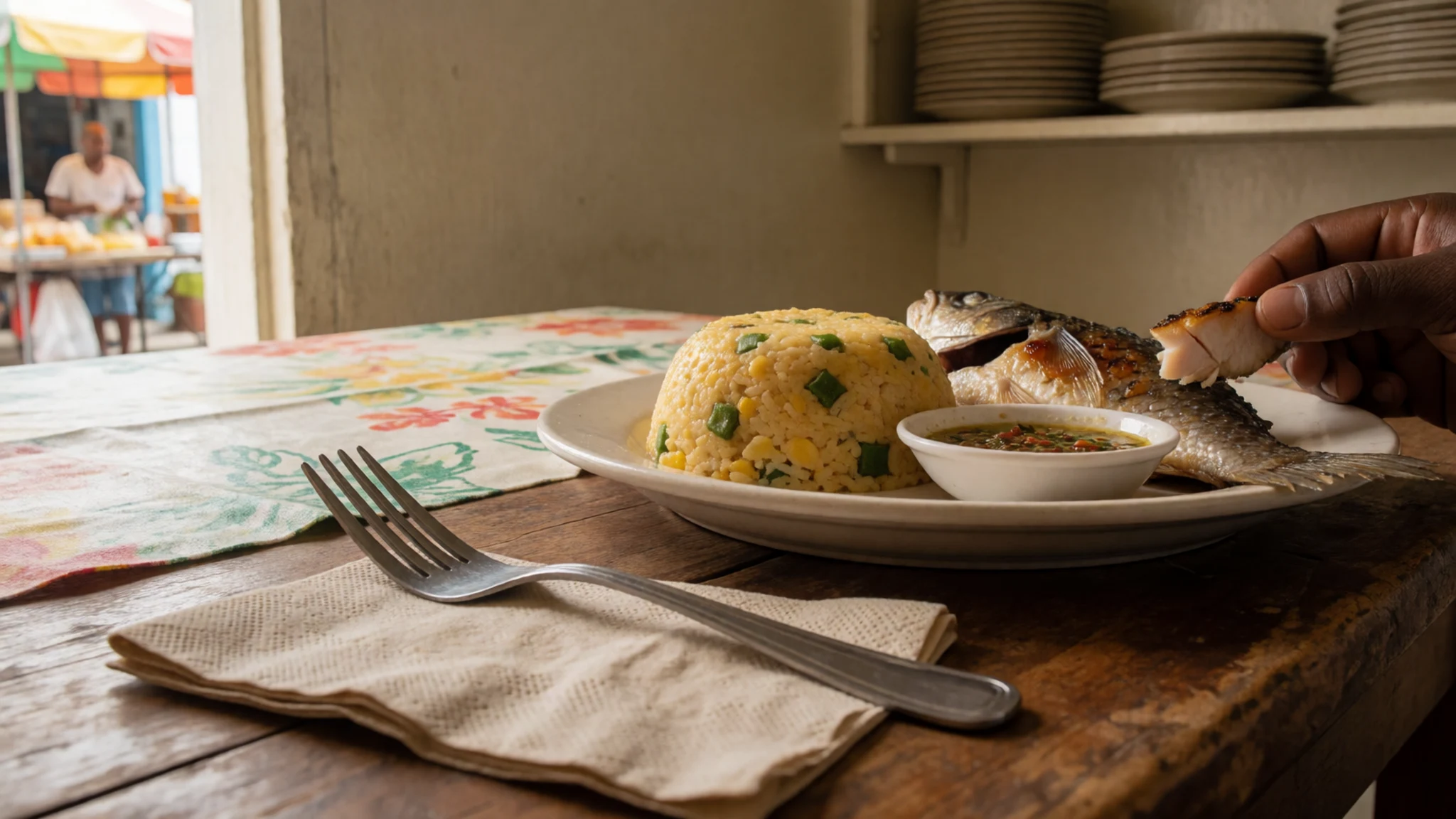
- Conch fritters — beach bars near The Baths and casual eateries in the Valley
Conch fritters are queen conch chopped into a peppery batter, fried crisp at the edges and served with hot sauce or lime. On Virgin Gorda they turn up at beach bars near The Baths and in casual eateries in the Valley, often as a shared plate straight after the water.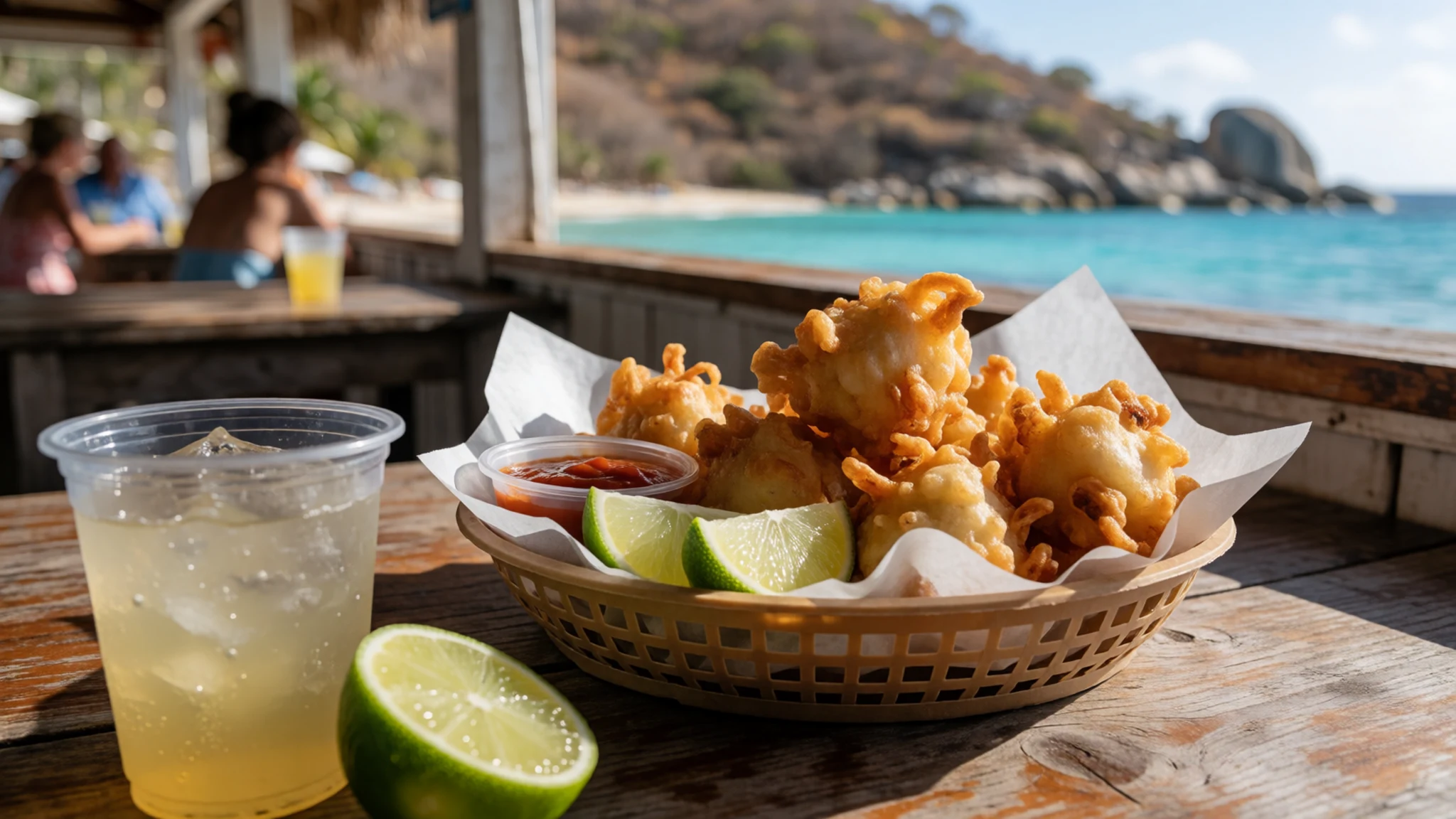
- Roti — takeaway counters in Spanish Town
Roti on Virgin Gorda is the familiar West Indian wrap: a soft flatbread folded around curried chicken, goat, vegetables or potato, with the gravy soaked into the bread. It is lunch from casual eateries and takeaway counters in Spanish Town, eaten one-handed between a ferry and a beach. - Grilled lobster — harbourside grills around North Sound and supper places in the Valley
Grilled lobster is the celebratory end of Virgin Gorda cooking: a split Caribbean lobster finished on a grill with butter, garlic or a Creole sauce. Look for it at harbourside grills around North Sound and at supper places in the Valley when boats have had a good week. - Johnnycake and saltfish — bakeries and simple eateries in Spanish Town
Johnnycake and saltfish pair a dense fried or baked bread with flaked salted cod, often stewed with onion, pepper and tomato. On Virgin Gorda it is breakfast or a filling snack from bakeries and simple eateries in Spanish Town, the sort of plate that appears early and disappears.
Plan it
Best time. The drier months, from December through April, bring steadier trade winds and more settled seas around Virgin Gorda. May slides toward humidity. From June into November the weather is hotter and wetter and falls inside the hurricane season, when boats and ferries watch the forecasts.
How long. 3–4
Getting there. Most people reach Virgin Gorda through Terrance B. Lettsome International Airport on Tortola, then a ferry to Spanish Town or North Sound. A short airstrip on the island takes small planes. Ferries also link St Thomas. The last leg is by boat or light aircraft; check the day's sailings with the operator.
Budget. high
Tips
- Start The Baths early; day-boats and tour groups fill the boulders from mid-morning.
- Carry drinking water and sun cover; shade is scarce on the granite and on the peak trail.
- Keep some cash for small eateries and stalls; cards are normal in resorts but not universal.
- Roads are steep and narrow, and driving is on the left; a rented car is useful, a large vehicle is not.
Etiquette
- Do not take coral, sand or shells from The Baths, and do not climb vegetation to bypass a queue in the grottoes.
- Ask before photographing residents, and put the camera away inside churches.
- Dress off the beach: a cover-up in shops and eateries is the local expectation.
- Give way on narrow roads and do not block a ferry lane or a villa gate for a photograph.
Nearby
Sources
- Wikidata Q627207 (CC0)
- Wikipedia: Virgin Gorda (CC BY-SA 4.0)
- Wikivoyage: Virgin Gorda (CC BY-SA 4.0)