Villa Serrana
Villa Serrana, Uruguay
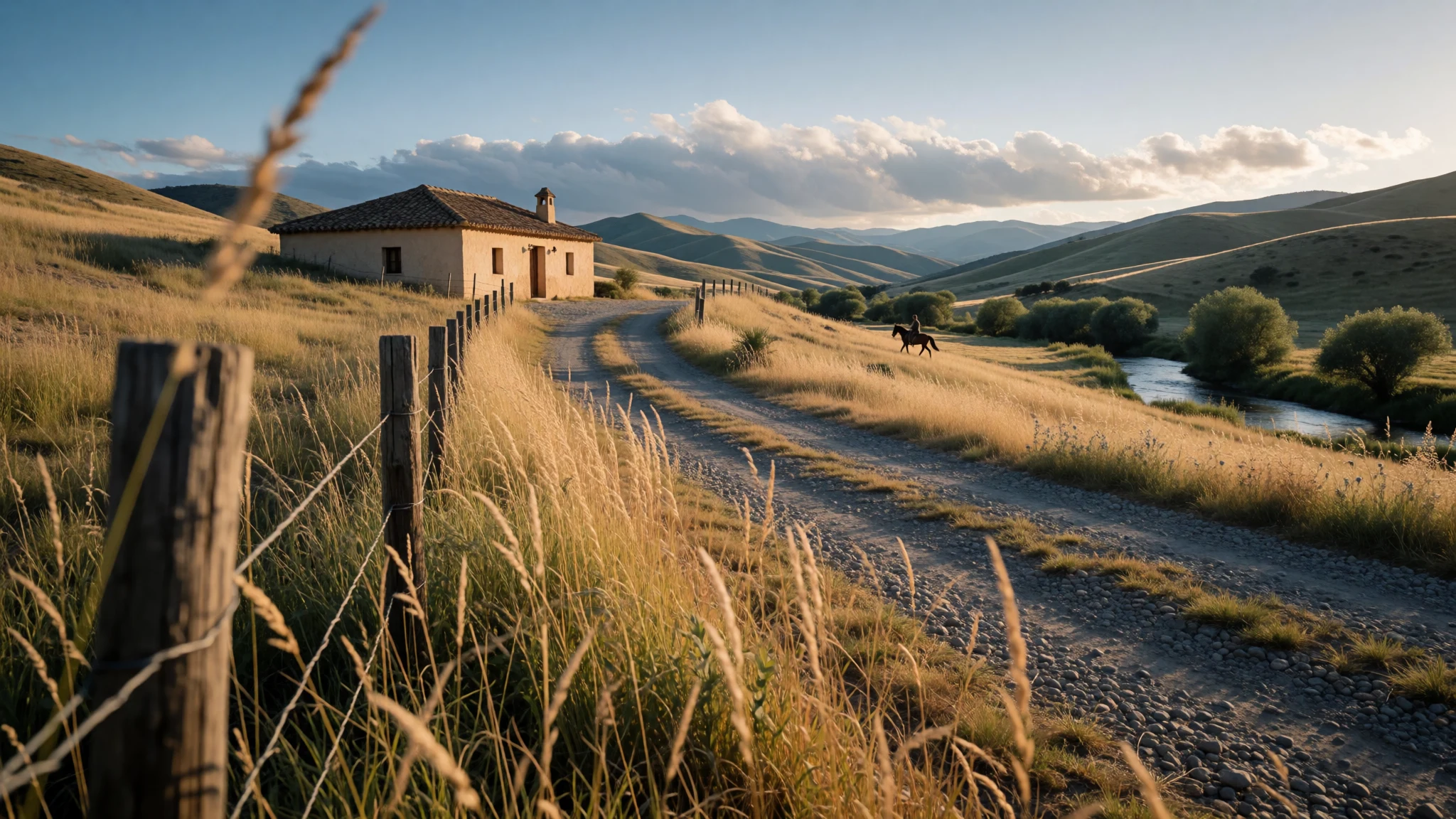
Villa Serrana is a quiet hill settlement in Uruguay's Lavalleja department, planned by Vilamajó, where winding roads, wide skies and dark nights reward slow stays.
The place
Villa Serrana is a planned hill settlement in Lavalleja Department, in south-eastern Uruguay, about 25 km north-east of the departmental capital, Minas. It stands at around 300 m above sea level, which in a country this low-lying is enough to feel properly hilly: ridges fold into one another, small streams cut shallow valleys, and the horizon opens out in several directions at once. Uruguay's highest point, Cerro Catedral, reaches only 514 m, so these sierras are modest by world standards, yet they are the nearest the country comes to mountain scenery.
The village is not a town in the usual sense. Few people live here all year, and many of the houses are weekend and holiday homes, so a weekday outside the holiday season can be very still. There is no grand square or cathedral at the centre. Instead the settlement is strung along winding roads that follow the contours, with houses and paths tucked among rock, scrub and trees.
Uruguay lies entirely within the temperate zone, so the seasons are distinct without being extreme: summers are warm, winters are cool and can be damp, and spring and autumn suit walking best. Villa Serrana works as a place for porches, long lunches, short hikes and night skies rather than for ticking off sights. Visitors who want shops, restaurants and nightlife will find more of them in Minas, while those chasing beaches are better placed on the Atlantic coast. Supplies are worth bringing from town, since the village itself is small.
Its story
Villa Serrana dates from 1946, when a leisure settlement was laid out in the Lavalleja hills to plans by the architect Julio Vilamajó. It turned out to be his last significant work. A younger architect, Miguel Ángel Odriozola, collaborated closely on the scheme and is remembered as an important part of it.
The idea behind the settlement was a retreat from the coast and the capital. Uruguay's best-known holiday geography is its Atlantic shoreline, with resorts such as Punta del Este drawing the summer crowds, but the interior offers a different pace. Villa Serrana was conceived as a place of hills, trees and quiet, within reach of Minas and, by road, of Montevideo.
The permanent population has stayed small ever since, and that has shaped the character of the place today. There was never a large resident economy to build a town around, so the village remains a scatter of homes and viewpoints, busiest when families arrive for holidays and calm for much of the rest of the year. The surviving layout, with its roads bending around the slopes rather than cutting straight across them, still reads as the work of someone who wanted the land to stay in charge.
The surrounding countryside belongs to Uruguay's old cattle-farming tradition, where cattle outnumber people and rural habits such as mate and the weekend asado still structure the week. Villa Serrana sits at the edge of that world: an architect's retreat set among working land.
What to see
- Observatorio Eta Carinae — Villa Serrana hills
Villa Serrana's amateur observatory is the village's nod to its dark skies. Local enthusiasts have organised astronomy days here, and the photo record shows a public event held on site. Opening depends on what is scheduled, so ask locally first. On clear, moonless nights the hills, far from big-town lights, reward stargazing even without a telescope.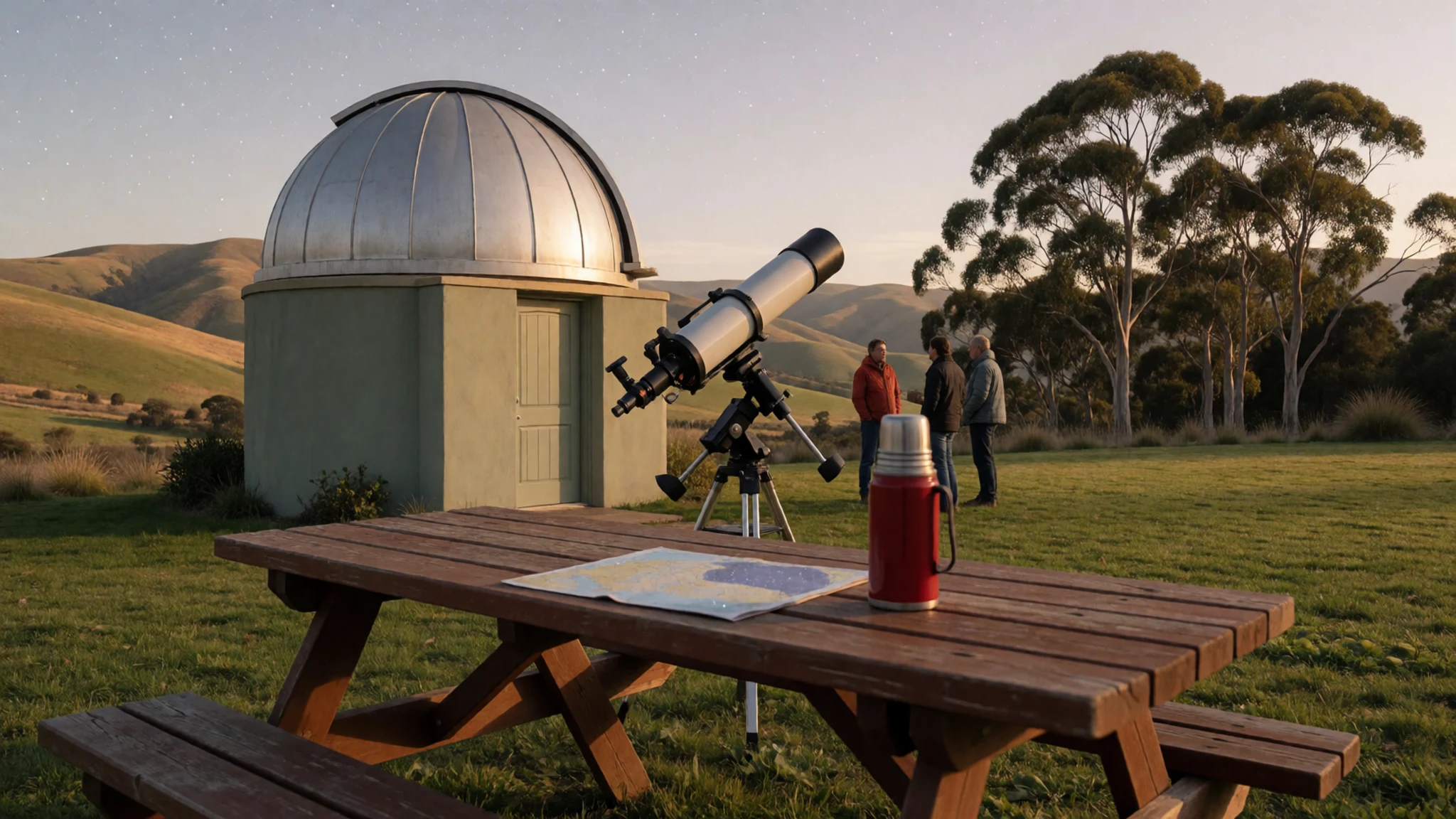
- Ventorrillo de la Buena Vista — Villa Serrana village
Uruguay's heritage records identify the Ventorrillo de la Buena Vista as a monument, and it is one of the village's historic structures. The name, loosely a small inn with a good view, hints at its original spirit. It is worth a stop for the outlook across the hills and for a sense of the early planning.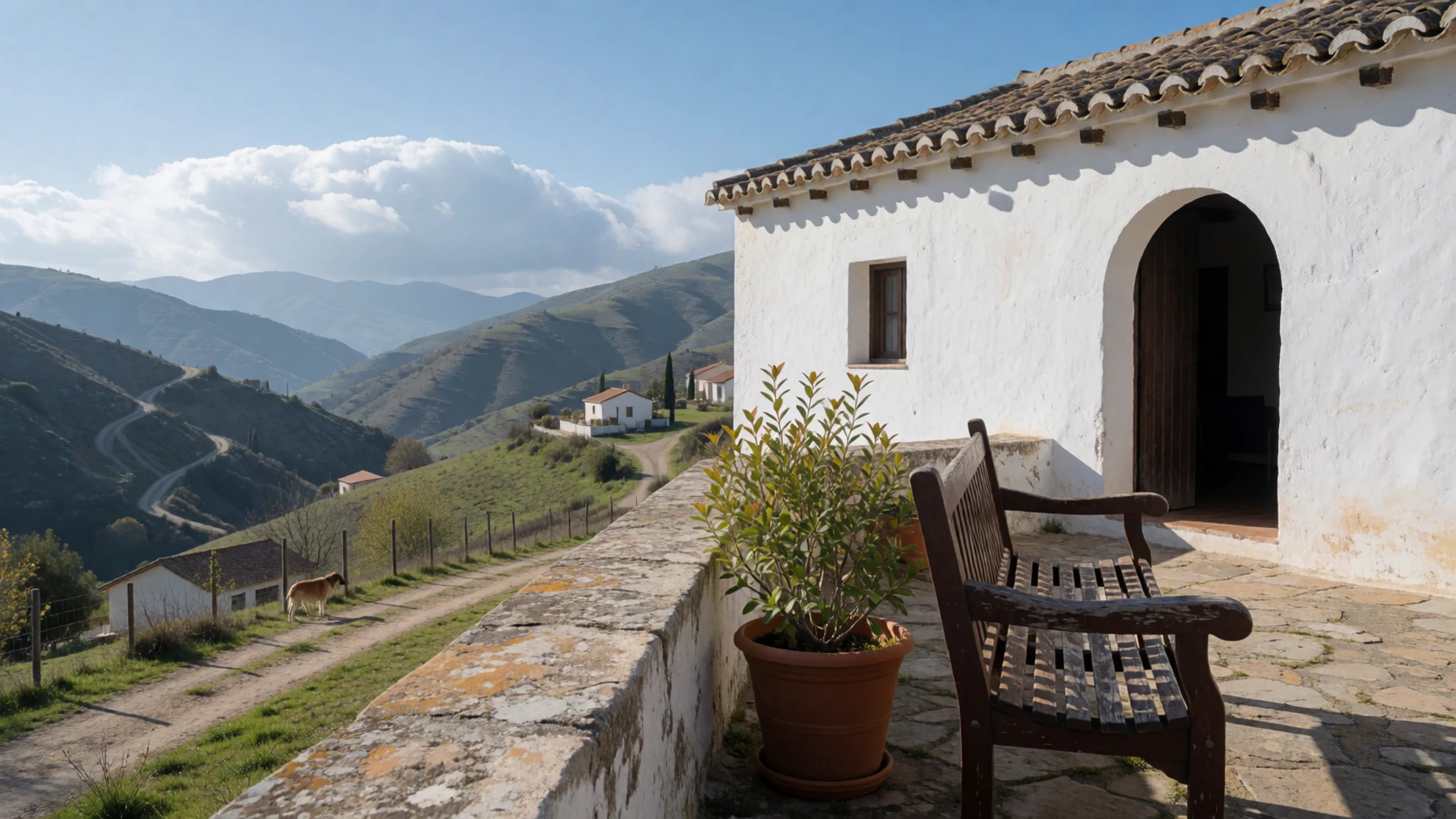
- Sunrise over Marco de los Reyes — Marco de los Reyes area, Villa Serrana
Photographers have shot memorable sunrises in the Marco de los Reyes area of the village. Early mornings bring soft light along the ridges and, in the right conditions, mist lying in the folds of the hills. A short walk or drive before breakfast pays off more than any midday outing, and the quiet is part of the reward.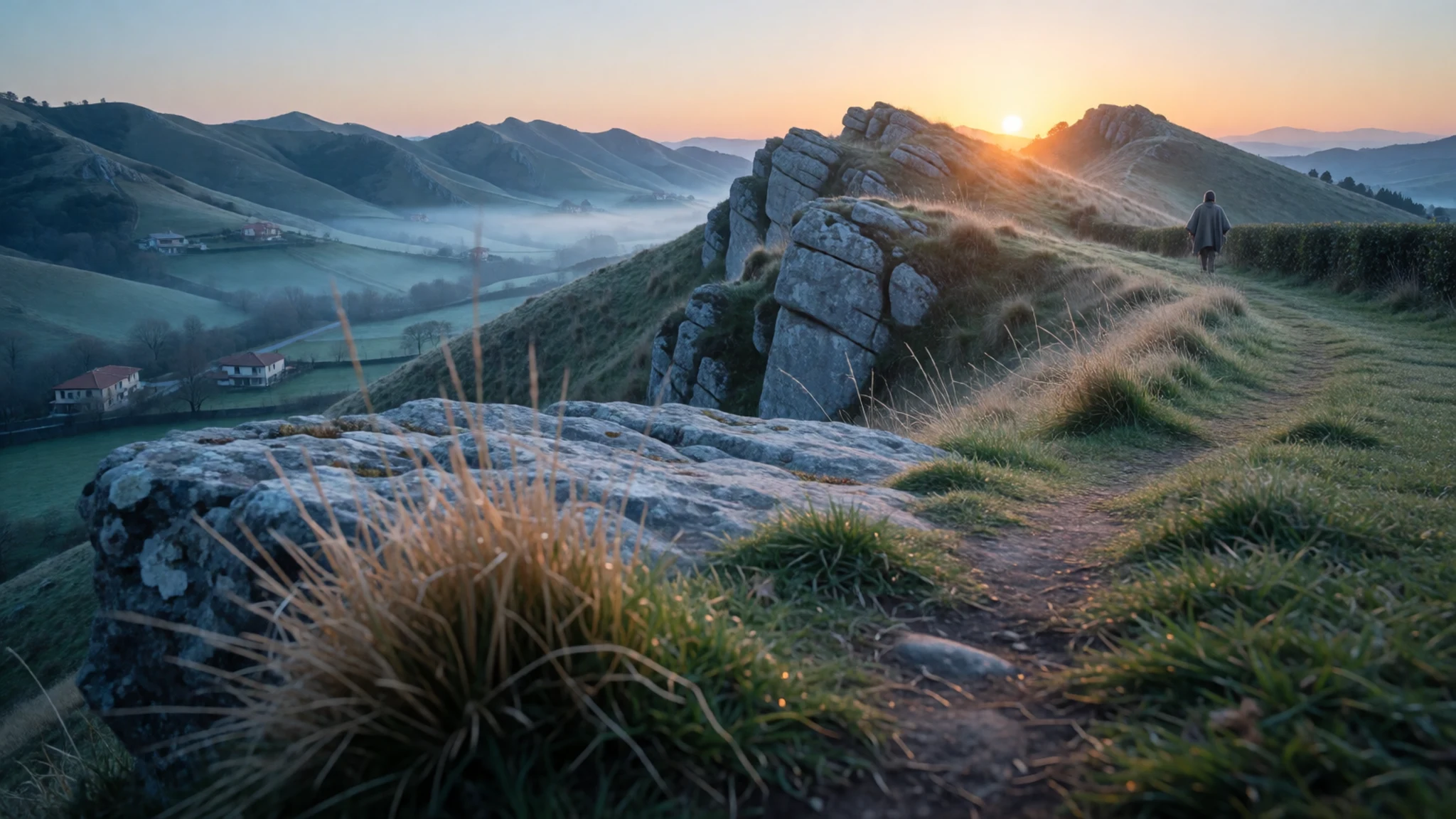
- Baño de la India — Villa Serrana countryside
Baño de la India is a bathing spot in the village area, recorded in photographs under that name. Streams swell after rain and shrink in dry spells, so ask in the village about access, depth and safety before swimming. Water in the cooler months will be cold. A short walk to reach it makes a pleasant half-day.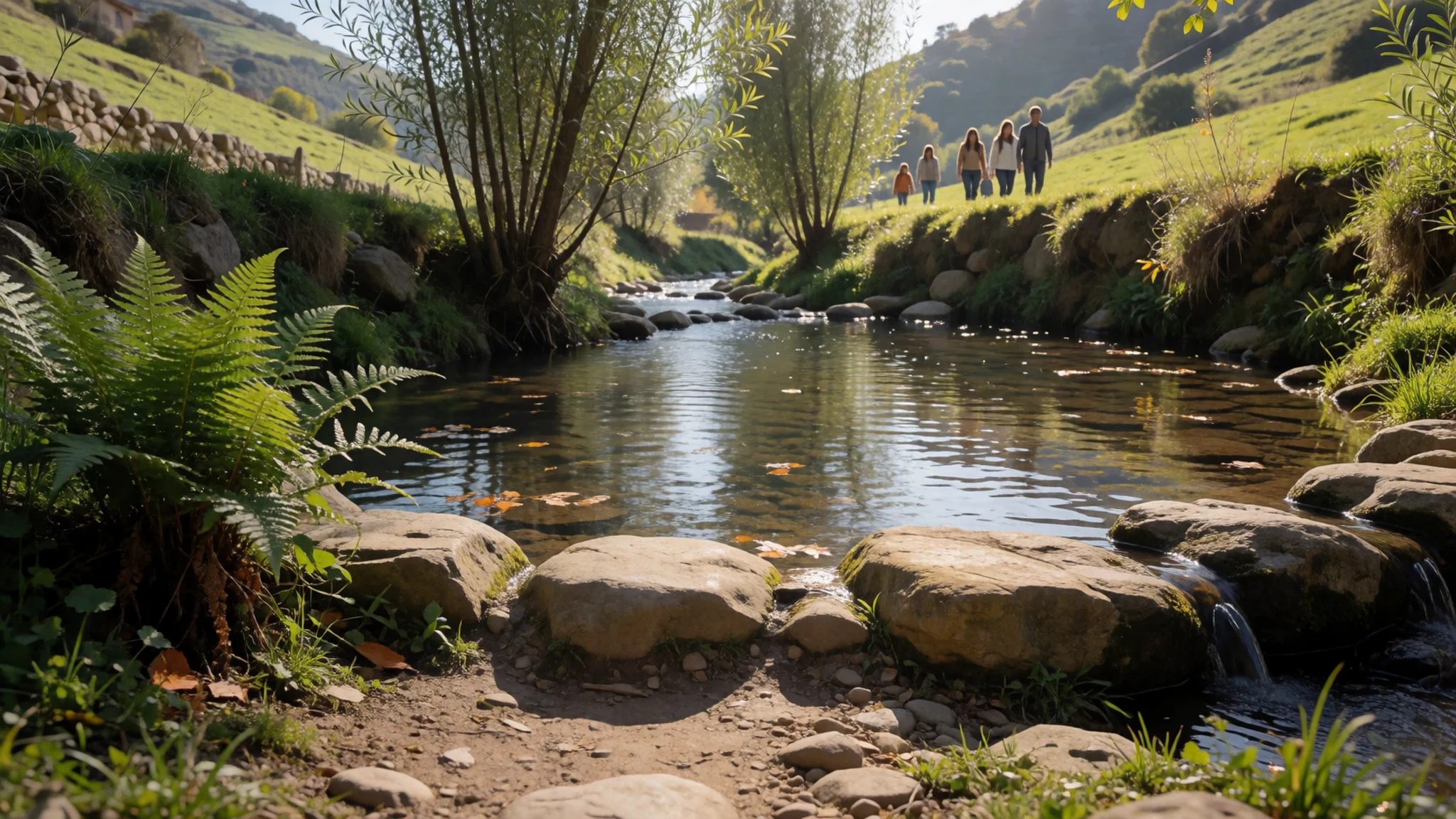
- The winding roads and rainbows — Roads throughout Villa Serrana
The roads of Villa Serrana wind across the slopes, and the changeable temperate weather brings sudden showers followed by rainbows over the valleys. Walk or drive slowly, stop at open bends, and let the sky set the plan. Late afternoon after rain is often the most rewarding time for photographs.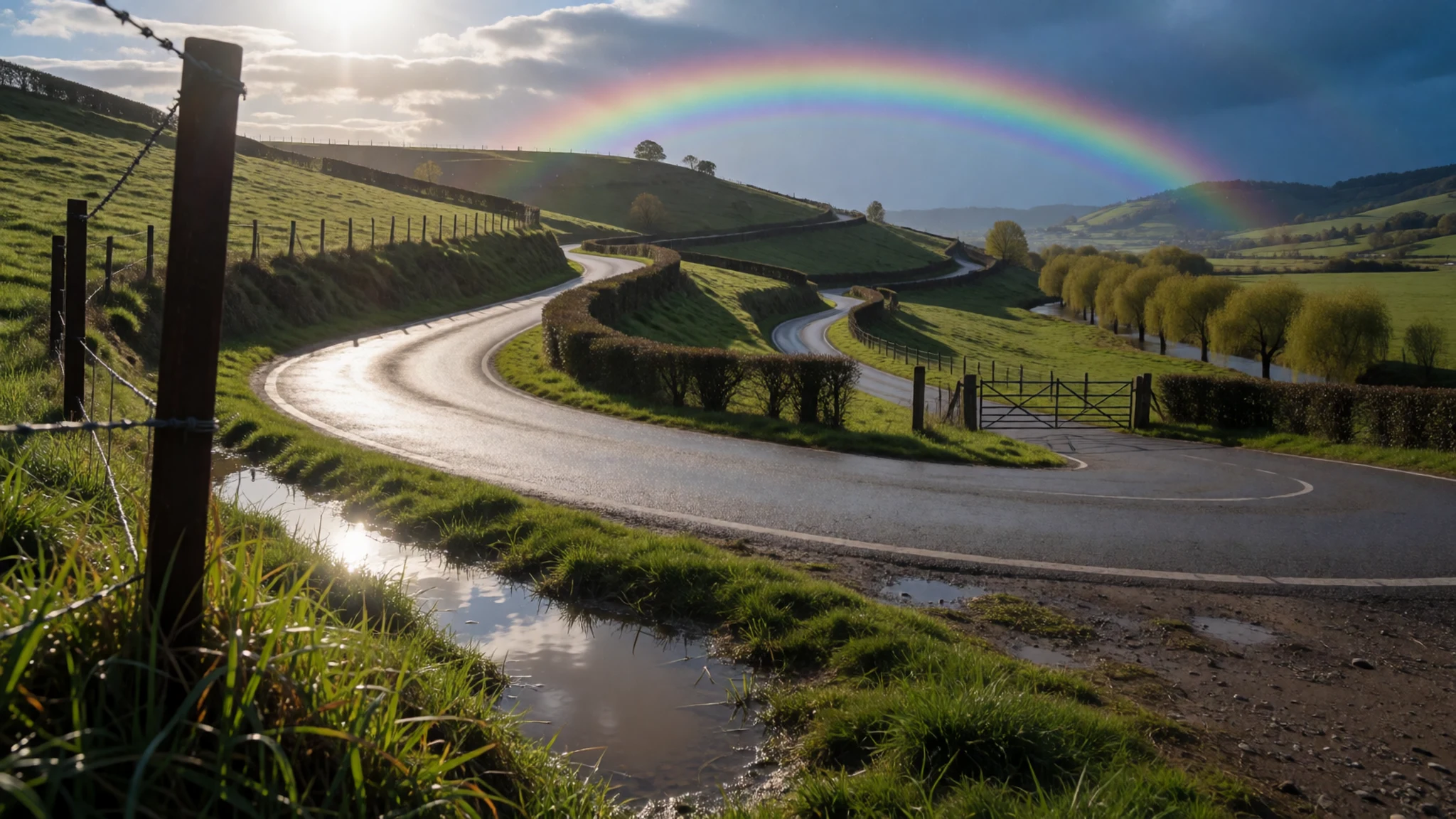
Culture
Villa Serrana inherits the habits of rural Uruguay, a country that is socially progressive and officially secular. The population is mostly Catholic by background but not strongly observant, and many holidays carry secular names on the calendar. In the hills the rhythm is set by family: weekend gatherings, long lunches and slow afternoons. Conversation matters more than schedules, and staying on to talk counts for more than arriving to the minute.
Mate is the shared ritual. A hot, bitter herbal infusion is carried everywhere in a thermos and passed around a circle from one gourd and one metal straw. Offering it is a gesture of welcome. Meat cooked on a grill, the asado, is the other pillar of social life, often prepared slowly over an afternoon.
The old cattle-driving tradition of the countryside, with its gauchos, still colours local pride, and people are glad to talk about it. Uruguay is also welcoming to visitors of all backgrounds, including gay and lesbian travellers, even in rural areas. Greetings are warm: a single kiss on the cheek is common between friends, though a handshake is fine on a first meeting. Visitors should accept a shared mate with thanks, avoid stirring the metal straw, and say gracias when they have had enough.
What to wear
Villa Serrana has no costume of its own, so the traditional dress to know is that of the Uruguayan countryside and its gauchos. The classic outfit is the bombacha de campo, loose cotton or twill trousers gathered at the ankle, worn with a leather belt or woven sash, a wool or felt beret called a boina, and sturdy boots or alpargatas. A wool poncho serves in cold weather. Today these garments appear mostly at rural festivals, on working farms and on special occasions rather than in daily life.
What people actually wear now is practical and casual: jeans, fleece or knitted jumpers, trainers or walking shoes, caps in the sun, and a thermos of mate under the arm. Weekends in the hills mean old comfortable clothes, with a smarter shirt for dinner out in Minas.
For visitors, layers suit the temperate climate. Pack a light waterproof, a warm layer for cool evenings and winter mornings, and sunscreen and a hat for summer. Closed shoes with good grip are better than sandals on rocky paths and wet grass, and long trousers help in scrub. Dress codes are relaxed and the village has no religious site needing special cover, though modest dress is courteous in the churches of Minas.
What to eat
- Asado — Any parrilla (grill restaurant) in Minas, or a family cookout in the village
Beef and other cuts grilled slowly over embers, usually for a family gathering and served with salads and bread. Cattle are everywhere in Uruguay, and the grill is a weekend institution. Ask for a mixed parrillada to taste several cuts.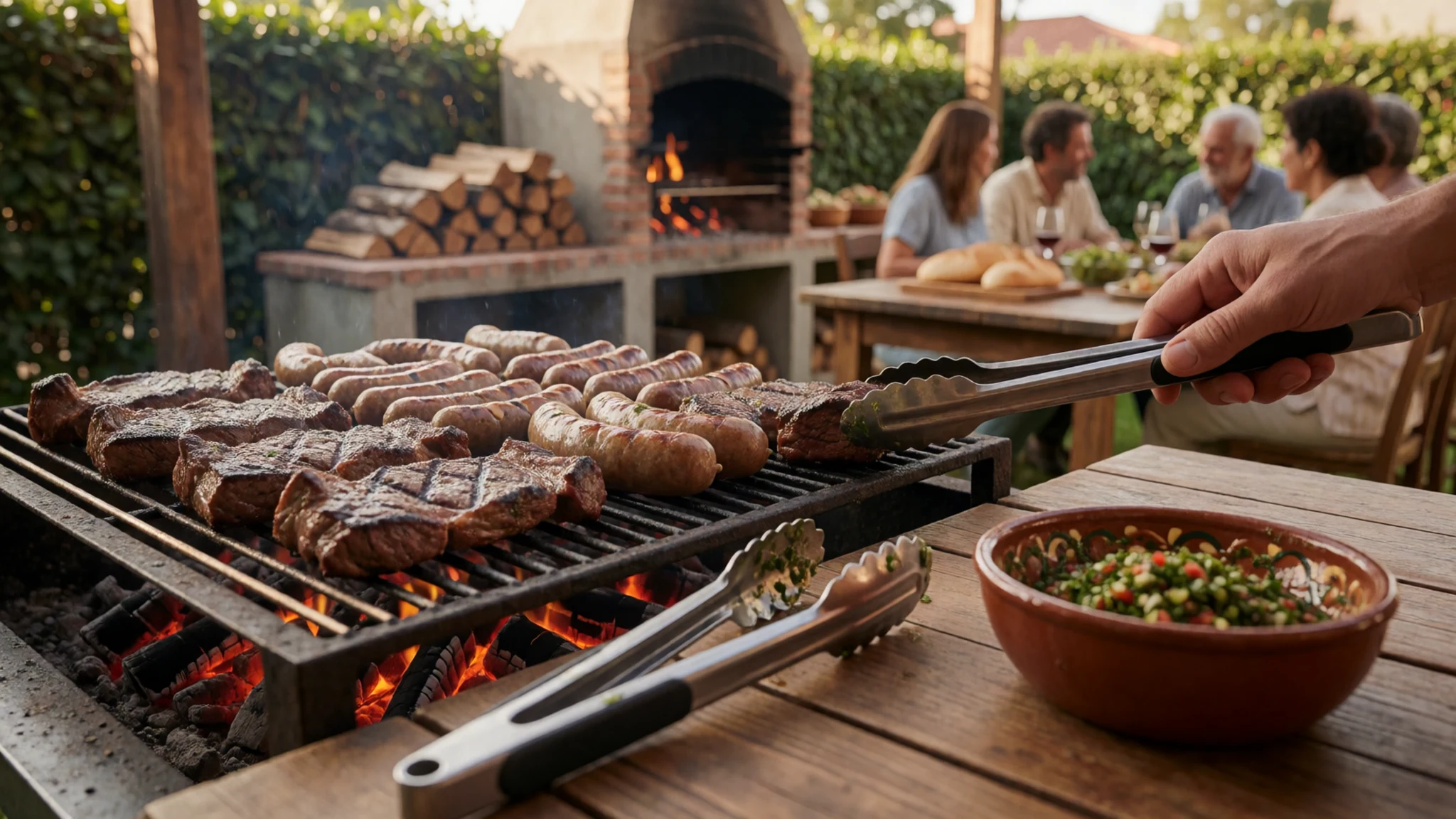
- Chivito — Casual cafés and snack bars in Minas
A hearty steak sandwich stacked with ham, cheese, egg, lettuce and tomato, often served with chips. It is a filling lunch after a morning of walking, and a plate is easily shared between two.
- Pasta casera and ravioli — Family-run restaurants in Minas
Italian immigration left a lasting mark on Uruguayan cooking, and fresh pasta is available almost everywhere. Vegetarians can order ravioli or other pasta, though it is worth checking that the sauce contains no meat. - Dulce de leche — Bakeries and corner shops in Minas
A thick milk caramel spread on bread, folded into pastries and sandwiched between alfajores biscuits. It is sweet and rich, a good companion to bitter mate, and a simple edible souvenir. - Torta frita — Village bakeries and roadside stalls, especially on wet days
Round, flat fried dough eaten hot, traditionally on rainy days and with mate. It is plain, a little crisp and a little chewy, and it suits the damp afternoons that sometimes settle over the hills.
Plan it
Best time. October–November and March–April, when days are mild and good for walking and the countryside is at its best; December–February is warm and the busiest holiday period, and June–August is cool and can be damp.
How long. 2–3
Getting there. Fly to Montevideo's Carrasco International Airport, then take a bus to Minas, the nearest town of any size. From there a taxi or hired car covers the last stretch of about 25 km north-east to the village. Check current bus operators and schedules locally.
Budget. mid
Tips
- Arrange a taxi or hire a car in advance, since public transport to the village may be limited
- Stock up on food and cash in Minas, as the village itself has few shops
- Book holiday weeks early; weekdays outside the holidays are very quiet
- Go out at dawn and after dark, when sunrise and stargazing are the highlights
- Carry water, sunscreen and a light waterproof for changeable weather
Etiquette
- Greet people with a handshake or a single kiss on the cheek
- Accept mate politely if it is offered, and thank your host
- Keep noise down at night and take litter away with you
Nearby
Sources
- Wikidata Q984726 (CC0)
- Wikipedia: Villa Serrana (rev 1304996544) (CC BY-SA 4.0)
- Wikivoyage: Uruguay (rev 5432731) (CC BY-SA 4.0)
- Fedaro, Observatorio Eta Carinae durante el día, via Wikimedia Commons (CC BY 3.0)
- Claramar, Ventorrillo de la Buena Vista, via Wikimedia Commons (CC BY 3.0)
- Luis Irigoyen, AMANECER, via Wikimedia Commons (CC BY 3.0)
- Luis Irigoyen, Amanecer en Marco de los Reyes, via Wikimedia Commons (CC BY 3.0)
- Luis Irigoyen, Arco Iris (2), via Wikimedia Commons (CC BY 3.0)
- Luis Irigoyen, Arco Iris (3), via Wikimedia Commons (CC BY 3.0)
- Luis Irigoyen, Av MR, via Wikimedia Commons (CC BY 3.0)
- colorin11, Baño de la india (Villa Serrana), via Wikimedia Commons (CC BY 3.0)


