Villa Romana del Casale
Villa Romana del Casale, Italy
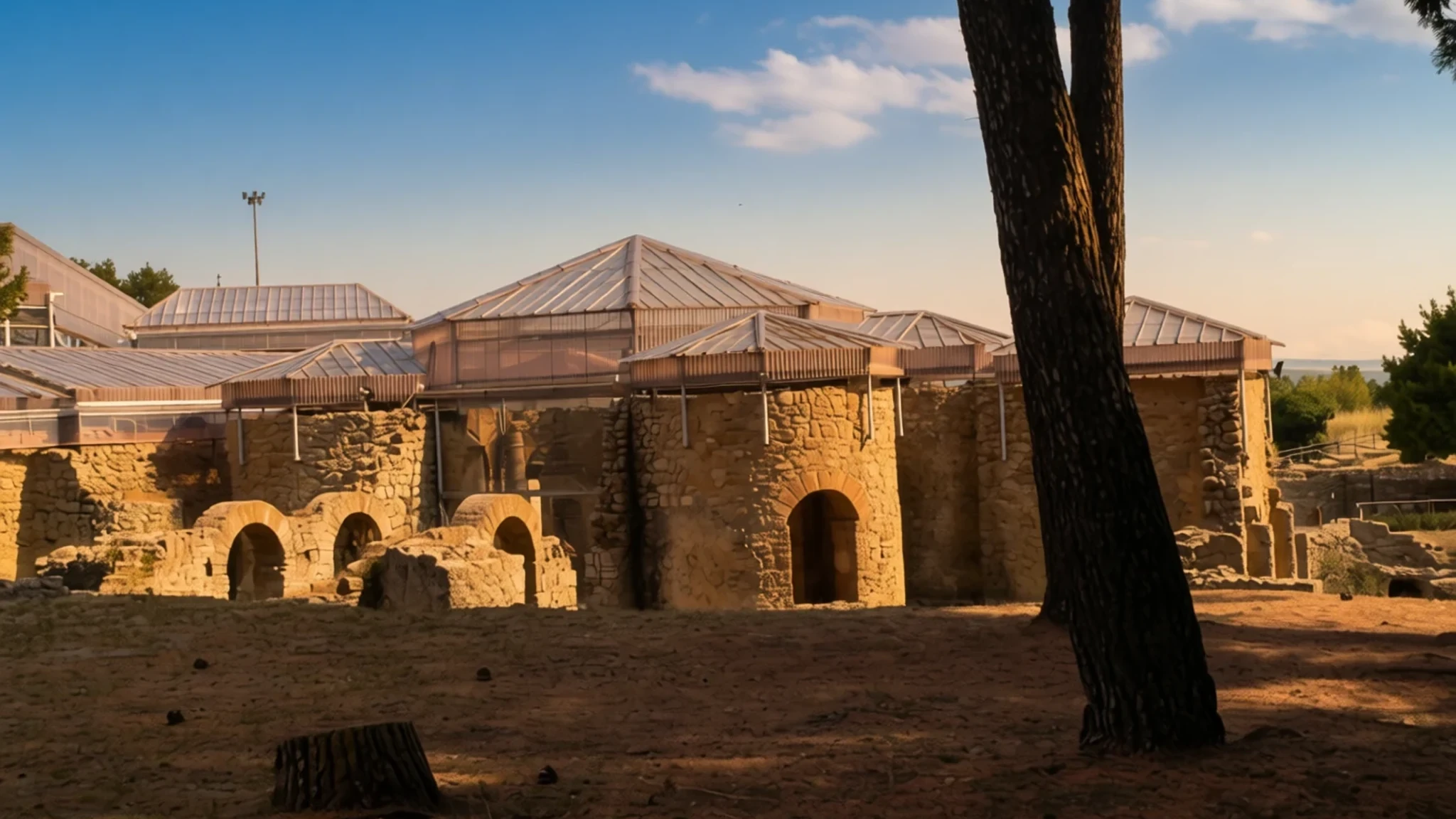
Villa Romana del Casale holds a vast Roman floor of mosaics, intact and vivid, in the quiet hills of central Sicily.
The place
Villa Romana del Casale stands about 3 km outside Piazza Armerina, in the Sicilian interior, where forested hills and farmland roll away in every direction. It is not a coastal Sicily of beaches and ferries but an inland one, slower, greener in spring and scorched gold by late summer. The villa is an archaeological park and a UNESCO World Heritage Site, inscribed in 1997.
What survives is the residential core of a grand country estate from the early fourth century AD. Its fame rests on the floors: roughly 3,500 square metres of mosaic and cut-stone paving, preserved unusually well because mud and floodwater buried the building for centuries. A modern covering now shelters the rooms, and raised walkways take visitors above the floors so the patterns can be read from slightly overhead, much as a plan.
The subjects are lively rather than solemn: hunters, animals shipped from distant lands, athletes, scenes of daily luxury. Less often mentioned is that frescoes once covered the walls inside and out, though little of that colour remains to see now.
Piazza Armerina itself sits above 700 metres, so the air is cooler than on the coast. The town has a Baroque cathedral, old palaces and a medieval street pattern, and makes a pleasant base for a night. Most people give the villa a morning and the town an afternoon, which is about right.
Its story
The villa in its current form was constructed during the opening 25 years of the 4th century AD, on the same ground once occupied by an earlier farm building. What visitors walk through is the pars dominica, the owner's residence, at the heart of a large agricultural estate worked on the latifundium model, with big landholdings and a great deal of unfree labour.
Sicily had spent the early Empire in economic doldrums. Large estates dominated, towns shrank, and wealthy owners tended to live elsewhere, leaving the countryside thinly settled. Rome's attention was elsewhere, and the island served at times as a place where exiles, runaway slaves and bandits found cover.
Then, around the start of the fourth century, the interior picked up. New settlements and farming villages appeared, and the governor's title was upgraded, a sign that Sicily mattered again. Nearby Philosophiana probably acted as the estate's commercial hub and as a stopover on the road between Catania and Agrigento, where travellers could sleep and swap horses. Brick stamps reading PHIL SOPH help trace how far the estate's holdings reached.
It was in this revived countryside that someone with money and ambition built a villa meant to impress guests. Who exactly that owner was remains debated. Later, a landslide and flooding sealed the ruins under silt, which is the main reason the floors came through in such good condition.
What to see
- The Great Hunt corridor — Villa Romana del Casale, main residence
A long curved passage whose floor shows animals being captured and loaded onto ships, with hunters, nets and cages in constant motion. It reads like a travelogue of the Roman world. Walk its length slowly and look for the details at the edges.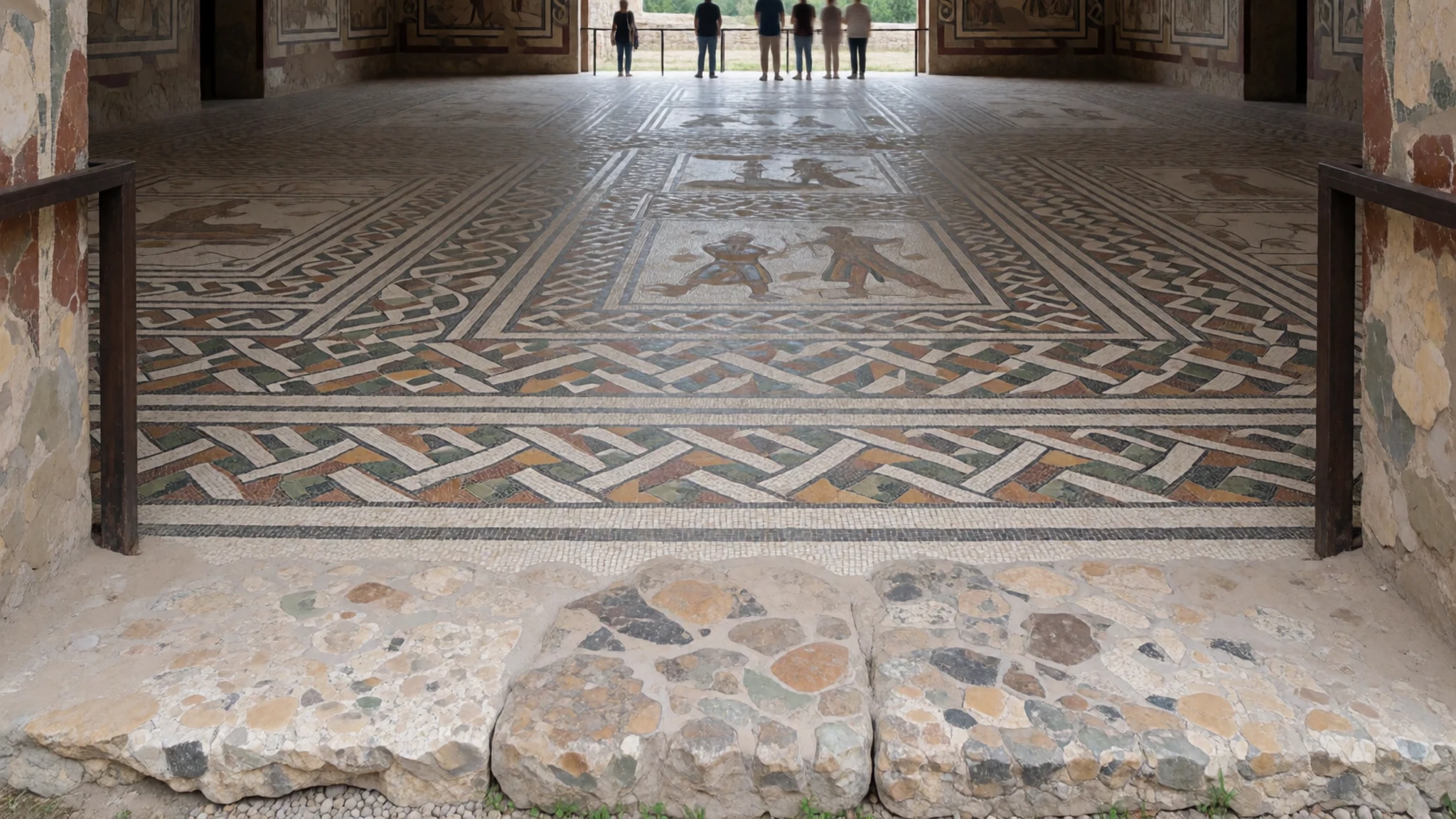
- The owner and the hunt mosaic — Villa Romana del Casale, hunt ambulatory
A figure usually identified as the villa's owner appears among the hunting scenes, directing events in the Great Hunt panels. It is a rare chance to look for a patron in a floor, and the faces and clothing repay a close look.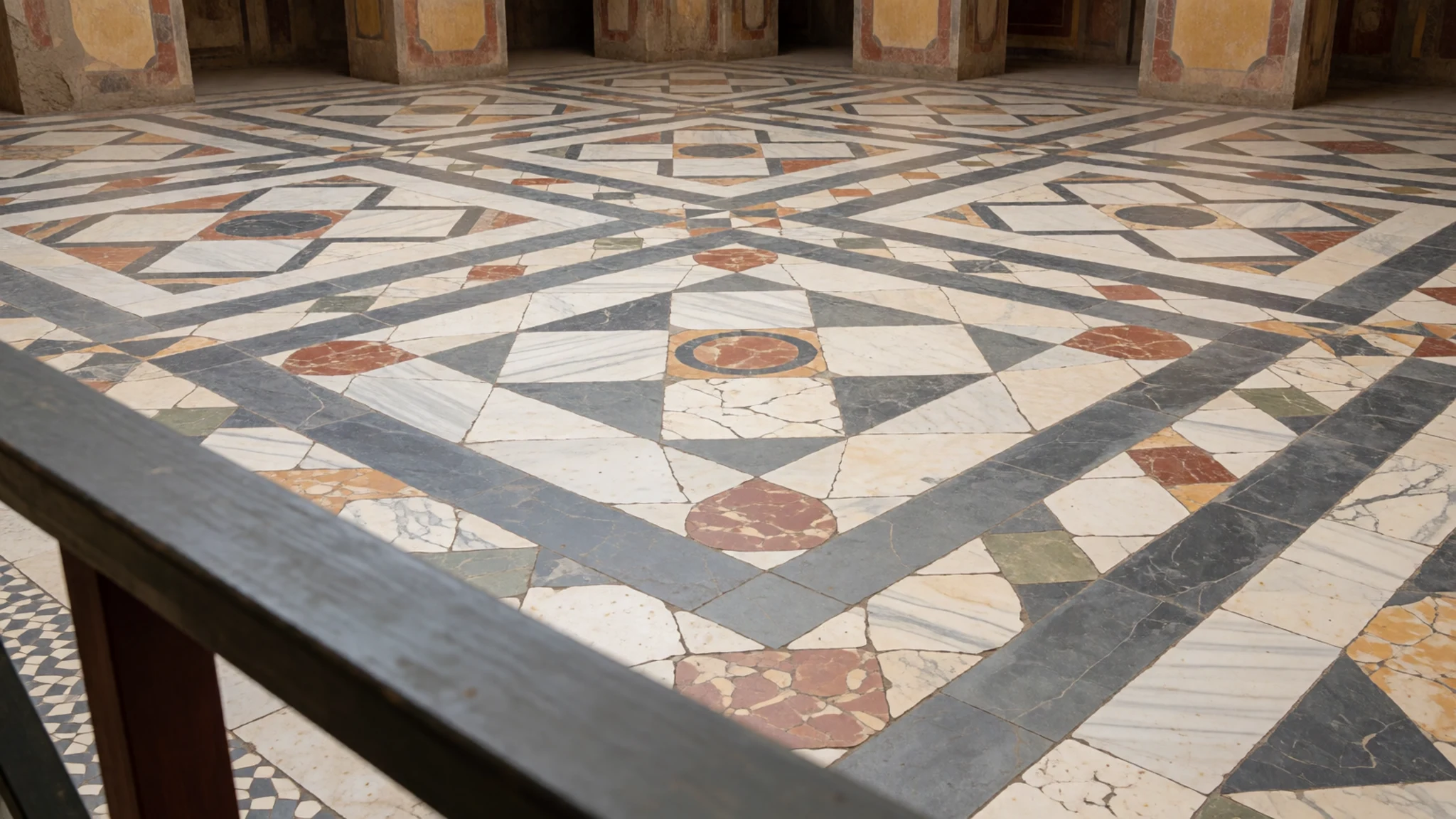
- The two-apsed hall and plan — Villa Romana del Casale
Before setting off, study the plan of the rooms: it shows how baths, courtyards, reception halls and private suites fit together. Then look for the hall with two apses, a good place to grasp how the whole house was arranged.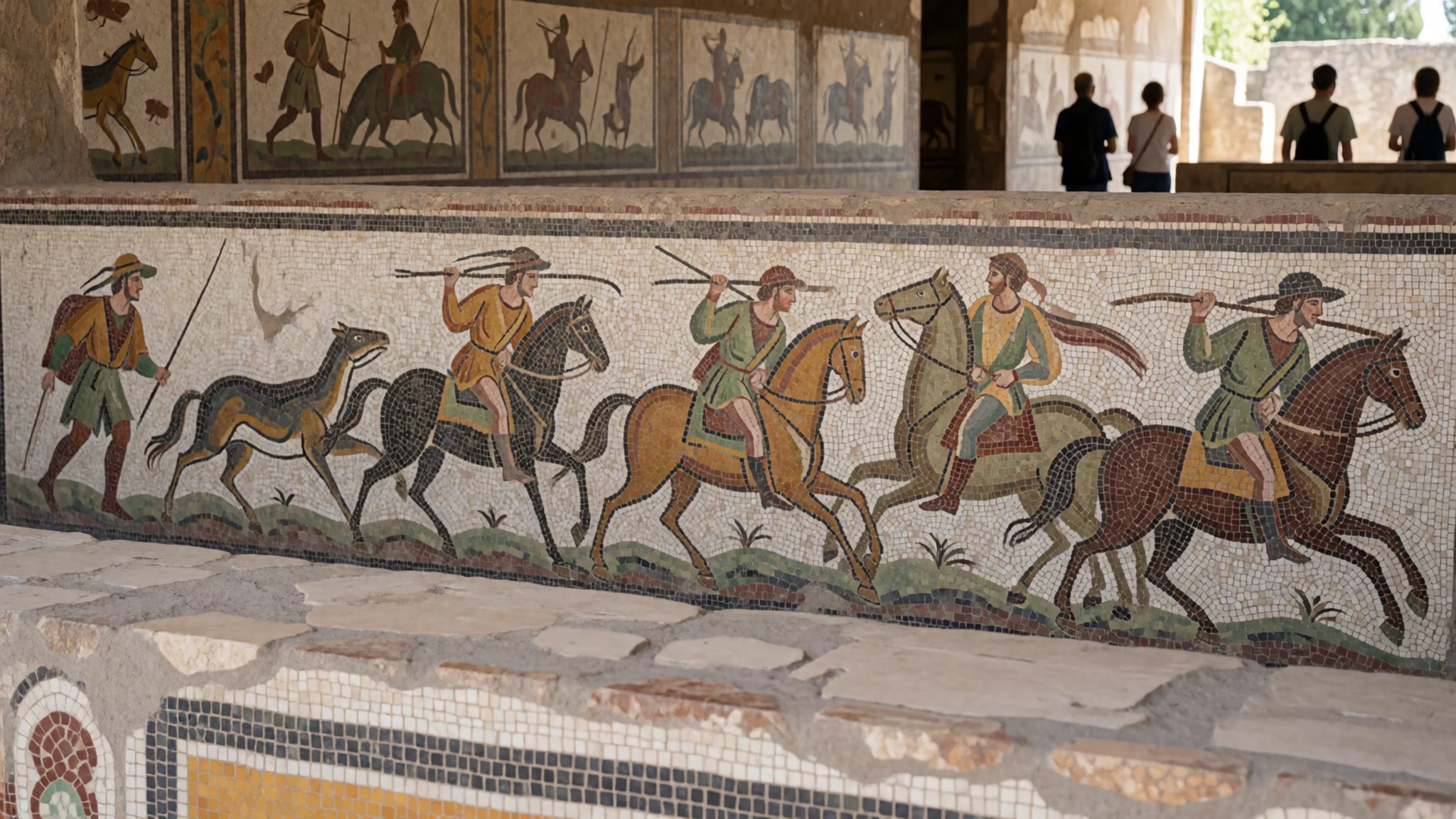
- Piazza Armerina Cathedral — Piazza Armerina old town
The town's Baroque cathedral crowns a hill and dominates the skyline. It was built on the foundations of a fifteenth-century church, and its bell tower was salvaged from that earlier building. Allow time for the climb and the views over the rooftops.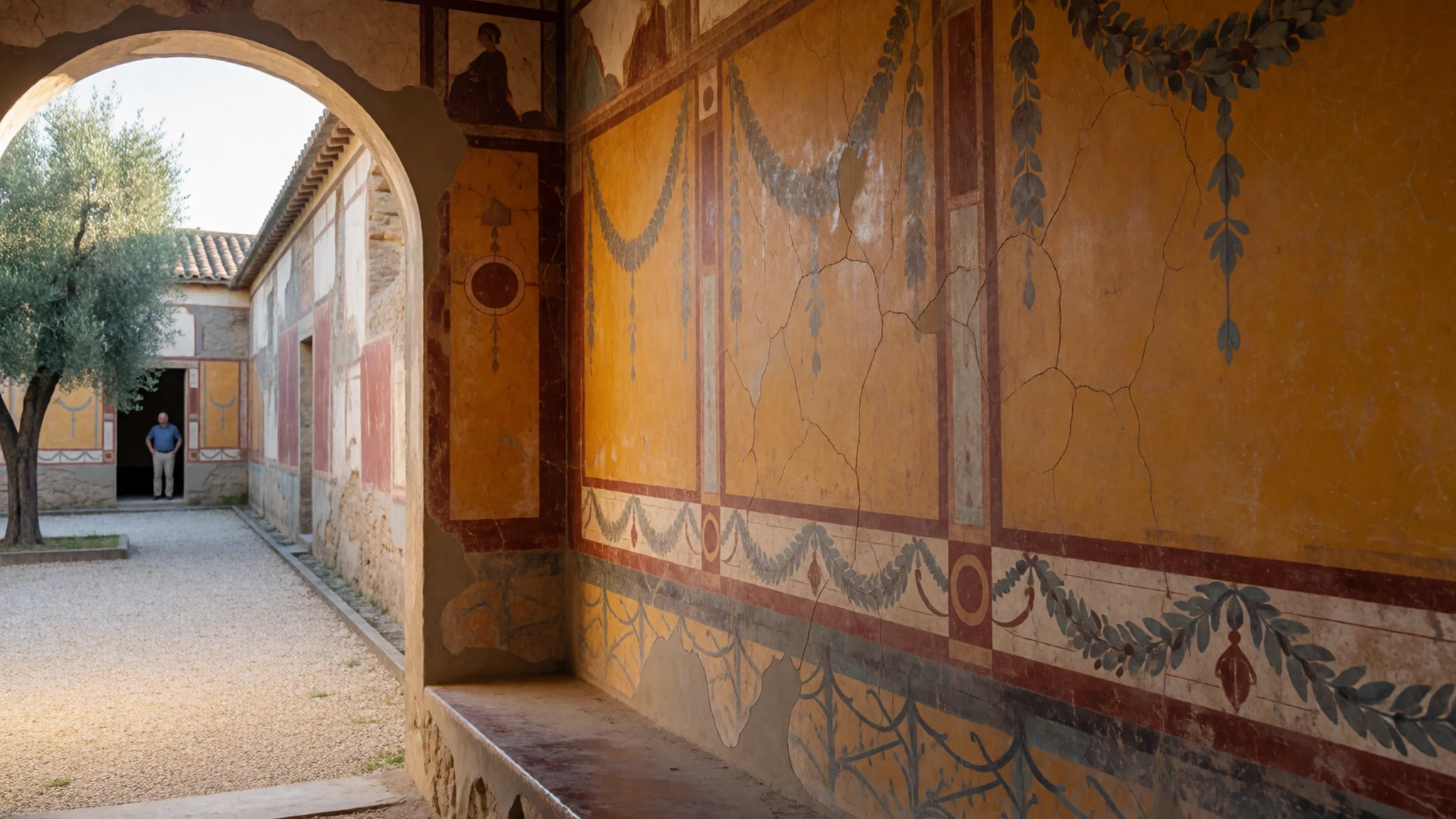
- Piazza Armerina old town — Piazza Armerina
The historic centre grew in stages, from an early medieval core to later expansions southeast of it. Look for the Palazzo Trigona, the town hall and the narrow lanes of the oldest quarter near Via Monte, just below the cathedral.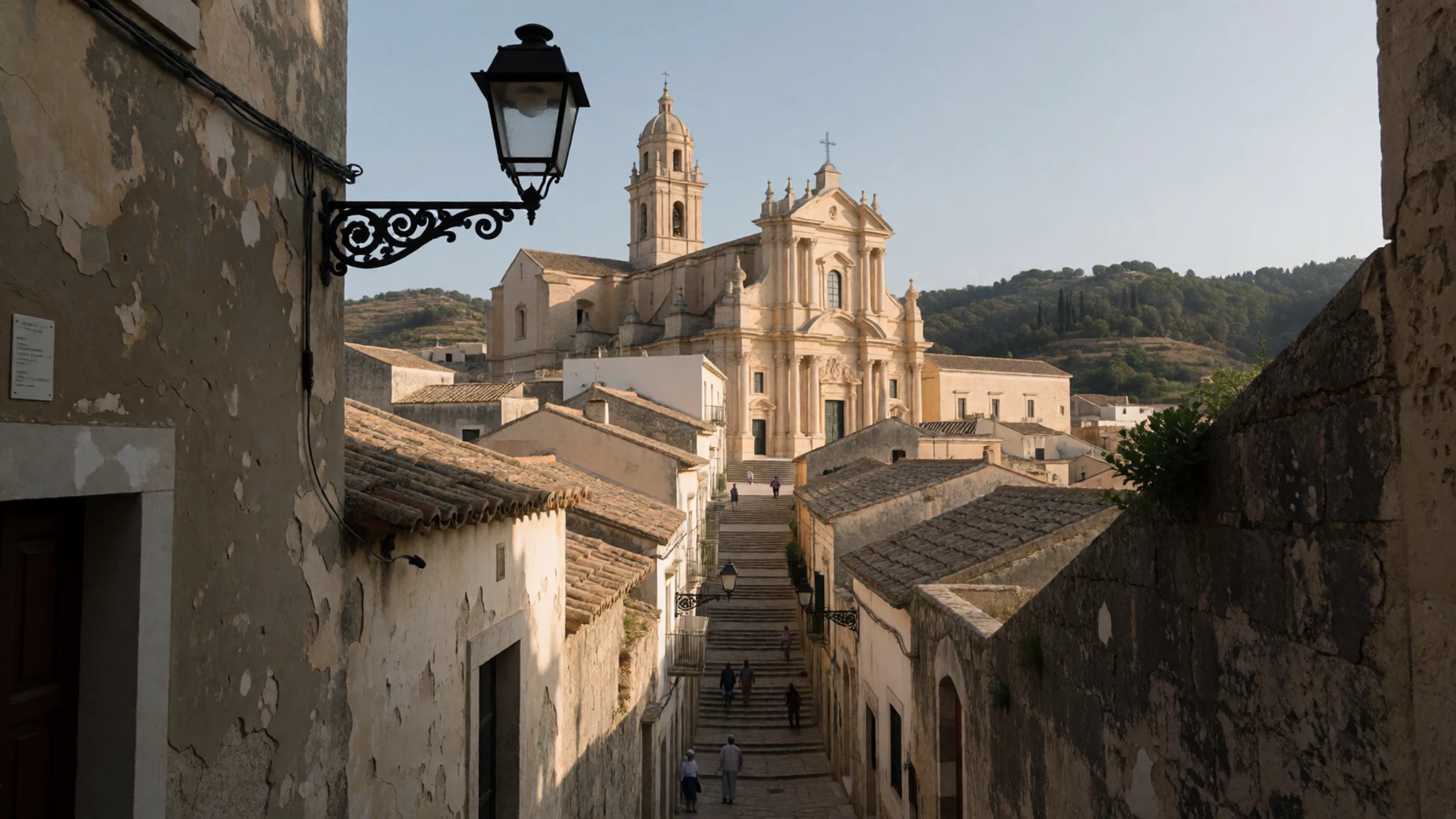
- Morgantina — Province of Enna
A Greek colony in the province of Enna, now an archaeological site. It suits anyone who wants a different layer of Sicilian history from the Roman villa, and it is worth checking opening arrangements before making the drive.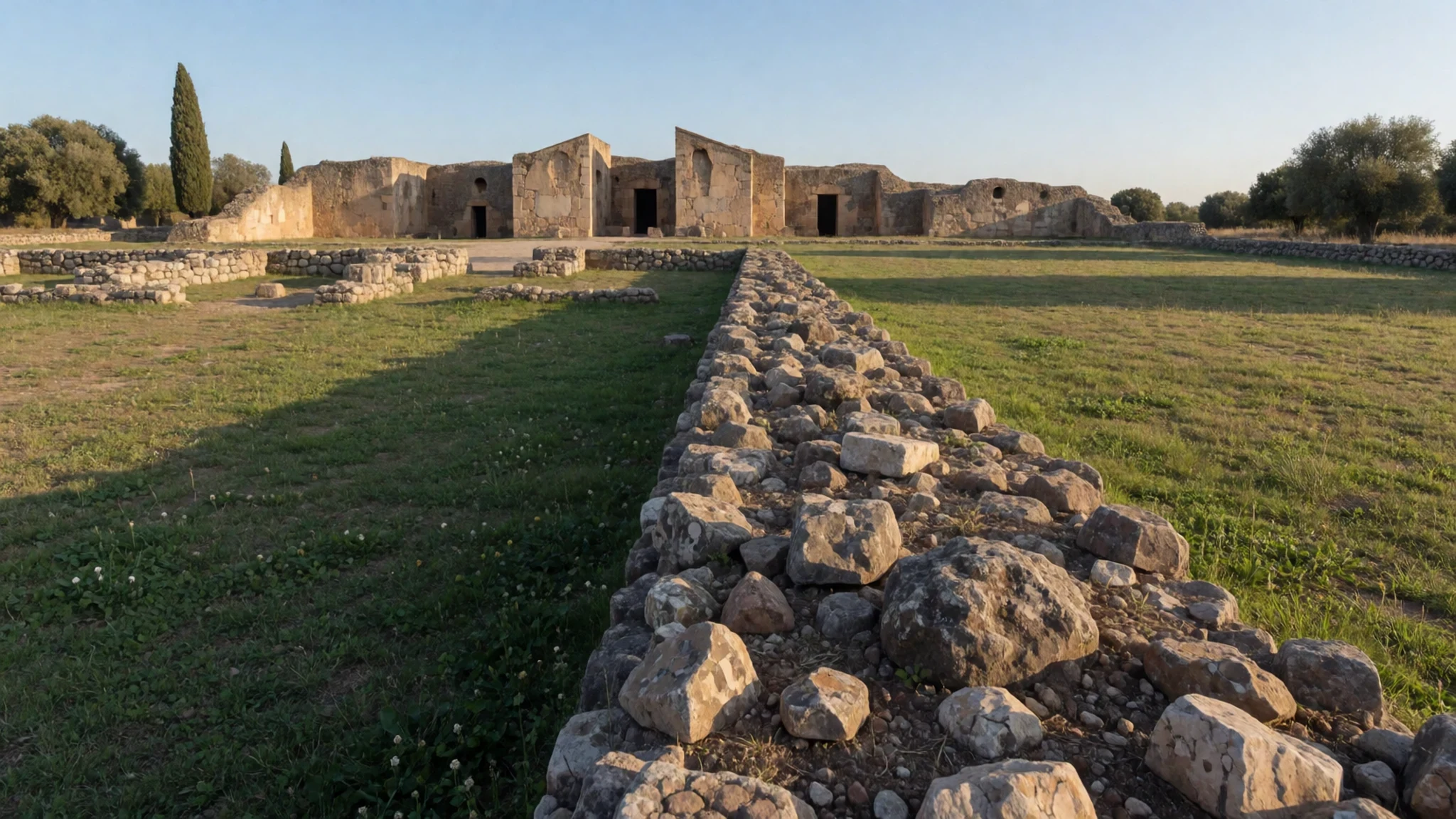
Culture
Villa Romana del Casale belongs to a Sicily that is easy to overlook: the interior, where farming, village life and church festivals still set the rhythm. The island has been ruled by Greeks, Romans, Arabs, Normans and Spaniards, and each left traces. In Piazza Armerina these layers show in the old town, which was laid out in phases from the Arab period onwards and later rebuilt in Baroque style.
The villa speaks of Roman wealth, but also of the labour behind it. The estate depended on enslaved workers, and the floors, however beautiful, were made for a household that ate well and entertained guests. The animals in the mosaics are a reminder of how far Rome's reach extended and how much effort went into displaying it.
Daily life in town is unhurried. Shops close for a long lunch break, evening is for the passeggiata, the stroll round the main streets, and a coffee is drunk standing at the bar. Italians dress neatly even for small errands, and a friendly buongiorno on entering a shop is expected.
At the villa, stay on the raised walkways and never step onto or touch the mosaics, however tempting a closer photograph may be.
What to wear
Piazza Armerina has no single regional costume that visitors will see in daily use. Sicilian tradition does include woven and embroidered linen and cotton, wool for the cold interior winters, and the black coppola, a flat cap of wool or cotton once common among men in the countryside. Such pieces now appear mainly at festivals, folklore events and in museums.
In Roman times the elite wore tunics and togas of wool and linen, and the mosaics themselves show hunters, servants and athletes in short tunics and bold patterns. Some scenes show women in lightweight athletic outfits that people often compare with modern two-piece sportswear.
Today locals dress casually but with care: jeans or linen trousers, shirts, light jackets in the cooler months and sturdy shoes for the hills. In churches, people tend to cover shoulders and knees, especially older worshippers.
For the villa, practical clothing matters more than style. The walkways are exposed, and the covered site can feel warm and close in summer, so wear breathable cotton or linen, a hat and sunscreen. Choose flat, closed shoes with good grip, since ramps and steps can be slippery. Bring a light layer for spring and autumn, when the hill air is cool, and a rain jacket for the wetter months. Cover shoulders and knees if you plan to step into a church in town.
What to eat
- Arancini — Bakeries and snack bars in the old town
Fried rice balls with a crisp crumb coating, filled with ragù, peas and cheese, or with ham and mozzarella. Look for them in a bakery or snack bar in Piazza Armerina, where they make a filling lunch on the move.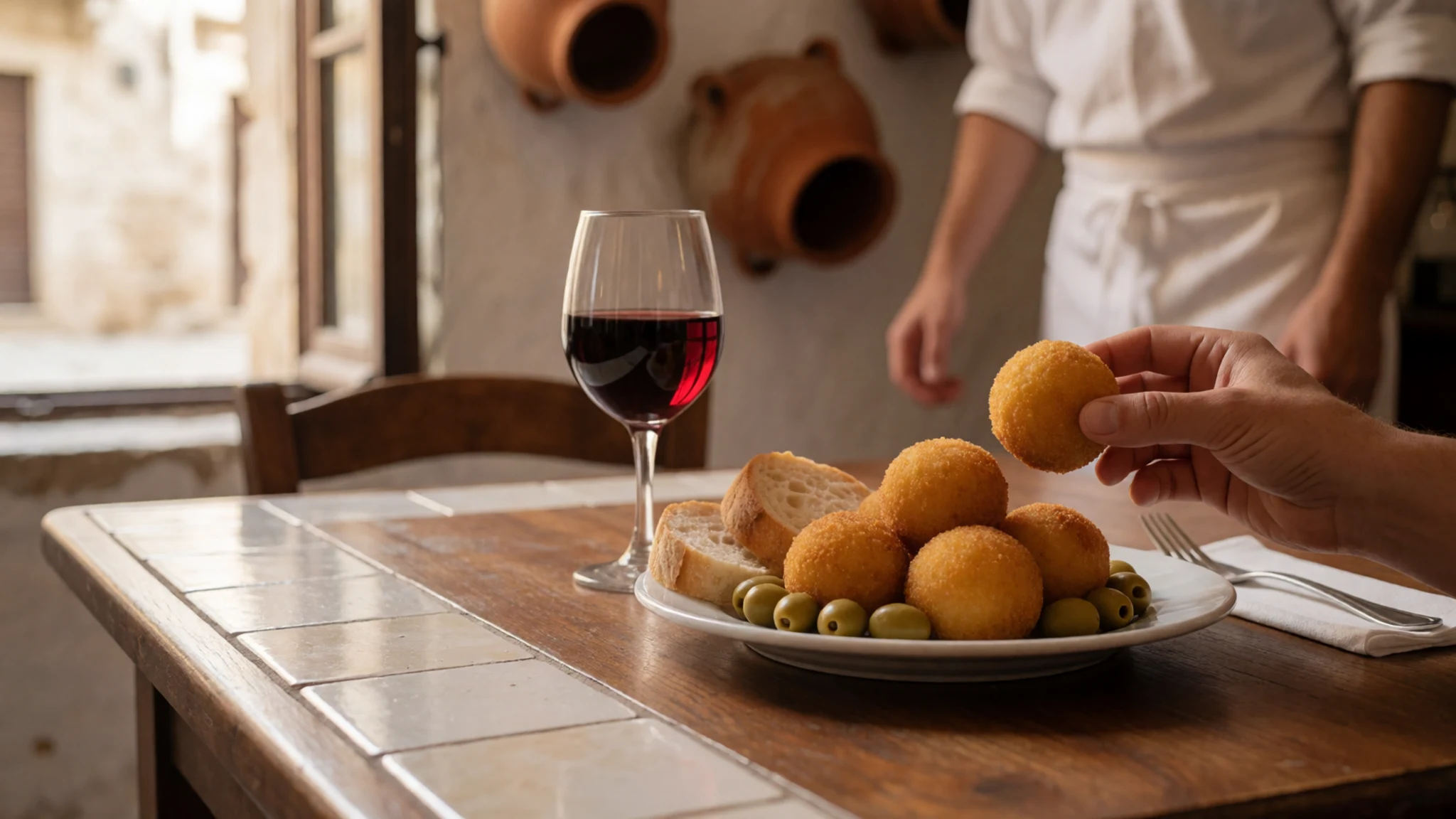
- Pasta alla Norma — Family-run trattorias in town
Pasta with fried aubergine, tomato, basil and salted ricotta, a Sicilian classic that is simple and satisfying. It turns up on menus across the island and is usually a safe choice for vegetarians.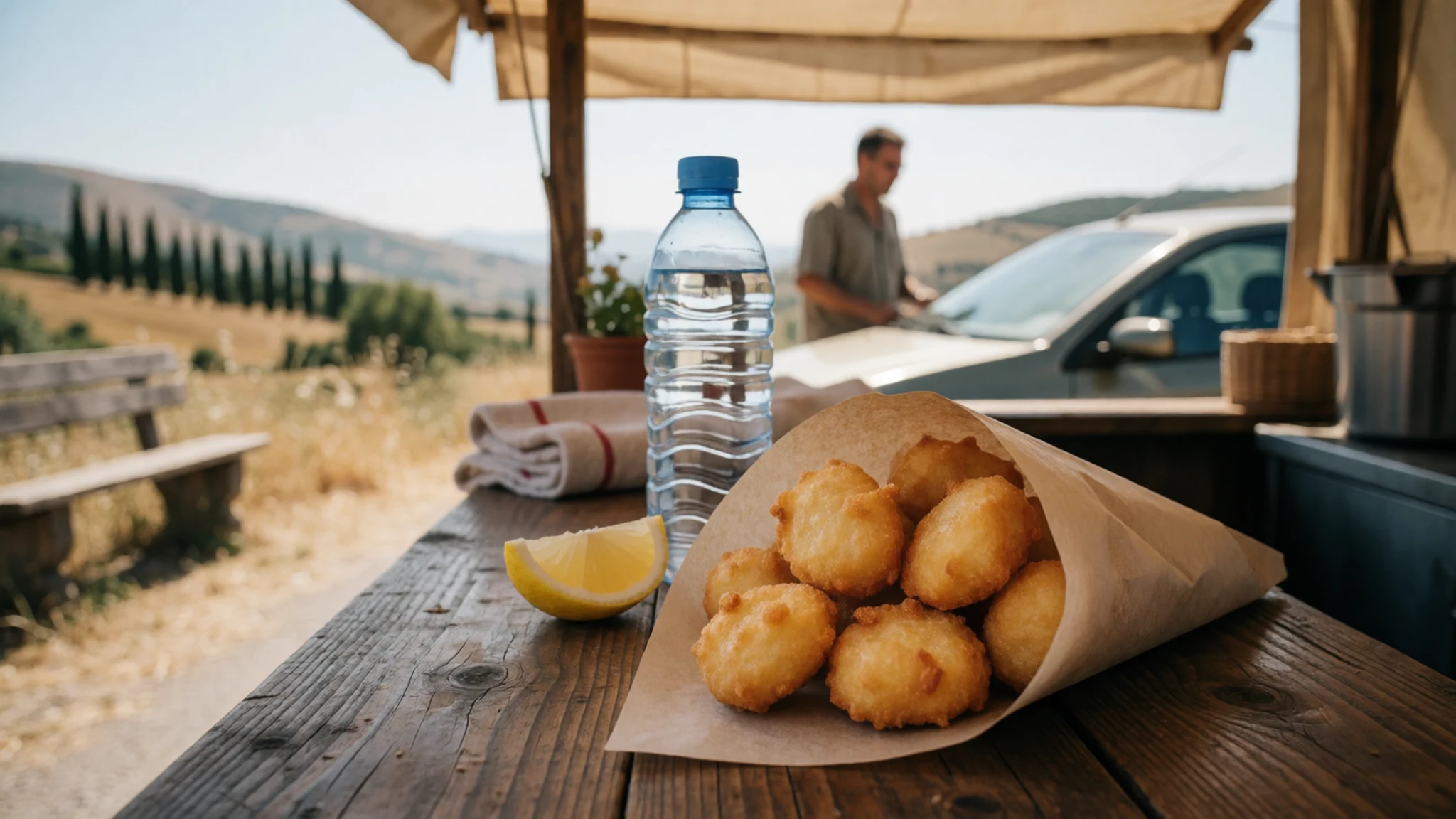
- Caponata — Trattorias and delicatessens in town
A sweet-and-sour dish of aubergine, celery, olives and capers in tomato sauce. It is eaten cold or at room temperature as a starter or side, and tastes better the day after it is made.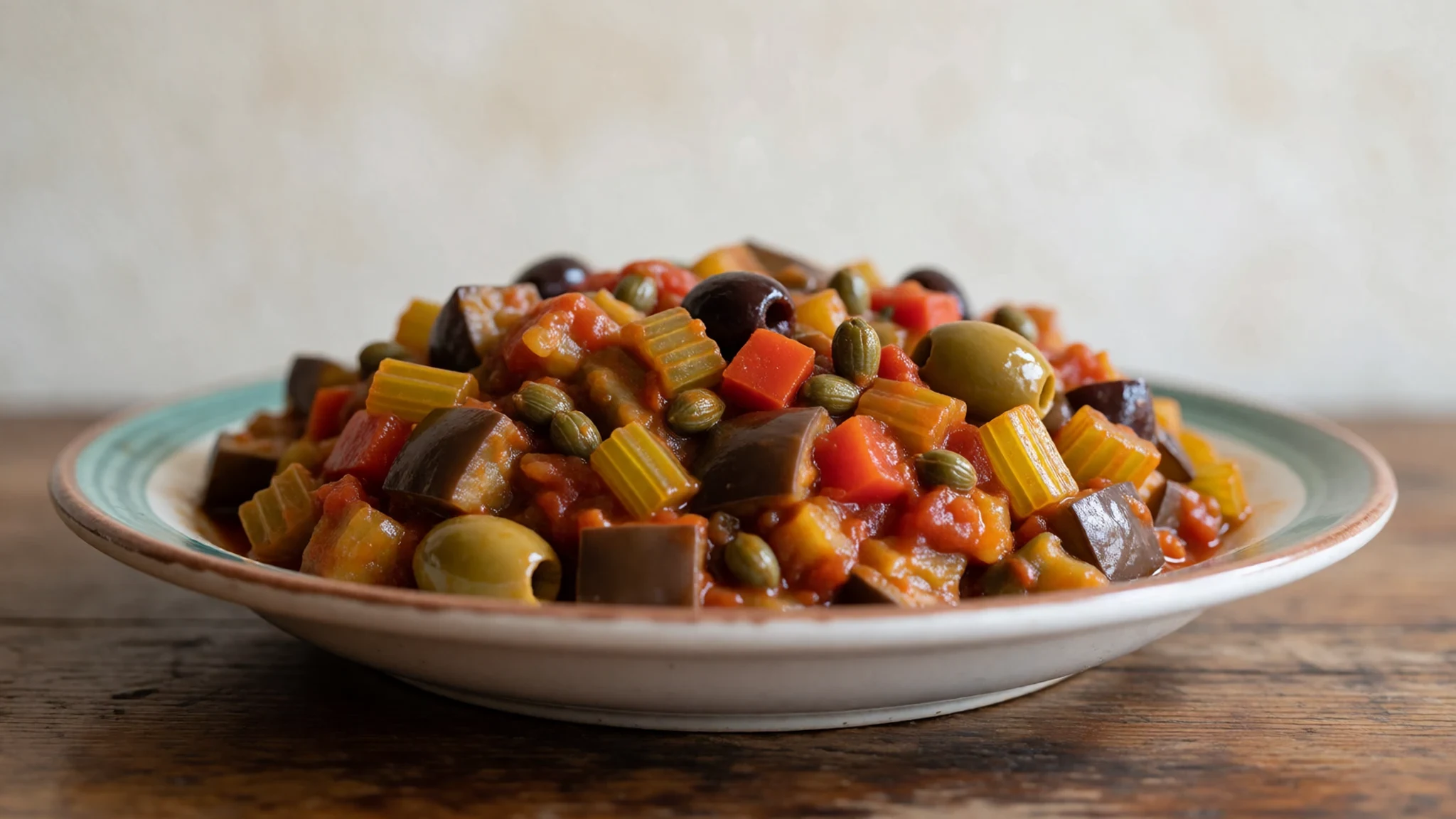
- Cannoli — Pasticcerie around the old town
Crisp fried pastry tubes filled with sweetened ricotta, often dusted with sugar or studded with candied fruit or pistachio. A good pastry shop will fill them to order, so the shell stays crisp and fresh.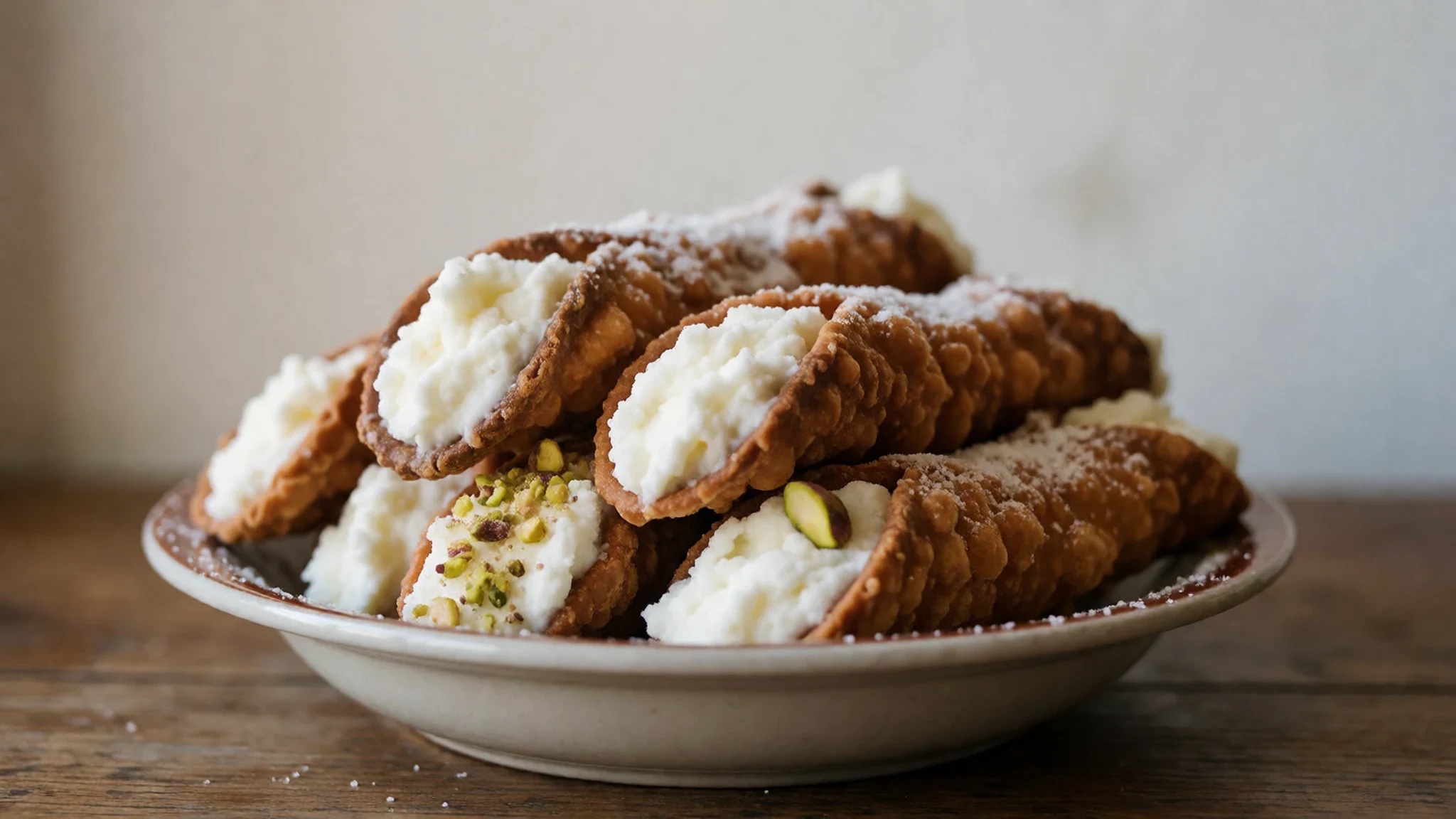
- Local cheeses — Delicatessens and the weekly market stalls
The interior is sheep and cattle country, so look for pecorino and fresh ricotta. Try them on a mixed plate with bread and olives, or ask a delicatessen counter to recommend a piece to take home.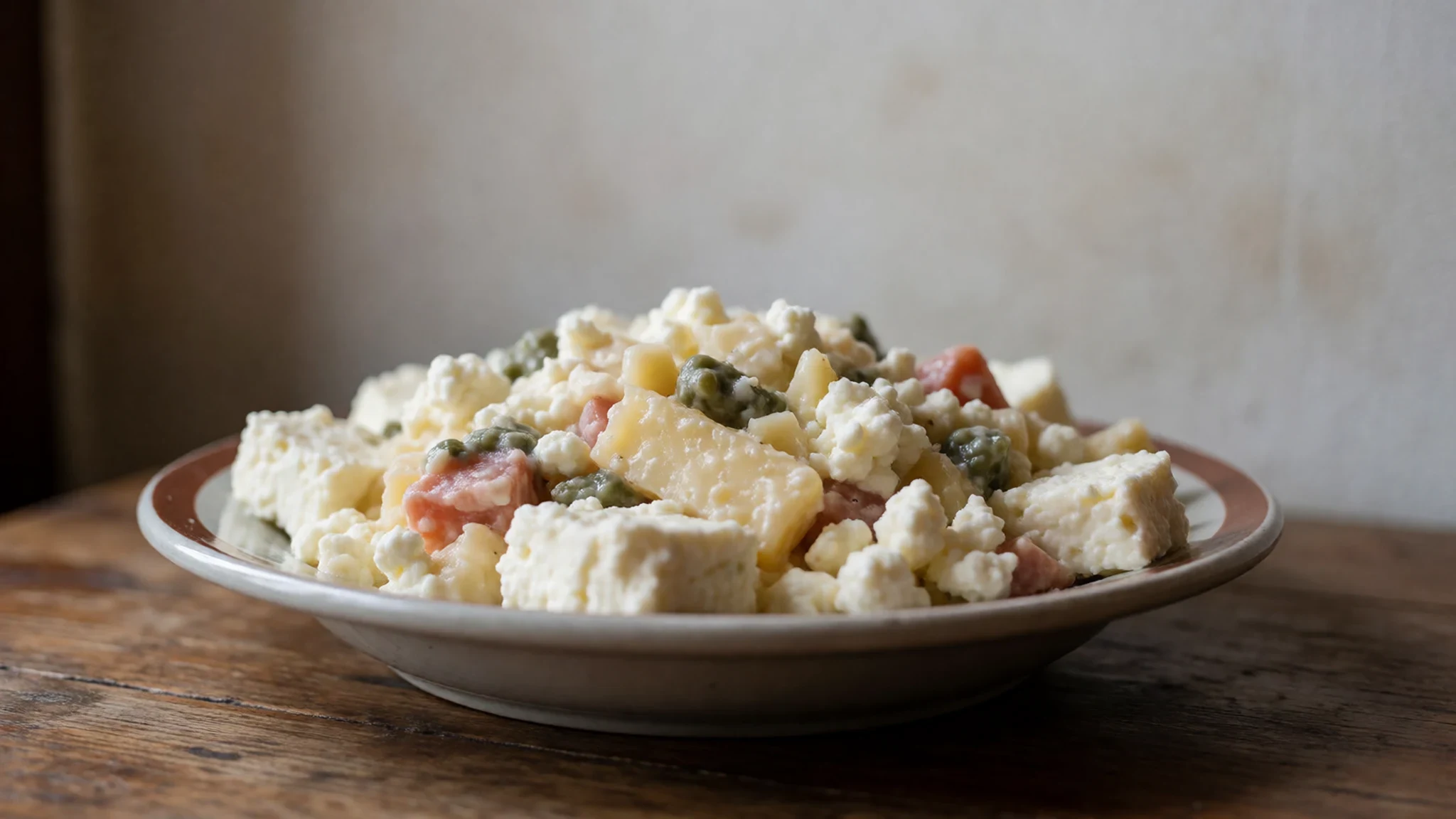
Plan it
Best time. April–June and September–October. Spring is green and mild, and autumn is warm but gentler than July and August, when the exposed walkways can get very hot. Winter is cooler at this altitude and can be wet.
How long. 1–2
Getting there. Catania airport is the usual gateway, with Palermo as an alternative. From Catania, Palermo, Enna or Caltagirone, buses run to Piazza Armerina, arriving at Piazza Senatore Mareschali. The villa is about 3 km from the town, so plan a short taxi ride, a local bus if running, or a drive.
Budget. mid
Tips
- Arrive early or late in the day to avoid tour groups and the worst of the heat
- Check the official website for opening times and ticketing before you travel
- Carry water and a hat, since much of the walkway route is exposed
- Allow two to three hours at the villa, and stay a night in town if you can
- Bring some cash for small cafés and shops in the old town
Etiquette
- Stay on the walkways and do not touch the mosaics
- Follow site staff on photography rules, especially flash
- Greet shopkeepers with buongiorno and keep voices low in churches
Nearby
Sources
- Wikidata Q505617 (CC0)
- Wikipedia: Villa Romana del Casale (CC BY-SA 4.0)
- Wikivoyage: Piazza Armerina (CC BY-SA 4.0)
- Berthold Werner, Villa Romana del Casale (CC BY-SA 4.0)
- Robur.q, tigre mosaic (CC BY 3.0)
- Bjs, plan view (CC0 1.0)
- Jos Dielis, Piazza Armerina (CC BY 2.5)
- José Luiz Bernardes Ribeiro, Big Game Hunt (CC BY-SA 4.0)
- Robur.q, Villa romana di Piazza Armerina (CC BY 3.0)
- José Luiz Bernardes Ribeiro, ambulatory (CC BY-SA 4.0)
- José Luiz Bernardes Ribeiro, two apses room (CC BY-SA 4.0)


