Blue Grotto (Capri)
Blue Grotto (Capri), Italy
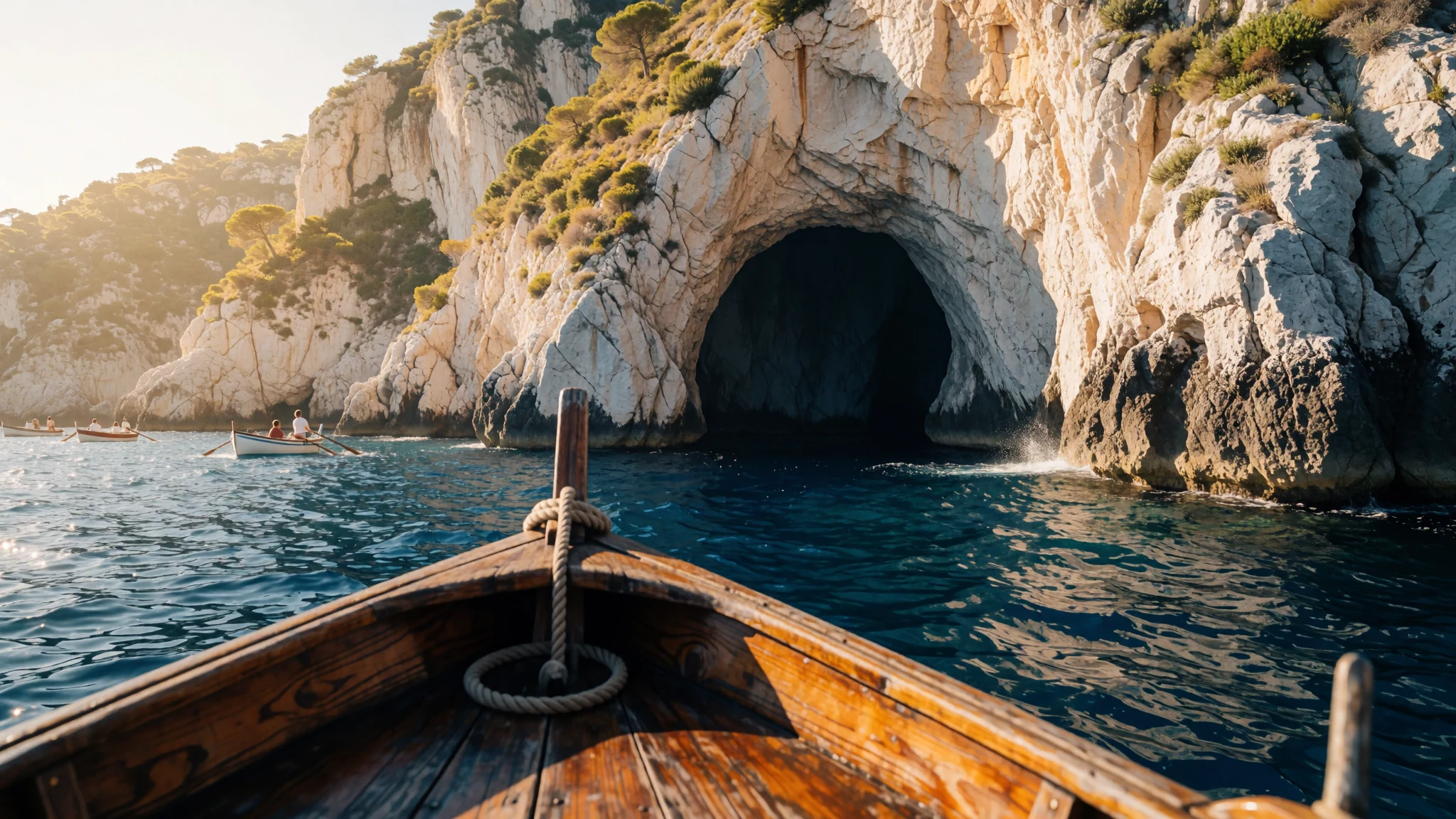
Go for the electric blue water inside a small sea cave on Capri, and go early, before the boats queue up.
The place
The Blue Grotto sits on the coast of Capri, an island off the Bay of Naples in southern Italy. Its entrance is low and easy to miss from the surface, so you reach it by small boat, and the boatmen time each approach to the gap in the swell. Once inside, the walls look grey-green until the light changes, and then the whole cavern fills with a blue that seems to rise out of the water itself. The colour comes from sunlight entering below the waterline through an opening in the rock, bouncing off the sandy floor and lifting back into the chamber. The cave runs deep into the cliff and drops a long way beneath the surface, so most of what you see is water lit from underneath.
The island is small, but its reputation is large. Capri has been a holiday place for a very long time, and Roman rulers liked its cliffs and quiet bays enough to build villas here. Today the grotto is the island's best-known attraction, and it brings the crowds you would expect. From late morning in high summer, boats queue at the sea entrance, and the wait can stretch to an hour or more on busy days. Outside the peak months the island slows down, and the water is often at its clearest in the early hours when the sun is still low.
Be realistic about the day. The sea decides whether you get in at all. Swell or wind can close the entrance, and the light depends on the weather, so a grey afternoon can make the water look flat. Bring a towel, a dry bag and some patience. Treat the grotto as one part of a day that also takes in the town, the cliffs and the views across to the Sorrentine coast.
Its story
The grotto's story begins in Roman times, when it served as a private bathing place for the emperor Tiberius. He moved his court to Capri and had the cave fitted out with sculpture and resting ledges around its walls. Fragments of that decoration have since been recovered from the floor. Statues of the sea gods, including Neptune and Triton, lie scattered somewhere below the surface, and enough bases have turned up to suggest that several more figures still rest on the bottom.
A Roman writer, Pliny the Elder, described the cave as holding a Triton figure blowing on a shell. The statue that survives lacks its arms, which were probably raised to hold a conch, so the recovered pieces fit his description closely. Some scholars picture the original scheme as a crowd of Triton figures led by a Neptune, set around the walls of the chamber. A modern conservation group has since placed new statues in the grotto to give visitors a sense of that vision, a reminder of how theatrical the cave once was.
The legends are less verifiable but more colourful. Capri features in Greek myth as the island of the sirens, and Tiberius's villa above the cliffs became the centre of stories about excess and cruelty. Whatever happened on those rocks, the grotto's shape and light have drawn painters and photographers for generations, and the sea entrance has changed little in appearance. Its natural glow is the real star. The statues, lost and partly recovered, explain why the cave was once more than a swimming hole.
What to see
- The Blue Grotto — Sea cave on Capri's northern coast
Take a small boat from the Marina Grande side and wait at the mouth for the swell to settle. The opening is tiny and admits boats only when the sea allows, so the timing is partly out of your hands. Inside, the light turns the water a saturated blue. Go mid-morning on a calm day if you can, and expect company.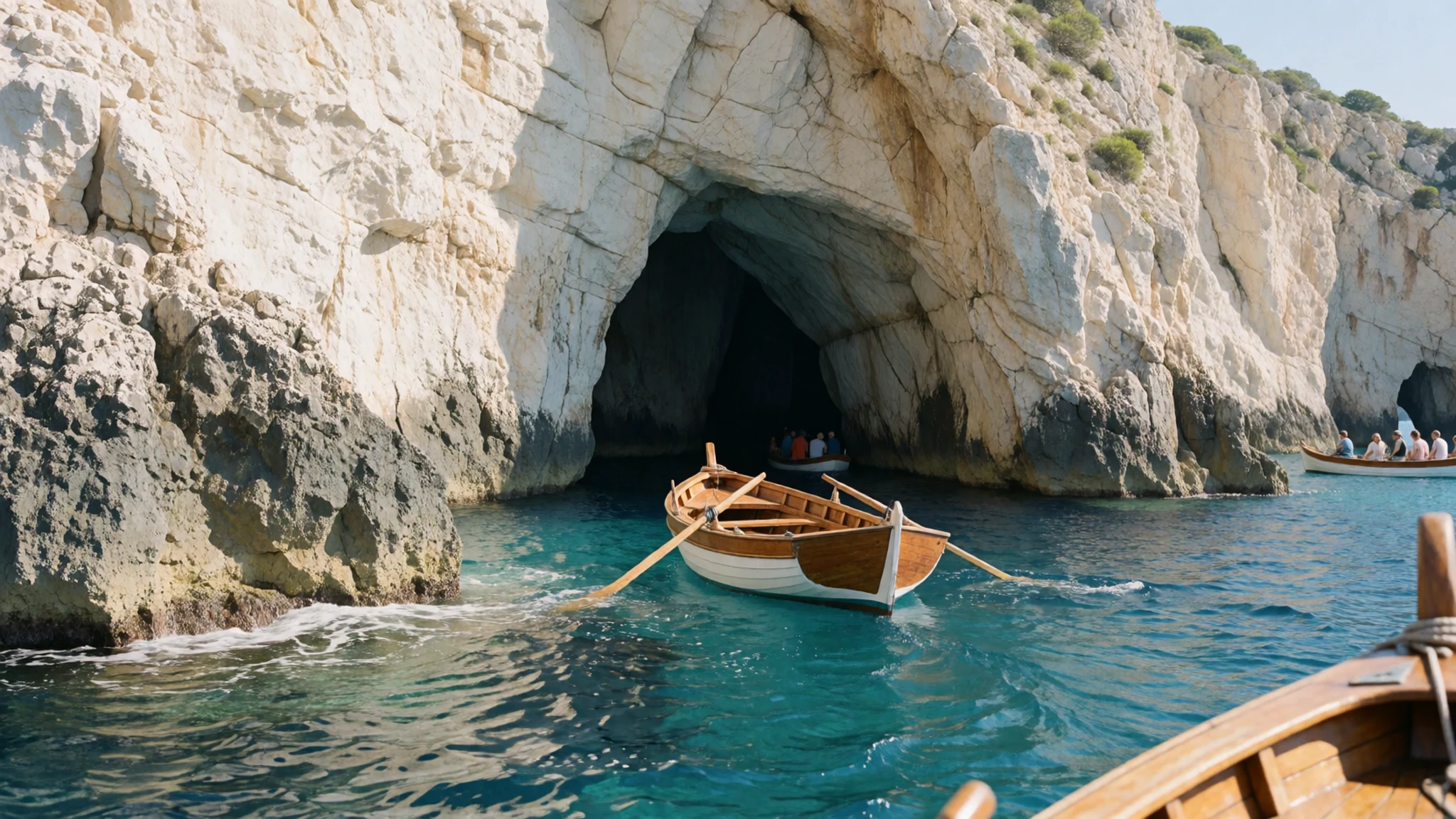
- Villa Jovis — Eastern cliffs above Capri Town
The emperor Tiberius's great residence sits on the island's eastern cliffs, reached on foot from Capri Town along a series of lanes. Ruins of rooms and terraces survive, and the drop beside them is steep. Walk up early for shade and quiet, and carry water, because there is little to buy once you are on the hill.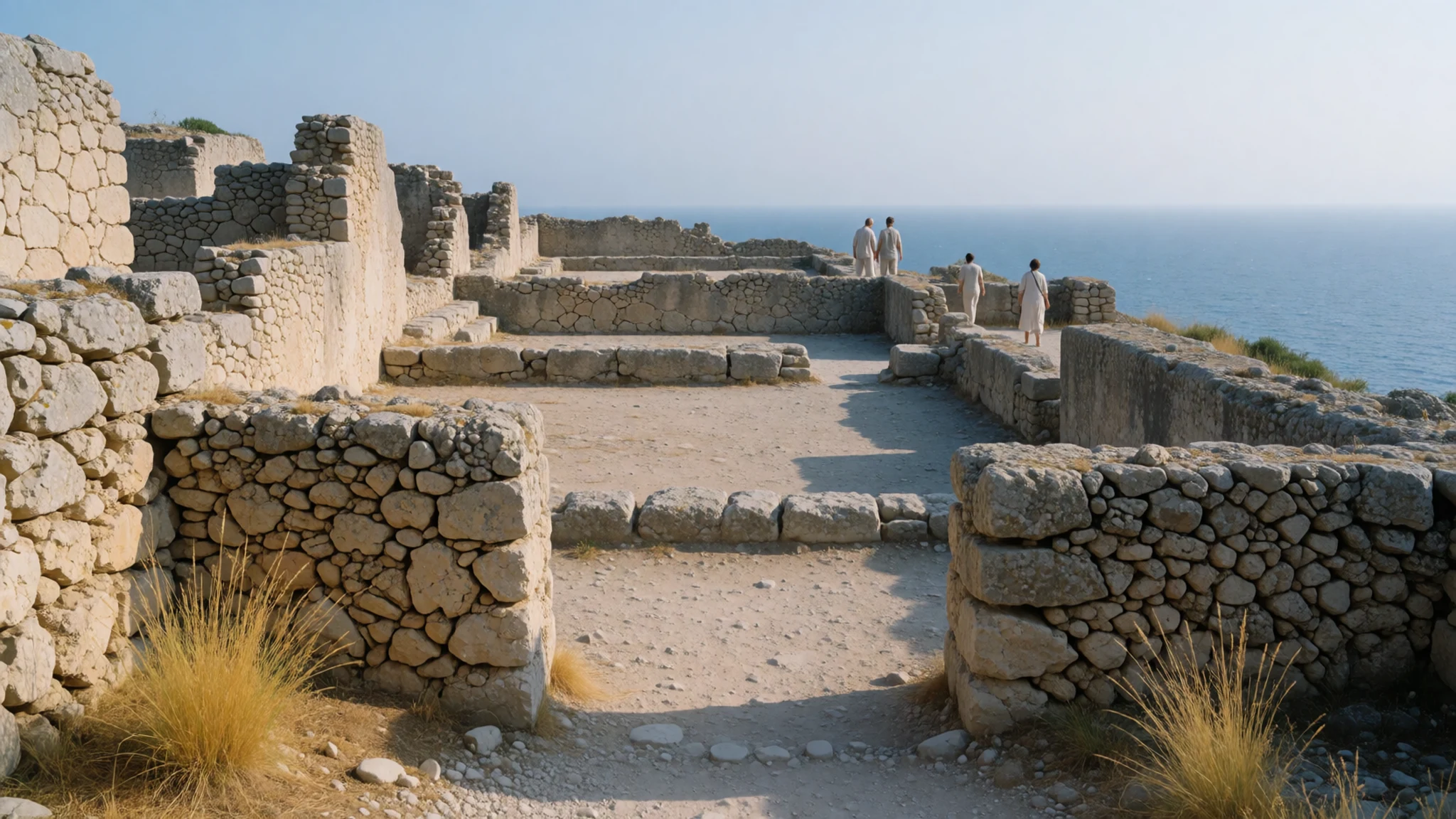
- Church of San Michele Arcangelo — Anacapri, the island's upper town
This baroque church is one of the island's finest examples of its style. The interior is worth a look, but the floor is the real draw: a tiled mosaic showing the expulsion of Adam and Eve from paradise. Step in quietly, since the church is a place of worship first.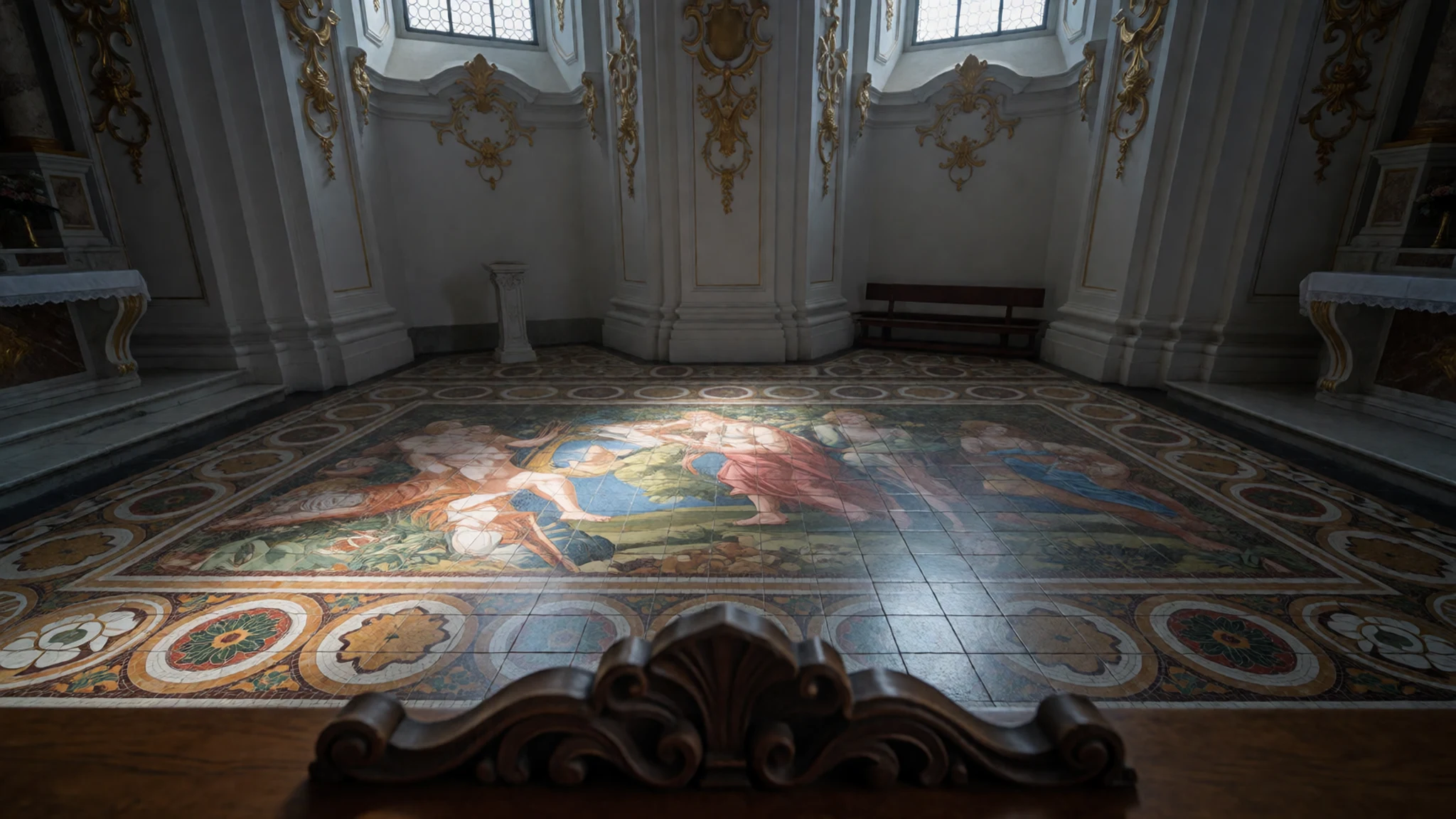
- Villa San Michele — Anacapri, on the old grounds of a Roman villa
The Swedish physician Axel Munthe built this villa around the turn of the twentieth century on the grounds of one of Tiberius's ancient villas. The gardens offer wide views over the island, the Sorrentine Peninsula and Mount Vesuvius. Allow an unhurried hour and go in the afternoon, when the light on the bay is softer.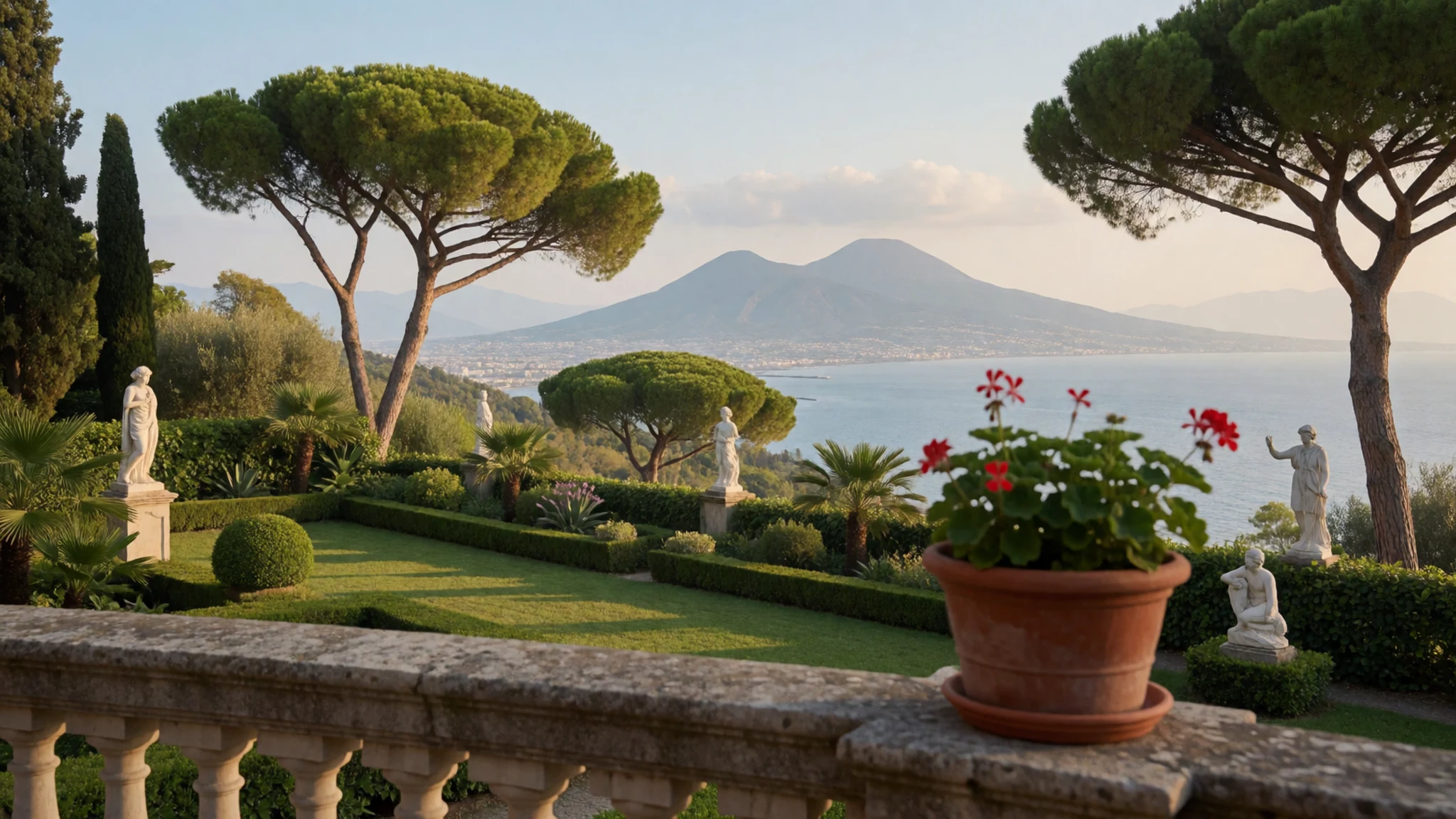
- The early crossing from Naples — The Bay of Naples crossing to Capri
The first boat from Naples runs as the sun comes up over the mountains. The sky moves from deep violet through pink and orange to gold while you cross. It is the calmest way to reach the island, and the early sailing gives you the quietest start to the day.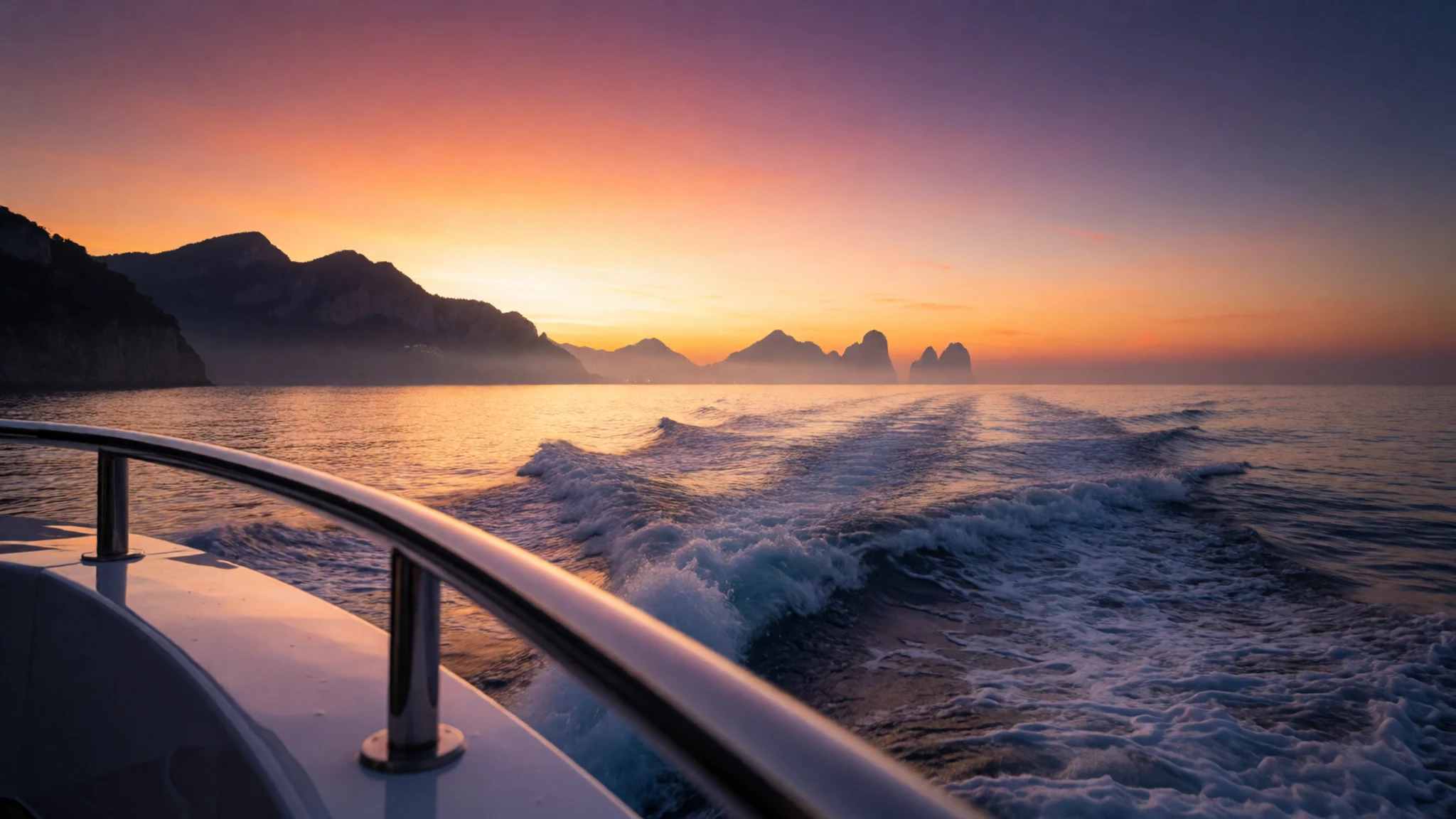
Culture
The Blue Grotto is a working sea cave as well as a natural wonder, and the people who run its boats take the entrance seriously. Queues form at the ticket kiosks, so buy your ticket before you join the line rather than pushing towards the front. The boatmen usually ask passengers to lie back or sit low as the boat ducks under the rock, and it is wise to follow their calls, because the opening is narrow and the water rises and falls with the swell. Swimming inside is forbidden, so keep arms and legs inside the boat at all times. Capri as a whole is used to visitors arriving in large groups, and the cave's echo makes everyone louder, so keep your voice down. Ask before photographing people sharing your boat, and avoid bargaining with touts on the quay, since the posted fare is the fair one. Keep your rubbish and cigarette ends on the boat, because the cave's calm water is the one thing everyone has come to enjoy.
What to wear
Traditional dress on Capri was plain working clothing for fishing and farming. It was usually made of cotton or linen, dark and sturdy, with headscarves and full skirts for women and loose shirts with trousers for men. Some of that practical cut survives in the cloth sold at local markets, but most of what you see on Capri today is Italian resort dress, shaped by the island's long life as a holiday place. The best-known local garment is the Capri trouser, a cropped, wide-legged style that visitors took up and carried home.
People on the island dress for the town rather than for the heat. Expect linen shirts, neat sandals and sunglasses in the piazza, and smarter clothes for dinner than for the beach. Boat trips and the hill walks call for footwear with grip.
For a visitor, pack light cotton or linen, a hat and a cover-up for the walk to the shops. Cover your shoulders and knees when you enter a church such as San Michele Arcangelo. Sandals suit the boat, but choose flat soles with grip for steps and cobbles, which turn slippery when wet. Take a light layer for the boat, where the cave's shade and the sea breeze can feel cool.
What to eat
- Seafood pasta — Any cosy restaurant in Capri Town, booked ahead in summer
Pasta with clams, mussels or whatever the fishing boats have brought in is the island's classic lunch. Choose a cosy restaurant in the town centre rather than a bar on the quay, and book ahead in summer, when tables fill quickly. Ask what is fresh that day.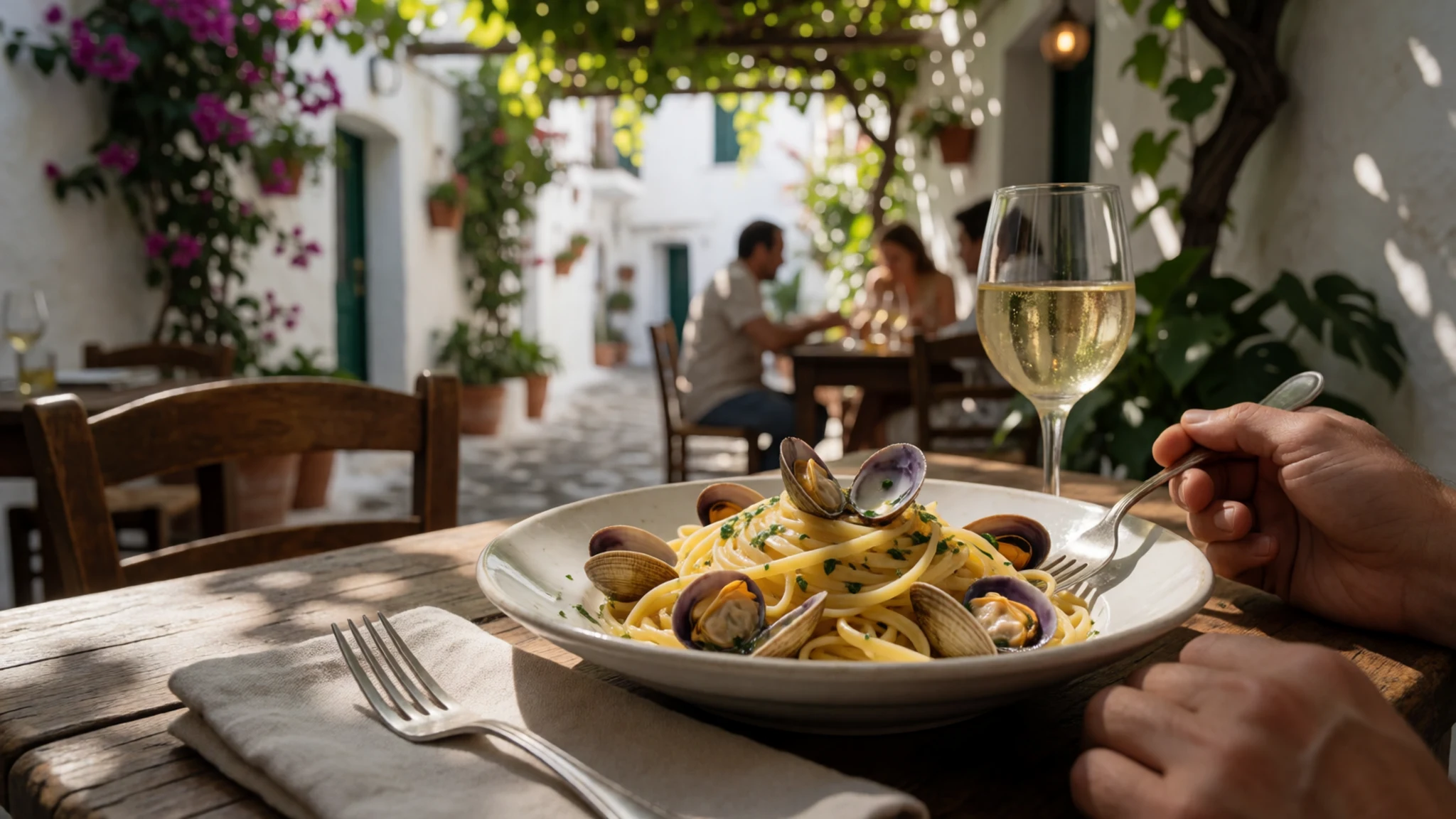
- Gelato from a pastry shop — A pastry shop close to the Piazzetta
Ice cream served in cones filled to order is a small treat that rewards a short wait. Choose a shop where the cones are made as you order, since they taste best still warm. It is an easy stop between the Piazzetta and the funicular.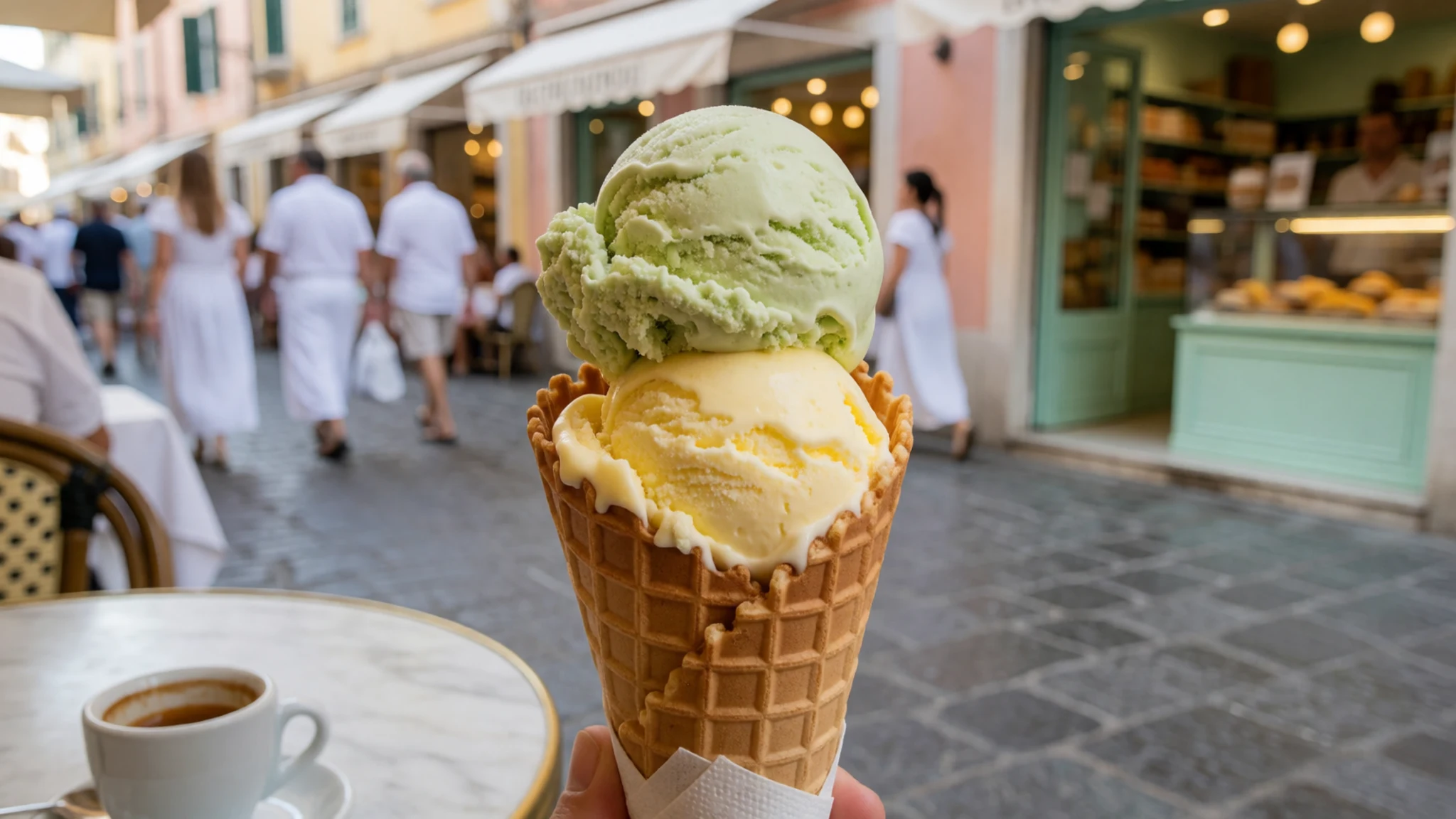
- Sandwiches for the boat — A grocery shop near Marina Grande
Buy bread, cheese, cured meats and fruit at a grocery and make your own lunch. It saves money on a day that can be expensive, and it is handy for eating on the boat or on a rock by the sea. Stock up before you join the grotto queue. - Coffee and people-watching — A café on the main square in Capri Town
Sit outside with an espresso and watch the square fill and empty with day-trippers. Many cafés also serve light lunches, so this works as a reasonable midday stop when the grotto queue is long. - A drink with a view — A terrace bar on the cliffs above the harbour
A cocktail on a cliff-top terrace gives you the bay of Naples below and the island's lights at dusk. Prices are high, so one drink with the view is a fair way to spend an evening. Go before sunset for the best light.
Plan it
Best time. April to June and September to October bring warm weather and a sea that is pleasant to be on, without the peak crowds. July and August are the busiest and hottest months, and the grotto queue is longest then. Winter is calmer, but some services run reduced hours and the tourist office opens for shorter daytime hours.
How long. 1–2
Getting there. Hydrofoil or ferry from Naples, Sorrento, Ischia or Forio; the hydrofoil from Ischia or Forio takes under an hour. Boats dock at Marina Grande, where a funicular climbs to Capri Town and boats leave for the grotto.
Budget. high
Tips
- Book your crossing ahead in peak season and aim to reach the grotto before the queue builds
- Go in the morning, when the sea is usually calmer and the light is at its best
- Check the forecast, because the grotto can close when the sea is rough
- Carry some cash for boat fares, kiosks and luggage storage
- Take water and a sun hat, since the walk to Villa Jovis is exposed
Etiquette
- Wait your turn at the kiosk and follow the boatmen's instructions at the cave mouth
- Keep your voice low inside the grotto and do not swim there at all
- Ask before photographing people sharing your boat
Nearby
Sources
- Wikidata Q605185 (CC0)
- Wikipedia: Blue Grotto (Capri) (CC BY-SA 4.0)
- Wikivoyage: Anacapri (CC BY-SA 4.0)
- Grotta azzurra, Elenagm (CC BY-SA 2.5)
- Jakob Alt, Die Blaue Grotte auf der Insel Capri (Public domain)
- ETH-BIB, Blaue Grotte Capri, schematic drawing (CC BY-SA 4.0)
- Carlo Brogi, Isola di Capri, entrance to the Blue Grotto (Public domain)
- Maurice Luyten, Boats with blue grotto tourists, 1958 (CC BY 4.0)
- Maurice Luyten, Cliffs near the Blue Grotto, 1958 (CC BY 4.0)
- 1960 Capri change of boats at Blue Lagoon (CC BY-SA 4.0)
- 1960 Capri change of boats at Blue Lagoon, 01 (CC BY-SA 4.0)


