Florence
Florence, Italy
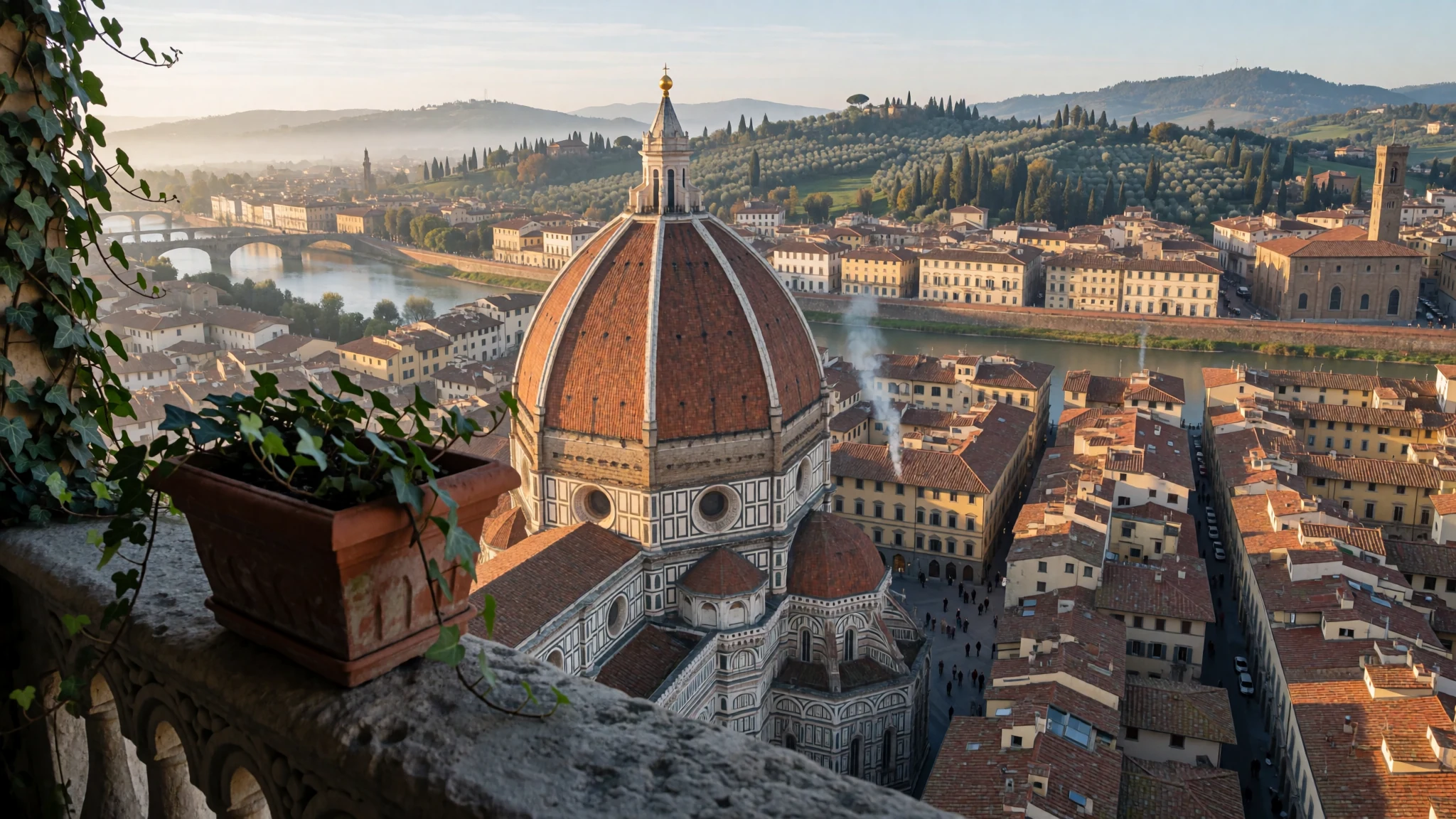
Florence combines centuries of Renaissance art, terracotta rooftops, and vibrant Tuscan culinary traditions along the banks of the River Arno.
The place
Florence sits in a scenic basin along the River Arno in central Italy, surrounded by rolling Tuscan hills covered in olive groves and cypress trees. With a population of around 360,000 residents, the city feels compact and walk-friendly, anchored by a historic centre built around red-tiled roofs and narrow cobblestone streets. Standing at an elevation of 50 metres above sea level, the urban landscape is dominated by the massive dome of the cathedral, which acts as a visual compass from almost every vantage point.
Daily life in Florence moves between quiet morning hours along the riverbanks and bustling afternoons in open piazzas. The river divides the historic district into distinct quarters. On the north bank, former civic spaces and grand stone palaces form the commercial and cultural core, while the south bank, known locally as the Oltrarno, maintains a quieter craftsman identity with artisan workshops, leather gilders, and residential alleyways.
Summer brings intense heat to the valley, with high temperatures trapped between historic stone walls, making early morning and evening walk-about hours the most pleasant. Autumn and spring bring gentler breezes and softer light across the river bridges. Despite steady streams of travellers filling the main thoroughfares, stepping just two streets off the central axis reveals calm neighbourhood squares where local residents gather for coffee, conversation, and evening strolls.
Its story
Florence began as a Roman settlement established along the river crossing of the Arno, gradually growing into an influential medieval trading community. By the late Middle Ages, the city had transformed into a major European centre for finance, wool production, and international merchant commerce. Wealth generated by powerful merchant families and banking houses created an environment where artistic experimentation and intellectual inquiry could flourish on an unprecedented scale.
During the fourteenth and fifteenth centuries, Florence became the cradle of the Italian Renaissance. Thinkers, architects, painters, and sculptors challenged medieval traditions, developing new techniques in perspective, human anatomy, and naturalistic expression. Local writers and scholars refined the Tuscan dialect spoken in the city, establishing a literary standard that eventually formed the basis for the modern Italian language.
Political life in Florence was frequently turbulent. Power shifted through periods of republican governance, factional conflicts, and decades of dominance by the prominent Medici family, who funded extensive public works and monumental architecture. Brief periods of religious reform and revolutionary fever also left their mark on civic life. Florence briefly held the status of Italy's national capital during the 1800s, right before the seat of government shifted to Rome. Today, the city's urban layout and architectural heritage remain a vivid testament to its pivotal role in shaping European art, language, and civic philosophy.
What to see
- Santa Maria del Fiore — Piazza del Duomo
Santa Maria del Fiore dominates the central skyline with its vast marble exterior and famous tiled dome. Inside, the basilica layout opens into a cool, cavernous interior decorated with intricate stained glass windows and stone monuments. Stepping inside out of the bright Tuscan sunshine offers a quiet space to admire early Renaissance architectural engineering.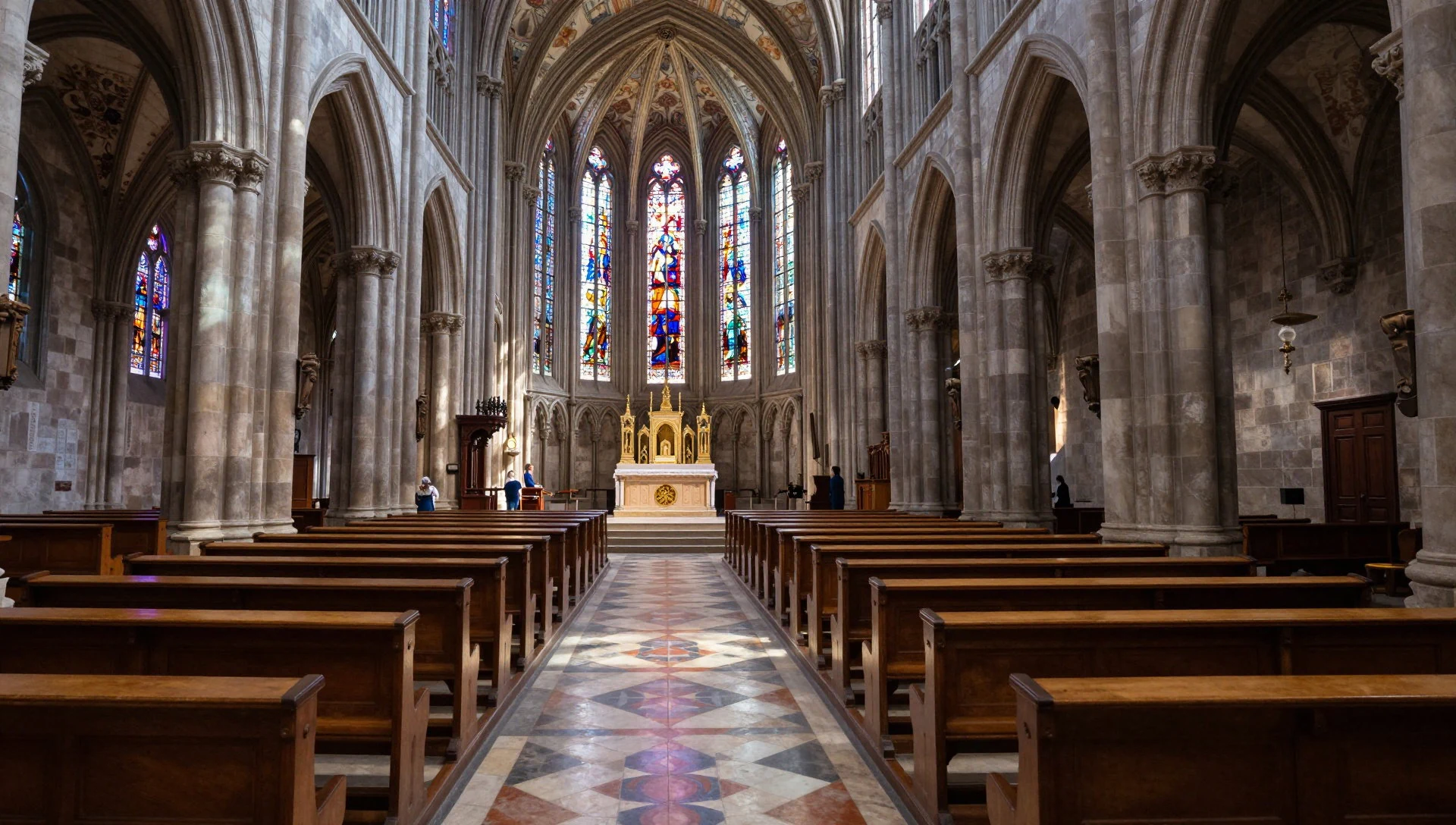
- Giotto's Bell Tower — Piazza del Duomo
Giotto's Bell Tower stands beside the cathedral, clad in geometric patterns of green, pink, and white Tuscan marble. Energetic visitors can climb the four hundred and fourteen stone steps to reach the open upper terrace. The summit rewards the effort with panoramic views across the tiled roofs, historic plazas, and surrounding hills.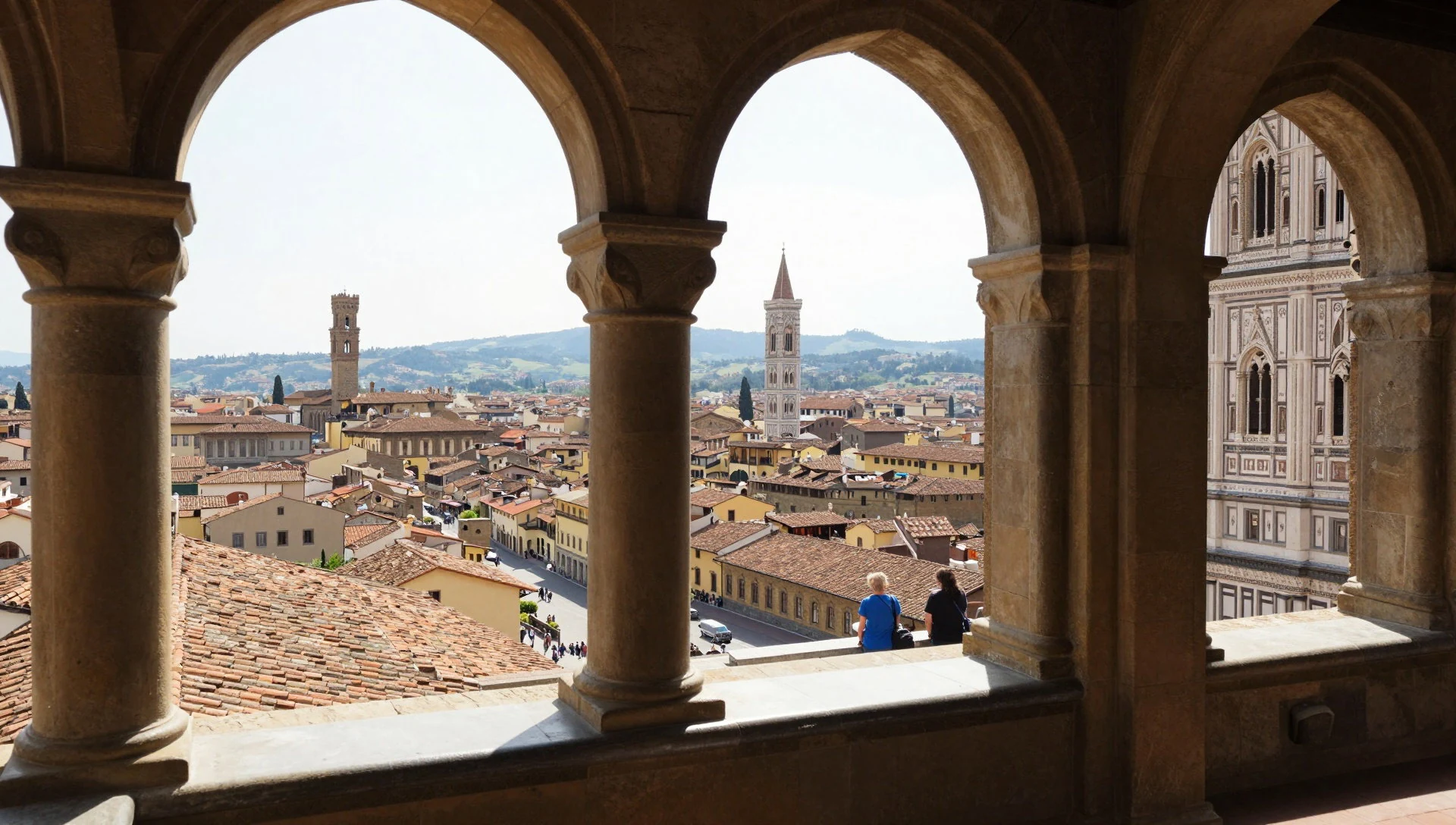
- Florence Baptistery — Piazza del Duomo
The Florence Baptistery features an octagonal structure crowned by a pyramidal roof facing the cathedral entrance. It is world-renowned for its relief-sculpted bronze doors created by Andrea Pisano and Lorenzo Ghiberti. Inside, visitors can gaze up at a magnificent thirteenth-century mosaic ceiling depicting biblical narratives in shimmering gold and vibrant stone tiles.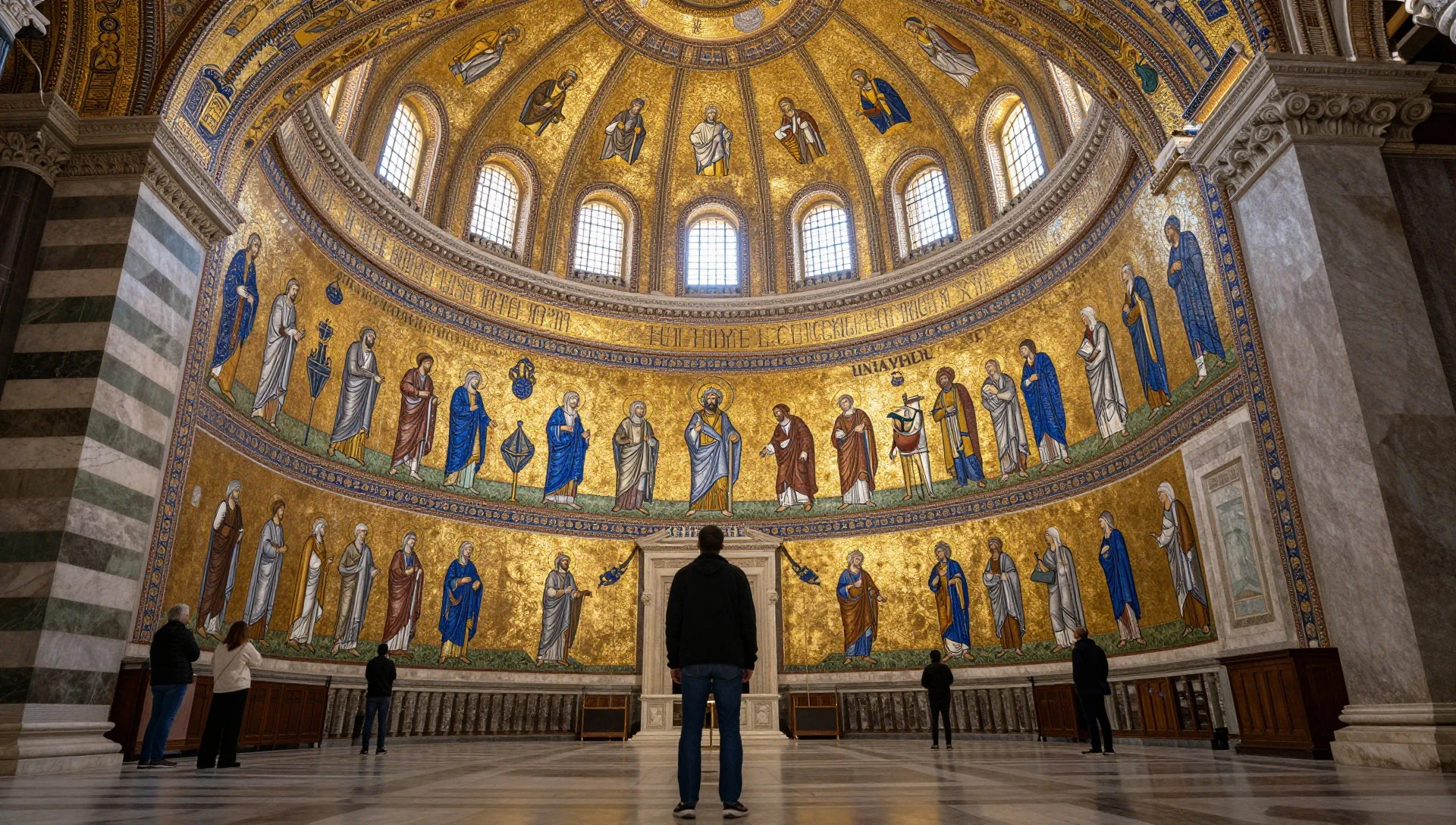
- Museo dell'Opera del Duomo — Piazza del Duomo
Museo dell'Opera del Duomo houses the original artworks and sculptures created for the adjacent cathedral complex. The quiet gallery spaces contain masterworks by Donatello alongside Michelangelo's moving Pietà. It also displays the original bronze door panels from the Baptistery, preserving delicate carved details away from weather and pollution.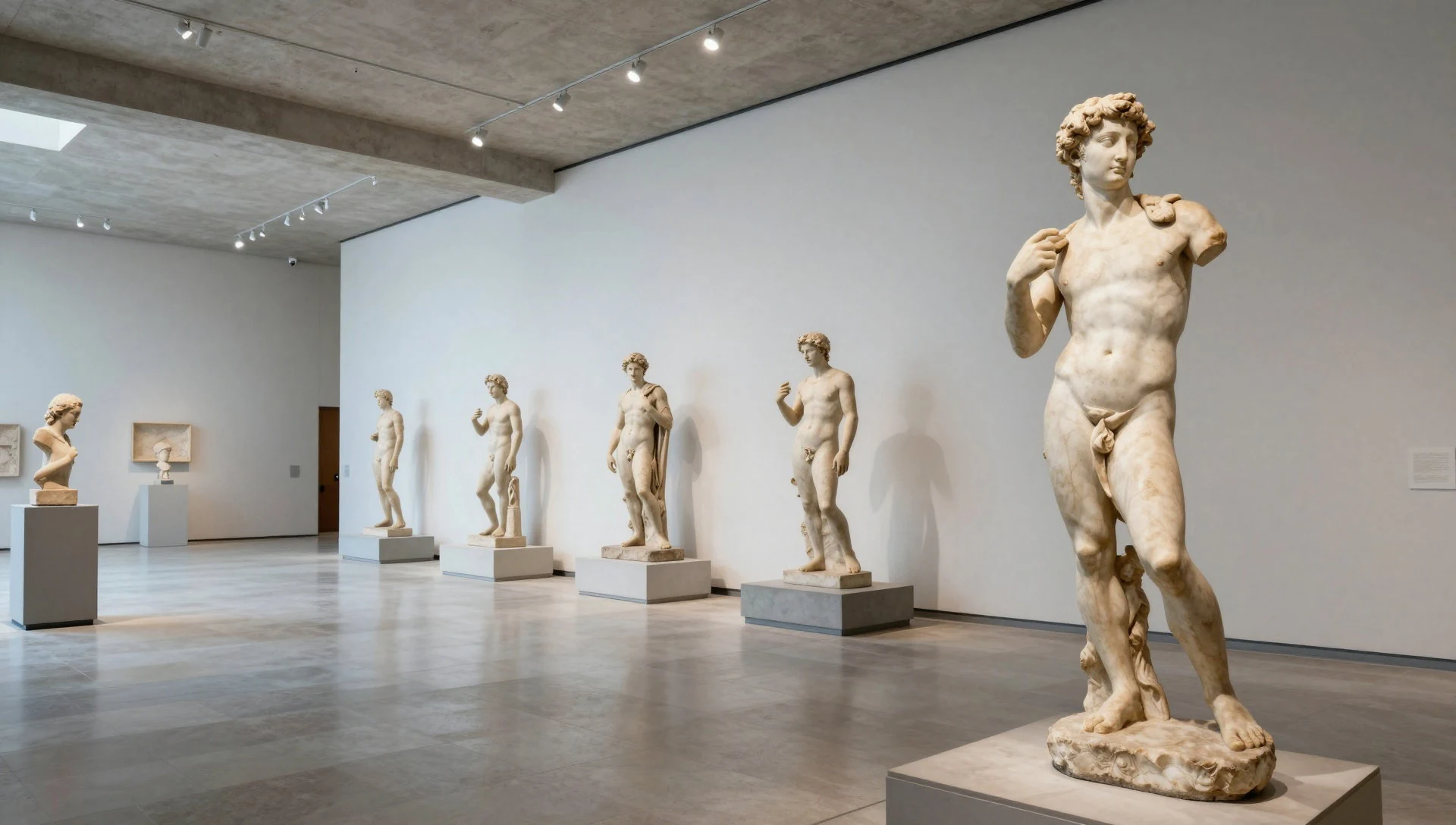
- Galleria degli Uffizi — Piazza degli Uffizi
Galleria degli Uffizi holds one of the world's premier collections of Renaissance painting and classical sculpture. Housed within a former administrative palace designed for the Medici administration, the long corridors overlook the River Arno. The rooms exhibit famous canvases by Botticelli, Leonardo da Vinci, and Raphael in chronological sequence.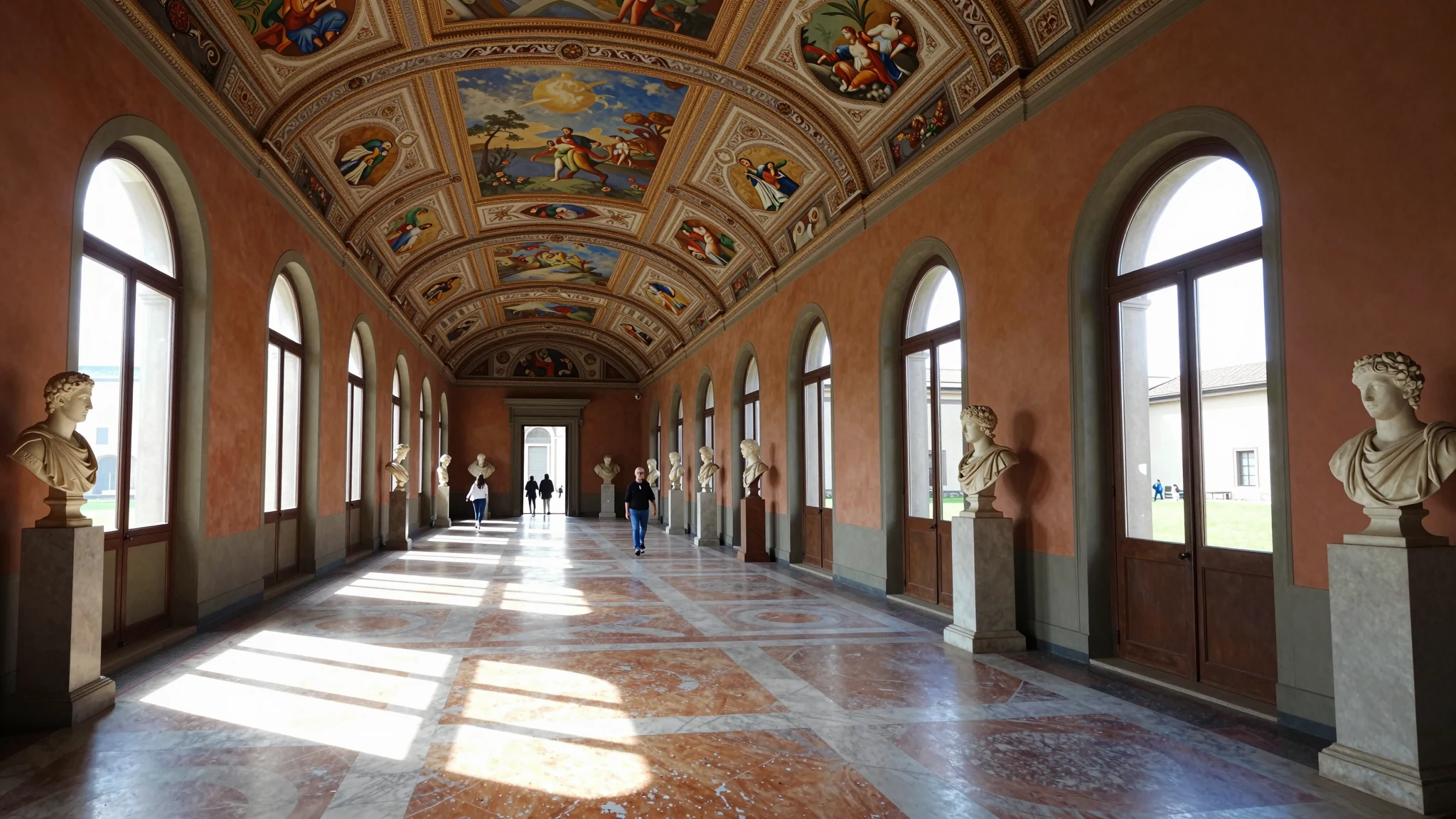
Culture
Florence nurtured a major transformation in artistic expression during the Renaissance that profoundly altered Western culture. Departing from the rigid, symbolic conventions of medieval art, Florentine artists emphasized human emotion, mathematical perspective, and precise naturalistic observation. Masters like Donatello, Michelangelo, and Raphael began signing their work, reflecting a shift from anonymous church craftsmen to celebrated individual artists. Religious themes remained central, but figures were painted with relatable human warmth and anatomical realism.
Today, this artistic legacy influences local pride, civic identity, and everyday life across the city. Modern Florentines maintain strong ties to their historic neighbourhoods, competing in traditional sporting events like Calcio Storico and celebrating seasonal festivals with flag-spinning parades. Respect for craftsmanship remains visible in small leather workshops, paper-marbling studios, and gilding ateliers across the Oltrarno district.
When visiting churches or active religious monuments in Florence, ensure your shoulders and knees are covered and keep your voice lowered to respect worshippers.
What to wear
Florence has a long textile tradition rooted in high-grade wool production, silk weaving, and fine leather craft dating back to medieval guild networks. Traditional attire in the region features tailored wool coats, linen shirts, and structured leather waistcoats, often brought out during historical pageants and neighbourhood festivals like the Calcio Storico. Fine leather remains the signature material of local craftsmen, crafted into gloves, bags, and fitted jackets using centuries-old tanning methods.
Today, Florentines dress with smart, understated elegance that prioritises quality cuts, neutral tones, and natural fabrics like linen and soft wool. Even in warmer months, local residents favour tailored trousers, crisp cotton shirts, and structured leather shoes over casual beachwear. Tailoring and neat fitting are widely valued across social settings.
For visitors to Florence, packing requires balancing summer heat with modest dress requirements at cathedral sites and historical churches. Breathable fabrics like linen or light cotton are ideal for warm days, while a light scarf or shawl is handy for covering shoulders before stepping inside religious venues. Sturdy, comfortable walking shoes are essential, as uneven stone paving and cobblestone streets quickly wear down thin sandals or high heels.
What to eat
- Bistecca alla Fiorentina — traditional trattorias in the historic centre
Bistecca alla Fiorentina is a thick T-bone steak cut from local Chianina cattle, seasoned simply with sea salt and olive oil, then grilled over hot charcoals. Served rare, this substantial dish is shared among dining companions in traditional trattorias.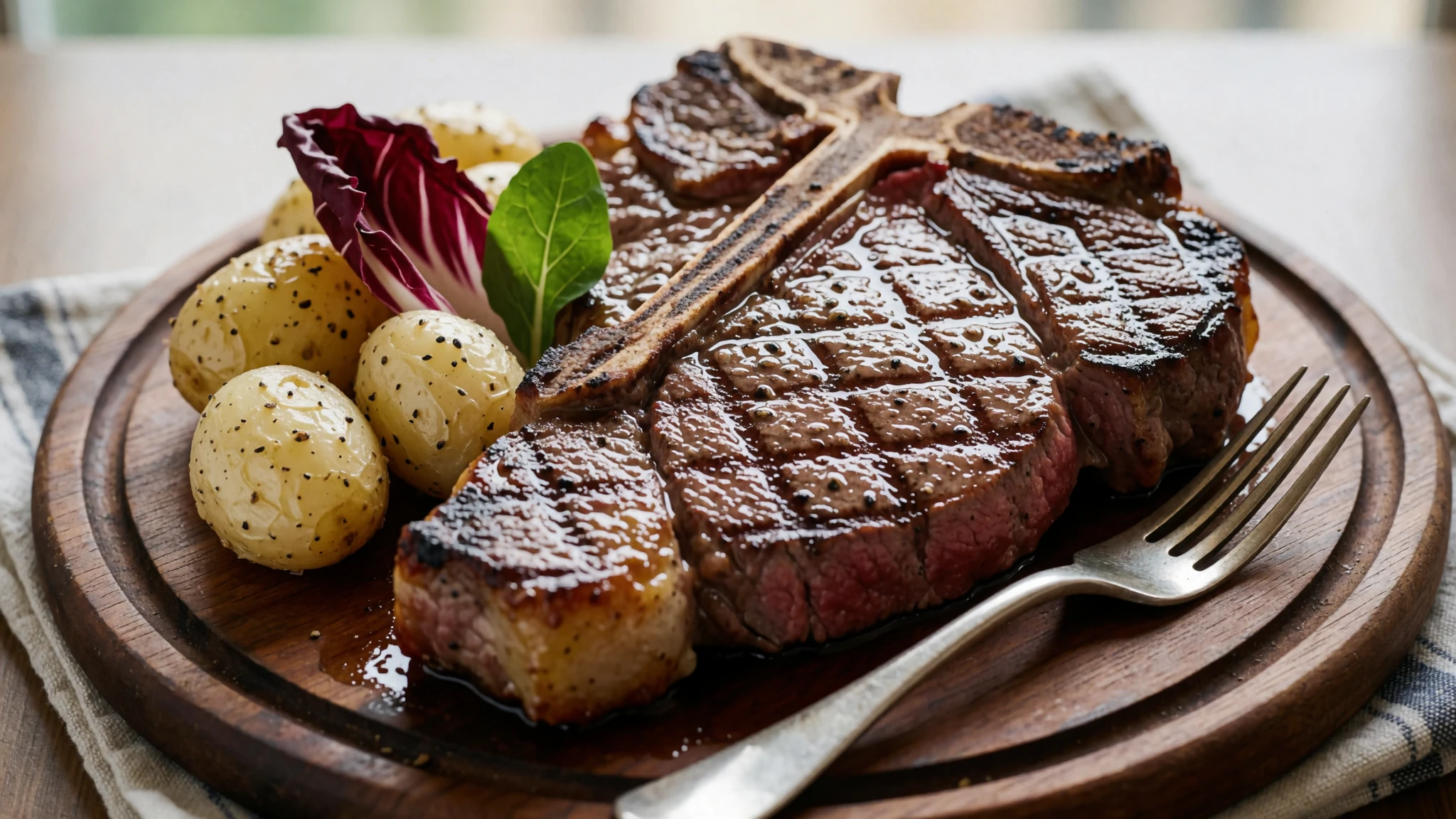
- Schiacciata — bakery counters and street food shops
Schiacciata is Tuscan flatbread baked with generous olive oil and salt, resulting in a crispy crust and soft interior. Available at street food shops across the city, it is frequently stuffed with pecorino cheese, prosciutto, or grilled vegetables.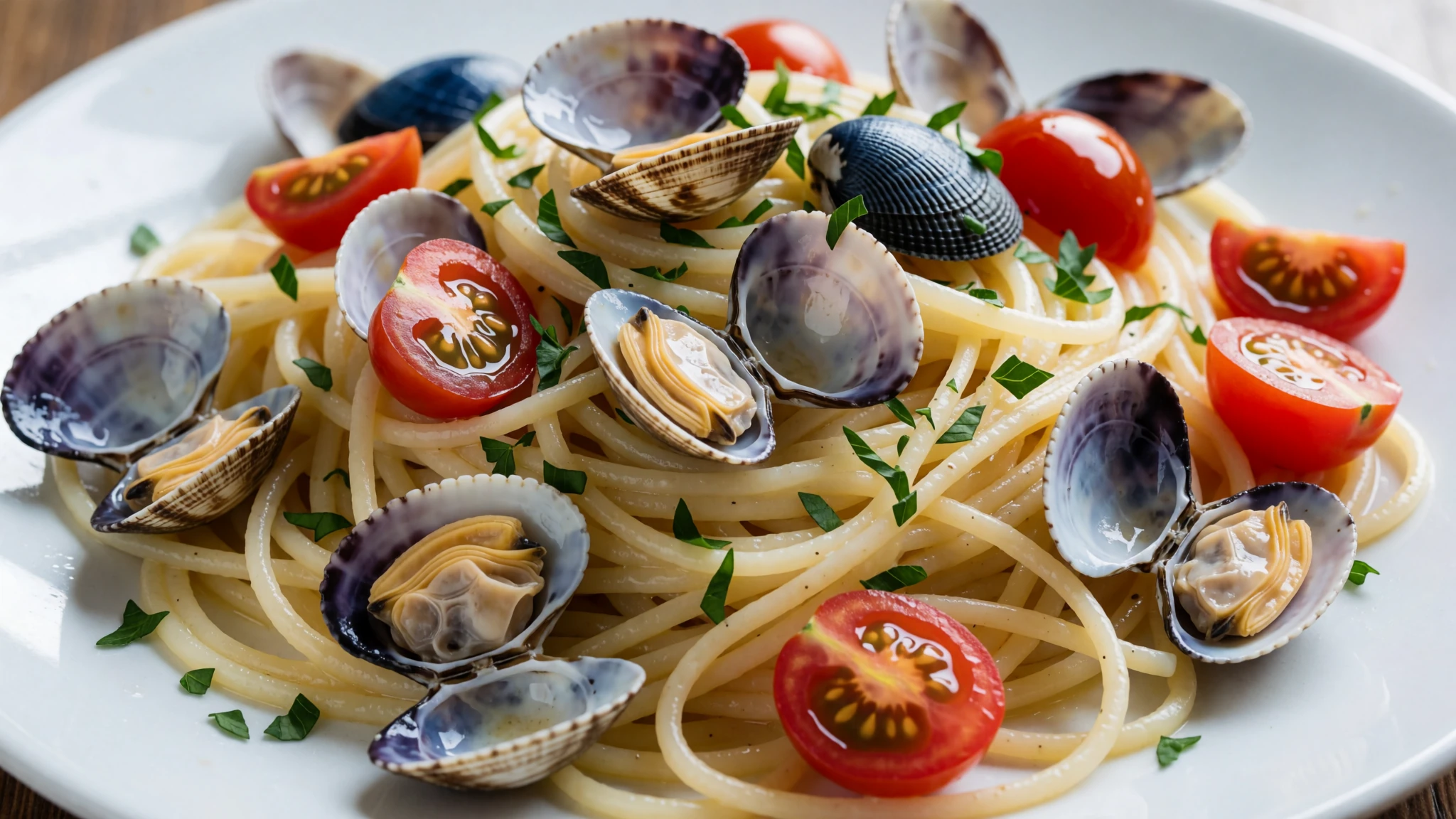
- Trippa e Lampredotto — tripe stalls in central markets and plazas
Lampredotto is a beloved Florentine street dish made from slow-simmered beef tripe seasoned with herbs and tomato. Served in a broth-soaked crusty bread roll with green herb sauce, it is served hot from dedicated street kiosks and market stalls. - Ribollita — neighbourhood eateries and family-run trattorias
Ribollita is a hearty Tuscan vegetable soup made by re-boiling leftover bread with lacinato kale, cannellini beans, carrots, and olive oil. Found in family-run eateries, this comforting dish highlights the simple, resourceful roots of traditional Tuscan home cooking. - Pappa al Pomodoro — traditional Tuscan restaurants and lunch spots
Pappa al pomodoro is a thick bread and tomato soup prepared with stale Tuscan bread, ripe tomatoes, garlic, fresh basil, and extra virgin olive oil. Served warm or at room temperature in neighbourhood taverns, it captures rich summer flavours.
Plan it
Best time. April and October for comfortable temperatures and spring blossoms or autumn light; June, July and August bring intense heat and long museum queues.
How long. 3–4
Getting there. Amerigo Vespucci Airport connects directly to the central train station via tram line T2; major high-speed trains connect from Rome or Milan into Santa Maria Novella station.
Budget. mid
Tips
- Book timed entry tickets for major galleries like the Uffizi weeks in advance
- Explore the Oltrarno district across the river for quiet artisan workshops
- Carry small euro notes and coins for market stalls and street kiosks
- Visit early in the morning to enjoy popular piazzas before tour groups arrive
Etiquette
- Cover shoulders and knees when entering churches and cathedral buildings
- Greet shopkeepers with 'buongiorno' or 'buonasera' upon entering small stores
- Avoid eating takeaway food while sitting directly on church steps or monument bases
Nearby
Sources
- Wikidata Q2044 (CC0)
- Wikipedia (rev 1381361200) (CC BY-SA 4.0)
- Wikivoyage (rev 5402074) (CC BY-SA 4.0)
- Photo photos/01-panoramica-firenze.jpg (CC BY-SA 4.0)
- Photo photos/02-firenze-piazzale-michelangelo-firenze-italy-april-6-2015-02.jpg (CC BY 4.0)
- Photo photos/03-totila-fa-dstruggere-la-citt-di-firenze.jpg (Public domain)
- Photo photos/04-colored-woodcut-town-view-of-florence.jpg (CC BY-SA 4.0)
- Photo photos/05-francesco-rosselli-attribution-pianta-della-catena-1470.jpg (Public domain)
- Photo photos/06-hanging-and-burning-of-girolamo-savonarola-in-florence.jpg (Public domain)
- Photo photos/07-wenceslaus-werlin-leopold-ii-holy-roman-emperor-and-his-fami.jpg (Public domain)
- Photo photos/08-florence-with-snow-cover-in-december-2009.jpg (Public domain)


