Alicudi
Alicudi, Italy
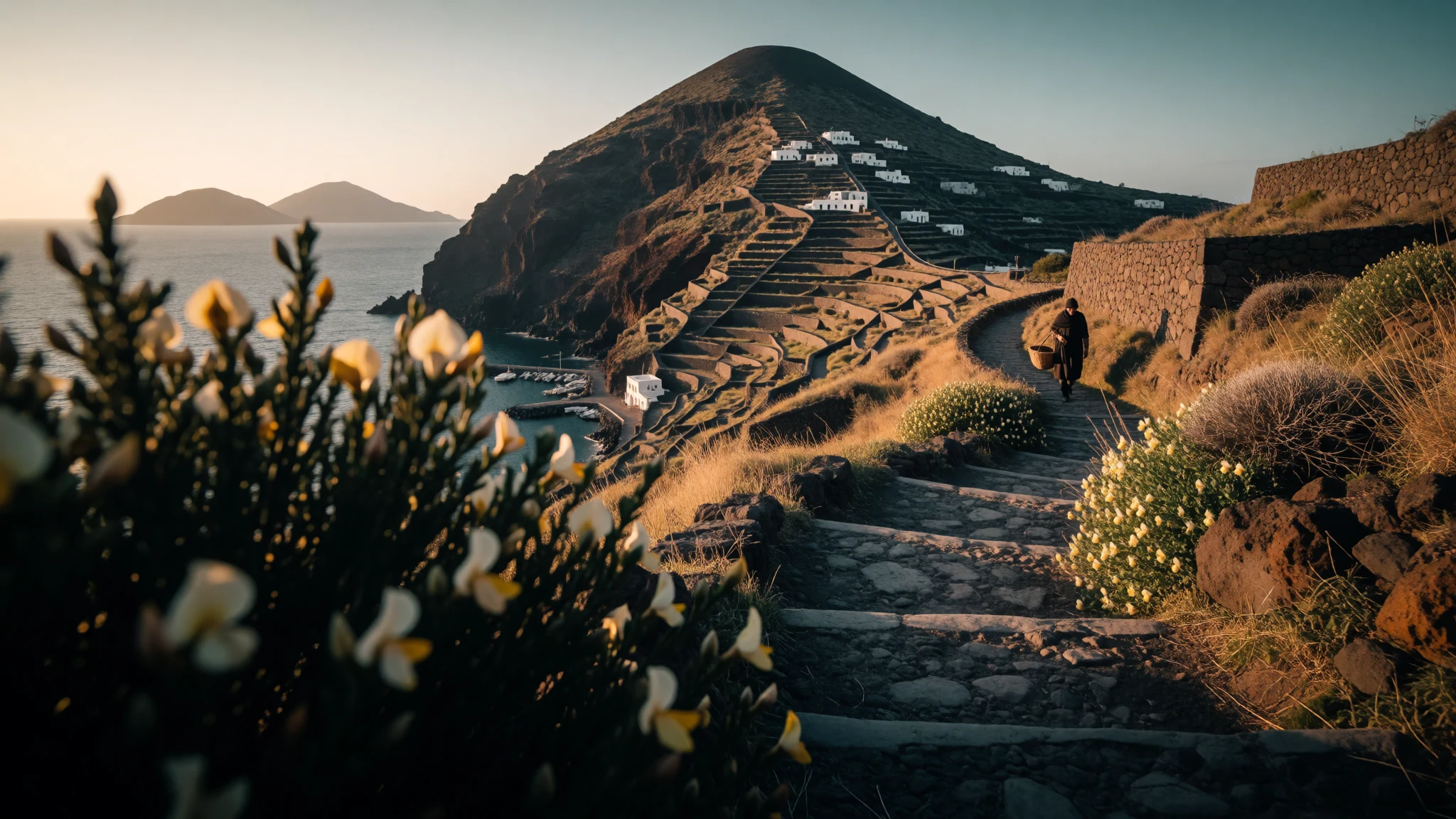
Alicudi is a quiet, steep volcanic island at the western end of the Aeolians, where life still moves on foot and by mule.
The place
Alicudi is the westernmost of the seven Aeolian islands, a volcanic chain strung out north of Sicily. It is close to circular, and that shape matters: the whole island is one cone, so the land climbs almost straight from the sea to a summit of 675 m. Its area is only about 5.2 km², and the permanent population is 105, which makes it one of the quietest corners of the archipelago and a very different experience from the livelier neighbouring islands.
The landscape is the story. There is a small landing at the port, and above it the settlement is spread across the slopes in clusters of houses linked by stone steps and mule paths rather than roads. Terraces, built long ago to hold soil and crops, step up the hillside, and many of them are now overgrown. Higher up the ground turns to scrub, broom and heather-type growth, and the upper cone is empty of buildings. On a clear day the other Aeolian islands show on the eastern horizon, and the sea around the foot of the island is very deep blue.
The island is roughly 40 km west of Lipari, the main hub of the group, so reaching it takes a chain of ferries and some patience. Summers are hot and busy by island standards, though never crowded in the way of Capri or Taormina. Spring and autumn are gentler and better for walking. Visitors come for silence, for the climb, for swimming off rocks, and for the sense of a place that has not been rebuilt for tourism. Shops, cafés and rooms are few, so planning ahead is part of the visit.
Its story
Alicudi was built by the Montagnola volcano, which is long extinct. The main cone formed roughly 150,000 years ago, and geologists suggest that the island's last stage of change may have come as recently as 27,000 years ago. Human traces are far older than the modern village: archaeologists have found evidence of settlement going back to the 17th century BC, and Roman pottery fragments turn up along the eastern coast.
The name has a plant behind it. The ancient Greeks called the island Ereikousa, from erica, the word for heather, which grew on its slopes. Over the centuries that name wore down into the Alicudi of today.
For a long period the real danger was the sea. Pirates raided the Aeolian islands repeatedly, and Alicudi's people responded by moving upward, building small houses on high terraces where raiders were slow to reach and boats could be watched from far off. That choice shaped everything that followed. Farming stayed modest and local, with terraced plots and the cultivation of peaches forming the core of a small economy, and the habit of living on the steep slope remained long after the pirates were gone.
A stranger chapter is the island's reputation for witches and sorcerers. A common modern explanation points to ergotism, a poisoning caused by fungus in damaged grain. In times of scarcity, islanders ate affected flour anyway, and the resulting hallucinations may have fed local tales of spells and flying. It is an explanation, not a certainty, but it fits an island where food was always short and the margin for waste was small.
What to see
- The port and landing — Alicudi Porto, south-east coast
Alicudi's port is where every visit begins and ends, a small cluster of buildings by the water with the cone rising directly behind. It is worth a slow look before the climb: boats come and go, supplies are carried up by hand or by mule, and the scale of the slope becomes clear at once.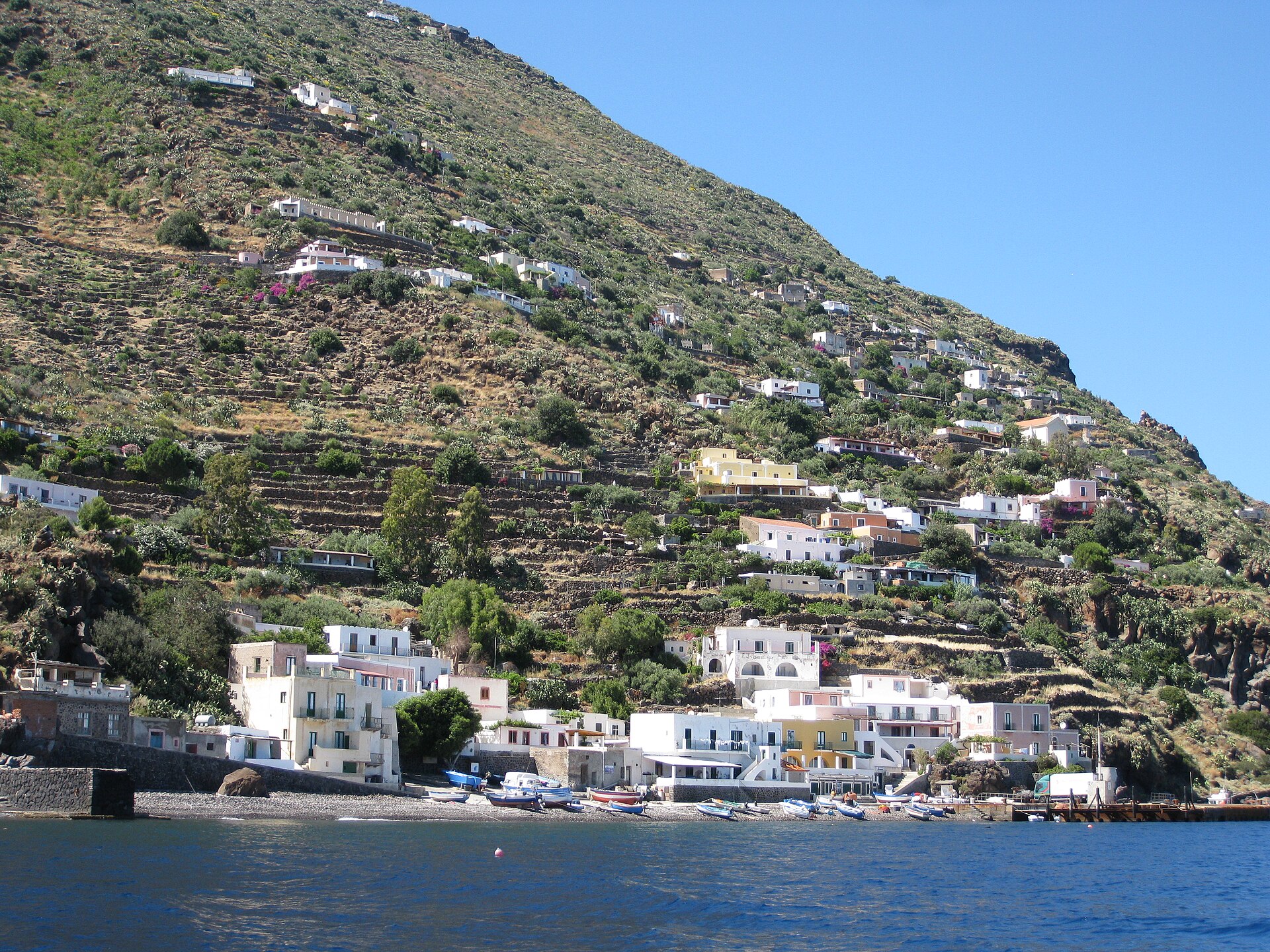
- The stairways and mule paths — Slopes above the port
Alicudi has no road network to speak of, so the stepped stone paths are its streets. Walking them is the main activity, passing terraces, small houses and prickly vegetation. The climb is steady and sometimes steep, so a early start and a full water bottle make it far more enjoyable.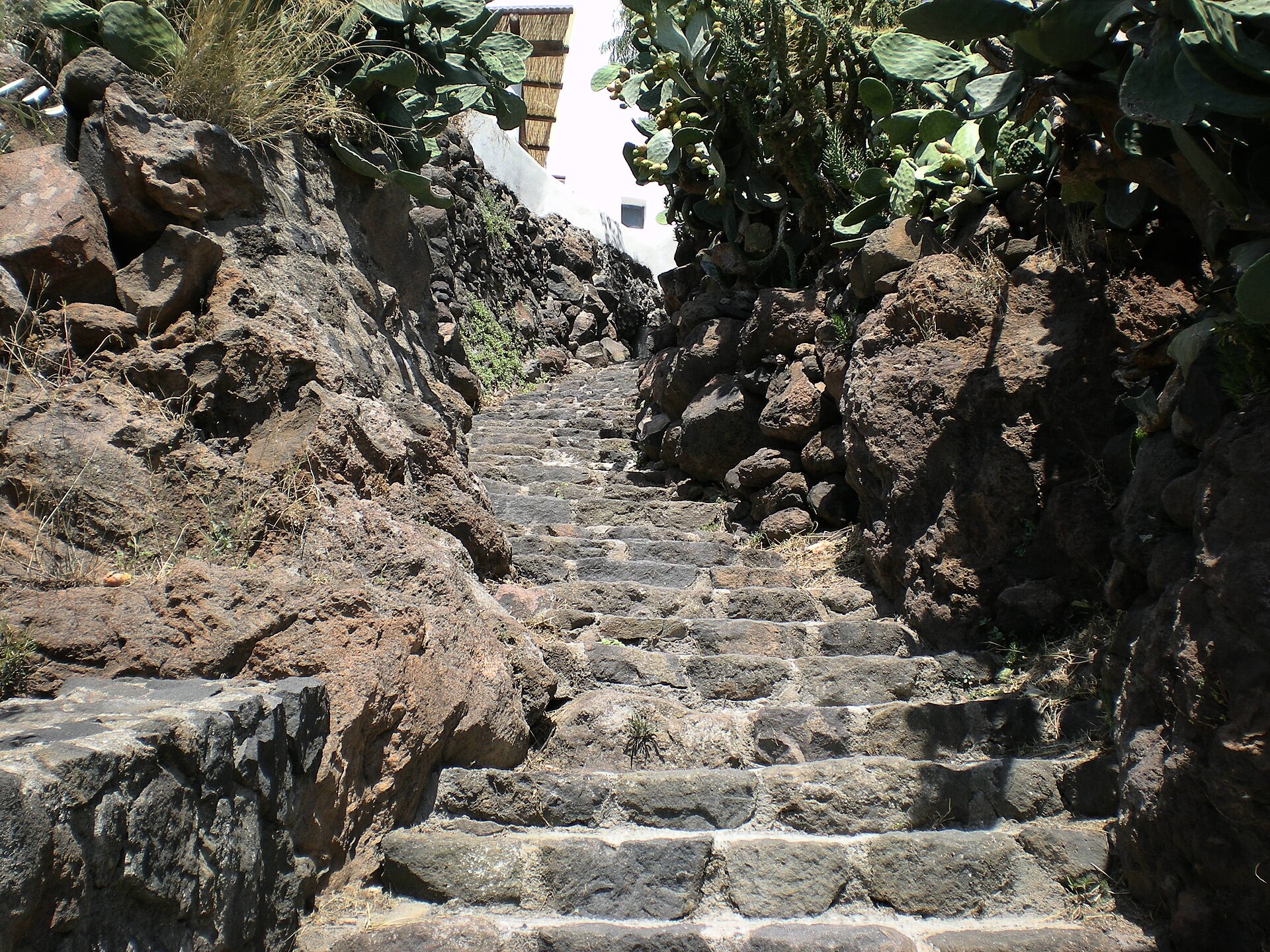
- The ruined hamlet — Upper terraces
Higher on the island stand abandoned stone houses, left as families moved to the coast or away entirely. They show how the pirate-era habit of living high lasted into recent memory. Roofs have fallen, and plants have taken the rooms. Treat the ruins as fragile and unsafe to enter.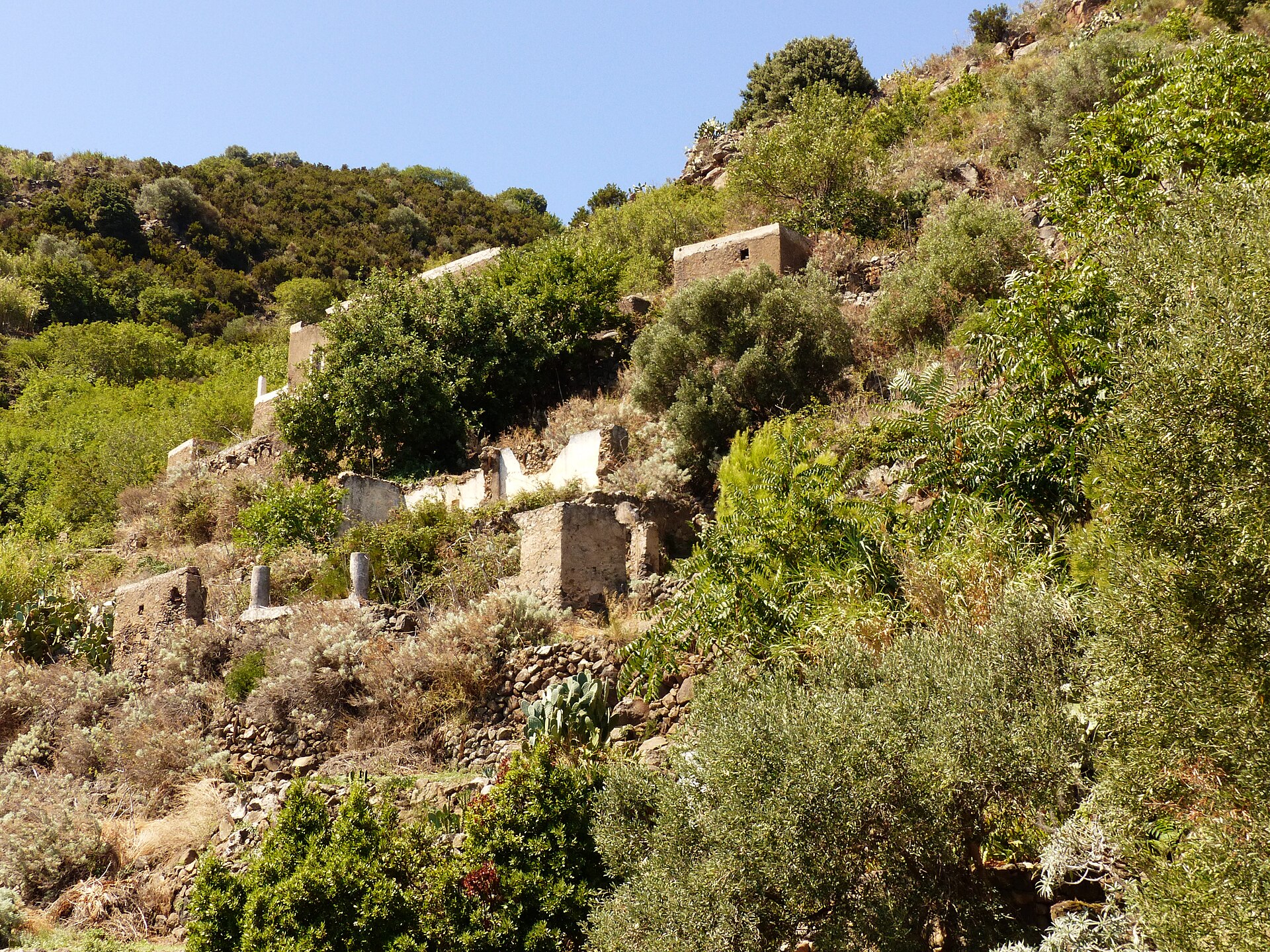
- Scoglio Galera — Rocky coast offshore
This sea stack lies just off the coast and is among the island's most recognisable shapes, especially when seen from a boat or the shore path. Its profile gives the coast a sense of scale. Light is best in the morning or late afternoon, when the rock stands out against the water.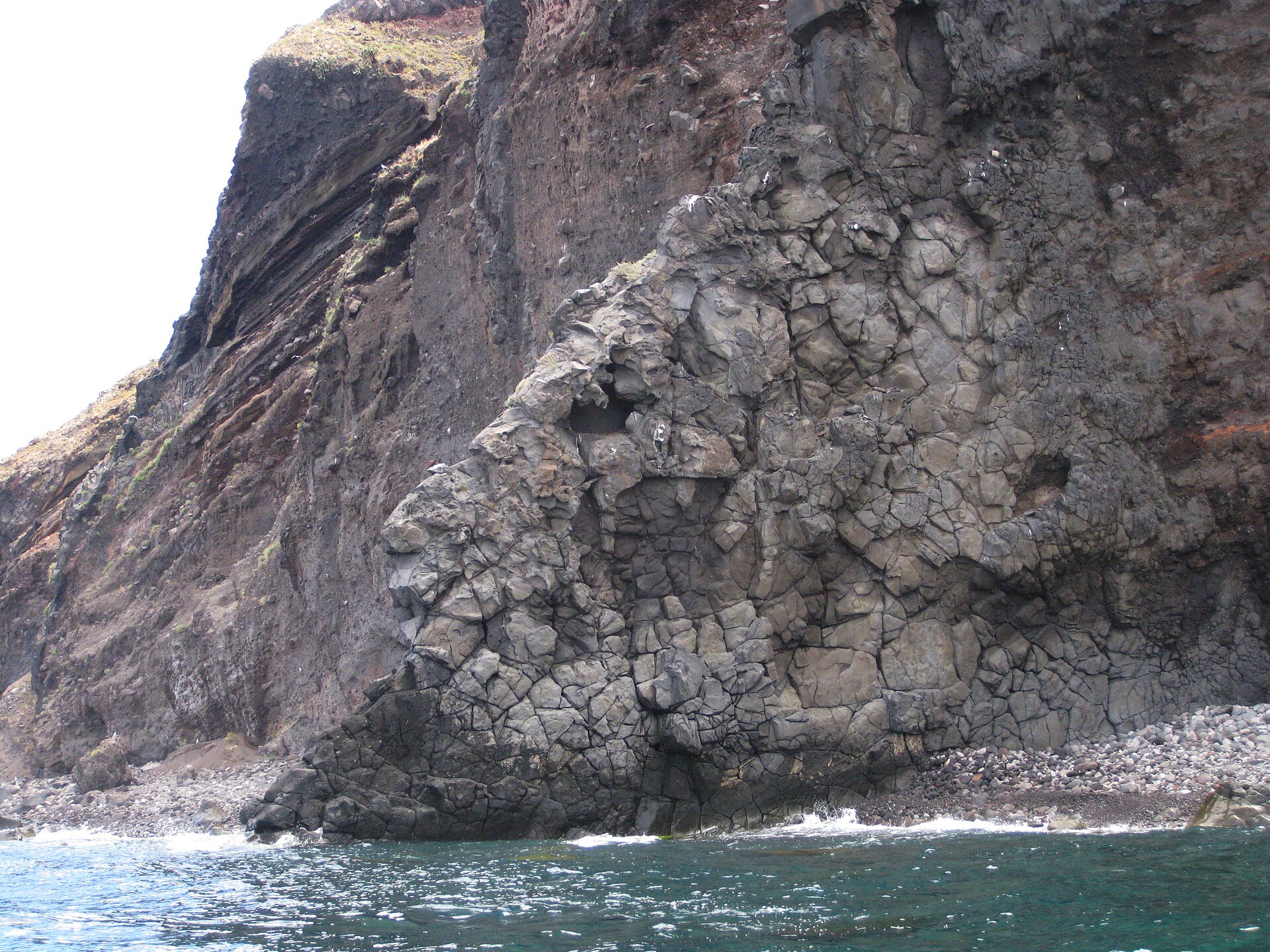
- The summit of Montagnola — Summit of the island
The old volcanic cone, rising to 675 m, is the destination for strong walkers. The top is empty and open, with wide views across the other Aeolian islands and the sea beyond. It is a long, exposed climb, so go in cooler months or at dawn, and tell someone before setting out.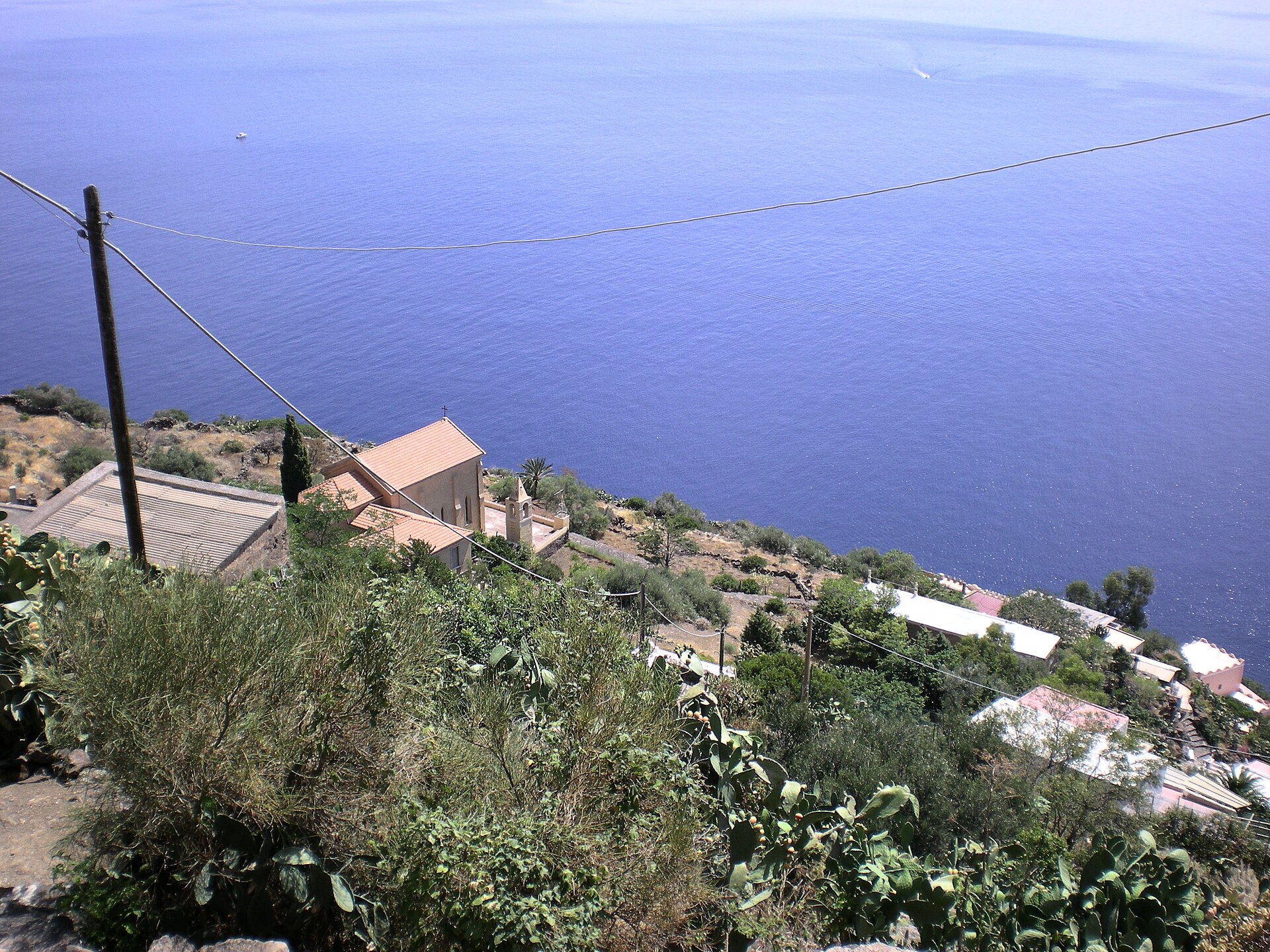
Culture
Alicudi's culture is shaped by smallness and by the effort of living on a steep, remote slope. Everything arrives by boat and often travels uphill on foot or by mule, so islanders value practicality, patience and mutual help. Visitors will notice a slow pace, quiet evenings and shops that open when they open. This is part of the appeal rather than a failing.
The island belongs to Sicily, and the wider Sicilian character shows here too. People are proud of their home, often conservative and religious, and generally warm once a conversation has started. Layers of Greek, Roman, Arab, Norman and Spanish history have left Sicily with a mixed culture, and the Aeolians carry their own island version of it, with a strong attachment to the sea, to saints' days and to stories handed down about pirates and witches.
That witch lore is told with humour, but it comes from real hardship, so it is best received as a local tale rather than a joke at the islanders' expense. Church customs matter, and the same goes for subjects such as organised crime, which Sicilians find painful and do not enjoy as a topic of jokes. Small talk about food, weather and boats is always welcome.
On an island this small, quiet and neighbourly behaviour counts for a great deal: keep your voice low in the evening, carry your rubbish back down to the port, and greet people you pass on the paths.
What to wear
Alicudi has no famous costume of the kind that draws crowds to festivals, and the brief records none, so it is more honest to describe the practical clothing of the island than to invent a tradition. Historically, island life meant hard physical work on terraces and boats, and everyday dress followed from that: hard-wearing wool and cotton, dark colours that hid dirt, headscarves and shawls for women, and caps and sturdy trousers for men. Sicily more widely has a long textile history shaped by its many rulers, but nothing in the sources ties a particular garment to Alicudi.
Today islanders dress simply and for the job. Residents wear shorts, T-shirts, work shirts and tough shoes in summer, with fleeces and waterproofs in the cooler, windier months. Smart clothes appear mainly for church, family occasions and feast days, when people dress with care.
For visitors, the terrain decides. Footwear matters most: choose shoes with good grip and ankle support, since the paths are steep, stepped and sometimes loose. Light, breathable clothing suits the hot months, along with a hat, sunglasses and high-factor sun cream, because shade is thin on the upper slopes. Bring a windproof layer for evenings and ferry crossings, and a swimsuit for rocky bathing spots. Shorts are fine across Sicily, but cover shoulders and knees if you step into a church. Pack light, since luggage has to be carried up steps.
What to eat
- Fresh grilled fish — Small family-run eateries near the port
Alicudi's food follows the sea, and a plate of fish grilled simply with olive oil, lemon and herbs is the island's natural meal. The catch depends on the day, so ask what came in rather than expecting a fixed menu. - Pasta with tomato and capers — Island kitchens and rooms offering home meals
A simple dish built on local tomatoes, olive oil and wild capers, which grow on the island's rocky slopes. The caper's sharp, salty bite lifts a plain sauce, and the dish is often made from whatever the kitchen garden provides. - Caponata — Any simple eatery or home kitchen on the island
A sweet-and-sour Sicilian dish of aubergine, tomato and other vegetables cooked in olive oil and finished with vinegar. It is served cold or at room temperature, which suits a hot island afternoon and a glass of local wine. - Fresh peaches — Island growers and the odd stall in summer
Peaches have long been cultivated on Alicudi, and eating one in season is a small taste of the island's farming past. Fruit is best bought directly from growers or local sellers when available, rather than expected in every shop. - Sicilian almond sweets — Bakeries in Lipari or on the mainland, carried across
Sicilians have a famous sweet tooth, and almond pastries and biscuits are a staple, a legacy of Arab influence. Small shops on larger islands stock them best, so bring a few to Alicudi for the walk.
Plan it
Best time. April–May and September–October. Summers are hot and the peak of the tourist season, while spring and autumn are milder and better for the long climbs; winter can be pleasant but sea conditions may disrupt crossings.
How long. 2–3
Getting there. Fly to Catania or Palermo, the two main Sicilian airports, then continue to a ferry port on the north coast such as Milazzo. From there take boats to the Aeolians, usually changing at Lipari for the last leg to Alicudi. Check the ferry operators' sites for current crossings, since services vary by season and weather.
Budget. mid
Tips
- Book rooms well ahead in summer, as the island has few places to stay
- Check ferry services before travelling and keep a spare day in case rough seas cancel a sailing
- Carry cash, since cards may not be accepted everywhere on the island
- Bring water and snacks from the port before walking, and start early to avoid midday heat
- Pack light in a soft bag, because luggage often has to be carried up steps
Etiquette
- Greet people you meet on the paths and keep noise low in the evening
- Take all rubbish back to the port and do not enter ruined houses
- Cover shoulders and knees when entering a church
Nearby
Sources
- Wikidata Q649957 (CC0)
- Wikipedia: Alicudi (rev 1374618350) (CC BY-SA 4.0)
- Wikivoyage: Sicily (rev 5320270) (CC BY-SA 4.0)
- Aerial image of Alicudi (view from the south), Carsten Steger (CC BY-SA 4.0)
- Aerial image of Alicudi (view from the northeast), Carsten Steger (CC BY-SA 4.0)
- Aldea en ruinas, Alicudi, Benjamín Núñez González (CC BY-SA 4.0)
- Alicudi - Capparis Spinosa, Godromil (Public domain)
- Alicudi - Porto, Godromil (Public domain)
- Alicudi - Scoglio Galera, Godromil (Public domain)
- Scorcio di Alicudi, Ksatiro (Public domain)
- Scale di Alicudi, Ksatiro (Public domain)


