Alberobello
Alberobello, Italy
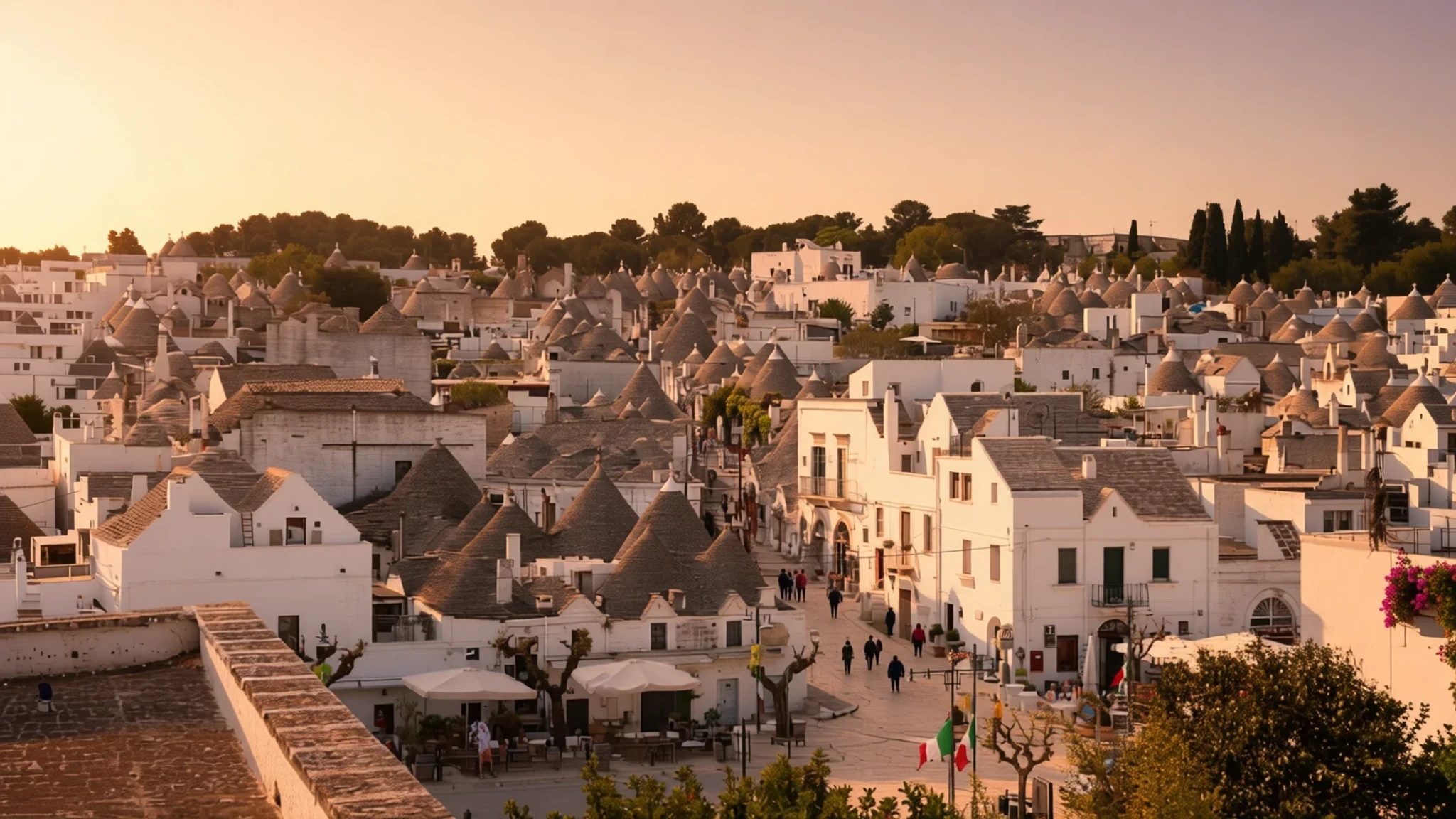
A small Apulian town of whitewashed stone trulli, where whole streets of cone-roofed houses are still lived in by local families.
The place
Alberobello is a small town in the Metropolitan City of Bari, in the Apulia region of southern Italy, and it is known for one building type above all: the trullo. These are dry-stone houses, whitewashed on the outside, with a round base and a tall conical roof of grey stone. Many of them cluster in a single district, which is why the town stands out from almost anywhere else in the country. The town has 10,177 inhabitants and sits at 416 metres above sea level, on gently rolling land in the Itria Valley. Some trulli now hold shops, cafés and small guesthouses, but many are still ordinary family homes, and the lanes around them carry the sound of daily life rather than a tour script. The trulli have been a UNESCO World Heritage Site since 1996, and that status has brought steady visitors, though the town is far enough inland that it does not feel crowded in the way the coast can. Most of the people you will meet on the streets are Italian travellers on day trips and weekends. Expect a quiet town that rewards slow walking, with the best views coming in the early morning and the hour before dusk, when the light lands on the grey cones and the crowds thin.
Its story
Alberobello began as a farming settlement in the early sixteenth century, when the Count of Conversano allowed a small group of peasant families from a neighbouring town to clear and cultivate woodland here. They paid the count a tenth of their harvest in return. The settlement grew slowly, and in 1635 the next count built an inn with a tavern and a small oratory, which gave the place its first real shape as a village. Two conditions of the local economy shaped what came next. The surrounding karst country offered plenty of layered limestone that could be split and stacked by hand. The count also required that houses be built from dry stone without mortar, a rule that in practice helped him limit the taxes he owed to the Spanish viceroy in Naples. The result was a style of building that needed no lime, could be dismantled and rebuilt, and kept cool in summer. The old town was laid out along the course of a former river, the Cana, whose line is now followed by the main street. Alberobello stayed under the Acquaviva family until 1797, when King Ferdinand IV of Bourbon raised it to royal city status and freed it from feudal obligations to the counts. A first mayor was chosen that year, and the town began to govern itself. The trulli survived that change, and today they remain the reason the town exists as a place people travel to see.
What to see
- Rione Monti (the trulli district) — Rione Monti, the old trulli quarter
The Rione Monti is the dense heart of the trulli, a grid of narrow lanes lined with houses whose roofs are stacked grey cones. Some roofs carry small pinnacles, and a few are topped with a painted or stone cross. Walk it slowly, keep to the public lanes, and give residents space, since many of these houses are private homes.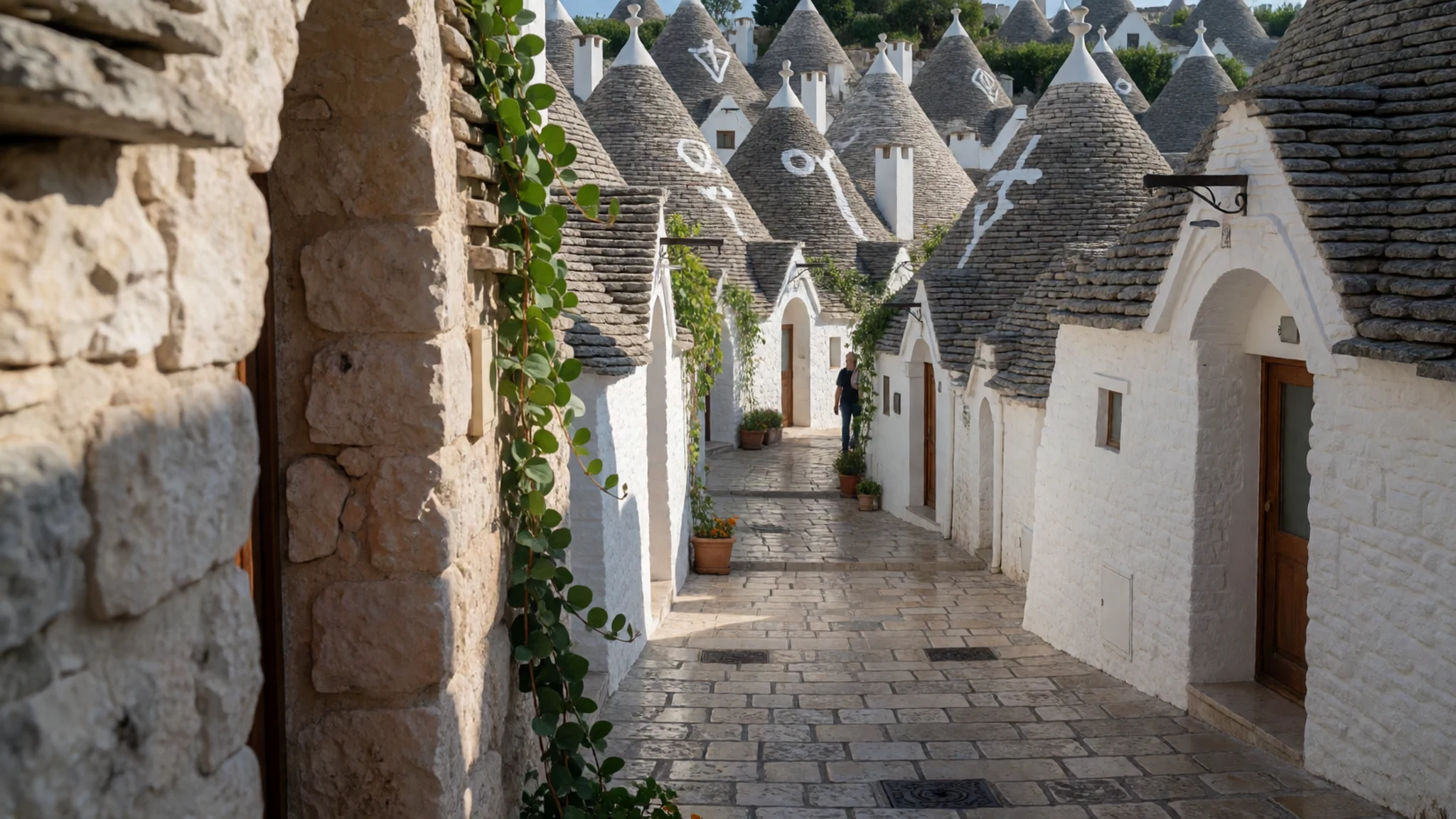
- Trullo Sovrano — Trulli district, central Alberobello
The only two-storey trullo in town, and the one most visitors ask about. Most trulli are single rooms under one cone, so the upper floor here makes it stand apart from its neighbours. It sits in the trulli district and is a good place to see how the building form can be adapted. Check the official town website for current opening times before you go.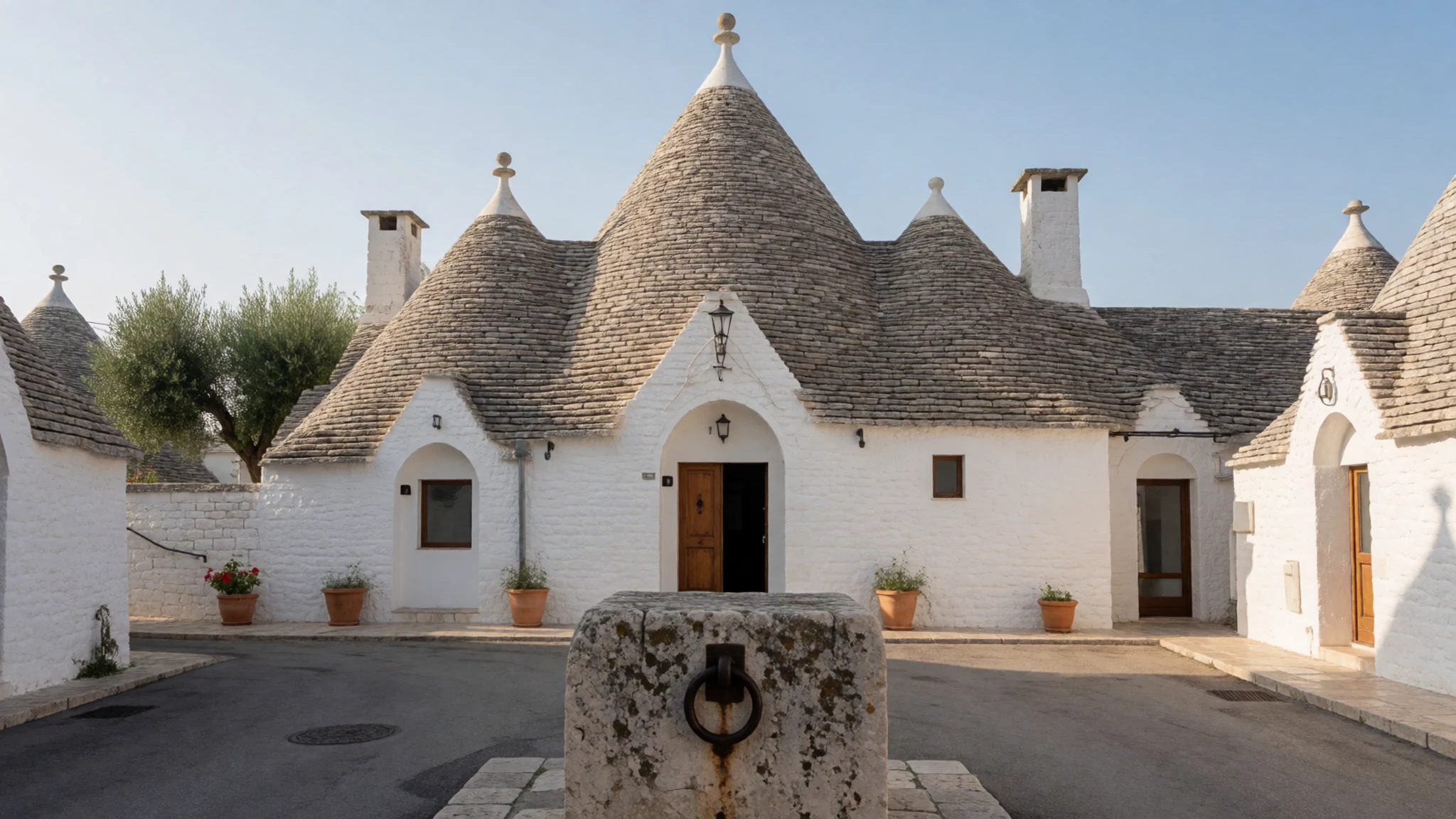
- Chiesa Matrice — Near the centre, close to the main street
The town's main church, standing close to the centre and a useful place to pause out of the sun. Its plain front contrasts with the grey cones across the nearby lanes, which makes it a good reference point for orientation. Dress modestly to go inside, cover your shoulders, and keep your voice low during services.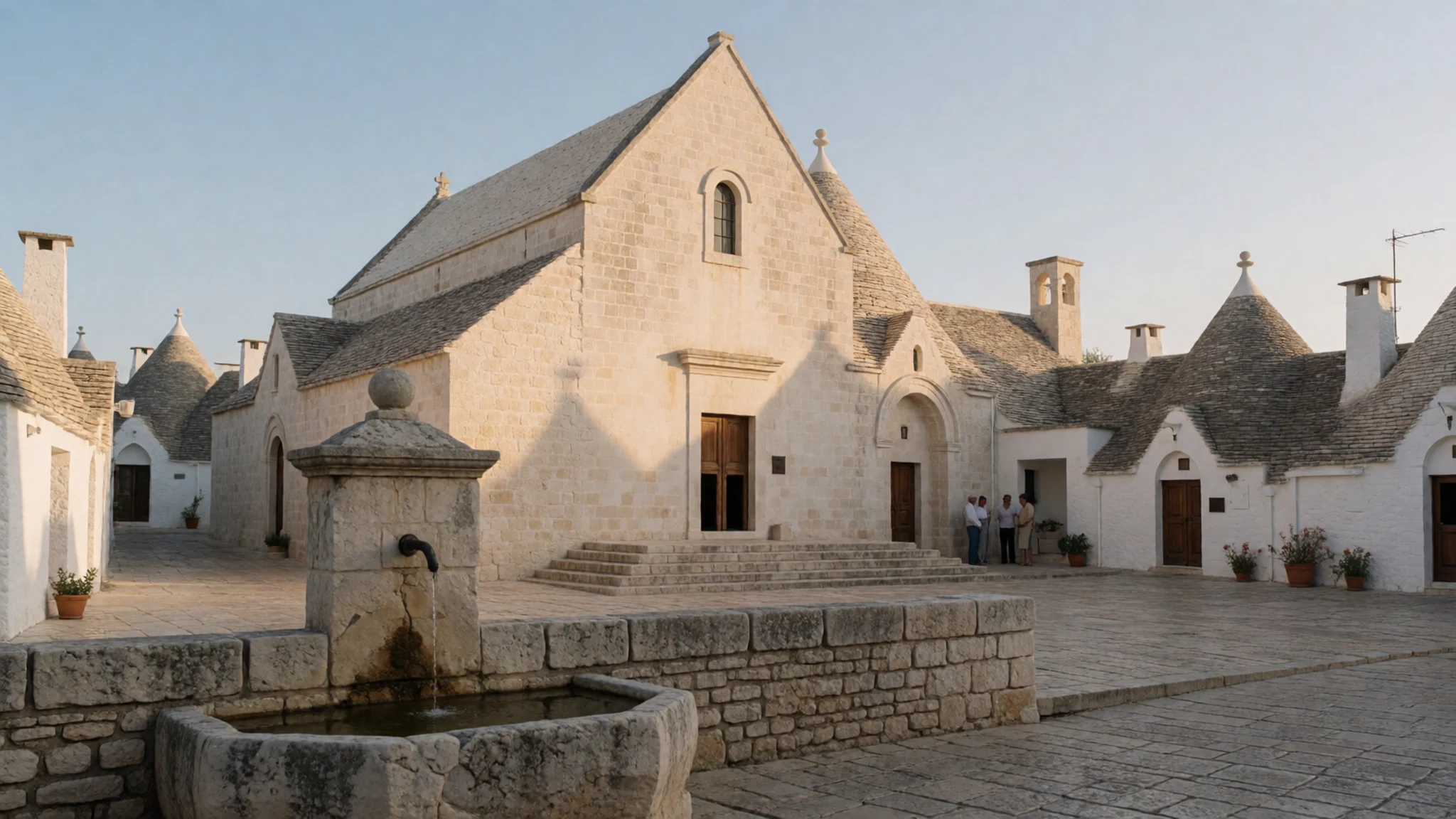
- Santuario di Sant'Antonio di Padova — Edge of the trulli district
A sanctuary dedicated to Saint Anthony of Padua, on the edge of the trulli area and a short walk from the centre. It is quieter than the main streets and gives a clearer view of how the trulli district meets the surrounding town. Visit in the cooler hours, when the stone paths and steps are easier on the legs.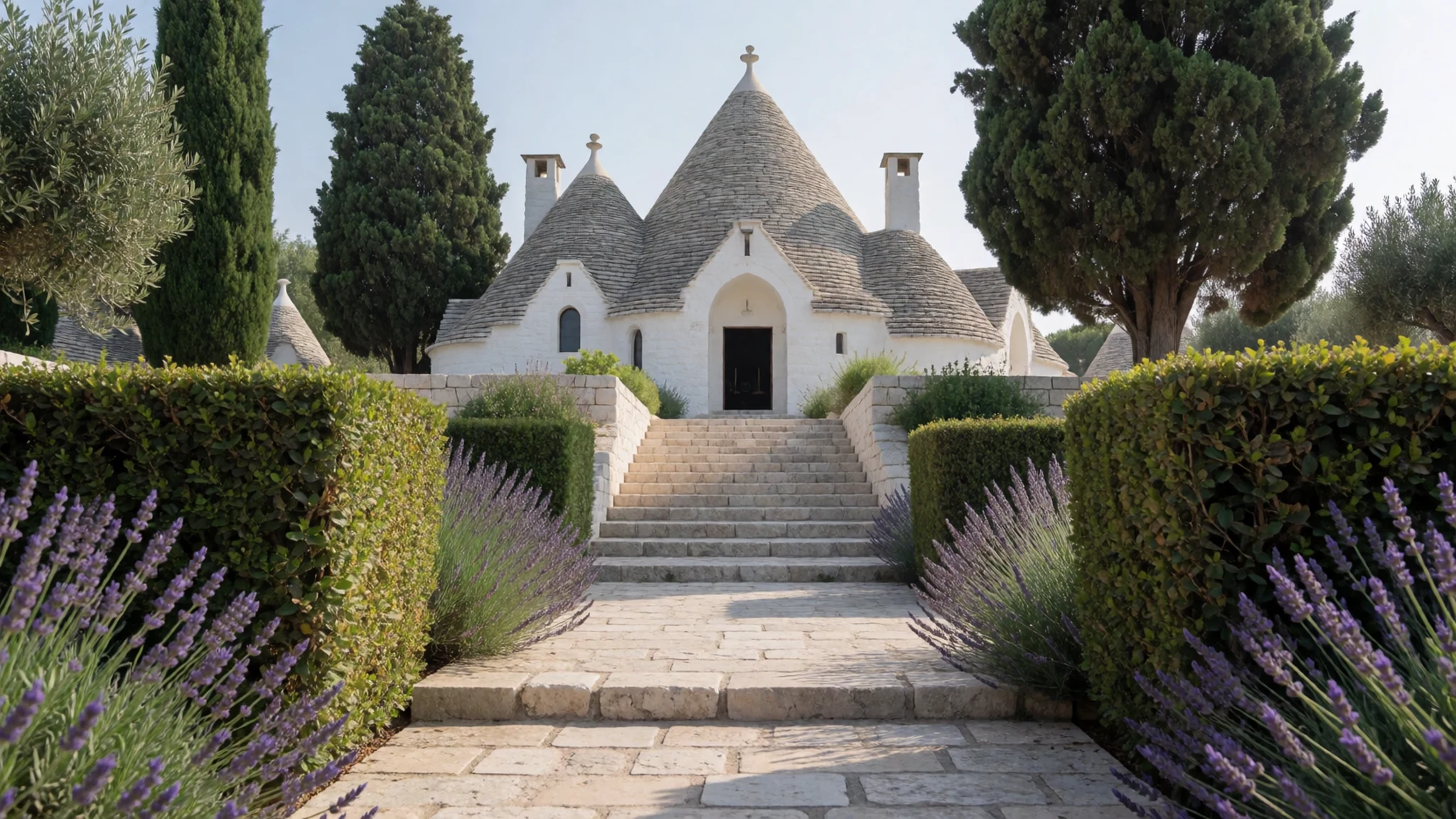
Culture
Alberobello is a living town as well as a monument. Many trulli are still lived in by local families, who are generally warm to visitors and happy to chat in the morning or evening when the lanes are quiet. Alberobello's sense of itself is shaped by its religious calendar, and each year pilgrims make their way to the basilica of the martyr saints Cosma and Damiano. Meals are a social occasion in the Italian way: lunch and dinner run slowly, and waiters expect you to linger rather than rush. Shops and eateries in the old quarter open and close in patterns that suit local life, so do not expect everything to be open through the afternoon. Dress for churches, where shoulders and knees should be covered, and be relaxed about the everyday. The main rule is simple: do not step into a courtyard, lean on a wall or photograph people at their doorways unless you have asked first, because the lanes between the cones are someone's home.
What to wear
Traditional dress in Alberobello and across the wider Apulian countryside was practical rather than ornamental. Women's clothing typically used cotton and wool, with dark skirts, embroidered bodices and shawls for church and feast days, and men wore wool jackets and trousers suited to farm work. Such costumes now appear mainly at festivals, church processions and folk displays, where local groups keep the designs and the hand-embroidery alive. In everyday life, people in Alberobello dress much like Italians anywhere: smart casual in town, with a preference for good shoes and neat, simple outfits, and more relaxed clothing in high summer. A visitor should plan for heat from late spring to early autumn, choosing light cotton or linen, a hat and sunglasses. Sturdy, flat shoes matter more than fashion here, because the lanes are uneven stone and there are steps in many places. Cover shoulders and knees for the churches, and carry a light layer for cooler evenings, which can be pleasant even after hot days.
What to eat
- Antipasto della casa — A trattoria a little outside the centre, near the sports ground
The house starter is a shared spread of cured meats, cheeses, grilled vegetables and fried bites, often in many variations. It is generous, so order it before a main course and share it. Local diners treat it as the centre of the meal, and it is one of the best ways to taste the region.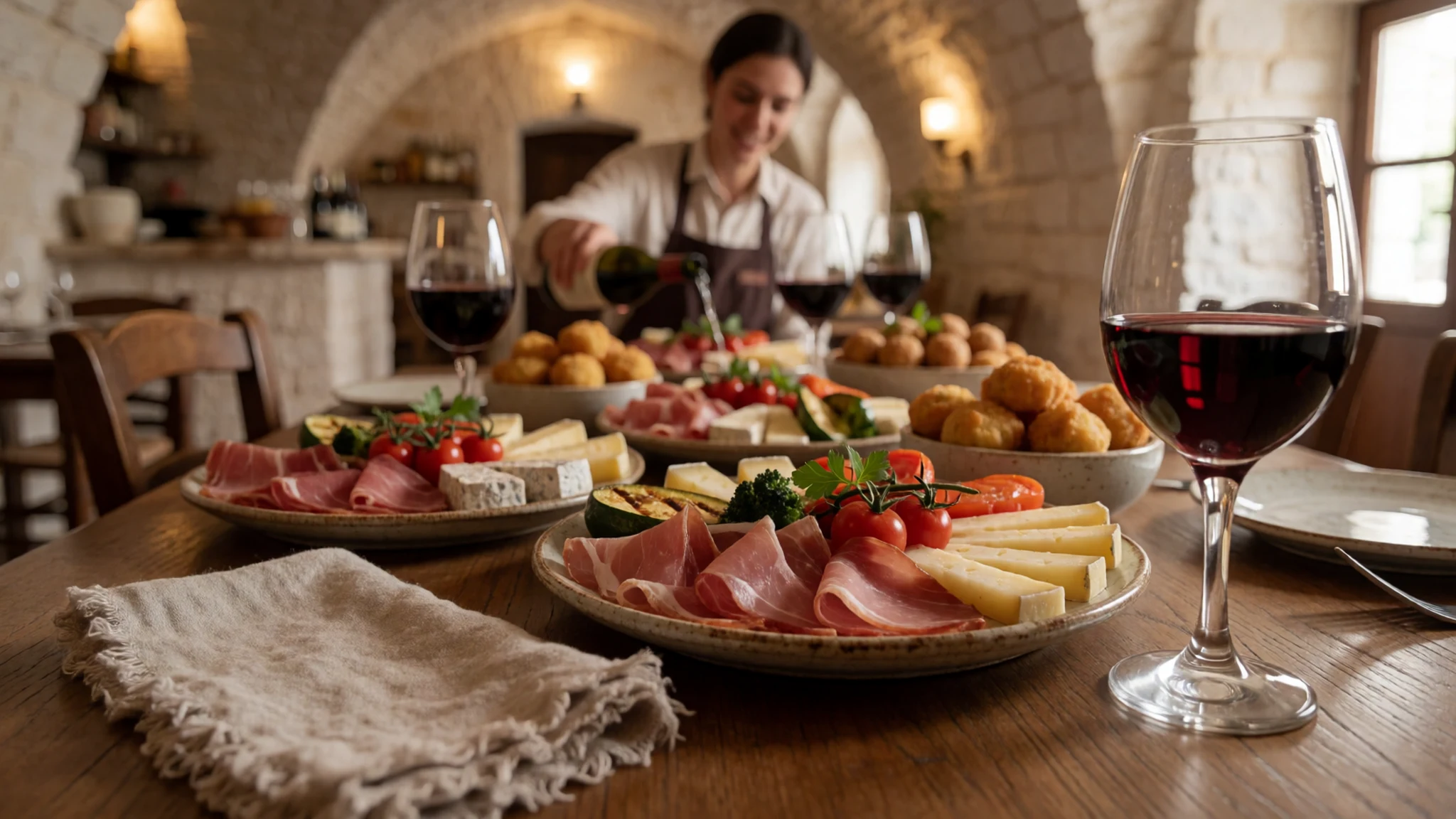
- Grilled meat — Family-run eateries away from the tourist strip
Meat main courses in Alberobello tend to be simple and well cooked, with the flavour coming from the quality of the meat and the grill. Dishes arrive without heavy sauces, and the portions are often substantial. Ask for what the kitchen recommends that day, since menus change with the market.
- Pizza — Pizzerias on the lanes off the main street
A straightforward pizza, thin-based and quick from the oven, is a dependable choice for a casual meal. Many pizzerias serve it in the evening, and it suits a light dinner after a day in the heat. It is an easy option when you want to keep costs and fuss low.
- Orecchiette with tomato and greens — Small home-style trattorias in the old town
Orecchiette, the small ear-shaped pasta of Apulia, is often served with tomato and seasonal greens such as turnip tops. It is a home-style dish that reflects the region's farming roots. Look for it on menus that describe themselves as traditional, and order it early in the evening when the kitchen is fresh. - House wine — Any small trattoria; ask for the house wine by the carafe
The house red or white is a good accompaniment to a long meal, and many eateries serve it by the glass or carafe. It is often served as part of a fixed meal and suits the grilled dishes well. Drink it slowly, since the evenings here are meant for lingering.
Plan it
Best time. Late April to May and October are the most comfortable months for walking the lanes. July and August are hot and busy, and the stone holds heat long into the evening. Winter is quiet and can be damp, but the town is calm and the trulli look different in grey light.
How long. 2
Getting there. Fly into Bari or Brindisi. From Bari Centrale, take the Ferrovie Sud-Est line, which runs from inside the same station and takes about 90 minutes. Alternatively, drive from either airport in under an hour.
Budget. mid
Tips
- Stay overnight if you can, so you have the lanes in the early morning before the day visitors arrive
- Book dinner ahead in summer, since popular eateries fill quickly
- Carry some cash, because smaller shops and cafés may not take cards
- Bring water and a hat in summer, and plan walks for the cooler hours
- Check the official town website for opening times, which can change with the season
Etiquette
- Do not walk into courtyards or lean on walls of houses that are clearly lived in
- Ask before photographing people, especially at their doorways
- Cover your shoulders and knees when you go into churches
Nearby
Sources
- Wikidata Q51812 (CC0)
- Wikipedia: Alberobello (rev 1375604243) (CC BY-SA 4.0)
- Wikivoyage: Alberobello (rev 5104172) (CC BY-SA 4.0)
- Alberobello con il drone, ParisTaras (CC BY-SA 4.0)
- Italy, Alberobello, Trullo, Berthold Werner (CC BY 3.0)
- Einfach drollig sind die Trulli, Holger Uwe Schmitt (CC BY-SA 4.0)
- Trullo Sovrano, Benjamin Smith (CC BY-SA 1.0)
- Rione Monti roofs, Benjamin Smith (CC BY-SA 1.0)
- Sant'Antonio di Padova, Benjamin Smith (CC BY-SA 1.0)
- Rione Monti cross roof, Benjamin Smith (CC BY-SA 1.0)
- Alberobello: vista panoramica, PAOLA_VALENTINI (CC BY-SA 4.0)


