Veracruz
Veracruz, Mexico
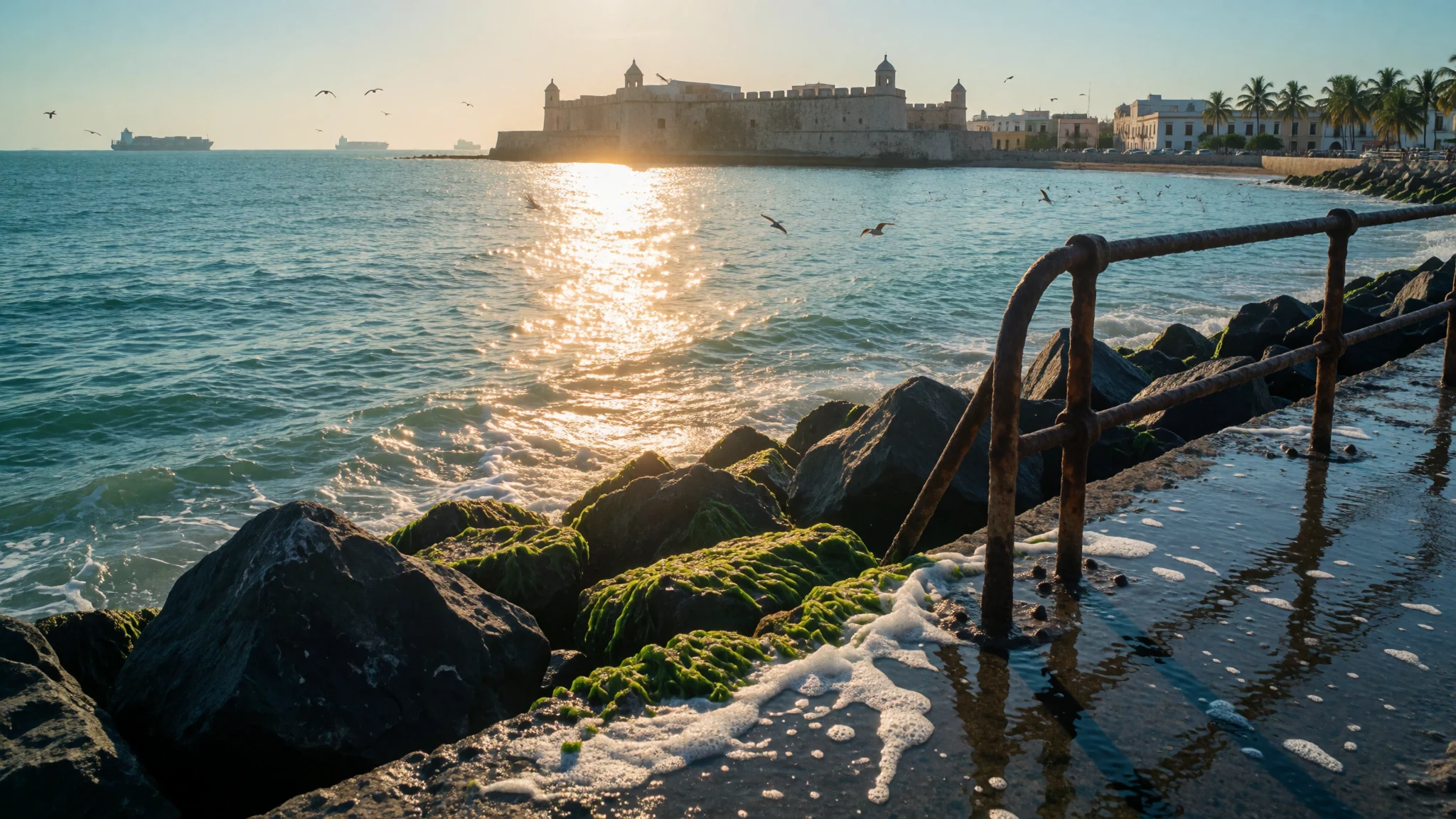
Veracruz is a warm Gulf port where Spanish, African and Caribbean threads meet in the music, the seafood and the coffee.
The place
Veracruz sits on the Gulf of Mexico coast, in the central part of the state that shares its name, about 90 km from the state capital Xalapa. The city has about 405,952 residents in its own municipality, and its built-up area spills across into neighbouring Boca del Río. It stands almost at sea level, around 10 m, and the climate shows it: warm, humid and salty for much of the year.
The centre is compact and easy to walk. Everything pivots on the Zócalo, the main square, with the cathedral and the town hall facing each other across a space that fills with benches, musicians and coffee drinkers as evening comes on. Arcaded colonnades, known as portales, shade the cafés along the edges. A short walk east leads to the waterfront, where cargo cranes and container stacks are a reminder that this is still a working harbour rather than a resort.
The port character shapes everything. Ships brought people and goods from Spain, Africa, Cuba and Italy, and the city's accent, rhythms and appetites reflect that traffic. Locals are called jarochos, and the word is worn with pride.
Beyond the old centre, the city stretches along the coast towards Boca del Río, where seafood restaurants and beachside palapas cluster. The airport lies roughly 10 km west of downtown, so arrival is simple. Veracruz works best as a slow, two-or-three-day stop of strolling, eating and listening, rather than a checklist of monuments. Evenings are the main event, when the heat eases and the square comes alive.
Its story
Veracruz begins with two landings. In 1518 the Spanish captain Juan de Grijalva, travelling with the chronicler Bernal Díaz del Castillo, anchored at an island that became known as San Juan de Ulúa. The name honours the feast of John the Baptist, on which they arrived, while Ulúa is a Spanish bending of the local word for the Aztecs, or Acolhua.
A year later, in 1519, Hernán Cortés came ashore on the mainland opposite. The area then lay under Moctezuma II and the Aztec Empire. Cortés, together with Francisco de Montejo and Alonso Hernández Puertocarrero, founded a settlement and called it Villa Rica de la Vera Cruz: the rich town of the True Cross. Rich referred to the gold; True Cross to the fact that the party had landed on Good Friday.
The founders also set up a council and chose their own magistrate and captain-general, in effect creating the first city council on the American continent. That was a clever legal move, since it gave the expedition a claim to authority separate from the governor of Cuba who had sent it.
The settlement later received a coat of arms, the first on the American mainland, and through the colonial era it handled the trade between Spain and New Spain. Its merchants were numerous and at times richer than those of Mexico City. The island fortress of San Juan de Ulúa guarded the harbour and later served as a prison. Today the story is told through the fortress, the city museum and the plaques around the old centre.
What to see
- San Juan de Ulúa — Harbour, north of the centre
San Juan de Ulúa is a fortress on the island where the Spanish first landed in 1518, set at the harbour mouth. It later became a prison under Porfirio Díaz, with a grim reputation. Guides tell harsh stories, and the sea breeze helps on a hot day.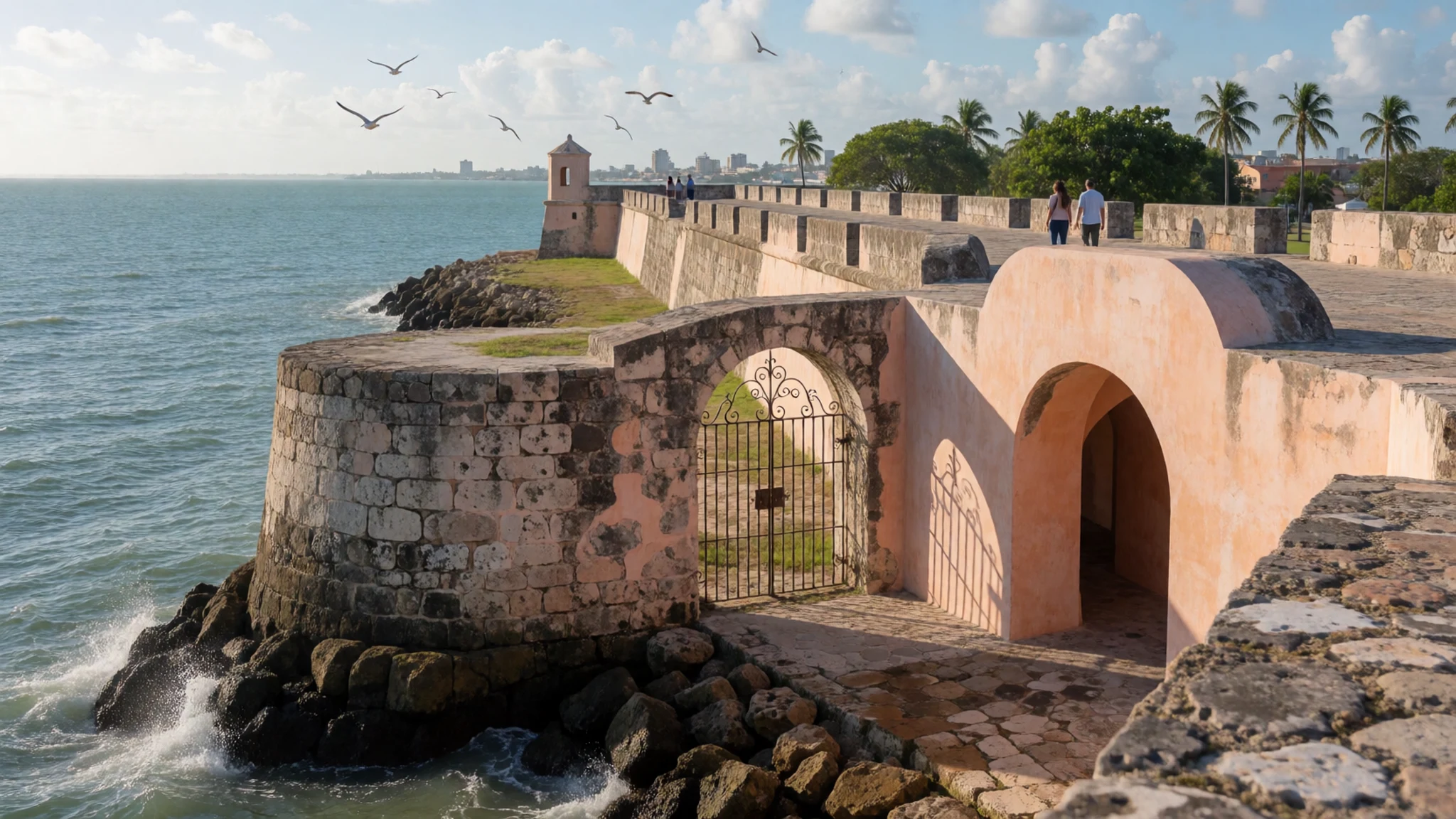
- Zócalo — Historic centre
The Zócalo is the main square, framed by the cathedral and the town hall. It is the place to sit with a coffee and watch the evening unfold. Couples dance danzón to live bands, and musicians drift between the café tables once the day cools.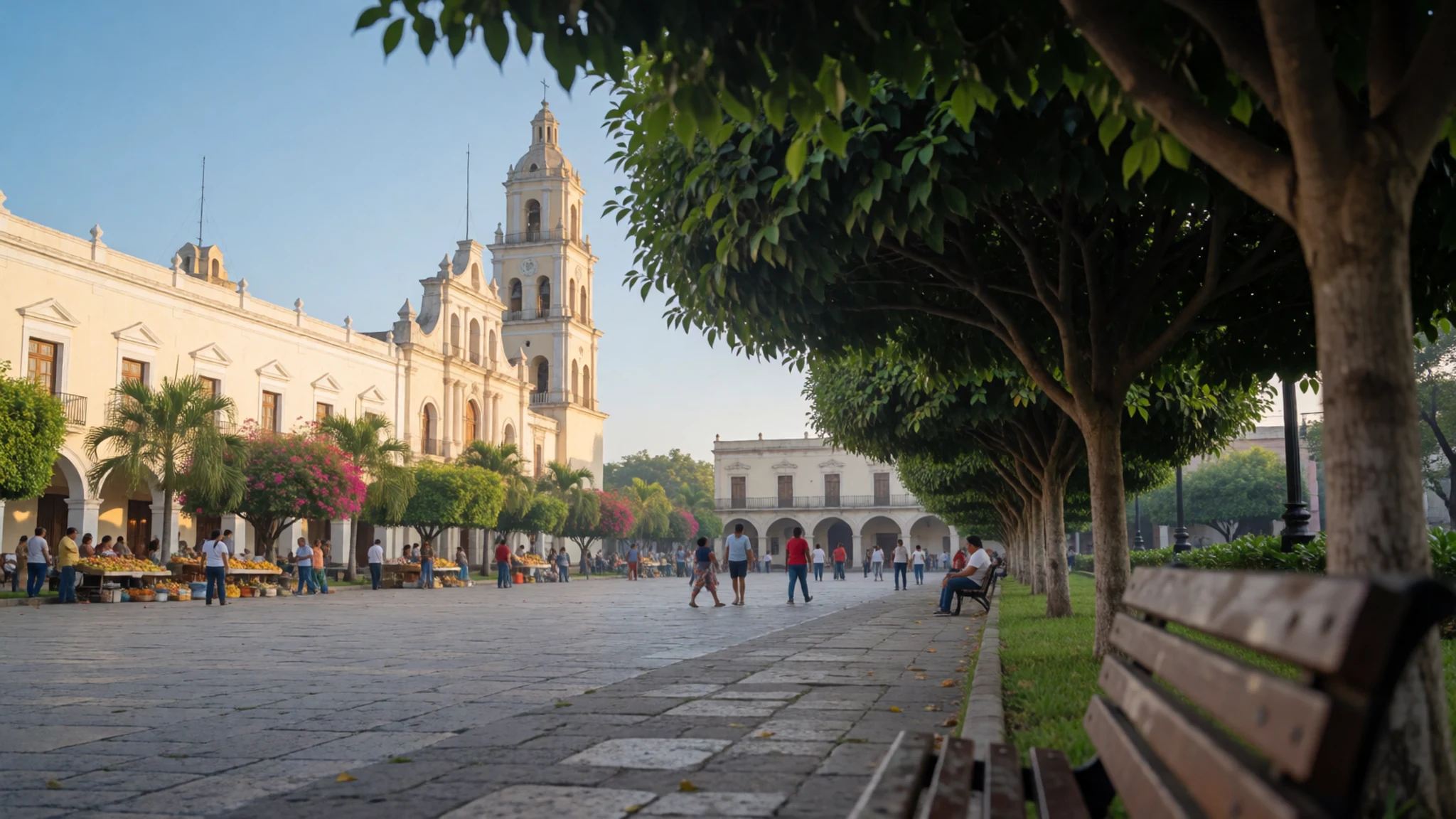
- Museum of the City — Historic centre
The Museum of the City follows the story of Veracruz through dioramas and exhibits, from the early landings to the port's colonial trade and later events. It is a sensible first stop to put the streets in context, and its air conditioning is welcome in the middle of the day.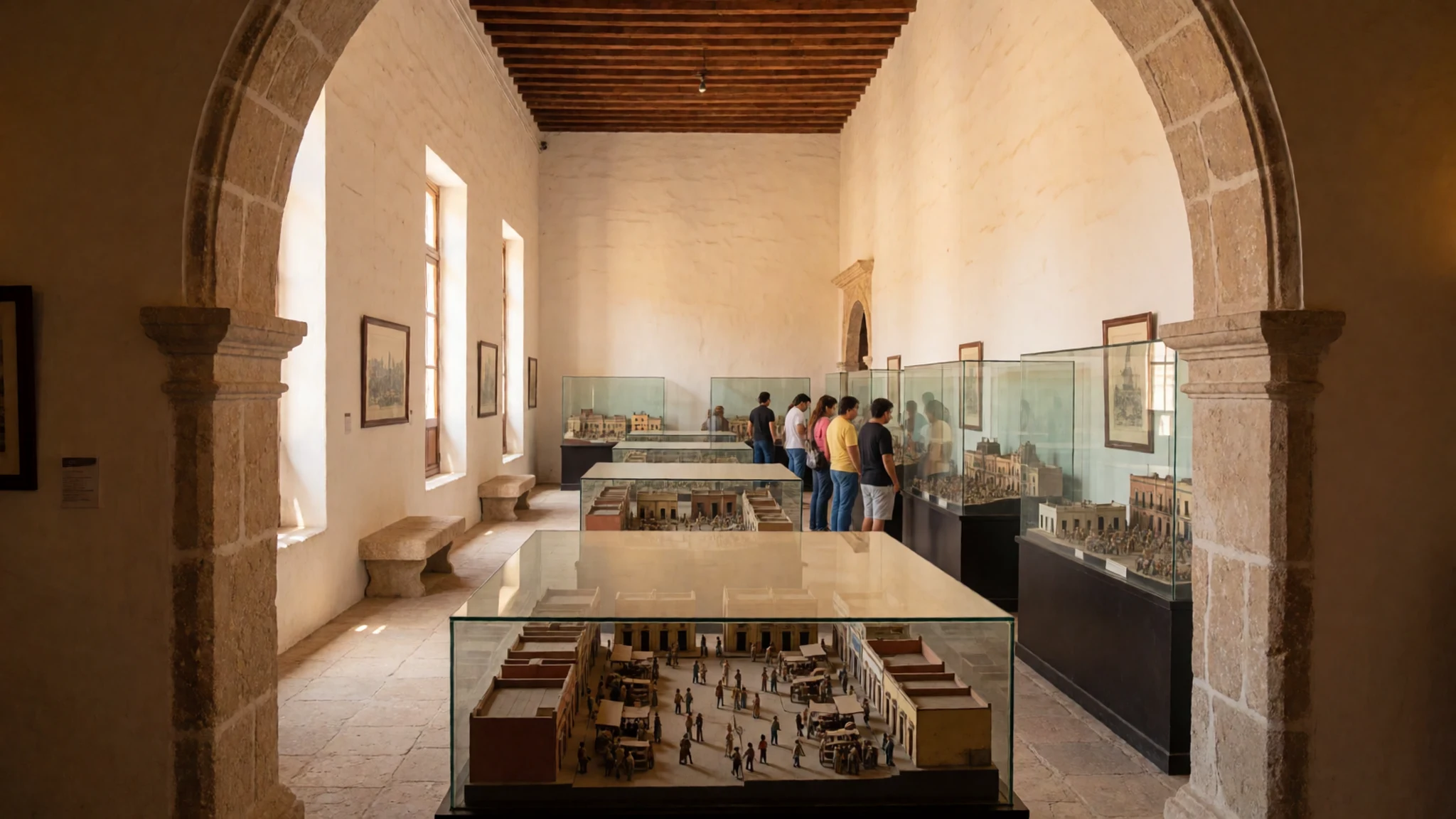
- Casa Museo de Agustín Lara — South of the centre
Agustín Lara was a celebrated composer of popular Mexican songs, and his former home is now a small museum. It suits anyone curious about the music that the city is known for, and it sits a little south of the old centre, so allow a taxi or a long walk.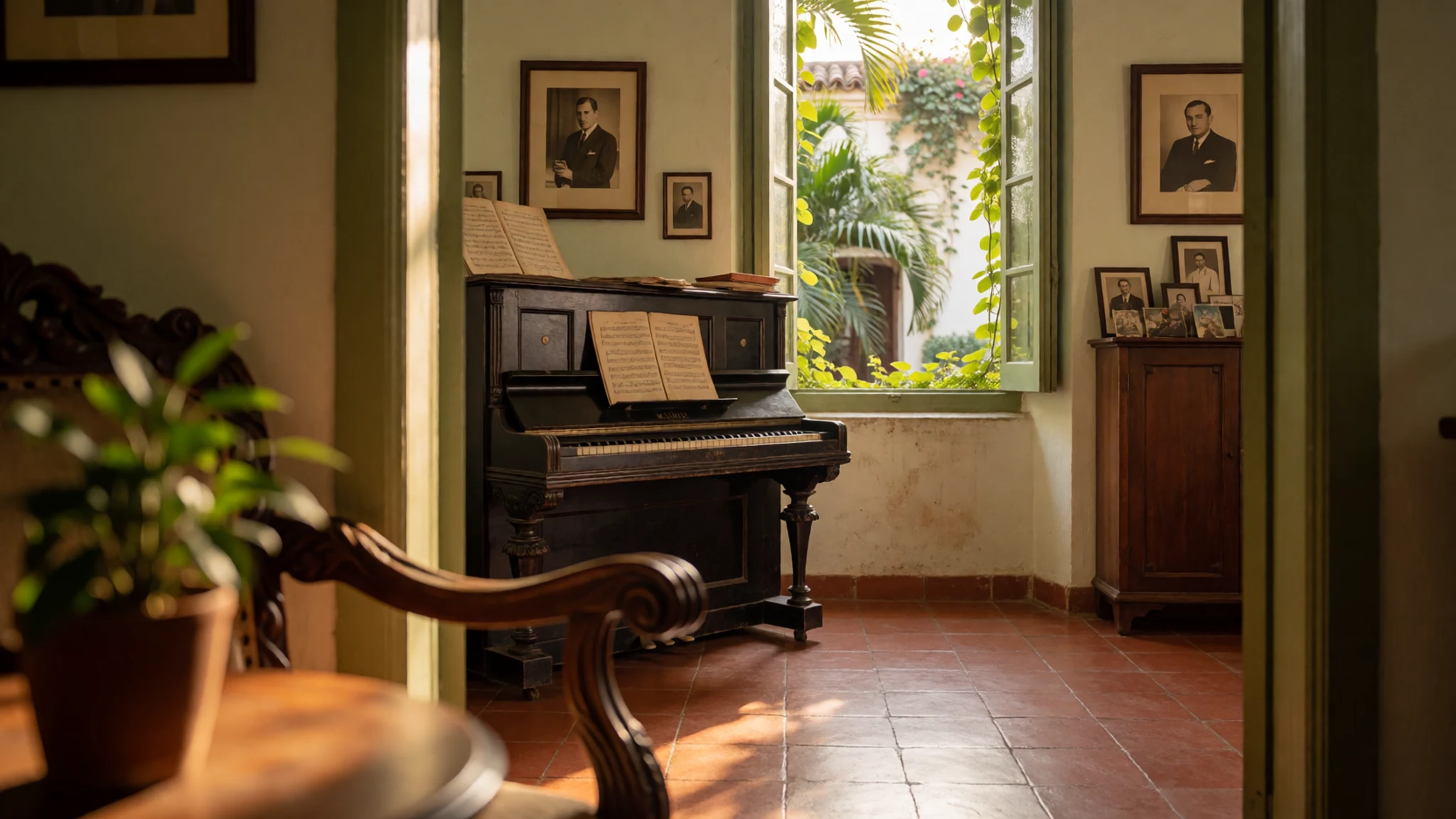
- Cathedral tower and Portal de Miranda — Around the Zócalo
The cathedral tower rises above the Zócalo and is easy to photograph from the square. Nearby, the Portal de Miranda is an arcaded building with a narrow passage beside it that feels romantic after dark. Together they show the colonial street pattern of the centre.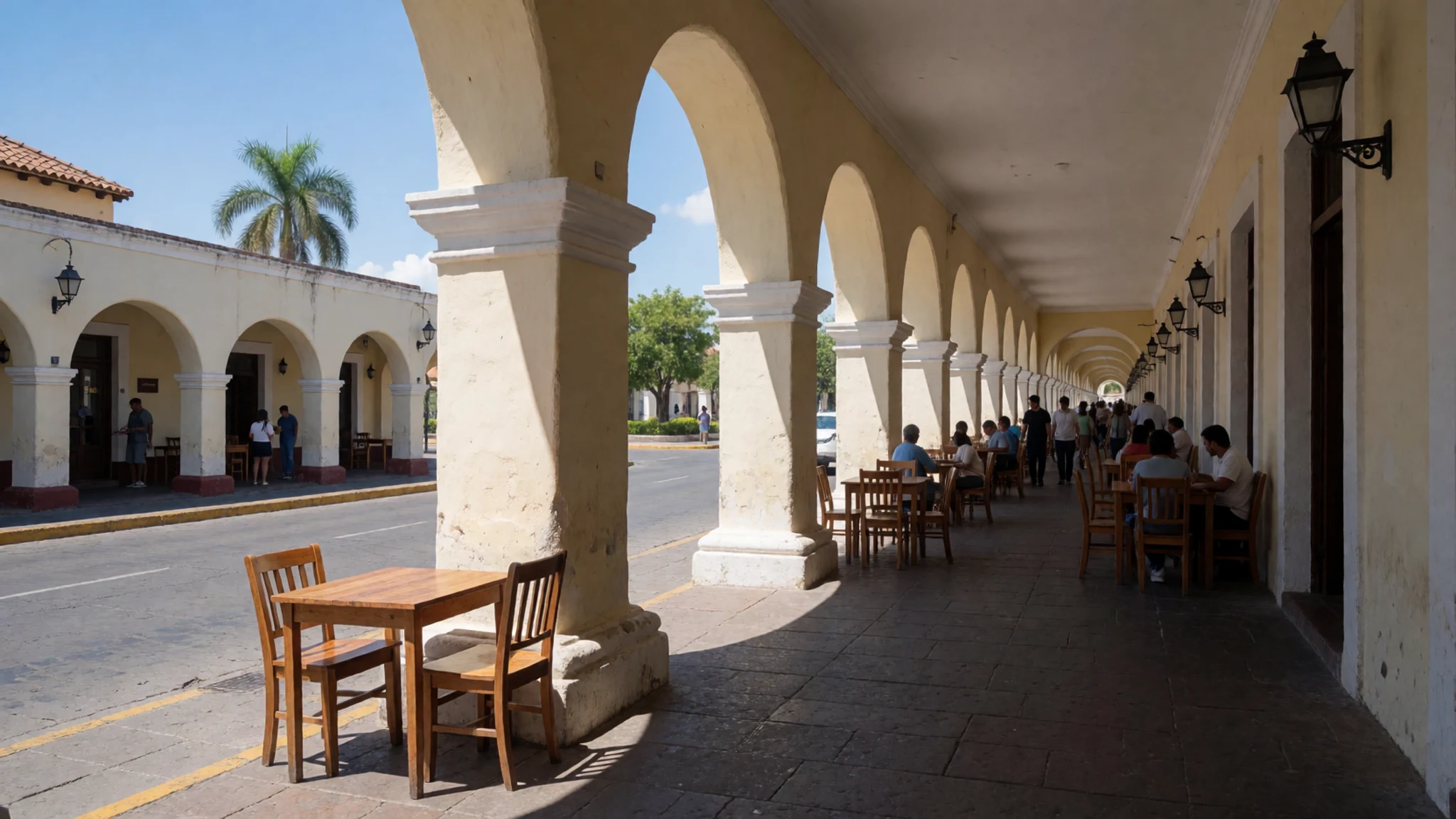
Culture
Veracruz is a port, and its culture is a mix. Spanish, Indigenous Mexican and African threads run through its music, food and speech, and later arrivals from Italy and Cuba added more. The result is a coastal, Caribbean-leaning character that feels distinct from highland Mexico.
Music is the clearest expression. Danzón, the slow Cuban-rooted dance, is performed in the Zócalo, and marimba and son jarocho groups play at café tables. Evenings are social, with families, couples and older dancers sharing the same square, and nobody seems in a hurry.
The Carnaval is the biggest event of the year. It has been held every year since 1866, during the reign of Maximilian I, when a Festival of Masks was proposed with dances at the main social venues. Residents took the celebration into the nearby streets, and over time it settled in the historic centre and grew around a grand parade. Visitors who come during Carnaval should book accommodation well ahead and expect crowds, noise and heat.
Daily life follows the climate. Mornings are active, the middle of the day is slow, and the evening is when the city comes out. People are generally friendly and happy to chat with visitors who try a little Spanish, and a greeting before a question is always appreciated.
When you hear musicians at your table in the Zócalo, ask the price before they play, and tip them if you enjoy the music.
What to wear
Veracruz has a well-known traditional costume, worn by women in folk dance and at festivals. It is a white outfit of light cotton and lace, with a blouse, a full skirt, an apron and a shawl, often finished with a lace fan and a flower in the hair. Men wear white too, usually a guayabera-style shirt with white trousers and a straw hat. White suits the heat, and the look is tied to the city's Spanish and Caribbean history. You will see it at folk performances and civic celebrations rather than in daily life.
In everyday life, people dress for the climate: light cotton shirts, linen trousers, shorts, sundresses and sandals. The guayabera, a loose shirt with pockets, still appears on older men and at smart occasions. Evenings in the square are casual but tidy, and locals often dress up a little for dancing.
Visitors should pack for warm and humid weather. Choose breathable fabrics such as cotton and linen, a hat and sunglasses, and strong sun cream. A light rain jacket is useful in the wetter months. Comfortable sandals or trainers work for the cobbled streets and the fortress. Shorts and sleeveless tops are fine in most places, but cover shoulders and knees when stepping into a church. A light layer helps in air-conditioned museums and restaurants, which can be surprisingly cold.
What to eat
- Lechero coffee — Traditional cafés on the Zócalo
Lechero is strong coffee poured into a glass, after which milk is added at the table. In Veracruz the ritual is to tap the glass with a spoon to call the waiter. It is a morning habit at the old cafés around the Zócalo.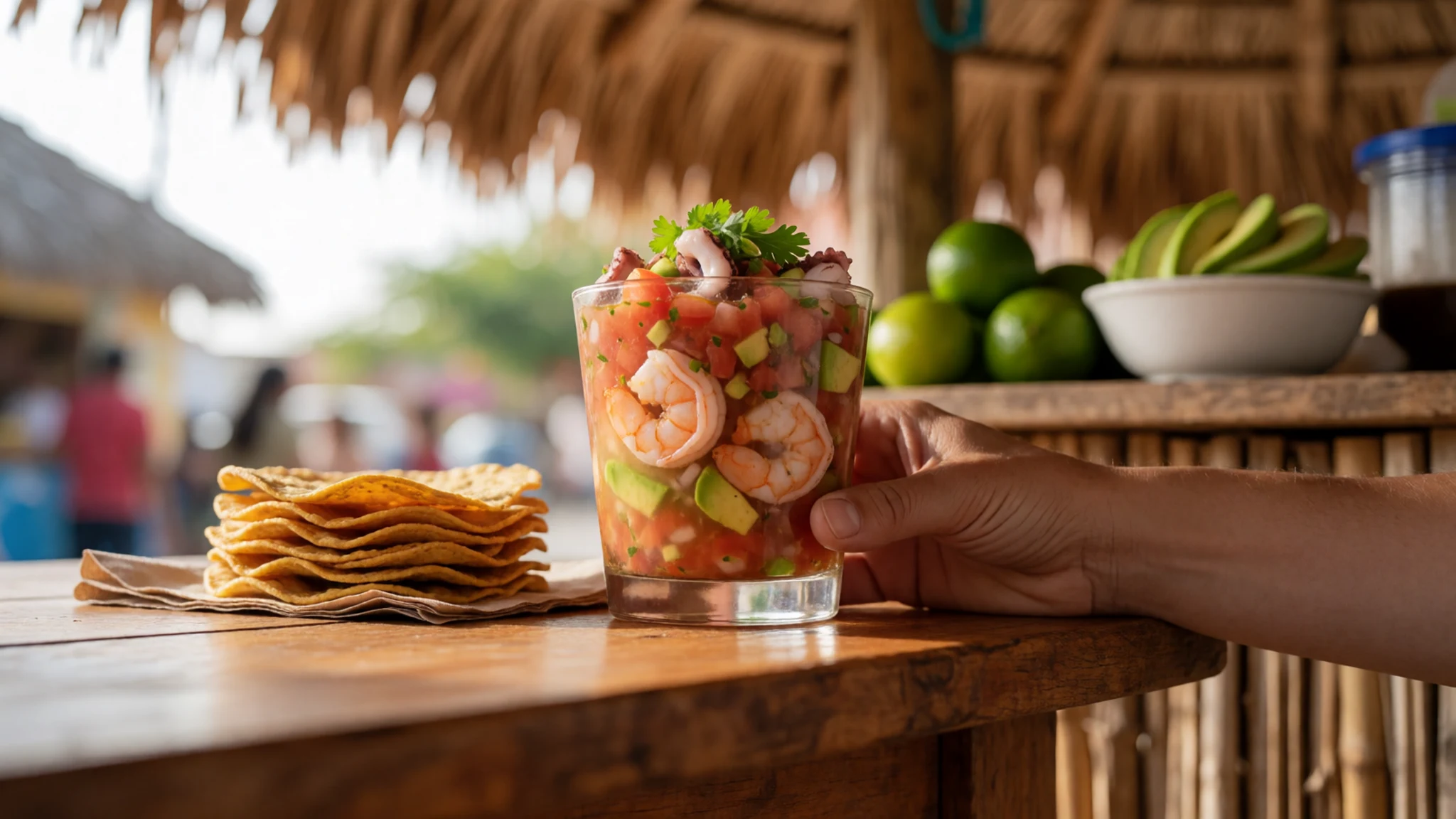
- Fresh seafood by the coast — Palapas in Boca del Río and Mandinga
Veracruz is a seafood city. Expect fish, prawns and crab cooked simply with garlic, lime and chilli, or in a tomato, olive and caper sauce known as a la veracruzana. The best value comes at casual beachside palapas.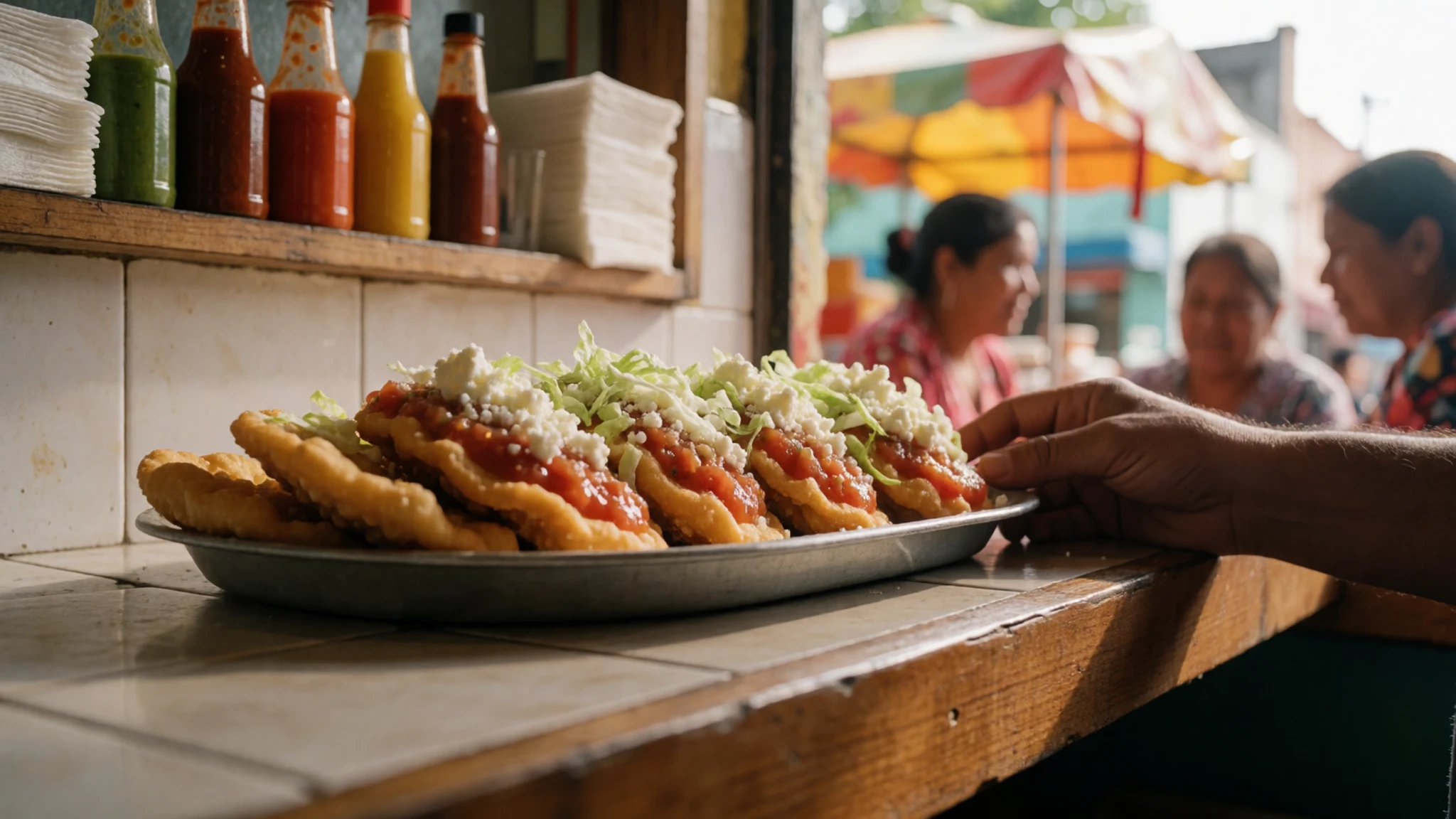
- Picadas and gorditas — Café breakfast menus and small antojito stalls
Picadas and gorditas are thick, fried handmade tortillas pinched at the edges and topped with salsa, cheese or scrambled egg. They make a filling breakfast and come hot from the griddle, so they are best eaten straight away at a busy counter. - Tacos and antojitos — Taquerías and antojito stalls in the centre
Antojitos are the small snacks of Mexican street eating, and Veracruz does them well. Tacos, masa cakes and fried bites are sold at simple counters across the centre, usually for little money. Look for a busy stall with a quick turnover. - Alvarado seafood — Alvarado, a short drive south
Alvarado is a fishing town about 45 minutes away and is known for fresh catches. It is a pleasant half-day trip for a long lunch by the water, with a plate of fish or shellfish and a cold drink.
Plan it
Best time. November to April is the most comfortable stretch, with lower humidity and warm days. Summer is hot and sticky, and the Gulf rainy season brings heavy downpours. Carnaval, held before Lent, is lively but crowded.
How long. 2–3
Getting there. General Heriberto Jara International Airport is about 10 km west of downtown, with flights from Mexico City and other Mexican cities, and from Houston. The ADO bus station is close to the centre; buses from Mexico City take about 5½ hours and from Puebla 3–4 hours.
Budget. mid
Tips
- Book ahead for Carnaval, when rooms fill quickly
- Do the fortress in the morning before the heat builds
- Carry some cash for small cafés and market stalls
- Drink bottled or purified water and use sun protection
- Check the official site, veracruzmunicipio.gob.mx, for events and opening times
Etiquette
- Greet people before asking a question
- Ask the price before a musician plays at your table
- Cover shoulders and knees in churches
Nearby
Sources
- Wikidata Q173270 (CC0)
- Wikipedia: Veracruz (city), rev 1378253224 (CC BY-SA 4.0)
- Wikivoyage: Veracruz, rev 5423528 (CC BY-SA 4.0)
- Photo: Teatro Francisco Javier Clavijero, Alejandro borbolla (CC BY 3.0)
- Photo: Portal de Miranda, Abigailm (CC BY 3.0)
- Photo: Torre Catedral de Veracruz, Alejandro borbolla (CC BY 3.0)
- Photo: Vista San Juan de Ulúa, Nazary Díaz (CC BY-SA 4.0)
- Photo: Portales de Lerdo, Ricardo Rodriguez (CC BY 3.0)
- Photo: Veracruz 11, Burkhard Mücke (CC BY-SA 4.0)
- Photo: Eagle Relief MET DT4850 (CC0 1.0)
- Photo: Ciudad de Veracruz y San Juan de Ulúa en 1615 (Public domain)


