Ajijic
Ajijic, Mexico
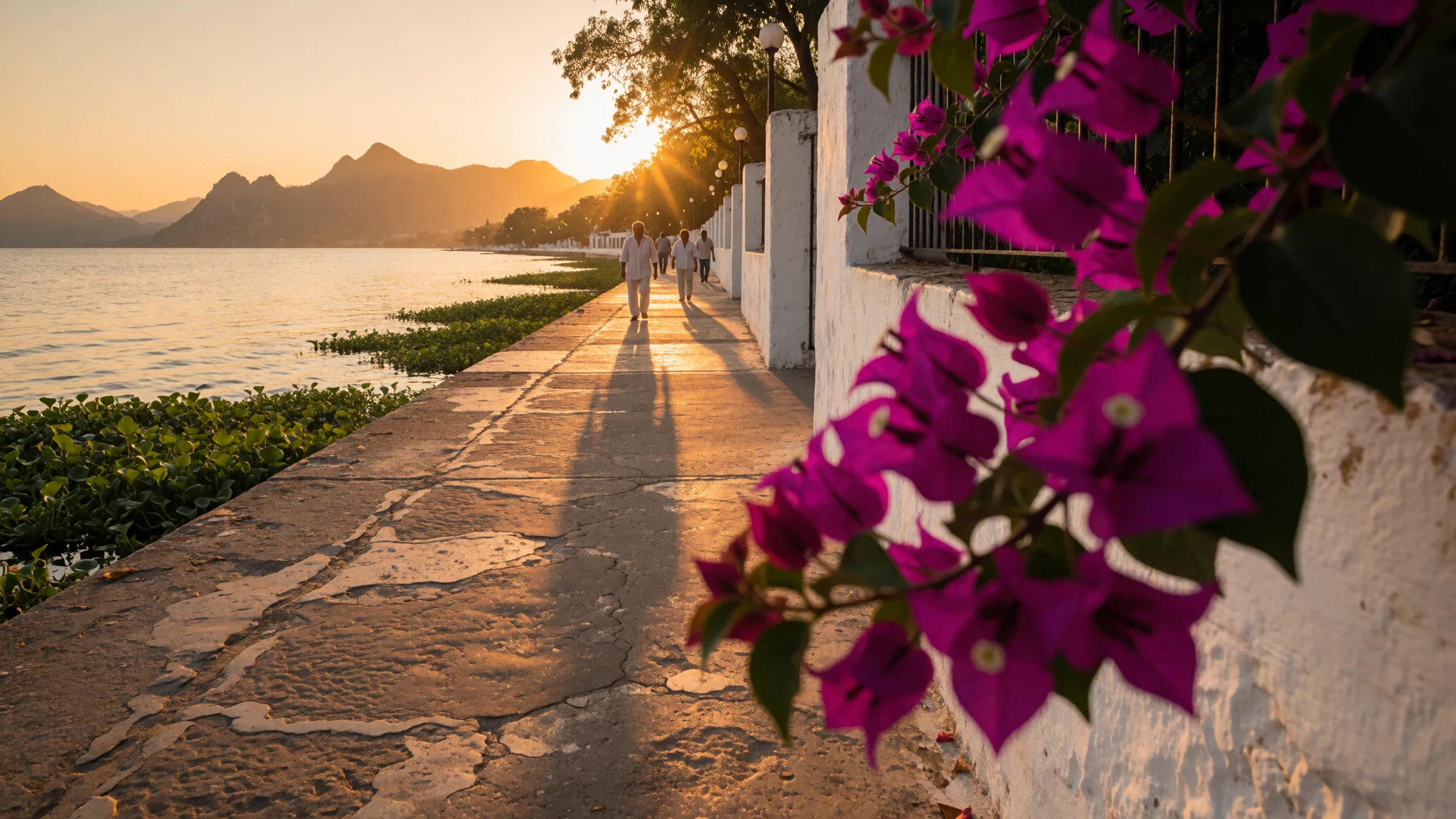
Ajijic is a mild-climate lakeside town in Jalisco where cobbled lanes, murals and galleries reward slow walking, with honest caveats about the lake.
The place
Ajijic is a small lakeside town in the municipality of Chapala, in the Mexican state of Jalisco, squeezed between the north shore of Lake Chapala and a wall of mountains behind. At 1551 metres above sea level it has a mild, even climate that rarely turns properly hot or humid, which is a large part of why people settle here. The 2020 census counted 11,439 residents, though weekends and holidays bring extra crowds from Guadalajara, and a long-established community of foreign residents shapes much of daily life. The centre is compact and walkable: a plaza, a parish church, a lakefront promenade and a grid of cobbled lanes lined with painted houses, galleries, cafés and gardens spilling over with bougainvillea. Murals turn up on many street corners. The caveats are real. Housing and everyday goods have grown more expensive with foreign demand, and some corners feel more like an expatriate enclave than a Mexican village. The lake is pleasant to look at but not clean: decades of industrial dumping left pollution, and water hyacinth often covers parts of the surface, so swimming in it or eating its fish is best avoided. Most visitors come not for one big monument but for a few slow days of walking, galleries, mountain views and long lunches, and the town suits that pace well.
Its story
Ajijic is much older than its foreign-resident reputation suggests. The facts record a founding date of around 1200, and the north shore of the lake was probably home to the Coca people long before Spanish settlers arrived. The name comes from Nahuatl and was once written Axixic; it is usually read as a place where water bubbles up, a fitting description for a settlement that grew beside a reliable supply. In 1531 a settler named Andres Carlos and a friar, Martin, established the Spanish town on that spot. For centuries it stayed a quiet fishing and farming village. Its modern character began to form in the 1890s, when foreign artists and writers started to arrive and found the climate, light and low costs to their liking. Two Englishmen, writing under the pen name Dane Chandos, described that early world in Village in the Sun, published in 1945, and House in the Sun, published in 1949. The second book tells of running a small inn in Ajijic, which later became known as the Old Posada. Those books recall a time of unpaved roads, ice brought by bus from Guadalajara and electricity only just being installed. Much has changed since, but the mix of Mexican village life and a settled artistic and expatriate community still defines the town.
What to see
- Malecón Ajijic — Lakefront
The Malecón is Ajijic's lakeside promenade, where locals and weekenders stroll, buy snacks from vendors and pass murals and carvings along the water. Sunset is a good hour for soft light on the mountains. Water hyacinth often clogs the shoreline, so the lake looks better from a distance than up close.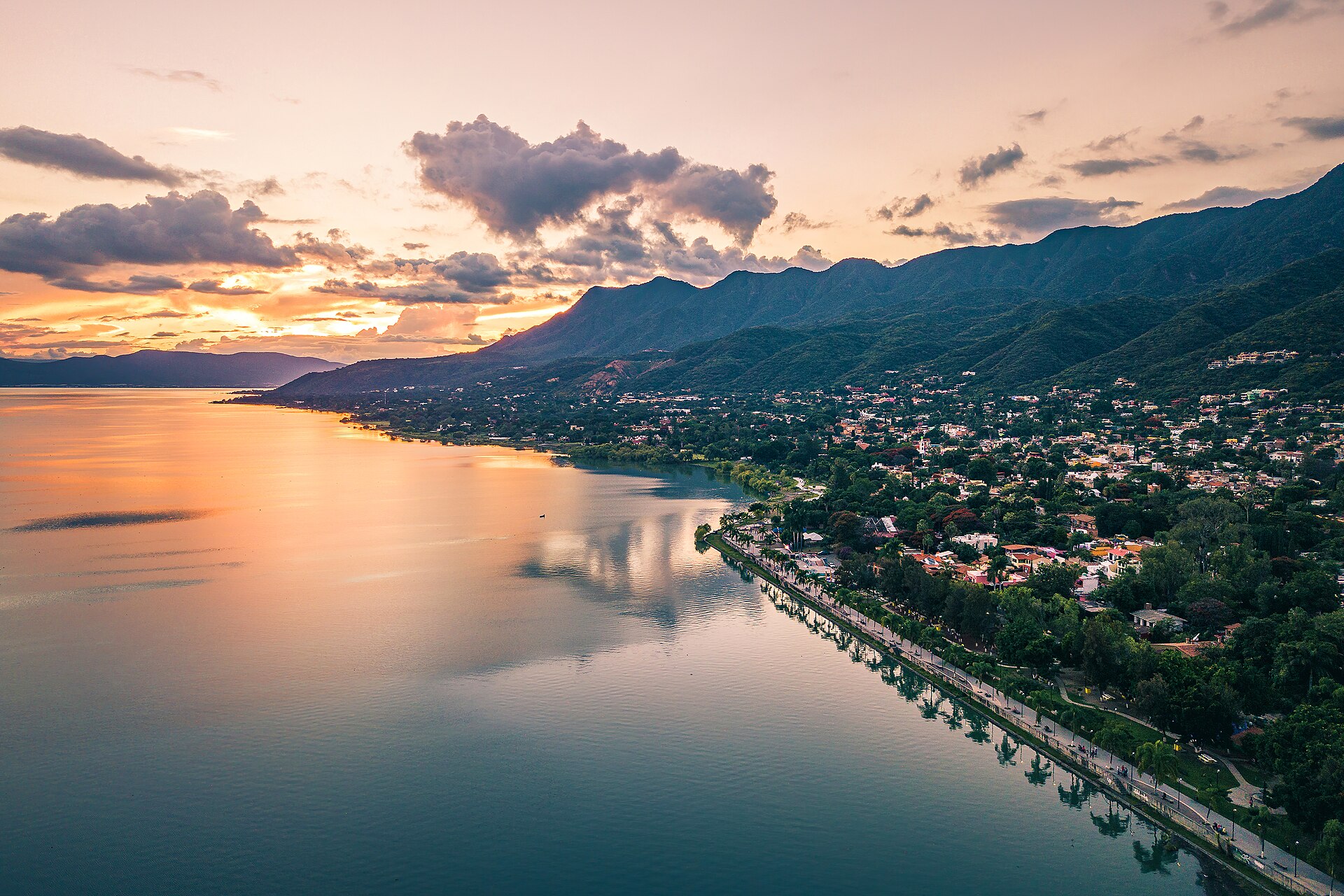
- Plaza Principal — Town centre
The main plaza is the town's living room, with a pavilion, public art and benches for watching the day pass. Events and small gatherings are held here from time to time, so it is worth a look more than once. Early evening is when families and friends tend to gather.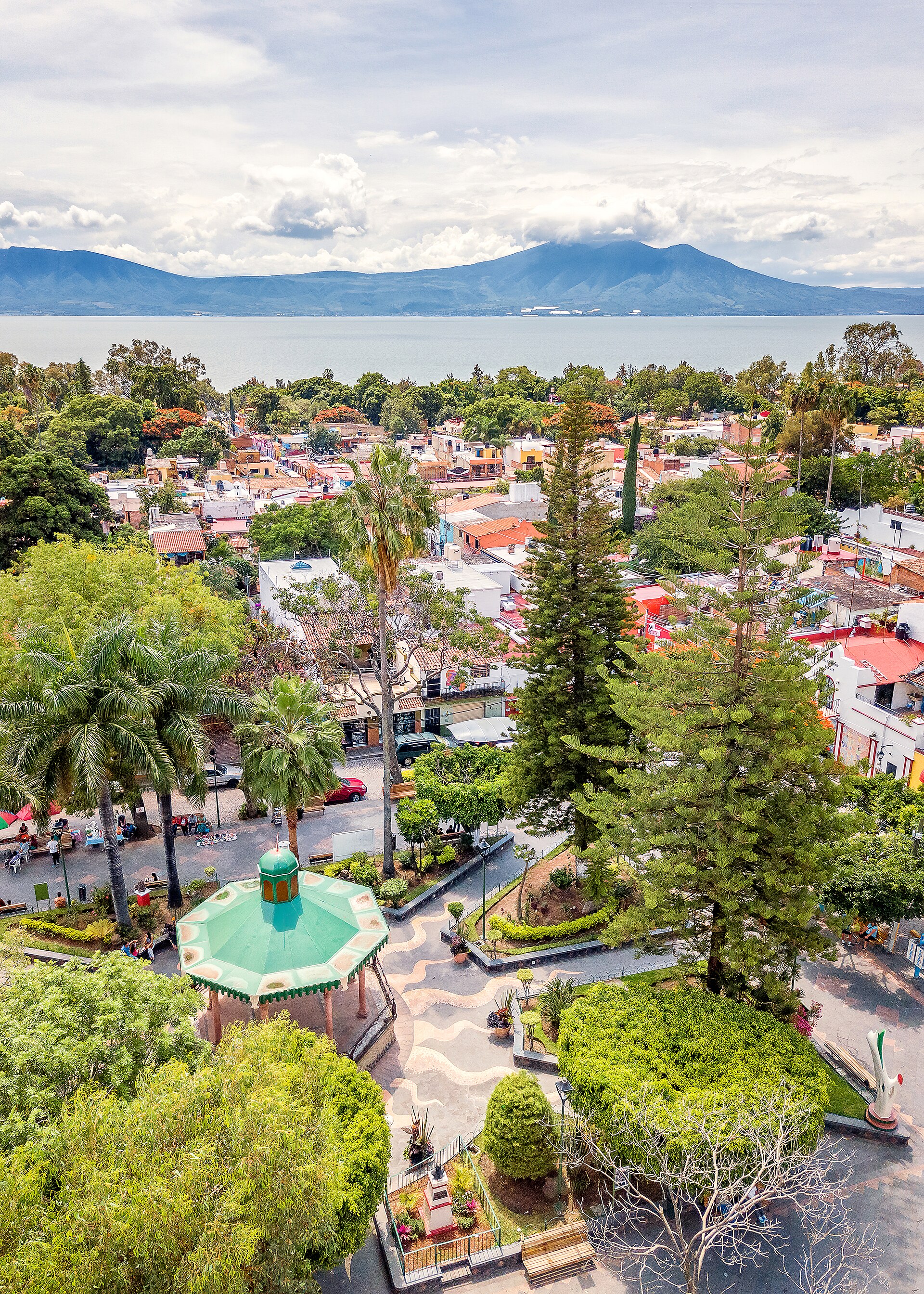
- Parroquia San Andrés Apóstol — Town centre
The parish church of St Andrew stands a short walk from the plaza and anchors the old centre. It is a working church, so services shape when it feels busy or hushed. Step inside quietly for a few minutes, then use the nearby lanes to continue the walk.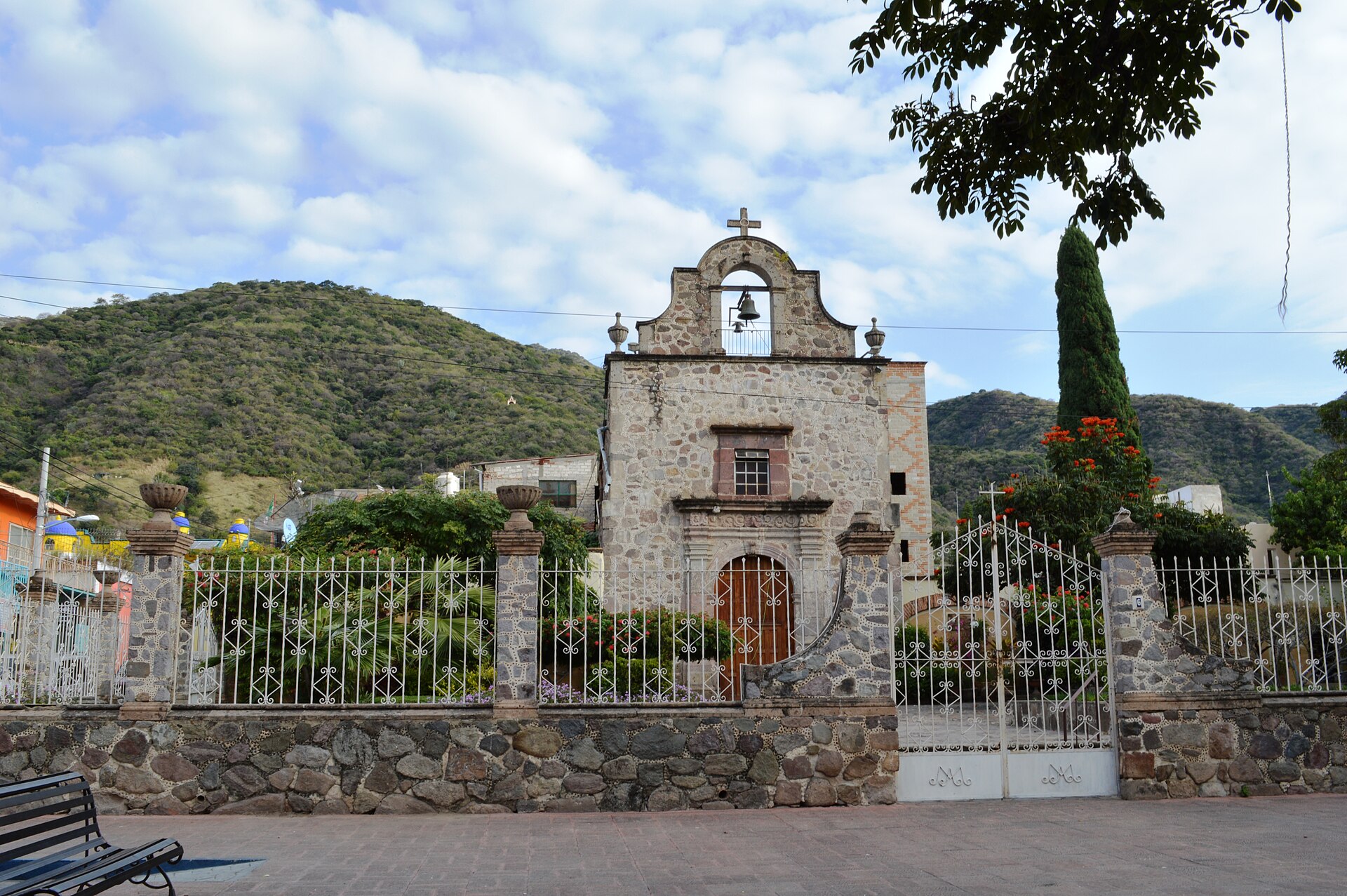
- Centro Cultural — Town centre
The Centro Cultural is a modest local museum with art and pottery among its displays. It will not fill a day, but it adds context to the craft traditions and artistic reputation that Ajijic is known for. Check the official town site for opening arrangements before going. - Ajijic Museo de Arte — Western edge of town
This small museum shows work by and about the Ajijic community, in a pleasant gallery with a terrace that looks out over the town and lake. It is a good place to understand the artistic side of the town. Access is limited for visitors with mobility difficulties. - El Tepalo — Sierra above the town
El Tepalo is a waterfall and viewpoint in the Sierra de San Juan Cosalá, reached by a hiking trail above the town. It is the best-known way to see Lake Chapala from above. Go in the dry months, start early and ask locally about trail conditions.
Culture
Ajijic has two cultures that overlap more than they merge. One is Mexican: a parish church at the heart of the town, family evenings on the plaza and national and local festivals that fill the lanes with music, food and decoration. The other is a cosmopolitan layer of artists, writers and retirees who have been arriving since the 1890s, and who have left galleries, a museum of art and a steady flow of readings, classes and exhibitions. Murals are the clearest sign of the mix, showing historical scenes, nature and fanciful inventions on walls all over town. Visitors from Guadalajara also come for weekends, so the place has a Mexican holiday feel as well as an expatriate one. The best way into it is through ordinary habits: greet shopkeepers in Spanish, eat where local families eat, and spend time away from the places set up purely for foreign tastes. Some residents and visitors worry about a monoculture in which foreigners expect things to work as they do back home, and being curious rather than demanding is the simplest answer. Greet people with a polite buenos días or buenas tardes, and ask before photographing anyone, especially at church and during festivals.
What to wear
Ajijic has no single local costume of its own, but the surrounding state of Jalisco has a well-known folk tradition. The charro outfit of tailored wool or leather jacket, fitted trousers and wide-brimmed hat is worn for rodeo events and celebrations, while women's festival dress features full, ribboned skirts in bright cotton. Embroidered and beaded work from the Wixárika (Huichol) people of the region's mountains is sold as craft rather than worn daily. In everyday life, people in Ajijic dress simply and for comfort: cotton shirts, linen trousers, light dresses, sandals and sunglasses, with a cardigan or jacket once the evening cools. The artistic community adds colourful scarves, handwoven bags and handmade jewellery from local studios and craft stalls. Visitors should pack for a mild climate with big daily swings. Light, breathable layers work for most of the year, with a warmer layer for December and January evenings and a compact rain jacket from June to October, when showers usually come late in the day. Comfortable closed shoes or sturdy sandals matter more than anything, because the cobbled lanes are uneven and slippery after rain. A sun hat helps in the dry spring months. For the parish church, cover shoulders and avoid very short shorts, and carry a light shawl or scarf for the purpose.
What to eat
- Tortas ahogadas — Local eateries and stalls near the plaza
A Jalisco classic: a crusty bread roll filled with pork and drowned in a chilli sauce. It is messy and spicy, so ask for the sauce mild if unsure. Look for it at small local eateries and stalls around the plaza and market streets. - Argentine-style steak — Grill restaurants with thatched dining areas
Grilled steak is a staple of the town's foreign-influenced dining scene, usually served with chimichurri and sides. Palapa-style grill restaurants, with open thatched dining rooms, are typical, and most also serve pasta, chicken and fish for those who prefer something lighter. - German plates — Garden restaurants on the eastern side of town
Schnitzel, sausages, red cabbage and sauerkraut are an unexpected but dependable part of the town's menu, a legacy of its international residents. They taste best in a garden setting on a warm afternoon, with a local beer alongside. - Craft beer — Small breweries and taprooms on the western edge
Small breweries around Ajijic make ales and lagers, including darker styles such as porter and schwarzbier. Taprooms are relaxed and friendly places to sample several beers in small measures and chat with the owners. - Waffles and pancakes — Breakfast houses along the main road
American-style breakfast houses serve towering stacks of waffles and pancakes, usually with syrup, cream and fruit. They are popular with long-term foreign residents and with weekend families from Guadalajara, so mornings can be busy.
Plan it
Best time. November to April for dry weather and comfortable days; December and January are the coolest months with chilly nights, and May is the hottest just before the rains. Showers from June to October usually arrive in the evening or overnight, so mornings are often clear. Temperatures stay mild all year, averaging about 19 °C.
How long. 2–3
Getting there. Fly to Guadalajara International Airport (GDL), then take a taxi or hire car for the drive of about 30 minutes to Ajijic. Alternatively, frequent buses to Chapala and Ajijic leave Guadalajara's old bus station hourly, and some leave directly from the airport.
Budget. mid
Tips
- Book ahead for winter weekends, when visitors from Guadalajara and long-stay foreign residents fill rooms
- Most places lack air conditioning, so check for fans and expect some night noise from streets and animals
- Carry some cash for small stalls, markets and taxis, and use cards in larger restaurants
- Wear sturdy shoes for the cobbled lanes, which turn slippery after evening rain
- Drink bottled or purified water and avoid swimming in the lake or eating its fish
Etiquette
- Greet people in Spanish before asking questions or ordering
- Ask before photographing people, especially at church or during festivals
- Cover shoulders and avoid very short shorts when entering the parish church
Nearby
Sources
- Wikidata Q2775275 (CC0)
- Wikipedia: Ajijic (rev 1378236167) (CC BY-SA 4.0)
- Wikivoyage: Ajijic (rev 5404412) (CC BY-SA 4.0)
- Photo: Ajijic Malecon Sunset (Somniphobiac) (CC BY-SA 4.0)
- Photo: Ajijic Panorama (Somniphobiac) (CC BY-SA 4.0)
- Photo: Ajijic001 (AlejandroLinaresGarcia) (CC BY-SA 4.0)
- Photo: Ajijic Plaza Portrait (Somniphobiac) (CC BY-SA 4.0)
- Photo: 16 Sep Street (Somniphobiac) (CC BY-SA 4.0)
- Photo: 161024 913 MX Ajijic (cultivar413) (CC BY 2.5)
- Photo: Ajijic (julio de 2025) 2 (YdelaT) (CC0 1.0)
- Photo: Ajijic (julio de 2025) 3 (YdelaT) (CC0 1.0)


