Acapulco
Acapulco, Mexico
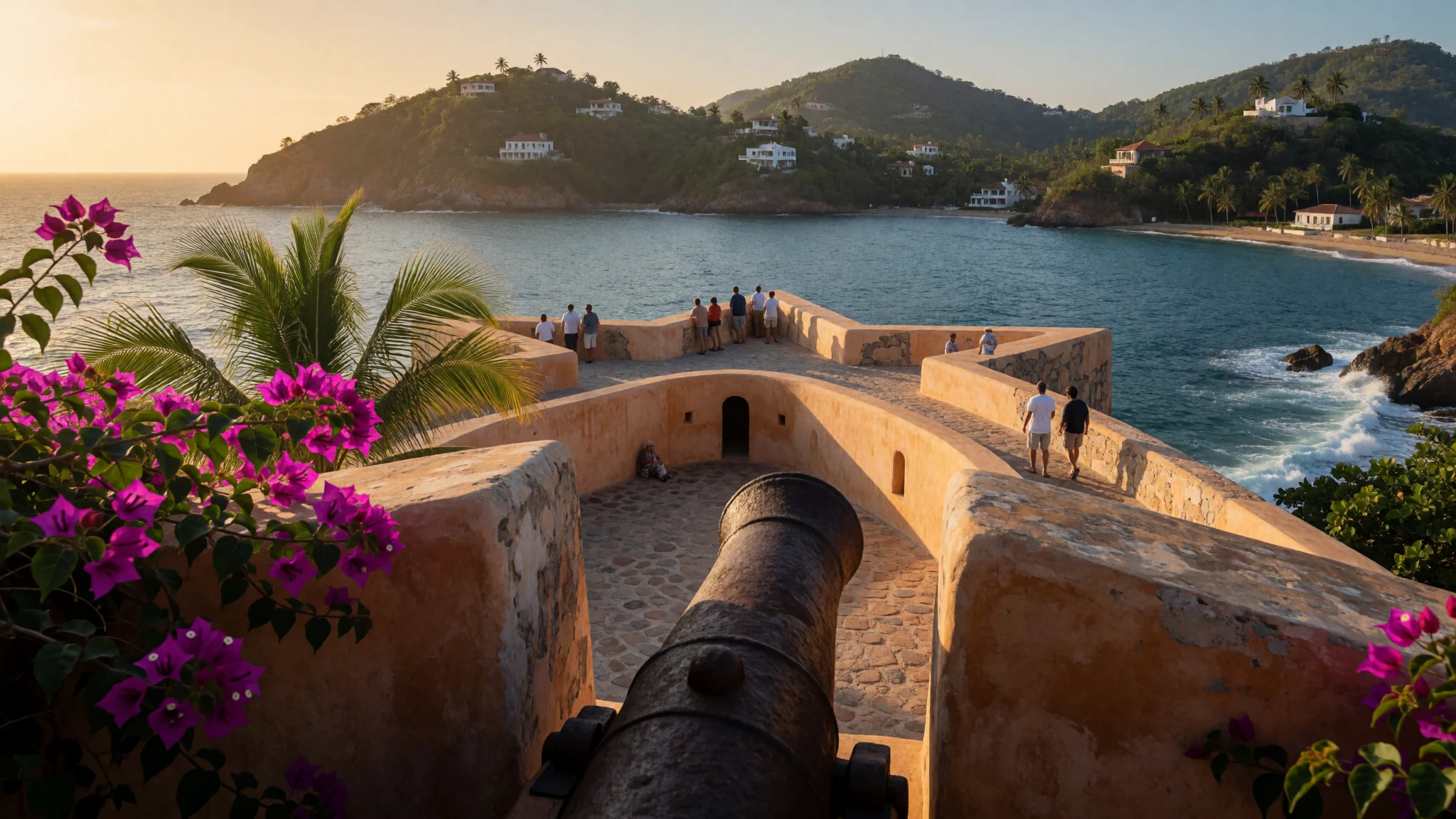
Acapulco is a Pacific bay city of cliff divers, a Spanish fort and long beaches, now visited mostly by Mexicans, so go well informed.
The place
Acapulco sits on the Pacific coast of Guerrero state, wrapped around a deep, rounded bay where green hills drop steeply to the water. The old centre is only about 30 m above sea level, but homes climb the slopes behind it, so views over the bay turn up almost everywhere. Roughly two-thirds of a million people live here, making it the biggest city in Guerrero, larger than the state capital, Chilpancingo. It is a working port as well as a resort, and cargo and cruise ships have long called here on routes along the Pacific coast of the Americas.
The seafront avenue, La Costera, links the districts together. At the western end are the old town, the Zócalo and the colonial fort. The middle of the bay holds the resort-and-nightclub strip, and further east is Diamante, a newer district of high-rises facing the open surf of Revolcadero beach. Beyond the main bay are quieter corners: Puerto Marqués in a smaller bay to the east, and Pie de la Cuesta, a narrow strip of land between the sea and a freshwater lagoon to the northwest.
Mexico City lies to the north, reachable by road or air, and that closeness explains why Acapulco has been the capital's beach for generations. The mood today is largely domestic: Mexican families, weekend crowds, music from beach bars, and plenty of empty sand outside the holiday weeks. Acapulco has also suffered serious gang violence in recent years, and several foreign governments advise caution. Conditions change, so any trip starts with the latest official advice and a clear-eyed look at which areas feel comfortable.
Its story
Acapulco's story starts long before the Spanish. Finds at Playa Hornos, Pie de la Cuesta and Tambuco show a small bayside culture that absorbed one outside influence after another: Olmec first, then Teotihuacan and Maya, then Nahua migrants moving through from the highlands. The Aztec Empire eventually claimed the area, but only loosely, with little more than a rough military post on the outskirts. The Yopi people held the territory and kept defending it until Europeans arrived in the 1520s.
The Spanish quickly saw what the bay offered: a deep, sheltered harbour on the Pacific. Records give the founding as 1520, and Acapulco soon became the Pacific end of a trade route linking New Spain with Manila. Galleons brought silks, porcelain and spices from Asia, which were then hauled overland towards Mexico City and the Atlantic. To guard this traffic from pirates, the Spanish built Fort San Diego above the harbour, and it still stands over the old town. For long stretches the port was more of a transit point than a city, busy when ships came in and quiet when they left.
The modern chapter began in the twentieth century. Better roads from Mexico City and a taste for sun among film stars and the wealthy turned the bay into one of Mexico's earliest beach resorts. Towers, clubs and villas spread along the shore. More recent decades have been harder, with violence driving away most foreign visitors, so the city now leans on domestic tourism and on its older identity as a port.
What to see
- La Quebrada cliff divers — La Quebrada, old town hillside
At La Quebrada, divers leap from the rocks into a narrow, surging inlet where the water is shallow and the timing has to be exact. Performances are scheduled, so check locally before going. Watching from a viewing platform or a restaurant terrace is the usual way, and a tip for the divers is customary.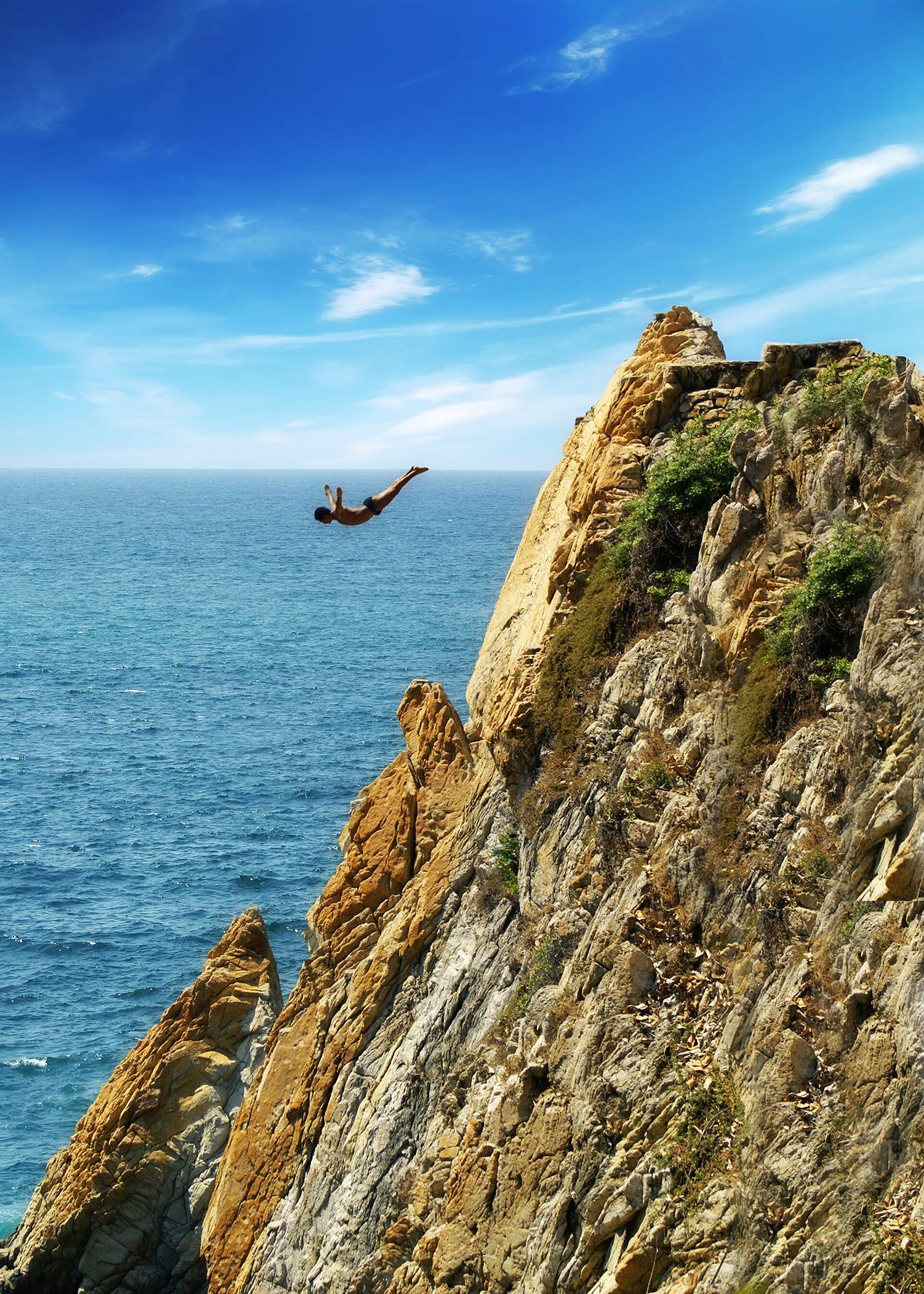
- Zócalo — Old town, west of La Costera
Acapulco's town square is the easiest place to feel the city at ordinary speed. Mature, multi-trunked trees give shade, two fountains add a little sound, and the mornings are calm. Cafés and benches around the edge suit a slow stop between the fort, the cathedral and the waterfront. - Fort San Diego — Old town, above the harbour
This Spanish fortress was built to protect the harbour from pirates and to secure the Manila trade route. The star-shaped walls give a good view across the bay, and the museum inside covers the colonial port and its Asian links. Visit in the morning, before the heat builds. Check the official site for opening times.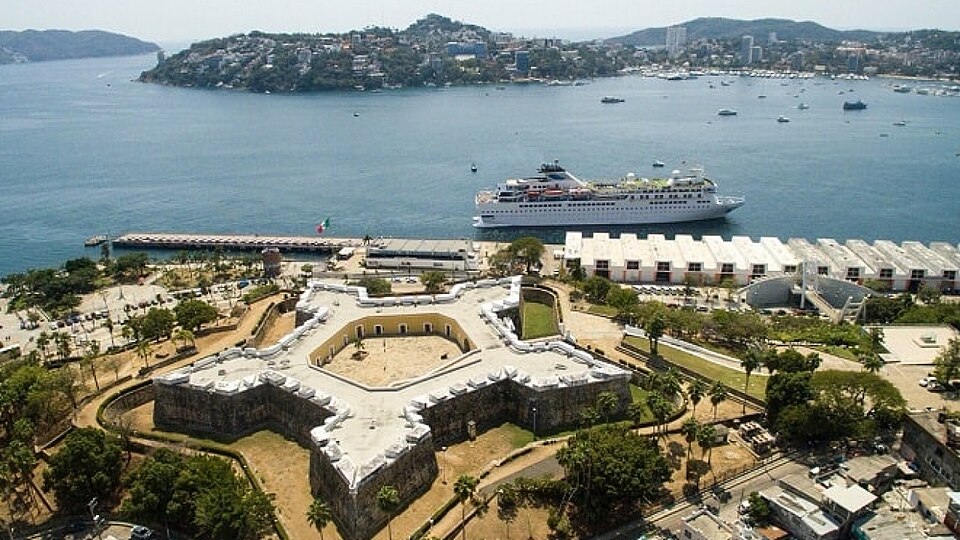
- Isla de la Roqueta — Island in the bay, reached by boat
A short boat ride from the old town, this small island has a beach with shallow, sheltered water, which suits families and nervous swimmers. Boats leave from the main waterfront, and glass-bottomed options are common. Bring sun protection and water, and expect it to be busier at weekends and in school holidays.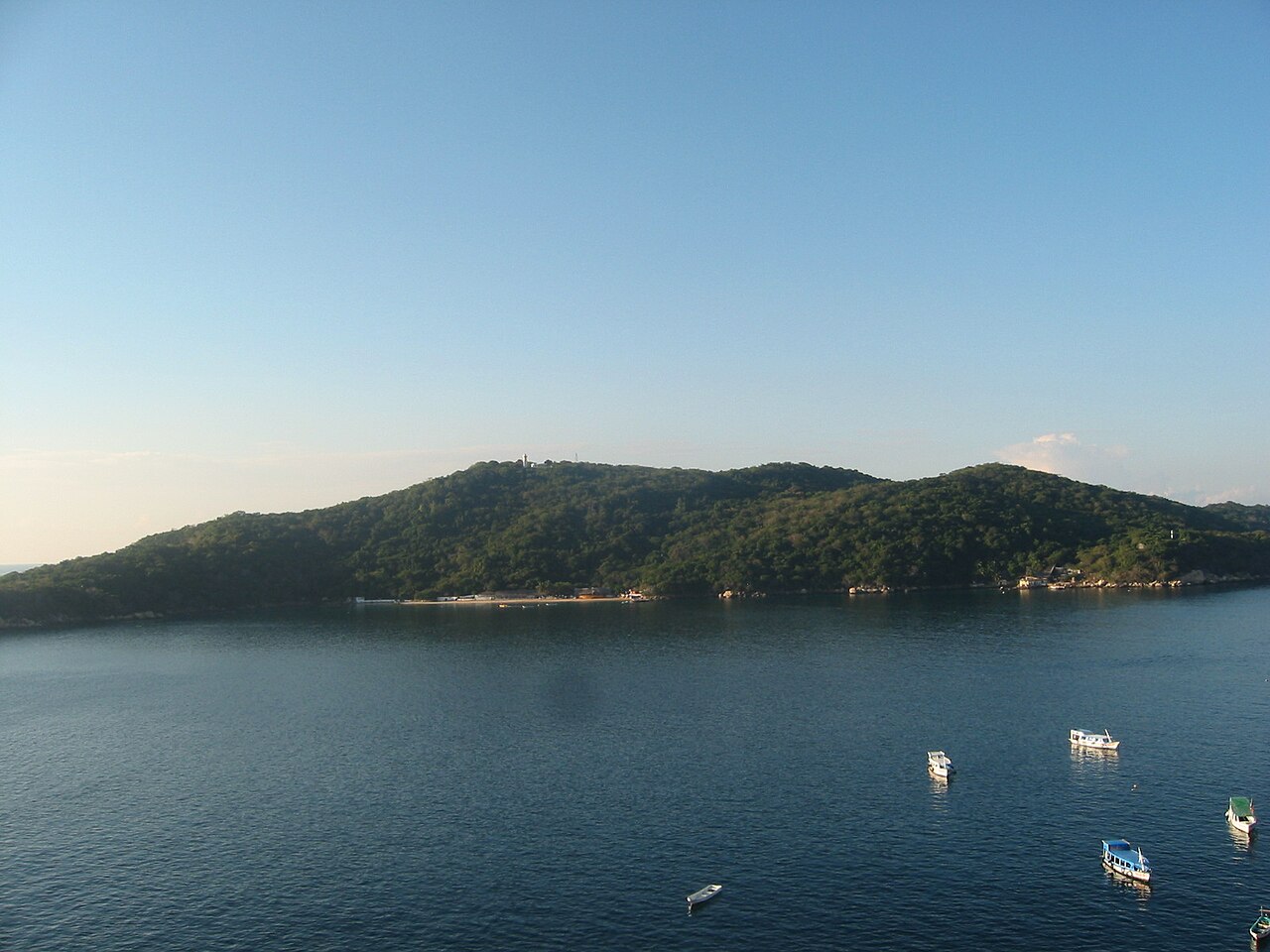
- Pie de la Cuesta — Northwest of the city
This narrow strip northwest of the city is wedged between the open Pacific and the freshwater Laguna de Cuyoca. The sea side is rough, with strong surf better watched than entered, while the lagoon is calmer. It is quieter than the central bay, with simple seafood shacks and a relaxed feel, especially at sunset. - Puerto Marqués — Smaller bay east of the city
Puerto Marqués is a smaller bay just east of the main one, with noticeably less tourist traffic. Beachside restaurants line one side, and the water is generally calmer than on the open coast. It works well as a half-day trip for a swim, a long lunch and a look back at the hills.
Culture
Acapulco's culture is coastal Mexican, built from Indigenous roots, Spanish colonial history and a long seaside-holiday tradition. The Manila galleon trade left traces in local food, textiles and the mix of people who settled around the port. Churches such as Nuestra Señora de la Soledad still anchor neighbourhood life, with Sunday masses, saints' days and processions.
Family time defines the beaches. Large groups arrive with coolers, music and children, and the evening paseo around the Zócalo or along the waterfront is as much a social habit as a stroll. Live music, from mariachi to coastal pop and cumbia, drifts across restaurants and sand late into the night, and nobody is troubled by the noise. Nightlife is part of the city's identity, with clubs set in the hills above the bay that stay busy well after midnight.
The cliff divers of La Quebrada are the best-known local performance, a mix of sport, show and community livelihood. They work as a team, and the audience's tips are part of how the tradition continues. Conversation is warm and usually begins with greetings, and a polite buenos días when entering a shop or restaurant is expected. Bargaining happens at beach stalls and craft markets, but good-naturedly and without pressure.
Tip the cliff divers and beach musicians, ask before photographing people, and cover your shoulders and knees when stepping into a church.
What to wear
In Acapulco, traditional dress survives mainly at festivals, folk-dance shows and on the stage, with roots in the wider Guerrero region. Embroidered cotton blouses, full printed skirts and ribbon-trimmed costumes appear for local celebrations, and Indigenous communities inland weave and embroider cotton garments such as huipiles. The Manila galleon trade also left an imprint, since silk shawls with long fringes were once brought across the Pacific from Asia and influenced Mexican dress.
Day to day, people on the coast dress for heat. Locals wear light cotton shirts, shorts, sundresses and sandals, with swimwear for the beach and brighter, more polished outfits for evenings out. Clubs and the smarter restaurants lean towards stylish casual: linen shirts, fitted dresses and clean shoes rather than formal wear. Sports shirts and caps are common in the old town.
Visitors should pack for sun and sweat. Loose, breathable cotton or linen works best, along with a wide-brimmed hat, sunglasses and high-factor sunscreen. Swimwear belongs on the beach or by the pool, so carry a cover-up and a shirt for town. Churches expect covered shoulders and knees, so a light scarf or shawl is useful. Footwear should include sandals for sand and shoes with grip for Fort San Diego's stone paths, the rocky edges at La Quebrada and boat landings. Keep jewellery and expensive watches out of sight.
What to eat
- Ceviche and aguachile — Beachside seafood shacks at Puerto Marqués and Pie de la Cuesta
Raw fish or prawns cured in lime juice, mixed with onion, chilli, cucumber and coriander. Aguachile is sharper and hotter. It suits the coast's heat and arrives with crisp tostadas or crackers. - Pescado a la talla — Open-air restaurants on the lagoon side of Pie de la Cuesta
Whole fish, split and rubbed with a red chilli paste, then grilled over coals. It is a coastal Guerrero style, served with rice, salad and tortillas, and meant for sharing between two or three people. - Pozole verde — Family eateries around the Zócalo and old town
A hominy and pork stew coloured by green pumpkin seeds and herbs, finished at the table with radish, onion, oregano and lime. In Guerrero, it is a classic weekly dish and a staple of local family meals. - Tamales — Morning stalls near the central markets and Zócalo
Corn dough steamed in husks or banana leaves, filled with pork, chicken or chilli sauce. They make a cheap, filling breakfast, usually sold early in the morning and often finished by midday. - Fresh coconut and fruit cups — Beach vendors along La Costera and Playa Condesa
Coconut water drunk from the shell, then the flesh scraped out, plus cups of mango, melon and pineapple with lime and chilli. Cheap, cooling and easy to find on any beach walk.
Plan it
Best time. November to March is the drier, slightly less humid stretch, with sunny days and warm seas. The rainy season, roughly June to October, brings heavy downpours, stifling humidity and the risk of tropical storms, while the busiest crowds come at Christmas, Easter and long weekends.
How long. 2–3
Getting there. Fly to Acapulco's international airport, then take a taxi or pre-arranged transfer into town. Long-distance buses run from Mexico City and other cities, and the Autopista del Sol toll road is the main route by car. Check current safety advice before choosing a route.
Budget. mid
Tips
- Check current government travel advice before booking, and again just before leaving.
- Use pre-arranged transfers or well-established taxi services, especially after dark.
- Carry some cash for beach vendors, boat trips and road tolls, and keep valuables out of sight.
- Do outdoor sights early, before the midday heat, and drink bottled or filtered water.
- Book Christmas, Easter and long-weekend stays well ahead; see the official site, https://acapulco.gob.mx/, for local information.
Etiquette
- Greet staff and vendors politely, with buenos días or buenas tardes, before asking for anything.
- Cover shoulders and knees inside churches, and keep voices low during services.
- Ask before photographing people, including the cliff divers and beach workers.
Nearby
Sources
- Wikidata Q81398 (CC0)
- Wikipedia: Acapulco (rev 1384607687) (CC BY-SA 4.0)
- Wikivoyage: Acapulco (rev 5423527) (CC BY-SA 4.0)
- Acapulco Collage 2013 — Mitrush (CC BY 3.0)
- Acapulco — Microstar (CC BY-SA 4.0)
- THE DIANA HUNTER OF ACAPULCO — Eduardo Francisco Vazquez Murillo (CC BY-SA 2.0)
- Acapulco Diamante skyscrapers — Mitrush (CC BY 3.0)
- Nuestra Señora de la Soledad — Comisión Mexicana de Filmaciones (CC BY-SA 2.0)
- Museo Fuerte de San Diego — Eefren (CC BY-SA 4.0)
- La Quebrada — Comisión Mexicana de Filmaciones (CC BY-SA 2.0)
- Isla La Roqueta — James Huckaby (CC BY-SA 2.0)


