Bonampak
Bonampak, Mexico
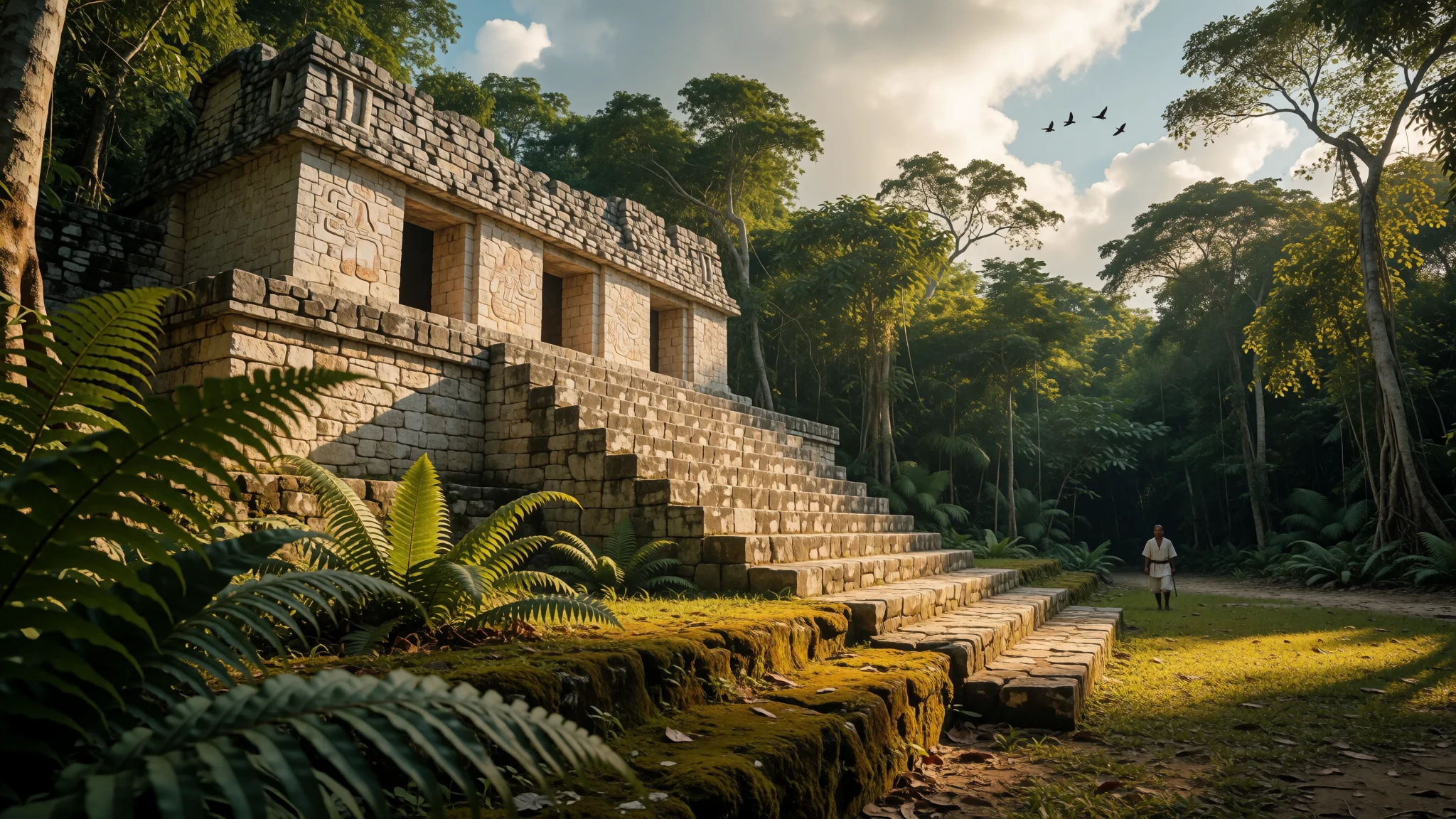
Bonampak is a small Maya site in the Chiapas rainforest, worth the awkward journey for painted rooms that show court life, war and ceremony.
The place
Bonampak is a small Maya site in the rainforest of Chiapas, in south-east Mexico, not far from the Guatemalan border. The name is modern. In the Maya period the city was called Ake, and its immediate surroundings Usiij Witz, which means Vulture Hill. It stands near a tributary of the Usumacinta River and was a dependency of Yaxchilan, the larger city a short way to the north. By Maya standards the architecture is modest, and the settlement itself is believed to have been compact. Most of what stands dates from the Late Classic period.
What gives Bonampak its reputation is a single building, the Temple of the Murals. Its three rooms are covered in painted scenes: courtiers in finery, musicians, a battle, captives, and the ceremonies that followed. The paintings are valued for their detail and for how much they reveal about life at a Maya court.
Outsiders learned of the site only in the mid-twentieth century. Historians still argue over who got there first, with two American travellers and a photographer, Giles Healey, all in the frame. Lacandon Maya guides took them in, because Lacandon families were still making offerings in the old temples. It was Healey who was led into the room of paintings.
On the ground, Bonampak is a grassy plaza with a stairway, a handful of stelae and temples, hemmed in by tall forest and loud with birds and insects. The site takes little time to walk round. The journey is the larger part of the day, and the heat, the damp and the rough road are all part of the experience.
Its story
Bonampak spent much of its history in the shadow of Yaxchilan. Inscriptions record repeated wars between the two, in which Bonampak's lords were taken captive and one ruler lost his freedom. A pause came when Yaxchilan's own king was captured by Piedras Negras, but his successor resumed the attacks and seized more nobles. By the start of the seventh century Bonampak was effectively a satellite, and Yaxchilan's king installed a lord of his own choosing, Yajaw Chan Muwaan I. Later rulers rebuilt the city so that it faced its overlord.
The famous paintings belong to the last act of that arrangement. In the late eighth century, Shield Jaguar III of Yaxchilan oversaw the installation of Chan Muwaan II, the final ruler of Bonampak, and artists from Yaxchilan were brought in to commemorate the occasion on the walls of the Temple of the Murals. The scenes are therefore partly a celebration of loyalty: a junior lord shown in glory, at the pleasure of a more powerful neighbour.
The glory was short. Bonampak fell with Yaxchilan in the ninth century, and the forest closed over the buildings. The Lacandon Maya never lost track of the place and kept it as a shrine, which is how outsiders eventually came to see the walls. Reading the murals as political theatre rather than simple decoration is what makes today's quiet clearing feel less empty.
What to see
- Temple of the Murals — Main group, above the plaza
The reason for the trip. Three small rooms hold painted scenes of a court at its most elaborate: dressed nobles, musicians, a battle, bound captives and a celebration afterwards. Light inside is low and access can be controlled, so expect a short, close look. Rules change, so ask at the entrance.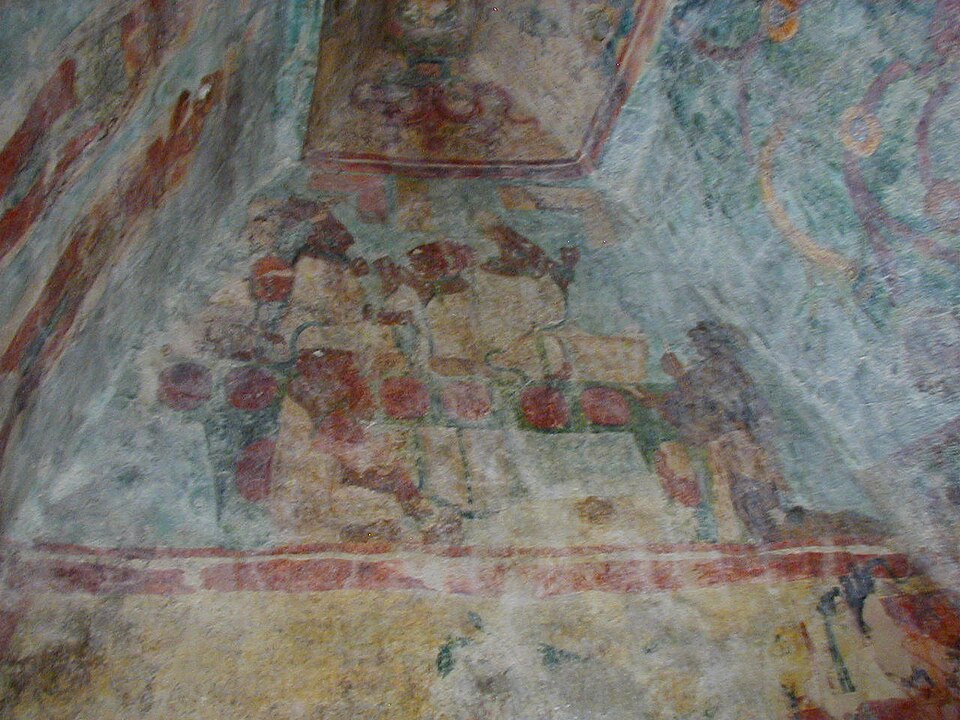
- The Queen — Northwest corner of the plaza
In a building at the northwest corner of the plaza, a roofed doorway opens onto steps leading down into the platform base. Inside stands a large statue known as the Queen, discovered in the nineteen-nineties. It is easy to walk past, so look for the covered door and open it. - The stelae — Central plaza
Several carved stone slabs stand around the site. The one in the middle of the plaza is worth finding first: it shows Chan Muwaan II, the last ruler of Bonampak, standing upright with shield and spear, the same man the murals were painted to honour.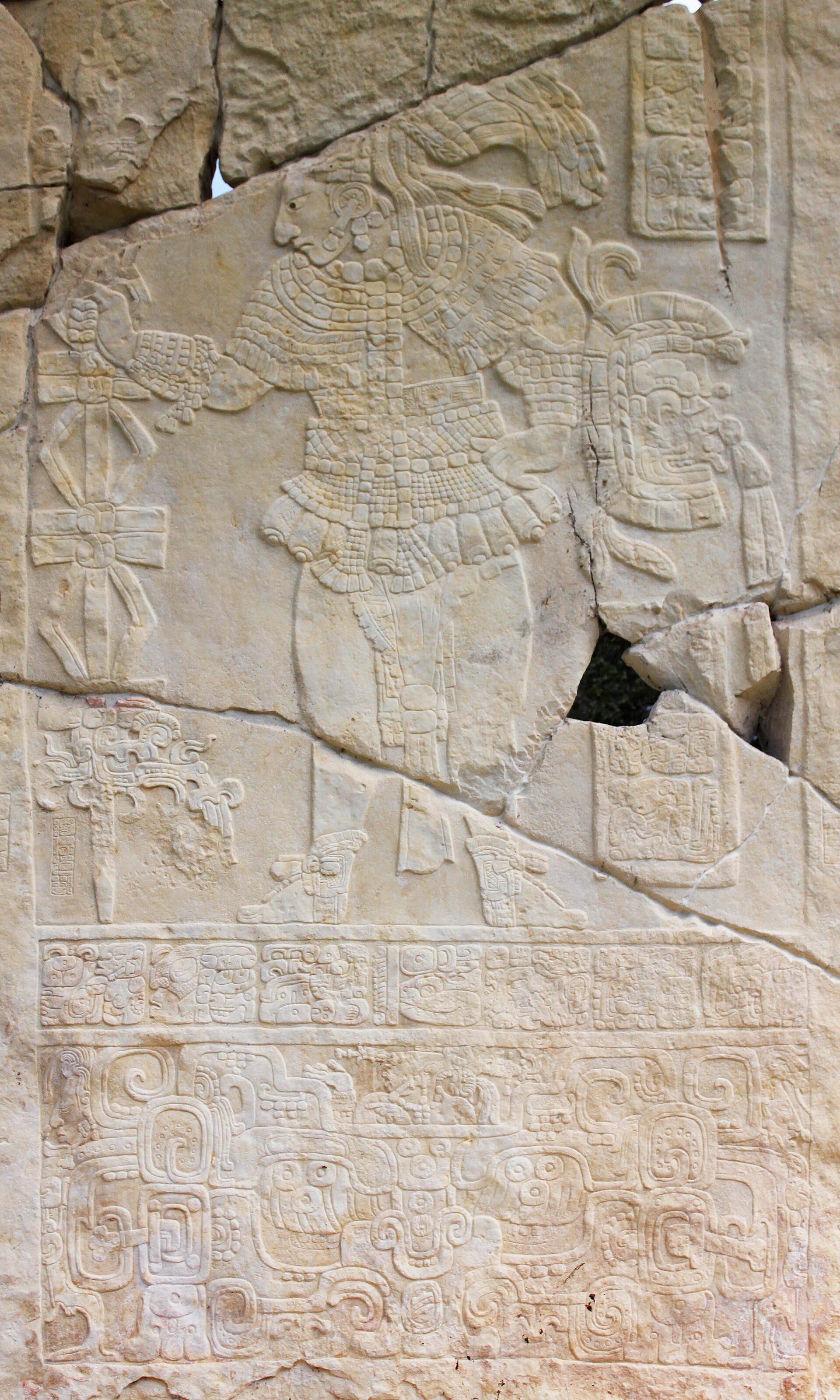
- Plaza and stairways — Centre of the site
The open grass plaza is the best place to grasp the scale of the city, which is small. Steep stone stairways climb between temple platforms, and the forest presses in on every side. Give it time for the birdsong and the shifting light, rather than rushing to the murals.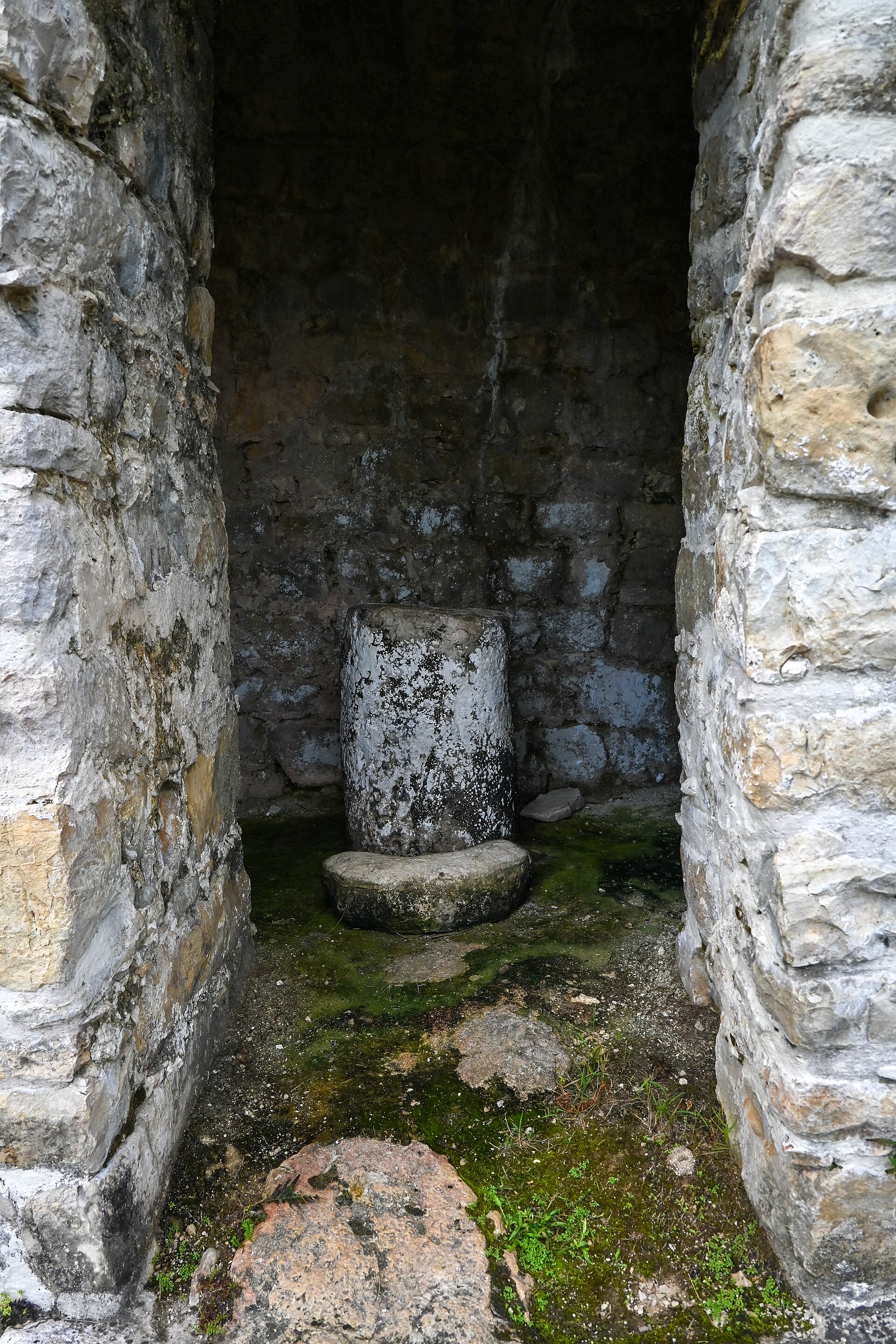
- Frey Group — Away from the main plaza
The remains of a temple with two rooms, standing with a platform that has been partly restored. It sees fewer visitors than the main group, which makes it a calm stop, and it shows how much of Bonampak is still reclaimed stone and root rather than tidy reconstruction. - Grupo Quemado — West of the airstrip
Two small temples where traces of a destructive fire were found, hence the name, which means the Burnt Group. A path leads west from the airstrip and the walk is short. Wear closed shoes, as the ground can be damp and uneven under the trees.
Culture
Bonampak sits on land belonging to the Lacandon Maya community, and that shapes the visit. The community collects entry fees, and local drivers run the final stretch to the site. Lacandon families went on praying in the ruined temples long after the city was abandoned, which is why the place was known to them for centuries before outsiders arrived.
The murals show another side of Maya culture: a court that valued music, dance, costume and ritual alongside war. Musicians, attendants in elaborate dress and captives presented to the ruler show how politics was performed in public. The inscriptions suggest that Bonampak borrowed artists from Yaxchilan for its great commission, a reminder that Maya cities traded skills as well as hostilities.
It helps to treat the ruin as a living place rather than a museum. Lacandon guides and drivers are the people to ask for context, and paying them fairly for the ride is part of how the community benefits from the visitors who come. Nobody sells food or drink on the site itself, so the village of Lacanja is where most contact with local people happens, over a meal or a rest stop.
Ask before photographing local people, and stay off any temple stairs or platforms that the community has marked closed.
What to wear
Bonampak's murals are a rich record of ancient dress. Nobles appear in white cotton mantles, with jaguar-skin garments, jade ornaments and tall feathered headdresses, while musicians wear masks and attendants are painted in bright, patterned cloth. Cotton was the everyday fibre, and the finest pieces were clearly reserved for the court and its ceremonies.
Among the Lacandon Maya, men traditionally wore a loose white cotton tunic and kept their hair long. Some still dress this way for ceremonies, though it is less common in daily life. Most people in and around Lacanja now wear ordinary modern clothes: T-shirts, trousers or skirts, caps, and rubber boots in the wet months. Palenque, the usual base, is much the same, with light cotton and sandals.
For a visit, dress for heat, damp and insects rather than for any religious code. Long trousers, as local advice recommends, protect against bites and scratches on forest paths. Choose light, quick-drying cotton or synthetic fabric, with long sleeves if mosquitoes bother you. Sturdy closed shoes with a good grip matter on stone steps that stay slippery after rain. Add a hat, sunscreen and a thin rain jacket. There is no strict dress rule at the ruins, but covering shoulders and knees is polite in Lacandon villages.
What to eat
- Tortillas with black beans — Family kitchens and small eateries in Lacanja
The staple of the region: fresh maize tortillas with a bowl of black beans, sometimes with a little cheese or salsa. Simple, filling and easy on the stomach after a rough road. Eat before heading to the ruins, as the site sells nothing. - Tamales — Morning stalls and the market in Palenque
Steamed maize dough with a filling of chicken, pork or beans, wrapped in banana leaf or maize husk. They travel well, so buying a few for the day is a sensible plan, since nothing is sold at Bonampak itself. - Huevos a la mexicana — Breakfast eateries in Palenque
Scrambled eggs cooked with tomato, onion and chilli, served with tortillas and beans. It is the usual breakfast before an early van tour, and it gives enough energy for a long, hot morning on forest paths. - Pozol — Palenque market and roadside stalls
A cold drink of ground maize dough stirred into water, popular across Chiapas and neighbouring Tabasco. It is refreshing in the heat, a little sour and quite filling. Choose a busy stall where it is made fresh and served from a clean container. - Fresh tropical fruit — Palenque market and fruit stalls on the road in
Pineapple, papaya, mango and watermelon are sold by the cup or bag, often with lime and chilli. Peeled fruit is easy to pack for the road and gives a welcome lift when water is the only other option.
Plan it
Best time. November to March is usually the better window, being drier and slightly less oppressive. The Chiapas rainforest is hot and humid all year, and the rainy season, roughly May to October, can turn the dirt road into mud and make forest paths slippery.
How long. 1
Getting there. Most visitors base themselves in Palenque and join a van tour that covers Yaxchilan and Bonampak in a day; there is no bus to the site. With a rental car, drive south-east from Palenque to the village of Lacanja, then follow the signed dirt road to the site. Pay the community fee, then take a local taxi or van for the last leg.
Budget. mid
Tips
- Book a van tour from Palenque unless you are happy to tackle a slow, potholed road in your own car
- Carry water, snacks and cash, because nothing is sold at the site and food is only available in Lacanja
- Start early to beat the heat and the afternoon rain
- Check current fees and opening arrangements locally, since the community sets them
- Bring sunscreen, a hat and insect repellent
Etiquette
- Pay the community entry fee and use the local drivers, as the land belongs to the Lacandon community
- Ask before photographing people, especially children
- Keep off structures that are marked closed
Nearby
Sources
- Wikidata Q605455 (CC0)
- Wikipedia: Bonampak (rev 1377298133) (CC BY-SA 4.0)
- Wikivoyage: Bonampak (rev 5337154) (CC BY-SA 4.0)
- Сходи, Бонампак — Oleksii0 (CC BY 3.0)
- Zona arqueologica Bonampak — Dbannasch (CC BY-SA 4.0)
- Bonampak painting — Jacob Rus (CC BY-SA 2.0)
- Bonampak Lintel — unknown author (CC BY-SA 2.0)
- Murals at Maya site of Bonampak — Jami Dwyer (Public domain)
- Estela 1 de Bonampak — Adrian Hernandez (CC BY-SA 4.0)
- Bonampak - 24 - 14 — ProtoplasmaKid (CC BY-SA 4.0)
- Bonampak - 24 - 15 — ProtoplasmaKid (CC BY-SA 4.0)


