Valley of the Temples
Valley of the Temples, Italy
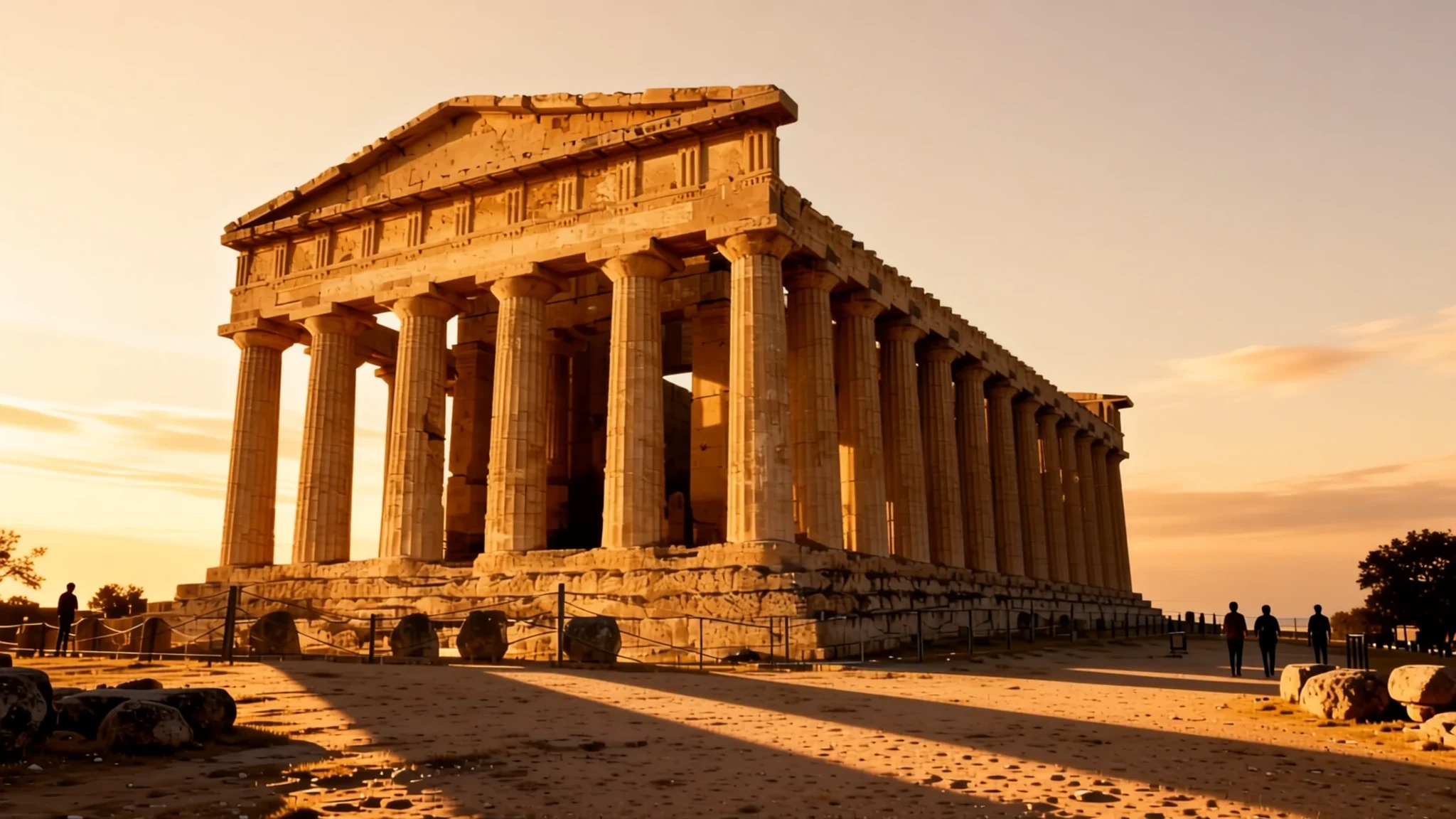
Valley of the Temples puts well-preserved Greek temples on a Sicilian ridge above the sea, with almond and olive groves between them.
The place
Valley of the Temples, known in Italian as Valle dei Templi, lies on the southern coast of Sicily, just outside the modern city of Agrigento. The name misleads. The Doric temples stand along a low ridge, and the "valley" is really the wider landscape of farmland, almond and olive trees, and the Mediterranean beyond. In Greek times the settlement was called Akragas, and what remains is less a single monument than a sprawling open-air park: temples, lengths of city wall, burial grounds, sanctuaries and a regional archaeological museum named after Pietro Griffo. The protected area covers about 1,300 hectares, so it is walked in stages rather than taken in at a glance. Paths are mostly gravel and uneven, shade is thin, and some fallen sections are not fenced off. Two entrances serve the park, one at the Temple of Hera end and one at Porta V, each with a ticket office and parking. Agrigento is a short bus ride away, and that is where nearly everyone stays, since there is nowhere to sleep inside the park. The stone turns honey-coloured in low light, so early morning and late afternoon are the kindest times for photographs and for walking. Opening hours and ticket types change with the season, so check the official website, https://www.parcovalledeitempli.it/. The site has been on the UNESCO World Heritage List since 1997, and the midday crowds in high season show it.
Its story
Valley of the Temples marks the site of Akragas, a Greek colony that began around 580 BC. It was sent out from Gela, a town further along the same coast, whose own founders had come from Rhodes and Crete. Trade and farming made the new city rich quickly, and by the fifth century BC it was ruled by strongmen such as Theron, who could afford to build on a grand scale. Most of the temples visitors walk among today date from that confident era and honour the Olympian gods. Work on the enormous temple of Zeus began after the Greek victory over Carthage at Himera in 480 BC, and it was never completed. Wealth did not keep the city safe for ever. Carthage eventually took control, and in 210 BC Rome captured the city and renamed it Agrigentum. A long decline followed. Earthquakes, wars and the habit of carting away cut stone for other buildings flattened much of the site. The Temple of Concordia survived largely intact, helped by its later conversion into a church, a common rescue for ancient buildings in Sicily. Antiquarians and travellers came to sketch the columns in later centuries, and in 1997 the whole area was inscribed on the UNESCO World Heritage List as a testimony to Greek civilisation in the Mediterranean.
What to see
- Temple of Concordia — Central part of the ridge
Temple of Concordia is the best-preserved building in the park, a Doric temple from around 440 BC whose columns, walls and roof gable still stand almost whole. The name is a later Latin label, not the original dedication. Walk the full outside circuit slowly, because the proportions are the point. It is also the busiest corner of the park.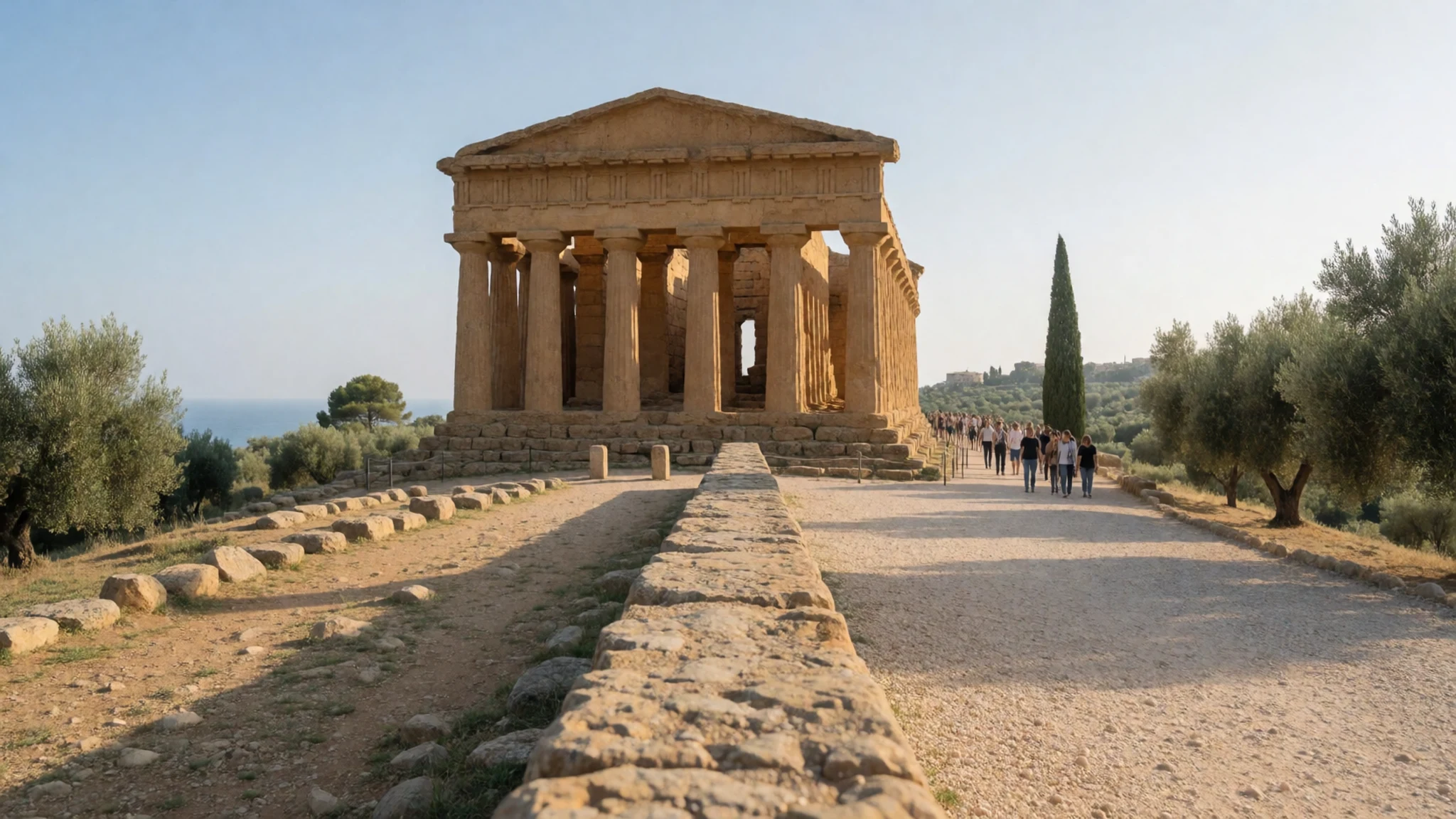
- Temple of Juno — Eastern end of the ridge
Temple of Juno stands at the eastern end of the ridge, dedicated to the goddess Hera, whom the Romans called Juno. A row of columns and part of the altar remain, with reddened stone from an ancient fire. The reward is the outlook down the slope to the sea. It sits beside an entrance, so it is a sensible place to begin.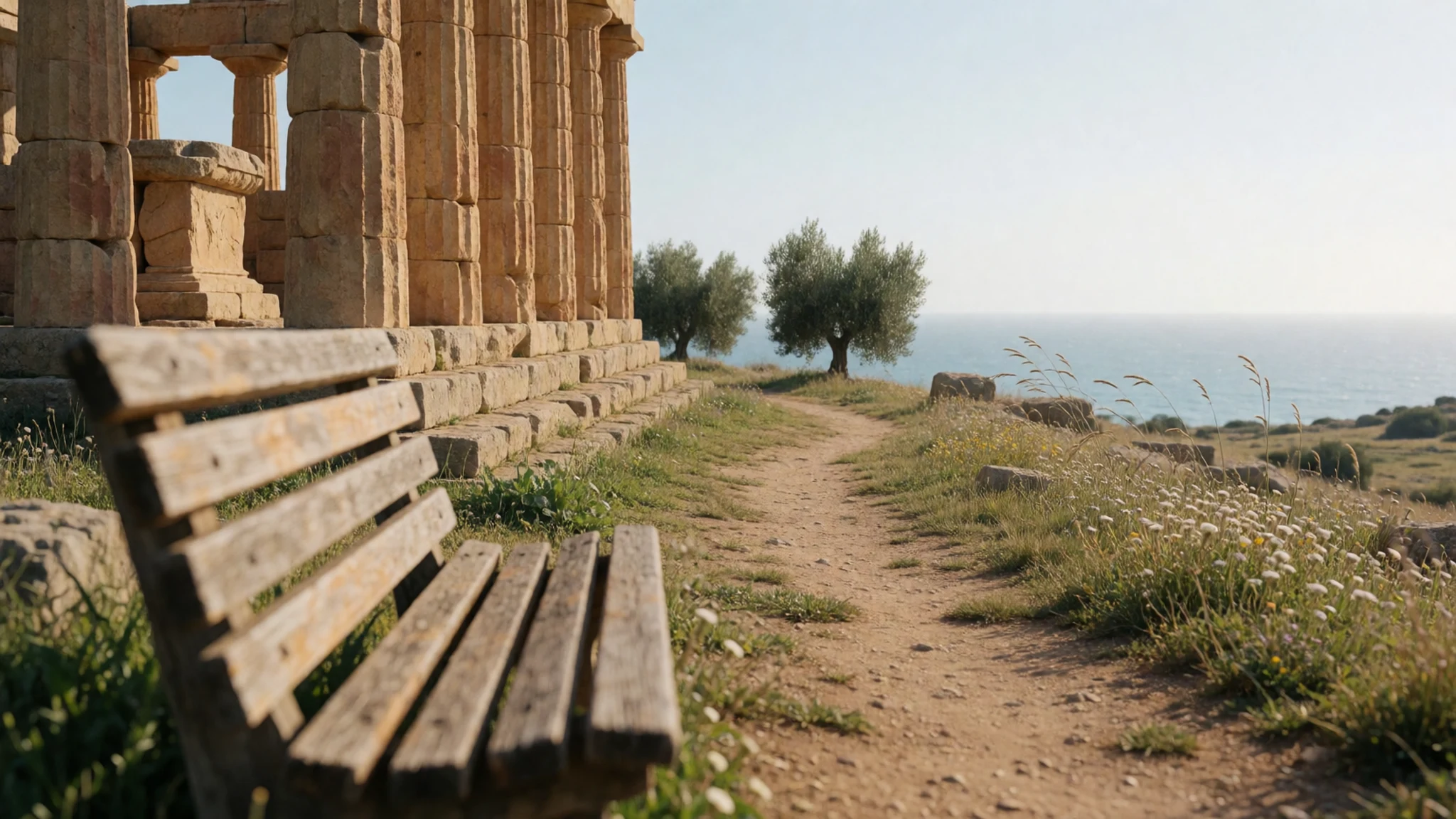
- Temple of Heracles — Between Concordia and Olympian Zeus
Temple of Heracles is thought to be the oldest temple in the valley, a Doric building for a hero widely worshipped in Agrigento. A handful of columns have been stood back up on the platform, while the rest lies in tumbled drums. Lingering over the fallen stones shows what earthquakes do to a colonnade.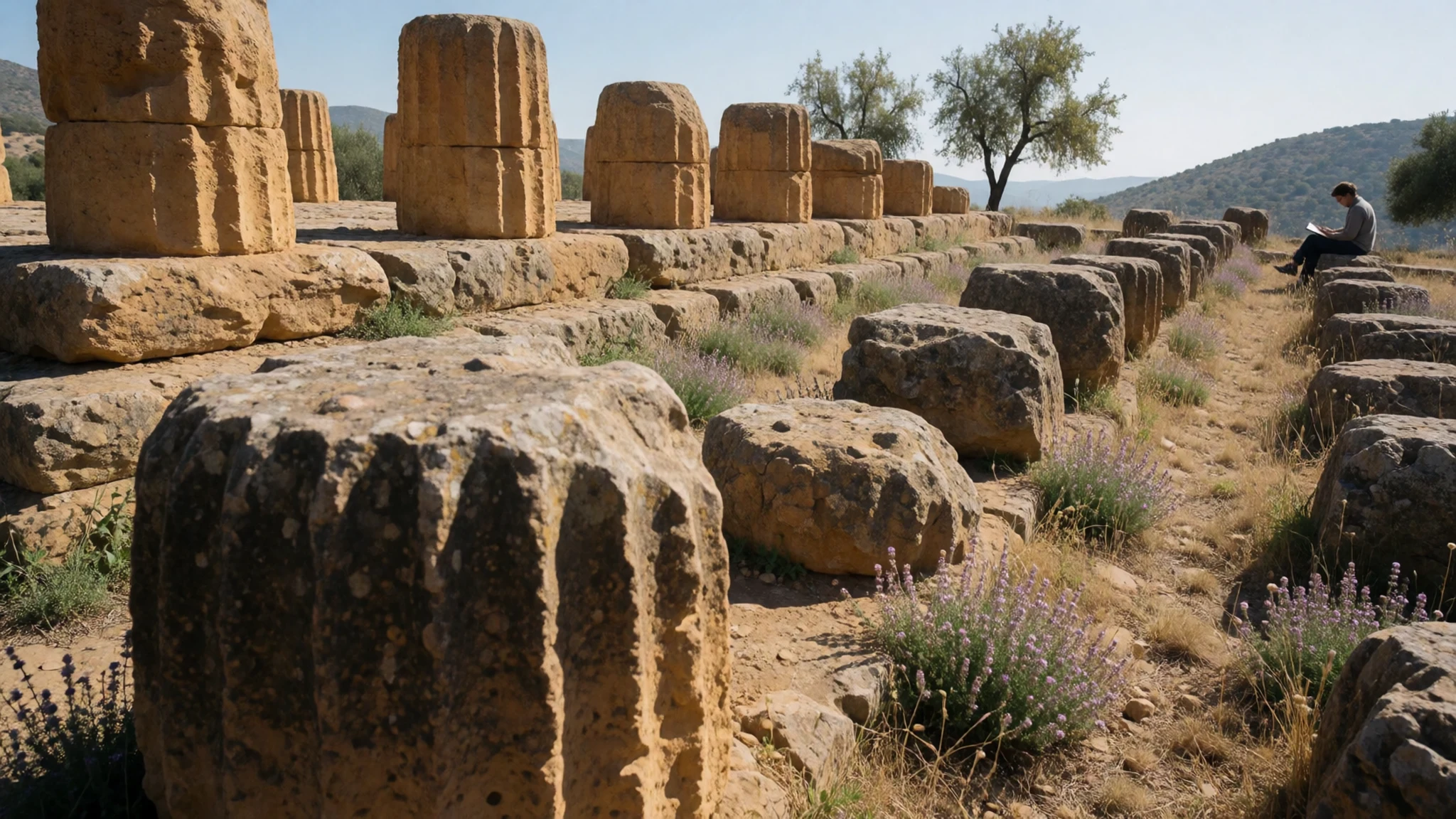
- Temple of Olympian Zeus — Western side, near the museum approach
Temple of Olympian Zeus was planned as a giant Doric temple, begun to mark victory at Himera and never completed. Today it is a field of toppled blocks around a vast platform. Giant carved figures called atlases are thought to have helped carry the structure, and one lies flat on the ground. This ruin rewards imagination more than photographs.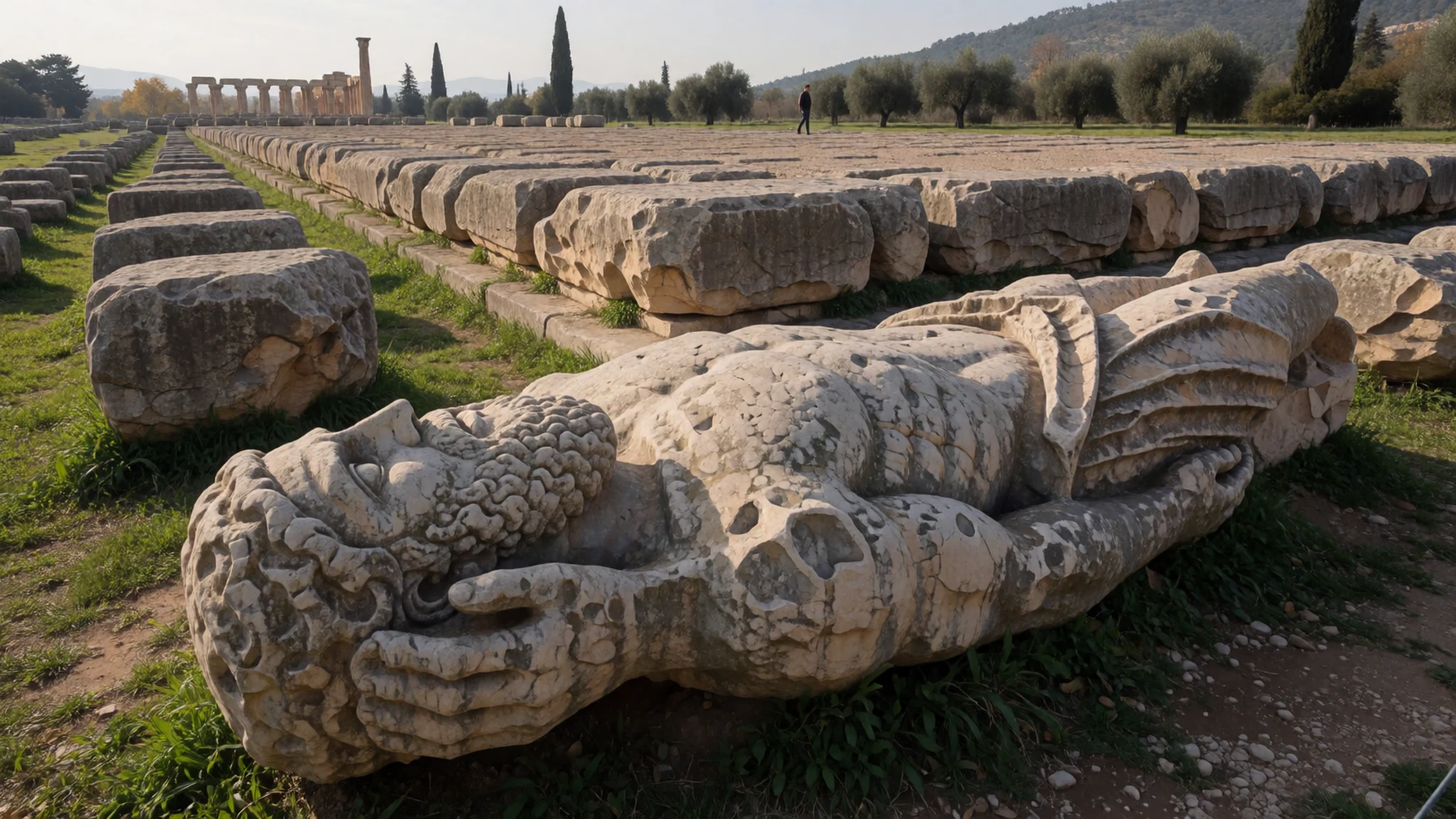
- Temple of the Dioscuri — Western end of the valley
Temple of the Dioscuri, dedicated to Castor and Pollux, is the postcard corner: four columns and a section of the roofline against the sky. It is a 19th-century reassembly from fragments found across the site rather than an untouched ruin, and that honesty makes it interesting. It sits beside quiet gardens at the western end.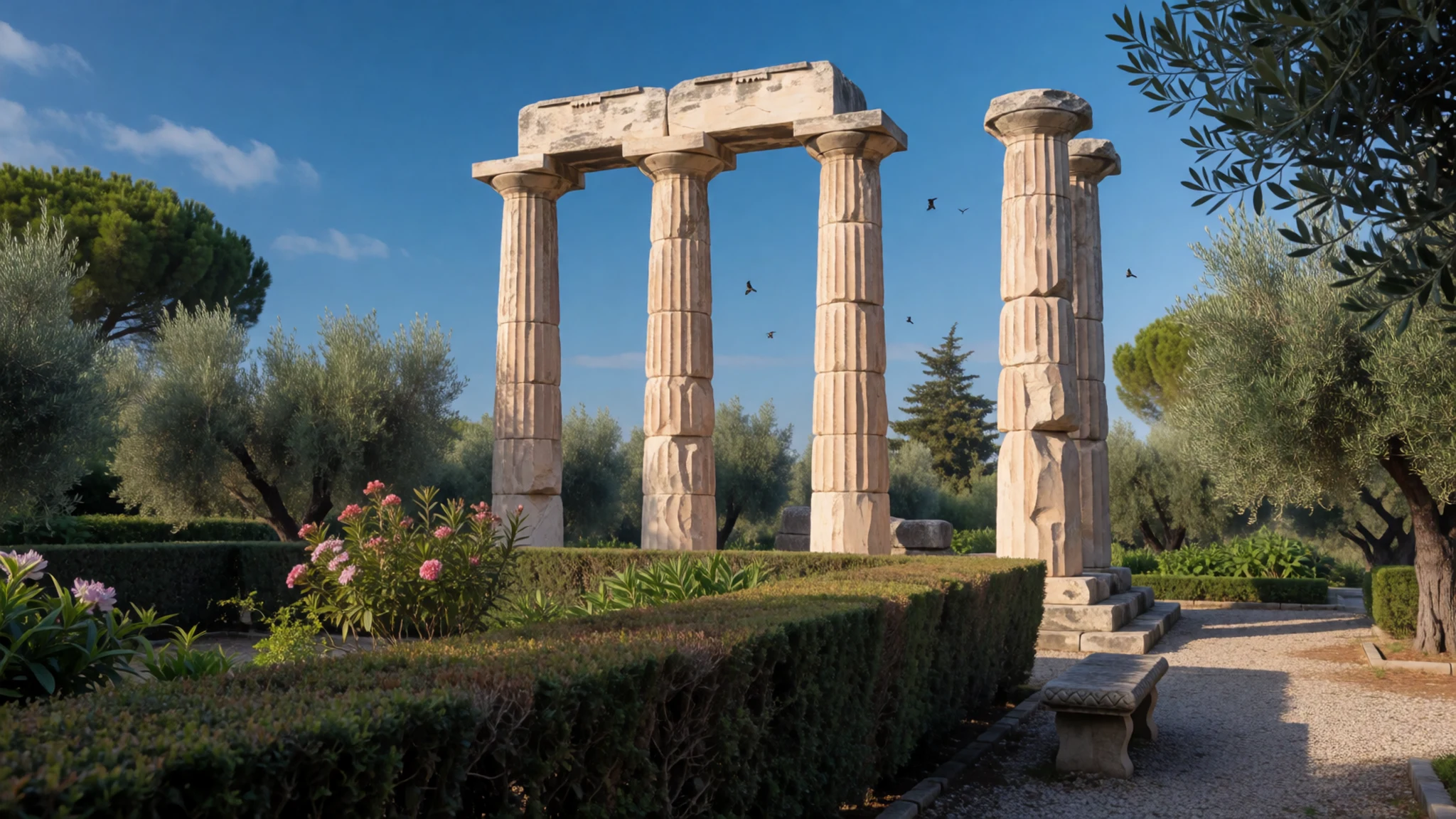
- Temple of Asclepius — South of the ancient walls
Temple of Asclepius is a small sanctuary to the god of healing, set just outside the ancient walls to the south. It draws far fewer people than the main ridge, so it suits a quiet pause. Treat it as a short detour rather than a highlight; the pleasure is the country setting, not grand architecture.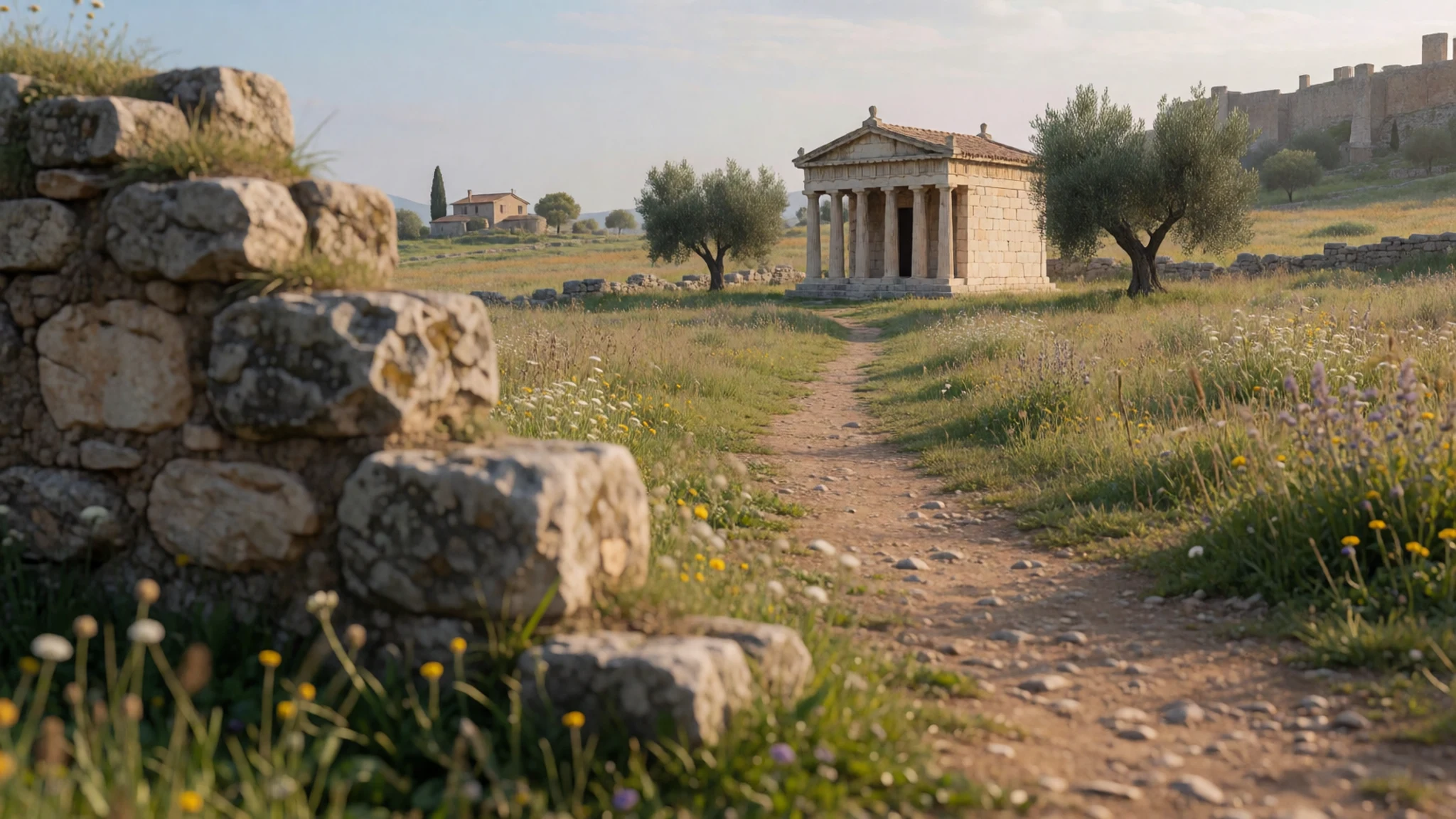
Culture
Valley of the Temples belongs to Magna Graecia, the name given to the Greek-speaking cities of southern Italy and Sicily, and the ruins still shape how Agrigento sees itself. The temples honoured the Olympian gods and showed off the wealth and civic pride of Akragas. Later rulers, from Romans to Arab and Norman Sicilians, layered their own culture over the same hills, which is why Sicily feels like a blend rather than a single tradition. In Sicilian the site is Vaddi di li Tempri, and locals treat it with pride rather than as a museum piece. Each late winter Agrigento holds an almond-blossom festival with folk groups from many countries, a nod to the almond trees that grow among the temples. Daily life in Sicily runs late: lunch is long, shops often close in the afternoon, and dinner starts after sundown, so plan meals accordingly. The Greek past sits alongside Catholic feast days and village processions, and visitors who ask about local festivals usually get warm, detailed answers. Keep to the marked paths and do not climb on or lean against the ancient stones, since some collapsed sections are not fenced.
What to wear
Valley of the Temples sits in a region with no single national costume, so traditional Sicilian dress is best described in parts. Rural men historically wore the coppola, a flat wool cap still common among older men, with dark wool or cotton trousers and waistcoats. Women wore long skirts, embroidered linen blouses and black shawls, while festival costume added velvet bodices and silk ribbons. In the ancient city, people wore the chiton and himation, draped garments of linen and wool pinned at the shoulder. Folk groups bring the old costumes out for dances at festivals, including Agrigento's almond-blossom celebration. Today locals dress as Italians generally do: neat and casual, with linen shirts, light dresses and sunglasses in summer, and jackets and scarves in winter. Visitors should dress for the site rather than the town. Bring a hat, breathable cotton or linen that covers the shoulders, and sunscreen, because shade is scarce. Closed, grippy shoes matter, since paths are gravel and uneven and sandals slip. In Agrigento's churches, cover shoulders and knees. Winter days can be breezy and damp, so carry a light waterproof and a layer.
What to eat
- Pasta alla Norma — Trattorias along Via Passeggiata Archeologica and near Porta Aurea
Pasta alla Norma is a Sicilian staple of pasta with tomato, fried aubergine, basil and salted ricotta. It is simple and filling, and a sensible lunch after hours in the sun. Order it as a first course, and expect plenty of oil.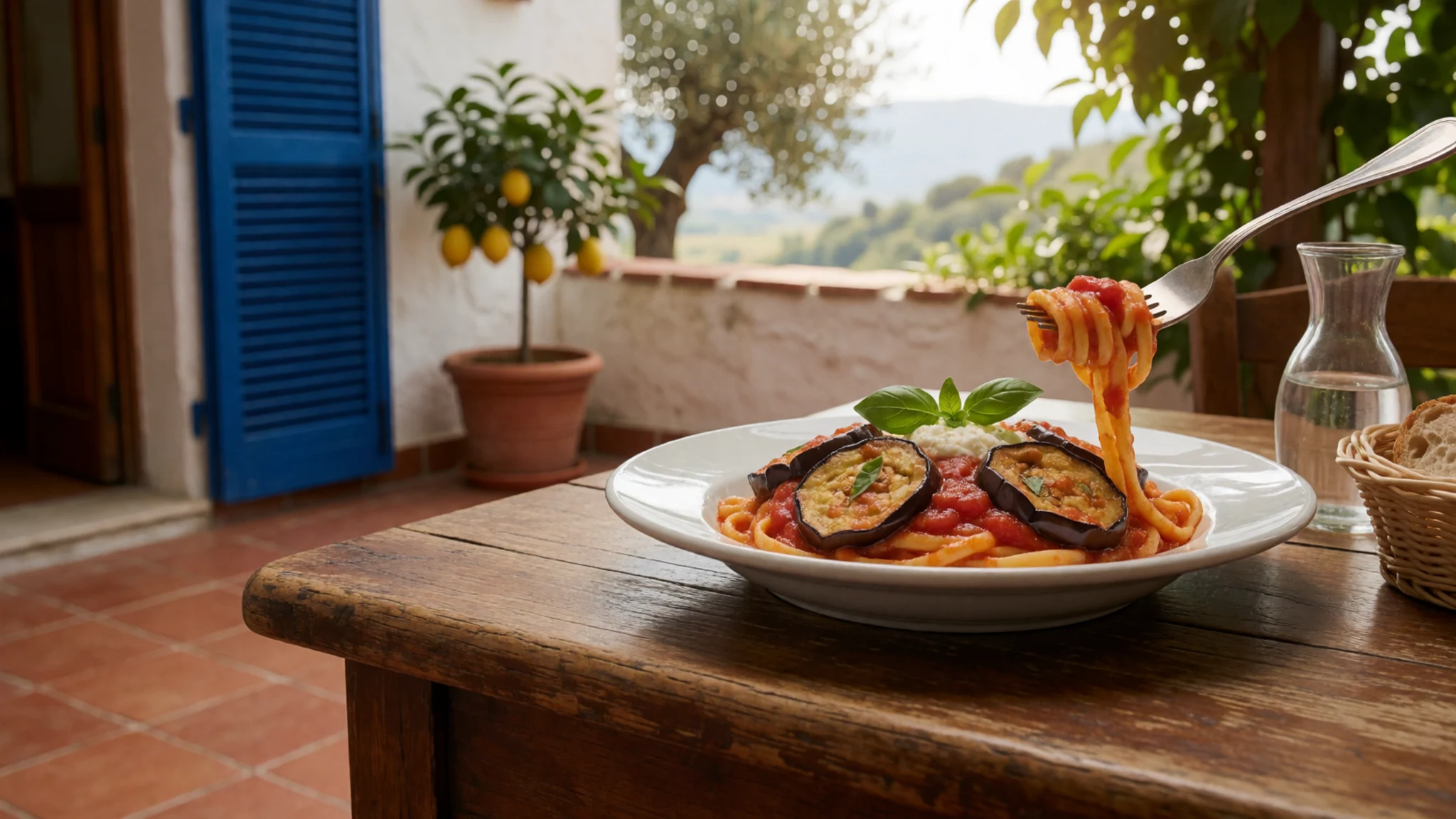
- Arancini — Cafés and rosticcerie in central Agrigento
Arancini are fried rice balls with a crisp crumb shell, filled with ragù, peas or cheese. They are sold hot as a snack and travel well in a bag, which suits a day of walking. Shapes vary by town, round or pointed.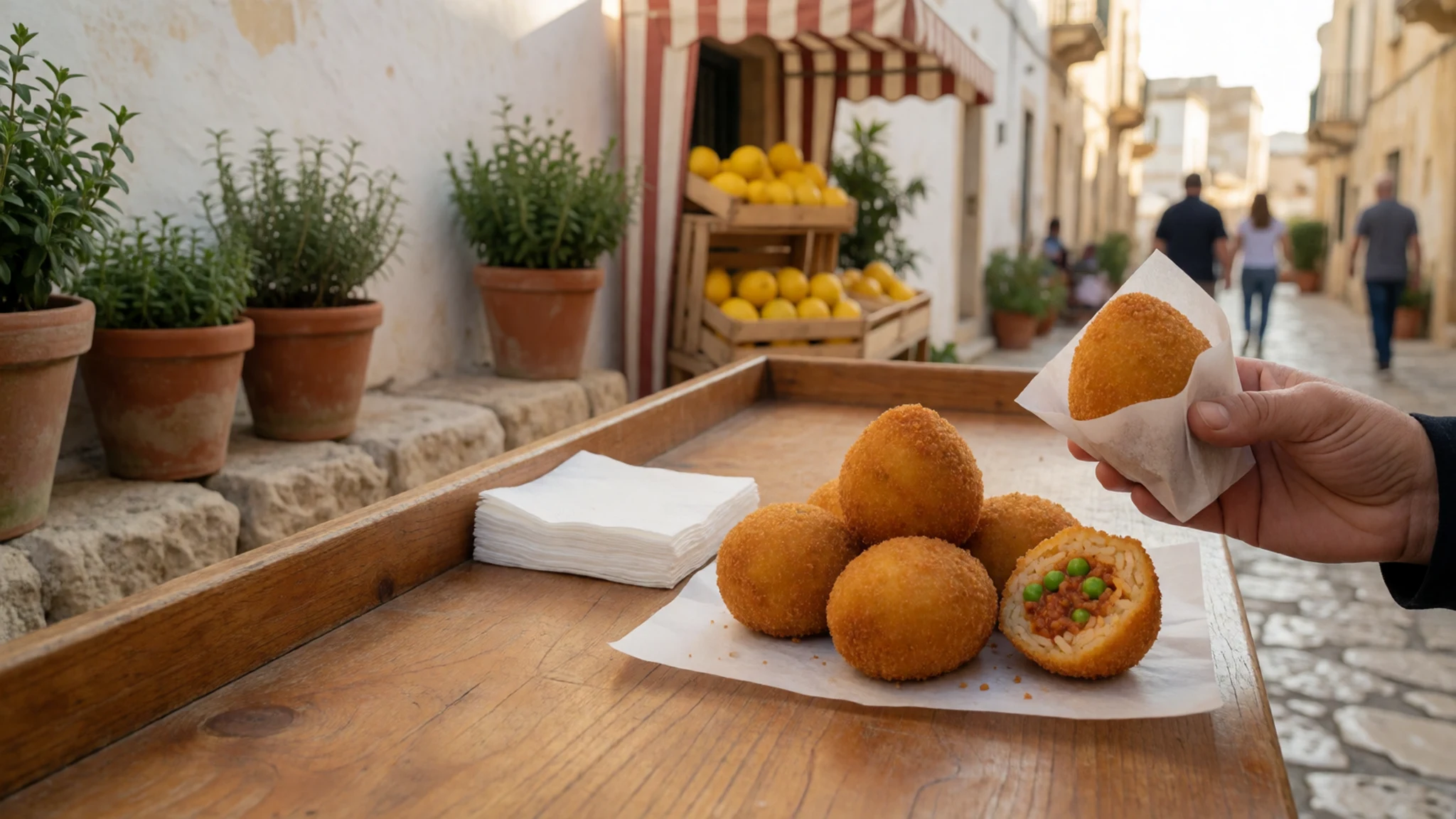
- Fresh seafood — Trattorias near Porta Aurea and coastal restaurants nearby
Fresh fish and shellfish, grilled or served with pasta, appear on menus all along the southern coast. Ask what came in that day rather than choosing from a fixed list. Portions can be generous, so sharing a starter makes sense.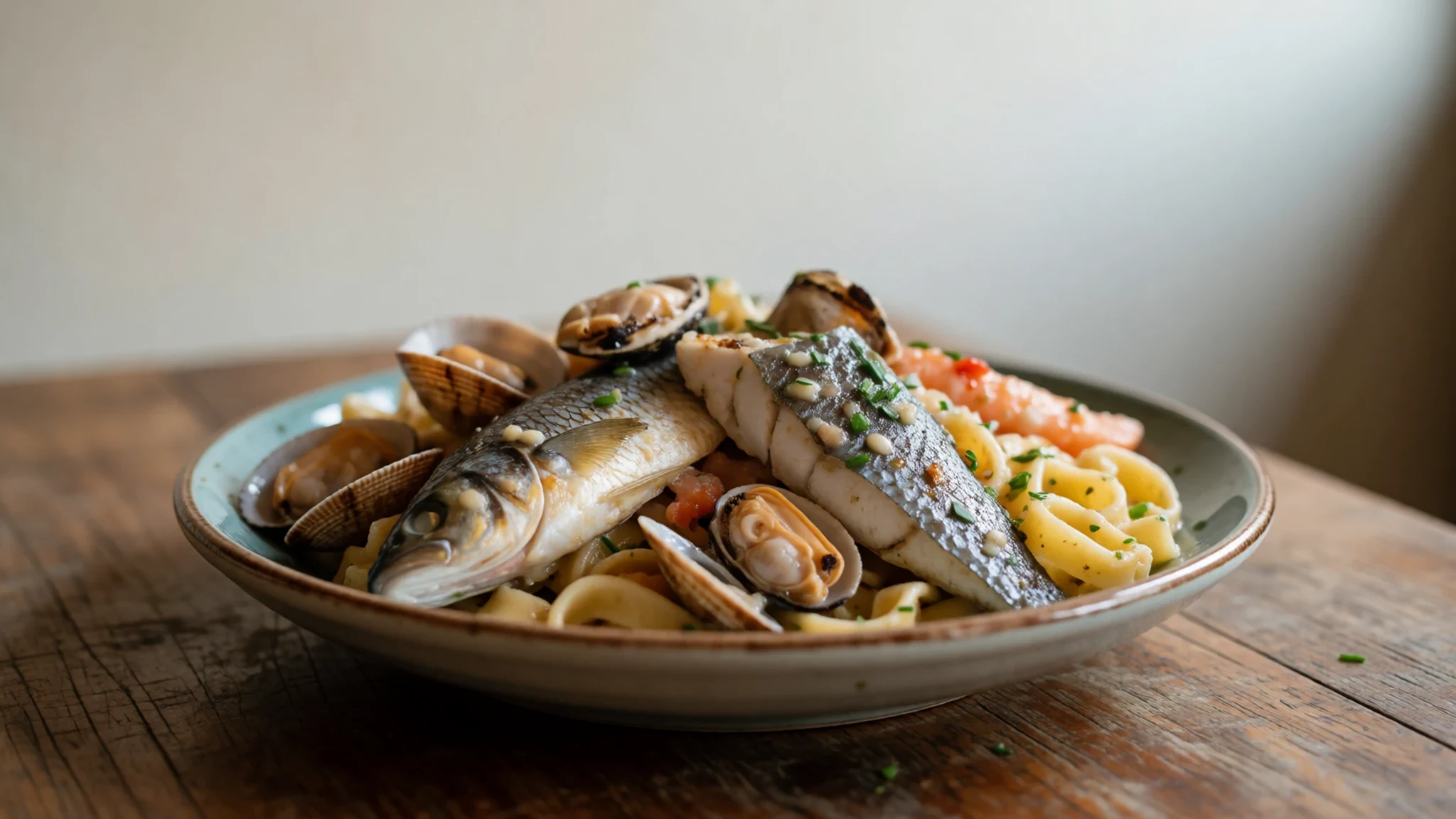
- Granita — Kiosks and the café near the park entrances
Granita is a semi-frozen ice of crushed fruit, almond or coffee, often eaten with a soft brioche in Sicily. It is the quickest way to cool down inside the park in warm months. Lemon and almond are the dependable flavours.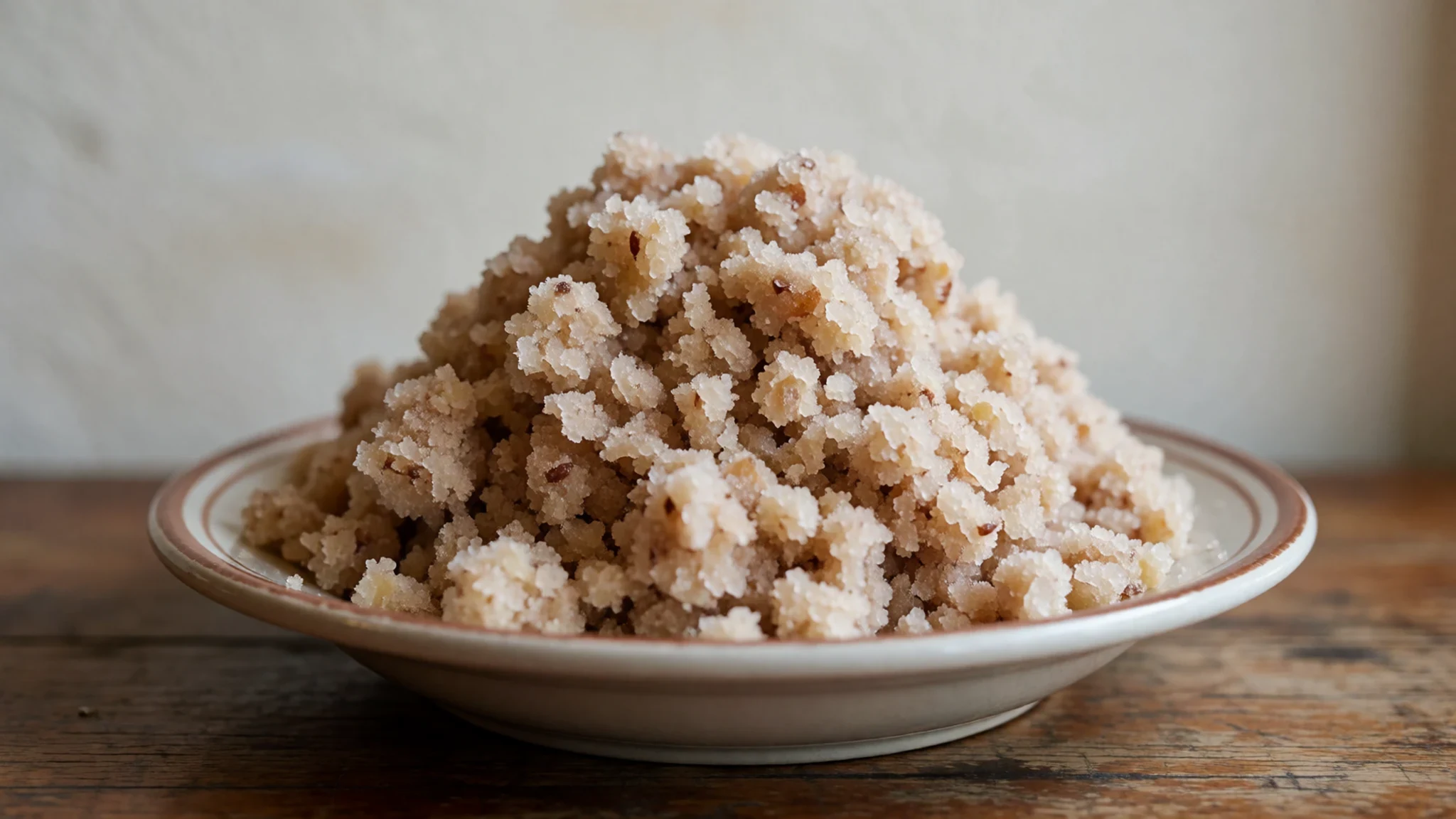
- Almond pastries — Pasticcerie in central Agrigento
Almond sweets, such as soft biscuits made with ground almonds, are a local speciality in Agrigento and a fitting echo of the almond trees around the temples. Buy a small bag to nibble on the walk, or take a box home.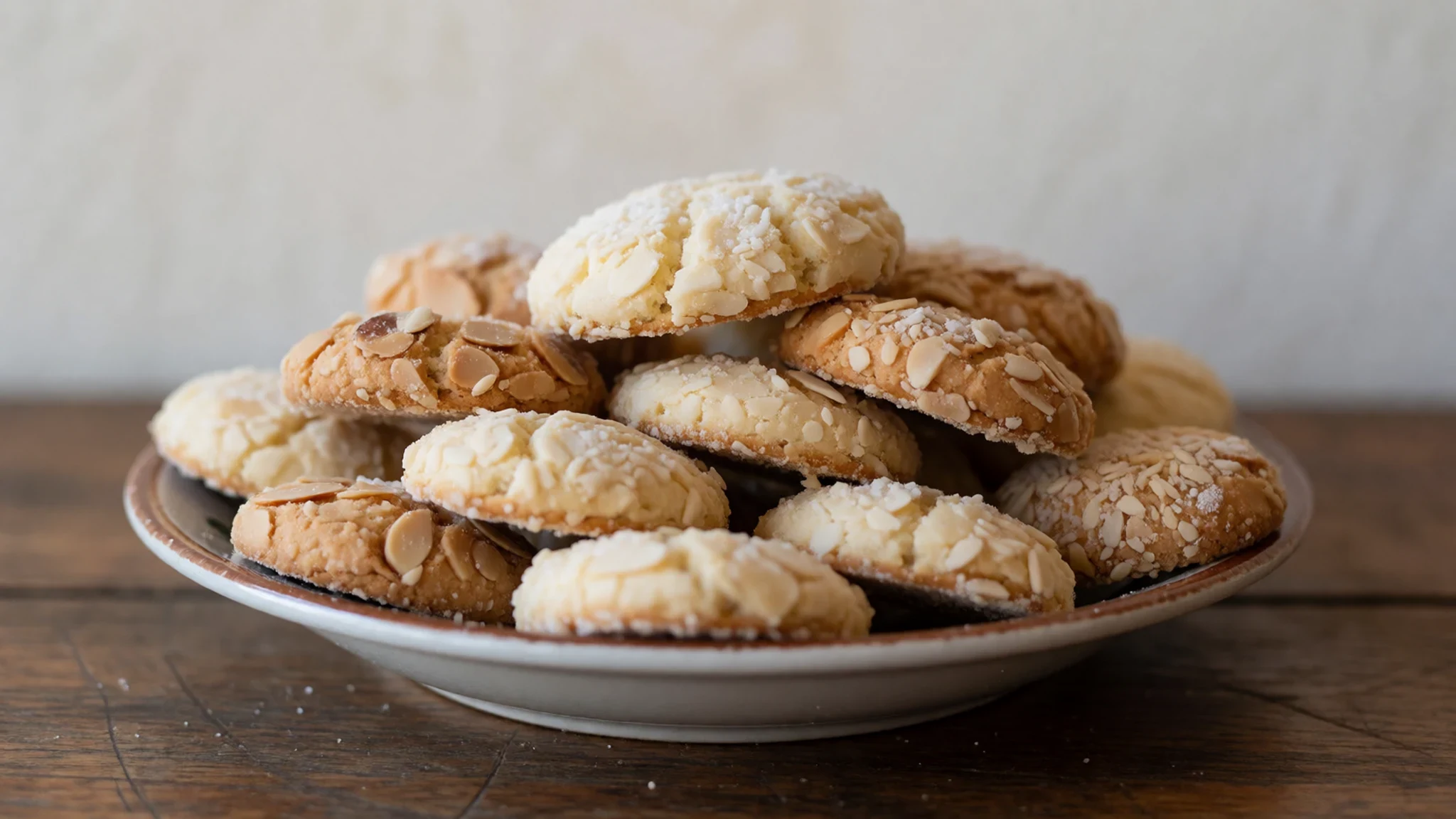
Plan it
Best time. March–May and October–November, when walking among the ruins is comfortable. Summer is hot with very little shade, and winter can be breezy and damp, though quieter.
How long. 1–2
Getting there. Fly to Palermo, the usual gateway, then take a train or coach to Agrigento. From Agrigento's central station or Piazza Rosselli, local buses run to the park entrances, or take a taxi. By car, follow the signs from Agrigento or the SS115 coast road and use the parking near the Temple of Hera or Porta V.
Budget. mid
Tips
- Go early in the morning or in the last hours before closing, since midday heat and tour groups peak together.
- Carry water and refill at the public fountains; add a hat and sunscreen, as shade is scarce.
- Check ticket types, opening hours and any evening openings on the official site, https://www.parcovalledeitempli.it/.
- Stay in Agrigento, where hotels, B&Bs and countryside agriturismi are close; book ahead for spring weekends and festival time.
- Carry some cash for kiosks and small cafés.
Etiquette
- Stay on the marked paths and do not climb on the ruins.
- Take your litter with you and keep your voice low near other visitors.
- Cover shoulders and knees when you visit churches in Agrigento.
Nearby
Sources
- Wikidata Q636774 (CC0)
- Wikipedia: Valle dei Templi (rev 1384889580) (CC BY-SA 4.0)
- Wikivoyage: Valley of the Temples (rev 5314745) (CC BY-SA 4.0)
- Ludvig14, Archaeological Area of Agrigento or Valley of the Temples, Sicily (CC BY-SA 4.0)
- Wolfgang Pehlemann, Concordiatempel, Valle dei Templi (CC BY-SA 3.0 de)
- Toni Pecoraro, Akragas 406 a.C. (CC BY 3.0)
- Robert Koldewey, Sitemap of the archeological sites (CC0 1.0)
- Berthold Werner, Temple of Concordia (CC BY 3.0)
- Berthold Werner, Temple of Juno Lacinia (CC BY 3.0)
- Mboesch, Valle dei Templi, Tempio di Ercole (CC BY-SA 4.0)
- Tomer Bar-Shlomo, Remains of one original atlas in the Olympeion field (CC BY 3.0)


