Üüreg Lake
Üüreg Lake, Mongolia
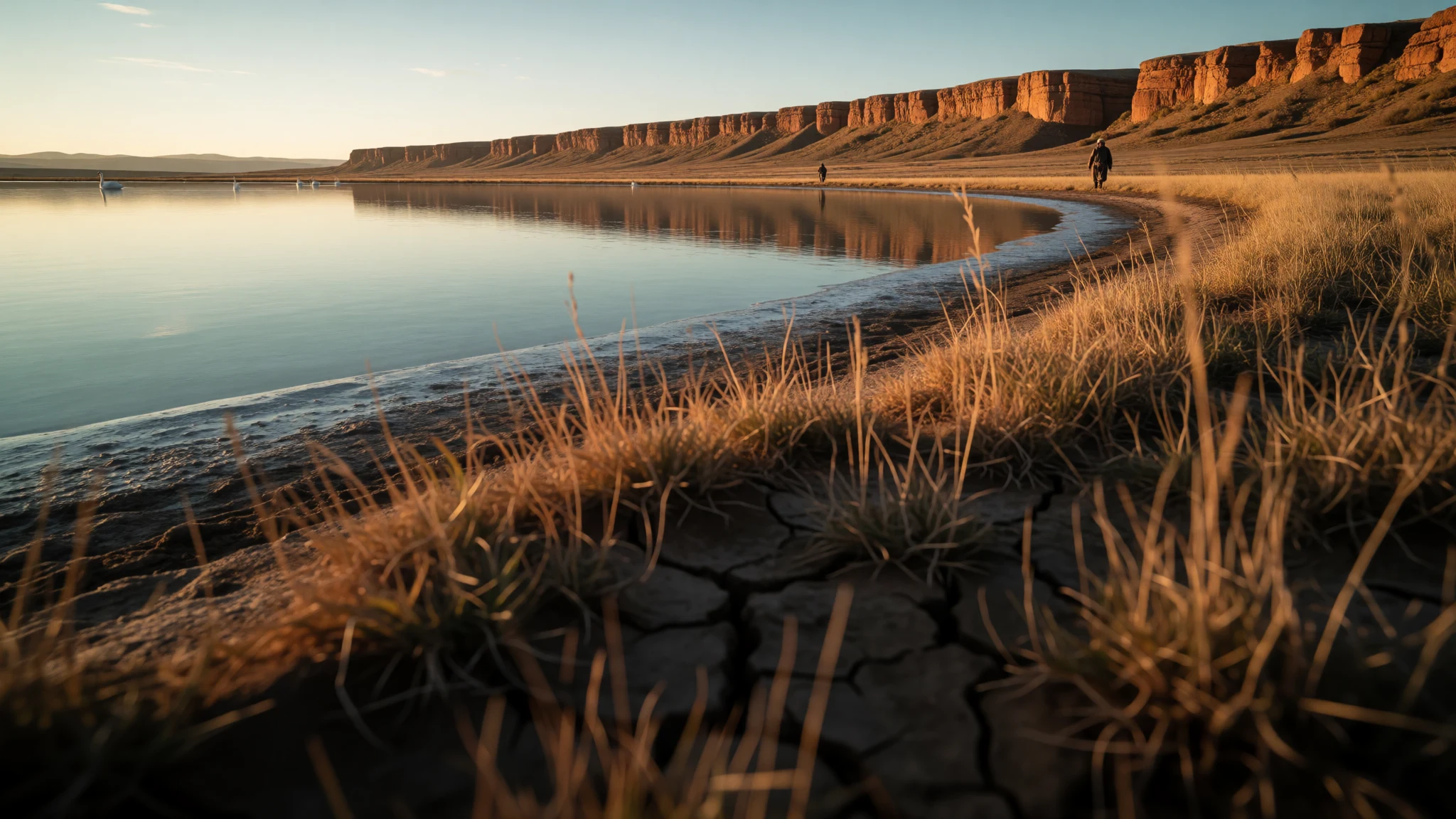
Üüreg Lake is a quiet salt lake in far western Mongolia, where empty steppe, swans and a mountain gorge reward travellers who like space over comfort.
The place
Üüreg Lake (Үүрэг нуур, Üüreg nuur) lies in Sagil district of Uvs Province, in far western Mongolia, at an elevation of 1425 m. It occupies the western edge of the Uvs Nuur basin, just north-west of the Great Lakes Depression, a region of closed basins where rivers end in lakes rather than the sea. The lake is saline, and the country around it is dry: open steppe, desert scrub and bare ground, with mountains standing back from the water. The outline is simple. The shore shelves gently and has no inlets or headlands to break it, so from the bank the lake reads as one broad sheet of colour that shifts with the sky. On the western side the Tsagaan river gorge, marked on maps as Tsagaan Shuvuut Uul, provides the main vertical drama in an otherwise low landscape. Most of the streams that reach the lake run only in some seasons. The Khari River is the dependable one, entering in the north-west, and the marshy, shrubby ground at its mouth forms a green fringe that draws waterbirds. Nothing drains out. This is a place for people who like space and quiet more than facilities. It sits a long way from large towns, services are thin, and the weather decides what is possible. In return there is a shore with few other visitors, swans and wetland birds to watch, and a clear lesson in how a landscape looks when water simply stops.
Its story
Üüreg Lake has an unusual problem: its water has nowhere to go. It sits in an endorheic basin, a hollow with no outlet to the sea, so everything that arrives by river, rain or from underground has to leave as vapour. In this desert depression the air is dry and the surface is wide and open, so evaporation is strong. Over long spans of time, the salts carried in by inflowing water stay behind while the water itself rises into the sky, and the lake slowly turns salty. That is why Üüreg is saline, while lakes with a river flowing out tend to stay fresh. The balance is delicate. Rivers, rainfall and groundwater feed the lake, evaporation takes from it, and the level and saltiness follow that contest from year to year. A run of wet or dry years can show on the shoreline. The mountains round the basin shed their water inward, the lake collects it, and the sun takes it back. People have long lived with this pattern of scarce water and wide pasture. Herding families in this part of Mongolia typically move livestock between seasonal grazing, and a lake edge with reliable inflowing rivers fits naturally into that rhythm. For a visitor, the practical point is simple: the water is salty, not for drinking, and the lake is best understood as the last stop of a closed system rather than a source.
What to see
- The open shoreline — Around the lake, Sagil, Uvs Province
Üüreg Lake's smooth, gently shelving shore is the main sight. Walk the edge early in the morning or towards evening, when low light picks out the colour of the water against dry ground and the mountains behind. Expect wind, space and almost no shade. Binoculars repay the effort.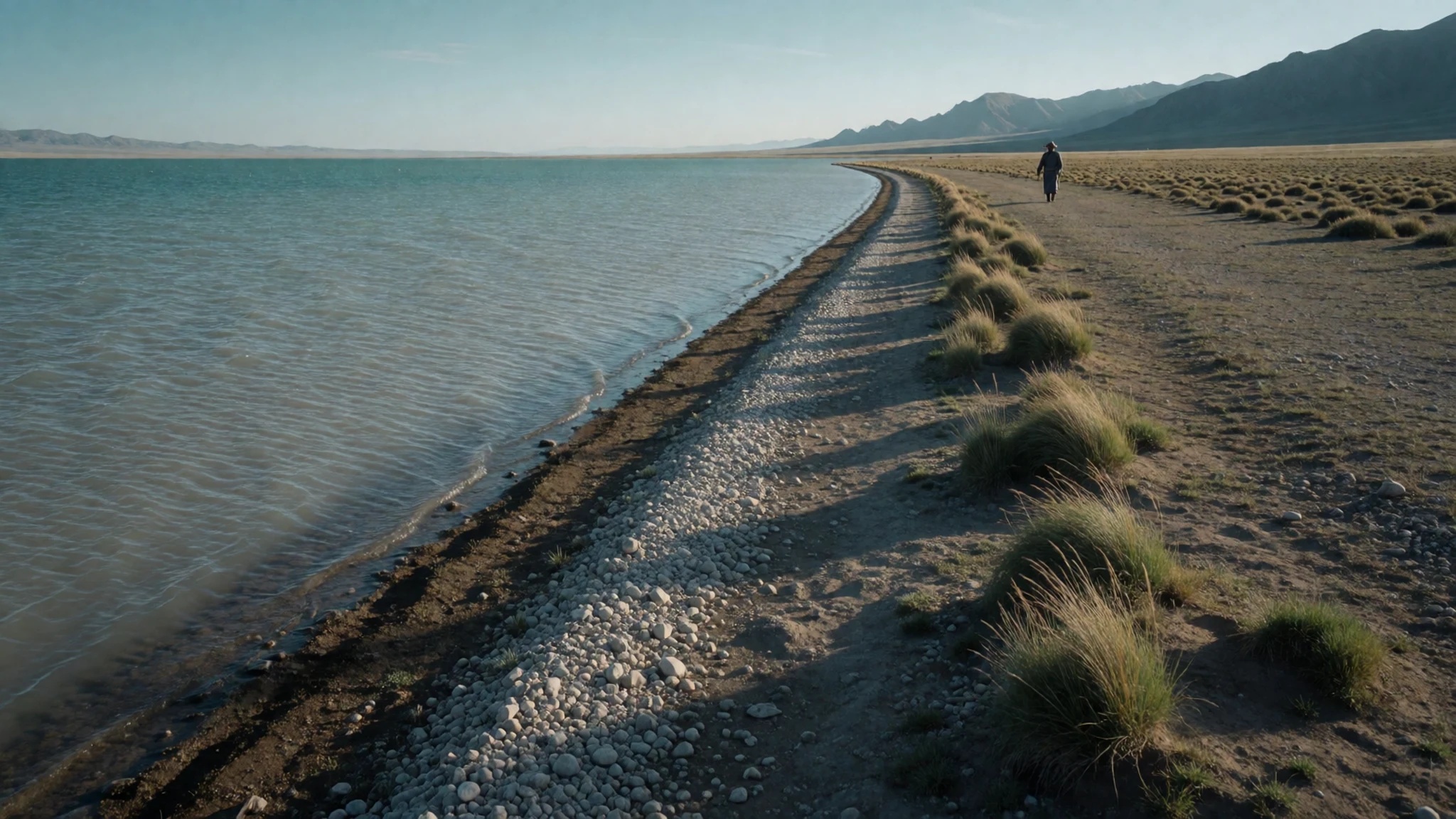
- Tsagaan river gorge — West side of the lake
The Tsagaan river gorge, known on maps as Tsagaan Shuvuut Uul, rises on the western side of Üüreg Lake. After the flat shore it gives a change of scale, with rock and shadow. Go with a local driver or guide, since tracks are unsigned and conditions depend on recent weather.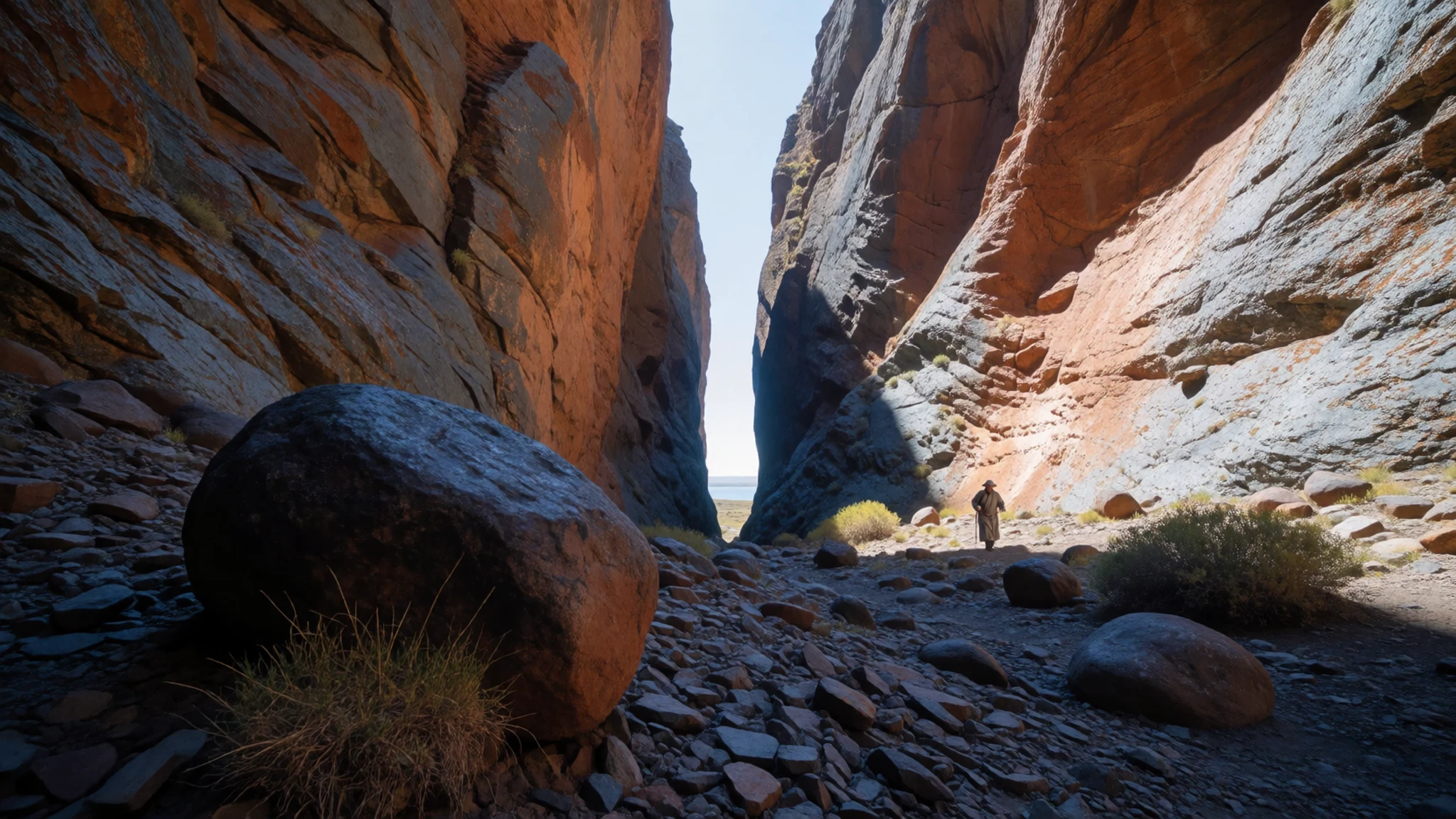
- Khari River mouth — North-west corner of the lake
The Khari River is the lake's steadiest inflow, and the swampy, shrubby ground where it enters is the greenest part of Üüreg Lake. Walk slowly and keep to firm ground. The wet margin is the best place to look for waterbirds, and mosquitoes may be a nuisance in warm months.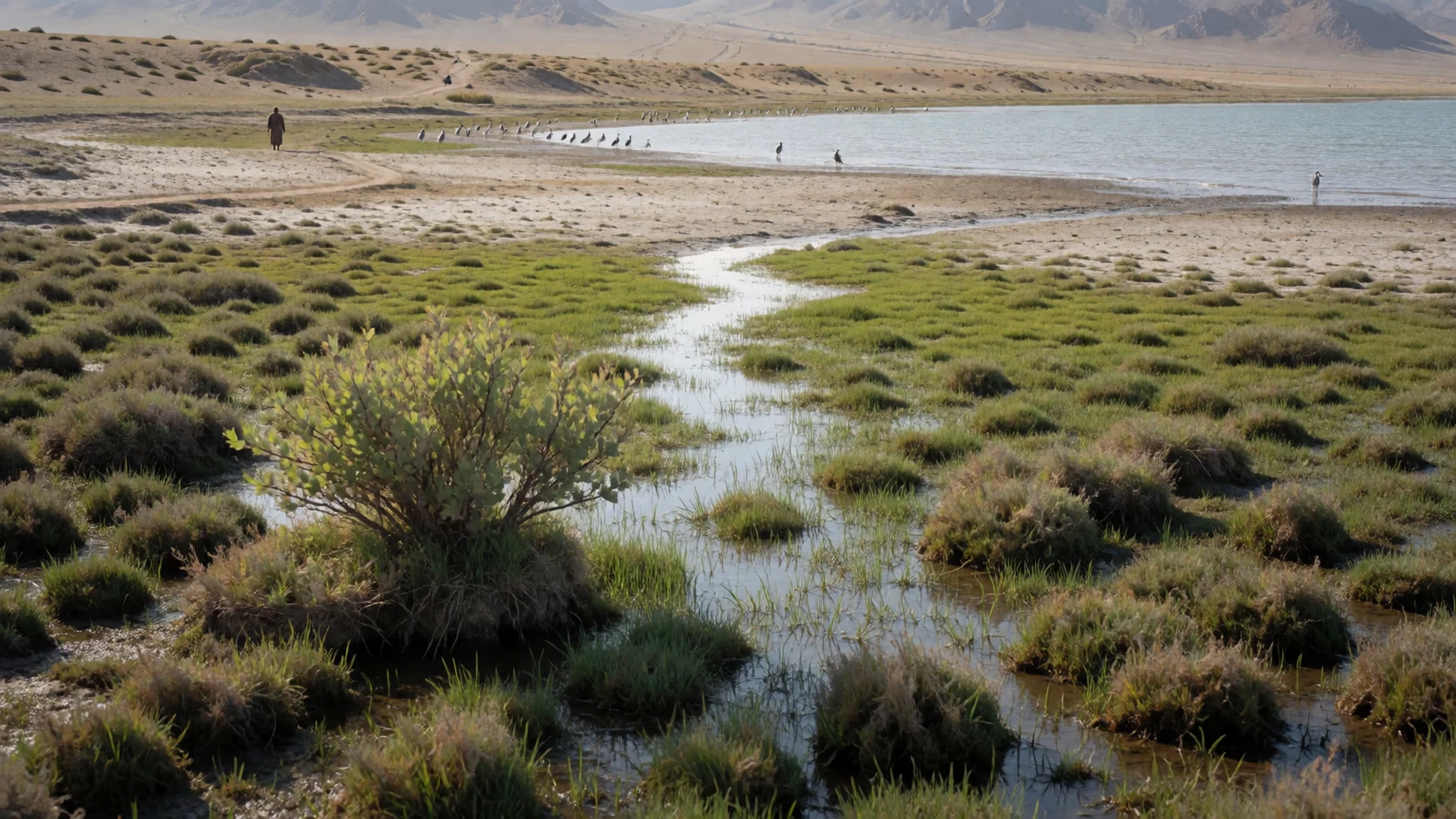
- Swans on the water — Wetland margins and shallows
Swans appear in photographs of Üüreg Lake, usually near the wetland edges. Seasons and numbers vary, so ask a local guide what is around rather than counting on a sighting. Stay well back from birds, use a long lens, and avoid walking close to nesting or feeding areas.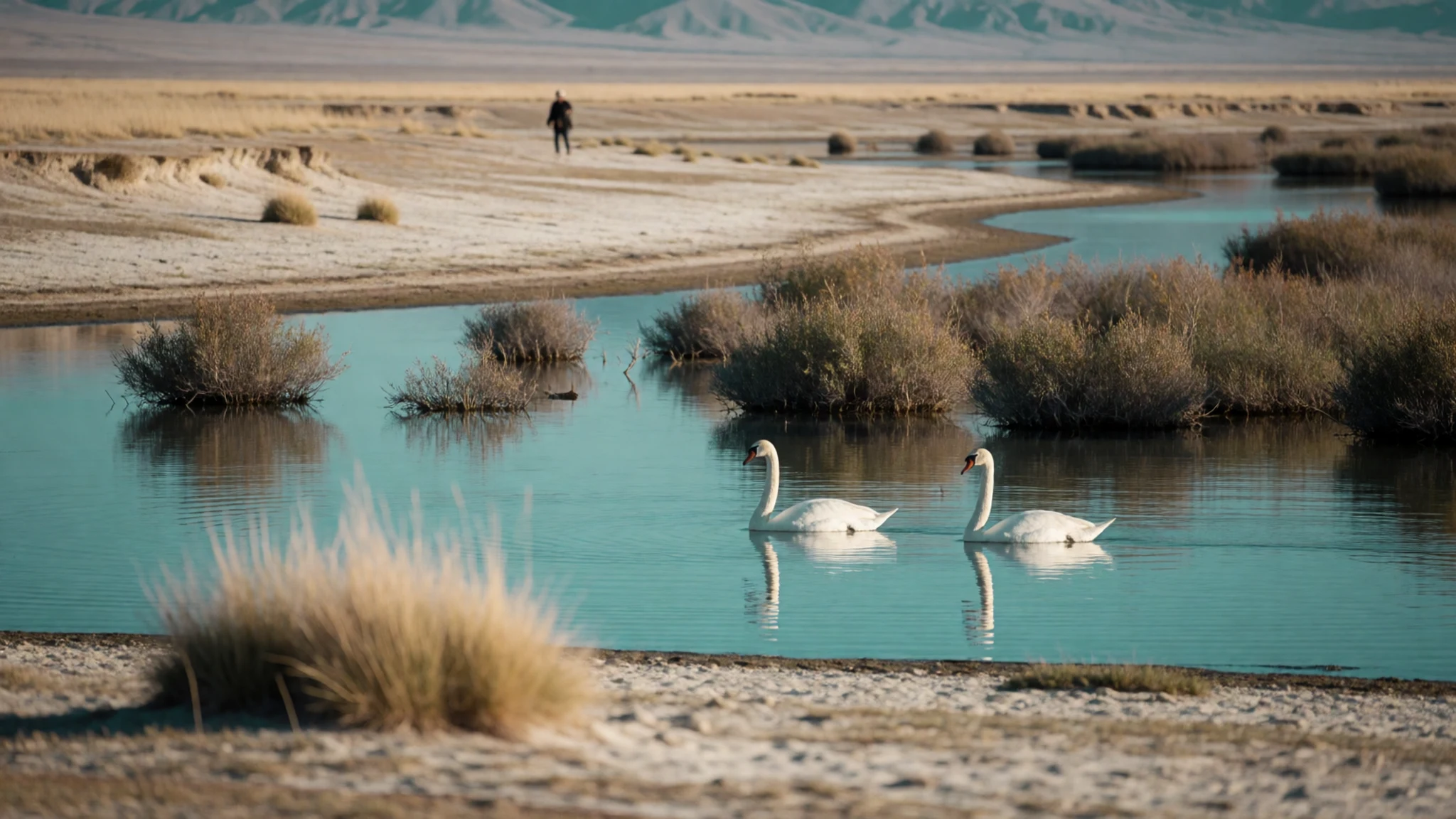
- The lake in its basin — Any rise above the shore
To understand Üüreg Lake, climb any safe rise and look at the whole basin: the water, the dry ground, the ring of mountains. It explains why the lake is salty. The scene is also a good place for a flask of tea and a long, quiet pause.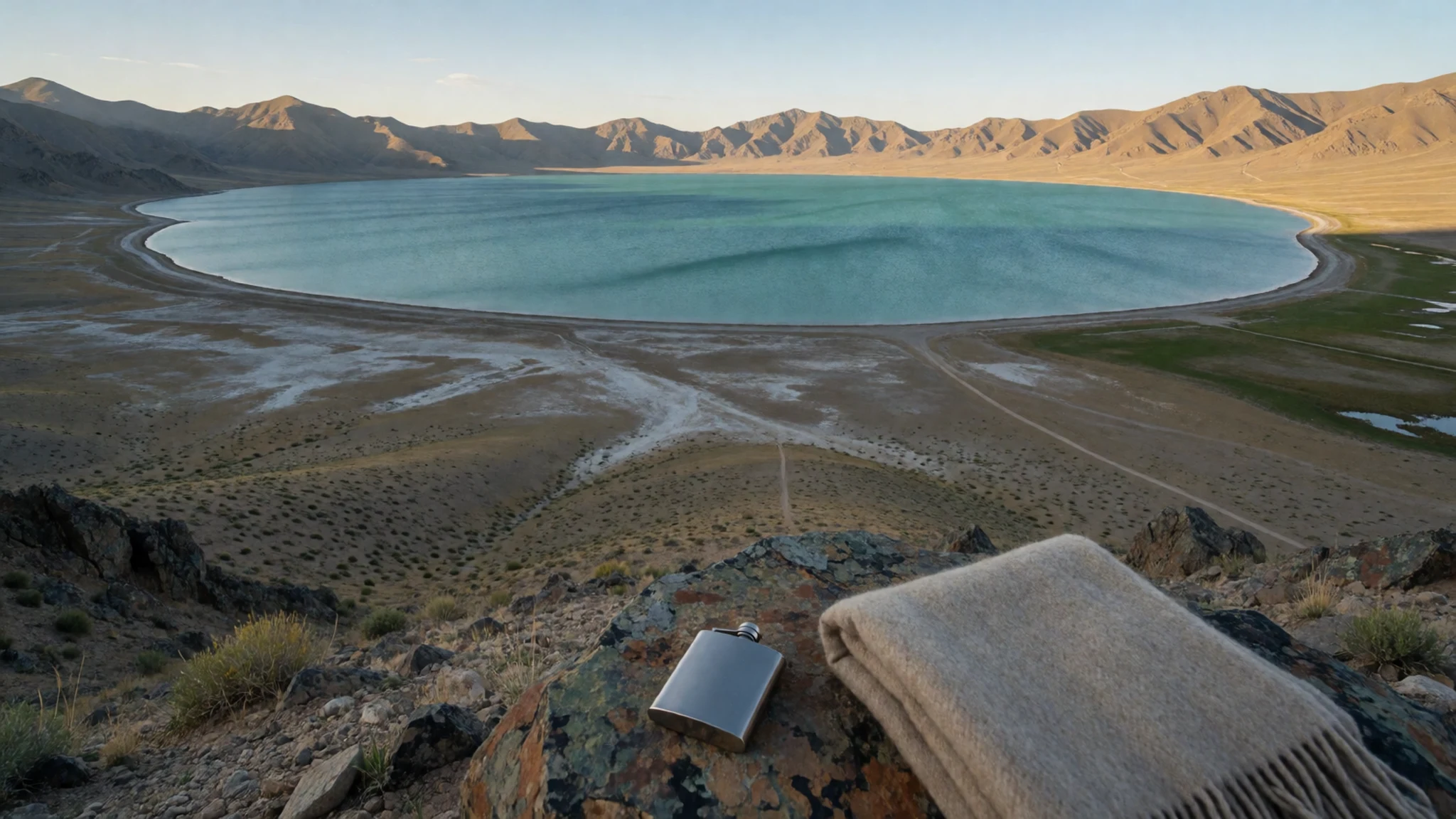
Culture
Üüreg Lake lies in a part of Mongolia where herding still shapes daily life, and the cultural experience is mostly about hospitality on the steppe. Families live in felt-covered gers and move livestock between seasonal pastures, so a campsite or a stopping place may sit inside somebody's grazing land. Guests are traditionally offered tea or a bowl of something before any business is discussed, and refusing outright can seem abrupt. Many Mongolians combine Buddhist practice with older reverence for mountains, springs and lakes, and stone cairns called ovoo, often marked with blue cloth, are found on passes and high points as offerings to the spirits of a place. Such sites are usually walked round clockwise. Water in a dry country is treated with respect, so washing in or polluting a lake, spring or river is frowned upon. Ordinary courtesies matter: a greeting before a request, accepting food and drink with the right hand supported by the left, and letting older people go first. Distances are great and help is far away, so neighbours look after travellers as a matter of course. Visitors should ask before entering a ger or photographing a family, step over the threshold rather than on it, and walk clockwise around any ovoo without taking anything from it.
What to wear
Around Üüreg Lake, the traditional garment is the deel, a long wrap-over robe fastened at the side and tied with a broad sash. Everyday deels are often cotton or wool, with silk for festival wear and padded or sheepskin-lined versions for winter. Colours and trim vary by region and community, and a bright sash is part of the look. Boots called gutal, often with upturned toes, and felt or fur-trimmed hats complete the outfit, and people wear their finest deels at celebrations such as Naadam and the lunar new year, Tsagaan Sar. Day to day, herders and townspeople wear practical modern clothes: jeans, fleeces, work jackets, rubber boots and quilted coats, with a deel often kept for colder days and for occasions. Visitors should dress for a high, dry, windy landscape where the weather can change within an hour. Pack layers, a windproof shell, a warm hat and gloves even in summer, plus a sun hat, sunglasses and sunscreen for strong light with no shade. Sturdy boots with ankle support suit uneven ground and wet margins by the Khari River. There is no formal dress code at the lake itself, but covered shoulders and knees are polite in homes and at any monastery you visit on the journey.
What to eat
- Buuz — Family ger camps and canteens in Ulaangom
Buuz are steamed dumplings filled with minced mutton or beef, onion and a little seasoning, closed with a small pleat on top. They are a staple for guests and celebrations. Eat them hot, by hand, and expect them to be filling after a day of walking by the lake.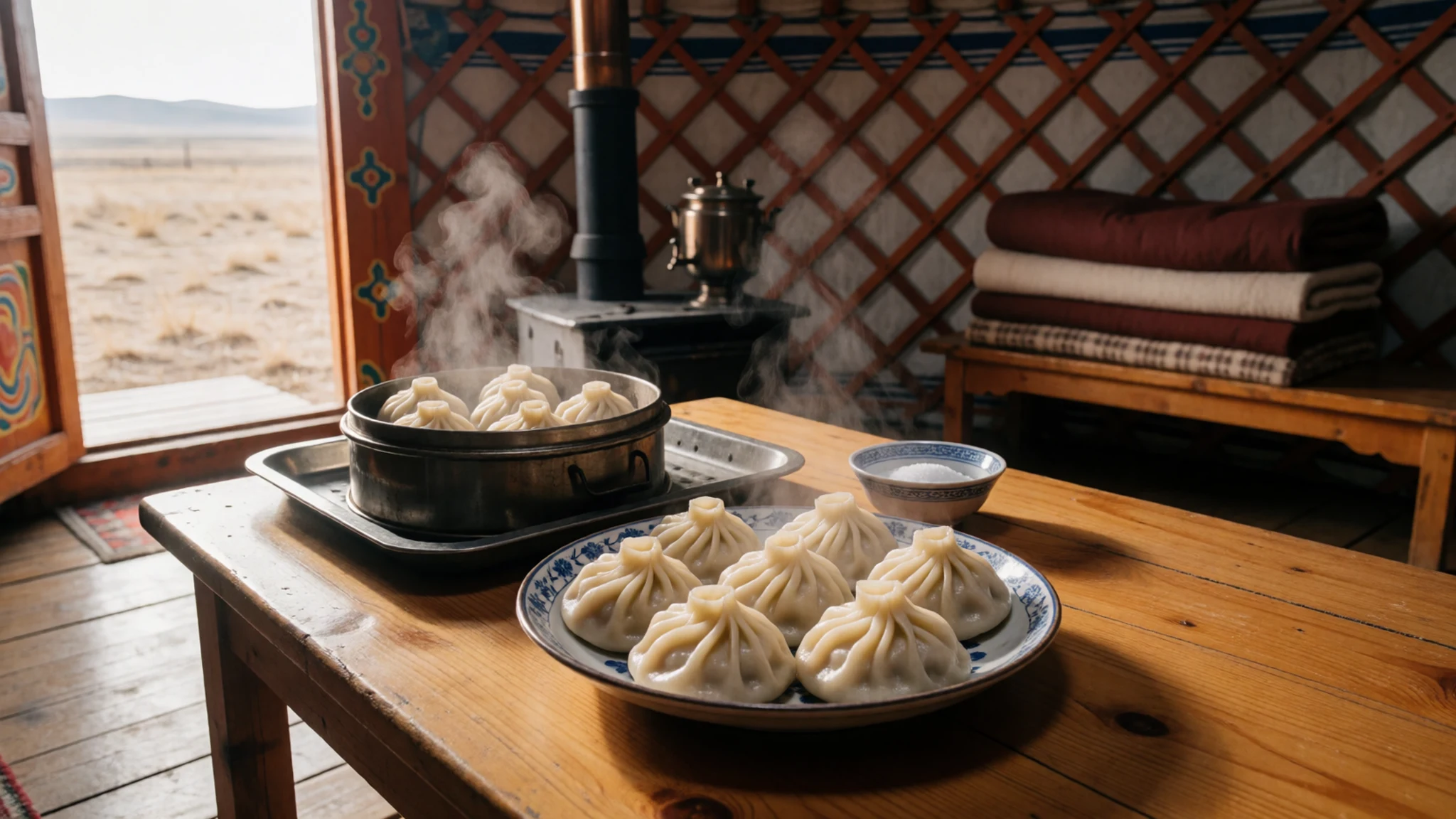
- Khuushuur — Roadside canteens and town markets
Khuushuur are flat, fried pastries stuffed with seasoned minced meat, crisp at the edges and juicy inside. They are a common road meal in Mongolia. Eat them fresh from the pan, and keep napkins to hand because they are rich and greasy.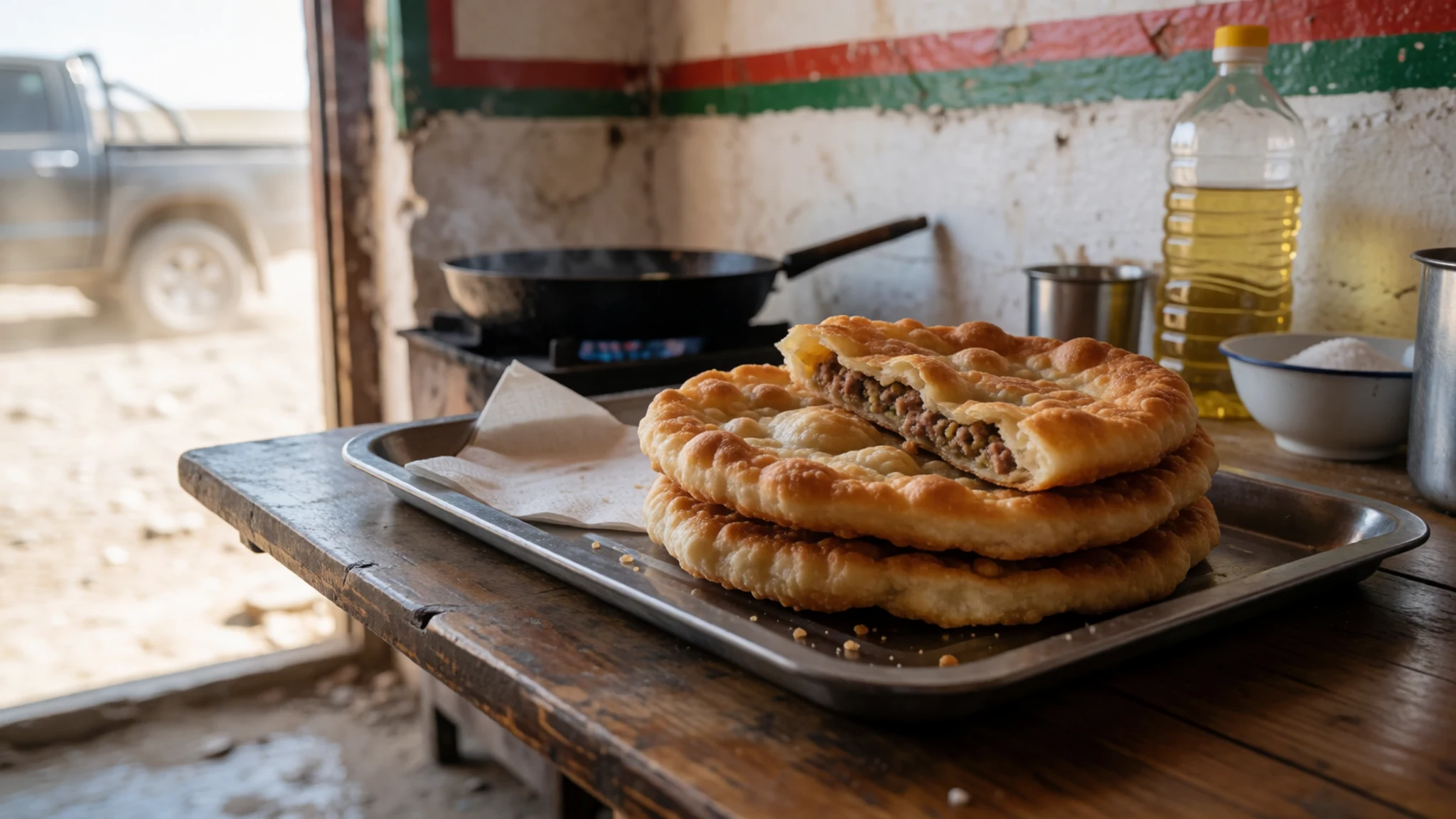
- Suutei tsai — Any ger or herder's home
Suutei tsai is salted milk tea, brewed with tea leaves and milk, and the first thing a host usually offers. It is warming in cold wind. If the taste is unfamiliar, sip slowly, and remember that accepting a cup is part of the welcome. - Tsuivan — Local canteens in Ulaangom and herding camps
Tsuivan is a hearty dish of hand-cut noodles steamed or stir-fried with mutton and a few vegetables such as carrot and onion. It is plain, filling food made for people who work outdoors, and it suits a cold evening after a day beside the lake. - Aaruul — Family camps and market stalls in the district centre
Aaruul are hard, dried curds made from milk, sold in pale blocks or small shapes. They are sour, chewy and long-lasting, so herders carry them as a snack. Try a small piece first and tuck a few into a day bag for the track.
Plan it
Best time. June to September, when days are longest, the ground is firm and the lake edge is at its greenest. Winters in this part of western Mongolia are long and severe, with limited access, so most visitors avoid them.
How long. 3–4
Getting there. The nearest town with services is usually Ulaangom, the provincial capital of Uvs. Check current flight and road options from Ulaanbaatar with an operator, as schedules change. The last leg to Sagil and the lake is by 4x4 with a driver over unsigned tracks.
Budget. mid
Tips
- Hire a local driver or guide who knows the tracks; satellite navigation is unreliable here
- Carry cash, because cards and cash machines may not work outside the provincial centre
- Bring all drinking water and food supplies for the lake, as the water is salty and facilities are thin
- Pack layers and sun protection, since weather can change quickly and shade is rare
- Tell someone your route and expected return before leaving town
Etiquette
- Ask before photographing herding families or entering a ger
- Take all rubbish away and keep soap and waste well away from the water
- Walk clockwise round any ovoo and leave offerings untouched
Nearby
Sources
- Wikidata Q978800 (CC0)
- Wikipedia: Üüreg Lake (rev 1366939217) (CC BY-SA 4.0)
- Üüreg Nuur (NASA/GSFC/METI/ERSDAC/JAROS and U.S./Japan ASTER Science Team) (Public domain)
- Uureg Lake landscape and mountains 2022 (BatboldDorjgurkhem) (CC BY 4.0)
- Relief map of Mongolia (NordNordWest, Виктор_В) (CC BY 3.0)
- Tsagaan shiveet mountain (baterdene_0933) (CC BY 3.0)
- Uureg Lake landscape 2 2022 (BatboldDorjgurkhem) (CC BY 4.0)
- Uureg Lake landscape 2022 (BatboldDorjgurkhem) (CC BY 4.0)
- Uureg Lake swan 2022 (BatboldDorjgurkhem) (CC BY 4.0)
- Uureg Lake wetlands and swans 2022 (BatboldDorjgurkhem) (CC BY 4.0)
- Wikivoyage (CC BY-SA 4.0)


Wildlife
- Whooper swan (animal)
Picture a very large swan from the cold north: that is the whooper, the Eurasian twin of North America's trumpeter swan. Around Üüreg Lake, swans show up in photographs, usually where the wetlands meet the water's edge. Season and time of day are not known, so a local guide is your best help. Watch from a respectful distance, speak softly and move slowly. Never offer food; wild swans should find their own.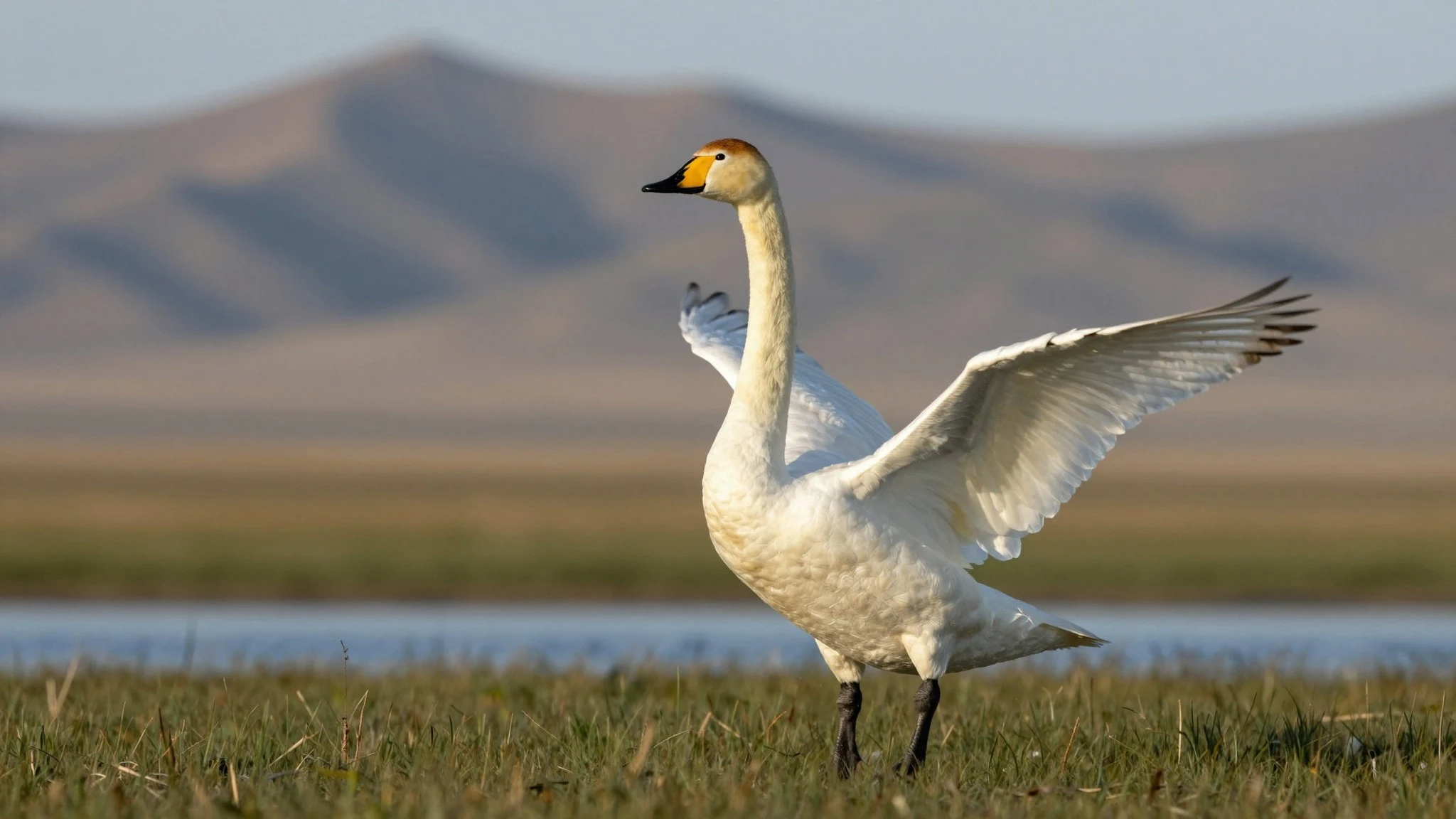
- Whooper swan (bird)
Picture a very large swan from the cold north: that is the whooper, the Eurasian twin of North America's trumpeter swan. Around Üüreg Lake, swans show up in photographs, usually where the wetlands meet the water's edge. Season and time of day are not known, so a local guide is your best help. Watch from a respectful distance, speak softly and move slowly. Never offer food; wild swans should find their own.