Uludağ
Uludağ, Turkey
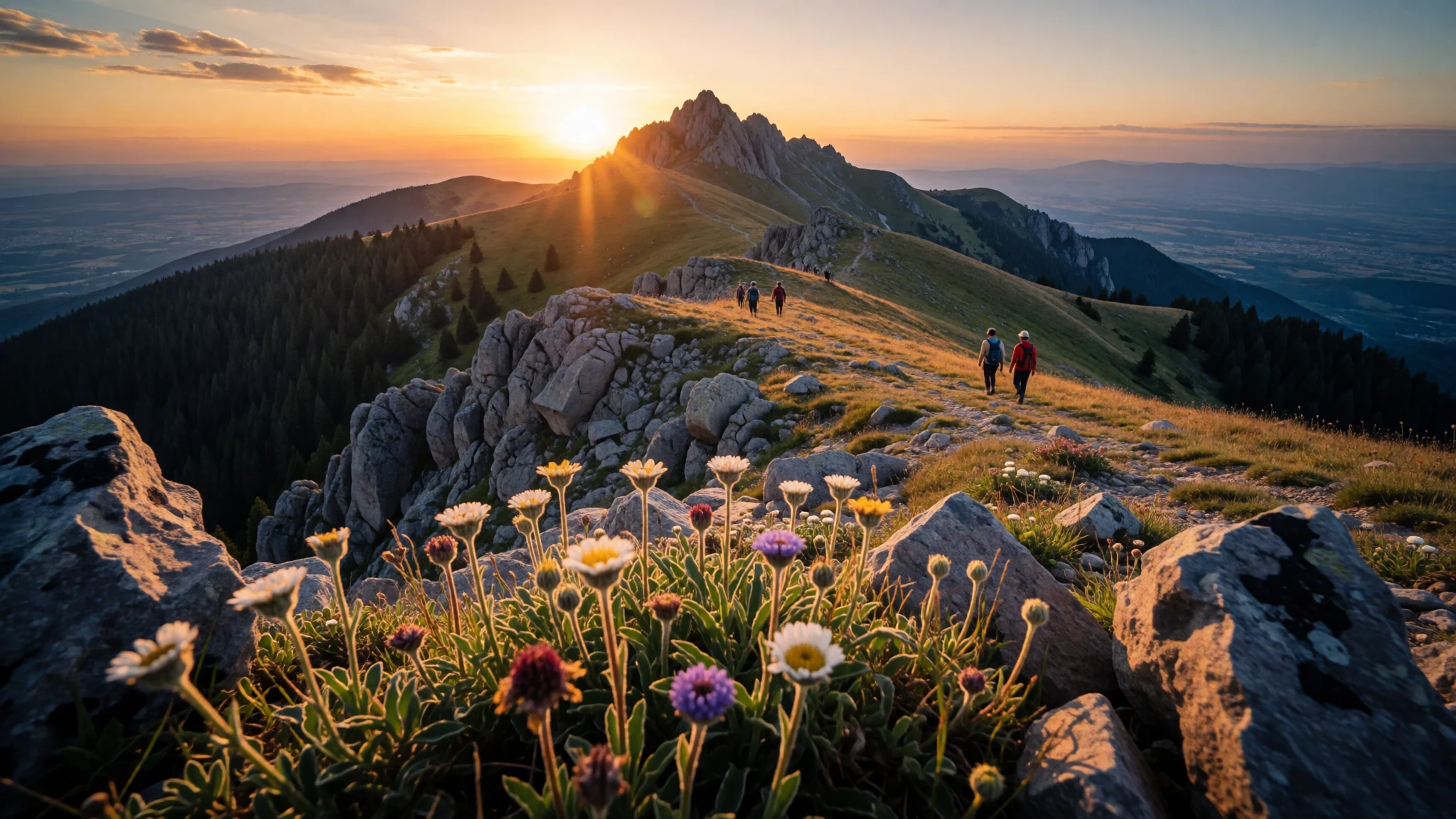
Uludağ is the mountain above Bursa, with easy family skiing in winter, cool pine trails and lakes in summer, and sweeping views.
The place
Uludağ rises above the city of Bursa in north-western Turkey, and at 2,542 m it is the highest mountain in the Marmara region. The name means "great mountain" in Turkish. Its summit, Kartaltepe, the "Eagle Hill", is one of a line of peaks that sit at roughly similar heights, which can make it hard to tell which top has been reached on a grey day.
The mountain is a national park, and it has two quite different characters. The western side is the busy one: a strip of hotels, ski lifts, cafés and picnic grounds that fills with day-trippers from Bursa whenever the weather is fair. The eastern side is quieter, a wide stretch of forest, ridges and bluffs where eagles circle, with glacial lakes and little in the way of facilities. Walkers who want solitude head that way.
High plateaus lie to the north, among them Sarıalan, Kirazlıyayla, Kadıyayla and Sobra. Sarıalan, the "yellow field", is where the cable car from Bursa arrives, with a cluster of grill restaurants and campsites around it. Higher up, the hotel zone is split into an older strip and a newer area, and most places there cater to winter sports and close in summer.
Mist is the mountain's main trick. It can roll in from a clear sky, and the city below makes its own haze, so views from the top are never guaranteed. Brown bears live in the forests but keep away from people.
Its story
Uludağ was once Olympus. When Greek-speaking communities spread around the eastern Mediterranean, each gave the name and its legends to the tallest peak nearby, so there were many mountains called Olympus. This one, above Bursa, was known as the Mysian or Bithynian Olympus, and the city at its foot was called Prusa by the Olympus. The Turkish name came only after the republic replaced foreign place names across the country.
In the Middle Ages the slopes became a centre of monastic life. Hermits and monks settled in the valleys from around the eighth century, partly in resistance to the iconoclast emperors, and the mountain held dozens of monasteries. Saint Joannicius the Great, a Byzantine monk credited with miracles, lived here as a hermit. Almost nothing of those monasteries survives; the one near Inkaya vanished in the nineteenth century.
The rock itself has a story. A long fault line runs east to west through Bursa, and tens of millions of years ago its stresses pushed up a block of hard granite and gneiss that has resisted erosion ever since. The same movement brought up tin, copper and tungsten ores, and heats the sulphurous springs at Çekirge in Bursa. The fault still causes earthquakes.
Tungsten was mined near the summit in the late twentieth century, in a plant built at great cost and closed because production was too expensive. Its abandoned buildings still stand beside the ski lifts at Volfram.
What to see
- Kartaltepe summit — Summit ridge, east of the hotel zone
The highest point of the massif, reached on a ridge walk from the hotel area in summer. The path is straightforward, but mist can close in quickly and the neighbouring peaks look alike, so carry a map or compass bearing and set off early in settled weather.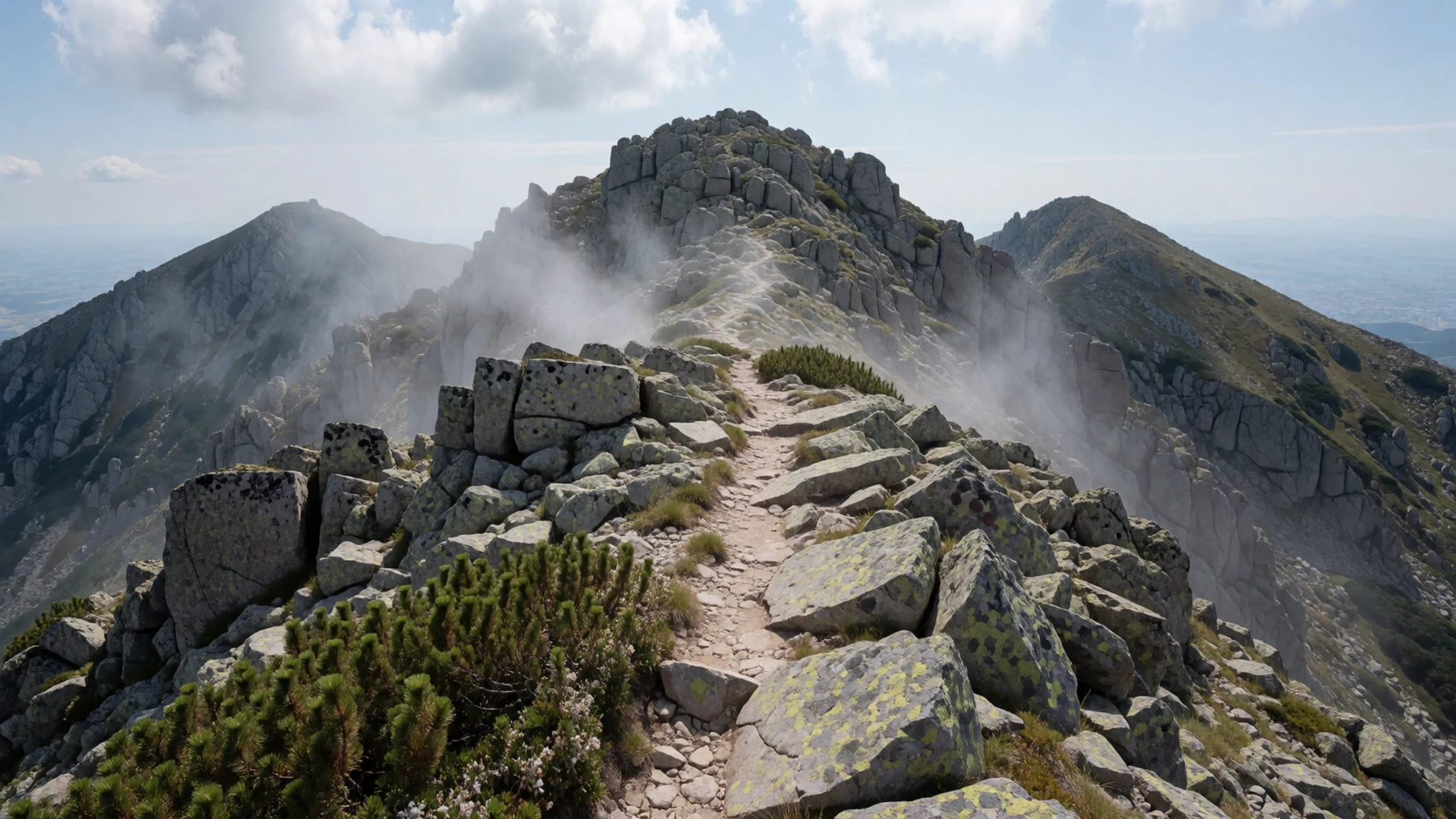
- Çobankaya — North of the hotel zone
"Shepherd's rock" is a huge granite boulder beside a lane running north from the top cable car station. Forest trails start here, and there are picnic spots and a campsite, which makes it an easy, unhurried first stop for families.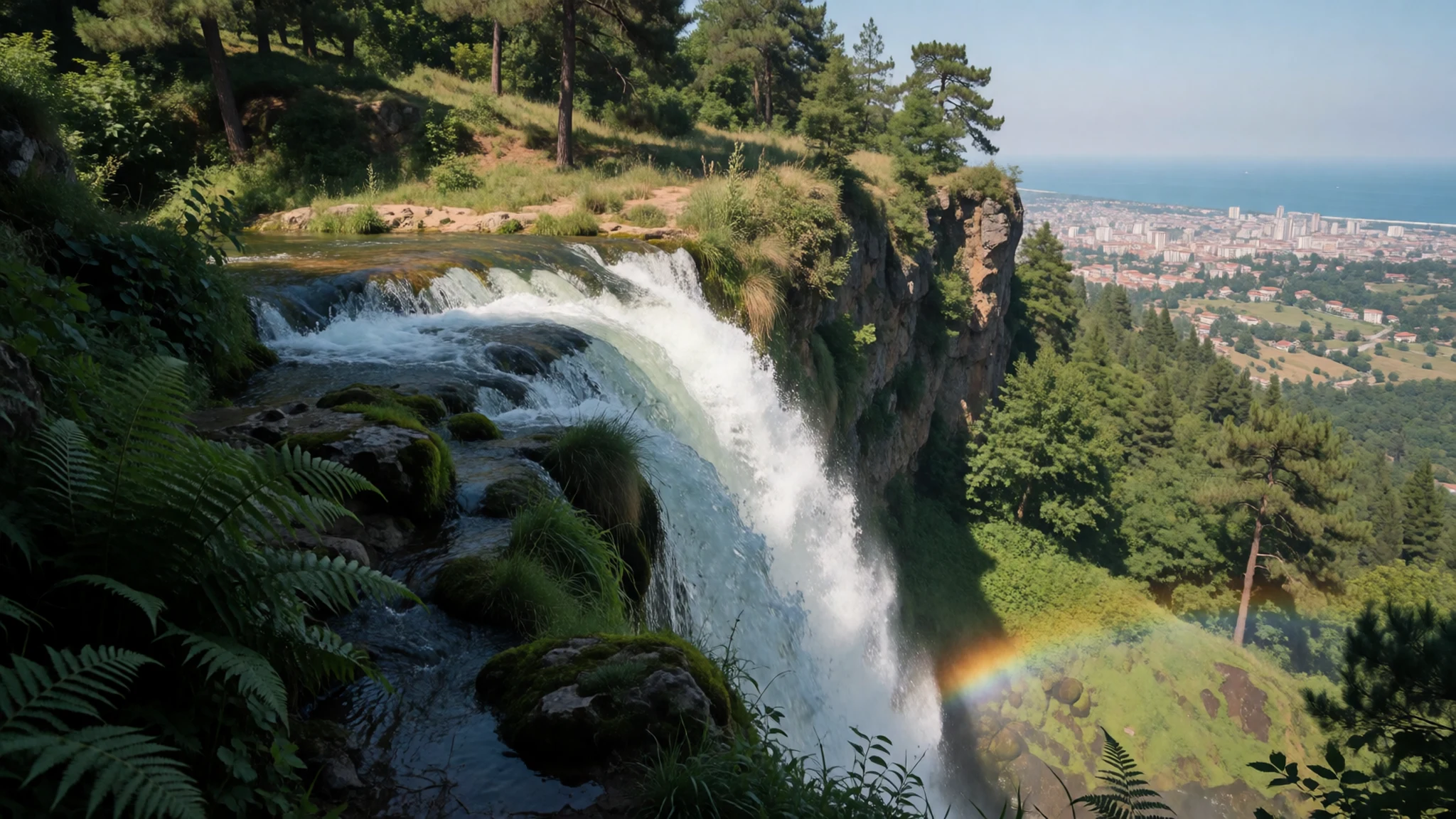
- Bakacak — North plateau
A forested plateau further north with a wide outlook over Bursa, the Marmara Sea and the lakes to the west. Softaboğan waterfall drops off its edge and is loudest after snowmelt. Pack a picnic and allow time to wander.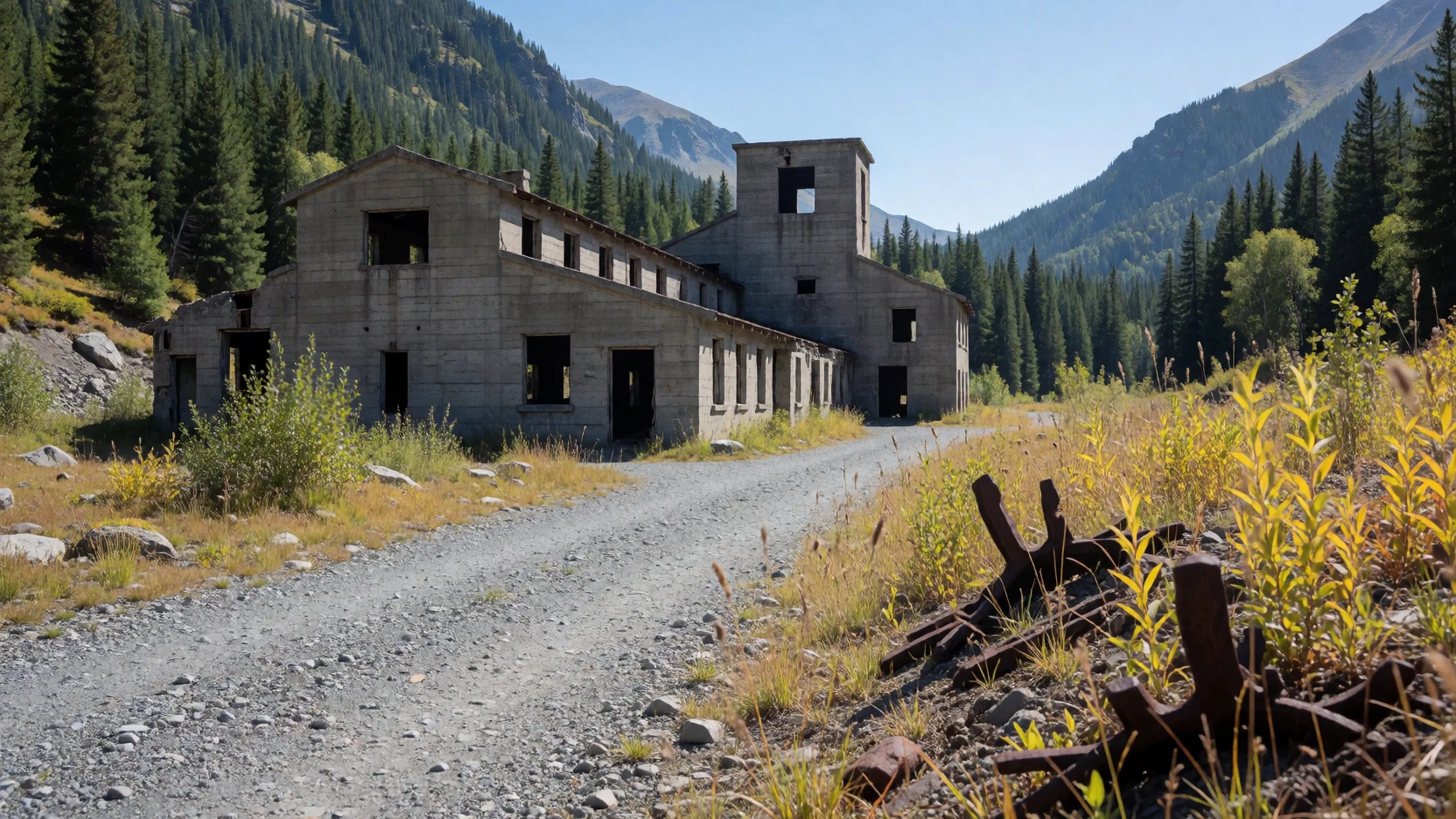
- Volfram — South of the hotel zone
An old tungsten mining area just south of the newer hotels, with ski lifts rising from it. The mine buildings stand empty. It is the usual starting point for the summit walk, and the tungsten ore fluoresces under ultraviolet light.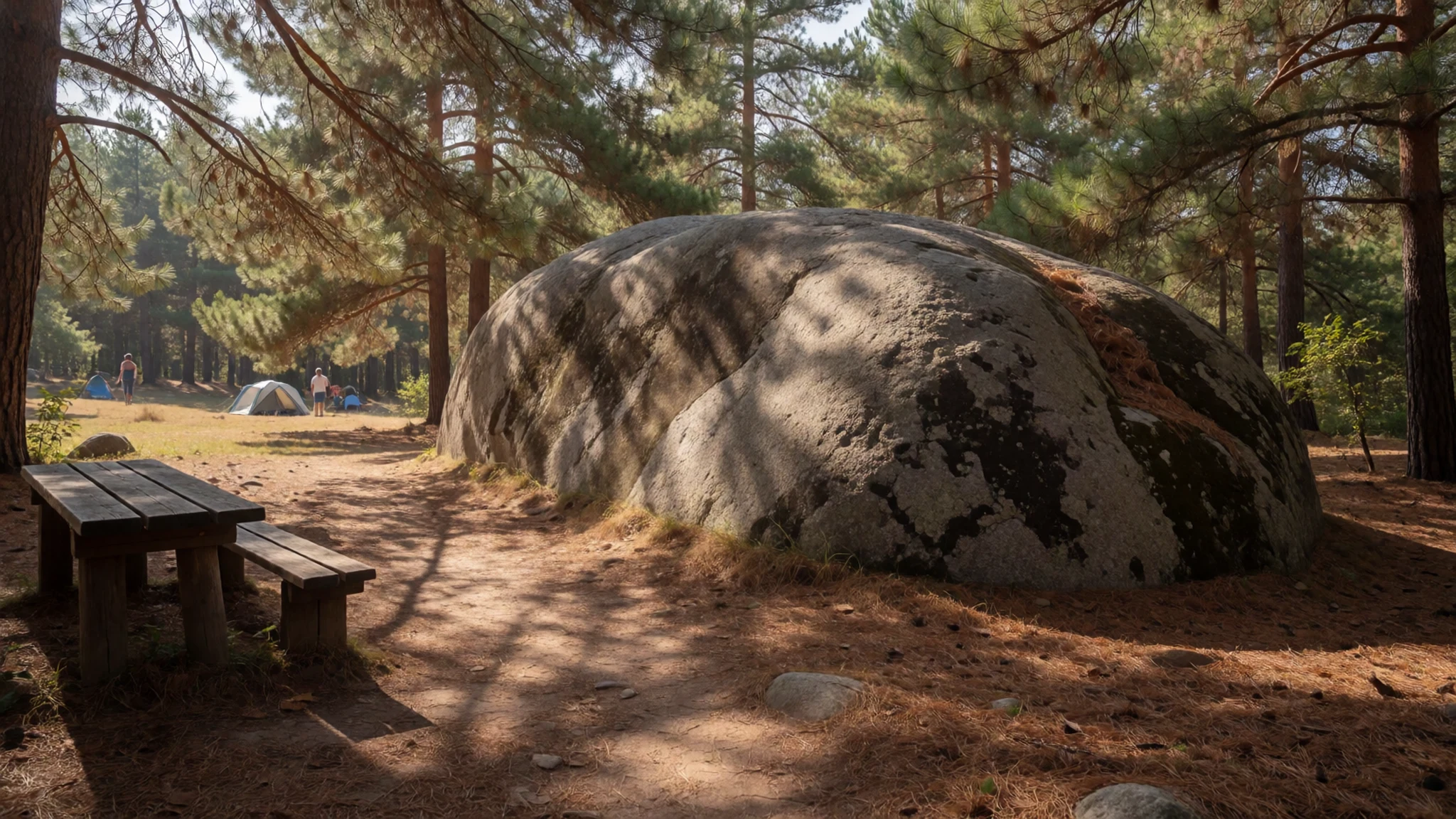
- Saklı Lake — Route to the summit
A small glacial tarn, one of several scooped out by ice along the route towards the summit. The lakes are best reached on foot in summer, and the quieter eastern side has more of them for walkers who want to camp.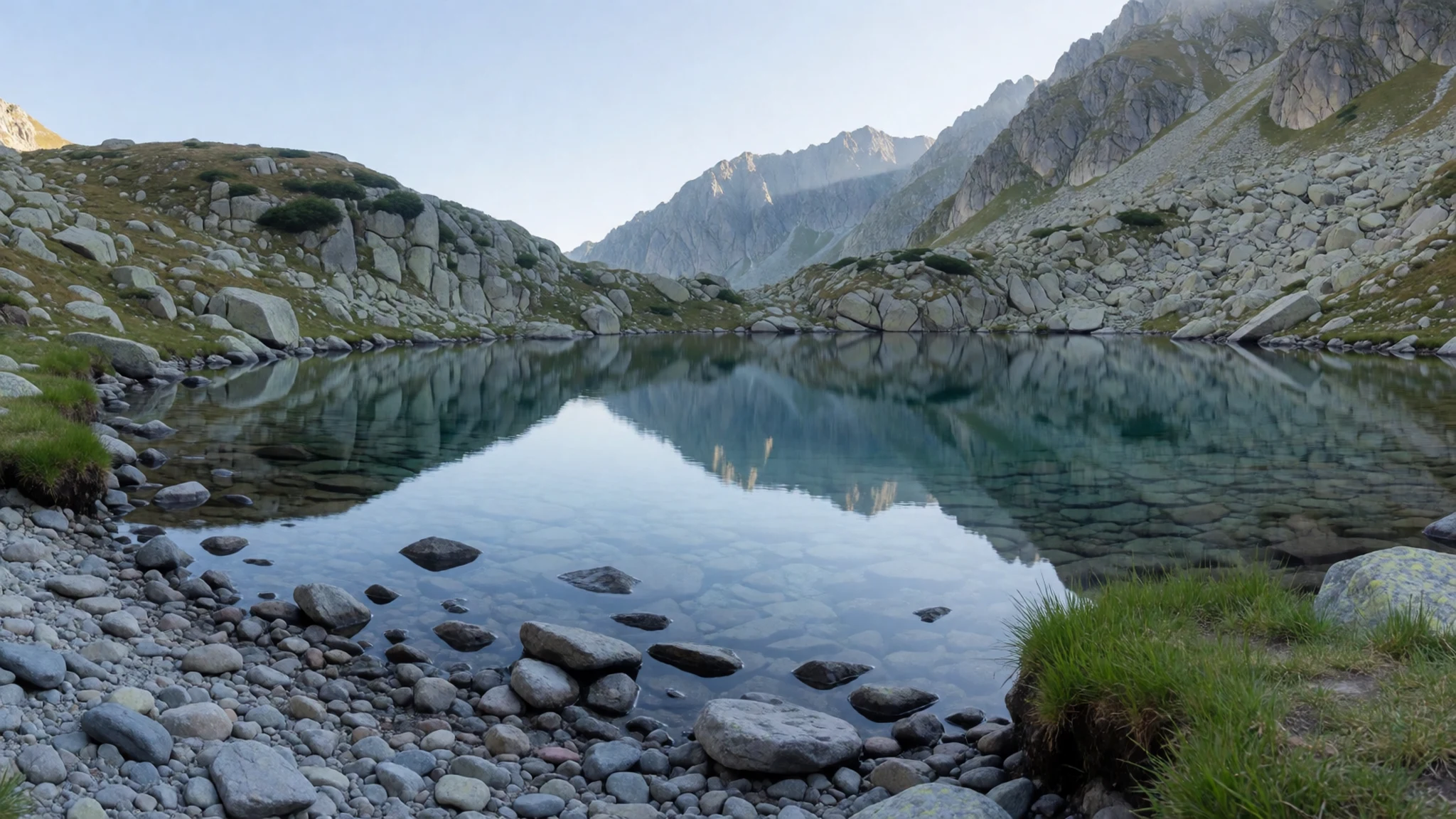
Culture
Uludağ is a mountain of day-trippers and holidaymakers, and its culture is largely that of Bursa's weekend outdoors. Families from the city come up by cable car or road for picnics, and the grill culture is central: at Sarıalan, signs offering "Kendin Pişir Kendin Ye" mean cook it yourself, so visitors buy meat by weight, rent a grill and charcoal and spend the afternoon at it. Cafés with Arabic signs reflect the many Gulf and Saudi visitors who now come, especially in summer.
Skiing arrived as a leisure habit and the resort is aimed at beginners and families. Hotels run on full board, with their own small slopes and lifts, and evenings are spent inside them. "Kayak" is the Turkish word for skiing, which causes some amusement for English speakers.
The mountain's older, religious history is nearly invisible. The monasteries that once filled its valleys are gone, and Saint Joannicius is remembered mainly in books. What remains of that quiet is on the eastern side, where shepherds and villages still use the foothills and livestock matters to those who graze it.
Uludağ is also a well-known brand of bottled mineral water and fizzy drinks, so the mountain's name turns up on shop shelves across Turkey.
If you camp or picnic, take all rubbish down with you, keep food sealed away from bears, and stay out of the fragile alpine meadows.
What to wear
Uludağ has no costume of its own, so the traditional dress question belongs to the wider Bursa region. Bursa has long been known for silk, and the city's weavers made fine silk cloth and the cotton and silk towels and scarves that are still sold in its covered markets. Village women in the foothills traditionally wore layered cotton shalvar trousers and headscarves, now mostly seen at festivals and folk dance performances.
On the mountain itself, people dress for the weather. In winter that means ski jackets, salopettes, hats and gloves, much as in any alpine resort, and plenty of Turkish families arrive in bright new gear. In summer the day-trippers wear light trousers or shorts, trainers and a fleece for the evening. Women from conservative families often wear headscarves and long coats even on picnics, and mixed styles sit side by side without comment.
Visitors should dress in layers. The temperature at the hotels and summit is far lower than in Bursa, and wind and mist arrive without warning, so a waterproof shell is worthwhile even on a sunny morning. Sturdy trainers or walking boots suit the unmarked trails and rocky ridge; the summit walk is not technical but is long and exposed. In winter, wear proper waterproofs and bring sunglasses for snow glare. Ski gear can be rented on the mountain. Shoulders and knees need no special covering here, though modest clothes are sensible if you are visiting villages on the way.
What to eat
- Mangal (self-grilled meat) — Grill restaurants around the Sarıalan cable car station
The signature meal of Sarıalan. Meat is bought by weight, then grilled over rented charcoal at your table or picnic spot. Look for signs reading "Et mangal" or "Kendin Pişir Kendin Ye".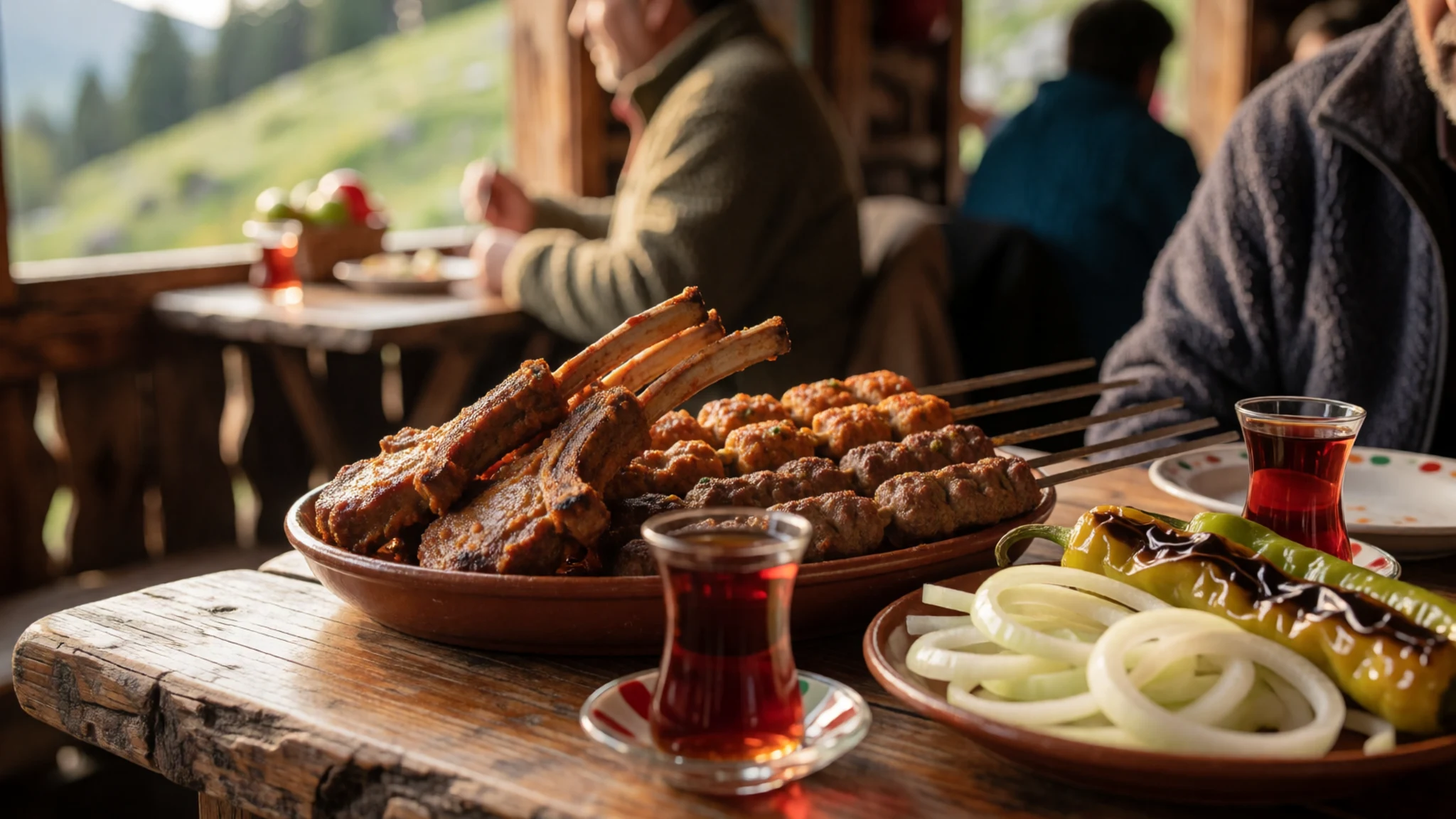
- İskender kebap — Eateries in central Bursa
Bursa's best-known dish, sliced döner on pide bread with tomato sauce and melted butter and yoghurt. It is the sensible meal to have in the city before or after the cable car.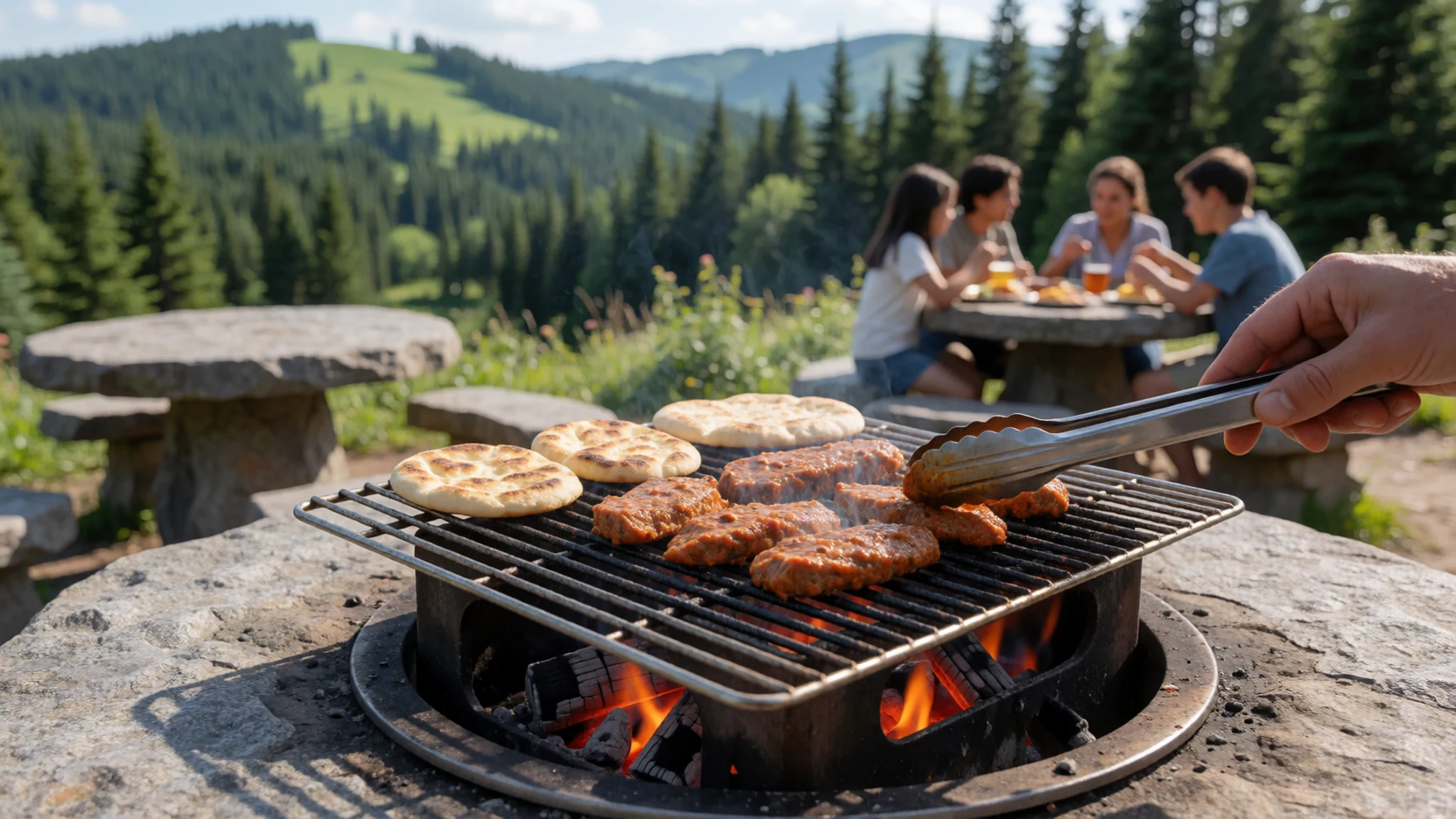
- Hotel full-board meals — The hotel strips of the Oteller area
Most hotels on the mountain serve set buffets for guests, and several will seat walk-in diners. Expect hearty Turkish breakfast spreads and soups, which suit a cold day on the slopes. - Tea and simple snacks — Cafés near the old hotel strip and the new hotel area
Çay (tea) is served everywhere, along with toasted sandwiches and sweet pastries. The cafés within hotels cost more; some welcome non-residents. - Round-the-clock café food — Volfram, beside the ski lifts
The Volfram café-restaurant is open at all hours, handy after an early start or a late descent from the ridge. Menus are simple and aimed at skiers.
Plan it
Best time. December to March for skiing, with snow cover from mid-December; June to September for walking, picnics and cooler air than Bursa. Mist and cold can arrive at any time, and many hotels close in summer.
How long. 1–2
Getting there. Fly to Istanbul or Bursa's nearest airport, then reach Bursa by road, sea or rail connections. From Teferrüç in Bursa, take the cable car (Teleferik) to Sarıalan, about 30 minutes, or drive the D575 south from Çekirge to the national park gate and on up the mountain.
Budget. mid
Tips
- Check the official cable car site for operating times and fares before you go
- Queues in winter can be long, especially for the ride back down late in the day
- Ski equipment and luggage cannot go on the gondolas, so drive if you carry your own
- Start summit walks early and take a compass or offline map in case of mist
- Bring warm layers: the top is much colder than Bursa
Etiquette
- Take all rubbish down with you and keep to existing trails in the alpine meadows
- Keep food sealed when camping and do not leave it open where bears can smell it
- Report any wire bear snares you find rather than touching them
Nearby
Sources
- Wikidata Q925688 (CC0)
- Wikipedia: Uludağ (CC BY-SA 4.0)
- Wikivoyage: Uludağ (CC BY-SA 4.0)
Wildlife
- Eagle (animal)
The golden eagle is a large bird of prey, dark brown with golden-tinted feathers on its neck, and it hunts hares and marmots with sharp claws. In Uludağ, watch the sky over the broad forests, steep bluffs and high plateaus, where it soars above the greenery. The notes give no season or time of day, so ask your guide. Keep a long distance, use binoculars, stay quiet, and never feed it.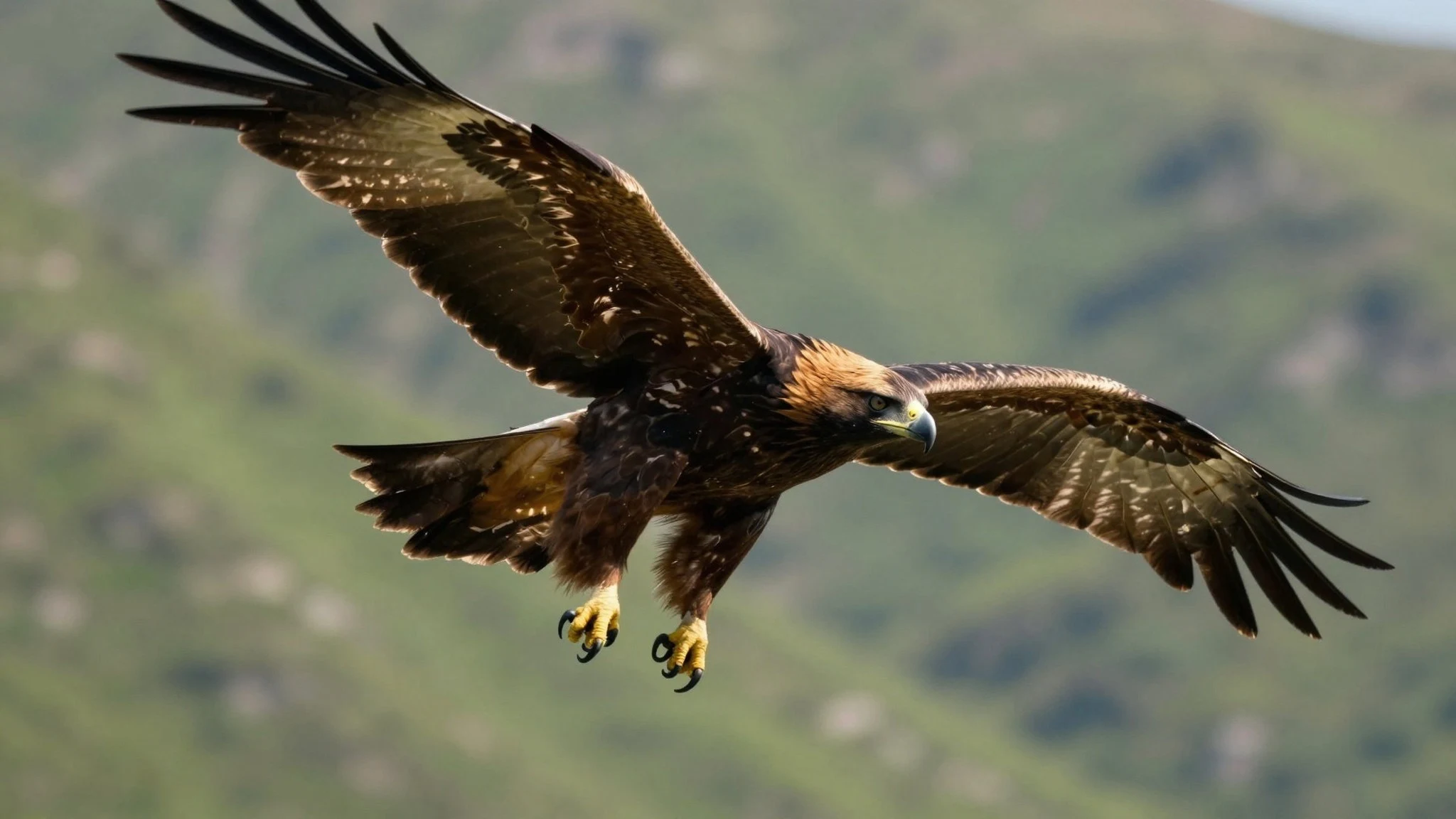
- Brown bear (animal)
The brown bear is a very big, powerful animal with a thick coat that can be creamy, reddish or dark brown, and a muscly hump on its shoulders that works like a built-in spade for digging. The notes do not say where or when it is seen in Uludağ, only that campers must keep food sealed in containers so bears are not drawn in. Keep well back, stay quiet, go with a guide, and never feed it.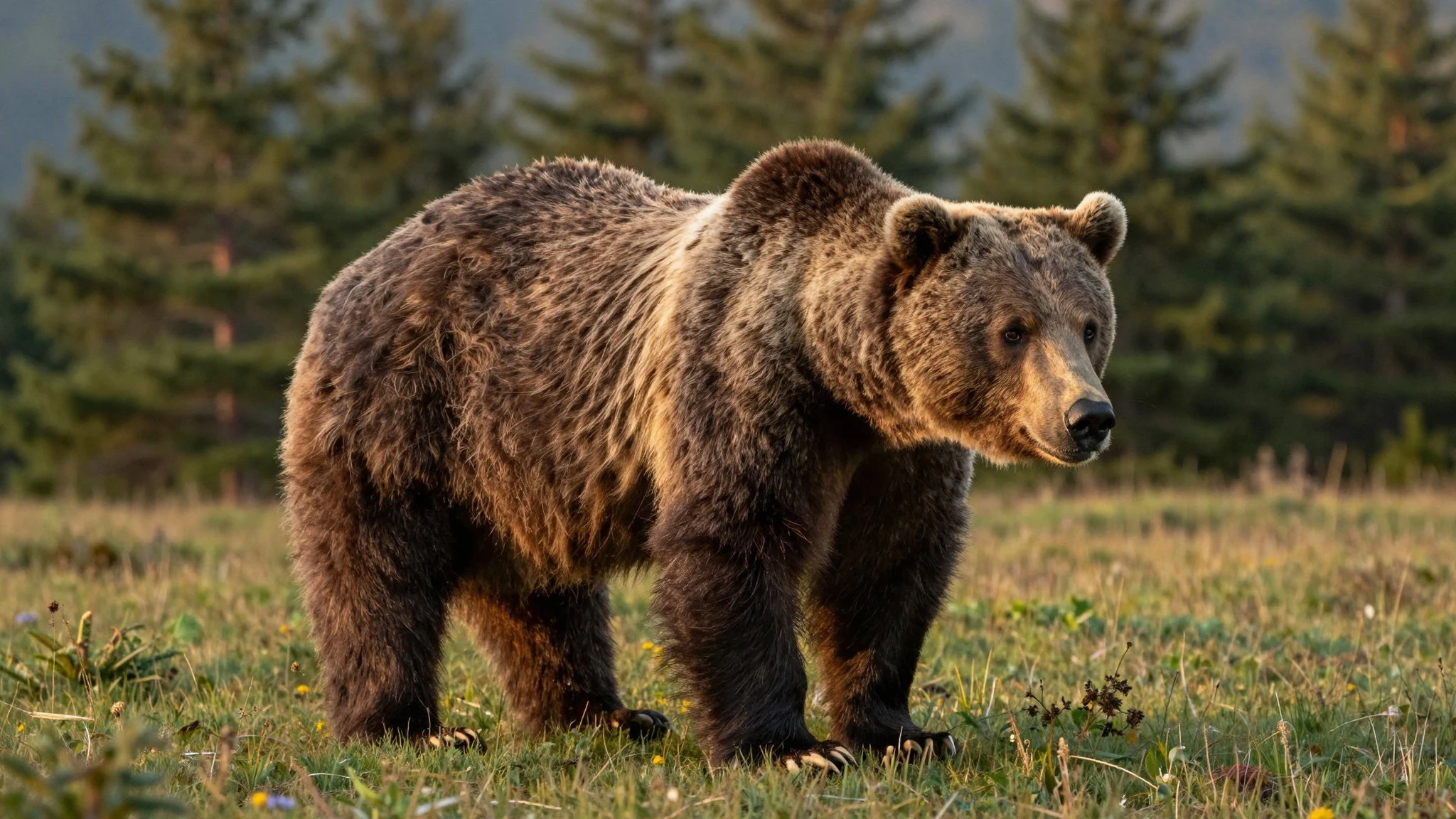
- Eagle (bird)
The golden eagle is a large bird of prey, dark brown with golden-tinted feathers on its neck, and it hunts hares and marmots with sharp claws. In Uludağ, watch the sky over the broad forests, steep bluffs and high plateaus, where it soars above the greenery. The notes give no season or time of day, so ask your guide. Keep a long distance, use binoculars, stay quiet, and never feed it.