Aphrodisias
Aphrodisias, Turkey
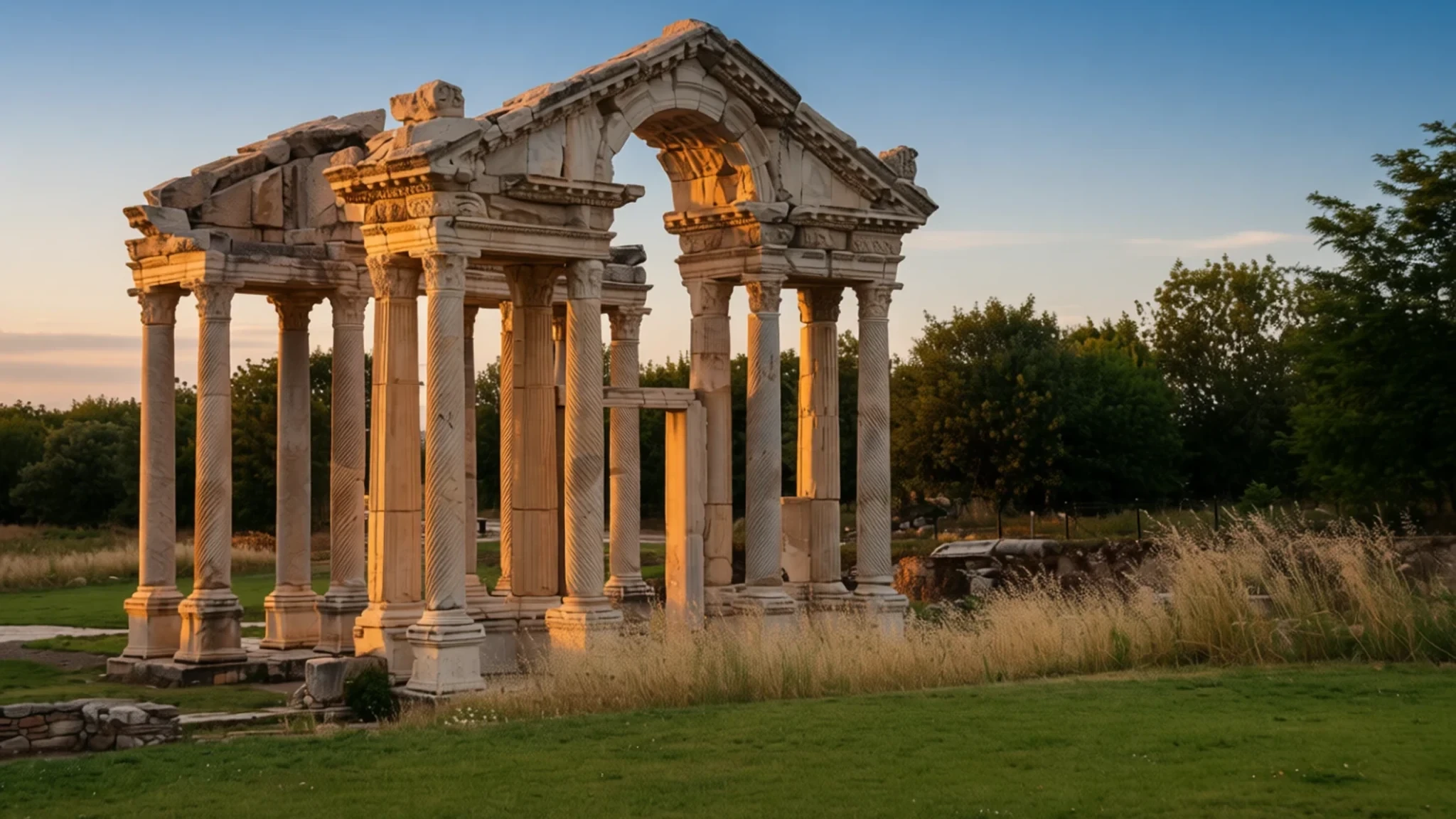
Aphrodisias feels like a working workshop of antiquity, where carved marble, temples and statues tell one cohesive story.
The place
Aphrodisias is an ancient Greek city in western Asia Minor, in today’s Turkey, close to the village of Geyre in Aydın. It sits inland from the Aegean coast, so the approach has that long, dry sense of space before the site appears—fields, then stone. The name itself points to the focus of the city: Aphrodisias was named for Aphrodite, the goddess whose cult image became famous here.
The archaeological park is laid out so visitors can move from grand civic spaces to religious precincts, with ruins that still show the logic of a town that was planned, built and rebuilt. Aphrodisias is strongly linked to Carian marble. In Hellenistic and Roman times, quarrying on nearby slopes fed a stone economy: fine sculpture and architectural parts were produced locally and shipped out, which is why so many fragments and monuments feel “made here”, not just dropped somewhere. The result is a site with a workshop feel—columns, carved details, and sculptural fragments that help explain why the city mattered far beyond its immediate neighbourhood.
Even the layers of later history are visible in the way names changed and how the city’s fortunes shifted after major events. Aphrodisias moved from being a provincial centre to a smaller settlement after damage and rebuilding stopped. Today, it’s a memorable day-trip for people who like their ruins to look lived-in, with enough structure to understand what came first and what was added later.
Its story
Aphrodisias rose as a provincial capital and a Roman-era hub in Caria, and its identity is tied to stone as much as to gods. The surrounding landscape provided white and blue-grey marble, quarried in both Hellenistic and Roman periods for buildings and statues. Over time, sculptures made by artists associated with Aphrodisias became known across the Roman world, so the city’s workshop reputation travels with the objects—an important clue for how the place gained status.
Religious life shaped civic life here. Aphrodite was the main figure, but her “local” cult and later Roman adaptation are part of the same continuum: a fertility deity venerated in earlier traditions became associated with Aphrodite/Venus, and the city’s sculptors continued to visualise that link. This is why the Temple of Aphrodite matters more than as a standalone monument; it sits at the heart of the town’s story of belief, artistry and patronage.
Aphrodisias also had intellectual and social presence. Accounts describe schools for sculpture and philosophy, and the city stayed a centre of pagan worship until the end of the 5th century. Then came the hard break that many ancient cities suffered: an earthquake in the early 7th century, after which prosperity never returned. The ruins were reorganised and the settlement shrank, while the name shifted to Stauropolis (“City of the Cross”) in late antique/Byzantine time—an attempt to reframe the city’s associations. Later, Seljuk-era conflicts reduced the population further, and the story of Aphrodisias became a story of traces: marble blocks, foundations and fragments that still let the earlier city speak.
What to see
- Aphrodisias Museum — Museum area
Aphrodisias Museum usually gathers sculptures, reliefs and other artefacts from the site, giving context to what visitors see outside in the open. As of 2024 it was closed for restoration, so check before planning and look for displays elsewhere on site.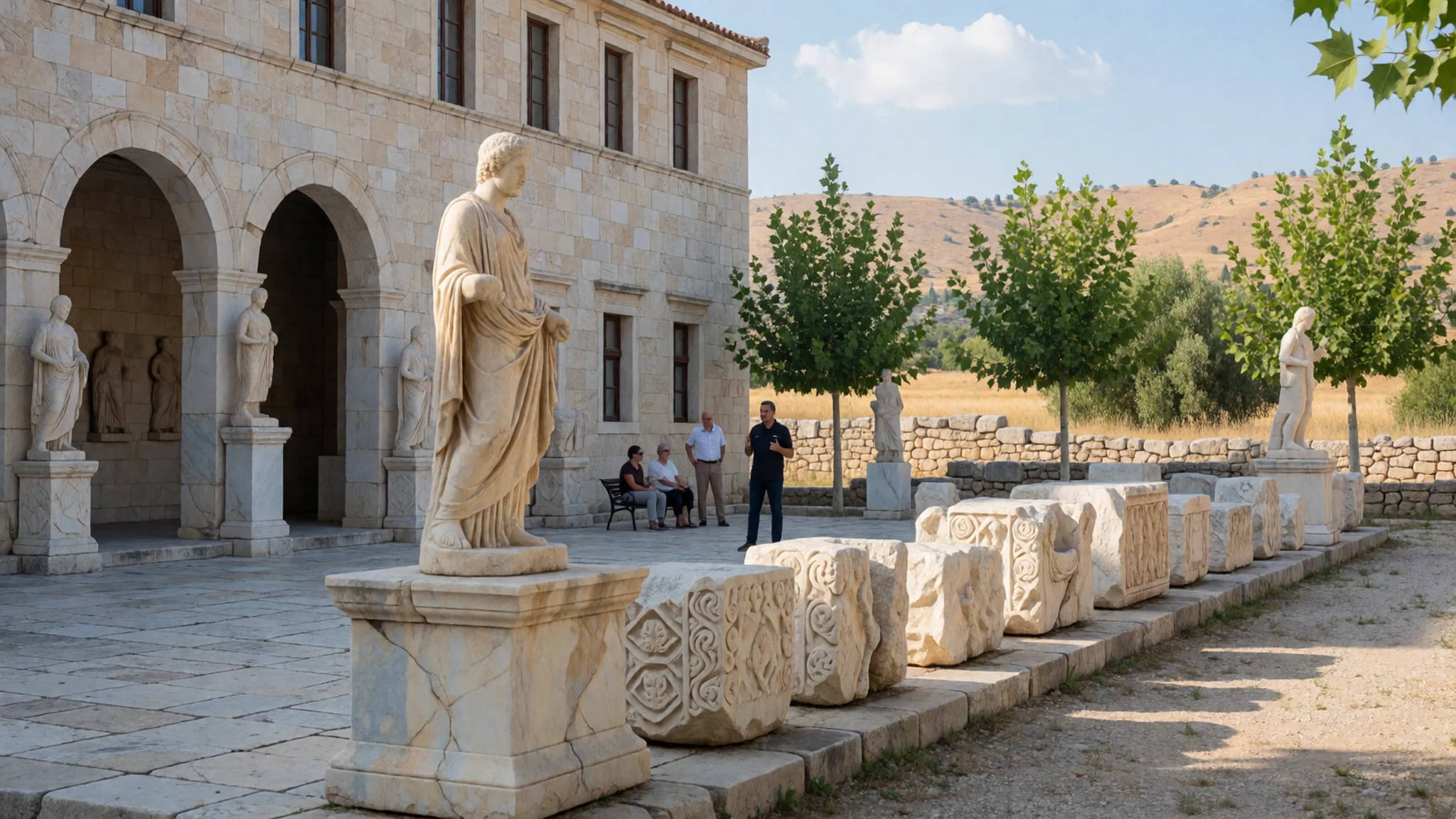
- Sebasteion (Augustus & the imperial cult) — South of the museum
The Sebasteion sits just south of the museum and connects imperial worship to local architecture. In the Roman world, temples for emperors (Augustae/a) were places where the cult of rulers could be staged, tying dynasties to divine ideas and making politics visible in stone.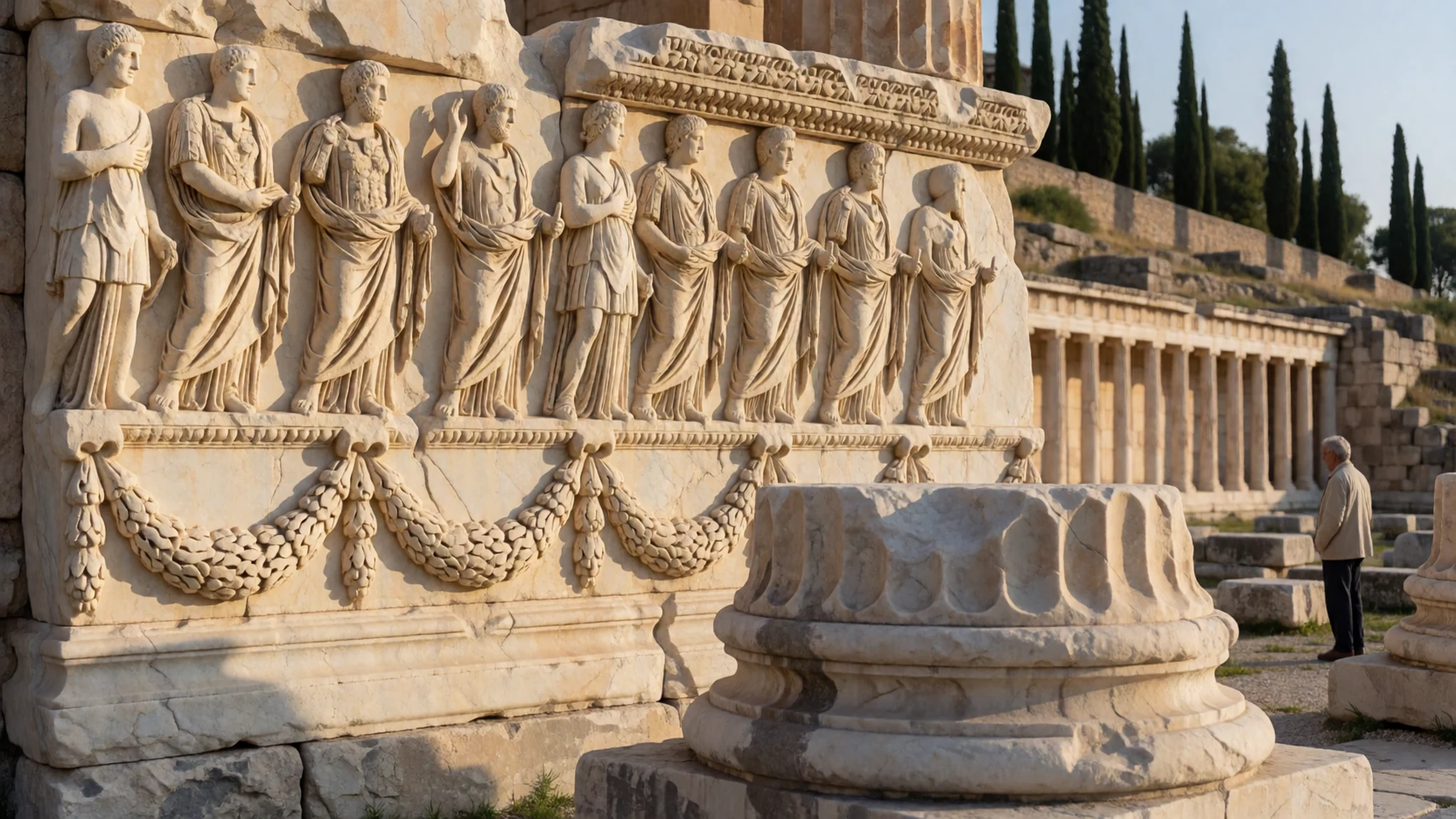
- Tetrapylon — Temple plaza approach
The Tetrapylon forms a monumental gateway to the plaza area in front of the Temple of Aphrodite. Even when much of the surrounding space is grassed, the idea of procession is clear: it marks transitions between public movement and sacred space, and it frames views like a stage set.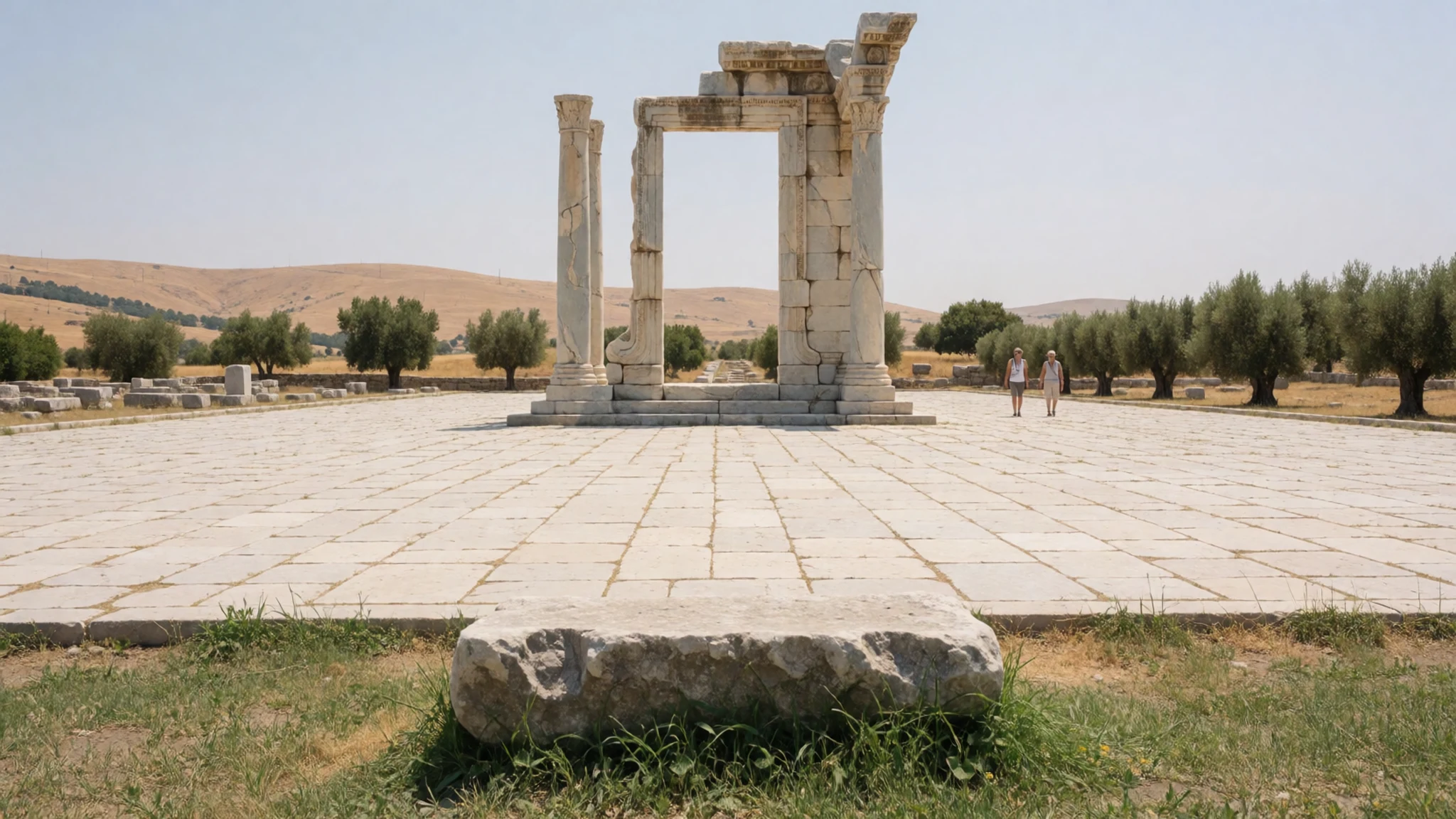
- Temple of Aphrodite — Temple precinct
The Temple of Aphrodite anchored the city’s religious identity, beginning with the veneration of a local fertility goddess and later being tied into Aphrodite’s wider cult. By the time the cult was firmly associated with Aphrodite, a grander temple became the focal point, and sculptors worked with this setting as their base.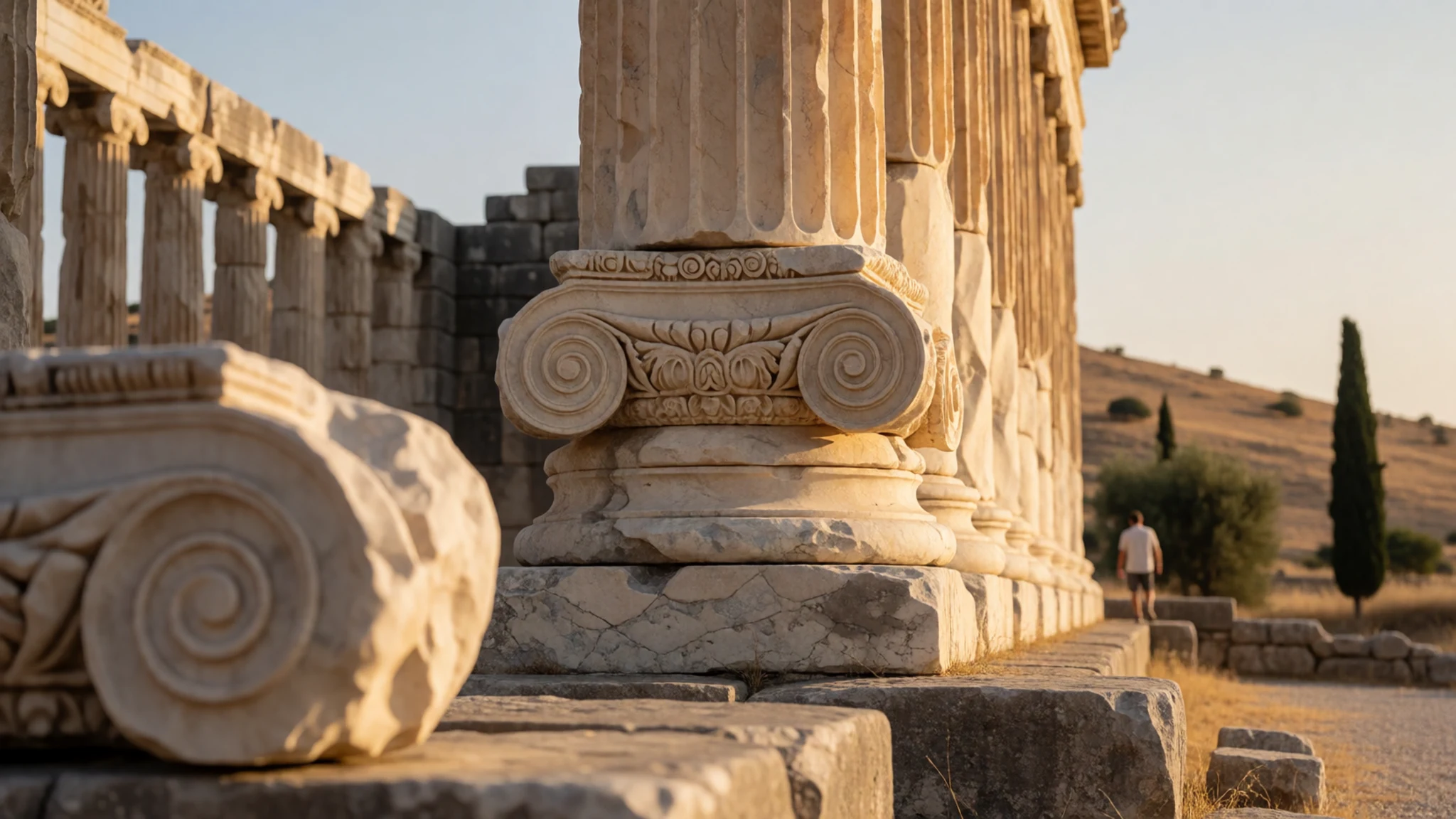
- Bouleuterion (Council House) — Civic core
The Bouleuterion points to how Aphrodisias organised civic life, not only religious ceremonies. As a council space, it would have been a hub for decisions and public business, helping visitors see the city as an active administrative machine rather than just a cluster of temples.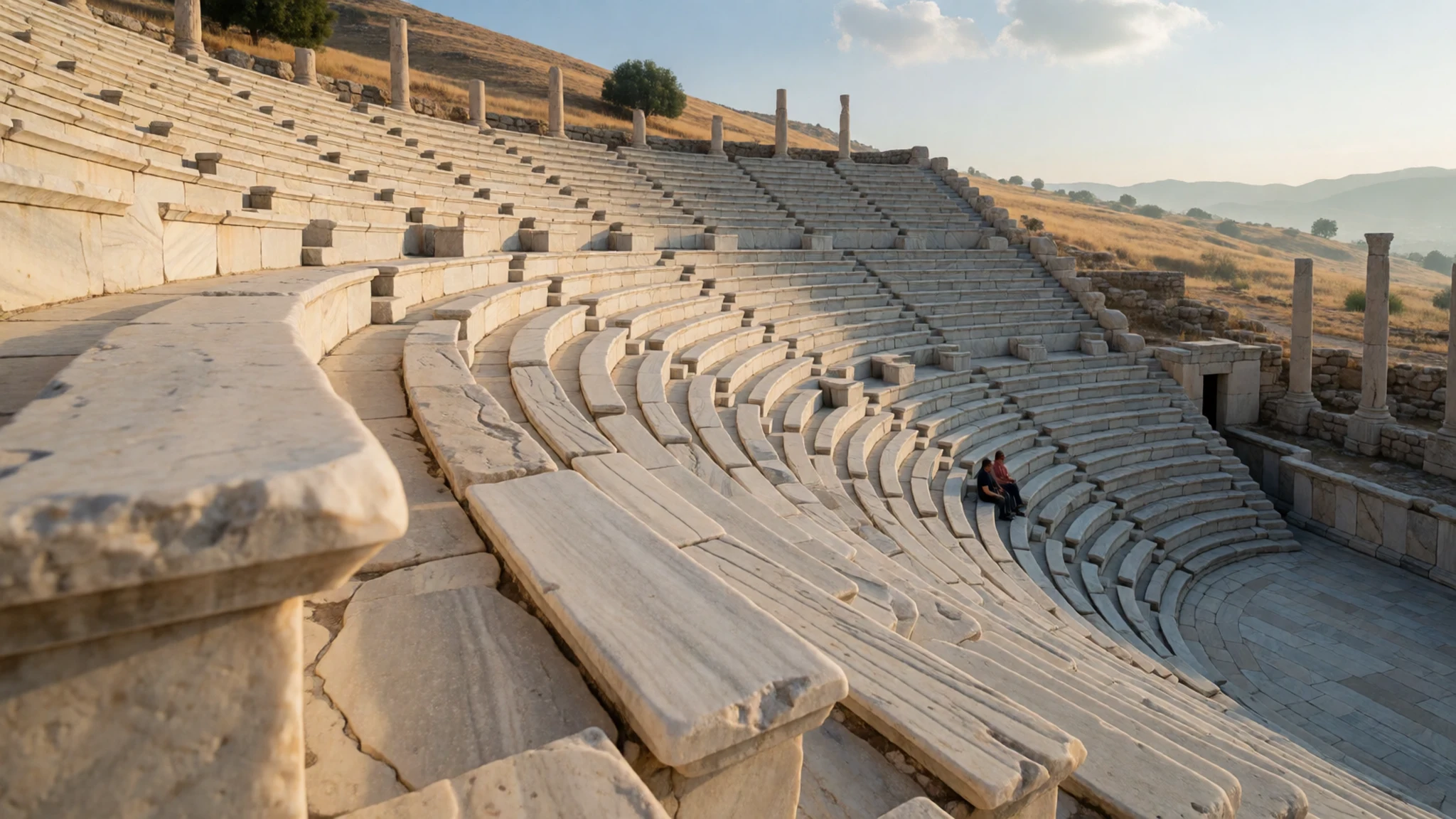
Culture
Aphrodisias is an archaeological site, so the “culture” here is mostly about how people move through old stone responsibly. The terrain can be dusty and uneven, and the monuments are spread out enough that casual wandering turns into an all-day walk surprisingly fast. In warm months, heat management matters—shade comes and goes, and the site’s open spaces can feel exposed. In cooler months, mornings can be crisp but the sun can still make the walk pleasant.
Because Aphrodisias is connected to a specific religious history, visitors should treat the temple precincts with a similar mindset to shrines: keep voices low, don’t climb onto unstable-looking blocks, and avoid blocking paths for other people who are trying to take their own time with the carvings. Photographs are usually fine, but be aware that not every viewpoint is empty; timing helps when there’s a line towards the most recognisable features.
If the museum is closed for restoration, the site still makes sense—look for sculpture fragments around the open areas, and let the architecture explain the rest. Visitor-etiquette line: keep to marked paths, speak quietly near temple areas, and don’t touch or climb on carved masonry.
What to wear
In the Aphrodisias area, day-to-day dress in Turkey is typically light and practical, especially in warmer months, while traditional dress still appears at cultural events and in village settings. When traditional clothing is worn, it often centres on layered fabrics and modest silhouettes—lengthy garments for coverage, with patterned textiles that reflect regional styles. On the coast and inland towns alike, you’ll usually see everyday clothing that blends seasonal comfort with modest norms.
For visitors today, the main focus at Aphrodisias is terrain and sun rather than formality. Wear breathable tops and trousers/skirts that cover shoulders and avoid very short hems, particularly near the temple precincts. Bring a hat and sunglasses for the open sections, and sturdy walking shoes with grip—stone paths can be uneven, and dust makes sandals feel risky. If visiting in late autumn or spring mornings, a light layer helps, but it’s generally the heat and the walk that set the dress code.
When carrying a small bag, keep it light; the route across the site can be long. Visitor-friendly footwear and modest coverage make the experience easier and more respectful in and around sacred-looking areas.
What to eat
- Köfte (meatballs) — The village crossroads
Köfte is the easiest local comfort food to hunt for: simple, hearty meatballs served hot and filling. At Aphrodisias, Köfteci Orhan Baba at the village crossroads is a straightforward option for a sit-down meal.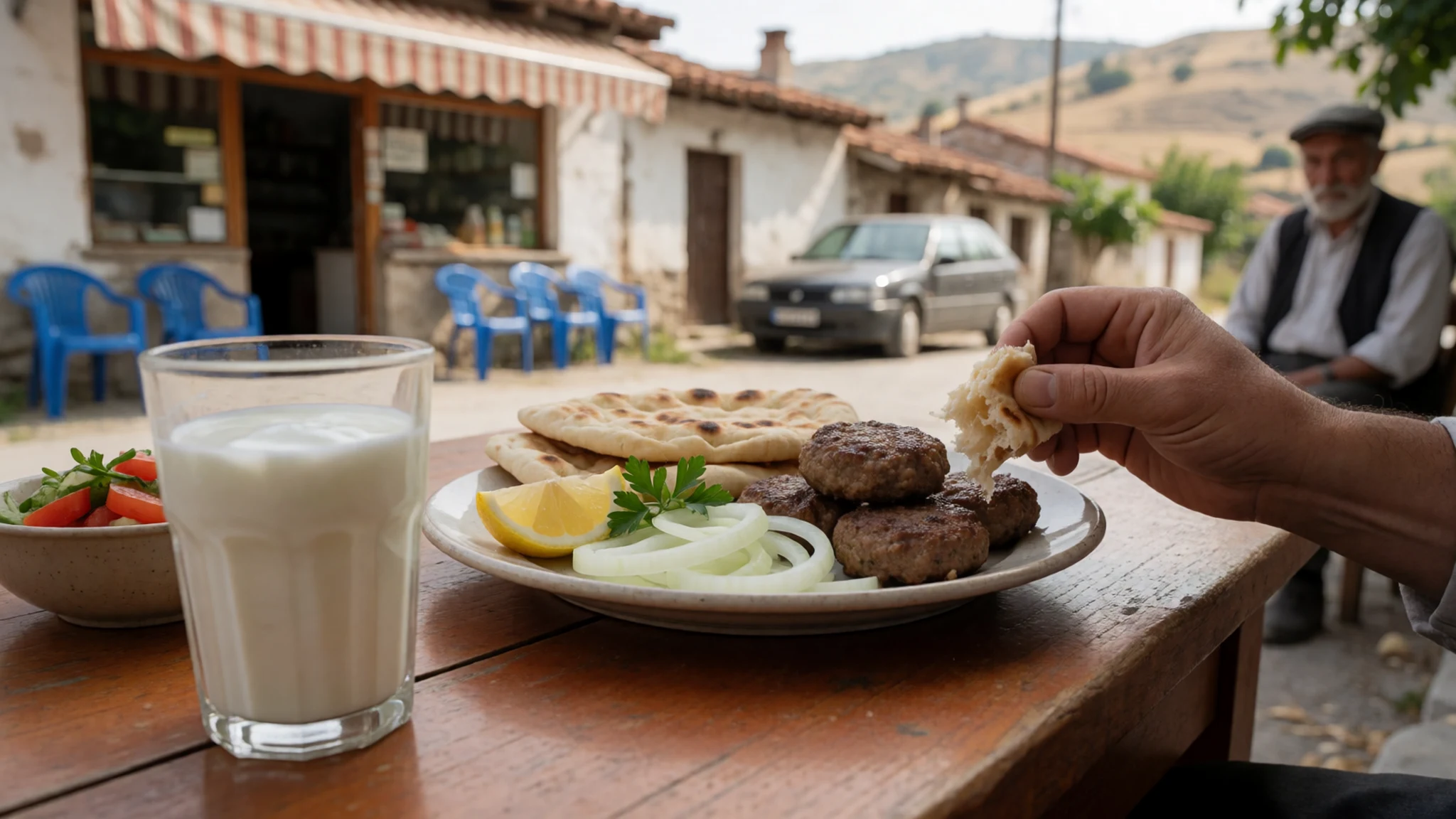
- Turkish restaurant meal — Across the street from the site
A basic Turkish restaurant-style plate is the fallback when the day’s site plan is tight. Aphrodisias Restaurant across the street is an option, though the toilets aren’t great—grab food and move on.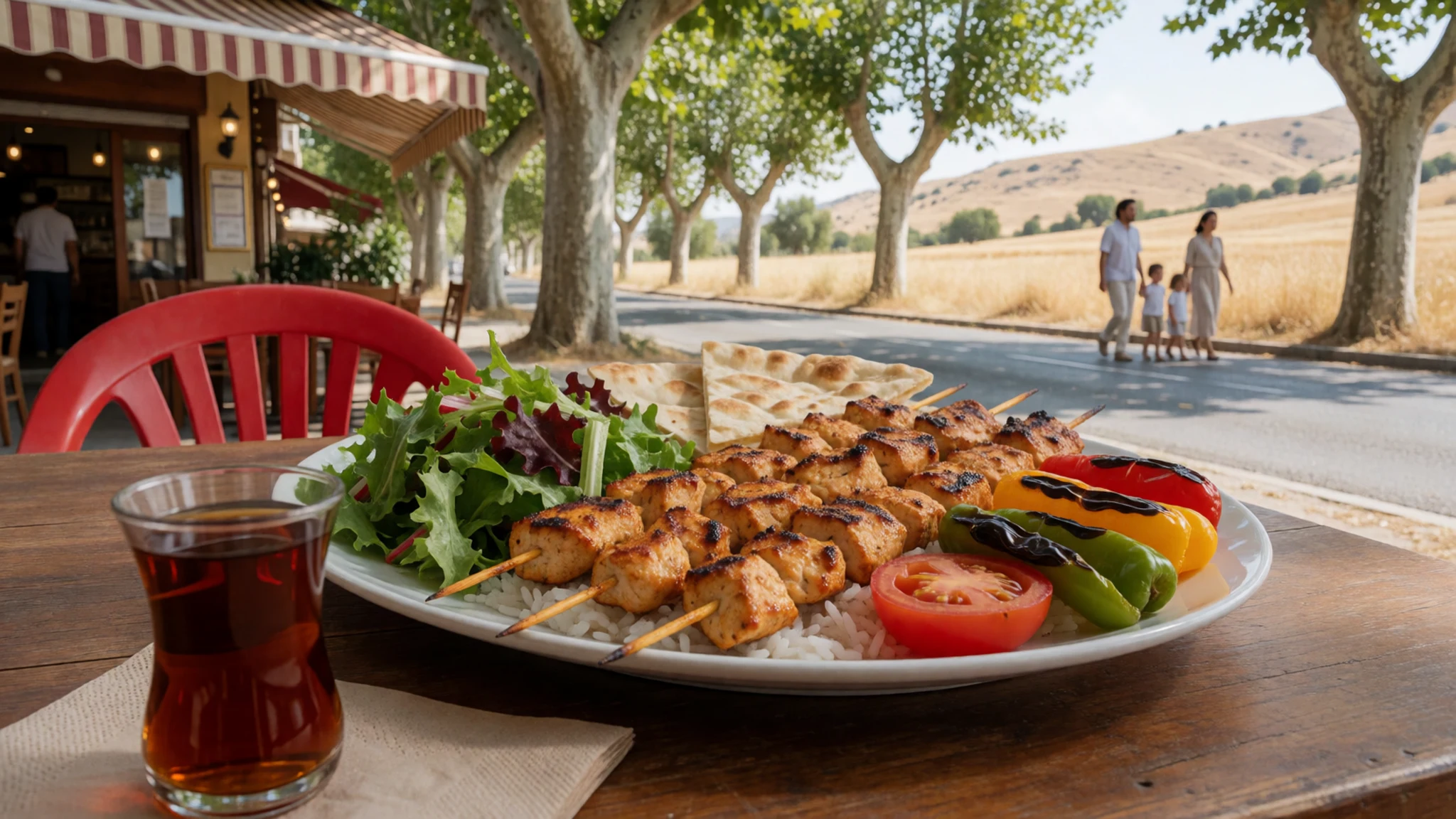
- Local water — On-site and around Geyre
In the Aphrodisias area, the local water is safe to drink, which makes planning easier during a long walk around the ruins. Carrying a bottle helps because the site has long stretches with limited shade.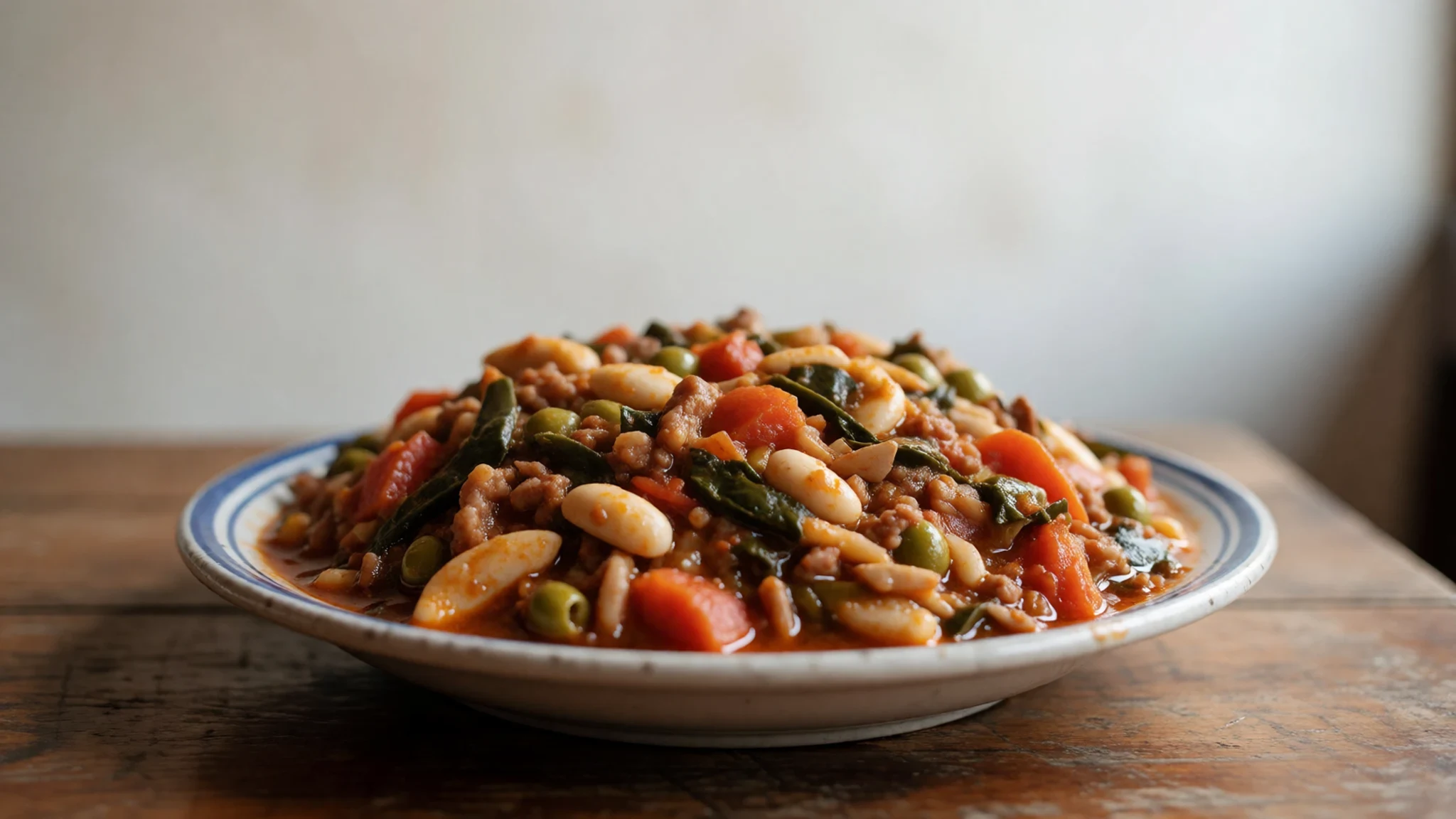
- Market-style snacks — Geyre village area
For quick energy between photo stops, look for simple snacks typical of regional markets and roadside stops—things meant for eating on the move. The village area around Geyre is the practical place to pick up supplies before heading into the site.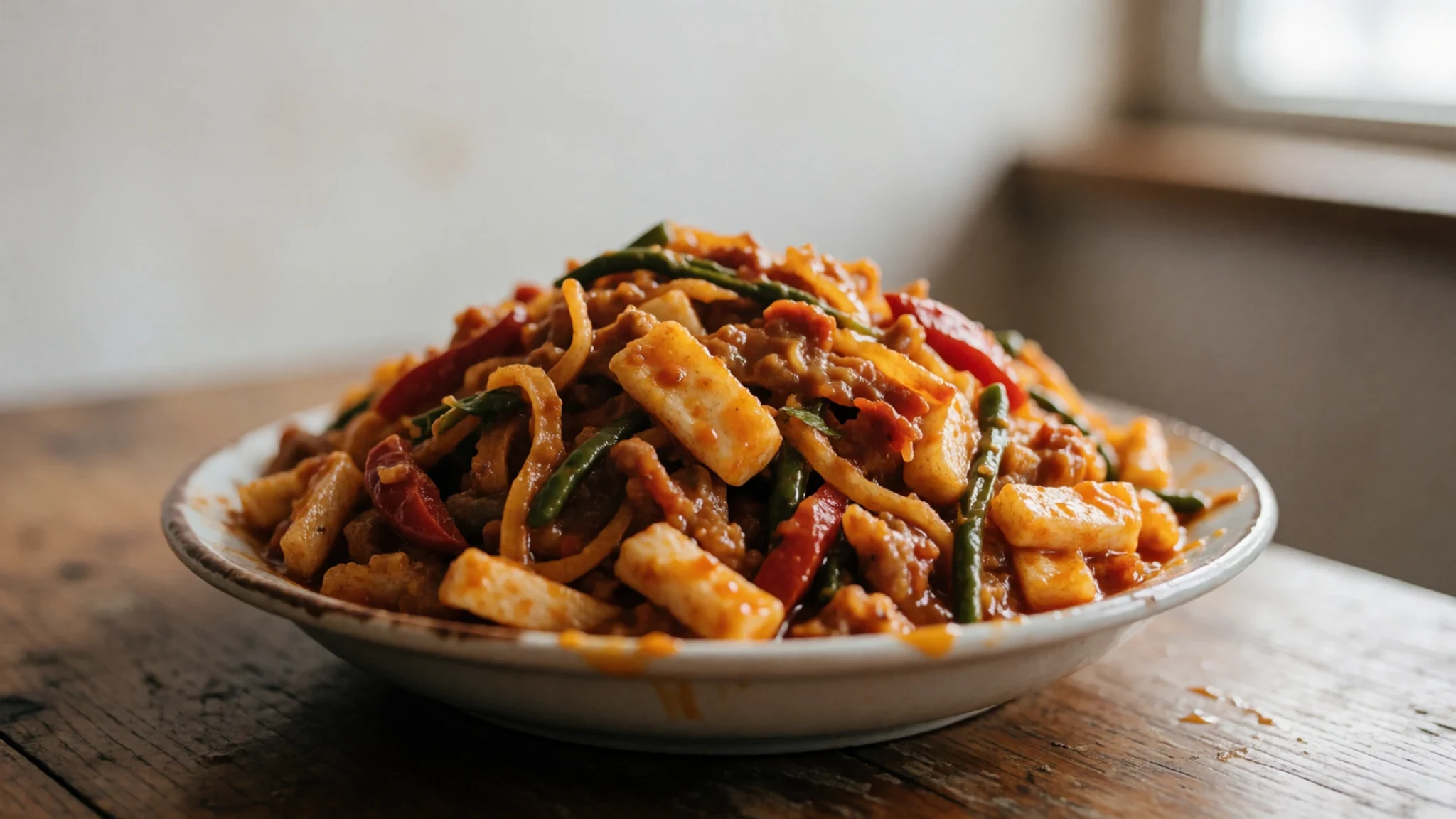
Plan it
Best time. May and June are the warmest months in the comfortable walking window, while July and August are the hottest. The wettest months are January and December, and the driest are July and August.
How long. 2–3
Getting there. The simplest way to get here is by car: take the D585 road between Nazilli and Tavas, then head in from Tavas if you are coming from Denizli or Pamukkale to the east. If not driving, Geyre isn’t on inter-city bus routes, so a dolmuş is needed and it helps to ask to be set down at the dörtyol crossroads near the site entrance.
Budget. mid
Tips
- Start early on site days to beat the busiest light and the warmest parts of the day
- If using public transport, arrange a clear drop-off near the dörtyol crossroads by the site entrance
- Consider a taxi from Denizli to reduce waiting and stress about getting back before nightfall
- Carry cash for small purchases around the village and keep water handy for the open stretches
Etiquette
- Wear shoes with grip—stone can be uneven and dusty
- Respect the temple precincts: keep voices down and avoid climbing or touching carved stone
- If photographing people near entrances, be mindful of queues and give space
Nearby
Sources
- Wikidata Q618495 (CC0)
- Wikipedia (Aphrodisias) (CC BY-SA 4.0)
- Wikivoyage (Aphrodisias) (CC BY-SA 4.0)
- Photo photos/01-aphrodisias-turkey.jpg (CC BY-SA 2.5)
- Photo photos/02-the-temple-of-aphrodite-built-in-the-ionic-order-in-stages-d.jpg (CC BY-SA 2.0)
- Photo photos/03-mapatopogr-ficodeasiamenor-caria.png (CC BY-SA 4.0)
- Photo photos/04-aphrodisias-tetrapylon-04.jpg (CC BY-SA 1.0)
- Photo photos/05-afrodisias-408.jpg (CC BY 3.0)
- Photo photos/06-aphrodisias-bouleuterion-4519.jpg (CC BY-SA 4.0)
- Photo photos/07-afrodisias-sebasti-n-sebasteion.jpg (CC BY 3.0)
- Photo photos/08-augustus-and-victory-aphrodisias-7471671280.jpg (CC BY 2.5)


