Assos
Assos, Turkey
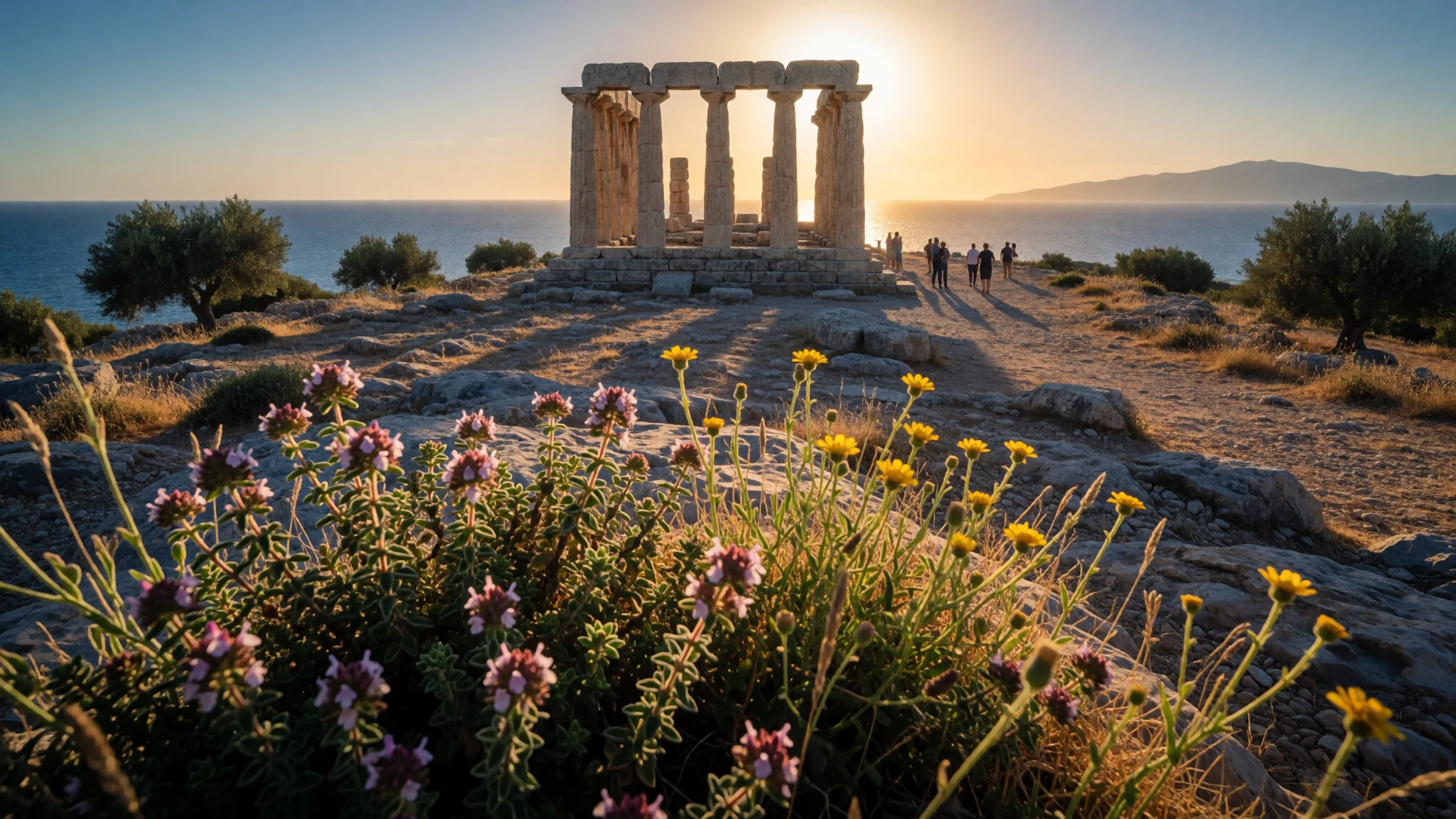
Assos pairs a Doric temple on a crag with a small stone harbour, an Ottoman bridge and a view across the water to Lesbos.
The place
Assos sits on the Aegean coast of north-western Turkey, in the Ayvacık district of Çanakkale province, on the southern side of the Biga Peninsula, the old Troad. Locals mostly call the village Behramkale, or Behram for short, but visitors and maps still use the ancient name. The ancient city stands on a steep crag, and the village of grey stone houses and cobbled lanes climbs the same hillside, so ruins and daily life are mixed together.
Below the crag lies the old harbour, once the only good anchorage along a long stretch of the Gulf of Edremit, which explains why a city grew here at all. Today it is a small cluster of stone warehouses turned into cafes and souvenir shops. Access has at times been restricted because boulders have fallen from the cliffs above, so it is worth checking locally before planning around it.
East of the harbour, Kadırga is a strip of shingle beach lined with small guesthouses and cafes, the place most people stay for swimming. The island on the southern horizon is Lesbos, which is Greek, and the coast guard takes an interest in anyone camping on this shore.
Assos is a quiet retreat rather than a town of sights. The ruins are compact, the village is small, and the pace is slow outside the summer weekends. The site was placed on Turkey's UNESCO Tentative list, which is a step short of full World Heritage status. Roads are narrow, parking is limited, and the best hours are early morning and late afternoon, when the stone turns gold and the heat eases.
Its story
Assos was founded around the end of the second millennium BC by Aeolian settlers from Lesbos. Around 530 BC they built a Doric temple to Athena on the highest crag, a landmark for ships that still dominates the skyline. The city's best-known chapter came in the fourth century BC under Hermias, a ruler who had studied with Plato and invited philosophers to his court. Aristotle arrived in 348 BC, married Hermias's niece or adopted daughter Pythias, and worked here with a circle of thinkers on zoology and biology.
That period ended when the Persians seized the territory and killed Hermias. Aristotle left for Macedonia, where he tutored the young Alexander, who later drove the Persians out of Assos in 334 BC. The city then passed to the kings of Pergamon and finally into the Roman world. Cleanthes, later head of the Stoic school in Athens, was born here. Christian tradition adds a visit by Paul, who joined Luke's ship at Assos on his way to Lesbos, as described in the Acts of the Apostles.
In Byzantine times the place was called Makhramion, from an officer named Makhram, which is the root of the name Behramkale. Turkish raids in the early fourteenth century sent the population fleeing to Lesbos. The Ottomans left the mosque and bridge that survive from the later part of that century. The town then faded into a provincial market village until systematic excavation began in the 1880s. Many friezes and sarcophagi have since ended up in museums or been stolen.
What to see
- Temple of Athena — Top of the crag, Behramkale
A Doric temple on the crag, begun around 530 BC, with several columns re-erected. It is the reason to come, and the outlook over the sea toward Lesbos is best near sunset. Wear shoes with grip, because the rock and paving are uneven and worn.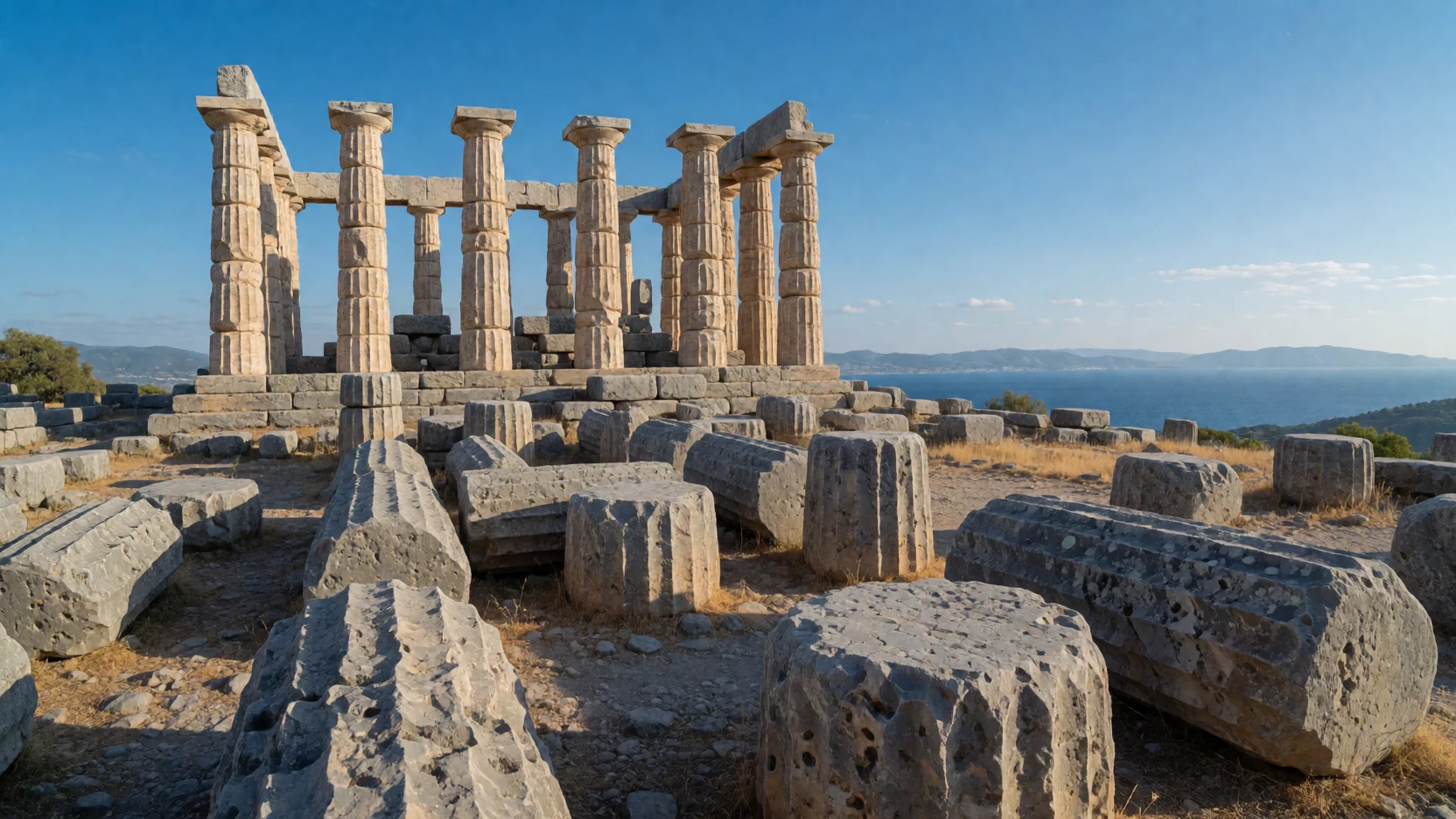
- Hüdavendigâr Mosque — By the site entrance
A square, minaret-less mosque from 1365 beside the entrance to the site. The name means 'God's gift', which points to a victory in the early Ottoman advance. It is small, plain and worth a few minutes. Check opening times locally.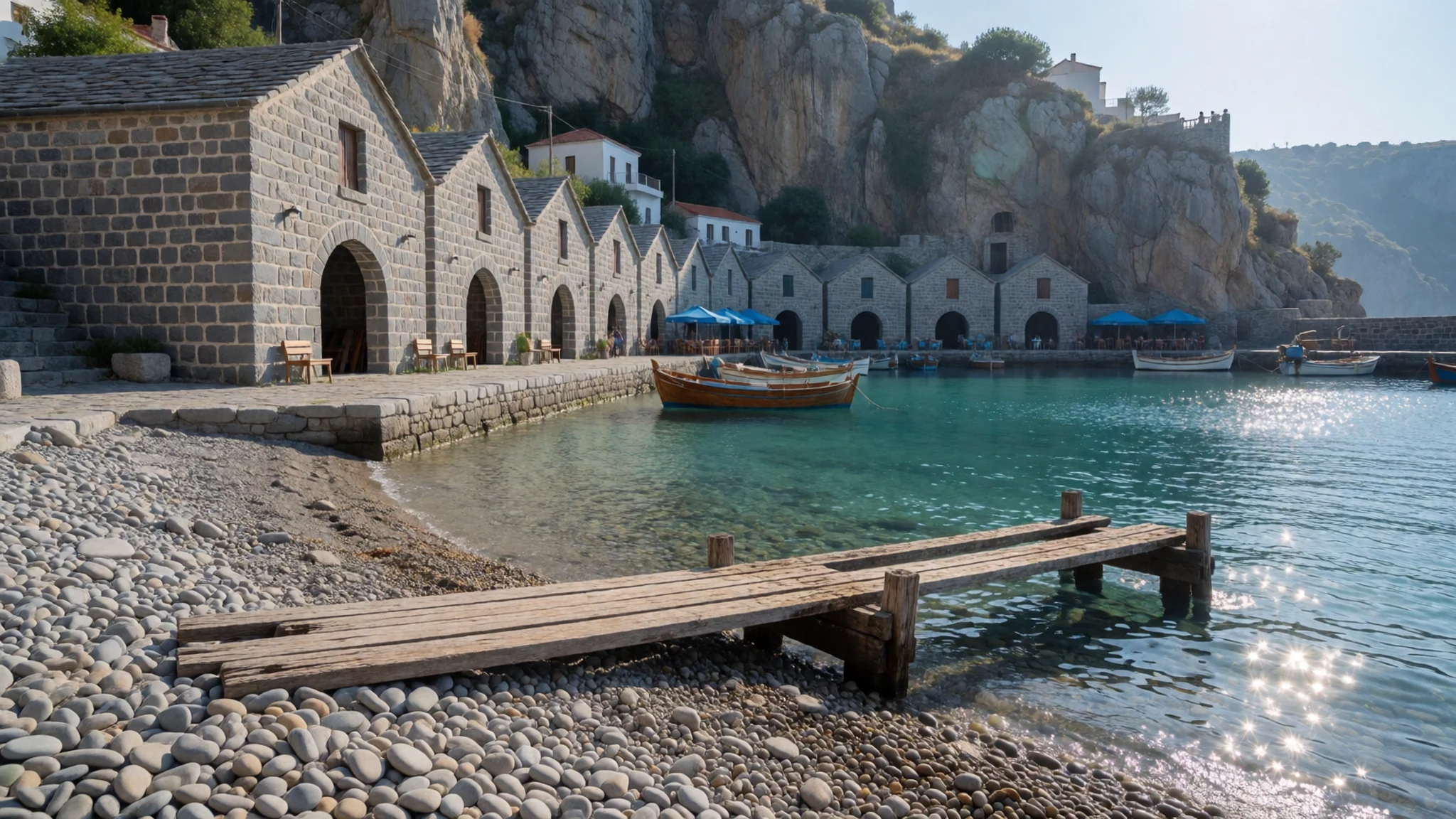
- City gates, necropolis and amphitheatre — Slopes below the temple
The ancient walls and gates lie about 200 m south-west of the temple, with the burial ground just north. The amphitheatre is cut into the hillside about 500 m south, above the coast. Together they make an easy ruins walk.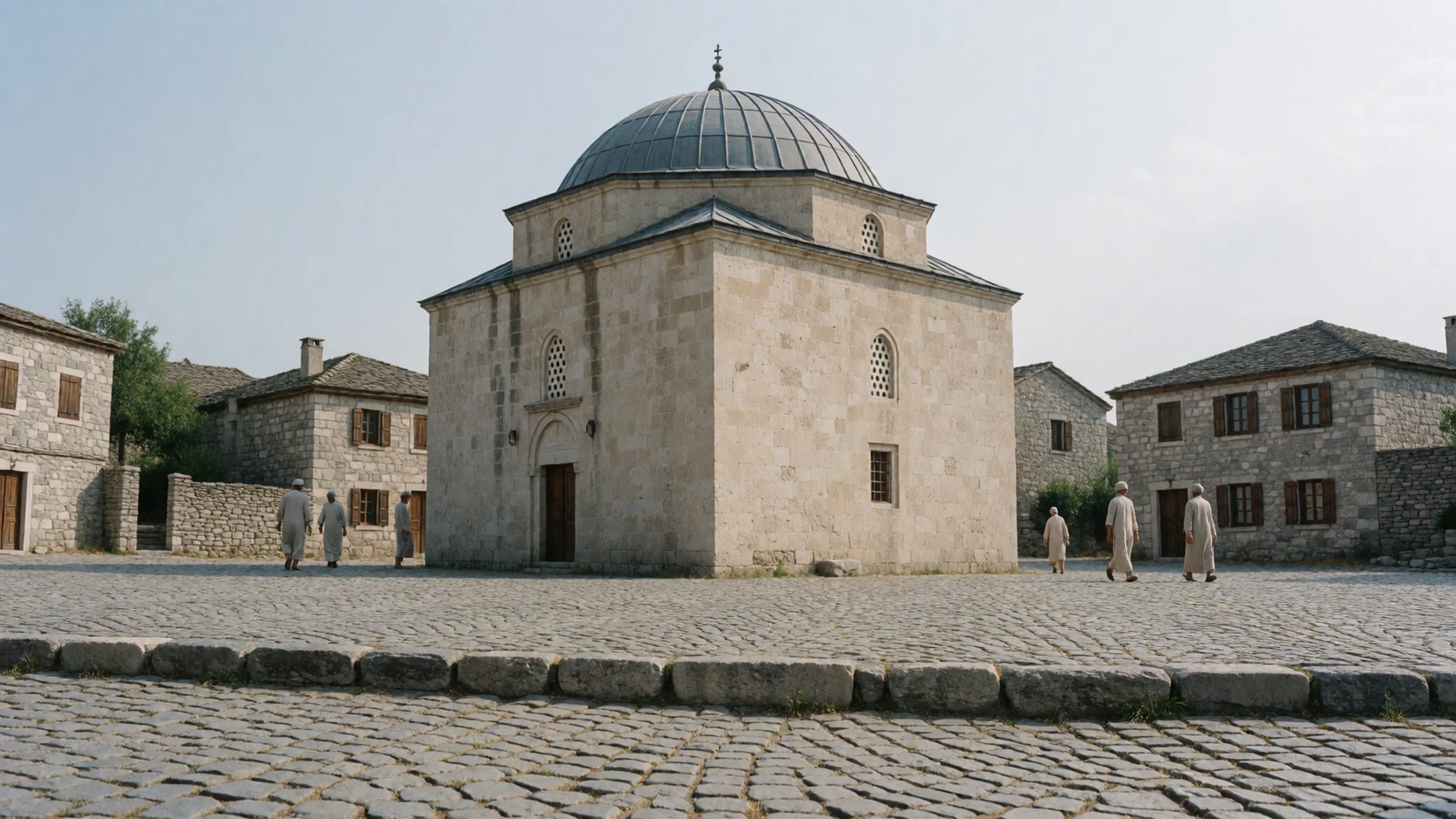
- Old bridge (Behram Köprüsü) — North of the village, Ayvacık road
A single stone arch on the road north towards Ayvacık, probably from the 1360s. Walkers can still cross it while vehicles use a newer bridge beside it. It was restored in 2015 and makes a good quiet stop.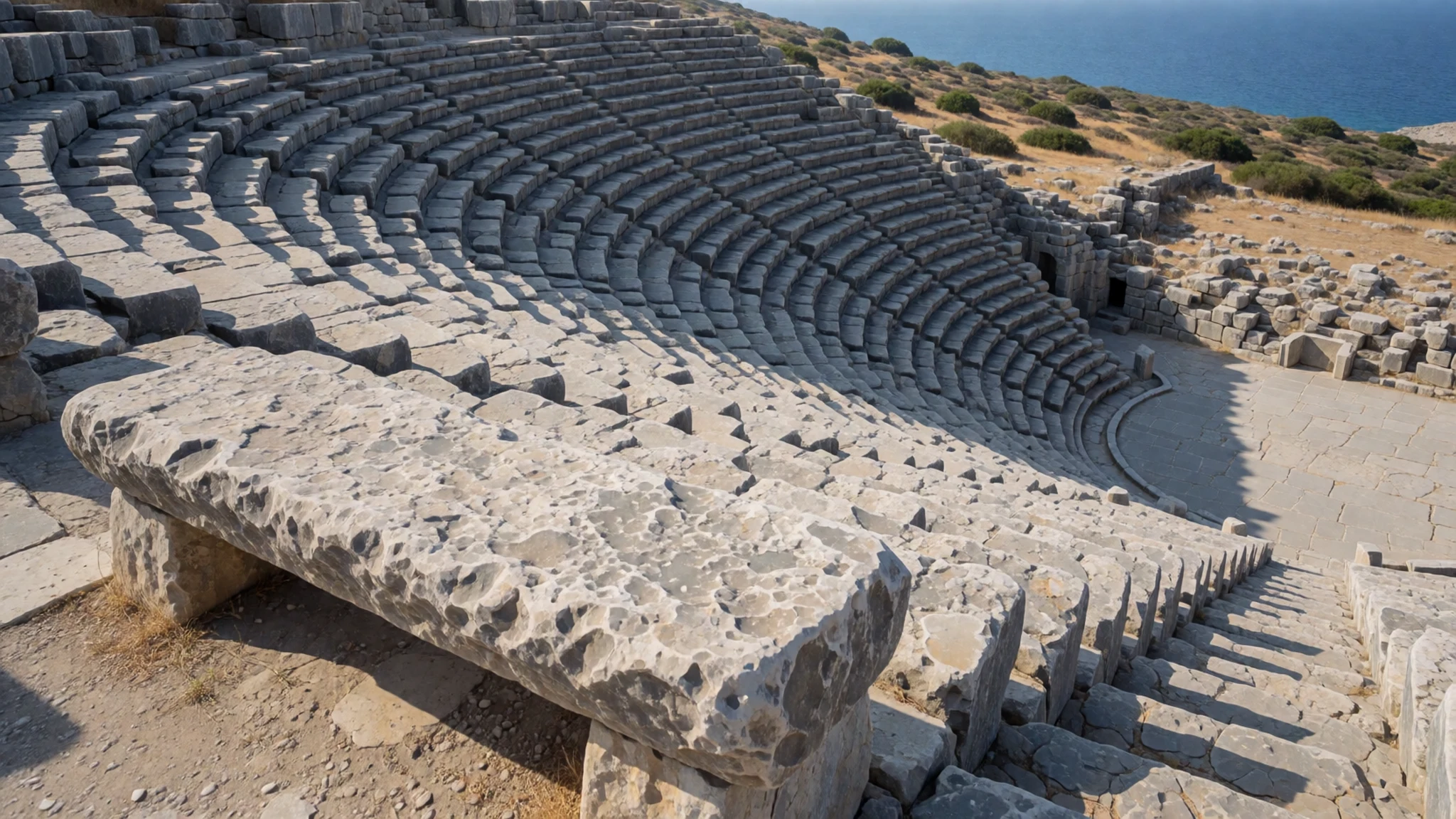
- Assos old harbour (Antik Liman) — Below the village
A compact stone harbour where warehouses once stored acorns shipped out for a brown dye. Leave the car at the edge, since the alleys are narrow. Access was blocked for a time after rockfalls from the cliffs, so ask before descending.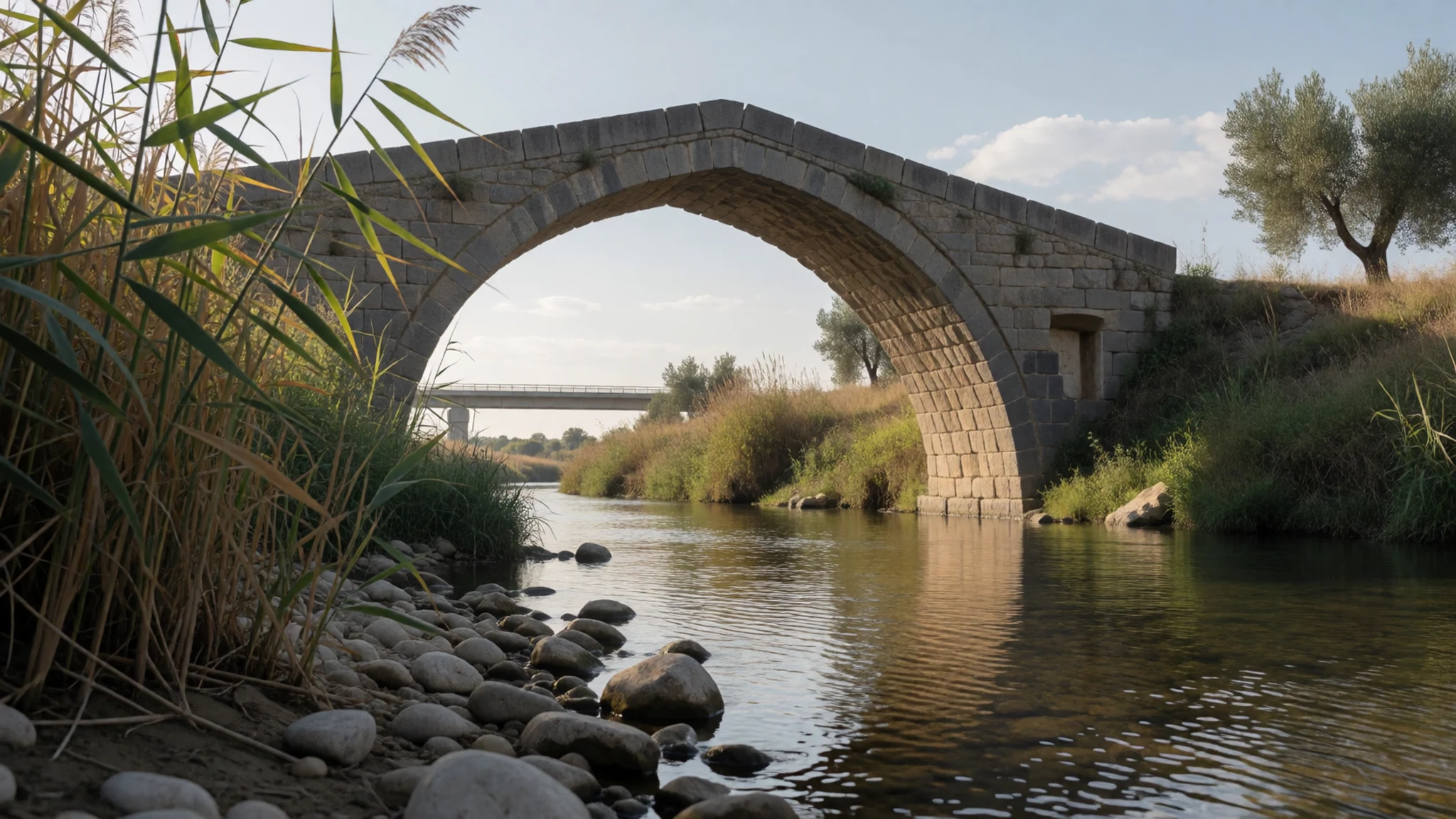
- Kadırga beach — East of the harbour
A broad shingle beach about 3 km east of the old harbour, backed by small guesthouses and cafes. It is the main place for a swim and a long lunch. Shingle is hard on bare feet, so bring water shoes.
Culture
Assos is a village that lives with its ruins. Families still use the lanes below the temple, and the grey stone houses, small mosque and cafe terraces set the daily rhythm. Local history leans heavily on philosophy. A contemporary sculpture of Aristotle welcomes people at the gate, and guides often describe how he taught here and studied sea life. Even so, the village feels far more Turkish and Muslim than Greek.
The Ottoman mosque and bridge show the town's later layers. Tea is the usual social drink, offered and accepted freely, and cafes are places to linger rather than turn tables over. Outside the busiest summer weekends the pace is unhurried, and many guesthouses are family-run.
The coast is also a border zone. Lesbos is visible across the strait, and the coast guard watches this shore closely because of unauthorised crossings. That is why wandering and camping near the water draws attention, and why locals are relaxed about visitors who behave like ordinary tourists but wary of anything that looks otherwise.
Green Aegean hillsides, olive groves and stone terraces make a landscape where walking and slow meals suit the place better than a checklist. Conversation is easy if you are curious about the village, and a few words of Turkish are appreciated. In Assos, dress modestly and remove your shoes before stepping onto the carpet if you enter the mosque, and keep your voice low while others are praying.
What to wear
Assos is a Turkish village, and traditional dress here means the rural Aegean clothing of the region: women's loose cotton trousers called şalvar, headscarves in printed cotton or light wool, and embroidered cloth made at home, such as towels and edgings. Handwoven cotton and wool are the older materials. These are now seen mainly at festivals, in craft stalls and on older women, rather than as daily wear.
What people actually wear is simple and practical: cotton shirts, linen trousers, light dresses and sandals in summer, with fleeces and jackets in the cooler months. Some women in the village cover their hair, while visitors at Kadırga beach wear swimwear as they would at any Mediterranean resort. Evenings are casual, and nobody dresses up for the cafes.
For a visitor, the main issues are sun, terrain and modesty. Summer is hot, so bring light, breathable cotton or linen, a hat and sunglasses. The temple path and village lanes are rough stone, often polished and slippery, so wear closed shoes or sturdy sandals with grip rather than flip-flops. Carry a light scarf or shawl: shoulders and knees should be covered inside the mosque, and a scarf is useful for women who wish to enter. Away from the beach, cover up a little in the village. A light jacket is useful in spring and autumn, since the wind on the crag can be sharp after sunset.
What to eat
- Fresh fish and meze — Old harbour and Kadırga beach restaurants
Grilled or fried fish served with a spread of small cold plates is the classic meal on the water. Look for it at the harbour cafes and along the quieter end of the Kadırga beach strip.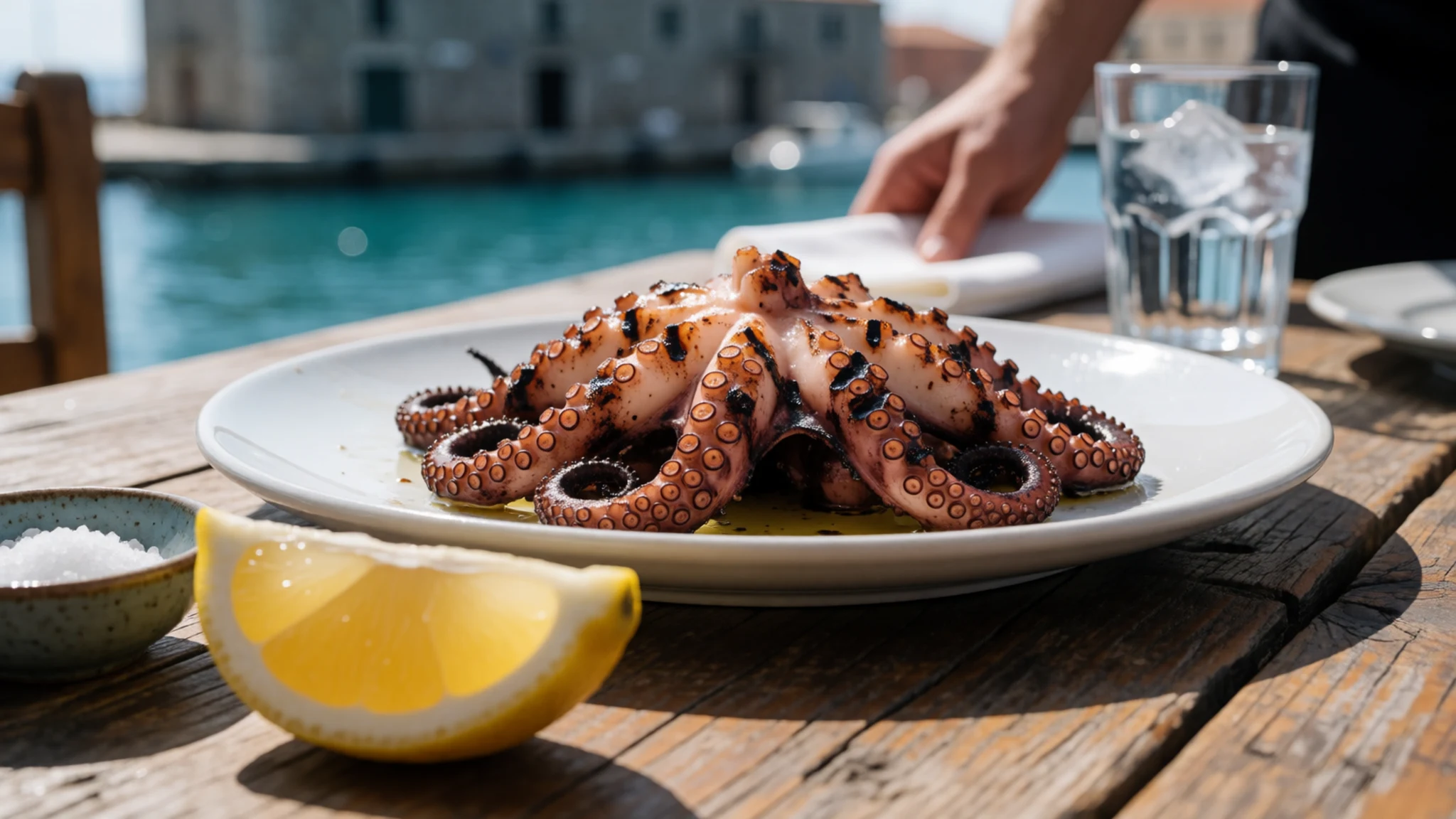
- Zeytinyağlılar (olive-oil vegetables) — Village cafes near the temple entrance
Aegean cooks braise vegetables such as artichokes, beans and wild greens in local olive oil and serve them cool. They suit a hot day and make a good vegetarian lunch.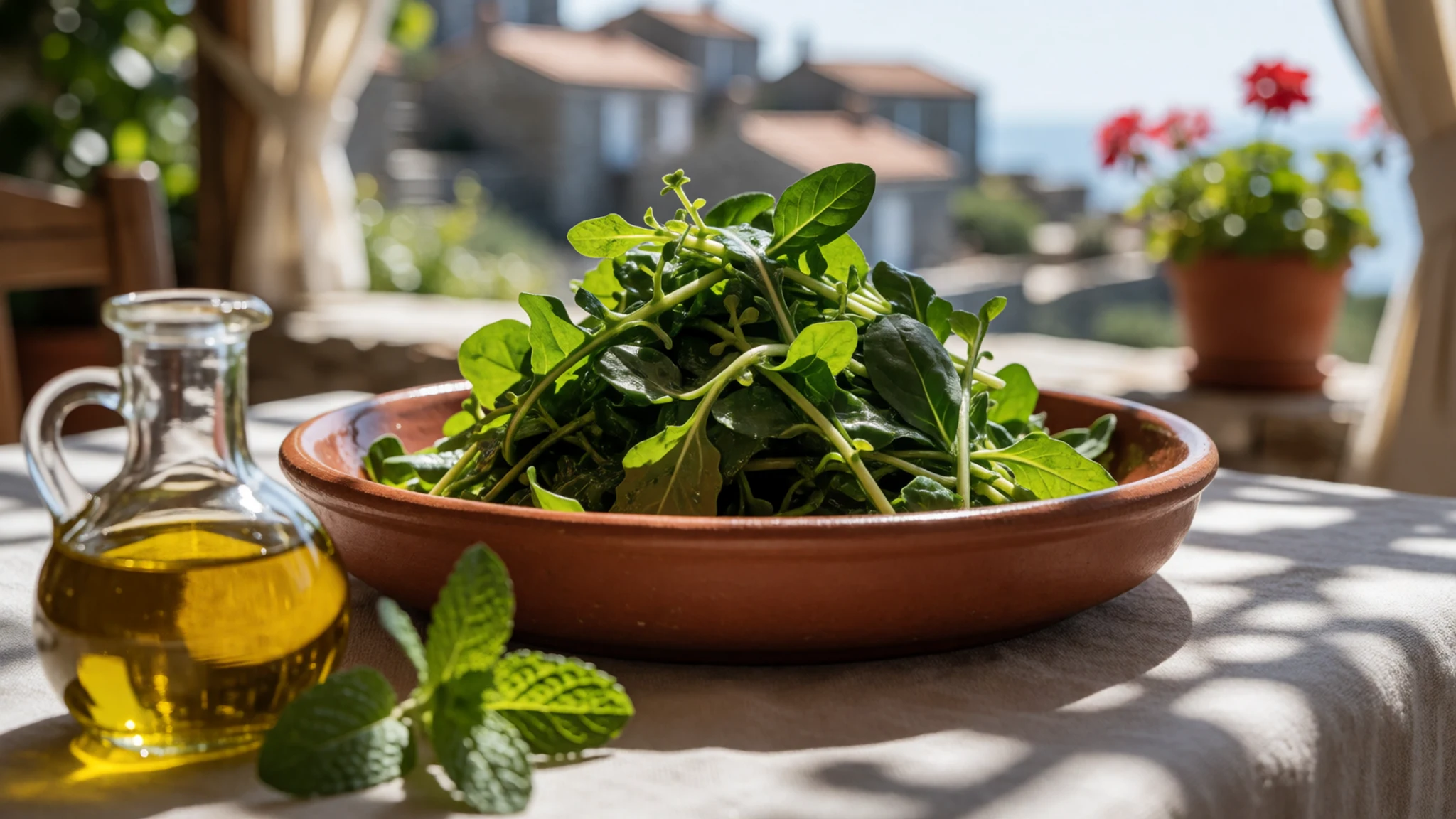
- Gözleme — Terrace stalls and cafes by the site entrance
A thin flatbread filled with cheese, spinach or potato and cooked on a griddle, often by women in the village. It is cheap, filling and good after the climb to the temple. - Local olives and olive oil — Village shops and roadside stalls
The hills around Assos are covered in olive groves. Buy small bottles of oil, olives and olive-oil soap as edible souvenirs, and taste before you buy. - Turkish tea and coffee — Any cafe terrace in the village or harbour
Tea in small tulip glasses is the default drink, and Turkish coffee follows a meal. Both are the usual excuse to sit for an hour with a view of the harbour or the crag.
Plan it
Best time. May–June and September–October: the sea is warm enough for swimming, days are comfortable for the temple climb, and crowds are smaller than in July and August, when the coast is hot and busy. Many guesthouses close in winter, and wind can be sharp.
How long. 2
Getting there. The nearest big airports are Izmir and Istanbul, with Çanakkale and Edremit closer for regional travel. Inter-city buses run along the main D-550 highway about 20 km inland and do not turn off for Assos, so change at Ayvacık (best service, hourly, about 15 minutes) or Küçükkuyu for a local dolmuş minibus to Behramkale. Take care not to confuse Ayvacık with Ayvalık, which is far down the coast. A car makes the area much easier.
Budget. mid
Tips
- Climb to the temple in early morning or late afternoon to avoid midday heat and tour groups
- Park at the edge of the old harbour rather than driving into its narrow alleys
- Carry cash and water, as small cafes and stalls may not take cards
- Check locally whether the harbour is open, because rockfalls have closed it before
- Book guesthouses ahead for summer weekends, since many small ones close outside the season
Etiquette
- Cover shoulders and knees and remove shoes before entering the mosque
- Do not wild camp on the coast, as the coast guard will assume an illegal crossing
- Ask before photographing villagers
Nearby
Sources
- Wikidata Q744631 (CC0)
- Wikipedia: Assos (rev 1364710295) (CC BY-SA 4.0)
- Wikivoyage: Assos (rev 4993327) (CC BY-SA 4.0)