Antakya
Antakya, Turkey
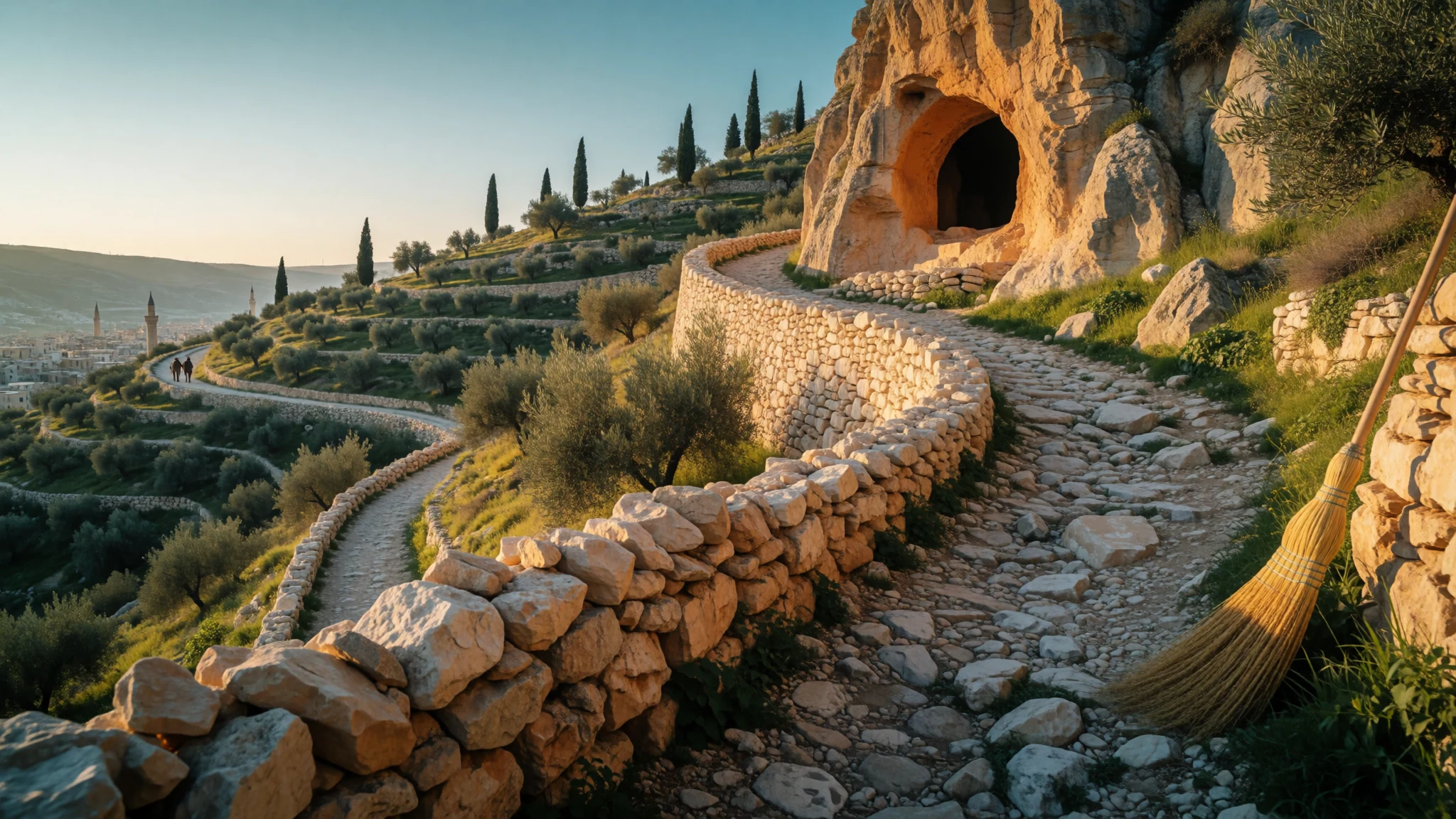
Antakya, ancient Antioch on the Orontes, is a Levantine city of layered faiths, mosaics and kitchens, now rebuilding after the 2023 earthquakes.
The place
Antakya lies in a fertile, well-watered valley on the Orontes River, in Hatay, the southernmost province of Turkey, a short run inland from the Mediterranean coast. It is the Turkish form of Antioch, and the modern city stands partly on top of the ancient one, at about 67 metres above sea level. Its population is just under four hundred thousand, and the wider district takes in villages and farmland as well as the city itself. The setting explains much: a river, olive and citrus country, and a position where Anatolia, Syria and the sea meet. That crossroads shows in the languages, the food and the mix of faiths, which has long included Sunni and Alawite Muslims and several Christian communities. Visitors should know the city is not the one in older photographs. The 2023 earthquakes destroyed large parts of the old centre, including the fish market and much of the eating strip along Hürriyet Caddesi, and rebuilding is still under way. Some mosques and museums have been repaired, others are closed or half-restored, and road and rail links have been disrupted. What remains is quieter than most tourist cities in the region and depends heavily on local goodwill. Streets are dusty, building sites are everywhere and services are patchy. The reward is a place where Roman mosaics, a cave church and a lively table are still within a short drive of each other, and where people are glad of visitors who arrive with realistic expectations.
Its story
Antakya's story begins long before the city that carries its name. Excavations at nearby Alalakh show people living in this valley since the Chalcolithic period. The place enters the written record when Alexander the Great marched down the Orontes after his victory at Issus. After his death, his general Seleucus I Nicator founded Antioch here in 301 BCE. The city grew into a Seleucid capital and then, under Rome, the capital of the province of Syria, a major city of the empire. It became an early centre of Christianity. The New Testament says the word 'Christian' was first used here, and Saint Peter is linked with the cave church on the slope above town. Under the Byzantines the city gained further church importance. Control then passed repeatedly. Persian armies took it more than once, an Arab army under Umar ibn al-Khattab captured it in the seventh century, and Byzantines, Seljuks, Crusaders and Mamluks each held it in turn. The Ottomans absorbed it in the early sixteenth century and tied it to Aleppo's administration. That long sequence left Antakya with few grand monuments still standing but a deep layer of buried ones. Builders preparing a site for a new building once uncovered ancient remains, and the result is a museum beneath a structure raised on pillars. Earthquakes have always been part of the story, and those of 2023 again broke much of what centuries had built.
What to see
- Habib-i Neccar Mosque — Old town centre
Habib-i Neccar Mosque is among the oldest mosques in Antakya, traditionally said to stand on the site of an earlier pagan temple. It was wrecked by earthquakes more than once, most recently in 2023, so the building seen now is largely a fresh reconstruction. Go for the history of the site and the neighbouring streets rather than for antique fabric.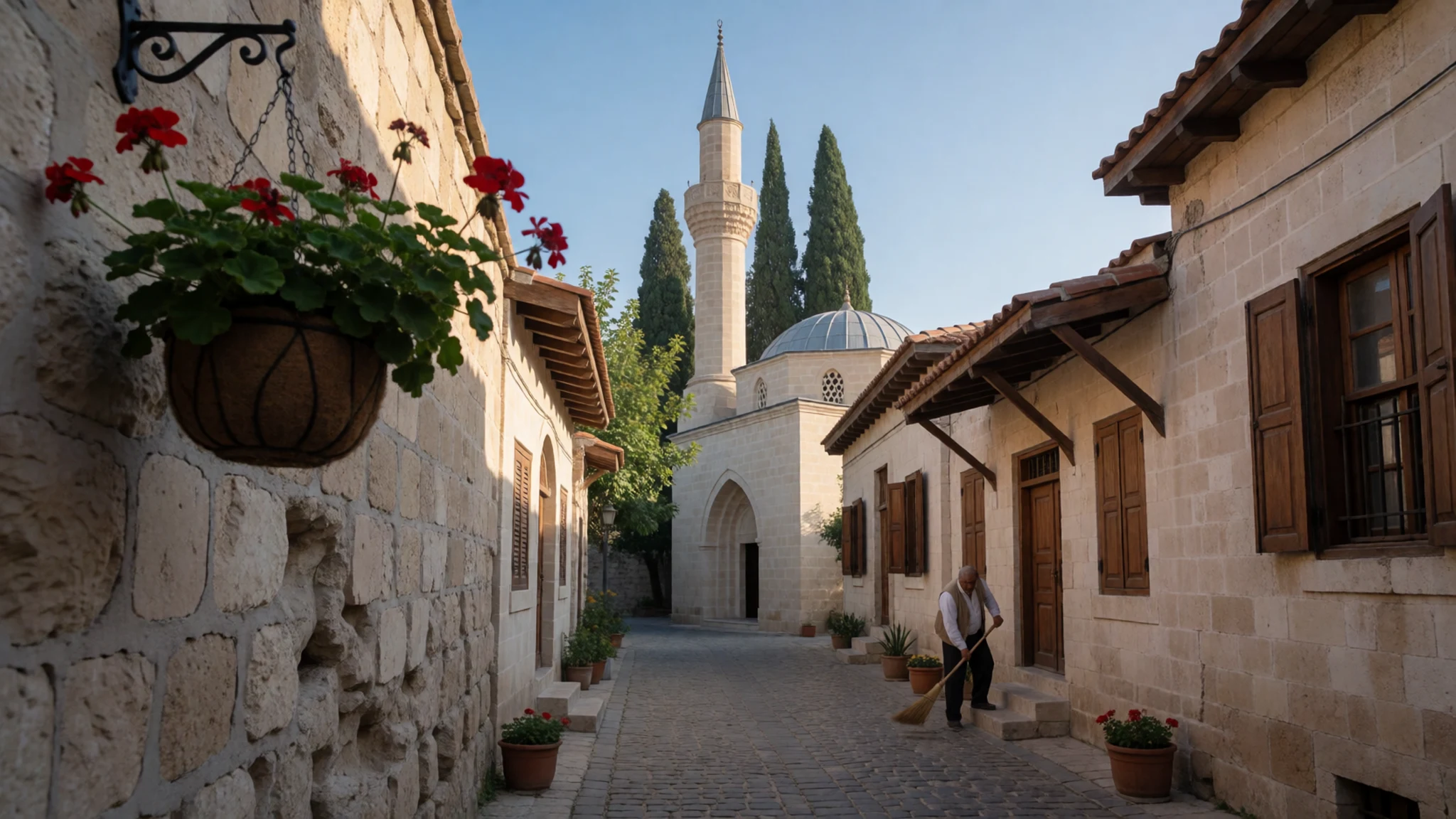
- Church of Saint Peter — Slope of Mount Staurin, edge of town
The Church of Saint Peter is a cave cut into the cliff face of Mount Staurin, just outside the centre. Tradition holds that Peter preached here and that early Christians met in the space. The surviving structures are later, but the bare rock chamber is atmospheric. Check locally that it is open before making the trip.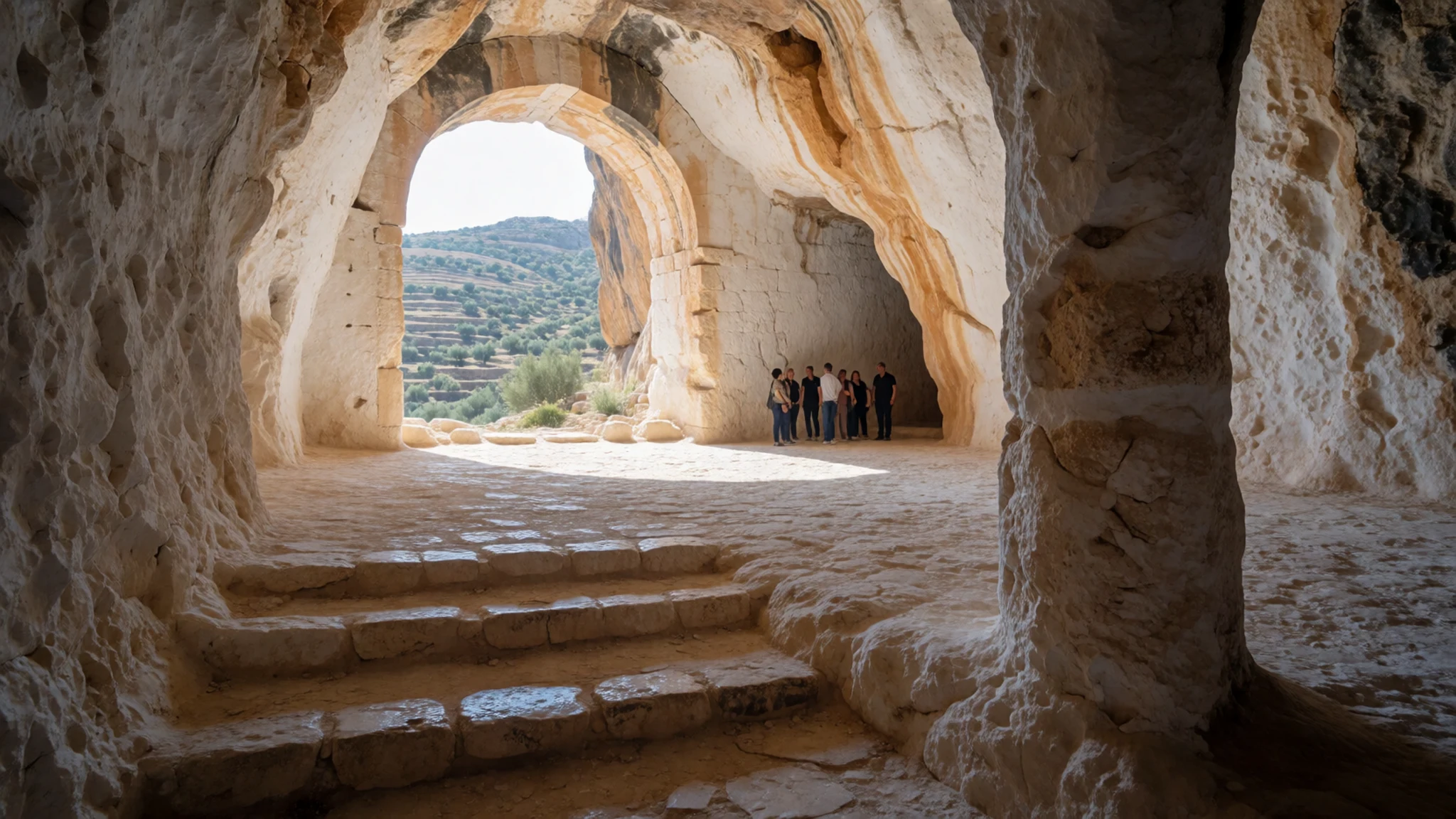
- Necmi Asfuroğlu Archaeological Museum — Northern part of the city
Developers preparing to build here came across remains of ancient Antioch, and the plan changed: the building now stands on steel pillars above the excavated floor. Visitors walk among mosaics where they were found. It is a rare case of archaeology and construction ending in compromise. Confirm opening arrangements with the museum before travelling.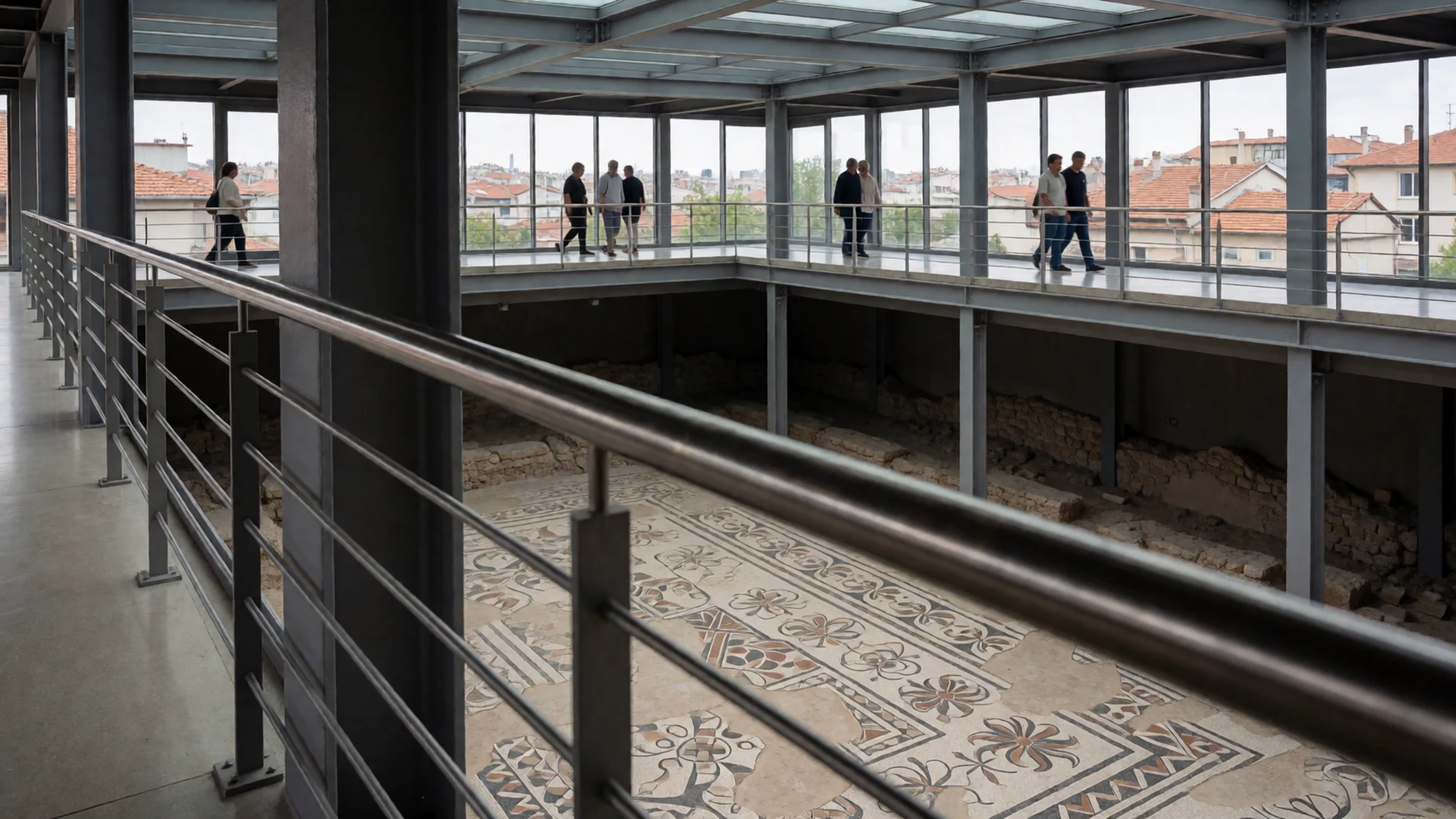
- Hatay Archaeological Museum — Central Antakya
The Hatay Archaeological Museum holds a fine collection of classical mosaics, coins, sarcophagi and objects from the Bronze and Iron Ages. It took only light damage in the 2023 earthquakes and is being repaired rather than rebuilt. Parts may be closed, so check current status and access with the museum or the municipality before planning around it.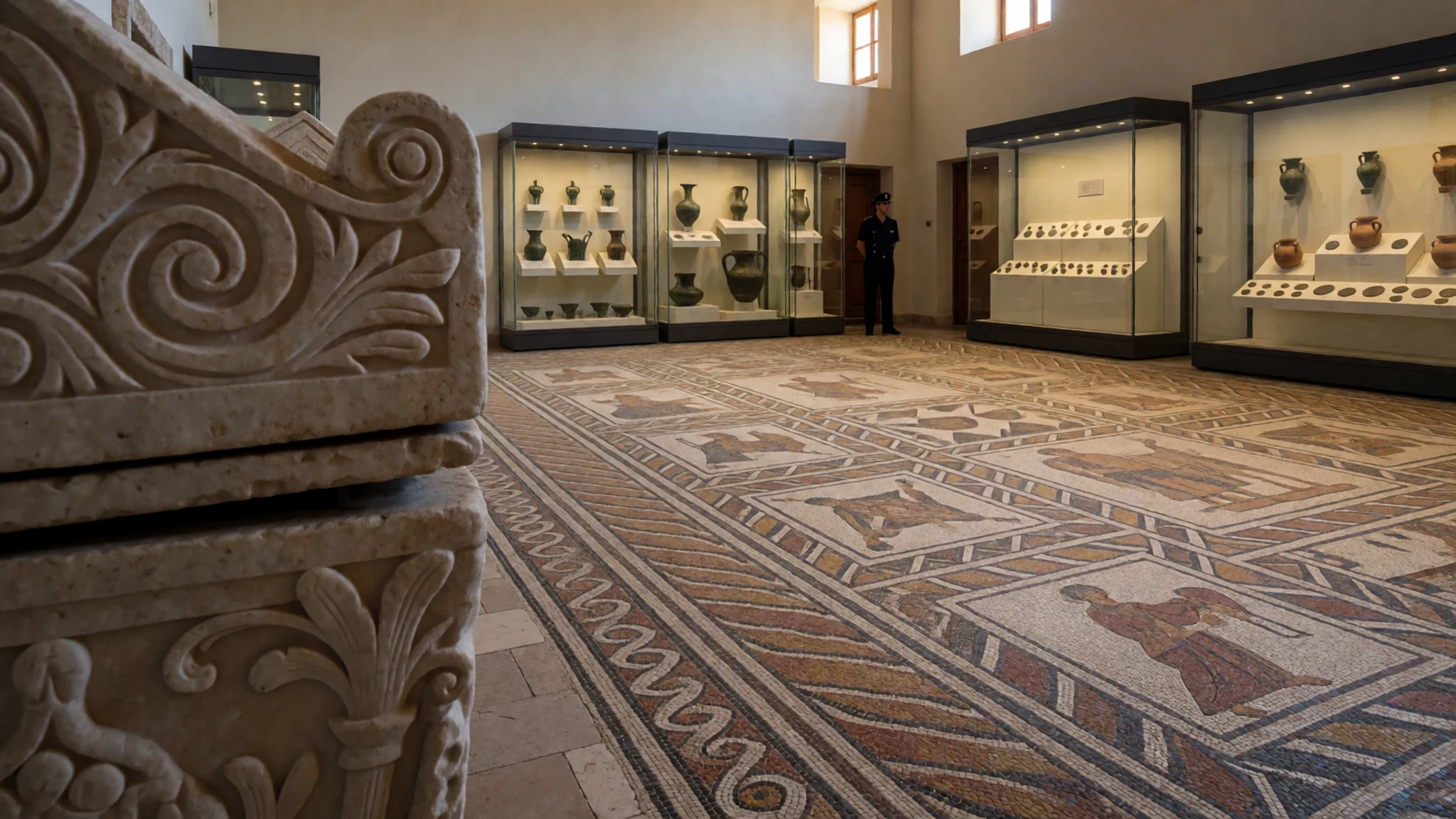
- Monastery of Saint Simeon — Hills outside the city
This ruined monastery marks the site where Saint Simeon the Younger, a stylite, spent his later life on top of a pillar. Only the pillar's base survives, together with the remains of three churches. It sits outside the city, in hill country, so allow time for the drive and bring water and sun protection.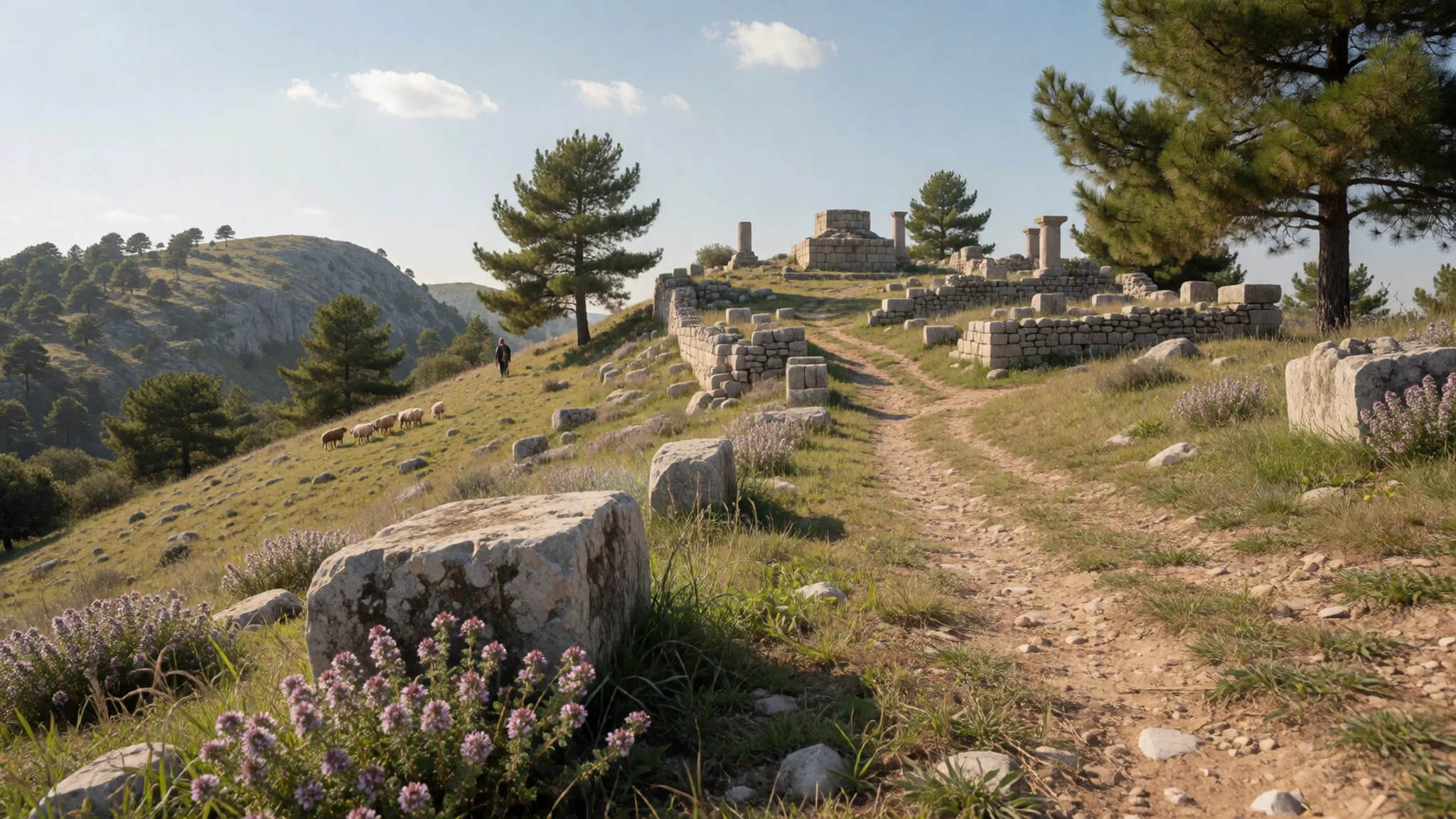
Culture
Antakya has long been a place where several communities live side by side, and its character comes from that mix. Turkish and Arabic are both heard, Sunni and Alawite Muslims share the district with Orthodox and other Christians, and religious festivals of different traditions have traditionally been part of the calendar. The Alawite shrine of Hızır, set in a modern building in the middle of a traffic island, is a reminder that worship here is not confined to old monuments. The cooking is the clearest expression of this blend. It is usually described as Levantine rather than Turkish, with bulgur, spices, sesame, yoghurt and cheese appearing in ways more familiar in Syria and Lebanon than in central Anatolia. Hospitality matters, and a visitor is likely to be offered tea or coffee in a shop or at a workshop door. The earthquakes have shaken community life, and many families are scattered or living in temporary housing. Conversations may turn to loss, so listen first and let people lead. Spending money in local shops, cafés and eateries is one practical way to help, and it is appreciated. Alcohol is served in restaurants and cafés, but this is a conservative province, so keep behaviour low-key. Cover your shoulders and knees, take off your shoes before entering any mosque or shrine, and ask permission before photographing worshippers or anyone's damaged home.
What to wear
Antakya's traditional dress belongs to the wider Levantine and Anatolian village world. Older women in the surrounding countryside still wear şalvar, the full trousers gathered at the ankle, with printed or embroidered headscarves, usually in cotton. Men's older clothing was loose trousers, a waistcoat and a cloth headwrap, mostly in cotton and wool. Such dress now appears mainly at weddings, festivals and folklore events, and some of the finer cloth is kept as family heirloom. Everyday clothing is plainly modern: jeans, shirts, trainers and tracksuits for most men, and for women everything from fitted coats and headscarves to uncovered hair, depending on family and neighbourhood. Business wear is smart but unfussy. Many people are still in practical, hard-wearing clothes because of rebuilding work and temporary living. A visitor should dress for heat and modesty together. In the warm months, light cotton or linen with long sleeves and trousers or long skirts works well, with a hat and sunglasses against the strong sun. Carry a scarf for mosque visits, since women may be asked to cover their hair and everyone should cover shoulders and knees. Shoes need to be sturdy and easy to slip off, because the streets are dusty and uneven, building sites are common and the cave church and hill sites involve rough ground. In winter, bring a waterproof layer, as the rain can be heavy.
What to eat
- Künefe — Dessert shops and pastry counters in the city centre
Künefe is a dessert of shredded pastry wrapped around melting cheese, soaked in syrup and served hot. Hatay is its home ground, and local people take strong views on the right cheese. Look for it at dessert shops and pastry counters in the rebuilt centre.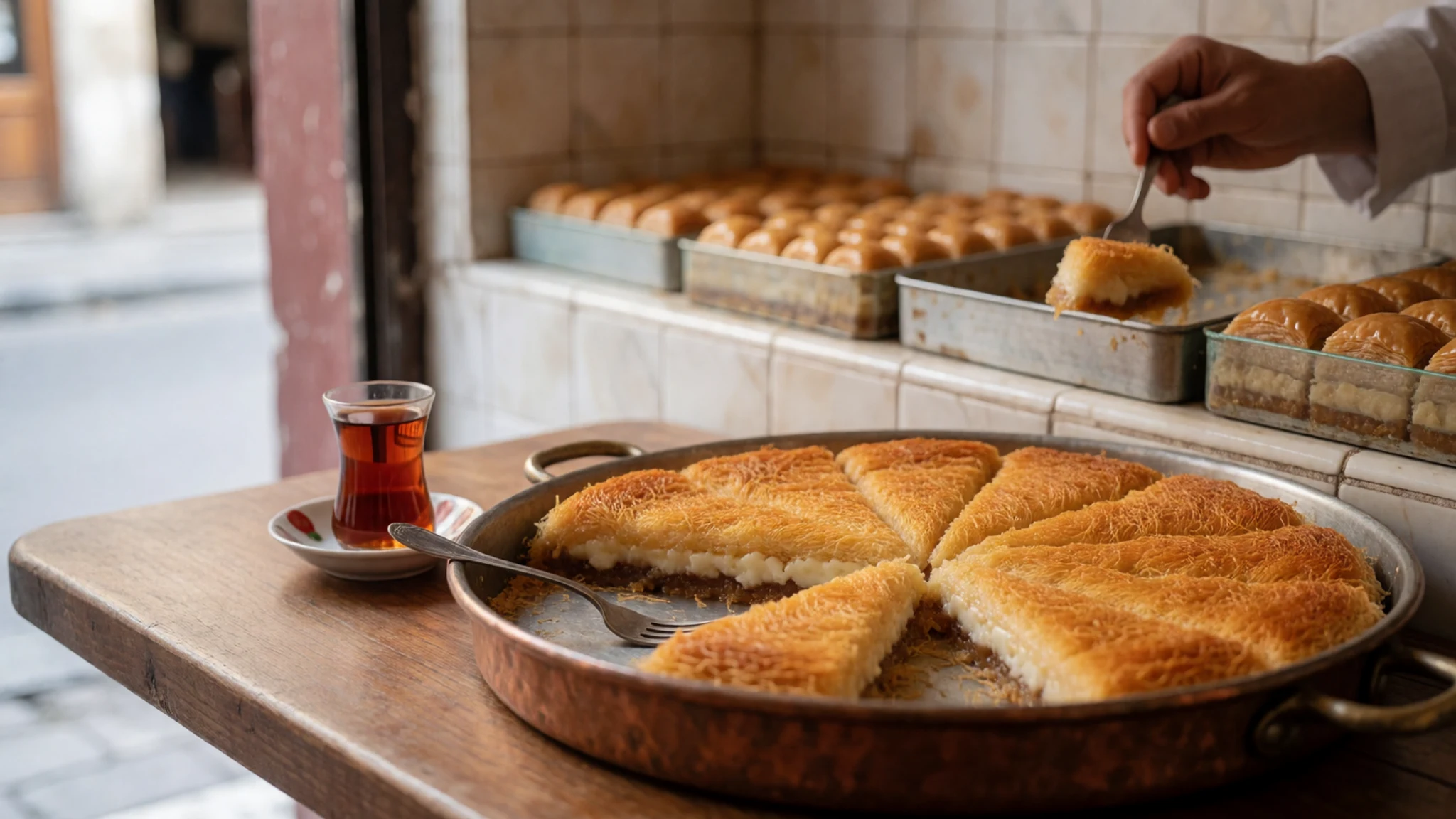
- Oruk and içli köfte — Family-run eateries across town
These are the local kin of Arab kibbeh: bulgur shells filled with spiced minced meat, either deep-fried or baked. Saç oruğu is the flat, round version cooked on a griddle. Order them at family-run eateries and home-style restaurants, often as part of a mezze spread.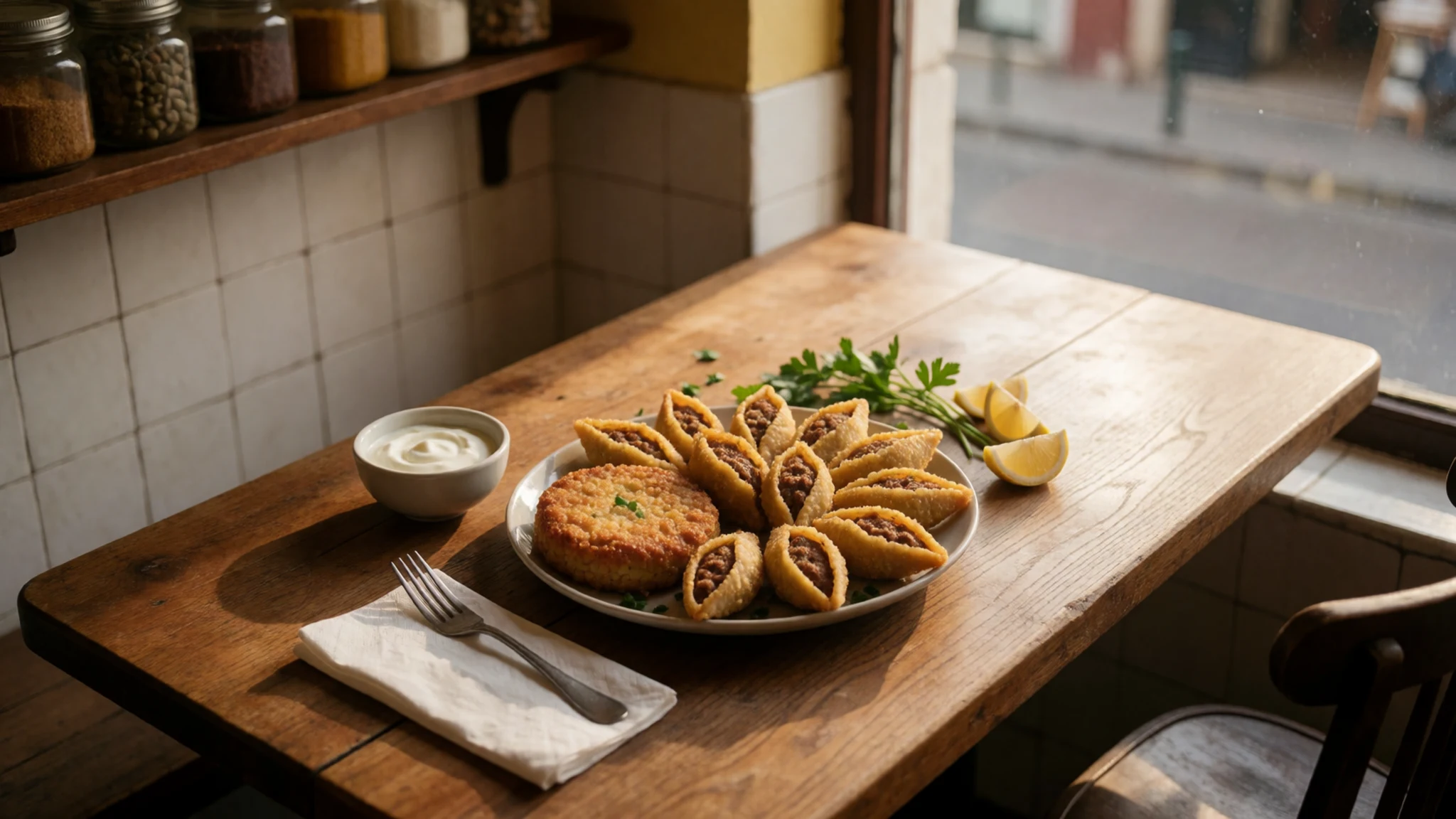
- Kaytaz böreği — Neighbourhood bakeries and grills
Kaytaz böreği is a small savoury patty of wheat, beef, tomato and onion, eaten as a snack or as part of a meal. It is rarely found on tourist menus, so ask at neighbourhood bakeries and grills that cook regional dishes. - Katıklı ekmek — Bakeries and street ovens
Katıklı ekmek is a flatbread spread with pepper paste, sesame, thyme, spices and a salty curd cheese, then rolled or folded. It looks a little like a distant cousin of pizza. Bakeries and street-side ovens are the places to find it. - Hummus, tahini and mezze — Restaurants and cafés in the city centre
Hatay's Arab-influenced table means hummus and tahini sit beside Turkish staples such as grilled meat and salads. The spread usually arrives in many small plates with flatbread. Restaurants and cafés in the centre serve it, and many also serve alcohol.
Plan it
Best time. April–May and October–November, when the Mediterranean-influenced climate is mild and walking is comfortable. Summers are hot and humid, so plan outdoor visits for early morning, and winter brings rain.
How long. 2–3
Getting there. The airport lies north of the city centre. A Havas airport bus is meant to meet flights and run downtown, but confirm it is operating, and otherwise take a dolmuş or taxi. The nearest rail station is at Iskenderun, and trains from Adana and Mersin have been suspended for track works, so check before relying on them. Long-distance buses from Istanbul take most of a day. When booking online, choose 'Hatay' as the destination because bus sites do not recognise 'Antakya'. The intercity bus station is on the bypass northwest of the centre and still uses makeshift facilities, with dolmuşes running into town. By road, the toll motorway reaches Adana and then runs east on a fast divided highway.
Budget. low
Tips
- Check the official municipality site (https://www.antakya.bel.tr/) and ask locally for current opening arrangements before visiting museums or churches
- Expect building sites, dust and patchy services; book accommodation early, since rooms are limited
- Carry cash and a water bottle, as card machines and shops can be unreliable in damaged districts
- Start sightseeing early to avoid summer heat, and keep a day free in case a site is closed
Etiquette
- Take off your shoes before entering a mosque or shrine, and cover shoulders and knees
- Ask before photographing people or damaged homes
- Keep alcohol and loud behaviour discreet outside licensed venues
Nearby
Sources
- Wikidata Q80561 (CC0)
- Wikipedia: Antakya (rev 1375119622) (CC BY-SA 4.0)
- Wikivoyage: Antakya (rev 5424185) (CC BY-SA 4.0)
- Photo: Antakya (Maarten Sepp) (CC BY-SA 2.5)
- Photo: Antakya views from hill (Dosseman) (CC BY-SA 4.0)
- Photo: Ulu Cami courtyard (Dosseman) (CC BY-SA 4.0)
- Photo: Antakya Eylül 2011 (nurettingülay) (CC BY 3.0)
- Photo: Church of Saint Peter (Carole Raddato) (CC BY-SA 2.0)
- Photo: Habib-i Neccar Mosque (Mustafa Akça) (CC BY-SA 4.0)
- Photo: Statue of Suppiluliuma (Nicoleon) (CC BY-SA 4.0)
- Photo: Antakya Archaeological Museum (Dosseman) (CC BY-SA 4.0)


