Akdamar Church
Akdamar Church, Turkey
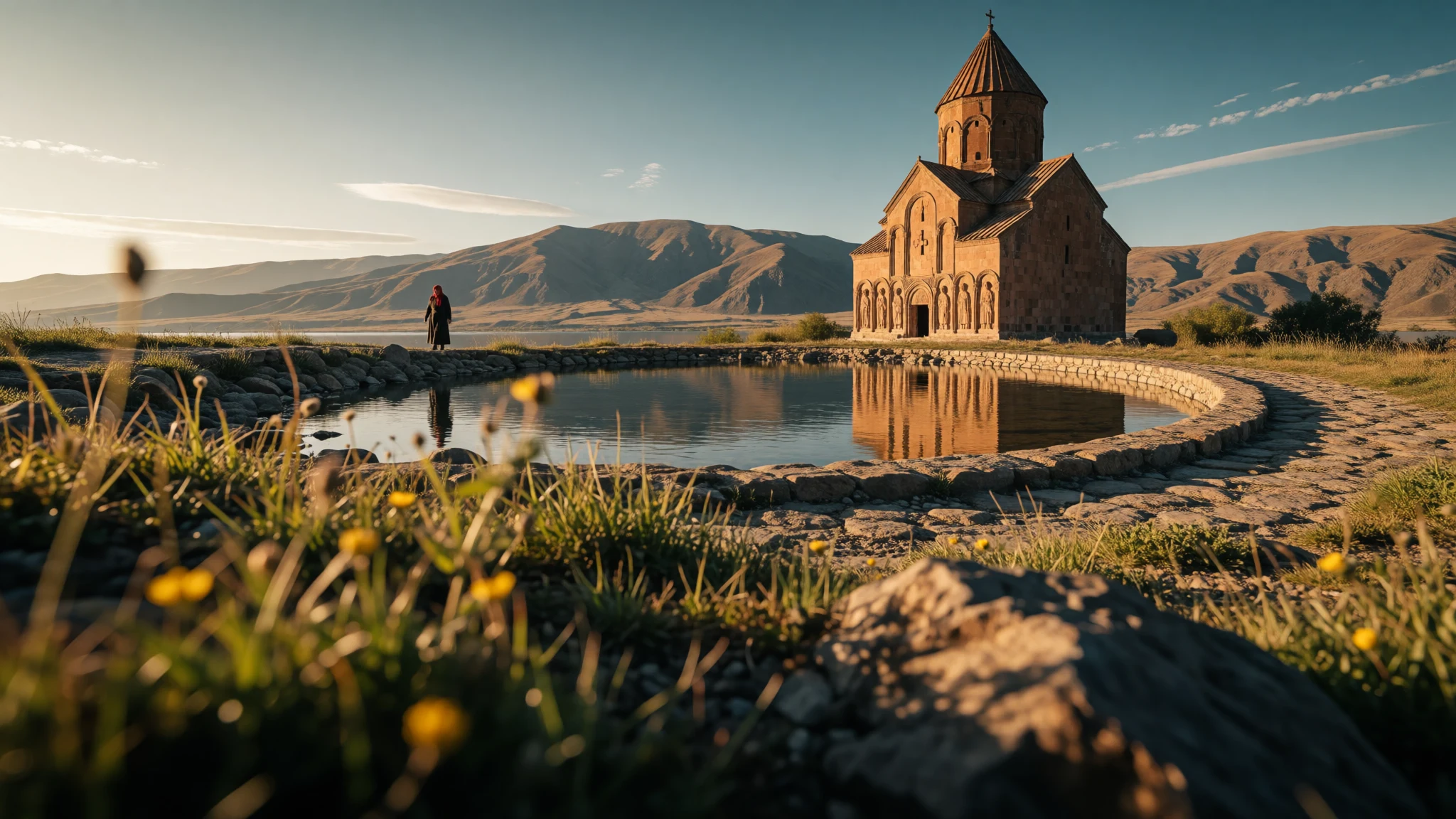
Akdamar Church is a tenth-century Armenian cathedral on a small island in Lake Van, wrapped in carved stone figures.
The place
Akdamar Church, formally the Cathedral of the Holy Cross, stands on Akdamar Island in Lake Van, in eastern Turkey. The island is a low rocky rise a short boat ride from the shore, and the church is the one building on it that still stands whole. Armenians write the name Aghtamar, and the Turkish name for the building is Surp Haç Kilisesi, so signs, maps and books use several spellings of the same place. It is an Armenian Apostolic cathedral, put up in the early tenth century as a court church for the kings of Vaspurakan, and it later became the seat of a Catholicosate. Today it is kept as a museum rather than a parish church.
The first thing a visitor notices is colour. The walls are pink-brown volcanic tuff that turns rosy or golden as the light moves, set against water that can look milky turquoise on a still morning and slate grey under cloud. The second thing is the surface. Figures in relief run around the outer walls: Bible scenes, animals, vines, saints and a king, carved with such confidence that the plain, compact building looks dressed for an occasion.
The rest of the island is quiet and scrubby. Low foundations south of the church mark the monastery that once surrounded it, and paths give wide views over the lake to the bare mountains beyond. Wind is constant, shade is scarce, and the visit is short: an hour or two covers the church, the ruins and the viewpoints. Summer weekends bring the largest crowds, while spring and autumn are calmer.
Its story
Akdamar Church was built for a king who wanted a retreat on the water. Gagik I Artsruni, who ruled the Armenian kingdom of Vaspurakan from 908 to 943 or 944, took the island as one of his residences and founded a settlement there. Work on the cathedral ran from 915 to 921 under an architect-monk named Manuel, using pink volcanic tuff, a stone soft enough to carve in fine detail. A relief on the façade shows Gagik himself holding a model of the church, a donor's signature in stone. Nothing else from the royal settlement survives upright.
Over the following centuries the building became the heart of a monastery, and from 1116 the island was the seat of a Catholicosate, a senior office of the Armenian church. That role lasted until 1895, when Khachatur III, the last Catholicos of Aghtamar, died.
The end of the island's religious life was violent. Monastic buildings were demolished and the church was pillaged amid the Armenian genocide in 1915. The Ottoman state abolished the Catholicosate in July 1916. The cathedral then stood unused for decades and at one point faced demolition. The writer Yaşar Kemal visited in 1951, found the plan close to being carried out, and used his contacts to get it stopped. Without that intervention the reliefs might not be there today. In later decades the church drew visitors as a tourist sight, and it now serves as a museum: one small building that holds royal ambition, church history and loss together.
What to see
- The façade relief of King Gagik — Akdamar Island, outer walls
On the outer wall of Akdamar Church, the king who commissioned the building is shown holding a small model of it, with attendants nearby. It is easy to walk past among the busy carvings, so stand back and look for the crowned figure. The face is worn, but the gesture is clear and the symbolism is direct.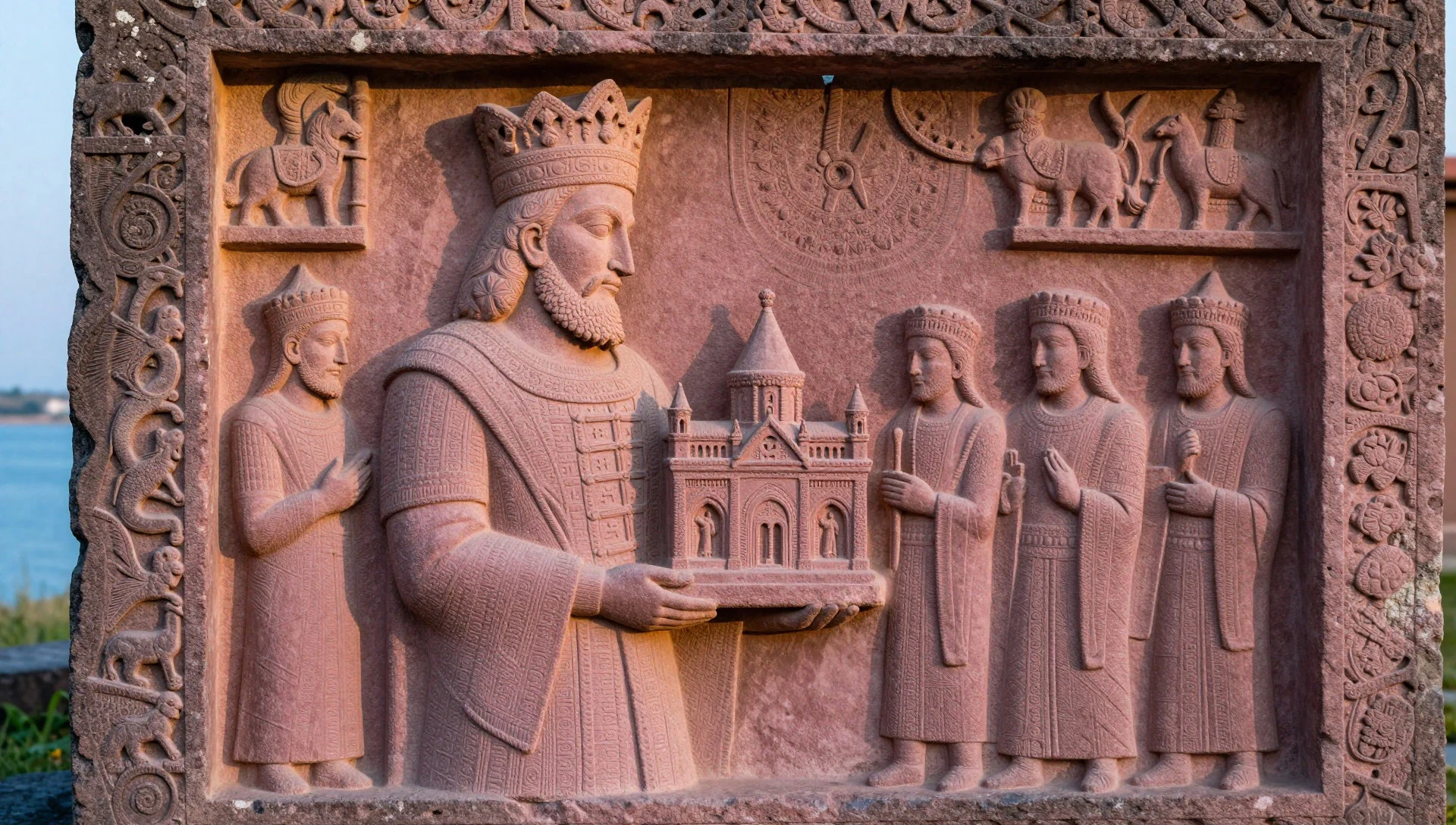
- David and Goliath and the Bible reliefs — Akdamar Island, church walls
Scenes from the Old and New Testaments circle the church at eye level and higher. David facing Goliath is one of the easier panels to read, with the two figures clearly set apart. Others, such as Jonah, Adam and Eve, and saints in niches, reward a slow walk around the whole building. Morning or late light brings out the depth best.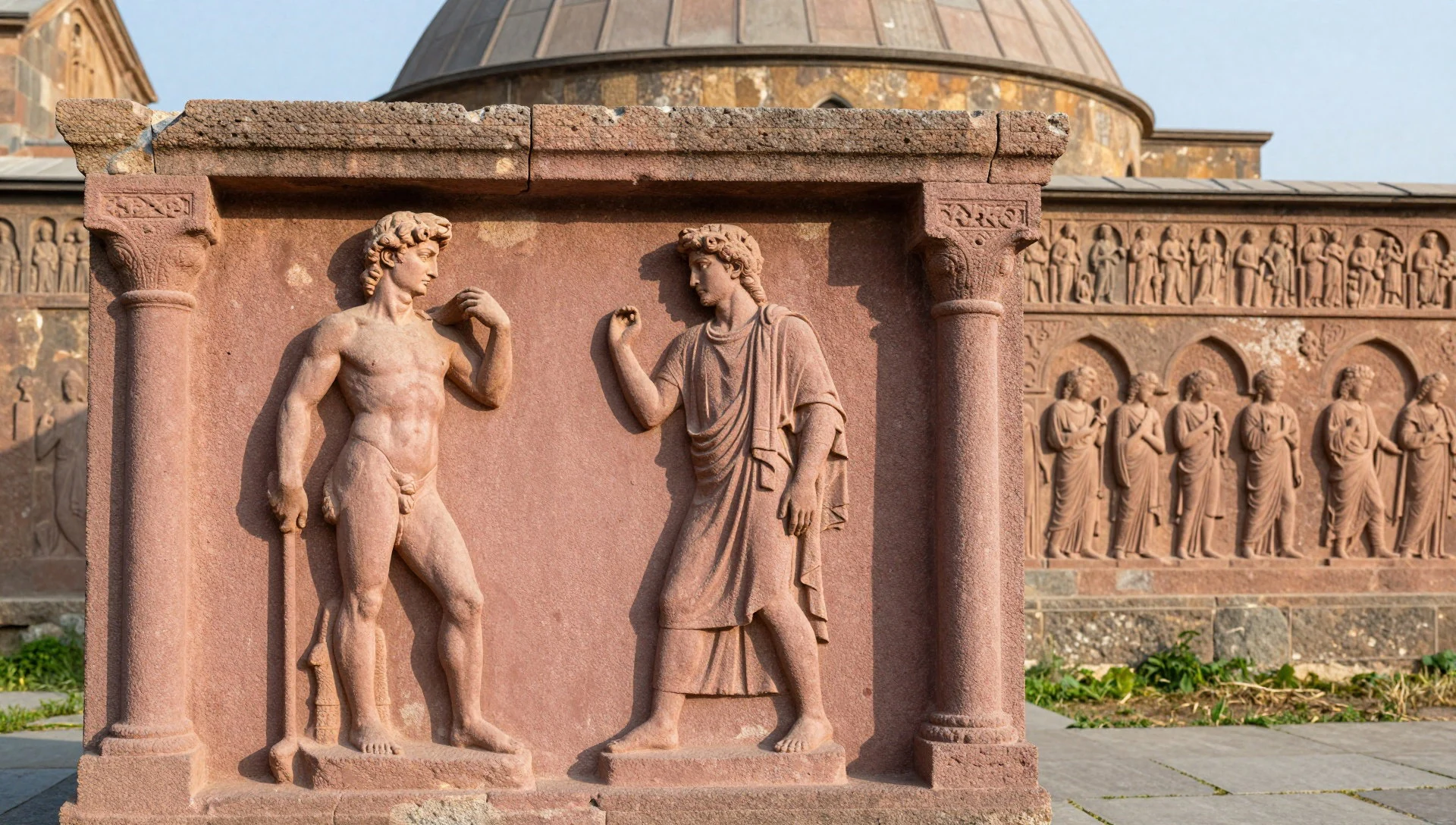
- The tuff walls and dome — Akdamar Island
Step back from the carvings and look at the whole form: a compact cross-shaped plan under a drum and a conical roof, all in warm volcanic stone. The colour changes through the day, from pale pink at noon to deeper amber near evening. A walk around the exterior shows how carefully the proportions were judged.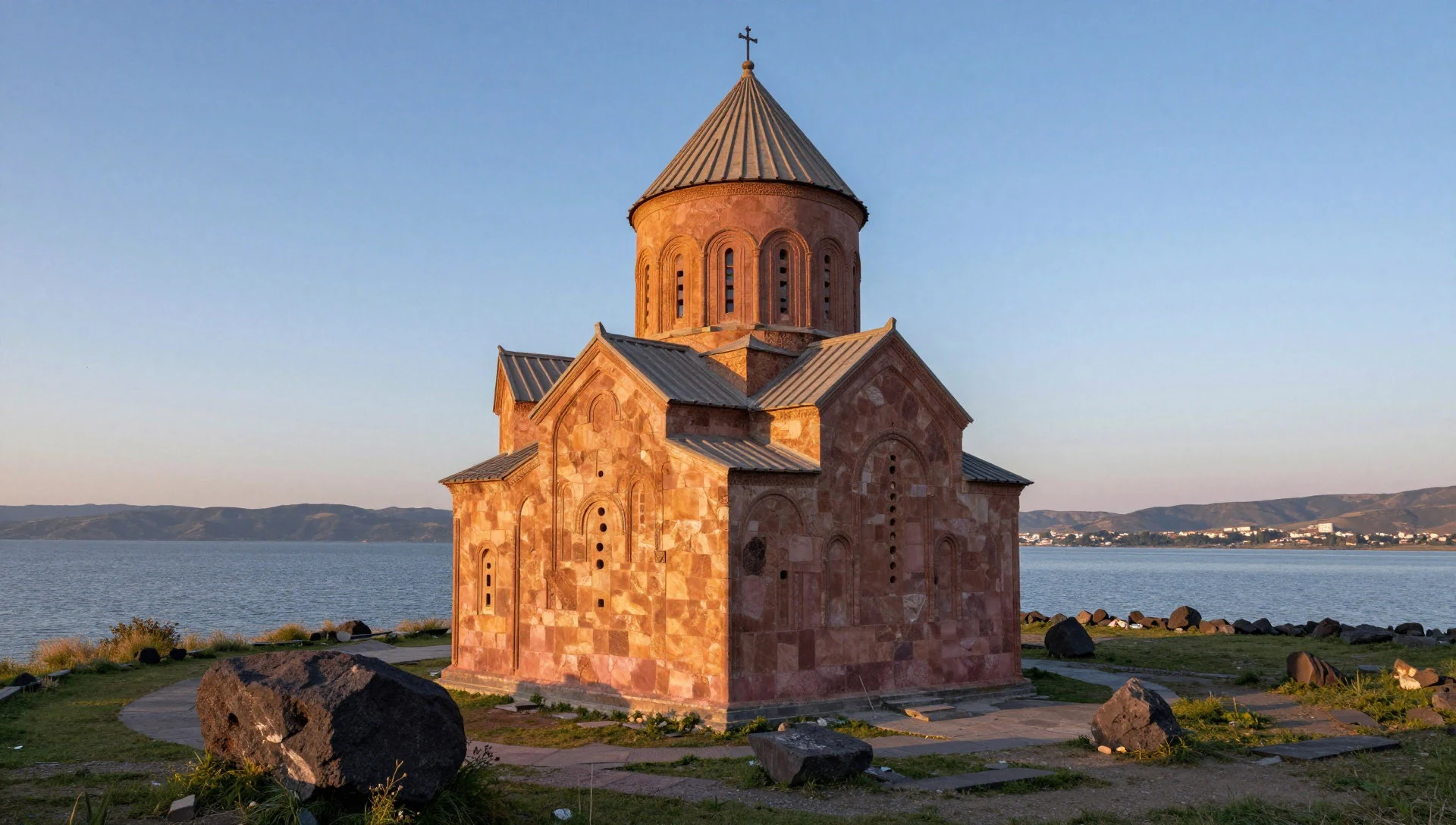
- The monastery ruins — Akdamar Island, south of the church
South of the church, low ruins mark the monastic complex that stood here until 1915. They are modest, mostly foundations and fallen stone, but they explain the church's setting: it was one building among many, with a community around it. A few minutes here helps the story make sense.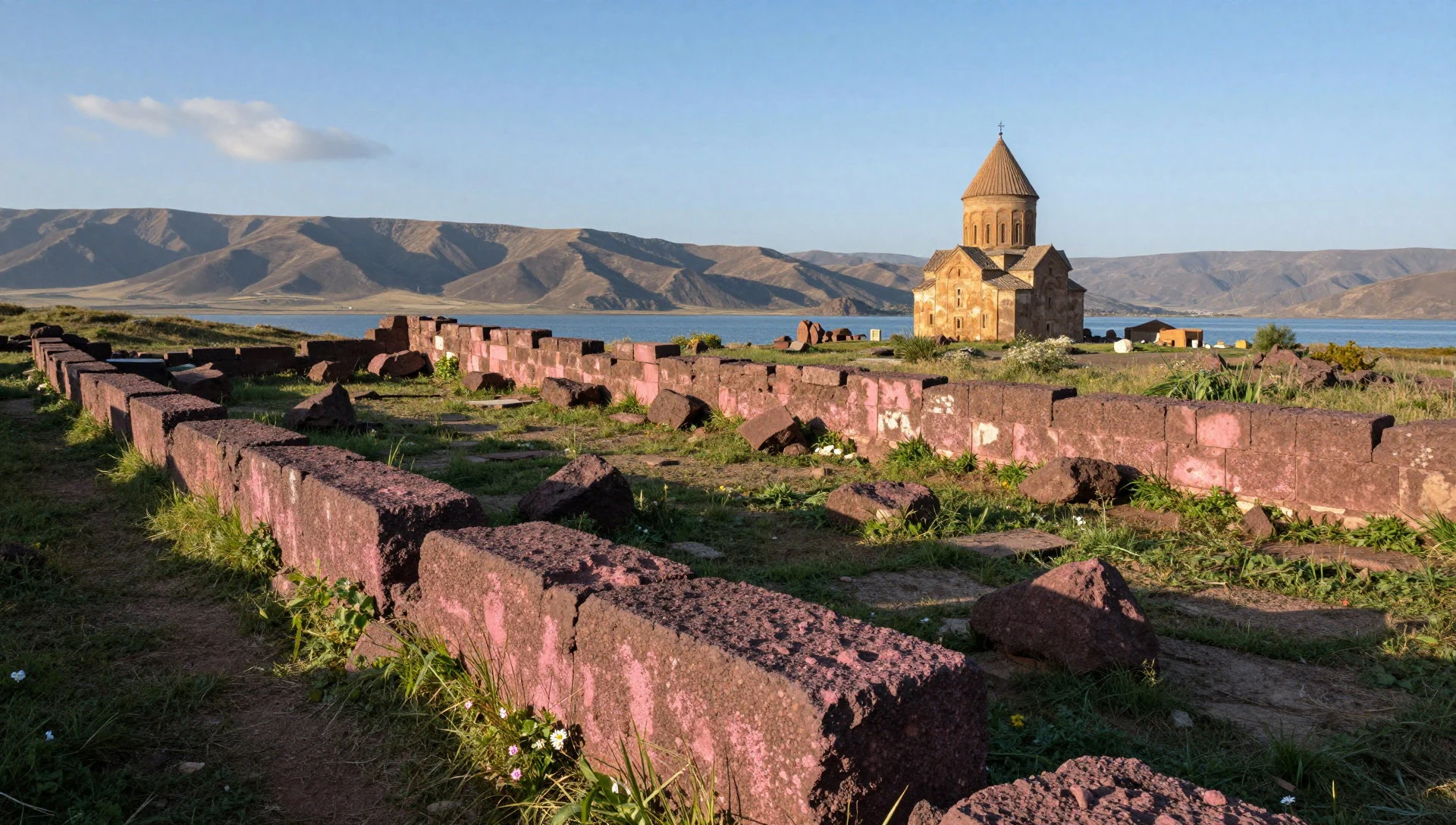
- The lake views and the boat crossing — Lake Van, between the shore and the island
The crossing from the mainland is part of the visit. From the water the island looks small and the church unexpectedly neat, with mountains rising behind. On the island, the paths and rocky edges give views over Lake Van that change with weather. Spring light is soft, while autumn is often the clearest.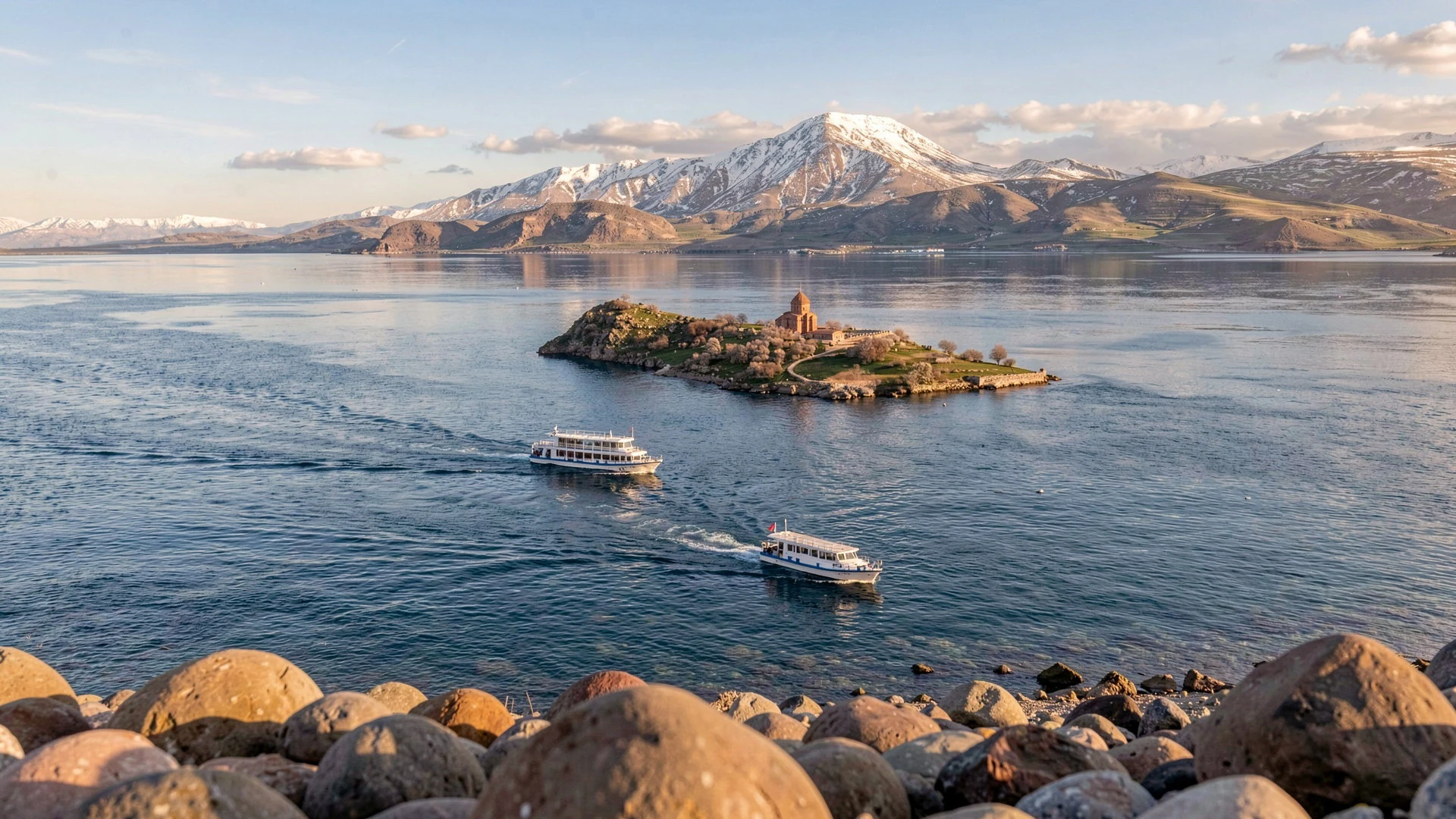
Culture
Akdamar Church belongs first to Armenian history, and it is worth knowing that before arriving. For Armenians it is one of the surviving signs of a community that once lived across this part of Anatolia, and the story of its abandonment after 1915 is part of that memory. The carvings are not only decoration: they were a way of teaching scripture in stone, and the king's portrait shows how closely church and court were bound together in medieval Vaspurakan.
The present-day setting is eastern Turkey, where hospitality is a serious point of pride. Visitors are often greeted warmly, offered tea, and asked where they are from. Conversation about history is usually courteous, but the events of 1915 are a sensitive subject in Turkey, so it is kinder to listen than to debate with strangers, and to let the building speak for itself.
The church is a museum, yet many people treat it as a place of reverence, and Armenian visitors sometimes come as pilgrims, so the atmosphere can shift from tourist stop to something quieter within minutes. Local customs also apply on the way there: if you are invited into a home, bring a small gift and take your shoes off at the door, and avoid alcohol as a present unless you know the hosts well.
Cover your shoulders and knees, keep your voice low inside the church, and do not climb on the walls or touch the carved reliefs.
What to wear
Akdamar Church sits in a region where traditional dress depends on community and occasion. Armenian women's festive dress historically used long, fitted gowns of silk or wool, often with embroidered borders and a decorated headdress, while men wore wool coats and sashes. In Kurdish villages around Lake Van, bright layered dresses, headscarves and, for men, baggy trousers with a wide sash are still seen at weddings and festivals. These outfits are worn for celebrations rather than every day, so a visitor is more likely to meet them at a wedding or a local event than on the street.
Day to day, people in Van and the villages near the lake wear what suits a high, windy plateau: jeans or trousers, shirts, padded jackets and sturdy shoes. Many women cover their hair, though styles vary from one household to the next, and younger people in the city dress much as they would in any Turkish town.
For the island, dress for wind, sun and a church. Bring layers, because the boat crossing can be cold even on a bright day, and a hat and sunscreen, because there is little shade. Wear flat shoes with grip for the rocky paths and uneven steps. Shoulders and knees should be covered for the church, so a light scarf or shawl is useful for any visitor. In winter, add a proper coat and gloves, as the lake region is cold.
What to eat
- Van breakfast spread — Breakfast eateries in Van city, especially on the dedicated breakfast street
Van is known across Turkey for its breakfast: a table crowded with cheeses, olives, clotted cream, honey, eggs, bread and tea. It is meant to be shared and lingered over. Order it before the boat trip, and expect to leave with little appetite until the afternoon.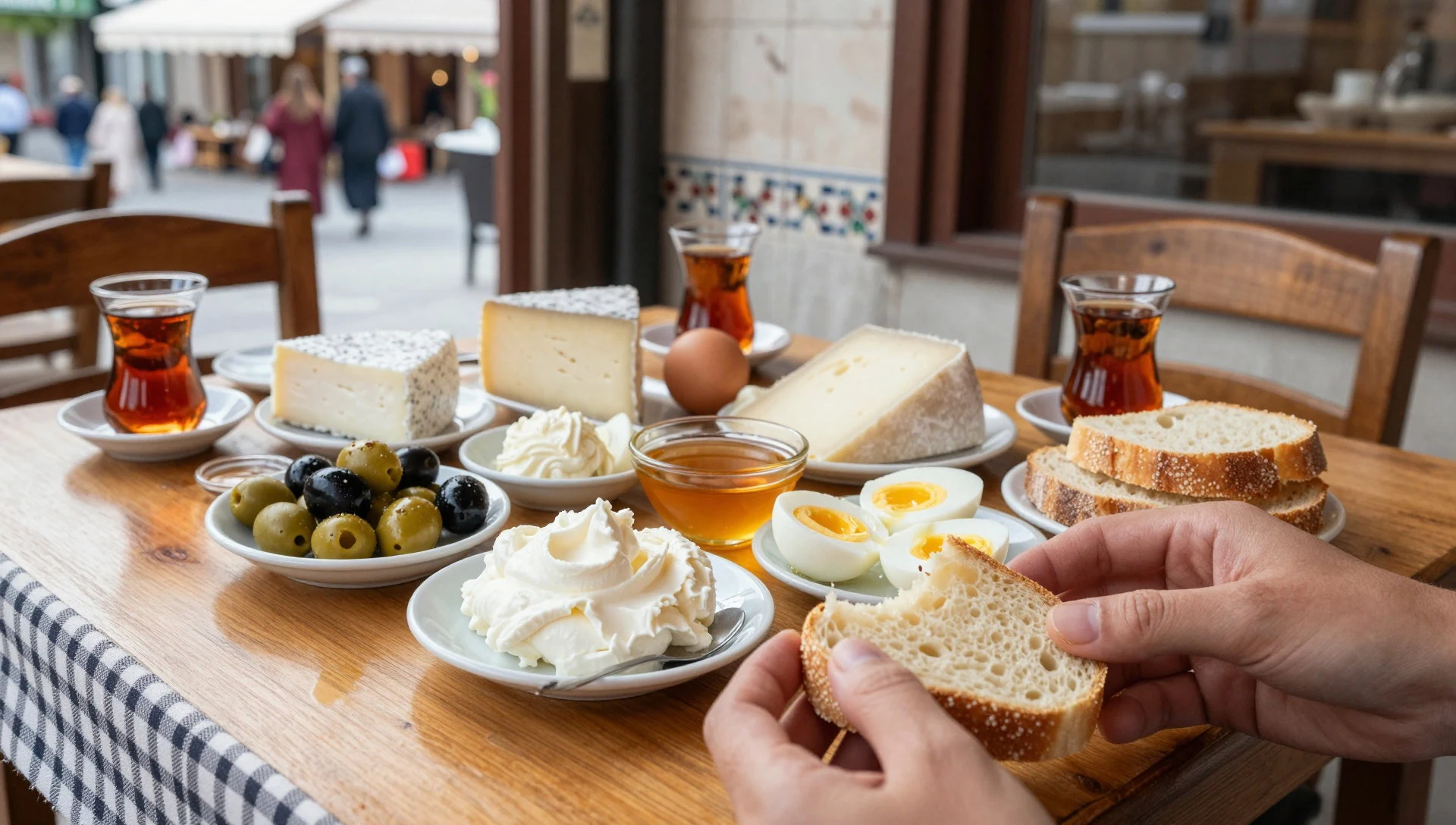
- Otlu peynir — Breakfast tables and cheese shops in Van city
Herbed cheese is a regional speciality: a firm, salty cheese mixed with wild mountain herbs, often served at breakfast. The flavour is sharp and green, and it pairs well with plain bread and tea. Buy a small wedge to take home if you want a lasting taste of the area.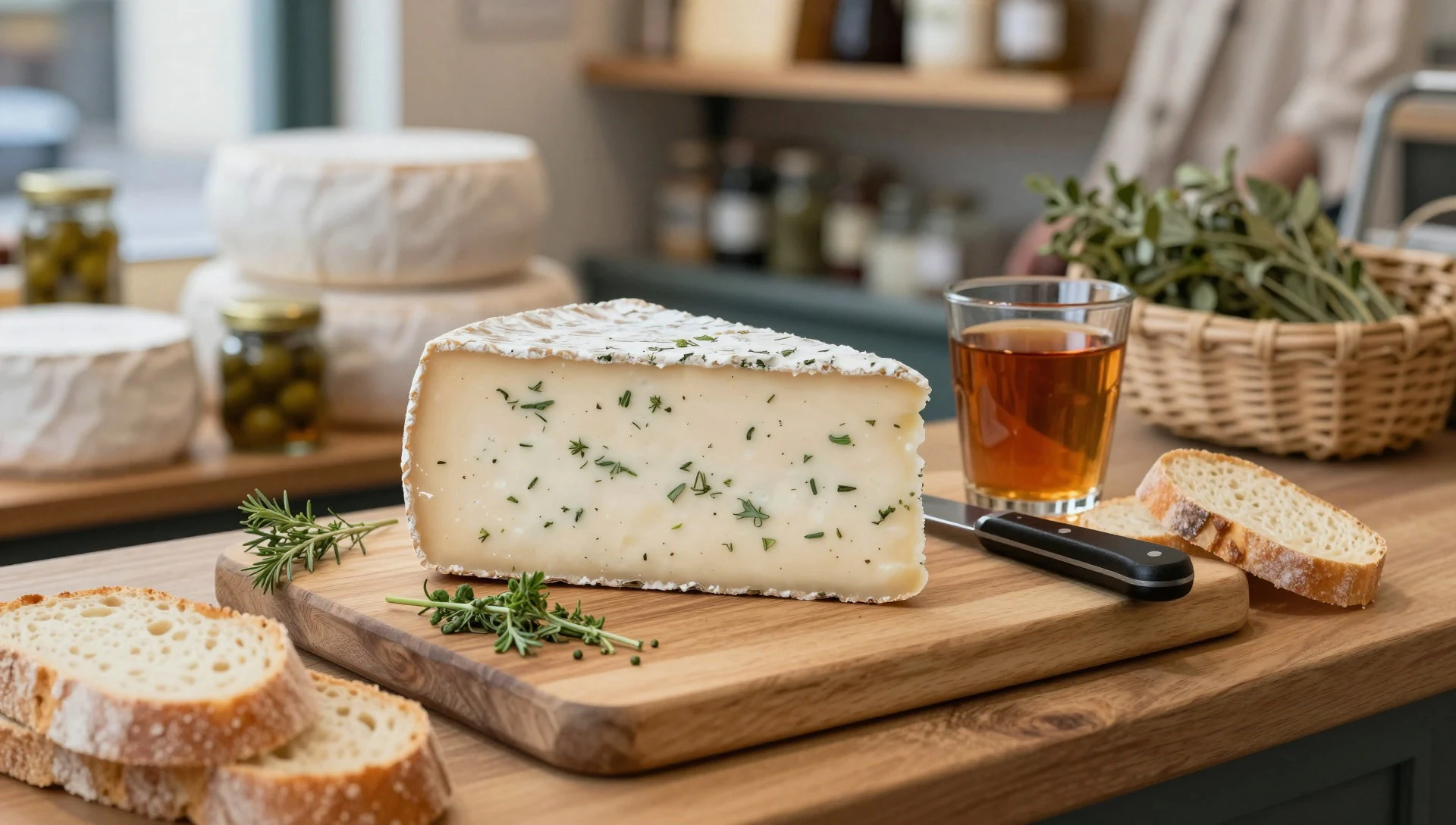
- Murtuğa — Home-style eateries and breakfast places in Van
A hearty local dish of flour, eggs and butter cooked together until rich and savoury, usually eaten hot with bread. It is a cold-climate comfort food and works as a late breakfast before the trip to the island. Portions can be large, so share if you are not very hungry. - Kavurma and lamb dishes — Grill restaurants and lokantas in Van city
In the east, lamb is the main red meat, often slow-cooked in its own fat or grilled over charcoal. Kavurma, tender braised meat served with bread, is a satisfying meal after a windy morning on the lake. Look for places busy with local diners. - Çay by the lake — Tea gardens and kiosks along the lakeshore and near the boat landing
Tea is poured all day in small tulip glasses, strong and hot, and it is the natural way to end a visit. Sit near the shore, watch the water, and take your time; refills are normal and a glass seldom costs much.
Plan it
Best time. May–June and September–October. Spring brings mild weather and green hillsides, and early autumn is often clear and calm. Midsummer is warm with little shade on the island, and winters on this high plateau are cold, with boat services depending on conditions.
How long. 1–2
Getting there. Fly to Van airport, then take a taxi or minibus along the southern shore of Lake Van to the boat landing near Gevaş. A short boat crossing takes you to Akdamar Island. Many visitors base themselves in Van city and make this a half-day or full-day trip. Many nationalities can enter Turkey visa-free for tourism, but check the current rules for your passport before you travel.
Budget. low
Tips
- Check locally whether the boat is running and when it leaves, since services change with season and weather
- Check the museum's opening days before you go, as many Turkish museums close on Mondays
- Go early or on a weekday in summer to avoid the biggest crowds
- Carry some cash for the boat and for snacks and tea
- Bring water, a hat and a windproof layer, because the island has little shade or shelter
Etiquette
- Cover shoulders and knees and keep your voice low inside the church
- Do not touch the carved reliefs or climb on the walls
- Ask before photographing local people
Nearby
Sources
- Wikidata Q1281985 (CC0)
- Wikipedia — Cathedral of the Holy Cross, Aghtamar (rev 1383112226) (CC BY-SA 4.0)
- Wikivoyage — Turkey (rev 5393139) (CC BY-SA 4.0)
- Photo: Armenian Church of Aghtamar, Lake of Van (loiez Deniel) (CC BY 2.5)
- Photo: Exterior of Akdamar Church (Francesco Bini) (CC BY-SA 4.0)
- Photo: David and Goliath detail, Akdamar Church (Lostinafrica) (CC BY 3.0)
- Photo: Akhtamar Island on Lake Van (gozturk) (CC BY 3.0)
- Photo: Akdamar adasında bahar (Rotadefterim) (CC BY-SA 4.0)
- Photo: King Gagik I Artsruni holding a model of the cathedral (Francesco Bini) (CC BY-SA 4.0)
- Photo: Gagik I Artsruni (monochrome), P‘anos T‘ērlēmēzean (Public domain)
- Photo: Akdamar, ruler and attendants (jacgroumo) (CC BY 2.5)


