Pamukkale
Pamukkale, Turkey
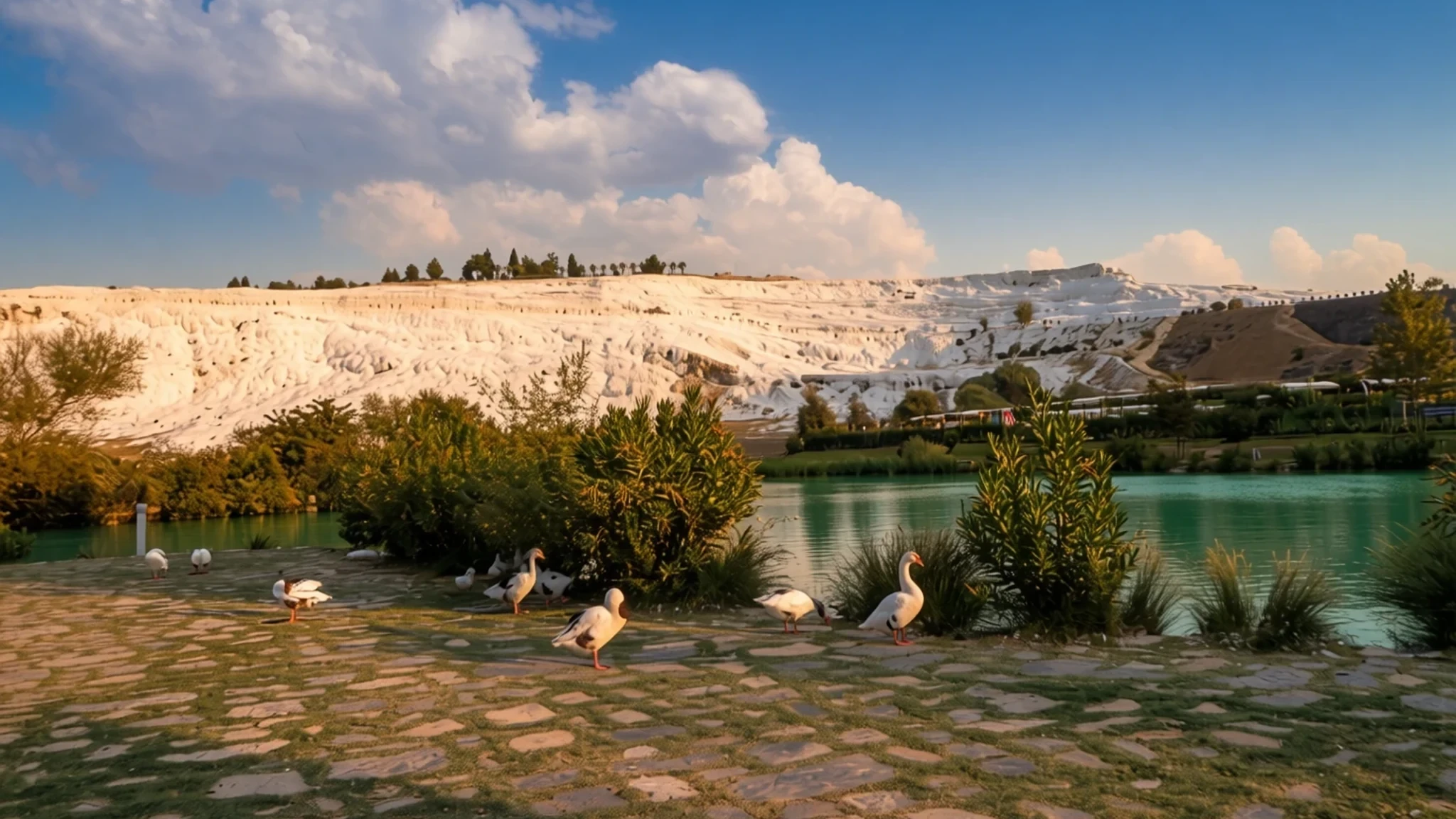
Visit Pamukkale to walk across dazzling white mineral terraces and bathe in warm thermal waters fed by ancient springs.
The place
Pamukkale, whose name translates from Turkish as cotton castle, sits in the Inner Aegean region of southwestern Turkey within the River Menderes valley. This dramatic landscape is shaped by mineral-rich thermal springs that emerge from local fissures and deposit layers of white carbonate material as the water cools and flows down the hillside. Over millennia, this process has built cascading pools and pale terraces of travertine rock that contrast sharply with the surrounding green valley floor. Visitors approaching from the nearby town across the valley can spot the snow-white expanse glowing against the hillside. The climate here remains temperate for most of the year, though summer afternoons can bring intense heat that bakes the exposed stone surfaces. At the summit of the white terraces lie the extensive ruins of Hierapolis, an ancient settlement built directly on top of the geological formation. Together, the travertine cascades and the archaeological zone form a vast protected area that attracts millions of travellers seeking both natural phenomena and ancient history. The site operates under strict conservation rules managed by local authorities and international bodies, regulating water flow to ensure the delicate white mineral deposits remain undamaged for future generations.
Its story
The recorded history of Pamukkale begins long before the Roman era, rooted in the Phrygian culture that constructed a temple during the early Iron Age. This sanctuary eventually formed the religious core of Hierapolis, which was formally established as a Hellenistic spa town early in the second century BC within the Seleucid Empire. Ancient rulers populated the surrounding region with families from Mesopotamia and Babylon, creating a diverse community that included a thriving Jewish population. Doctors of antiquity recognised the healing properties of the local thermal springs, turning the settlement into a renowned medical destination where patients travelled from across the classical world for cures. Following the collapse of the local dynasty, the territory passed to Rome, bringing rapid expansion and monumental civic architecture. A major earthquake struck during the rule of Emperor Tiberius, flattening much of the city, but it was promptly rebuilt in grand imperial style. Christianity later took firm root here through the influence of the Apostle Paul, while the Apostle Philip spent his final years in the town, meeting his end where a grand martyrium was later erected. Through successive Byzantine, Seljuk, and Ottoman eras, the ruins stood quietly above the thermal waters, preserving the traces of classical civilization beneath layers of earthquake rubble and mineral crust.
What to see
- Travertine Terraces
Walk barefoot down the cascading white limestone pools where mineral-rich thermal water flows. You must carry your shoes in a bag to protect the delicate pale surface from staining and wear.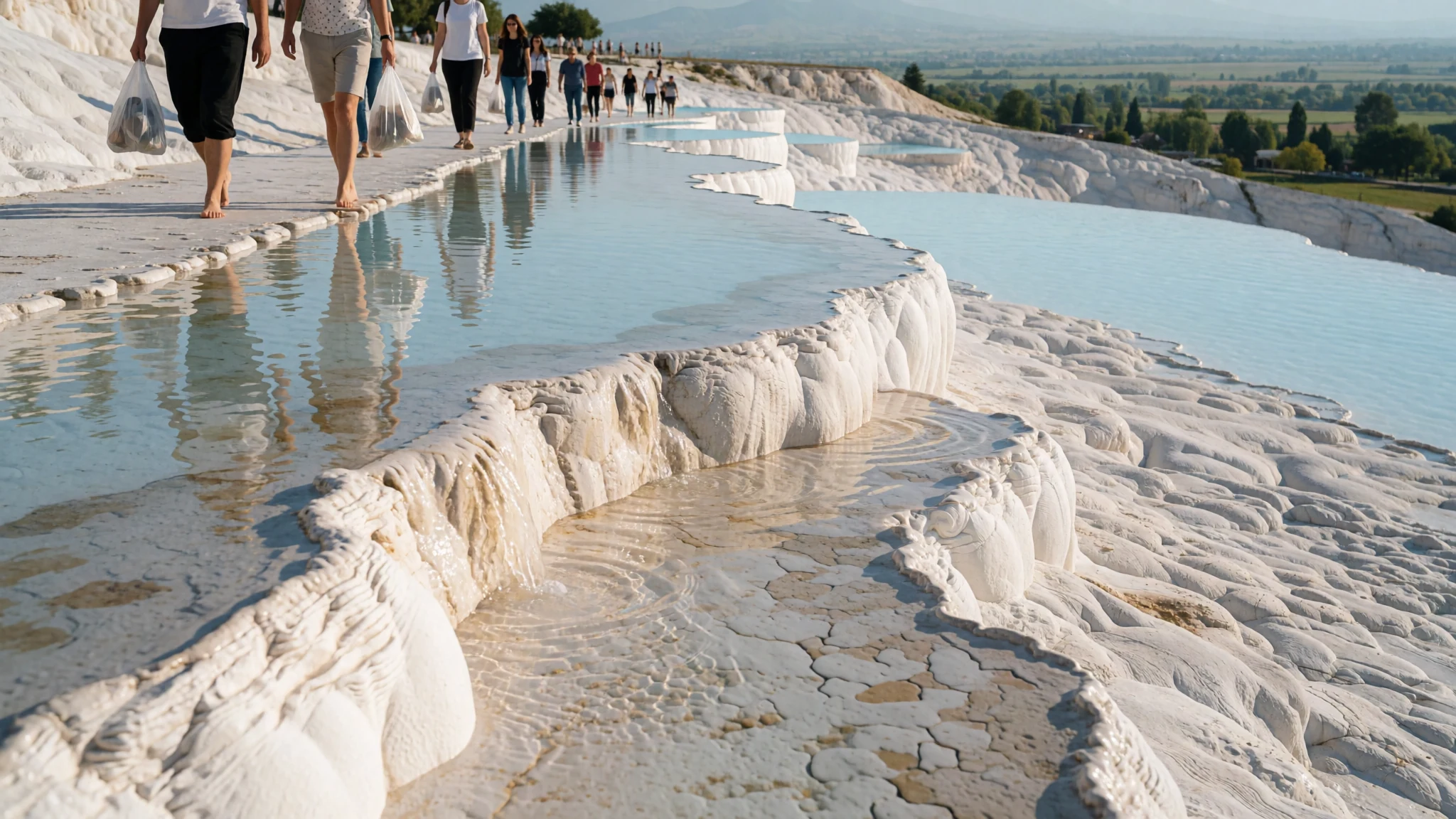
- Hierapolis Archaeological Site
Wander through the sprawling ruins of the ancient Roman spa city perched directly above the terraces. Explore crumbling stone streets, monumental gates, and expansive civic remains linked to early Christian history.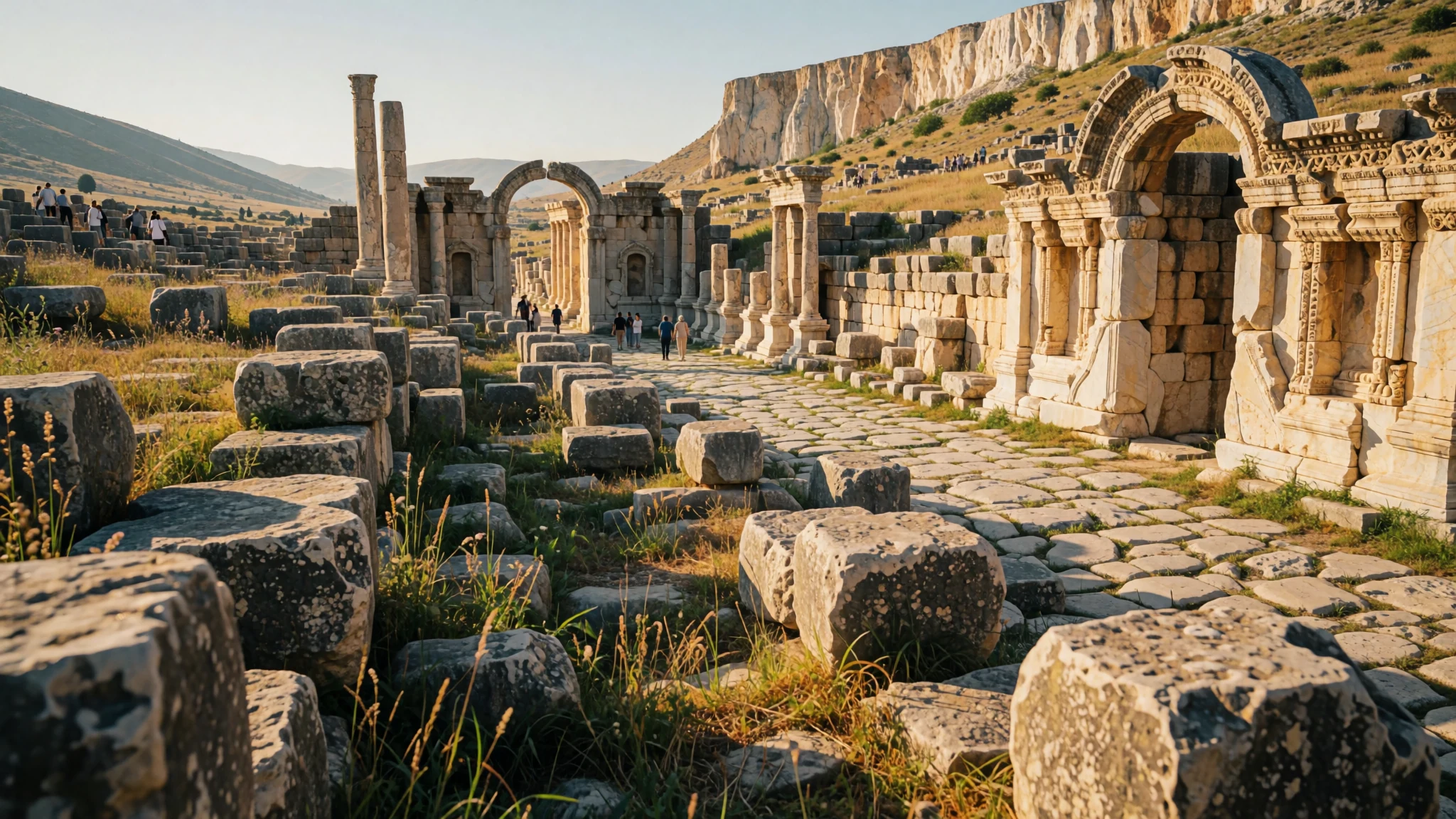
- Cleopatra Pool
Swim in a warm, mineral-rich thermal pool filled with submerged fragments of ancient marble columns and carved stone blocks left behind by historical earthquakes.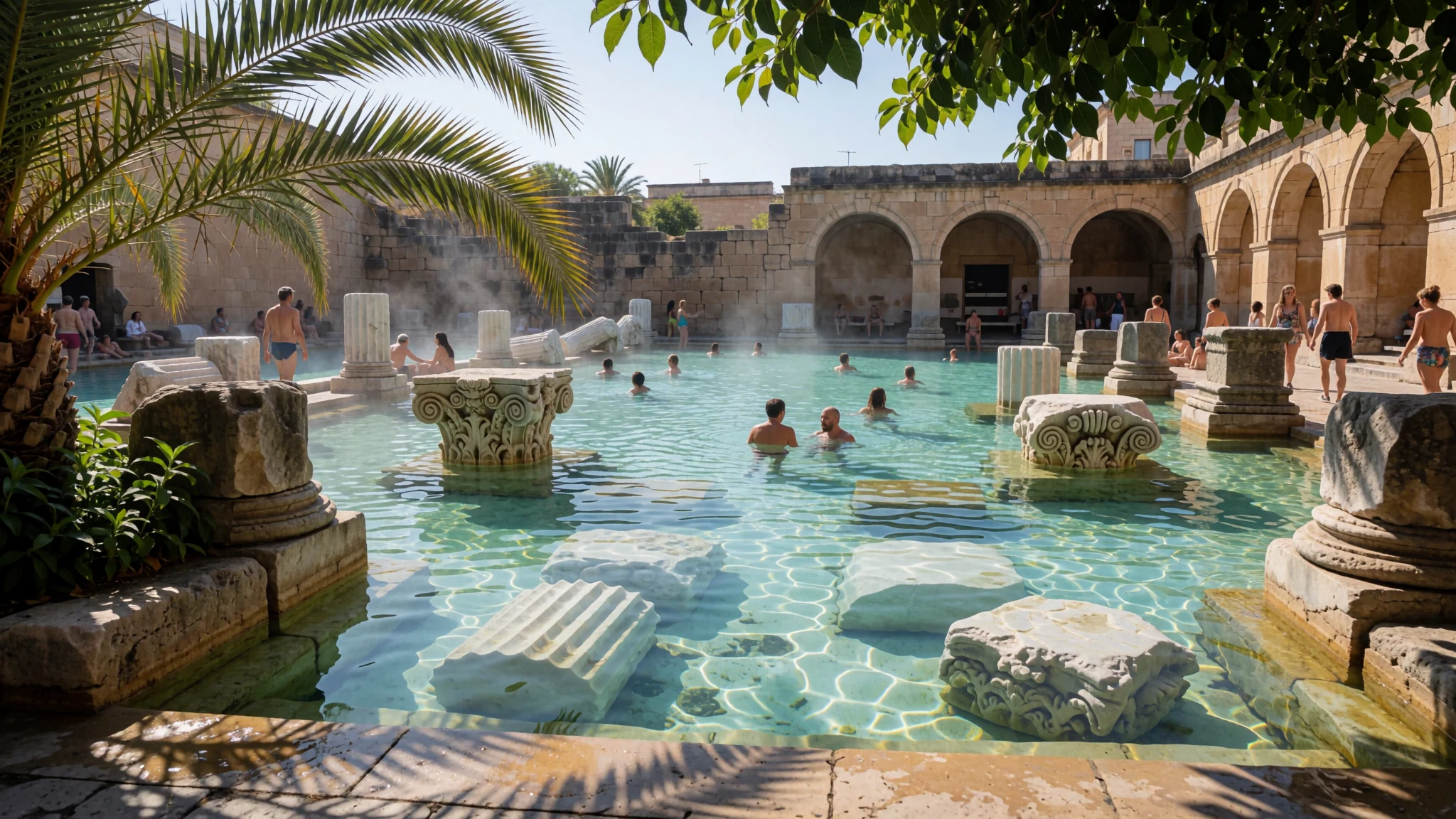
- Archaeology Museum
Housed within the vaulted stone chambers of the former Roman bath house, this quiet gallery displays delicate marble sarcophagi, intricate statues, and everyday artifacts recovered from local excavations.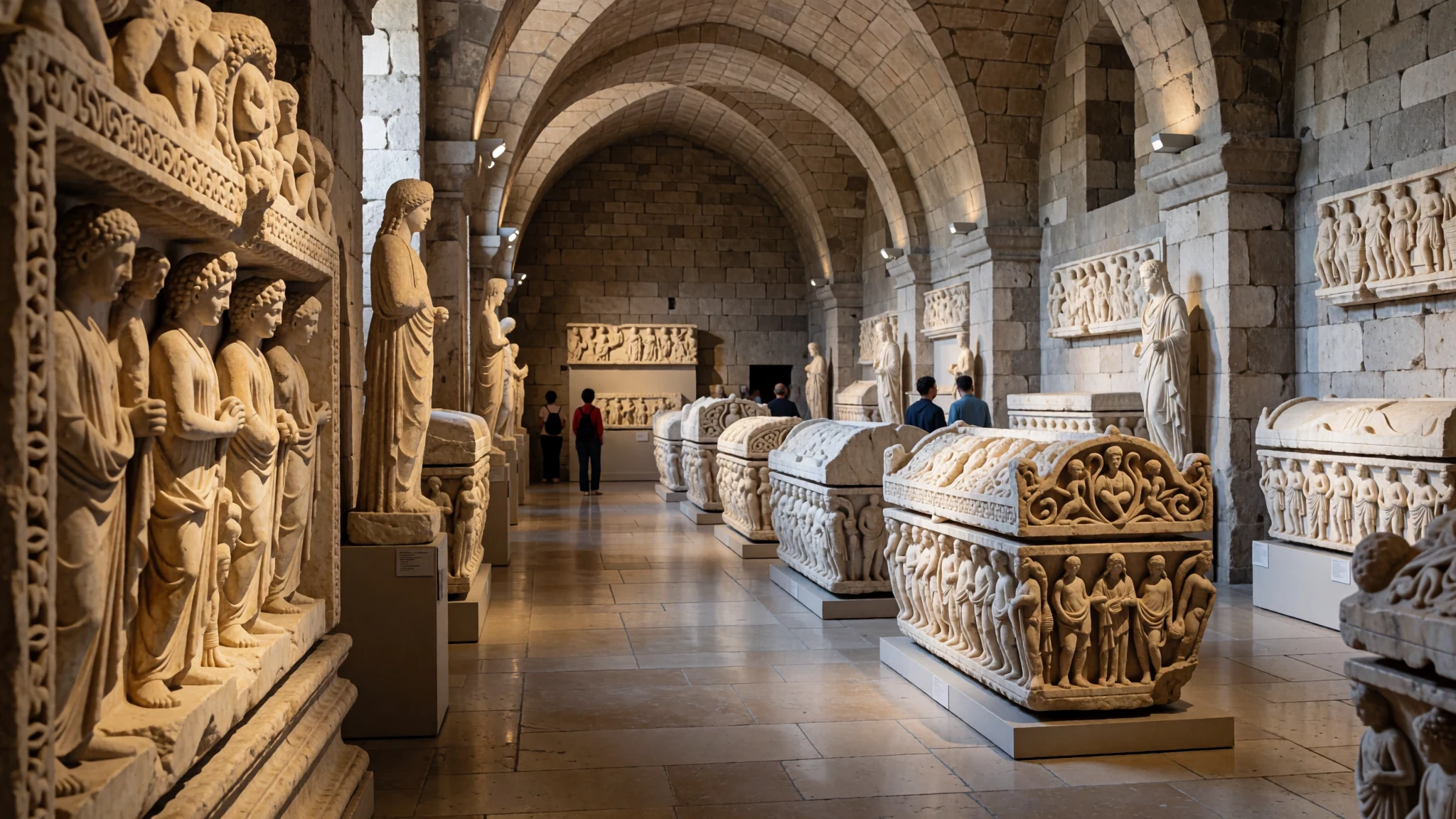
Culture
Daily life in the Pamukkale area blends rural Turkish traditions with the rhythms of international tourism. Hospitality is deeply embedded in local culture, and visitors are frequently greeted with a small glass of black tea when entering shops or guesthouses. Traditional Anatolian customs remain strong in nearby villages, where older residents wear regional clothing, though younger generations in the service sector dress in standard contemporary attire. Islam shapes the rhythm of the day, with calls to prayer echoing across the valley from local minarets. Visitors should respect local religious traditions by dressing modestly when exploring town streets away from the swimming areas, covering shoulders and knees out of courtesy. When entering mosques or traditional homes, footwear must always be removed at the threshold. Always ask for permission before photographing local residents in the surrounding villages.
What to wear
Traditional dress across rural Denizli Province historically featured layered wool and cotton garments suited to farming and pastoral life, crafted from sturdy local textiles. While handwoven regional costumes are now preserved mostly for festivals and folk performances, everyday local dress mirrors modern Turkish urban fashion, with lightweight trousers, shirts, and headscarves worn by older women. For visitors exploring Pamukkale, practical dressing requires balancing sun protection with thermal bathing. Lightweight, breathable fabrics are essential during the warmer months when the white stone reflects intense glare. Swimwear is necessary for the thermal pools, but a cover-up, light shirt, and shorts or trousers should be worn when walking through the archaeological ruins and village streets. Slip-on shoes or sandals that are easy to remove are useful, noting that you must walk barefoot on the travertine terraces to protect the mineral formations.
What to eat
- Traditional Turkish Meze — Family-run restaurants along the main lanes leading towards the town gate
Sample small plates of savoury dips, stuffed vine leaves, olive salads, and warm flatbreads served at open-air eateries near the foot of the town.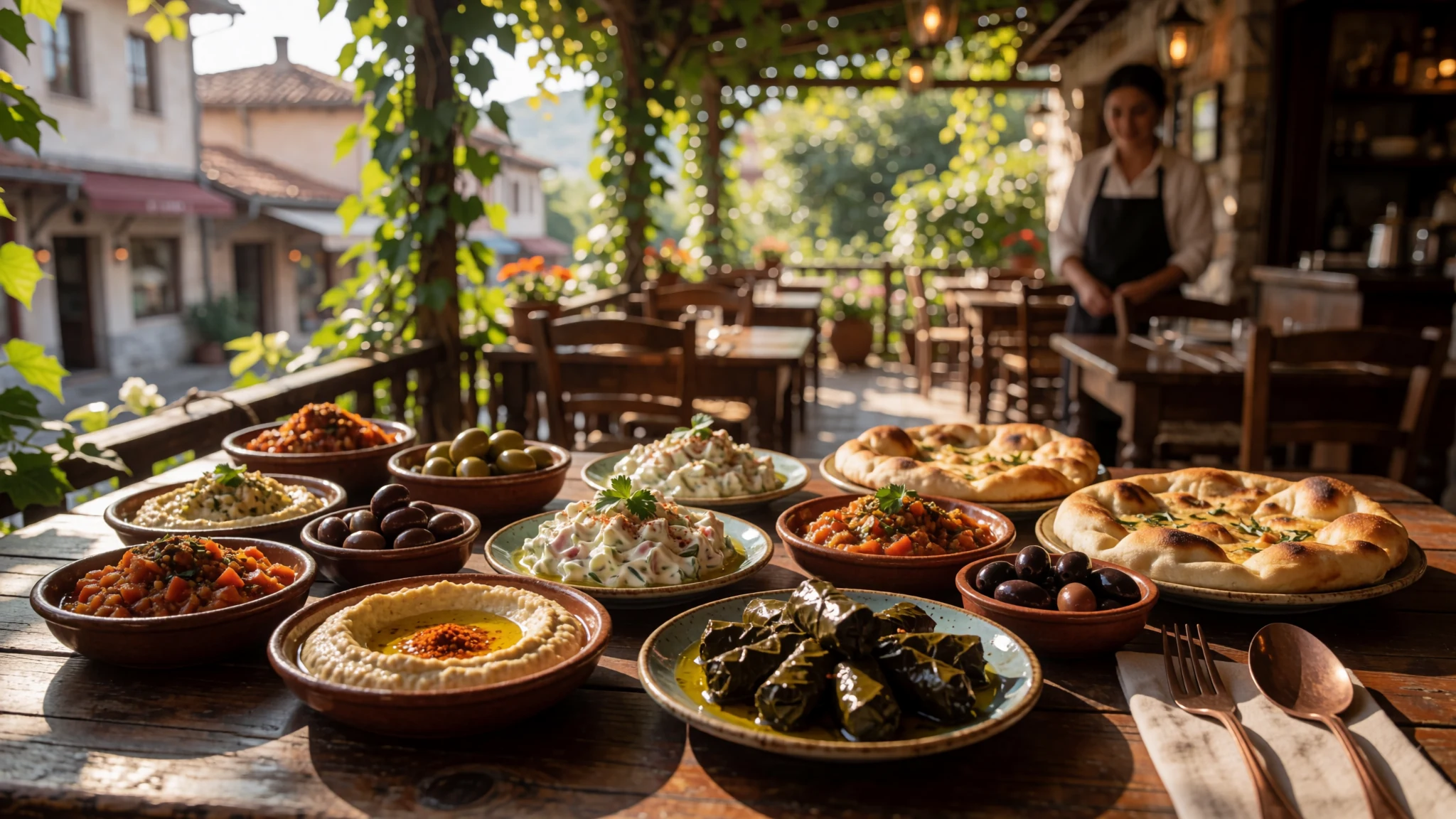
- Anatolian Grilled Meats — Traditional open-air restaurants at the foot of the hill
Enjoy plates of seasoned lamb or chicken kebabs grilled over charcoal, usually served alongside charred peppers, tomatoes, and bulgur pilaf.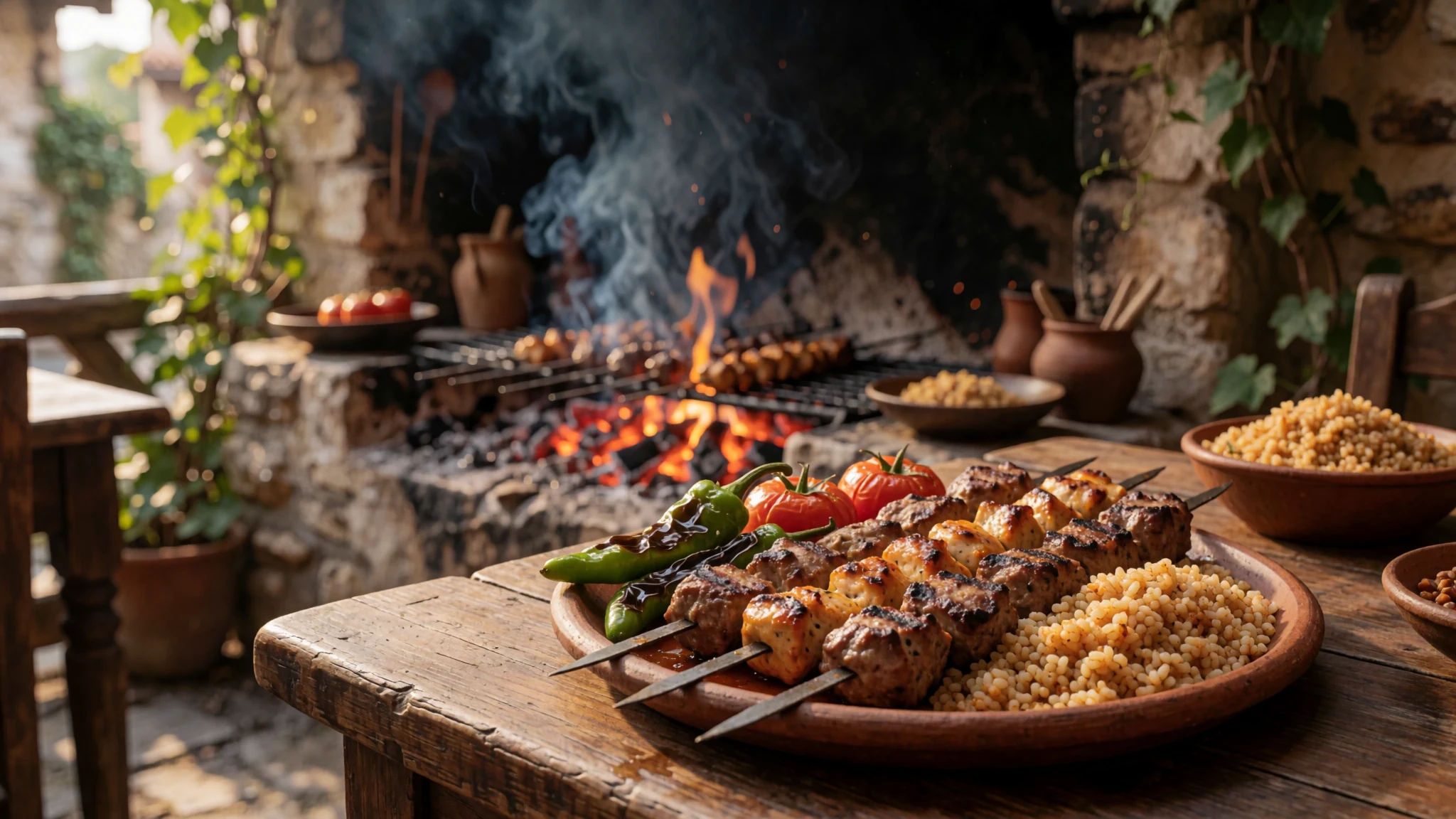
- Aegean Region Wines — Local wine houses and neighbourhood taverns in the town centre
Taste fruity regional wines produced from grapes grown in the sun-drenched valleys of southwestern Turkey, particularly structured reds such as Shiraz. - Ayran — Any local cafe, restaurant or roadside eatery in town
Refresh yourself with a chilled, slightly salted yogurt drink that provides a cooling contrast to rich grilled dishes.
Plan it
Best time. Late spring, before the summer heat sets in, offers the most comfortable temperatures for walking the ruins and travertine terraces, while July and August are the hottest months.
How long. 1–2
Getting there. Travel by intercity bus to Denizli, then catch a frequent local minibus from the lower level of the bus station directly to Pamukkale.
Budget. mid
Tips
- Check the official website for up-to-date entry guidelines and operating hours before you visit
- Bring a sturdy bag to carry your shoes while walking barefoot on the travertine terraces
- Wear sunglasses and sunscreen to protect against the strong glare reflecting off the white mineral stone
- Carry some local currency for small purchases and local transport tickets
Etiquette
- Remove footwear before stepping onto the bare travertine mineral terraces
- Dress modestly with covered shoulders and knees when visiting town areas away from the thermal pools
Nearby
Sources
- Wikidata Q105893254 (CC0)
- Wikipedia (CC BY-SA 4.0)
- Wikivoyage (CC BY-SA 4.0)
- Photo 01 (CC BY-SA 4.0)
- Photo 06 (CC BY 3.0)
- Photo 08 (CC BY 3.0)


