Antalya
Antalya, Turkey
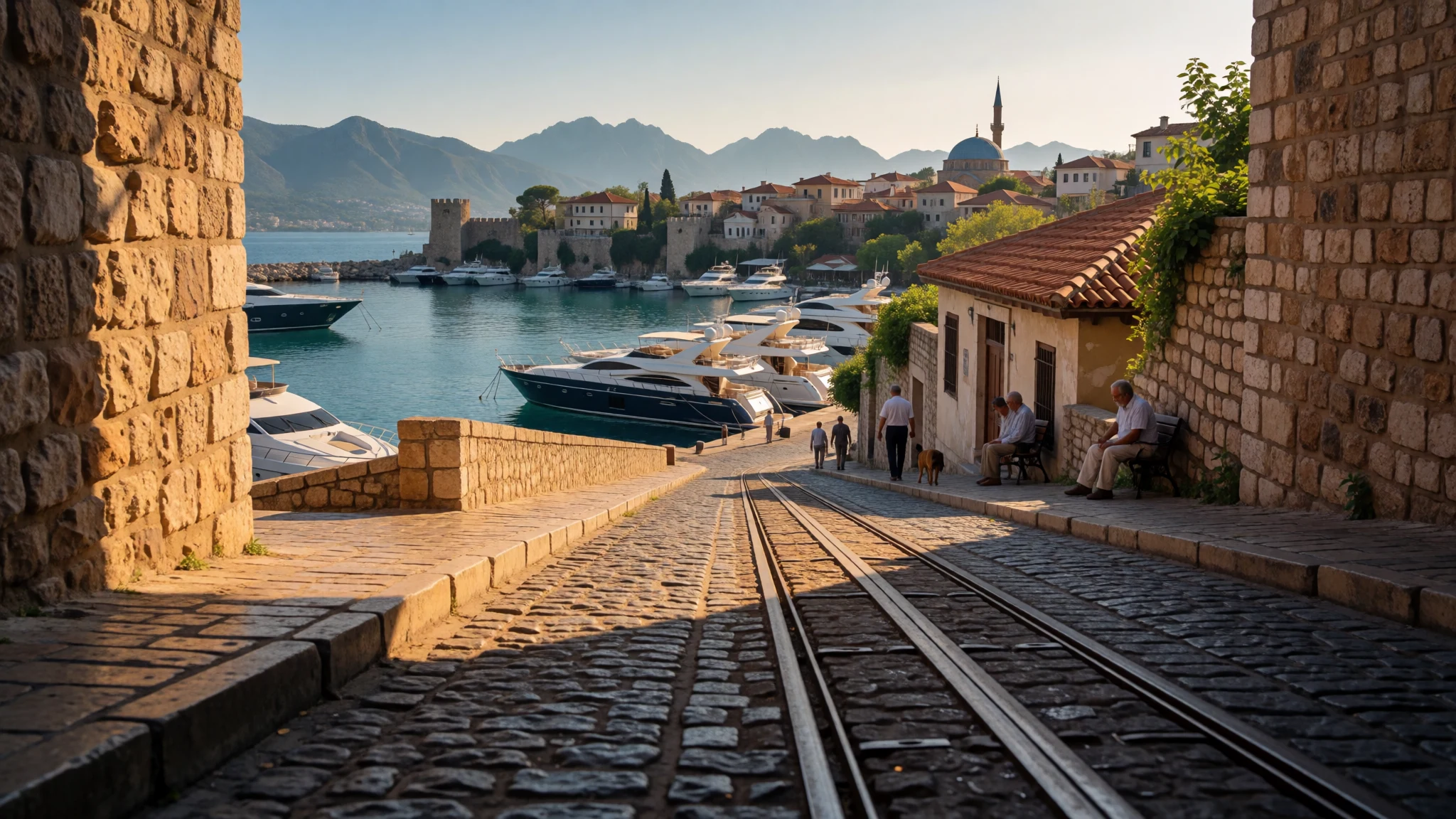
Antalya pairs a walled Mediterranean old town and Roman gates with a long beach under the Taurus.
The place
Antalya stands on the south-west coast of Turkey, where a narrow coastal plain meets the Mediterranean and the Taurus Mountains rise immediately inland. The city is the seat of Antalya Province and has about 1.5 million inhabitants. Its own ground is low, roughly 30 metres above the sea, yet ridges wall off the interior on every side.
Kaleiçi, the old quarter, occupies a slope above a small harbour, inside walls that Rome began and later rulers repaired. Stone lanes and courtyard houses fill the quarter. West of the headland, cliffs drop toward Konyaaltı, a long beach with a modern promenade. East of the harbour the gulf continues, and the lived-in city — port, airport and suburbs — spreads far past the historic circuit.
Antalya is both a provincial capital and a resort. In the warm months the shore and the old lanes fill with visitors; outside that peak the same streets are quieter. The mountains stay on the skyline even when the beach is the plan. The settlement began as Attaleia in 150 BCE, and the gates, towers and mosques in Kaleiçi are the visible trace of the rebuilding that followed. A tram runs along the edge of the old quarter and links it to the newer districts, so the historic port never feels fully detached from the working city.
Its story
Antalya began as Attaleia, named for King Attalus II of Pergamon, who set it up in 150 BCE as a port for his navy. The Greek name Attaleia (Ἀττάλεια) sits inside the modern one. Work on the Doğu Garajı plot in 2008 found remains from the third century BCE, a sign that the royal harbour enlarged an older town already on this shore.
Attalus III, the founder's nephew, willed Pergamon to Rome in 133 BCE, and the harbour town passed with that inheritance. Rome filed the city under Pamphylia Secunda, administered from Perga, and harbour trade paid for a substantial building programme. Hadrian's Gate, still a street entrance into the old quarter, comes from that Roman phase. Other ancient towns stayed alive around it: Perga, Aspendos and Side in Pamphylia; Patara, Xanthos and Myra in Lycia; Sagalassos, Termessos and Antioch in Pisidia.
A New Testament itinerary places Paul of Tarsus and Barnabas at Attaleia, leaving by ship after Perga. Much later, Seljuk rule began in 1207 and Ottoman rule in 1391. The Ottoman period was a comparatively settled one for the port. After the First World War, Italy held Antalya for a short occupation, and the city came back to Turkey in the independence struggle. Kaleiçi still holds those layers in a single walkable quarter.
What to see
- Kaleiçi — Kaleiçi old town
Kaleiçi is Antalya's walled old quarter, a slope of lanes and courtyard houses falling toward a small marina. Roman stonework, later mosques and Ottoman houses share those streets, and a tram tracks the quarter's edge. The draw is how many periods fit inside a circuit. Summer afternoons bake the open lanes, so mornings and the harbour shade are the kinder hours.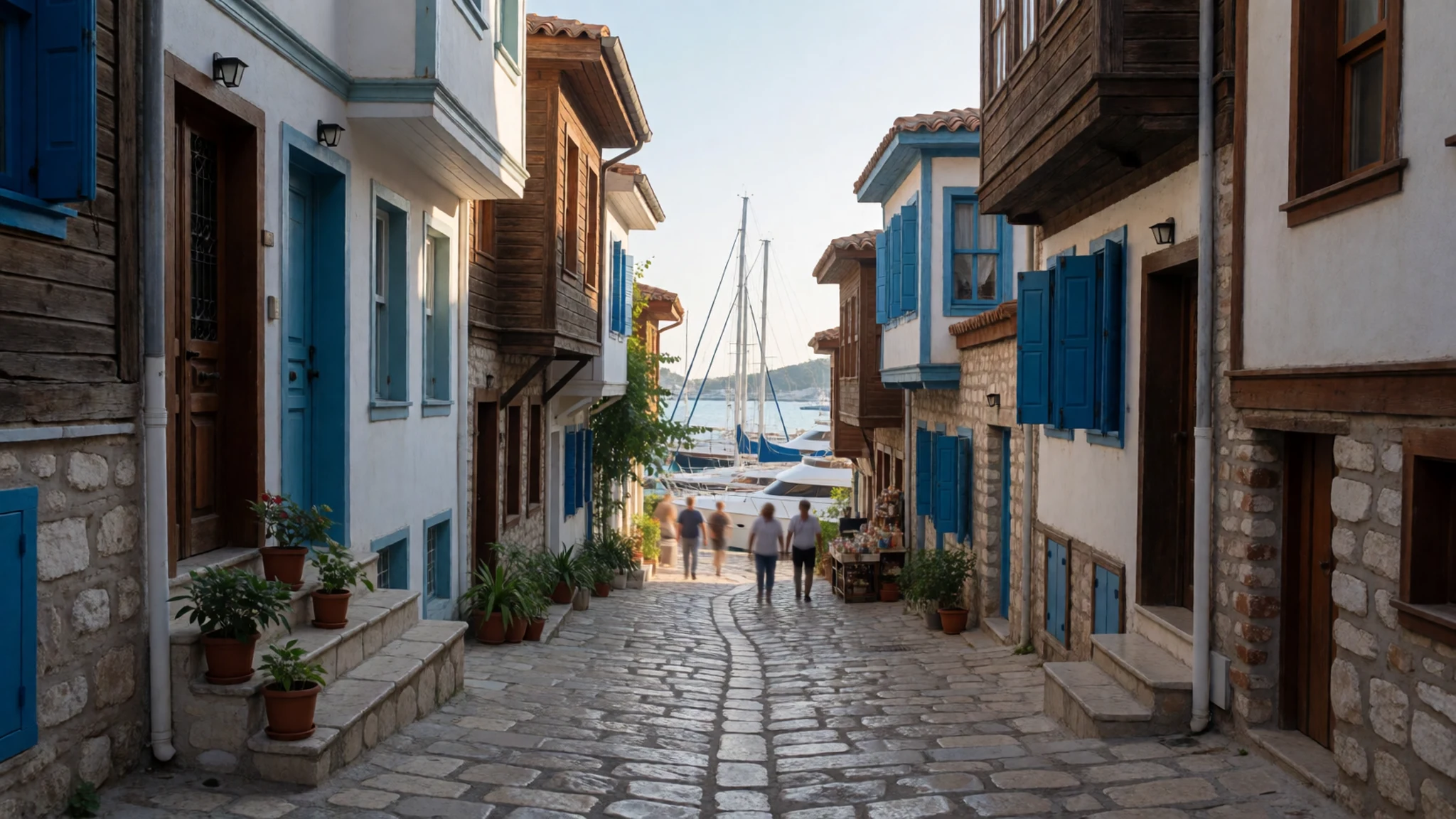
- Hadrian's Gate — Edge of Kaleiçi
Hadrian's Gate is the Roman arch that still marks a way into Antalya's old quarter. It works as a street entrance, not a ruin set apart in a field, and the tram passes close enough that people use it as a landmark on the way to Kaleiçi. Carved blocks and a heavy stone crown repay a slower look, especially from the inner side, where the lanes open behind the arch.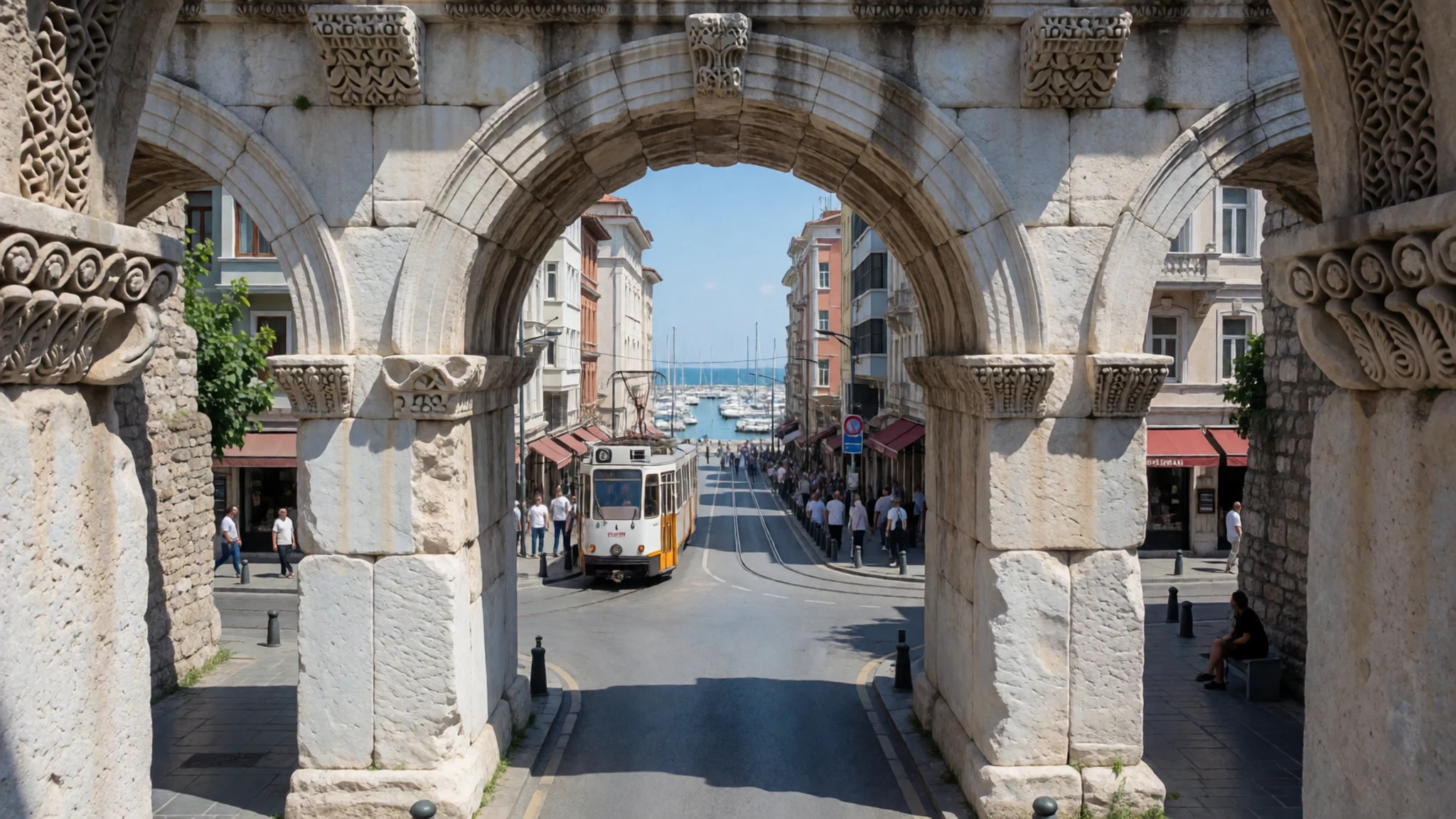
- Fluted Minaret Mosque — Kaleiçi
The Fluted Minaret Mosque, Yivli Minare, is the Seljuk landmark on Antalya's skyline. Patrons of that dynasty founded it, and the Hamidids rebuilt it later. Six domes cover the prayer hall, and a fluted minaret about 38 metres high gives the building its name. The courtyard is the place to pause. Shoes come off at the door, and the lane outside is usually busier than the hall.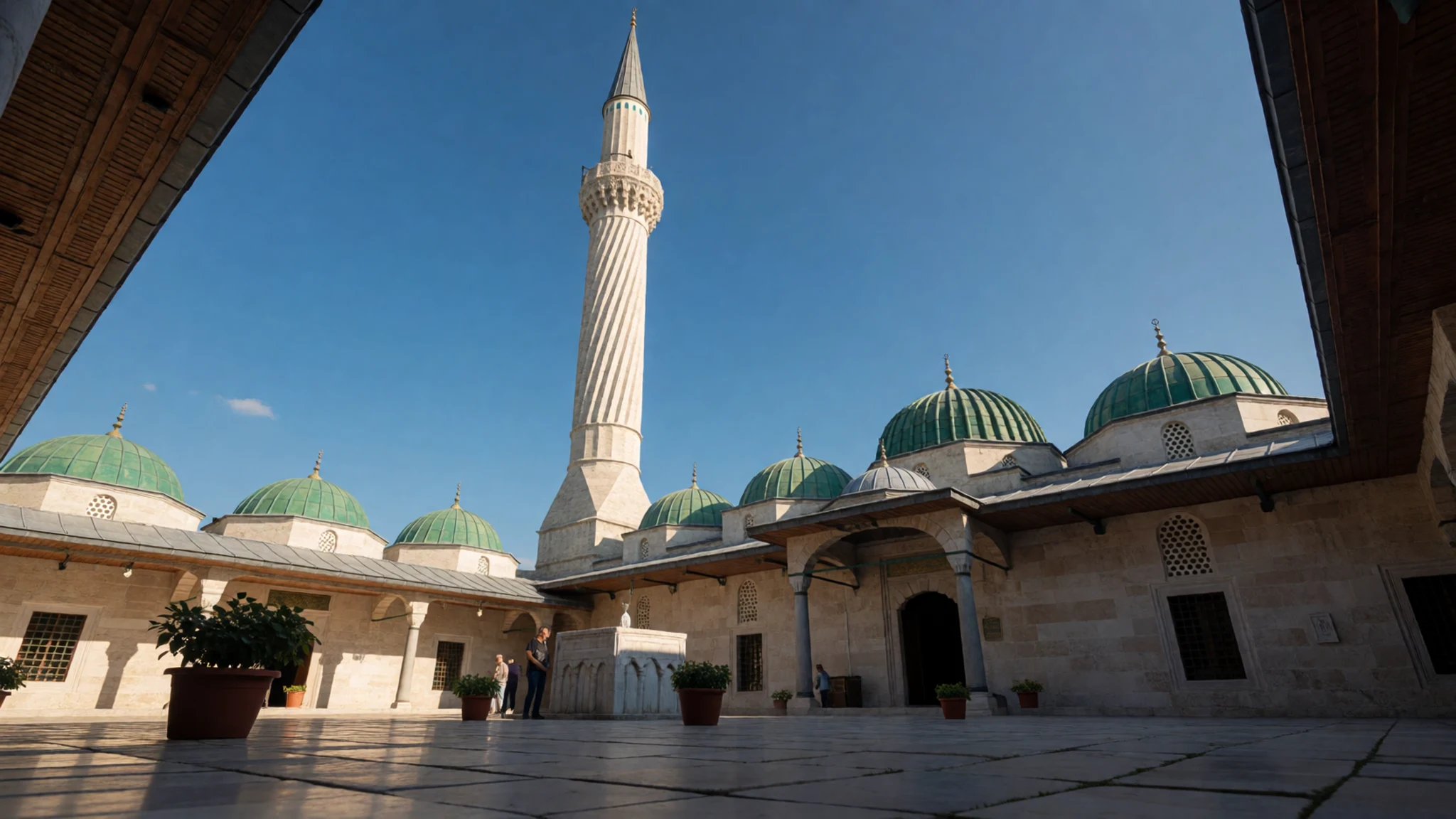
- Hıdırlık Tower — Southern walls, Kaleiçi
Hıdırlık Tower is a Roman bastion and former lighthouse on the seaward corner of Antalya's walls. The silhouette gives it away: a square lower block with a round upper block, stacked in stone rather than built as a plain cylinder. Masons raised it in the second century CE, when Attaleia was a Roman harbour. The ground around the tower joins the marina walk to the cliff.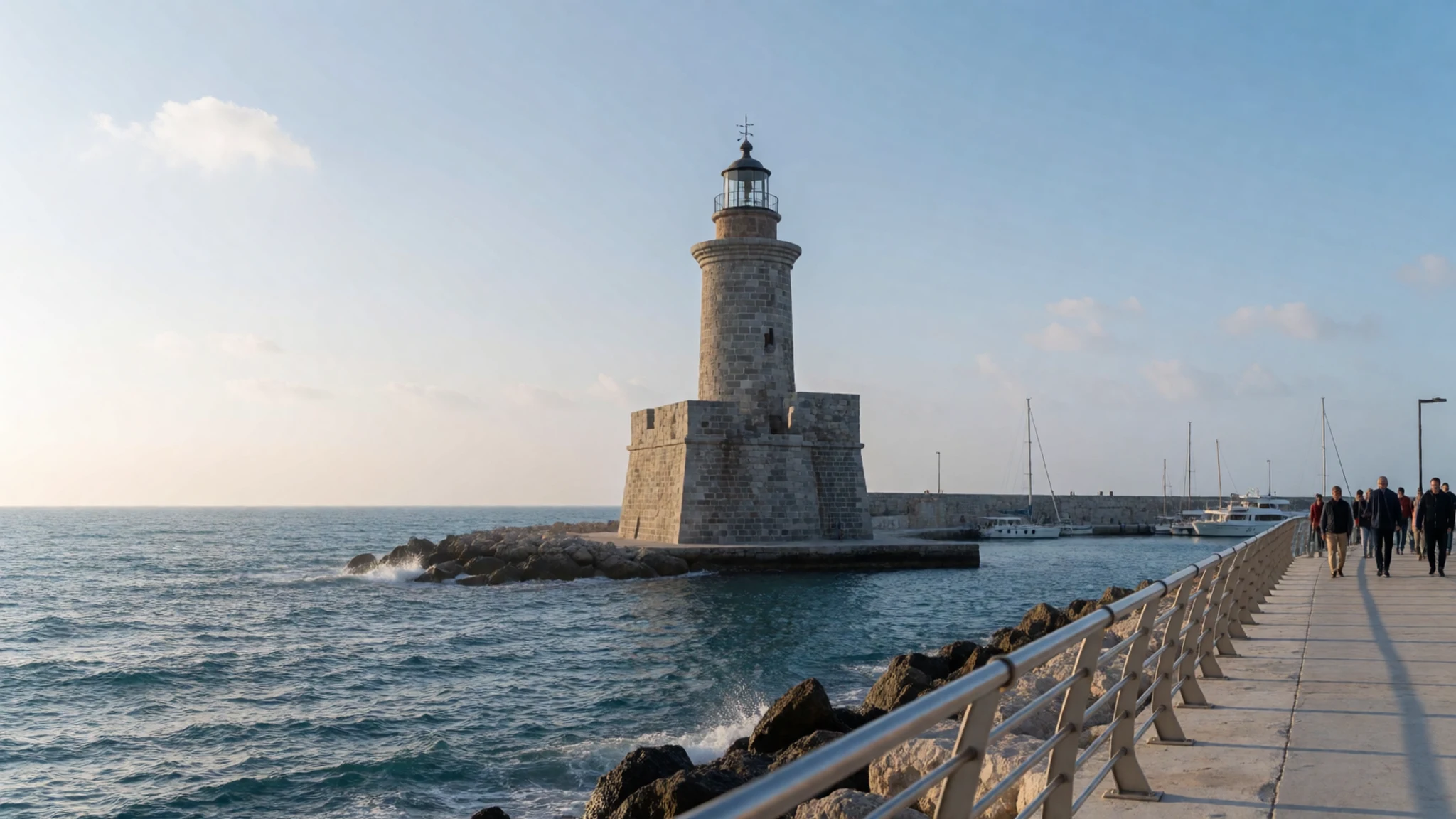
- Sehzade Korkut Mosque — Kaleiçi
The Sehzade Korkut Mosque stands in Antalya's old lanes and began as a Roman temple in the second century CE. Later congregations kept reworking the shell, so the building belongs to no single style. It is a short walk from the Fluted Minaret, inside the same Kaleiçi circuit. Cover shoulders and knees to go in, and leave shoes at the door.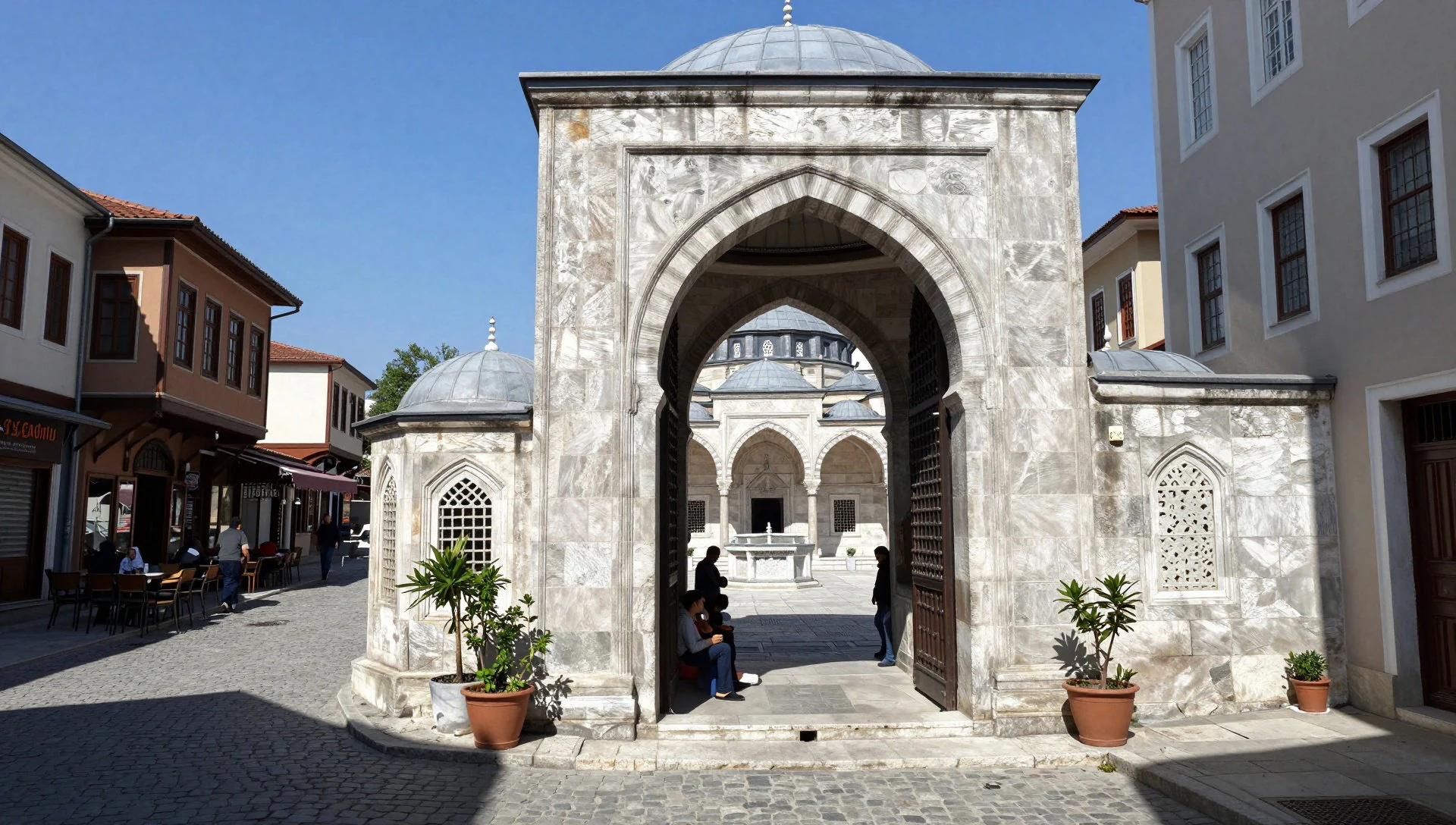
- Antalya Museum — West of the centre, toward Konyaaltı
The Antalya Museum, west of the old centre on the way toward Konyaaltı, is one of Turkey's largest museums. About 5,000 objects are on view, tracing the Mediterranean and Pamphylian past, and a reserve of some 25,000 further pieces stays off display. Sculpture and sarcophagi do much of the storytelling. It deserves a morning of its own. Check current opening days on the municipal website.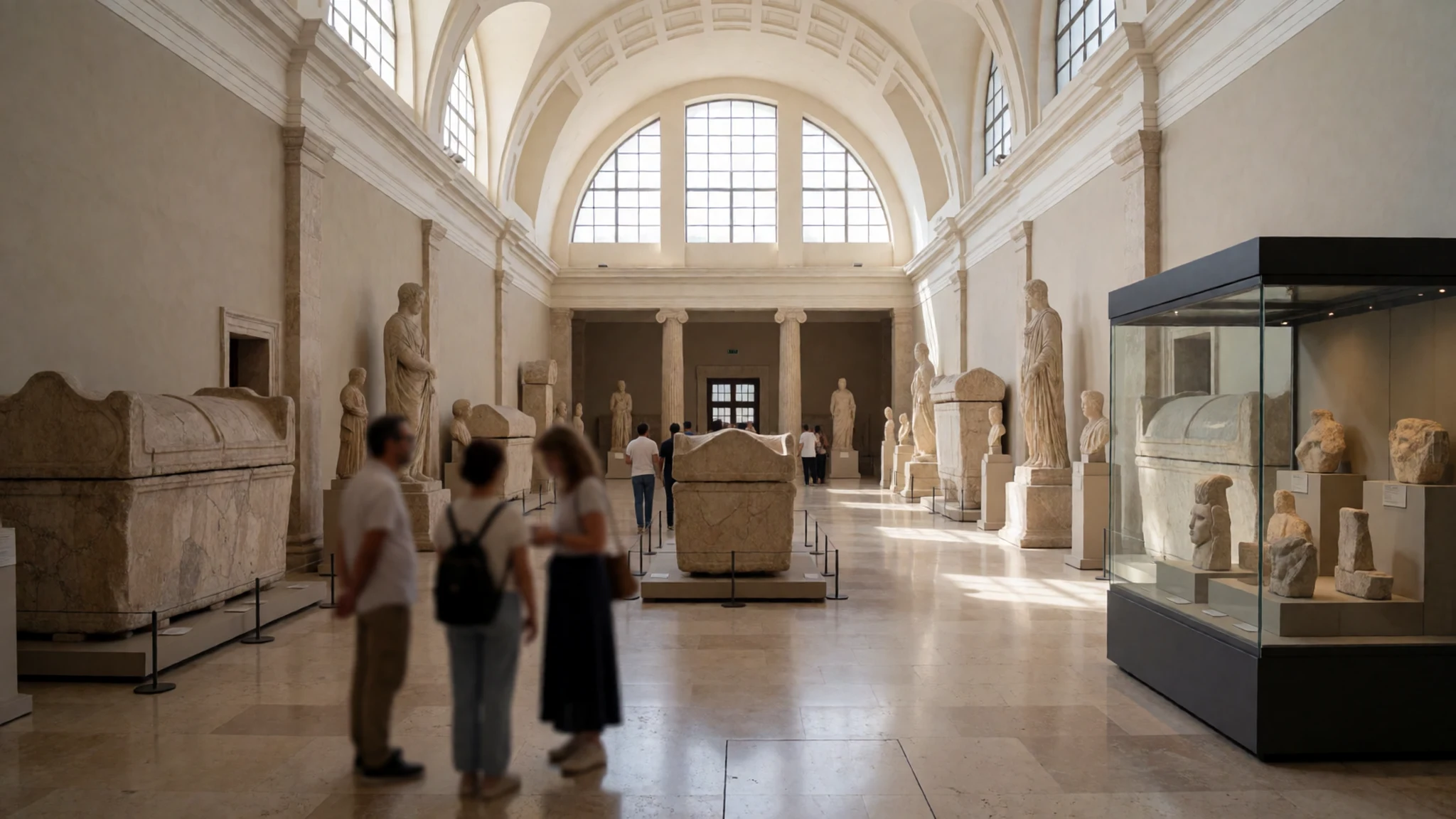
Culture
Antalya's daily life is a large Turkish city wrapped around a small historic port. Inside Kaleiçi, residents, shopkeepers and boat crews share lanes that many visitors treat as a stage; beyond the walls the city gets on with trams, offices and neighbourhood mosques. In the old quarter, hospitality often slides into a sales talk about carpets or a boat. A friendly no is enough. Summer stretches the tourist season; outside it, the same lanes are simply a neighbourhood.
Eating is the custom a visitor actually joins. Tables lean to the Mediterranean: tahini bean salad, grilled meat, cold olive-oil dishes and a burnt-milk ice cream. Boiled lupin seeds, sold as tirmis, are eaten from the hand, and bağaça turns tahini into a spiced pastry. Around Muratpaşa the downtown eateries feed locals at lunch, not only people passing through.
The call to prayer carries over a harbour that is also a beach town. Swimwear and mosque dress belong to different streets.
Take your shoes off at the door of an Antalya mosque such as the Fluted Minaret, cover shoulders and knees, and keep your voice down while people are praying.
What to wear
Antalya dresses for a hot Mediterranean shore and a Muslim city at the same time. Older coastal clothes favoured loose cotton and linen, with baggy şalvar for men and women and a light vest over a shirt. In the Taurus hinterland, Yörük dress was brighter and more woven: layered skirts, embroidered head coverings and kilims that furnished the tent as well as the body. Those garments now turn up at weddings, folk days and in museum cases more than on the tram.
Weekday Antalya looks like any large Turkish city. Jeans, trainers and short sleeves are everywhere; many women wear a headscarf and many do not. On Konyaaltı, swimsuits and sun shirts are normal, and they look wrong once the walk enters Kaleiçi. Evenings in the old town smarten only slightly, because the lanes are still uneven stone.
A visitor needs breathable cloth, a hat and shoes that grip. A scarf and a layer for shoulders and knees belong with any mosque visit; beachwear stays on the beach. Thin sandals struggle on the polished lanes, and a warm coat covers freezing nights while high summer asks for sun cover instead.
What to eat
- Piyaz — Downtown streets around Muratpaşa Mosque
Piyaz is Antalya's bean salad: boiled beans dressed with tahini, garlic and walnuts, creamy and sharp rather than a plain olive-oil plate. It is the local default beside köfte. Look for it in inexpensive eateries on the downtown streets around Muratpaşa Mosque.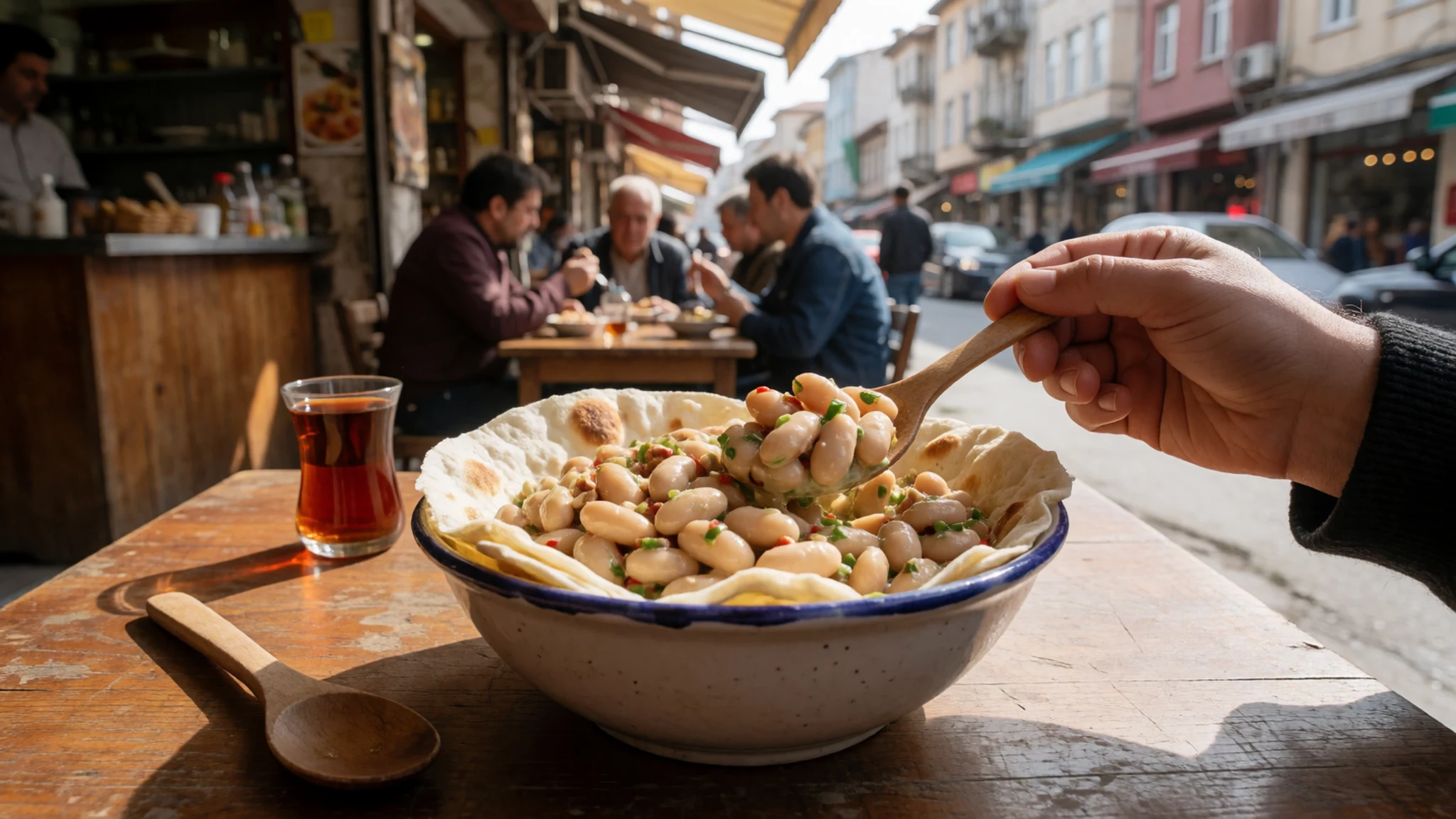
- Şiş köfte — Downtown streets around Muratpaşa Mosque
Şiş köfte is Antalya's spicy minced meat, shaped around a skewer and grilled. In Antalya it is everyday food, eaten with bread and piyaz rather than saved for a special table. Spice runs high. Köfte stands in the downtown streets around Muratpaşa Mosque serve it to a mostly local crowd.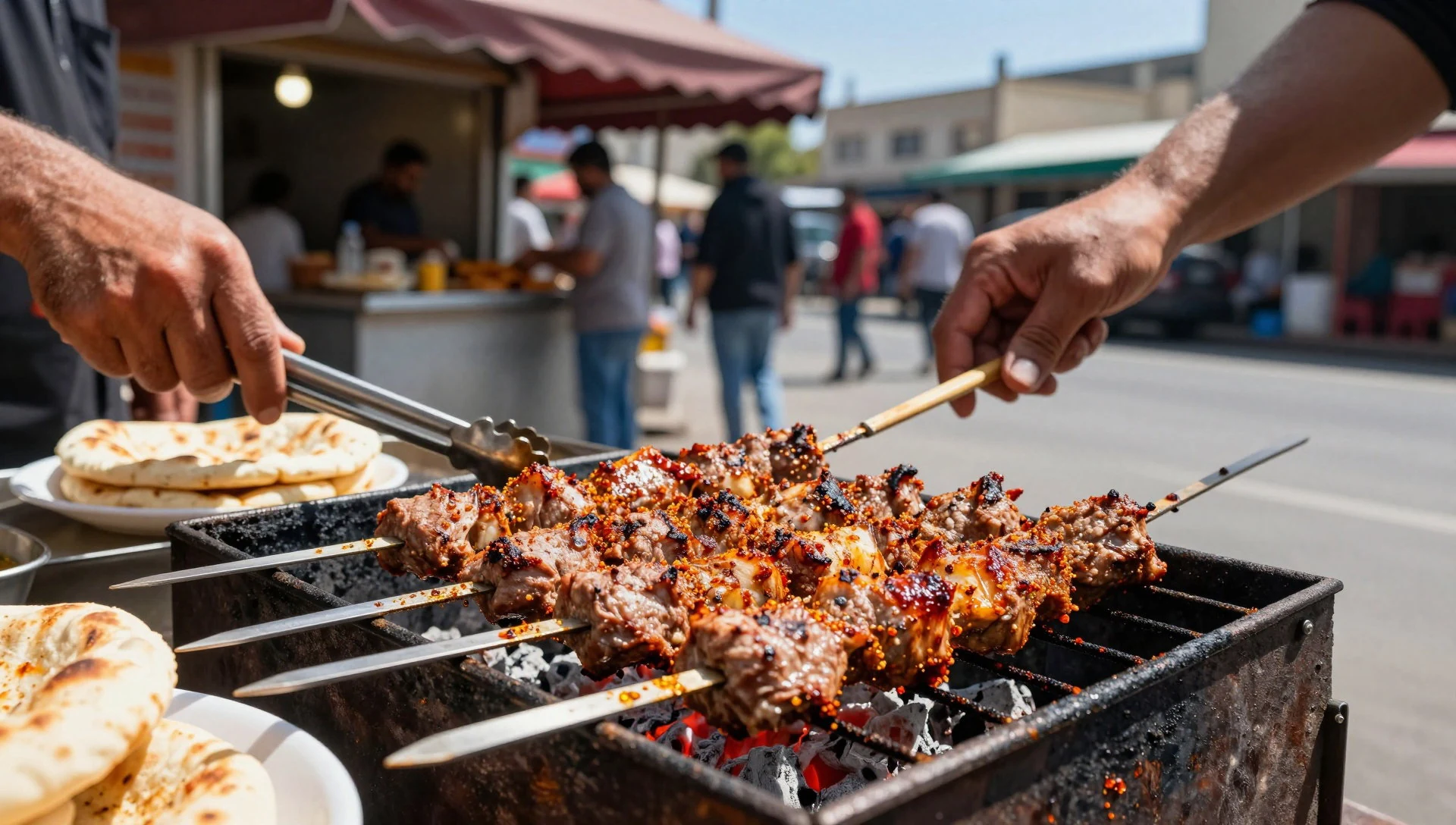
- Hibeş — Kaleiçi and downtown eateries
Hibeş is a spicy tahini dip, beaten with cumin, eaten with bread at the start of an Antalya meal. The taste is sesame and warmth, not a yoghurt sauce. It often shares the table with şakşuka and other cold olive-oil dishes. Look in Kaleiçi and in simple downtown eateries. - Tandır kebap — Kebap houses around Muratpaşa Mosque
Tandır kebap is Antalya's slow-cooked meat from a deep clay oven, served with bread and simple salads. Antalya's version belongs to the wider Turkish tandır tradition: softer than meat grilled fast over coals. Kebap houses around Muratpaşa Mosque serve it. - Yanıksı dondurma — Kaleiçi cafés and the Konyaaltı beach strip
Yanıksı dondurma is Antalya's burnt-milk ice cream, scalded so the milk colours and the freeze tastes toasted. It is denser than a standard scoop. Cafés in Kaleiçi and kiosks along the Konyaaltı beach strip sell it. Ask by the local name, because not every freezer stocks the style. - Tirmis — Old-town marina, downtown pavements and the beach promenade
Tirmis is Antalya's handful snack: lupin seeds boiled until the bitterness drops, then salted and eaten seed by seed. Antalya treats it as a walk-along snack rather than a sit-down plate. Vendors appear near the old-town marina, on downtown pavements and along the beach promenade.
Plan it
Best time. March, April and November are the comfortable months for walking Antalya, with July and August hottest and December and January wettest. July and August bring the warmest sea and the thickest crowds, with Kaleiçi fiercely hot in the middle of the day. Winter nights freeze at the coast and the city is much quieter, while the Taurus ridges inland take colder weather than the city.
How long. 3–4
Getting there. Fly into Antalya Airport. Tram and city bus both run from the airport area toward the centre and the otogar, but not every terminal has a tram stop, so follow the signs and take the airport bus when the tram is not shown. For the old quarter, leave the tram near İsmetpaşa and walk in. Check current routes at http://www.antalya.bel.tr.
Budget. mid
Tips
- Start in Kaleiçi early, before heat and groups fill the lanes.
- Pay tram and bus fares the way the stop shows, by contactless card or AntalyaKart.
- Keep some cash for snack vendors, small eateries and mosque boxes.
- Wear grippy shoes; Kaleiçi's stone lanes are steep and polished.
- Confirm museum and tram details on the municipal website rather than a blog timetable.
Etiquette
- Remove shoes at mosque doors where a step and a shelf of slippers show the way.
- Cover shoulders and knees in mosques, and keep swimwear for the beach.
- Ask before you photograph people who are praying or working.
- Decline carpet or boat pitches with a simple no; no explanation is owed.
Nearby
Sources
- Wikidata Q6487 (CC0)
- Wikipedia (rev 1383744957) (CC BY-SA 4.0)
- Wikivoyage (rev 5378652) (CC BY-SA 4.0)
- Photo: Turcja. Zatoka Antalya (CC BY-SA 4.0)
- Photo: Cliffs toward Konyaaltı Beach (CC BY-SA 4.0)
- Photo: Hadrian's Gate, Antalya (CC BY 2.5)
- Photo: Hıdırlık Tower (CC BY 3.0)
- Photo: Lower Düden Waterfall (CC BY-SA 4.0)
- Photo: Kaleiçi old town (CC BY 2.5)
- Photo: Antalya Old Town Marina (CC BY-SA 4.0)
- Photo: Kaleiçi historic centre (CC0 1.0)


