Alalakh
Alalakh, Turkey
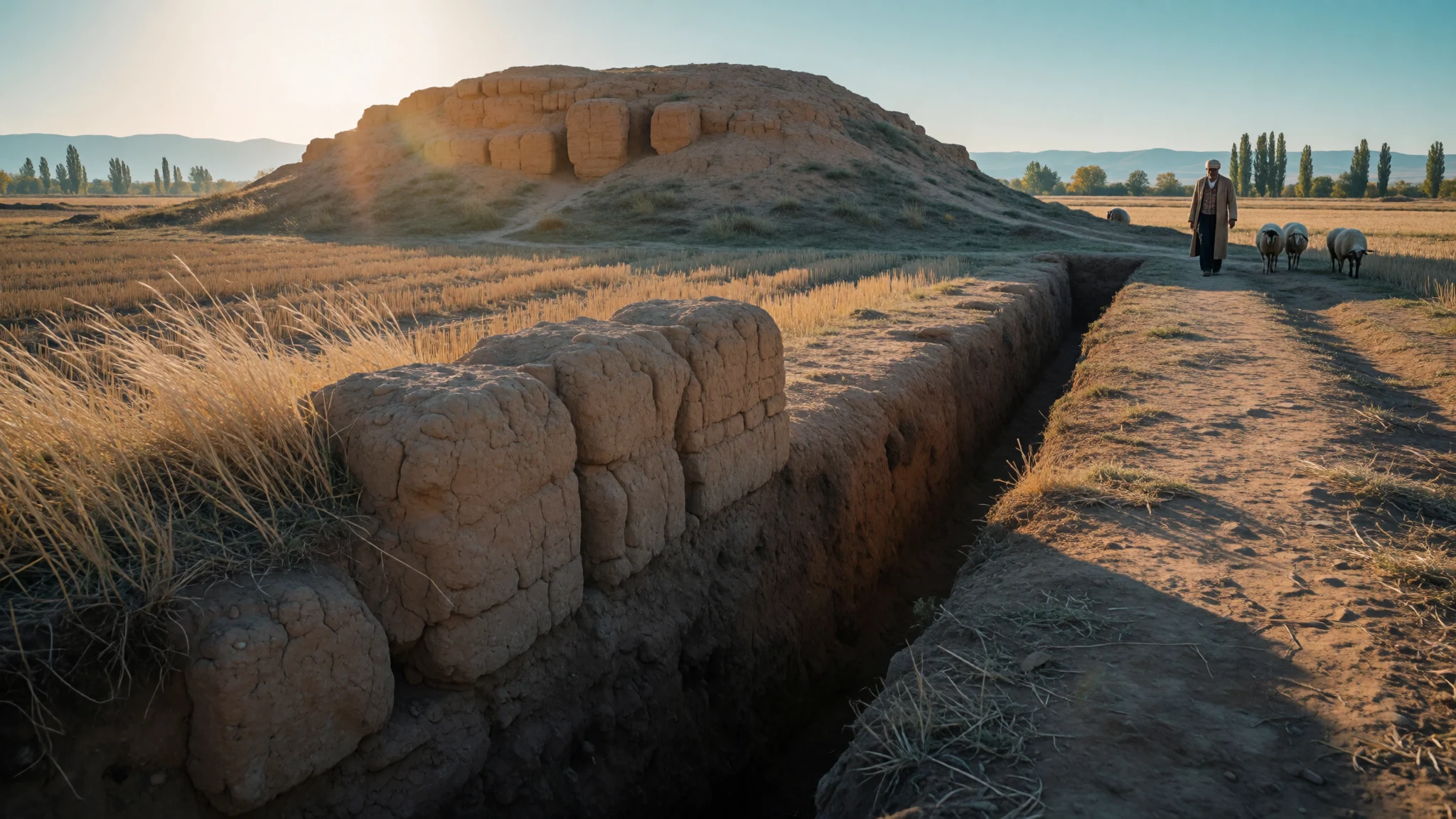
Alalakh is a quiet Bronze Age mound in Hatay where palace walls and clay-tablet archives reveal a forgotten kingdom between Aleppo and the Mediterranean.
The place
Alalakh is a Bronze Age mound in the Amik Valley of Hatay Province, southern Turkey, about 20 km northeast of Antakya. Local people call it Tell Atchana. It stands on flat floodplain where the Orontes river enters the Amuq plain, roughly 2 km from the Syrian frontier, and the nearness of the border colours the whole area. What remains is a broad, low hill covering around 22 hectares, built up from centuries of mud-brick houses and palaces collapsing and being rebuilt on top of one another. Excavators have uncovered palaces, temples, private houses and fortification walls in its layers, and in its later centuries the city was the capital of a small kingdom called Mukiš.
The valley around it is thick with older settlements. People have lived on this plain since the Neolithic, and Tell Tayinat, about 700 m to the northwest, has also been dug in recent years. A large lake once filled part of the plain, which goes a long way to explaining why settlers kept returning to the spot.
The setting is farmland rather than a postcard: wind, dust, cotton and olive fields, and a mound that reads at first as a grassy swell. The pleasure comes slowly, from tracing a few exposed walls and trenches and picturing the streets they once framed. Visitors who read up beforehand, or who visit the Antakya museum first, get far more from it than those who arrive cold. The valley also lies along the Dead Sea Fault, a reminder of why earthquakes keep shaping Hatay's history.
Its story
Alalakh began as an Amorite town around 2000 BC, when its first palace was raised. For the next few centuries it was a satellite of Yamhad, the powerful kingdom centred on modern Aleppo. Tablets from the royal archive of Mari, written in the 18th century BC, mention the place under the name Alakhtum. One of them records a king of Yamhad handing the territory to his son-in-law, the king of Mari, while keeping overlordship for himself. Later the city passed to a dynasty founded by Yarim-Lim, whose carved diorite head is now in the Antakya museum.
The best-known ruler is Idrimi, a prince who fled his home, lived among nomads, and eventually won back a throne as a vassal of a greater power. His life story is inscribed across a seated statue found here, now in the British Museum. Other clay tablets deal with everyday matters: boundaries, loans, and a treaty about runaway slaves.
The site was dug before the Second World War by the British archaeologist Leonard Woolley, who numbered its building levels, and new teams have since refined his sequence. Recent work also shows the mound was lived on again after the great destruction of the 12th century BC, which older scholars had thought ended its story. The city's long afterlife is mostly buried, but it is the clay archives, more than any grand ruin, that make Alalakh matter.
What to see
- The mound of Tell Atchana — Amik Valley, near Reyhanlı
The main attraction is the mound itself, on the plain near Reyhanlı. Low walls, trench edges and the outline of palace and temple areas can be made out on the surface. It is exposed and shadeless, so go with a map or a guide's notes and expect to spend an hour or two.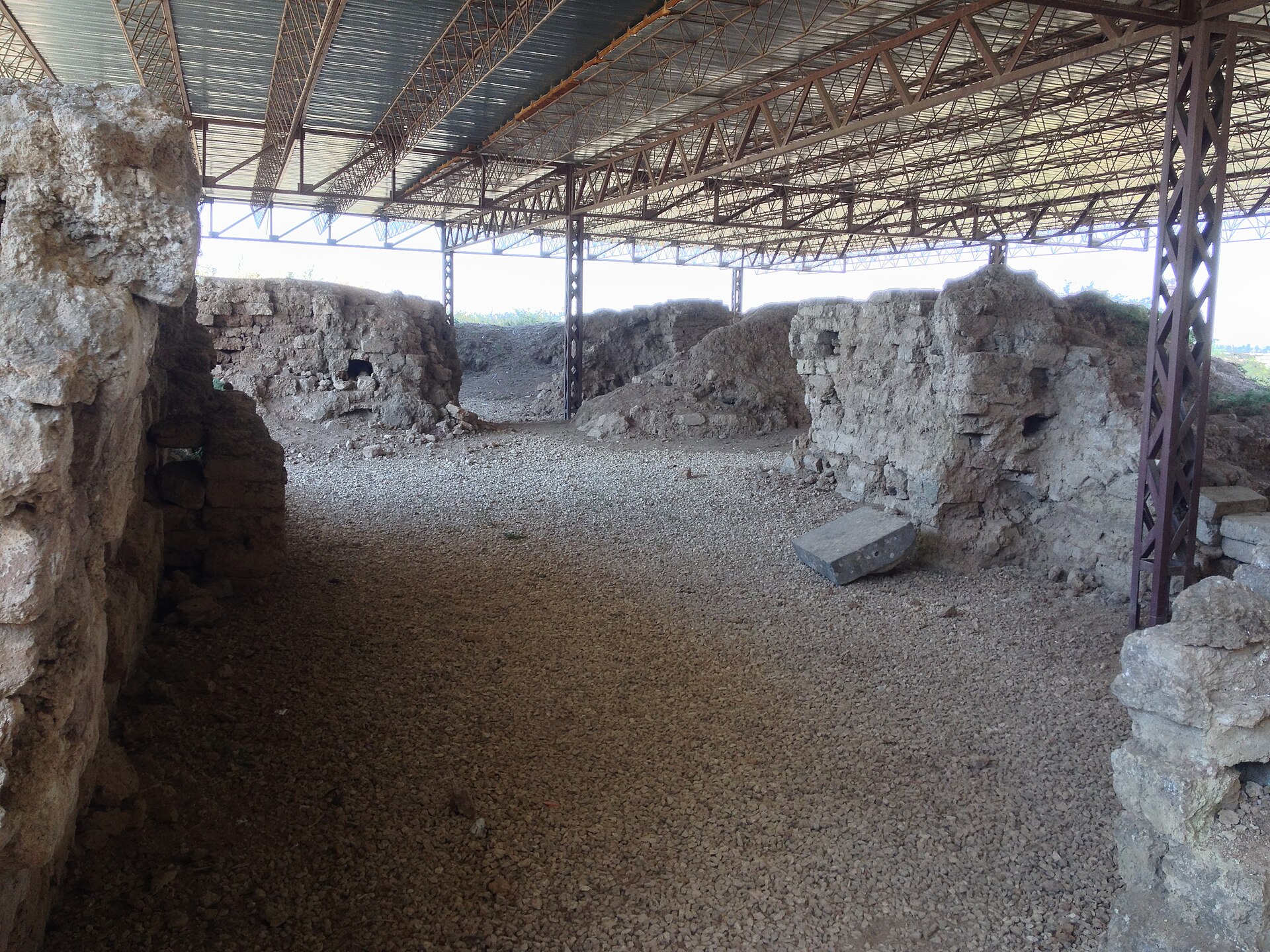
- The entrance information board — Site entrance, Tell Atchana
A signboard at the gate of Alalakh gives a short orientation in text and plan before the walk across the mound. It is worth reading carefully, since few other labels stand among the ruins. Photograph it to keep the plan handy while exploring.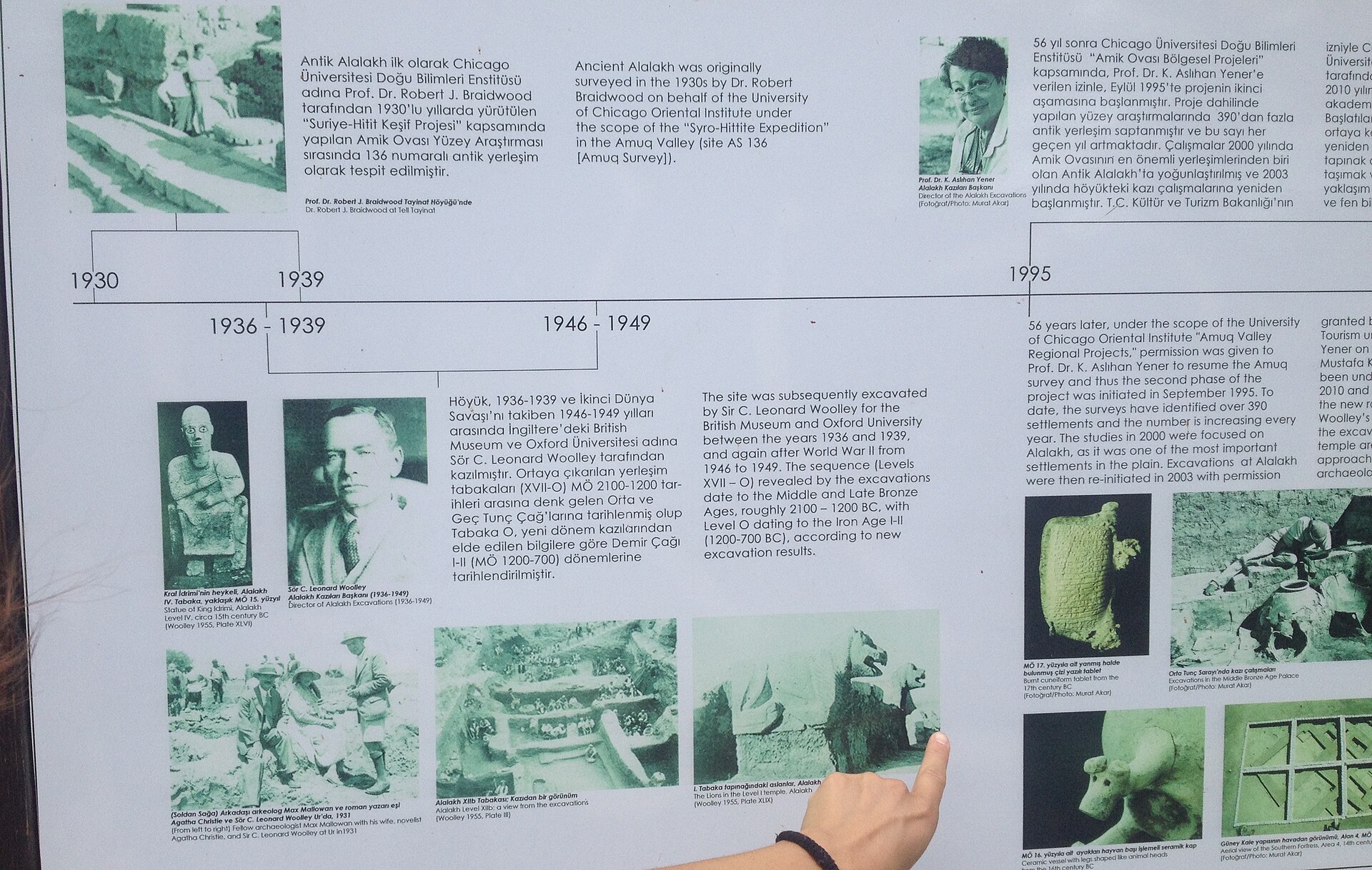
- Tell Tayinat — Amuq plain, northwest of Alalakh
The neighbouring mound of Tell Tayinat lies a short drive from Alalakh and belongs to the same valley story, with its own phase of Iron Age settlement. Access depends on current excavation arrangements, so ask locally or at the museum before setting out. - Antakya archaeological museum — Antakya
Finds from Alalakh and the wider Amuq plain are gathered in Antakya's archaeological museum, named in local listings after Necmi Asfuroğlu. Among them is a diorite head of Yarim-Lim. Opening arrangements changed after the 2023 earthquake, so check the official site before travelling.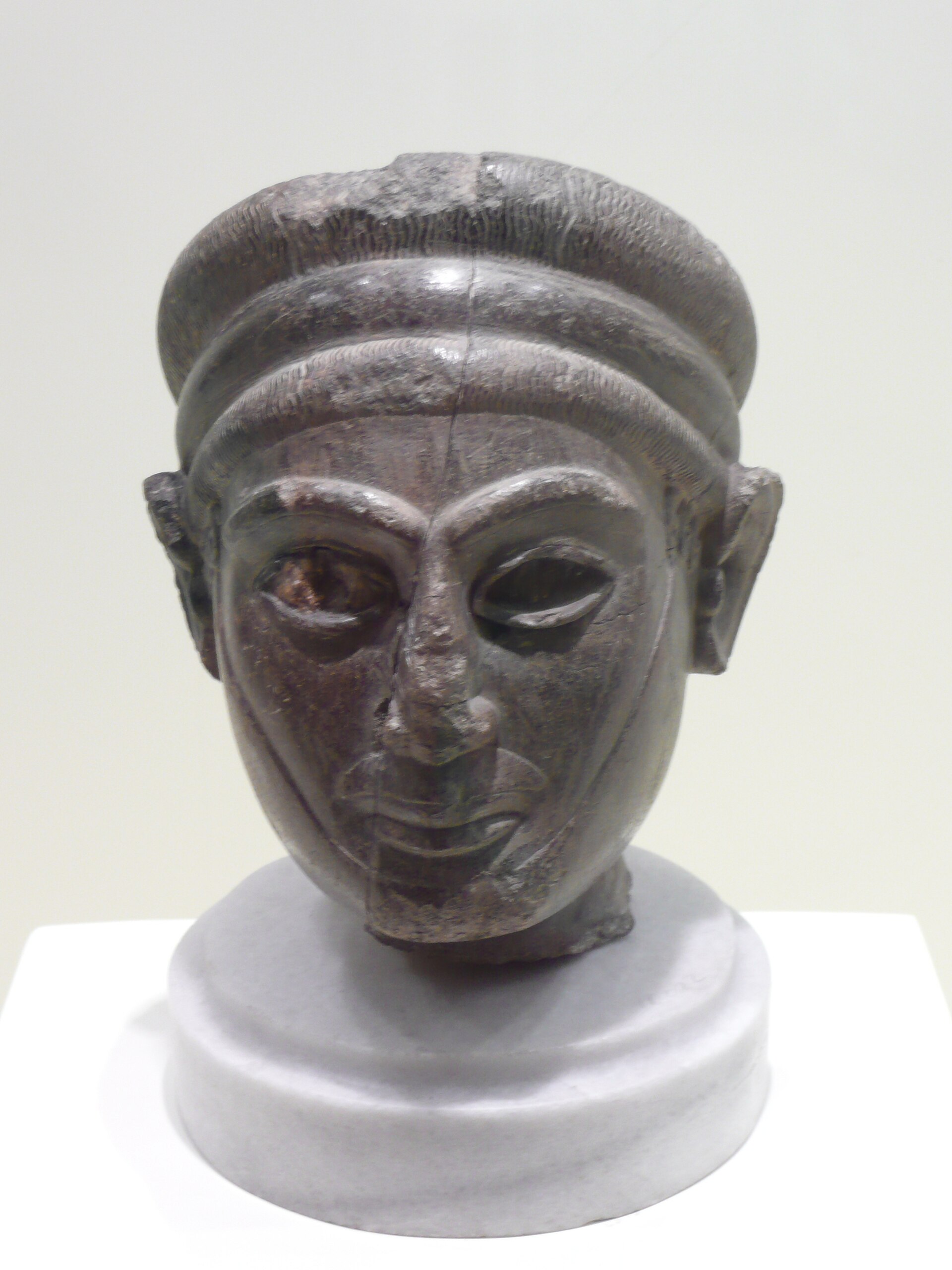
- Idrimi and the tablets in London — British Museum, London
Many of Alalakh's best-known objects sit in the British Museum, including the statue of King Idrimi with its long inscription. For travellers from the UK, a London visit before or after Hatay shows the written side of the city that the mound cannot.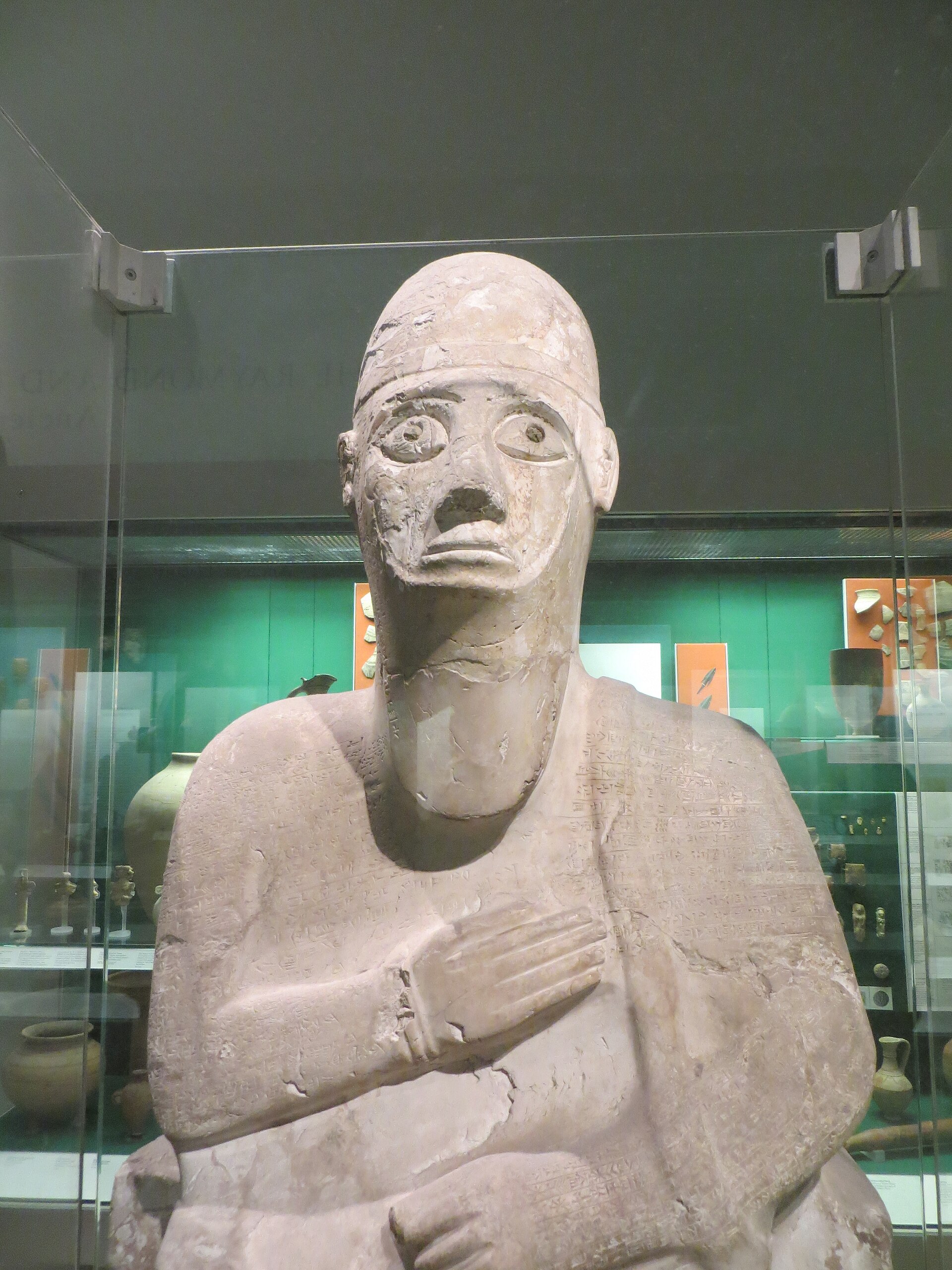
Culture
Alalakh sits in Hatay, one of Turkey's most mixed provinces, where Arabic-speaking and Turkish-speaking communities live side by side and Muslim, Orthodox Christian and other faiths have long shared Antakya's streets. The food, the greetings and even the humour lean towards the Levant more than towards central Anatolia.
The archaeological story is part of local pride, but the 2023 earthquake dominates present life. Many families lost homes, and mosques, churches and old houses in Antakya were damaged or rebuilt. Reconstruction is visible everywhere, and it is a sensitive subject. Residents tend to be generous hosts and happy to talk about the region's past, though visitors do better to ask gently than to treat damaged streets as scenery.
On the mound itself, the culture is that of a working excavation. The ruins are made of mud-brick that crumbles easily, and the sequence of levels is what scholars study, so walking on marked paths matters more than it might seem. Villages in the surrounding plain are conservative and agricultural. Tea is offered readily, and refusing the first glass is usually taken lightly, while accepting is a friendly gesture. Near the Syrian border, local guards are strict about photography and loitering, so stay on the main approach roads and do not wander towards the frontier.
Always keep to the marked paths on the mound and never climb on, or take stones or pottery sherds from, the exposed walls.
What to wear
Fashion in Alalakh's region mixes Turkish and Levantine habits. Traditional village dress in Hatay includes şalvar, the gathered baggy trousers, with long tunics or dresses, embroidered waistcoats and headscarves of cotton or silk, often in bright colours. Men once wore wide sashes and woollen or felt caps. Cotton, wool and silk have all been woven on the plain, and these older outfits now appear mainly at weddings, folk festivals and in museum displays.
Everyday clothing is much like elsewhere in Turkey. In Antakya and Iskenderun, younger people wear jeans, shirts and trainers, while older men often favour jackets and flat caps. Many women wear a headscarf, though others do not, and both styles are normal in the city. In villages around the mound, dress is more conservative.
Visitors should plan for sun, dust and uneven ground. The mound has little shade, so a wide-brimmed hat, sunglasses and light cotton or linen layers are sensible in the warm months, and a windproof jacket helps in winter. Sturdy closed shoes or trainers are better than sandals on the trenches and loose soil. Both men and women are comfortable in long trousers or a knee-length skirt with covered shoulders. When entering a mosque or church in Antakya, women should carry a scarf for the head, and everyone should wear clothing that covers the knees and upper arms, as well as shoes that are easy to remove.
What to eat
- Künefe — Dessert shops in central Antakya
Hatay's best-known dessert is künefe: shredded pastry layered round soft cheese, baked until crisp and soaked in syrup. It is eaten hot, while the cheese is still stretchy, with strong tea alongside. - Hummus and meze — Eateries around Antakya's old centre
Cooking here leans towards the Levant, so a table often opens with hummus and other small dishes for sharing, scooped up with flatbread. Order several and share, as a meal in Hatay is built around the spread. - Oruk — Family-run eateries in Antakya
Oruk is a local relative of kibbeh: a shell of bulgur wheat and minced meat, wrapped around a spiced filling and then fried or baked. It is a good way to taste the area's mixed culinary heritage. - Sour pomegranate salad — Kebab and meze restaurants across Hatay
Chopped onion, herbs, peppers and tomato are dressed with tart pomegranate syrup in this salad, sometimes with walnuts. It is sharp, fresh and a good partner to grilled meat and heavy dishes. - Tea and street snacks — Tea gardens and market stalls in Antakya
Tea comes in small tulip glasses and arrives almost everywhere, from shop counters to the roadside near farms. Pair it with simple local pastries or sweet snacks during a break between museum and mound.
Plan it
Best time. April–May and October–November are the most comfortable, with milder temperatures for walking on an open, shadeless mound. Summers on the plain are hot, and midsummer visits should start at dawn. Winter can be wet and muddy underfoot.
How long. 1–2
Getting there. Fly to Hatay Airport from Istanbul or Ankara, then take a taxi or hire car to Antakya and on across the Amik plain to the mound. Long-distance coaches also serve Antakya. Rail and sea links were disrupted by the 2023 earthquake, so check current services.
Budget. low
Tips
- Check whether the site and the Antakya museum are open before travelling; Hatay is still recovering from the 2023 earthquake
- Bring a hat, sunscreen and water, since there is almost no shade on the mound
- Ask locally whether tap water is safe, and buy bottled water
- Hire a local guide or read up first, as on-site explanation is limited
- Stay on main roads and avoid approaching the Syrian border area
Etiquette
- Keep to marked paths and do not remove or climb on any ancient material
- Ask before photographing people, and avoid photographing military or border posts
- Dress modestly when visiting mosques and churches in Antakya
Nearby
Sources
- Wikidata Q575249 (CC0)
- Wikipedia: Alalakh (CC BY-SA 4.0)
- Wikivoyage: Hatay (CC BY-SA 4.0)
- Fkitselis, Archaeological site of Alalakh (Tell Atchana) (CC BY 3.0)
- Unknown author, Slave treaty tablet (CC BY 3.0)
- Jononmac46, Statue of Idrimi in the British Museum (CC BY 3.0)
- Ollios, Alalah, British Museum (CC BY 3.0)
- Hans van Deukeren, Alalakh and Byblos map (CC BY-SA 4.0)
- Nicoleon, Alalakh panneau descriptif à l'entrée du site (CC BY-SA 4.0)
- Nevit Dilmen, Antakya Archaeological Museum (CC BY-SA 2.0)
- Unknown author, Cuneiform legal tablet in case (CC BY 3.0)


