Ulsan
Ulsan, South Korea
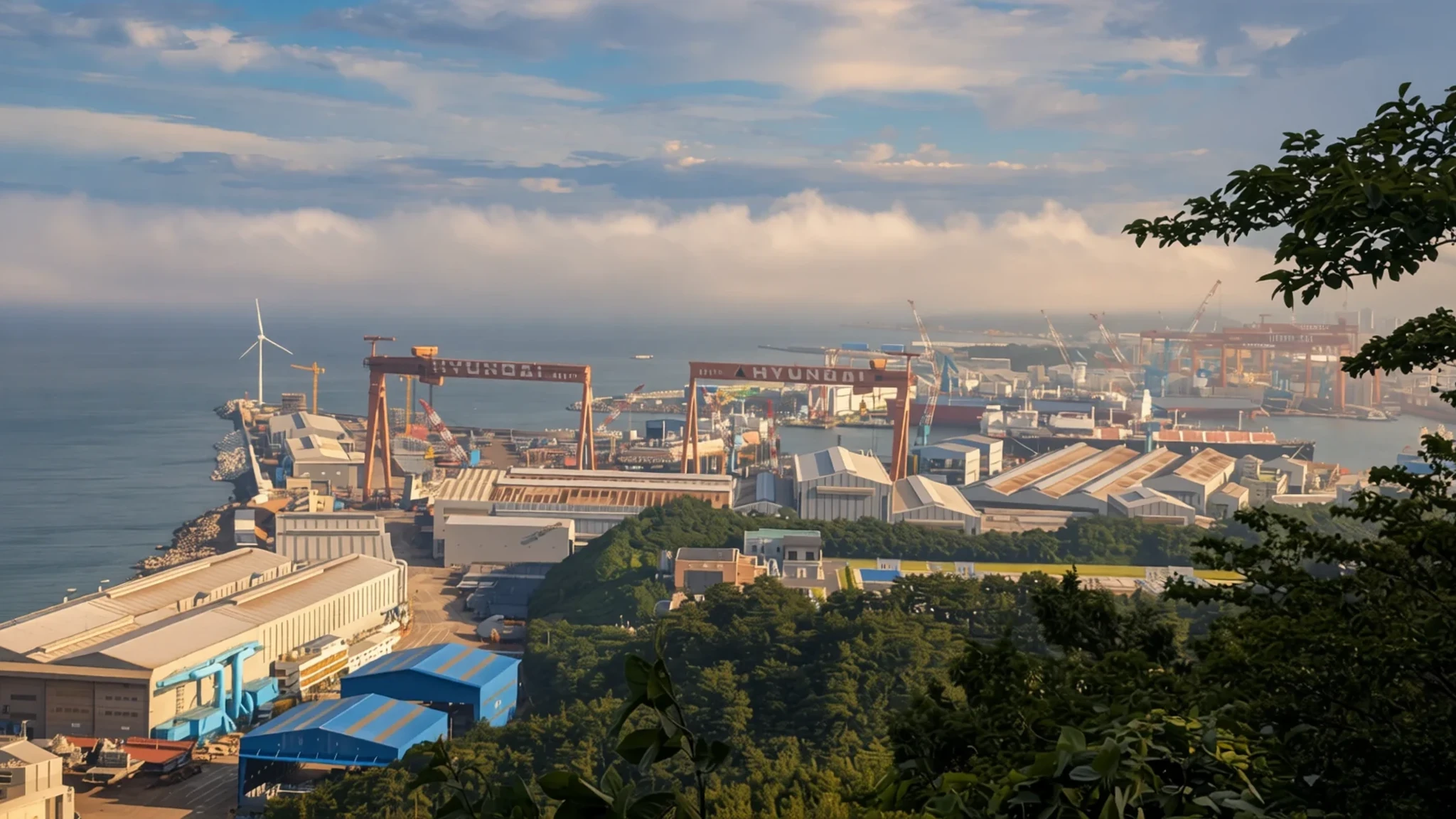
Ulsan is South Korea's factory city that has quietly turned its river, bamboo groves and east-facing coast into a calm, uncrowded escape.
The place
Ulsan sits on South Korea's south-east coast, between Busan to the south and Gyeongju to the north. It is a metropolitan city of about 1.1 million people, and it is known first as a working city rather than a resort. The Hyundai name is everywhere: car plant, shipyard, and the cranes that dominate the harbour skyline. Petrochemicals and refining add to the picture, and the wealth that follows shows in wide roads, big department stores and tidy apartment towers.
But the city is more varied than its reputation. The Taehwa River runs through the middle, with a bamboo-lined national garden along its banks, and the city has put real effort into becoming greener, including early hydrogen refuelling for cars and ships. Beyond the urban core, the land rises into granite hills and valleys with waterfalls, while the coast to the east and south has pine-backed parks, black pebble beaches and a cape famous for first light.
For a visitor, Ulsan works best as a slow stop of two or three days. Distances are manageable, buses and taxis are plentiful, and there are few foreign tour groups. Ulsan has no international flights, so most people arrive by train or by a domestic connection, and many combine it with Gyeongju or Busan. Expect an honest, lived-in Korean city, not a polished resort.
Its story
Ulsan's story is far older than its factories. Stone tools from the Mugeo-dong Ok-hyeon site show people lived here in the Palaeolithic era, and there are Bronze Age settlement remains too. In the Jinhan period the area was known for mining and working iron. Later, under Silla, Ulsan served as a port for the capital at Gyeongju, and luxury goods from Persia, such as glass and silver, probably passed through.
In 1592 the port town became a battlefield when warrior monks and local citizen soldiers resisted the Japanese invasion. In January 1598 a joint Korean and Chinese force tried to besiege the castle, but Japanese reinforcements arrived and the attempt failed. Records show that shipbuilding here goes back at least to 1642, so the shipyards of today have a long local precedent.
The modern city is largely a product of one decision. In 1962 Ulsan was chosen as a Special Industrial Zone, and in 1963 it formally became a city. The Hyundai Group and SK Group then set up large operations: a shipyard and a car maker for Hyundai, and an oil refinery and petrochemical hub from SK Energy. Within a few decades a coastal port had become the engine of the national economy. Today the city is trying to add a second chapter, with hydrogen projects and a restored river, while keeping its industrial identity.
What to see
- Taehwagang National Garden — Central Ulsan, along the Taehwa River
A long riverside garden along the Taehwa River in the heart of Ulsan, best known for its bamboo grove. Paths suit a slow walk or a bicycle, and flower beds change with the seasons. It is the easiest first stop and good at dusk, when the city lights come on.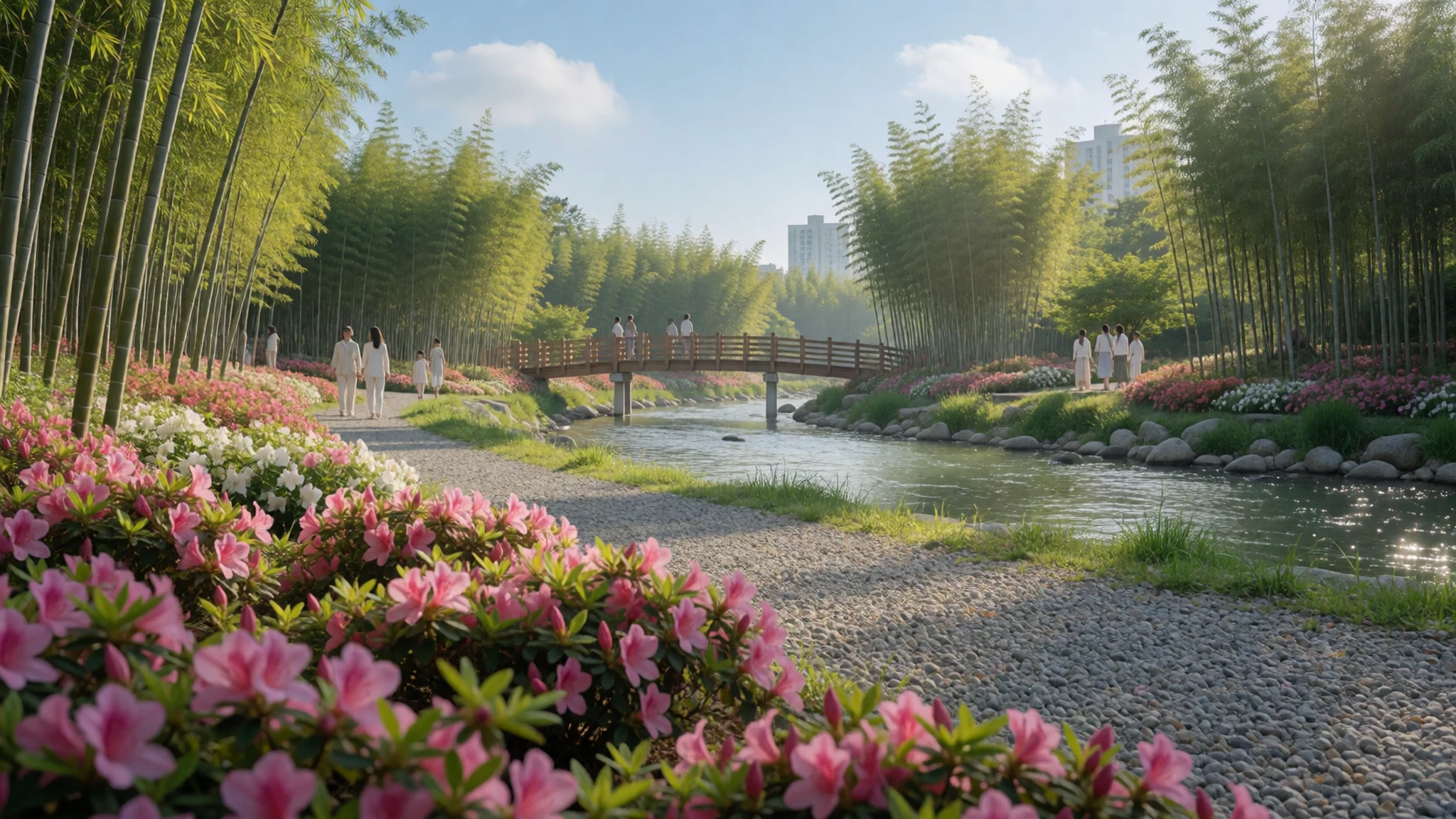
- Mt Gaji — Western Ulsan, near the Gyeongsang border
The tallest mountain in Ulsan, listed among Korea's 100 most beautiful mountains. Well-marked hiking trails climb it, and Seongnamsa Temple is a common starting point. Go on a clear autumn day for long views, and carry water and proper walking shoes.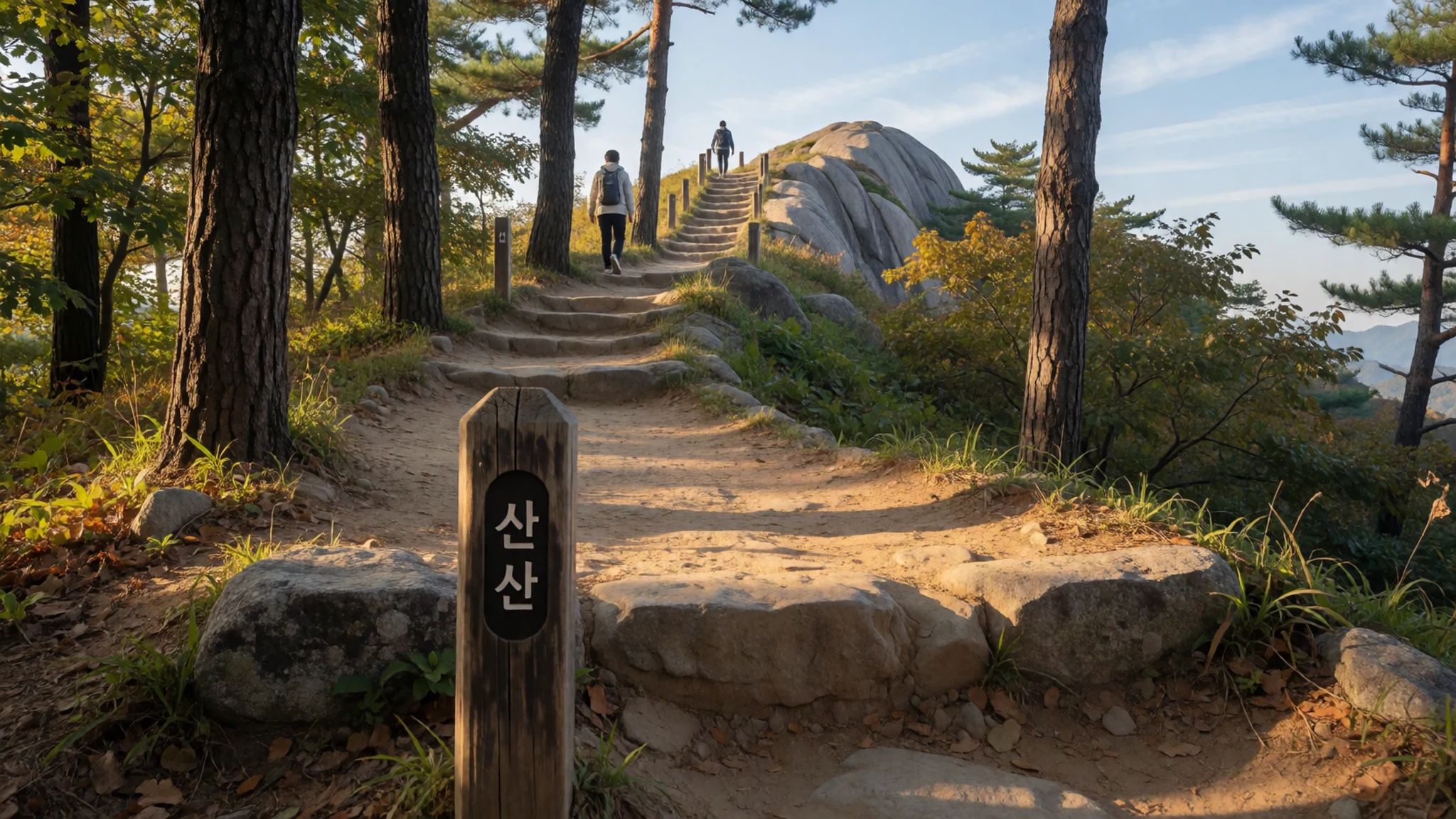
- Ganjeolgot sunrise — Ulju, southern coast
This cape in Ulju is a well-known place to watch the first sunrise on Korea's east coast. Crowds gather around New Year, so go on an ordinary morning for quiet. A coastal path and sea views make the early start worthwhile.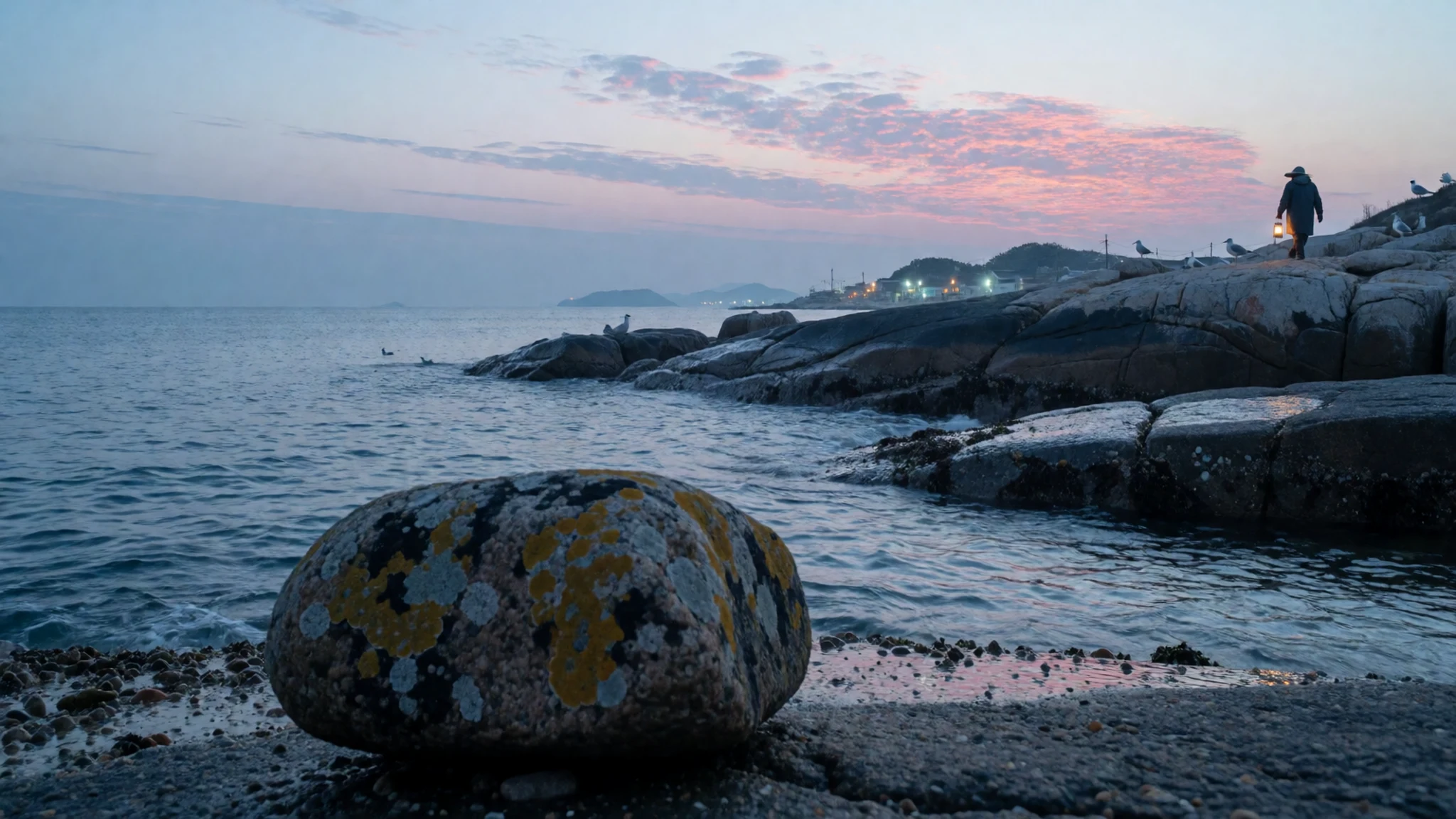
- Daewangam Park — Dong District, east coast
A seaside park on the east coast with a walking trail through pine woods. Cherry blossom, magnolia, camellia and forsythia flower in turn through spring. Rocks and sea sit just beyond the trees, making it a pleasant half-day of easy walking.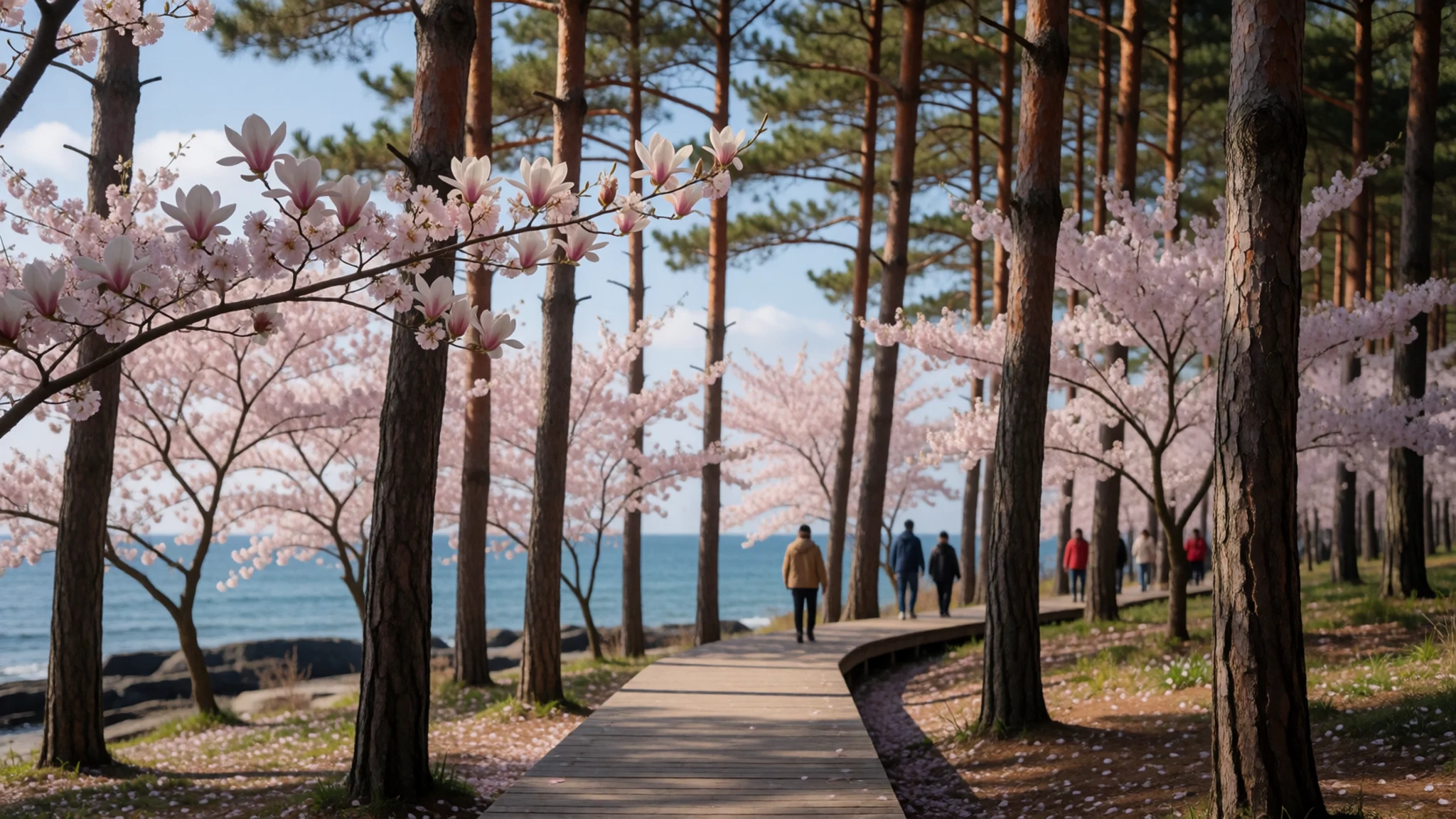
- Naewonam Valley, Mt Daeun — Mt Daeun, Ulju
A quiet valley with pools and small waterfalls tucked between large boulders. It is a cool, shaded place to walk in summer, away from the industrial side of the city. Stream crossings can be slippery, so wear shoes with grip.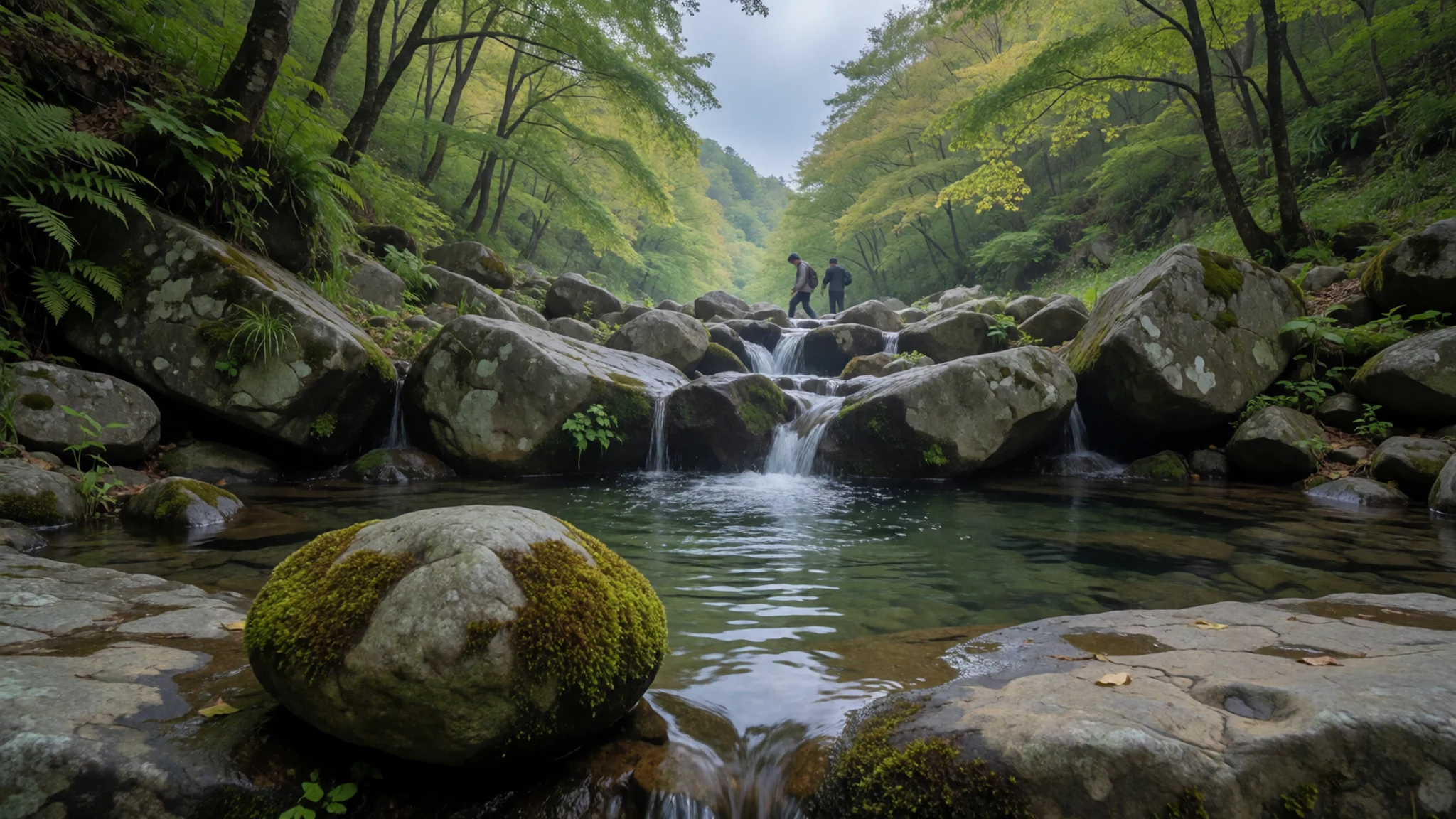
- Jujeon black pebble beach — Jujeon, Dong District coast
A shoreline of dark rounded pebbles where clear blue waves break against large rocks. It suits winter visits, when the sea is rough and dramatic. Swimming is not the point here; come for the sound of stones rolling in the surf and the views along the coast.
Culture
Ulsan's culture is that of a working Korean port city, shaped by shift work, family ties to the big employers and a strong sense of local pride. The Hyundai companies sponsor much of civic life, from sports teams to concert halls, and company identity is part of how people introduce themselves. Visitors will notice early starts, tidy streets and a practical, no-fuss attitude.
Older layers show up in temples on the hills, such as Seongnamsa on the way up Mt Gaji, and in the memory of the 1592 resistance, when monks fought beside townspeople. Coastal villages still hold seasonal rituals and fishing traditions, though they are quieter than in the past. Food, drinking and meals are social: dishes arrive to share, and meals often run long.
The river garden has become a shared living room. Families cycle, couples walk, and older residents exercise in the early morning. It is a good place to see everyday Ulsan at ease. Korean is the main language, and English is limited outside hotels and tourist booths, so a translation app and a few polite phrases go a long way. At temples, remove your shoes before entering any hall, speak softly, and do not photograph worshippers without asking.
What to wear
Traditional Korean dress is the hanbok, a jacket (jeogori) with a wrap skirt (chima) for women and jacket with trousers (baji) for men. It is made from silk, ramie or hemp for summer, and padded cotton or silk in winter, in bright or pastel colours. In Ulsan, as elsewhere, it appears at weddings, Lunar New Year, Chuseok and festivals, not on ordinary days.
Everyday dress is modern and neat. In a manufacturing city, you will see work uniforms and company jackets around shift changes, with business casual in offices and fashionable, well-groomed outfits in the department stores and the university district. Sportswear and hiking gear are common, because many residents climb nearby hills at weekends.
For visitors, dress for the season. Summers are hot and humid, so light, breathable clothing and a hat suit the river and coast, while winters are cold and windy by the sea, needing a warm coat and layers. Comfortable walking shoes matter for the garden paths, and shoes with grip help on pebble beaches and valley rocks. At temples, cover shoulders and knees where possible and choose shoes that are easy to take off. An umbrella is useful in the rainy season.
What to eat
- Milmyeon (wheat noodles) — Noodle shops around central Ulsan
Cold wheat noodles in a chilled broth, a speciality of South Gyeongsang Province. They are light, tangy and refreshing in hot weather. Look for dedicated noodle shops in central Ulsan, where a bowl is a quick, inexpensive lunch.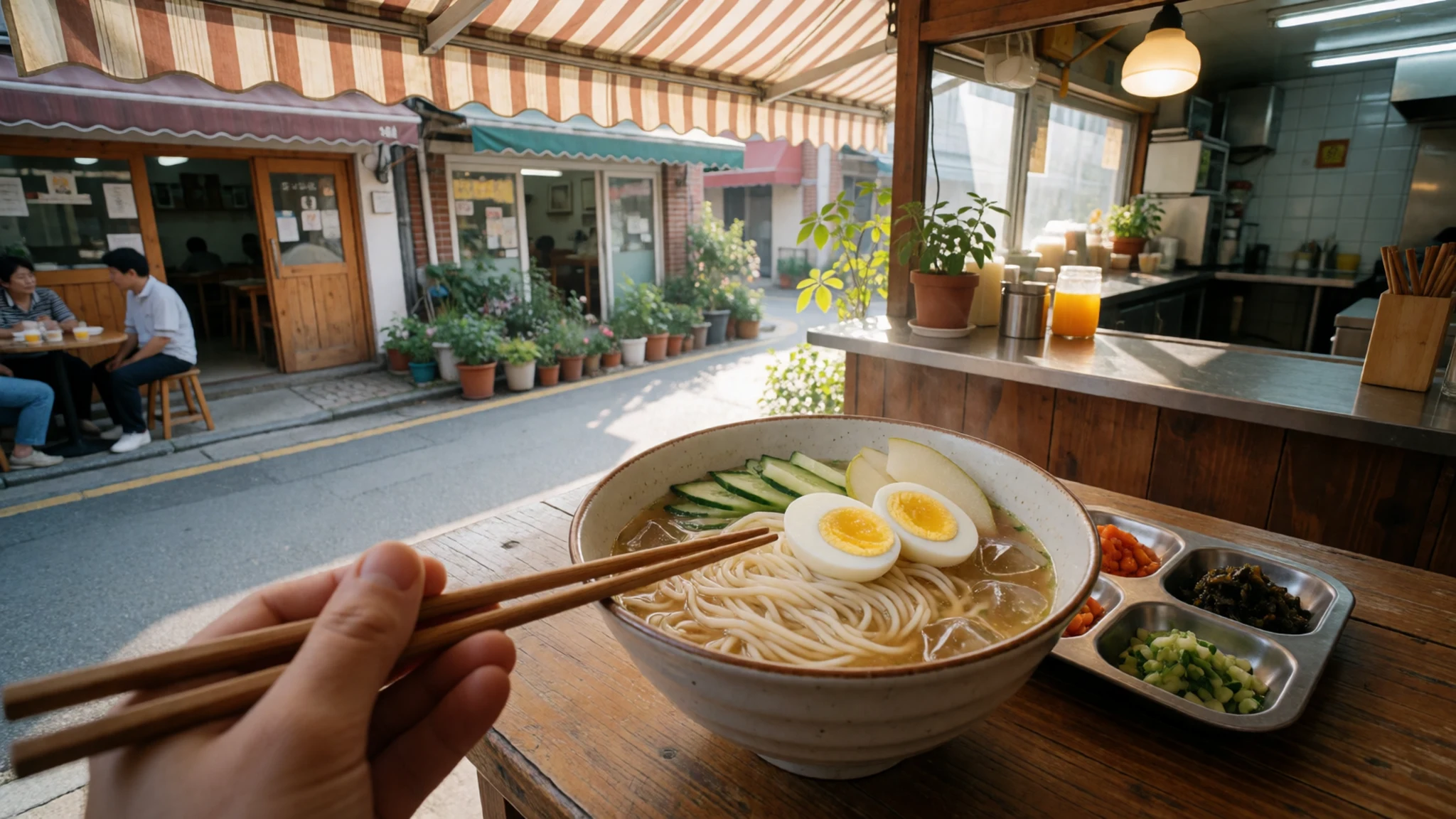
- Hanjeongsik — Traditional Korean restaurants in the city centre
A spread of many small dishes served together with rice and soup, often with charcoal-grilled beef. It is a meal for family gatherings or business lunches and gives a broad taste of Korean cooking in one sitting.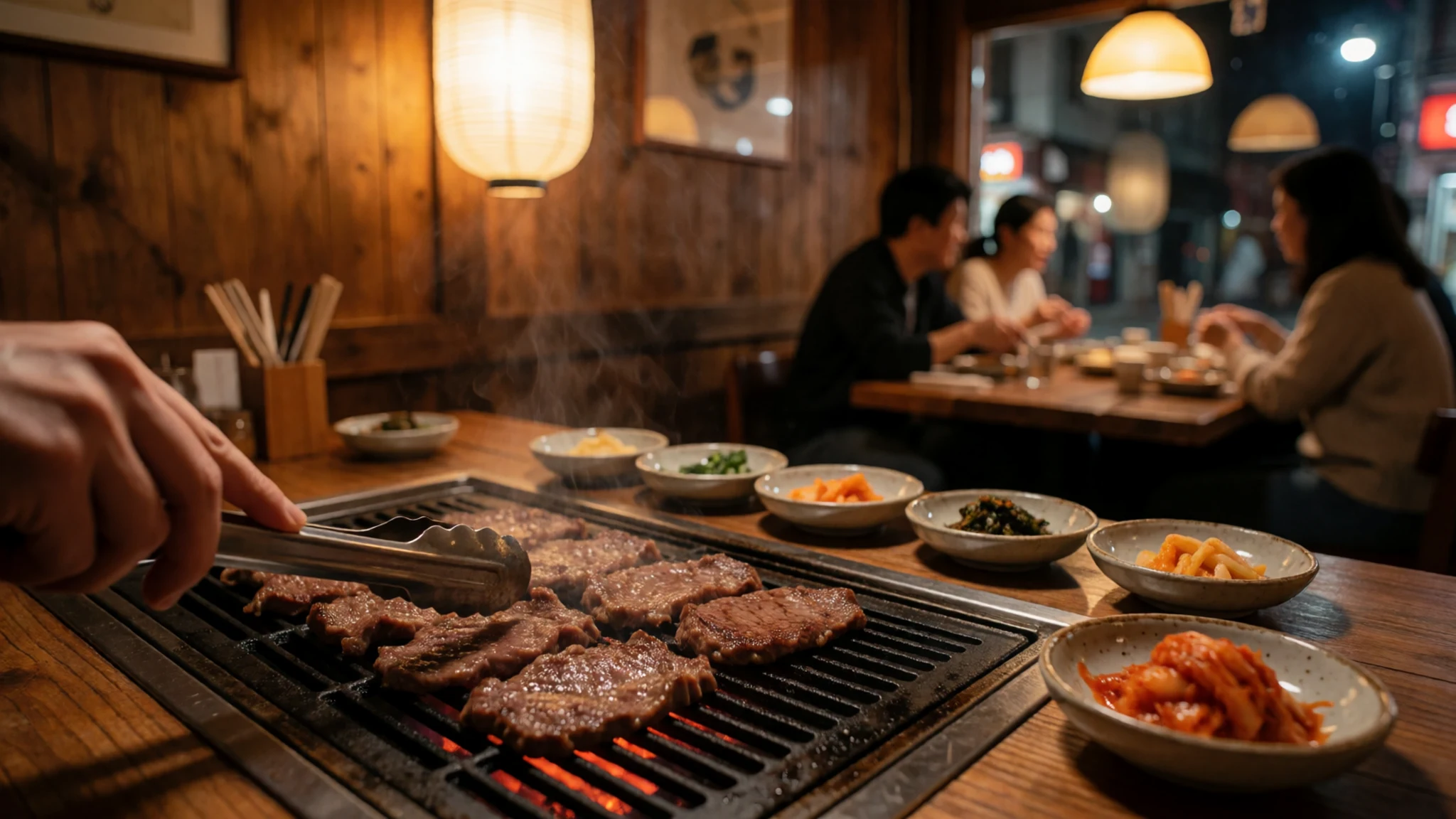
- Jokbal and bossam — Eateries in the university district
Pork trotters or boiled pork slices served with wraps, kimchi and dipping sauces. A filling, sociable dish, usually shared among friends over drinks. Student districts have plenty of casual places serving it. - Fresh raw fish (hoe) — Coastal fish markets and seafront eateries
Sliced raw fish served with chilli paste, leaves and side dishes, reflecting the port's fishing roots. Coastal markets and seafront eateries are the best places, and the fish is chosen from tanks on the spot. - Market snacks — Central Market, Seongnam-dong
Central Market in Seongnam-dong sells tteokbokki, fried snacks, fish cakes and seasonal produce. It is an easy way to graze through local flavours, and a window into daily life in the city.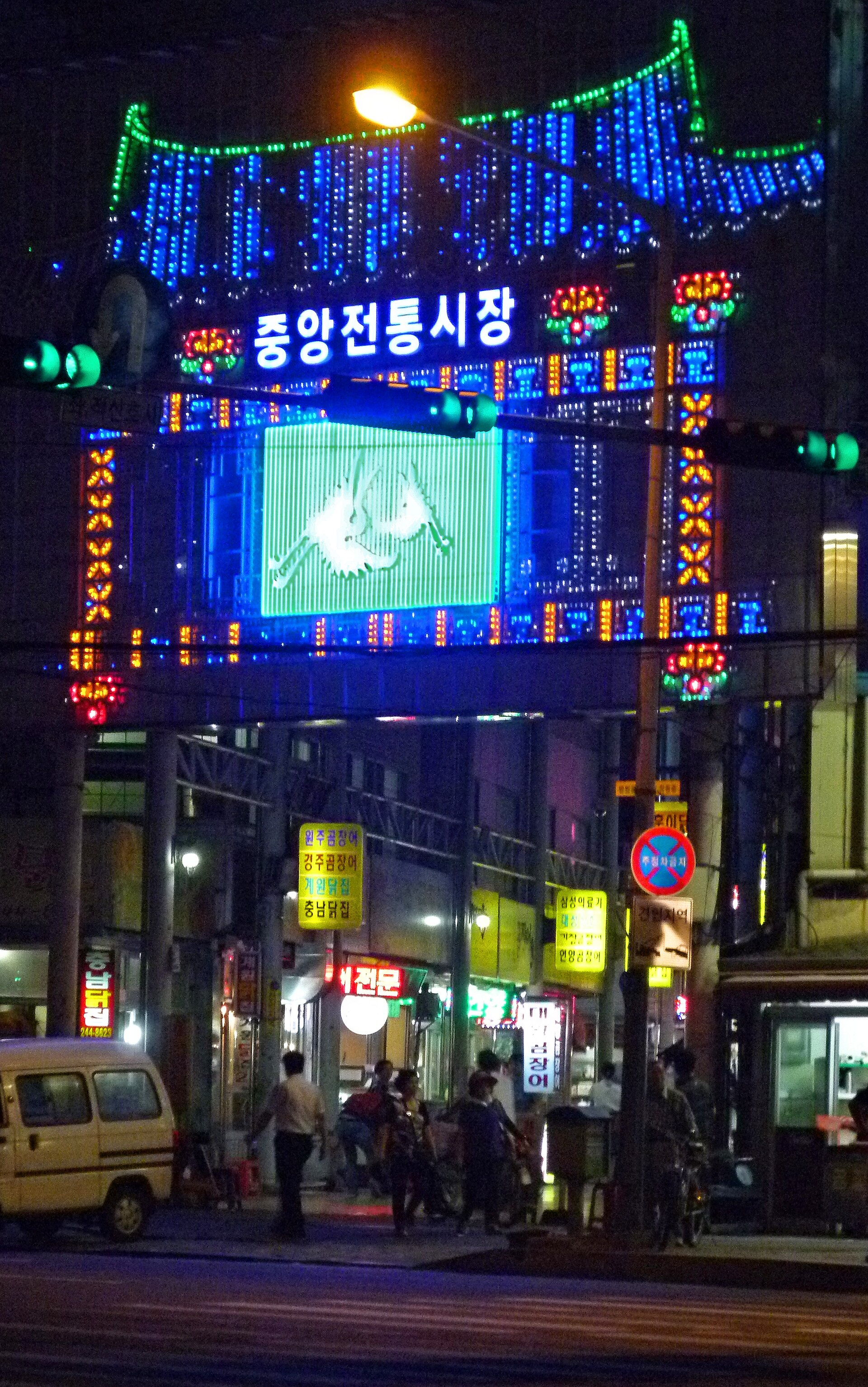
Plan it
Best time. April–May and October–November, when the weather is mild and the river garden and hills are at their best. Summer is hot and humid with rain, and winter is cold by the sea but good for dramatic pebble-beach views.
How long. 2–3
Getting there. Ulsan has no international flights. Fly into Seoul's Incheon, transfer to Gimpo for the domestic flight (about one hour), or fly to Busan's Gimhae. Alternatively take the KTX high-speed train to Ulsan. Local buses and taxis cover the last leg.
Budget. mid
Tips
- Pick up maps and leaflets from the tourist information booth at the airport
- Start hikes and sunrise visits early to avoid crowds and heat
- Carry a translation app, as English is limited outside tourist spots
- Check the official site, https://www.ulsan.go.kr/, for events and transport updates
- Book popular restaurants ahead, especially omakase and set-meal places
Etiquette
- Take off shoes when entering temple halls and homes
- Keep voices low at temples and on trails
- Ask before photographing people
Nearby
Sources
- Wikidata Q41278 (CC0)
- Wikipedia: Ulsan (rev 1383802293) (CC BY-SA 4.0)
- Wikivoyage: Ulsan (rev 5404984) (CC BY-SA 4.0)
- Shade Of Taehwagang — Rhie Cudanin (CC BY 3.0)
- Taehwa River from Hotel Riverside Ulsan — Choi2451 (CC BY-SA 4.0)
- Ulsan Central market entrance — Rystheguy (CC BY 3.0)
- Ulsan Industrial Zone plan 1962 — Republic of Korea (Public domain)
- Hyundai Heavy Industries Ulsan Shipyard — Wvdp (CC0 1.0)
- Ulsan plant of Kolon Industries — Erinhylee (CC BY-SA 4.0)
- Lotte Department Store Ulsan — LandAndTree (CC BY-SA 4.0)
- UNIST campus — EEEJJJ (CC BY 3.0)


