Turkistan
Turkistan, Kazakhstan
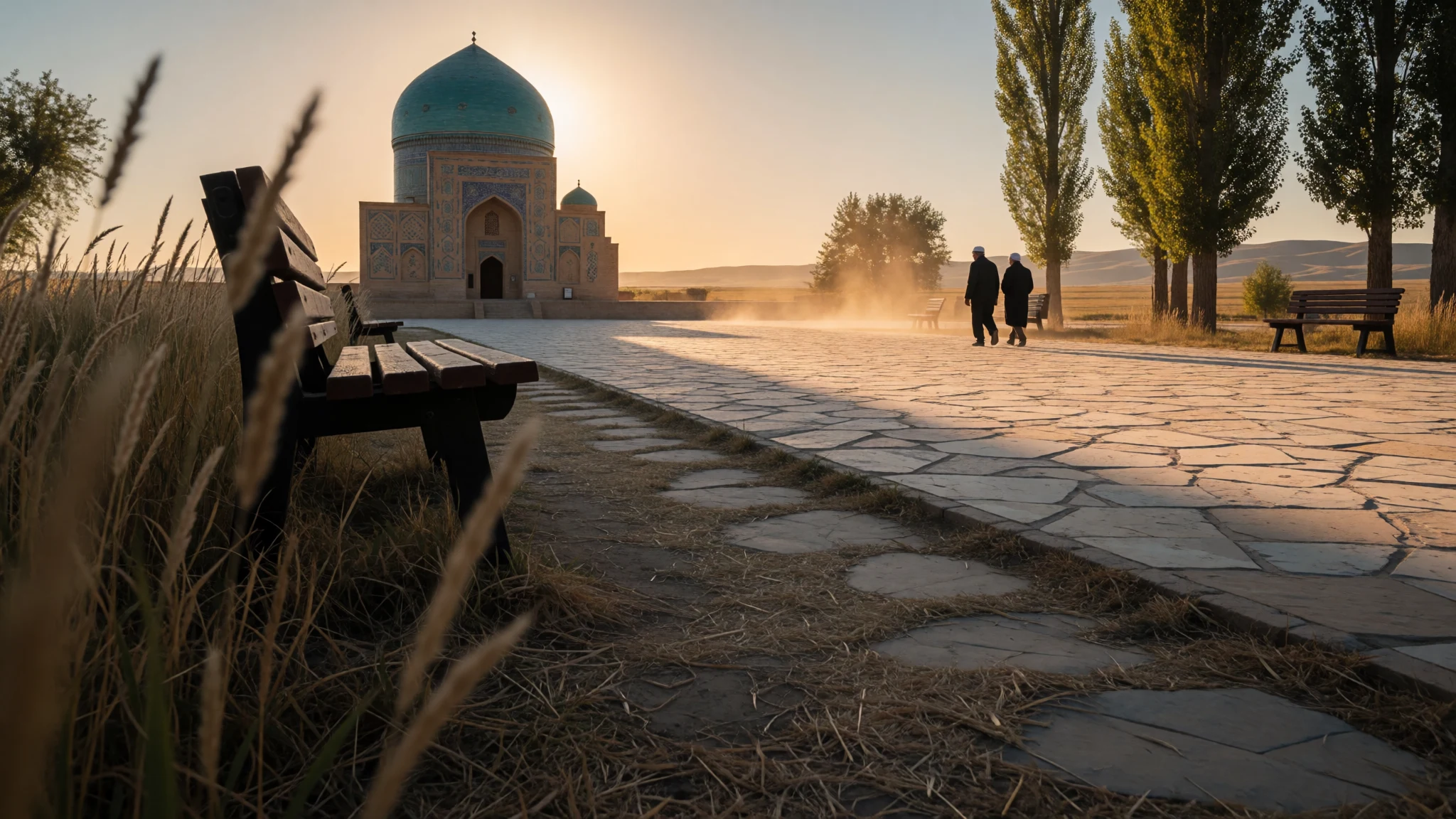
Turkistan is Kazakhstan's pilgrimage city, where a vast unfinished Timurid mausoleum draws worshippers from across Central Asia to the edge of the steppe.
The place
Turkistan lies in southern Kazakhstan, close to the Syr Darya river, on the railway that runs from Kyzylorda in the north down to Tashkent. It is the administrative centre of Turkistan Region and home to about 165,000 people. Shymkent, the nearest large city, is some 160 km to the south-east, and most visitors pass through it on the way.
The landscape is flat, dry and open, with the steppe starting almost at the city edge. The climate is cool semi-arid: winters are short and cold, summers are long, dry and very hot, and what rain and snow there is arrives between late autumn and late spring.
The centre is compact. The Yasawi mausoleum anchors it, and around it are older tombs, a semi-underground mosque, a large mosque and a park where families stroll in the evening. Much of the rest of the city is recent, wide-roaded and built for the status it gained in 2021, when the Organization of Turkic States named it the Spiritual Capital of the Turkic World. Hazrat Sultan International Airport now serves the city.
It helps to be honest about scale. Turkistan is a place for one or two days built around a single great monument, not a sprawling city of back-street discoveries. There is little to do beyond the centre, and the pleasure is in the pace: pilgrims arriving by the busload, tea in the shade, and the light changing on the tilework in the late afternoon. The city is also more openly devout than most of Kazakhstan, and that shapes everyday life, from dress to drinking.
Its story
Turkistan's story begins with a settlement whose archaeological traces go back to around the year 401. For centuries it was a modest trading town, and its rise came after the neighbouring city of Otrar, down the Syr Darya, went into decline. Traders and caravans shifted their business here, and the town became a stopping place on the edge of the steppe.
What changed its fate was a man. In the 11th century Khoja Ahmed Yasawi, a Sufi sheikh and poet, lived and taught here, and after his death his grave became a place of devotion. His reputation made the town a centre of spiritual life and Islamic learning for the people of the Kazakh steppe, who had few other such places nearby.
In the 1390s the conqueror Timur ordered a grand domed mausoleum built over the grave. The works were never completed, but the building still dominates the town. Timur's great-granddaughter, Rabiya Sultan Begim, is commemorated in a mausoleum of her own, and three more tombs honour Kazakh khans.
Between the 16th and 18th centuries Turkistan served as capital of the Kazakh Khanate and as its political heart. Khans, warrior leaders and statesmen were buried near the saint, tying the dynasty to his blessing. For much of its history the town sat on a frontier, between the old oasis civilisation of Transoxiana to the south and the open grassland to the north. Russian rule arrived in the 19th century, and the railway later drew the town into a wider world. In recent years it has been rebuilt as a national symbol.
What to see
- Mausoleum of Khoja Ahmed Yasawi — City centre
The great domed tomb was commissioned in 1389 and never finished, which is part of its character: bare brick patches sit beside bands of blue tile. Inside are large vaulted halls, and the pilgrim traffic is constant. Go early or late, when light is soft and tour groups thin out.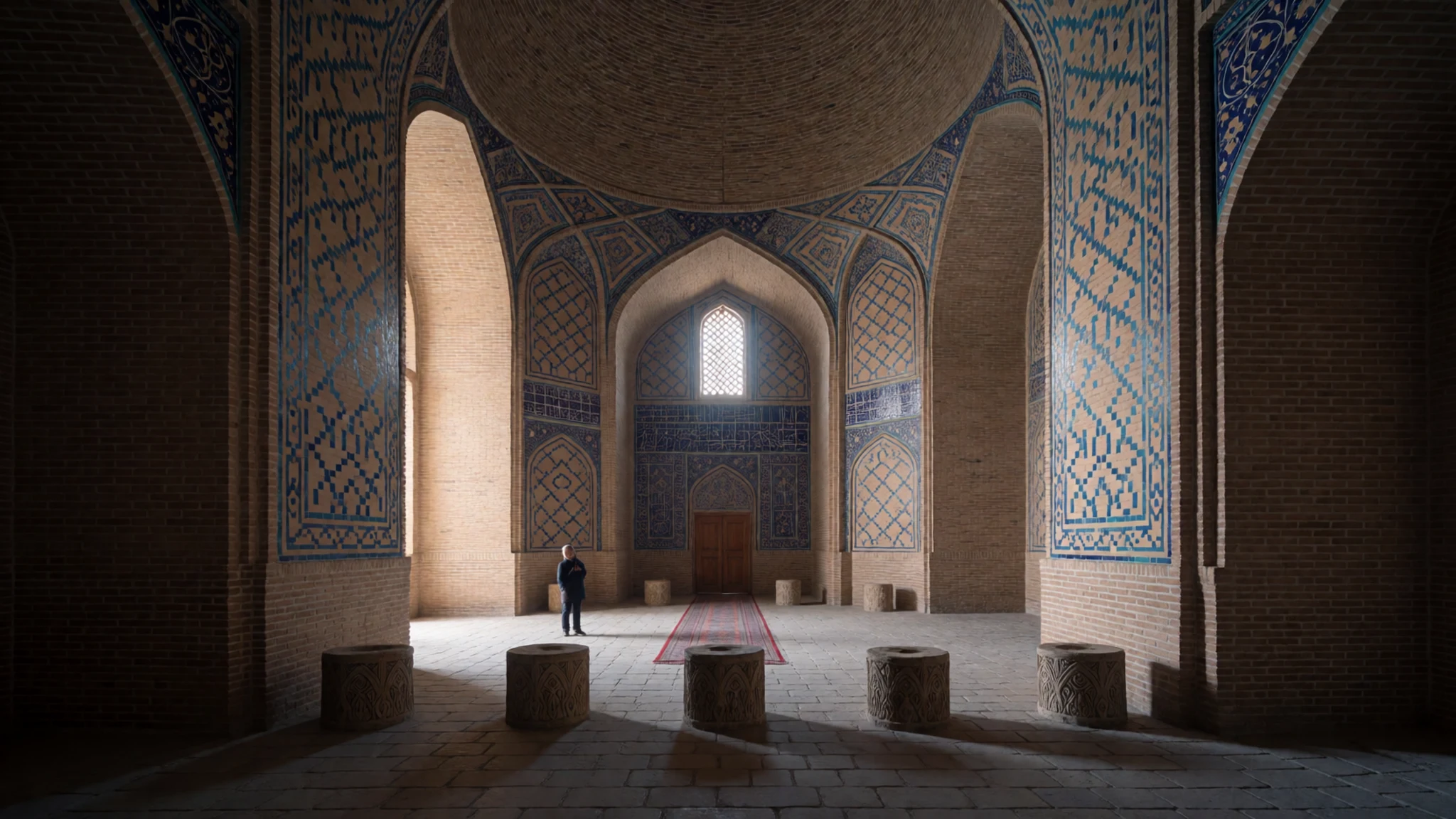
- Mausoleum of Rabiya Sultan Begim — Historic complex
A smaller tomb for Timur's great-granddaughter, standing close to the main complex. It is quieter than the Yasawi mausoleum, so it suits a slower look at the proportions and tilework of the period. Together with the khans' mausoleums, it shows how the area became a royal burial ground.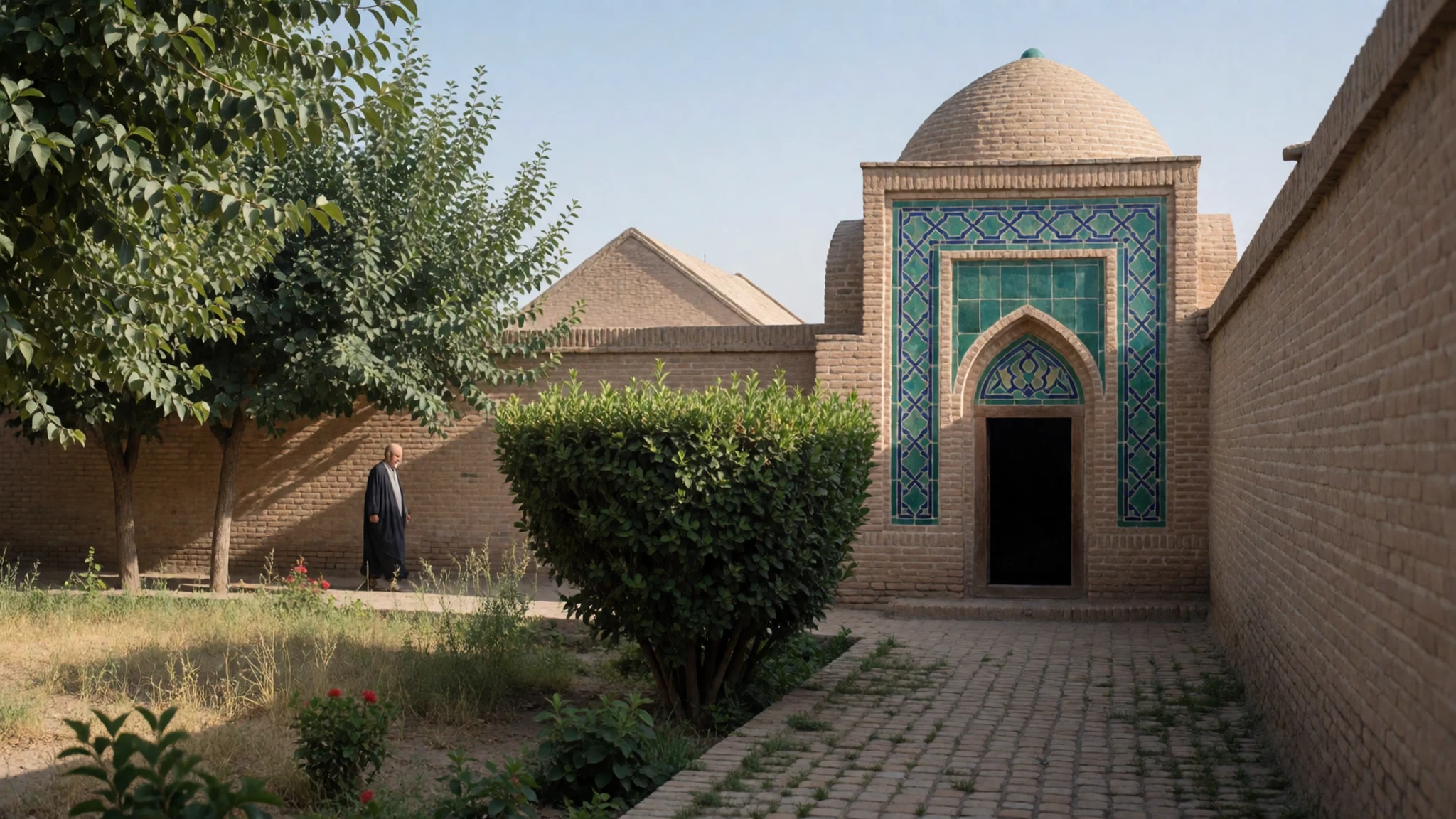
- Hilvet Mosque — Beside the Yasawi mausoleum
A semi-underground mosque in the historic grounds, cool and dim even in midsummer. Its low, earthen feel is a pleasing contrast to the tiled grandeur above ground. Worshippers use it, so keep your voice down and check what is open before you go in.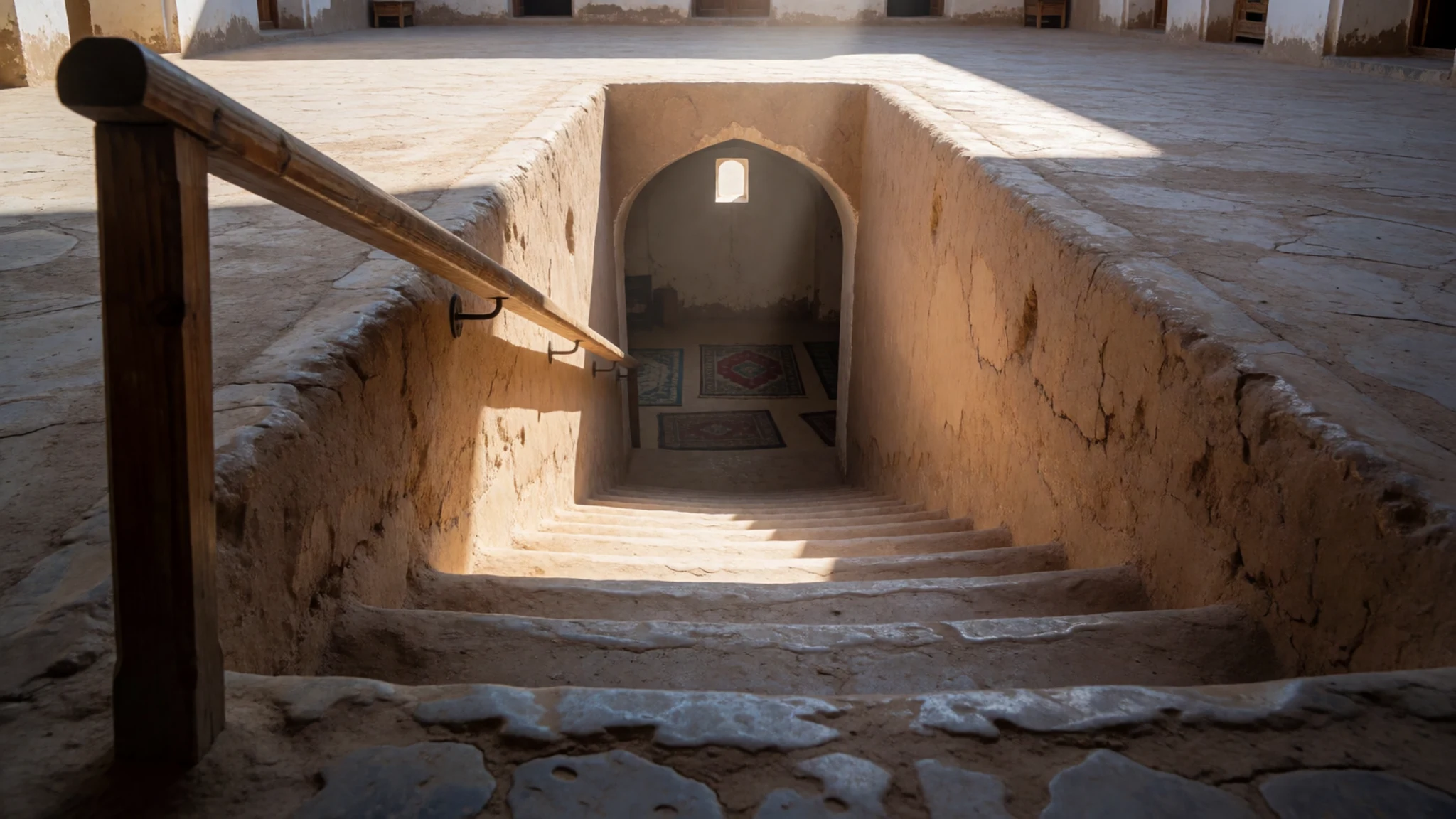
- Turkistan Museum of History — City centre
A good first stop for the region's layered past, from the settlement's early centuries and the Silk Road trade to the era of the Kazakh Khanate. It helps make sense of the sites outside. Opening times change, so check locally or the city website before planning around it.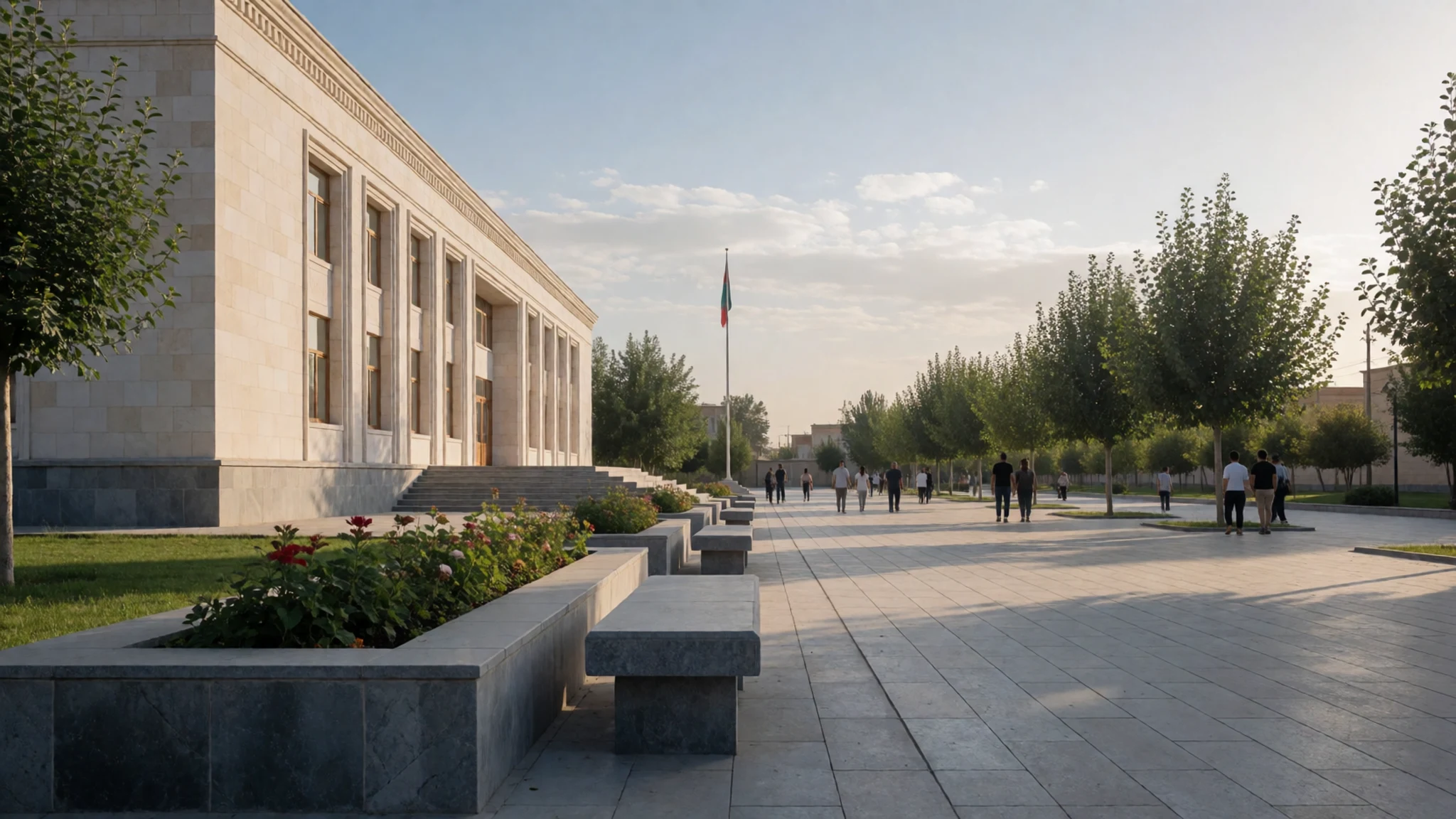
- Karavan Saray and the railway station — Karavan Saray: west of the centre; station: western edge of the city
The Karavan Saray is a modern complex built in traditional Kazakh style, with restaurants and shops, and pleasant for an evening walk. Across town, the railway station dates from around 1906. Its art-nouveau lines make it a fine piece of railway architecture, and it is worth a look if you arrive by train.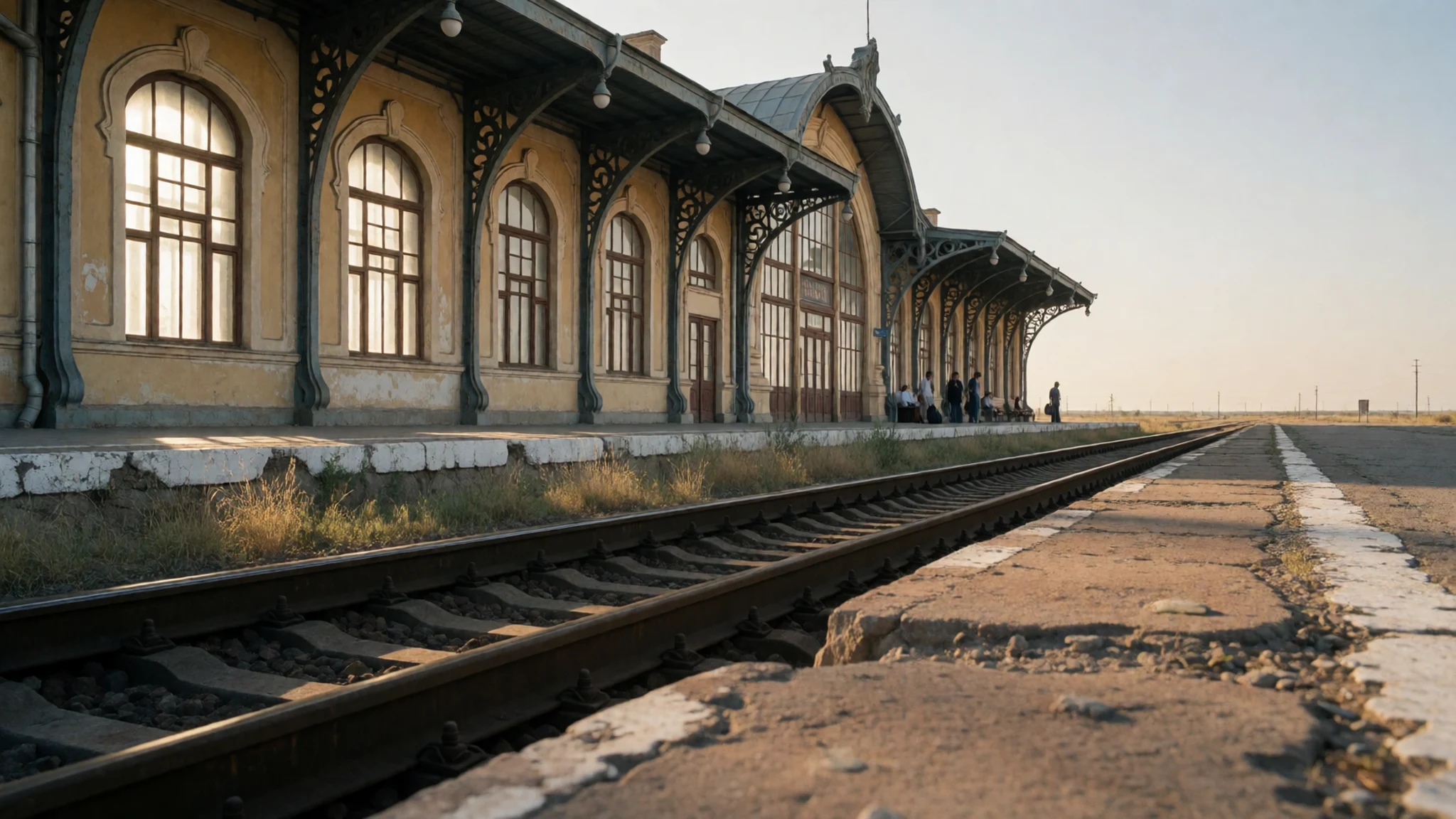
Culture
Turkistan is a place of living devotion, and that sets it apart from most of Kazakhstan. People come to the Yasawi mausoleum as pilgrims, not just sightseers, and many travel from elsewhere in Kazakhstan and from neighbouring Central Asian countries. Yasawi himself was a Sufi poet who wrote in a Turkic language rather than Arabic or Persian, which is one reason he is claimed as a founding figure across the Turkic world. That idea of shared heritage is why the city carries its modern title as a spiritual capital.
The Kazakh relationship with Islam has its own colour here. Respect for ancestors is strong, and the tombs of khans and warriors near the saint reflect a custom of seeking blessing close to holy ground. Visitors will see people reciting prayers at graves, sitting quietly in courtyards, or touching the walls as they leave.
Everyday life follows the same tone. The city is more observant than the national average, so many restaurants do not serve alcohol, and minimarkets rarely stock it. Larger supermarkets are the exception. Hospitality is warm, though: tea is offered readily, and a few words of Kazakh or Russian are met with real pleasure. Spring festivals such as Nauryz bring music, food and families into the open spaces.
In the mausoleum and mosques, dress modestly, cover your shoulders and knees (and your hair too, if you are a woman), take your shoes off where others do, and ask before photographing anyone at prayer.
What to wear
In Turkistan, traditional Kazakh dress is something people wear for weddings, national holidays and festivals such as Nauryz, not every day. Men's festive outfits centre on the chapan, a long quilted or woven robe worn over trousers and a shirt, often with a embroidered skullcap or a fur-trimmed hat in cold weather. Women's costume uses velvet, silk and wool, with embroidery and metal ornament. Brides and festive wear are crowned with the tall saukele headdress, while older women often wear the kimeshek, a white wrapped headcloth. Felt, one of the steppe's oldest textiles, appears in hats, boots and rugs.
On the street, most people dress in modern, practical clothes: jeans, shirts, trainers, and long skirts or dresses for women. Headscarves are common, especially among older women and around the shrines, but there is no uniform. Younger people dress much as they would in any Central Asian city, and smart outfits come out for Friday prayers and family gatherings.
Visitors should plan for the climate first. Summers are long, dry and very hot, so choose light, loose cotton or linen, a hat and good sun protection. Winters are cold, so bring warm layers. At the mausoleum and mosques, cover shoulders and knees, and women should carry a light scarf for the head. Shoes need to be comfortable for long walks on paving and dusty paths, and easy to slip off at prayer-hall doors.
What to eat
- Beshbarmak — Traditional Kazakh restaurants, including those around the Karavan Saray complex
The classic Kazakh dish: boiled meat served over broad flat noodles in a savoury broth, usually shared at a table of family and guests. It is heavy and comforting, and generally served at gatherings. Look for it at restaurants serving traditional Kazakh food.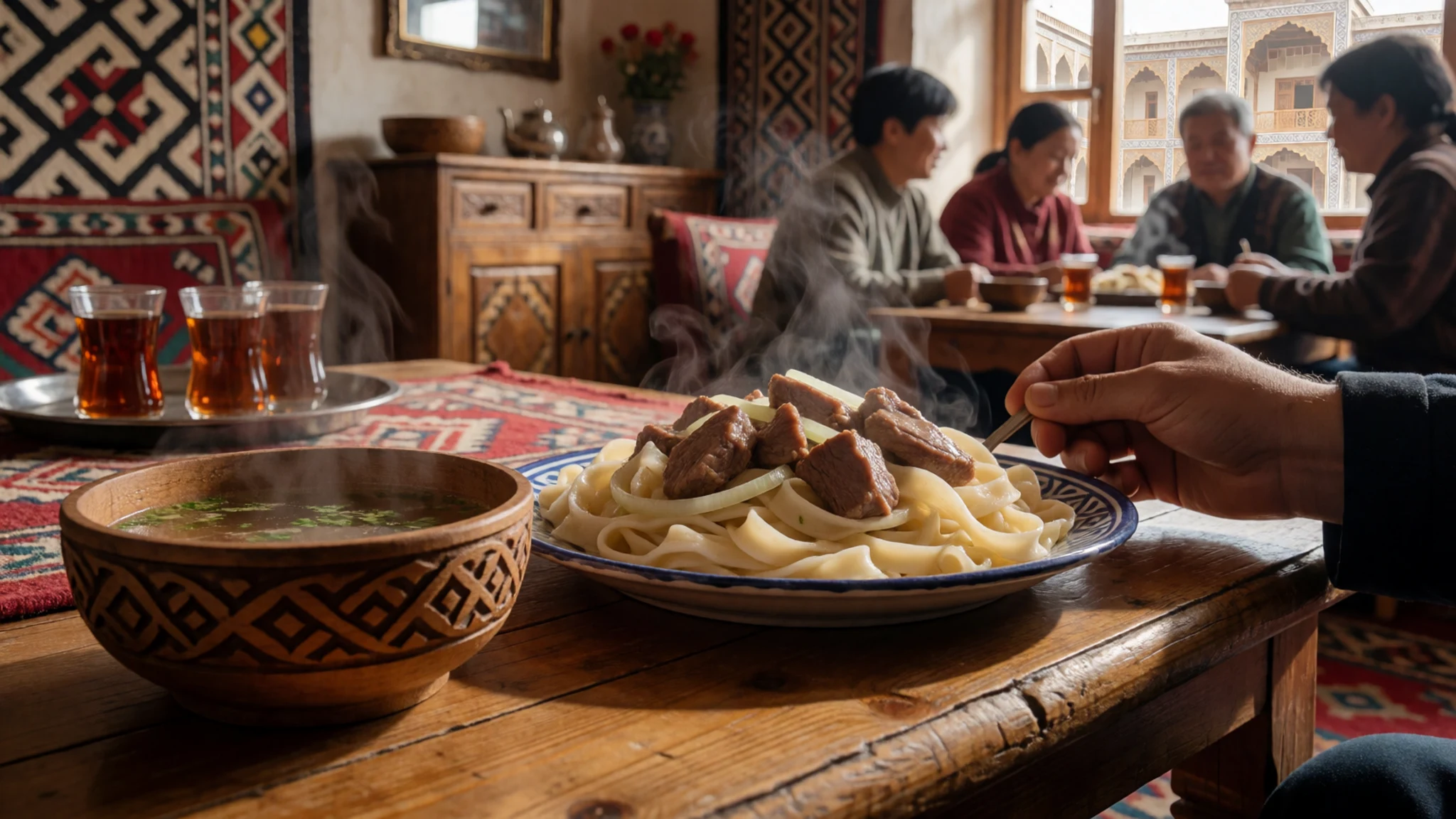
- Baursak — Restaurant tables, bakeries and market stalls
Small pieces of dough, fried until golden and puffy, served with tea or at the start of a meal. They are the Kazakh bread you are most likely to meet. Eat them warm, with jam or honey if offered, and expect to be offered more.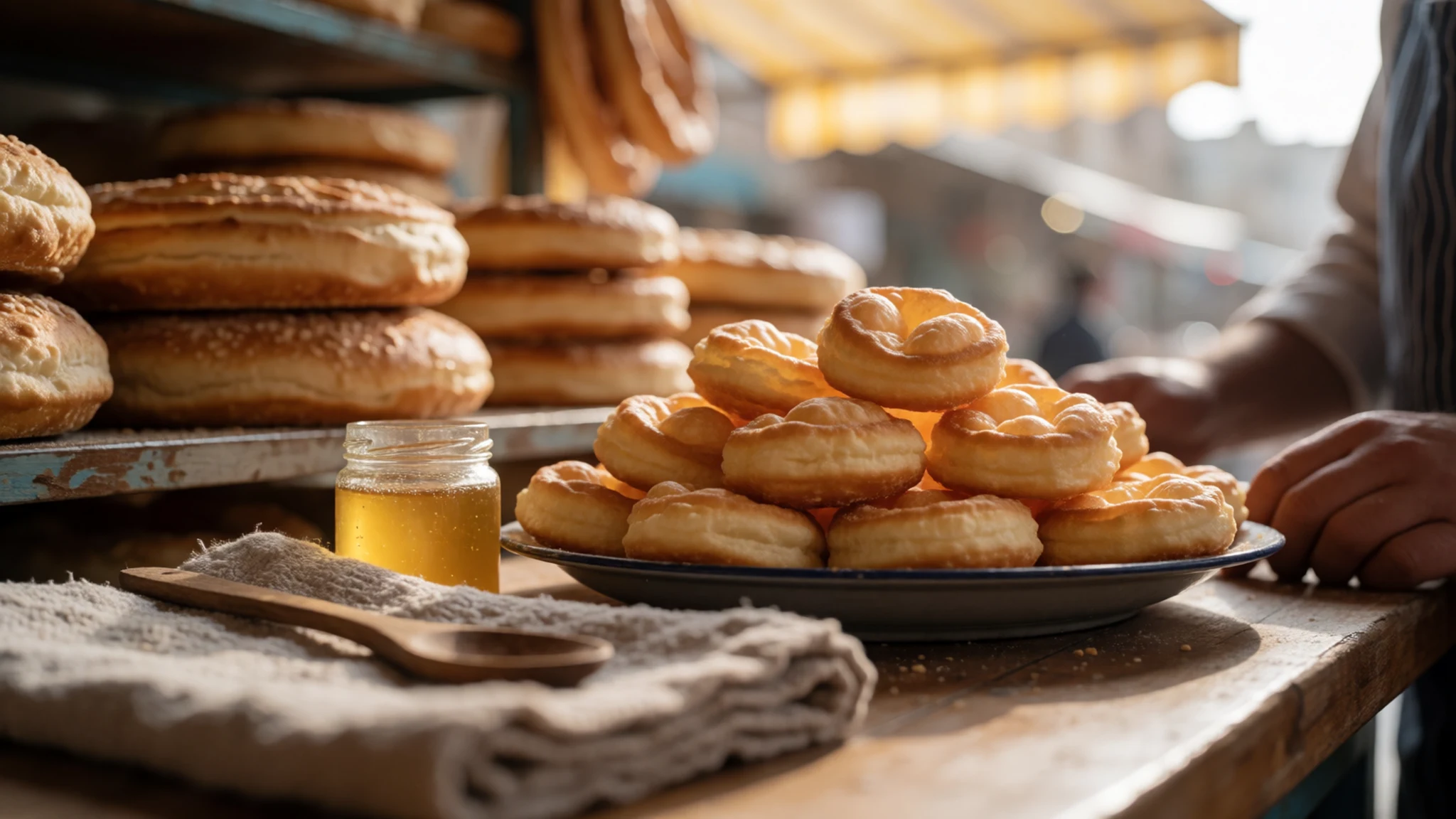
- Samsa — Bazaars and the area around the bus stations
A baked pastry, usually filled with seasoned meat and onion, with a crisp, flaky crust. In the transport hubs and bazaars the smell of fresh samsa is a more reliable guide than a sign. It makes a cheap, filling snack between sights. - Shashlyk — Small grill eateries and halal shashlyk places around the city
Skewers of grilled meat, often lamb or beef, cooked over charcoal and served with onions and bread. Many places are halal, which suits the city's character. Order a few skewers with flatbread and a pot of tea. - Tea with bread and sweets — Cafés and coffee shops around the historic centre
Black tea poured often and in small quantities is the centre of Kazakh hospitality. It comes with bread, dried fruit, crackers and sweets, and is a fine way to rest in the afternoon heat. Cafés near the mausoleum park are the easy choice.
Plan it
Best time. April–May and September–October. Spring and autumn are mild enough for walking the monument grounds. Summers are long, dry and very hot, and winters are short and cold, with most rain and snow falling between late autumn and late spring.
How long. 1–2
Getting there. Fly to Hazrat Sultan International Airport at Turkistan itself, or to Shymkent and continue by minibus, train or taxi, about two hours by road. Trains run from Almaty (nearly 20 hours) and from Tashkent, where the border check happens around midnight.
Budget. low
Tips
- Visit the mausoleum early or late in the day to avoid heat and group crowds
- Carry water and sun protection in summer, as shade is limited
- Bring some cash for small shops, bazaars and minibuses, and check which restaurants take cards
- Do not count on finding alcohol, as most venues and minimarkets do not sell it
- Check opening times of the museum and mausoleum locally or on the city website, https://www.gov.kz/memleket/entities/turkestan-kalasy
Etiquette
- Dress modestly at the mausoleum and mosques, and take shoes off where others do
- Ask before photographing worshippers
- Keep voices low in prayer halls and at graves
Nearby
Sources
- Wikidata Q848638 (CC0)
- Wikipedia, Turkistan (city), rev 1386478337 (CC BY-SA 4.0)
- Wikivoyage, Turkestan, rev 5307266 (CC BY-SA 4.0)
- Photo: Mausoleum of Khoja Ahmed Yasawi, Petar Milošević (CC BY-SA 4.0)
- Photo: Turkistan Museum of History, Adam Harangozó (CC BY-SA 4.0)
- Photo: Mausoleum of Rabiya Sultan Begim, Yuriy75 (CC BY 3.0)
- Photo: Turkestan centre, Мағыпар (CC BY-SA 4.0)
- Photo: Turkestan Karavan Saray, Yakov Fedorov (CC BY-SA 4.0)
- Photo: Landsat view of Turkestan, NASA (Public domain)
- Photo: Turkestan railway station, Coopypasted (CC BY-SA 4.0)
- Photo: Al-Farabi statue, upyernoz (CC BY 2.5)


