Turaida Castle
Turaida Castle, Latvia
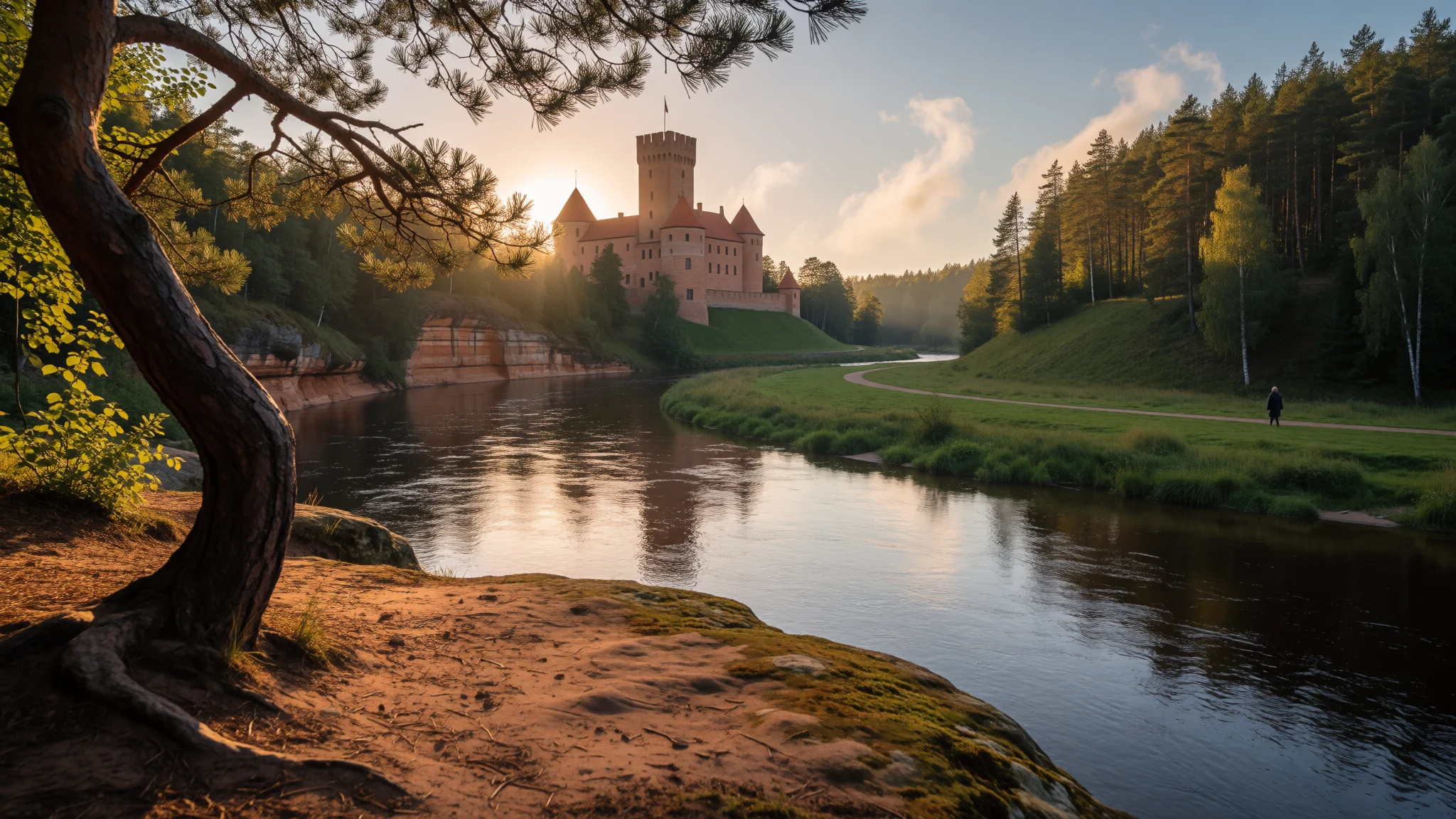
Turaida Castle is a red-brick Baltic fortress rebuilt above the Gauja valley, an easy day from Riga with forest, legend and long views.
The place
Turaida Castle stands in the village of Turaida, in Latvia's Vidzeme region, on the far bank of the Gauja River from the town of Sigulda. The name is usually explained as "Thor's garden" in Livonian, and older German maps write it Treiden. The castle is the centrepiece of the Turaida Museum Reserve, a wider heritage site that takes in the grounds, outbuildings and paths around the walls rather than the fortress alone. The setting is the Gauja valley, a landscape of steep banks, sandstone cliffs and pine and birch woods at the south-western end of Gauja National Park. Sigulda has long traded on that scenery, and its nickname, the Switzerland of Latvia, shows how proudly locals sell it. Seen from across the river, the castle is a mass of red brick with a tall main tower lifting clear of the treeline. Inside, the restored rooms hold exhibitions about the castle and the Livonian people of the Gauja, and there is a small café. Turaida village itself offers almost nothing for a proper lunch, so meals are best planned in Sigulda. The site works as a half-day from Riga, but it rewards a full day if the walk between Sigulda and Turaida is added, passing a cave, a ruined palace and several viewpoints on the way. Summer weekends bring crowds and slow traffic. The shoulder seasons are quieter, and the valley changes character with them: fresh green in late spring, deep gold in autumn, and white and silent under snow.
Its story
Turaida Castle began as an order from Albert, Archbishop of Riga, who handed the task of building it to the Sword Brothers, a crusading order that soon merged into the Teutonic Order. They raised it on the spot where the Livonians had kept a wooden stronghold, and named the new stone fortress Fredeland, meaning Land of Peace. Locals kept using the older Livonian name, Turaida, and that is the one that survived. The builders worked in the red brick typical of the Baltic crusading orders. Over the following centuries the defences were reworked. A southern tower went up in the fourteenth century, and when firearms arrived, a rounded western tower was added to suit them. Living quarters and service buildings filled the inner yard. By the seventeenth century the castle mattered less strategically, and only minor repairs were made. A fire in the late eighteenth century finished it as a residence, and the walls slowly decayed. By the start of the twentieth century only fragments of wall, the main tower, the rounded tower and one range of buildings were still standing. Archaeologists began regular excavations in the later twentieth century, and restoration and conservation followed, steadily recovering the castle's earlier outline. Wikivoyage notes that much of the rebuilding dates from the Soviet era, which is worth remembering when reading the brickwork: this is a careful reconstruction on medieval foundations, not an untouched original. Today the restored buildings house exhibitions on the castle and the Gauja Livonians.
What to see
- Turaida Castle and main tower — Turaida village
The restored brick castle is the obvious start. Exhibitions fill the rebuilt rooms, and a small café sits on site. The best moment is the climb up the main tower, where the view takes in the Gauja valley, the river bends and the wider museum reserve. Allow time for the courtyard too.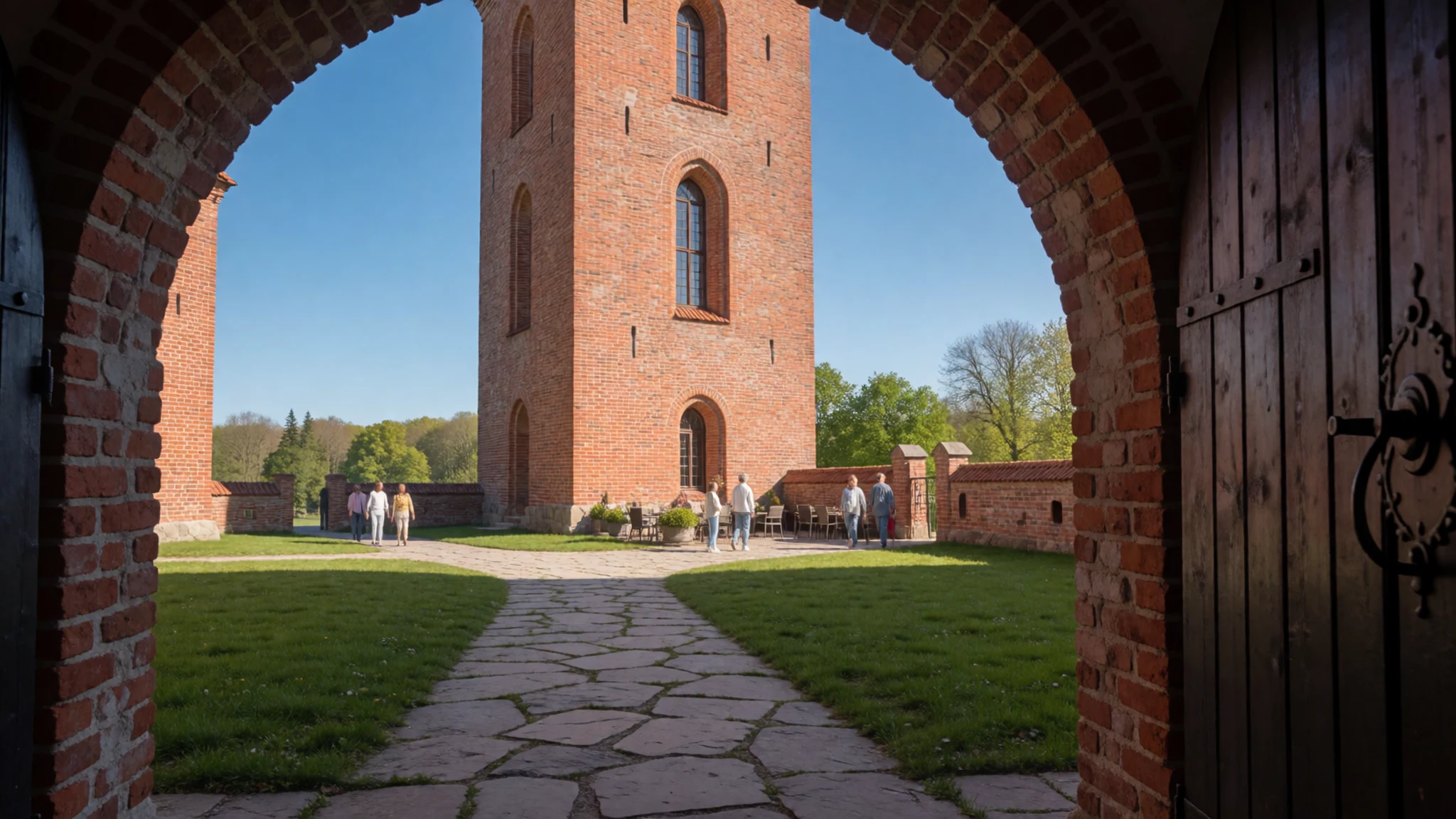
- Gutmanis Cave — Between Sigulda and Turaida
A wide sandstone cave roughly midway between Sigulda and the castle, with a small stream running out of it. Legend says the water is the tears of Gutmanis, and that drinking it does you good. Whatever the truth, it is a cool, shaded stop on the walk between the two sites.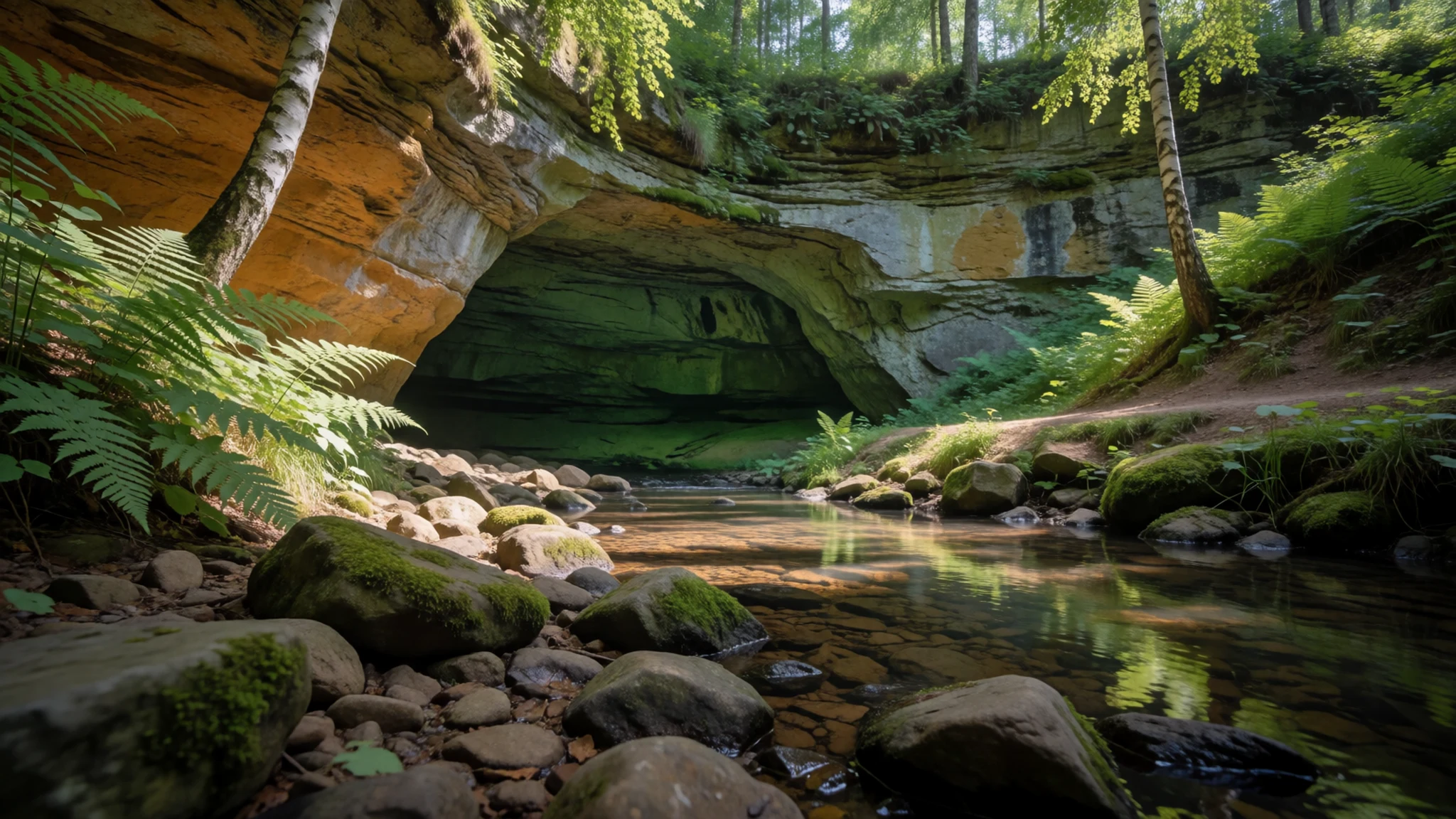
- Krimulda Palace and ruins — Krimulda, across the Gauja
Further along the winding road up from the cave, Krimulda has the remains of an old manor and castle on the opposite side of the valley from Sigulda. A cable car links the two sides at regular intervals, which makes the crossing a short, scenic ride; check the operator for current running times.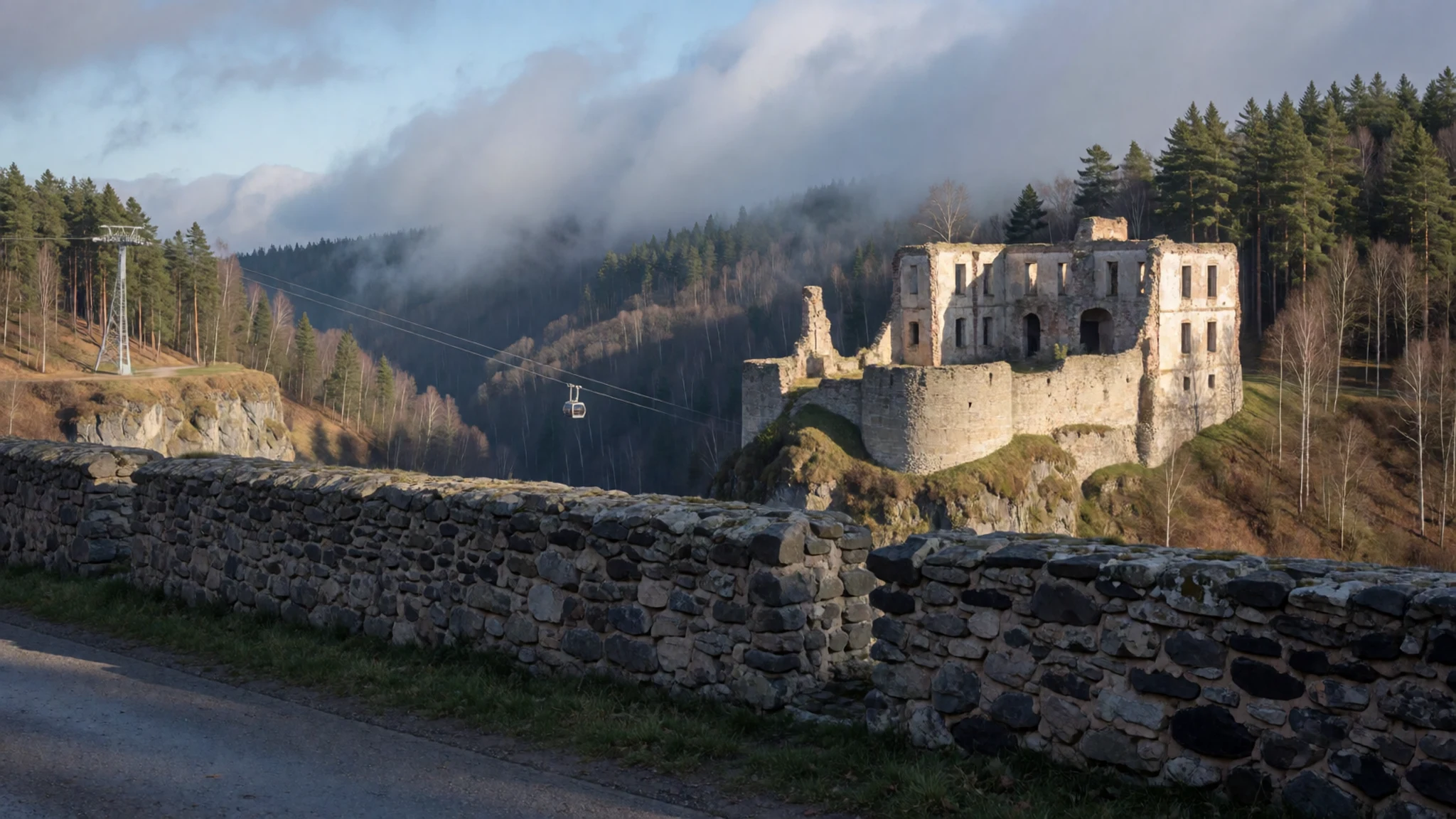
- Sigulda Medieval Castle ruins and New Castle — Sigulda town centre
In Sigulda town, the ruined medieval castle was built by the Sword Brothers and now has an open-air stage in its courtyard. Beside it stands the newer castle, a later manor-style building that houses the town council and a restaurant, with a small square of warrior sculptures near the entrance.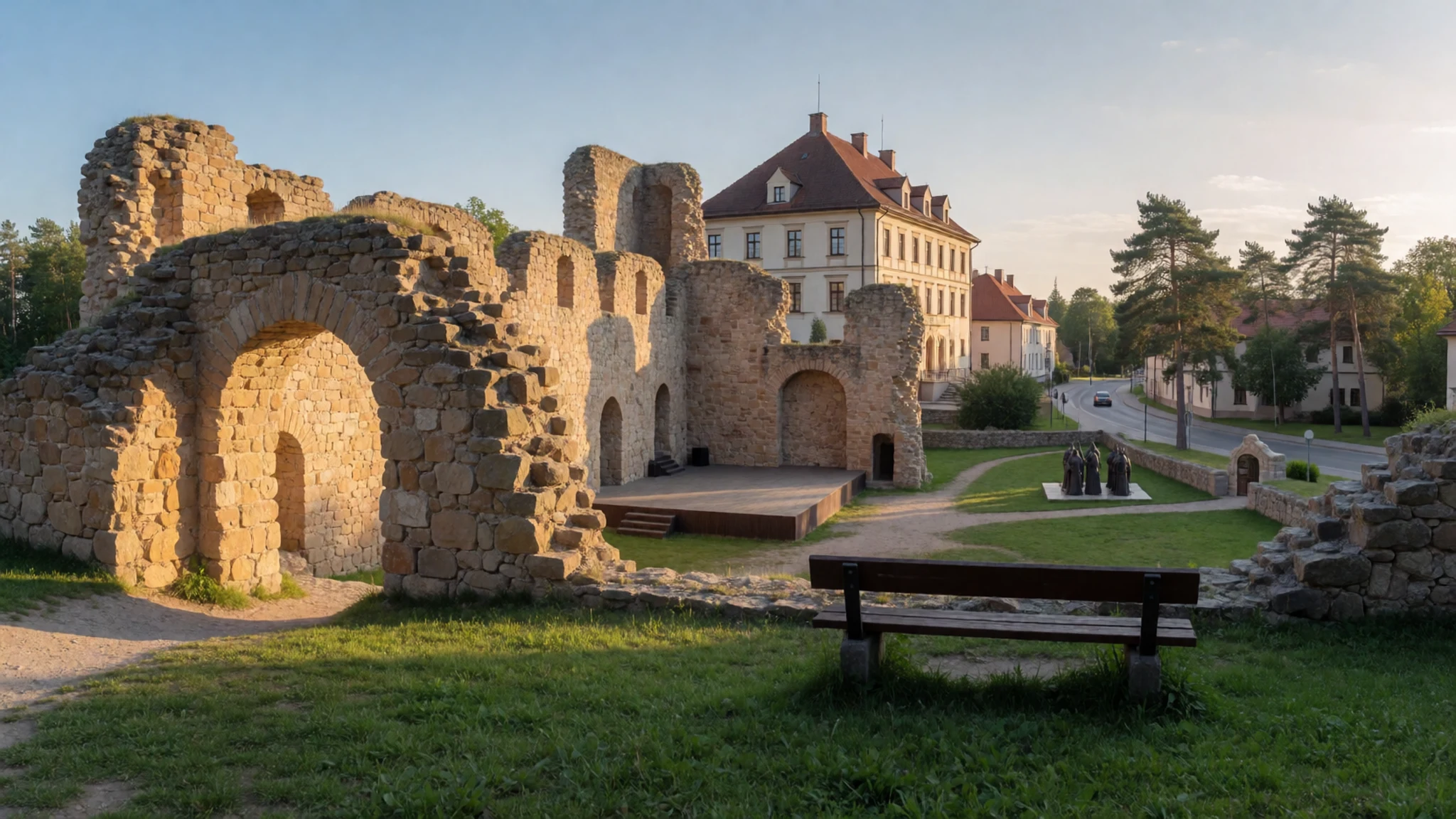
- Midsummer celebration and Gauja canoeing — Turaida and the Gauja River
Latvians mark the summer solstice with bonfires, songs and flower wreaths, and Turaida Museum Reserve hosts one of the most popular gatherings. For a quieter side of the valley, canoe tours run on the Gauja through Gauja National Park, giving a river-level view of the cliffs.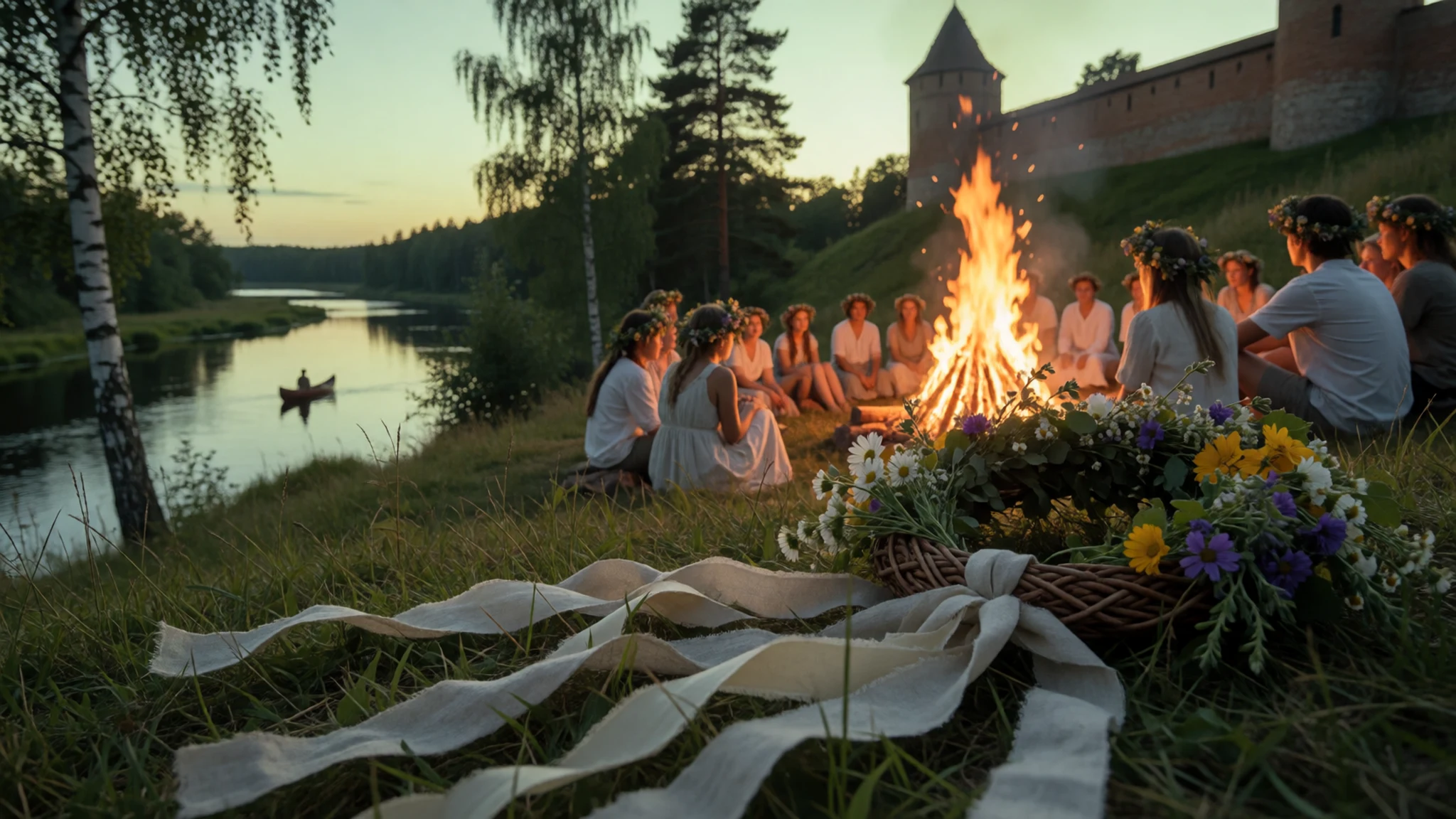
Culture
Turaida Castle sits in the old homeland of the Gauja Livonians, a Finnic-speaking people whose language belongs to the Uralic family, and the museum reserve tells that story alongside the knightly one. One artwork in the reserve shows the Uralic language family as a tree, a small reminder that Latvia's past is more layered than the crusader castles suggest. Latvian identity is closely tied to song, and folk singing is part of festivals, weddings and national gatherings. The summer solstice is the high point of the year. Families head to the countryside, light fires, sing through the short night, and wear wreaths of flowers and oak leaves. Turaida's celebration is among the best known, and it draws visitors as well as locals. The Baltic crusading history is felt more ambivalently, because the order that built the castle also conquered the people who lived here, and many Latvians read the site as much through Livonian and folk memory as through its medieval masters. Legends cling to the valley, including the tale of Gutmanis and his tears, and guides tell them readily. Expect a calm, quietly proud atmosphere rather than a theme-park one, with a lot of walking and outdoor time. Winters are long and dark, so summer festivals carry extra meaning. At the museum reserve, keep to the marked paths, take litter away with you, and ask before photographing people in festival wreaths and costume.
What to wear
Around Turaida Castle, traditional Latvian dress belongs to festivals rather than everyday life. Regional costumes are built from linen blouses, woven woollen skirts in stripes or checks, shawls, and metal brooches, with colours and patterns that differ from district to district. Men wear woollen coats and sashes, and wreaths of flowers or oak leaves appear at the summer solstice. These outfits are most visible at midsummer, at song and dance gatherings and at folk events, and some museum exhibitions show them close up. Day to day, people in Sigulda and Riga dress practically and simply: jeans, trainers or walking boots, light jackets and rain shells, with outdoor gear in the national park. Smart-casual is the most that restaurants ask for. A visitor should dress for the weather and the terrain. In summer, light layers, a hat, sunscreen and insect repellent for the forest are sensible, along with a rain jacket because showers come quickly. Spring and autumn call for a warm mid-layer. Winter needs proper boots, gloves and a warm coat, as paths and the tower stairs can be icy. Shoes matter most: the castle courtyard, tower steps and valley paths involve cobbles, roots and steep slopes, so flat-soled, grippy footwear works far better than sandals. No special modesty rules apply at the castle, although covered shoulders are polite if you step into a church.
What to eat
- Rupjmaize (dark rye bread) — Bakeries and grocery shops in Sigulda
Dense, slightly sweet dark rye bread is the staple of the Latvian table, served with butter, cheese or smoked fish. It is a good picnic item for the valley paths and is sold at bakeries and supermarkets.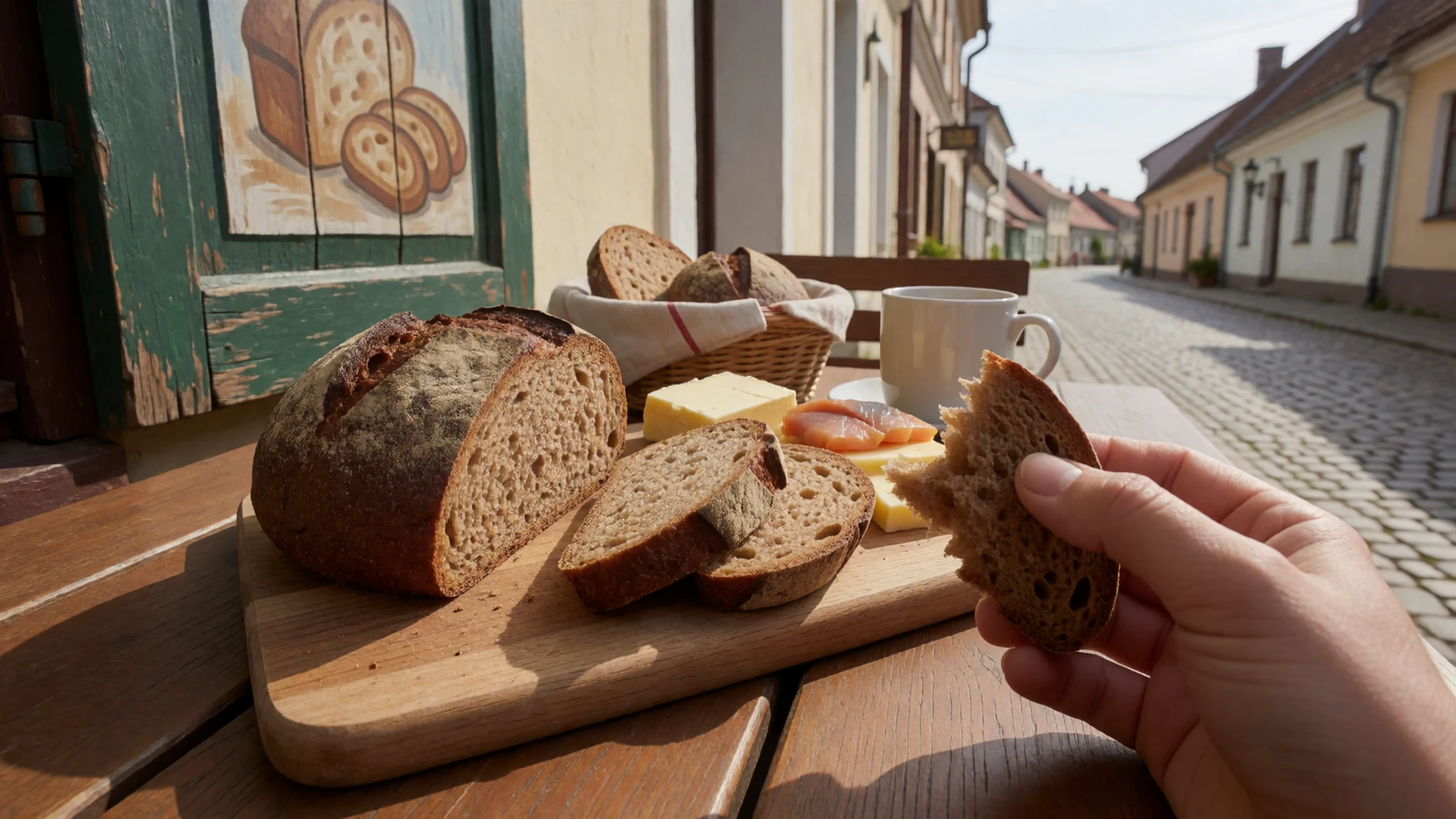
- Pelēkie zirņi ar speķi — Cafeteria-style restaurants in Sigulda
Grey peas stewed and served with fried bacon and onion, a plain, filling dish with a long place on Latvian tables. It suits cold days well and appears on traditional menus and in the simpler cafés.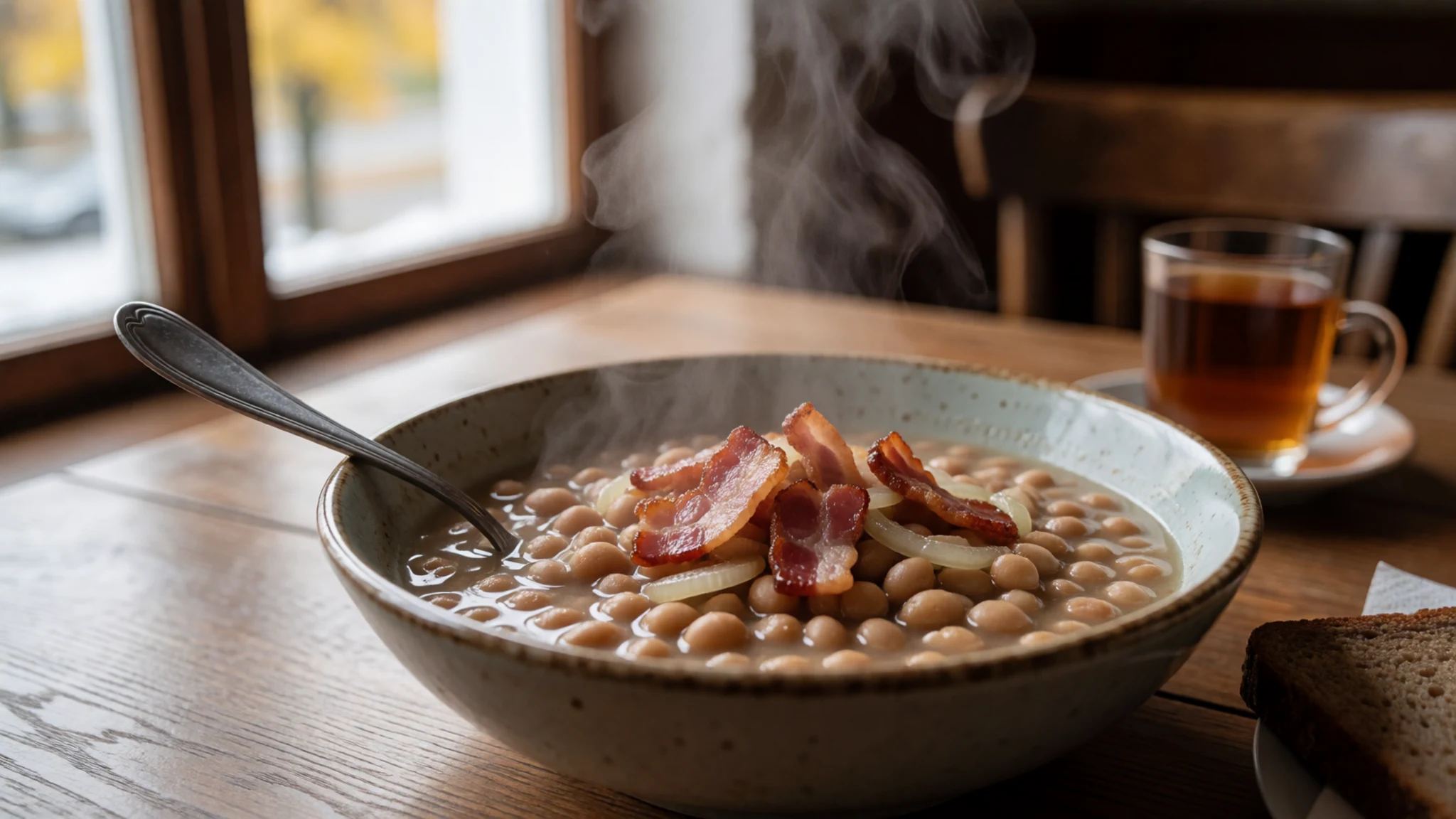
- Speķa pīrāgi — Bakeries and buffet cafés on Pils iela, Sigulda
Small yeast buns filled with chopped bacon and onion, baked until glossy. They are a classic snack for festivals and for the road, and they are best eaten warm, usually with a glass of kefir or tea. - Smoked fish — Market stalls and local restaurants around Sigulda
Smoked fish is common across Latvia's coast and rivers, often served with rye bread and a little pickle. It is salty and rich, and it makes a quick lunch. Availability varies by season, so ask before planning a meal around it. - Kvass — Grocery shops and summer kiosks in Sigulda
A lightly fermented drink made from rye bread, tangy and a little sweet, sold in bottles and, in summer, from street kiosks. It is cooling after a long walk up the valley, though its flavour takes some getting used to.
Plan it
Best time. May–June for fresh green woods and the midsummer celebrations, and September for autumn colour and thinner crowds; summer weekends are busy, and winter is cold, dark and snowy.
How long. 1–2
Getting there. Fly into Riga International Airport, then take the train from Riga to Sigulda, about an hour and a quarter, with trains at intervals through the day; the bus takes about the same time. Check current timetables with the operators. The last leg is a few kilometres from Sigulda to Turaida by taxi, bike or on foot through the valley.
Budget. mid
Tips
- Eat lunch in Sigulda, as Turaida village has almost no food beyond the village shop
- Take the train rather than driving on fine summer weekends, when traffic builds
- Walk the valley path between Sigulda and Turaida, stopping at Gutmanis Cave on the way
- Carry some cash and water for the village and the paths
- Arrive early in summer to enjoy the tower views before the crowds
Etiquette
- Stay on marked paths in the museum reserve
- Ask before photographing people in festival costume or wreaths
- Take litter back with you from the forest paths
Nearby
Sources
- Wikidata Q20405642 (CC0)
- Wikipedia: Turaida Castle (rev 1365523924) (CC BY-SA 4.0)
- Wikivoyage: Sigulda (rev 5418182) (CC BY-SA 4.0)
- Photo: Turaida Castle, Pudelek (CC BY 3.0)
- Photo: Family tree of the Uralic languages in Latvian, Kenny McFly (CC BY 3.0)
- Photo: Sigulda panoramio (2), Aldis Dzenovskis (CC BY 3.0)
- Photo: Sigulda panoramio (34), karel291 (CC BY 3.0)
- Photo: Sigulda panoramio (4), Aldis Dzenovskis (CC BY 3.0)
- Photo: Sigulda panoramio (55), Aldis Dzenovskis (CC BY 3.0)
- Photo: Sigulda panoramio (59), Aldis Dzenovskis (CC BY 3.0)
- Photo: Sigulda panoramio (62), Aldis Dzenovskis (CC BY 3.0)


