Kuldīga
Kuldīga, Latvia
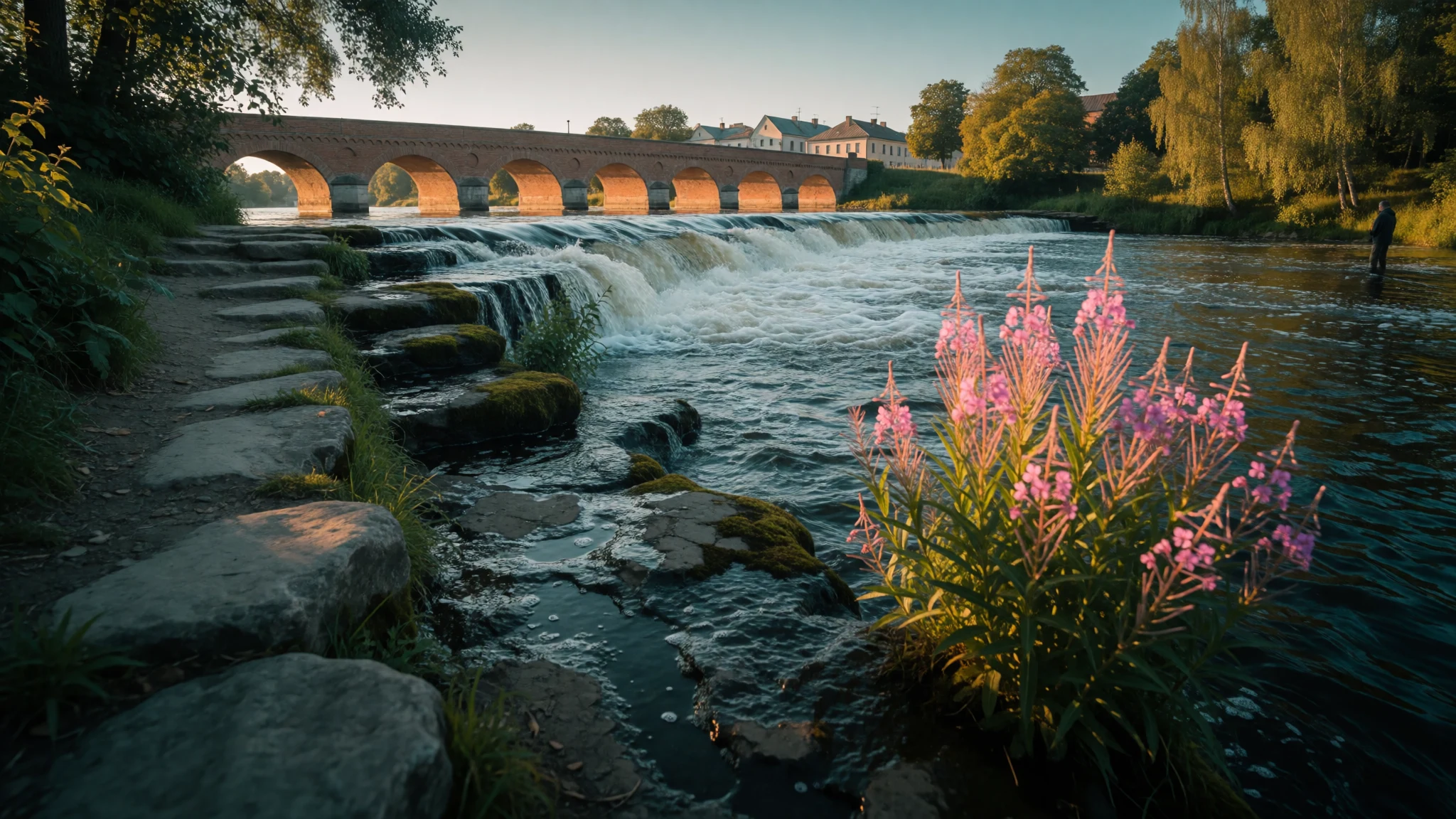
Kuldīga is a small Latvian town of wooden houses, a stream running past their walls and a wide, shallow river rapid beside a long brick bridge.
The place
Kuldīga is a small town in Kurzeme, the western region of Latvia, with a population of 9,855. It sits where the Venta river was once easy to ford, on routes between Prussian lands and the Daugava, and that crossroads explains most of what is here. The centre is a tight tangle of low houses, many of them wooden with red-tile roofs, set along cobbled lanes. The little Alekšupīte stream runs through the middle and brushes the walls of the houses, which is why the town is nicknamed the Latvian Venice. The comparison is generous, since there are no gondolas, only a quiet stream, a few footbridges and a small waterfall. German speakers once knew the town as Goldingen, and its listing as a Hanseatic city is a reminder of its trading past. Today it feels like a place where ordinary life goes on among old buildings: a bakery, a school, a bench by the water. The scale matters. The old town can be crossed on foot in minutes, and the real pleasure is slowness: following the stream, then walking down to the Venta to see the rapid and the long brick bridge. Summer brings weekend visitors from Rīga, mostly in the afternoons, while mornings and evenings stay calm. Winters are cold and quiet, and some cafés and museums keep shorter hours, so it is worth checking the official site, kuldiga.lv, before travelling.
Its story
Kuldīga grew up at a crossing of routes: the Venta river for boats, and land roads linking Prussian territory with the lower Daugava. Before the town existed, Couronians had a fortified settlement a few kilometres north along the river, and its castle mound can still be seen on the bank between two valleys. In the thirteenth century the Livonian Order of Knights received permission to build a castle beside the ford, and the builders used dolomite taken from the riverbed. The document recording that permission is the oldest surviving written mention of the place, which is why the town counts its birth from then. Within a few decades the settlement was called Goldingen and held town rights modelled on those of Riga. A later grant from the Order's master gave it a coat of arms showing St Catherine, who remains its patron saint. Membership of the Hanseatic League tied Kuldīga into Baltic trade, and in the early seventeenth century it served, alongside Jelgava, as a capital of the Duchy of Courland. The castle itself did not last. Only fragments survive in the park today, and a reconstruction drawing of the building as it stood in the late seventeenth century shows how much has gone. The brick bridge over the Venta, finished in 1874, belongs to a later chapter, when Kuldīga was a regional centre rather than a ducal seat.
What to see
- Old Town and the Alekšupīte — Old Town centre
The old centre is the main sight, and it is best seen without a plan. Wooden houses from the seventeenth and eighteenth centuries line lanes beside the Alekšupīte, and the stream drops over a small waterfall about 4.2 m high. Walk slowly, look at the weather-vanes and doorways, and keep to the pavements.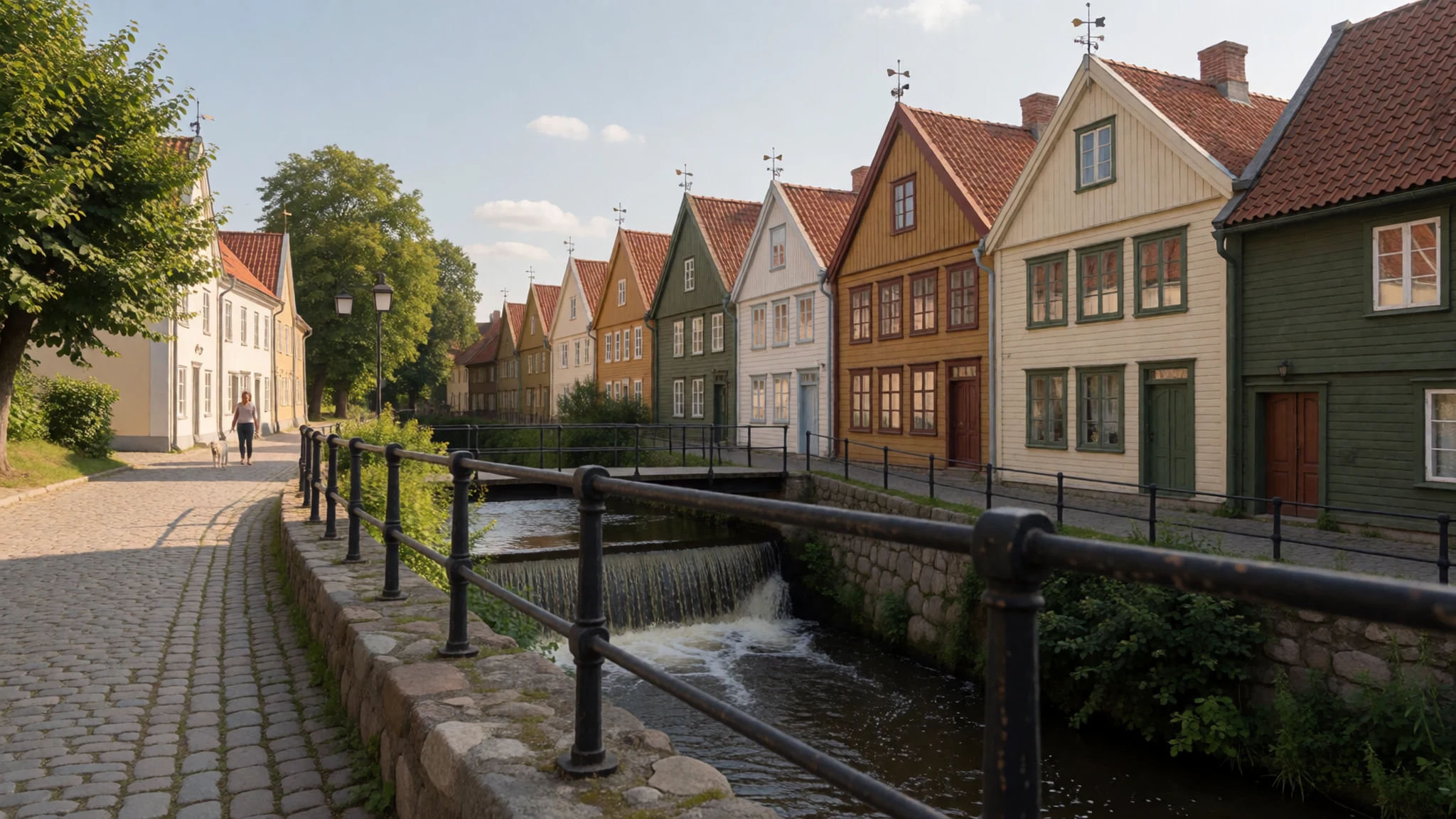
- The oldest wooden house in Kurzeme — Old Town, beside the stream
This red-roofed timber house dates from 1670 and is promoted locally as the oldest wooden building in the region. It stands by a small footbridge over the stream, one of the spots that earns the Venice comparison. It is a photograph stop rather than a museum, so allow a few minutes.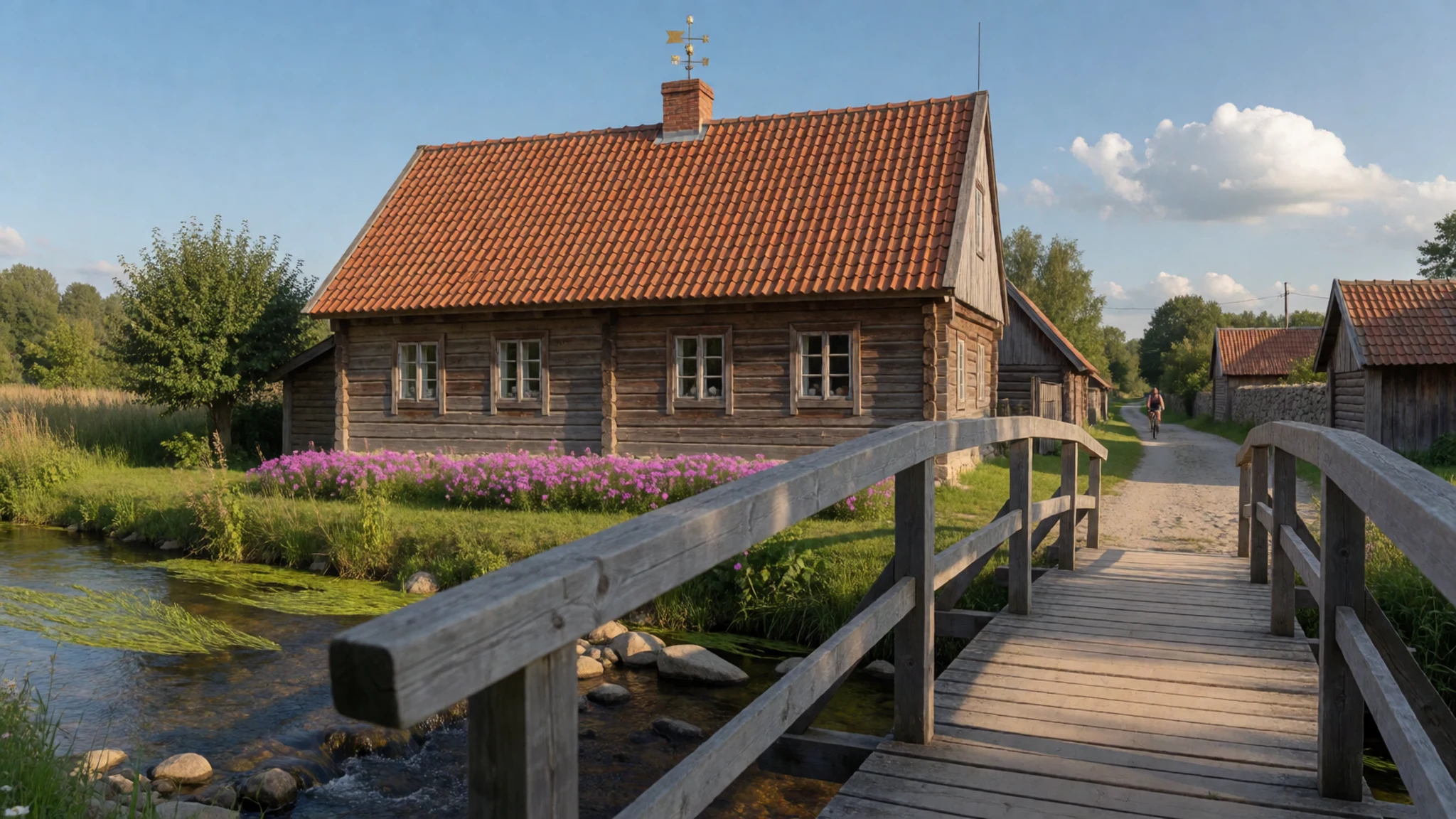
- Brick bridge over the Venta — Venta riverbank, east of the old town
Built in 1874, this road bridge is billed as the longest of its kind in Europe, and it was made wide enough for two carriages to pass. It is still a good place to cross on foot. The view upstream and downstream is open, and the river often has anglers standing in the shallows.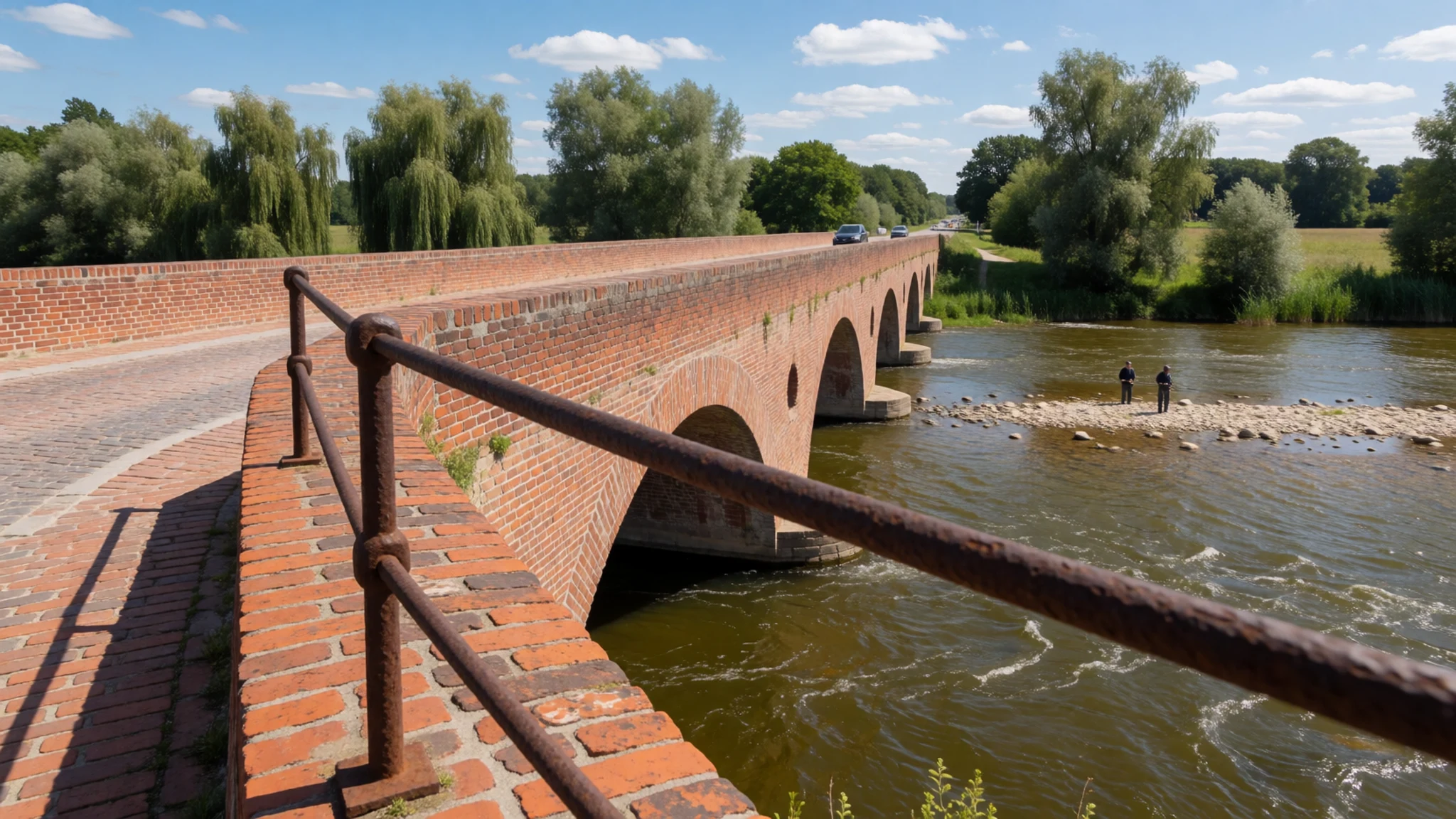
- Venta Rapid — Venta river, just downstream of the bridge
The Venta Rapid is a natural rapid about 240 m wide, often described as the widest in Europe. It is low rather than tall, a broad sheet of water over rock. The best view is from the bridge. In spring the flow is strong, while late summer shows more of the stone.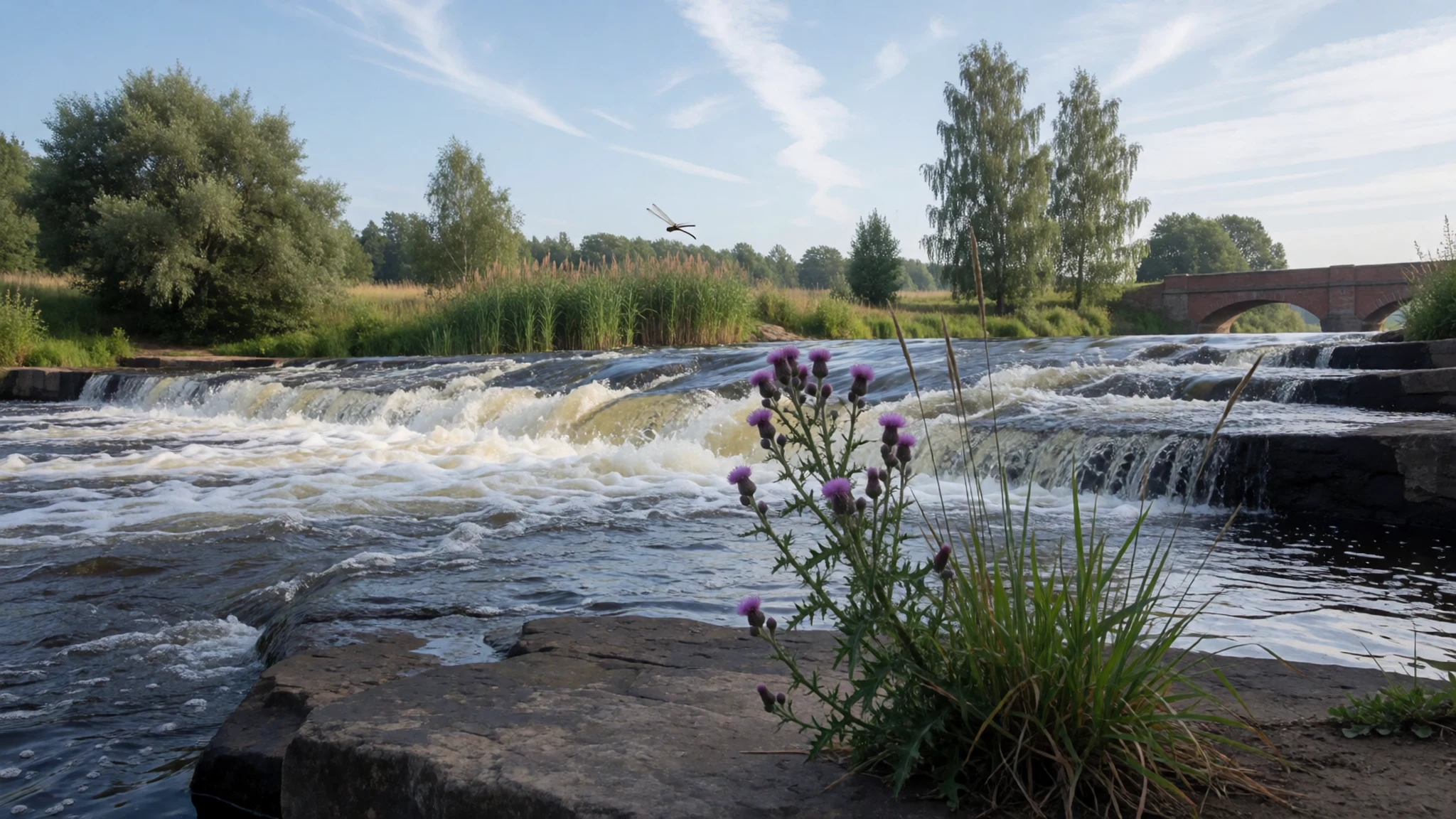
- Castle Park and District Museum — Castle Park, north of the old town
A pleasant park lies around the few remaining fragments of the Livonian Order's castle, with sculptures by Līvija Rezevska, most of them made in the Soviet period. The district museum here gives a snapshot of life in a local mansion in the early twentieth century. Check opening times on the official site first.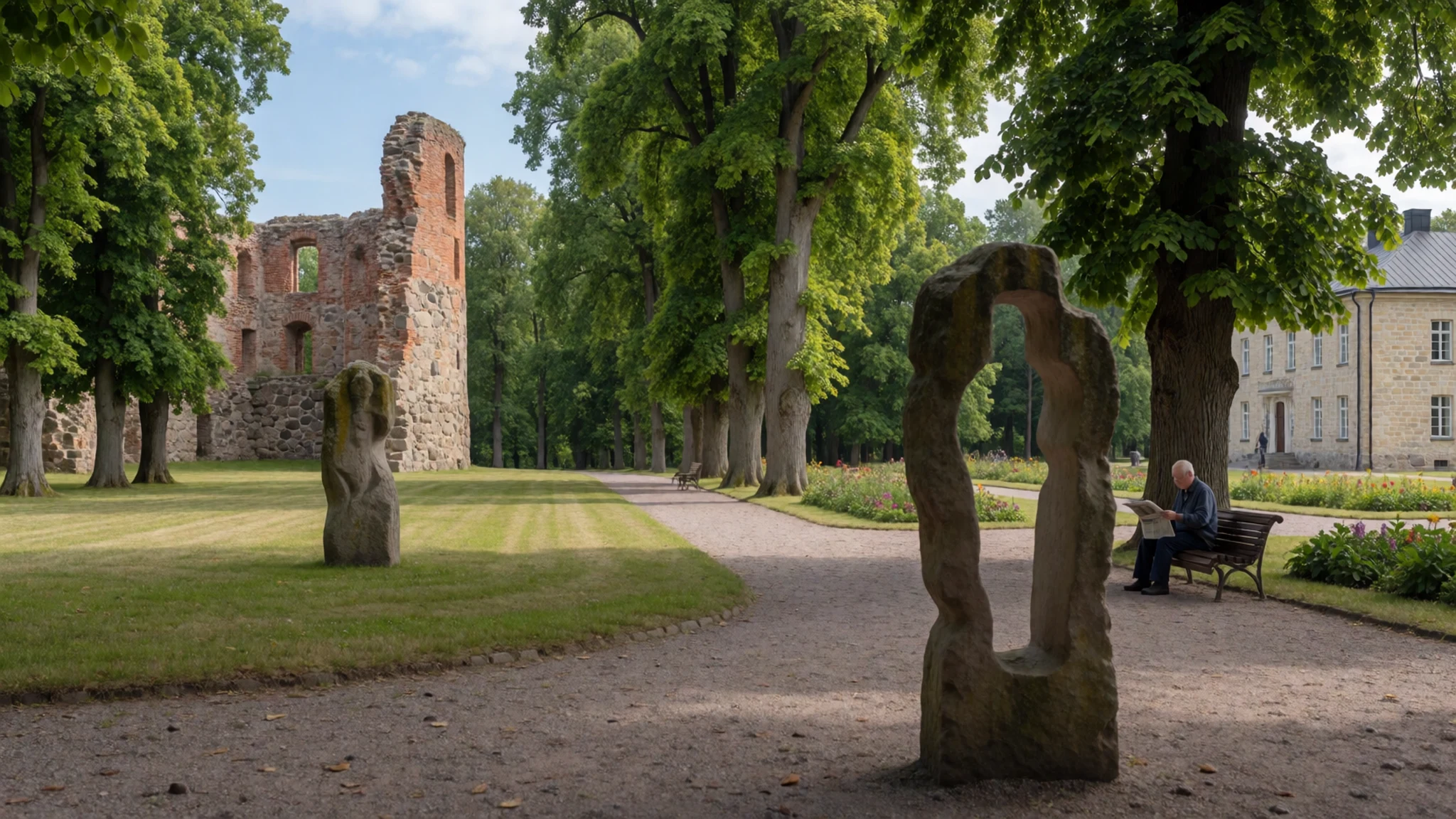
- St Catherine's church — Old Town
The Lutheran church of St Catherine honours the town's patron saint, and its foundations go back to the thirteenth century. It has been remodelled several times, so the building reads as layers rather than one period. Look at the tower from the lanes first, then go in if it is open.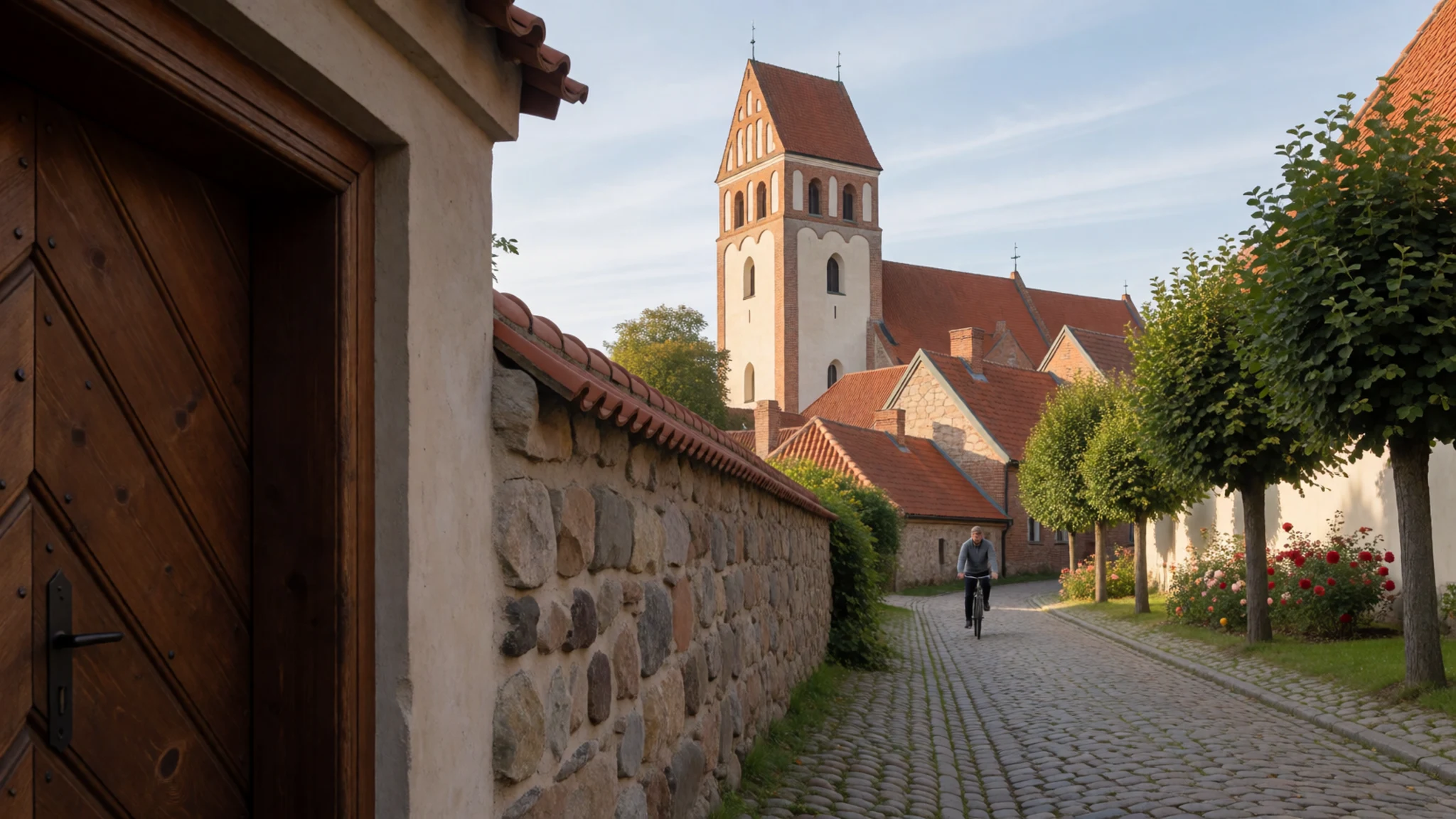
Culture
Kuldīga is a Latvian town first, and a heritage showcase second, and that shows in how people live here. The wooden houses in the old centre are homes, not exhibits, and residents keep gardens, woodpiles and bicycles in plain view. Latvian is the everyday language, with Russian also heard, and English works well in cafés and at the museum, though a few words of Latvian are appreciated. The wider region is known for folklore and singing, and the midsummer festival of Jāņi is a big occasion across the country, with wreaths of oak leaves and wildflowers, bonfires, cheese and beer. The nearby village of Alsunga is famous for its folklore and for sklandrauši, a rye pastry with a carrot filling that is a familiar snack all over Latvia. Church life is quieter than it once was, but St Catherine's remains the town's anchor, and Lutheran tradition is part of its history. Kuldīga's German past, as Goldingen, is visible in street names and old merchant houses, and the Soviet period lingers in the sculpture park. Humour tends to be dry and conversation unhurried, and people are generally happy to answer questions once the conversation starts. Visitors should remember that the old wooden houses are lived in, so keep voices low, stay out of courtyards, and ask before photographing anyone in their own garden.
What to wear
Kuldīga's traditional dress belongs to the wider Latvian folk costume, which is made mostly from wool and linen. Women's outfits combine a wool skirt, often striped or checked, with a white linen blouse, an embroidered or woven bodice, and a shawl or headdress. Men wear a wool coat over linen, with a woven belt. Colours and patterns vary between regions, and Kurzeme has its own look. The costumes are worn today at song festivals, at midsummer, at weddings and by folk ensembles rather than in the street. Everyday clothing in the town is plain and practical, much as in the rest of northern Europe: jeans, wool jumpers, wind jackets and sturdy shoes, with a bit more effort for church or an evening out. Locals dress for weather first, and that is the sensible rule for visitors as well. The lanes are cobbled and uneven, so comfortable closed shoes are better than sandals, and a light waterproof is worth carrying even in summer, when showers pass through quickly. Winter needs proper layers, a warm hat, gloves and boots with grip, because the stone gets slippery. Summer evenings by the river can be cool, so a thin jumper helps. No special dress code applies to churches, but covering bare shoulders and removing hats inside is polite.
What to eat
- Sklandrauši — Bakeries in town, and street vendors in Alsunga in summer
A rye-crust pastry filled with carrot and potato, spiced lightly with caraway. It is a famous Latvian snack with a recipe said to date back to medieval times. Eat it warm, with a glass of milk or tea.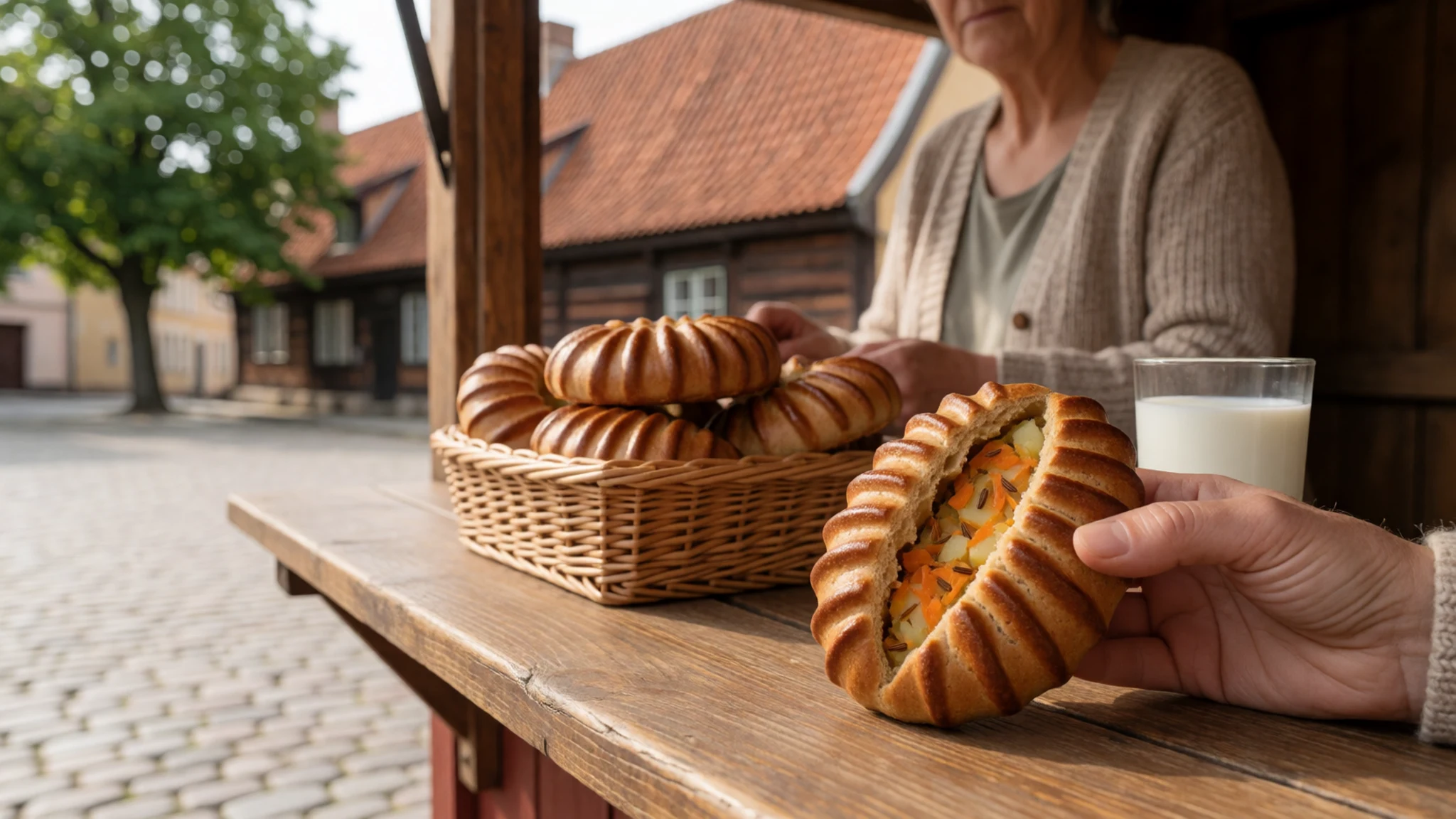
- Herring with cottage cheese and potatoes — Traditional restaurants and local eateries in the old town
A plain and filling plate: salted herring, fresh curd cheese and boiled potatoes, often with dill. It is simple home cooking rather than a showpiece, and it suits a cold day.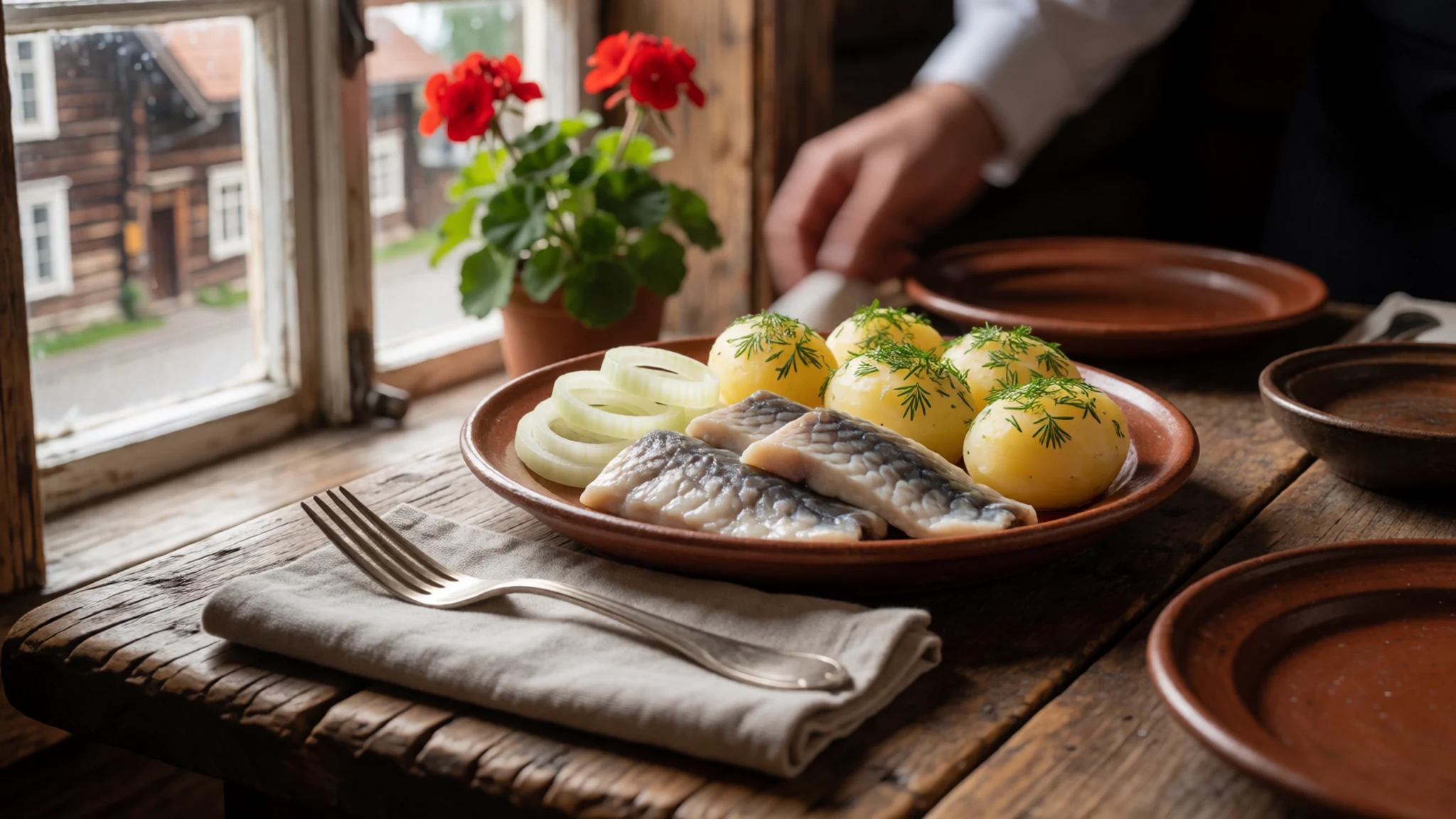
- Craft and traditional beer — A local brewery on the north side of the old town
Kuldīga has a small brewery that makes traditional styles alongside experiments, including beer aged in wine barrels, as well as lemonades and cocktails. It is a good place to sit down after a day of walking. - Rye bread — Bakeries and shops in the town centre
Dark, dense Latvian rye bread has a sour, slightly sweet taste and is eaten with butter, cheese, smoked fish or soup. Buy a loaf to take for a river-side picnic. - Pelmeni — Cafés and casual restaurants around the centre
These small filled dumplings, usually with meat and served with sour cream or butter, come from the wider Baltic and Slavic table. They are cheap and warming, though not every eatery lists them, so ask.
Plan it
Best time. July and August are the hottest and wettest months, while May to September is the most comfortable time for walking by the river; midsummer in late June is lively but busy. Winters are cold and quiet, with shorter days and some reduced opening hours.
How long. 1–2
Getting there. Fly to Rīga International Airport, then take a bus to Kuldīga; there are several buses a day from Rīga, and regular links from Ventspils and Talsi. Check the national bus timetable website for current times. The bus station is a short walk from the old town.
Budget. mid
Tips
- Check opening times for the museum and any seasonal sights on the official site, kuldiga.lv, before you go
- Go to the brick bridge and rapid early or in the evening, when the light is softer and day-trippers are fewer
- Carry a little cash for bakeries and village stalls, though cards work in most cafés and restaurants
- Wear shoes with grip, as the cobbles and riverside stone get slippery after rain
Etiquette
- Keep voices low in the residential lanes and do not enter courtyards
- Ask before photographing people in their gardens or at home
- Take litter with you, especially if you picnic on the riverbank
Nearby
Sources
- Wikidata Q155281 (CC0)
- Wikipedia: Kuldīga (rev 1381859503) (CC BY-SA 4.0)
- Wikivoyage: Kuldīga (rev 5407695) (CC BY-SA 4.0)
- Photo 01-kuld-ga-kurzeme-latvija.jpg, Inārs Švarcs (CC BY-SA 4.0)
- Photo 02-kuld-ga-kurzeme-latvija-vecpils-ta.jpg, Inārs Švarcs (CC BY-SA 4.0)
- Photo 03-goldingen-um-1680.jpg, Unknown author (Public domain)
- Photo 04-livonia-islande.jpg, Unknown author (Public domain)
- Photo 05-kuld-ga-kurzeme-latvija-vecpils-ta.jpg, Inārs Švarcs (CC BY-SA 4.0)
- Photo 06-kuldiga-bridge.jpg, Staffan Vilcans (CC BY-SA 2.0)
- Photo 07-kuld-ga-kostel-svat-kate-iny.jpg, Dezidor (CC BY 3.0)
- Photo 08-kuld-gas-v-sturiskais-centrs-3.jpg, Laima Gutmane (CC BY-SA 4.0)


