Cēsis
Cēsis, Latvia
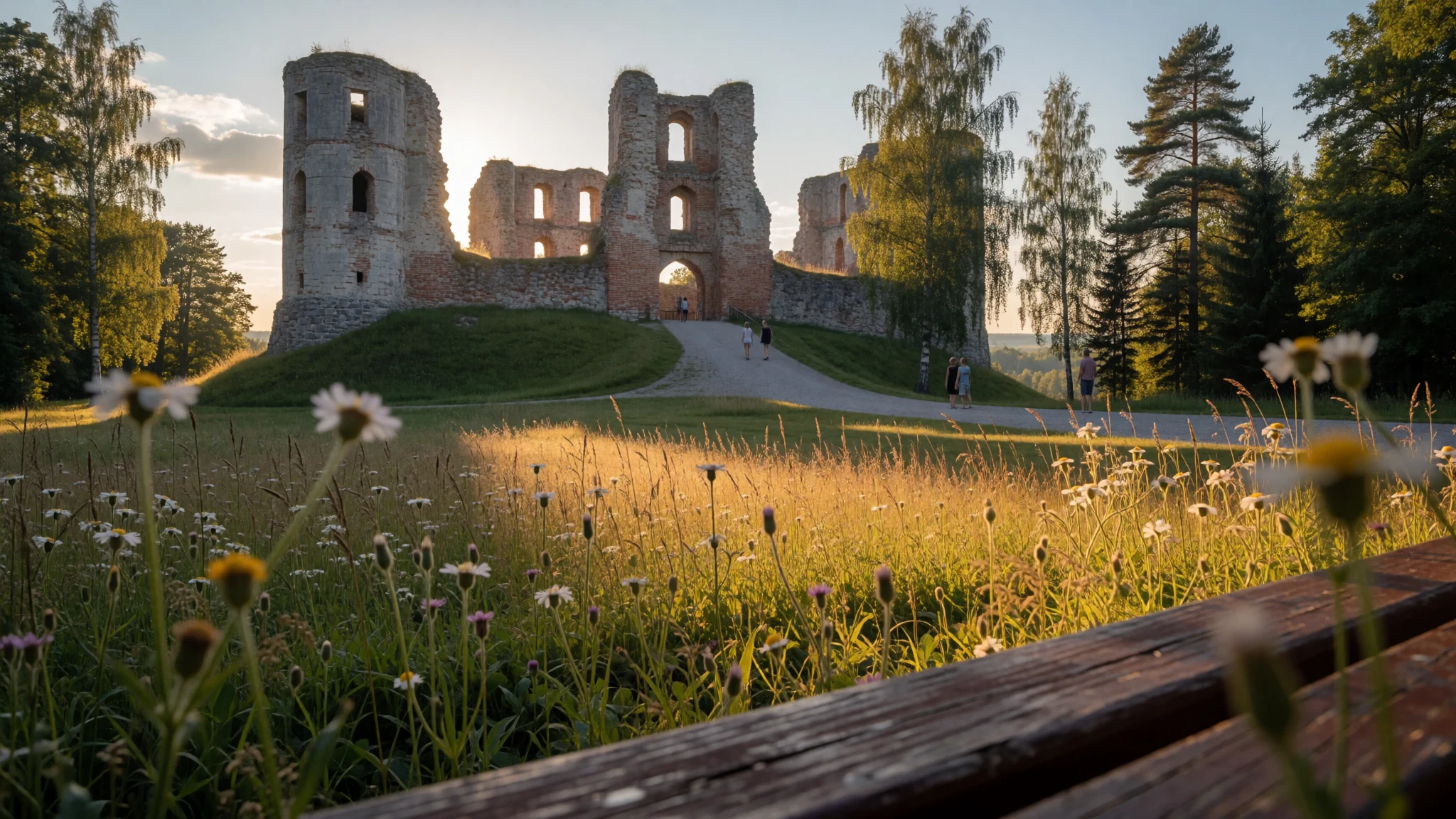
Cēsis is a walkable Latvian town where a ruined knights' castle, a medieval street plan and summer festivals fit into one easy day from Riga.
The place
Cēsis is a small town in the Vidzeme region of northern Latvia, set on ridges above the Gauja valley about 90 km north-east of Riga. It has 14,899 residents and sits 119 m above sea level, so it feels like a market town rather than a city, even though it is a Hanseatic city by heritage and the administrative centre of its municipality. The town covers roughly 19.3 square kilometres, and the Gauja runs along its territory for about 5 km. The highest point inside the limits is Zvirbuļkalns, at 113 m, a gentle rise rather than a climb.
What makes Cēsis rewarding is how much is packed into a walkable core. The street plan is still medieval, stretches of town wall survive, and a ruined castle of the Livonian knightly orders stands next to a newer castle building that now holds a museum. Some lanes are lined with old wooden houses. Around the centre lies Castle Park, where festivals are held in summer and locals walk their dogs in every season.
The town also has a busier cultural life than its size suggests, with a concert hall, an art festival and a conversation festival. German speakers once knew the place as Wenden, a reminder that Baltic Germans were a substantial part of its past. Expect quiet streets outside summer, short dark days and snow in winter, and a pace that suits either a day trip from Riga or a slow overnight stay.
Its story
The story of Cēsis starts with a hill fort. The Vends lived on Riekstu Hill, now inside Castle Park, during the eleventh and twelfth centuries. After the Livonian Brothers of the Sword took control in 1207, they began a stone castle on the neighbouring plateau, probably around 1214, and it is documented in the Chronicle of Henry of Livonia by 1218. The same chronicle describes events here in 1206, the date normally used as the start of the town's recorded history.
A document of 1323 names Cēsis as a town, with a council and burgomasters, and early in the fifteenth century it joined the Hanseatic League. The castle mattered far beyond the town walls. It was a power base for the Livonian Order in politics, war and administration, and after the order's castle in Riga was destroyed in 1484, the masters made Cēsis their main residence. Chapters, diplomats and assemblies of Livonian towns gathered here.
A flag legend belongs to the town too. Back in 1279, a rhymed chronicle noted soldiers from Cēsis marching under a banner featuring a white stripe running through red, which Latvians view as the historic roots of their modern national flag.
Lutheran sermons were first heard in Cēsis in 1524, and the Livonian War later left town and castle badly damaged. In the nineteenth century new road and rail links turned it into a regional industrial and commercial centre, with brewing, food production, metalworking, printing and building materials among its trades.
What to see
- Cēsis Castle Complex — Castle Park, west of the old centre
Cēsis Castle is the town's anchor. The weathered ruins of the knightly order's fortress stand beside a newer castle building that houses the history and art museum. Construction began in 1209. The ruins reward slow wandering through roofless rooms, and the surrounding park gives the visit a green, open setting.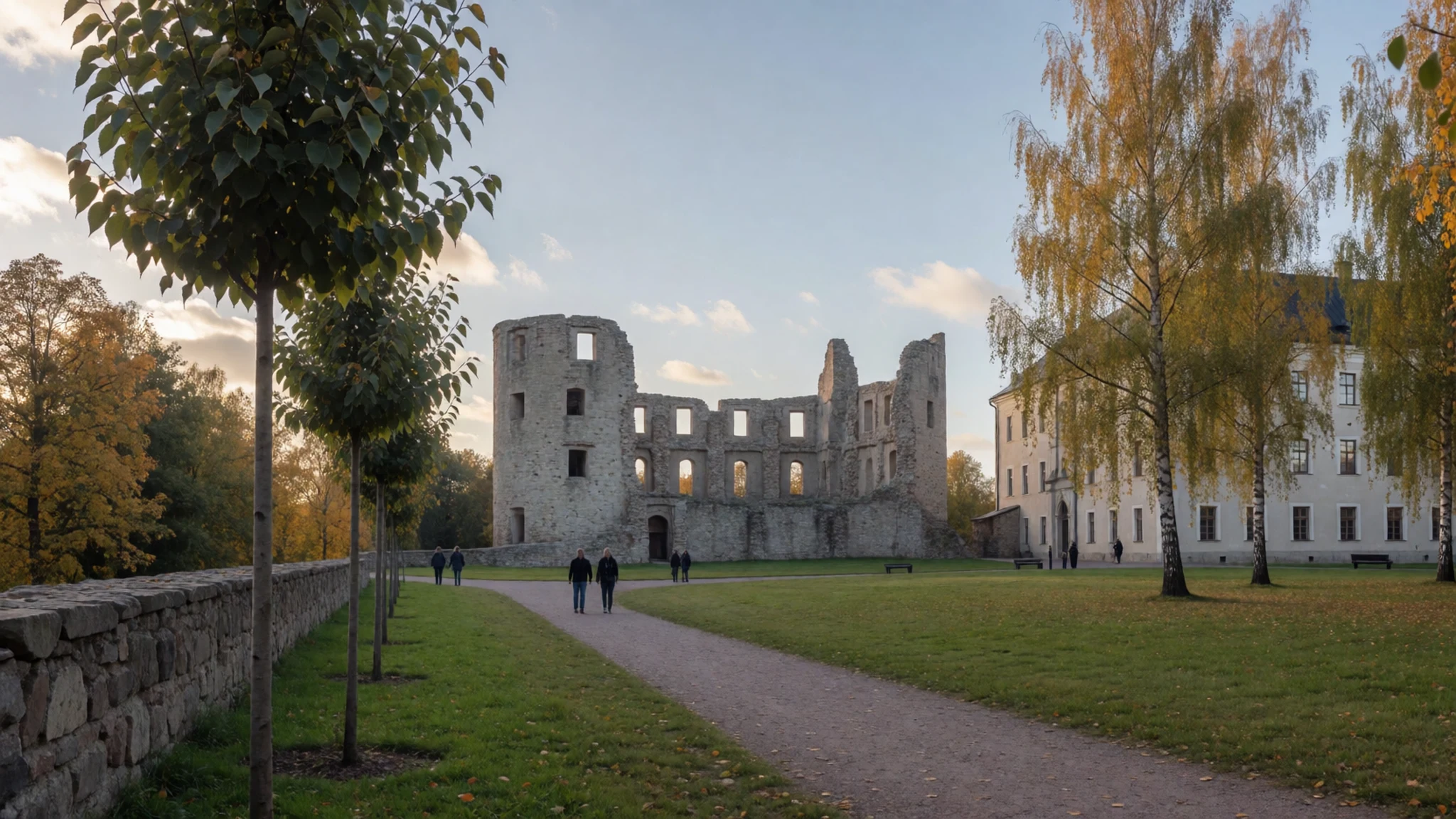
- St John's Church — Old Town
St John's is a Lutheran church whose main body went up between 1281 and 1284, with the spire added in 1853. The tower can be climbed, and the reward is a rooftop view over the old town and the wooded land beyond, with an exhibition on the way. Check opening times locally before going.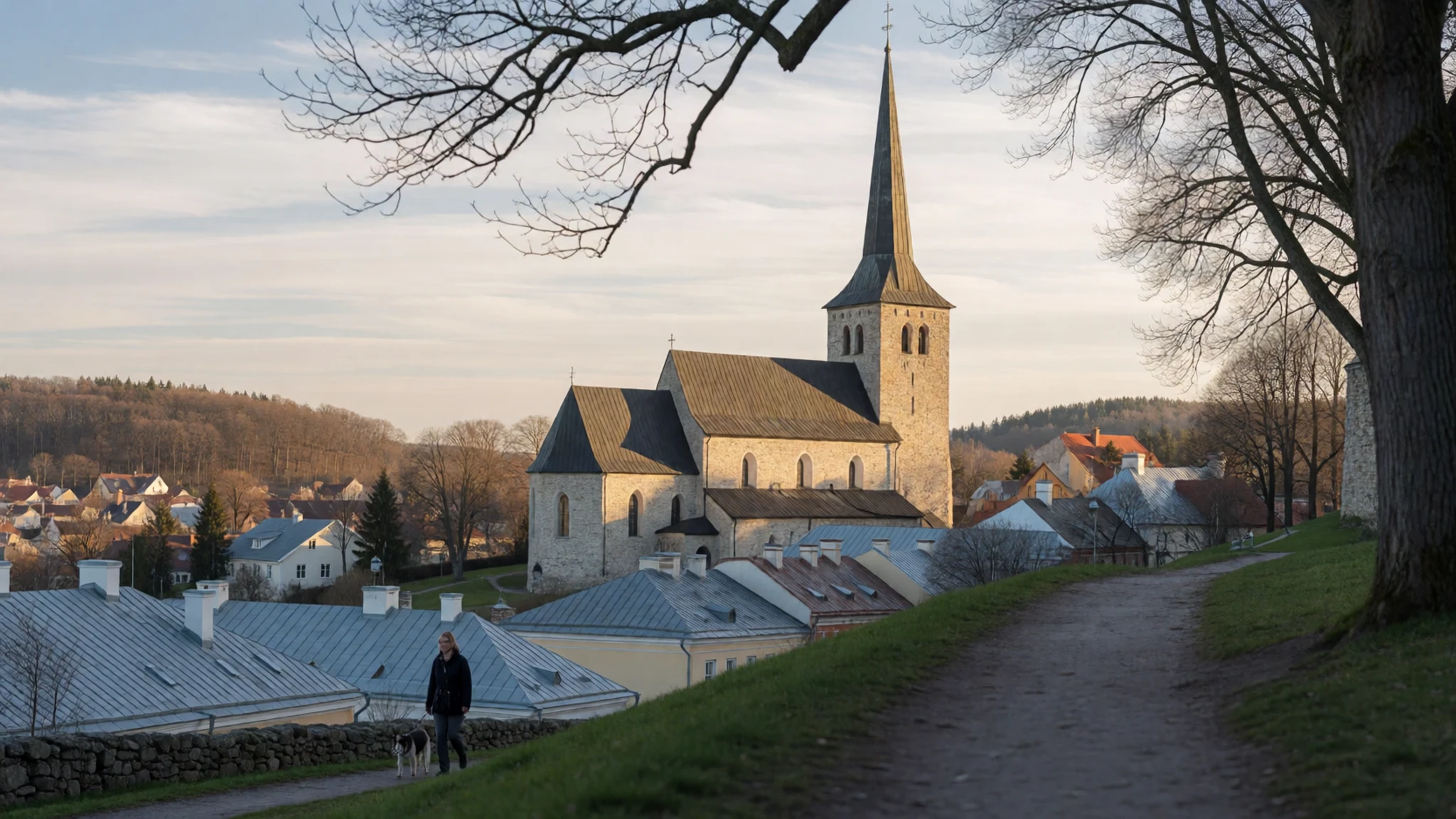
- Old Town lanes — Historic centre
The old town is best covered on foot without a plan. Wooden houses from the eighteenth and nineteenth centuries still stand along some streets, and the medieval layout means lanes bend and narrow in ways a grid never would. An engraving of the town from 1793 shows how little the skyline has changed.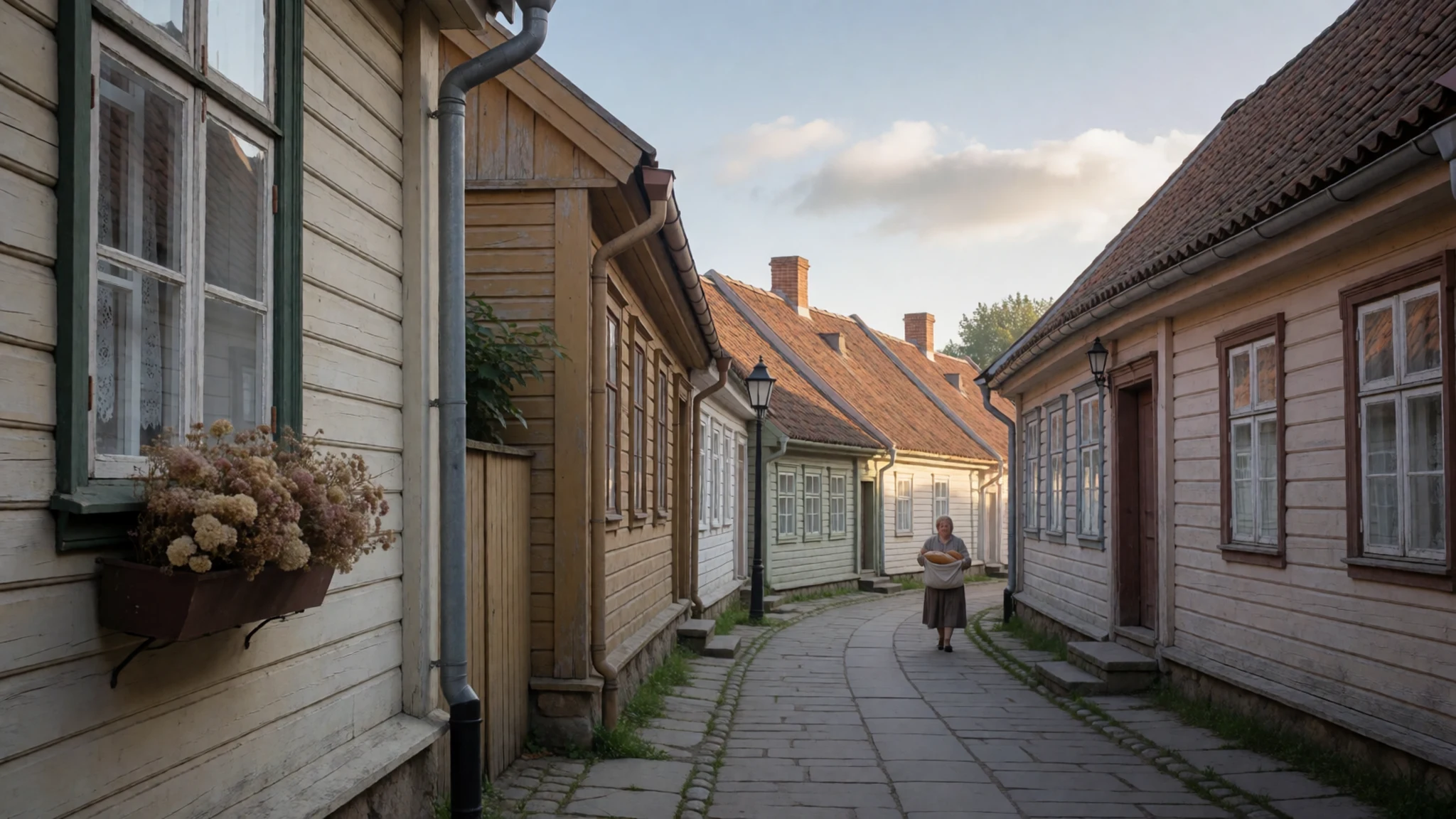
- Unity Square and the Victory Monument — Town centre
Unity Square holds the Victory Monument, which honours Latvian soldiers who fell in the war of independence fought between 1918 and 1920. It is a short, quiet stop that explains why national memory matters in a town so tied to the story of the Latvian flag.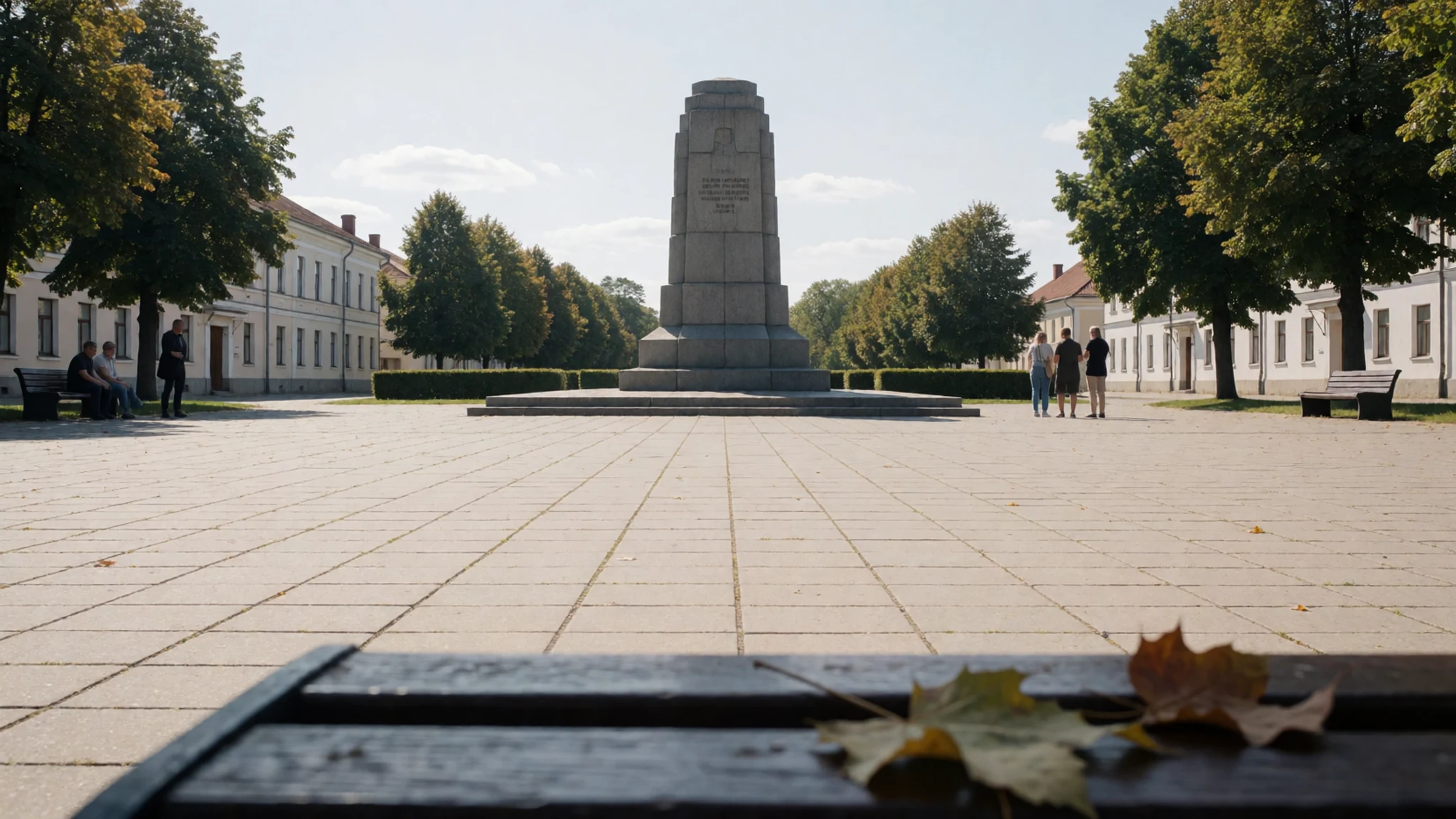
- Cēsis Concert Hall — Town centre
Cēsis Concert Hall opened in 2014 and shows how an old community house can be given a modern second life. Inside are a big main hall, rooms for chamber and organ music, and exhibition space. Programmes change by season, so check the official site, cesis.lv, before planning around an event.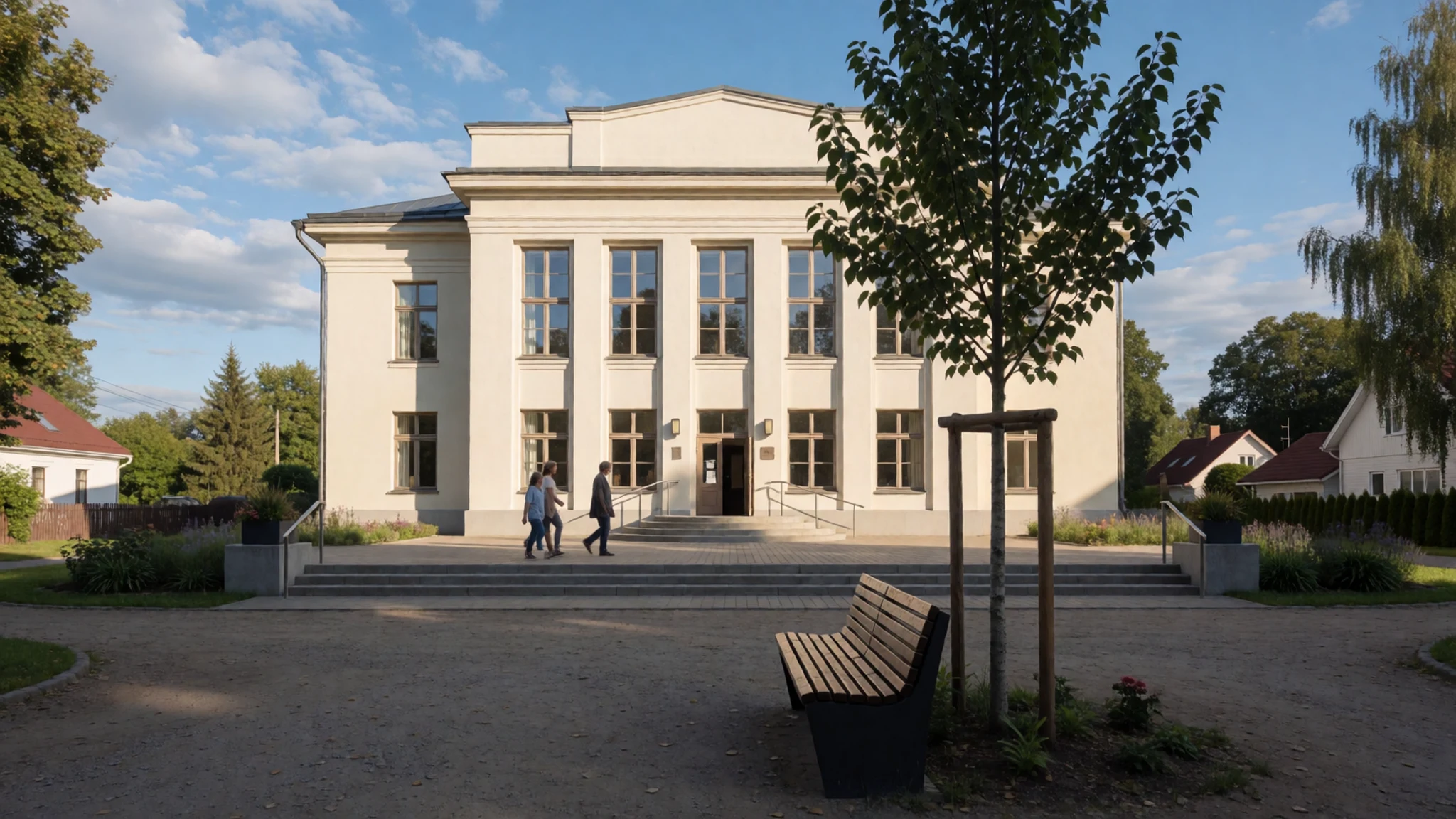
Culture
Cēsis has a cultural calendar well beyond what its population of under fifteen thousand would suggest. The concert hall opened in 2014 inside a rebuilt community house from 1915. Alongside its main hall it offers space for chamber and organ music, a cinema and galleries, and it is the base for a music school named after Alfrēds Kalniņš.
The Cēsis Art Festival began in 2007 as a summer programme that mixes visual art, music, opera, theatre and film. The LAMPA Conversation Festival has taken place in Castle Park since 2015, bringing civil-society groups, public bodies, media and political organisations together for open debate and cultural events. Cēsis also put itself forward in both the 2014 and 2027 rounds of the Latvian bid for European Capital of Culture, losing to Riga and Liepāja respectively.
National feeling runs close to the surface here. The legend of the red banner with a white stripe links the town to the Latvian flag, and the Victory Monument in Unity Square keeps the independence war in public view. Locals are friendly but reserved, and conversation tends to warm up slowly. Festival weekends in summer are the best time to see the town at its most sociable, with the park busy well into the evening.
In the castle ruins and the church, keep to marked paths, speak quietly, and ask before photographing people at festivals or events.
What to wear
Traditional Latvian dress is a regional matter, and the Vidzeme costume belongs to the same family as those worn across the country. Women's outfits combine a linen blouse with embroidered details, a woollen skirt woven in stripes or checks, a woven belt, a waistcoat or shawl, and metal brooches called sakta. Men wear wool coats over linen shirts. The patterns in the belts and shawls are the main way regions and families are told apart. These costumes appear at song and dance festivals, weddings, folk-group performances and the midsummer celebrations, and many families keep one handed down.
Day to day, Cēsis dresses plainly and practically. Expect jeans, wool jumpers and waterproof jackets for most of the year, with sturdy boots in the cold months. Evenings at the concert hall call for neat smart-casual clothes rather than formal wear. Young people favour outdoor-sports brands, since the Gauja valley is a hiking and cycling area.
A visitor should dress for weather first. Summers are mild and can turn showery, so carry a light waterproof, and winters are cold with snow, so pack layers, a hat and gloves. The cobbles and castle ruins are uneven, which makes flat, grippy shoes more useful than fashionable ones. There is no strict dress code for the church or the castle, but covered shoulders and knees are a courteous choice when entering St John's.
What to eat
- Rupjmaize (dark rye bread) — Bakeries and cafés in the town centre
Latvia's dense, slightly sweet rye loaf is served with almost everything, from soup to smoked fish. It is worth buying a fresh loaf and tasting it plain, with butter or cheese. Bakeries in the town centre and the shelves of local cafés are the easiest places.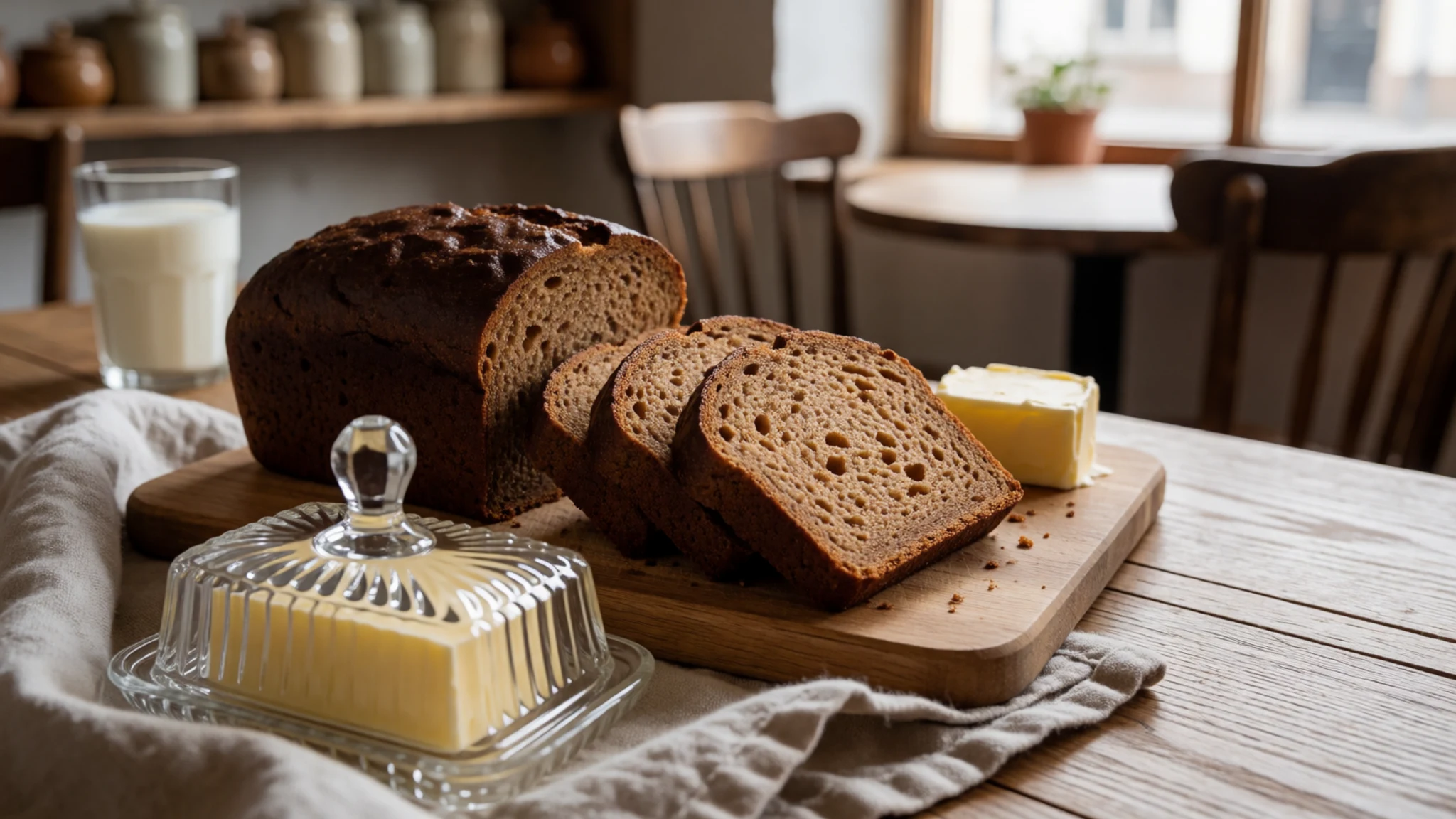
- Pelēkie zirņi ar speķi (grey peas with bacon) — Home-style cafeterias and seasonal festival stalls
A traditional Latvian plate of stewed grey peas topped with fried bacon and onion, hearty and salty and meant for cold weather. It is the kind of dish that appears on home-style menus and festival tables, usually with a cold drink alongside.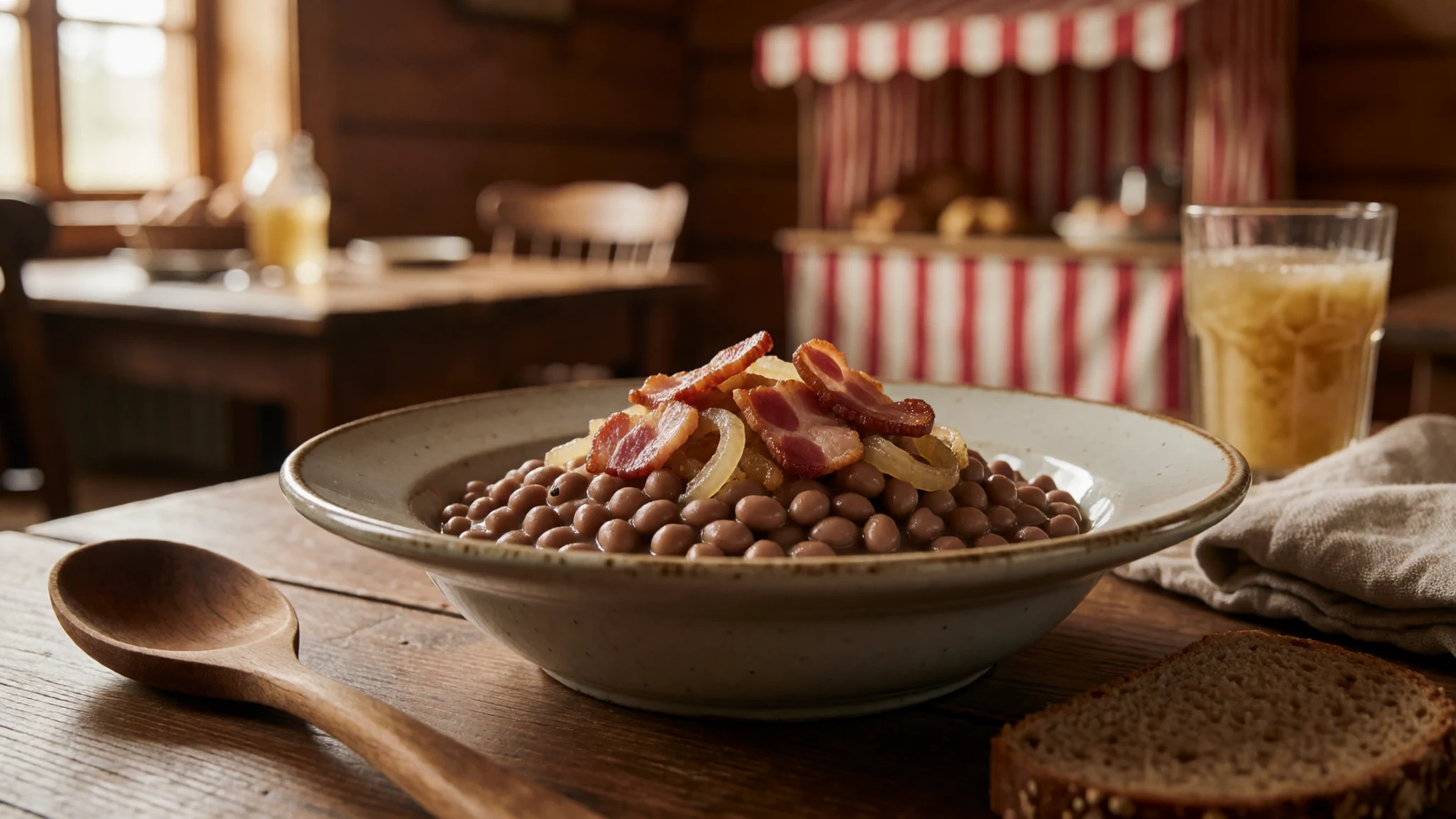
- Aukstā zupa (cold beetroot soup) — Cafés and restaurants in summer
A bright pink summer soup of beetroot and kefir, often served with boiled potatoes and egg on the side. It is refreshing after a day among the ruins and appears on many menus in warmer months, especially around midsummer. - Smoked fish — Local food shops and festival stalls
Smoked fish is a staple across Latvia, usually served with rye bread and a few pickles or fresh dill. It suits a picnic in Castle Park. Look for it at small food stalls, deli counters and in the cold section of local shops. - Self-service cafeteria lunch — Cafeterias around the town centre
Cēsis has plain, inexpensive cafeterias where salads, meat, fish and cakes are made on the premises and chosen from a counter. They are a good way to try several local dishes in one sitting without ordering a full meal.
Plan it
Best time. May to September, when days are long and festivals fill Castle Park; summer is mild but can be showery, and winters are cold, dark and snowy, though the old town is quiet and atmospheric.
How long. 1–2
Getting there. Fly to Riga, then take a train or bus to Cēsis; direct buses from Riga run roughly hourly, and trains also stop in town. From the station, the old town and castle are reachable on foot. By car, take the A2/E77 north-east from Riga and follow the P20 into town.
Budget. low
Tips
- Check bus and train times on the regional journey planner, since evening and weekend services thin out
- Look up festival dates on the official site, cesis.lv, and book rooms early for summer weekends
- Carry a light waterproof, as showers arrive quickly even in summer
- Start at the castle in the morning, then climb the church tower for the view
- Cards are widely accepted, but keep a little cash for small stalls
Etiquette
- Keep to marked paths in the castle ruins
- Ask before photographing people at festivals
- Speak quietly inside St John's Church
Nearby
Sources
- Wikidata Q107582 (CC0)
- Wikipedia: Cēsis (rev 1385270419) (CC BY-SA 4.0)
- Wikivoyage: Cēsis (rev 5429538) (CC BY-SA 4.0)
- Photo: Skats no Vidzemes koncertzāle Cēsis jumta, Guntars Mednis (CC BY 3.0)
- Photo: View of Cēsis in 1793, Johann Christoph Brotze (Public domain)
- Photo: Cesis, Ruine der Ordensburg, Greifen (CC BY-SA 1.0)
- Photo: Rekonstruktion der Fundamente, HaSt (CC BY-SA 4.0)
- Photo: Cēsis naktī, Guntars Mednis (CC BY 3.0)
- Photo: Cēsis (28469215904), Kārlis Dambrāns (CC BY 2.5)
- Photo: Cēsis (28804095610), Kārlis Dambrāns (CC BY 2.5)
- Photo: Cēsis (28985400172), Kārlis Dambrāns (CC BY 2.5)


