Cape Kolka
Cape Kolka, Latvia
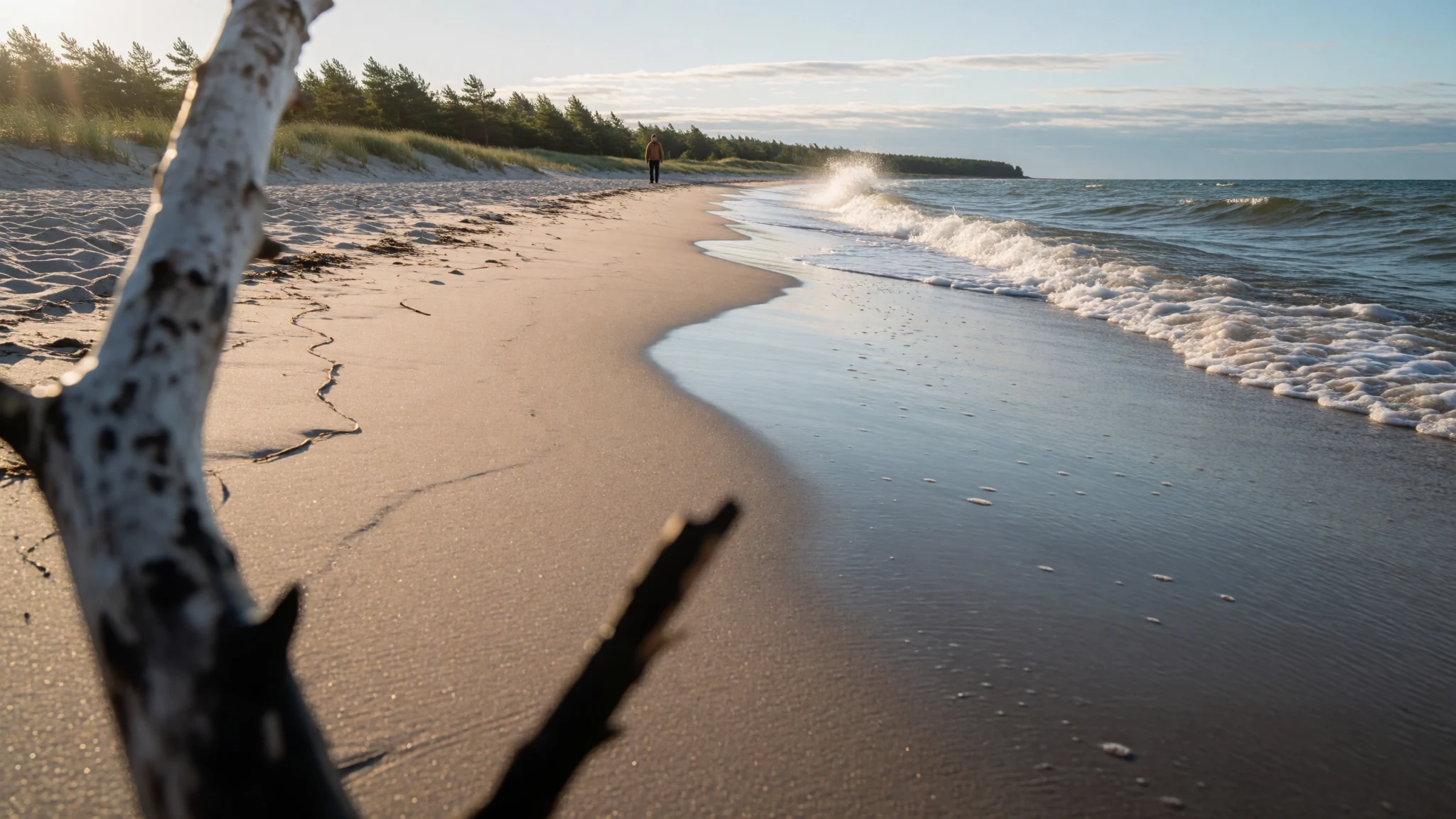
Cape Kolka is where Latvia's land runs out and two seas collide, a windy, quiet spit that rewards slow walking.
The place
Cape Kolka (Kolkasrags in Latvian, Kūolka nanā in Livonian) is the sandy tip of the Courland Peninsula, the point where north-western Latvia runs out of land. It marks the corner where the open Baltic Sea meets the Gulf of Riga, with the Irbe Strait to the west acting as the sea border with Estonia. Ruhnu, an Estonian island, sits in the middle of the gulf to the east. The ground is low and flat: pine forest, dune grass, pale sand and a shoreline reshaped by every big storm. At the very end of the spit, waves arrive from two directions and meet in a line of broken surf, which is the reason most people come. Kolka village stands close by, and Kolka Lighthouse is near the cape. A string of small Livonian fishing settlements runs along the gulf shore: Vaide, Saunags, Pitrags, Košrags and Sīkrags. That stretch is protected as the Livonian Coast. Wikivoyage lists the cape among Latvia's nature attractions in Kurzeme, and it works best as a place for wind, space and long walks rather than a checklist of sights. The practical side deserves honesty. The cape is exposed, the weather turns quickly, summer brings mosquitoes and busy weekends, and facilities are modest. In return it is quiet outside high summer, and the evening light over the water is worth the journey.
Its story
Cape Kolka has always been a corner that ships had to round, and its past is tied to the wider story of the eastern Baltic. In the ancient and medieval world, the lands that became Latvia mattered for trade. A route linking Scandinavia with the Kievan Rus and Byzantium ran through them along the Daugava river, and seafarers entering the gulf passed this headland. The people of this shore were the Livonians, a Finnic-speaking community whose name still labels the coast. In the 12th century German traders arrived, with missionaries who tried to convert the pagan Finno-Ugric and Baltic peoples. Riga was founded in 1201 and grew into a major trading city. Over the following centuries the fishing villages near the cape kept their own rhythm of boats, nets and smoked fish, while power in the region changed hands above them. Latvia became independent in 1918. In June 1940 the Soviet Union issued an ultimatum and its forces invaded, and Latvia was incorporated into the Soviet Union that August. Independence returned in 1991. Those upheavals fell hard on a small coastal culture, and the effort to protect the Livonian Coast today is partly an effort to keep what remains of that heritage visible. Standing on the spit, it is easy to see why the place mattered to sailors and why it still feels like an edge.
What to see
- The tip of the spit — Cape Kolka
The very end of the spit is the reason for the journey. Sand narrows to a point, and the Baltic Sea and the Gulf of Riga push against each other, throwing up crossing waves that look like a seam in the water. Wind is constant, so a windproof layer matters more than sunscreen, even in summer.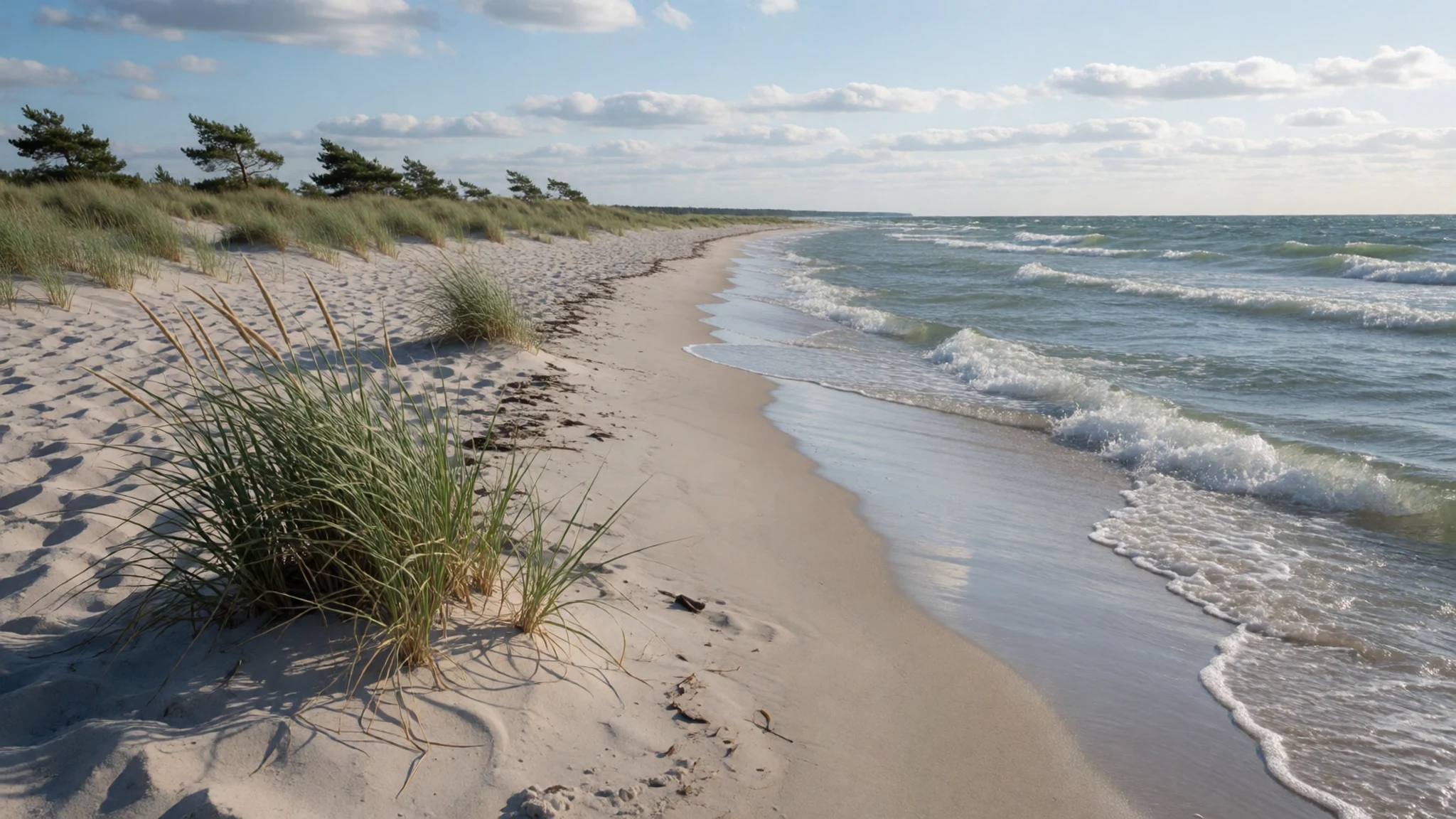
- Kolka Lighthouse — Near Cape Kolka
Kolka Lighthouse stands near the cape and gives the low landscape its one vertical mark. Seen from the shore it is a slim shape against a wide sky, a reminder of why ships needed warning here. Check locally whether any viewing or access is offered, as arrangements change.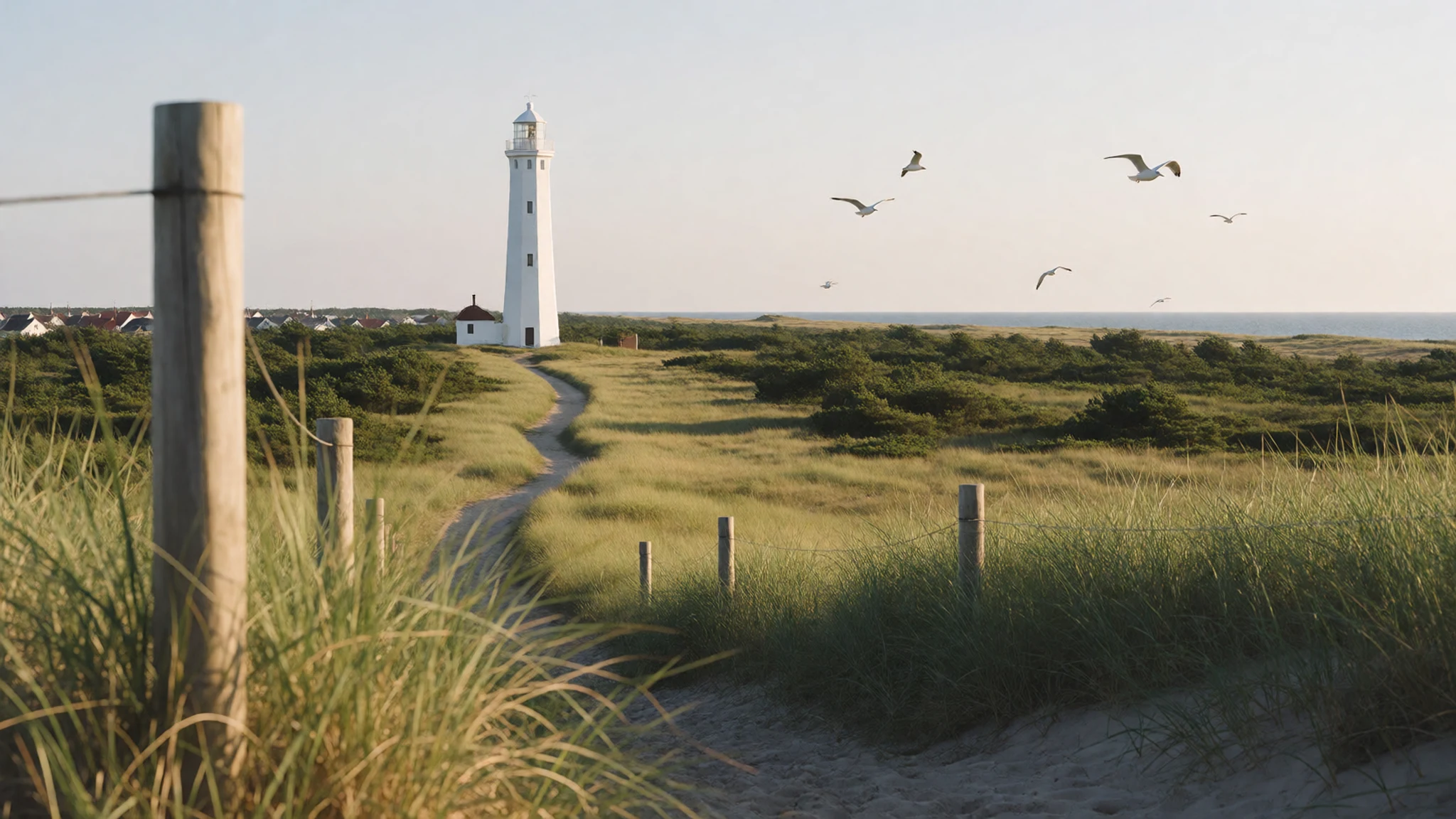
- The Irbe Strait shore — West side of the cape
The western shore faces the Irbe Strait, the water that separates Latvia from Estonia. It suits a long beach walk, with driftwood and pine roots strewn along the sand, and the water is often rougher than in the gulf. Swimming here calls for caution and a calm day.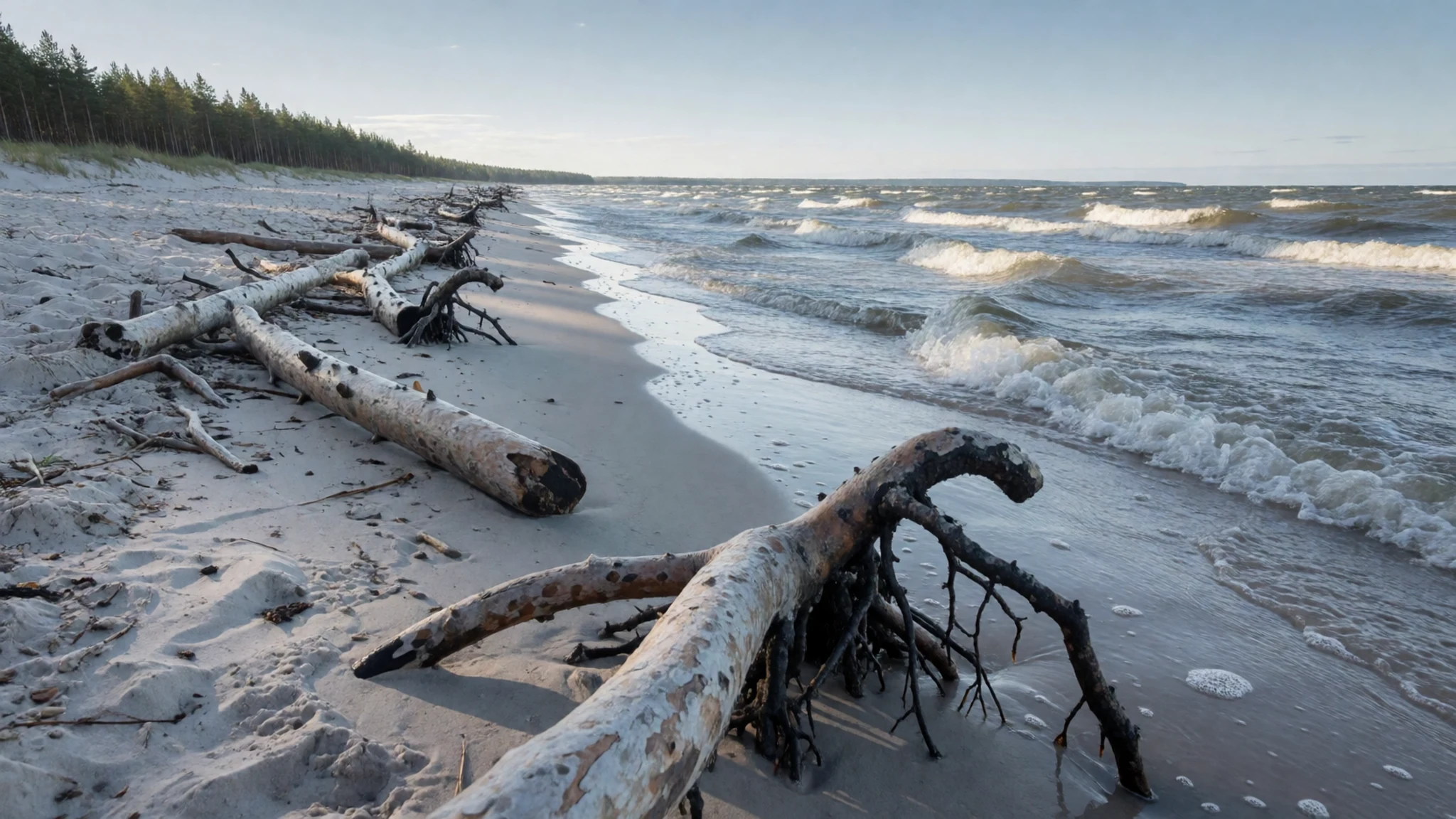
- Kolka village — Kolka
Kolka village is the practical base, with a signposted way to the cape, small shops and a few places to eat. It is modest rather than polished, and its appeal is that it still feels like a working coastal settlement. Expect limited services and carry some cash for small stalls.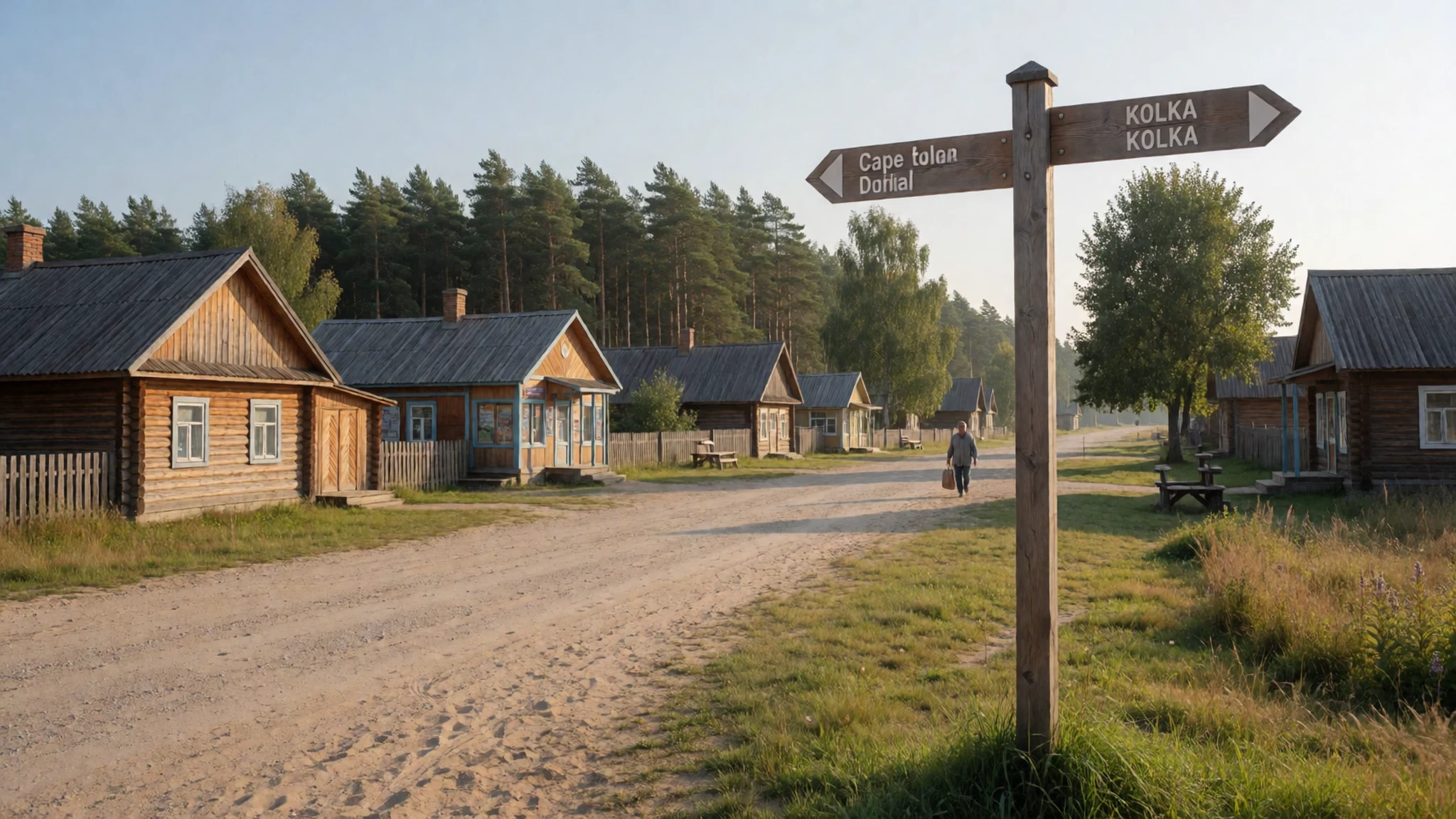
- The Livonian Coast villages — Gulf of Riga shore, east of the cape
Vaide, Saunags, Pitrags, Košrags and Sīkrags form a line of old fishing settlements along the gulf shore, protected as the Livonian Coast. Pine woods sit behind the beach, and the villages give a sense of how coastal families lived. Drive or cycle slowly, since the road is shared with residents.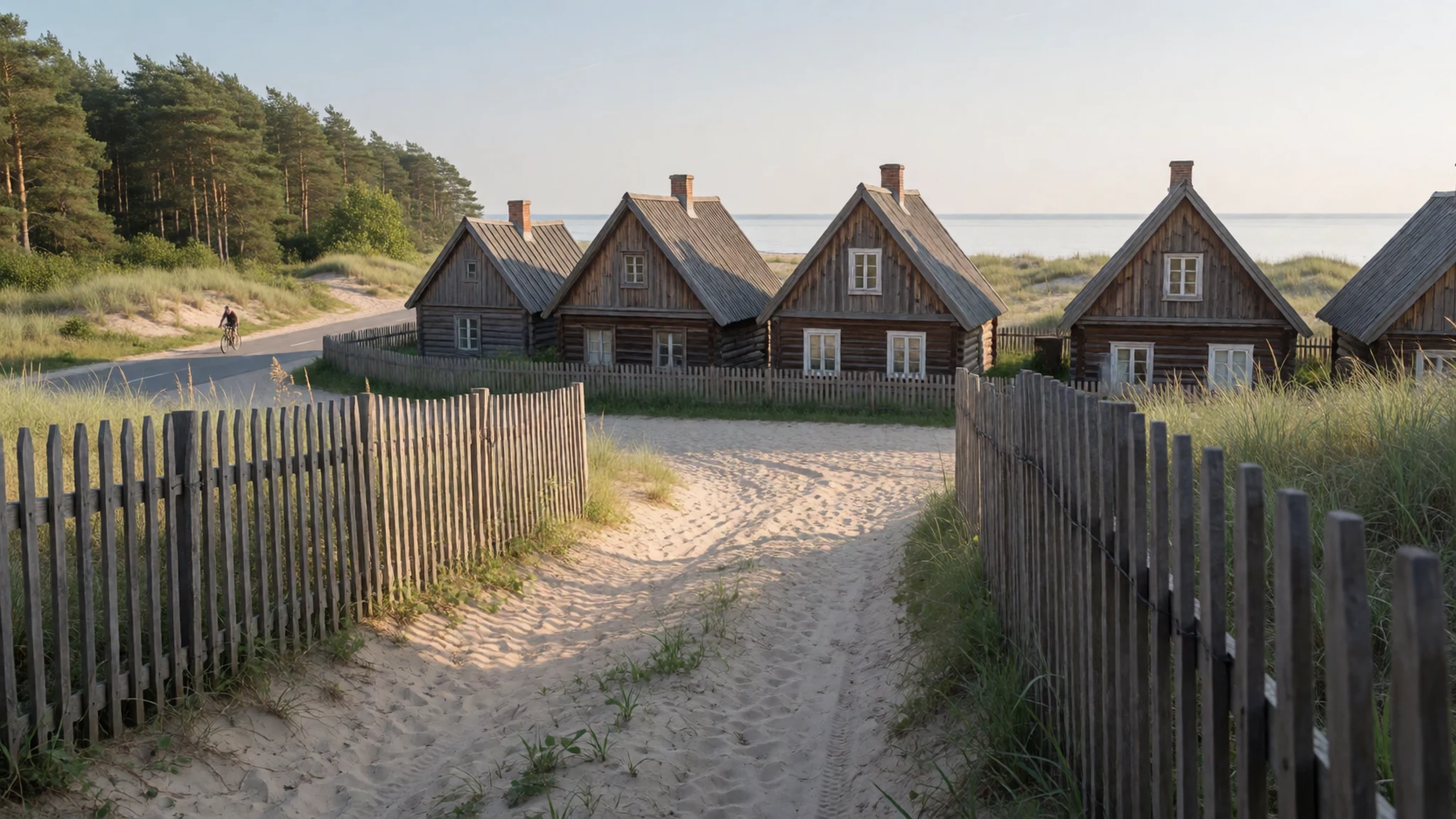
Culture
Culture around Cape Kolka is shaped by two things: ordinary Latvian reserve and the Livonian heritage of the coast. Latvians tend to respect personal space and do not usually greet strangers unless introduced, so a quiet nod on the beach is normal and not unfriendliness. Salaries, personal beliefs and politics are best left alone until people know each other well, and the Soviet period is a sensitive subject. The Livonians are a small Finnic people, and the villages along their coast are treated as cultural heritage, but they are also homes where families live and work. Across Latvia, folk ornament includes the ugunskrusts, or fire cross, an old pagan symbol of luck, energy and fire that appears in embroidery and souvenirs. It has no link to Nazi Germany, and hinting otherwise is taken as offensive. Politeness shows in small habits, such as holding a door open and letting others board a bus or train first. Littering is bad manners and against the law, and offenders may be fined, which matters on a beach where the wind carries everything away. Take every scrap of litter with you and keep to the paths through the dune grass, because rubbish can bring a fine and the dunes are easily damaged.
What to wear
Traditional dress near Cape Kolka belongs to the wider Latvian folk costume tradition, with its own Livonian coastal character. Costumes are made mainly from wool and linen, with woven belts and sashes, embroidered or patterned bands and metal brooches. Colours and patterns differ from region to region. Ornaments such as the ugunskrusts are common in the embroidery. Today these costumes appear at festivals, choir and folk-dance events, weddings and national celebrations rather than in daily life. Everyday clothing on this coast is practical: waterproof jackets, wool jumpers, boots and caps, with shorts and light layers in the warm months. A visitor should dress for wind first. Pack a windproof, waterproof outer layer and a warm mid-layer even in midsummer, since the spit is exposed and evenings cool quickly. Sturdy shoes or trainers suit soft sand, roots and wet boardwalks, and sandals are for the beach only. A hat and sunglasses help against glare and gusts, and insect repellent is more useful than any accessory. There are no religious dress rules at the cape itself, though covered shoulders and knees are polite if entering a village church. Swimwear belongs on the sand, not in village streets.
What to eat
- Smoked fish (kūpināta zivs) — Roadside smokehouses and village stalls along the Livonian Coast
Smoked fish is the signature of this coast, with herring, flounder and similar catches hung in small smokehouses. It is eaten warm, straight from paper, often with rye bread. Look for roadside smokehouses and village stalls along the Livonian Coast, and ask what was smoked that day.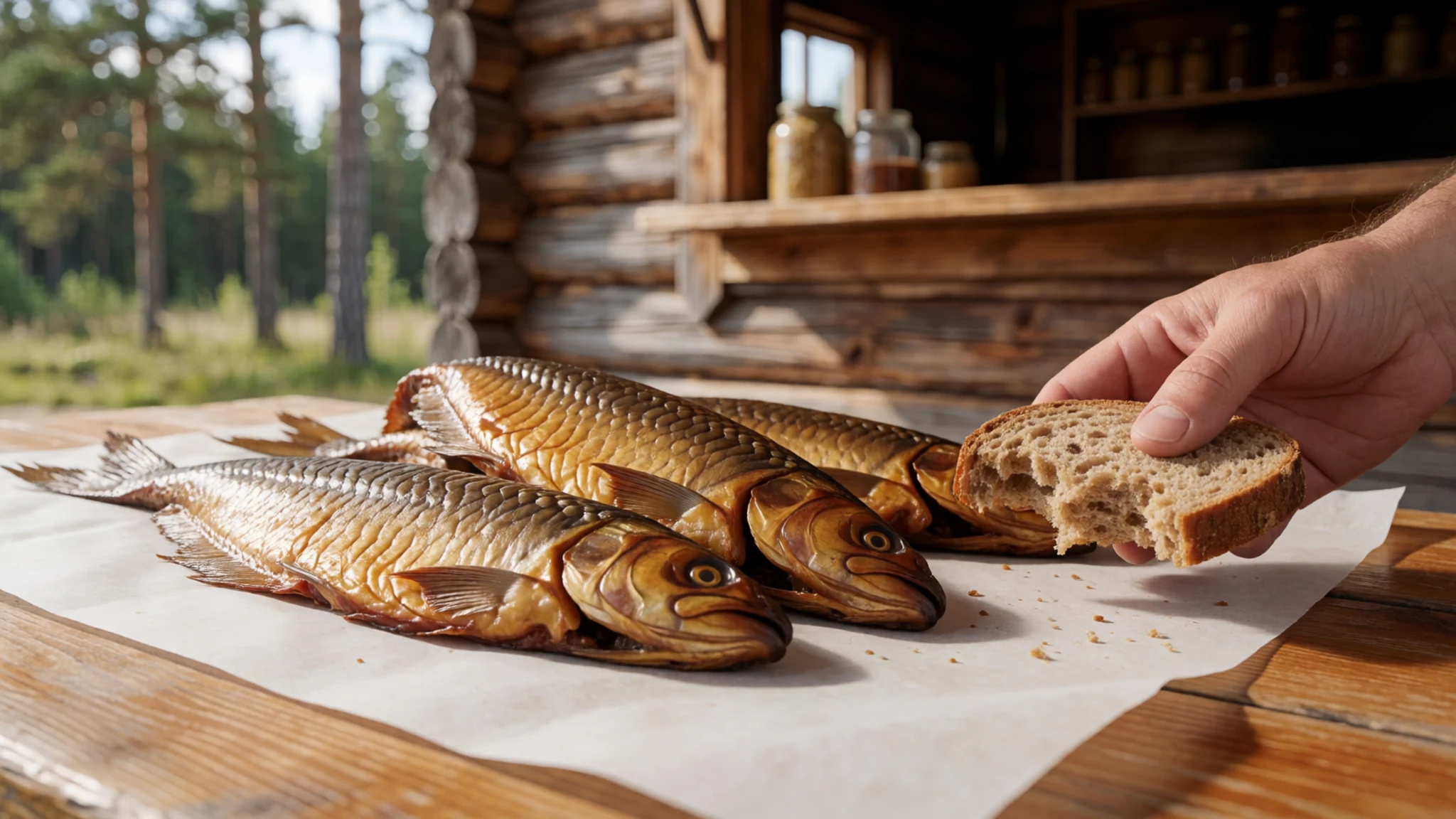
- Rye bread (rupjmaize) — Village shops and bakeries in Kolka and nearby
Dense, dark rye bread with a faint sour note, served with butter or alongside nearly every meal. Latvian cooking rests on bread and dairy, and this is the everyday form. Buy a loaf at a village shop or bakery and eat it with smoked fish.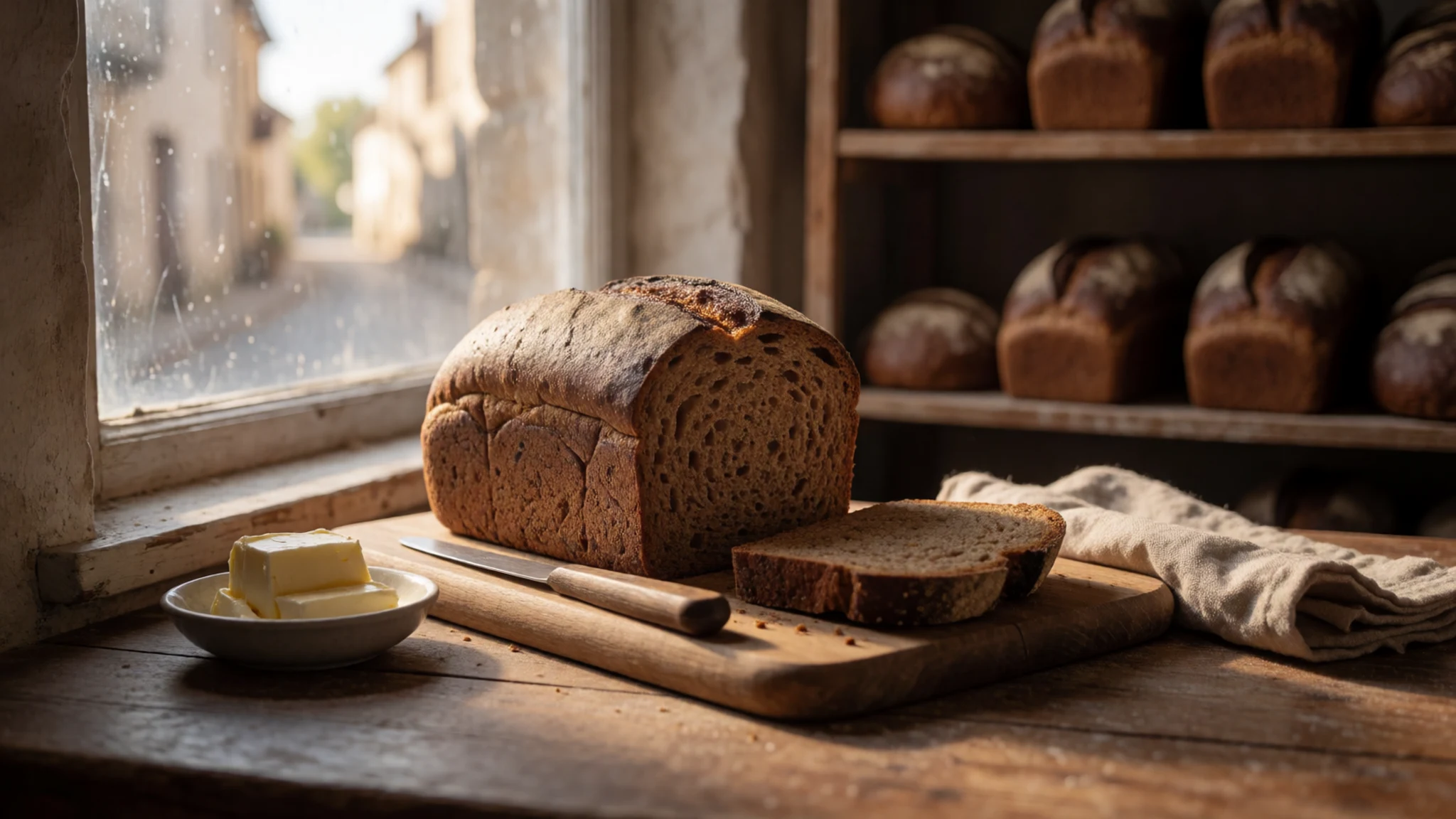
- Pīrāgi — Bakeries and cafés in Kolka
Small baked bread pastries filled with chopped bacon and onion, a staple of Latvian peasant cooking and a handy snack for a windy beach walk. Pork features widely in the cuisine. Look for them in bakeries and cafés in Kolka. - Grey peas with bacon (pelēkie zirņi ar speķi) — Country cafés and home-style eateries in Kurzeme
Grey peas stewed soft and topped with fried bacon and onion, a plain, filling dish that suits cold, windy days. Menus change, so ask for it by name at country cafés and home-style eateries in Kurzeme. - Sklandrausis — Local bakeries and village shops
A rye-crust tart filled with carrot and potato, often spiced with caraway, and associated with Kurzeme. It is dense and lightly sweet, good with coffee. Seek it in local bakeries and village shops rather than expecting it on every menu.
Plan it
Best time. June to August for the longest light and the warmest water, though the sea stays cool; May and September are quieter, with changeable weather. Winters are cold and dark, and the cape is bleak and windy.
How long. 1–2
Getting there. Fly into Riga International Airport (RIX), as no other airport in Latvia runs scheduled flights abroad. From Riga the last leg to Kolka is by hire car or regional bus along the Kurzeme coast; check the current bus timetable, as services can be thin outside summer.
Budget. low
Tips
- A car makes the Livonian Coast villages far easier to reach than buses
- Go early or late in the day to avoid summer weekend crowds and catch the best light
- Carry insect repellent in summer and a windproof layer in every season
- Bring cash and food, as shops and cafés near the cape are small
- Check the weather before setting out, since conditions on the spit change quickly
Etiquette
- Take all litter away; littering is illegal and can be fined
- Stay on paths and boardwalks to protect the dune grass
- Respect the Livonian villages as homes: keep noise down and do not photograph people without asking
Nearby
Sources
- Wikidata Q1728331 (CC0)
- Wikipedia: Cape Kolka (CC BY-SA 4.0)
- Wikivoyage: Latvia (CC BY-SA 4.0)
- Photo: Kolkas rags, Edgars Šulcs (CC BY-SA 4.0)
- Photo: Kolka signpost, Stgubr92 (CC BY 3.0)
- Photo: 2011 09 Kolka (26), Laima Gutmane (CC BY-SA 4.0)
- Photo: A place where waves of the Baltic Sea and Rigas Sea meet, Laima Gūtmane (CC BY 3.0)
- Photo: An autumn, Laima Gūtmane (CC BY 3.0)
- Photo: Baltic Sea at Kolka Cape, Italas (Public domain)
- Photo: Cape Kolka aerial photograph, acediscovery (CC BY 4.0)
- Photo: Kolka, Modris Putns (CC BY 3.0)


