Aglona Basilica
Aglona Basilica, Latvia
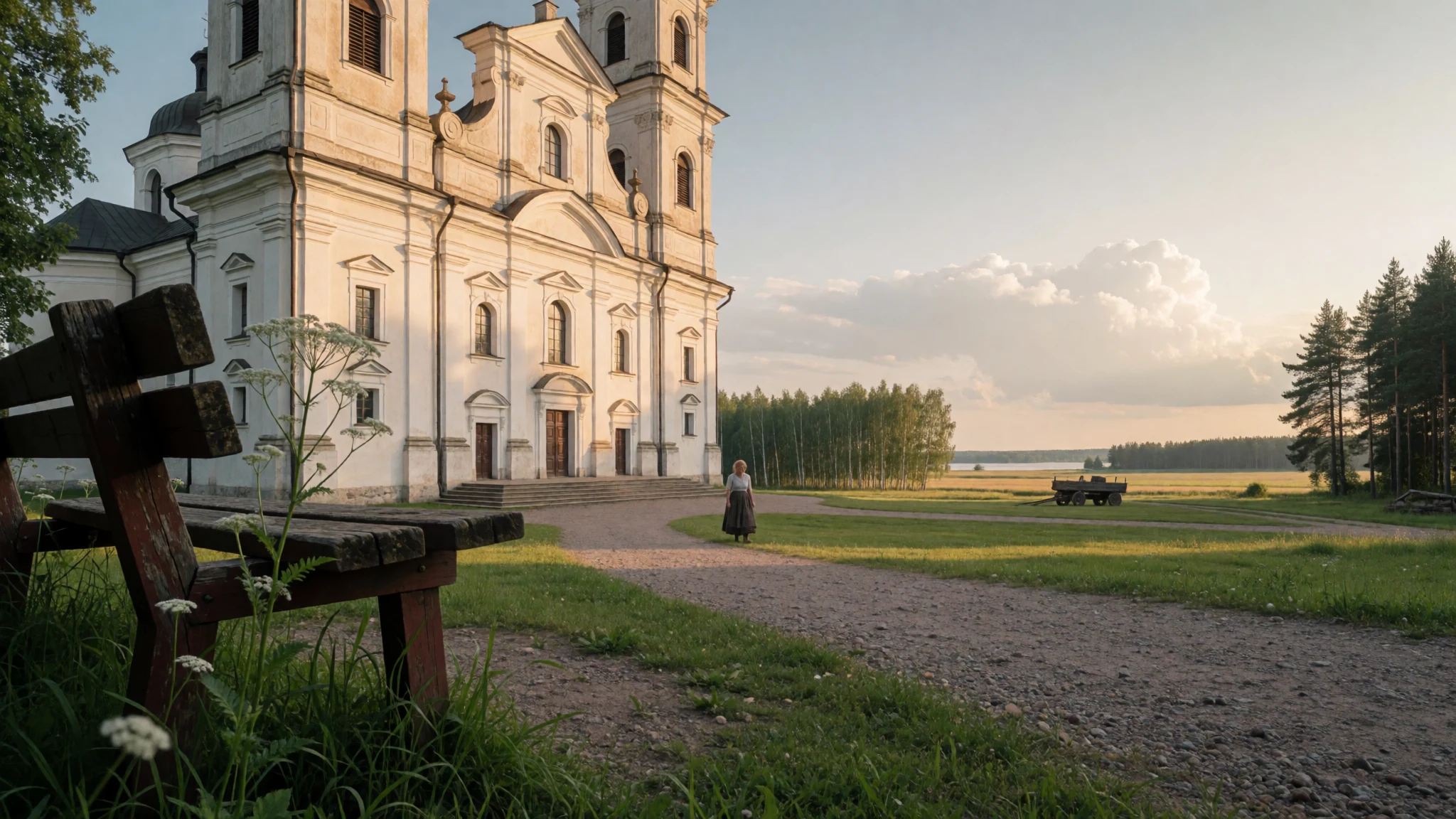
A Baroque pilgrimage church in Latvia's lake-dotted east, quiet for most of the year and overwhelmed by pilgrims around the August feast.
The place
Aglona Basilica stands in the village of Aglona, in Latgale, the lake-dotted eastern region of Latvia, well away from the Baltic coast and the capital. It is a Roman Catholic church dedicated to the Assumption of the Virgin Mary, and it serves as the country's main pilgrimage destination for Catholics. The Holy See counts it among eight international shrines, a status that sits oddly with how small the village is. The building is Italian Baroque, with a wide pale façade between two towers about 60 m tall, which show above the farmland long before the village does. Aglona is little more than a crossroads where the P60 and P62 highways meet, sitting at a distance of 40 km to the northeast of Daugavpils and 234 km away from Riga, so the setting is fields, forest and water rather than a town. For most of the year the basilica is peaceful: a few local worshippers, rows of candles and the occasional coach party. That changes around 15 August, the feast of the Assumption, when pilgrims arrive in very large numbers and the village fills with people, stalls and queues. Attendance at the religious events there has been put at around 300,000. Anyone who wants the building and its icon to themselves should avoid that week. Anyone who wants to understand why the place matters could go once for the feast, with patience and careful planning. The church also carries the rank of minor basilica, a title that reflects its standing in the Catholic world as well as its local importance.
Its story
Aglona Basilica grew out of a Dominican foundation. The monks settled here and put up a wooden church, where they placed an image of the Virgin modelled on an icon from Trakai. That picture, known as Our Lady of Aglona, became the focus of local devotion, and believers have long credited it with healing powers. The wooden church later burned down, and the Dominicans replaced it with a brick monastery and a far larger church. Work on the present building began in 1768 and was finished some years later, in a late Baroque style with rococo touches inside. The pulpit, organ and confessionals date from that first building phase, while much of the remaining decoration was added afterwards. The church was consecrated by a bishop soon after completion. Its modern profile came in stages. When the church marked two centuries, Pope John Paul II raised it to the rank of minor basilica, and he later came to Aglona in person. A recent restoration replaced the sheet-metal roofing with copper and repainted the interior. The altar columns, once a cool blue-green marble imitation, now have a warmer pinkish tone, while the walls are pale yellow with celadon marbling. The new scheme kept the Baroque and rococo forms but lost a few painted saints and symbols, among them the dove for the Holy Spirit and the Lamb of God.
What to see
- The façade and twin towers — Basilica square, Aglona
The front of Aglona Basilica is the best introduction to the place. The pale Baroque façade sits between two towers about 60 m tall, and from the square in front the whole composition reads clearly against the sky. Walk round the sides too, where the monastery buildings and the scale of the roof become clear.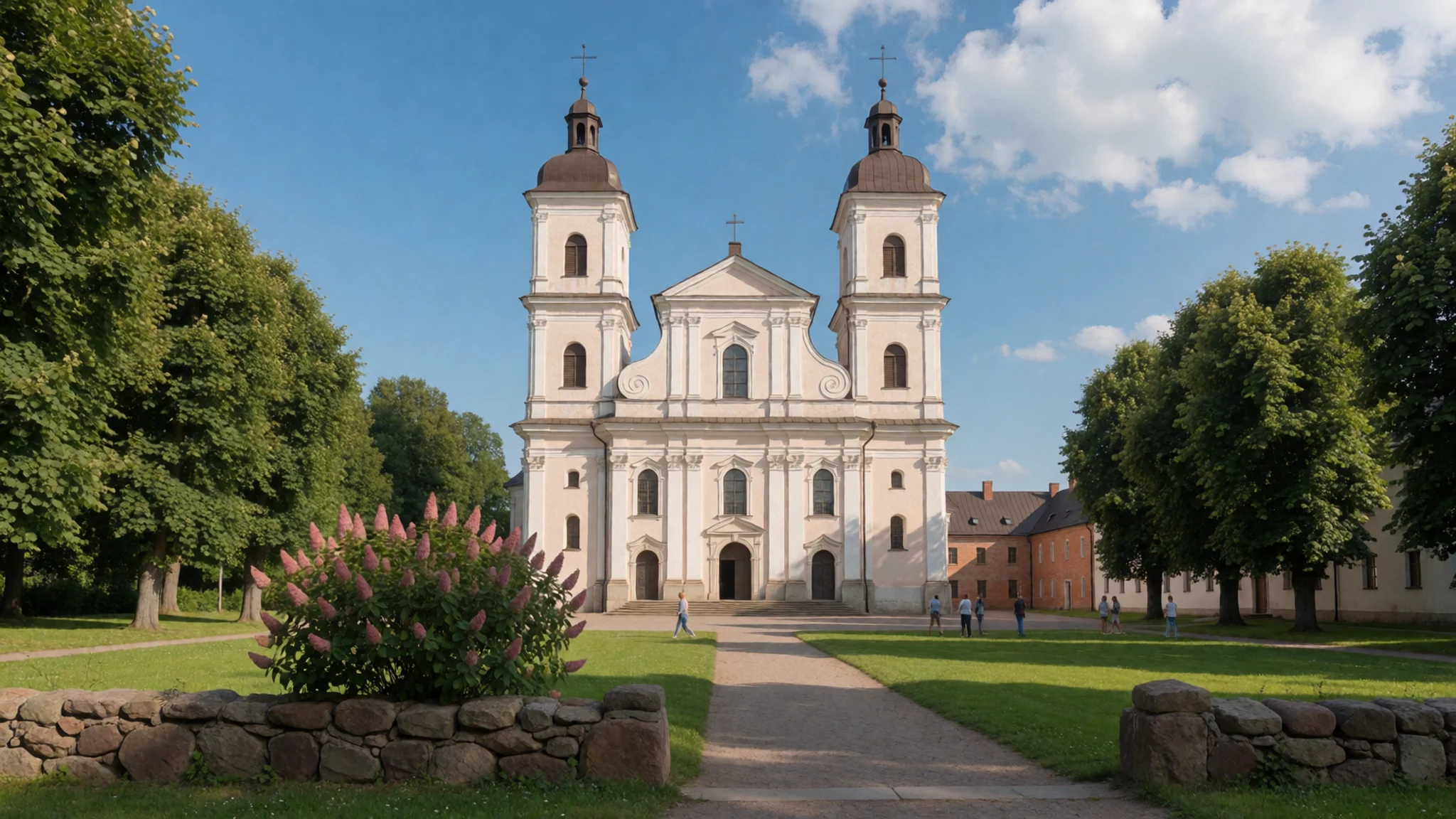
- The interior and the icon — Basilica nave and main altar
Inside, cross vaults, columns and rococo ornament surround an altar painted in warm pinks after the recent restoration. The focus of devotion is the icon of Our Lady of Aglona, which pilgrims approach in silence. Services take priority here, so wait for a quiet moment, or sit at the back.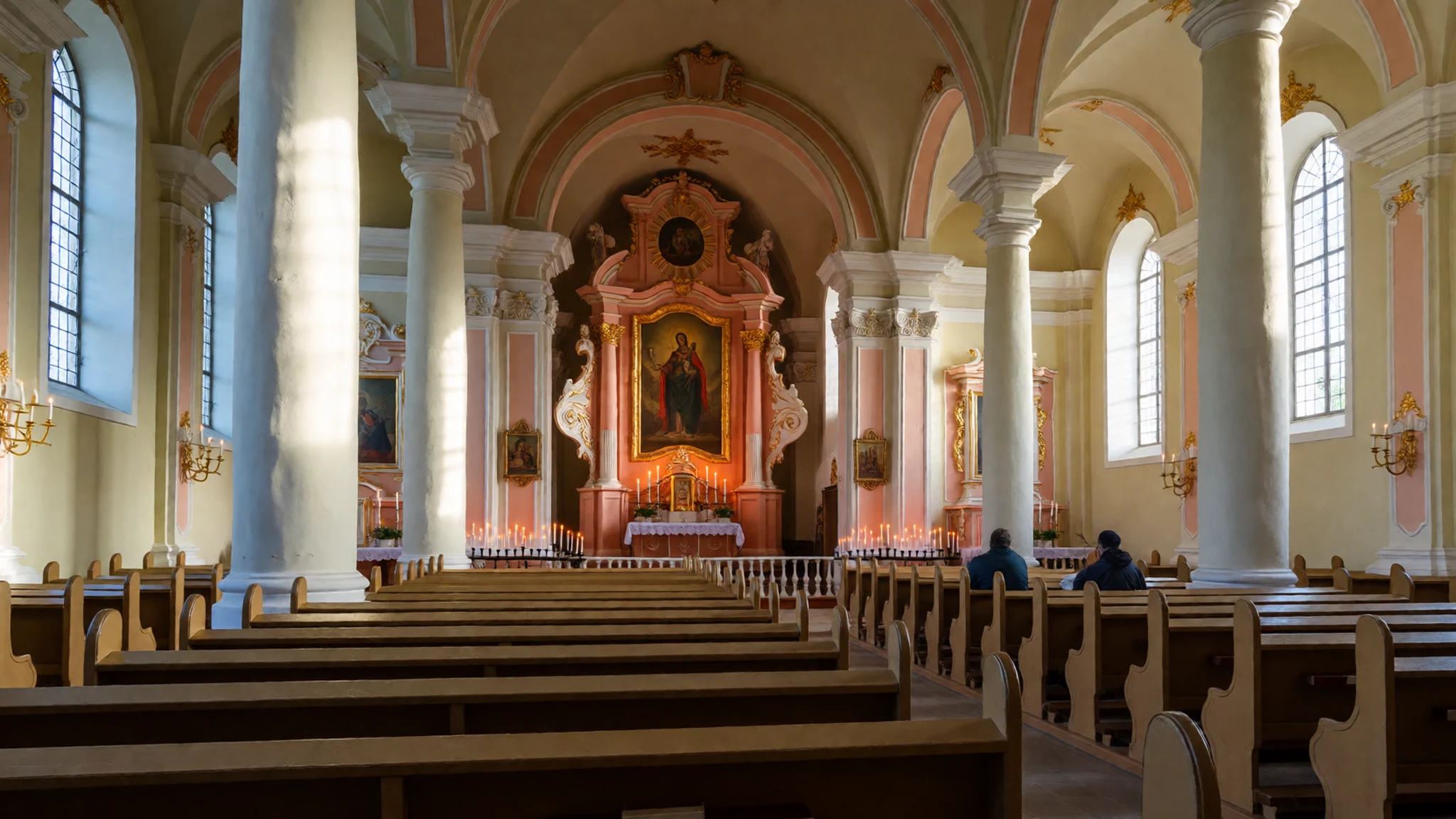
- Aglona Bread Museum — North of the village centre
A small private museum a short distance from the basilica, described as the only bread museum in the Baltic States. It follows grain from field to loaf and explains how rye bread is made. It is a pleasant change of pace after the church, and opening arrangements are worth checking in advance.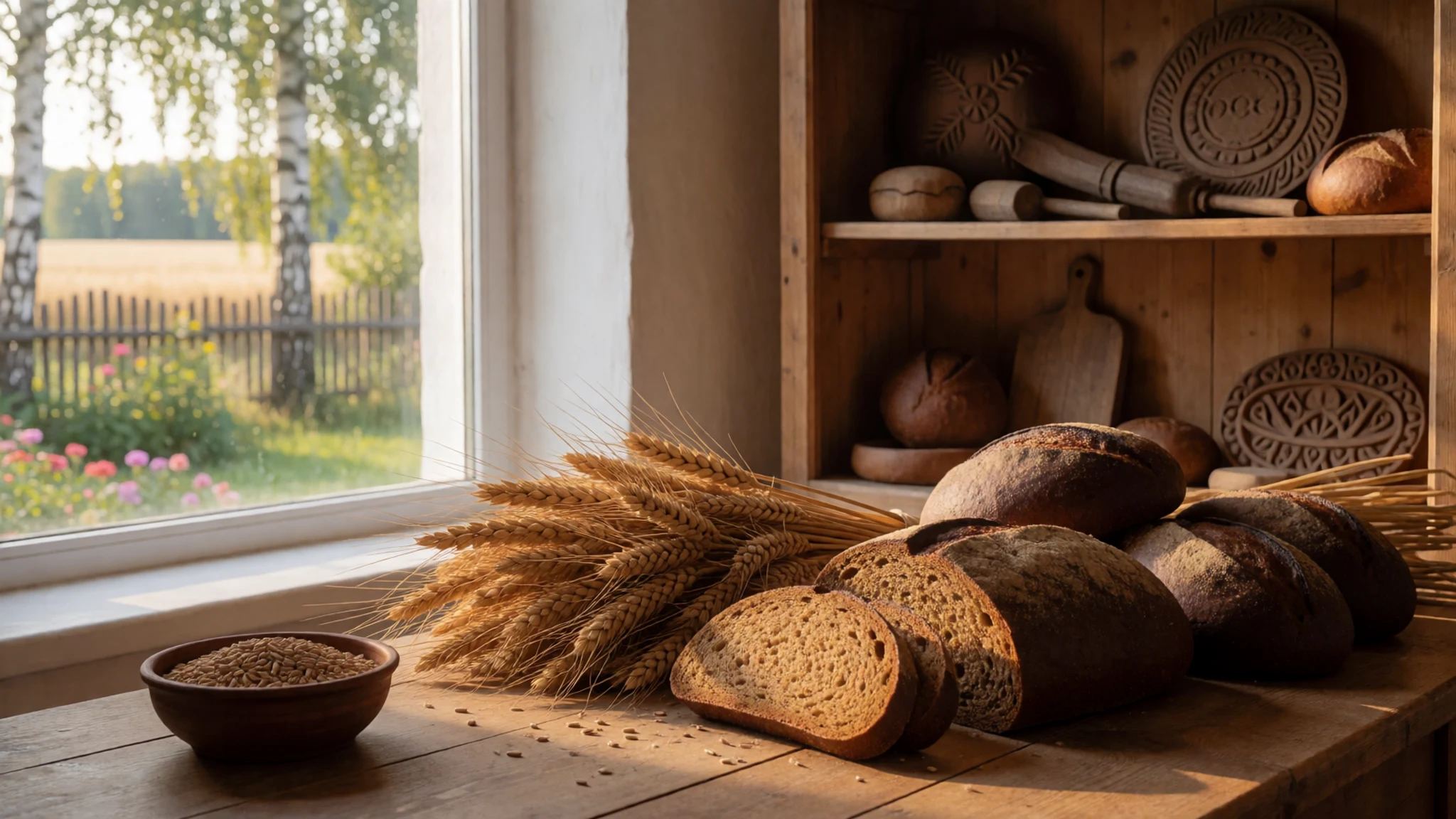
- Magdalen Castle Mound — Western shore of Lake Lielā Dubuļka, Aglona parish
This hillfort rises about 20 m on the western shore of Lake Lielā Dubuļka, in the central part of Aglona parish. Little built remains, so the appeal is the shape of the mound, the lake views and a walk through the surrounding countryside on a dry day.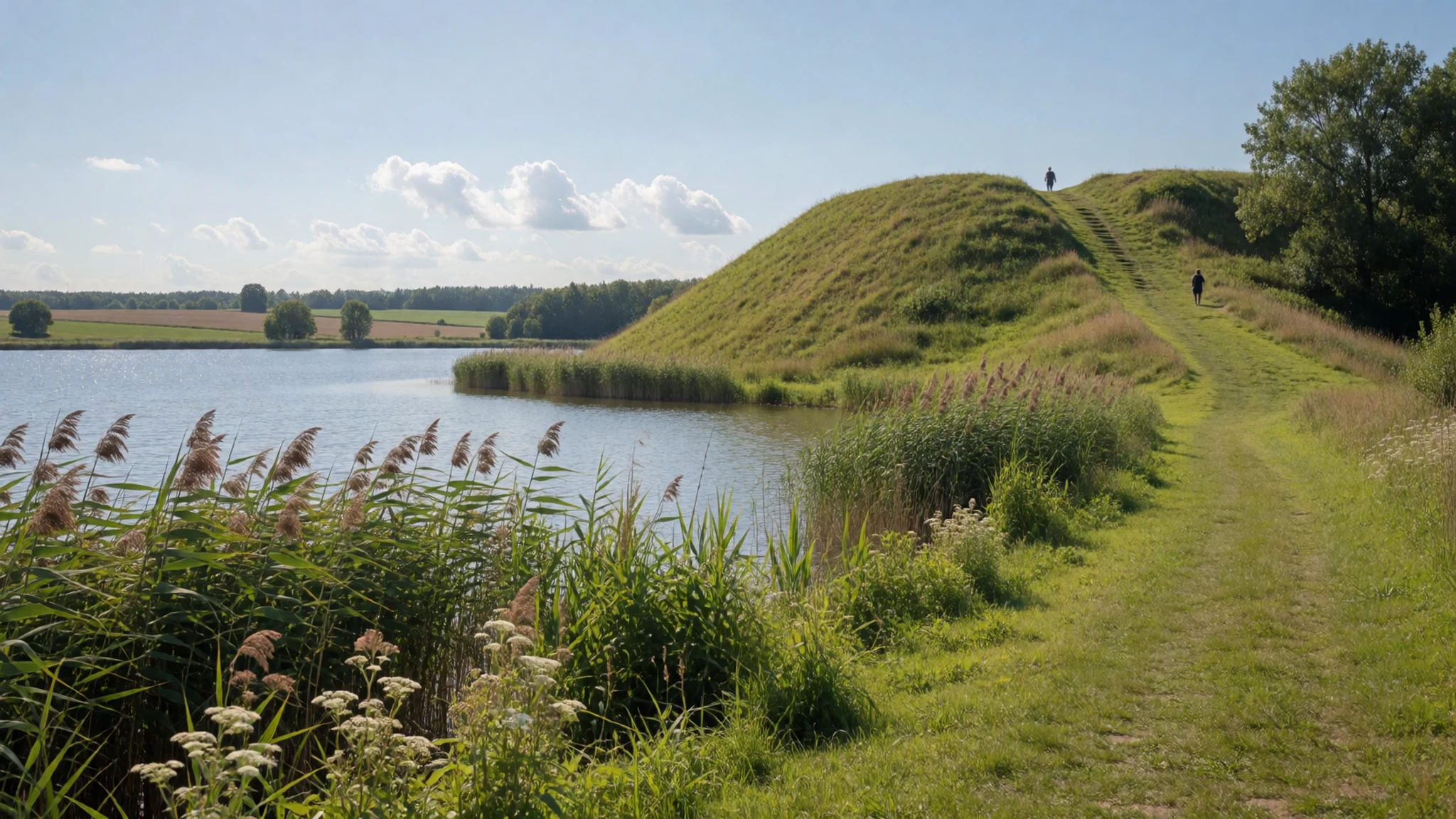
- The pilgrim grounds — Around the basilica
The open ground and paths around the basilica are where the August crowds gather, with processions, open-air services and stalls. Outside the feast, the same space is calm and good for a slow walk, with benches, trees and a clear view of the building from several angles.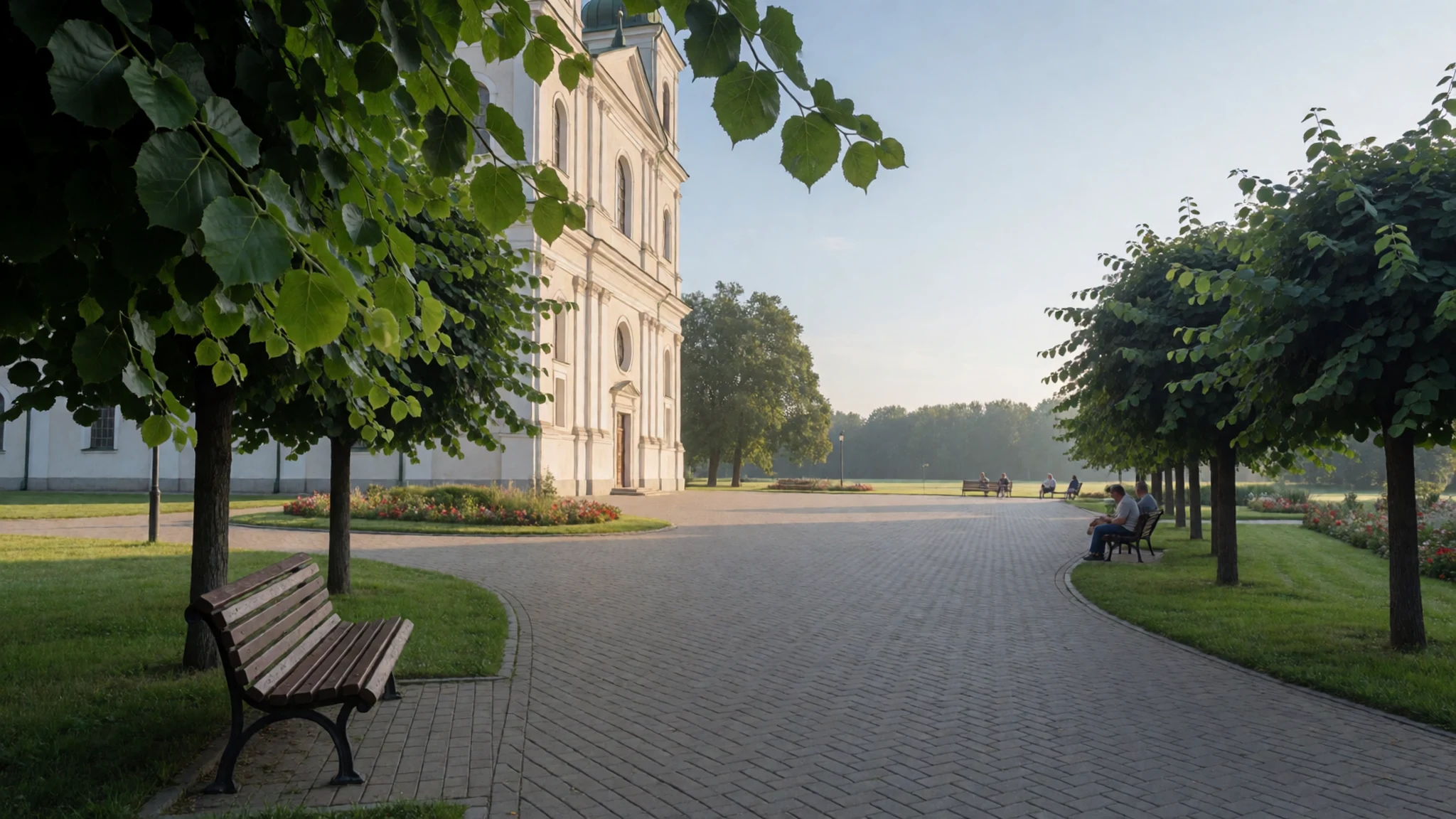
Culture
Aglona Basilica belongs to Latgale, the part of Latvia where Catholicism has long been the main faith, in a country where Lutheranism has been strong elsewhere. Devotion to Mary is the heart of it. The icon, the candles and the rosaries said in the pews are everyday sights, and families return year after year. The yearly high point is the feast of the Assumption on 15 August, when processions, outdoor Mass and long confessional queues turn the village into a temporary city of pilgrims. Many arrive on foot, some over several days, and they bring food, folding stools and a practical patience with heat and crowds. Latgale also has its own regional identity, with a distinct dialect, a strong pottery tradition and a reputation for hospitality, so conversation in the village shop or café is often warmer than visitors expect. Outside the feast, services follow the regular parish timetable, and the church stays open for private prayer. Treat the basilica first as a working place of worship and second as a sight, and the experience tends to be much richer. Cover your shoulders and knees, remove hats inside, keep your voice low, and never photograph worshippers or use flash near the icon, particularly during Mass.
What to wear
Aglona sits in Latgale, where traditional women's dress is built from linen blouses with embroidered cuffs and collars, woollen skirts in stripes or checks, woven sashes and large shawls, often finished with simple beads or metal brooches. Men wore linen shirts, wool waistcoats and coats, and woven belts. This dress is now mostly seen at folk ensembles, weddings, song festivals and some feast days, and a few pilgrims may wear elements of it. Everyday clothing in the village is plain and practical: jeans, light jackets, rubber boots in wet weather and warm knitwear when it turns cold. Pilgrims dress neatly for church, usually in smart-casual clothes, with walking shoes for those on foot. Visitors should dress as they would for any active Catholic church. Cover shoulders and knees, and carry a light scarf or shawl if wearing a sleeveless top. In summer, light cotton and a sun hat help, with a rain jacket always in the bag, since showers can come quickly. Shoes should handle gravel, grass and cobbles, especially in August, when the grounds can be muddy and crowded. In winter, expect real cold: a hat, gloves, thermal layers and boots with good grip are worth packing, as paths can be icy.
What to eat
- Rye bread — Village bakeries and shops in Aglona
Dark, dense rye bread is the staple of Latvian tables and a natural link to the bread museum nearby. It is often eaten with butter, cheese or smoked fish. Buy a loaf from a village bakery or a local shop.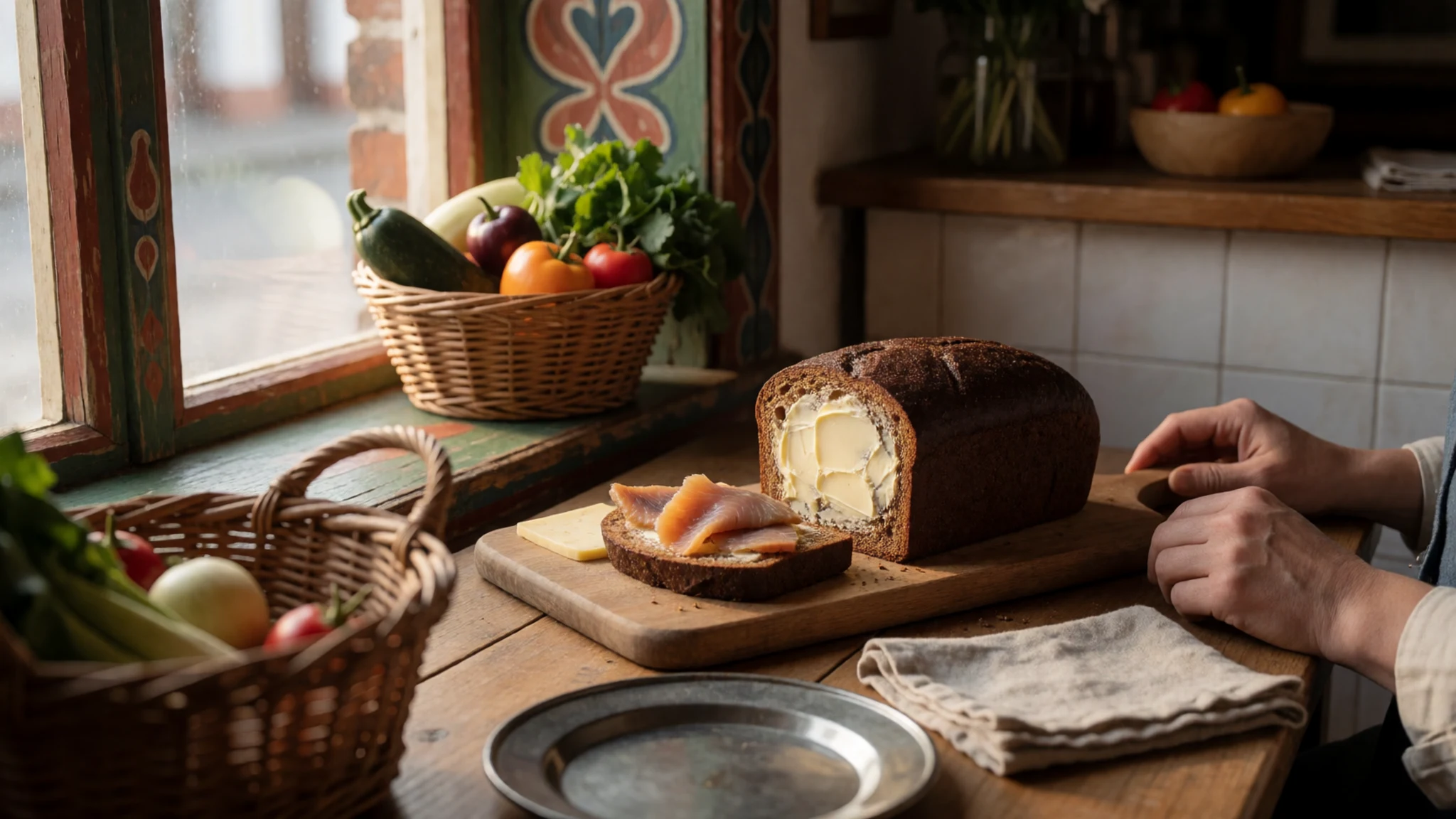
- Piragi — Bakery counters and cafés near the basilica
These small baked pastries are filled with chopped bacon and onion and eaten warm. They make a handy snack for a day of walking or waiting in a pilgrim queue. Look for them in village cafés and bakery counters.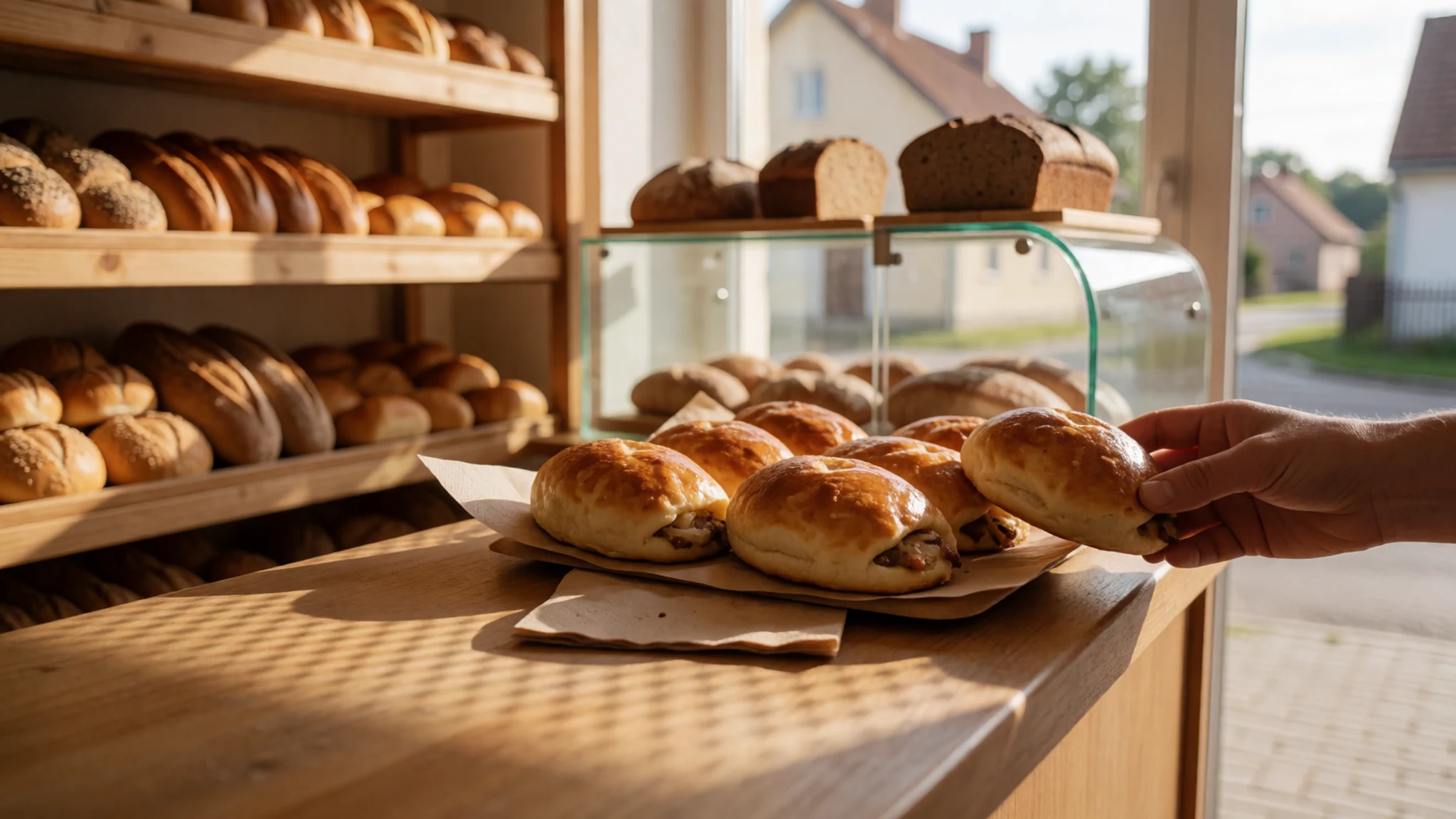
- Grey peas with bacon — Village eateries and roadside cafés
A hearty dish of boiled grey peas topped with fried bacon and onion, traditional across Latvia and especially comforting on cold days. It is simple, filling and often served as a side. Ask for it at a local eatery. - Lake fish — Lakeside stalls and farm shops around Aglona
Freshwater fish from the lakes of Latgale is usually smoked or fried and served with bread and a little salad. Quality varies by season, so ask what is local that day. Small stalls and farm shops are the best bet. - Curd cheese and honey — Farm shops and pilgrim stalls near the basilica
Fresh curd cheese, often with sour cream or berries, and local honey are common farm products in the region. They suit breakfast or a light picnic. Around the feast, stalls near the basilica sell honey and kvass.
Plan it
Best time. June to September, when days are mild or warm and the grounds are open and dry. Around 15 August the basilica is at its busiest, so go then only for the feast itself. Winters are cold and snowy, with short days.
How long. 1–2
Getting there. The nearest big airport is Riga, 234 km away by road. Daugavpils, 40 km southwest, is the nearest large town and has rail and bus links. The last leg is by road along the P60 or P62 highways, so a car is the easiest option. Check coach and bus timetables for Aglona before travelling.
Budget. low
Tips
- Book rooms well ahead if you plan to be here for the 15 August feast, since the village is small and fills quickly
- Arrive early in the morning outside the feast for a quieter church and softer light
- Carry some cash and a water bottle, as card acceptance and shops can be limited in a small village
- Check the official site, http://aglonasbazilika.lv, for service times and event details before you go
- Consider basing yourself in Daugavpils if the village is full, and driving over for the day
Etiquette
- Dress modestly and remove hats inside the church
- Keep quiet during services and do not photograph worshippers or use flash near the icon
- Follow the lead of local pilgrims in processions and queues
Nearby
Sources
- Wikidata Q2638127 (CC0)
- Wikipedia: Basilica of the Assumption, Aglona (rev 1366873109) (CC BY-SA 4.0)
- Wikivoyage: Aglona (rev 5256035) (CC BY-SA 4.0)
- Photo: Aglona Basilica, Dainis Matisons (CC BY 2.5)
- Photo: Aglona (August, 15th), Dajjna, derivative work Rabanus Flavus (CC BY 3.0)
- Photo: Aglona (August, 15th), Dajjna (CC BY 3.0)
- Photo: Basilica in Aglona, Chmee2 (CC BY-SA 1.0)
- Photo: Basilica, Aglona (1), Zairon (CC BY-SA 4.0)
- Photo: Basilica, Aglona (2), Zairon (CC BY-SA 4.0)
- Photo: Façade of the Basilica (1), Zairon (CC BY-SA 4.0)
- Photo: Façade of the Basilica (2), Zairon (CC BY-SA 4.0)


