Jūrmala
Jūrmala, Latvia
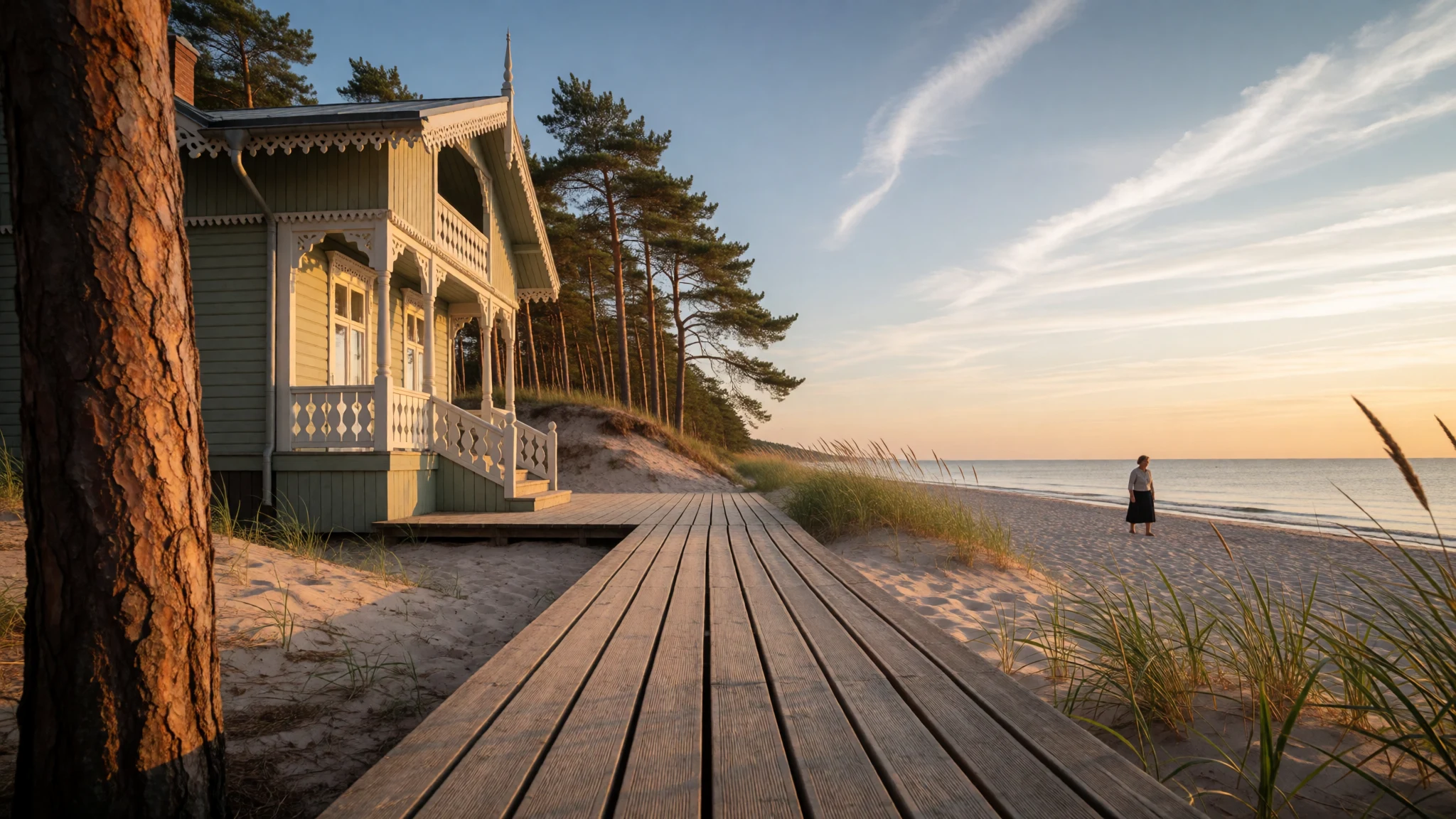
Jūrmala is Latvia's long pine-backed beach, with wooden villas, spa history and a short train ride from Riga.
The place
Jūrmala is a string of seaside villages on a narrow strip of land about 25 km west of Riga, with the Gulf of Riga on one side and the Lielupe River on the other. Around 53,000 people live here, and the ground is almost flat, about 8 m above sea level. The beach runs for roughly 33 km as pale, fine sand, and the water stays shallow for a long way out, which is why families have favoured it for generations. Pine woods stand right behind the dunes, so the air smells of resin as much as salt. Each district has its own mood. Majori is the busiest, with cafés, a walkable centre and the most central railway station. Dzintari is leafier and musical. Bulduri and Majori both fly the Blue Flag for their beaches. Ķemeri, at the western end, is quieter, with forest and bog. Between the shore and the railway, wooden villas with carved trim stand among the trees, some lovingly restored, some peeling. Concrete Soviet-era sanatoriums sit among them. Summer weekends bring day-trippers from the capital and the sand fills; weekdays and the shoulder months are calmer. The Baltic is cool even in July, and restaurants price themselves like a resort.
Its story
Jūrmala began as a resort in the late eighteenth century, and the facts give 1785 as its founding year. Landowners from around Riga started coming to the shore to rest, and after the Napoleonic wars Russian army officers did the same, later bringing their families. The real turning point was the railway between Riga and Tukums, opened in 1877 and still running through the town, which made a day at the sea an easy outing. Sanatoriums followed, built around sea air, pine woods, mineral springs and mud. The villages along the line grew into separate resorts, from Ķemeri in the west through Sloka, Dubulti, Majori and Dzintari to Bulduri and Lielupe in the east, and they were later joined into a single city. Gardens, bathing houses and concert pavilions gave each stop its own social life. Under Soviet rule the coast became a mass holiday destination. Stays were handed out as rewards to trade-union members, and senior figures such as Brezhnev and Khrushchev came for the sea and the treatments, which ranged from mud baths to horse-riding therapy. Today some of that concrete is crumbling, while many wooden villas have been repaired, and the town leans on concerts, festivals and visitors from the Baltic region and beyond.
What to see
- Majori Beach — Majori
Majori Beach is the easiest place to understand Jūrmala: wide pale sand, shallow water and pines behind the dunes. The beach has a Blue Flag, cafés and rental kit for water bicycles. Walk east or west along the sand for quieter stretches, and look for amber after storms in spring and autumn.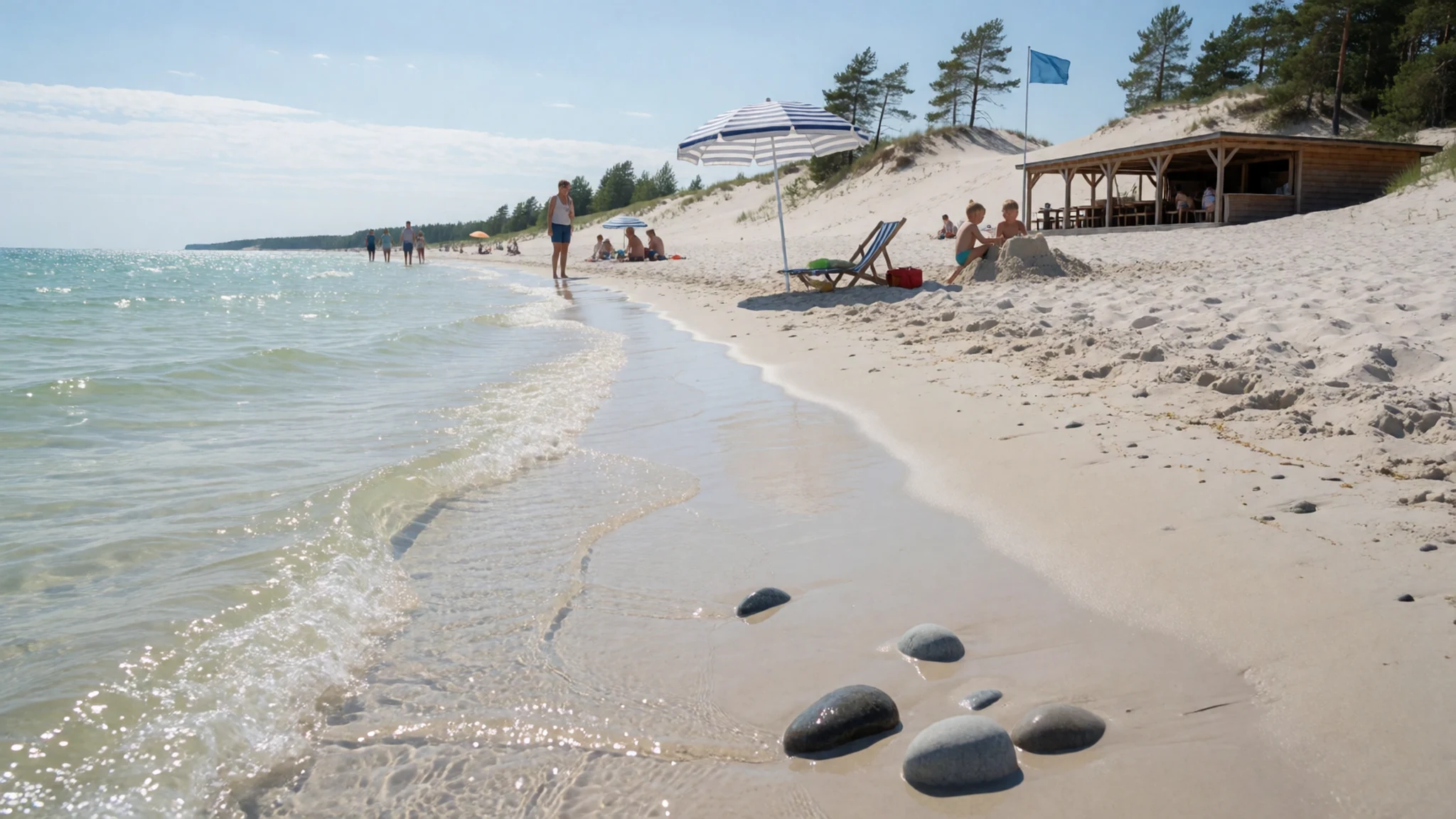
- Wooden villas near Jomas Street — Majori
The streets around Majori hold the wooden villas that give Jūrmala its look: verandas, carved eaves and pastel paint among the pines. Some are guesthouses, some are private homes, some are empty and decaying. A slow walk away from the shore shows far more than the beachfront does.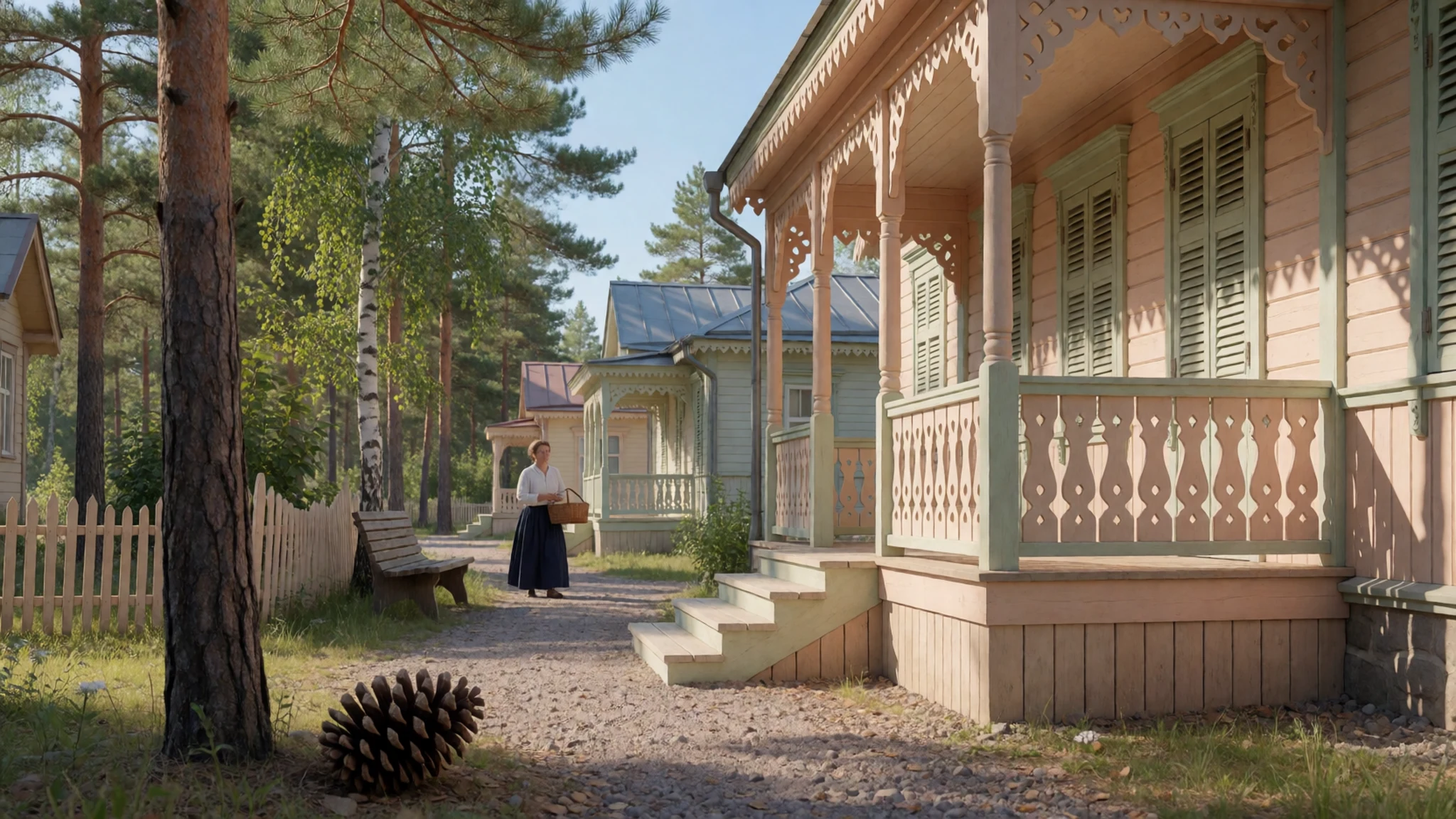
- Emīlija Rācene's bathing building — Dubulti area
This is a historic bathing and treatment house, built over several years in the early twentieth century and used as a medical facility. It shows how seriously the resort once took water cures. Check its current condition and access before going, because many heritage buildings here are in varying states of repair.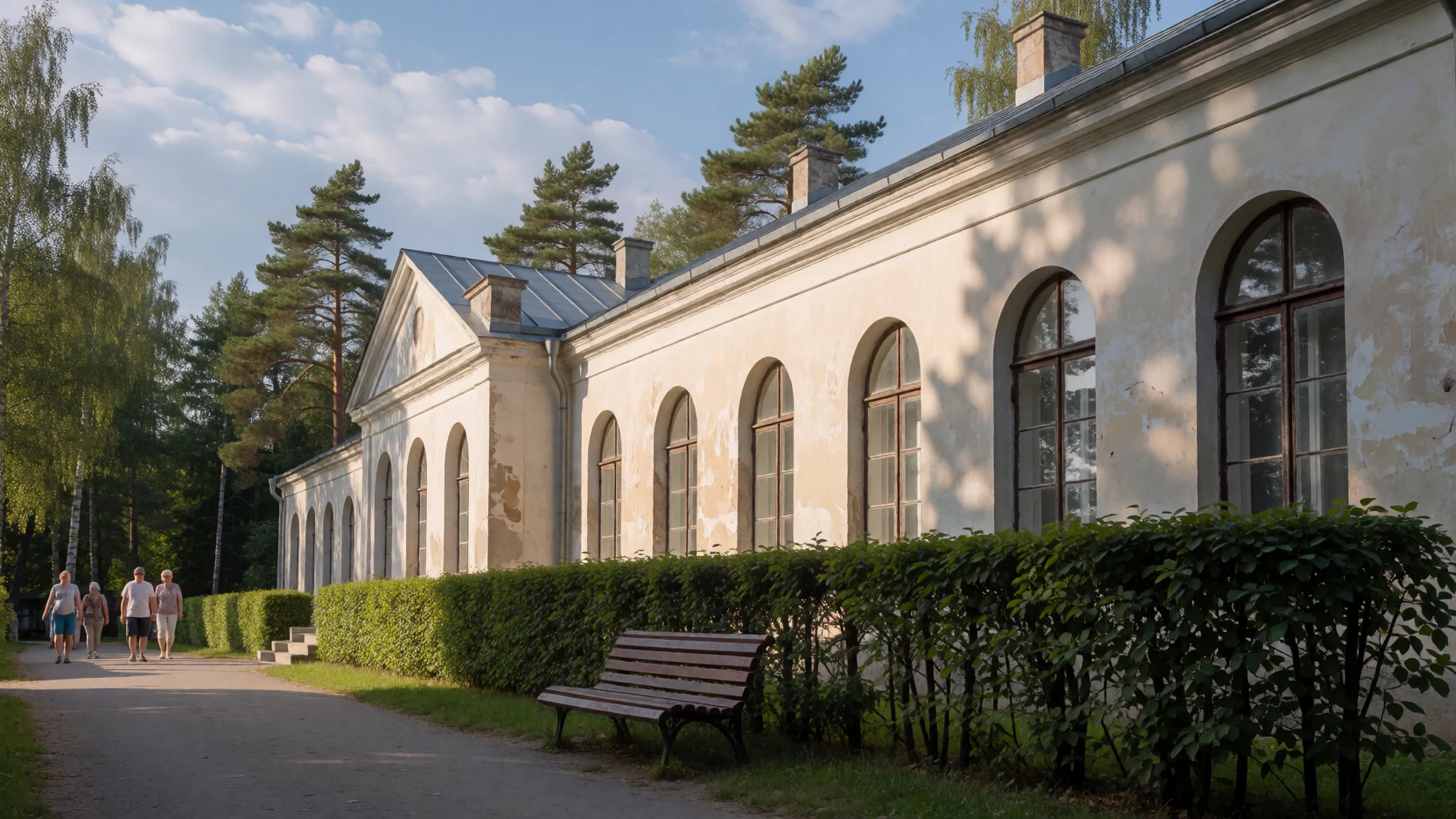
- Dzintari Concert Hall — Dzintari
Dzintari Concert Hall stands on the site of an old amphitheatre in a resort that opened here in the late nineteenth century. It is now a major concert venue where international performers appear, and the surrounding park is pleasant for an evening stroll. Check the official site for the programme.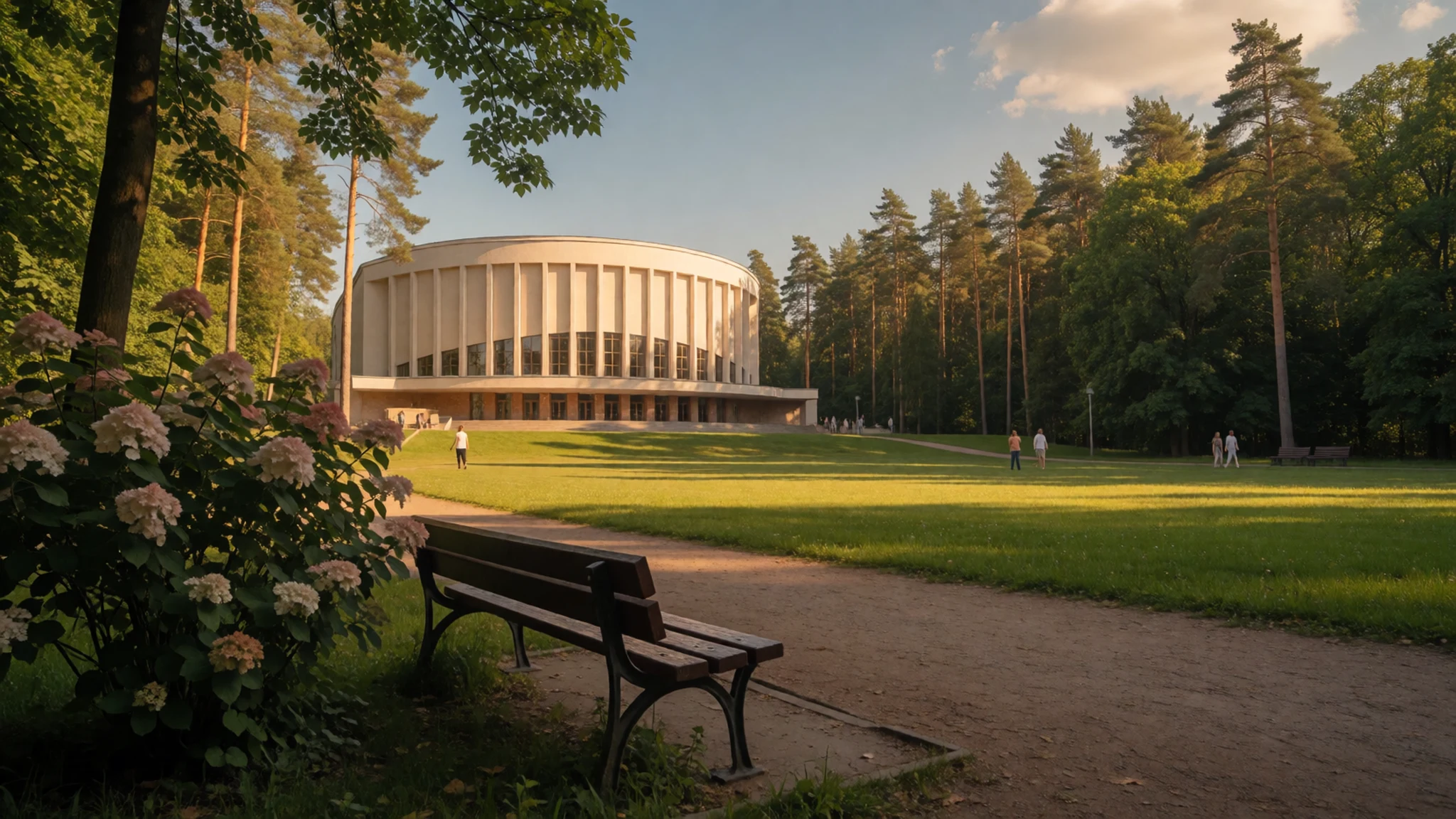
- Līvu Akvaparks — Lielupe area
Līvu Akvaparks is a large water park on the eastern side of the city, built for families on hot days. It is a sensible wet-weather or heat-wave alternative to the sea, which stays cool. Check the official site for opening dates and tickets, as these change with the season.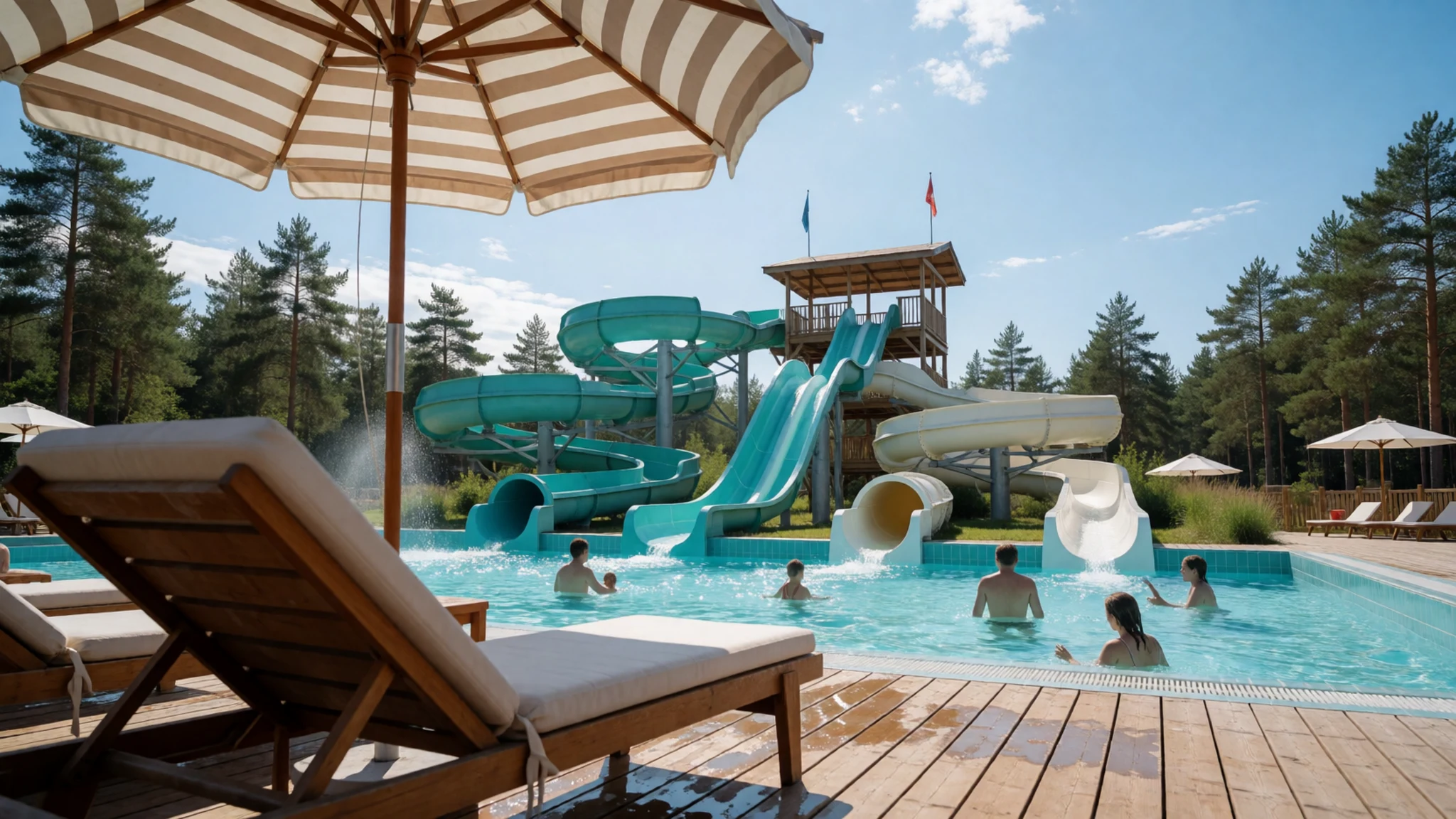
- Ķemeri National Park — Ķemeri
Ķemeri National Park covers forest and mire at the western end of the city, with boardwalk trails over the wet ground. It suits a half day of birdwatching, moss and cranberry bog, and the old spa buildings of Ķemeri village stand nearby. Bring insect repellent in summer.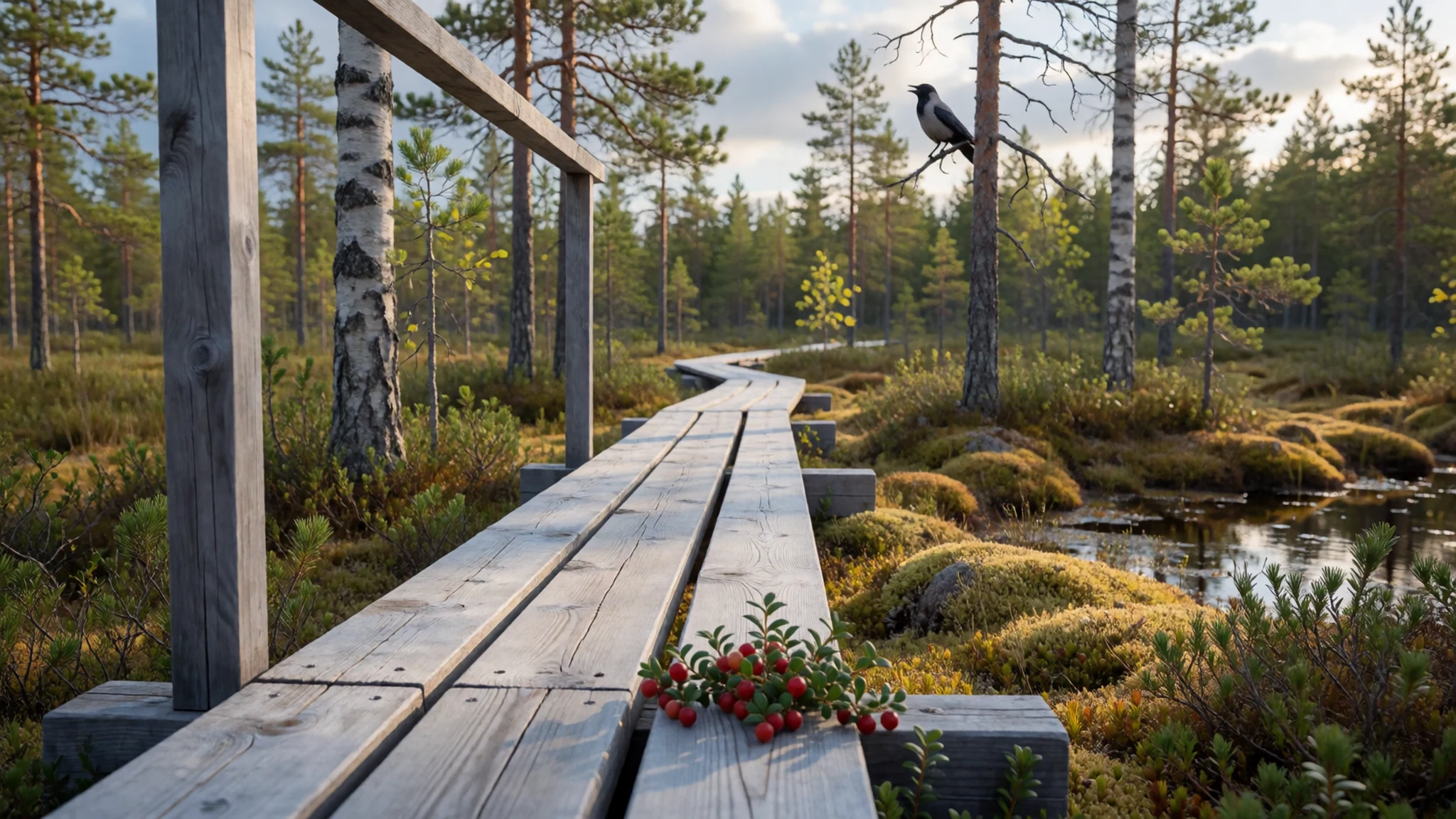
Culture
Jūrmala has long been a stage as much as a beach. In the late Soviet years it hosted a well-known pop festival, and a later international contest for young singers, called New Wave, ran here until it was moved elsewhere after Latvia barred several Russian media figures from entering the country. Since then the main draw has been Rendezvous, a music festival held at Dzintari Concert Hall, where performers from Europe, Asia and America have appeared. Classical concerts in the same hall remain part of the summer routine. Day to day, the resort is a quiet mix of Latvian and Russian-speaking communities, and both languages are heard on the street and in cafés. Many Latvians still treat the coast as a place for long weekend walks, picnics and sauna evenings, and the town's wooden villas are part of that gentle, old-fashioned holiday habit. The Soviet period remains a sensitive subject for many residents, so it is better to listen than to joke about it. Midsummer, celebrated around the shortest night, is a big occasion across Latvia, with wreaths of flowers and oak leaves, bonfires and singing. Visitors should keep to the marked boardwalks across the dunes and take all litter away with them, since the dune plants are fragile and the beach has no bins in its quieter stretches.
What to wear
Jūrmala itself has no distinct local costume, but the Latvian national dress is worn at celebrations across the country. It is made from wool and linen, with finely woven patterned belts and sashes, embroidered blouses and, for women, a headdress or wreath. It appears at folk festivals, choir events and Midsummer, and amber jewellery is a common finishing touch. Everyday dress in Jūrmala is relaxed and practical: linen and cotton in summer, trainers or sandals on the sand, and light jackets in the evening. On concert nights and in smarter restaurants, people dress up a little, with dresses, shirts and neat shoes, and the resort has a modest tradition of elegant summer clothes. Visitors should pack for changeable Baltic weather: a windproof layer, a sun hat and sunscreen even when cloud cover is thin, and a towel and swimwear for a sea that stays cool. Comfortable flat shoes that can get sandy are best for the beach and the forest paths, and waterproof footwear helps on the Ķemeri boardwalks after rain. Beachwear belongs on the beach, so cover up when walking through town or entering a café. There are no religious dress codes to worry about here, though a shawl is useful if you visit a church.
What to eat
- Rye bread with smoked fish — Seaside kiosks and market stalls near the beach
Dark Latvian rye bread paired with smoked fish is a classic Baltic seaside snack. It is salty, smoky and filling, and fits a walk along the sand. Look for it at seaside kiosks and market stalls, and ask what was smoked that day.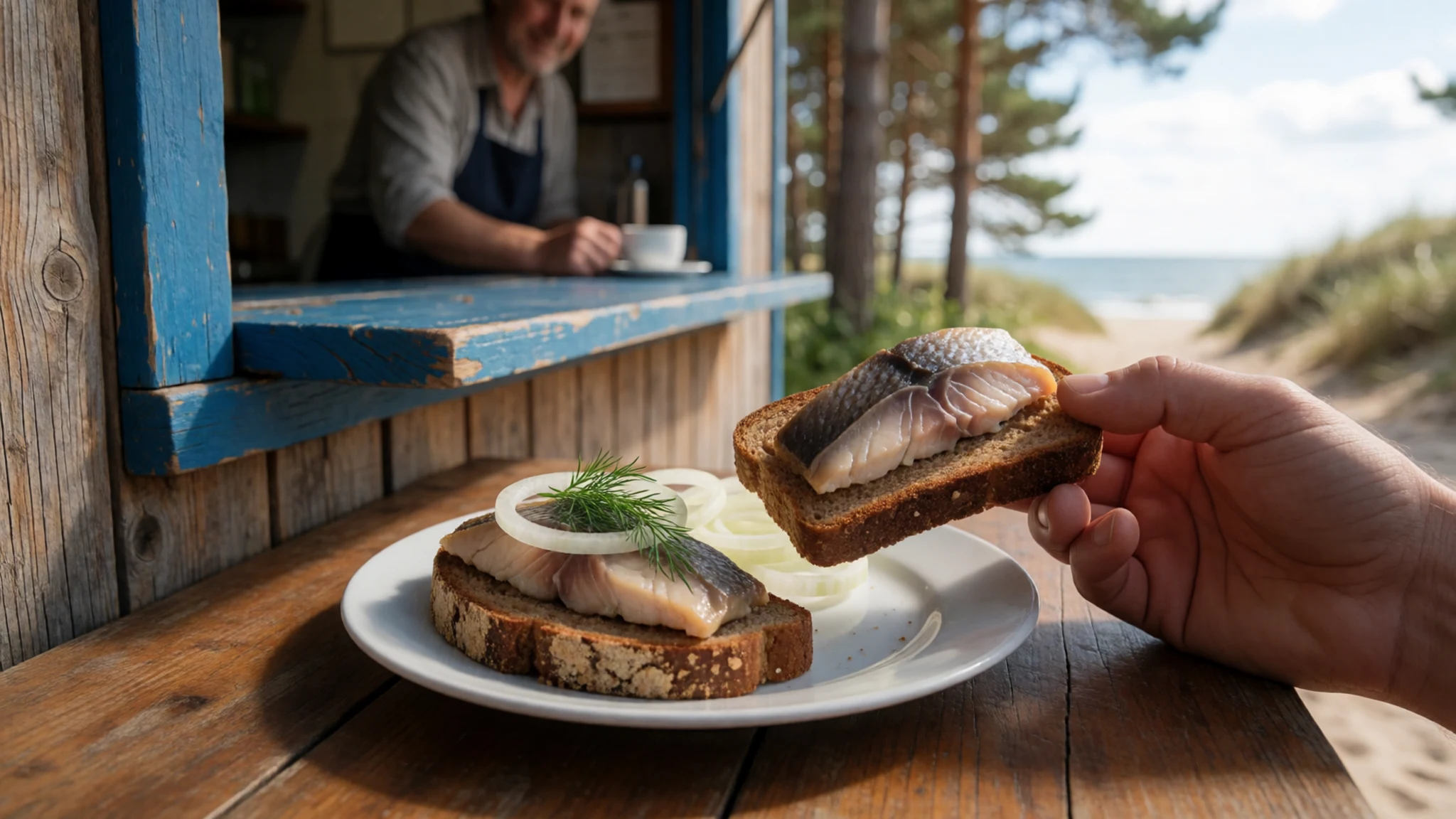
- Grey peas with bacon — Restaurants serving Latvian home cooking
Grey peas with fried bacon and onion is a traditional Latvian dish, hearty and plain, often served as a starter or a side. It is usually found in restaurants that focus on Latvian home cooking, and it works well after a cool, windy day.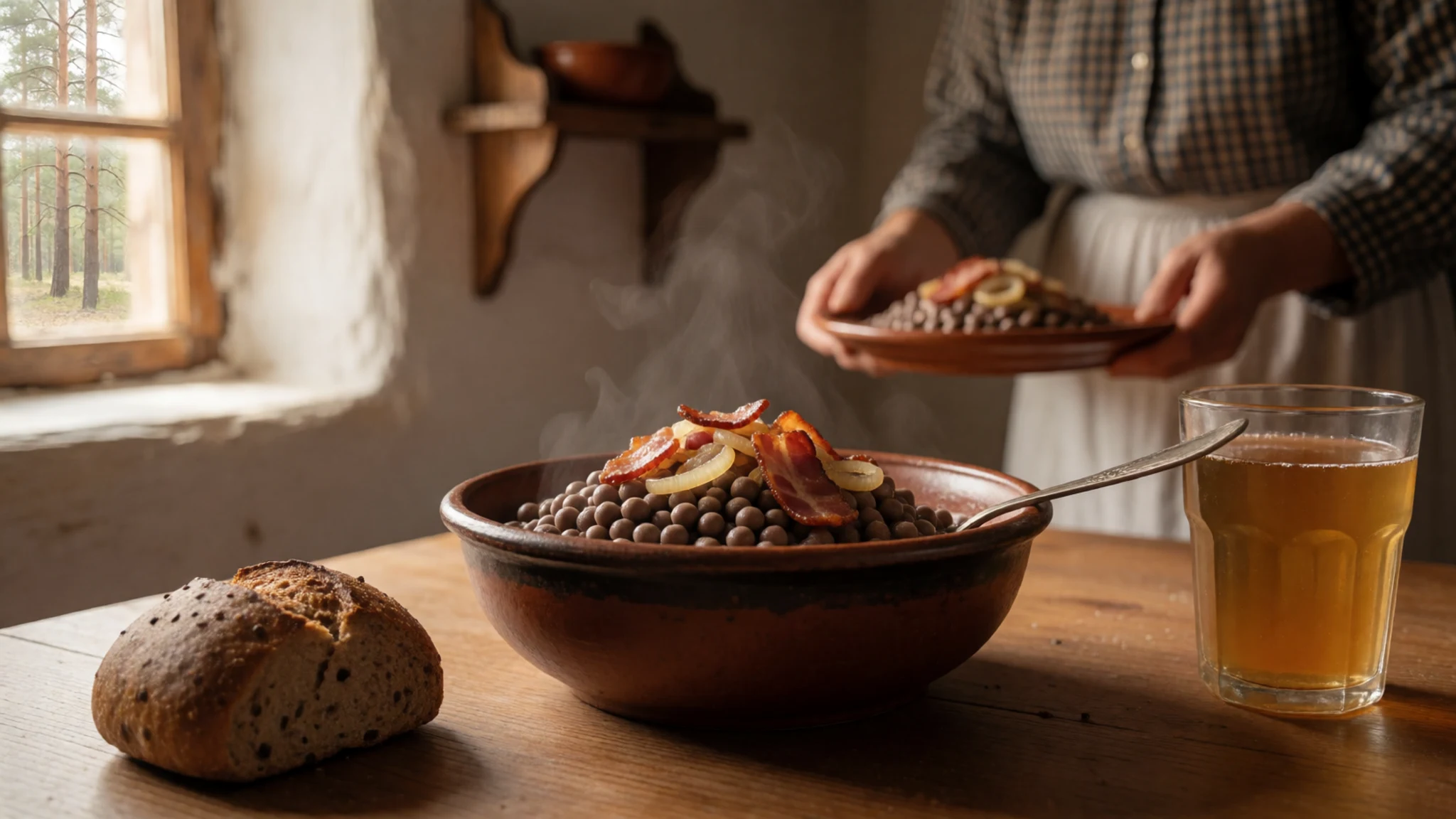
- Piragi — Local bakeries and cafés around the stations
Piragi are small bread rolls filled with bacon and onion, baked until glossy. They are a common bakery snack, good to carry to the beach, and are best eaten warm. Try them at any local bakery or café. - Latvian cakes and pastries — Cafés and pastry shops in Majori and Dzintari
Cafés in Jūrmala serve Latvian-style pastries and cakes, often with cream, berries or curd cheese. They are a pleasant stop after a walk in the pines and are far cheaper than a full restaurant meal. Choose whatever looks freshest in the cabinet. - Cold beetroot soup — Summer menus at Latvian restaurants
Cold beetroot soup, bright pink and made with kefir or buttermilk, is a favourite on hot days in Latvia. It is often served with boiled potatoes and egg. Look for it on summer menus in restaurants serving Latvian food.
Plan it
Best time. June to August for swimming, long light evenings and the concert season, although the Baltic stays cool. May and September are quieter and cooler, and winter is cold and calm, with the park used for cross-country skiing when there is snow.
How long. 2–3
Getting there. Fly to Riga airport, then take the airport shuttle bus to Imanta railway station and change to a suburban train on the Riga–Tukums line to Majori, the most central of the city's stations. From Riga Central Station the train runs about every half hour and takes about half an hour. Check the official Latvian journey planner for current times and fares. Cars pay an entry charge, monitored by cameras, so check the rules on the official site (https://www.jurmala.lv/).
Budget. mid
Tips
- Go on a weekday or in the shoulder months, because summer weekends fill the beach with day-trippers from Riga
- Carry a windproof layer and sunscreen, as the Baltic coast changes quickly between sun, cloud and wind
- Check the concert programme at Dzintari Concert Hall before you go, as the best evenings need advance booking
- Bring cards and a little cash for beach kiosks and small cafés
- Use the train rather than a car to avoid the entry charge and the parking hunt
Etiquette
- Stay on marked paths across the dunes and take your litter away
- Ask before photographing people on the beach, especially children
- Keep voices low in residential streets, where wooden villas stand close together
Nearby
Sources
- Wikidata Q178382 (CC0)
- Wikipedia: Jūrmala (rev 1381343545) (CC BY-SA 4.0)
- Wikivoyage: Jūrmala (rev 5384278) (CC BY-SA 4.0)
- Emīlija Rācene Former Establishment, Jūrmala — Raul Cortez999 (CC BY-SA 4.0)
- Jomas Street, Jurmala — Raul Cortez999 (CC BY-SA 4.0)
- Members of the Latvian Scout and Guide Central Organization in Jūrmala, 1934 — Valdis Belovs (CC BY 4.0)
- Good Stay Eiropa Hotel at night — JIP (CC BY-SA 4.0)
- Beach in Jurmala — JIP (CC BY-SA 4.0)
- Majori Beach in Jurmala — Daboyeh (CC BY 3.0)
- Līvu Akvaparks — Raul Cortez999 (CC BY-SA 4.0)
- Ķemeru kūrorts — Sanita Jirgensone (CC BY-SA 4.0)


