Ķemeri National Park
Ķemeri National Park, Latvia
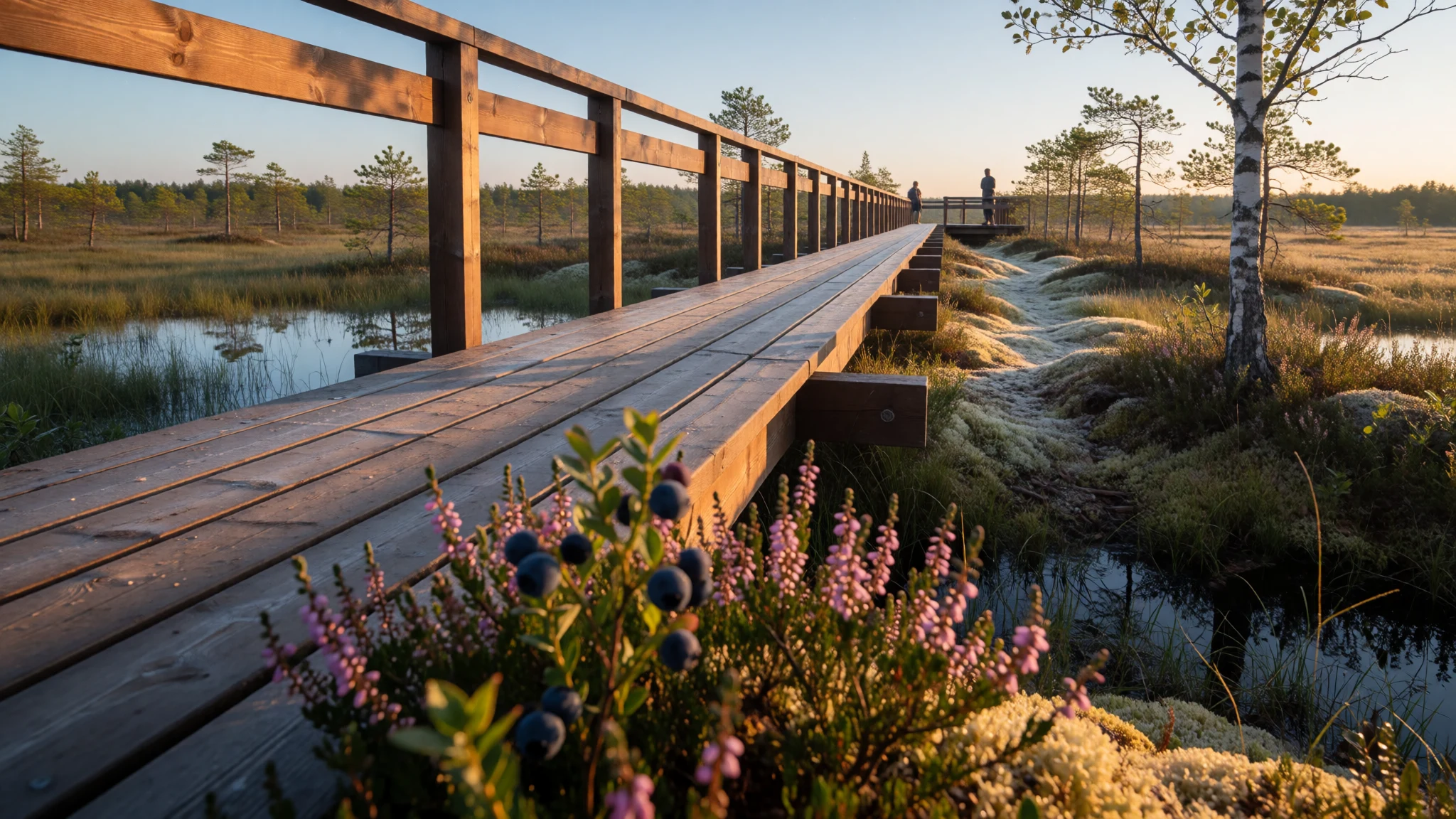
Ķemeri National Park offers quiet timber boardwalks through ancient raised bogs, mineral springs, quiet coastal dune forests, and rich wetlands filled with birdlife.
The place
Ķemeri National Park lies in western Latvia, stretching between calm coastal woodlands and vast peat landscapes near the Gulf of Riga. Established in 1997, the preserve safeguards an intricate mosaic of dense mossy hummocks, quiet pine forests, shallow lakes, and wet meadows. The dominant natural feature is the expansive Great Ķemeri Bog, where centuries of decaying vegetation have created a thick cushion of peat punctuated by dark water pools and stunted trees.
Underneath this damp terrain, layers of gypsum interact with micro-organisms to enrich underground streams with natural sulfur. The resulting mineral waters and therapeutic muds led to the rise of regional spa towns in earlier generations, drawing bathers to quiet wellness retreats hidden among the trees. Beyond the central mire, shallow lagoons such as Lake Kaņieris provide crucial sanctuary for migratory waterfowl, while ancient sand ridges mark former postglacial shorelines.
Visiting Ķemeri National Park means navigating peaceful boardwalks that weave through fragile wetland ecology without disturbing the delicate ground cover. The atmosphere changes markedly with the light, from pale dawn mists clinging to black water pools to glowing late afternoon light across heather-covered hummocks. Dense birch and pine woods ring the perimeter, offering quiet trails for walkers and cyclists looking to experience Latvia's understated wild landscape.
Its story
The landscape of Ķemeri National Park began forming thousands of years ago as retreating glaciers left behind damp basins and shallow lakes. Over millennia, decaying aquatic plants and mosses accumulated in stagnant water, creating deep layers of sapropelic mud and dense peat. Soil bacteria working deep underground transformed minerals in the bedrock, infusing subterranean springs with natural sulfur gas and creating water long valued for its medicinal properties.
Local communities long understood the restorative qualities of these forest springs. By the mid-nineteenth century, small bathhouses gave way to established health resorts where visitors sought remedies for joint, digestive, and skin ailments. The mineral muds were drawn directly from nearby wetlands, turning the quiet forest settlements into renowned health destinations across northern Europe.
The park's terrain also carries memories of modern conflicts. During twentieth-century military engagements, heavily armored vehicles attempted to navigate the treacherous mire, with several becoming permanently submerged beneath the deep mud and dark water pools. Today, nature has reclaimed these battle sites under thick layers of sphagnum moss.
Established in 1997 to protect both its ecological diversity and historical spa heritage, Ķemeri National Park balances conservation with quiet public access. The preserved mire stands as a living record of postglacial geology, where water, moss, and mineral chemistry continue to shape the land as they have for millennia.
What to see
- Great Ķemeri Bog Boardwalk — Great Ķemeri Bog
The Great Ķemeri Bog Boardwalk provides a wooden footpath across fragile peatlands and black water pools. Two loop options lead past stunted pines and carnivorous sun-dew plants, culminating at an elevated wooden viewing tower that looks out across vast mossy landscapes.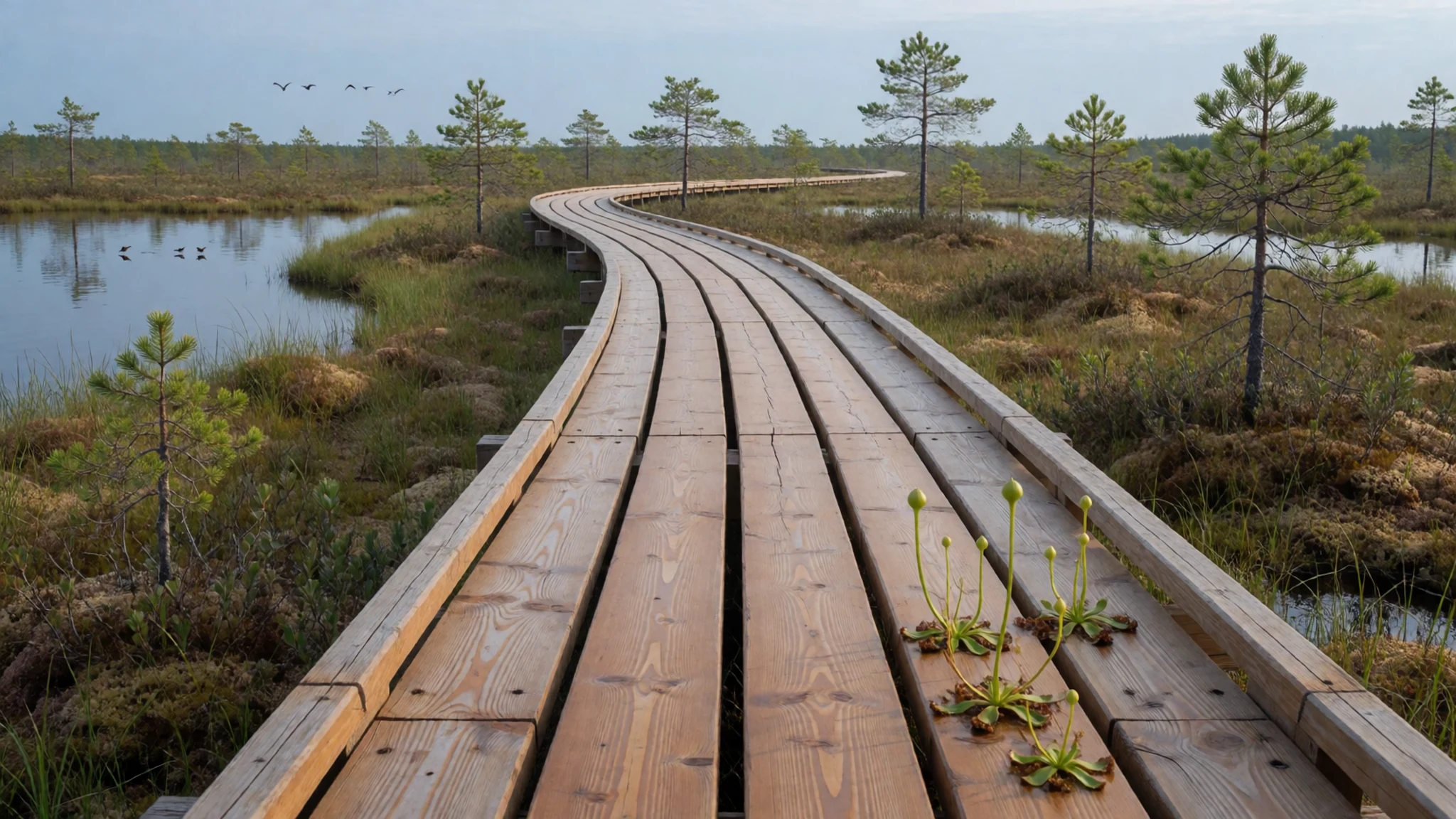
- Lake Kaņieris Birdwatching Tower — Lake Kaņieris
Lake Kaņieris is a shallow, reed-filled lagoon famous for its exceptional birdlife. A timber observation tower and a floating wooden trail allow visitors to view nesting swans, ducks, and migratory waterfowl without disrupting the fragile wetland habitat.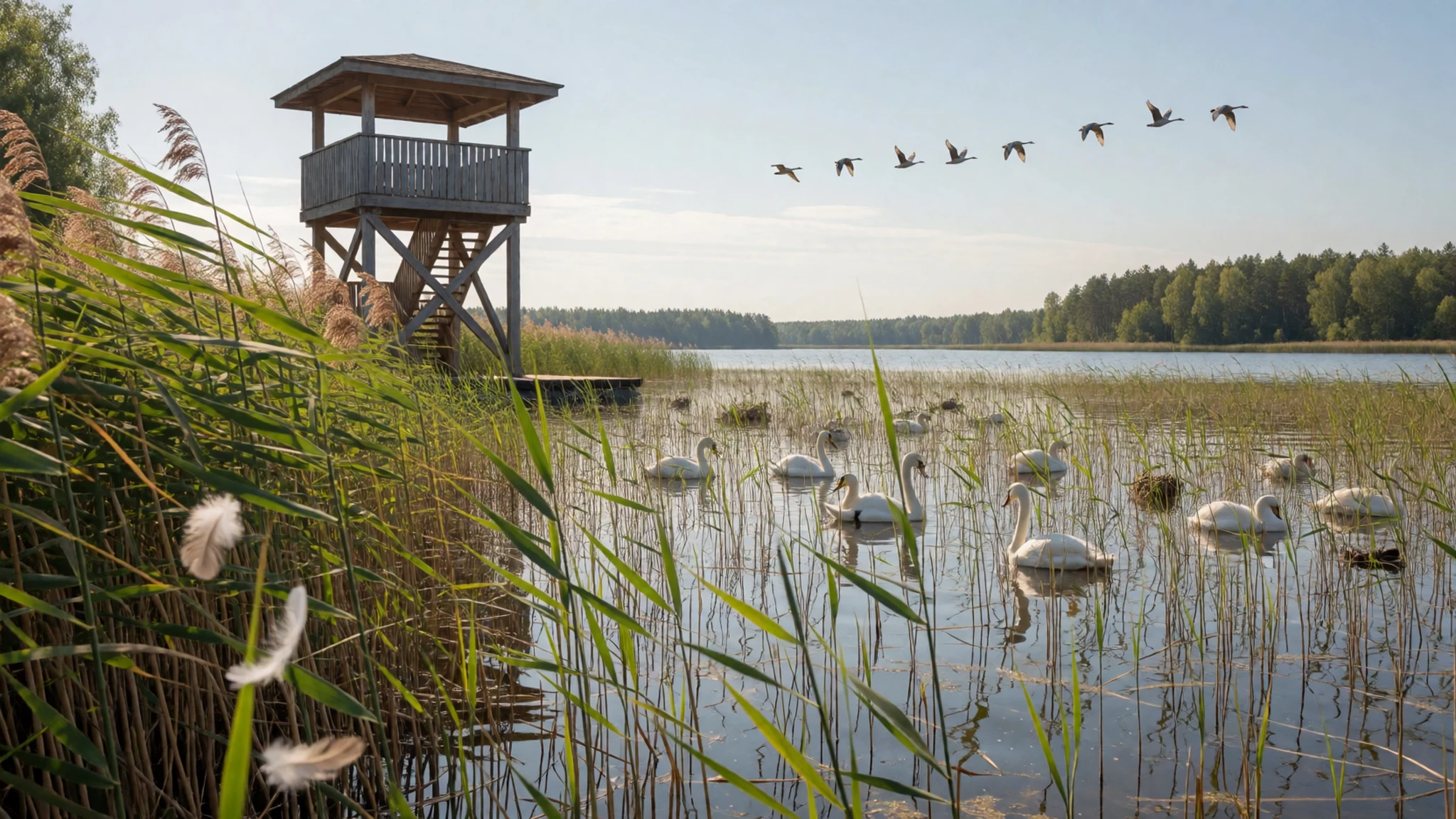
- The Green Dune — Central forest area
The Green Dune is an elongated forested sand ridge formed by ancient sea levels. A popular path for walkers and cyclists follows the pine-covered crest, offering elevated views over surrounding pine forests, blueberry patches, and low-lying marshy clearings.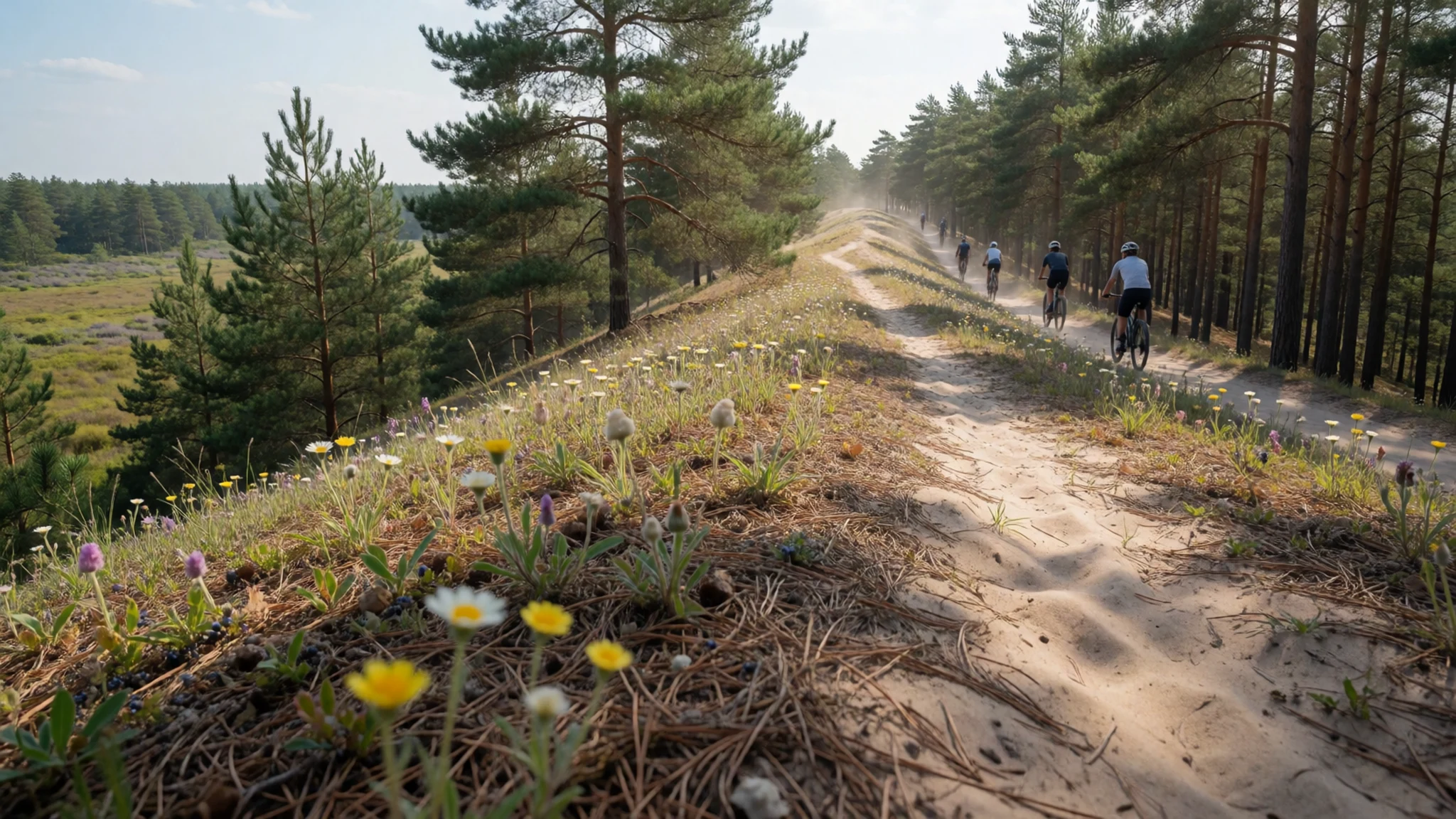
- Ķemeri Sulphur Springs — Ķemeri village border
Located near the historic spa resort grounds, natural sulphur springs bubble up through mineral-rich earth. Visitors can smell the distinct hydrogen sulphide vapor and sample cold spring water at public pavilions built during the peak of the region's health retreat era.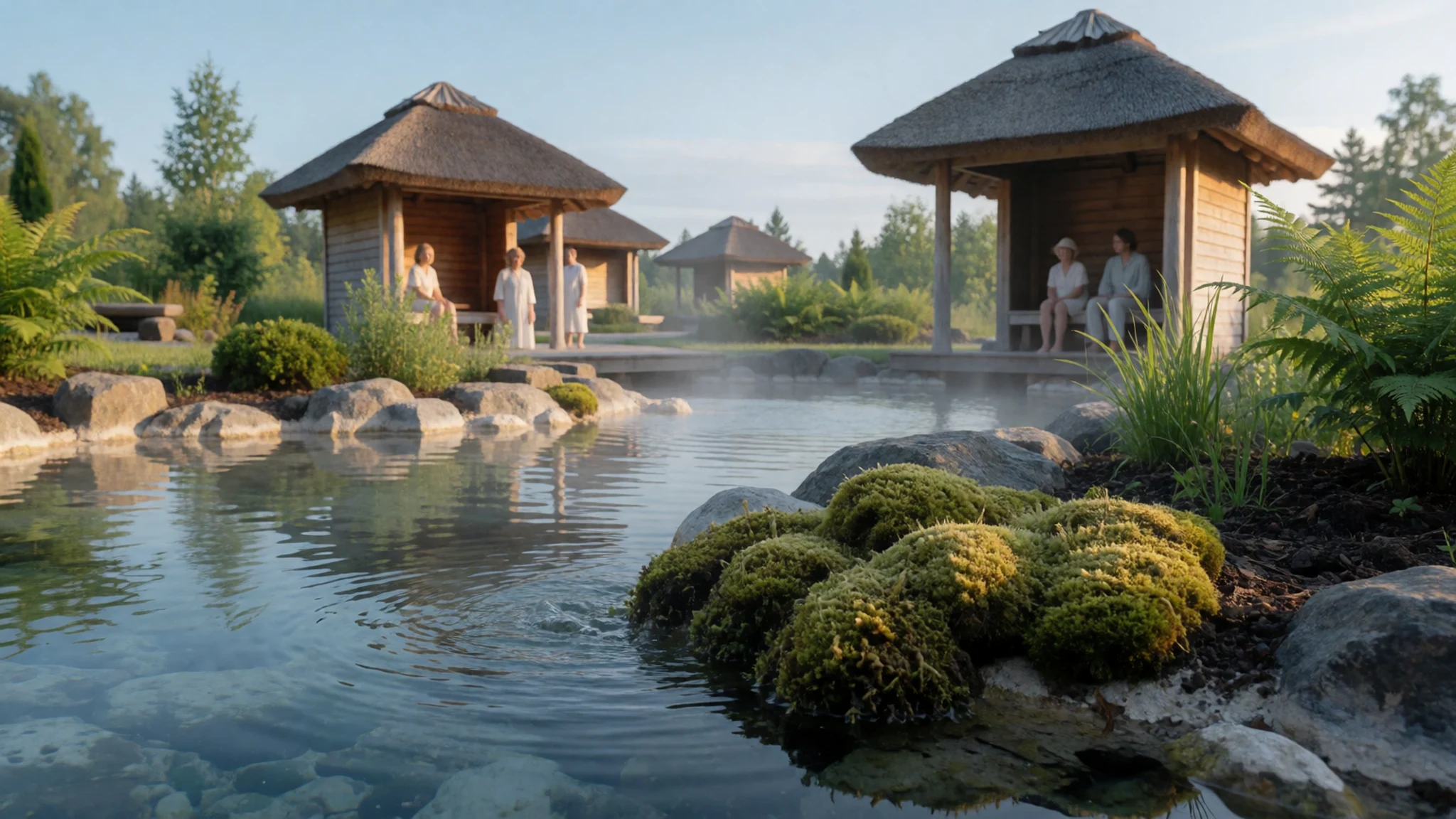
- Kaņieris Hill Fort Trail — Lake Kaņieris south shore
Kaņieris Hill Fort Trail leads through damp deciduous woodland to an ancient earthwork rampart near the lake shore. The shaded walking path features wooden footbridges over marshy soil, informative boards about local ecology, and quiet clearings surrounded by old oak trees.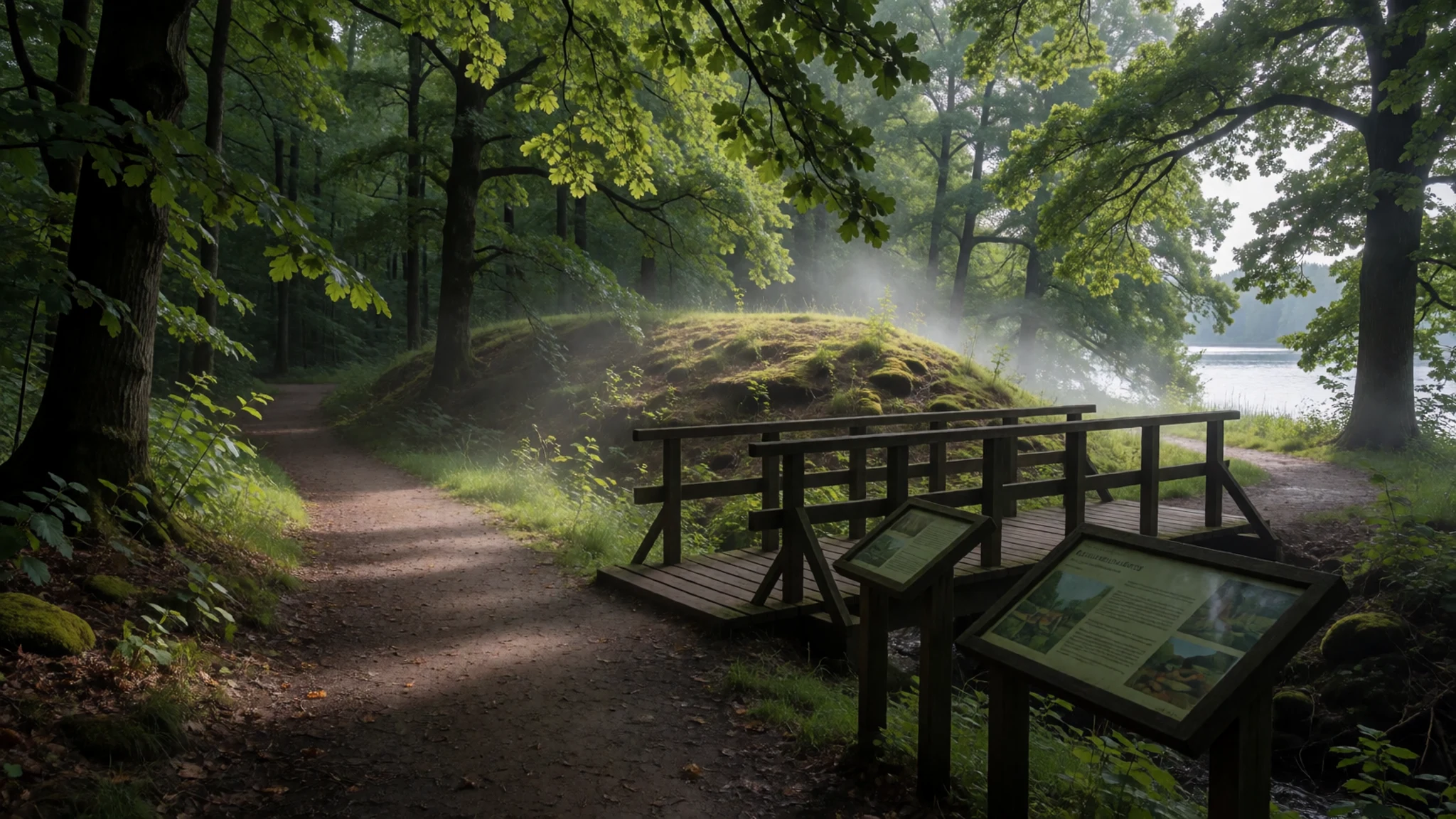
Culture
In Ķemeri National Park, the natural environment is deeply woven into Latvian outdoor culture and seasonal traditions. For generations, locals have maintained a respectful relationship with the forest and wetland ecosystems, regarding the quiet wilderness as a space for renewal, quiet reflection, and seasonal gathering. Summer and early autumn bring families into the woods to forage for wild blueberries, cranberries, and mushrooms, a cherished tradition passed down through generations.
There is a strong cultural emphasis on quiet leisure and minimal footprint when spending time in nature. Local visitors typically walk in small, peaceful groups, observing wildlife quietly and keeping noise levels low so as not to disturb the tranquil atmosphere of the mire. Respect for the natural spa heritage remains strong, with cold sulfur water points still visited out of tradition and local pride.
When visiting the national park, stay strictly on designated timber boardwalks and marked trails to prevent damaging fragile mosses and sensitive wetland habitats.
What to wear
Fashion around Ķemeri National Park reflects a strong heritage of practical textile craft adapted for northern damp climates. Traditional Latvian dress relies heavily on natural materials, including handwoven wool skirts, crisp linen tunics, and intricately patterned woven sashes called Lielvārde belts. Dark leather boots and knitted woolen socks protected wearers from cold forest ground, and these traditional garments are still proudly worn during seasonal folk celebrations and midsummer gatherings.
Everyday attire among locals visiting the park today is relaxed, functional, and weather-aware. Synthetic fleece jackets, breathable windbreakers, and comfortable trousers are standard for weekend walks and cycling along forest trails. Neutral forest tones like moss green, grey, and navy are preferred over bright synthetic shades, fitting the quiet natural surroundings.
Visitors should prepare for variable weather by dressing in adaptable layers, including a light waterproof shell jacket even on overcast summer days. Sturdy walking shoes or waterproof trail sneakers with good grip are essential for walking safely along timber boardwalks, which can become slick after rain or early morning dew.
What to eat
- Vēsumiņš Ice Cream — Ice cream kiosks in Ķemeri village and beach cafes in nearby Jūrmala
A popular local milk ice cream treat enjoyed during summer park visits. Flavours range from classic vanilla to sweet berry swirl, making it a refreshing stop after walking the sunny boardwalk trails.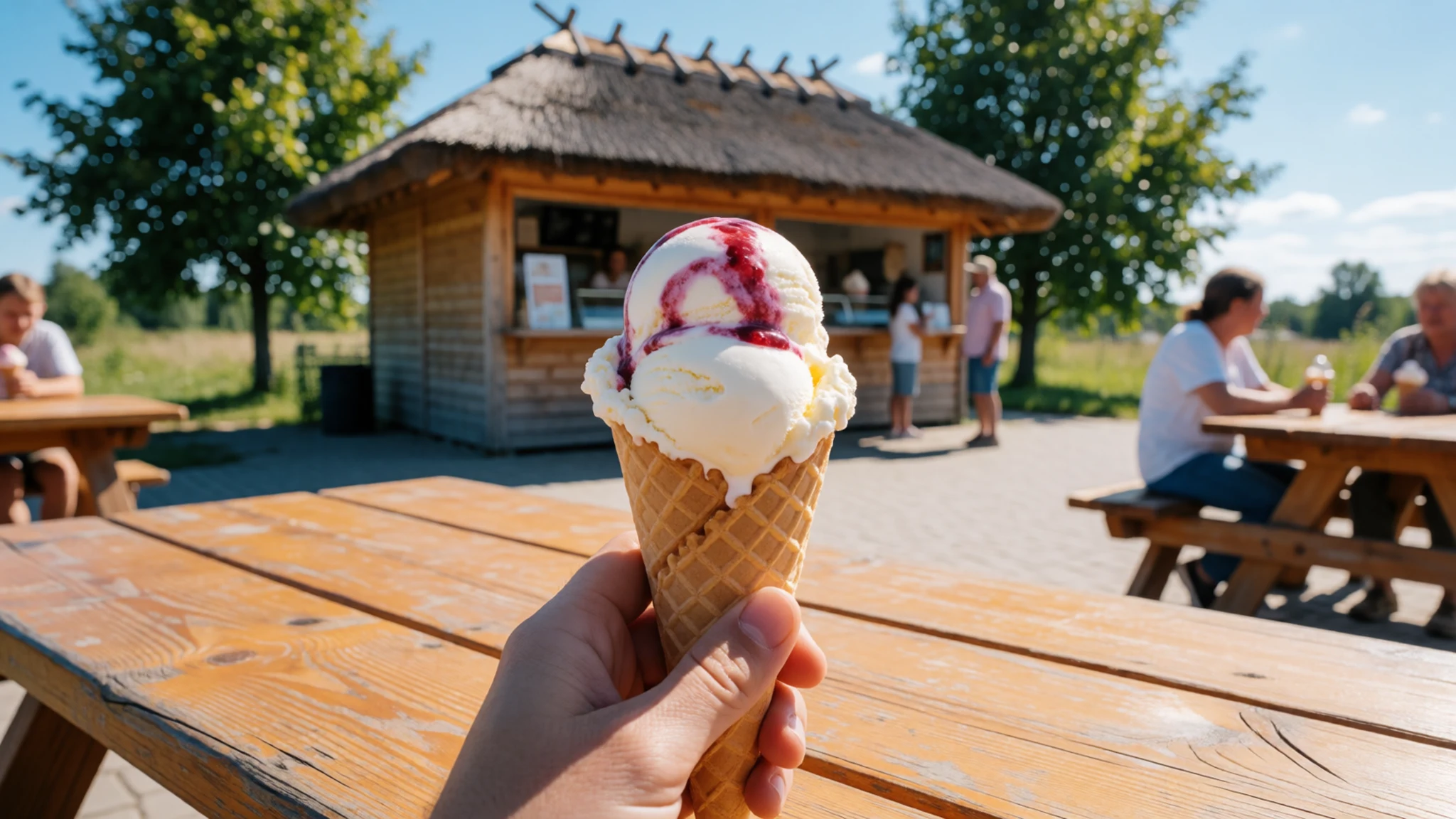
- Rupjmaize (Dark Rye Bread) — Bakeries and food markets in nearby Jūrmala and Riga region
Dense, sourdough rye bread baked with caraway seeds and a slightly sweet crust. Latvians pair this staple with fresh butter, smoked fish, or tangy cheese during mid-day picnic lunches along park resting areas.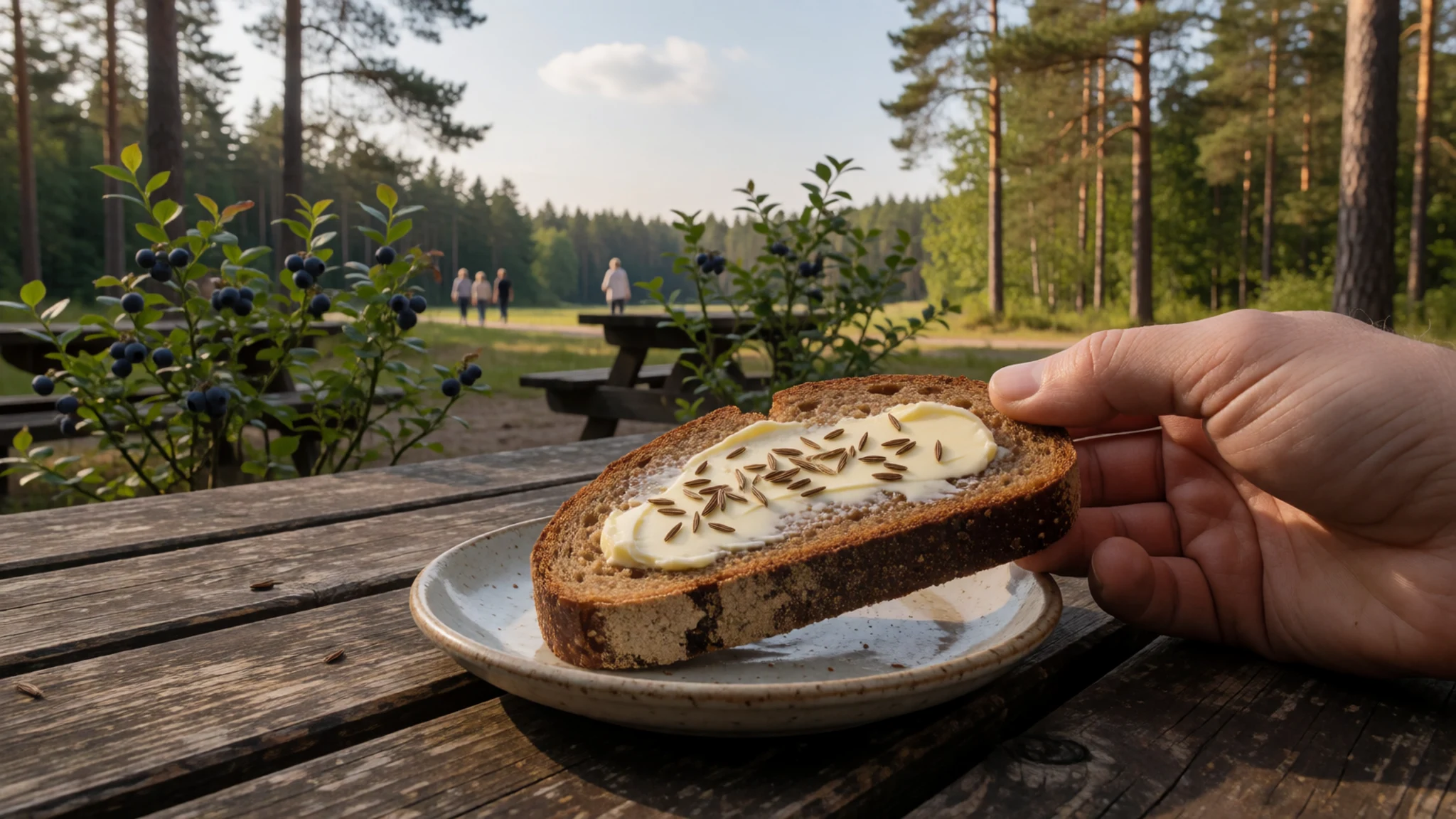
- Jāņu Siers (Caraway Cheese) — Farm stalls and local food markets near Ķemeri
A traditional fresh curd cheese seasoned with caraway seeds, giving it a distinctive herbal flavour. Served cut into thick yellow slices, it is a staple picnic food during summer outdoor excursions in the region. - Wild Berry Soup (Upeņu zupa) — Traditional cafes and countryside eateries near the park
A chilled summer soup made from harvested bilberries, blackberries, or blackcurrants, lightly sweetened and topped with dumplings or cream. It highlights the abundant wild berries gathered from local mire forests. - Smoked Sprats on Rye — Coastal fish markets and seaside stalls in Jūrmala
Small, golden smoked fish laid over buttered dark rye bread and garnished with sliced onion or dill. This coastal Baltic specialty offers a rich, savoury snack after a morning of wetland birdwatching.
Plan it
Best time. May to September for mild walking temperatures, vibrant dragonfly activity, and wild berries; late May brings nesting birds while October offers dramatic autumn foliage across the bog.
How long. 1–2
Getting there. Fly to Riga Airport, take the regional train from Riga Central Station to Ķemeri Station, then walk or cycle to trailheads.
Budget. low
Tips
- Arrive at the boardwalk around sunrise to catch morning mist over the bog pools
- Bring bug spray during summer months when mosquitoes are active near marshland
- Wear footwear with solid grip as timber boardwalks become slippery when wet
- Pack drinking water and snacks since facilities inside the park interior are minimal
Etiquette
- Stay strictly on wooden boardwalks to avoid damaging fragile sphagnum moss
- Carry out all litter and food wrappers to keep the park pristine
- Keep voices low near birdwatching towers so as not to startle nesting birds
Nearby
Sources
- Wikidata Q1395739 (CC0)
- Wikipedia (rev 1362954550) (CC BY-SA 4.0)
- Wikivoyage (rev 5240790) (CC BY-SA 4.0)
- Photo 01-liela-kemeru-taka-5jul03.jpg (Public domain)
- Photo 02-wild-blueberries-in-kemeri-jurmala-latvia.jpg (CC BY-SA 4.0)
- Photo 03-kemeri-bog-boardwalk-jurmala-latvia.jpg (CC BY-SA 4.0)
- Photo 04-emeru-purva-laipa.jpg (CC BY-SA 4.0)
- Photo 05-akacis-emeru-np.jpg (CC BY-SA 4.0)
- Photo 06-akacis-panoramio.jpg (CC BY 3.0)
- Photo 07-bicycling-in-national-park-emeri-kraj-tukums-latvia.jpg (CC BY-SA 4.0)
- Photo 08-cie-ava-emeros.jpg (CC BY-SA 4.0)


