Rundāle Palace
Rundāle Palace, Latvia
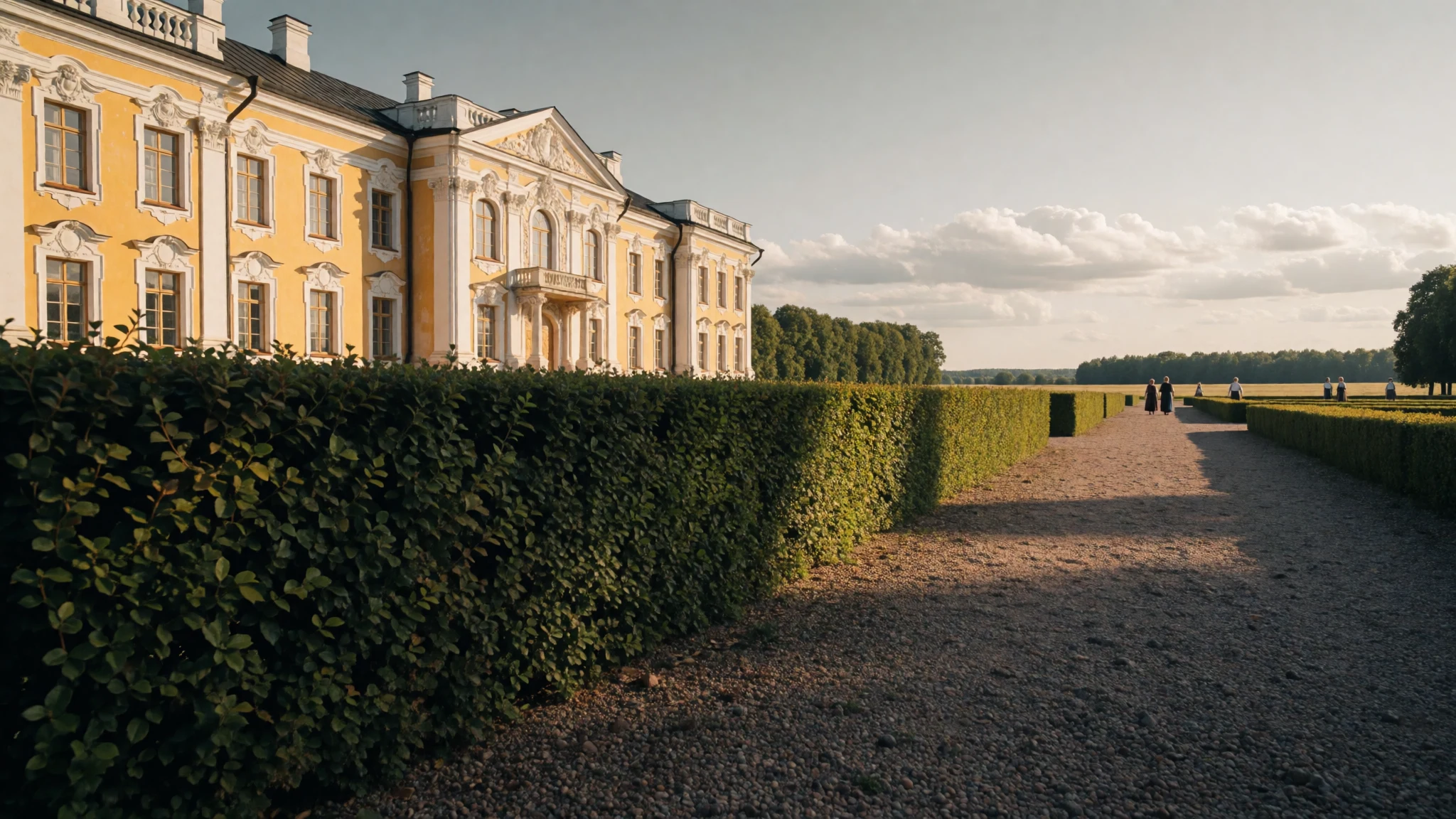
Rundāle Palace is a baroque ducal summer residence in Latvian farmland, with gilded rooms, a formal garden and a story of exile.
The place
Rundāle Palace stands in the village of Pilsrundāle, in the Semigallia region of southern Latvia, about 12 km west of the town of Bauska. It is a baroque country palace with a long yellow-and-white façade, built for the Dukes of Courland as a summer residence rather than a seat of government. The Latvian name is Rundāles pils, and older German-language maps call it Schloss Ruhental. The setting is the first surprise. Nothing around it is hilly or dramatic: the land is flat, open and agricultural, and the palace appears across fields with a formal French-style garden laid out beside it. That contrast is much of the charm. Inside, the rooms are a mix of restored state apartments and spaces used for changing exhibitions. The ducal bedroom, the vestibule, the grand staircase and the White Hall show how lavishly the plasterers and painters worked, while plainer rooms hint at the building's rougher years as a school and as flats. It runs as a museum, and the grounds are a separate pleasure, with clipped hedges, gravel paths and a rose garden. Restoration has gone on for decades, so some wings can be closed or under scaffolding; the official site at https://rundale.net/ is the place to check what is open. Most visitors come from Riga as a day trip, often combined with the castle ruins at Bauska, and the palace is calmest outside summer weekends and tour-bus hours.
Its story
Rundāle Palace began in 1735, when Ernst Johann von Biron, Duke of Courland, acquired an estate whose medieval castle was soon pulled down to make room for a summer home. Work to a design by the architect Bartolomeo Rastrelli began in 1736. Progress was slow, partly because money and materials were also being sent to the duke's more important project, Jelgava Palace. In 1740 Biron fell from favour and was sent into exile, and the half-built palace stood empty for more than two decades. He came back in 1762, Rastrelli again oversaw the work, and the palace was finished in 1768. The stucco, the sculpted plasterwork that fills ceilings and walls, was made by Johann Michael Graff. Biron moved in almost at once and spent his summers there until his death in 1772. The duchy was absorbed into the Russian Empire in 1795, and Catherine the Great handed the palace to Count Valerian Zubov, a brother of her favourite. It later passed to the Shuvalov family. In 1812 it served as a hospital for Napoleon's army, and soldiers who died there lie in the park. In 1919, during the Latvian War of Independence, retreating Bermontian forces partly burned it. Afterwards it housed a school and flats for army veterans, yet it was added to the list of protected state monuments in 1924.
What to see
- Grand staircase and vestibule — Main palace interior
The entrance sequence at Rundāle Palace sets the tone: a vestibule and a sweeping staircase where white and gilded stucco curls across walls and ceilings. Slow down here, since the plasterwork by Johann Michael Graff rewards looking upward, and the daylight changes the effect through the hours.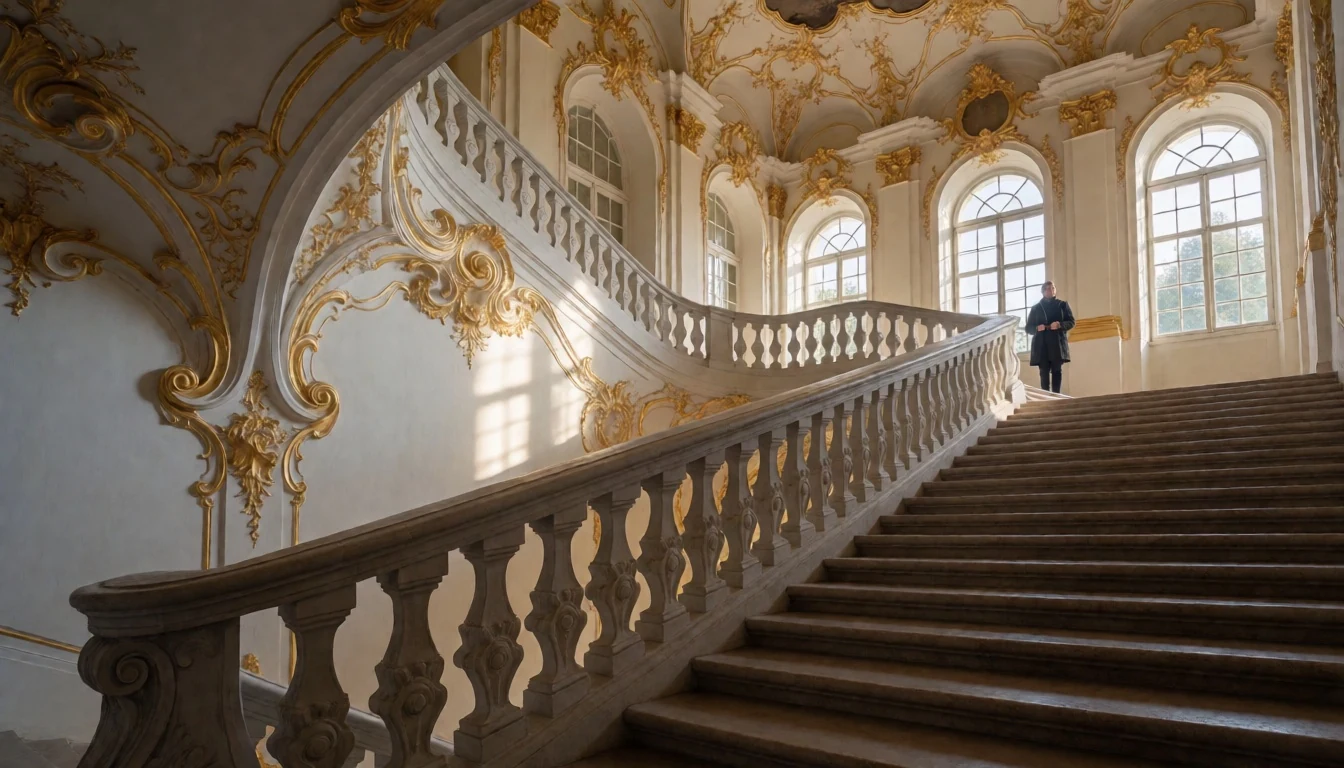
- The White Hall — State rooms
The White Hall at Rundāle Palace is a ceremonial room dressed in pale stucco, with sculpted figures and reliefs picked out in white. After the colour of other rooms it feels calmer and more theatrical, like a stage set built for receiving guests at the duke's court.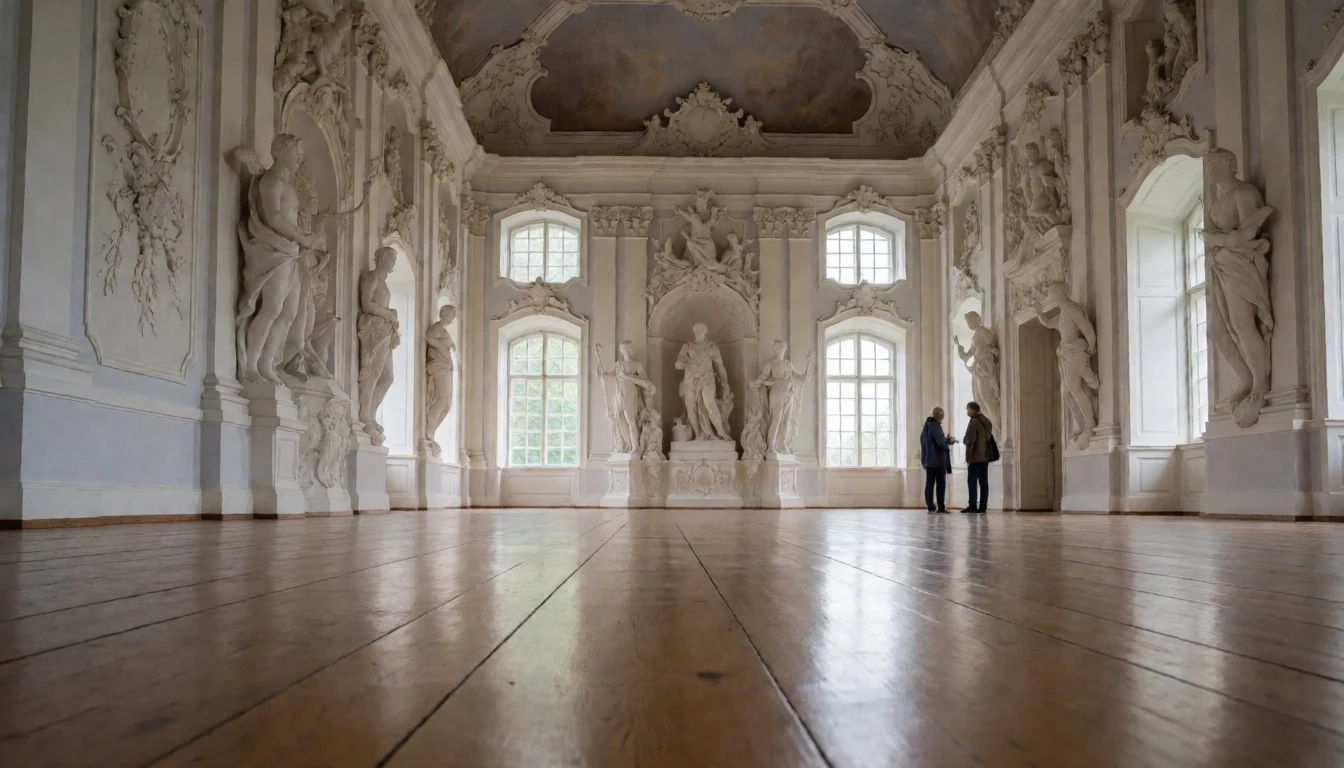
- The duke's sleeping room — Ducal apartments
The ducal bedroom at Rundāle Palace gives the most human glimpse of the building, with furnishings and wall decoration that suggest how Biron might have spent his summers. Rooms differ in how fully they have been restored, so reading the labels helps separate evidence from guesswork.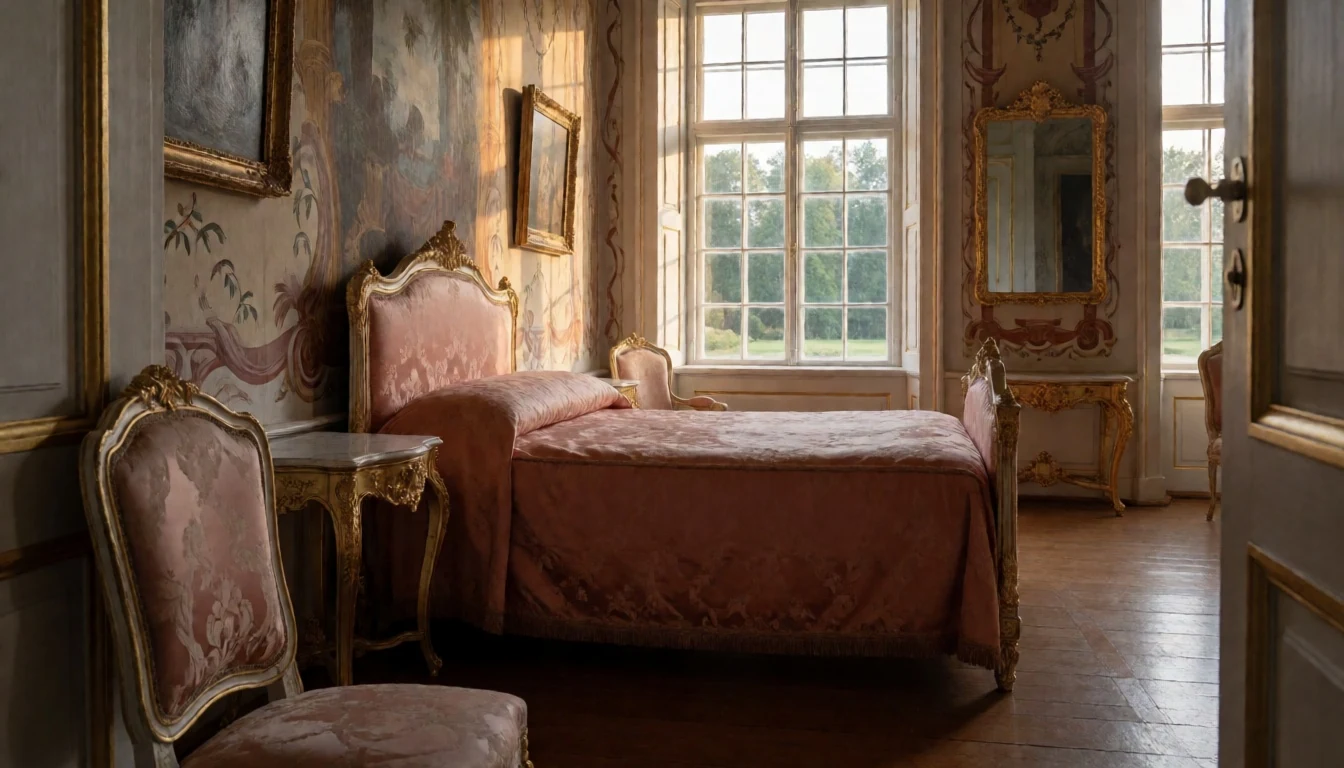
- The reception hall — State rooms
The reception hall at Rundāle Palace shows the state apartments at their most formal, with tall windows, painted ceilings and carefully restored decoration. It is a good place to picture court gatherings, and to compare the finished rooms with wings that are still waiting for work.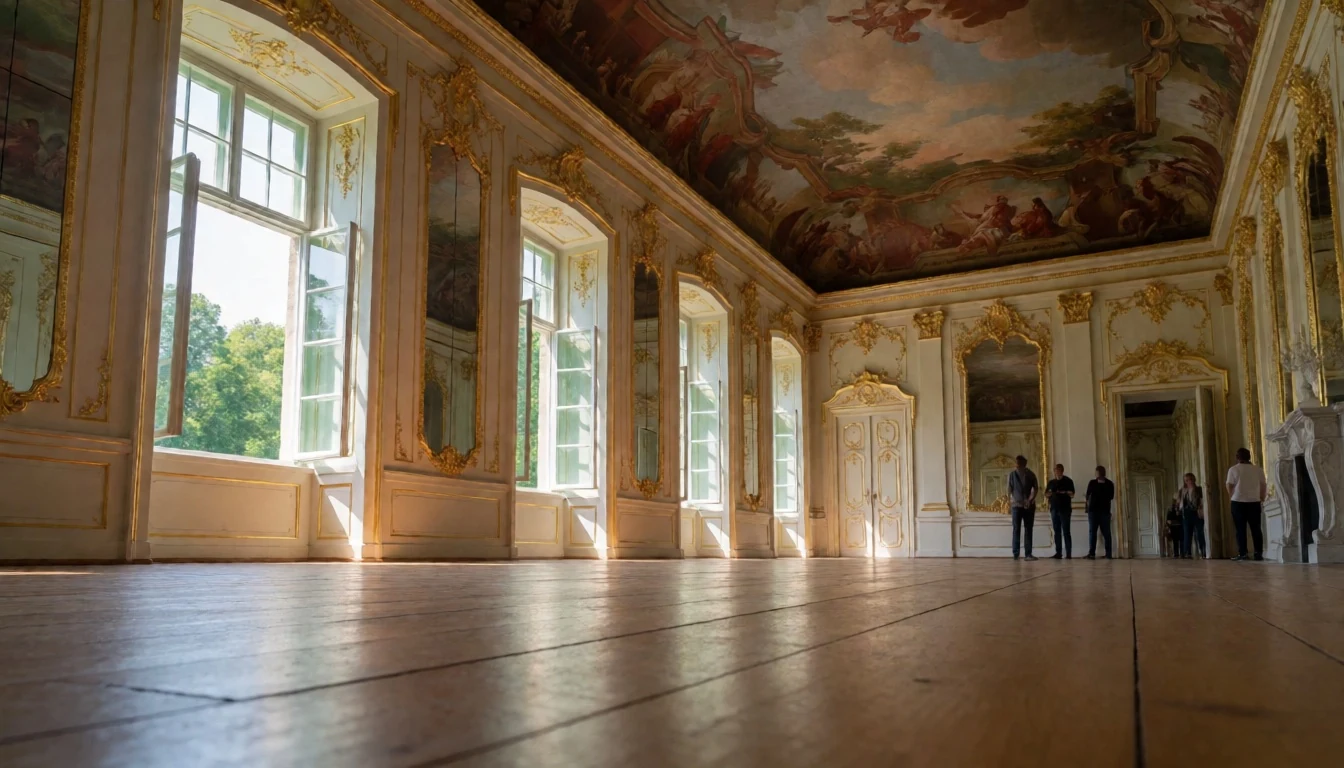
- The formal garden — Grounds beside the palace
The French-style garden beside Rundāle Palace is laid out with clipped hedges, gravel paths and flower beds, with a rose garden among its features. It is best on a dry summer morning, when a walk to the far end gives a view back to the façade across the geometry.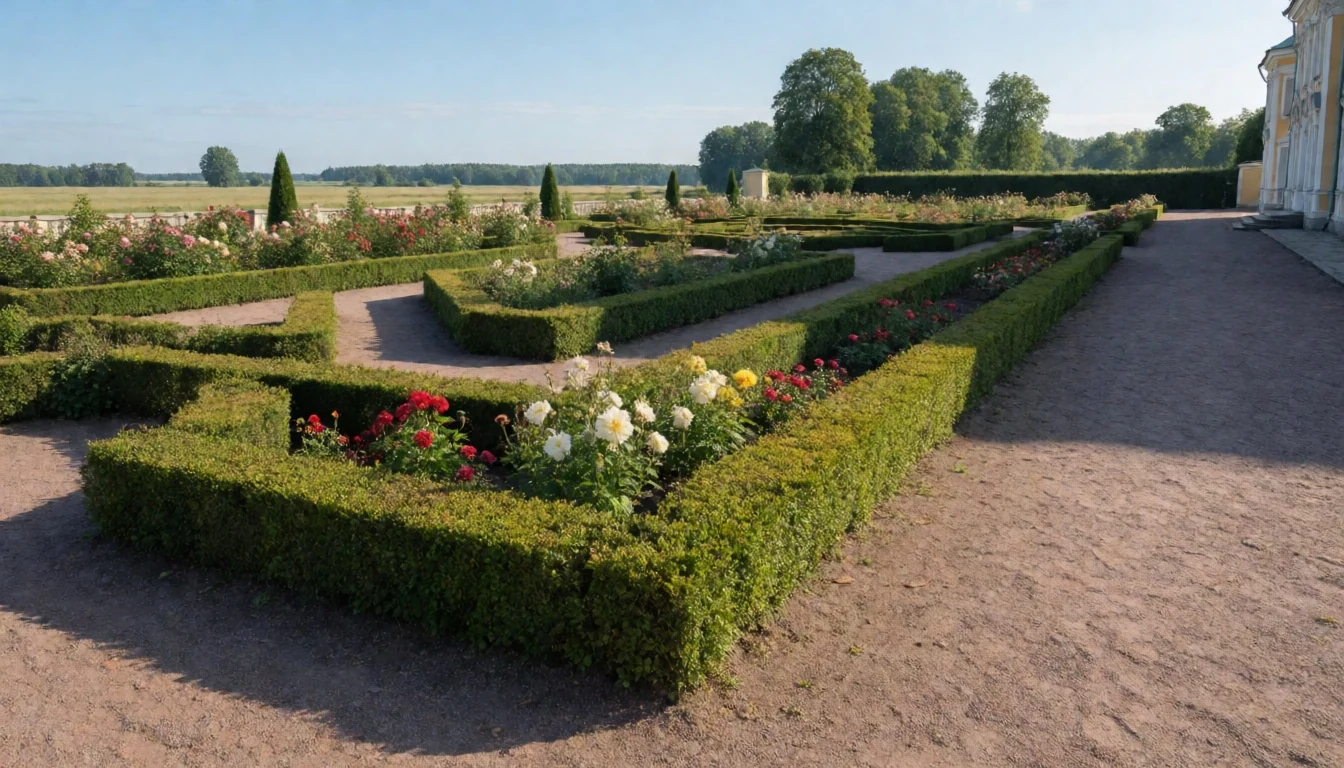
Culture
Rundāle Palace sits where several strands of Latvian history meet: Baltic German nobility, Russian imperial patronage and a modern national memory. The dukes were Baltic German, the architect Bartolomeo Rastrelli worked in Russian imperial service, and the building was saved and restored in independent Latvia, which now treats it as national heritage. For many Latvians it is a point of pride, a reminder that the country had a courtly European past, so school groups and family outings are common. Concerts and seasonal events are held in and around the palace, and the official site lists them. The countryside around Bauska is farming land, and the manner is rural: reserved, practical and polite without being effusive. A quiet greeting goes down well, and 'labdien' (good day) is an easy word to learn. Midsummer, known as Jāņi and held around late June, is the main folk celebration in Latvia, with flower wreaths, bonfires, caraway cheese and song, and rural estates like this one fit the mood well. Evenings stay light into the night then, and small crowds of locals head out of Riga to the countryside. In the state rooms, keep to the marked routes, do not touch the gilded or stucco surfaces, and ask at the ticket desk whether photography is allowed before you raise a camera.
What to wear
Rundāle Palace lies in Semigallia, one of the regions with its own variant of Latvian national dress. Women's costume traditionally centres on a striped woollen skirt, a white linen blouse with embroidery, a woven sash and a metal brooch called a sakta at the collar, with a wreath or headcloth for festive wear. Men wore wool coats and woven belts over linen shirts. Patterns and colours vary by region, and the finest pieces are kept for weddings, midsummer and the national song and dance festivals. Everyday clothing in Latvia today is plain and practical: dark layers, good coats, sturdy boots in winter and relaxed smart-casual in town. People dress up a little for concerts but rarely overdo it. A visitor to the palace needs comfort more than formality. Wear flat, supportive shoes, since floors inside are old and gravel paths and lawns outside can turn muddy after rain. Summer days are mild and can be warm, so bring light layers and a rain jacket, and a hat or sunglasses for the open garden. In winter the rooms can feel cool, so wear a warm top you can peel off, and gloves for the walk from the car park. There is no strict dress code, but keep shoulders and knees covered if attending a church service nearby.
What to eat
- Rupjmaize (dark rye bread) — Any Latvian bakery or market stall in Bauska or Riga
Dense, slightly sweet rye bread is the everyday staple of Latvia. It is eaten with butter, cheese or smoked fish, and sometimes turned into a dessert with whipped cream and berries. Buy a loaf from a local bakery for a picnic in the garden.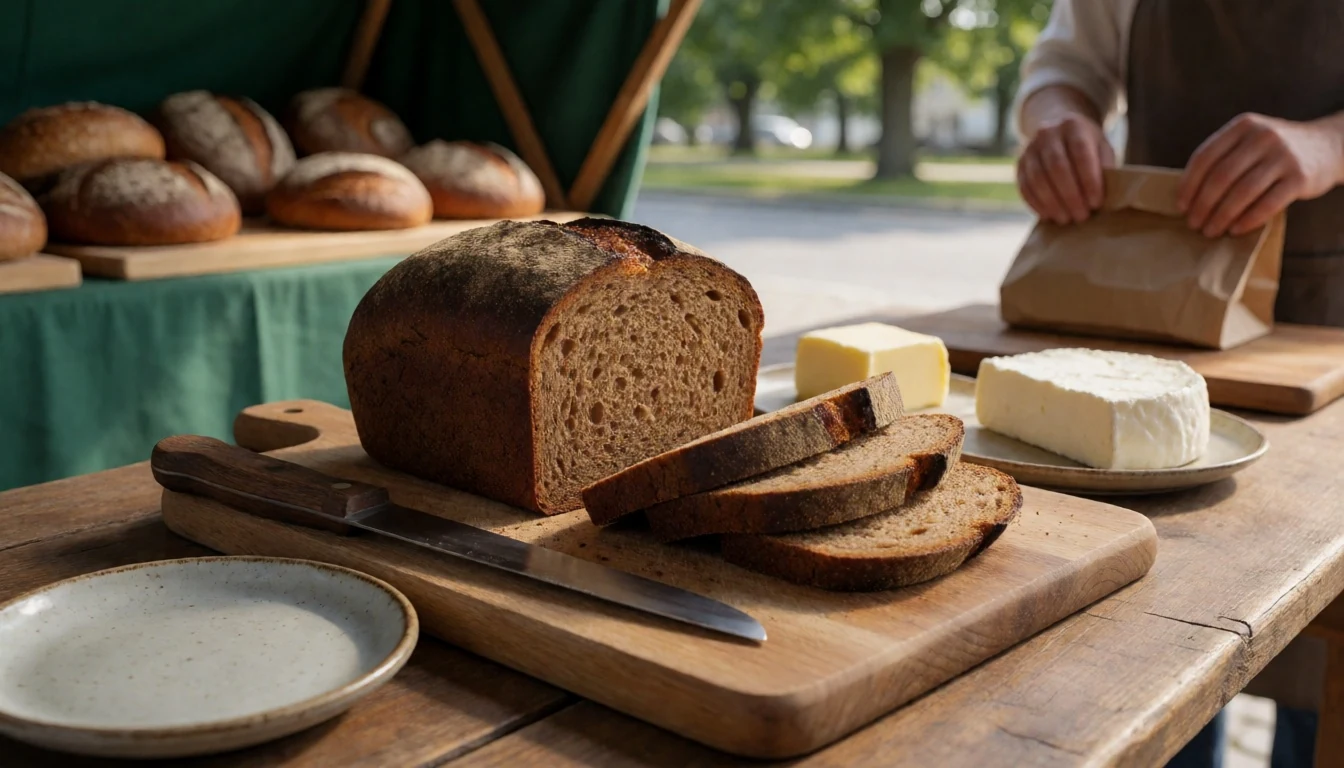
- Pelēkie zirņi ar speķi (grey peas with bacon) — Country inns and traditional eateries around Bauska
Grey peas are boiled soft and served with fried bacon pieces and onion, often with a glass of kefir alongside. It is humble farm food, filling and salty, and a good way to taste the kind of meal that farmers in this region rely on.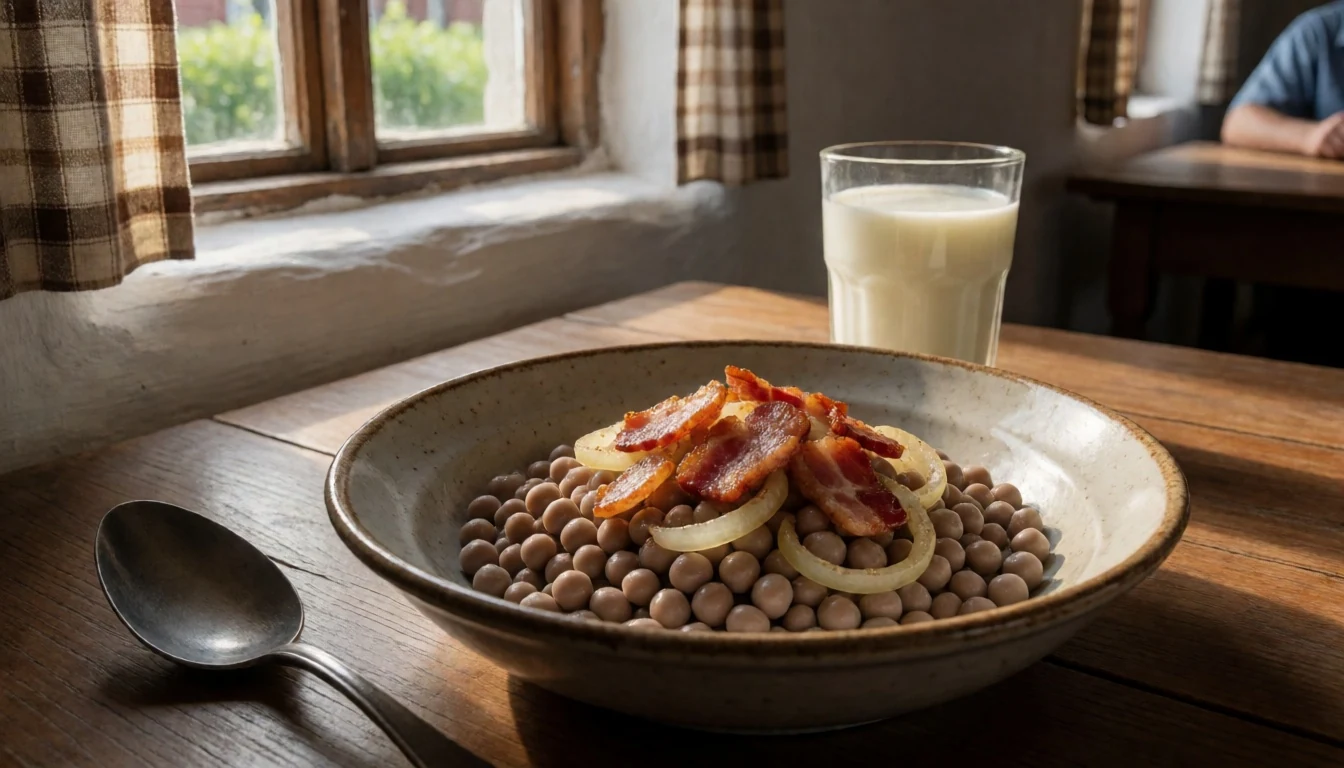
- Sklandrausis — Bakeries and village shops in Zemgale
This is a rye-crust tart filled with a spiced mix of carrot and potato, shaped like a small open pie. It tastes earthy and gently sweet, and it is a good coffee-break companion. Look for it in bakeries and cafés in the region. - Jāņu siers (caraway cheese) — Markets and farm stalls, especially around late June
A fresh curd cheese flavoured with caraway seeds and eaten at midsummer, traditionally with beer. It is crumbly, tangy and made across rural Latvia, so market stalls are the best place to try a farm version rather than a packaged one. - Smoked fish — Market stalls and roadside smokehouses
Smoked herring, sprats and other fish are common in Latvia, usually sold warm from a smokehouse or market stall. Eat them with rye bread and pickled cucumber. It is simple, strongly flavoured food that suits a day of walking outdoors.
Plan it
Best time. May to September for the garden, long daylight and the most reliable weather; June is the lightest month and has the midsummer celebrations. Winters are cold and dark, and some outdoor features are less appealing, so check the official site before a winter visit.
How long. 1–2
Getting there. Fly to Riga International Airport, then take a bus from Riga to Bauska (the usual public route), and a local bus or taxi for the last 12 km to Pilsrundāle. Hiring a car in Riga is the most flexible option and lets you add Bauska Castle on the same day.
Budget. mid
Tips
- Check opening times, ticket types and which wings are open on the official site, https://rundale.net/, before you travel
- Go early on weekdays to avoid tour groups, which tend to arrive mid-morning
- Allow time for the garden as well as the interior, and bring water in summer
- Carry some cash and a card, as small village shops and cafés may differ in what they accept
- Public transport to the palace is limited, so confirm the return bus before you set out
Etiquette
- Stay on the marked routes in the state rooms and do not touch gilded or stucco surfaces
- Ask at the desk whether photography is allowed, and whether tripods or flash are banned
- Keep to the paths in the garden and leave flowers and hedges alone
Nearby
Sources
- Wikidata Q1123987 (CC0)
- Wikipedia: Rundāle Palace (rev 1361526064) (CC BY-SA 4.0)
- Wikivoyage: Rundāle Palace (CC BY-SA 4.0)
- Rundale Palace — Arian Zwegers (CC BY 2.5)
- Rundale palace, still the most beautiful in the world. Latvia — Jeroen Komen (CC BY-SA 2.0)
- Rundale Palace reception hall — Avi1111 (CC BY 3.0)
- Sleeping room of the Duke of Rundale Palace — Zairon (CC BY-SA 4.0)
- Rundāle Palace, Latvia (gardens) — Jeroen Komen (CC BY-SA 2.0)
- Vestibule at Rundale palace — Zairon (CC BY-SA 4.0)
- Staircase at Rundale palace — Zairon (CC BY-SA 4.0)
- White Hall at Rundale Palace — Zairon (CC BY-SA 4.0)


