Tsavo West National Park
Tsavo West National Park, Kenya
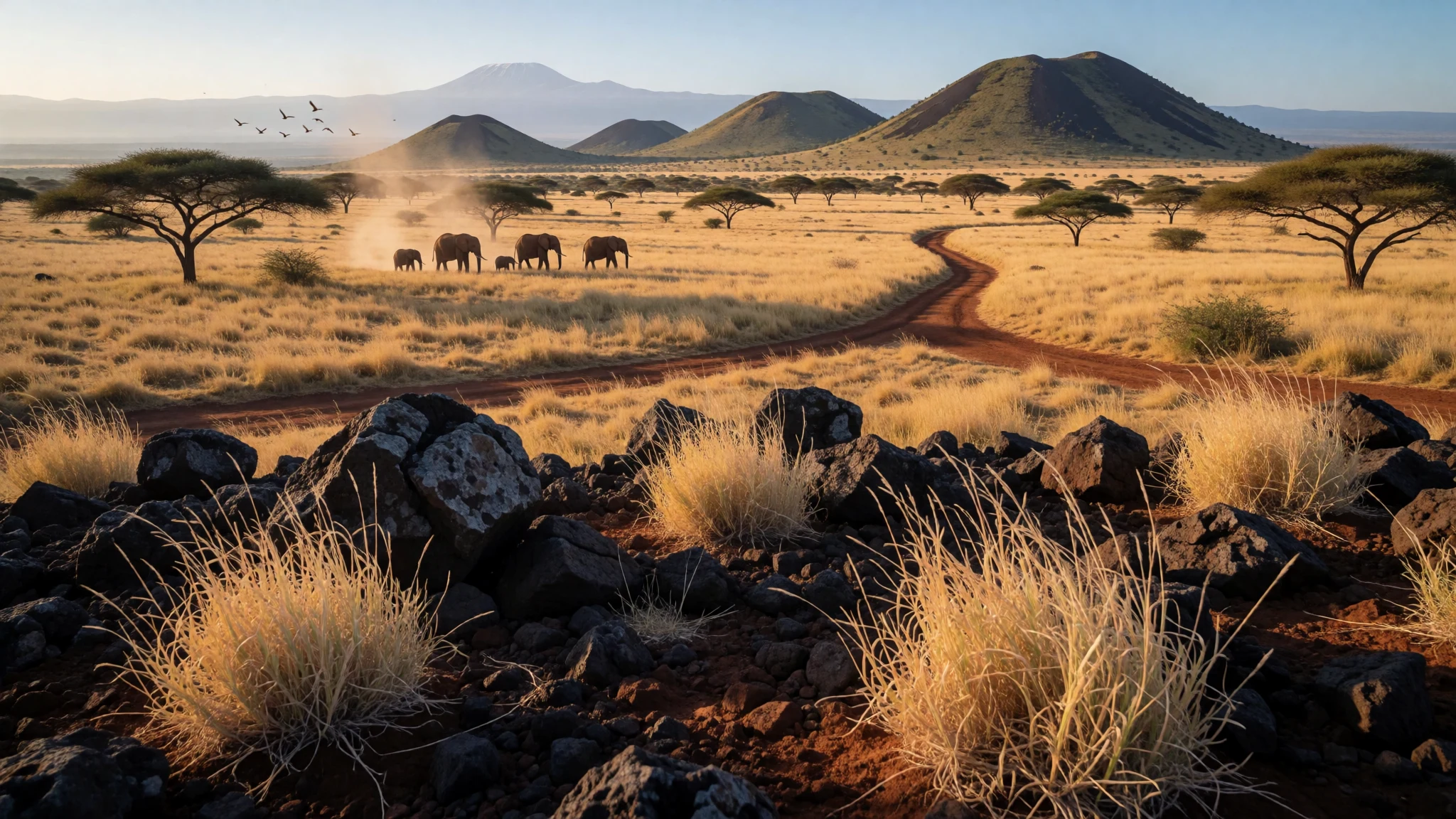
A rugged landscape of volcanic cinder cones, subterranean springs, and wild game roaming in the shadow of the Chyulu Hills.
The place
Tsavo West National Park unfolds across an expanse of volcanic hills, jagged black lava beds, and dense acacia scrubland in southern Kenya. Separated from neighbouring Tsavo East by the railway line linking Nairobi and Mombasa, the reserve presents a far more varied landscape than its flatter eastern counterpart. Deep beneath the arid surface, melted snows from Mount Kilimanjaro travel along subterranean channels before emerging at Mzima Springs, creating verdant oases of palm trees and clear pools where hippos and crocodiles thrive.
Volcanic activity has shaped much of the park's topography. Cinder cones dot the horizon, while ancient lava fields lie frozen across the savannah. Wild animals navigate this diverse geography, from large herds of dust-red elephants to leopards resting in acacia branches. Giraffes browse among thorny thickets, zebras graze along dry riverbeds, and endangered black rhinos find refuge in protected sanctuaries within the perimeter.
The Tsavo River winds through the northern territory, supplying vital water to resident wildlife during dry periods. Along its banks, riverine forests attract hundreds of bird species, making the region an important habitat for resident and migratory birds. Weather patterns feature warm temperatures throughout the year, punctuated by two distinct wet seasons that transform the dry scrub into lush greenery.
Its story
The history of Tsavo West National Park is intertwined with ancient migration routes, colonial rail expansion, and early conservation efforts in East Africa. Long before formal boundary lines were established, pastoralist communities traversed these hills, following seasonal watercourses and navigating the dense scrubland. The region gained global notoriety at the end of the nineteenth century during the construction of the Kenya-Uganda Railway. Work on a railway bridge across the Tsavo River came to a halt when two man-eating lions began preying on camp workers, generating legendary tales that later inspired books and films.
In April 1948, colonial authorities established Tsavo as a single vast national park. Within weeks, administrative challenges stemming from its huge territory prompted officials to divide the area into eastern and western sectors along the railway line. Tsavo West was designated to protect the topographically rich zone containing volcanic fields, natural springs, and critical wildlife corridors.
Throughout the mid-twentieth century, conservationists worked to safeguard fragile populations of black rhinoceroses and elephants from intense poaching pressures. The creation of specialized fenced reserves within the park helped stabilize endangered species, laying the groundwork for modern ecological management operated by the Kenya Wildlife Service today. Modern conservation initiatives focus on habitat preservation, human-wildlife conflict mitigation along community boundaries, and long-term ecological monitoring across the entire Tsavo ecosystem.
What to see
- Mzima Springs — Northern sector
Emerging from under lava rocks, these crystal-clear pools are fed by underground rivers originating from Mount Kilimanjaro. Palm-fringed paths lead to an underwater viewing chamber where visitors can watch hippopotamuses and fish gliding through the water. Sunbathing crocodiles and diverse birdlife line the banks of the surrounding pools.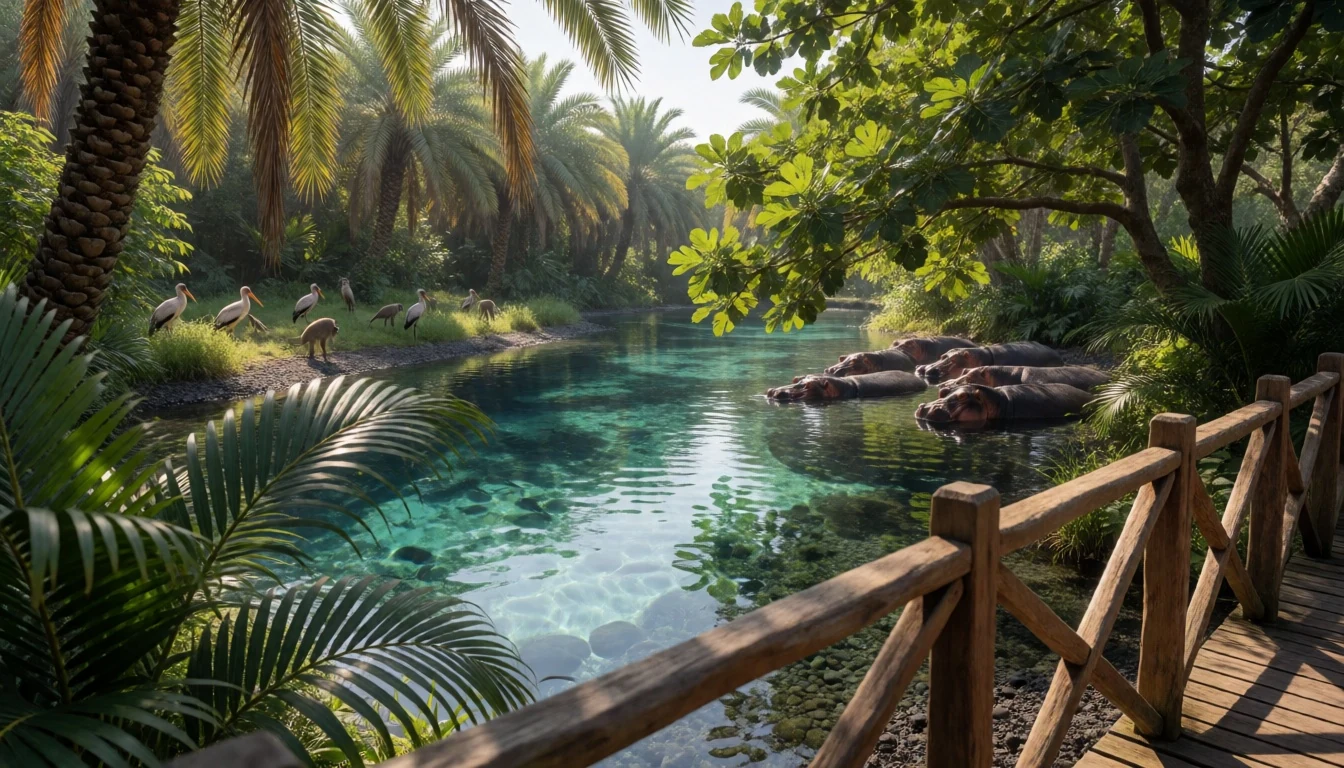
- Shetani Lava Flow — Chyulu Hills border
A striking expanse of jagged, black folded rock formed by volcanic eruptions several centuries ago. Local tradition named the expanse Shetani, meaning devil in Swahili, due to the eerie steam vents once observed here. The dark basalt plain provides a stark contrast to the surrounding golden savannah grass.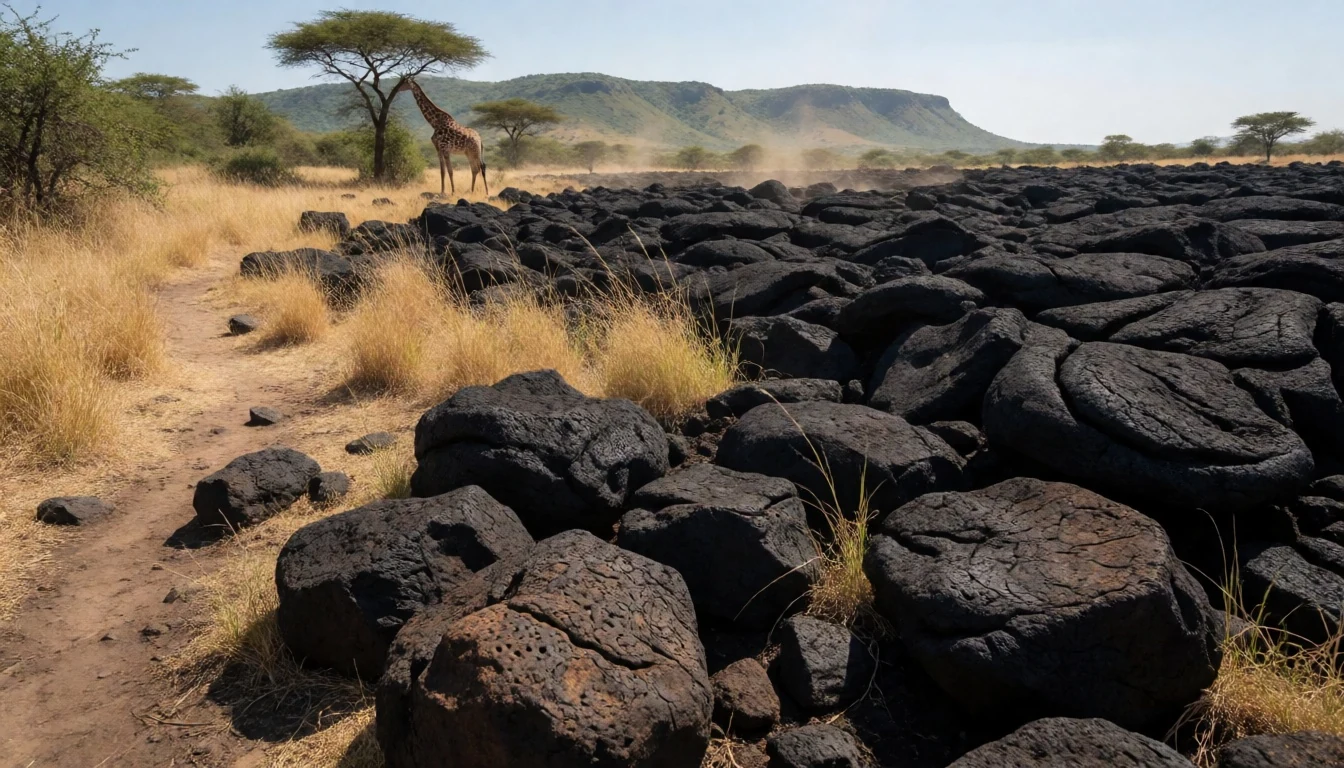
- Ngulia Rhino Sanctuary — Central region
Enclosed within an electrified boundary fence, this high-security zone protects a growing population of endangered black rhinoceroses. Dedicated rangers monitor the animals within the thick bush habitat. Viewing hides and surrounding roads offer opportunities to spot rhinos emerging at dusk to drink at waterholes.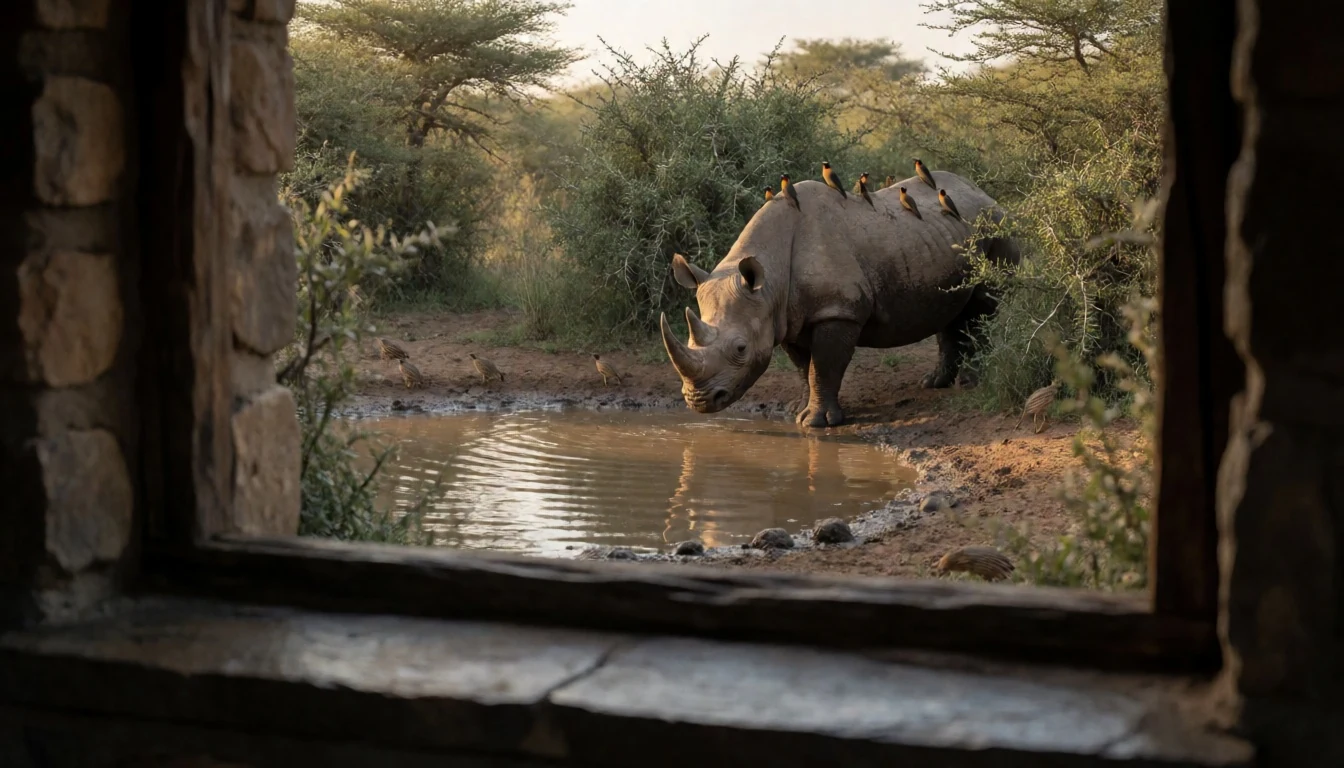
- Kitchwa Tembo Cliffs — Rock climbing area
Rising sharply above the surrounding plain, these sheer granite cliffs present dramatic rock faces popular among experienced climbers. The imposing rock formation offers sweeping panoramic views across the park toward distant volcanic ridges, providing a sanctuary for birds of prey nesting on high ledges.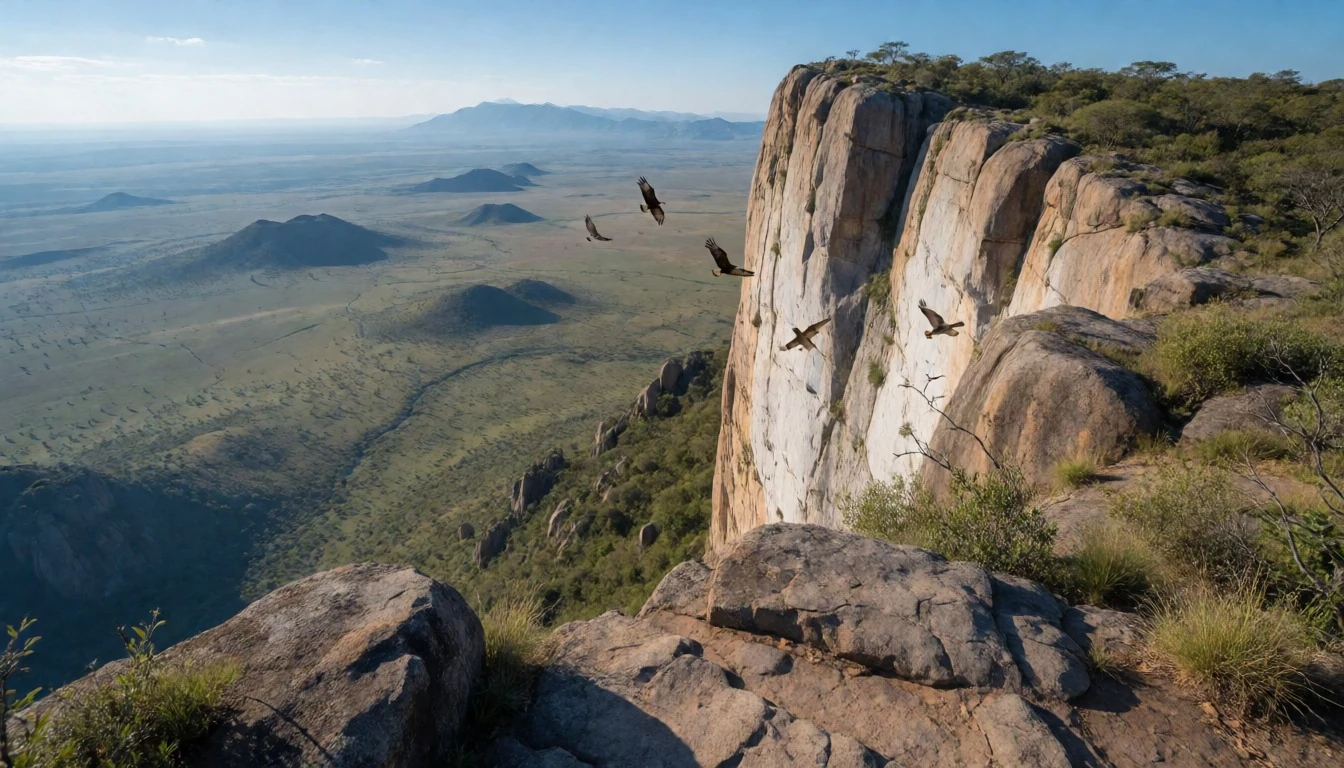
- Tsavo River Waterfront — Northern park boundary
Winding through thick riverine palm forests, the Tsavo River serves as a vital lifeline for wildlife during dry months. Safari routes along the watercourses allow observation of elephant herds bathing, thirsty antelopes gathering at twilight, and waterbirds hunting along the riverbanks.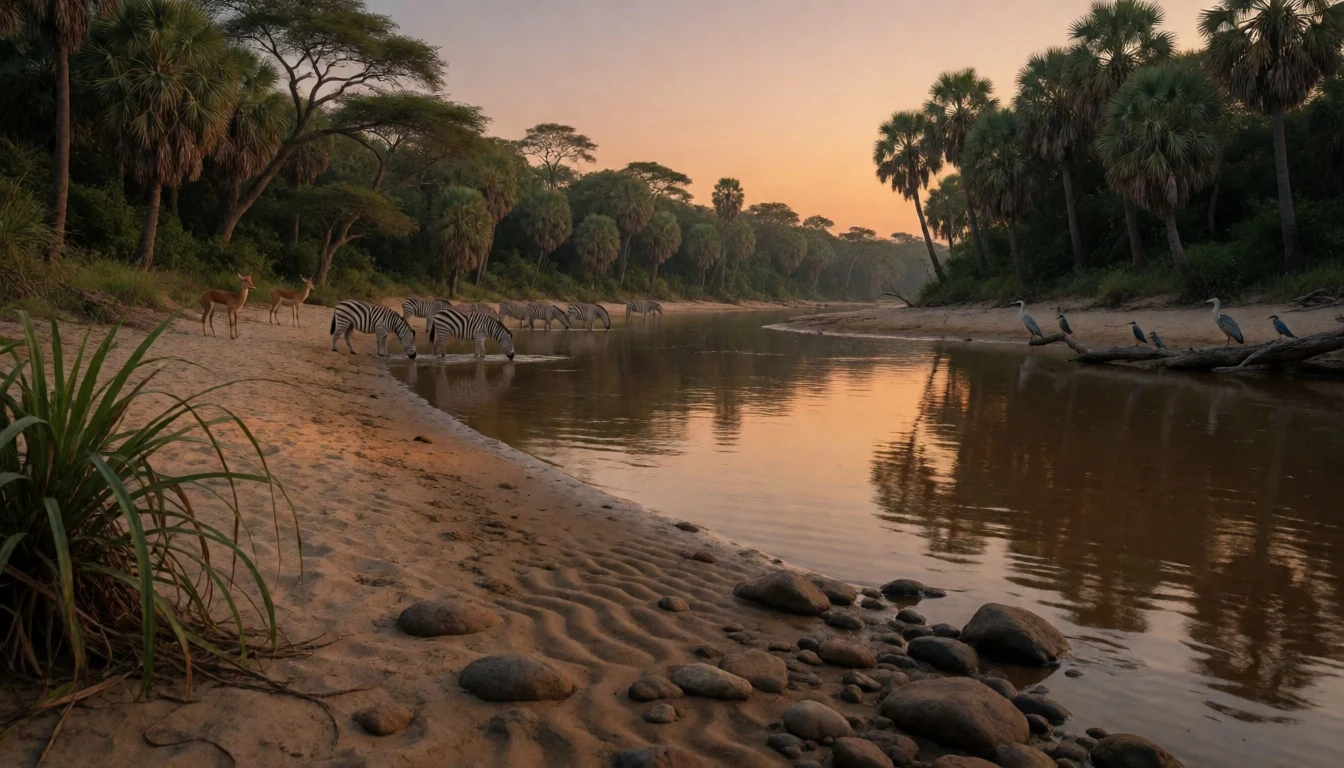
Culture
The cultural fabric surrounding Tsavo West National Park reflects the heritage of Indigenous pastoralist and agricultural communities, notably the Taita and Kamba peoples who have lived along the park margins for generations. Traditional livelihoods revolved around cattle herding, seasonal farming, and deep ecological knowledge of local plant species and weather patterns. Storytelling, music, and beadwork remain integral parts of daily life, carrying historic lore and communal values down through generations.
With the establishment of protected conservation zones, modern relationships between rural communities and the national park emphasize co-operation. Local residents often work as rangers, wildlife trackers, lodge staff, and conservation educators. Community-run conservancies bordering the park assist in mitigating human-wildlife conflict while generating direct income through eco-tourism ventures and traditional craft sales. Respecting local customs is essential when visiting villages or cultural centers near park gates. Always ask permission before taking photographs of local residents or pastoralists in surrounding communities.
What to wear
Traditional attire among communities neighboring Tsavo West includes brightly coloured woven cotton wraps known as kangas and kikois. Kanga cloth features decorative borders and Swahili proverbs printed along the hem, worn wrapped around the waist or shoulders by women during daily chores and community gatherings. Men traditionally wear kikois, lightweight cotton sarongs tied at the waist, alongside intricate glass beadwork necklaces and armbands worn during ceremonial occasions.
In modern settlements around the park, local residents routinely wear western-style clothing such as trousers, shirts, and skirts, reserving traditional beaded ornaments for celebrations and cultural displays. Safari guides and park wardens wear durable khaki uniforms designed to withstand rough bush conditions.
Visitors touring Tsavo West require practical clothing tailored to warm temperatures and dusty terrain. Lightweight, breathable trousers and long-sleeved shirts in neutral tones such as beige, tan, or olive green help blend into the landscape while providing protection against sun and insect bites. Sturdy closed-toe boots are essential for walking trails, while a wide-brimmed hat and sunglasses protect against bright equatorial glare.
What to eat
- Ugali with Sukuma Wiki — Safari lodge dining rooms and local roadside eateries
A classic Kenyan staple made from ground maize flour cooked into a dense porridge, served alongside sautéed collard greens cooked with onions and spices. It forms the backbone of daily dining across park lodges and nearby towns.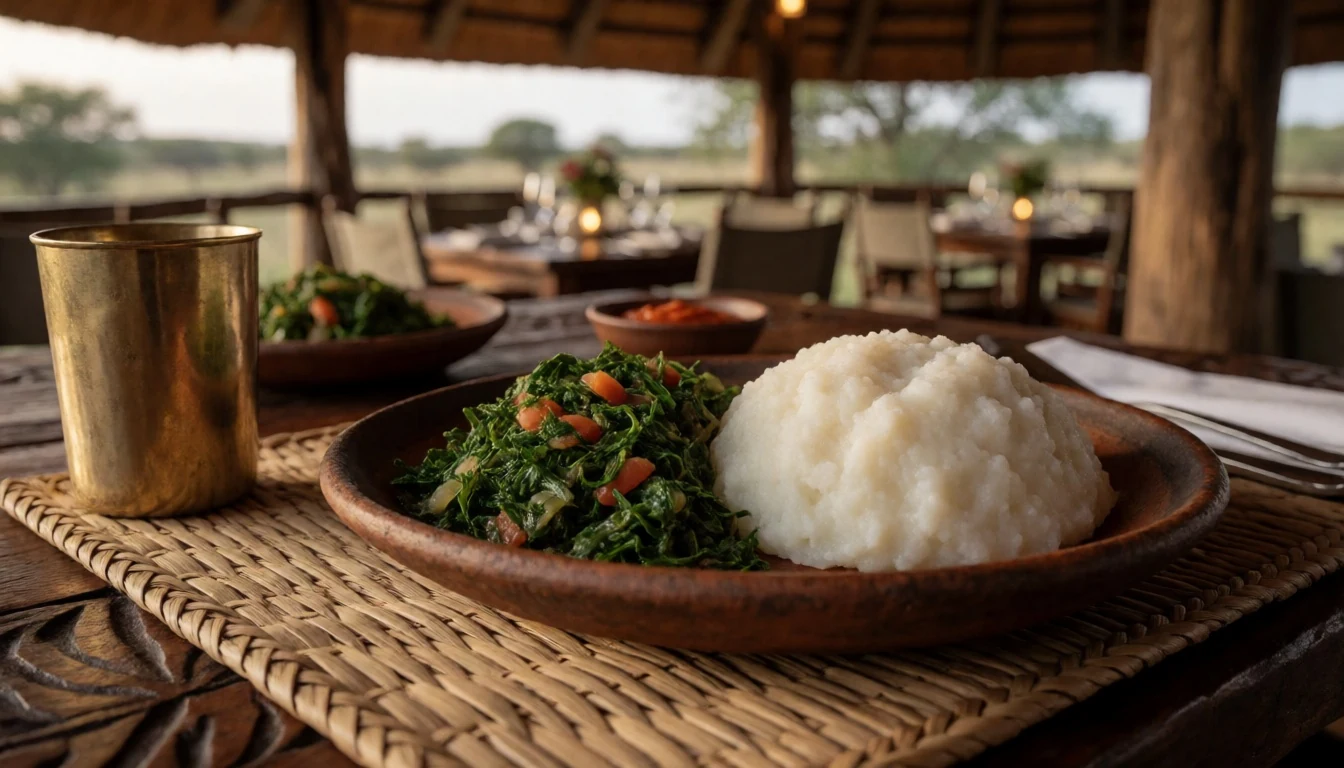
- Nyama Choma — Lodge buffet grills and park rest stops
Slow-roasted goat or beef grilled over open wood embers until tender. Served freshly carved with coarse salt and spicy vegetable side dishes, this traditional grilled meat is a favourite evening meal after afternoon game drives.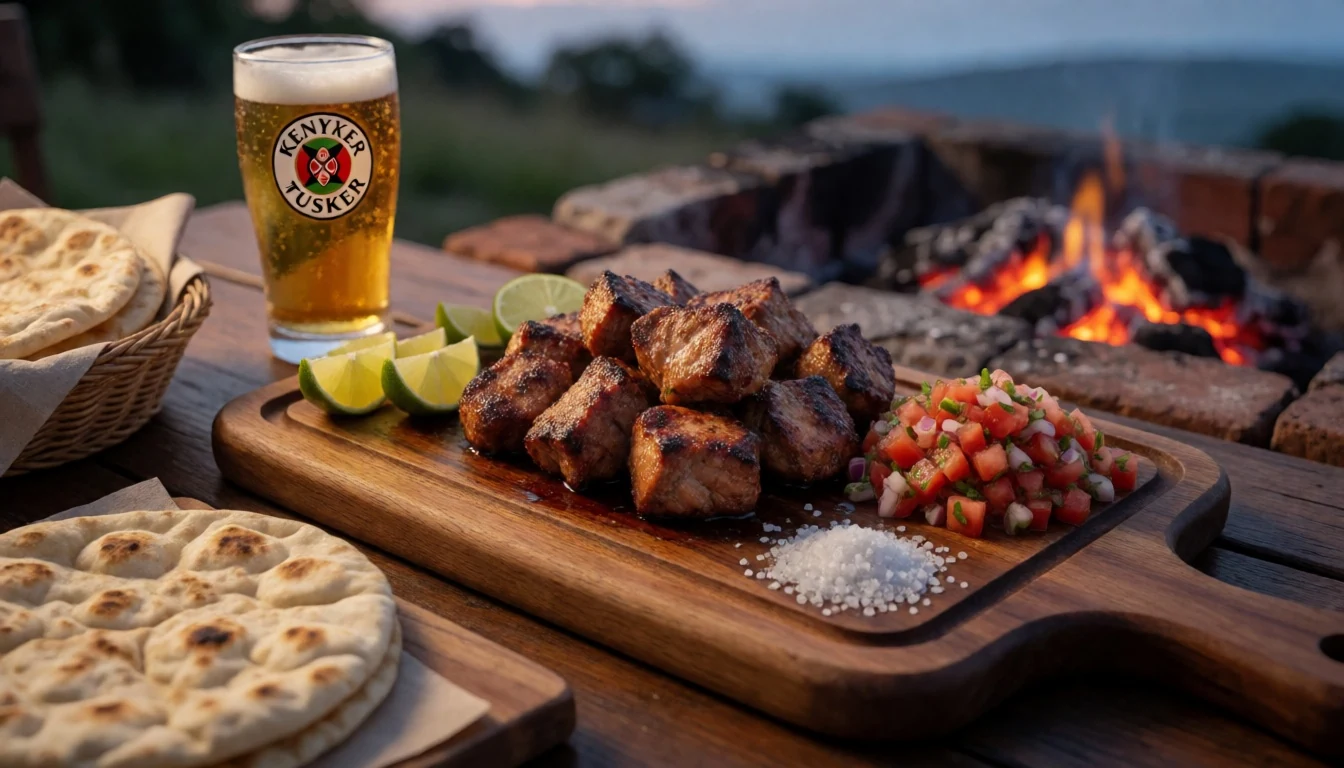
- Swahili Pilau — Park lodge restaurants and coastal corridor diners
A fragrant rice dish cooked in spiced broth containing cumin, cardamom, cinnamon, and cloves, combined with tender beef or chicken. The aromatic recipe reflects centuries of coastal trade routes connecting the region to the Indian Ocean. - Kachumbari — Safari camp buffets and dining tents
A crisp, uncooked salad of finely diced tomatoes, red onions, fresh coriander, and chilli peppers tossed in lemon juice. This refreshing side dish perfectly balances richer grilled meats during bush lunches and lodge dinners. - Chai ya Maziwa — Lodge breakfast stations and safari camp tea stops
Spiced Kenyan tea brewed directly in milk with crushed ginger, cardamom, and tea leaves. Served hot during early morning game drives and afternoon rest breaks, it provides a warm comfort before setting out into the bush.
Plan it
Best time. August and September offer the clearest wildlife viewing as dry weather thins vegetation; rain falls during March–May and October–December.
How long. 2–3
Getting there. Travel by rail or road from Nairobi or Mombasa to Mtito Andei, where safari vehicles meet arriving passengers for park entry.
Budget. high
Tips
- Book a safari driver or four-wheel-drive vehicle, as park roads require good ground clearance.
- Carry cash for park entrance fees and small purchases at gate craft stalls.
- Start game drives at first light when wildlife activity peaks and temperatures are cool.
- Pack sufficient drinking water and sun protection for daytime excursions.
Etiquette
- Remain inside your vehicle at all times except in designated picnic areas.
- Maintain a distance of at least 20 metres from wild animals and never block their movement.
- Keep noise levels low and turn off vehicle engines when watching wildlife.
Nearby
Sources
- Wikidata Q1602738 (CC0)
- Wikipedia (rev 1383044648) (CC BY-SA 4.0)
- Wikivoyage (rev 5420355) (CC BY-SA 4.0)
- Map of Tsavo East and West National Park (CC BY 3.0)
- Mzima Springs Photo (CC BY-SA 4.0)
- Kilaguni Lodge View Photo (CC BY-SA 4.0)
- Ngulia Safari Lodge Waterhole Photo (CC BY-SA 4.0)
- Chyulu Hills and Shetani Lava Flow Photo (CC BY 2.5)


Wildlife
- African bush elephant (animal)
The African bush elephant is the biggest animal that walks on land, with a trunk that works like a hand and huge ears that help it stay cool. In Tsavo West, look for large herds, their skins coloured red by the dust of the park. Watch from a respectful distance, keep your voice low and your engine off, and let a trained guide read the herd's mood. Never offer food; wild elephants should stay wild.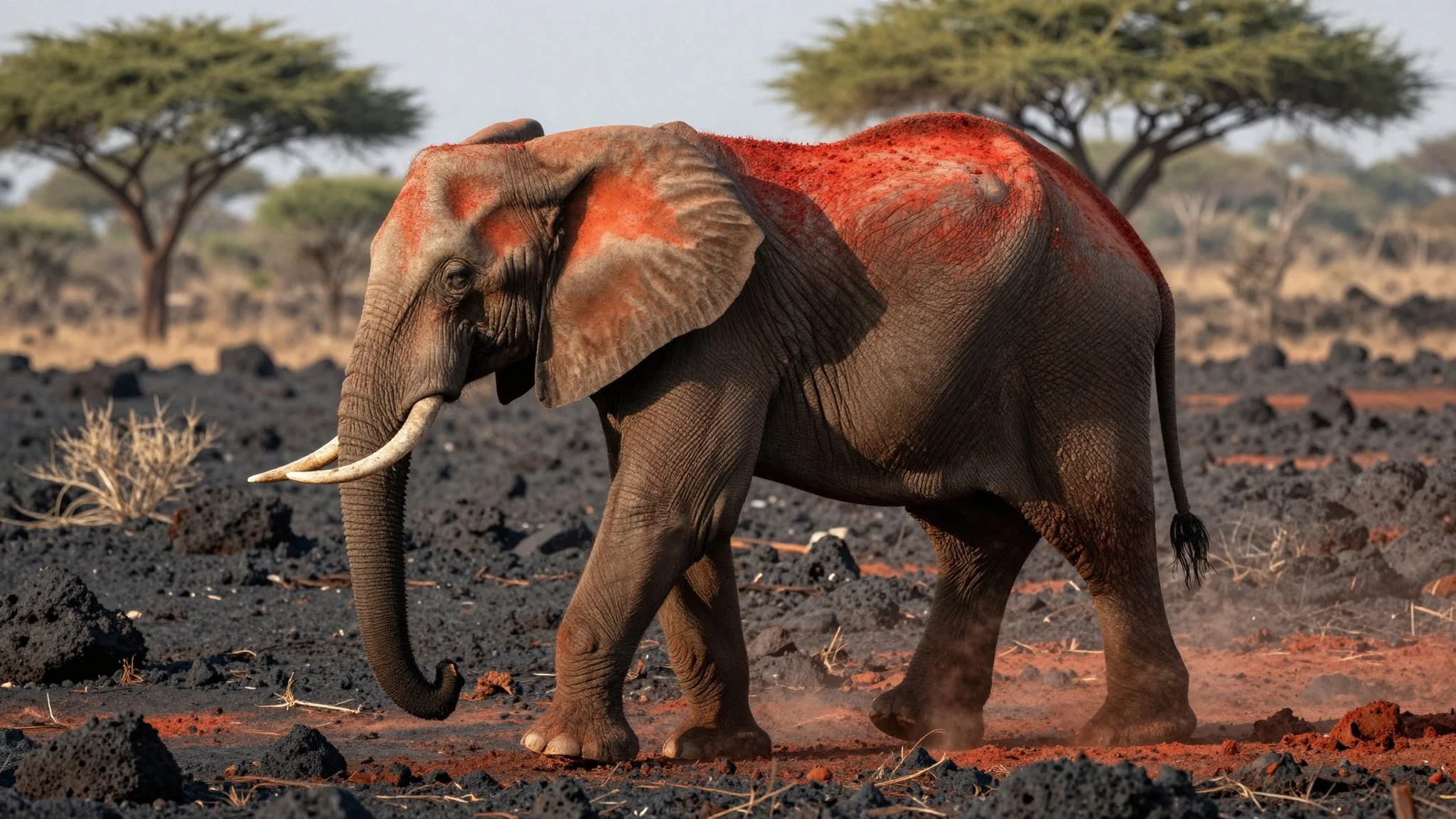
- Black rhinoceros (animal)
The black rhino is not really black, but brown or grey, and it has a hooked lip, a clue to remember it by. It is endangered, and in Tsavo West it finds refuge in protected sanctuaries within the park's boundary. Ask a guide to take you, stay far back, keep silent and still, and never try to feed or call it. Seeing one is a rare gift, so give it plenty of space.