Gedi
Gedi, Kenya
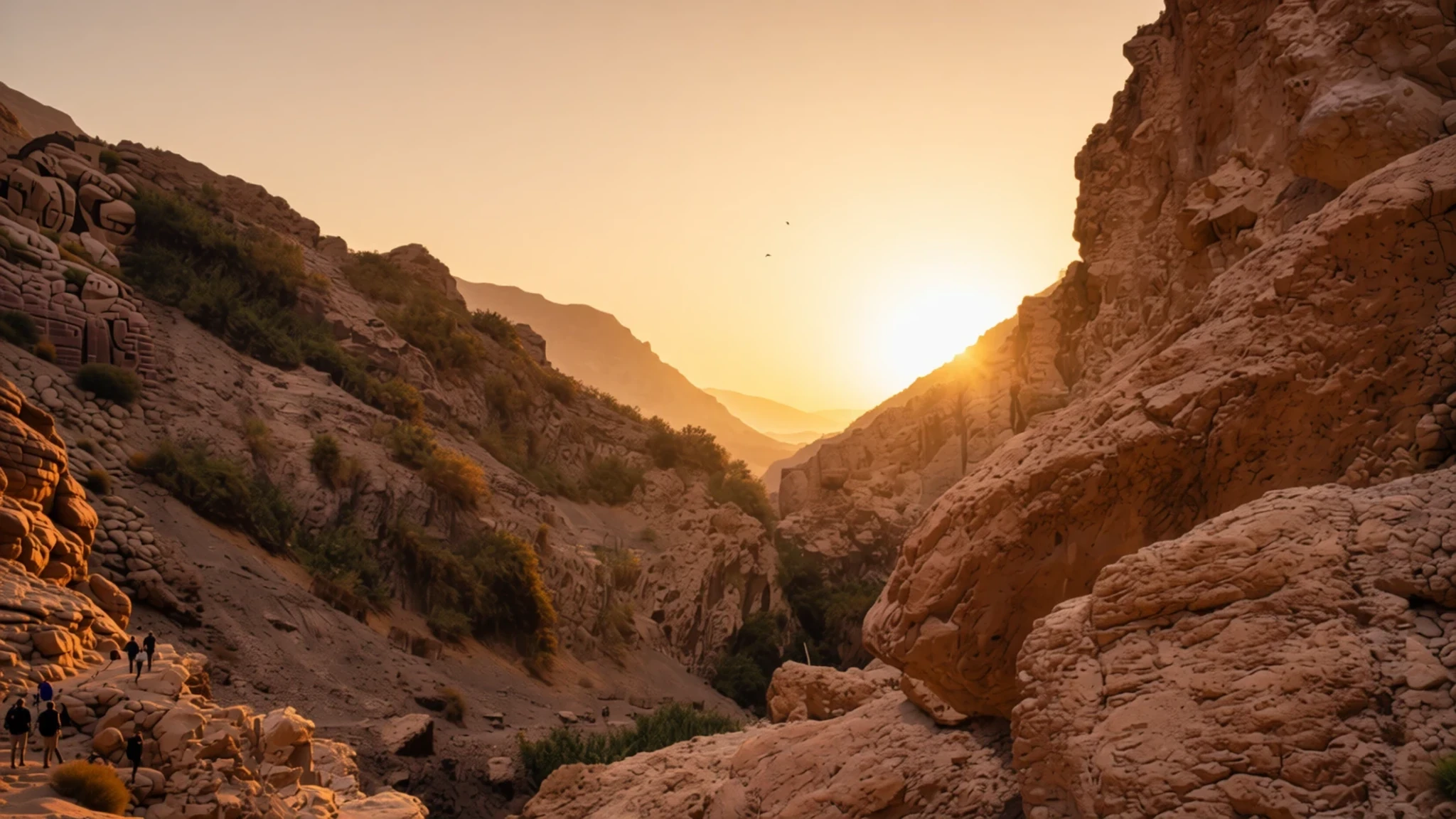
Gedi's coral-stone ruins sit in quiet coastal bush, the remains of a medieval port that traded across the Indian Ocean.
The place
Gedi, usually written Gede, is a village on the Indian Ocean coast of Kenya, in Kilifi County between Malindi and Watamu. Its fame rests on the ruins of a town that once sat beside the sea and traded with partners far beyond the African coast. Although the old town is not named clearly in early written records, excavated remains of a port point to occupation in the thirteenth century or earlier, and a tomb bearing a date equivalent to 1399 shows the settlement was still active then. People kept living and building there until at least the seventeenth century, after which it was abandoned. The site was largely forgotten until it was rediscovered in the 1920s, and it now sits among trees rather than beside a working harbour.
Walking the site, the materials stand out. Walls are built from coral rock, earth and lime plaster, and some surfaces carry carved or incised designs. The main structures include a great mosque, a palace complex, rows of houses, numerous tombs and a fortified enclosure. Together they follow what scholars call Swahili architecture, a coastal building tradition that blends local materials with influences from across the Indian Ocean.
Today the modern village is small, and the ruins are the reason most visitors come. Gede also has a local museum that explains the excavations, which helps when the walls are otherwise hard to read. The nearby shore is a useful reminder of why the town mattered: a sheltered coast on busy sailing routes.
Its story
The story of Gedi begins with trade. Its builders worked in a region where the monsoon winds carried ships between the African coast, Arabia, the Persian Gulf and India, and a town on a sheltered bay could store goods, water and labour while cargo changed hands. The surviving evidence suggests a settled community that prospered on that exchange, building stone houses and a mosque rather than temporary shelters.
The chronology is uncertain at the edges. Written accounts from the period do not clearly name the place, so historians rely on buildings, graves and imported objects. A tomb marked with a date equivalent to 1399 gives a fixed point in the middle of the town's life, and the wider evidence keeps it occupied until at least the seventeenth century. Why people left is debated. Shifting trade routes, changing harbours and pressure from rival coastal powers are all plausible, and sand gradually covering the lower buildings may have made the place harder to maintain.
For generations the ruins were known to local people but largely absent from outside maps. Interest from outside the region grew later, and by the 1920s the site had been rediscovered and recorded. Excavation and conservation followed, and the remains now allow a reader to trace the layout of a coastal town that once linked East Africa to a wider Indian Ocean world.
What to see
- The Great Mosque — Gede ruins, central site
The Great Mosque at Gedi is the ruin most people photograph first, its coral walls and pillar bases still showing the layout of a congregational space. Its footprint is clear enough to trace the prayer hall and the courtyard, and the carved details on some surfaces are worth slowing down for. Go early, when the light is soft and the site is cooler.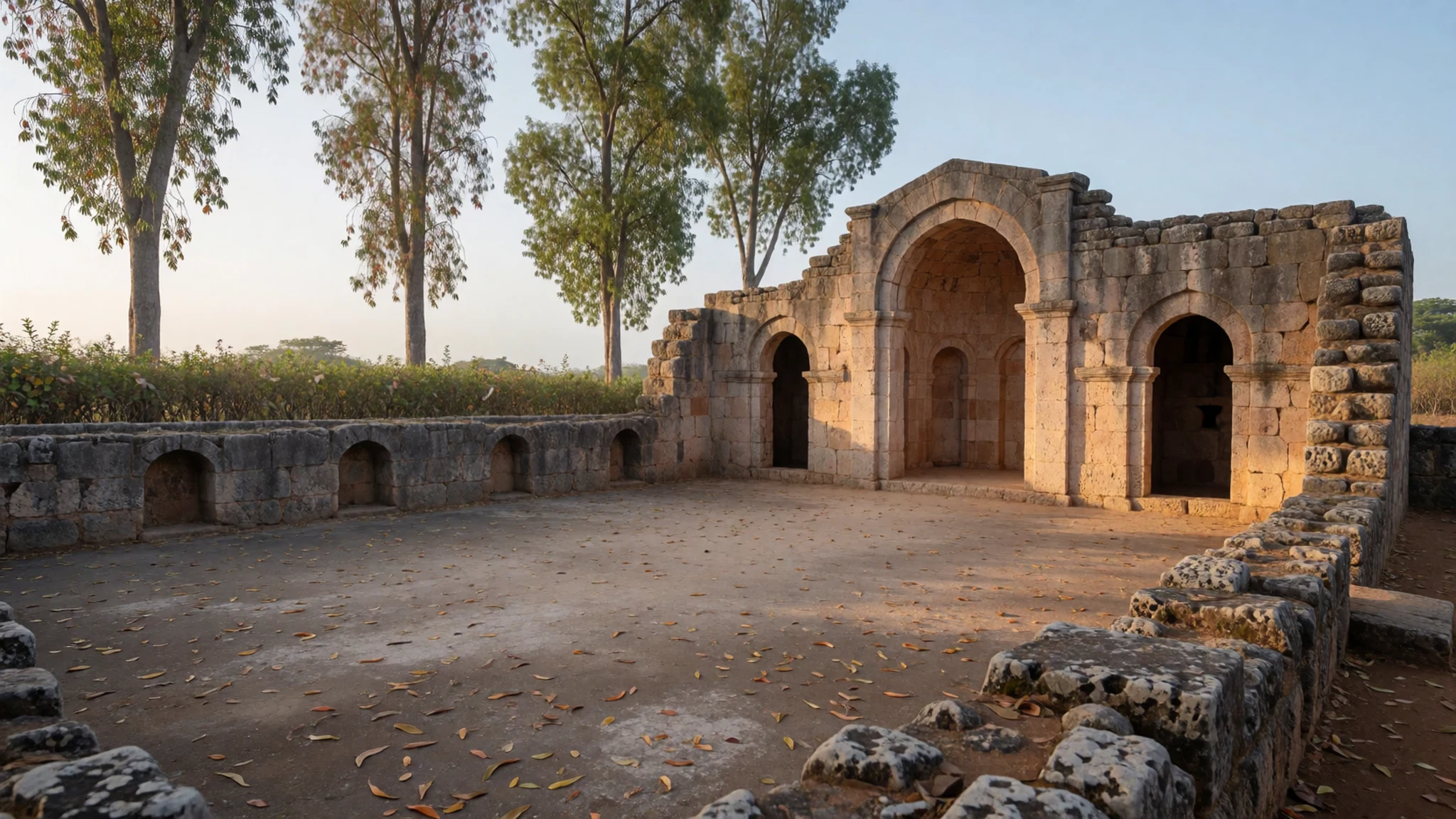
- The palace complex — Gede ruins, central site
The palace complex lies close to the Great Mosque, and its walls mark out rooms and courtyards that once served a ruling household. Plan on a slow walk around the outer walls, since the tracery of openings and inscribed panels is easy to miss from the path. Keep to the marked paths, as loose coral and root-covered rubble can twist an ankle.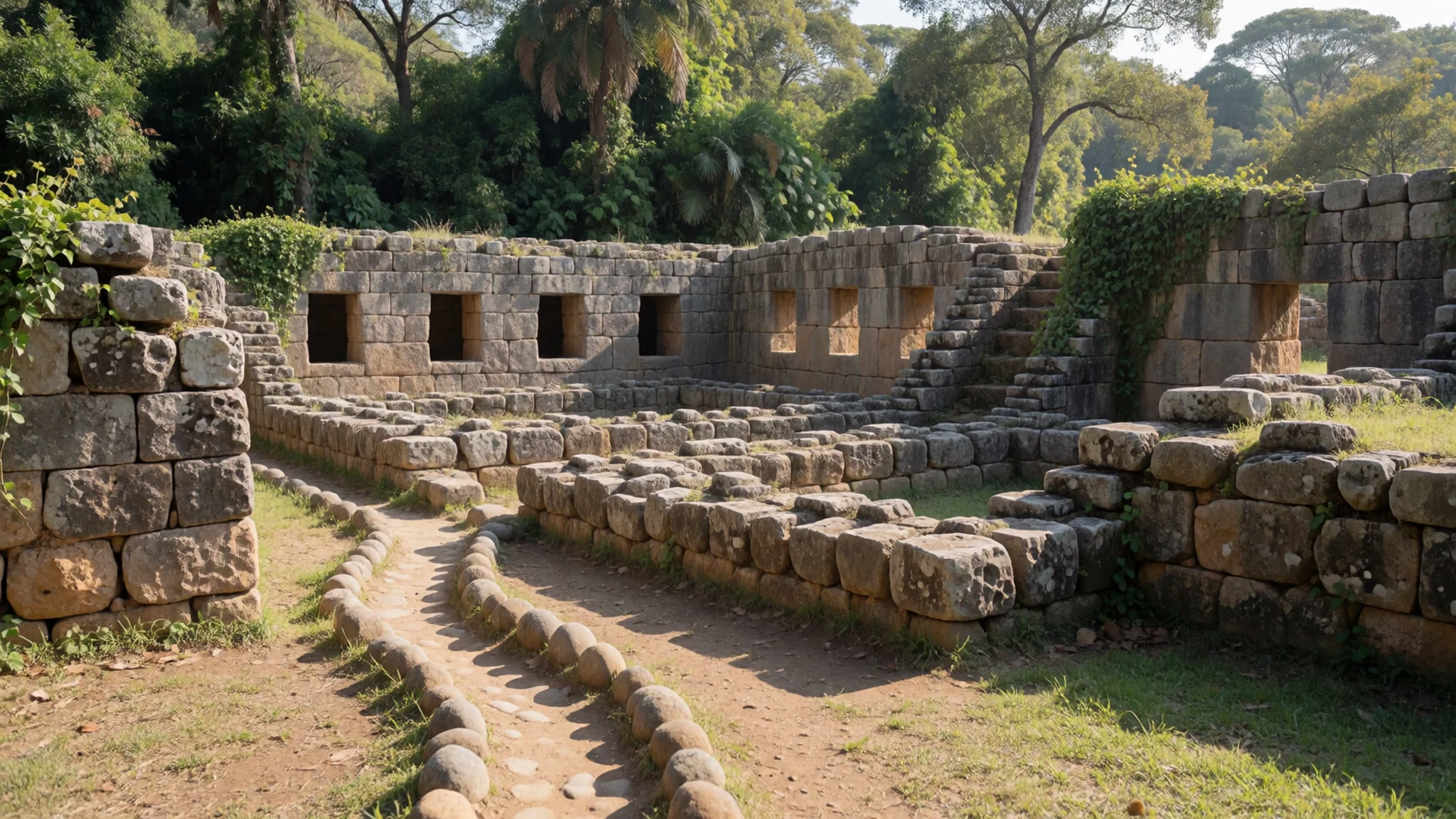
- The tombs — Gede ruins, scattered across the site
The tombs are useful for dating the site. Several are built as enclosed rectangles with carved details, and one carries a date equivalent to 1399, which anchors the town's chronology. Look at how the graves sit in relation to the mosque. Respect the graves by stepping around them and never climbing on them.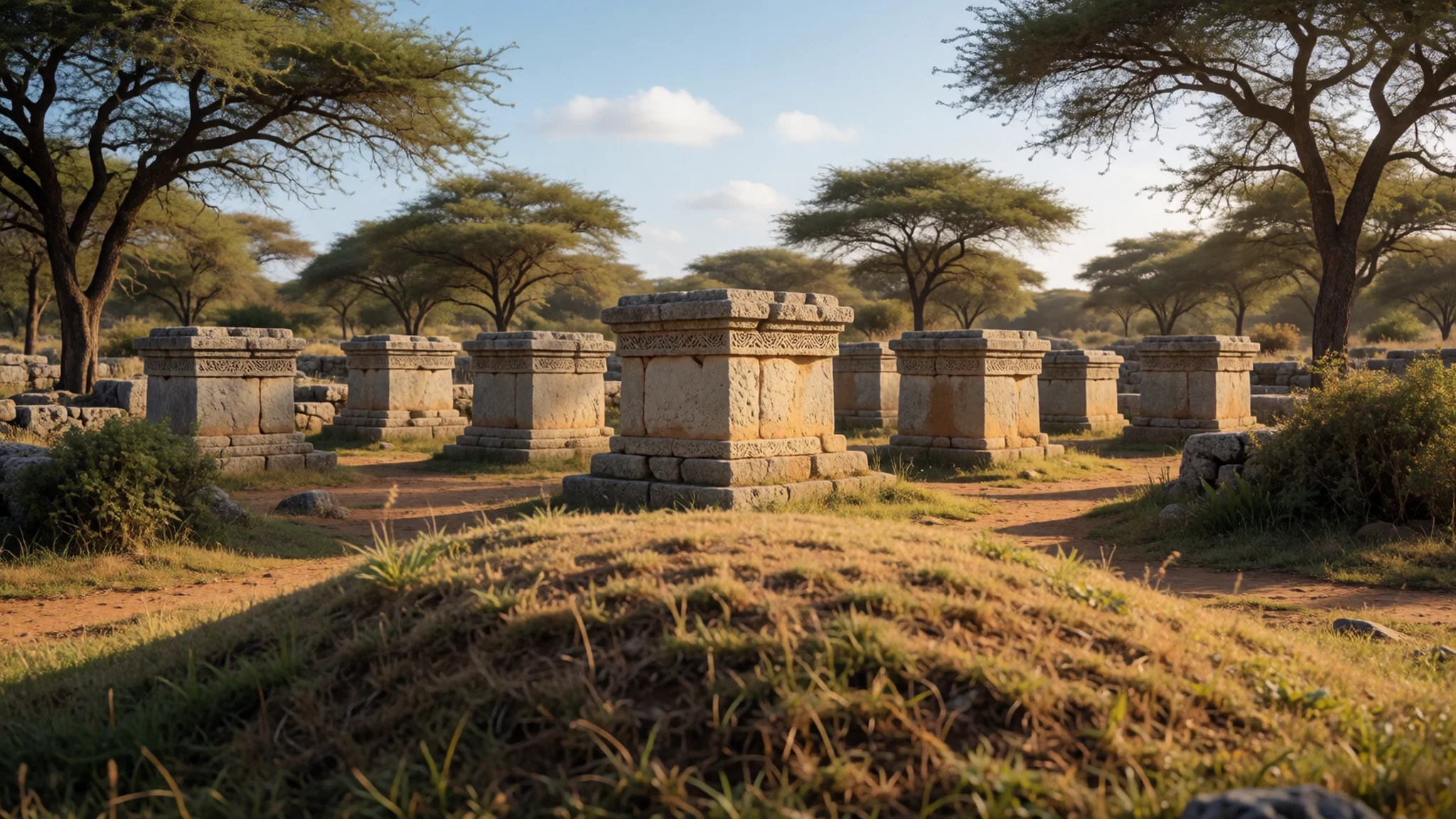
- The fort — Gede ruins, the eastern edge
A fort stands among the ruins, and its presence suggests the town needed protection from the sea and from rival groups on land. The walls are lower than they once were, so the outline is easier to read than the height. Walk the outline to see how the enclosure relates to the houses. Bring a hat, as much of the site has little shade.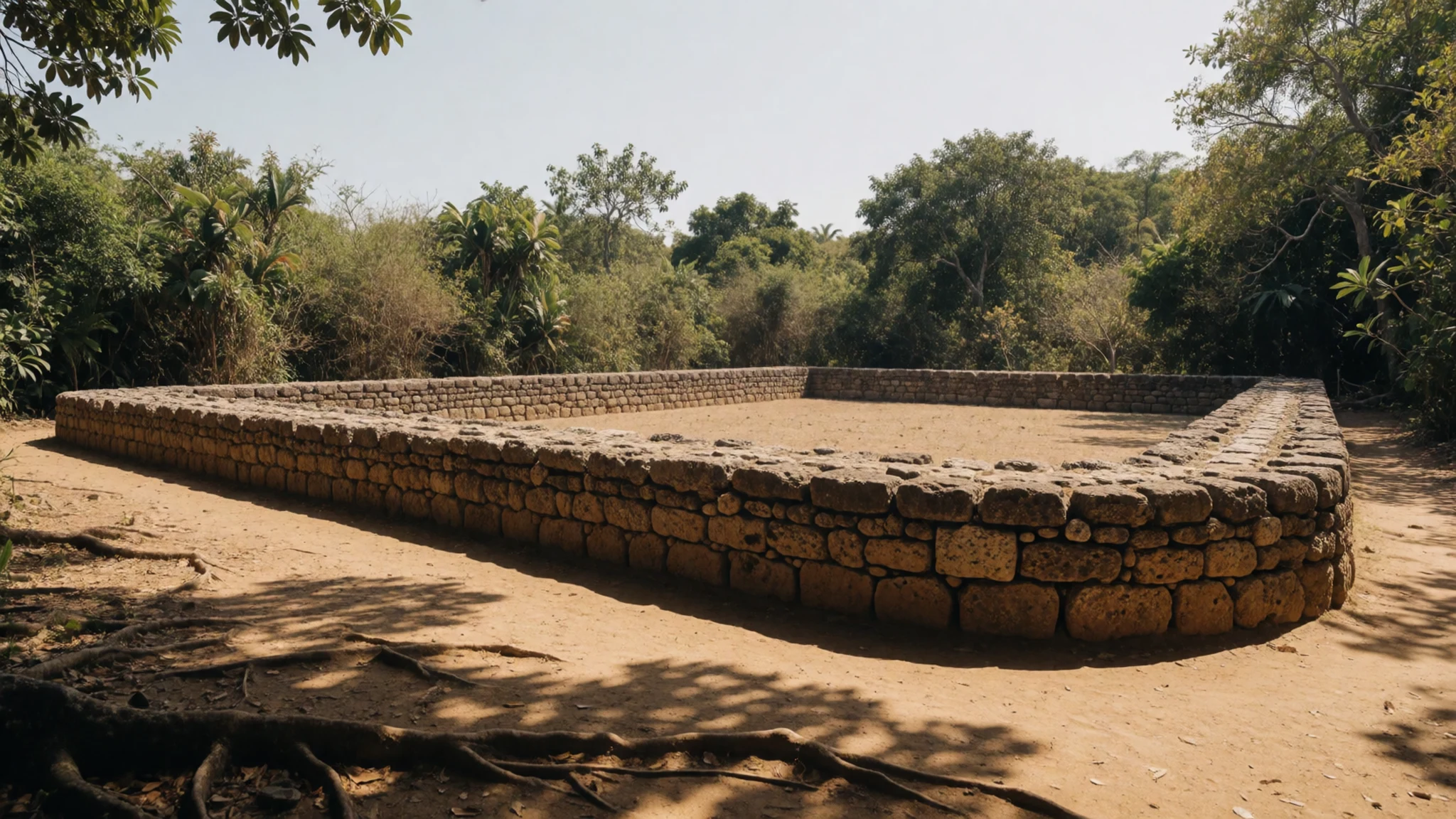
- Gede Museum — Gede village
The village museum explains how the site was excavated and what the wider Swahili coast traded with. It is a sensible first stop before walking the ruins, because the displays set out the chronology. Check opening times locally, since small village museums can close without much notice.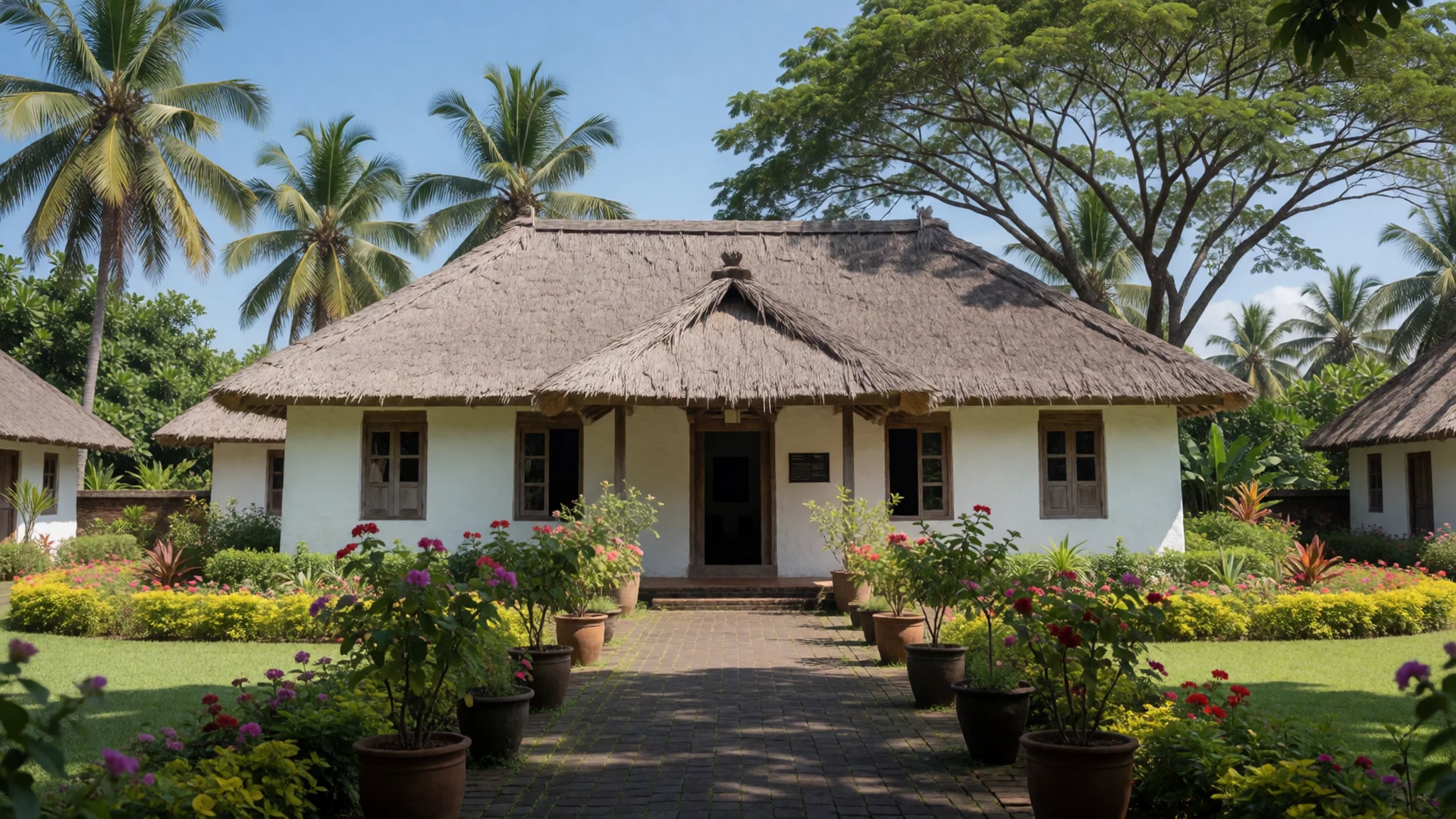
Culture
Gedi sits on a stretch of Kenya's coast where Muslim influence is strong, and that shapes what counts as respectful dress and behaviour. Most of the country is Christian and relaxed in its cities, but short dresses are regarded as indecent on the coast and in rural areas, so visitors should cover shoulders and knees once they leave the beach. Beachwear is fine on the sand but not while walking through a village. Public displays of affection are frowned upon, and although people are very friendly, they expect a degree of modesty. Permission is needed before photographing people, and photographs of police stations, banks, ferries and other public facilities are usually prohibited. If you are invited into a family home, bring a small gift suited to the occasion. Nudism and topless bathing are not allowed in public, so ask before photographing anyone and keep your camera away from official buildings.
What to wear
Gedi's dress traditions belong to the Swahili coast, where cloth has long carried messages as well as warmth. The kanga is a printed cotton wrap, usually sold in pairs, with a bordered design and often a proverb in Kiswahili along the edge; women wear it as a skirt, a shawl or a headscarf. The kikoi is a lighter striped or checked wrap, common among men and at the coast. Many older Muslim men wear an embroidered cap called a kofia, and some Swahili women wear a black cloak known as a buibui over their clothes when they go out.
What people wear now mixes these traditions with ordinary Western clothing. In Malindi and in the villages, many people wear long skirts, loose trousers and collared shirts, and the kanga remains everyday wear for women at home and at markets. Modest dress is the norm for women in towns, while younger people in Malindi and Watamu may wear shorts and sleeveless tops on the beach.
For a visit to Gedi, choose light, loose cotton in cut that covers shoulders and knees. Long trousers or a skirt suit walking through the village and the ruins, where the sun is strong and the ground is uneven. Wear closed shoes with a good grip for coral rubble, and keep sandals for the beach. A sun hat and a light scarf to cover your shoulders at religious sites are useful additions.
What to eat
- Ugali with sukuma wiki — small canteens in Gede village and in Malindi's town centre
Ugali is a stiff maize porridge that is shaped by hand and used to scoop up stews and greens. Ask for it with sukuma wiki, a leafy green cooked with onion and tomato. It is the everyday meal in local homes and simple canteens.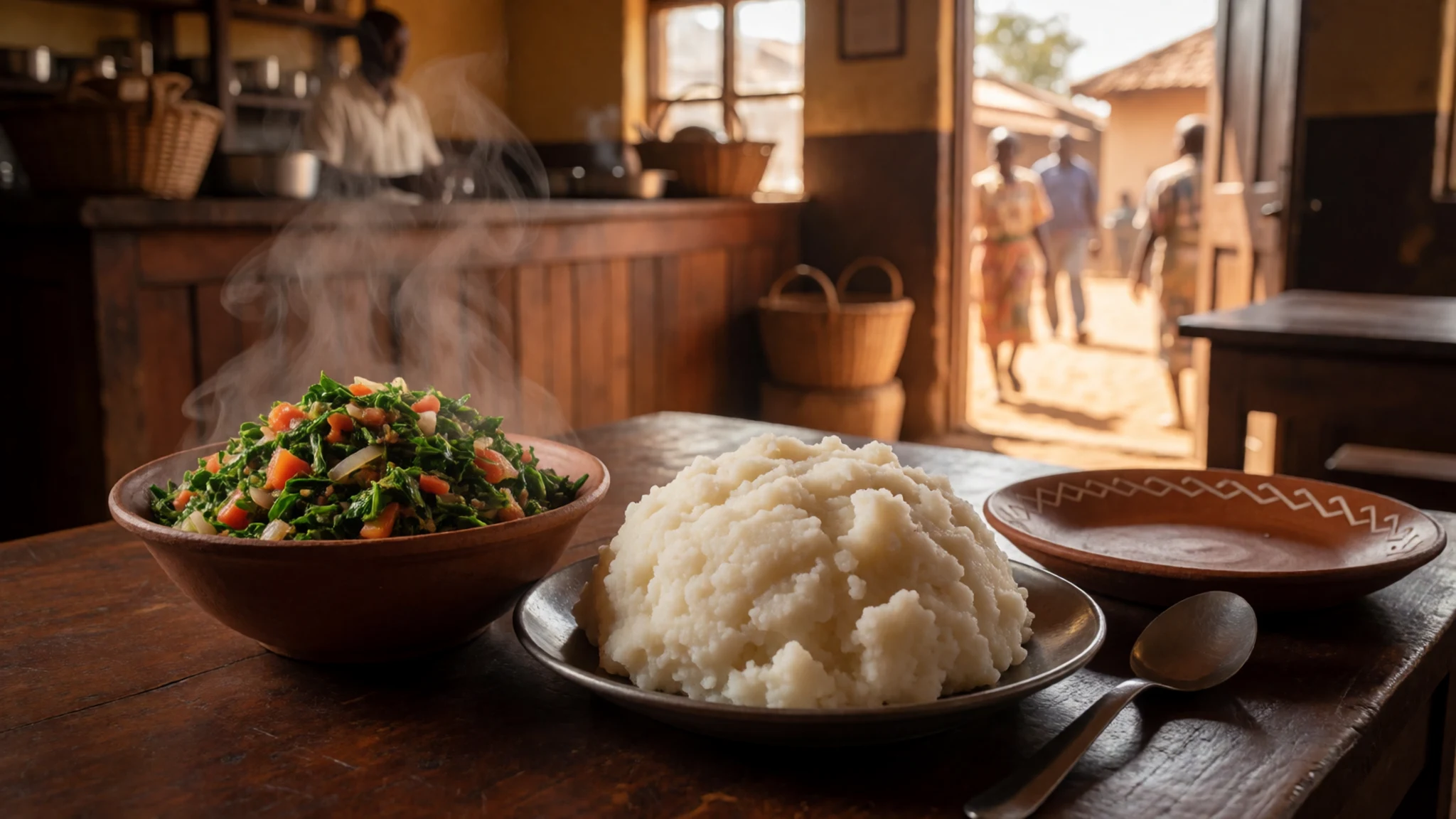
- Nyama choma — roadside grills on the Malindi road and evening stalls in town
Nyama choma means grilled meat, usually goat or beef cut into chunks over charcoal and served with salt, sliced onion and a sharp chilli sauce. Eat it with ugali or chips. It is best from a busy grill where the meat is turned fresh.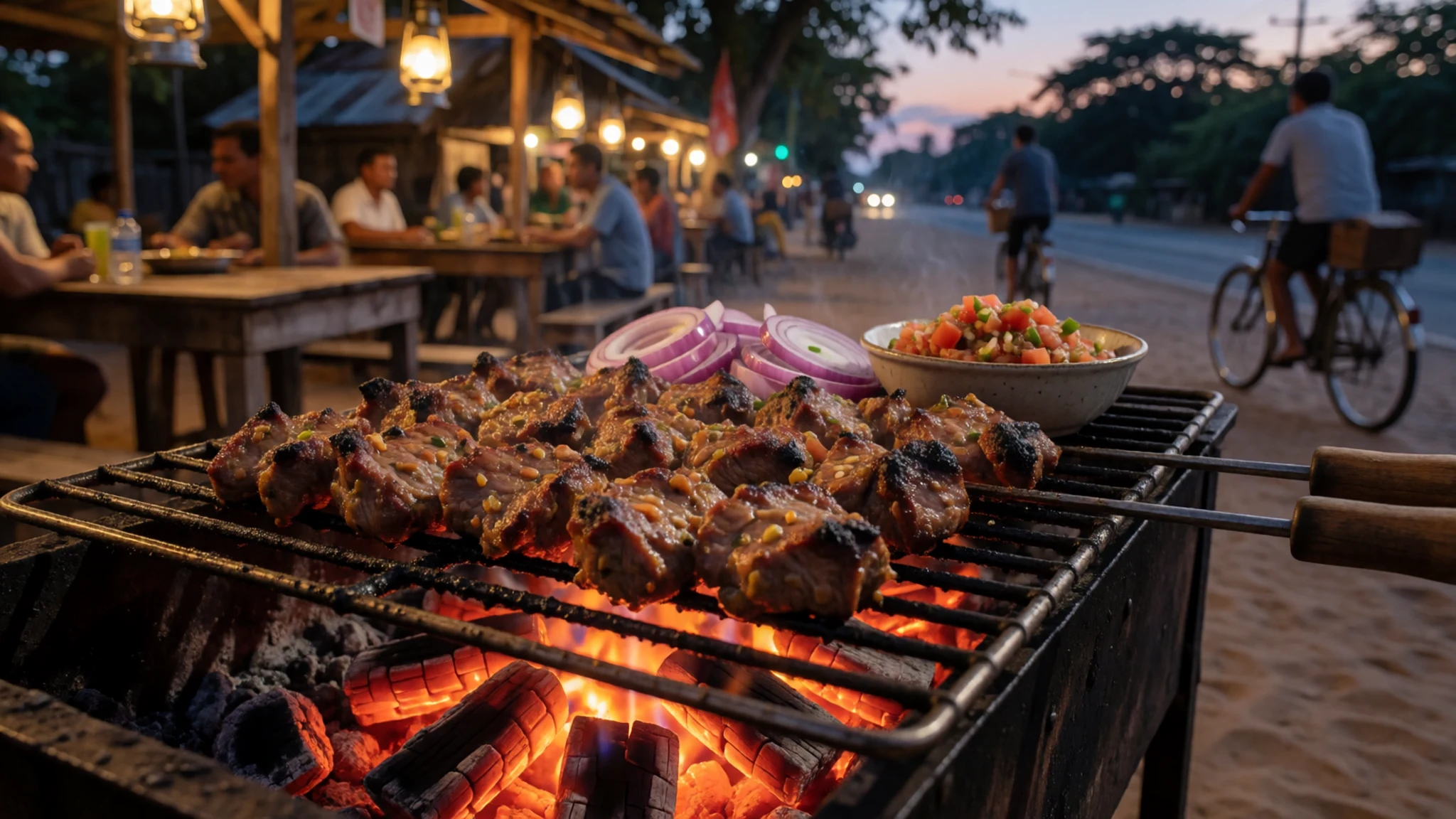
- Prawn curry — seafood eateries on the Malindi waterfront and in Watamu
Prawn curry reflects the coast, where coconut milk, tomato and warm spices are cooked with fresh prawns. It is usually served with rice or chapati to soak up the sauce. Expect it to be milder than the spice rack suggests, but ask for chilli on the side. - Biryani — Swahili-style eateries in Malindi, and at weddings if you are invited
Biryani is a spiced rice dish layered with meat or vegetables, and the coastal version often carries more coconut and clove than inland cooking. It is a festive meal, so it turns up at weddings and family gatherings more than on an ordinary weekday. - Samosas — snack stalls at bus stops and market entrances in Malindi
Samosas are triangles of thin pastry filled with spiced meat or vegetables and fried until crisp. They make a good snack between sights, and vendors often sell them by the piece near bus stops and market entrances.
Plan it
Best time. Coastal Kenya is hot and humid for much of the year. July to September is the cooler, drier spell, when walking among the ruins is most comfortable, while February is the hottest month. The long rains around April to June bring heavy showers and muddy paths.
How long. 2–3
Getting there. Fly into Mombasa's Moi International Airport and take a road transfer north along the coast; Malindi is the nearest town with a wider choice of lodging. Gede is a short drive south of Malindi, and a prebooked transfer or taxi is the simplest last leg.
Budget. mid
Tips
- Book a driver or transfer through a reputable operator, since the last stretch is not well served by public transport
- Go early to the ruins, before the midday heat and the arrival of tour groups
- Carry cash in Kenyan shillings for small entry fees, canteens and tips, as card payments are limited in village settings
- Bring water, a hat and sun cream, as the site has little shade
- Wear closed shoes for the coral rubble and uneven paths
Etiquette
- Ask before photographing people, and avoid photographing police stations, banks and other public buildings
- Dress modestly when walking through the village, covering shoulders and knees
- Leave plastic bags out of your luggage, as Kenya's ban applies to visitors and penalties are strict
Nearby
Sources
- Wikidata Q898500 (CC0)
- Wikipedia: Gede, Kenya (rev 1375892023) (CC BY-SA 4.0)
- Wikivoyage: Kenya (rev 5408770) (CC BY-SA 4.0)
- Great Mosque of Gede, photo by Mgiganteus (CC BY-SA 2.5)
- Ruins of Gedi 40, photo by LutzBruno (CC BY-SA 4.0)

